EP0699752B1 - Mutiertes rekombinantes Kollagen - Google Patents
Mutiertes rekombinantes Kollagen Download PDFInfo
- Publication number
- EP0699752B1 EP0699752B1 EP95108307A EP95108307A EP0699752B1 EP 0699752 B1 EP0699752 B1 EP 0699752B1 EP 95108307 A EP95108307 A EP 95108307A EP 95108307 A EP95108307 A EP 95108307A EP 0699752 B1 EP0699752 B1 EP 0699752B1
- Authority
- EP
- European Patent Office
- Prior art keywords
- site
- procollagen
- chain
- collagen
- natural
- Prior art date
- Legal status (The legal status is an assumption and is not a legal conclusion. Google has not performed a legal analysis and makes no representation as to the accuracy of the status listed.)
- Expired - Lifetime
Links
Images

Classifications
-
- A—HUMAN NECESSITIES
- A23—FOODS OR FOODSTUFFS; TREATMENT THEREOF, NOT COVERED BY OTHER CLASSES
- A23C—DAIRY PRODUCTS, e.g. MILK, BUTTER OR CHEESE; MILK OR CHEESE SUBSTITUTES; PREPARATION THEREOF
- A23C9/00—Milk preparations; Milk powder or milk powder preparations
- A23C9/20—Dietetic milk products not covered by groups A23C9/12 - A23C9/18
-
- A—HUMAN NECESSITIES
- A01—AGRICULTURE; FORESTRY; ANIMAL HUSBANDRY; HUNTING; TRAPPING; FISHING
- A01K—ANIMAL HUSBANDRY; AVICULTURE; APICULTURE; PISCICULTURE; FISHING; REARING OR BREEDING ANIMALS, NOT OTHERWISE PROVIDED FOR; NEW BREEDS OF ANIMALS
- A01K67/00—Rearing or breeding animals, not otherwise provided for; New or modified breeds of animals
- A01K67/027—New or modified breeds of vertebrates
- A01K67/0275—Genetically modified vertebrates, e.g. transgenic
- A01K67/0278—Knock-in vertebrates, e.g. humanised vertebrates
-
- A—HUMAN NECESSITIES
- A23—FOODS OR FOODSTUFFS; TREATMENT THEREOF, NOT COVERED BY OTHER CLASSES
- A23J—PROTEIN COMPOSITIONS FOR FOODSTUFFS; WORKING-UP PROTEINS FOR FOODSTUFFS; PHOSPHATIDE COMPOSITIONS FOR FOODSTUFFS
- A23J1/00—Obtaining protein compositions for foodstuffs; Bulk opening of eggs and separation of yolks from whites
- A23J1/20—Obtaining protein compositions for foodstuffs; Bulk opening of eggs and separation of yolks from whites from milk, e.g. casein; from whey
-
- A—HUMAN NECESSITIES
- A23—FOODS OR FOODSTUFFS; TREATMENT THEREOF, NOT COVERED BY OTHER CLASSES
- A23J—PROTEIN COMPOSITIONS FOR FOODSTUFFS; WORKING-UP PROTEINS FOR FOODSTUFFS; PHOSPHATIDE COMPOSITIONS FOR FOODSTUFFS
- A23J3/00—Working-up of proteins for foodstuffs
- A23J3/04—Animal proteins
- A23J3/06—Gelatine
-
- C—CHEMISTRY; METALLURGY
- C07—ORGANIC CHEMISTRY
- C07K—PEPTIDES
- C07K14/00—Peptides having more than 20 amino acids; Gastrins; Somatostatins; Melanotropins; Derivatives thereof
- C07K14/435—Peptides having more than 20 amino acids; Gastrins; Somatostatins; Melanotropins; Derivatives thereof from animals; from humans
- C07K14/78—Connective tissue peptides, e.g. collagen, elastin, laminin, fibronectin, vitronectin or cold insoluble globulin [CIG]
-
- C—CHEMISTRY; METALLURGY
- C12—BIOCHEMISTRY; BEER; SPIRITS; WINE; VINEGAR; MICROBIOLOGY; ENZYMOLOGY; MUTATION OR GENETIC ENGINEERING
- C12N—MICROORGANISMS OR ENZYMES; COMPOSITIONS THEREOF; PROPAGATING, PRESERVING, OR MAINTAINING MICROORGANISMS; MUTATION OR GENETIC ENGINEERING; CULTURE MEDIA
- C12N15/00—Mutation or genetic engineering; DNA or RNA concerning genetic engineering, vectors, e.g. plasmids, or their isolation, preparation or purification; Use of hosts therefor
- C12N15/09—Recombinant DNA-technology
- C12N15/63—Introduction of foreign genetic material using vectors; Vectors; Use of hosts therefor; Regulation of expression
- C12N15/79—Vectors or expression systems specially adapted for eukaryotic hosts
- C12N15/85—Vectors or expression systems specially adapted for eukaryotic hosts for animal cells
- C12N15/8509—Vectors or expression systems specially adapted for eukaryotic hosts for animal cells for producing genetically modified animals, e.g. transgenic
-
- A—HUMAN NECESSITIES
- A01—AGRICULTURE; FORESTRY; ANIMAL HUSBANDRY; HUNTING; TRAPPING; FISHING
- A01K—ANIMAL HUSBANDRY; AVICULTURE; APICULTURE; PISCICULTURE; FISHING; REARING OR BREEDING ANIMALS, NOT OTHERWISE PROVIDED FOR; NEW BREEDS OF ANIMALS
- A01K2207/00—Modified animals
- A01K2207/15—Humanized animals
-
- A—HUMAN NECESSITIES
- A01—AGRICULTURE; FORESTRY; ANIMAL HUSBANDRY; HUNTING; TRAPPING; FISHING
- A01K—ANIMAL HUSBANDRY; AVICULTURE; APICULTURE; PISCICULTURE; FISHING; REARING OR BREEDING ANIMALS, NOT OTHERWISE PROVIDED FOR; NEW BREEDS OF ANIMALS
- A01K2217/00—Genetically modified animals
-
- A—HUMAN NECESSITIES
- A01—AGRICULTURE; FORESTRY; ANIMAL HUSBANDRY; HUNTING; TRAPPING; FISHING
- A01K—ANIMAL HUSBANDRY; AVICULTURE; APICULTURE; PISCICULTURE; FISHING; REARING OR BREEDING ANIMALS, NOT OTHERWISE PROVIDED FOR; NEW BREEDS OF ANIMALS
- A01K2217/00—Genetically modified animals
- A01K2217/05—Animals comprising random inserted nucleic acids (transgenic)
-
- A—HUMAN NECESSITIES
- A01—AGRICULTURE; FORESTRY; ANIMAL HUSBANDRY; HUNTING; TRAPPING; FISHING
- A01K—ANIMAL HUSBANDRY; AVICULTURE; APICULTURE; PISCICULTURE; FISHING; REARING OR BREEDING ANIMALS, NOT OTHERWISE PROVIDED FOR; NEW BREEDS OF ANIMALS
- A01K2227/00—Animals characterised by species
- A01K2227/10—Mammal
-
- A—HUMAN NECESSITIES
- A01—AGRICULTURE; FORESTRY; ANIMAL HUSBANDRY; HUNTING; TRAPPING; FISHING
- A01K—ANIMAL HUSBANDRY; AVICULTURE; APICULTURE; PISCICULTURE; FISHING; REARING OR BREEDING ANIMALS, NOT OTHERWISE PROVIDED FOR; NEW BREEDS OF ANIMALS
- A01K2227/00—Animals characterised by species
- A01K2227/10—Mammal
- A01K2227/105—Murine
-
- A—HUMAN NECESSITIES
- A01—AGRICULTURE; FORESTRY; ANIMAL HUSBANDRY; HUNTING; TRAPPING; FISHING
- A01K—ANIMAL HUSBANDRY; AVICULTURE; APICULTURE; PISCICULTURE; FISHING; REARING OR BREEDING ANIMALS, NOT OTHERWISE PROVIDED FOR; NEW BREEDS OF ANIMALS
- A01K2267/00—Animals characterised by purpose
- A01K2267/01—Animal expressing industrially exogenous proteins
-
- A—HUMAN NECESSITIES
- A23—FOODS OR FOODSTUFFS; TREATMENT THEREOF, NOT COVERED BY OTHER CLASSES
- A23C—DAIRY PRODUCTS, e.g. MILK, BUTTER OR CHEESE; MILK OR CHEESE SUBSTITUTES; PREPARATION THEREOF
- A23C2230/00—Aspects relating to animal feed or genotype
- A23C2230/05—Milk or milk products from transgenic animals
-
- A—HUMAN NECESSITIES
- A61—MEDICAL OR VETERINARY SCIENCE; HYGIENE
- A61K—PREPARATIONS FOR MEDICAL, DENTAL OR TOILETRY PURPOSES
- A61K38/00—Medicinal preparations containing peptides
Definitions
- the field of this invention is recombinant procollagens containing novel cleavage sites.
- Collagen has provided a number of commercial applications, including use as a convenient substrate for cell culture, as well as in the manufacture of biocompatible materials (e.g., artificial skin) having a variety of therapeutic applications in humans.
- Commercially available collagens are primarily isolated from freshly killed farm animals (e.g., cows, pigs, chickens) in polymerized form or in soluble form derived by enzymatic or chemical treatment of polymerized collagen.
- polymerized collagens, and soluble collagens derived from polymerized collagens are of limited usefulness due to the presence of natural crosslinks within the collagen.
- non-human collagens can provoke undesirable immune responses when administered to human subjects.
- human collagen can be purified from human sources such as human placenta, as described in U.S. Patent No. 5,002,071 (Research Development Foundation) and in U.S. Patent No. 5,428,022 (Collagen Corporation).
- human sources such as human placenta
- U.S. Patent No. 5,002,071 Search Development Foundation
- U.S. Patent No. 5,428,022 Cold-Sematose
- the methods for recovering collagen from these sources bias the type of collagen recovered.
- the collagen is derived from naturally crosslinked tissues, the collagen recovered is not entirely homogeneous.
- Another approach to the production of human collagen is the expression of recombinant human collagen in the milk of transgenic animals, as described in copending U.S. Patent No. 5,667,839 (Collagen Corporation).
- this approach subjects the recombinant collagen to any host deficiencies in translational processing.
- collagen refers to a type of protein that encompasses a class of structurally related polypeptides consisting of helical collagen chains and homo- and heteromeric polymers thereof.
- Collagen chains often contain both long helical domains and non-helical extensions, or telopeptides.
- the helical domains comprise -(GXY)n- repeats, where X and/or Y are frequently proline or hydroxyproline.
- Collagen polypeptide chains are encoded by a number of related genes. See S.L. Adams, Amer. J. Respir. Cell and Mol. Biol. (1989) 1:161-168; Mayne and Brewton, Current Opinion in Cell Biology (1993)5:883-890; and van der Rest and Bruckner, Current Opinion in Structural Biology (1993) 3:430-436. Collagen-encoding transcripts are initially translated into procollagen chains which undergo a variety of post-translational events such as processing, secretion, and assembly ( e .
- procollagens contain N- and C-terminal propeptides that facilitate collagen formation. See, for example, Lee et al., J. Biol . Chem. (1992) 267: 24126-24133.
- procollagen propeptides are cleaved from the procollagens by tissue-specific procollagen N- and C-terminal proteases. Accordingly, recombinant production of collagen has been severely restricted by the inability of conventional cellular expression systems to efficiently post-translationally modify procollagen to form functionally mature collagen.
- WO-A-93 07889 discloses constructs which can be used to synthesize human fibrillar procollagens or collagens in cellular expression systems.
- the gene construct contains a hybrid of two collagen genes (collagen type I, alpha 1 and alpha 2 chain) consisting of the promoter, a putative enhancer (intron 1) and a sequence encoding the signal peptide (partial exon 2) of collagen type I alpha 1 chain gene followed by exons 3 through 54 of the collagen type I alpha 2 chain gene.
- a CMV-promoter is used to drive the expression of the full cDNA of either collagen type I alpha 1 or alpha 2 chain.
- an approach to ensure the correct formation of the trimeric (pro)collagen chains by additional coexpression of prolyl 4-hydroxylase is disclosed.
- the present invention aims at an efficient recombinant production of procollagen and collagen by a cellular expression system, independent of the protease spectrum of this system.
- the invention provides recombinant procollagen polypeptide chains as defined in claim 1, a nucleic acid as defined in claim 10, a vector as defined in claim 11, a cell as defined in claim 12, and production processes as defined in claims 13 and 14.
- the propeptide is often a C-terminal propeptide and, frequently, a natural procollagen C-terminal propeptide.
- the recombinant procollagen chains may further comprise a second propeptide separated from the opposite end of the natural collagen chain by a second non-natural site-specific proteolytic agent recognition site.
- propeptides and site-specific proteolytic agent recognition sites may be used.
- the propeptide is capable of increasing the yield of at least one of secreted procollagen (trimeric procollagen chains) or collagen monomers (trimeric collagen chains) from cells expressing procollagen chains comprising the propeptide, as compared with cells expressing the same collagen chains alone, without the propeptide.
- the non-natural site-specific proteolytic agent recognition site is generally selected to provide a substrate for a convenient site-specific proteolytic agent.
- the agent is commonly a protease or a chemical agent which selectively cleaves at accessible and preferentially labile peptide bonds. Where two site-specific proteolytic agent recognition sites and two propeptides are present, the recognition sites may have the same or different amino acid sequences, with the same or different site-specific proteolytic agent affinities and specificities.
- the subject procollagen chains may be constructed such that the site-specific proteolytic agent cleavage site is a peptide bond that separates the collagen chain and/or the propeptide from the remainder of the procollagen chain.
- the cleavage site may be a peptide bond that separates, from the remainder of the procollagen chain, the collagen chain (or propeptide), joined to at least one amino acid which is not naturally present at that location of a natural collagen chain (or propeptide).
- the invention provides collagens produced by contacting the subject recombinant procollagen with site-specific proteolytic agents capable of selectively cleaving the procollagen chains at the site-specific proteolytic agent recognition sites, wherein the resulting chains comprise terminal peptides which may have non-natural amino acid sequences ( i . e ., not naturally present at that location of a natural collagen chain).
- the resulting collagen may be employed directly ( e.g , to coat cell culture dishes or cultureware) or further polymerized and/or provided in sterile, nontoxic, biocompatible collagen compositions suitable for administration to humans.
- the invention also provides nucleic acids encoding the subject procollagen chains, as well as vectors and cells comprising such nucleic acids operably linked to transcription regulatory elements not naturally linked to such nucleic acids.
- the invention provides processes for the production of recombinant procollagen and/or collagen chains in and from such cells.
- the invention provides recombinant procollagen chains comprising a natural collagen chain, a propeptide, and a non-natural site-specific proteolytic agent recognition site ( i . e ., not naturally present at that location of a natural collagen chain) located between the collagen chain and the propeptides.
- the propeptide increases the yield of at least one of secreted procollagen (trimeric procollagen chains) or collagen monomers (trimeric collagen chains) recoverable from cells expressing the subject recombinant procollagen chains, as compared with cells expressing the collagen chains alone, without the propeptide.
- the yield is enhanced by at least 50%, preferably at least about 100%, more preferably at least about 200%, and most preferably at least about 1,000% in at least one expression system.
- Collagen refers to a variety of helical arrays of collagen chains and includes both polymerized and monomeric collagen.
- the propeptides are believed to improve collagen and/or procollagen yields by facilitating or increasing at least one of proper expression, processing, secretion, or polymerization of the procollagen chain, the collagen chain, and/or a collagen monomer.
- the function of the propeptide is readily monitored by comparing the yields of recoverable collagen and/or procollagen with and without the presence of the propeptide in in vitro or in vivo expression systems including lysates, transformed or transfected cells (such as mammalian cells or yeast), transgenic animals, etc. Specific examples of assays for propeptides are described below.
- the propeptide may take a wide variety of forms and sizes: it may be a natural procollagen propeptide, or a propeptide not naturally present as a propeptide in a procollagen chain, as long as it provides the procollagen with the requisite collagen yield. Generally, propeptides are at least 10, preferably at least about 25, more preferably at least about 75, and most preferably at least about 200 amino acids in length. The propeptide is generally located at the C-terminus or N-terminus of the procollagen chain, or the procollagen chain may have propeptides at both termini. Where the recombinant procollagen chains contain both C- and N-terminal propeptides, the chains often comprise a second (and often non-natural) site-specific proteolytic agent recognition site located between the collagen chain and the second propeptide.
- Preferred procollagen chains comprise at least a C-terminal propeptide, frequently a natural C-terminal portion of a protein with collagen-like repeats and/or a helical, especially triple-helical, polymeric form, such as complement protein C1q-C, acetocholine esterase, or lung surfactant protein.
- natural procollagen C-terminal propeptides such as collagen Type I, II, III, IV, V, and XI C-terminal propeptides.
- Preferred N-terminal propeptides comprise at least one globular domain and often consist essentially of a single globular domain.
- natural procollagen N-terminal propeptides such as collagen type I, II, III, IV, V, and XI N-terminal propeptides.
- the propeptides are preferably purified out of the collagen composition.
- the propeptides are preferably selected such that, if small quantities of the propeptides remain in the collagen composition after processing, the residual propeptides do not interfere with the intended application of the resulting composition.
- the composition should not contain contaminants present in an amount sufficient to cause a toxic or immunogenic response or reaction in the patient.
- the recognition site is non-natural to a natural procollagen chain, meaning that the site occupies a portion of the procollagen chain not naturally occupied by the recognition site. Particularly, the site is not naturally present anywhere in the natural counterpart of the procollagen chain.
- the site generally comprises one or more amino acid residues or derivatives thereof.
- the recognition site may comprise a modified (e.g., methylated) residue, especially for some chemical proteolytic agents. These sites are selected to provide substrates for at least one convenient site-specific proteolytic agent, preferably a commercially available site-specific proteolytic agent. The precise site selection will depend on the selected expression system, the selected propeptide, and the availability of the site-specific proteolytic agent.
- the site should provide a highly selective target for the selected site-specific proteolytic agent, such that the target site (or both target sites) is cleaved while minimizing hydrolysis of peptide bonds within the collagen chain.
- a large number of site-specific proteolytic agents and their recognition sites are known and/or commercially available. See, for example, Carter (1990, supra); Saito et al., J. Biochem. (1987) 101:123-134; etc.
- chemical cleavage agents and their recognition sites are known, e.g., hydroxylamine: N ⁇ G; formic acid: D ⁇ P; acetic acid: D ⁇ P; cyanogen bromide: M ⁇ ; BNPS-skatole: W ⁇ ; o-iodosobenzoic acid: W ⁇ ; N-chlorosuccinimide; W ⁇ ; etc.
- natural or synthetic proteases e.g.
- proteases and their recognition sites include: chymotrypsin: W ⁇ and Y ⁇ and F ⁇ ; collagenase: P-X ⁇ G-P; endoproteinase Lys-C: K ⁇ ; enterokinase: D-D-D-K ⁇ (SEQ ID NO:1:); Factor X a : I-E-G-R ⁇ (SEQ ID NO:2:); kallikrein: P-F-R ⁇ ; renin: Y-I-H-P-F-H-L ⁇ L (SEQ ID NO:3:); H64A subtilisin BPN: A-A-H-Y ⁇ (SEQ ID NO:4:); thrombin: R-G-P-R ⁇ (SEQ SEQ ID NO:5:); trypsin: R ⁇ and K ⁇ ; ubiquitin protein peptidase: ubiquitin ⁇ ; etc.
- a wide variety of methods may be used to increase the efficiency of cleavage at a target site (e.g. , the provision of flanking poly-glycine peptides to enhance accessibility) and/or to reduce non-target site cleavage (e.g. , optimizing concentration ratios and reaction conditions).
- Preferred site/site-specific proteolytic agent combinations yield a collagen product that is conveniently adapted to the ultimate intended application.
- any residual non-natural terminal residues should not interfere with and, preferably, enhance the performance (e.g., the promotion of cell growth or adherence to coated cultureware) of the resulting collagen product vis - a - vis the natural collagen counterpart.
- the resulting collagen should not be immunologically reactive in the host from which the collagen chain is derived.
- immunological non-reactivity is effected by minimizing the number of non-collagen chain amino acid residues which remain joined to the collagen chain after site-specific proteolytic agent cleavage.
- Preferred site/site-specific proteolytic agent combinations yield collagen chains with fewer than 75, preferably fewer than 25, more preferably fewer than 10, most preferably fewer than 5 and, especially, zero, non-natural collagen chain terminal amino acid residues.
- preferred sites and site-specific proteolytic agents provide cleavage at or near the junction with natural collagen chain residues.
- the site-specific proteolytic agent recognition sites may have the same or different amino acid sequences, with the same or different site-specific proteolytic agent affinities and specificities.
- the site-specific proteolytic agent recognition site(s) generally, but need not, abut both the collagen chain and respective propeptide; i.e. , the subject procollagen chains may also have a natural or non-natural ( i . e ., not naturally present at that location of a natural procollagen chain) amino acid sequence between the site-specific proteolytic agent recognition site and the collagen chain, and/or between the site-specific proteolytic agent recognition site and the propeptide.
- the resulting (after cleavage) recombinant collagen chains may comprise one or both terminal peptides having a non-natural amino acid sequence.
- the invention provides recombinant collagen chains produced by contacting the subject recombinant procollagen chains with site-specific proteolytic agents capable of selectively cleaving the procollagen chain at site-specific proteolytic agent recognition sites.
- Useful collagen compositions produced by such methods may retain residual site-specific proteolytic agents, wherein the site-specific proteolytic agents are present at concentrations that may exceed 1 picogram, frequently exceed 1 nanogram, and more frequently exceed 1 microgram per gram of collagen protein.
- Resulting collagen compositions may be subjected to conditions known in the art to be conducive to higher-order polymerization of the collagen, for example, fibril formation.
- Monomeric or polymeric collagen compositions may be further subjected to a wide variety of manipulations depending on the intended application.
- the collagen may be diluted in a solvent for optimal adsorption to solid substrates (e . g ., glass or plastics such as polystyrene, polyethylene, polypropylene, acetate, nylon, etc.) useful in tissue or cell culture, or purified and sterilized (e.g., filter sterilization) for use in vivo, such as for tissue augmentation.
- solid substrates e.g ., glass or plastics such as polystyrene, polyethylene, polypropylene, acetate, nylon, etc.
- purified and sterilized e.g., filter sterilization
- the invention provides nucleic acids encoding the subject recombinant procollagen chains. These nucleic acids may have a wide variety of forms and sizes and frequently comprise non-coding sequences which facilitate transcription of the encoded procollagen chains. Constructs comprising such nucleic acids operably linked to transcription regulatory elements are spliced into replication and/or transfection vectors, which are then used to transfect/transform cells.
- Nucleic acids encoding the collagen chain portions e.g. , collA1, collA2, and col3A1
- the site-specific proteolytic agent recognition portions of the subject nucleic acids are readily available, for example, through published sequences, including electronic databases (e . g ., Genbank, the National Center for Biotechnology Information at the National Library for Medicine, etc.), through commercial vendors, through library hybridization with otherwise available collagen-encoding nucleic acids, or through known molecular cloning techniques. Materials and methods for constructing (e.g.
- procollagen-encoding nucleic acids procollagen-encoding nucleic acids
- expression vectors transformed and transfected cells
- processes for producing a recombinant procollagen chain including selection from a wide variety of cells, e.g. , cultured mammalian cells such as fibroblasts, CHO cells, yeast, mammary gland cells of transgenic mammals, etc.
- transfecting/transforming and culturing the cells under conditions suitable for the expression of the nucleic acid and recovering and purifying recombinant procollagen chains are disclosed herein or otherwise known in the art.
- construct design is effected by first preparing a three-dimensional model of a procollagen helix at the propeptide-telopeptide junction, then introducing amino acid substitutions that would allow cleavage with specific proteolytic enzymes.
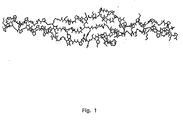
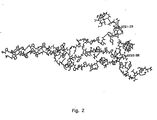
- Figures 1 and 2 depict the structures of the N- and C-terminal propeptide-telopeptide regions of human type I procollagen, respectively. The structures are energy-minimized and the native cleavage sites are marked. Molecular modeling is performed to ensure that the substitutions do not disrupt the folding of this region so as to inhibit processing, secretion, helical formation, or site-specific proteolytic agent accessibility.
- Molecular constructs are then generated by either mutating procollagen-encoding cDNAs or splicing nucleic acids encoding the selected collagen chain with nucleic acids encoding the selected site-specific proteolytic agent recognition site. Mutation may be effected by site-directed mutagenesis, nucleotide insertion or substitution ( e.g. , by PCR-based mutagenesis) or replacement of oligonucleotides by cloning.
- the insertion site is preferably at or within 100, preferably within 30, more preferably within 10, nucleotides distal to the procollagen site-specific proteolytic agent cleavage site encoding sequence.
- the substituted nucleotides are within 60, preferably within 36, preferably within 18, nucleotides distal to the procollagen site-specific proteolytic agent cleave site encoding sequence.
- Preferred constructs additionally comprise nucleic acids including a promoter region necessary for the expression of the encoded procollagen in an appropriate host.
- Preferred promoters that are constitutive in cultured cells include cytomegalovirus (CMV), simian virus (SV), and Rous sarcoma virus (RSV) promoters.
- CMV cytomegalovirus
- SV simian virus
- RSV Rous sarcoma virus
- Preferred promoters for tissue-specific expression (e.g. , in mammary gland cells) of transgenic animals include casein or acid whey protein promoters.
- Preferred promoters for expression in yeast include phosphoglycerol kinase (PGK), alcohol dehydrogenase (ADH), and galactose (
- the construct is then transfected into and expressed in a cellular expression system, preferably an expression system wherein the mutated procollagen is secreted.
- the recombinant PROcollagen is not sufficiently secreted, and recovery entails lysing the cells and centrifuging the lysate to remove cellular debris.
- the cells are selected or engineered to express both the recombinant procollagen and a site-specific proteolytic agent capable of specifically cleaving the procollagen at the recognition site.
- the appropriate site-specific proteolytic agents are introduced in an amount sufficient to cleave the propeptides from the procollagen molecules prior to fibrillogenesis in the processing steps.
- Collagen chains are purified from the medium by methods known in the art See, for example, Miller and Rhodes, Methods in Enzymology (1982) 82:33-64, or Sage and Bernstein, Methods in Enzymology (1982) 82:96-127.
- Resulting collagen compositions may be sterilized, for example, by passage through 0.2 ⁇ m filters ( e.g. , Millipore filters). Sterility may be confirmed by, for example, culturing aliquots on nutrient agar for at least 72 hours at 25 and 37°C.
- non-immunogenicity in humans is confirmed by dermal sensitivity testing.
- the invention provides a wide variety of applications of the subject recombinant procollagens and collagens in tissue and cell culture and therapy.
- the subject procollagens and collagens are used to promote adhesion and growth of cells on a wide variety of solid substrates in various forms, such as slides, filaments, sheets, plates, flasks, bottles, fibers, etc., and compositions such as plastics, glass, metals, saccharide-based polymers, etc.
- the collagens provide a wide range of therapeutic applications, such as use in biodegradable sutures, synthetic dermal skin, biodegradable hemostatic sponges, tissue augmentation (including modifying localized soft tissue appearance), etc.
- Tissue augmentation using collagen compositions has been thoroughly studied, documented, and implemented in widespread clinical settings. See, for example, DeLustro et al., J. Biomed . Mater. Res. (1986) 20:109-120; Elson, J. Dermatol . Surg . Oncol. (1989) 15:301-303; Elson, Am. J. Cosmetic Surg. (1992) 9:267-271; Klein et al., J. Dermatol. Surg. Oncol . (1985) 11:337-339; Klein et al., Geriatric Dermatology: Clinical Diagnosis and Practical Therapy, Chapter 8, pp. 47-49, Igaku-Shoin (publ), NY (1989); Kligman, J. Dermatol .
- Figures 1 and 2 depict the energy-minimized structures of the N- and C-terminal propeptide-telopeptide regions of human type I procollagen, respectively. Substitutions were then inserted at the N-terminal cleavage junction site to generate a non-natural site-specific proteolytic agent recognition site and new models prepared to determine their effects on collagen folding.
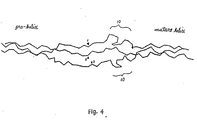
- Figure 3 depicts an N-terminal fragment containing a DDDK (SEQ ID NO:1:) insertion in all three chains, introducing a recognition and cleavage site for enterokinase into the propeptide-telopeptide junction region.
- the proteolytic cleavage site of this mutant is particularly accessible in the energy-minimized structure.
- a cDNA clone containing the entire coding region of human ⁇ 1(I) procollagen is obtained from the Whitehead Institute (Cambridge, MA). The description of the cDNA is described in Stacey et al., J. Virol . (1987) 61:2549. The nucleotide sequence of this clone (pHUC) is described in Tromp et al., Biochem. J. (1988) 253:919, and also under Accession No. X07884 (Genbank, Los Alamos, NM).
- a cDNA clone (pSTL14) containing the entire coding region of human ⁇ 2(I) procollagen is described in Lee et al., J. Biol . Chem.
- a specialized cloning vector (pPL1) is created by isolating the AflIII/SspI region of Bluescript II KSM13+ from nucleotide position 1153 to 2850 (Stratagene Cloning Systems, La Jolla, CA) and inserting a double-stranded deoxyoligonucleotide polylinker containing the restriction sites (in order) HindIII, PvuII, DraIII, and BamHI.
- a 618 nt region of the 5' end of the cDNA is amplified by the Polymerase Chain Reaction (Perkin Elmer Cetus, Norwalk, CT, according to the manufacturer's instructions) using the oligodeoxynucleotide primer #1 ACGCCAAGCTTGGCTGCAGGTCGA (SEQ ID NO:22:) and primer #2 pCTG TTTATCATCGTC GGGAGCAAAGTTTCCTCC (SEQ ID NO:23:).
- the underlined nucleotide sequence in primer #2 codes for the amino acid recognition site DDDK (SEQ ID NO:1:) for the proteolytic enzyme enterokinase.
- the 610 nt DNA fragment generated by the PCR reaction is cleaved with the restriction enzyme HindIII, and cloned into pPLI at the HindIII/PvuII sites, creating pPL1-1.
- the PvuII/DraIII fragment from the human ⁇ 1(I) procollagen cDNA (nt 858 to nt 1797) is cloned into pPL1-1 at the PvuII/DraIII sites, creating pPL1-2.
- the next step is to insert the PvuII/PvuII (nt 569 to nt 858) fragment of the human ⁇ 1(I) procollagen cDNA into pPL1-2 at the PvuII site, creating pPL1-3.
- This PvuII/PvuII fragment inserts itself into the vector in either orientation, so clones which contain the orientation identical to the human ⁇ 1(I) procollagen cDNA are identified by DNA sequence analysis following the manufacturer's protocol (using SequenaseTM DNA sequencing kit by U.S. Biochemicals, Cleveland, OH, and the deoxynucleotide GAGTCACCCACCGAC CAAGA (SEQ ID NO:24:) as the primer).
- the cDNA fragment from the human ⁇ 1(I) procollagen cDNA from the DraIII site at position 1797 to the BamHI site at position 2886 is cloned into pPL1-3 at the DraII/BamHI site, creating pPL1-4.
- the product of these steps is the continuous region of the human ⁇ 1(I) procollagen cDNA from the 5' end of the cDNA to the BamHI site at position 2886 with the introduction of a coding region for the amino acids DDDK, which is the amino acid recognition site for enterokinase.
- pPL2 Another specialized cloning vector (pPL2) is created by following the procedure described above, but using a polylinker which contains the recognition sites for the restriction enzymes (in order) Sail, HindIII, BamHI, BspEII, and SspI.
- a fragment of the human ⁇ 1(I) procollagen cDNA from the BamHI site at position 2886 to the BspEI site at position 3817 is cloned into the vector at the BamHI/BspEI site, creating pPL2-1.
- pPL2-1 is digested with the restriction enzymes Eco47III and XhoI, and the 106 bp fragment is discarded.
- a double-stranded deoxyoligonucleotide with the sequence GCTGGTTTCGACTTCAGCTTCCT CCC CCAGCCACCTCAAGAGAAGGCTCACGATGGTGGCCGCTACTACCGGGCT TGGGATGATGCCAATGTGGTTCGTGACCGTGACC (SEQ ID NO:25:) is inserted into pPL2-1 at the Eco47III/XhoI site, creating pPL2-2.
- This double-stranded deoxyoligonucleotide contains three additional (underlined) deoxynucleotides (as compared to the human ⁇ 1(I) procollagen cDNA in this region) which code for the amino acid tryptophan.
- a fragment of the human ⁇ 1(I) procollagen cDNA from nt 3818 to 4611 is removed by the restriction enzymes BspEI and SspI and inserted into pPL2-2 at the BspEI/SspI site, creating pPL2-3.
- the human ⁇ 1(I) procollagen cDNA containing additional nucleotide sequences within the cDNA, which code for additional amino acid(s) at the N-terminal propeptide-telopeptide and C-terminal telopeptide-propeptide junctions, is created by removal of the HindIII/BamHI fragment from pPL1-4 containing the 5' region of the human ⁇ 1(I) procollagen cDNA, as described in section B above, and inserting this fragment into the HindIII/BamHI sites of pPL2-3 containing the 3' region of the human ⁇ 1(I) procollagen cDNA, creating pM ⁇ 1(I).
- a specialized cloning vector (pPL3) is created as described in section B, but using a polylinker which contains the restriction sites (in order) Sail, SphI, PmII, MscI, and Sse8387I.
- the human ⁇ 2(I) procollagen cDNA is excised from pSTL14 using SphI and SmaI restriction enzymes.
- the resulting DNA fragment is treated with T4 DNA polymerase in the presence of deoxynucleotides to make a blunt end at the 5' end of the cDNA. This fragment is subcloned into the Bluescript II vector at the EcoRV and SmaI sites.
- the ⁇ 2(I) procollagen cDNA fragment inserts itself into the vector in either orientation, so clones in which the SmaI site is reconstituted are selected and given the name of p ⁇ 2(I).
- Polymerase Chain Reaction is performed according to the manufacturer's instructions (Perkin Elmer Cetus, Norwalk, CT) using Saccharomyces cerevisiae genomic DNA as template and the phosphorylated deoxyoligonucleotides pGTGGTATGCAAATTTTTGTCAAGACTTTGACTG (SEQ ID NO:26:) and pCCACCTCTCAATCTCAAGACT (SEQ ID NO:27:) as primers to isolate a fragment of the yeast gene UBI1 (ubiquitin) described in Oezkaynak et al., EMBO J.
- the 232 bp DNA fragment is subcloned into the vector at the PmII/MscI site, creating pPL3-1. This fragment inserts itself into the vector in either orientation, such that clones which contain the orientation identical to that of the human ⁇ 2(I) procollagen cDNA are identified by digestion with the restriction enzymes PmII and MscL
- a second PCR reaction is performed using p ⁇ 2(I) DNA as the template and the two deoxyoligonucleotides pCCAGTATGATGGAAAA GGAGTT (SEQ ID NO:28:) and CGAGCACCTGCAGGACCAGTT (SEQ ID NO:29:) as the primers for this reaction.
- the 159 bp DNA fragment is digested with Sse8387I and subcloned into pPL3-1 at the MscI/Sse8387I sites, creating pPL3-2.
- p ⁇ 2(I) is digested with Sail and PmlI, and the 199 nt fragment is isolated and inserted into pPL3-2 at the Sail and PmlI sites, creating pPL3-3.
- p ⁇ 2(I) is digested with Sail and Sse8387I, and the 475 bp fragment is discarded.
- pPL3-3 is digested with Sail and Sse8387I, and the 600 bp DNA fragment is isolated and cloned into p ⁇ 2(I) at the Sail and Sse8387I sites, creating pPL3-4.
- the human ⁇ 2(I) procollagen can be cleaved at the N-propeptide - N-telopeptide junction with a ubiquitin-specific processing protease, as described in Tobias and Varshavsky, J . Biol . Chem . (1991) 266:12021.
- p ⁇ 2(I) is digested with AvrII and EcoRI, and the 909 bp DNA fragment is discarded.
- Polymerase Chain Reaction s performed according to the manufacturer's instructions using p ⁇ 2(I) as template and the deoxyoligonucleotides TGGTCCTAGGGGCCCTGCTGG TCCTT (SEQ ID NO:30:) and p TCTACCTTCTAT AGCCCTGTAGAAGTCTCCATCGTA (SEQ ID NO:31:) as primers.
- the underlined nucleotide sequence in the second primer codes for the amino acid recognition site (IEGR) (SEQ ID NO:02:) for Factor X a .
- a DNA product of 220 bp is isolated and then digested with AvrII.
- a second PCR reaction is performed using RT-PCR according to the manufacturer's instructions (Perkin Elmer Cetus, Norwalk, CT), using as template total RNA isolated from mouse spleen by the procedure of Han et al., Biochem. (1987)26:1617. Random hexamers are used as primers for the reverse transcription of mouse RNA.
- the two PCR primers in the PCR reaction are pAAACAGAAGCACCAGTC GGTATTCA (SEQ ID NO:32:) and ATATGAATTCTCAGGTGCACGCACAGGTTGGCCG TA (SEQ ID NO:33:).
- a DNA product of 215 bp which encodes the C-terminus of mouse complement C1q-C subunit is isolated and digested with EcoRI.
- the two digested PCR products are ligated into p ⁇ 2(I) previously digested with AvrII and EcoRI, as described above, creating pPL4-1.
- the human ⁇ 2(I) procollagen cDNA containing ubiquitin in place of the endogenous N-propeptide and the C-terminus of complement C1q-C subunit instead of the endogenous C-propeptide is created by removing the 2850 bp XhoI/XhoI fragment from pPL3-4 (described in section E), inserting this DNA fragment into pPL4-1 (described in Section F) digested with XhoI, and discarding the 2725 bp fragment, creating pM ⁇ 2(I).
- the XhoI fragment from pPL3-4 can insert itself into pPL4-1 in either orientation. The orientation which places the translation start codon toward the 5' end of the construction is selected using DNA sequence analysis.
- pSV-SPORT1 (Life Technologies, Ind., Gaithersburg, MD) is used as the expression vector for the mutated ⁇ 1(I) procollagen cDNA (pM ⁇ 1(I) from Example ID) and the mutated ⁇ 2(I) procollagen cDNA (pM ⁇ 2(I) from Example 1G).
- pSV-SPORT1 is digested with the restriction enzymes Sail and SspI.
- the fragment containing the mutated ⁇ 1(I) procollagen cDNA is ligated into pSV-SPORT1 at the Sail and SnaBI sites, creating PSV-M ⁇ 1(I).
- pM ⁇ 2(I) is digested with Sail and Smal.
- the fragment containing the mutated ⁇ 2(I) procollagen is ligated into pSV-SPORT1 at the Sail and SnaBI sites, creating pSV-M ⁇ 2(I).
- Either pSV-M ⁇ 1(I) or pSV-M ⁇ 2(I) is co-transfected with pRSV neo into HT1080 cells (American Type Culture Collection, Rockville, MD) using Lipofectamine Reagent (Life Technologies, Gaithersburg, MD) and following the manufacturer's protocol for stable transfection of adherent cells.
- the mutated procollagen product from HT1080 cells transfected with either pSV-M ⁇ 1(I) or pSV-M ⁇ 2(I) is secreted into the medium as homotrimeric molecules.
- the medium is collected and protease inhibitors are added to a final concentration of 10 mM N-ethylmaleimide, 1 mM PMSF, and 25 mM EDTA.
- Ammonium sulfate is added to the medium to a final concentration of 30%, and the medium is stored at 4°C for 16 hours.
- the medium is centrifuged at 4000 rpm for 10 minutes at 4°C.
- the pellet is resuspended in 50 mM Tris, pH 7.4, 150 mM NaCI, and protease inhibitors at the concentrations listed above, or in the appropriate buffer for cleavage of one or both of the propeptides from the collagen molecule.
- Recombinant human collagen produced as described in Example 3 is adjusted to a collagen concentration of 10 mg/ml by addition of 0.13 M phosphate buffer at pH 7.2 under conditions favoring fiber formation.
- the resulting suspension of fibrillar collagen is centrifuged at 10,000 x g to concentrate the collagen, which is subsequently rediluted to a concentration of 35 mg/ml by the addition of phosphate buffer.
- the resulting fibrillar collagen suspension is aliquotted into syringes for use in soft tissue augmentation.
- a physician attaches a 25-gauge or smaller needle to a syringe containing the recombinant human fibrillar collagen suspension prepared as described above. After attaching the needle to the collagen-containing syringe, the physician injects the collagen subcutaneously into the dermis, using multiple serial punctures, to soft tissue sites in need of augmentation, such as acne scars and wrinkles. Collagen is injected to a particular soft tissue site until the previously depressed area is even with the surface of the surrounding normal skin.
- Recombinant human collagens are assayed and compared with purified human placental, bovine hide, and rat tail collagens for their ability to support gel contraction by human dermal fibroblasts.
- Recombinant human collagens are prepared as described in Example 3. Human collagen is purified from human placenta by extraction with 0.1 M acetic acid, followed by precipitation of type I collagen by the addition of 1 M NaCI.
- Bovine hide and rat tail collagens are commercially obtained in soluble form ( e . g ., Vitrogen).
- Rates of contraction are measured each day by placing the culture dish containing the contracted cell matrix over a template containing circles of varying diameter, then estimating the diameter of the contracted cell matrix by comparison with the circles on the template.
- Recombinant human collagens prepared as described in Example 2 are shown to promote fibroblast contraction at rates at least comparable to those obtained using rat tail, purified human placental, and bovine hide collagens.
Landscapes
- Life Sciences & Earth Sciences (AREA)
- Health & Medical Sciences (AREA)
- Chemical & Material Sciences (AREA)
- Engineering & Computer Science (AREA)
- Genetics & Genomics (AREA)
- Zoology (AREA)
- Organic Chemistry (AREA)
- Biochemistry (AREA)
- Biotechnology (AREA)
- General Health & Medical Sciences (AREA)
- Polymers & Plastics (AREA)
- Food Science & Technology (AREA)
- Biophysics (AREA)
- Molecular Biology (AREA)
- Wood Science & Technology (AREA)
- General Engineering & Computer Science (AREA)
- Biomedical Technology (AREA)
- Environmental Sciences (AREA)
- Bioinformatics & Cheminformatics (AREA)
- Veterinary Medicine (AREA)
- Nutrition Science (AREA)
- Toxicology (AREA)
- Animal Husbandry (AREA)
- Microbiology (AREA)
- Gastroenterology & Hepatology (AREA)
- Medicinal Chemistry (AREA)
- Proteomics, Peptides & Aminoacids (AREA)
- Animal Behavior & Ethology (AREA)
- Plant Pathology (AREA)
- Biodiversity & Conservation Biology (AREA)
- Physics & Mathematics (AREA)
- Micro-Organisms Or Cultivation Processes Thereof (AREA)
- Peptides Or Proteins (AREA)
- Medicines That Contain Protein Lipid Enzymes And Other Medicines (AREA)
- Preparation Of Compounds By Using Micro-Organisms (AREA)
Claims (14)
- Rekombinante Procollagenpolypeptidkette mit einer natürlichen Collagenpolypeptidkette, einem ersten Propeptid, und einem ersten nicht-natürlichen, regiospezifischen Erkennungsstelle für ein proteolytisches Agens, wobei die erste nicht-natürliche, regiospezifische Erkennungsstelle für ein proteolytisches Agens nicht von Natur aus irgendwo in dem natürlichen Gegenstück der Procollagenkette vorhanden ist, sie so gewählt ist, dass sie ein hoch selektives Target für ein gewähltes regiospezifisches proteolytisches Agens ist und sie zwischen der Collagenkette und dem ersten Propeptid angeordnet ist.
- Rekombinante Procollagenkette nach Anspruch 1, bei welcher die erste, nicht-natürliche, regiospezifische Erkennungsstelle für ein proteolytisches Agens eine regiospezifische Proteasenerkennungsstelle ist.
- Rekombinante Procollagenkette nach Anspruch 1, bei welcher die erste, nicht-natürliche, regiospezifische Erkennungsstelle für ein proteolytisches Agens eine Peptidbindung aufweist, die labil hinsichtlich einer chemischen Hydrolyse ist.
- Rekombinante Procollagenkette nach Anspruch 1, bei welcher das erste Propeptid ein C-Terminal-Propeptid ist.
- Rekombinante Procollagenkette nach Anspruch 1, bei welcher das erste Propeptid ein natürliches Procollagen C-Terminal-Propeptid ist.
- Rekombinante Procollagenkette nach Anspruch 1, ferner versehen mit einem zweiten Propeptid und einer zweiten, nicht-natürlichen, regiospezifischen Erkennungsstelle für ein proteolytisches Agens, wobei die zweite nicht-natürliche, regiospezifische Erkennungsstelle für ein proteolytisches Agens nicht von Natur aus irgendwo in dem natürlichen Gegenstück der Procollagenkette vorhanden ist, sie so gewählt ist, dass sie ein hoch selektives Target für ein gewähltes, regiospezifisches proteolytisches Agens ist, und sie zwischen der Collagenkette und dem zweiten Propeptid angeordnet ist.
- Rekombinante Procollagenkette nach Anspruch 6, bei welcher die erste und die zweite nicht-natürliche, regiospezifische Erkennungsstelle für ein proteolytisches Agens unterschiedlich sind.
- Rekombinante Procollagenkette nach Anspruch 1, ferner versehen mit einer nicht-natürlichen Aminosäurensequenz zwischen der ersten regiospezifischen Erkennungsstelle für ein proteolytisches Agens und der Collagenkette, wobei die nicht-natürliche Aminosäurensequenz eine Aminosäurensequenz ist, die nicht von Natur aus an jener Stelle der natürlichen Collagenkette vorhanden ist.
- Rekombinante Procollagenkette nach Anspruch 1 ferner versehen mit einer nicht-natürlichen Aminosäurensequenz zwischen der ersten regiospezifischen Erkennungsstelle für ein proteolytisches Agens und dem ersten Propeptid, wobei die nicht-natürliche Aminosäurensequenz eine Aminosäurensequenz ist, die nicht von Natur aus an jener Stelle der natürlichen Collagenkette vorhanden ist.
- Nukleinsäure, die kodierend für eine rekombinante Procollagenkette nach Anspruch 1 ist.
- Vektor, welcher die Nukleinsäure nach Anspruch 10 umfasst, die mit einem transkriptionsregulatorischen Element operativ verknüpft ist, dass nicht von Natur aus mit der Nukleinsäure verknüpft ist.
- Zelle mit einer Nukleinsäure nach Anspruch 10, die mit einem transkriptionsregulatorischen Element operativ verknüpft ist, welches nicht von Natur aus mit der Nukleinsäure verknüpft ist.
- Verfahren zur Herstellung einer rekombinanten Procollagenpolypeptidkette, wobei im Zuge des Verfahrens:Eine Zelle gemäß Anspruch 12 unter Bedingungen kultiviert wird, die für die Expression der Nukleinsäure geeignet sind; unddie rekombinante Procollagenkette gewonnen wird.
- Verfahren für die Erzeugung einer rekombinanten Collagenpolypeptidkette, wobei im Zuge des Verfahrens:eine rekombinante Procollagenkette gemäß Anspruch 1 mit einem regiospezifischen proteolytischen Agens, das in der Lage ist, die rekombinante Procollagenkette an der ersten regiospezifischen Erkennungsstelle für ein proteolytisches Agens selektiv zu spalten, unter Bedingungen in Kontakt gebracht wird, bei welchen das erste regiospezifische proteolytische Agens selektiv die Procollagenkette an der ersten regiospezifischen Erkennungsstelle für ein proteolytisches Agens spaltet, wodurch eine Collagenkette erzeugt wird; unddie Collagenkette gewonnen wird.
Applications Claiming Priority (2)
| Application Number | Priority Date | Filing Date | Title |
|---|---|---|---|
| US278774 | 1994-07-22 | ||
| US08/278,774 US6653450B1 (en) | 1993-01-28 | 1994-07-22 | Mutated recombinant collagens |
Publications (3)
| Publication Number | Publication Date |
|---|---|
| EP0699752A2 EP0699752A2 (de) | 1996-03-06 |
| EP0699752A3 EP0699752A3 (de) | 1997-03-05 |
| EP0699752B1 true EP0699752B1 (de) | 2003-09-24 |
Family
ID=23066311
Family Applications (1)
| Application Number | Title | Priority Date | Filing Date |
|---|---|---|---|
| EP95108307A Expired - Lifetime EP0699752B1 (de) | 1994-07-22 | 1995-05-30 | Mutiertes rekombinantes Kollagen |
Country Status (3)
| Country | Link |
|---|---|
| US (2) | US6653450B1 (de) |
| EP (1) | EP0699752B1 (de) |
| DE (1) | DE69531813D1 (de) |
Cited By (1)
| Publication number | Priority date | Publication date | Assignee | Title |
|---|---|---|---|---|
| GB2626519A (en) * | 2021-12-03 | 2024-07-24 | Jiangsu Trautec Medical Tech Co Ltd | Recombinant collagen, preparation method therefor and application thereof |
Families Citing this family (63)
| Publication number | Priority date | Publication date | Assignee | Title |
|---|---|---|---|---|
| EP0718309B1 (de) * | 1994-12-23 | 1999-04-07 | Roche Diagnostics GmbH | Antigene und Antikörper zum Nachweis von Kollagen I |
| GB9704305D0 (en) * | 1997-03-01 | 1997-04-23 | Univ Manchester | Procollagen assembly |
| WO1999012558A1 (en) * | 1997-09-10 | 1999-03-18 | Allegheny University Of The Health Sciences | Inhibitors of collagen assembly |
| EP0913692A1 (de) * | 1997-10-31 | 1999-05-06 | Bayer Ag | Immunassay zum Nachweis von prokollagen-III-C-terminalen Propeptid |
| US6916903B2 (en) | 1998-06-19 | 2005-07-12 | Washington Research Foundation | Collagen type III synthetic peptides for collagen resorption assays |
| DK1088228T3 (da) | 1998-06-19 | 2006-01-02 | Washington Res Found | Bruskresorptionsassays |
| US6602980B1 (en) | 1998-06-19 | 2003-08-05 | Washington Research Foundation | Collagen type III synthetic peptides for collagen resorption assays |
| US6348320B1 (en) | 1998-06-19 | 2002-02-19 | Washington Research Foundation | Cartilage resorption assays measuring type II collagen fragments |
| EP1210606B1 (de) * | 1999-06-17 | 2004-10-06 | Washington Research Foundation | Knorpelresorptionsassays |
| GB0413346D0 (en) * | 2004-06-15 | 2004-07-21 | Theryte Ltd | Treating cancer |
| US20070224237A1 (en) * | 2006-03-24 | 2007-09-27 | Julia Hwang | Barbed sutures having a therapeutic agent thereon |
| US20080081353A1 (en) * | 2006-09-29 | 2008-04-03 | Universite Laval | Production of recombinant human collagen |
| US8933290B2 (en) * | 2007-06-26 | 2015-01-13 | Sofradim Production Sas | Mesh implant |
| US9308068B2 (en) | 2007-12-03 | 2016-04-12 | Sofradim Production | Implant for parastomal hernia |
| US9242026B2 (en) | 2008-06-27 | 2016-01-26 | Sofradim Production | Biosynthetic implant for soft tissue repair |
| FR2949688B1 (fr) | 2009-09-04 | 2012-08-24 | Sofradim Production | Tissu avec picots revetu d'une couche microporeuse bioresorbable |
| US9732321B2 (en) | 2010-02-16 | 2017-08-15 | The General Hospital Corporation | Engineered craniofacial constructs with composite scaffold |
| US8945156B2 (en) | 2010-05-19 | 2015-02-03 | University Of Utah Research Foundation | Tissue fixation |
| US8858577B2 (en) | 2010-05-19 | 2014-10-14 | University Of Utah Research Foundation | Tissue stabilization system |
| US8852214B2 (en) | 2011-02-04 | 2014-10-07 | University Of Utah Research Foundation | System for tissue fixation to bone |
| FR2972626B1 (fr) | 2011-03-16 | 2014-04-11 | Sofradim Production | Prothese comprenant un tricot tridimensionnel et ajoure |
| FR2977790B1 (fr) | 2011-07-13 | 2013-07-19 | Sofradim Production | Prothese pour hernie ombilicale |
| FR2977789B1 (fr) | 2011-07-13 | 2013-07-19 | Sofradim Production | Prothese pour hernie ombilicale |
| CA2849052C (en) | 2011-09-30 | 2019-11-05 | Sofradim Production | Reversible stiffening of light weight mesh |
| FR2985271B1 (fr) | 2011-12-29 | 2014-01-24 | Sofradim Production | Tricot a picots |
| FR2985170B1 (fr) | 2011-12-29 | 2014-01-24 | Sofradim Production | Prothese pour hernie inguinale |
| US10219804B2 (en) | 2012-07-30 | 2019-03-05 | Conextions, Inc. | Devices, systems, and methods for repairing soft tissue and attaching soft tissue to bone |
| US9427309B2 (en) | 2012-07-30 | 2016-08-30 | Conextions, Inc. | Soft tissue repair devices, systems, and methods |
| US11253252B2 (en) | 2012-07-30 | 2022-02-22 | Conextions, Inc. | Devices, systems, and methods for repairing soft tissue and attaching soft tissue to bone |
| US10390935B2 (en) | 2012-07-30 | 2019-08-27 | Conextions, Inc. | Soft tissue to bone repair devices, systems, and methods |
| US10835241B2 (en) | 2012-07-30 | 2020-11-17 | Conextions, Inc. | Devices, systems, and methods for repairing soft tissue and attaching soft tissue to bone |
| US11944531B2 (en) | 2012-07-30 | 2024-04-02 | Conextions, Inc. | Devices, systems, and methods for repairing soft tissue and attaching soft tissue to bone |
| US11957334B2 (en) | 2012-07-30 | 2024-04-16 | Conextions, Inc. | Devices, systems, and methods for repairing soft tissue and attaching soft tissue to bone |
| FR2994185B1 (fr) | 2012-08-02 | 2015-07-31 | Sofradim Production | Procede de preparation d’une couche poreuse a base de chitosane |
| FR2995788B1 (fr) | 2012-09-25 | 2014-09-26 | Sofradim Production | Patch hemostatique et procede de preparation |
| FR2995778B1 (fr) | 2012-09-25 | 2015-06-26 | Sofradim Production | Prothese de renfort de la paroi abdominale et procede de fabrication |
| FR2995779B1 (fr) | 2012-09-25 | 2015-09-25 | Sofradim Production | Prothese comprenant un treillis et un moyen de consolidation |
| CA2880380C (en) | 2012-09-28 | 2020-09-15 | Sofradim Production | Packaging for a hernia repair device |
| FR3006581B1 (fr) | 2013-06-07 | 2016-07-22 | Sofradim Production | Prothese a base d’un textile pour voie laparoscopique |
| FR3006578B1 (fr) | 2013-06-07 | 2015-05-29 | Sofradim Production | Prothese a base d’un textile pour voie laparoscopique |
| US11583384B2 (en) | 2014-03-12 | 2023-02-21 | Conextions, Inc. | Devices, systems, and methods for repairing soft tissue and attaching soft tissue to bone |
| US12508019B2 (en) | 2014-03-12 | 2025-12-30 | Conextions, Inc. | Devices, systems, and methods for repairing soft tissue and attaching soft tissue to bone |
| WO2015138760A1 (en) | 2014-03-12 | 2015-09-17 | Conextions, Inc. | Soft tissue repair devices, systems, and methods |
| EP3000489B1 (de) | 2014-09-24 | 2017-04-05 | Sofradim Production | Verfahren zur Herstellung einer Antihaft-Sperrschicht |
| EP3000433B1 (de) | 2014-09-29 | 2022-09-21 | Sofradim Production | Vorrichtung zur Einführung einer Prothese zur Hernie-Behandlung in einen Einschnitt und flexible textile Prothese |
| EP3000432B1 (de) | 2014-09-29 | 2022-05-04 | Sofradim Production | Textilbasierte Prothese für die Behandlung von Leistenbruch |
| EP3029189B1 (de) | 2014-12-05 | 2021-08-11 | Sofradim Production | Prothetisches poröses Netz, sein Herstellungsverfahren und Hernienprothese |
| EP3059255B1 (de) | 2015-02-17 | 2020-05-13 | Sofradim Production | Verfahren zur Herstellung einer Matrix auf Chitosanbasis mit faseroptischem Verstärkungselement |
| EP3085337B1 (de) | 2015-04-24 | 2022-09-14 | Sofradim Production | Prothese zur unterstützung einer bruststruktur |
| EP3106185B1 (de) | 2015-06-19 | 2018-04-25 | Sofradim Production | Synthetische prothese mit einem gewirk und einem nichtporösen film und verfahren zur formung davon |
| EP3195830B1 (de) | 2016-01-25 | 2020-11-18 | Sofradim Production | Prothese zur hernienreparatur |
| US11696822B2 (en) | 2016-09-28 | 2023-07-11 | Conextions, Inc. | Devices, systems, and methods for repairing soft tissue and attaching soft tissue to bone |
| EP3312325B1 (de) | 2016-10-21 | 2021-09-22 | Sofradim Production | Verfahren zur herstellung eines netzes mit einem daran befestigten nahtmaterial mit widerhaken und dadurch erhaltenes netz |
| EP3398554B1 (de) | 2017-05-02 | 2025-06-25 | Sofradim Production | Prothese zur leistenbruch reparatur |
| US11180541B2 (en) | 2017-09-28 | 2021-11-23 | Geltor, Inc. | Recombinant collagen and elastin molecules and uses thereof |
| US12102317B2 (en) | 2017-12-20 | 2024-10-01 | Conextions, Inc. | Devices, systems, and methods for repairing soft tissue and attaching soft tissue to bone |
| US11547397B2 (en) | 2017-12-20 | 2023-01-10 | Conextions, Inc. | Devices, systems, and methods for repairing soft tissue and attaching soft tissue to bone |
| CN118303936A (zh) | 2018-02-20 | 2024-07-09 | 科内克思申斯股份有限公司 | 用于将软组织固定到骨的医疗装置系统 |
| EP3653171B1 (de) | 2018-11-16 | 2024-08-21 | Sofradim Production | Implantate zur weichgewebereparatur |
| KR20210151930A (ko) | 2019-04-12 | 2021-12-14 | 젤터, 인코포레이티드 | 재조합 엘라스틴 및 이의 제조 |
| TW202134267A (zh) | 2020-01-24 | 2021-09-16 | 美商格爾托公司 | 無動物成分之膳食膠原蛋白 |
| US12064330B2 (en) | 2020-04-28 | 2024-08-20 | Covidien Lp | Implantable prothesis for minimally invasive hernia repair |
| EP4567113A1 (de) * | 2022-08-02 | 2025-06-11 | Unibio Corporation | Kollagenherstellungsverfahren |
Family Cites Families (3)
| Publication number | Priority date | Publication date | Assignee | Title |
|---|---|---|---|---|
| GB8708009D0 (en) | 1987-04-03 | 1987-05-07 | Clayton Found Res | Injectable soft tissue augmentation materials |
| US5108919A (en) | 1988-06-24 | 1992-04-28 | Genentech, Inc. | Dna sequences encoding yeast ubiquitin hydrolase |
| JP3302017B2 (ja) * | 1991-10-23 | 2002-07-15 | トーマス・ジェファーソン・ユニバーシティ | 組み換えdna合成システムにおけるヒトプロコラーゲン及びコラーゲンの合成 |
-
1994
- 1994-07-22 US US08/278,774 patent/US6653450B1/en not_active Expired - Lifetime
-
1995
- 1995-05-30 EP EP95108307A patent/EP0699752B1/de not_active Expired - Lifetime
- 1995-05-30 DE DE69531813T patent/DE69531813D1/de not_active Expired - Lifetime
-
2003
- 2003-11-24 US US10/720,831 patent/US20050192428A1/en not_active Abandoned
Cited By (1)
| Publication number | Priority date | Publication date | Assignee | Title |
|---|---|---|---|---|
| GB2626519A (en) * | 2021-12-03 | 2024-07-24 | Jiangsu Trautec Medical Tech Co Ltd | Recombinant collagen, preparation method therefor and application thereof |
Also Published As
| Publication number | Publication date |
|---|---|
| DE69531813D1 (de) | 2003-10-30 |
| US20050192428A1 (en) | 2005-09-01 |
| EP0699752A2 (de) | 1996-03-06 |
| US6653450B1 (en) | 2003-11-25 |
| EP0699752A3 (de) | 1997-03-05 |
Similar Documents
| Publication | Publication Date | Title |
|---|---|---|
| EP0699752B1 (de) | Mutiertes rekombinantes Kollagen | |
| US5693499A (en) | Process for preparing human coagulation factor VIII protein complex | |
| CA2045869C (en) | Fusion proteins with immunoglobulin portions, the preparation and use thereof | |
| US7253264B1 (en) | Immunoglobulin fusion proteins, their production and use | |
| US5614379A (en) | Process for preparing anti-obesity protein | |
| US6130318A (en) | hIL-4 mutant proteins used as antagonists or partial agonists of human interleukin 4 | |
| EP0859838B1 (de) | Procollagene | |
| JPH06504036A (ja) | 精製が向上される組換えポリペプチドの発現 | |
| JPWO1996017073A1 (ja) | 形質転換細胞の製造方法 | |
| CN118324899B (zh) | 一种重组xvii型人源化胶原蛋白、制备方法及其应用 | |
| EP0338634B1 (de) | Polypeptide aus Vipergift und deren Genexpression | |
| KR950001992B1 (ko) | 배양된 세포내에서 바쿨로바이러스 벡터를 이용한 펩타이드의 제조방법 | |
| US5935815A (en) | Process for micro biological production of proteins | |
| EP0562508B1 (de) | Protein mit Knochenbildungs-Eigenschaften und Verfahren zu seiner Herstellung | |
| CA2260748A1 (en) | Human osteoclast-specific and -related dna sequences | |
| WO1998003651A9 (en) | Human osteoclast-specific and -related dna sequences | |
| JP2001502548A (ja) | 三重らせんタンパク質の安定発現 | |
| JP3550409B2 (ja) | ジクチオステリウムのジペプチジルアミノペプチダーゼ | |
| US5460955A (en) | Fibronectin purification vector | |
| EP0487617B1 (de) | Künstliche peptide, die die zellbindung steigern | |
| WO1991011454A1 (en) | Method of purifying recombinant polypeptides | |
| EP0222412A2 (de) | Verfahren zur Herstellung von Peptiden | |
| JP2002325584A (ja) | 組換えヒトiv型コラーゲンペプチドとその製造方法 | |
| EP0437367A2 (de) | Zusammensetzung und Methoden zur Hemmung von Osteoklast-Knochenbindung | |
| JPH09505998A (ja) | ブタ膵臓カルボキシペプチダーゼbをコードするdna配列 |
Legal Events
| Date | Code | Title | Description |
|---|---|---|---|
| PUAI | Public reference made under article 153(3) epc to a published international application that has entered the european phase |
Free format text: ORIGINAL CODE: 0009012 |
|
| AK | Designated contracting states |
Kind code of ref document: A2 Designated state(s): CH DE FR GB IT LI NL |
|
| PUAL | Search report despatched |
Free format text: ORIGINAL CODE: 0009013 |
|
| AK | Designated contracting states |
Kind code of ref document: A3 Designated state(s): CH DE FR GB IT LI NL |
|
| 17P | Request for examination filed |
Effective date: 19970605 |
|
| 17Q | First examination report despatched |
Effective date: 20010709 |
|
| GRAH | Despatch of communication of intention to grant a patent |
Free format text: ORIGINAL CODE: EPIDOS IGRA |
|
| GRAS | Grant fee paid |
Free format text: ORIGINAL CODE: EPIDOSNIGR3 |
|
| GRAA | (expected) grant |
Free format text: ORIGINAL CODE: 0009210 |
|
| AK | Designated contracting states |
Kind code of ref document: B1 Designated state(s): CH DE FR GB IT LI NL |
|
| PG25 | Lapsed in a contracting state [announced via postgrant information from national office to epo] |
Ref country code: NL Free format text: LAPSE BECAUSE OF FAILURE TO SUBMIT A TRANSLATION OF THE DESCRIPTION OR TO PAY THE FEE WITHIN THE PRESCRIBED TIME-LIMIT Effective date: 20030924 Ref country code: LI Free format text: LAPSE BECAUSE OF FAILURE TO SUBMIT A TRANSLATION OF THE DESCRIPTION OR TO PAY THE FEE WITHIN THE PRESCRIBED TIME-LIMIT Effective date: 20030924 Ref country code: IT Free format text: LAPSE BECAUSE OF FAILURE TO SUBMIT A TRANSLATION OF THE DESCRIPTION OR TO PAY THE FEE WITHIN THE PRE;WARNING: LAPSES OF ITALIAN PATENTS WITH EFFECTIVE DATE BEFORE 2007 MAY HAVE OCCURRED AT ANY TIME BEFORE 2007. THE CORRECT EFFECTIVE DATE MAY BE DIFFERENT FROM THE ONE RECORDED.SCRIBED TIME-LIMIT Effective date: 20030924 Ref country code: FR Free format text: LAPSE BECAUSE OF FAILURE TO SUBMIT A TRANSLATION OF THE DESCRIPTION OR TO PAY THE FEE WITHIN THE PRESCRIBED TIME-LIMIT Effective date: 20030924 Ref country code: CH Free format text: LAPSE BECAUSE OF FAILURE TO SUBMIT A TRANSLATION OF THE DESCRIPTION OR TO PAY THE FEE WITHIN THE PRESCRIBED TIME-LIMIT Effective date: 20030924 |
|
| REG | Reference to a national code |
Ref country code: GB Ref legal event code: FG4D |
|
| REG | Reference to a national code |
Ref country code: CH Ref legal event code: EP |
|
| REF | Corresponds to: |
Ref document number: 69531813 Country of ref document: DE Date of ref document: 20031030 Kind code of ref document: P |
|
| PG25 | Lapsed in a contracting state [announced via postgrant information from national office to epo] |
Ref country code: DE Free format text: LAPSE BECAUSE OF FAILURE TO SUBMIT A TRANSLATION OF THE DESCRIPTION OR TO PAY THE FEE WITHIN THE PRESCRIBED TIME-LIMIT Effective date: 20031225 |
|
| NLV1 | Nl: lapsed or annulled due to failure to fulfill the requirements of art. 29p and 29m of the patents act | ||
| REG | Reference to a national code |
Ref country code: CH Ref legal event code: PL |
|
| PLBE | No opposition filed within time limit |
Free format text: ORIGINAL CODE: 0009261 |
|
| STAA | Information on the status of an ep patent application or granted ep patent |
Free format text: STATUS: NO OPPOSITION FILED WITHIN TIME LIMIT |
|
| 26N | No opposition filed |
Effective date: 20040625 |
|
| EN | Fr: translation not filed | ||
| REG | Reference to a national code |
Ref country code: GB Ref legal event code: 732E |
|
| PGFP | Annual fee paid to national office [announced via postgrant information from national office to epo] |
Ref country code: GB Payment date: 20090528 Year of fee payment: 15 |
|
| GBPC | Gb: european patent ceased through non-payment of renewal fee |
Effective date: 20100530 |
|
| PG25 | Lapsed in a contracting state [announced via postgrant information from national office to epo] |
Ref country code: GB Free format text: LAPSE BECAUSE OF NON-PAYMENT OF DUE FEES Effective date: 20100530 |