EP0658209B1 - Für die endothellinie spezifisches transkriptions-regulatorelement aus tek - Google Patents
Für die endothellinie spezifisches transkriptions-regulatorelement aus tek Download PDFInfo
- Publication number
- EP0658209B1 EP0658209B1 EP93918834A EP93918834A EP0658209B1 EP 0658209 B1 EP0658209 B1 EP 0658209B1 EP 93918834 A EP93918834 A EP 93918834A EP 93918834 A EP93918834 A EP 93918834A EP 0658209 B1 EP0658209 B1 EP 0658209B1
- Authority
- EP
- European Patent Office
- Prior art keywords
- gene
- tek
- cells
- regulatory element
- transcriptional regulatory
- Prior art date
- Legal status (The legal status is an assumption and is not a legal conclusion. Google has not performed a legal analysis and makes no representation as to the accuracy of the status listed.)
- Expired - Lifetime
Links
- 108700029229 Transcriptional Regulatory Elements Proteins 0.000 title claims abstract description 64
- 230000003511 endothelial effect Effects 0.000 title claims abstract description 33
- 230000014509 gene expression Effects 0.000 claims abstract description 79
- 108090000623 proteins and genes Proteins 0.000 claims abstract description 50
- 210000004027 cell Anatomy 0.000 claims description 79
- 210000001161 mammalian embryo Anatomy 0.000 claims description 45
- 238000000034 method Methods 0.000 claims description 33
- 108700008625 Reporter Genes Proteins 0.000 claims description 27
- 230000009261 transgenic effect Effects 0.000 claims description 27
- 241000124008 Mammalia Species 0.000 claims description 26
- 239000000126 substance Substances 0.000 claims description 26
- 239000002773 nucleotide Substances 0.000 claims description 23
- 125000003729 nucleotide group Chemical group 0.000 claims description 23
- 238000011161 development Methods 0.000 claims description 14
- 239000012634 fragment Substances 0.000 claims description 8
- 101150066555 lacZ gene Proteins 0.000 claims description 8
- 238000000520 microinjection Methods 0.000 claims description 8
- 108091000080 Phosphotransferase Proteins 0.000 claims description 6
- 108020004511 Recombinant DNA Proteins 0.000 claims description 6
- 102000020233 phosphotransferase Human genes 0.000 claims description 6
- 108010035563 Chloramphenicol O-acetyltransferase Proteins 0.000 claims description 5
- 108010005774 beta-Galactosidase Proteins 0.000 claims description 5
- 230000002759 chromosomal effect Effects 0.000 claims description 5
- 210000004602 germ cell Anatomy 0.000 claims description 5
- 230000001225 therapeutic effect Effects 0.000 claims description 5
- 238000010348 incorporation Methods 0.000 claims description 4
- 210000001082 somatic cell Anatomy 0.000 claims description 4
- 101150074155 DHFR gene Proteins 0.000 claims description 3
- 108060001084 Luciferase Proteins 0.000 claims description 3
- 239000005089 Luciferase Substances 0.000 claims description 3
- 108010022394 Threonine synthase Proteins 0.000 claims description 3
- 239000002870 angiogenesis inducing agent Substances 0.000 claims description 3
- 102000004419 dihydrofolate reductase Human genes 0.000 claims description 3
- 231100000331 toxic Toxicity 0.000 claims description 3
- 230000002588 toxic effect Effects 0.000 claims description 3
- 102000053187 Glucuronidase Human genes 0.000 claims description 2
- 108010060309 Glucuronidase Proteins 0.000 claims description 2
- 108010025815 Kanamycin Kinase Proteins 0.000 claims description 2
- 102000053602 DNA Human genes 0.000 claims 5
- 241001045988 Neogene Species 0.000 claims 1
- 102000005936 beta-Galactosidase Human genes 0.000 claims 1
- 101150055766 cat gene Proteins 0.000 claims 1
- 101150091879 neo gene Proteins 0.000 claims 1
- 101150101900 uidA gene Proteins 0.000 claims 1
- 210000001691 amnion Anatomy 0.000 description 72
- 210000002889 endothelial cell Anatomy 0.000 description 39
- 239000002299 complementary DNA Substances 0.000 description 35
- 108020004414 DNA Proteins 0.000 description 29
- 210000002257 embryonic structure Anatomy 0.000 description 29
- 210000002216 heart Anatomy 0.000 description 24
- 241000699666 Mus <mouse, genus> Species 0.000 description 23
- 108091032973 (ribonucleotides)n+m Proteins 0.000 description 22
- 239000000523 sample Substances 0.000 description 22
- 108010047303 von Willebrand Factor Proteins 0.000 description 22
- 102100036537 von Willebrand factor Human genes 0.000 description 22
- 229960001134 von willebrand factor Drugs 0.000 description 22
- 238000009396 hybridization Methods 0.000 description 20
- 210000001174 endocardium Anatomy 0.000 description 19
- 102000004022 Protein-Tyrosine Kinases Human genes 0.000 description 18
- 108090000412 Protein-Tyrosine Kinases Proteins 0.000 description 18
- 230000018109 developmental process Effects 0.000 description 13
- 238000004458 analytical method Methods 0.000 description 12
- 210000001519 tissue Anatomy 0.000 description 12
- 210000004204 blood vessel Anatomy 0.000 description 11
- 238000005286 illumination Methods 0.000 description 10
- 238000007901 in situ hybridization Methods 0.000 description 10
- 210000002023 somite Anatomy 0.000 description 10
- 210000003462 vein Anatomy 0.000 description 10
- 210000001325 yolk sac Anatomy 0.000 description 10
- 241001529936 Murinae Species 0.000 description 9
- 241001465754 Metazoa Species 0.000 description 8
- 125000003275 alpha amino acid group Chemical group 0.000 description 8
- 150000001413 amino acids Chemical class 0.000 description 8
- 239000000047 product Substances 0.000 description 7
- 102000004169 proteins and genes Human genes 0.000 description 7
- 108091008598 receptor tyrosine kinases Proteins 0.000 description 7
- 102000027426 receptor tyrosine kinases Human genes 0.000 description 7
- 210000005166 vasculature Anatomy 0.000 description 7
- LFQSCWFLJHTTHZ-UHFFFAOYSA-N Ethanol Chemical compound CCO LFQSCWFLJHTTHZ-UHFFFAOYSA-N 0.000 description 6
- 241000699670 Mus sp. Species 0.000 description 6
- DBMJMQXJHONAFJ-UHFFFAOYSA-M Sodium laurylsulphate Chemical compound [Na+].CCCCCCCCCCCCOS([O-])(=O)=O DBMJMQXJHONAFJ-UHFFFAOYSA-M 0.000 description 6
- 210000000349 chromosome Anatomy 0.000 description 6
- 210000003785 decidua Anatomy 0.000 description 6
- 230000008774 maternal effect Effects 0.000 description 6
- 238000010369 molecular cloning Methods 0.000 description 6
- 239000013612 plasmid Substances 0.000 description 6
- BQCADISMDOOEFD-UHFFFAOYSA-N Silver Chemical compound [Ag] BQCADISMDOOEFD-UHFFFAOYSA-N 0.000 description 5
- 230000033115 angiogenesis Effects 0.000 description 5
- 230000003197 catalytic effect Effects 0.000 description 5
- 230000013020 embryo development Effects 0.000 description 5
- 238000011065 in-situ storage Methods 0.000 description 5
- 229910052709 silver Inorganic materials 0.000 description 5
- 239000004332 silver Substances 0.000 description 5
- 238000010186 staining Methods 0.000 description 5
- 238000013519 translation Methods 0.000 description 5
- 210000002438 upper gastrointestinal tract Anatomy 0.000 description 5
- OPIFSICVWOWJMJ-AEOCFKNESA-N 5-bromo-4-chloro-3-indolyl beta-D-galactoside Chemical compound O[C@@H]1[C@@H](O)[C@@H](O)[C@@H](CO)O[C@H]1OC1=CNC2=CC=C(Br)C(Cl)=C12 OPIFSICVWOWJMJ-AEOCFKNESA-N 0.000 description 4
- 102100026189 Beta-galactosidase Human genes 0.000 description 4
- HEDRZPFGACZZDS-UHFFFAOYSA-N Chloroform Chemical compound ClC(Cl)Cl HEDRZPFGACZZDS-UHFFFAOYSA-N 0.000 description 4
- 108020004635 Complementary DNA Proteins 0.000 description 4
- 238000000636 Northern blotting Methods 0.000 description 4
- 108091028043 Nucleic acid sequence Proteins 0.000 description 4
- 108700020796 Oncogene Proteins 0.000 description 4
- 102000018967 Platelet-Derived Growth Factor beta Receptor Human genes 0.000 description 4
- 108010051742 Platelet-Derived Growth Factor beta Receptor Proteins 0.000 description 4
- 238000012300 Sequence Analysis Methods 0.000 description 4
- FAPWRFPIFSIZLT-UHFFFAOYSA-M Sodium chloride Chemical compound [Na+].[Cl-] FAPWRFPIFSIZLT-UHFFFAOYSA-M 0.000 description 4
- 108091081024 Start codon Proteins 0.000 description 4
- 108700019146 Transgenes Proteins 0.000 description 4
- 230000003321 amplification Effects 0.000 description 4
- 230000000692 anti-sense effect Effects 0.000 description 4
- 210000002376 aorta thoracic Anatomy 0.000 description 4
- 210000001367 artery Anatomy 0.000 description 4
- 230000015572 biosynthetic process Effects 0.000 description 4
- 239000008280 blood Substances 0.000 description 4
- 210000004369 blood Anatomy 0.000 description 4
- 230000000747 cardiac effect Effects 0.000 description 4
- 238000006243 chemical reaction Methods 0.000 description 4
- 238000000338 in vitro Methods 0.000 description 4
- 238000002955 isolation Methods 0.000 description 4
- 108020004999 messenger RNA Proteins 0.000 description 4
- 238000013508 migration Methods 0.000 description 4
- 230000005012 migration Effects 0.000 description 4
- 210000000933 neural crest Anatomy 0.000 description 4
- 238000003199 nucleic acid amplification method Methods 0.000 description 4
- 238000012216 screening Methods 0.000 description 4
- 230000002792 vascular Effects 0.000 description 4
- 239000013598 vector Substances 0.000 description 4
- 239000003155 DNA primer Substances 0.000 description 3
- 241000699660 Mus musculus Species 0.000 description 3
- 206010028980 Neoplasm Diseases 0.000 description 3
- 108060006706 SRC Proteins 0.000 description 3
- 102000001332 SRC Human genes 0.000 description 3
- 125000000539 amino acid group Chemical group 0.000 description 3
- 238000007796 conventional method Methods 0.000 description 3
- 238000001514 detection method Methods 0.000 description 3
- FFYPMLJYZAEMQB-UHFFFAOYSA-N diethyl pyrocarbonate Chemical compound CCOC(=O)OC(=O)OCC FFYPMLJYZAEMQB-UHFFFAOYSA-N 0.000 description 3
- 239000000499 gel Substances 0.000 description 3
- 238000011532 immunohistochemical staining Methods 0.000 description 3
- 238000001727 in vivo Methods 0.000 description 3
- 239000012528 membrane Substances 0.000 description 3
- 239000000203 mixture Substances 0.000 description 3
- 238000012986 modification Methods 0.000 description 3
- 230000004048 modification Effects 0.000 description 3
- 210000004165 myocardium Anatomy 0.000 description 3
- 108020004707 nucleic acids Proteins 0.000 description 3
- 102000039446 nucleic acids Human genes 0.000 description 3
- 150000007523 nucleic acids Chemical class 0.000 description 3
- 238000003752 polymerase chain reaction Methods 0.000 description 3
- 230000035755 proliferation Effects 0.000 description 3
- 230000001105 regulatory effect Effects 0.000 description 3
- 230000002103 transcriptional effect Effects 0.000 description 3
- 241001515965 unidentified phage Species 0.000 description 3
- 238000011144 upstream manufacturing Methods 0.000 description 3
- 108010077805 Bacterial Proteins Proteins 0.000 description 2
- 108091003079 Bovine Serum Albumin Proteins 0.000 description 2
- 108020004705 Codon Proteins 0.000 description 2
- 238000011767 DBA/2J (JAX™ mouse strain) Methods 0.000 description 2
- KCXVZYZYPLLWCC-UHFFFAOYSA-N EDTA Chemical compound OC(=O)CN(CC(O)=O)CCN(CC(O)=O)CC(O)=O KCXVZYZYPLLWCC-UHFFFAOYSA-N 0.000 description 2
- 102000004190 Enzymes Human genes 0.000 description 2
- 108090000790 Enzymes Proteins 0.000 description 2
- 101100437498 Escherichia coli (strain K12) uidA gene Proteins 0.000 description 2
- 241000282326 Felis catus Species 0.000 description 2
- ZHNUHDYFZUAESO-UHFFFAOYSA-N Formamide Chemical compound NC=O ZHNUHDYFZUAESO-UHFFFAOYSA-N 0.000 description 2
- WZUVPPKBWHMQCE-UHFFFAOYSA-N Haematoxylin Chemical compound C12=CC(O)=C(O)C=C2CC2(O)C1C1=CC=C(O)C(O)=C1OC2 WZUVPPKBWHMQCE-UHFFFAOYSA-N 0.000 description 2
- KFZMGEQAYNKOFK-UHFFFAOYSA-N Isopropanol Chemical compound CC(C)O KFZMGEQAYNKOFK-UHFFFAOYSA-N 0.000 description 2
- TWRXJAOTZQYOKJ-UHFFFAOYSA-L Magnesium chloride Chemical compound [Mg+2].[Cl-].[Cl-] TWRXJAOTZQYOKJ-UHFFFAOYSA-L 0.000 description 2
- 239000004677 Nylon Substances 0.000 description 2
- 241000283973 Oryctolagus cuniculus Species 0.000 description 2
- 102000001253 Protein Kinase Human genes 0.000 description 2
- VMHLLURERBWHNL-UHFFFAOYSA-M Sodium acetate Chemical compound [Na+].CC([O-])=O VMHLLURERBWHNL-UHFFFAOYSA-M 0.000 description 2
- 238000002105 Southern blotting Methods 0.000 description 2
- 208000037065 Subacute sclerosing leukoencephalitis Diseases 0.000 description 2
- 206010042297 Subacute sclerosing panencephalitis Diseases 0.000 description 2
- 101150024829 Tek gene Proteins 0.000 description 2
- 208000007536 Thrombosis Diseases 0.000 description 2
- 241000700605 Viruses Species 0.000 description 2
- 210000000648 angioblast Anatomy 0.000 description 2
- 239000000427 antigen Substances 0.000 description 2
- 108091007433 antigens Proteins 0.000 description 2
- 102000036639 antigens Human genes 0.000 description 2
- 210000000709 aorta Anatomy 0.000 description 2
- 210000001841 basilar artery Anatomy 0.000 description 2
- 229940098773 bovine serum albumin Drugs 0.000 description 2
- 239000000872 buffer Substances 0.000 description 2
- 238000004113 cell culture Methods 0.000 description 2
- 238000010276 construction Methods 0.000 description 2
- 230000001086 cytosolic effect Effects 0.000 description 2
- LOKCTEFSRHRXRJ-UHFFFAOYSA-I dipotassium trisodium dihydrogen phosphate hydrogen phosphate dichloride Chemical compound P(=O)(O)(O)[O-].[K+].P(=O)(O)([O-])[O-].[Na+].[Na+].[Cl-].[K+].[Cl-].[Na+] LOKCTEFSRHRXRJ-UHFFFAOYSA-I 0.000 description 2
- 208000037265 diseases, disorders, signs and symptoms Diseases 0.000 description 2
- 208000035475 disorder Diseases 0.000 description 2
- 239000003814 drug Substances 0.000 description 2
- 235000013601 eggs Nutrition 0.000 description 2
- 230000000408 embryogenic effect Effects 0.000 description 2
- 101150016624 fgfr1 gene Proteins 0.000 description 2
- 238000012239 gene modification Methods 0.000 description 2
- 238000010353 genetic engineering Methods 0.000 description 2
- 230000005017 genetic modification Effects 0.000 description 2
- 235000013617 genetically modified food Nutrition 0.000 description 2
- 210000002837 heart atrium Anatomy 0.000 description 2
- 108010002685 hygromycin-B kinase Proteins 0.000 description 2
- 239000003112 inhibitor Substances 0.000 description 2
- 230000000977 initiatory effect Effects 0.000 description 2
- 238000011835 investigation Methods 0.000 description 2
- PHTQWCKDNZKARW-UHFFFAOYSA-N isoamylol Chemical compound CC(C)CCO PHTQWCKDNZKARW-UHFFFAOYSA-N 0.000 description 2
- 150000002597 lactoses Chemical class 0.000 description 2
- 210000004185 liver Anatomy 0.000 description 2
- 210000004373 mandible Anatomy 0.000 description 2
- 238000013507 mapping Methods 0.000 description 2
- 239000000463 material Substances 0.000 description 2
- 210000003716 mesoderm Anatomy 0.000 description 2
- 229920001778 nylon Polymers 0.000 description 2
- 239000012188 paraffin wax Substances 0.000 description 2
- 239000002953 phosphate buffered saline Substances 0.000 description 2
- 108060006633 protein kinase Proteins 0.000 description 2
- 239000011541 reaction mixture Substances 0.000 description 2
- 210000002254 renal artery Anatomy 0.000 description 2
- 208000037803 restenosis Diseases 0.000 description 2
- 230000001177 retroviral effect Effects 0.000 description 2
- 238000012163 sequencing technique Methods 0.000 description 2
- 239000001632 sodium acetate Substances 0.000 description 2
- 235000017281 sodium acetate Nutrition 0.000 description 2
- 239000011780 sodium chloride Substances 0.000 description 2
- 229910000162 sodium phosphate Inorganic materials 0.000 description 2
- 241000894007 species Species 0.000 description 2
- 238000003786 synthesis reaction Methods 0.000 description 2
- 229940124597 therapeutic agent Drugs 0.000 description 2
- 238000001890 transfection Methods 0.000 description 2
- 230000009466 transformation Effects 0.000 description 2
- 210000004291 uterus Anatomy 0.000 description 2
- 208000019553 vascular disease Diseases 0.000 description 2
- WYTZZXDRDKSJID-UHFFFAOYSA-N (3-aminopropyl)triethoxysilane Chemical compound CCO[Si](OCC)(OCC)CCCN WYTZZXDRDKSJID-UHFFFAOYSA-N 0.000 description 1
- 102000040650 (ribonucleotides)n+m Human genes 0.000 description 1
- 108020004463 18S ribosomal RNA Proteins 0.000 description 1
- 108020005096 28S Ribosomal RNA Proteins 0.000 description 1
- 229920000936 Agarose Polymers 0.000 description 1
- 102000002260 Alkaline Phosphatase Human genes 0.000 description 1
- 108020004774 Alkaline Phosphatase Proteins 0.000 description 1
- 108700028369 Alleles Proteins 0.000 description 1
- 102100022014 Angiopoietin-1 receptor Human genes 0.000 description 1
- 101710131689 Angiopoietin-1 receptor Proteins 0.000 description 1
- 201000001320 Atherosclerosis Diseases 0.000 description 1
- 241000972773 Aulopiformes Species 0.000 description 1
- 241000271566 Aves Species 0.000 description 1
- 108010081589 Becaplermin Proteins 0.000 description 1
- 208000024172 Cardiovascular disease Diseases 0.000 description 1
- 241000744472 Cinna Species 0.000 description 1
- 241000699800 Cricetinae Species 0.000 description 1
- 108090000626 DNA-directed RNA polymerases Proteins 0.000 description 1
- 102000004163 DNA-directed RNA polymerases Human genes 0.000 description 1
- SHIBSTMRCDJXLN-UHFFFAOYSA-N Digoxigenin Natural products C1CC(C2C(C3(C)CCC(O)CC3CC2)CC2O)(O)C2(C)C1C1=CC(=O)OC1 SHIBSTMRCDJXLN-UHFFFAOYSA-N 0.000 description 1
- 241001646716 Escherichia coli K-12 Species 0.000 description 1
- 108010054218 Factor VIII Proteins 0.000 description 1
- 102000018233 Fibroblast Growth Factor Human genes 0.000 description 1
- 108050007372 Fibroblast Growth Factor Proteins 0.000 description 1
- 208000031220 Hemophilia Diseases 0.000 description 1
- 208000009292 Hemophilia A Diseases 0.000 description 1
- 101000582950 Homo sapiens Platelet factor 4 Proteins 0.000 description 1
- 101000579425 Homo sapiens Proto-oncogene tyrosine-protein kinase receptor Ret Proteins 0.000 description 1
- 206010020772 Hypertension Diseases 0.000 description 1
- 102000014150 Interferons Human genes 0.000 description 1
- 108010050904 Interferons Proteins 0.000 description 1
- FFEARJCKVFRZRR-BYPYZUCNSA-N L-methionine Chemical compound CSCC[C@H](N)C(O)=O FFEARJCKVFRZRR-BYPYZUCNSA-N 0.000 description 1
- 108010001831 LDL receptors Proteins 0.000 description 1
- 102100024640 Low-density lipoprotein receptor Human genes 0.000 description 1
- 108010006035 Metalloproteases Proteins 0.000 description 1
- 102000005741 Metalloproteases Human genes 0.000 description 1
- 102100039364 Metalloproteinase inhibitor 1 Human genes 0.000 description 1
- 102100026262 Metalloproteinase inhibitor 2 Human genes 0.000 description 1
- 229930193140 Neomycin Natural products 0.000 description 1
- 206010029113 Neovascularisation Diseases 0.000 description 1
- 108091034117 Oligonucleotide Proteins 0.000 description 1
- 108700026244 Open Reading Frames Proteins 0.000 description 1
- 108091008606 PDGF receptors Proteins 0.000 description 1
- 229930040373 Paraformaldehyde Natural products 0.000 description 1
- 108091005804 Peptidases Proteins 0.000 description 1
- 102000035195 Peptidases Human genes 0.000 description 1
- ISWSIDIOOBJBQZ-UHFFFAOYSA-N Phenol Chemical compound OC1=CC=CC=C1 ISWSIDIOOBJBQZ-UHFFFAOYSA-N 0.000 description 1
- 102000004211 Platelet factor 4 Human genes 0.000 description 1
- 108090000778 Platelet factor 4 Proteins 0.000 description 1
- 102000011653 Platelet-Derived Growth Factor Receptors Human genes 0.000 description 1
- 108010059712 Pronase Proteins 0.000 description 1
- 102000007327 Protamines Human genes 0.000 description 1
- 108010007568 Protamines Proteins 0.000 description 1
- 239000004365 Protease Substances 0.000 description 1
- 108010076504 Protein Sorting Signals Proteins 0.000 description 1
- 108010001648 Proto-Oncogene Proteins c-ret Proteins 0.000 description 1
- 102000000813 Proto-Oncogene Proteins c-ret Human genes 0.000 description 1
- 102100028286 Proto-oncogene tyrosine-protein kinase receptor Ret Human genes 0.000 description 1
- 108020004518 RNA Probes Proteins 0.000 description 1
- 108010065868 RNA polymerase SP6 Proteins 0.000 description 1
- 239000003391 RNA probe Substances 0.000 description 1
- 241000700159 Rattus Species 0.000 description 1
- 108090000873 Receptor Protein-Tyrosine Kinases Proteins 0.000 description 1
- 102000004278 Receptor Protein-Tyrosine Kinases Human genes 0.000 description 1
- 208000005074 Retroviridae Infections Diseases 0.000 description 1
- 108010031374 Tissue Inhibitor of Metalloproteinase-1 Proteins 0.000 description 1
- 108010031372 Tissue Inhibitor of Metalloproteinase-2 Proteins 0.000 description 1
- 102000004887 Transforming Growth Factor beta Human genes 0.000 description 1
- 108090001012 Transforming Growth Factor beta Proteins 0.000 description 1
- GSEJCLTVZPLZKY-UHFFFAOYSA-N Triethanolamine Chemical compound OCCN(CCO)CCO GSEJCLTVZPLZKY-UHFFFAOYSA-N 0.000 description 1
- 108060008682 Tumor Necrosis Factor Proteins 0.000 description 1
- JLCPHMBAVCMARE-UHFFFAOYSA-N [3-[[3-[[3-[[3-[[3-[[3-[[3-[[3-[[3-[[3-[[3-[[5-(2-amino-6-oxo-1H-purin-9-yl)-3-[[3-[[3-[[3-[[3-[[3-[[5-(2-amino-6-oxo-1H-purin-9-yl)-3-[[5-(2-amino-6-oxo-1H-purin-9-yl)-3-hydroxyoxolan-2-yl]methoxy-hydroxyphosphoryl]oxyoxolan-2-yl]methoxy-hydroxyphosphoryl]oxy-5-(5-methyl-2,4-dioxopyrimidin-1-yl)oxolan-2-yl]methoxy-hydroxyphosphoryl]oxy-5-(6-aminopurin-9-yl)oxolan-2-yl]methoxy-hydroxyphosphoryl]oxy-5-(6-aminopurin-9-yl)oxolan-2-yl]methoxy-hydroxyphosphoryl]oxy-5-(6-aminopurin-9-yl)oxolan-2-yl]methoxy-hydroxyphosphoryl]oxy-5-(6-aminopurin-9-yl)oxolan-2-yl]methoxy-hydroxyphosphoryl]oxyoxolan-2-yl]methoxy-hydroxyphosphoryl]oxy-5-(5-methyl-2,4-dioxopyrimidin-1-yl)oxolan-2-yl]methoxy-hydroxyphosphoryl]oxy-5-(4-amino-2-oxopyrimidin-1-yl)oxolan-2-yl]methoxy-hydroxyphosphoryl]oxy-5-(5-methyl-2,4-dioxopyrimidin-1-yl)oxolan-2-yl]methoxy-hydroxyphosphoryl]oxy-5-(5-methyl-2,4-dioxopyrimidin-1-yl)oxolan-2-yl]methoxy-hydroxyphosphoryl]oxy-5-(6-aminopurin-9-yl)oxolan-2-yl]methoxy-hydroxyphosphoryl]oxy-5-(6-aminopurin-9-yl)oxolan-2-yl]methoxy-hydroxyphosphoryl]oxy-5-(4-amino-2-oxopyrimidin-1-yl)oxolan-2-yl]methoxy-hydroxyphosphoryl]oxy-5-(4-amino-2-oxopyrimidin-1-yl)oxolan-2-yl]methoxy-hydroxyphosphoryl]oxy-5-(4-amino-2-oxopyrimidin-1-yl)oxolan-2-yl]methoxy-hydroxyphosphoryl]oxy-5-(6-aminopurin-9-yl)oxolan-2-yl]methoxy-hydroxyphosphoryl]oxy-5-(4-amino-2-oxopyrimidin-1-yl)oxolan-2-yl]methyl [5-(6-aminopurin-9-yl)-2-(hydroxymethyl)oxolan-3-yl] hydrogen phosphate Polymers Cc1cn(C2CC(OP(O)(=O)OCC3OC(CC3OP(O)(=O)OCC3OC(CC3O)n3cnc4c3nc(N)[nH]c4=O)n3cnc4c3nc(N)[nH]c4=O)C(COP(O)(=O)OC3CC(OC3COP(O)(=O)OC3CC(OC3COP(O)(=O)OC3CC(OC3COP(O)(=O)OC3CC(OC3COP(O)(=O)OC3CC(OC3COP(O)(=O)OC3CC(OC3COP(O)(=O)OC3CC(OC3COP(O)(=O)OC3CC(OC3COP(O)(=O)OC3CC(OC3COP(O)(=O)OC3CC(OC3COP(O)(=O)OC3CC(OC3COP(O)(=O)OC3CC(OC3COP(O)(=O)OC3CC(OC3COP(O)(=O)OC3CC(OC3COP(O)(=O)OC3CC(OC3COP(O)(=O)OC3CC(OC3COP(O)(=O)OC3CC(OC3CO)n3cnc4c(N)ncnc34)n3ccc(N)nc3=O)n3cnc4c(N)ncnc34)n3ccc(N)nc3=O)n3ccc(N)nc3=O)n3ccc(N)nc3=O)n3cnc4c(N)ncnc34)n3cnc4c(N)ncnc34)n3cc(C)c(=O)[nH]c3=O)n3cc(C)c(=O)[nH]c3=O)n3ccc(N)nc3=O)n3cc(C)c(=O)[nH]c3=O)n3cnc4c3nc(N)[nH]c4=O)n3cnc4c(N)ncnc34)n3cnc4c(N)ncnc34)n3cnc4c(N)ncnc34)n3cnc4c(N)ncnc34)O2)c(=O)[nH]c1=O JLCPHMBAVCMARE-UHFFFAOYSA-N 0.000 description 1
- 239000011543 agarose gel Substances 0.000 description 1
- 150000001298 alcohols Chemical class 0.000 description 1
- 239000012491 analyte Substances 0.000 description 1
- 230000002491 angiogenic effect Effects 0.000 description 1
- 238000002399 angioplasty Methods 0.000 description 1
- 230000000964 angiostatic effect Effects 0.000 description 1
- 238000010171 animal model Methods 0.000 description 1
- 238000000137 annealing Methods 0.000 description 1
- 239000003146 anticoagulant agent Substances 0.000 description 1
- 229940127219 anticoagulant drug Drugs 0.000 description 1
- 229940019748 antifibrinolytic proteinase inhibitors Drugs 0.000 description 1
- 210000002403 aortic endothelial cell Anatomy 0.000 description 1
- 239000008346 aqueous phase Substances 0.000 description 1
- 206010003246 arthritis Diseases 0.000 description 1
- 238000003556 assay Methods 0.000 description 1
- 210000002469 basement membrane Anatomy 0.000 description 1
- 238000010009 beating Methods 0.000 description 1
- 210000002459 blastocyst Anatomy 0.000 description 1
- -1 bmk Proteins 0.000 description 1
- 210000004556 brain Anatomy 0.000 description 1
- 201000011510 cancer Diseases 0.000 description 1
- 230000024245 cell differentiation Effects 0.000 description 1
- 239000002771 cell marker Substances 0.000 description 1
- 230000012292 cell migration Effects 0.000 description 1
- 230000032341 cell morphogenesis Effects 0.000 description 1
- 230000036978 cell physiology Effects 0.000 description 1
- 238000005119 centrifugation Methods 0.000 description 1
- 238000012512 characterization method Methods 0.000 description 1
- 239000007795 chemical reaction product Substances 0.000 description 1
- 239000003795 chemical substances by application Substances 0.000 description 1
- 238000010367 cloning Methods 0.000 description 1
- 238000000975 co-precipitation Methods 0.000 description 1
- 230000000052 comparative effect Effects 0.000 description 1
- 150000001875 compounds Chemical class 0.000 description 1
- 238000007887 coronary angioplasty Methods 0.000 description 1
- 238000012217 deletion Methods 0.000 description 1
- 230000037430 deletion Effects 0.000 description 1
- 238000004925 denaturation Methods 0.000 description 1
- 230000036425 denaturation Effects 0.000 description 1
- 238000013461 design Methods 0.000 description 1
- 229960000633 dextran sulfate Drugs 0.000 description 1
- 238000010586 diagram Methods 0.000 description 1
- 239000005546 dideoxynucleotide Substances 0.000 description 1
- QONQRTHLHBTMGP-UHFFFAOYSA-N digitoxigenin Natural products CC12CCC(C3(CCC(O)CC3CC3)C)C3C11OC1CC2C1=CC(=O)OC1 QONQRTHLHBTMGP-UHFFFAOYSA-N 0.000 description 1
- SHIBSTMRCDJXLN-KCZCNTNESA-N digoxigenin Chemical compound C1([C@@H]2[C@@]3([C@@](CC2)(O)[C@H]2[C@@H]([C@@]4(C)CC[C@H](O)C[C@H]4CC2)C[C@H]3O)C)=CC(=O)OC1 SHIBSTMRCDJXLN-KCZCNTNESA-N 0.000 description 1
- VHJLVAABSRFDPM-QWWZWVQMSA-N dithiothreitol Chemical compound SC[C@@H](O)[C@H](O)CS VHJLVAABSRFDPM-QWWZWVQMSA-N 0.000 description 1
- 230000000694 effects Effects 0.000 description 1
- 238000004520 electroporation Methods 0.000 description 1
- 210000001671 embryonic stem cell Anatomy 0.000 description 1
- 230000000925 erythroid effect Effects 0.000 description 1
- 238000012869 ethanol precipitation Methods 0.000 description 1
- ZMMJGEGLRURXTF-UHFFFAOYSA-N ethidium bromide Chemical compound [Br-].C12=CC(N)=CC=C2C2=CC=C(N)C=C2[N+](CC)=C1C1=CC=CC=C1 ZMMJGEGLRURXTF-UHFFFAOYSA-N 0.000 description 1
- 229960005542 ethidium bromide Drugs 0.000 description 1
- 230000004720 fertilization Effects 0.000 description 1
- 229940126864 fibroblast growth factor Drugs 0.000 description 1
- 238000001415 gene therapy Methods 0.000 description 1
- 239000003966 growth inhibitor Substances 0.000 description 1
- 238000010438 heat treatment Methods 0.000 description 1
- 102000052196 human PF4 Human genes 0.000 description 1
- 230000002055 immunohistochemical effect Effects 0.000 description 1
- 238000003364 immunohistochemistry Methods 0.000 description 1
- 238000010249 in-situ analysis Methods 0.000 description 1
- 108091006086 inhibitor proteins Proteins 0.000 description 1
- 238000007689 inspection Methods 0.000 description 1
- 229940079322 interferon Drugs 0.000 description 1
- 239000002502 liposome Substances 0.000 description 1
- 230000004807 localization Effects 0.000 description 1
- 238000010841 mRNA extraction Methods 0.000 description 1
- 229910001629 magnesium chloride Inorganic materials 0.000 description 1
- 238000004519 manufacturing process Methods 0.000 description 1
- 239000003550 marker Substances 0.000 description 1
- 230000013011 mating Effects 0.000 description 1
- 230000007246 mechanism Effects 0.000 description 1
- 210000004379 membrane Anatomy 0.000 description 1
- 210000001704 mesoblast Anatomy 0.000 description 1
- 229930182817 methionine Natural products 0.000 description 1
- 125000001360 methionine group Chemical group N[C@@H](CCSC)C(=O)* 0.000 description 1
- 238000012544 monitoring process Methods 0.000 description 1
- 230000004660 morphological change Effects 0.000 description 1
- 230000035772 mutation Effects 0.000 description 1
- 229960004927 neomycin Drugs 0.000 description 1
- 108091027963 non-coding RNA Proteins 0.000 description 1
- 102000042567 non-coding RNA Human genes 0.000 description 1
- 210000000056 organ Anatomy 0.000 description 1
- 229920002866 paraformaldehyde Polymers 0.000 description 1
- 239000008188 pellet Substances 0.000 description 1
- 230000035515 penetration Effects 0.000 description 1
- 239000000137 peptide hydrolase inhibitor Substances 0.000 description 1
- 238000000053 physical method Methods 0.000 description 1
- 239000013600 plasmid vector Substances 0.000 description 1
- 125000002924 primary amino group Chemical group [H]N([H])* 0.000 description 1
- 239000013615 primer Substances 0.000 description 1
- 230000037452 priming Effects 0.000 description 1
- 230000008569 process Effects 0.000 description 1
- 230000000644 propagated effect Effects 0.000 description 1
- 229940048914 protamine Drugs 0.000 description 1
- 238000000746 purification Methods 0.000 description 1
- 230000002285 radioactive effect Effects 0.000 description 1
- 239000000941 radioactive substance Substances 0.000 description 1
- 238000011084 recovery Methods 0.000 description 1
- 230000000284 resting effect Effects 0.000 description 1
- 238000010839 reverse transcription Methods 0.000 description 1
- 238000012552 review Methods 0.000 description 1
- 235000019515 salmon Nutrition 0.000 description 1
- 238000005204 segregation Methods 0.000 description 1
- 239000001509 sodium citrate Substances 0.000 description 1
- NLJMYIDDQXHKNR-UHFFFAOYSA-K sodium citrate Chemical compound O.O.[Na+].[Na+].[Na+].[O-]C(=O)CC(O)(CC([O-])=O)C([O-])=O NLJMYIDDQXHKNR-UHFFFAOYSA-K 0.000 description 1
- AJPJDKMHJJGVTQ-UHFFFAOYSA-M sodium dihydrogen phosphate Chemical compound [Na+].OP(O)([O-])=O AJPJDKMHJJGVTQ-UHFFFAOYSA-M 0.000 description 1
- 239000001488 sodium phosphate Substances 0.000 description 1
- 239000000243 solution Substances 0.000 description 1
- 210000000278 spinal cord Anatomy 0.000 description 1
- 238000009003 standardized kity Methods 0.000 description 1
- 210000000130 stem cell Anatomy 0.000 description 1
- 239000000725 suspension Substances 0.000 description 1
- 230000009885 systemic effect Effects 0.000 description 1
- 230000008685 targeting Effects 0.000 description 1
- ZRKFYGHZFMAOKI-QMGMOQQFSA-N tgfbeta Chemical compound C([C@H](NC(=O)[C@H](C(C)C)NC(=O)CNC(=O)[C@H](CCC(O)=O)NC(=O)[C@H](CCCNC(N)=N)NC(=O)[C@H](CC(N)=O)NC(=O)[C@H](CC(C)C)NC(=O)[C@H]([C@@H](C)O)NC(=O)[C@H](CCC(O)=O)NC(=O)[C@H]([C@@H](C)O)NC(=O)[C@H](CC(C)C)NC(=O)CNC(=O)[C@H](C)NC(=O)[C@H](CO)NC(=O)[C@H](CCC(N)=O)NC(=O)[C@@H](NC(=O)[C@H](C)NC(=O)[C@H](C)NC(=O)[C@@H](NC(=O)[C@H](CC(C)C)NC(=O)[C@@H](N)CCSC)C(C)C)[C@@H](C)CC)C(=O)N[C@@H]([C@@H](C)O)C(=O)N[C@@H](C(C)C)C(=O)N[C@@H](CC=1C=CC=CC=1)C(=O)N[C@@H](C)C(=O)N1[C@@H](CCC1)C(=O)N[C@@H]([C@@H](C)O)C(=O)N[C@@H](CC(N)=O)C(=O)N[C@@H](CCC(O)=O)C(=O)N[C@@H](C)C(=O)N[C@@H](CC=1C=CC=CC=1)C(=O)N[C@@H](CCCNC(N)=N)C(=O)N[C@@H](C)C(=O)N[C@@H](CC(C)C)C(=O)N1[C@@H](CCC1)C(=O)N1[C@@H](CCC1)C(=O)N[C@@H](CCCNC(N)=N)C(=O)N[C@@H](CCC(O)=O)C(=O)N[C@@H](CCCNC(N)=N)C(=O)N[C@@H](CO)C(=O)N[C@@H](CCCNC(N)=N)C(=O)N[C@@H](CC(C)C)C(=O)N[C@@H](CC(C)C)C(O)=O)C1=CC=C(O)C=C1 ZRKFYGHZFMAOKI-QMGMOQQFSA-N 0.000 description 1
- 238000012090 tissue culture technique Methods 0.000 description 1
- 210000003437 trachea Anatomy 0.000 description 1
- 238000013518 transcription Methods 0.000 description 1
- 230000035897 transcription Effects 0.000 description 1
- 238000010361 transduction Methods 0.000 description 1
- 230000026683 transduction Effects 0.000 description 1
- 238000012546 transfer Methods 0.000 description 1
- 230000010474 transient expression Effects 0.000 description 1
- 102000027257 transmembrane receptors Human genes 0.000 description 1
- 108091008578 transmembrane receptors Proteins 0.000 description 1
- RYFMWSXOAZQYPI-UHFFFAOYSA-K trisodium phosphate Chemical compound [Na+].[Na+].[Na+].[O-]P([O-])([O-])=O RYFMWSXOAZQYPI-UHFFFAOYSA-K 0.000 description 1
- 230000004614 tumor growth Effects 0.000 description 1
- 102000003390 tumor necrosis factor Human genes 0.000 description 1
- 210000003606 umbilical vein Anatomy 0.000 description 1
- 210000005167 vascular cell Anatomy 0.000 description 1
- 210000003556 vascular endothelial cell Anatomy 0.000 description 1
- 229940124549 vasodilator Drugs 0.000 description 1
- 239000003071 vasodilator agent Substances 0.000 description 1
- 239000003981 vehicle Substances 0.000 description 1
- 230000003612 virological effect Effects 0.000 description 1
- XLYOFNOQVPJJNP-UHFFFAOYSA-N water Substances O XLYOFNOQVPJJNP-UHFFFAOYSA-N 0.000 description 1
- 239000008096 xylene Substances 0.000 description 1
- 150000003738 xylenes Chemical class 0.000 description 1
Images






Classifications
-
- A—HUMAN NECESSITIES
- A01—AGRICULTURE; FORESTRY; ANIMAL HUSBANDRY; HUNTING; TRAPPING; FISHING
- A01K—ANIMAL HUSBANDRY; AVICULTURE; APICULTURE; PISCICULTURE; FISHING; REARING OR BREEDING ANIMALS, NOT OTHERWISE PROVIDED FOR; NEW BREEDS OF ANIMALS
- A01K67/00—Rearing or breeding animals, not otherwise provided for; New or modified breeds of animals
- A01K67/027—New or modified breeds of vertebrates
- A01K67/0275—Genetically modified vertebrates, e.g. transgenic
-
- A—HUMAN NECESSITIES
- A61—MEDICAL OR VETERINARY SCIENCE; HYGIENE
- A61P—SPECIFIC THERAPEUTIC ACTIVITY OF CHEMICAL COMPOUNDS OR MEDICINAL PREPARATIONS
- A61P35/00—Antineoplastic agents
-
- A—HUMAN NECESSITIES
- A61—MEDICAL OR VETERINARY SCIENCE; HYGIENE
- A61P—SPECIFIC THERAPEUTIC ACTIVITY OF CHEMICAL COMPOUNDS OR MEDICINAL PREPARATIONS
- A61P43/00—Drugs for specific purposes, not provided for in groups A61P1/00-A61P41/00
-
- A—HUMAN NECESSITIES
- A61—MEDICAL OR VETERINARY SCIENCE; HYGIENE
- A61P—SPECIFIC THERAPEUTIC ACTIVITY OF CHEMICAL COMPOUNDS OR MEDICINAL PREPARATIONS
- A61P9/00—Drugs for disorders of the cardiovascular system
- A61P9/08—Vasodilators for multiple indications
-
- A—HUMAN NECESSITIES
- A61—MEDICAL OR VETERINARY SCIENCE; HYGIENE
- A61P—SPECIFIC THERAPEUTIC ACTIVITY OF CHEMICAL COMPOUNDS OR MEDICINAL PREPARATIONS
- A61P9/00—Drugs for disorders of the cardiovascular system
- A61P9/10—Drugs for disorders of the cardiovascular system for treating ischaemic or atherosclerotic diseases, e.g. antianginal drugs, coronary vasodilators, drugs for myocardial infarction, retinopathy, cerebrovascula insufficiency, renal arteriosclerosis
-
- A—HUMAN NECESSITIES
- A61—MEDICAL OR VETERINARY SCIENCE; HYGIENE
- A61P—SPECIFIC THERAPEUTIC ACTIVITY OF CHEMICAL COMPOUNDS OR MEDICINAL PREPARATIONS
- A61P9/00—Drugs for disorders of the cardiovascular system
- A61P9/12—Antihypertensives
-
- C—CHEMISTRY; METALLURGY
- C12—BIOCHEMISTRY; BEER; SPIRITS; WINE; VINEGAR; MICROBIOLOGY; ENZYMOLOGY; MUTATION OR GENETIC ENGINEERING
- C12N—MICROORGANISMS OR ENZYMES; COMPOSITIONS THEREOF; PROPAGATING, PRESERVING, OR MAINTAINING MICROORGANISMS; MUTATION OR GENETIC ENGINEERING; CULTURE MEDIA
- C12N15/00—Mutation or genetic engineering; DNA or RNA concerning genetic engineering, vectors, e.g. plasmids, or their isolation, preparation or purification; Use of hosts therefor
- C12N15/09—Recombinant DNA-technology
- C12N15/63—Introduction of foreign genetic material using vectors; Vectors; Use of hosts therefor; Regulation of expression
- C12N15/79—Vectors or expression systems specially adapted for eukaryotic hosts
- C12N15/85—Vectors or expression systems specially adapted for eukaryotic hosts for animal cells
-
- C—CHEMISTRY; METALLURGY
- C12—BIOCHEMISTRY; BEER; SPIRITS; WINE; VINEGAR; MICROBIOLOGY; ENZYMOLOGY; MUTATION OR GENETIC ENGINEERING
- C12N—MICROORGANISMS OR ENZYMES; COMPOSITIONS THEREOF; PROPAGATING, PRESERVING, OR MAINTAINING MICROORGANISMS; MUTATION OR GENETIC ENGINEERING; CULTURE MEDIA
- C12N9/00—Enzymes; Proenzymes; Compositions thereof; Processes for preparing, activating, inhibiting, separating or purifying enzymes
- C12N9/10—Transferases (2.)
- C12N9/12—Transferases (2.) transferring phosphorus containing groups, e.g. kinases (2.7)
- C12N9/1205—Phosphotransferases with an alcohol group as acceptor (2.7.1), e.g. protein kinases
-
- A—HUMAN NECESSITIES
- A01—AGRICULTURE; FORESTRY; ANIMAL HUSBANDRY; HUNTING; TRAPPING; FISHING
- A01K—ANIMAL HUSBANDRY; AVICULTURE; APICULTURE; PISCICULTURE; FISHING; REARING OR BREEDING ANIMALS, NOT OTHERWISE PROVIDED FOR; NEW BREEDS OF ANIMALS
- A01K2217/00—Genetically modified animals
- A01K2217/05—Animals comprising random inserted nucleic acids (transgenic)
-
- A—HUMAN NECESSITIES
- A61—MEDICAL OR VETERINARY SCIENCE; HYGIENE
- A61K—PREPARATIONS FOR MEDICAL, DENTAL OR TOILETRY PURPOSES
- A61K48/00—Medicinal preparations containing genetic material which is inserted into cells of the living body to treat genetic diseases; Gene therapy
Definitions
- the invention relates to a novel transcriptional regulatory element which is capable of directing expression of a gene specifically in cells of the endothelial lineage; a recombinant molecule containing the transcriptional regulatory element; a transformant host cell including the recombinant molecule; a DNA construct comprising the transcriptional regulatory element operatively linked to a gene and a reporter gene; and, the use of the transcriptional regulatory element to target expression of a gene in cells of the endothelial lineage.
- Tissue specific transcriptional regulatory elements have been identified which have been used to target expression of exogenous genes in cells and in transgenic animals.
- DNA constructs using an erythroid specific transcriptional element and an oncogene encoding a protein having protein-tyrosine kinase (PTK) activity have been used to produce transgenic animals which have cardiovascular disease ⁇ Yee, S.P. et al. (1989) P.N.A.S., U.S.A. 86, 5873-5877).
- PTK protein-tyrosine kinase
- tek tyrosine kinase
- the present inventors have identified and isolated a transcriptional regulatory element capable of directing expression of a gene in cells of the endothelial lineage.
- the transcriptional element is expressed in cells of the endothelial lineage including mature and progenitor cells.
- the present invention therefore provides an isolated transcriptional regulatory element which is capable of directing expression of a gene specifically in cells of the endothelial lineage.
- the transcriptional regulatory element comprises the initiation codon and the untranslated sequences of tek, a protein tyrosine kinase expressed during marine cardiogenesis.
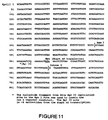
- the transcriptional regulatory element is a 7.2 kb fragment extending from the Bgl II site to the Kpn I site as shown in Figure 3 and comprising the partial nucleotide sequence extending from nucleotide 1 to the Bgl II site as shown in Fig. 11.
- the specification further discloses a method of preparing the transcriptional regulatory element.
- the transcriptional regulatory element may be constructed by synthesis and ligation of DNA oligomers.
- the element may also be isolated by selectively amplifying the region of the transcriptional regulatory element using the polymerase chain reaction method and genomic DNA.
- the specification also permits the construction of nucleotide probes which are unique or substantially homologous to the transcriptional regulatory element of the invention.
- the probe may be labelled, for example, with a radioactive substance and it may be used to select from a mixture of nucleotide sequences a transcriptional regulatory element of the invention or an element homologous thereto.
- the invention also relates to a recombinant molecule adapted for transformation of a host cell comprising a transcriptional regulatory element of the invention and a gene operatively linked to the transcriptional regulatory element.
- a transformant host cell including a recombinant molecule of the invention is also provided.
- this invention provides plasmids which comprise the transcriptional regulatory element of the invention.
- a recombinant molecule comprising the transcriptional regulatory element of the invention operatively linked to a gene and a reporter gene is provided.
- the recombinant molecules of the invention may be used to produce transgenic non-human mammals. Accordingly the specification describes a method of producing a transgenic non-human mammal characterized as having a plurality of cells containing a recombinant molecule of the invention, or an ancestor of the mammal at an embryonic stage, comprising (a) introducing the recombinant molecule into a pronucleus of a mammalian zygote by microinjection, said zygote being capable of development into a mammal, thereby obtaining a genetically transformed zygote; (b) transplanting an embryo derived from the genetically transformed zygote into a pseudo-pregnant female capable of bearing the embryo to term and (c) if desired allowing the embryo to develop to term.
- the invention further relates to a transgenic non-human mammal all of whose germ cells and somatic cells contain a recombinant molecule of the invention as a result of chromosomal incorporation into the non-human mammal genome, or into the genome of an ancestor of said mammal at an embryonic stage.
- the specification further discloses cell cultures of cells of the transgenic mammals.
- the invention also relates to a method of determining the affect of a substance on cells of the endothelial lineage comprising the use of a transgenic non-human mammal of the invention or the ancestor of said mammal at an embryonic stage.
- the description also describes a method of determining the affect of a substance on cells of the endothelial lineage comprising producing a transgenic non-human mammal characterized as having a plurality of cells containing a recombinant molecule comprising the transcriptional regulatory element of the invention operatively linked to a gene and a reporter gene encoding a phenotype which is not displayed by the mammal, or an ancestor of the mammal at an embryonic stage, comprising (a) introducing the recombinant molecule into a pronucleus of a mammalian zygote by microinjection, said zygote being capable of development into a mammal, thereby obtaining a genetically transformed zygote; (b) transplanting an embryo derived from the genetically transformed zygote into a pseudo-pregnant female capable of bearing the embryo to term and (c) isolating the embryo or allowing the embryo to develop to term, (d) assaying for the pheno
- the human homolog of tek has been recently reported by Ziegler, G. F. et al., Oncogene 8:663-670, (1993).
- the tek locus was mapped to chromosome 4, between the brown and pmv-23 loci. This region is syntenic with human chromosomal regions 1p22-32, 9q31-33, and 9p22-13.
- the deduced amino acid sequence of tek predicts that it encodes a putative receptor tyrosine kinase that contains a 21 amino acid kinase insert and which is most closely related in its. catalytic domain to FGFR1 (mouse fibroblast growth factor) and the product of the ret proto-oncogene.
- Figure 1 shows the nucleotide and deduced amino acid sequence of tek. The present inventors have also identified the initiation site of translation of tek.
- tek expression was found to be restricted to cells of the endothelial lineage. Specifically, in situ hybridization analysis of adult tissues, as well as sectioned and whole mount embryos, showed that tek is specifically expressed in the endocardium, the leptomeninges and the endothelial lining of the vasculature from the earliest stages of their development. Moreover, examination of the morphology of tek -expressing cells, and staging of tek expression relative to that of the endothelial cell marker von Willebrand factor, revealed that tek is expressed prior to von Willebrand factor and appears to mark the embryonic progenitors of mature endothelial cells.
- the present inventors have identified a transeriptional regulatory element located upstream of tek which specifically directs expression of a gene in cells of the endothelial lineage.
- the transcriptional regulatory element has been found to direct expression in both mature and progenitor endothelial cells.
- the present inventors isolated a DNA segment from a mouse genomic bacteriophage library using a 5'-prime probe which contained the initiation codon and untranslated sequences of tek using the procedures of Sambrook et al., 1989, Molecular Cloning, A Laboratory Manual. Cold Spring Harbour Lab. Press.
- a 16 kb phage clone was shown by hybridization and sequence analysis to contain a single exon with 175 bp homologous to the cDNA.
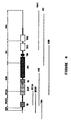
- a DNA fragment extending from the Bgl II restriction site located at nucleotide 110 of the cDNA to the nearest Kpn I in the phage was cloned upstream of the bacterial gene lacZ (see Figure 3).
- This reporter construct containing 7.2 kb of the tek gene was microinjected into pronuclei of fertilized randomly bred CD-1 mice using procedures as set out in Hogan et al. (1986, Manipulating the Mouse Embryo, A Laboratory Manual. Cold Spring Harbor Lab. Press). Three transgenic founder embryos were dissected from their foster mothers and yolk sac DNA analyzed for the presence of the transgene. Expression of the transgene was determined by the X-gal staining of whole embryos and subsequent sectioning of the embryos. The 7.2 kb fragment was able to drive lacZ expression in endothelial cells that had previously been shown to express tek RNA thus demonstrating that this DNA contained the tek transcriptional regulatory element.
- the partial nucleotide sequence of the transcriptional regulatory element is shown in Figure 11.
- the description further provides a method of preparing the transeriptional regulatory element.
- the transcriptional regulatory element may be isolated by selectively amplifying the region of the transcriptional regulatory element using the polymerase chain reaction method and genomic DNA. It is possible to design synthetic oligonucleotide primers from the sequence shown in Figure 11 for use in PCR and for screening genomic libraries, in particular human genomic libraries. An amplified fragment can be cloned and characterized by DNA sequence analysis. The nucleotide sequence of the transcriptional regulatory element will also permit the element to be constructed by synthesis and ligation of DNA oligomers.
- the transcriptional regulatory element may be proven functional by assessing the transient expression of a construct bearing a reporter gene. For example, using the reporter gene for B-galactosidase (LacZ) or chloramphenicol acetyltransferase (CAT) after transfection of the DNA into host cells.
- LacZ B-galactosidase
- CAT chloramphenicol ace
- nucleotide sequences can be used which have substantial sequence homology with the nucleotide sequence of the transcriptional regulatory element of the invention.
- sequences having substantial sequence homology means those sequences which have slight or inconsequential sequence variations i.e. the homologous sequences function in substantially the same manner to produce substantially the same result as the actual sequence. The variations may be attributable to local mutations or structural modifications.
- the specification also permits the construction of nucleotide probes which are unique to the transcriptional regulatory element of the invention.
- the specification also relates to a probe comprising a nucleotide sequence substantially homologous to the transcriptional regulatory . element of the invention.
- the probe may be labelled and it may be used to select from a mixture of nucleotide sequences a transcriptional regulatory element of the invention or an element substantially homologous thereto.
- a nucleotide probe may be labelled with a radioactive label which provides for an adequate signal and has sufficient half-life such as 32 P, 3 H, 14 C or the like.
- labels which may be used include antigens that are recognized by a specific labelled antibody, fluorescent compounds, enzymes, antibodies specific for a labelled antigen, and chemiluminescent substances.
- An appropriate label may be selected having regard to the rate of hybridization and binding of the probe to the nucleotide to be detected and the amount of nucleotide available for hybridization.
- the invention also relates to a recombinant molecule adapted for transformation of a host cell comprising a transcriptional regulatory element of the invention and a gene operatively linked thereto.
- the transcriptional regulatory element of the invention operatively linked to a gene may be incorporated in a known manner into a recombinant molecule which ensures good expression of the protein encoded by the gene.
- the transcriptional regulatory element of the invention may be incorporated into a plasmid vector, for example, a retroviral vector, pECE.
- the transcriptional regulatory element of the invention may be operatively linked to a reporter gene or a gene encoding a substance which has toxic or therapeutic activity including a factor which modulates angiogenesis. Examples of reporter genes, factors which modulate angiogenesis, and substances with toxic or therapeutic activity are discussed below.
- a transformant host cell including a recombinant molecule of the invention and a cell line containing such transformant host cells is also provided.
- suitable host cells include human endothelial cells such as umbilical vein endothelial cells and rabbit aortic endothelial cells.
- the invention also relates to a recombinant molecule comprising a transcriptional regulatory element of the invention operatively linked to a gene and a reporter gene.
- the reporter gene may be introduced into the recombinant molecule using conventional methods such as those described in Sambrook et al., 1989, Molecular Cloning, A Laboratory Manual. Cold Spring Harbour Lab. Press.
- the recombinant molecule may also be synthetically produced using conventional methods. Further, the recombinant molecule may be introduced into a host cell using conventional methods.
- the reporter gene should be under the control of the transcriptional regulatory element and the pattern and extent of expression of the gene operatively linked to the transcriptional regulatory element may accordingly be determined in cells of the endothelial lineage.
- the reporter gene codes for a phenotype not displayed by the host cell and the phenotype may be assayed quantitatively.
- reporter genes include lacZ (B-galactosidase), neo (neomycin phosphotransferase), cat (chloramphenicol acetyltransferase) dhfr (dihydrofolate reductase), aphIV (hygromycin phosphotransferase), lux (luciferase), uidA (B-glucuronidase).
- the reporter gene is lacZ which codes for B-galactosidase.
- B-galactosidase may be assayed using the lactose analogue X-gal(5-bromo-4-chloro-3-indolyl-b-D-galactopyranoside) which is broken down by B-galactosidase to a product that is blue in color.
- lactose analogue X-gal(5-bromo-4-chloro-3-indolyl-b-D-galactopyranoside) which is broken down by B-galactosidase to a product that is blue in color.
- the recombinant DNA of the invention may be used to produce transgenic non-human mammals. Accordingly the description also teaches a method of producing a transgenic non-human mammal characterized as having a plurality of cells containing a recombinant molecule of the invention, or an ancestor of the mammal at an embryonic stage, comprising (a) introducing the recombinant molecule into a pronucleus of a mammalian zygote by microinjection, said zygote being capable of development into a mammal, thereby obtaining a genetically transformed zygote; (b) transplanting an embryo derived from the genetically transformed zygote into a pseudo- pregnant female capable of bearing the embryo to term and (c) if desired, allowing the embryo to develop to term.
- the invention further relates to a transgenic non-human mammal all of whose germ cells and somatic cells contain a recombinant molecule of the invention introduced into the animal, or an ancestor of the mammal at an embryonic stage.
- plasmids containing recombinant molecules of the invention are microinjected into mouse embryos.
- the plasmids are injected into the male pronuclei of fertilized one-cell mouse eggs; the injected eggs are transferred to pseudo-pregnant foster females; and, the eggs in the foster females are allowed to develop to term.
- mice Although experimental animals used were mice, the method should not be limited thereto. It may be desirable to use other species such as rats, hamsters and rabbits.
- the invention also relates to a method of determining the affect of a substance on cells of the endothelial lineage comprising the use of a transgenic non-human mammal of the invention characterized as having a plurality of cells containing a recombinant molecule comprising the transcriptional regulatory element of the invention operatively linked to a gene, or an ancestor of the mammal at an embryonic stage, which mammal has been obtained by (a) introducing the recombinant molecule into a pronucleus of a mammalian zygote by microinjection, said zygote being capable of development into a mammal, thereby obtaining a genetically transformed zygote; (b) transplanting an embryo-derived from the genetically transformed zygote into a pseudo-pregnant female capable of bearing the embryo to term and (c) isolating the embryo or allowing the embryo to develop to term, and (d) determining the affect of the substance on cells of the endothelial line
- a method of determining the affect of a substance on cells of the endothelial lineage comprising the use of a transgenic non-human mammal of the invention characterized as having a plurality of cells containing a recombinant molecule comprising a transcriptional regulatory element of the invention linked to a gene encoding the substance, and a reporter gene encoding a phenotype which is not displayed by the mammal, or an ancestor of the mammal at an embryonic stage, which mammal has been obtained by (a) introducing the recombinant molecule into a pronucleus of a mammalian zygote by microinjection, said zygote being capable of development into a mammal, thereby obtaining a genetically transformed zygote; (b) transplanting an embryo derived from the genetically transformed zygote into a pseudo-pregnant female capable of bearing the embryo to term and (c) if desired, allowing the embryo to
- the reporter gene should be under the control of the transcriptional regulatory element and accordingly the pattern and extent of expression of a gene operatively linked to the transcriptional regulatory element may be determined by assaying for the phenotype of the reporter gene.
- the reporter gene codes for a phenotype not displayed by the host cell and the phenotype may be assayed quantitatively.
- reporter genes include lacz ( ⁇ -galactosidase), neo (neomycin phophotransferase), cat (chloramphenicol acetyltransferase) dhfr (dihydrofolate reductase), aphIV (hygromycin phosphotransferase), lux (luciferase), uidA ( ⁇ -glucuronidase).
- the reporter gene is lacZ which codes for ⁇ -galactosidase.
- ⁇ -galactosidase may be assayed using the lactose analogue X-gal (5-bromo-4-chloro-3-indolyl-p-D-galactopyranoside) which is broken down by ⁇ -galactosidase to a product that is blue in color.
- lactose analogue X-gal 5-bromo-4-chloro-3-indolyl-p-D-galactopyranoside
- ⁇ -galactosidase may be assayed using the lactose analogue X-gal (5-bromo-4-chloro-3-indolyl-p-D-galactopyranoside) which is broken down by ⁇ -galactosidase to a product that is blue in color.
- Cells of the transgenic mammals of the invention and produced as described herein may be cultured using standard tissue culture techniques.
- the present invention allows the manipulation of endothelial cell physiology by targeting expression of a substance in cells of the endothelial lineage in a mammal.
- the above described methods, transgenic animals and cell cultures derived therefrom, can therefore be used to assess the role of a substance in the determination, migration, or proliferation of cells of the endothelial lineage.
- the invention provides a mechanism for investigating vascularization of tumors and the control of angiogenesis.
- a transgenic mammal may be produced which expresses a substance exclusively in cells of the endothelial lineage.
- a comparison of endothelial phenotype, morphology, and function using for example immunohistochemical techniques and assays for LDL receptors, and of the pattern and extent of expression of the substance in the animal with a control transgenic animal will provide an indication of the affect of the substance on cells of the endothelial lineage.
- angiogenic factors include substances derived from human and animal tissues which stimulate the proliferation or migration of normally quiescent endothelial cells in culture or promote neovascularization in vivo including factors which are associated with the vascularization that permits tumor growth; substances which are inhibitors of angiogenesis such as transforming growth factor ⁇ , tumor necrosis factor a, human platelet factor 4 (PF4) and a interferon; substances which suppress cell migration, such as proteinase inhibitors which inhibit proteases which may be necessary for penetration of the basement membrane, in particular, tissue inhibitors of metalloproteinase TIMP-1 and TIMP-2; and other proteins such as protamine which has demonstrated angiostatic properties.
- angiogenesis such as transforming growth factor ⁇ , tumor necrosis factor a, human platelet factor 4 (PF4) and a interferon
- substances which suppress cell migration such as proteinase inhibitors which inhibit proteases which may be necessary for penetration of the basement membrane, in particular, tissue inhibitors of metalloproteinase TIMP-1 and T
- the transcriptional regulatory element of the invention may be used in gene therapy to introduce a foreign gene into endothelial cells to correct or prevent vascular disorders.
- the transcriptional regulatory element of the invention may be used to express foreign genes at specific sites in the circulation. Endothelial cells are found at diseased sites and accordingly, the transcriptional regulatory element of the invention may be used to target therapeutic agents including anticoagulants, vasodilator, and angiogenic factors (see above discussion) to endothelial cells found at diseased sites.
- genetic modification of endothelial cells utilizing the transcriptional regulatory element of the invention may be used in the treatment of acquired vascular disorders such as hypertension, atherosclerosis restenosis, arthritis and cancer.
- Endothelial cells line all blood vessels and accordingly the transcriptional regulatory element of the invention may be used to target therapeutic agents into the bloodstream.
- genetic modification of endothelial cells utilizing the transcriptional regulatory element of the invention may also be used in the treatment of systemic or inherited disorders.
- the transcriptional regulatory element of the invention could be operatively linked to the factor VIII gene and introduced into a population of endothelial cells to correct a hemophilia disorder.
- Endothelial cells genetically modified in vitro using the transcriptional regulatory element of the invention i.e transformant host cells or cell lines containing transformant host cells of the invention, may be used to deliver gene products to the vasculature.
- endothelial cells genetically modified in vitro using the transcriptional regulatory element of the invention may be introduced into the vascular wall by catheterization.
- therapeutic proteins may be introduced into diseased arterial segments. The method may be particularly useful for introducing growth inhibitor proteins into an angioplasty site in patients with restenosis who have undergone coronary angioplasty.
- Endothelial cells genetically modified in vitro using the transcriptional regulatory element of the invention may be used to improve the performance of prosthetic vascular grafts.
- Prosthetic vascular grafts may be seeded with endothelial cells genetically modified using the transcriptional regulatory element of the invention, to produce therapeutic proteins which may prevent thrombosis or promote repopulation.
- vascular stents may also be populated with genetically modified endothelial cells to reduce problems such as thrombosis.
- a gene under the control of the transcriptional regulatory element of the invention i.e recombinant molecules of the invention may be directly introduced into endothelial cells in vivo using delivery vehicles such as retroviral vectors, adenoviral vectors and DHA virus vectors. They may also be introduced into endothelial cells in vivo using physical techniques such as microinjection and electroporation or chemical methods such as coprecipitation and incorporation of DNA into liposomes.
- AKR/J, DBA, and AKR/J x DBA recombinant inbred mouse DNAs were obtained from Jackson Labs (Bar Harbor, Maine), digested with Acc I, blotted to Zeta-Probe nylon membrane (Bio-Rad), and probed with the 1.6 kb tek cDNA labelled by random priming (Feinberg, A. P. & Vogelstein, B. (1983) Analyt. Biochem ., 132, 6-13). Hybridization was performed overnight at 65° in 200 mM sodium phosphate pH7.0, 7% sodium dodecyl sulfate (SDS), 1% bovine serum albumin (BSA), and 1 mM EDTA.
- SDS sodium dodecyl sulfate
- BSA bovine serum albumin
- Embryos and adult mouse tissues were obtained from random bred CD-1 stocks (Charles River, Quebec). Embryos were staged as Day 0.5 on the morning of a vaginal plug.
- PBS phosphate buffered saline
- RNA was precipitated with an equal volume of isopropanol, collected by centrifugation, and the pellet resuspended in diethylpyrocarbonate (DEPC)-treated 0.4 M sodium acetate, pH5.2.
- DEPC diethylpyrocarbonate
- the RNA were then precipitated with two volumes of 95% ethanol, washed with 70% and 95% ethanol, dried, and resuspended in DEPC treated 0.3 M sodium acetate, pH5.2.
- the RNA concentration was determined and the RNA stored at -70° until use.
- Poly A - containing RNA was purified from a pool of 100 to 150 Day 12.5 murine embryonic hearts with a QuickPrep mRNA isolation kit (Pharmacia) as outlined by the supplier.
- First strand cDNA was synthesized in a total reaction volume of 20 ⁇ l containing 20 ⁇ g of total RNA, 200 units of Mo-MLV-reverse transcriptase (BRL), either 1 ⁇ g of oligo-d(T) 18 (Day 12.5 RNA) (Boerhinger Mannheim) or 2 ⁇ g of random hexamer primers (Day 9.5 RNA) (Boerhinger Mannheim), 1 x PCR buffer (Cetus), 2.5 mM NgCl 2 , 1 mM of dNTPs (Pharmacia), 40 units of RNAsin (Promega), and 12.5 mM dithiothreitol.
- BTL Mo-MLV-reverse transcriptase
- RNA was heated to 65°C for 10 min and cooled quickly on ice prior to addition to the reaction components. The reaction was allowed to proceed for 1 h at 37° and then terminated by heating for 5 min at 95°.
- the reaction mixture was adjusted to a final volume of 100 ⁇ l containing 1 x PCR buffer, 1.5 mM MgCl 2 , 800 ⁇ M dNTPs, and 1 ⁇ g of each of the two degenerate tyrosine kinase oligonucleotide primers described by Wilks, A.F. (1989) Proc. Natl. Acad. Sci ., 86, 1603-1607.
- Amplification was performed with a Ericomp thermocycler using the following parameters: denaturation for 2 min at 94°, annealing for 2 min at 42°, and extension for 4 min at 63°. After 40 cycles, the reaction products were collected by ethanol precipitation and electrophoresed through at 2% low-melt agarose (Sea Plaque) gel. In most cases a band of approximately 200 bp was visible within a background smear of ethidium bromide staining. This band was excised and recovered by three cycles of freeze-thaw in 100 ul of water. 10 ul of this solution was then subjected to a second round of PCR under the same conditions described above.
- Embryos isolated on Day 12.5 were dissected away from all extraembryonic tissues whereas embryos at earlier time points were recovered in utero . Embryos and adult tissues were fixed overnight in 4% paraformaldehyde, dehydrated with alcohols and xylenes, and embedded in paraffin. Tissues were sectioned at 6 ⁇ m thickness and mounted on 3-aminopropyltriethoxysilane treated slides (Sigma). After removal of paraffin the samples were treated with predigested pronase (Boerhinger Mannheim), acetylated with triethanolamine, dehydrated, and hybridized according to the protocol described by Frohman, N.B., Boyle, M. & Martin, G.R. (1990), Development, 110, 589-607.
- Sections were stained immunohistochemically for von Willebrand factor with a commercially available kit (Biomeda). After color development, slides were counterstained with Harris hematoxylin.
- cDNAs were synthesized from 9.5 and 12.5 day embryonic heart RNA by RT-PCR using degenerate oligonucleotide primers previously demonstrated to amplify tyrosine kinase sequences preferentially (Wilks, A.F. 1989, Proc.Natl.Acad.Sci ., 86, 1603-1607).
- Considerable cellular differentiation and morphogenesis have occurred within the cardiac region of the embryo by Day 9.5.
- the heart has developed from the primordial mesoderm cells of the cardiac plate into a primitive bent tube structure, consisting of two endothelial tubes enclosed within the developing myocardium.
- pdgfrb plays an important role in cardiogenesis, as has been suggested by recent studies demonstrating that the addition of PDGF-BB to explants of axolotol cardiac field mesoderm stimulates the production of beating bodies (Muslin, A.J. & Williams, L.T. (1991). Development, 112, 1095-1101) the fifth cDNA, which was also isolated at high frequency, was novel and for reasons that will become clear below was designated tek .
- the 210 bp RT-PCR-derived tek clone was subsequently used to isolate additional tek cDNA sequences.
- Figure 2 shows the nucleotide sequence of a 1.6 kb tek cDNA isolated from a 13.5 day mouse embryo cDNA library. Translation of this sequence reveals a single large open reading frame that terminates with TAG at nucleotide 907, followed by 696 nucleotides of 3° untranslated sequence.
- 1.6 kb tek cDNA encodes the cytoplasmic portion of a transmembrane RTK, consisting of the catalytic domain followed by a short carboxy-terminal tail of 33 amino acid residues.
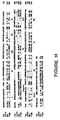
- Figure 14 shows a comparison of the deduced amino acid sequence of tek with that of other tyrosine kinases; Identical sequences are denoted by periods. Dashes were added to allow for optimal alignment. The kinase insert and conserved regions of the catalytic domain are indicated beneath the aligned sequences (Hanks, S.K., Quinn, A.M. & Hunter, T. (1988), Scie n ce , 241, 52). Comparative sequences shown are for human Ret (Takahashi, M. & Cooper, G.M. (1987).
- the putative kinase domain contains several sequence motifs conserved among tyrosine kinases, including the tripeptide motif DFG, which is found in almost all known kinases, and the consensus ATP-binding site motifs GXGXXG followed by AXK 16 amino acid residues downstream (Hanks et al ., 1988).
- Transmembrane RTK's possess a methionine residue within the motif WMAIESL of conserved region VIII of the catalytic domain (Hanks et al ., 1988) as does tek , and the catalytic domain is interrupted by a putative 21 amino acid kinase insert, a structural motif not found in cytoplasmic tyrosine kinases (Hanks et al ., 1988).
- Mapping of the tek locus was accomplished by monitoring the strain distribution pattern of an Acc I. restriction site polymorphism in recombinant inbred (RI) mouse strains derived from matings between AKR/J (A) and DBA/2J (D) mice.
- the tek cDNA detects bands of 6.5, 6.1, 1.3 and 6.5, 3.1, 1.3 kb in DNA from the A and D strains, respectively.
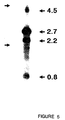
- tek expression in embryonic heart was examined by Northern blot hybridization using an antisense probe derived from the 1.6 kb tek cDNA.
- Figure 5 shows a Northern blot hybridization analysis of tek expression in 12.5 day murine embryonic heart; Arrows on the left denote the position of migration of 28 S and 18 S ribosomal RNAs obtained from adjacent lane loaded with total RNA.
- Figure 5 shows that the tek probe detects 4 transcripts of 4.5, 2.7, 2.2, and 0.8 kb in size in cardiac RNA from 12.5 day mouse embryos. These hybridizing species vary considerably in signal intensity, suggesting that they may differ in relative abundance, with expression of the 2.7 and 2.2 kb transcripts occurring at significantly higher levels than the 4.5 and 0.8 kb RNAs. While the exact relationship among these transcripts is unclear, it is possible that they arise by differential splicing, since the 1.6 kb tek cDNA.detects a single genomic locus in mouse DNA by Southern blot hybridization at the same stringency.
- RNA in situ hybridization analyses were performed on mouse embryos with an antisense riboprobe synthesized from the 1.6 kb tek cDNA.
- Figure 6 shows the in situ hybridization analysis of tek expression in the 12.5 day embryo;
- A Dark field illumination of a para-sagittal section. Bar: 600 ⁇ m.
- B. and C Bright and dark field illumination respectively, of the heart region taken from a mid-sagittal section. Bar: 300 ⁇ m.
- IV and VI fourth and sixth aortic arches;
- A atrium; BA, basilar artery; CV, caudal vein;
- E endocardium; L, liver; M, leptomeninges; Ma, mandible; My, myocardium; PC, pericardial cavity;
- RA renal artery;
- Figure 6A shows that in 12.5 day mouse embryos, expression of tek is readily detected in the heart, the leptomeninges lining the brain and spinal cord, and the inner lining of major blood vessels, including the caudal vein and basilar and renal arteries. In addition, thin bands of hybridization are observed in the intersomite regions, corresponding to tek expression in the intersegmental vessels. Close examination of the region of the developing heart ( Figure 6B and 6C) reveals that tek is expressed in the endocardium, as well as in cells lining the lumina of the atria, the IV and VI aortic arches, the sinus venosus, and the sino-auricular septum.
- tek expression is observed in numerous small blood vessels perforating the liver and mandible. These observations, together with the overall pattern of hybridization seen in the 12.5 day embryo, demonstrate that tek is expressed in the endothelial cells of the tunica interna , the innermost lining of the blood vessels; hence the designation tunica interna endothelial cell kinase, tek.
- tek expression was obtained through analysis of sections from earlier developmental stages. Hybridization to 6.5 and 7 day embryos revealed that while tek is expressed strongly in the inner lining of the small blood vessels and capillaries of the maternal decidua, no expression is observed in either the embryo itself or the ectoplacental cone. The absence of tek expression at these stages is consistent with the fact that at 6.5 to 7 days the embryo contains only a small amount of mesoderm from which endothelial cells are known to be derived.
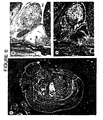
- Figure 7 shows the expression of tek precedes that of von Willebrand factor in 8.5 day embryos; Adjacent transverse sections through an 8.5 day embryo fixed in utero were either hybridized in situ with an [ 35 S]-labelled tek probe or stained immunohistochemically for von Willebrand factor.
- D Adjacent section to A at higher magnification showing absence of expression of von Willebrand factor in the embryo, Bar: 100 ⁇ m.
- H Dark field illumination of G.
- A amnion
- Ag presumptive angioblast
- BI blood island
- D maternal decidua
- DA dorsal aorta
- E endocardium
- Ec ectoplacental cone
- En endothelial cell
- G foregut
- HV head vein
- NF neural fold
- S somite
- Y yolk sac.
- RNA in situ analysis of 8.0 day embryos revealed that tek expression first becomes detectable in the developing yolk sac and a few small clusters of cells in the cephalic mesenchyme. This expression becomes more pronounced by Day 8.5, at which time significant hybridization can be observed in the mesodermal component of the amnion (outer cell layer) and yolk sac (inner cell layer), as well as in the developing endocardium and the inner lining of the head veins and dorsal aortae ( Figure 7A and 7B).
- sagittal sections reveal numerous focal areas of hybridization throughout the cephalic mesenchyme in regions thought to contain developing vasculature, as well as a small number of tek -expressing cells extending beneath the ventral surface of the somites ( Figure 7H and 7J).
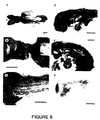
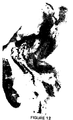
- FIG. 8 shows tek expression in whole mount embryos; A., B., C. and D. tek expression in Day 8.0 embryos. E. tek mRNA distribution in a Day 9.5 embryo. F. En2 expression in a Day 8 embryo. I, II, III, first, second and third aortic arches; DA. dorsal aorta; E, endocardium; G, foregut pocket; H, heart; IS, intersegmental vessel; My, myocardium; ; NF, neural fold; OT; otic vesicle; V, vitelline vein; Y, yolk sac. Bars: 250 ⁇ m.
- FIG. 7B and H shows that whereas tek is expressed in both the maternal decidua and the embryo at Day 8.5, expression of von Willebrand factor is observed only in the tek -expressing, vascular endothelial cells of the maternal decidua ( Figure 7D and 7E). Hence tek expression precedes that of von Willebrand factor during embryogenesis. The same scenario is observed at later developmental stages during vascularization of individual organs.
- Figure 9 shows the expression of tek precedes that of von Willebrand factor in the developing leptomeninges;
- A Absence of immunohistochemical staining of von Willebrand factor in Day 12.5 leptomeninges. Arrow denotes a large blood vessel faintly positive for von Willebrand factor.
- B In situ detection of tek expression in Day 12.5 leptomeninges.
- C Staining of von Willebrand factor in Day 14.5 leptomeninges. Day 14.5 leptomeninges were positive for tek expression (not shown).
- M leptomeninges. Bars: 200 ⁇ m.
- Figure 9 shows that in the 12.5 day embryo, the developing leptomeninges hybridizes strongly with tek but fails to stain positive for von Willebrand factor. By Day 14.5, however, expression of von Willebrand factor can be readily detected in the leptomeninges. Assuming that there is not a significant lag between transcription and translation of von Willebrand factor, these observations, together with those on the morphology of tek -expressing cells, suggest that tek is expressed in both mature endothelial cells and their progenitors.
- tek is expressed in adult vasculature
- Figure 10 shows the expression of tek in adult vasculature.
- A Bright field illumination of a section through the upper heart region of a 3 week-old mouse hybridized with an [ 35 S]-labelled tek probe. Bar: 20 ⁇ m.
- B. and C
- the intensity of the hybridization signal observed for these structures is considerably lower than that observed for the endocardium and blood vessels of 12.5 day embryos hybridized and processed in parallel. This could indicate that mature endothelial cells, which are thought to be resting, have a different quantitative or qualitative requirement for expression of tek .
- a DNA segment was isolated from a mouse genomic bacteriophage library using a 5'-prime probe, consisting of nucleotides 0 to 912 of the tek cDNA, which contained the initiation codon and untranslated sequences of tek using the procedures of Sambrook et al., 1989, Molecular Cloning, A Laboratory Manual. Cold Spring Harbour Lab. Press.
- the DNA segment was cloned in the plasmid pGEm72F + and propagated in E. coli K12.
- a 16 kb phage clone was shown by hybridization with this 5'-prime probe and sequence analysis using oligonucleotides specific for the cDNA sequence and the plasmid backbone, to contain a single exon with 175 bp homologous to the cDNA.
- a DNA fragment extending from the Bgl II restriction site located at nucleotide 110 of the cDNA to the nearest Kpn I in the phage was cloned upstream of the bacterial gene lacZ.
- This reporter construct containing 7.2 kb of the tek gene was microinjected into pronuclei of fertilized randomly bred CD-1 mice using procedures as set out in Hogan et al., 1986, Manipulating the Mouse Embryo, A Laboratory Manual. Cold Spring Harbor Lab. Press. Three transgenic founder embryos were dissected from their foster mothers and yolk sac DNA analyzed for the presence of the transgene. Expression of the transgene was determined by the X-gal staining of whole embryos and subsequent sectioning of the embryos. Figure 12 shows expression of LacZ in Day 8.5 embryos and Figure 13 shows mRNA distribution in a Day 8.5 embryo.
Landscapes
- Health & Medical Sciences (AREA)
- Life Sciences & Earth Sciences (AREA)
- Engineering & Computer Science (AREA)
- Chemical & Material Sciences (AREA)
- Bioinformatics & Cheminformatics (AREA)
- Organic Chemistry (AREA)
- Genetics & Genomics (AREA)
- General Health & Medical Sciences (AREA)
- Zoology (AREA)
- Biotechnology (AREA)
- Wood Science & Technology (AREA)
- Veterinary Medicine (AREA)
- Animal Behavior & Ethology (AREA)
- Medicinal Chemistry (AREA)
- General Engineering & Computer Science (AREA)
- Biomedical Technology (AREA)
- Molecular Biology (AREA)
- General Chemical & Material Sciences (AREA)
- Public Health (AREA)
- Chemical Kinetics & Catalysis (AREA)
- Pharmacology & Pharmacy (AREA)
- Nuclear Medicine, Radiotherapy & Molecular Imaging (AREA)
- Environmental Sciences (AREA)
- Microbiology (AREA)
- Biochemistry (AREA)
- Cardiology (AREA)
- Heart & Thoracic Surgery (AREA)
- Animal Husbandry (AREA)
- Biophysics (AREA)
- Plant Pathology (AREA)
- Biodiversity & Conservation Biology (AREA)
- Physics & Mathematics (AREA)
- Urology & Nephrology (AREA)
- Vascular Medicine (AREA)
- Micro-Organisms Or Cultivation Processes Thereof (AREA)
- Saccharide Compounds (AREA)
- Medicines That Contain Protein Lipid Enzymes And Other Medicines (AREA)
- Pharmaceuticals Containing Other Organic And Inorganic Compounds (AREA)
- Enzymes And Modification Thereof (AREA)
- Measuring Or Testing Involving Enzymes Or Micro-Organisms (AREA)
Claims (13)
- Isoliertes regulatorisches Transkriptionselement, das die Expression eines Gens in Zellen der Endothellinie leitet, umfassend ein 7,2 kb Fragment, das von der Bgl II Restriktionsstelle bis zur Kpn I Restriktionsstelle wie in Fig. 3 sich erstreckt und umfassend eine partielle Nukleotidsequenz, die sich vom Nukleotid 1 der Bgl II-Stelle, wie in Fig. 11 gezeigt, erstreckt.
- Rekombinantes DNA-Molekül, umfassend eine regulatorisches Transkriptionselement nach Anspruch 1 sowie ein funktionell damit verbundenes Gen.
- Rekombinantes DNA-Molekül nach Anspruch 2, wobei das Gen ein Reportergen ist.
- Rekombinantes DNA-Molekül nach Anspruch 2, wobei das Gen eine toxische oder therapeutische Substanz oder einen angiogenen Faktor kodiert.
- Rekombinantes DNA-Molekül, umfassed ein regulatorisches Transkriptionselement nach Anspruch 1, das funktionell mit einem Gen und einem Reportergen verbunden ist.
- Rekombinantes DNA-Molekül nach Anspruch 3 oder 5, wobei das Reportergen das lacZ-Gen ist, das β-Galactosidase kodiert, das neo-Gen, das Neomycin-Phosphotransferase kodiert, das cat-Gen, das Chlorampehnicol-Acetyltransferase kodiert, das dhfr-Gen, welches die Dihydrofolat-Reduktase kodiert, ein aphIV-Gen, welches die Hydromycin-Phosphortransferase kodiert, ein lux-Gen, welches die Luciferase kodiert, oder ein uidA-Gen, welches β-Glucuronidase kodiert.
- Wirtszelle, in der ein rekombinantes Molekül nach irgendeinem der vorhergehenden Ansprüche 3 bis 6 eingeführt ist.
- Wirtszelle nach Anspruch 7, welche eine genetisch transformierte nicht-humane Zygote ist, erhalten durch ein Verfahren umfassend den Schritt des Einführens eines rekombinanten Moleküls nach irgendeinem der Ansprüche 3 bis 6 in einen Pronukleus einer nicht-menschlichen Säugetierzygote durch Mikroinjektion und erhalten einer nicht-menschlichen Zygote, die sich zu einem Säugetier entwickeln kann.
- Transgener nicht-humaner Embryo, dessen Keimzellen und somatische Zellen ein rekominantes Molekül enthalten nach irgendeinem der Ansprüche 3 bis 6 als Ergebnis eines Chromosomeneinbaus in das nicht-menschliche Säugetiergenom.
- Transgenes nicht-humanes Säugetier, dessen Keim- und somatische Zellen ein rekombinantes Molekül nach irgendeinem der Ansprüche 3 bis 6 enthalten, als Ergebnis eines Chromosomeneinbaus in das nicht-menschliche Säugetiergenom, oder in das Genom eines Vorläufers des Säugetiers im Embyonalstadium.
- Transgenes nicht-humanes Säugetier nach Anspruch 10, oder der Vorläufer des nicht-humanes Säugetiers nach Anspruch 10 im Embryonenstadium, wobei das rekombinante Molekül ein Reportgen enthält, das einen Phenotyp kodiert, der nicht vom nicht-menschlichen Säugetier dargestellt wird, oder vom Vorläufer des nicht-menschlichen Säugetiers, so dass der Phenotyp des Reportergens in dem transgenen nicht-menschlichen Säugetier, oder dem Vorläufer des nicht-menschlichen Säugetiers, bestimmt werden kann und so das Muster und das Ausmaß der Expression des Gens.
- Transgenes nicht-humanes Säugetier nach Anspruch 10, wobei das regulatorische Transkriptionselement funktionell verbunden ist mit einem Gen, das eine zu testende Substanz kodiert auf dessen Fähigkeit, die Zellen aus der Endothellinie zu beeinflussen.
- Verwendung des transgenen nicht-humanen Säugetiers nach Anspruch 10, 11 oder 12, oder des Vorläufers des Säugetiers nach Anspruch 10, 11 oder 12 im Embyonalstadium, in einem Verfahren zur Bestimmung der Wirkung einer Substanz auf Zellen der Endothellinie.
Applications Claiming Priority (3)
| Application Number | Priority Date | Filing Date | Title |
|---|---|---|---|
| US934393 | 1992-08-25 | ||
| US07/934,393 US5466596A (en) | 1992-08-25 | 1992-08-25 | Tissue specific transcriptional regulatory element |
| PCT/CA1993/000352 WO1994004694A1 (en) | 1992-08-25 | 1993-08-25 | Endothelial lineage specific transcriptional regulatory element from tek |
Publications (2)
| Publication Number | Publication Date |
|---|---|
| EP0658209A1 EP0658209A1 (de) | 1995-06-21 |
| EP0658209B1 true EP0658209B1 (de) | 2003-10-22 |
Family
ID=25465497
Family Applications (1)
| Application Number | Title | Priority Date | Filing Date |
|---|---|---|---|
| EP93918834A Expired - Lifetime EP0658209B1 (de) | 1992-08-25 | 1993-08-25 | Für die endothellinie spezifisches transkriptions-regulatorelement aus tek |
Country Status (7)
| Country | Link |
|---|---|
| US (1) | US5466596A (de) |
| EP (1) | EP0658209B1 (de) |
| JP (1) | JPH08500247A (de) |
| AT (1) | ATE252644T1 (de) |
| CA (1) | CA2143336A1 (de) |
| DE (1) | DE69333260D1 (de) |
| WO (1) | WO1994004694A1 (de) |
Families Citing this family (10)
| Publication number | Priority date | Publication date | Assignee | Title |
|---|---|---|---|---|
| JPH08504760A (ja) * | 1992-10-30 | 1996-05-21 | ルードヴィッヒ・インスティテュート・フォア・キャンサー・リサーチ | 新規なタンパク質チロシンキナーゼ |
| JPH10506011A (ja) * | 1994-09-22 | 1998-06-16 | ヘルシンキ、ユニバーシティ、ライセンシング、リミテッド、オサケ、ユキチュア | レセプターチロシンキナーゼ、tieのプロモーター |
| DE69733815T2 (de) | 1996-02-15 | 2006-06-08 | Biosense Webster, Inc., Diamond Bar | Sonde zur exkavation |
| US6443974B1 (en) | 1996-07-28 | 2002-09-03 | Biosense, Inc. | Electromagnetic cardiac biostimulation |
| AU719629B2 (en) | 1996-11-08 | 2000-05-11 | Oklahoma Medical Research Foundation | Endothelium specific expression regulated by EPCR control elements |
| DE19704301C1 (de) * | 1997-02-06 | 1998-03-26 | Hoechst Ag | Der Promotor des humanen Endoglingens und seine Verwendung für die Gentherapie |
| ES2255155T3 (es) | 1998-02-05 | 2006-06-16 | Biosense Webster, Inc. | Dispositivo para la administracion intracardiaca de farmacos. |
| US20030113303A1 (en) * | 1998-02-05 | 2003-06-19 | Yitzhack Schwartz | Homing of embryonic stem cells to a target zone in tissue using active therapeutics or substances |
| US20030129750A1 (en) * | 1998-02-05 | 2003-07-10 | Yitzhack Schwartz | Homing of donor cells to a target zone in tissue using active therapeutics or substances |
| CA2565974A1 (en) * | 2004-05-14 | 2005-12-01 | Receptor Biologix, Inc. | Cell surface receptor isoforms and methods of identifying and using the same |
-
1992
- 1992-08-25 US US07/934,393 patent/US5466596A/en not_active Expired - Lifetime
-
1993
- 1993-08-25 CA CA002143336A patent/CA2143336A1/en not_active Abandoned
- 1993-08-25 WO PCT/CA1993/000352 patent/WO1994004694A1/en not_active Ceased
- 1993-08-25 AT AT93918834T patent/ATE252644T1/de not_active IP Right Cessation
- 1993-08-25 DE DE69333260T patent/DE69333260D1/de not_active Expired - Lifetime
- 1993-08-25 JP JP6505719A patent/JPH08500247A/ja not_active Ceased
- 1993-08-25 EP EP93918834A patent/EP0658209B1/de not_active Expired - Lifetime
Also Published As
| Publication number | Publication date |
|---|---|
| ATE252644T1 (de) | 2003-11-15 |
| DE69333260D1 (de) | 2003-11-27 |
| US5466596A (en) | 1995-11-14 |
| JPH08500247A (ja) | 1996-01-16 |
| CA2143336A1 (en) | 1994-03-03 |
| WO1994004694A1 (en) | 1994-03-03 |
| EP0658209A1 (de) | 1995-06-21 |
Similar Documents
| Publication | Publication Date | Title |
|---|---|---|
| Rausa et al. | The cut-homeodomain transcriptional activator HNF-6 is coexpressed with its target gene HNF-3β in the developing murine liver and pancreas | |
| Lira et al. | An upstream region of the mouse ZP3 gene directs expression of firefly luciferase specifically to growing oocytes in transgenic mice. | |
| Kraut et al. | Requirement of the mouse I‐mfa gene for placental development and skeletal patterning | |
| Durkin et al. | DLC-1, a Rho GTPase-activating protein with tumor suppressor function, is essential for embryonic development | |
| Mélet et al. | Generation of a novel Fli-1 protein by gene targeting leads to a defect in thymus development and a delay in Friend virus-induced erythroleukemia | |
| JP4534092B2 (ja) | 心不全治療剤 | |
| EP1133310B1 (de) | Arterien- und venen spezifische proteine und deren verwendung | |
| US20020022259A1 (en) | Cardiac-cell specific enhancer elements and uses thereof | |
| Weiler-Guettler et al. | Developmentally regulated gene expression of thrombomodulin in postimplantation mouse embryos | |
| EP0783572B1 (de) | Promotor der tie rezeptor protein kinase | |
| US7011973B1 (en) | Regulatory sequences capable of conferring expression of a heterologous DNA sequence in endothelial cells in vivo and uses thereof | |
| EP0658209B1 (de) | Für die endothellinie spezifisches transkriptions-regulatorelement aus tek | |
| Roberts et al. | A vascular gene trap screen defines RasGRP3 as an angiogenesis-regulated gene required for the endothelial response to phorbol esters | |
| Masucci et al. | Identification of two regions from the Drosophila decapentaplegic gene required for embryonic midgut development and larval viability | |
| Tsai et al. | The egr‐1 promoter contains information for constitutive and inducible expression in transgenic mice | |
| CA2085291A1 (en) | Novel receptor tyrosine kinase | |
| Sands et al. | Cytoplasmic β‐actin promoter produces germ cell and preimplantation embryonic transgene expression | |
| Perkinson et al. | Expression of the mouse fibronectin gene and fibronectin‐lacZ transgenes during somitogenesis | |
| Fukamizu et al. | Neuroectodermal tumors expressing c-, L-, and N-myc in transgenic mice that carry the E1A/E1B gene of human adenovirus type 12. | |
| US20050005317A1 (en) | Expression of zebrafish bone morphogenetic protein 4 | |
| CA2200846C (en) | Promoter for the receptor tyrosine kinase, tie | |
| Zhou | Role of fibroblast growth factor-2 in cardiovascular development and function | |
| Fine | Expression of Escherichia coli beta-galactosidase in transgenic mice: An approach to cell lineage analysis | |
| Jing | Gene Trap Identification of mbrg-1: A Novel Mammalian Gene Encoding a Bromodomain Containing Protein | |
| Avner et al. | DLC-1, a Rho GTPase-Activating Protein with Tumor Suppressor Function, Is Essential for Embryonic Development |
Legal Events
| Date | Code | Title | Description |
|---|---|---|---|
| PUAI | Public reference made under article 153(3) epc to a published international application that has entered the european phase |
Free format text: ORIGINAL CODE: 0009012 |
|
| 17P | Request for examination filed |
Effective date: 19950323 |
|
| AK | Designated contracting states |
Kind code of ref document: A1 Designated state(s): AT BE CH DE DK ES FR GB GR IE IT LI LU MC NL PT SE |
|
| 17Q | First examination report despatched |
Effective date: 20000616 |
|
| GRAH | Despatch of communication of intention to grant a patent |
Free format text: ORIGINAL CODE: EPIDOS IGRA |
|
| GRAS | Grant fee paid |
Free format text: ORIGINAL CODE: EPIDOSNIGR3 |
|
| GRAA | (expected) grant |
Free format text: ORIGINAL CODE: 0009210 |
|
| AK | Designated contracting states |
Kind code of ref document: B1 Designated state(s): AT BE CH DE DK ES FR GB GR IE IT LI LU MC NL PT SE |
|
| PG25 | Lapsed in a contracting state [announced via postgrant information from national office to epo] |
Ref country code: NL Free format text: LAPSE BECAUSE OF FAILURE TO SUBMIT A TRANSLATION OF THE DESCRIPTION OR TO PAY THE FEE WITHIN THE PRESCRIBED TIME-LIMIT Effective date: 20031022 Ref country code: LI Free format text: LAPSE BECAUSE OF FAILURE TO SUBMIT A TRANSLATION OF THE DESCRIPTION OR TO PAY THE FEE WITHIN THE PRESCRIBED TIME-LIMIT Effective date: 20031022 Ref country code: IT Free format text: LAPSE BECAUSE OF FAILURE TO SUBMIT A TRANSLATION OF THE DESCRIPTION OR TO PAY THE FEE WITHIN THE PRE;WARNING: LAPSES OF ITALIAN PATENTS WITH EFFECTIVE DATE BEFORE 2007 MAY HAVE OCCURRED AT ANY TIME BEFORE 2007. THE CORRECT EFFECTIVE DATE MAY BE DIFFERENT FROM THE ONE RECORDED.SCRIBED TIME-LIMIT Effective date: 20031022 Ref country code: FR Free format text: LAPSE BECAUSE OF FAILURE TO SUBMIT A TRANSLATION OF THE DESCRIPTION OR TO PAY THE FEE WITHIN THE PRESCRIBED TIME-LIMIT Effective date: 20031022 Ref country code: CH Free format text: LAPSE BECAUSE OF FAILURE TO SUBMIT A TRANSLATION OF THE DESCRIPTION OR TO PAY THE FEE WITHIN THE PRESCRIBED TIME-LIMIT Effective date: 20031022 Ref country code: BE Free format text: LAPSE BECAUSE OF FAILURE TO SUBMIT A TRANSLATION OF THE DESCRIPTION OR TO PAY THE FEE WITHIN THE PRESCRIBED TIME-LIMIT Effective date: 20031022 Ref country code: AT Free format text: LAPSE BECAUSE OF FAILURE TO SUBMIT A TRANSLATION OF THE DESCRIPTION OR TO PAY THE FEE WITHIN THE PRESCRIBED TIME-LIMIT Effective date: 20031022 |
|
| REG | Reference to a national code |
Ref country code: GB Ref legal event code: FG4D |
|
| REG | Reference to a national code |
Ref country code: CH Ref legal event code: EP |
|
| REG | Reference to a national code |
Ref country code: IE Ref legal event code: FG4D |
|
| REF | Corresponds to: |
Ref document number: 69333260 Country of ref document: DE Date of ref document: 20031127 Kind code of ref document: P |
|
| PG25 | Lapsed in a contracting state [announced via postgrant information from national office to epo] |
Ref country code: SE Free format text: LAPSE BECAUSE OF FAILURE TO SUBMIT A TRANSLATION OF THE DESCRIPTION OR TO PAY THE FEE WITHIN THE PRESCRIBED TIME-LIMIT Effective date: 20040122 Ref country code: GR Free format text: LAPSE BECAUSE OF FAILURE TO SUBMIT A TRANSLATION OF THE DESCRIPTION OR TO PAY THE FEE WITHIN THE PRESCRIBED TIME-LIMIT Effective date: 20040122 Ref country code: DK Free format text: LAPSE BECAUSE OF FAILURE TO SUBMIT A TRANSLATION OF THE DESCRIPTION OR TO PAY THE FEE WITHIN THE PRESCRIBED TIME-LIMIT Effective date: 20040122 |
|
| PG25 | Lapsed in a contracting state [announced via postgrant information from national office to epo] |
Ref country code: DE Free format text: LAPSE BECAUSE OF FAILURE TO SUBMIT A TRANSLATION OF THE DESCRIPTION OR TO PAY THE FEE WITHIN THE PRESCRIBED TIME-LIMIT Effective date: 20040123 |
|
| PG25 | Lapsed in a contracting state [announced via postgrant information from national office to epo] |
Ref country code: ES Free format text: LAPSE BECAUSE OF FAILURE TO SUBMIT A TRANSLATION OF THE DESCRIPTION OR TO PAY THE FEE WITHIN THE PRESCRIBED TIME-LIMIT Effective date: 20040202 |
|
| NLV1 | Nl: lapsed or annulled due to failure to fulfill the requirements of art. 29p and 29m of the patents act | ||
| REG | Reference to a national code |
Ref country code: CH Ref legal event code: PL |
|
| PG25 | Lapsed in a contracting state [announced via postgrant information from national office to epo] |
Ref country code: LU Free format text: LAPSE BECAUSE OF NON-PAYMENT OF DUE FEES Effective date: 20040825 Ref country code: IE Free format text: LAPSE BECAUSE OF NON-PAYMENT OF DUE FEES Effective date: 20040825 Ref country code: GB Free format text: LAPSE BECAUSE OF NON-PAYMENT OF DUE FEES Effective date: 20040825 |
|
| PLBE | No opposition filed within time limit |
Free format text: ORIGINAL CODE: 0009261 |
|
| STAA | Information on the status of an ep patent application or granted ep patent |
Free format text: STATUS: NO OPPOSITION FILED WITHIN TIME LIMIT |
|
| PG25 | Lapsed in a contracting state [announced via postgrant information from national office to epo] |
Ref country code: MC Free format text: LAPSE BECAUSE OF NON-PAYMENT OF DUE FEES Effective date: 20040831 |
|
| 26N | No opposition filed |
Effective date: 20040723 |
|
| EN | Fr: translation not filed | ||
| GBPC | Gb: european patent ceased through non-payment of renewal fee |
Effective date: 20040825 |
|
| REG | Reference to a national code |
Ref country code: IE Ref legal event code: MM4A |
|
| PG25 | Lapsed in a contracting state [announced via postgrant information from national office to epo] |
Ref country code: PT Free format text: LAPSE BECAUSE OF NON-PAYMENT OF DUE FEES Effective date: 20040322 |