EP0648412B1 - Poisonous baits for controlling soil-inhabiting pests - Google Patents
Poisonous baits for controlling soil-inhabiting pests Download PDFInfo
- Publication number
- EP0648412B1 EP0648412B1 EP94114027A EP94114027A EP0648412B1 EP 0648412 B1 EP0648412 B1 EP 0648412B1 EP 94114027 A EP94114027 A EP 94114027A EP 94114027 A EP94114027 A EP 94114027A EP 0648412 B1 EP0648412 B1 EP 0648412B1
- Authority
- EP
- European Patent Office
- Prior art keywords
- alkyl
- cellulose
- hydrogen atom
- represents hydrogen
- chloro
- Prior art date
- Legal status (The legal status is an assumption and is not a legal conclusion. Google has not performed a legal analysis and makes no representation as to the accuracy of the status listed.)
- Expired - Lifetime
Links
Classifications
-
- A—HUMAN NECESSITIES
- A01—AGRICULTURE; FORESTRY; ANIMAL HUSBANDRY; HUNTING; TRAPPING; FISHING
- A01N—PRESERVATION OF BODIES OF HUMANS OR ANIMALS OR PLANTS OR PARTS THEREOF; BIOCIDES, e.g. AS DISINFECTANTS, AS PESTICIDES OR AS HERBICIDES; PEST REPELLANTS OR ATTRACTANTS; PLANT GROWTH REGULATORS
- A01N25/00—Biocides, pest repellants or attractants, or plant growth regulators, characterised by their forms, or by their non-active ingredients or by their methods of application, e.g. seed treatment or sequential application; Substances for reducing the noxious effect of the active ingredients to organisms other than pests
- A01N25/002—Biocides, pest repellants or attractants, or plant growth regulators, characterised by their forms, or by their non-active ingredients or by their methods of application, e.g. seed treatment or sequential application; Substances for reducing the noxious effect of the active ingredients to organisms other than pests containing a foodstuff as carrier or diluent, i.e. baits
- A01N25/006—Biocides, pest repellants or attractants, or plant growth regulators, characterised by their forms, or by their non-active ingredients or by their methods of application, e.g. seed treatment or sequential application; Substances for reducing the noxious effect of the active ingredients to organisms other than pests containing a foodstuff as carrier or diluent, i.e. baits insecticidal
-
- A—HUMAN NECESSITIES
- A01—AGRICULTURE; FORESTRY; ANIMAL HUSBANDRY; HUNTING; TRAPPING; FISHING
- A01N—PRESERVATION OF BODIES OF HUMANS OR ANIMALS OR PLANTS OR PARTS THEREOF; BIOCIDES, e.g. AS DISINFECTANTS, AS PESTICIDES OR AS HERBICIDES; PEST REPELLANTS OR ATTRACTANTS; PLANT GROWTH REGULATORS
- A01N25/00—Biocides, pest repellants or attractants, or plant growth regulators, characterised by their forms, or by their non-active ingredients or by their methods of application, e.g. seed treatment or sequential application; Substances for reducing the noxious effect of the active ingredients to organisms other than pests
- A01N25/08—Biocides, pest repellants or attractants, or plant growth regulators, characterised by their forms, or by their non-active ingredients or by their methods of application, e.g. seed treatment or sequential application; Substances for reducing the noxious effect of the active ingredients to organisms other than pests containing solids as carriers or diluents
Definitions
- the present invention relates to baits effectively used for controlling pests inhabiting soil.
- Japanese Patent Application Disclosure No. Sho 63-135308 disclosed the utilization of microorganism as a pesticidal agent.
- Japanese Patent Application Disclosure No. Hei 2-124802 disclosed stabilized control agents for soil-inhabiting pests comprising vegetable organic matter.
- baits for controlling soil-inhabiting pests comprising active compounds represented by the general formula wherein R represents hydrogen atom, an acyl, alkyl or an optionally substituted heteroarylalkyl,
- the baits according to the present invention can be prepared according to conventional production processes such as tabletting, briquetting, etc., wherein an artificial culture medium for mushrooms or the medium obtained after the culture thereof, is dried, followed by adding thereto, the below-mentioned active compounds for controlling soil-inhabiting pests, together with adjuvants such as binder and like.
- active compounds for controlling soil-inhabiting pests to be employed in the poisonous baits for controlling soil-inhabiting pests according to the present invention are represented by the general formula (I), wherein preferably,
- R represents hydrogen atom, formyl, acetyl, a C 1-4 -alkyl, 2-chloro-5-pyridylmethyl or 2-chloro-5-thiazolyl,
- R represents 2-chloro-5-pyridylmethyl or 2-chloro-5-thiazolyl
- nitro-series and cyano-series insecticidal compounds may be mentioned the following compounds:
- insectparasitic fungi such as, for preferable examples, Metarhizium, Metarhizium anisopliae, Beauver and Beauveria bassiana, etc.
- excipients to be employed in the poisonous baits for controlling soil-inhabiting pests may be mentioned wood chips of broadleaved trees such as beech, oak and like.
- binders to be employed in the poisonous baits for controlling soil-inhabiting pests according to the present invention may be mentioned, for example, the following substances,
- Starch soluble starch, ⁇ -starch, dextrin, amylose, amiropectin, lignin, sodium lignin sulfonate, potassium ligninsulfonate, calcium ligninsulfonate, cellulose, methyl cellulose, ethyl cellulose, carboxymethyl cellulose, hydroxyethyl cellulose, hydroxypropyl cellulose, hydroxypropylmethyl cellulose, carboxymethyl starch, hydroxypropyl starch, sodium carboxymethyl cellulose, gum arabic, gelatin, casein, xanthane gum, alginic acid, sodium alginate, sodium silicate, polyvinyl alcohol, polypropylene glycol, polyethylenepolypropylene block polymer, sodium polyacrylate.
- the poisonous baits according to the present invention exhibit an excellent control effect on soil-inhabiting pests and effectively. control the following soil-inhabiting pests, though they may also be used against the pests other than those mentioned above. Further, they can be used all the pests that emerge on and/or inhabit soil surface, or vicinity thereof.
- pests and insects As the examples of the pests may be mentioned the following pests and insects:
- the artificial culture medium for mushrooms and the medium obtained after the culture thereof, which are used as excipient for the poisonous baits according to the present invention have attracting action for soil-inhabiting insects, particularly larvae of gold beetles and preferentially eaten by them.
- the portion of the excipient that has not been eaten by soil-inhabiting pests will automatically decompose in the soil to form organic manure by itself so that it is advantageous even in view of the environmental problem.
- the poisonous baits for controlling soil-inhabiting pests according to the present invention may be used in the forms of granules, tablets, rods and so on and can be formed according to any known conventional methods for the production of pesticidal formulation.
- the mixing ratio by weight of the respective compositional components may be varied within a relatively wide range and, the medium obtained after artificial culture of mushrooms may be used from 100 to 50,000, preferably from 1,000 to 20,000 parts by weight per one part by weight of the active compound of the poisonous baits for controlling soil-inhabiting pests according to the present invention.
- the dosage may be varied dependent on the farm products as well as emergency condition of soil-inhabiting pests, but it may usually be in the range of from about 0.05 to 3 kg/ha, preferably from about 0.1 to 1 kg/ha, in terms of the pesticidally active component.
- the present invention provides poisonous baits for controlling soil-inhabiting pests which exhibit a number of excellent effects such as requiring no pre-treatments such as soil mixing, thus ensuring a labour-saving application, keeping the dosages at a lower level, and prolonging the insecticidal activity for a long period of time. Moreover, the excipients to be employed together with the present poisonous baits decompose in the soil to be converted into organic manure, which is an additional excellent effect.
- Soil of upland fields was filled into each of containers made from polypropylene (62 cm x 40 cm x 20 cm) and then the tablets prepared likewise the method of the above-mentioned Formulation 1 were embedded in the soil at a depth of 5 cm in each container and lightly covered with a soil layer.
- Into the soil of each container were inoculated twenty heads of Anomala cuprea at the first instar and a carrot was placed as bait on the soil surface.
- the surviving number of the larvae was determined in each container to figure out the mortality of the insects.
- Peanut plants were cultivated in a conventional manner on Kuroboku soil in an upland field consisting of a plurality of sections each having an area of 40 m 2 (5 m x 8 m).
- a predetermined amount of the tablets prepared likewise the method of the above-mentioned Formulation 2 were embedded in the soil of each section at a depth of 5 cm and lightly covered with a soil layer.
- undamaged and damaged nutlets were surveyed for forty plants grown at the center area of each of the sections and the resulting protective value was calculated according to the following equation.
- Protective value 0 x number of undamaged legumes of the plants + 1 x number of legumes of the plants (damage rate I) + 4 x number of legumes of the plants (damage rate II) (4 x the toral number of legumes of the plants) x 100
Landscapes
- Life Sciences & Earth Sciences (AREA)
- Health & Medical Sciences (AREA)
- General Health & Medical Sciences (AREA)
- Pest Control & Pesticides (AREA)
- Dentistry (AREA)
- Plant Pathology (AREA)
- Toxicology (AREA)
- Engineering & Computer Science (AREA)
- Agronomy & Crop Science (AREA)
- Wood Science & Technology (AREA)
- Zoology (AREA)
- Environmental Sciences (AREA)
- Insects & Arthropods (AREA)
- Food Science & Technology (AREA)
- Agricultural Chemicals And Associated Chemicals (AREA)
- Catching Or Destruction (AREA)
Description

- A
- represents hydrogen atom, an alkyl or a divalent group connected to the substituent B,
- B
- represents an alkyl, ―S―R,
or a divalent group connected to the substituent A, wherein R has the same meaning as mentioned above,

- Y
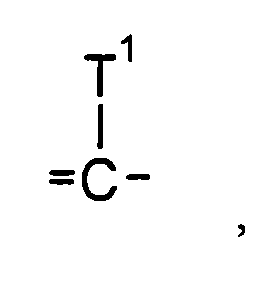
- represents =N- or
wherein T1 represents hydrogen atom or an optionally substituted alkyl group, and
- X
- represents an electron attractive group
- R
- represents hydrogen atom, formyl, a C1-4-alkcarbonyl, benzoyl, a C1-4-alkylsulfonyl, C1-6-alkyl, or an optionally substitutable heteroarylmethyl having up to a six membered ring and at least one nitrogen atom and further optionally selected hetero atom or atoms,
- A
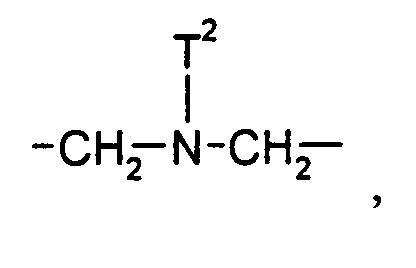
- represents hydrogen atom, a C1-4-alkyl, ethylene, trimethylene, or
wherein T2 represents hydrogen atom, a C1-4-alkyl or C1-4-alkylcarbonyl,

- B
- represents a C1-4-alkyl, ―S―R,
-S-, methylene or
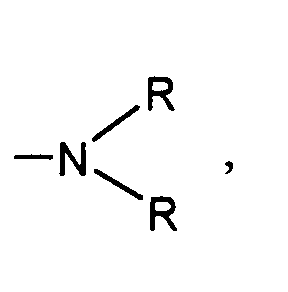 wherein R and T2 have the same meanings mentioned above,
- Y
- represents =N- or =CH-, and
- X
- represents nitro or cyano.
- A
- represents hydrogen atom, a C1-4-alkyl, ethylene, trimethylene, or
wherein T2 represents methyl or ethyl.
- B
- represents a C1-4 alkyl, -S-R,
-S-, methylene, or
 wherein R and T2 have the same meanings as defined above,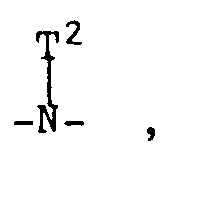
- Y
- represents =N- or =CH-, and
- X
- represents nitro or cyano.
- A
- represents hydrogen atom, a C1-4 alkyl, ethylene, trimethylene,
or
wherein T2 represents methyl or ethyl,

- B
- represents a C1-4 alkyl, -S-R,
-S-, methylene, or
 wherein R and T2 have the same meanings as defined above,
- Y
- represents =N- or =CH- , and
- X
- represents nitro or cyano.
| Active compounds for controlling soil-inhabiting pests under test | Dosages | Insect mortality (%) | |
| kg a.i./ha | piece/m2 | ||
| A | 0.3 | 4 | 100 |
| A | 0.3 | 9 | 100 |
| A | 0.6 | 4 | 100 |
| A | 0.6 | 9 | 100 |
| B | 0.6 | 4 | 95 |
| B | 0.6 | 9 | 97 |
| Untreated zone | - | - | 0 |
| A : 1-(6-chloro-3-pyridylmethyl)-N-nitroimidazolidin-2-ylideneamine B : N-cyano-N-(2-chloro-5-pyridylmethyl)-N'-methylaceto amidine |
| Active compound under test | Dosages | Protective value (%) | |
| kg a.i./ha | piece/m2 | ||
| A | 0.3 | 9 | 90 |
| A | 0.6 | 9 | 90 |
| Untreated zone | - | - | 0 |
| A : 1-(6-chloro-3-pyridylmethyl)-N-nitroimidazolidin-2-ylideneamine |
Claims (4)
- Baits for controlling soil-inhabiting pests comprising active compounds represented by the general formulawherein R represents hydrogen atom, an acyl, alkyl, or an optionally substituted heteroarylalkyl,

- R
- represents hydrogen atom, an alkyl or a divalent group connected to the substituent B,
- B
- represents an alkyl, ―S―R,
or a divalent group connected to the substituent A, wherein R has the same meaning as mentioned above,

- Y
- represents =N- or
wherein T1 represents hydrogen atom or an optionally substituted alkyl group, and

- X
- represents an electron attractive group,
- Baits for controlling soil-inhabiting pests according to claim 1, wherein the compounds represented by the general formula (I) are those in which
- R
- represents hydrogen atom, formyl, a C1-4-alkylcarbonyl, benzoyl, a C1-4-alkylsulfonyl, C1-6-alkyl, or an optionally substituted heteroarylmethyl having an up to six membered ring and at least one nitrogen atom and optionally one further hereo atom,
- A
- represents hydrogen atom, C1-4 alkyl or a divalent group selected
from ethylene, trimethylene, or
wherein T2, represents hydrogen atom, C1-4-alkyl or C1-4-alkylcarbonyl,

- B
- represents C1-4-alkyl, ―S―R,
or a divalent group selected from -S-, methylene or
 wherein R and T2 have the same meanings as mentioned above,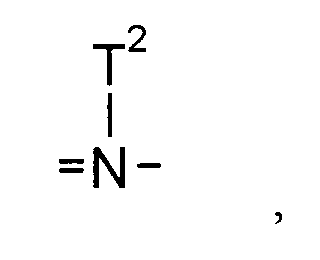
- Y
- represents =N- or =CH-, and
- X
- represents nitro or cyano.
- Baits for controlling soil-inhabiting pests according to claim 1, wherein the compounds represented by the general formula (I) are those in which
- R
- represents 2-chloro-pyridylmethyl or 2-chloro-5-thiazolyl methyl,
- A
- represents hydrogen atom, C1-4-alkyl, or a divalent group selected
from ethylene, trimethylene, or
wherein T2 represents methyl or ethyl,

- B
- represents C1-4-alkyl, ―S―R',
or a divalent group selected from -S-, methylene, or
 wherein R' represents hydrogen or C1-4-alkyl and T2 has the above mentioned meaning,
- Y
- represents =N- or =CH-, and
- X
- represents nitro or cyano.
- Baits for controlling soil-inhabiting pests according to claim 1 in the form of granules or tablets in which the artificial culture medium for mushrooms selected from wood material is present in an amount of about 69,9% and the binder material is present in an amount of about 30%.
Applications Claiming Priority (2)
| Application Number | Priority Date | Filing Date | Title |
|---|---|---|---|
| JP25530993A JP3540824B2 (en) | 1993-09-20 | 1993-09-20 | Poison bait for controlling soil pests |
| JP255309/93 | 1993-09-20 |
Publications (2)
| Publication Number | Publication Date |
|---|---|
| EP0648412A1 EP0648412A1 (en) | 1995-04-19 |
| EP0648412B1 true EP0648412B1 (en) | 1998-12-02 |
Family
ID=17276990
Family Applications (1)
| Application Number | Title | Priority Date | Filing Date |
|---|---|---|---|
| EP94114027A Expired - Lifetime EP0648412B1 (en) | 1993-09-20 | 1994-09-07 | Poisonous baits for controlling soil-inhabiting pests |
Country Status (11)
| Country | Link |
|---|---|
| US (2) | US5707640A (en) |
| EP (1) | EP0648412B1 (en) |
| JP (1) | JP3540824B2 (en) |
| KR (1) | KR100346798B1 (en) |
| CN (1) | CN1068500C (en) |
| AU (1) | AU681177B2 (en) |
| BR (1) | BR9403772A (en) |
| DE (1) | DE69414971T2 (en) |
| ES (1) | ES2124351T3 (en) |
| TW (1) | TW333436B (en) |
| ZA (1) | ZA947242B (en) |
Families Citing this family (5)
| Publication number | Priority date | Publication date | Assignee | Title |
|---|---|---|---|---|
| JP3540824B2 (en) * | 1993-09-20 | 2004-07-07 | バイエルクロップサイエンス株式会社 | Poison bait for controlling soil pests |
| US6479062B2 (en) * | 1999-01-29 | 2002-11-12 | David I. B. Vander Hooven | Pesticide bait carrier |
| CA2376805A1 (en) | 1999-05-27 | 2001-01-04 | Pietro Industries, Inc. | Fly pest control in mushroom cultivation |
| US6660290B1 (en) | 2000-10-04 | 2003-12-09 | Myco Pesticides Llc | Mycopesticides |
| CN111771882A (en) * | 2020-07-27 | 2020-10-16 | 江西禾益化工股份有限公司 | A kind of Huangyuan glue water solvent and preparation method thereof |
Family Cites Families (22)
| Publication number | Priority date | Publication date | Assignee | Title |
|---|---|---|---|---|
| US3070495A (en) * | 1961-06-27 | 1962-12-25 | Wisconsin Alumni Res Found | Decayed wood extract as termite attractant |
| US4328206A (en) * | 1981-02-27 | 1982-05-04 | International Flavors & Fragrances Inc. | Method of attracting and destroying tobacco beetles with alkyl phenethylethers |
| JPS5762201A (en) * | 1980-09-30 | 1982-04-15 | Sumitomo Chem Co Ltd | Bait composition for controlling insect rest |
| ATE67493T1 (en) * | 1985-02-04 | 1991-10-15 | Bayer Agrochem Kk | HETEROCYCLIC COMPOUNDS. |
| GB8503322D0 (en) * | 1985-02-08 | 1985-03-13 | Fbc Ltd | Baits |
| JPS6219505A (en) * | 1985-07-18 | 1987-01-28 | Eiken:Kk | Attracting feed poison for cockroach |
| DE3639504A1 (en) * | 1986-11-20 | 1988-06-01 | Bayer Ag | PEST CONTROL AND PLANT TREATMENT AGENTS |
| JPS63218604A (en) * | 1987-03-06 | 1988-09-12 | Yuukou Yakuhin Kogyo Kk | Poisonous bait for extermination of vermin |
| JPH0813729B2 (en) * | 1987-03-06 | 1996-02-14 | 有恒薬品工業株式会社 | Poison bait for pest control |
| JP2585319B2 (en) * | 1987-11-30 | 1997-02-26 | 住友化学工業株式会社 | Poison bait for pest control |
| JPH0219505A (en) * | 1988-06-30 | 1990-01-23 | Kanai Hiroyuki | Breast padding |
| JPH02124802A (en) * | 1988-11-04 | 1990-05-14 | Nippon Tokushu Noyaku Seizo Kk | Stabilized soil insect pest-controlling composition and its use |
| JP2852947B2 (en) * | 1989-11-28 | 1999-02-03 | 日本バイエルアグロケム株式会社 | Stabilized pesticide composition |
| JPH03218605A (en) * | 1990-01-24 | 1991-09-26 | Namiki Precision Jewel Co Ltd | Manufacture of hot plastic deformation magnet |
| JP2718232B2 (en) * | 1990-01-24 | 1998-02-25 | 松下電器産業株式会社 | Manufacturing method of square plate type thin film chip resistor |
| JPH0446101A (en) * | 1990-06-08 | 1992-02-17 | Sohachi Kosugi | Solid agricultural chemical and application thereof |
| JPH04152827A (en) * | 1990-10-16 | 1992-05-26 | Konpetsukusu:Kk | Grifola frondosa for high-speed culture of whole year |
| DE4111389A1 (en) * | 1991-04-09 | 1992-10-15 | Bayer Ag | Use of imidacloprid as beetle repellent - in molluscicidal formulations, e.g. snail baits |
| JP3162450B2 (en) * | 1991-04-27 | 2001-04-25 | 日本バイエルアグロケム株式会社 | Pest control agent to protect craft materials from pests |
| US5207389A (en) * | 1992-07-06 | 1993-05-04 | The Andersons | Cellulosic carrier |
| TW270882B (en) * | 1992-09-08 | 1996-02-21 | American Cyanamid Co | |
| JP3540824B2 (en) * | 1993-09-20 | 2004-07-07 | バイエルクロップサイエンス株式会社 | Poison bait for controlling soil pests |
-
1993
- 1993-09-20 JP JP25530993A patent/JP3540824B2/en not_active Expired - Lifetime
-
1994
- 1994-08-25 TW TW083107793A patent/TW333436B/en not_active IP Right Cessation
- 1994-09-07 DE DE69414971T patent/DE69414971T2/en not_active Expired - Lifetime
- 1994-09-07 ES ES94114027T patent/ES2124351T3/en not_active Expired - Lifetime
- 1994-09-07 EP EP94114027A patent/EP0648412B1/en not_active Expired - Lifetime
- 1994-09-16 AU AU73049/94A patent/AU681177B2/en not_active Ceased
- 1994-09-16 KR KR1019940023686A patent/KR100346798B1/en not_active Expired - Fee Related
- 1994-09-19 BR BR9403772A patent/BR9403772A/en not_active IP Right Cessation
- 1994-09-19 ZA ZA947242A patent/ZA947242B/en unknown
- 1994-09-20 CN CN94115322A patent/CN1068500C/en not_active Expired - Fee Related
-
1996
- 1996-12-12 US US08/764,769 patent/US5707640A/en not_active Expired - Lifetime
-
1997
- 1997-09-30 US US08/941,662 patent/US5882670A/en not_active Expired - Lifetime
Also Published As
| Publication number | Publication date |
|---|---|
| AU681177B2 (en) | 1997-08-21 |
| AU7304994A (en) | 1995-03-30 |
| JPH0789805A (en) | 1995-04-04 |
| JP3540824B2 (en) | 2004-07-07 |
| CN1068500C (en) | 2001-07-18 |
| DE69414971T2 (en) | 1999-04-22 |
| KR950007653A (en) | 1995-04-15 |
| ZA947242B (en) | 1995-05-22 |
| TW333436B (en) | 1998-06-11 |
| US5882670A (en) | 1999-03-16 |
| EP0648412A1 (en) | 1995-04-19 |
| BR9403772A (en) | 1995-04-18 |
| US5707640A (en) | 1998-01-13 |
| CN1104844A (en) | 1995-07-12 |
| ES2124351T3 (en) | 1999-02-01 |
| KR100346798B1 (en) | 2004-12-23 |
| DE69414971D1 (en) | 1999-01-14 |
Similar Documents
| Publication | Publication Date | Title |
|---|---|---|
| Georgis | Formulation and application technology | |
| JP2568804B2 (en) | Compositions and methods for protecting plants from phytopathogenic fungi | |
| NL1012945C2 (en) | Application of macrolides in pest control. | |
| EA022848B1 (en) | Pest control agent | |
| EA024053B1 (en) | Pesticidal and parasiticidal mixture and composition comprising novel crystalline modification of fipronil | |
| BRPI0610817A2 (en) | heterocyclic derivatives and benzoylamino substituted heteroaryl insecticides | |
| US5882670A (en) | Poisonous baits for controlling soil-inhabiting pests | |
| EP1209976B1 (en) | Method for fighting soil insects with phenyl-pyrazoles | |
| EA013410B1 (en) | Use of phenylsemicarbazones for seed treatment | |
| JP3495056B2 (en) | Insecticidal composition | |
| CN110115268B (en) | A kind of pesticide composition containing tolafenamide and fluopyram | |
| US6376430B1 (en) | Enhancement of seed yield of soybeans by a substituted benzoyl urea | |
| KR101378605B1 (en) | Tick control bait | |
| US4518580A (en) | Expanded corncob grits having increased absorptivity and a method for the preparation thereof | |
| KR970007926B1 (en) | Insect attractor | |
| EP0828420B1 (en) | A method for controlling flies infesting mushrooms by using a n-arylpyrazole or a n-heteroarylpyrazole compound | |
| EP2272347A1 (en) | Molluscicide | |
| AU708045B2 (en) | A method for controlling flies infesting mushrooms by using a N-arylpyrazole or a N-heteroarylpyrazole compound | |
| AU7200100A (en) | A method to control termites | |
| KR100330692B1 (en) | Insecticidal and fungicidal compositions for agriculture | |
| WO2010031787A1 (en) | Grass seeds different from cereal seeds comprising at least one insecticide and their use as baits for combating harmful social insects | |
| EP0617893A1 (en) | Molluscicides | |
| JPS62230779A (en) | Substituted hydrazine carboxylic ester, its production and harmful organism control composition containing the same | |
| JPS6248658A (en) | Insecticidal n-(2,6-difluorobenzoyl)-n'-3,5-dichloro-4- (3,3,3-trifluoro-2-chloroprop-1-en-1-yl)phenyl-urea | |
| TH41447A (en) | 4-heloalkyl-3-heterocyclilpiridine and 4-halalkyl-5-heterocyclil-pirimidine, process for the preparation of these substances, mixtures containing these substances and their use as pesticides. And animals |
Legal Events
| Date | Code | Title | Description |
|---|---|---|---|
| PUAI | Public reference made under article 153(3) epc to a published international application that has entered the european phase |
Free format text: ORIGINAL CODE: 0009012 |
|
| AK | Designated contracting states |
Kind code of ref document: A1 Designated state(s): BE CH DE ES FR GB IT LI NL |
|
| 17P | Request for examination filed |
Effective date: 19950914 |
|
| 17Q | First examination report despatched |
Effective date: 19960311 |
|
| GRAG | Despatch of communication of intention to grant |
Free format text: ORIGINAL CODE: EPIDOS AGRA |
|
| GRAG | Despatch of communication of intention to grant |
Free format text: ORIGINAL CODE: EPIDOS AGRA |
|
| GRAH | Despatch of communication of intention to grant a patent |
Free format text: ORIGINAL CODE: EPIDOS IGRA |
|
| GRAH | Despatch of communication of intention to grant a patent |
Free format text: ORIGINAL CODE: EPIDOS IGRA |
|
| GRAA | (expected) grant |
Free format text: ORIGINAL CODE: 0009210 |
|
| AK | Designated contracting states |
Kind code of ref document: B1 Designated state(s): BE CH DE ES FR GB IT LI NL |
|
| REG | Reference to a national code |
Ref country code: CH Ref legal event code: NV Representative=s name: E. BLUM & CO. PATENTANWAELTE Ref country code: CH Ref legal event code: EP |
|
| REF | Corresponds to: |
Ref document number: 69414971 Country of ref document: DE Date of ref document: 19990114 |
|
| ITF | It: translation for a ep patent filed | ||
| REG | Reference to a national code |
Ref country code: ES Ref legal event code: FG2A Ref document number: 2124351 Country of ref document: ES Kind code of ref document: T3 |
|
| ET | Fr: translation filed | ||
| PLBE | No opposition filed within time limit |
Free format text: ORIGINAL CODE: 0009261 |
|
| STAA | Information on the status of an ep patent application or granted ep patent |
Free format text: STATUS: NO OPPOSITION FILED WITHIN TIME LIMIT |
|
| 26N | No opposition filed | ||
| REG | Reference to a national code |
Ref country code: GB Ref legal event code: IF02 |
|
| REG | Reference to a national code |
Ref country code: CH Ref legal event code: PFA Owner name: NIHON BAYER AGROCHEM K.K. Free format text: NIHON BAYER AGROCHEM K.K.#10-8, TAKANAWA 4-CHOME MINATO-KU#TOKYO 108 (JP) -TRANSFER TO- NIHON BAYER AGROCHEM K.K.#10-8, TAKANAWA 4-CHOME MINATO-KU#TOKYO 108 (JP) |
|
| PGFP | Annual fee paid to national office [announced via postgrant information from national office to epo] |
Ref country code: CH Payment date: 20100914 Year of fee payment: 17 |
|
| PGFP | Annual fee paid to national office [announced via postgrant information from national office to epo] |
Ref country code: IT Payment date: 20100917 Year of fee payment: 17 Ref country code: FR Payment date: 20100921 Year of fee payment: 17 |
|
| PGFP | Annual fee paid to national office [announced via postgrant information from national office to epo] |
Ref country code: GB Payment date: 20100901 Year of fee payment: 17 |
|
| PGFP | Annual fee paid to national office [announced via postgrant information from national office to epo] |
Ref country code: NL Payment date: 20100910 Year of fee payment: 17 |
|
| PGFP | Annual fee paid to national office [announced via postgrant information from national office to epo] |
Ref country code: DE Payment date: 20100909 Year of fee payment: 17 Ref country code: BE Payment date: 20100915 Year of fee payment: 17 |
|
| PGFP | Annual fee paid to national office [announced via postgrant information from national office to epo] |
Ref country code: ES Payment date: 20101018 Year of fee payment: 17 |
|
| BERE | Be: lapsed |
Owner name: *NIHON BAYER AGROCHEM K.K. Effective date: 20110930 |
|
| REG | Reference to a national code |
Ref country code: NL Ref legal event code: V1 Effective date: 20120401 |
|
| REG | Reference to a national code |
Ref country code: CH Ref legal event code: PL |
|
| GBPC | Gb: european patent ceased through non-payment of renewal fee |
Effective date: 20110907 |
|
| PG25 | Lapsed in a contracting state [announced via postgrant information from national office to epo] |
Ref country code: IT Free format text: LAPSE BECAUSE OF NON-PAYMENT OF DUE FEES Effective date: 20110907 |
|
| REG | Reference to a national code |
Ref country code: FR Ref legal event code: ST Effective date: 20120531 |
|
| PG25 | Lapsed in a contracting state [announced via postgrant information from national office to epo] |
Ref country code: BE Free format text: LAPSE BECAUSE OF NON-PAYMENT OF DUE FEES Effective date: 20110930 |
|
| REG | Reference to a national code |
Ref country code: DE Ref legal event code: R119 Ref document number: 69414971 Country of ref document: DE Effective date: 20120403 |
|
| PG25 | Lapsed in a contracting state [announced via postgrant information from national office to epo] |
Ref country code: NL Free format text: LAPSE BECAUSE OF NON-PAYMENT OF DUE FEES Effective date: 20120401 Ref country code: DE Free format text: LAPSE BECAUSE OF NON-PAYMENT OF DUE FEES Effective date: 20120403 Ref country code: CH Free format text: LAPSE BECAUSE OF NON-PAYMENT OF DUE FEES Effective date: 20110930 Ref country code: LI Free format text: LAPSE BECAUSE OF NON-PAYMENT OF DUE FEES Effective date: 20110930 |
|
| PG25 | Lapsed in a contracting state [announced via postgrant information from national office to epo] |
Ref country code: GB Free format text: LAPSE BECAUSE OF NON-PAYMENT OF DUE FEES Effective date: 20110907 Ref country code: FR Free format text: LAPSE BECAUSE OF NON-PAYMENT OF DUE FEES Effective date: 20110930 |
|
| REG | Reference to a national code |
Ref country code: ES Ref legal event code: FD2A Effective date: 20130605 |
|
| PG25 | Lapsed in a contracting state [announced via postgrant information from national office to epo] |
Ref country code: ES Free format text: LAPSE BECAUSE OF NON-PAYMENT OF DUE FEES Effective date: 20110908 |