EP0639211B1 - Levelling material - Google Patents
Levelling material Download PDFInfo
- Publication number
- EP0639211B1 EP0639211B1 EP93910510A EP93910510A EP0639211B1 EP 0639211 B1 EP0639211 B1 EP 0639211B1 EP 93910510 A EP93910510 A EP 93910510A EP 93910510 A EP93910510 A EP 93910510A EP 0639211 B1 EP0639211 B1 EP 0639211B1
- Authority
- EP
- European Patent Office
- Prior art keywords
- levelling
- layer
- coarse
- loading
- compound
- Prior art date
- Legal status (The legal status is an assumption and is not a legal conclusion. Google has not performed a legal analysis and makes no representation as to the accuracy of the status listed.)
- Expired - Lifetime
Links
Images
Classifications
-
- C—CHEMISTRY; METALLURGY
- C09—DYES; PAINTS; POLISHES; NATURAL RESINS; ADHESIVES; COMPOSITIONS NOT OTHERWISE PROVIDED FOR; APPLICATIONS OF MATERIALS NOT OTHERWISE PROVIDED FOR
- C09D—COATING COMPOSITIONS, e.g. PAINTS, VARNISHES OR LACQUERS; FILLING PASTES; CHEMICAL PAINT OR INK REMOVERS; INKS; CORRECTING FLUIDS; WOODSTAINS; PASTES OR SOLIDS FOR COLOURING OR PRINTING; USE OF MATERIALS THEREFOR
- C09D5/00—Coating compositions, e.g. paints, varnishes or lacquers, characterised by their physical nature or the effects produced; Filling pastes
- C09D5/34—Filling pastes
-
- E—FIXED CONSTRUCTIONS
- E04—BUILDING
- E04F—FINISHING WORK ON BUILDINGS, e.g. STAIRS, FLOORS
- E04F15/00—Flooring
- E04F15/12—Flooring or floor layers made of masses in situ, e.g. seamless magnesite floors, terrazzo gypsum floors
Definitions
- the present invention deals with a screed material or levelling compound of the kind that is described in the preamble of the claim and that is to be used in the production of so called levelling layers, which are intended to level uneven substrates, e.g. concrete constructions, with the purpose of achieving a surface which is smooth and even enough to serve as a floor surface.
- levelling of uneven substrates preferably is done by using pumpable levelling compounds.
- the demand of levelling is great because the unevenness exceeds 10-20 mm, which often is the case for prefabricated concrete elements, the high consumption of material leads to too high costs when you want to meet the requirements for loading capacity which normally are asked for.
- the loading capacity of a product is determined by the content of polymer and the content of binder. These two ingredients constitute the major part of the production cost.
- the present invention has the aim to achieve a new levelling material of the decribed kind and with considerably lower costs than with traditional techniques for the production of levelling layers on uneven substrates, where the unevenness is great, e.g. exceeds 10-20 mm. This is of utmost importance, since the development trend goes towards thicker levelling layers because of increased requirements on sound insulation and also because of demands for placing installations in the floor screed.
- a floor can be produced, which in the long run fulfills the demand for loading capacity for flooings of at least 0.5 MPa, measured according to the above mentioned standard and which can be produced with a coarse levelling layer with relatively low production costs, in spite of the fact that the loading capacity of the coarse levelling layer itself is at least 20% lower than the finished floor which is produced thereof.
- a loading layer any material which is suited for the purpose can used such as wood, steel, metal, plastic, ceramic, fine levelling compounds of known kind etc.
- a levelling can be applied in two layers.
- the first layer is made of the pumpable coarse levelling compound which is applied at a thickness of at least 10 mm.
- a wearing or loading layer is applied consisting of a fine levelling compound with 2-15 mm thickness, preferably 5-10 mm.
- the coarse levelling compound shall not constitute the finished surface, it can, as mentioned before, be made considerably weaker than usual and thereby can the costs for binder and polymer be kept low.
- the binder content is 4-14 %, preferably 5-10 % of the dry weight of the levelling compound.
- the binder in the coarse levelling compound which preferably is hydraulic, can e.g. be high aluminous cement, different kinds of gypsum, portland cement, natural cement or combinations thereof.
- the water content is e.g. 15-20 % of the dry weight of the levelling compound, which means that the water-binder ratio, i.e. the water content divided by the binder content, is 1-5, preferably 1.5-4.
- the coarse levelling compound contains 85-95 % by weight of sand and filler, preferably 89-94 % by weight.
- the filler can e.g. be ground dolomite, ground lime stone, pulverized fuel ash from coal fired power stations, ground granulated blast furnace slag or combinations thereof.
- the coarse levelling matierial contains additives which are conventionally used in levelling compounds, viz plasticizer, polymer, cellulose, salts and antifoaming agents, altogether not more than 1 % by weight.
- the content of polymer is considerably lower than in conventional levelling compounds.
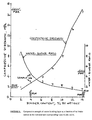
- the coarse levelling layer decribed above has a compressive strength of 2-17 MPa, preferably 3-8 MPa, while its resistance against, wheel loading according to the Swedish Standard SS 92 35 07 is less or equal to 0.4 MPa.
- a conventional levelling compound is applied at 2-15 mm thickness, preferably 5-10 mm, which in the following is called fine levelling layer.
- This compound is pumped and is preferably self smoothing.
- the requirements on this material is on one hand that the shrinkage should be at the most 0.15 %, preferably at the most 0.10 %, when measured at drying in 50 % RH and on the other hand that it shall have a resistance against rolling wheel loading measured according the Swedish Standard SS 92 35 07 which is at least 0.5 MPa.
- the requirements regarding maximum shrinkage is caused by the risk that the fine levelling layer otherwise can disrupt the relatively weak coarse levelling layer. The same is the case for the requirement for a maximum layer thickness of 15 mm. Of course, this risk does not exist with loading layers made of wood or other floor coverings where there is no more shrinkage after the application of the floor covering.
- the requirement regarding resistance to loading is caused by the fact that the combined layer shall be able to withstand rolling wheel loading. The same goes for the requirement of a minimum thickness of 2 mm for such a fine levelling layer.
- Coarse levelling compounds were made with binder contents, water-binder ratios and filler and sand contents according to Table 1.
- Table 1 Compositions of coarse levelling layers. Sample no Binder content % by weight Water-binder ratio Filler + sand % by weight 1 2 8.8 97 2 4 4.4 95 3 6 2.9 93 4 8 2.2 91 5 10 1.8 89 6 12 1.5 87 7 14 1.2 85
- the binder consisted of 2/3 high aluminious cement and 1/3 anhydrate gypsum.
- the filler consisted of ground dolomite.
- the other additives amounting to 1 % of the dry weight were of conventional kinds, viz plasticizers, polymer, cellulose, unorganic salts and defoamers. However, the content of polymer was considerably lower than normally.
- This fine levelling layer had the following composition: Binder 23 % Water-binder ratio 1 Filler + sand 74 % Polymer 2 % Other additives 1 %
- the ingredients in the conventional fine levelling layer were the same as in the coarse levelling layer, only the proportions were very different.
- the shrinkage of the fine levelling compound was tested after drying in 50 % RH and was found to be 0.07 %.
- the coarse levelling compound was produced as a dry mortar on a factory and 17.5 % and 18 % water resp. was added at the building site in a continous mixerpump. It was pumped out on the substrate, which consisted of prestressed concrete elements, to a thickness of 40-60 mm. After a few hours, the surface could be walked upon, and then a 5-10 mm thick layer of a conventional fine levelling compound - with the product name Universal from Sträbruken AB - was pumped out.
- the new levelling material and the described technique with a relatively weak coarse levelling layer with low binder content and high water-binder ratio however has been shown to have further advantages.
- the drying time can be shortened towards half the time that is needed for conventional levelling compounds.
- the coarse levelling material furthermore can be used alone, without fine levelling layer in such cases when the described loading requirement is not applicable, e.g. where there is little loading or where the flooring can take the loading which otherwise the fine levelling layer should take. Examples of the latter is wooden floors and ceramic tiles.
Landscapes
- Engineering & Computer Science (AREA)
- Architecture (AREA)
- Chemical & Material Sciences (AREA)
- Life Sciences & Earth Sciences (AREA)
- Materials Engineering (AREA)
- Wood Science & Technology (AREA)
- Organic Chemistry (AREA)
- Civil Engineering (AREA)
- Structural Engineering (AREA)
- Curing Cements, Concrete, And Artificial Stone (AREA)
- Laminated Bodies (AREA)
- Paper (AREA)
Applications Claiming Priority (3)
| Application Number | Priority Date | Filing Date | Title |
|---|---|---|---|
| SE9201459A SE500220C2 (sv) | 1992-05-08 | 1992-05-08 | Avjämningsmaterial |
| SE9201459 | 1992-05-08 | ||
| PCT/SE1993/000402 WO1993023484A1 (en) | 1992-05-08 | 1993-05-07 | Levelling material |
Publications (2)
| Publication Number | Publication Date |
|---|---|
| EP0639211A1 EP0639211A1 (en) | 1995-02-22 |
| EP0639211B1 true EP0639211B1 (en) | 1996-11-27 |
Family
ID=20386190
Family Applications (1)
| Application Number | Title | Priority Date | Filing Date |
|---|---|---|---|
| EP93910510A Expired - Lifetime EP0639211B1 (en) | 1992-05-08 | 1993-05-07 | Levelling material |
Country Status (7)
| Country | Link |
|---|---|
| EP (1) | EP0639211B1 (da) |
| DE (1) | DE69306248D1 (da) |
| DK (1) | DK0639211T3 (da) |
| FI (1) | FI945051L (da) |
| NO (1) | NO943922L (da) |
| SE (1) | SE500220C2 (da) |
| WO (1) | WO1993023484A1 (da) |
Family Cites Families (1)
| Publication number | Priority date | Publication date | Assignee | Title |
|---|---|---|---|---|
| SE435049B (sv) * | 1983-02-08 | 1984-09-03 | Allmaen Byggnadsservice Ab | Flytspackel |
-
1992
- 1992-05-08 SE SE9201459A patent/SE500220C2/sv unknown
-
1993
- 1993-05-07 FI FI945051A patent/FI945051L/fi unknown
- 1993-05-07 EP EP93910510A patent/EP0639211B1/en not_active Expired - Lifetime
- 1993-05-07 DK DK93910510.2T patent/DK0639211T3/da active
- 1993-05-07 WO PCT/SE1993/000402 patent/WO1993023484A1/en not_active Ceased
- 1993-05-07 DE DE69306248T patent/DE69306248D1/de not_active Expired - Lifetime
-
1994
- 1994-10-17 NO NO943922A patent/NO943922L/no not_active Application Discontinuation
Also Published As
| Publication number | Publication date |
|---|---|
| FI945051A7 (fi) | 1994-11-08 |
| DE69306248D1 (de) | 1997-01-09 |
| WO1993023484A1 (en) | 1993-11-25 |
| FI945051A0 (fi) | 1994-10-27 |
| NO943922L (no) | 1994-12-01 |
| SE500220C2 (sv) | 1994-05-09 |
| NO943922D0 (no) | 1994-10-17 |
| SE9201459D0 (sv) | 1992-05-08 |
| DK0639211T3 (da) | 1997-06-02 |
| EP0639211A1 (en) | 1995-02-22 |
| FI945051L (fi) | 1994-11-08 |
| SE9201459L (sv) | 1993-11-09 |
Similar Documents
| Publication | Publication Date | Title |
|---|---|---|
| KR101720504B1 (ko) | 내구성능이 개선된 초속경 시멘트 콘크리트 조성물 및 이를 이용한 도로 유지 보수 공법 | |
| US4661159A (en) | Cementitious floor underlayment | |
| RU2277071C2 (ru) | Способ изготовления бетона или строительного раствора с растительным заполнителем | |
| CN112250408A (zh) | 一种石膏基自流平砂浆及其应用、施工方法 | |
| KR101370694B1 (ko) | 중합체 개질된 습윤 콘크리트 혼합물의 도포 방법 | |
| US20080057206A1 (en) | Hydraulic cement compositions and method of forming floor underlayment | |
| CN101337798A (zh) | 聚合物抗裂砂浆 | |
| CN101648798A (zh) | 一种水泥基地面自流平砂浆及制备方法 | |
| US20200062647A1 (en) | Concrete, a Dry Mixture for the Preparation of this Concrete, and a Method for the Preparation of this Concrete | |
| CN111779228A (zh) | 一种水性环氧复合水泥自流平地坪材料、地坪系统及其制备方法 | |
| US5362320A (en) | Sandable low shrinkage mortar patching/coating compound | |
| KR100215140B1 (ko) | 박막형 시멘트계 자기평탄성 몰탈 조성물 | |
| EP0639211B1 (en) | Levelling material | |
| EP0379477B1 (en) | A self-leveling slurry screed, and a dry product for use in preparing it | |
| KR19980026538A (ko) | 내균열성 및/또는 자동 수평성을 갖는 모르타르 조성물 | |
| EP0493858B1 (en) | Sand-cement mixture suitable for mortar | |
| KR102251955B1 (ko) | 시멘트 혼합물을 이용한 모르타르 조성물 및 이를 이용한 시공방법 | |
| KR101806388B1 (ko) | 유기산 및 천연섬유를 사용한 모르타르 분체 조성물 | |
| CN111827707A (zh) | 一种保温外墙的修缮方法及外墙保温结构 | |
| RU96123330A (ru) | Способ приготовления композиций из бетона, содержащих смеси цемента, воды и наполнителей, способных формоваться и затвердевать | |
| KR100502633B1 (ko) | 수용성 칼라 아스팔트 몰탈 시공방법 | |
| EP1627864B1 (en) | Composition particularly for preparing cement mortars | |
| KR20230049789A (ko) | 층간 소음 저감형 바닥용 모르타르 조성물. | |
| KR102924356B1 (ko) | 건축용 수평 모르타르 조성물 | |
| CN113387662A (zh) | 一种新型的石膏面层自流平材料 |
Legal Events
| Date | Code | Title | Description |
|---|---|---|---|
| PUAI | Public reference made under article 153(3) epc to a published international application that has entered the european phase |
Free format text: ORIGINAL CODE: 0009012 |
|
| 17P | Request for examination filed |
Effective date: 19941119 |
|
| AK | Designated contracting states |
Kind code of ref document: A1 Designated state(s): BE CH DE DK FR GB LI NL |
|
| GRAG | Despatch of communication of intention to grant |
Free format text: ORIGINAL CODE: EPIDOS AGRA |
|
| 17Q | First examination report despatched |
Effective date: 19960201 |
|
| GRAH | Despatch of communication of intention to grant a patent |
Free format text: ORIGINAL CODE: EPIDOS IGRA |
|
| GRAH | Despatch of communication of intention to grant a patent |
Free format text: ORIGINAL CODE: EPIDOS IGRA |
|
| GRAA | (expected) grant |
Free format text: ORIGINAL CODE: 0009210 |
|
| AK | Designated contracting states |
Kind code of ref document: B1 Designated state(s): BE CH DE DK FR GB LI NL |
|
| PG25 | Lapsed in a contracting state [announced via postgrant information from national office to epo] |
Ref country code: NL Free format text: LAPSE BECAUSE OF FAILURE TO SUBMIT A TRANSLATION OF THE DESCRIPTION OR TO PAY THE FEE WITHIN THE PRESCRIBED TIME-LIMIT Effective date: 19961127 Ref country code: LI Effective date: 19961127 Ref country code: FR Effective date: 19961127 Ref country code: CH Effective date: 19961127 Ref country code: BE Effective date: 19961127 |
|
| REF | Corresponds to: |
Ref document number: 69306248 Country of ref document: DE Date of ref document: 19970109 |
|
| PG25 | Lapsed in a contracting state [announced via postgrant information from national office to epo] |
Ref country code: DE Effective date: 19970228 |
|
| EN | Fr: translation not filed | ||
| NLV1 | Nl: lapsed or annulled due to failure to fulfill the requirements of art. 29p and 29m of the patents act | ||
| REG | Reference to a national code |
Ref country code: CH Ref legal event code: PL |
|
| REG | Reference to a national code |
Ref country code: DK Ref legal event code: T3 |
|
| PLBE | No opposition filed within time limit |
Free format text: ORIGINAL CODE: 0009261 |
|
| STAA | Information on the status of an ep patent application or granted ep patent |
Free format text: STATUS: NO OPPOSITION FILED WITHIN TIME LIMIT |
|
| 26N | No opposition filed | ||
| PGFP | Annual fee paid to national office [announced via postgrant information from national office to epo] |
Ref country code: DK Payment date: 19990528 Year of fee payment: 7 |
|
| PGFP | Annual fee paid to national office [announced via postgrant information from national office to epo] |
Ref country code: GB Payment date: 19990607 Year of fee payment: 7 |
|
| PG25 | Lapsed in a contracting state [announced via postgrant information from national office to epo] |
Ref country code: GB Free format text: LAPSE BECAUSE OF NON-PAYMENT OF DUE FEES Effective date: 20000507 Ref country code: DK Free format text: LAPSE BECAUSE OF NON-PAYMENT OF DUE FEES Effective date: 20000507 |
|
| GBPC | Gb: european patent ceased through non-payment of renewal fee |
Effective date: 20000507 |
|
| REG | Reference to a national code |
Ref country code: DK Ref legal event code: EBP |