EP0637635B1 - Verfahren zum Laugen und Gewinnen von Metallen - Google Patents
Verfahren zum Laugen und Gewinnen von Metallen Download PDFInfo
- Publication number
- EP0637635B1 EP0637635B1 EP94110433A EP94110433A EP0637635B1 EP 0637635 B1 EP0637635 B1 EP 0637635B1 EP 94110433 A EP94110433 A EP 94110433A EP 94110433 A EP94110433 A EP 94110433A EP 0637635 B1 EP0637635 B1 EP 0637635B1
- Authority
- EP
- European Patent Office
- Prior art keywords
- solution
- separated
- test
- concentrate
- activated carbon
- Prior art date
- Legal status (The legal status is an assumption and is not a legal conclusion. Google has not performed a legal analysis and makes no representation as to the accuracy of the status listed.)
- Expired - Lifetime
Links
- 229910052751 metal Inorganic materials 0.000 title claims description 40
- 239000002184 metal Substances 0.000 title claims description 40
- 238000002386 leaching Methods 0.000 title description 70
- 238000011084 recovery Methods 0.000 title description 18
- 239000012141 concentrate Substances 0.000 claims description 82
- BASFCYQUMIYNBI-UHFFFAOYSA-N platinum Chemical compound [Pt] BASFCYQUMIYNBI-UHFFFAOYSA-N 0.000 claims description 80
- VEXZGXHMUGYJMC-UHFFFAOYSA-N Hydrochloric acid Chemical compound Cl VEXZGXHMUGYJMC-UHFFFAOYSA-N 0.000 claims description 70
- OKTJSMMVPCPJKN-UHFFFAOYSA-N Carbon Chemical compound [C] OKTJSMMVPCPJKN-UHFFFAOYSA-N 0.000 claims description 69
- KDLHZDBZIXYQEI-UHFFFAOYSA-N Palladium Chemical compound [Pd] KDLHZDBZIXYQEI-UHFFFAOYSA-N 0.000 claims description 62
- GRYLNZFGIOXLOG-UHFFFAOYSA-N Nitric acid Chemical class O[N+]([O-])=O GRYLNZFGIOXLOG-UHFFFAOYSA-N 0.000 claims description 60
- PXHVJJICTQNCMI-UHFFFAOYSA-N Nickel Chemical compound [Ni] PXHVJJICTQNCMI-UHFFFAOYSA-N 0.000 claims description 56
- 229910017604 nitric acid Inorganic materials 0.000 claims description 55
- 238000000034 method Methods 0.000 claims description 46
- NINIDFKCEFEMDL-UHFFFAOYSA-N Sulfur Chemical compound [S] NINIDFKCEFEMDL-UHFFFAOYSA-N 0.000 claims description 37
- XEEYBQQBJWHFJM-UHFFFAOYSA-N Iron Chemical compound [Fe] XEEYBQQBJWHFJM-UHFFFAOYSA-N 0.000 claims description 36
- 239000010949 copper Substances 0.000 claims description 35
- 239000010931 gold Substances 0.000 claims description 34
- 229910052759 nickel Inorganic materials 0.000 claims description 32
- 229910052697 platinum Inorganic materials 0.000 claims description 32
- 229910052763 palladium Inorganic materials 0.000 claims description 31
- QVGXLLKOCUKJST-UHFFFAOYSA-N atomic oxygen Chemical compound [O] QVGXLLKOCUKJST-UHFFFAOYSA-N 0.000 claims description 29
- 229910052760 oxygen Inorganic materials 0.000 claims description 29
- 239000001301 oxygen Substances 0.000 claims description 29
- 229910052802 copper Inorganic materials 0.000 claims description 27
- 229910052717 sulfur Inorganic materials 0.000 claims description 27
- 239000011593 sulfur Substances 0.000 claims description 24
- RYGMFSIKBFXOCR-UHFFFAOYSA-N Copper Chemical compound [Cu] RYGMFSIKBFXOCR-UHFFFAOYSA-N 0.000 claims description 23
- 229910052737 gold Inorganic materials 0.000 claims description 22
- 150000002739 metals Chemical class 0.000 claims description 22
- 229910052742 iron Inorganic materials 0.000 claims description 20
- PCHJSUWPFVWCPO-UHFFFAOYSA-N gold Chemical compound [Au] PCHJSUWPFVWCPO-UHFFFAOYSA-N 0.000 claims description 15
- QAOWNCQODCNURD-UHFFFAOYSA-N Sulfuric acid Chemical compound OS(O)(=O)=O QAOWNCQODCNURD-UHFFFAOYSA-N 0.000 claims description 14
- 230000003647 oxidation Effects 0.000 claims description 14
- 238000007254 oxidation reaction Methods 0.000 claims description 14
- 239000000203 mixture Substances 0.000 claims description 13
- 238000010438 heat treatment Methods 0.000 claims description 12
- 239000002253 acid Substances 0.000 claims description 11
- 239000003795 chemical substances by application Substances 0.000 claims description 10
- 238000000638 solvent extraction Methods 0.000 claims description 9
- 238000005868 electrolysis reaction Methods 0.000 claims description 7
- 238000001556 precipitation Methods 0.000 claims description 7
- LHNRHYOMDUJLLM-UHFFFAOYSA-N 1-hexylsulfanylhexane Chemical compound CCCCCCSCCCCCC LHNRHYOMDUJLLM-UHFFFAOYSA-N 0.000 claims description 6
- MYMOFIZGZYHOMD-UHFFFAOYSA-N Dioxygen Chemical compound O=O MYMOFIZGZYHOMD-UHFFFAOYSA-N 0.000 claims description 6
- OSGAYBCDTDRGGQ-UHFFFAOYSA-L calcium sulfate Chemical compound [Ca+2].[O-]S([O-])(=O)=O OSGAYBCDTDRGGQ-UHFFFAOYSA-L 0.000 claims description 6
- 229910001882 dioxygen Inorganic materials 0.000 claims description 6
- -1 platinum group metals Chemical class 0.000 claims description 6
- APSBXTVYXVQYAB-UHFFFAOYSA-M sodium docusate Chemical group [Na+].CCCCC(CC)COC(=O)CC(S([O-])(=O)=O)C(=O)OCC(CC)CCCC APSBXTVYXVQYAB-UHFFFAOYSA-M 0.000 claims description 6
- UXVMQQNJUSDDNG-UHFFFAOYSA-L Calcium chloride Chemical compound [Cl-].[Cl-].[Ca+2] UXVMQQNJUSDDNG-UHFFFAOYSA-L 0.000 claims description 5
- 239000002244 precipitate Substances 0.000 claims description 5
- OYPRJOBELJOOCE-UHFFFAOYSA-N Calcium Chemical compound [Ca] OYPRJOBELJOOCE-UHFFFAOYSA-N 0.000 claims description 4
- 239000011575 calcium Substances 0.000 claims description 4
- 229910052791 calcium Inorganic materials 0.000 claims description 4
- UQSXHKLRYXJYBZ-UHFFFAOYSA-N iron oxide Inorganic materials [Fe]=O UQSXHKLRYXJYBZ-UHFFFAOYSA-N 0.000 claims description 4
- 238000002156 mixing Methods 0.000 claims description 4
- NDLPOXTZKUMGOV-UHFFFAOYSA-N oxo(oxoferriooxy)iron hydrate Chemical compound O.O=[Fe]O[Fe]=O NDLPOXTZKUMGOV-UHFFFAOYSA-N 0.000 claims description 4
- 230000002829 reductive effect Effects 0.000 claims description 4
- 229960004887 ferric hydroxide Drugs 0.000 claims description 3
- XLYOFNOQVPJJNP-UHFFFAOYSA-M hydroxide Chemical compound [OH-] XLYOFNOQVPJJNP-UHFFFAOYSA-M 0.000 claims description 3
- IEECXTSVVFWGSE-UHFFFAOYSA-M iron(3+);oxygen(2-);hydroxide Chemical compound [OH-].[O-2].[Fe+3] IEECXTSVVFWGSE-UHFFFAOYSA-M 0.000 claims description 3
- 239000001110 calcium chloride Substances 0.000 claims description 2
- 229910001628 calcium chloride Inorganic materials 0.000 claims description 2
- VTYYLEPIZMXCLO-UHFFFAOYSA-L Calcium carbonate Chemical compound [Ca+2].[O-]C([O-])=O VTYYLEPIZMXCLO-UHFFFAOYSA-L 0.000 claims 4
- 229910000019 calcium carbonate Inorganic materials 0.000 claims 2
- 229910000008 nickel(II) carbonate Inorganic materials 0.000 claims 2
- ZULUUIKRFGGGTL-UHFFFAOYSA-L nickel(ii) carbonate Chemical compound [Ni+2].[O-]C([O-])=O ZULUUIKRFGGGTL-UHFFFAOYSA-L 0.000 claims 2
- 150000007513 acids Chemical class 0.000 claims 1
- 150000004679 hydroxides Chemical class 0.000 claims 1
- 238000007789 sealing Methods 0.000 claims 1
- 238000012360 testing method Methods 0.000 description 217
- 239000000243 solution Substances 0.000 description 59
- 239000007787 solid Substances 0.000 description 32
- 238000009826 distribution Methods 0.000 description 25
- 239000000047 product Substances 0.000 description 25
- 238000003556 assay Methods 0.000 description 22
- 238000006243 chemical reaction Methods 0.000 description 22
- 238000004090 dissolution Methods 0.000 description 22
- 230000035484 reaction time Effects 0.000 description 21
- 229910052799 carbon Inorganic materials 0.000 description 20
- 230000001965 increasing effect Effects 0.000 description 17
- 238000000605 extraction Methods 0.000 description 16
- 239000002002 slurry Substances 0.000 description 16
- 239000010970 precious metal Substances 0.000 description 15
- 239000005864 Sulphur Substances 0.000 description 14
- XLYOFNOQVPJJNP-UHFFFAOYSA-N water Substances O XLYOFNOQVPJJNP-UHFFFAOYSA-N 0.000 description 13
- 238000004458 analytical method Methods 0.000 description 11
- 239000002131 composite material Substances 0.000 description 9
- 238000011068 loading method Methods 0.000 description 9
- 238000005303 weighing Methods 0.000 description 9
- FGIUAXJPYTZDNR-UHFFFAOYSA-N potassium nitrate Chemical compound [K+].[O-][N+]([O-])=O FGIUAXJPYTZDNR-UHFFFAOYSA-N 0.000 description 8
- 238000001179 sorption measurement Methods 0.000 description 8
- 238000013019 agitation Methods 0.000 description 7
- QZPSXPBJTPJTSZ-UHFFFAOYSA-N aqua regia Chemical compound Cl.O[N+]([O-])=O QZPSXPBJTPJTSZ-UHFFFAOYSA-N 0.000 description 7
- 238000005188 flotation Methods 0.000 description 7
- 238000002844 melting Methods 0.000 description 7
- 230000008018 melting Effects 0.000 description 7
- 239000011777 magnesium Substances 0.000 description 6
- CWYNVVGOOAEACU-UHFFFAOYSA-N Fe2+ Chemical compound [Fe+2] CWYNVVGOOAEACU-UHFFFAOYSA-N 0.000 description 5
- 230000003247 decreasing effect Effects 0.000 description 5
- 229910052749 magnesium Inorganic materials 0.000 description 5
- 230000001590 oxidative effect Effects 0.000 description 5
- 230000015572 biosynthetic process Effects 0.000 description 4
- 230000000694 effects Effects 0.000 description 4
- 239000007789 gas Substances 0.000 description 4
- 239000000463 material Substances 0.000 description 4
- 229910052976 metal sulfide Inorganic materials 0.000 description 4
- 238000006386 neutralization reaction Methods 0.000 description 4
- 238000003723 Smelting Methods 0.000 description 3
- 230000008901 benefit Effects 0.000 description 3
- 239000000706 filtrate Substances 0.000 description 3
- 238000005187 foaming Methods 0.000 description 3
- 238000007885 magnetic separation Methods 0.000 description 3
- 239000000843 powder Substances 0.000 description 3
- 229910000859 α-Fe Inorganic materials 0.000 description 3
- VEXZGXHMUGYJMC-UHFFFAOYSA-M Chloride anion Chemical compound [Cl-] VEXZGXHMUGYJMC-UHFFFAOYSA-M 0.000 description 2
- CPLXHLVBOLITMK-UHFFFAOYSA-N Magnesium oxide Chemical compound [Mg]=O CPLXHLVBOLITMK-UHFFFAOYSA-N 0.000 description 2
- VYPSYNLAJGMNEJ-UHFFFAOYSA-N Silicium dioxide Chemical compound O=[Si]=O VYPSYNLAJGMNEJ-UHFFFAOYSA-N 0.000 description 2
- UCKMPCXJQFINFW-UHFFFAOYSA-N Sulphide Chemical compound [S-2] UCKMPCXJQFINFW-UHFFFAOYSA-N 0.000 description 2
- HCHKCACWOHOZIP-UHFFFAOYSA-N Zinc Chemical compound [Zn] HCHKCACWOHOZIP-UHFFFAOYSA-N 0.000 description 2
- 229910052785 arsenic Inorganic materials 0.000 description 2
- RQNWIZPPADIBDY-UHFFFAOYSA-N arsenic atom Chemical compound [As] RQNWIZPPADIBDY-UHFFFAOYSA-N 0.000 description 2
- 239000010953 base metal Substances 0.000 description 2
- 229910052793 cadmium Inorganic materials 0.000 description 2
- BDOSMKKIYDKNTQ-UHFFFAOYSA-N cadmium atom Chemical compound [Cd] BDOSMKKIYDKNTQ-UHFFFAOYSA-N 0.000 description 2
- 239000004568 cement Substances 0.000 description 2
- 229910017052 cobalt Inorganic materials 0.000 description 2
- 239000010941 cobalt Substances 0.000 description 2
- GUTLYIVDDKVIGB-UHFFFAOYSA-N cobalt atom Chemical compound [Co] GUTLYIVDDKVIGB-UHFFFAOYSA-N 0.000 description 2
- 150000001875 compounds Chemical class 0.000 description 2
- 238000013461 design Methods 0.000 description 2
- 239000012527 feed solution Substances 0.000 description 2
- 239000011133 lead Substances 0.000 description 2
- 239000007800 oxidant agent Substances 0.000 description 2
- 230000001376 precipitating effect Effects 0.000 description 2
- 239000001117 sulphuric acid Substances 0.000 description 2
- 235000011149 sulphuric acid Nutrition 0.000 description 2
- 150000003568 thioethers Chemical class 0.000 description 2
- 229910052725 zinc Inorganic materials 0.000 description 2
- 239000011701 zinc Substances 0.000 description 2
- 229910000838 Al alloy Inorganic materials 0.000 description 1
- BVKZGUZCCUSVTD-UHFFFAOYSA-L Carbonate Chemical compound [O-]C([O-])=O BVKZGUZCCUSVTD-UHFFFAOYSA-L 0.000 description 1
- VYZAMTAEIAYCRO-UHFFFAOYSA-N Chromium Chemical compound [Cr] VYZAMTAEIAYCRO-UHFFFAOYSA-N 0.000 description 1
- DGAQECJNVWCQMB-PUAWFVPOSA-M Ilexoside XXIX Chemical compound C[C@@H]1CC[C@@]2(CC[C@@]3(C(=CC[C@H]4[C@]3(CC[C@@H]5[C@@]4(CC[C@@H](C5(C)C)OS(=O)(=O)[O-])C)C)[C@@H]2[C@]1(C)O)C)C(=O)O[C@H]6[C@@H]([C@H]([C@@H]([C@H](O6)CO)O)O)O.[Na+] DGAQECJNVWCQMB-PUAWFVPOSA-M 0.000 description 1
- FYYHWMGAXLPEAU-UHFFFAOYSA-N Magnesium Chemical compound [Mg] FYYHWMGAXLPEAU-UHFFFAOYSA-N 0.000 description 1
- PWHULOQIROXLJO-UHFFFAOYSA-N Manganese Chemical compound [Mn] PWHULOQIROXLJO-UHFFFAOYSA-N 0.000 description 1
- ZOKXTWBITQBERF-UHFFFAOYSA-N Molybdenum Chemical compound [Mo] ZOKXTWBITQBERF-UHFFFAOYSA-N 0.000 description 1
- 229910052779 Neodymium Inorganic materials 0.000 description 1
- OAICVXFJPJFONN-UHFFFAOYSA-N Phosphorus Chemical compound [P] OAICVXFJPJFONN-UHFFFAOYSA-N 0.000 description 1
- 229910018879 Pt—Pd Inorganic materials 0.000 description 1
- BUGBHKTXTAQXES-UHFFFAOYSA-N Selenium Chemical compound [Se] BUGBHKTXTAQXES-UHFFFAOYSA-N 0.000 description 1
- BQCADISMDOOEFD-UHFFFAOYSA-N Silver Chemical compound [Ag] BQCADISMDOOEFD-UHFFFAOYSA-N 0.000 description 1
- QAOWNCQODCNURD-UHFFFAOYSA-L Sulfate Chemical compound [O-]S([O-])(=O)=O QAOWNCQODCNURD-UHFFFAOYSA-L 0.000 description 1
- ATJFFYVFTNAWJD-UHFFFAOYSA-N Tin Chemical compound [Sn] ATJFFYVFTNAWJD-UHFFFAOYSA-N 0.000 description 1
- 239000003929 acidic solution Substances 0.000 description 1
- 230000002411 adverse Effects 0.000 description 1
- 229910045601 alloy Inorganic materials 0.000 description 1
- 239000000956 alloy Substances 0.000 description 1
- 229910052782 aluminium Inorganic materials 0.000 description 1
- XAGFODPZIPBFFR-UHFFFAOYSA-N aluminium Chemical compound [Al] XAGFODPZIPBFFR-UHFFFAOYSA-N 0.000 description 1
- 229910052787 antimony Inorganic materials 0.000 description 1
- WATWJIUSRGPENY-UHFFFAOYSA-N antimony atom Chemical compound [Sb] WATWJIUSRGPENY-UHFFFAOYSA-N 0.000 description 1
- 229910052788 barium Inorganic materials 0.000 description 1
- DSAJWYNOEDNPEQ-UHFFFAOYSA-N barium atom Chemical compound [Ba] DSAJWYNOEDNPEQ-UHFFFAOYSA-N 0.000 description 1
- 229910052790 beryllium Inorganic materials 0.000 description 1
- ATBAMAFKBVZNFJ-UHFFFAOYSA-N beryllium atom Chemical compound [Be] ATBAMAFKBVZNFJ-UHFFFAOYSA-N 0.000 description 1
- 238000009835 boiling Methods 0.000 description 1
- 239000003153 chemical reaction reagent Substances 0.000 description 1
- 229910052804 chromium Inorganic materials 0.000 description 1
- 239000011651 chromium Substances 0.000 description 1
- 239000000470 constituent Substances 0.000 description 1
- 230000001419 dependent effect Effects 0.000 description 1
- 238000011161 development Methods 0.000 description 1
- 238000010586 diagram Methods 0.000 description 1
- 239000002270 dispersing agent Substances 0.000 description 1
- 230000002708 enhancing effect Effects 0.000 description 1
- 230000007613 environmental effect Effects 0.000 description 1
- 238000001914 filtration Methods 0.000 description 1
- 239000006260 foam Substances 0.000 description 1
- 239000011521 glass Substances 0.000 description 1
- 230000005484 gravity Effects 0.000 description 1
- 238000000227 grinding Methods 0.000 description 1
- 229910052602 gypsum Inorganic materials 0.000 description 1
- 239000010440 gypsum Substances 0.000 description 1
- 239000012535 impurity Substances 0.000 description 1
- 238000013101 initial test Methods 0.000 description 1
- 229910052500 inorganic mineral Inorganic materials 0.000 description 1
- 239000002198 insoluble material Substances 0.000 description 1
- 229910052746 lanthanum Inorganic materials 0.000 description 1
- FZLIPJUXYLNCLC-UHFFFAOYSA-N lanthanum atom Chemical compound [La] FZLIPJUXYLNCLC-UHFFFAOYSA-N 0.000 description 1
- 239000000395 magnesium oxide Substances 0.000 description 1
- 230000014759 maintenance of location Effects 0.000 description 1
- 229910052748 manganese Inorganic materials 0.000 description 1
- 239000011572 manganese Substances 0.000 description 1
- 238000005259 measurement Methods 0.000 description 1
- 239000000155 melt Substances 0.000 description 1
- 239000011707 mineral Substances 0.000 description 1
- 229910052750 molybdenum Inorganic materials 0.000 description 1
- 239000011733 molybdenum Substances 0.000 description 1
- QEFYFXOXNSNQGX-UHFFFAOYSA-N neodymium atom Chemical compound [Nd] QEFYFXOXNSNQGX-UHFFFAOYSA-N 0.000 description 1
- 230000003472 neutralizing effect Effects 0.000 description 1
- GQPLMRYTRLFLPF-UHFFFAOYSA-N nitrous oxide Inorganic materials [O-][N+]#N GQPLMRYTRLFLPF-UHFFFAOYSA-N 0.000 description 1
- 229910052954 pentlandite Inorganic materials 0.000 description 1
- 230000000505 pernicious effect Effects 0.000 description 1
- 229910052698 phosphorus Inorganic materials 0.000 description 1
- 239000011574 phosphorus Substances 0.000 description 1
- NIFIFKQPDTWWGU-UHFFFAOYSA-N pyrite Chemical compound [Fe+2].[S-][S-] NIFIFKQPDTWWGU-UHFFFAOYSA-N 0.000 description 1
- 229910052683 pyrite Inorganic materials 0.000 description 1
- 239000011028 pyrite Substances 0.000 description 1
- 229910052952 pyrrhotite Inorganic materials 0.000 description 1
- 229910052711 selenium Inorganic materials 0.000 description 1
- 239000011669 selenium Substances 0.000 description 1
- 238000000926 separation method Methods 0.000 description 1
- 239000000377 silicon dioxide Substances 0.000 description 1
- 229910052709 silver Inorganic materials 0.000 description 1
- 239000004332 silver Substances 0.000 description 1
- 239000011734 sodium Substances 0.000 description 1
- 229910052708 sodium Inorganic materials 0.000 description 1
- 239000010935 stainless steel Substances 0.000 description 1
- 229910001220 stainless steel Inorganic materials 0.000 description 1
- 238000006467 substitution reaction Methods 0.000 description 1
- 150000003467 sulfuric acid derivatives Chemical class 0.000 description 1
- 229910021653 sulphate ion Inorganic materials 0.000 description 1
- 230000002459 sustained effect Effects 0.000 description 1
- XSOKHXFFCGXDJZ-UHFFFAOYSA-N telluride(2-) Chemical compound [Te-2] XSOKHXFFCGXDJZ-UHFFFAOYSA-N 0.000 description 1
- 150000004772 tellurides Chemical class 0.000 description 1
- 229910052714 tellurium Inorganic materials 0.000 description 1
- PORWMNRCUJJQNO-UHFFFAOYSA-N tellurium atom Chemical compound [Te] PORWMNRCUJJQNO-UHFFFAOYSA-N 0.000 description 1
- 238000010998 test method Methods 0.000 description 1
- 229910052727 yttrium Inorganic materials 0.000 description 1
- VWQVUPCCIRVNHF-UHFFFAOYSA-N yttrium atom Chemical compound [Y] VWQVUPCCIRVNHF-UHFFFAOYSA-N 0.000 description 1
Images
Classifications
-
- C—CHEMISTRY; METALLURGY
- C22—METALLURGY; FERROUS OR NON-FERROUS ALLOYS; TREATMENT OF ALLOYS OR NON-FERROUS METALS
- C22B—PRODUCTION AND REFINING OF METALS; PRETREATMENT OF RAW MATERIALS
- C22B3/00—Extraction of metal compounds from ores or concentrates by wet processes
- C22B3/04—Extraction of metal compounds from ores or concentrates by wet processes by leaching
- C22B3/06—Extraction of metal compounds from ores or concentrates by wet processes by leaching in inorganic acid solutions, e.g. with acids generated in situ; in inorganic salt solutions other than ammonium salt solutions
-
- C—CHEMISTRY; METALLURGY
- C22—METALLURGY; FERROUS OR NON-FERROUS ALLOYS; TREATMENT OF ALLOYS OR NON-FERROUS METALS
- C22B—PRODUCTION AND REFINING OF METALS; PRETREATMENT OF RAW MATERIALS
- C22B11/00—Obtaining noble metals
- C22B11/04—Obtaining noble metals by wet processes
-
- C—CHEMISTRY; METALLURGY
- C22—METALLURGY; FERROUS OR NON-FERROUS ALLOYS; TREATMENT OF ALLOYS OR NON-FERROUS METALS
- C22B—PRODUCTION AND REFINING OF METALS; PRETREATMENT OF RAW MATERIALS
- C22B15/00—Obtaining copper
- C22B15/0063—Hydrometallurgy
- C22B15/0065—Leaching or slurrying
- C22B15/0067—Leaching or slurrying with acids or salts thereof
-
- C—CHEMISTRY; METALLURGY
- C22—METALLURGY; FERROUS OR NON-FERROUS ALLOYS; TREATMENT OF ALLOYS OR NON-FERROUS METALS
- C22B—PRODUCTION AND REFINING OF METALS; PRETREATMENT OF RAW MATERIALS
- C22B23/00—Obtaining nickel or cobalt
- C22B23/04—Obtaining nickel or cobalt by wet processes
- C22B23/0407—Leaching processes
- C22B23/0415—Leaching processes with acids or salt solutions except ammonium salts solutions
-
- Y—GENERAL TAGGING OF NEW TECHNOLOGICAL DEVELOPMENTS; GENERAL TAGGING OF CROSS-SECTIONAL TECHNOLOGIES SPANNING OVER SEVERAL SECTIONS OF THE IPC; TECHNICAL SUBJECTS COVERED BY FORMER USPC CROSS-REFERENCE ART COLLECTIONS [XRACs] AND DIGESTS
- Y02—TECHNOLOGIES OR APPLICATIONS FOR MITIGATION OR ADAPTATION AGAINST CLIMATE CHANGE
- Y02P—CLIMATE CHANGE MITIGATION TECHNOLOGIES IN THE PRODUCTION OR PROCESSING OF GOODS
- Y02P10/00—Technologies related to metal processing
- Y02P10/20—Recycling
Definitions
- This invention relates to metal recovery processes, and more particularly, to processes to recover metals from a flotation concentrate containing platinum group minerals and sulfur.
- Previous methods for recovering precious metals from a flotation concentrate involve smelting the concentrate to produce a "matte" in which metals values are further concentrated.
- the matte is then subjected to a series of leaching steps to leach out the base metals. Generally, a separate leaching step is used for each base metal to be removed. The precious metals are then leached out and removed from each of the leaching solutions in subsequent recovery steps.
- GB 748,405 describes a method of recovering non-ferrous metals, such as copper, nickel, cobalt, cadmium, lead, gold, silver and zinc from high-sulphur and low arsenic content metal sulphide concentrates containing ferrous and non-ferrous metal values.
- the method comprises determining from the sulphur and non-ferrous and ferrous contents and ratios a sulphur content for a concentrate of the ore lower than its initial content which will provide at least stoichiometric equivalents of sulphur to metal sulphates of the non-ferrous metal values and yield a final sulphate solution after leaching containing not more than 10% sulphuric acid, roasting the ore under temperature and rate conditions optimum for sulphur removal, stopping the roasting at a residual sulphur content which is high enough to prevent appreciable formation of insoluble "ferrite-type” compounds; admixing with the roasted ore any necessary amount of sulphur to produce a sulphur content in the mixture not less than said predetermined content, leaching the so-treated material at temperatures above the atmospheric pressure boiling point in the presence of sufficient oxygen gas, and separating the insoluble material from the liquor.
- U.S.-patent 4,188,362 discloses a process for the treatment of platinum group metal concentrates such as matte leach residues and the like, comprising the formation of an alloy of aluminium and precious metals and recovering at least the majority of the precious metals in solution by a suitable leaching procedure, using hydrochloric acid and chloride gas or as an alternative to chloride gas, nitric acid may be used thus forming Aqua Regia.
- smelting is generally an environmentally undesirable process because of the gasses given off and the problem of disposal of solid residue.
- the melting temperature of the concentrate may be too high to be effectively smelted.
- using a plurality of leaching steps is relatively costly and some of these steps also contribute to further environmental contaminates.
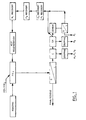
- Figure 1 is a schematic diagram of a process according to the present invention.
- the process of the present invention was developed to recover gold, platinum, palladium, copper and nickel from bulk sulfide concentrates obtained from Lac Des Iles flotation mill through the use of acid leaching procedures.
- a typical range of analysis for the valuable metals and impurities contained in the concentrates are set out in Table 1 below.
- the main metal values contained in the concentrates are the Platinum Group Metals (PGM), gold (Au), copper (Cu), and nickel (Ni).
- PGM Platinum Group Metals
- Au gold
- Cu copper
- Ni nickel
- the PGM are constituted by more or less complex sulphides, tellurides, arsenides, and alloys; Au appears native and as a telluride.
- the main sulphide constituents are chalchopyrite and pentlandite, but there are also minor amounts of pyrite and pyrrhotite.
- the first step of the process of the present invention is to roast the concentrate by heating the concentrate in an oxygen-containing environment such as air to oxidize a portion of the sulfur. It has been found that the roasting is best carried out at between 482 and 649°C (900 and 1200°F).
- the oxidation of sulfur during the roasting stage can be enhanced by agitating the concentrate ("rabbling") to better expose the sulfur in the concentrate to the oxidizing atmosphere.
- the roasting should be carried out until the sulfur content is reduced to about two percent.
- the concentrate After the concentrate has been roasted, it is leached with an acid solution which is a blend of hydrochloric and nitric acids.
- the leaching is carried out in a glass-lined autodave, heated to a moderate temperature and pressurized with a moderate pressure of oxygen gas.
- nitric acid Providing oxygen gas at a moderate pressure of around 3,45 x 10 5 Pa (50 p.s.i.g.) enables the nitric acid to be continuously regenerated by the oxygen gas being applied.
- Moderately heating the add and roasted concentrate mixture assists the leaching process. Effective results have been achieved at a temperature of around 88°C (190°F). The temperature should be kept below the melting temperature of sulfur as it has been found that poor recovery of precious metals in the solution occurred at reaction temperatures of 135°C or higher (288.5°F).
- the solution of acid and metal sulphides is separated from any undissolved portion of the roasted concentrate.
- the above leaching process is capable of forming solutions of gold, palladium, platinum, copper and nickel.
- the final step of the process is to retrieve the dissolved metals from the solution.
- Gold may be collected on activated carbon in an acidic solution.
- the palladium and platinum may also be collected on activated carbon.
- Palladium may be removed from the solution by solvent extraction, for example by mixing with dioctyl or dihexyl sulfide.
- the solution may contain copper, platinum, nickel and iron. Platinum may be removed by cementation with a copper powder or the solution may be electrolyzed in an electrolytic cell to collect both the copper and platinum on the cathode.
- the remaining nickel and iron solution may be treated by precipitating the nickel and iron together as a hydroxide which may then be sold to a smelter.
- a portion of the iron may be oxidized in an autoclave to form a ferric oxide precipitate which may be separated.
- the balance of the dissolved iron may be precipitated outside of the autoclave as a ferric hydroxide.
- Nickel may be removed as a hydroxide, as a carbonate or through electrolysis as nickel plate. If calcium is used as a precipitating agent, this will leave a spent solution of calcium chloride.
- hydrochloric acid used in the process. This may be accomplished by reacting the calcium chloride solution with sulphuric acid to give hydrochloric acid and calcium sulfate as products.
- the calcium sulfate may be separated as a solid from the hydrochloric acid and sold as such, for example, for use in the building industry as gypsum.
- the hydrochloric acid may then be reused in the process.
- a concentrate sample was pulped in a reaction kettle with dilute or concentrated aqua regia, according to the test.
- the pulp was agitated with a mixer, and the kettle placed on a hot plate. Temperature was monitored with a thermometer immersed in the pulp. On completion of the reaction time, the slurry was filtered. The residue cake was re-pulped in a five percent HCl solution and re-filtered.
- test number 3A the sample was placed in a two-litre PARR autoclave and pulped with concentrated aqua regia. Temperature and oxygen pressure were monitored throughout the test. At the end of the reaction time, the vessel was quenched and the pulp filtered. The conditions are shown in Table 3 and the results in Table 4.
- Aqua Regia Leaching Conditions Test 2A Test 1A Test 3A Aqua Regia, % Sol'n 43.5 100 100 Temp; °C(max) 95 95 115 Reaction Time, hrs 2 1.5 1.0 Pressure, Pa (psig) Atm. Atm. 6,9 x 10 5 (100) O 2 Final pH of Liquor, (approx) 0 0 0 Aqua Regia Leaching Results Test No.
- test number 3A The extreme conditions used in test number 3A resulted in better dissolution for the metals.
- Reaction time of one hour left most of the Au and PGM in the residue, but did not put enough Cu, Ni, and Fe into solution.
- Reaction time of seven hours improved the dissolution of Cu and Ni, but still left more than half of the Fe undissolved. Furthermore, more Au and Pd went into solution. The latter result probably arose as the final oxidation potential of the solution (505 mV) was above that at which only sulfides are expected to dissolve.
- the rate of dissolution of metal sulfides in a slurry is greatly enhanced if it carries oxygen in solution.
- One way of providing oxygen is to add small amounts of HNO 3 , this method has the advantage of HNO 3 being continuously regenerated by the oxygen gas supplied to the vessel.
- Tests numbers 6 and 9 were conducted in order to find the ratio of HCl to HNO 3 from which the maximum dissolution of metals could be obtained.
- Test number 10 was designed to substitute HNO 3 for KNO 3 .
- nitric acid a pseudo-catalytic agent was shown effective in the oxidation process.
- test number 6 where the ratio of HCl to HNO 3 was 10:1 by volume, the reaction was very violent and resulted in high temperature and pressure. The test had to be terminated due to blow-out of the slurry at a pressure of 1.72 x 10 6 Pa (250 p.s.i.g). Under these conditions, leaching was proceeding at an accelerated rate and total leaching time was less than 10 minutes. Leach conditions were moderated in subsequent tests by increasing the ratio of HCl to HNO 3 .
- test number 7 the heat of reaction was less evident. Heat had to be applied to the vessel for the duration of the test. Very good dissolution was obtained for Au, Pd, Cu, and Ni. Dissolution of Pt was relatively low at 24.5%. By increasing the amount of HNO 3 , in test number 8, excellent dissolution of Au, Pd, Cu and Ni was obtained, and Pt dissolution was increased to 38.1%.
- Test number 9 which was designed as an intermediate test between number 7 and number 8, ran into problems due to the plug-up of the vessel drain valve with molten sulfur. This resulted in the cut-off of the oxygen supply.
- Test number 10 shows KNO 3 as a good substitute of HNO 3 .
- the degree of dissolution of metals from a lower grade concentrate is very similar to that obtained with the high grade concentrate, as shown by Test number 11.
- Test number 13 and test number 14 were attempts at increasing the percent solids of the slurry from 28% to 40%. These tests had to be terminated, in one case because of leakage from the autoclave's stainless steel relief valve, and in the other due to dissolution of the oxygen valve. Test number 15 was devised as a repeat of Test number 13 and 14. Test number 16 was an attempt to replace O 2 with air.
- a concentrate sample weighing 8kg was ground all at once at 65% solids for 44 minutes in a 10 kg ball mill, to give a grind of approximately 95% - 200 mesh.
- the sample was filtered, then repulped in water and placed in an 18.5 litre glass lined autoclave. Agitation was then started. Concentrated HCl was added followed by concentrated HNO 3 .
- the vessel was then sealed and steam was applied to the heating jacket. Once at a desired temperature, oxygen was injected and maintained at a specified pressure. Upon completion of the test, the pulp was removed, filtered and the solid cake washed and dried.
- Test number 15 at increased pulp density showed no major differences with those obtained at lower densities, even at the ratio HCl:HNO3 used (75:1). Nevertheless, it is felt that a 50:1 ratio would provide better dissolution rates.
- Test number 16 The substitution of oxygen for air in Test number 16 did not fare well, due mainly to the geometry of the autoclave.
- the free space available was not enough to contain the necessary amount of air.
- Air pressure could not be increased above 3.45 x 10 5 Pa (50 psig), due to the reaction that ensued, creating pressures above 6.9 x 10 5 Pa (100 psig), near the designed pressure limits of the autodave.
- the use of air may still be possible in a larger autodave with an increased pressure rating.
- a sample taken at one hour showed an EMF of 631mV, then with decreasing O 2 available at two hours the EMF reading was 639mV. AT the end of three hours with no more O 2 available it had dropped to 384mV.
- Test work was planned to recover Pt from the leach residue by physical means, using flotation, magnetic separation and gravity separation once the pup size containing most of the Pt was determined.
- Atmospheric leaching would be an alternative to pressure leaching if the ratio of HCl: HNO 3 is increased to the normal aqua regia ratio of 3:1, and if the nitrous gases obtained from the reaction are captured, oxidized and recirculated to the vessel.
- Test number 17 was designed to find out the behaviour of such a reaction.
- the sample for test number 18 was repulped in water and placed in an 18.5 litre glass-lined autoclave. Agitation was then started. Concentrated HCl was added followed by concentrated HNO 3 . The vessel was sealed and steam applied to the heating jacket. Once the desired temperature was attained, oxygen was injected and maintained at a specified pressure. Upon completion of the test, the pulp was removed, filtered and the solid cake residue washed. The residue was repulped in water and returned to the autoclave where HCl and HNO 3 followed. The vessel was sealed again and heat applied. Once again, at the desired temperature, oxygen was injected and maintained at a specified pressure. Upon completion of the test, the pulp was removed, filtered and the solid cake residue washed and dried.
- the sample for test number 19 was dried and split into 500 g charges for roasting in a furnace. Residence time in the furnace was 45 minutes, and the sample was rabbled continuously by hand. On removal of the sample from the furnace, it was rabbled in the open air for a further 5 minutes and let cool. Finally, all the 500 g charges were mixed together.
- Concentrate composites weighing 8 kg were ground for 44 minutes at 65% solids in a 10 kg ball mill, to obtain a grinding of approximately 95% - 200 mesh.
- the samples were filtered and dried.
- the charges were cut to be roasted in an assay furnance.
- the furnace's muffle was heated to 750°C (1400°F) with closed doors. Once the temperature was reached, the doors were opened.
- the tray or boat with the charge evened to an even height of two inches was placed in the muffle for 45 minutes with continuous rabbling by hand.
- the tray/boat was taken out, the charge rabbled for an addition 5 minutes in open air and finally let cool.
- Table 19 shows the roasting conditions for each sample.
- Roasting Conditions Test No 19 Test No 20
- Test No 21 Test No 22
- Test No 23 Test No 24
- Charge g 500 3600 3600 500 500 500 Total material roasted, g 8000 7200 7200 7200 7200 7200 Total roast obtained, g 7800 7000 7000 7000 7000 Temperature, °C 760 NA NA 482 - 650 482 - 650 482 - 650 482 - 650 Time, minutes (per charge) 45 45 45 45 45 45 Muffle dimensions, inches 91 ⁇ 2 x 91 ⁇ 2 x 14 NA NA 91 ⁇ 2 x 91 ⁇ 2 x 14 91 ⁇ 2 x 91 ⁇ 2 x 14 91 ⁇ 2 x 91 ⁇ 2 x 14 91 ⁇ 2 x 91 ⁇ 2 x 14 Air velocity, F.P.M. 50-55 NA NA 50-55 50-55 50-55 Continuous rabbling yes yes yes yes yes yes yes yes yes yes yes yes yes yes yes yes yes yes yes yes yes yes
- roasted concentrate samples were pulped in water and put in an 18.5 litre glass-lined autoclave. Agitation was started. Concentrated HCl was introduced followed by concentrated HNO 3 , except for Test number 21, in which only HCl was used. The autodave was sealed and steam injected in the heating jacket. Once the pre-determined temperature of the pulp was obtained, the vessel was pressurized with oxygen. Temperature and pressure were monitored throughout the test. After the prescribed retention time, the pulp was removed, filtered and the solid cake residue was washed and dried.
- the leaching conditions are shown in Table 21.
- stage 2 has not been considered.
- Table 23 shows the summary of the distribution of the metals into the leached product (liquors) for tests number 19-24.
- reaction had to be moderated due to the constraints of autoclave design. This was accomplished by the use of small amounts of HNO 3 in a closed autoclave, with an overpressure of oxygen.
- Test number 25 did not achieve the desired temperature and was discarded.
- a further composite was prepared to increase the S content of the sample to approximately 15% S (Comp. No. 6). Again, high grade concentrate was mixed with Comp. No. 2 for this purpose.
- the leaching test procedure (Test number 26) was identical to Test number 25 except for O 2 being injected from the very beginning of the test.
- test number 27 In order to find out if it was possible to keep S in solution by the addition of an organic S dispersant (Lignosol) to the slurry, a further test was conducted (test number 27). A new composition (Comp. No. 7) was prepared and the leaching test carried out similarly to test number 26, except for an increase in the addition of HCl and proportionately that of HNO 3 .
- reaction temperature above 160°C and preferably in the range of 200-225°C, at which S re-oxidizes.
- These temperatures will also produce elevated total pressures, whose major component is the vapor pressure of water.
- the vapor pressure of water rises very rapidly above 150°C. The rate of increase in pressure continues to rise with temperature and may result in uneconomical design parameters for the autoclave.
- a test program was designed to investigate the main variables that affect roasting, i.e.: temperature, roasting period, rabbling. Concentrate composite No. 4 was used for this purpose. Charges weighing 500 g were used throughout the program.
- Test RST 19 was the "roasting reference test", used for leaching test number 19, in which the muffle was heated to 760°C with doors closed. The doors were then opened and the temperature allowed to come down to its lowest level.
- Test RST 20 was generally the same as RST 19, but with no rabbling.
- Test RST 21 was the first of three at "higher temperatures". In this case, the muffle was heated to 982°C with doors dosed, the rest of the steps were similar to RST 19, except that no rabbling was performed.
- Test RST 22 was the same as RST 21, but the duration was 90 minutes instead of 45.
- Test RST 23 was the same as RST 21, but 30 minutes were used instead of 45.
- test RST 25 the muffle was heated to 760°C with closed doors. The doors were opened and the temperature was allowed to come down to its lowest level (604°C - 610°C). The cold boat with 500 g of dry sample evened to a depth of two inches was introduced, which caused a further slip in the temperature (approximately 538°C). Total roasting time was 30 minutes, during which the sample was continuously rabbled by hand. The hot boat and sample were taken out of the muffle and rabbled for a further five minutes and finally left to cool down to room temperature.
- Test RST 26 was the same as RST 25, however 60 minutes roasting time was used.
- Test RST 27 was generally the same as RST 25 however 90 minutes roasting time was used.
- Test RST 28 was generally the same as RST 25 without rabbling.
- Test RST 29 was generally the same as RST 26 without rabbling.
- Test RST 30 was generally the same as RST 27 without rabbling.
- RST 24 the muffle was heated to 482°C with the doors open, the cold boat and 500 g of dry sample evened to a depth of 5,08 cm (2 inches), were introduced for a total time of 45 minutes with continuous rabbling by hand. Temperature was kept dose to 482°C.
- RST 31 was generally the same as RST 24, however 60 minutes was used.
- RST 32 was generally the same as RST 24, however 90 minutes was used.
- Table 34 shows the extraction obtained from leaching roasted concentrate at 482°C, with continuous rabbling. Leaching of Roasted Concentrate Test No. % Extraction Au Pt Pd Cu Ni RST 24 99.3 94.2 94.2 98.4 94.9 RST 31 99.4 96.5 95.2 98.9 96.2 RST 32 99.4 97.1 94.9 98.6 95.3
- a concentrate sample was ground in order to obtain a grind of approximately 95% - 200 mesh.
- the ground sample was filtered and split into 500 g charges.
- RST 42 a boat with a 500 g charge 5,08 cm (2 inches high) was placed in the muffle pre-heated at 482°C with open doors, and left to roast for 60 minutes (no rabbling).
- Test RST 43 was generally the same as RST 42, however 90 minutes roasting time was used.
- Table 35 shows the extraction obtained from leaching roasted concentrate at 482°C with no rabbling.
- Test RST 43 yielded marginally better leaching extractions for PGM, so that a roasting time of 90 minutes was suggested for the larger sample to be leached in the autodave.
- a concentrate sample weighing 8 kg was ground for 44 minutes at 65% solids in a 10 kg ball mill to yield a grind of approximately 95% - 200 mesh The pulp was filtered and the cake dried.
- a sample was placed in the tray, measuring 34.61 cm x 27.31 cm x 7.62 cm (13 5/8 inches x 10 3/4 inches x 3 inches) (in which the sample fitted evenly) and placed in the muffle of an assay furnace with unforced air circulation, previously heated to 482°C with doors opened. The charge was left to roast for 90 minutes, after which it was taken out of the muffle and left to cool.
- the roasted product was re-pulped in water and placed in the 18.5 litre autodave. Agitation was started. Concentrated HCl was introduced followed by concentrated HNO 3 . The vessel was sealed, and steam applied to the heating jacket Once the prescribed temperature was reached, the vessel was pressurized with oxygen to 3.45 x 10 5 Pa (50 psig). Temperature and pressure were monitored throughout the test After the reaction time, the pulp was removed and filtered. The cake residue was washed and dried
- Leaching conditions and results are shown respectively in Tables 36 and 37.
- test 8A one litre of solution was contacted with 300 g of activated carbon in a beaker. The charge was agitated for 24 hours at room temperature. The total content of Au, Pt and Pd in the solution is approximately 60 mg and 300 g of carbon would give a loading of 200 g/t.
- Test 8B was generally the same as test 8A, however 60 g of carbon was used for a loading of 1,000 g/t.
- Test 8C was generally the same as test 8A, however 12 g of carbon was used for a loading of approximately 5,000 g/t.
- Test 8D was generally the same as test 8A, however 6 g of carbon was used for a loading of 10,000 g/t.
- Test 8E used one litre of solution contacted with carbon in a column at the rate of 1 l/hr, for 24 hours at room temperature. The loading was 10,000 g/t.
- Test 8F was generally the same as test 8E, however contact period was 72 hours, with samples taken for assay every 24 hours. The results are shown in Table 39.
- the acid solutions obtained by pressure leach have a high oxidation potential. Solutions which have extracted most of the precious metals contained in their feed material, in general have an EMF reading higher than 800 mV. Further, they contain an excess of of acid.
- the purpose of the test was to contact the leach solution with fresh feed, to lower the oxidation potential of the solution and to improve the loading of precious metals into activated carbon.
- the sample used was one litre of solution containing 400 g of flotation concentrate feed.
- test A 400 ml of solution were heated to 80°C. Copper shot was added stage-wise until an EMF reading in the neighbourhood of 300 mV was obtained. The slurry was then filtered.
- the EMF reading was decreased from 806 mV to 381 mV using 25 g of copper shot.
- Test B was generally the same as test A, but Cu powder was used instead of shot, and a reading for EMF of 250 mV was proposed.
- test number 33 200 g of calcine were contacted with 0.5 litres of solution (40% solids) 150 g of activated carbon being added, and the slurry being mixed for eight hours at 80°C. The pH and EMF were monitored. At the end of the test, the slurry was filtered and the carbon screened out and washed.
- Test number 34 was generally the same as test number 33, but samples were removed every two hours for analysis.
- Test number 35 was generally the same as test number 33, however calcine was added by 50 g increments every hour, over a four hour period.
- Test number 36 was generally the same as test number 35, however intermediate solution samples were removed for analysis every two hours with the aim of investigating the kinetics of neutralization and carbon adsorption processes.
- a test series was designed to extract Au-PGM by a combination of cementation of Au-PGM with Cu down to a prescribed reading for EMF, and then contacting the solution with activated carbon.
Landscapes
- Chemical & Material Sciences (AREA)
- Engineering & Computer Science (AREA)
- Organic Chemistry (AREA)
- Materials Engineering (AREA)
- Mechanical Engineering (AREA)
- Metallurgy (AREA)
- Manufacturing & Machinery (AREA)
- Inorganic Chemistry (AREA)
- Life Sciences & Earth Sciences (AREA)
- Environmental & Geological Engineering (AREA)
- General Life Sciences & Earth Sciences (AREA)
- Geochemistry & Mineralogy (AREA)
- Geology (AREA)
- Manufacture And Refinement Of Metals (AREA)
Claims (13)
- Ein Verfahren zur Rückgewinnung von Metallen der Platingruppe aus einem Erzkonzentrat, das mindestens Metalle der Platingruppe und Schwefel enthält, welches Verfahren die folgenden Schritte umfaßt:1) Rösten des genannten Konzentrats in Gegenwart von Sauerstoff bei einer Temperatur von 482°C (900°F) bis 649°C (1200°F), bis der Gehalt des genannten Schwefels auf ungefähr 2% reduziert ist, wodurch ein geröstetes Konzentrat gebildet wird;2) Mischen des genannten gerösteten Konzentrats mit Salzsäure und Salpetersäure in einem Verhältnis von 100 bis 3 Teile Salzsäure per Teil Salpetersäure;3) Erhitzen der genannten Mischung von geröstetem Konzentrat, Salzsäure und Salpetersäure auf eine Temperatur von circa 38°C (100°F) bis 142°C (288°C);4) Halten der genannten Mischung von heißer Säure und geröstetem Konzentrat in einer sauerstoffhaltigen Umgebung mit einem Sauerstoffdruck von 3.45x10⁵ bis 6.9x10⁵ Pa (50 bis 100 p.s.i.g.) für eine Zeitdauer, die ausreichend ist, die genannten Metalle in dem genannten gerösteten Konzentrat aufzulösen, so daß eine Lösung der genannten Metalle und Säuren gebildet wird, und Regenerierung mindestens eines Teils des genannten Salpetersäure;5) Abtrennung der genannten Metallen von der genannten Lösung.
- Das Verfahren nach Anspruch 1, bei welchem,
die sauerstoffhaltige Umgebung im Schritt 1 Luft ist, und das genannte Konzentrat während des genannten Röstens bewegt wird, um die Oxidation des Schwefels zu fördern. - Das Verfahren nach Anspruch 2, bei welchem,
das genannte Erz Gold, Platin, Palladium, Kupfer, Nickel, Eisen und Schwefel enthält. - Das Verfahren nach Anspruch 3, bei welchem,das Gold von der genannten Lösung durch Ansammlung in Aktivkohle getrennt wird;das Palladium von der genannten Lösung durch Mischung der Lösung mit Dioctyloder Dihexylsulfid getrennt wird;das Platin von der genannten Lösung durch Zementieren mit Kupferpulver entfernt wird; unddas Nickel und das Eisen als Hydroxide gefällt werden.
- Das Verfahren nach Anspruch 3, bei welchem,das Gold von der genannten Lösung durch Ansammlung in Aktivkohle getrennt wird;das Palladium teilweise von der genannten Lösung durch Ansammlung in Aktivkohle getrennt wird und der Rest des Palladiums von der genannten Lösung durch Mischung der Lösung mit einem geeigneten Lösungs-Extraktionsmittel getrennt wird;ein Teil des Platins teilweise von der Lösung durch Ansammlung in Aktivkohle getrennt wird und der Rest des Platins von der genannten Lösung durch Zementieren mit Kupferpulver getrennt wird;das Kupfer von der genannten Lösung durch Elektrolyse entfernt wird;ein Teil des Eisens oxidiert wird, um einen Niederschlag von Eisenoxid zu bilden, der von der genannten Lösung getrennt wird;der Rest des genannten Eisen als Eisen(III)-hydroxid gefällt wird; unddas Nickel durch Fällung mit Kalziumkarbonat entfernt wird, um einen Nickelkarbonat-Niederschlag und Kalziumchlorid zu bilden; unddie Kalziumchlorid-Lösung mit Schwefelsäure umgesetzt wird, um Salzsäure und Kalziumsulfat zu bilden, wobei die genannte Salzsäure im Schritt 2 verwendet wird.
- Das Verfahren nach Anspruch 3, bei welchem.das Gold von der genannten Lösung durch Ansammlung in Aktivkohle getrennt wird;das Palladium teilweise von der genannten Lösung durch Ansammlung in Aktivkohle getrennt wird und der Rest des Palladiums von der genannten Lösung durch Mischung der Lösung mit einem geeigneten Lösungs-Extraktionsmittel getrennt wird;ein Teil des Platins teilweise von der Lösung durch Ansammlung in Aktivkohle getrennt wird und der Rest des Platins, mit dem Kupfer, von der genannten Lösung durch Elektrolyse getrennt wird;das Kupfer von der genannten Lösung durch Elektrolyse entfernt wird;ein Teil des Eisens oxidiert wird, um einen Niederschlag von Eisenoxid zu bilden, der von der genannten Lösung getrennt wird;der Rest des genannten Eisen als Eisen(III)-hydroxid gefällt wird; unddas Nickel durch Fällung mit Kalziumkarbonat entfernt wird, um einen Nickelkarbonat-Niederschlag und Kalziumchlorid zu bilden; unddie Kalziumchlorid-Lösung mit Schwefelsäure umgesetzt wird, um Salzsäure und Kalziumsulfat zu bilden, wobei die genannte Salzsäure im Schritt 2 verwendet wird.
- Das Verfahren nach Anspruch 5, bei welchem,
das genannte geeignete Lösungs-Extraktionsmittel aus der Gruppe, die Dioctyl- und Dihexylsulfid umfaßt, ausgewählt wird. - Das Verfahren nach Anspruch 6, bei welchem,
das genannte geeignete Lösungs-Extraktionsmittel aus der Gruppe, die Dioctyl- und Dihexylsulfid umfaßt, ausgewählt ist. - Das Verfahren nach Anspruch 3, bei welchem,das Gold von der genannten Lösung durch Ansammlung in Aktivkohle getrennt wird;das Palladium teilweise von der genannten Lösung durch Ansammlung in Aktivkohle getrennt wird und der Rest des Palladiums von der genannten Lösung durch Mischung der Lösung mit einem geeigneten Lösungs-Extraktionsmittel getrennt wird;ein Teil des Platins teilweise von der Lösung durch Ansammlung in Aktivkohle getrennt wird und der Rest des Platins von der genannten Lösung durch Zementieren mit Kupferpulver getrennt wird;das Kupfer von der genannten Lösung durch Elektrolyse entfernt wird;ein Teil des Eisens oxidiert wird, um Eisenoxid zu bilden; unddas Nickel durch Elektrolyse als Nickelblech entfernt wird.
- Das Verfahren nach Anspruch 3, bei welchem,das Gold von der genannten Lösung durch Ansammlung in Aktivkohle getrennt wird;das Palladium teilweise von der genannten Lösung durch Ansammlung in Aktivkohle getrennt wird und der Rest des Palladiums von der genannten Lösung durch Mischung der Lösung mit einem geeigneten Lösungs-Extraktionsmittel getrennt wird;ein Teil des Platins teilweise von der Lösung durch Ansammlung in Aktivkohle getrennt wird und der Rest des Platins von der genannten Lösung durch Zementieren mit Kupferpulver getrennt wird;das Kupfer von der genannten Lösung durch Elektrolyse entfernt wird;ein Teil des Eisens oxidiert wird, um Eisenoxid zu bilden; unddas Nickel als Hydroxid entfernt wird.
- Das Verfahren nach Anspruch 9, bei welchem,
das genannte geeignete Lösungs-Extraktionsmittel aus der Gruppe, die Dioctyl- und Dihexylsulfid umfaßt, ausgewählt ist. - Das Verfahren nach Anspruch 10, bei welchem,
das genannte geeignete Lösungs-Extraktionsmittel aus der Gruppe, die Dioctyl- und Dihexylsulfid umfaßt, ausgewählt ist. - Das Verfahren nach Anspruch 1, das die folgenden Schritte umfaßt:1) Rösten des genannten Konzentrats in Gegenwart von Luft bei einer Temperatur von 482°C (900°F) bis 649°C (1200°F), bis der Gehalt des genannten Schwefels auf ungefähr 2 Gewichts % reduziert ist, wodurch ein geröstetes Konzentrat gebildet wird;2) Mischen des genannten gerösteten Konzentrats mit Salzsäure und Salpetersäure in einem Salzsäure: Salpetersäure-Verhältnis von circa 50:1, in einem mit Glas ausgekleideten Autoklaven;3) Abdichten des Autoklaven, Erhitzen der genannten Mischung von geröstetem Konzentrat, Salzsäure und Salpetersäure auf eine Temperatur von circa 88°C (190°F) und Zusatz von Sauerstoff, um einen Sauerstoffdruck von 3.45x10⁵ Pa (50 p.s.i.g.) aufrechtzuerhalten, und Fortsetzung des genannten Erhitzen, bis mindestens 90% des Platins aufgelöst ist;4) Abtrennung des aufgelösten Platins von der Lösung.
Applications Claiming Priority (2)
| Application Number | Priority Date | Filing Date | Title |
|---|---|---|---|
| US89088 | 1979-10-29 | ||
| US08/089,088 US5364444A (en) | 1993-07-08 | 1993-07-08 | Metal leaching and recovery process |
Publications (3)
| Publication Number | Publication Date |
|---|---|
| EP0637635A2 EP0637635A2 (de) | 1995-02-08 |
| EP0637635A3 EP0637635A3 (de) | 1995-05-24 |
| EP0637635B1 true EP0637635B1 (de) | 1998-12-09 |
Family
ID=22215625
Family Applications (1)
| Application Number | Title | Priority Date | Filing Date |
|---|---|---|---|
| EP94110433A Expired - Lifetime EP0637635B1 (de) | 1993-07-08 | 1994-07-05 | Verfahren zum Laugen und Gewinnen von Metallen |
Country Status (6)
| Country | Link |
|---|---|
| US (1) | US5364444A (de) |
| EP (1) | EP0637635B1 (de) |
| CA (1) | CA2126899A1 (de) |
| DE (1) | DE69415097D1 (de) |
| NO (1) | NO942437L (de) |
| ZA (1) | ZA944666B (de) |
Families Citing this family (23)
| Publication number | Priority date | Publication date | Assignee | Title |
|---|---|---|---|---|
| US5443619A (en) * | 1994-10-04 | 1995-08-22 | North American Palladium Ltd. | Process for extracting metals from solution |
| US5542957A (en) * | 1995-01-27 | 1996-08-06 | South Dakota School Of Mines And Technology | Recovery of platinum group metals and rhenium from materials using halogen reagents |
| US5814292A (en) * | 1996-12-19 | 1998-09-29 | Energy Research Group | Comprehensive energy producing methods for aqueous phase oxidation |
| AT405841B (de) * | 1997-09-11 | 1999-11-25 | Prior Eng Ag | Verfahren zum aufarbeiten von edelmetallhaltigen materialien |
| EP1084280A1 (de) | 1998-05-19 | 2001-03-21 | Keith Stuart Liddell | Hydrometallurgisches verfahren zur gewinnung von platinmetallen ohne einschmelzen einer matte |
| RU2169200C1 (ru) * | 2000-03-29 | 2001-06-20 | Санкт-Петербургский государственный горный институт им. Г.В. Плеханова (Технический университет) | Способ извлечения платиновых металлов из платиносодержащих концентратов |
| RU2235140C2 (ru) * | 2002-12-06 | 2004-08-27 | Горный институт Уральского отделения РАН | Способ извлечения благородных металлов |
| CA2472495A1 (en) * | 2004-02-18 | 2005-08-18 | Sgs Lakefield Research Limited | Process to recover base metals |
| TW200624151A (en) | 2004-11-12 | 2006-07-16 | Monsanto Technology Llc | Recovery of noble metals from aqueous process streams |
| FI117559B (fi) * | 2005-02-16 | 2006-11-30 | Outokumpu Oy | Menetelmä kullan talteenottamiseksi kultapitoisesta liuoksesta |
| US7709135B2 (en) * | 2008-06-06 | 2010-05-04 | Basf Corporation | Efficient process for previous metal recovery from cell membrane electrode assemblies |
| US8168847B2 (en) | 2009-04-01 | 2012-05-01 | Earth Renewal Group, Llc | Aqueous phase oxidation process |
| US8481800B2 (en) | 2009-04-01 | 2013-07-09 | Earth Renewal Group, Llc | Aqueous phase oxidation process |
| US7915474B2 (en) | 2009-04-01 | 2011-03-29 | Earth Renewal Group, Llc | Aqueous phase oxidation process |
| US9272936B2 (en) | 2009-04-01 | 2016-03-01 | Earth Renewal Group, Llc | Waste treatment process |
| US7951988B2 (en) * | 2009-04-01 | 2011-05-31 | Earth Renewal Group, Llc | Aqueous phase oxidation process |
| US8115047B2 (en) | 2009-04-01 | 2012-02-14 | Earth Renewal Group, Llc | Aqueous phase oxidation process |
| EP2536860A1 (de) * | 2010-02-18 | 2012-12-26 | Neomet Technologies Inc. | Verfahren zur gewinnung von gold aus einem erz in einem chloridmedium mit einer stockstoffspezies |
| JP2013527307A (ja) | 2010-02-18 | 2013-06-27 | ネオメット テクノロジーズ インコーポレイテッド | 金属および塩酸の回収方法 |
| JP2012050952A (ja) * | 2010-09-03 | 2012-03-15 | Japan Atomic Energy Agency | 脱硝廃触媒の再生方法 |
| AU2013204113B2 (en) * | 2013-02-07 | 2015-07-23 | Jx Nippon Mining & Metals Corporation | Method for leaching gold from gold ore containing pyrite |
| CN103572066A (zh) * | 2013-11-11 | 2014-02-12 | 广州有色金属研究院 | 一种从铂族精矿中富集铂族元素的方法 |
| JP7605441B2 (ja) * | 2022-08-26 | 2024-12-24 | プライムプラネットエナジー&ソリューションズ株式会社 | 疎水性深共晶溶媒の再生方法、およびニッケル浸出方法 |
Family Cites Families (6)
| Publication number | Priority date | Publication date | Assignee | Title |
|---|---|---|---|---|
| GB748405A (en) * | 1951-12-22 | 1956-05-02 | Chemical Construction Corp | Improvements in preconcentration of non-ferrous metal values |
| US2829967A (en) * | 1953-02-07 | 1958-04-08 | Basf Ag | Recovery of platinum group metals from sulfidic raw materials |
| US4188362A (en) * | 1975-01-29 | 1980-02-12 | National Institute For Metallurgy | Process for the treatment of platinum group metals and gold |
| US4094668A (en) * | 1977-05-19 | 1978-06-13 | Newmont Exploration Limited | Treatment of copper refinery slimes |
| FI63781B (fi) * | 1980-03-19 | 1983-04-29 | Outokumpu Oy | Foerfarande foer aotervinning av vaerdemetaller ur finmalen pyit |
| SE452169B (sv) * | 1984-03-06 | 1987-11-16 | Boliden Ab | Forfarande for utvinning av metallverden ur jerninnehallande material |
-
1993
- 1993-07-08 US US08/089,088 patent/US5364444A/en not_active Expired - Fee Related
-
1994
- 1994-06-28 CA CA002126899A patent/CA2126899A1/en not_active Abandoned
- 1994-06-28 NO NO942437A patent/NO942437L/no unknown
- 1994-06-29 ZA ZA944666A patent/ZA944666B/xx unknown
- 1994-07-05 EP EP94110433A patent/EP0637635B1/de not_active Expired - Lifetime
- 1994-07-05 DE DE69415097T patent/DE69415097D1/de not_active Expired - Lifetime
Also Published As
| Publication number | Publication date |
|---|---|
| CA2126899A1 (en) | 1995-01-09 |
| DE69415097D1 (de) | 1999-01-21 |
| US5364444A (en) | 1994-11-15 |
| EP0637635A3 (de) | 1995-05-24 |
| ZA944666B (en) | 1995-02-17 |
| NO942437L (no) | 1995-01-09 |
| NO942437D0 (no) | 1994-06-28 |
| EP0637635A2 (de) | 1995-02-08 |
Similar Documents
| Publication | Publication Date | Title |
|---|---|---|
| EP0637635B1 (de) | Verfahren zum Laugen und Gewinnen von Metallen | |
| US4676828A (en) | Process for the leaching of sulphides containing zinc and iron | |
| EP0451456B1 (de) | Verfahren zur hydrometallurgischen Behandlung zinksulfidhaltiger Rohstoffe | |
| Xia et al. | Caustic roasting and leaching of electric arc furnace dust | |
| CA2160488C (en) | Recovery of metals from sulphidic material | |
| AU2008248196B2 (en) | Method of recovering metal values from ores | |
| Havlik et al. | Pressure leaching of EAF dust with sulphuric acid | |
| US3652264A (en) | Recovery of zinc values from zinc plant residue | |
| CA1224926A (en) | Method for working-up complex sulphidic ore concentrates | |
| US4505744A (en) | Recovery of zinc from zinc containing sulphidic material | |
| US4572771A (en) | Zinc recovery from steel plant dusts and other zinciferous materials | |
| WO2006053376A1 (en) | Consecutive or simultaneous leaching of nickel and cobalt containing ores | |
| US4443253A (en) | Recovery of zinc from zinc containing sulphidic materials | |
| US5443619A (en) | Process for extracting metals from solution | |
| US4435369A (en) | Hydrometallurgical process for extraction of nickel | |
| WO2018187855A1 (en) | Low acidity, low solids pressure oxidative leaching of sulphidic feeds | |
| US4610723A (en) | Process for leaching sulphide concentrates of the tetrahedrite type containing high concentrations of arsenic and antimony | |
| CN114269955B (zh) | 从冶金残留物浸出有价元素的方法 | |
| US4030917A (en) | Hydrometallurgical processing of metal sulfides | |
| US3523787A (en) | Hydrometallurgical process for the recovery of high pure copper values from copper and zinc bearing materials and for the incidental production of potassium sulfate | |
| JPH05171310A (ja) | 還元焙焼による亜鉛製錬法 | |
| WO2020118455A1 (en) | Process for the recovery of zinc and associated value metals from various materials | |
| CA3143370C (en) | Procedure for producing silver concentrate from metallurgical residues | |
| JP7607948B2 (ja) | 冶金残留物から銀濃縮物を生成するための方法 | |
| US387492A (en) | Process of extracting gold and silver |
Legal Events
| Date | Code | Title | Description |
|---|---|---|---|
| PUAI | Public reference made under article 153(3) epc to a published international application that has entered the european phase |
Free format text: ORIGINAL CODE: 0009012 |
|
| AK | Designated contracting states |
Kind code of ref document: A2 Designated state(s): DE FR GB IT NL |
|
| PUAL | Search report despatched |
Free format text: ORIGINAL CODE: 0009013 |
|
| AK | Designated contracting states |
Kind code of ref document: A3 Designated state(s): DE FR GB IT NL |
|
| 17P | Request for examination filed |
Effective date: 19951115 |
|
| 17Q | First examination report despatched |
Effective date: 19970110 |
|
| GRAG | Despatch of communication of intention to grant |
Free format text: ORIGINAL CODE: EPIDOS AGRA |
|
| GRAG | Despatch of communication of intention to grant |
Free format text: ORIGINAL CODE: EPIDOS AGRA |
|
| GRAH | Despatch of communication of intention to grant a patent |
Free format text: ORIGINAL CODE: EPIDOS IGRA |
|
| GRAH | Despatch of communication of intention to grant a patent |
Free format text: ORIGINAL CODE: EPIDOS IGRA |
|
| GRAA | (expected) grant |
Free format text: ORIGINAL CODE: 0009210 |
|
| AK | Designated contracting states |
Kind code of ref document: B1 Designated state(s): DE FR GB IT NL |
|
| PG25 | Lapsed in a contracting state [announced via postgrant information from national office to epo] |
Ref country code: NL Free format text: LAPSE BECAUSE OF FAILURE TO SUBMIT A TRANSLATION OF THE DESCRIPTION OR TO PAY THE FEE WITHIN THE PRESCRIBED TIME-LIMIT Effective date: 19981209 Ref country code: IT Free format text: LAPSE BECAUSE OF FAILURE TO SUBMIT A TRANSLATION OF THE DESCRIPTION OR TO PAY THE FEE WITHIN THE PRE;WARNING: LAPSES OF ITALIAN PATENTS WITH EFFECTIVE DATE BEFORE 2007 MAY HAVE OCCURRED AT ANY TIME BEFORE 2007. THE CORRECT EFFECTIVE DATE MAY BE DIFFERENT FROM THE ONE RECORDED.SCRIBED TIME-LIMIT Effective date: 19981209 Ref country code: FR Free format text: LAPSE BECAUSE OF FAILURE TO SUBMIT A TRANSLATION OF THE DESCRIPTION OR TO PAY THE FEE WITHIN THE PRESCRIBED TIME-LIMIT Effective date: 19981209 |
|
| REF | Corresponds to: |
Ref document number: 69415097 Country of ref document: DE Date of ref document: 19990121 |
|
| PG25 | Lapsed in a contracting state [announced via postgrant information from national office to epo] |
Ref country code: DE Free format text: LAPSE BECAUSE OF FAILURE TO SUBMIT A TRANSLATION OF THE DESCRIPTION OR TO PAY THE FEE WITHIN THE PRESCRIBED TIME-LIMIT Effective date: 19990310 |
|
| NLV1 | Nl: lapsed or annulled due to failure to fulfill the requirements of art. 29p and 29m of the patents act | ||
| EN | Fr: translation not filed | ||
| PG25 | Lapsed in a contracting state [announced via postgrant information from national office to epo] |
Ref country code: GB Free format text: LAPSE BECAUSE OF NON-PAYMENT OF DUE FEES Effective date: 19990705 |
|
| PLBE | No opposition filed within time limit |
Free format text: ORIGINAL CODE: 0009261 |
|
| STAA | Information on the status of an ep patent application or granted ep patent |
Free format text: STATUS: NO OPPOSITION FILED WITHIN TIME LIMIT |
|
| 26N | No opposition filed | ||
| GBPC | Gb: european patent ceased through non-payment of renewal fee |
Effective date: 19990705 |