EP0629997B1 - Voice communication method and apparatus - Google Patents
Voice communication method and apparatus Download PDFInfo
- Publication number
- EP0629997B1 EP0629997B1 EP94304344A EP94304344A EP0629997B1 EP 0629997 B1 EP0629997 B1 EP 0629997B1 EP 94304344 A EP94304344 A EP 94304344A EP 94304344 A EP94304344 A EP 94304344A EP 0629997 B1 EP0629997 B1 EP 0629997B1
- Authority
- EP
- European Patent Office
- Prior art keywords
- unknown word
- speech
- information
- unknown
- input
- Prior art date
- Legal status (The legal status is an assumption and is not a legal conclusion. Google has not performed a legal analysis and makes no representation as to the accuracy of the status listed.)
- Expired - Lifetime
Links
- 238000000034 method Methods 0.000 title claims description 43
- 238000004891 communication Methods 0.000 title claims description 23
- 230000004044 response Effects 0.000 claims description 2
- 238000005352 clarification Methods 0.000 claims 2
- 230000001755 vocal effect Effects 0.000 claims 1
- 238000010586 diagram Methods 0.000 description 19
- 238000010276 construction Methods 0.000 description 3
- 238000007796 conventional method Methods 0.000 description 3
- 230000008447 perception Effects 0.000 description 3
- 101150034273 SYS1 gene Proteins 0.000 description 2
- 230000002194 synthesizing effect Effects 0.000 description 2
- 230000002950 deficient Effects 0.000 description 1
- 239000000203 mixture Substances 0.000 description 1
Images



Classifications
-
- G—PHYSICS
- G10—MUSICAL INSTRUMENTS; ACOUSTICS
- G10L—SPEECH ANALYSIS TECHNIQUES OR SPEECH SYNTHESIS; SPEECH RECOGNITION; SPEECH OR VOICE PROCESSING TECHNIQUES; SPEECH OR AUDIO CODING OR DECODING
- G10L15/00—Speech recognition
- G10L15/22—Procedures used during a speech recognition process, e.g. man-machine dialogue
-
- G—PHYSICS
- G10—MUSICAL INSTRUMENTS; ACOUSTICS
- G10L—SPEECH ANALYSIS TECHNIQUES OR SPEECH SYNTHESIS; SPEECH RECOGNITION; SPEECH OR VOICE PROCESSING TECHNIQUES; SPEECH OR AUDIO CODING OR DECODING
- G10L15/00—Speech recognition
- G10L15/06—Creation of reference templates; Training of speech recognition systems, e.g. adaptation to the characteristics of the speaker's voice
- G10L15/063—Training
-
- G—PHYSICS
- G10—MUSICAL INSTRUMENTS; ACOUSTICS
- G10L—SPEECH ANALYSIS TECHNIQUES OR SPEECH SYNTHESIS; SPEECH RECOGNITION; SPEECH OR VOICE PROCESSING TECHNIQUES; SPEECH OR AUDIO CODING OR DECODING
- G10L15/00—Speech recognition
- G10L15/08—Speech classification or search
- G10L15/18—Speech classification or search using natural language modelling
- G10L15/1815—Semantic context, e.g. disambiguation of the recognition hypotheses based on word meaning
-
- G—PHYSICS
- G10—MUSICAL INSTRUMENTS; ACOUSTICS
- G10L—SPEECH ANALYSIS TECHNIQUES OR SPEECH SYNTHESIS; SPEECH RECOGNITION; SPEECH OR VOICE PROCESSING TECHNIQUES; SPEECH OR AUDIO CODING OR DECODING
- G10L15/00—Speech recognition
- G10L15/22—Procedures used during a speech recognition process, e.g. man-machine dialogue
- G10L2015/226—Procedures used during a speech recognition process, e.g. man-machine dialogue using non-speech characteristics
- G10L2015/228—Procedures used during a speech recognition process, e.g. man-machine dialogue using non-speech characteristics of application context
Definitions
- the invention relates to a method and apparatus for recognising input speech and for obtaining the speaking intention of the speaker.
- the invention also relates to method and apparatus for recognising a speech in consideration of the communication situation with a speaker.
- voice recognition apparatus as set out in claims 6 and 11.
- the invention intends to provide voice communication method and apparatus in which the acceptable vocabulary is dynamically changed in accordance with a communication situation, an unknown word, which cannot be recognised by the current acceptable vocabulary, is detected, and the unknown word is reevaluated by the acceptable vocabulary changed by the information obtained after a speech including the unknown word which had been detected was input. Due to this, even when vocabulary, sentence, or the like which cannot be accepted is input, the processes continue, the past speech is reevaluated, the problem to the user such that "after the acceptable vocabulary, sentence, or the like was changed, the user must again utter the contents which had been once uttered" is solved, and the use feeling of the user can be improved.
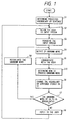
- Fig. 1 is a flowchart showing a processing flow of an embodiment of the invention.
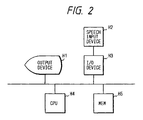
- Fig. 2 is a diagram showing a hardware construction in an embodiment of the invention.
- reference numeral H1 denotes an output device such as display device like a CRT display or the like or speech synthesizing device;
- H2 a speech input device such as a microphone or the like;
- H3 an I/O device to modify a speech which is input from the speech input device H2 so that it can be processed by a computer;
- H4 a central processing unit (CPU) for executing processes such as numerical value calculation, control, and the like.
- the CPU H4 controls each process in accordance with a control program stored in a memory device H5.
- H5 denotes the memory device such as external memory device like a disk device or the like or internal memory like an RAM, ROM, or the like.
- the memory device H5 stores a dictionary of speech which is used for speech perception.
- a control program of processes shown in flowcharts, which will be explained hereinbelow, has been stored in the memory device H5.
- Each of the above devices H1 to H5 is connected through a bus.
- step S1 When a signal to instruct the start of processes is input to the CPU H4, first, in step S1, a vocabulary, sentence, or the like which is first uttered by the user is predicted and the predicted vocabulary, sentence, or the like is stored into the memory device H5. In step S2, the user inputs a speech as a recognition target by using the speech input device H2.
- step S3 speech recognition is executed to the speech which was input in step S2 by using the vocabulary, sentence, or the like which was decided in step S1.
- step S4 a check is made to see whether or not an unknown word in which it is determined such that the recognition result is defective and that the word or the like which is derived as a recognition result cannot be output is included in the speech which was input in step S2. Further, in the case where an unknown word is included, the position of the unknown word portion in the speech data which was modified by the I/O device H3 is detected and the position information or the speech data which was judged as an unknown word itself is stored into the memory device H5.
- step S5 the results in steps S3 and S4 are analyzed, the speaking intention of the user is extracted, and a process such as a data base search or the like which the user intends to execute is performed in order to communicate for the speaking intention.
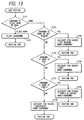
- step S5 a process in the case where there is an unknown word when performing the process to extract the speaking intention in step S5 is shown in a flowchart of Fig. 13 and will be explained in detail hereinbelow.
- step S10 in the case where the unknown word is detected in step S4, a method for eliminating the unknown word and correctly perceiving the speech is decided or planned by using the result in step S5.
- step S6 the vocabulary, sentences, and the like which are recognised and have been stored in the memory device H5 in step S1 are changed by using the result in step S5.
- step S7 whether the unknown word portion detected in step S4 should be reevaluated or not is decided.
- information indicating whether the unknown word has been detected in step S4 or not, whether the acceptable vocabulary, sentence, or the like has been changed in step S6 or not, or the like is read out from the memory device H5 and is used.
- the processing routine advances to step S8.
- the processing routine advances to step S9.
- step S8 the reply contents to the user are calculated by using the results in steps S5 and S10 and are shown to the user by displaying on the display screen or synthesizing the speech and generating as a sound or the like.
- the processing routine is returned to step S2.
- step S9 the unknown word portion detected in step S4 is reevaluated (namely, the speech recognition of the unknown word portion is again executed) detected in step S4 by using the acceptable vocabulary or sentence which was changed in step S6. After completion of step S9, the processing routine is returned to step S4.
- step S4 since whether or not an unknown word is included in the recognition result is detected in step S4, a check is made to see if any other unknown word still remains or not in the result in step S9.
- step S5 since a proper process is executed by using the result of the speech recognition in the case where the unknown word has already been eliminated in step S9, a process is executed by using new information of the portion in which the unknown word existed so far.
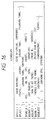
- Fig. 15 shows a communication example such that since the user (usr) first utters a speech including the names of cities, towns, and villages which cannot be accepted for the first time because they are not in the acceptable vocabulary, namely, when the user first utters " (I WOULD LIKE TO KNOW ABOUT SPA SITES IN HAKONE TOWN.)", " (HAKONE TOWN)” is perceived as an unknown word of the place name.
- the system (sys) replies so that the place name can be determined in response to it, thereby generating an answer which the user demands.
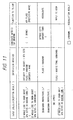
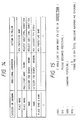
- Fig. 11 is a table simply showing a state of data at each stage to process the communication of Fig. 15.
- the first line in Fig. 11 shows the result until "sys1" is uttered after "usr1" was input.
- the second line shows the result in which "usr2" was input.
- the third line shows a state when "sys2" is uttered.
- the above data is stored and updated in the RAM of the memory device H5 every kind.
- step S1 a vocabulary or sentence which will be first uttered by the user is predicted and the acceptable vocabulary or sentence is determined.
- the first acceptable vocabulary or sentence is as shown in Fig. 3.
- the meaning of the diagram of the sentence of Fig. 3 is that a sentence which traces paths from "start” to "end” is accepted.
- the meaning of the diagram of the vocabulary shows a vocabulary which can become "$hello” or the like in the sentence. Namely, (GOOD MORNING)", “ (I WOULD LIKE TO KNOW HOW TO GET AN ART MUSEUM IN TOKYO.)", “ (THIS IS THE PHONE #.)", and the like are sentences which can be accepted.
- (UNKNOWN) included in "$place" or the like in the diagram of the vocabulary in Fig. 3 is a symbol which indicates an unknown word and is provided to detect an unknown word in step S4. That is, it means "unknown word can enter here.”
- step S2 the user inputs a speech. It is now assumed that the user input, for example, " (I WOULD LIKE TO KNOW ABOUT SPA SITES IN HAKONE TOWN.)" (usr1).
- step S3 as a path (including vocabulary) on which the speech which was input in step S2 on the sentence decided in step S1, the optimum path which can obtain the speech that is acoustically nearest is calculated.
- the optimum path obtained is set to arecognition result.
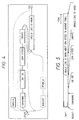
- a path shown by a solid line in Fig. 4 is obtained as a recognition result.
- (I WOULD LIKE TO KNOW ABOUT SPA SITES IN (UNKNOWN).)” is stored as a recognition result of (usr1) as shown in Fig. 11.
- step S4 a check is made to see if an unknown word is included in the speech which was input in step S2 or not on the basis of the result in step S3.
- "(unknown word)" is included in the recognition result which was obtained and stored as a result in step S3, it can be judged that the unknown word is included in the speech which was input in step S2.
- the position (gray portion in Fig. 5) of the unknown word as shown in Fig. 5 is detected from the boundary of the vocabulary derived as a result in step S3.
- step S5 the speaking intention of the user is first extracted from the results in steps S3 and S4.
- the result in step S3 is " (I WOULD LIKE TO KNOW ABOUT SPA SITES IN (UNKNOWN).)".
- the speaking intention is understood to be that "the search target of the user is spa sites.”.
- (BE IN)” of " (BE IN (UNKNOWN))” is an annexed word indicative of the place, it is obtained that "although the user designates the place, it is unknown word.”.
- the information obtained is stored as "information obtained" of "usr1" as shown in Fig. 11.
- step S101 the category of the unknown word is judged from the word which continues to the unknown word. That is, as already described above, since " (BE IN)" of " [BE IN (UNKNOWN)]" is the annexed word indicative of the place, it is judged that the unknown word is a word indicative of the place.
- step S102 the information is stored as "information obtained" of "usr1". The processing routine advances to step S6.
- the annexed word and condition for judgment in step S101 are previously stored in the memory device H5 and are sequentially collated, thereby judging.
- the process such as data base search or the like which the user intends to perform is executed from the speaking intention.
- the contents which are calculated from the speaking intention are "do nothing". This is because some condition must be added in order to search the spa sites by the data base and it is intended to promote the user so as to add the conditions.
- step S10 since the unknown word has been detected in step S4, an action to eliminate the unknown word is decided. Since it is known that the unknown word indicates the place name by the result in step S5 stored in the memory device H5, an action to eliminate the unknown word of the place name is determined. For example, in case of the place name, a situation such that it was detected as an unknown word denotes that it is possible to predict that the place name which was uttered by the user is other than the names of prefectures (the names of prefectures are always stored in the acceptable vocabulary in the embodiment). Therefore, it is considered that when the user designates the name of prefecture, the unknown word can be eliminated. Therefore, the operation such that "ask the name of prefecture to the user.” is used as an action to follow. In order to decide the action to follow, for example, data for reference as shown in a table of Fig. 14 is stored into the memory device H5 and is referred in order to decide the action to follow from the unknown word category and additional condition in step S10.
- Step S6 follows. However, since the data base search is not performed in step S5, the acceptable vocabulary or sentence is not changed.
- step S7 whether the unknown word portion is reevaluated or not is decided.
- the unknown word exists in the speech which was input in step S2.
- the processing routine advances to step S8.
- step S8 a proper reply is formed on the basis of the results in steps S5 and S10.
- the result in step S5 has the contents that "it is necessary to add conditions for data base search.”.
- the action to follow which was obtained as a result in step S10 is that "ask the name of prefecture to the user.”. For example, therefore, a reply sentence such that " (PLEASE DESIGNATE THE NAME OF PREFECTURE.)" is returned. After such a reply sentence was proposed, the processing routine is returned to step S2.
- step S2 again, an example of the user input at the second time assumes " (IT IS KANAGAWA PREFECTURE.)" (usr2).
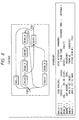
- the result in step S3 for such an input is as shown in Fig. 6 and is stored as a recognition result of "usr2" as shown in Fig. 11.
- Step S4 now follows. As mentioned above, since "unknown" is not included in the result in step S3, the unknown word is not detected.
- step S5 the speaking intention is first extracted from the result in step S3 and the result in step S5 until the preceding time.
- the result in step S3 is such that " (IT IS KANAGAWA PREFECTURE.)”
- information that "the place designated by the user is Kanagawa prefecture” is obtained and is additionally stored into the information which is obtained as shown in Fig. 11.
- the search target of the user is spa sites.”
- Fig. 7 shows an example of the result of the data base search. In the example, the places and names of spa sites in Kanagawa prefecture are searched.
- step S10 since no unknown word is detected in step S4, nothing is performed.
- step S6 the acceptable vocabulary or sentence is changed on the basis of the result in step S5, namely, Fig. 7 in this case.
- the names of cities, towns, and villages in which spa sites exist and the names of spa sites are shown in Fig. 7.
- a possibilitv such that those vocabularies are used in the speech recognition after that is high.
- the names of spa sites are not clearly shown in Fig. 7, since the number of spa site names is large, it is not adapted to the action for suppressing the number of acceptable words. Therefore, as an example of the operation in step S6, the operation such that "the names of cities, towns, and villages in which spa sites exist are added to predicted vocabulary" is executed.
- the sentence since the name of city, town, or village can be used as it is as "$place", it is not changed. Consequently, a new acceptable vocabulary or sentence is as shown in Fig. 8.
- step S7 First, since the unknown word exists in the speech " (I WOULD LIKE TO KNOW ABOUT SPA SITES IN HAKONE TOWN.)" which was input in step S2 at the first time, there is a target for reevaluation. On the other hand, since the acceptable vocabulary has been changed in step S6 just before, it is considered that the unknown word can be eliminated by reevaluating the unknown word portion by using the new acceptable vocabulary or sentence. Therefore, the processing routine advances to step S9.
- step S9 the unknown words which have been uttered so far are eliminated by the reevaluation by using the new acceptable vocabulary or sentence.
- step S4 at the first time, the position of the unknown word has already been obtained (in Fig. 5). It has been known that the gray portion in Fig. 5 relates to the place. Therefore, the speech information at the position of the unknown word is read out from the memory device H5 and is matched with the vocabulary indicative of the place name which was newly added in step S6. The speech that is acoustically nearest to the gray portion in Fig. 5 is selected and is set to the result of the reevaluation of the unknown word. In the example, “ (HAKONE TOWN)" is obtained as a result in step S9. it will be understood that " (HAKONE TOWN)” obtained here is acoustically near to the gray portion in Fig. 5 than the model "unknown” indicative of the unknown word.
- step S4 since there is no model indicative of the unknown word in the new speech recognition result" (I WOULD LIKE TO KNOW ABOUT SPA SITES IN HAKONE TOWN.)" obtained in step S9, a result such that "the unknown word is not detected” is obtained.
- step S5 the speaking intention that "the target place name of the user is Hakone town.” is obtained from the new speech recognition result " (I WOULD LIKE TO KNOW ABOUT SPA SITES IN HAKONE TOWN .)" obtained in step S9.
- the new speech recognition result " (I WOULD LIKE TO KNOW ABOUT SPA SITES IN HAKONE TOWN .)” obtained in step S9.
- information that "the search target of the user is spa site” has been obtained. Therefore, "spa sites located in Hakone town” are searched from the data base.
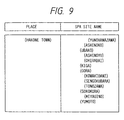
- An example of the result of the data base search is shown in Fig. 9. In the example, the places and names of the spa sites in HAKONE town are searched.
- step S10 nothing is performed because no unknown word is detected in step S4.
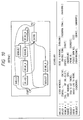
- the acceptable vocabulary or sentence is subsequently changed on the basis of the result (Fig. 9) in step S5. Different from the case of Fig. 7, since the number of spa site names is small, the spa site names are added to the acceptable vocabulary. The sentence is also changed in association with the addition of the spa site names (proper nouns). As a result of the above processes, the new acceptable vocabulary or sentence is as shown in Fig. 10.
- step S7 since no unknown word is left in the speech which was input in the past, the processing routine advances to step S8.
- step S5 the information (Fig. 9) which satisfies the contents such as " (I WOULD LIKE TO KNOW ABOUT SPA SITES LOCATED IN HAKONE TOWN.)" which the user intended is obtained. Therefore, in step S8, such information is proposed. For example, a reply such as " (THERE ARE TOTAL 13 SPA SITES SUCH AS ASINOYU SPA, SOKOKURA SPA, ETC.)" (sys2) is proposed to the user.
- a format such as "unknown” has been used as a model indicative of the unknown word.
- the unknown word often has a character train indicative of the category of such a word in the end portion. Therefore, a model such as "(unknown) + (word indicative of the category)” can be also used as a model showing the unknown word.
- the model such as "(unknown) + (word indicative of the category)” as shown in Fig. 6 as a vocabulary
- the category of the unknown word can be known together with the unknown word. Namely, by expressing the unknown spa site name by "(unknown) spa", it will be understood that the category of the unknown word is a spa site.
- step S5 The process to judge the category of the unknown word is executed in step S5 and is shown in detail in the flowchart of Fig. 13.
- step S101 in the case where it is judged that the user designated the name in the portion of the unknown word from the characteristics of the word which continues to the unknown word, step S103 follows.
- the word which continues to the unknown word is " (ART MUSEUM)”
- Fig. 12 relates to the processes in case of the following communication and in the case where there is a vocabulary such as "(unknown) + art museum".
- step S9 in the embodiment 1 only the portion of the unknown word (gray portion in Fig. 5) has been reevaluated. However, the whole uttered speech including the unknown word can be also reevaluated by using the new acceptable vocabulary or grammar obtained in step S6. According to this method, an error of a vocabulary boundary due to the mixture of an unknown word can be corrected.
Landscapes
- Engineering & Computer Science (AREA)
- Computational Linguistics (AREA)
- Health & Medical Sciences (AREA)
- Audiology, Speech & Language Pathology (AREA)
- Human Computer Interaction (AREA)
- Physics & Mathematics (AREA)
- Acoustics & Sound (AREA)
- Multimedia (AREA)
- Artificial Intelligence (AREA)
- Machine Translation (AREA)
Applications Claiming Priority (3)
| Application Number | Priority Date | Filing Date | Title |
|---|---|---|---|
| JP144940/93 | 1993-06-16 | ||
| JP14494093A JP3397372B2 (ja) | 1993-06-16 | 1993-06-16 | 音声認識方法及び装置 |
| JP14494093 | 1993-06-16 |
Publications (2)
| Publication Number | Publication Date |
|---|---|
| EP0629997A1 EP0629997A1 (en) | 1994-12-21 |
| EP0629997B1 true EP0629997B1 (en) | 1999-10-27 |
Family
ID=15373730
Family Applications (1)
| Application Number | Title | Priority Date | Filing Date |
|---|---|---|---|
| EP94304344A Expired - Lifetime EP0629997B1 (en) | 1993-06-16 | 1994-06-15 | Voice communication method and apparatus |
Country Status (4)
| Country | Link |
|---|---|
| US (1) | US5797116A (enExample) |
| EP (1) | EP0629997B1 (enExample) |
| JP (1) | JP3397372B2 (enExample) |
| DE (1) | DE69421324T2 (enExample) |
Families Citing this family (58)
| Publication number | Priority date | Publication date | Assignee | Title |
|---|---|---|---|---|
| JP3468572B2 (ja) * | 1994-03-22 | 2003-11-17 | 三菱電機株式会社 | 対話処理装置 |
| JPH10161692A (ja) * | 1996-12-03 | 1998-06-19 | Canon Inc | 音声認識装置及び音声認識方法 |
| JPH10187195A (ja) * | 1996-12-26 | 1998-07-14 | Canon Inc | 音声合成方法および装置 |
| JPH10254486A (ja) | 1997-03-13 | 1998-09-25 | Canon Inc | 音声認識装置および方法 |
| JP3962445B2 (ja) | 1997-03-13 | 2007-08-22 | キヤノン株式会社 | 音声処理方法及び装置 |
| JP3886024B2 (ja) * | 1997-11-19 | 2007-02-28 | 富士通株式会社 | 音声認識装置及びそれを用いた情報処理装置 |
| US6208959B1 (en) | 1997-12-15 | 2001-03-27 | Telefonaktibolaget Lm Ericsson (Publ) | Mapping of digital data symbols onto one or more formant frequencies for transmission over a coded voice channel |
| US6061646A (en) * | 1997-12-18 | 2000-05-09 | International Business Machines Corp. | Kiosk for multiple spoken languages |
| JP3884856B2 (ja) | 1998-03-09 | 2007-02-21 | キヤノン株式会社 | 音声合成用データ作成装置、音声合成装置及びそれらの方法、コンピュータ可読メモリ |
| JP3902860B2 (ja) | 1998-03-09 | 2007-04-11 | キヤノン株式会社 | 音声合成制御装置及びその制御方法、コンピュータ可読メモリ |
| JP2000047696A (ja) | 1998-07-29 | 2000-02-18 | Canon Inc | 情報処理方法及び装置、その記憶媒体 |
| US6185535B1 (en) | 1998-10-16 | 2001-02-06 | Telefonaktiebolaget Lm Ericsson (Publ) | Voice control of a user interface to service applications |
| WO2000073975A1 (en) * | 1999-05-31 | 2000-12-07 | Cai Co., Ltd. | Rewrite system |
| EP1058236B1 (en) * | 1999-05-31 | 2007-03-07 | Nippon Telegraph and Telephone Corporation | Speech recognition based database query system |
| JP3969908B2 (ja) | 1999-09-14 | 2007-09-05 | キヤノン株式会社 | 音声入力端末器、音声認識装置、音声通信システム及び音声通信方法 |
| US6456975B1 (en) * | 2000-01-13 | 2002-09-24 | Microsoft Corporation | Automated centralized updating of speech recognition systems |
| GB0004578D0 (en) * | 2000-02-25 | 2000-04-19 | Xrefer Com Limited | Automated data cross-referencing method |
| JP4543294B2 (ja) * | 2000-03-14 | 2010-09-15 | ソニー株式会社 | 音声認識装置および音声認識方法、並びに記録媒体 |
| US6473734B1 (en) * | 2000-03-27 | 2002-10-29 | Motorola, Inc. | Methodology for the use of verbal proxies for dynamic vocabulary additions in speech interfaces |
| US7039588B2 (en) * | 2000-03-31 | 2006-05-02 | Canon Kabushiki Kaisha | Synthesis unit selection apparatus and method, and storage medium |
| JP4632384B2 (ja) * | 2000-03-31 | 2011-02-16 | キヤノン株式会社 | 音声情報処理装置及びその方法と記憶媒体 |
| JP3728172B2 (ja) | 2000-03-31 | 2005-12-21 | キヤノン株式会社 | 音声合成方法および装置 |
| JP2001282278A (ja) * | 2000-03-31 | 2001-10-12 | Canon Inc | 音声情報処理装置及びその方法と記憶媒体 |
| JP3728177B2 (ja) * | 2000-05-24 | 2005-12-21 | キヤノン株式会社 | 音声処理システム、装置、方法及び記憶媒体 |
| EP1162602B1 (en) * | 2000-06-07 | 2004-12-15 | Sony International (Europe) GmbH | Two pass speech recognition with active vocabulary restriction |
| JP2002123283A (ja) * | 2000-10-12 | 2002-04-26 | Nissan Motor Co Ltd | 音声認識操作装置 |
| EP1330817B1 (de) * | 2000-11-03 | 2005-07-20 | VoiceCom solutions GmbH | Robuste spracherkennung mit datenbankorganisation |
| DE10119677A1 (de) * | 2001-04-20 | 2002-10-24 | Philips Corp Intellectual Pty | Verfahren zum Ermitteln von Datenbankeinträgen |
| US6751595B2 (en) * | 2001-05-09 | 2004-06-15 | Bellsouth Intellectual Property Corporation | Multi-stage large vocabulary speech recognition system and method |
| JP2003036088A (ja) * | 2001-07-23 | 2003-02-07 | Canon Inc | 音声変換の辞書管理装置 |
| US6963832B2 (en) * | 2001-10-09 | 2005-11-08 | Hewlett-Packard Development Company, L.P. | Meaning token dictionary for automatic speech recognition |
| US6915246B2 (en) * | 2001-12-17 | 2005-07-05 | International Business Machines Corporation | Employing speech recognition and capturing customer speech to improve customer service |
| US7058565B2 (en) * | 2001-12-17 | 2006-06-06 | International Business Machines Corporation | Employing speech recognition and key words to improve customer service |
| DE10235548B4 (de) * | 2002-03-25 | 2012-06-28 | Agere Systems Guardian Corp. | Verfahren und Vorrichtung für die Prädiktion einer Textnachrichteneingabe |
| KR100446627B1 (ko) * | 2002-03-29 | 2004-09-04 | 삼성전자주식회사 | 음성대화 인터페이스를 이용한 정보제공장치 및 그 방법 |
| JP2004012698A (ja) * | 2002-06-05 | 2004-01-15 | Canon Inc | 情報処理装置及び情報処理方法 |
| JP3945356B2 (ja) * | 2002-09-17 | 2007-07-18 | 株式会社デンソー | 音声対話装置及びプログラム |
| US7640164B2 (en) | 2002-07-04 | 2009-12-29 | Denso Corporation | System for performing interactive dialog |
| JP4280505B2 (ja) | 2003-01-20 | 2009-06-17 | キヤノン株式会社 | 情報処理装置及び情報処理方法 |
| JP2005202165A (ja) * | 2004-01-15 | 2005-07-28 | Advanced Media Inc | 音声認識システム |
| JP4587160B2 (ja) * | 2004-03-26 | 2010-11-24 | キヤノン株式会社 | 信号処理装置および方法 |
| JP4541781B2 (ja) * | 2004-06-29 | 2010-09-08 | キヤノン株式会社 | 音声認識装置および方法 |
| JP4301102B2 (ja) * | 2004-07-22 | 2009-07-22 | ソニー株式会社 | 音声処理装置および音声処理方法、プログラム、並びに記録媒体 |
| US7925506B2 (en) * | 2004-10-05 | 2011-04-12 | Inago Corporation | Speech recognition accuracy via concept to keyword mapping |
| EP2306451B1 (en) * | 2004-10-05 | 2015-08-26 | Inago Corporation | Speech recognition |
| TWI269268B (en) * | 2005-01-24 | 2006-12-21 | Delta Electronics Inc | Speech recognizing method and system |
| US8229745B2 (en) * | 2005-10-21 | 2012-07-24 | Nuance Communications, Inc. | Creating a mixed-initiative grammar from directed dialog grammars |
| JPWO2007097390A1 (ja) * | 2006-02-23 | 2009-07-16 | 日本電気株式会社 | 音声認識システム、音声認識結果出力方法、及び音声認識結果出力プログラム |
| US7831431B2 (en) | 2006-10-31 | 2010-11-09 | Honda Motor Co., Ltd. | Voice recognition updates via remote broadcast signal |
| US8195461B2 (en) * | 2006-12-15 | 2012-06-05 | Mitsubishi Electric Corporation | Voice recognition system |
| US20080273672A1 (en) * | 2007-05-03 | 2008-11-06 | Microsoft Corporation | Automated attendant grammar tuning |
| JP2009151314A (ja) * | 2008-12-25 | 2009-07-09 | Sony Corp | 情報処理装置及び情報処理方法 |
| US20110131040A1 (en) * | 2009-12-01 | 2011-06-02 | Honda Motor Co., Ltd | Multi-mode speech recognition |
| JP2013072974A (ja) * | 2011-09-27 | 2013-04-22 | Toshiba Corp | 音声認識装置、方法及びプログラム |
| JP6069157B2 (ja) * | 2013-09-30 | 2017-02-01 | Necパーソナルコンピュータ株式会社 | 情報処理装置、制御方法、及びプログラム |
| US20170199867A1 (en) * | 2014-10-30 | 2017-07-13 | Mitsubishi Electric Corporation | Dialogue control system and dialogue control method |
| EP3573051A4 (en) * | 2017-01-18 | 2020-01-22 | Sony Corporation | INFORMATION PROCESSING DEVICE, INFORMATION PROCESSING PROCESS AND PROGRAM |
| CN120047102B (zh) * | 2025-02-06 | 2026-04-03 | 立信(重庆)数据科技股份有限公司 | 基于客户交互服务的调研数据一致性审核系统及方法 |
Family Cites Families (10)
| Publication number | Priority date | Publication date | Assignee | Title |
|---|---|---|---|---|
| US4618984A (en) * | 1983-06-08 | 1986-10-21 | International Business Machines Corporation | Adaptive automatic discrete utterance recognition |
| US5315689A (en) * | 1988-05-27 | 1994-05-24 | Kabushiki Kaisha Toshiba | Speech recognition system having word-based and phoneme-based recognition means |
| IT1229782B (it) * | 1989-05-22 | 1991-09-11 | Face Standard Ind | Metodo ed apparato per riconoscere parole verbali sconosciute mediante estrazione dei parametri e confronto con parole di riferimento |
| US5136654A (en) * | 1989-10-19 | 1992-08-04 | Kurzweil Applied Intelligence, Inc. | Vocabulary partitioned speech recognition apparatus |
| US5220629A (en) * | 1989-11-06 | 1993-06-15 | Canon Kabushiki Kaisha | Speech synthesis apparatus and method |
| US5097509A (en) * | 1990-03-28 | 1992-03-17 | Northern Telecom Limited | Rejection method for speech recognition |
| US5497319A (en) * | 1990-12-31 | 1996-03-05 | Trans-Link International Corp. | Machine translation and telecommunications system |
| US5390279A (en) * | 1992-12-31 | 1995-02-14 | Apple Computer, Inc. | Partitioning speech rules by context for speech recognition |
| US5384892A (en) * | 1992-12-31 | 1995-01-24 | Apple Computer, Inc. | Dynamic language model for speech recognition |
| US5640490A (en) * | 1994-11-14 | 1997-06-17 | Fonix Corporation | User independent, real-time speech recognition system and method |
-
1993
- 1993-06-16 JP JP14494093A patent/JP3397372B2/ja not_active Expired - Fee Related
-
1994
- 1994-06-15 EP EP94304344A patent/EP0629997B1/en not_active Expired - Lifetime
- 1994-06-15 DE DE69421324T patent/DE69421324T2/de not_active Expired - Lifetime
-
1997
- 1997-01-21 US US08/785,840 patent/US5797116A/en not_active Expired - Lifetime
Also Published As
| Publication number | Publication date |
|---|---|
| JPH075891A (ja) | 1995-01-10 |
| US5797116A (en) | 1998-08-18 |
| DE69421324T2 (de) | 2000-07-06 |
| DE69421324D1 (de) | 1999-12-02 |
| JP3397372B2 (ja) | 2003-04-14 |
| EP0629997A1 (en) | 1994-12-21 |
Similar Documents
| Publication | Publication Date | Title |
|---|---|---|
| US5797116A (en) | Method and apparatus for recognizing previously unrecognized speech by requesting a predicted-category-related domain-dictionary-linking word | |
| EP1162602B1 (en) | Two pass speech recognition with active vocabulary restriction | |
| US6185530B1 (en) | Apparatus and methods for identifying potential acoustic confusibility among words in a speech recognition system | |
| US6839667B2 (en) | Method of speech recognition by presenting N-best word candidates | |
| US6269335B1 (en) | Apparatus and methods for identifying homophones among words in a speech recognition system | |
| US6751595B2 (en) | Multi-stage large vocabulary speech recognition system and method | |
| US20030195739A1 (en) | Grammar update system and method | |
| JP2000122691A (ja) | 綴り字読み式音声発話の自動認識方法 | |
| JP2004510239A (ja) | ディクテーションとコマンドの区別を向上させる方法 | |
| CN111916062A (zh) | 语音识别方法、装置和系统 | |
| US7653541B2 (en) | Speech processing device and method, and program for recognition of out-of-vocabulary words in continuous speech | |
| US6345249B1 (en) | Automatic analysis of a speech dictated document | |
| US20020082833A1 (en) | Method for recognizing speech | |
| US6879953B1 (en) | Speech recognition with request level determination | |
| JP2003509705A (ja) | 音声認識方法および音声認識装置 | |
| JP5238395B2 (ja) | 言語モデル作成装置および言語モデル作成方法 | |
| JP4600706B2 (ja) | 音声認識装置および音声認識方法、並びに記録媒体 | |
| JP2004251998A (ja) | 対話理解装置 | |
| JP4220151B2 (ja) | 音声対話装置 | |
| JP2001005482A (ja) | 音声認識方法及び装置 | |
| JP4661239B2 (ja) | 音声対話装置及び音声対話方法 | |
| JP5215512B2 (ja) | 発声内に含まれる会社名の自動認識方法 | |
| JP2004021028A (ja) | 音声対話装置及び音声対話プログラム | |
| JP2003330488A (ja) | 音声認識装置 | |
| JP6991409B2 (ja) | 情報処理装置、プログラム及び情報処理方法 |
Legal Events
| Date | Code | Title | Description |
|---|---|---|---|
| PUAI | Public reference made under article 153(3) epc to a published international application that has entered the european phase |
Free format text: ORIGINAL CODE: 0009012 |
|
| AK | Designated contracting states |
Kind code of ref document: A1 Designated state(s): DE FR GB IT NL |
|
| 17P | Request for examination filed |
Effective date: 19950502 |
|
| 17Q | First examination report despatched |
Effective date: 19980512 |
|
| GRAG | Despatch of communication of intention to grant |
Free format text: ORIGINAL CODE: EPIDOS AGRA |
|
| GRAG | Despatch of communication of intention to grant |
Free format text: ORIGINAL CODE: EPIDOS AGRA |
|
| GRAH | Despatch of communication of intention to grant a patent |
Free format text: ORIGINAL CODE: EPIDOS IGRA |
|
| GRAH | Despatch of communication of intention to grant a patent |
Free format text: ORIGINAL CODE: EPIDOS IGRA |
|
| GRAA | (expected) grant |
Free format text: ORIGINAL CODE: 0009210 |
|
| AK | Designated contracting states |
Kind code of ref document: B1 Designated state(s): DE FR GB IT NL |
|
| REF | Corresponds to: |
Ref document number: 69421324 Country of ref document: DE Date of ref document: 19991202 |
|
| ET | Fr: translation filed | ||
| ITF | It: translation for a ep patent filed | ||
| PLBE | No opposition filed within time limit |
Free format text: ORIGINAL CODE: 0009261 |
|
| STAA | Information on the status of an ep patent application or granted ep patent |
Free format text: STATUS: NO OPPOSITION FILED WITHIN TIME LIMIT |
|
| 26N | No opposition filed | ||
| REG | Reference to a national code |
Ref country code: GB Ref legal event code: IF02 |
|
| PGFP | Annual fee paid to national office [announced via postgrant information from national office to epo] |
Ref country code: IT Payment date: 20060630 Year of fee payment: 13 |
|
| PGFP | Annual fee paid to national office [announced via postgrant information from national office to epo] |
Ref country code: NL Payment date: 20090616 Year of fee payment: 16 |
|
| PG25 | Lapsed in a contracting state [announced via postgrant information from national office to epo] |
Ref country code: IT Free format text: LAPSE BECAUSE OF NON-PAYMENT OF DUE FEES Effective date: 20070615 |
|
| REG | Reference to a national code |
Ref country code: NL Ref legal event code: V1 Effective date: 20110101 |
|
| REG | Reference to a national code |
Ref country code: FR Ref legal event code: ST Effective date: 20110228 |
|
| PG25 | Lapsed in a contracting state [announced via postgrant information from national office to epo] |
Ref country code: NL Free format text: LAPSE BECAUSE OF NON-PAYMENT OF DUE FEES Effective date: 20110101 Ref country code: FR Free format text: LAPSE BECAUSE OF NON-PAYMENT OF DUE FEES Effective date: 20100630 |
|
| PGFP | Annual fee paid to national office [announced via postgrant information from national office to epo] |
Ref country code: DE Payment date: 20120630 Year of fee payment: 19 |
|
| PGFP | Annual fee paid to national office [announced via postgrant information from national office to epo] |
Ref country code: GB Payment date: 20120626 Year of fee payment: 19 |
|
| REG | Reference to a national code |
Ref country code: DE Ref legal event code: R119 Ref document number: 69421324 Country of ref document: DE |
|
| GBPC | Gb: european patent ceased through non-payment of renewal fee |
Effective date: 20130615 |
|
| PG25 | Lapsed in a contracting state [announced via postgrant information from national office to epo] |
Ref country code: DE Free format text: LAPSE BECAUSE OF NON-PAYMENT OF DUE FEES Effective date: 20140101 Ref country code: GB Free format text: LAPSE BECAUSE OF NON-PAYMENT OF DUE FEES Effective date: 20130615 |
|
| REG | Reference to a national code |
Ref country code: DE Ref legal event code: R079 Ref document number: 69421324 Country of ref document: DE Free format text: PREVIOUS MAIN CLASS: G10L0005060000 Ipc: G10L0015183000 |
|
| PGFP | Annual fee paid to national office [announced via postgrant information from national office to epo] |
Ref country code: FR Payment date: 20090624 Year of fee payment: 16 |