EP0624149B1 - Process and apparatus for removal of organic pollutants from waste water - Google Patents
Process and apparatus for removal of organic pollutants from waste water Download PDFInfo
- Publication number
- EP0624149B1 EP0624149B1 EP19920925461 EP92925461A EP0624149B1 EP 0624149 B1 EP0624149 B1 EP 0624149B1 EP 19920925461 EP19920925461 EP 19920925461 EP 92925461 A EP92925461 A EP 92925461A EP 0624149 B1 EP0624149 B1 EP 0624149B1
- Authority
- EP
- European Patent Office
- Prior art keywords
- open
- bodies
- biomass
- particulate
- materials
- Prior art date
- Legal status (The legal status is an assumption and is not a legal conclusion. Google has not performed a legal analysis and makes no representation as to the accuracy of the status listed.)
- Expired - Lifetime
Links
- 238000000034 method Methods 0.000 title claims abstract description 80
- 230000008569 process Effects 0.000 title claims abstract description 71
- 239000002351 wastewater Substances 0.000 title description 7
- 239000002957 persistent organic pollutant Substances 0.000 title description 3
- 239000002028 Biomass Substances 0.000 claims abstract description 59
- 239000000758 substrate Substances 0.000 claims abstract description 54
- 244000005700 microbiome Species 0.000 claims abstract description 44
- 239000012530 fluid Substances 0.000 claims abstract description 39
- 239000002250 absorbent Substances 0.000 claims abstract description 36
- 230000002745 absorbent Effects 0.000 claims abstract description 36
- 230000002209 hydrophobic effect Effects 0.000 claims abstract description 17
- 229920002635 polyurethane Polymers 0.000 claims abstract description 16
- 239000004814 polyurethane Substances 0.000 claims abstract description 16
- 239000000463 material Substances 0.000 claims description 101
- 229920005830 Polyurethane Foam Polymers 0.000 claims description 27
- 239000011496 polyurethane foam Substances 0.000 claims description 27
- OKTJSMMVPCPJKN-UHFFFAOYSA-N Carbon Chemical group [C] OKTJSMMVPCPJKN-UHFFFAOYSA-N 0.000 claims description 19
- 238000006065 biodegradation reaction Methods 0.000 claims description 12
- 238000000746 purification Methods 0.000 claims description 7
- 239000003344 environmental pollutant Substances 0.000 abstract description 32
- 231100000719 pollutant Toxicity 0.000 abstract description 32
- 231100001240 inorganic pollutant Toxicity 0.000 abstract description 2
- -1 polypropylene Polymers 0.000 description 64
- ISWSIDIOOBJBQZ-UHFFFAOYSA-N Phenol Chemical compound OC1=CC=CC=C1 ISWSIDIOOBJBQZ-UHFFFAOYSA-N 0.000 description 60
- XLYOFNOQVPJJNP-UHFFFAOYSA-N water Substances O XLYOFNOQVPJJNP-UHFFFAOYSA-N 0.000 description 29
- 239000006260 foam Substances 0.000 description 25
- 239000007789 gas Substances 0.000 description 23
- 239000011148 porous material Substances 0.000 description 21
- 239000002245 particle Substances 0.000 description 20
- QVGXLLKOCUKJST-UHFFFAOYSA-N atomic oxygen Chemical compound [O] QVGXLLKOCUKJST-UHFFFAOYSA-N 0.000 description 19
- 229910052760 oxygen Inorganic materials 0.000 description 19
- 239000001301 oxygen Substances 0.000 description 19
- 239000007788 liquid Substances 0.000 description 18
- 238000009826 distribution Methods 0.000 description 15
- 230000002829 reductive effect Effects 0.000 description 13
- 238000012546 transfer Methods 0.000 description 13
- 239000000203 mixture Substances 0.000 description 12
- 229920003023 plastic Polymers 0.000 description 12
- 239000004033 plastic Substances 0.000 description 12
- 229920005862 polyol Polymers 0.000 description 12
- 150000003077 polyols Chemical class 0.000 description 12
- LYCAIKOWRPUZTN-UHFFFAOYSA-N Ethylene glycol Chemical compound OCCO LYCAIKOWRPUZTN-UHFFFAOYSA-N 0.000 description 11
- 238000002474 experimental method Methods 0.000 description 11
- YXFVVABEGXRONW-UHFFFAOYSA-N Toluene Chemical compound CC1=CC=CC=C1 YXFVVABEGXRONW-UHFFFAOYSA-N 0.000 description 9
- 125000002091 cationic group Chemical group 0.000 description 9
- 239000012948 isocyanate Substances 0.000 description 9
- 239000002699 waste material Substances 0.000 description 9
- 230000006835 compression Effects 0.000 description 8
- 238000007906 compression Methods 0.000 description 8
- 238000004519 manufacturing process Methods 0.000 description 8
- 238000012856 packing Methods 0.000 description 8
- 125000006850 spacer group Chemical group 0.000 description 8
- IJGRMHOSHXDMSA-UHFFFAOYSA-N Atomic nitrogen Chemical compound N#N IJGRMHOSHXDMSA-UHFFFAOYSA-N 0.000 description 7
- VYPSYNLAJGMNEJ-UHFFFAOYSA-N Silicium dioxide Chemical compound O=[Si]=O VYPSYNLAJGMNEJ-UHFFFAOYSA-N 0.000 description 7
- 230000008901 benefit Effects 0.000 description 7
- 125000004435 hydrogen atom Chemical group [H]* 0.000 description 7
- 229920000768 polyamine Polymers 0.000 description 7
- 239000000843 powder Substances 0.000 description 7
- UHOVQNZJYSORNB-UHFFFAOYSA-N Benzene Chemical compound C1=CC=CC=C1 UHOVQNZJYSORNB-UHFFFAOYSA-N 0.000 description 6
- 238000005273 aeration Methods 0.000 description 6
- 125000005442 diisocyanate group Chemical group 0.000 description 6
- 239000006185 dispersion Substances 0.000 description 6
- 239000011521 glass Substances 0.000 description 6
- 230000014759 maintenance of location Effects 0.000 description 6
- 150000002989 phenols Chemical class 0.000 description 6
- 229920000642 polymer Polymers 0.000 description 6
- 239000002002 slurry Substances 0.000 description 6
- 239000000126 substance Substances 0.000 description 6
- 229910052799 carbon Inorganic materials 0.000 description 5
- 238000000576 coating method Methods 0.000 description 5
- 125000004433 nitrogen atom Chemical group N* 0.000 description 5
- 239000011368 organic material Substances 0.000 description 5
- DVKJHBMWWAPEIU-UHFFFAOYSA-N toluene 2,4-diisocyanate Chemical class CC1=CC=C(N=C=O)C=C1N=C=O DVKJHBMWWAPEIU-UHFFFAOYSA-N 0.000 description 5
- QGZKDVFQNNGYKY-UHFFFAOYSA-N Ammonia Chemical compound N QGZKDVFQNNGYKY-UHFFFAOYSA-N 0.000 description 4
- CSNNHWWHGAXBCP-UHFFFAOYSA-L Magnesium sulfate Chemical compound [Mg+2].[O-][S+2]([O-])([O-])[O-] CSNNHWWHGAXBCP-UHFFFAOYSA-L 0.000 description 4
- 239000004698 Polyethylene Substances 0.000 description 4
- 239000004743 Polypropylene Substances 0.000 description 4
- GOOHAUXETOMSMM-UHFFFAOYSA-N Propylene oxide Chemical compound CC1CO1 GOOHAUXETOMSMM-UHFFFAOYSA-N 0.000 description 4
- 125000002947 alkylene group Chemical group 0.000 description 4
- 239000011248 coating agent Substances 0.000 description 4
- RTZKZFJDLAIYFH-UHFFFAOYSA-N ether Substances CCOCC RTZKZFJDLAIYFH-UHFFFAOYSA-N 0.000 description 4
- WGCNASOHLSPBMP-UHFFFAOYSA-N hydroxyacetaldehyde Natural products OCC=O WGCNASOHLSPBMP-UHFFFAOYSA-N 0.000 description 4
- 230000001788 irregular Effects 0.000 description 4
- 230000004060 metabolic process Effects 0.000 description 4
- 229920000728 polyester Polymers 0.000 description 4
- 229920000573 polyethylene Polymers 0.000 description 4
- 229920001155 polypropylene Polymers 0.000 description 4
- 239000007787 solid Substances 0.000 description 4
- 239000000725 suspension Substances 0.000 description 4
- RLFWWDJHLFCNIJ-UHFFFAOYSA-N 4-aminoantipyrine Chemical compound CN1C(C)=C(N)C(=O)N1C1=CC=CC=C1 RLFWWDJHLFCNIJ-UHFFFAOYSA-N 0.000 description 3
- RPNUMPOLZDHAAY-UHFFFAOYSA-N Diethylenetriamine Chemical compound NCCNCCN RPNUMPOLZDHAAY-UHFFFAOYSA-N 0.000 description 3
- IAYPIBMASNFSPL-UHFFFAOYSA-N Ethylene oxide Chemical compound C1CO1 IAYPIBMASNFSPL-UHFFFAOYSA-N 0.000 description 3
- PIICEJLVQHRZGT-UHFFFAOYSA-N Ethylenediamine Chemical compound NCCN PIICEJLVQHRZGT-UHFFFAOYSA-N 0.000 description 3
- HEMHJVSKTPXQMS-UHFFFAOYSA-M Sodium hydroxide Chemical compound [OH-].[Na+] HEMHJVSKTPXQMS-UHFFFAOYSA-M 0.000 description 3
- 125000003118 aryl group Chemical group 0.000 description 3
- 230000015556 catabolic process Effects 0.000 description 3
- 230000001413 cellular effect Effects 0.000 description 3
- 238000006243 chemical reaction Methods 0.000 description 3
- 239000003245 coal Substances 0.000 description 3
- 150000001875 compounds Chemical class 0.000 description 3
- 238000006731 degradation reaction Methods 0.000 description 3
- 238000013461 design Methods 0.000 description 3
- 150000004985 diamines Chemical class 0.000 description 3
- MTHSVFCYNBDYFN-UHFFFAOYSA-N diethylene glycol Chemical compound OCCOCCO MTHSVFCYNBDYFN-UHFFFAOYSA-N 0.000 description 3
- 229910001873 dinitrogen Inorganic materials 0.000 description 3
- 150000002009 diols Chemical class 0.000 description 3
- 230000000694 effects Effects 0.000 description 3
- GVEPBJHOBDJJJI-UHFFFAOYSA-N fluoranthene Chemical compound C1=CC(C2=CC=CC=C22)=C3C2=CC=CC3=C1 GVEPBJHOBDJJJI-UHFFFAOYSA-N 0.000 description 3
- RRAMGCGOFNQTLD-UHFFFAOYSA-N hexamethylene diisocyanate Chemical compound O=C=NCCCCCCN=C=O RRAMGCGOFNQTLD-UHFFFAOYSA-N 0.000 description 3
- 229910010272 inorganic material Inorganic materials 0.000 description 3
- 239000011147 inorganic material Substances 0.000 description 3
- 230000000813 microbial effect Effects 0.000 description 3
- 229910052757 nitrogen Inorganic materials 0.000 description 3
- 229920000570 polyether Polymers 0.000 description 3
- 235000013824 polyphenols Nutrition 0.000 description 3
- 150000003839 salts Chemical class 0.000 description 3
- 239000010802 sludge Substances 0.000 description 3
- 238000003756 stirring Methods 0.000 description 3
- 239000011800 void material Substances 0.000 description 3
- 239000002023 wood Substances 0.000 description 3
- UPMLOUAZCHDJJD-UHFFFAOYSA-N 4,4'-Diphenylmethane Diisocyanate Chemical compound C1=CC(N=C=O)=CC=C1CC1=CC=C(N=C=O)C=C1 UPMLOUAZCHDJJD-UHFFFAOYSA-N 0.000 description 2
- UXVMQQNJUSDDNG-UHFFFAOYSA-L Calcium chloride Chemical compound [Cl-].[Cl-].[Ca+2] UXVMQQNJUSDDNG-UHFFFAOYSA-L 0.000 description 2
- CURLTUGMZLYLDI-UHFFFAOYSA-N Carbon dioxide Chemical compound O=C=O CURLTUGMZLYLDI-UHFFFAOYSA-N 0.000 description 2
- 241000196324 Embryophyta Species 0.000 description 2
- YNQLUTRBYVCPMQ-UHFFFAOYSA-N Ethylbenzene Chemical compound CCC1=CC=CC=C1 YNQLUTRBYVCPMQ-UHFFFAOYSA-N 0.000 description 2
- PEDCQBHIVMGVHV-UHFFFAOYSA-N Glycerine Chemical compound OCC(O)CO PEDCQBHIVMGVHV-UHFFFAOYSA-N 0.000 description 2
- OAKJQQAXSVQMHS-UHFFFAOYSA-N Hydrazine Chemical compound NN OAKJQQAXSVQMHS-UHFFFAOYSA-N 0.000 description 2
- UFWIBTONFRDIAS-UHFFFAOYSA-N Naphthalene Chemical compound C1=CC=CC2=CC=CC=C21 UFWIBTONFRDIAS-UHFFFAOYSA-N 0.000 description 2
- 229920000305 Nylon 6,10 Polymers 0.000 description 2
- 229920002302 Nylon 6,6 Polymers 0.000 description 2
- 239000004952 Polyamide Substances 0.000 description 2
- 239000004793 Polystyrene Substances 0.000 description 2
- UIIMBOGNXHQVGW-UHFFFAOYSA-M Sodium bicarbonate Chemical compound [Na+].OC([O-])=O UIIMBOGNXHQVGW-UHFFFAOYSA-M 0.000 description 2
- FAPWRFPIFSIZLT-UHFFFAOYSA-M Sodium chloride Chemical compound [Na+].[Cl-] FAPWRFPIFSIZLT-UHFFFAOYSA-M 0.000 description 2
- 241000529895 Stercorarius Species 0.000 description 2
- PPBRXRYQALVLMV-UHFFFAOYSA-N Styrene Chemical compound C=CC1=CC=CC=C1 PPBRXRYQALVLMV-UHFFFAOYSA-N 0.000 description 2
- AWMVMTVKBNGEAK-UHFFFAOYSA-N Styrene oxide Chemical compound C1OC1C1=CC=CC=C1 AWMVMTVKBNGEAK-UHFFFAOYSA-N 0.000 description 2
- WYURNTSHIVDZCO-UHFFFAOYSA-N Tetrahydrofuran Chemical compound C1CCOC1 WYURNTSHIVDZCO-UHFFFAOYSA-N 0.000 description 2
- MCMNRKCIXSYSNV-UHFFFAOYSA-N Zirconium dioxide Chemical compound O=[Zr]=O MCMNRKCIXSYSNV-UHFFFAOYSA-N 0.000 description 2
- 238000010521 absorption reaction Methods 0.000 description 2
- 239000003463 adsorbent Substances 0.000 description 2
- 125000001931 aliphatic group Chemical group 0.000 description 2
- BFNBIHQBYMNNAN-UHFFFAOYSA-N ammonium sulfate Chemical compound N.N.OS(O)(=O)=O BFNBIHQBYMNNAN-UHFFFAOYSA-N 0.000 description 2
- 235000011130 ammonium sulphate Nutrition 0.000 description 2
- MWPLVEDNUUSJAV-UHFFFAOYSA-N anthracene Chemical compound C1=CC=CC2=CC3=CC=CC=C3C=C21 MWPLVEDNUUSJAV-UHFFFAOYSA-N 0.000 description 2
- 150000004984 aromatic diamines Chemical class 0.000 description 2
- 239000001110 calcium chloride Substances 0.000 description 2
- 229910001628 calcium chloride Inorganic materials 0.000 description 2
- 125000004432 carbon atom Chemical group C* 0.000 description 2
- 239000006229 carbon black Substances 0.000 description 2
- YCIMNLLNPGFGHC-UHFFFAOYSA-N catechol Chemical compound OC1=CC=CC=C1O YCIMNLLNPGFGHC-UHFFFAOYSA-N 0.000 description 2
- 230000008859 change Effects 0.000 description 2
- WDECIBYCCFPHNR-UHFFFAOYSA-N chrysene Chemical compound C1=CC=CC2=CC=C3C4=CC=CC=C4C=CC3=C21 WDECIBYCCFPHNR-UHFFFAOYSA-N 0.000 description 2
- 239000011280 coal tar Substances 0.000 description 2
- 229920001577 copolymer Polymers 0.000 description 2
- 230000003247 decreasing effect Effects 0.000 description 2
- 238000001035 drying Methods 0.000 description 2
- 150000002170 ethers Chemical class 0.000 description 2
- NIHNNTQXNPWCJQ-UHFFFAOYSA-N fluorene Chemical compound C1=CC=C2CC3=CC=CC=C3C2=C1 NIHNNTQXNPWCJQ-UHFFFAOYSA-N 0.000 description 2
- NAQMVNRVTILPCV-UHFFFAOYSA-N hexane-1,6-diamine Chemical compound NCCCCCCN NAQMVNRVTILPCV-UHFFFAOYSA-N 0.000 description 2
- 229910052500 inorganic mineral Inorganic materials 0.000 description 2
- 239000003456 ion exchange resin Substances 0.000 description 2
- 229920003303 ion-exchange polymer Polymers 0.000 description 2
- 150000002513 isocyanates Chemical class 0.000 description 2
- 229910052943 magnesium sulfate Inorganic materials 0.000 description 2
- FPYJFEHAWHCUMM-UHFFFAOYSA-N maleic anhydride Chemical compound O=C1OC(=O)C=C1 FPYJFEHAWHCUMM-UHFFFAOYSA-N 0.000 description 2
- 230000002503 metabolic effect Effects 0.000 description 2
- 239000011707 mineral Substances 0.000 description 2
- 235000010755 mineral Nutrition 0.000 description 2
- 238000002156 mixing Methods 0.000 description 2
- RBXVOQPAMPBADW-UHFFFAOYSA-N nitrous acid;phenol Chemical class ON=O.OC1=CC=CC=C1 RBXVOQPAMPBADW-UHFFFAOYSA-N 0.000 description 2
- IZUPBVBPLAPZRR-UHFFFAOYSA-N pentachlorophenol Chemical compound OC1=C(Cl)C(Cl)=C(Cl)C(Cl)=C1Cl IZUPBVBPLAPZRR-UHFFFAOYSA-N 0.000 description 2
- YNPNZTXNASCQKK-UHFFFAOYSA-N phenanthrene Chemical compound C1=CC=C2C3=CC=CC=C3C=CC2=C1 YNPNZTXNASCQKK-UHFFFAOYSA-N 0.000 description 2
- 229920002401 polyacrylamide Polymers 0.000 description 2
- 229920002647 polyamide Polymers 0.000 description 2
- 229920001228 polyisocyanate Polymers 0.000 description 2
- 239000005056 polyisocyanate Substances 0.000 description 2
- 229920000098 polyolefin Polymers 0.000 description 2
- 150000008442 polyphenolic compounds Chemical class 0.000 description 2
- 229920002223 polystyrene Polymers 0.000 description 2
- 238000012545 processing Methods 0.000 description 2
- 239000000047 product Substances 0.000 description 2
- BBEAQIROQSPTKN-UHFFFAOYSA-N pyrene Chemical compound C1=CC=C2C=CC3=CC=CC4=CC=C1C2=C43 BBEAQIROQSPTKN-UHFFFAOYSA-N 0.000 description 2
- 239000000376 reactant Substances 0.000 description 2
- 239000000523 sample Substances 0.000 description 2
- 239000000377 silicon dioxide Substances 0.000 description 2
- 241000894007 species Species 0.000 description 2
- 150000005846 sugar alcohols Polymers 0.000 description 2
- 238000009827 uniform distribution Methods 0.000 description 2
- UOCLXMDMGBRAIB-UHFFFAOYSA-N 1,1,1-trichloroethane Chemical compound CC(Cl)(Cl)Cl UOCLXMDMGBRAIB-UHFFFAOYSA-N 0.000 description 1
- ZWVMLYRJXORSEP-UHFFFAOYSA-N 1,2,6-Hexanetriol Chemical compound OCCCCC(O)CO ZWVMLYRJXORSEP-UHFFFAOYSA-N 0.000 description 1
- 150000005207 1,3-dihydroxybenzenes Chemical class 0.000 description 1
- VGHSXKTVMPXHNG-UHFFFAOYSA-N 1,3-diisocyanatobenzene Chemical compound O=C=NC1=CC=CC(N=C=O)=C1 VGHSXKTVMPXHNG-UHFFFAOYSA-N 0.000 description 1
- ALQLPWJFHRMHIU-UHFFFAOYSA-N 1,4-diisocyanatobenzene Chemical compound O=C=NC1=CC=C(N=C=O)C=C1 ALQLPWJFHRMHIU-UHFFFAOYSA-N 0.000 description 1
- JIABEENURMZTTI-UHFFFAOYSA-N 1-isocyanato-2-[(2-isocyanatophenyl)methyl]benzene Chemical compound O=C=NC1=CC=CC=C1CC1=CC=CC=C1N=C=O JIABEENURMZTTI-UHFFFAOYSA-N 0.000 description 1
- LFSYUSUFCBOHGU-UHFFFAOYSA-N 1-isocyanato-2-[(4-isocyanatophenyl)methyl]benzene Chemical compound C1=CC(N=C=O)=CC=C1CC1=CC=CC=C1N=C=O LFSYUSUFCBOHGU-UHFFFAOYSA-N 0.000 description 1
- NZNLWMMWMCQCIE-UHFFFAOYSA-N 1-n-[2-(2-aminopropylamino)ethyl]propane-1,2-diamine Chemical compound CC(N)CNCCNCC(C)N NZNLWMMWMCQCIE-UHFFFAOYSA-N 0.000 description 1
- VGVRPFIJEJYOFN-UHFFFAOYSA-N 2,3,4,6-tetrachlorophenol Chemical class OC1=C(Cl)C=C(Cl)C(Cl)=C1Cl VGVRPFIJEJYOFN-UHFFFAOYSA-N 0.000 description 1
- VOZKAJLKRJDJLL-UHFFFAOYSA-N 2,4-diaminotoluene Chemical compound CC1=CC=C(N)C=C1N VOZKAJLKRJDJLL-UHFFFAOYSA-N 0.000 description 1
- HFZWRUODUSTPEG-UHFFFAOYSA-N 2,4-dichlorophenol Chemical compound OC1=CC=C(Cl)C=C1Cl HFZWRUODUSTPEG-UHFFFAOYSA-N 0.000 description 1
- KUFFULVDNCHOFZ-UHFFFAOYSA-N 2,4-xylenol Chemical compound CC1=CC=C(O)C(C)=C1 KUFFULVDNCHOFZ-UHFFFAOYSA-N 0.000 description 1
- RLYCRLGLCUXUPO-UHFFFAOYSA-N 2,6-diaminotoluene Chemical compound CC1=C(N)C=CC=C1N RLYCRLGLCUXUPO-UHFFFAOYSA-N 0.000 description 1
- JKNCOURZONDCGV-UHFFFAOYSA-N 2-(dimethylamino)ethyl 2-methylprop-2-enoate Chemical compound CN(C)CCOC(=O)C(C)=C JKNCOURZONDCGV-UHFFFAOYSA-N 0.000 description 1
- UTNMPUFESIRPQP-UHFFFAOYSA-N 2-[(4-aminophenyl)methyl]aniline Chemical compound C1=CC(N)=CC=C1CC1=CC=CC=C1N UTNMPUFESIRPQP-UHFFFAOYSA-N 0.000 description 1
- ISPYQTSUDJAMAB-UHFFFAOYSA-N 2-chlorophenol Chemical compound OC1=CC=CC=C1Cl ISPYQTSUDJAMAB-UHFFFAOYSA-N 0.000 description 1
- IQUPABOKLQSFBK-UHFFFAOYSA-N 2-nitrophenol Chemical compound OC1=CC=CC=C1[N+]([O-])=O IQUPABOKLQSFBK-UHFFFAOYSA-N 0.000 description 1
- QZWKEPYTBWZJJA-UHFFFAOYSA-N 3,3'-Dimethoxybenzidine-4,4'-diisocyanate Chemical compound C1=C(N=C=O)C(OC)=CC(C=2C=C(OC)C(N=C=O)=CC=2)=C1 QZWKEPYTBWZJJA-UHFFFAOYSA-N 0.000 description 1
- MMINFSMURORWKH-UHFFFAOYSA-N 3,6-dioxabicyclo[6.2.2]dodeca-1(10),8,11-triene-2,7-dione Chemical compound O=C1OCCOC(=O)C2=CC=C1C=C2 MMINFSMURORWKH-UHFFFAOYSA-N 0.000 description 1
- HORNXRXVQWOLPJ-UHFFFAOYSA-N 3-chlorophenol Chemical compound OC1=CC=CC(Cl)=C1 HORNXRXVQWOLPJ-UHFFFAOYSA-N 0.000 description 1
- YBRVSVVVWCFQMG-UHFFFAOYSA-N 4,4'-diaminodiphenylmethane Chemical compound C1=CC(N)=CC=C1CC1=CC=C(N)C=C1 YBRVSVVVWCFQMG-UHFFFAOYSA-N 0.000 description 1
- WXNZTHHGJRFXKQ-UHFFFAOYSA-N 4-chlorophenol Chemical compound OC1=CC=C(Cl)C=C1 WXNZTHHGJRFXKQ-UHFFFAOYSA-N 0.000 description 1
- MNVMYTVDDOXZLS-UHFFFAOYSA-N 4-methoxyguaiacol Natural products COC1=CC=C(O)C(OC)=C1 MNVMYTVDDOXZLS-UHFFFAOYSA-N 0.000 description 1
- BTJIUGUIPKRLHP-UHFFFAOYSA-N 4-nitrophenol Chemical compound OC1=CC=C([N+]([O-])=O)C=C1 BTJIUGUIPKRLHP-UHFFFAOYSA-N 0.000 description 1
- IJJWOSAXNHWBPR-HUBLWGQQSA-N 5-[(3as,4s,6ar)-2-oxo-1,3,3a,4,6,6a-hexahydrothieno[3,4-d]imidazol-4-yl]-n-(6-hydrazinyl-6-oxohexyl)pentanamide Chemical compound N1C(=O)N[C@@H]2[C@H](CCCCC(=O)NCCCCCC(=O)NN)SC[C@@H]21 IJJWOSAXNHWBPR-HUBLWGQQSA-N 0.000 description 1
- FHVDTGUDJYJELY-UHFFFAOYSA-N 6-{[2-carboxy-4,5-dihydroxy-6-(phosphanyloxy)oxan-3-yl]oxy}-4,5-dihydroxy-3-phosphanyloxane-2-carboxylic acid Chemical compound O1C(C(O)=O)C(P)C(O)C(O)C1OC1C(C(O)=O)OC(OP)C(O)C1O FHVDTGUDJYJELY-UHFFFAOYSA-N 0.000 description 1
- NLHHRLWOUZZQLW-UHFFFAOYSA-N Acrylonitrile Chemical compound C=CC#N NLHHRLWOUZZQLW-UHFFFAOYSA-N 0.000 description 1
- QGZKDVFQNNGYKY-UHFFFAOYSA-O Ammonium Chemical compound [NH4+] QGZKDVFQNNGYKY-UHFFFAOYSA-O 0.000 description 1
- 239000004156 Azodicarbonamide Substances 0.000 description 1
- CPELXLSAUQHCOX-UHFFFAOYSA-M Bromide Chemical compound [Br-] CPELXLSAUQHCOX-UHFFFAOYSA-M 0.000 description 1
- OYPRJOBELJOOCE-UHFFFAOYSA-N Calcium Chemical compound [Ca] OYPRJOBELJOOCE-UHFFFAOYSA-N 0.000 description 1
- BVKZGUZCCUSVTD-UHFFFAOYSA-L Carbonate Chemical compound [O-]C([O-])=O BVKZGUZCCUSVTD-UHFFFAOYSA-L 0.000 description 1
- VEXZGXHMUGYJMC-UHFFFAOYSA-M Chloride anion Chemical compound [Cl-] VEXZGXHMUGYJMC-UHFFFAOYSA-M 0.000 description 1
- 239000005696 Diammonium phosphate Substances 0.000 description 1
- BRLQWZUYTZBJKN-UHFFFAOYSA-N Epichlorohydrin Chemical compound ClCC1CO1 BRLQWZUYTZBJKN-UHFFFAOYSA-N 0.000 description 1
- LFQSCWFLJHTTHZ-UHFFFAOYSA-N Ethanol Chemical compound CCO LFQSCWFLJHTTHZ-UHFFFAOYSA-N 0.000 description 1
- 235000019733 Fish meal Nutrition 0.000 description 1
- 244000068988 Glycine max Species 0.000 description 1
- 235000010469 Glycine max Nutrition 0.000 description 1
- 239000005057 Hexamethylene diisocyanate Substances 0.000 description 1
- UFHFLCQGNIYNRP-UHFFFAOYSA-N Hydrogen Chemical compound [H][H] UFHFLCQGNIYNRP-UHFFFAOYSA-N 0.000 description 1
- DGAQECJNVWCQMB-PUAWFVPOSA-M Ilexoside XXIX Chemical compound C[C@@H]1CC[C@@]2(CC[C@@]3(C(=CC[C@H]4[C@]3(CC[C@@H]5[C@@]4(CC[C@@H](C5(C)C)OS(=O)(=O)[O-])C)C)[C@@H]2[C@]1(C)O)C)C(=O)O[C@H]6[C@@H]([C@H]([C@@H]([C@H](O6)CO)O)O)O.[Na+] DGAQECJNVWCQMB-PUAWFVPOSA-M 0.000 description 1
- VQTUBCCKSQIDNK-UHFFFAOYSA-N Isobutene Chemical group CC(C)=C VQTUBCCKSQIDNK-UHFFFAOYSA-N 0.000 description 1
- 239000007836 KH2PO4 Substances 0.000 description 1
- 239000005909 Kieselgur Substances 0.000 description 1
- OFOBLEOULBTSOW-UHFFFAOYSA-N Malonic acid Chemical compound OC(=O)CC(O)=O OFOBLEOULBTSOW-UHFFFAOYSA-N 0.000 description 1
- 241001465754 Metazoa Species 0.000 description 1
- VVQNEPGJFQJSBK-UHFFFAOYSA-N Methyl methacrylate Chemical compound COC(=O)C(C)=C VVQNEPGJFQJSBK-UHFFFAOYSA-N 0.000 description 1
- IXQBIOPGDNZYNA-UHFFFAOYSA-N N=C=O.N=C=O.CC1=CC=CC=C1C1=CC=CC=C1C Chemical compound N=C=O.N=C=O.CC1=CC=CC=C1C1=CC=CC=C1C IXQBIOPGDNZYNA-UHFFFAOYSA-N 0.000 description 1
- SPTUBPSDCZNVSI-UHFFFAOYSA-N N=C=O.N=C=O.COC1=CC=CC=C1C1=CC=CC=C1OC Chemical compound N=C=O.N=C=O.COC1=CC=CC=C1C1=CC=CC=C1OC SPTUBPSDCZNVSI-UHFFFAOYSA-N 0.000 description 1
- 229910002651 NO3 Inorganic materials 0.000 description 1
- 229920002274 Nalgene Polymers 0.000 description 1
- NHNBFGGVMKEFGY-UHFFFAOYSA-N Nitrate Chemical compound [O-][N+]([O-])=O NHNBFGGVMKEFGY-UHFFFAOYSA-N 0.000 description 1
- 229920001007 Nylon 4 Polymers 0.000 description 1
- 229920002292 Nylon 6 Polymers 0.000 description 1
- 241000207836 Olea <angiosperm> Species 0.000 description 1
- 229910019142 PO4 Inorganic materials 0.000 description 1
- 235000019483 Peanut oil Nutrition 0.000 description 1
- 229920005372 Plexiglas® Polymers 0.000 description 1
- 229920003171 Poly (ethylene oxide) Polymers 0.000 description 1
- 229920000616 Poly(1,4-butylene adipate) Polymers 0.000 description 1
- 229920000562 Poly(ethylene adipate) Polymers 0.000 description 1
- 229920002845 Poly(methacrylic acid) Polymers 0.000 description 1
- 229920002319 Poly(methyl acrylate) Polymers 0.000 description 1
- 229920002873 Polyethylenimine Polymers 0.000 description 1
- 239000004721 Polyphenylene oxide Substances 0.000 description 1
- 239000004372 Polyvinyl alcohol Substances 0.000 description 1
- ZLMJMSJWJFRBEC-UHFFFAOYSA-N Potassium Chemical compound [K] ZLMJMSJWJFRBEC-UHFFFAOYSA-N 0.000 description 1
- 229920001247 Reticulated foam Polymers 0.000 description 1
- 229920002125 Sokalan® Polymers 0.000 description 1
- 229920002472 Starch Polymers 0.000 description 1
- CZMRCDWAGMRECN-UGDNZRGBSA-N Sucrose Chemical compound O[C@H]1[C@H](O)[C@@H](CO)O[C@@]1(CO)O[C@@H]1[C@H](O)[C@@H](O)[C@H](O)[C@@H](CO)O1 CZMRCDWAGMRECN-UGDNZRGBSA-N 0.000 description 1
- 229930006000 Sucrose Natural products 0.000 description 1
- QAOWNCQODCNURD-UHFFFAOYSA-L Sulfate Chemical compound [O-]S([O-])(=O)=O QAOWNCQODCNURD-UHFFFAOYSA-L 0.000 description 1
- FDLQZKYLHJJBHD-UHFFFAOYSA-N [3-(aminomethyl)phenyl]methanamine Chemical compound NCC1=CC=CC(CN)=C1 FDLQZKYLHJJBHD-UHFFFAOYSA-N 0.000 description 1
- KXBFLNPZHXDQLV-UHFFFAOYSA-N [cyclohexyl(diisocyanato)methyl]cyclohexane Chemical compound C1CCCCC1C(N=C=O)(N=C=O)C1CCCCC1 KXBFLNPZHXDQLV-UHFFFAOYSA-N 0.000 description 1
- 238000005299 abrasion Methods 0.000 description 1
- CWRYPZZKDGJXCA-UHFFFAOYSA-N acenaphthene Chemical compound C1=CC(CC2)=C3C2=CC=CC3=C1 CWRYPZZKDGJXCA-UHFFFAOYSA-N 0.000 description 1
- 125000004054 acenaphthylenyl group Chemical group C1(=CC2=CC=CC3=CC=CC1=C23)* 0.000 description 1
- HXGDTGSAIMULJN-UHFFFAOYSA-N acetnaphthylene Natural products C1=CC(C=C2)=C3C2=CC=CC3=C1 HXGDTGSAIMULJN-UHFFFAOYSA-N 0.000 description 1
- 239000002253 acid Substances 0.000 description 1
- 239000000654 additive Substances 0.000 description 1
- 239000000853 adhesive Substances 0.000 description 1
- 230000001070 adhesive effect Effects 0.000 description 1
- 230000002411 adverse Effects 0.000 description 1
- 238000005054 agglomeration Methods 0.000 description 1
- 230000002776 aggregation Effects 0.000 description 1
- 150000001298 alcohols Chemical class 0.000 description 1
- 229940072056 alginate Drugs 0.000 description 1
- 235000010443 alginic acid Nutrition 0.000 description 1
- 229920000615 alginic acid Polymers 0.000 description 1
- 150000001335 aliphatic alkanes Chemical class 0.000 description 1
- 229910052782 aluminium Inorganic materials 0.000 description 1
- XAGFODPZIPBFFR-UHFFFAOYSA-N aluminium Chemical compound [Al] XAGFODPZIPBFFR-UHFFFAOYSA-N 0.000 description 1
- 229910021529 ammonia Inorganic materials 0.000 description 1
- 229910052921 ammonium sulfate Inorganic materials 0.000 description 1
- 239000001166 ammonium sulphate Substances 0.000 description 1
- 239000007864 aqueous solution Substances 0.000 description 1
- 150000004945 aromatic hydrocarbons Chemical class 0.000 description 1
- XOZUGNYVDXMRKW-AATRIKPKSA-N azodicarbonamide Chemical compound NC(=O)\N=N\C(N)=O XOZUGNYVDXMRKW-AATRIKPKSA-N 0.000 description 1
- 235000019399 azodicarbonamide Nutrition 0.000 description 1
- 230000001580 bacterial effect Effects 0.000 description 1
- TZCXTZWJZNENPQ-UHFFFAOYSA-L barium sulfate Chemical compound [Ba+2].[O-]S([O-])(=O)=O TZCXTZWJZNENPQ-UHFFFAOYSA-L 0.000 description 1
- JRPBQTZRNDNNOP-UHFFFAOYSA-N barium titanate Chemical compound [Ba+2].[Ba+2].[O-][Ti]([O-])([O-])[O-] JRPBQTZRNDNNOP-UHFFFAOYSA-N 0.000 description 1
- 229910002113 barium titanate Inorganic materials 0.000 description 1
- 229910052601 baryte Inorganic materials 0.000 description 1
- 239000010428 baryte Substances 0.000 description 1
- 238000011021 bench scale process Methods 0.000 description 1
- 239000000440 bentonite Substances 0.000 description 1
- 229910000278 bentonite Inorganic materials 0.000 description 1
- SVPXDRXYRYOSEX-UHFFFAOYSA-N bentoquatam Chemical compound O.O=[Si]=O.O=[Al]O[Al]=O SVPXDRXYRYOSEX-UHFFFAOYSA-N 0.000 description 1
- HIFVAOIJYDXIJG-UHFFFAOYSA-N benzylbenzene;isocyanic acid Chemical class N=C=O.N=C=O.C=1C=CC=CC=1CC1=CC=CC=C1 HIFVAOIJYDXIJG-UHFFFAOYSA-N 0.000 description 1
- 230000033228 biological regulation Effects 0.000 description 1
- 239000004305 biphenyl Substances 0.000 description 1
- 239000005388 borosilicate glass Substances 0.000 description 1
- 230000005587 bubbling Effects 0.000 description 1
- 239000011575 calcium Substances 0.000 description 1
- 229910052791 calcium Inorganic materials 0.000 description 1
- 229940041514 candida albicans extract Drugs 0.000 description 1
- STIAPHVBRDNOAJ-UHFFFAOYSA-N carbamimidoylazanium;carbonate Chemical compound NC(N)=N.NC(N)=N.OC(O)=O STIAPHVBRDNOAJ-UHFFFAOYSA-N 0.000 description 1
- 239000001569 carbon dioxide Substances 0.000 description 1
- 229910002092 carbon dioxide Inorganic materials 0.000 description 1
- 150000004649 carbonic acid derivatives Chemical class 0.000 description 1
- 239000000679 carrageenan Substances 0.000 description 1
- 235000010418 carrageenan Nutrition 0.000 description 1
- 229920001525 carrageenan Polymers 0.000 description 1
- 229940113118 carrageenan Drugs 0.000 description 1
- 239000001913 cellulose Substances 0.000 description 1
- 229920002678 cellulose Polymers 0.000 description 1
- 235000010980 cellulose Nutrition 0.000 description 1
- 239000000919 ceramic Substances 0.000 description 1
- 239000003610 charcoal Substances 0.000 description 1
- 239000003153 chemical reaction reagent Substances 0.000 description 1
- 239000003795 chemical substances by application Substances 0.000 description 1
- 125000001309 chloro group Chemical group Cl* 0.000 description 1
- 239000004927 clay Substances 0.000 description 1
- 239000003086 colorant Substances 0.000 description 1
- 238000004040 coloring Methods 0.000 description 1
- 239000007859 condensation product Substances 0.000 description 1
- 238000010276 construction Methods 0.000 description 1
- 238000007796 conventional method Methods 0.000 description 1
- 238000001816 cooling Methods 0.000 description 1
- 239000002385 cottonseed oil Substances 0.000 description 1
- 235000012343 cottonseed oil Nutrition 0.000 description 1
- 150000001896 cresols Chemical class 0.000 description 1
- 238000004132 cross linking Methods 0.000 description 1
- 239000003431 cross linking reagent Substances 0.000 description 1
- 238000000354 decomposition reaction Methods 0.000 description 1
- 230000000593 degrading effect Effects 0.000 description 1
- 238000005695 dehalogenation reaction Methods 0.000 description 1
- MNNHAPBLZZVQHP-UHFFFAOYSA-N diammonium hydrogen phosphate Chemical compound [NH4+].[NH4+].OP([O-])([O-])=O MNNHAPBLZZVQHP-UHFFFAOYSA-N 0.000 description 1
- 229910000388 diammonium phosphate Inorganic materials 0.000 description 1
- 235000019838 diammonium phosphate Nutrition 0.000 description 1
- 239000000975 dye Substances 0.000 description 1
- 229920001971 elastomer Polymers 0.000 description 1
- 230000007613 environmental effect Effects 0.000 description 1
- 230000032050 esterification Effects 0.000 description 1
- 238000005886 esterification reaction Methods 0.000 description 1
- 150000002148 esters Chemical class 0.000 description 1
- 239000000835 fiber Substances 0.000 description 1
- 239000004467 fishmeal Substances 0.000 description 1
- 235000013312 flour Nutrition 0.000 description 1
- 239000004088 foaming agent Substances 0.000 description 1
- 235000013305 food Nutrition 0.000 description 1
- 239000003365 glass fiber Substances 0.000 description 1
- 239000002241 glass-ceramic Substances 0.000 description 1
- 235000011187 glycerol Nutrition 0.000 description 1
- 150000002334 glycols Chemical class 0.000 description 1
- 229930182470 glycoside Natural products 0.000 description 1
- 230000005484 gravity Effects 0.000 description 1
- 125000005843 halogen group Chemical group 0.000 description 1
- 238000010438 heat treatment Methods 0.000 description 1
- XLYOFNOQVPJJNP-ZSJDYOACSA-N heavy water Substances [2H]O[2H] XLYOFNOQVPJJNP-ZSJDYOACSA-N 0.000 description 1
- 239000001307 helium Substances 0.000 description 1
- 229910052734 helium Inorganic materials 0.000 description 1
- SWQJXJOGLNCZEY-UHFFFAOYSA-N helium atom Chemical compound [He] SWQJXJOGLNCZEY-UHFFFAOYSA-N 0.000 description 1
- 239000000017 hydrogel Substances 0.000 description 1
- 239000001257 hydrogen Substances 0.000 description 1
- 229910052739 hydrogen Inorganic materials 0.000 description 1
- 229920001600 hydrophobic polymer Polymers 0.000 description 1
- 125000004356 hydroxy functional group Chemical group O* 0.000 description 1
- 238000005470 impregnation Methods 0.000 description 1
- 230000006872 improvement Effects 0.000 description 1
- 239000004615 ingredient Substances 0.000 description 1
- 239000002054 inoculum Substances 0.000 description 1
- 150000007529 inorganic bases Chemical class 0.000 description 1
- 239000013067 intermediate product Substances 0.000 description 1
- 150000002500 ions Chemical class 0.000 description 1
- IQPQWNKOIGAROB-UHFFFAOYSA-N isocyanate group Chemical group [N-]=C=O IQPQWNKOIGAROB-UHFFFAOYSA-N 0.000 description 1
- NLYAJNPCOHFWQQ-UHFFFAOYSA-N kaolin Chemical compound O.O.O=[Al]O[Si](=O)O[Si](=O)O[Al]=O NLYAJNPCOHFWQQ-UHFFFAOYSA-N 0.000 description 1
- 229910052622 kaolinite Inorganic materials 0.000 description 1
- 239000000087 laser glass Substances 0.000 description 1
- 239000004816 latex Substances 0.000 description 1
- 229920000126 latex Polymers 0.000 description 1
- 239000005355 lead glass Substances 0.000 description 1
- 239000003077 lignite Substances 0.000 description 1
- 230000000670 limiting effect Effects 0.000 description 1
- 229920002521 macromolecule Polymers 0.000 description 1
- 235000019341 magnesium sulphate Nutrition 0.000 description 1
- 238000012423 maintenance Methods 0.000 description 1
- 239000011159 matrix material Substances 0.000 description 1
- 230000007246 mechanism Effects 0.000 description 1
- 229910052751 metal Inorganic materials 0.000 description 1
- 239000002184 metal Substances 0.000 description 1
- 150000001247 metal acetylides Chemical class 0.000 description 1
- 239000011325 microbead Substances 0.000 description 1
- 230000007269 microbial metabolism Effects 0.000 description 1
- 230000007483 microbial process Effects 0.000 description 1
- 238000009629 microbiological culture Methods 0.000 description 1
- 239000002808 molecular sieve Substances 0.000 description 1
- 229910000402 monopotassium phosphate Inorganic materials 0.000 description 1
- WKDYUFNLLPDLJI-UHFFFAOYSA-N n,n'-di(propan-2-yl)hexane-1,6-diamine Chemical compound CC(C)NCCCCCCNC(C)C WKDYUFNLLPDLJI-UHFFFAOYSA-N 0.000 description 1
- 150000002823 nitrates Chemical class 0.000 description 1
- 150000004767 nitrides Chemical class 0.000 description 1
- 229910017464 nitrogen compound Inorganic materials 0.000 description 1
- 150000002830 nitrogen compounds Chemical class 0.000 description 1
- QJGQUHMNIGDVPM-UHFFFAOYSA-N nitrogen group Chemical group [N] QJGQUHMNIGDVPM-UHFFFAOYSA-N 0.000 description 1
- 229910000069 nitrogen hydride Inorganic materials 0.000 description 1
- 231100000252 nontoxic Toxicity 0.000 description 1
- 230000003000 nontoxic effect Effects 0.000 description 1
- 235000015097 nutrients Nutrition 0.000 description 1
- 235000014571 nuts Nutrition 0.000 description 1
- 150000007530 organic bases Chemical class 0.000 description 1
- 150000002894 organic compounds Chemical class 0.000 description 1
- 150000002896 organic halogen compounds Chemical class 0.000 description 1
- 125000005702 oxyalkylene group Chemical group 0.000 description 1
- 125000006353 oxyethylene group Chemical group 0.000 description 1
- 239000011236 particulate material Substances 0.000 description 1
- 239000000312 peanut oil Substances 0.000 description 1
- 230000002572 peristaltic effect Effects 0.000 description 1
- 230000035699 permeability Effects 0.000 description 1
- 239000003208 petroleum Substances 0.000 description 1
- 239000005011 phenolic resin Substances 0.000 description 1
- 239000010452 phosphate Substances 0.000 description 1
- NBIIXXVUZAFLBC-UHFFFAOYSA-K phosphate Chemical compound [O-]P([O-])([O-])=O NBIIXXVUZAFLBC-UHFFFAOYSA-K 0.000 description 1
- 239000000049 pigment Substances 0.000 description 1
- 239000013502 plastic waste Substances 0.000 description 1
- 229920003229 poly(methyl methacrylate) Polymers 0.000 description 1
- 229920002432 poly(vinyl methyl ether) polymer Polymers 0.000 description 1
- 239000004584 polyacrylic acid Substances 0.000 description 1
- 229920002239 polyacrylonitrile Polymers 0.000 description 1
- 229920001707 polybutylene terephthalate Polymers 0.000 description 1
- 239000004417 polycarbonate Substances 0.000 description 1
- 229920000515 polycarbonate Polymers 0.000 description 1
- 229920005547 polycyclic aromatic hydrocarbon Polymers 0.000 description 1
- 229920000139 polyethylene terephthalate Polymers 0.000 description 1
- 239000005020 polyethylene terephthalate Substances 0.000 description 1
- 239000004926 polymethyl methacrylate Substances 0.000 description 1
- 229920001451 polypropylene glycol Polymers 0.000 description 1
- 229920002451 polyvinyl alcohol Polymers 0.000 description 1
- 239000011591 potassium Substances 0.000 description 1
- 229910052700 potassium Inorganic materials 0.000 description 1
- GNSKLFRGEWLPPA-UHFFFAOYSA-M potassium dihydrogen phosphate Chemical compound [K+].OP(O)([O-])=O GNSKLFRGEWLPPA-UHFFFAOYSA-M 0.000 description 1
- 238000002360 preparation method Methods 0.000 description 1
- 238000004537 pulping Methods 0.000 description 1
- 239000008262 pumice Substances 0.000 description 1
- 239000011541 reaction mixture Substances 0.000 description 1
- 230000009467 reduction Effects 0.000 description 1
- 230000000717 retained effect Effects 0.000 description 1
- 229920006395 saturated elastomer Polymers 0.000 description 1
- 239000000741 silica gel Substances 0.000 description 1
- 229910002027 silica gel Inorganic materials 0.000 description 1
- 239000005361 soda-lime glass Substances 0.000 description 1
- 239000011734 sodium Substances 0.000 description 1
- 229910052708 sodium Inorganic materials 0.000 description 1
- URGAHOPLAPQHLN-UHFFFAOYSA-N sodium aluminosilicate Chemical compound [Na+].[Al+3].[O-][Si]([O-])=O.[O-][Si]([O-])=O URGAHOPLAPQHLN-UHFFFAOYSA-N 0.000 description 1
- 229910000030 sodium bicarbonate Inorganic materials 0.000 description 1
- 239000011780 sodium chloride Substances 0.000 description 1
- GCLGEJMYGQKIIW-UHFFFAOYSA-H sodium hexametaphosphate Chemical compound [Na]OP1(=O)OP(=O)(O[Na])OP(=O)(O[Na])OP(=O)(O[Na])OP(=O)(O[Na])OP(=O)(O[Na])O1 GCLGEJMYGQKIIW-UHFFFAOYSA-H 0.000 description 1
- 239000001488 sodium phosphate Substances 0.000 description 1
- 229910000162 sodium phosphate Inorganic materials 0.000 description 1
- 239000002689 soil Substances 0.000 description 1
- 239000007790 solid phase Substances 0.000 description 1
- 238000000638 solvent extraction Methods 0.000 description 1
- 238000001179 sorption measurement Methods 0.000 description 1
- 239000008107 starch Substances 0.000 description 1
- 235000019698 starch Nutrition 0.000 description 1
- 229940032147 starch Drugs 0.000 description 1
- 238000001256 steam distillation Methods 0.000 description 1
- 239000005720 sucrose Substances 0.000 description 1
- 230000000153 supplemental effect Effects 0.000 description 1
- 229920005613 synthetic organic polymer Polymers 0.000 description 1
- 239000008399 tap water Substances 0.000 description 1
- 235000020679 tap water Nutrition 0.000 description 1
- 239000013077 target material Substances 0.000 description 1
- IFLREYGFSNHWGE-UHFFFAOYSA-N tetracene Chemical compound C1=CC=CC2=CC3=CC4=CC=CC=C4C=C3C=C21 IFLREYGFSNHWGE-UHFFFAOYSA-N 0.000 description 1
- RUELTTOHQODFPA-UHFFFAOYSA-N toluene 2,6-diisocyanate Chemical compound CC1=C(N=C=O)C=CC=C1N=C=O RUELTTOHQODFPA-UHFFFAOYSA-N 0.000 description 1
- RYFMWSXOAZQYPI-UHFFFAOYSA-K trisodium phosphate Chemical compound [Na+].[Na+].[Na+].[O-]P([O-])([O-])=O RYFMWSXOAZQYPI-UHFFFAOYSA-K 0.000 description 1
- JOYRKODLDBILNP-UHFFFAOYSA-N urethane group Chemical group NC(=O)OCC JOYRKODLDBILNP-UHFFFAOYSA-N 0.000 description 1
- 235000013311 vegetables Nutrition 0.000 description 1
- 229920002554 vinyl polymer Polymers 0.000 description 1
- 238000009736 wetting Methods 0.000 description 1
- 239000008096 xylene Substances 0.000 description 1
- 150000003738 xylenes Chemical class 0.000 description 1
- 239000012138 yeast extract Substances 0.000 description 1
- 239000010457 zeolite Substances 0.000 description 1
- UHVMMEOXYDMDKI-JKYCWFKZSA-L zinc;1-(5-cyanopyridin-2-yl)-3-[(1s,2s)-2-(6-fluoro-2-hydroxy-3-propanoylphenyl)cyclopropyl]urea;diacetate Chemical compound [Zn+2].CC([O-])=O.CC([O-])=O.CCC(=O)C1=CC=C(F)C([C@H]2[C@H](C2)NC(=O)NC=2N=CC(=CC=2)C#N)=C1O UHVMMEOXYDMDKI-JKYCWFKZSA-L 0.000 description 1
Images





Classifications
-
- C—CHEMISTRY; METALLURGY
- C02—TREATMENT OF WATER, WASTE WATER, SEWAGE, OR SLUDGE
- C02F—TREATMENT OF WATER, WASTE WATER, SEWAGE, OR SLUDGE
- C02F3/00—Biological treatment of water, waste water, or sewage
- C02F3/02—Aerobic processes
- C02F3/10—Packings; Fillings; Grids
-
- B—PERFORMING OPERATIONS; TRANSPORTING
- B01—PHYSICAL OR CHEMICAL PROCESSES OR APPARATUS IN GENERAL
- B01J—CHEMICAL OR PHYSICAL PROCESSES, e.g. CATALYSIS OR COLLOID CHEMISTRY; THEIR RELEVANT APPARATUS
- B01J19/00—Chemical, physical or physico-chemical processes in general; Their relevant apparatus
- B01J19/30—Loose or shaped packing elements, e.g. Raschig rings or Berl saddles, for pouring into the apparatus for mass or heat transfer
-
- C—CHEMISTRY; METALLURGY
- C02—TREATMENT OF WATER, WASTE WATER, SEWAGE, OR SLUDGE
- C02F—TREATMENT OF WATER, WASTE WATER, SEWAGE, OR SLUDGE
- C02F3/00—Biological treatment of water, waste water, or sewage
- C02F3/02—Aerobic processes
- C02F3/06—Aerobic processes using submerged filters
-
- C—CHEMISTRY; METALLURGY
- C02—TREATMENT OF WATER, WASTE WATER, SEWAGE, OR SLUDGE
- C02F—TREATMENT OF WATER, WASTE WATER, SEWAGE, OR SLUDGE
- C02F3/00—Biological treatment of water, waste water, or sewage
- C02F3/28—Anaerobic digestion processes
- C02F3/2806—Anaerobic processes using solid supports for microorganisms
-
- B—PERFORMING OPERATIONS; TRANSPORTING
- B01—PHYSICAL OR CHEMICAL PROCESSES OR APPARATUS IN GENERAL
- B01J—CHEMICAL OR PHYSICAL PROCESSES, e.g. CATALYSIS OR COLLOID CHEMISTRY; THEIR RELEVANT APPARATUS
- B01J2219/00—Chemical, physical or physico-chemical processes in general; Their relevant apparatus
- B01J2219/30—Details relating to random packing elements
- B01J2219/302—Basic shape of the elements
- B01J2219/30207—Sphere
-
- B—PERFORMING OPERATIONS; TRANSPORTING
- B01—PHYSICAL OR CHEMICAL PROCESSES OR APPARATUS IN GENERAL
- B01J—CHEMICAL OR PHYSICAL PROCESSES, e.g. CATALYSIS OR COLLOID CHEMISTRY; THEIR RELEVANT APPARATUS
- B01J2219/00—Chemical, physical or physico-chemical processes in general; Their relevant apparatus
- B01J2219/30—Details relating to random packing elements
- B01J2219/304—Composition or microstructure of the elements
- B01J2219/30466—Plastics
-
- Y—GENERAL TAGGING OF NEW TECHNOLOGICAL DEVELOPMENTS; GENERAL TAGGING OF CROSS-SECTIONAL TECHNOLOGIES SPANNING OVER SEVERAL SECTIONS OF THE IPC; TECHNICAL SUBJECTS COVERED BY FORMER USPC CROSS-REFERENCE ART COLLECTIONS [XRACs] AND DIGESTS
- Y02—TECHNOLOGIES OR APPLICATIONS FOR MITIGATION OR ADAPTATION AGAINST CLIMATE CHANGE
- Y02W—CLIMATE CHANGE MITIGATION TECHNOLOGIES RELATED TO WASTEWATER TREATMENT OR WASTE MANAGEMENT
- Y02W10/00—Technologies for wastewater treatment
- Y02W10/10—Biological treatment of water, waste water, or sewage
Definitions
- This invention relates to a process for the removal of organic and/or inorganic pollutants from waste water. More particularly, this invention relates to a process for removal of such pollutants especially substituted and unsubstituted phenols by aerobic biodegradation using a porous biomass support system in a fixed bed reactor.
- EP A 0 076 898 teaches a fixed bed system for biological purification of water or wastewater, comprising an adsorbent grainy material and a nonadsorbent grainy medium, wherein the pressure drop due to plugging of the bed with solid pollutants is reduced.
- This invention relates to a process for purification of a fluid stream comprising one or more materials by biodegradation with one or more microorganisms capable of metabolizing one or more of said materials, said process comprising: passing a fluid feed stream comprising one or more materials through a reactor containing a fixed biologically active biomass comprising an effective number of open or substantially open spaces and a plurality of biologically active bodies, said bodies comprising a substrate, and an effective amount of one or more microorganisms capable of metabolizing at least one of said materials in said feed stream under process conditions on, in or on and in said substrate, and said bodies having a surface to volume ratio which is greater than that of said open or substantially open spaces, said bodies and said spaces distributed in said biomass to allow contact between said feed stream passing through said open or substantially open spaces and all or a portion of the internal and external surfaces of all or a portion of said bodies adjacent to said spaces to provide an effluent stream in which the concentration of at least one of said materials is less than the concentration of said material in said feed stream.
- Another aspect of this invention relates to an apparatus for purification of a fluid stream comprising one or more materials by biodegradation with one or more microorganisms capable of metabolizing one or more of said materials
- said apparatus comprising: a reactor having an inlet for in-flow of a fluid feed stream containing one or more materials and an outlet for out-flow of an effluent stream in which the concentration of at least one of said materials is less than the concentration of said material in said feed stream, and having contained in said reactor a fixed biologically active biomass comprising an effective number of open or substantially open spaces and a plurality of biologically active bodies, said bodies comprising a substrate and an effective amount of one or more microorganisms capable of metabolizing at least one of said materials in said feed stream under process conditions on, in, or on and in said substrate, and said bodies having a surface to volume ratio which is greater than that of said open or substantially open spaces, said bodies and said spaces distributed in said biomass to allow contact between said feed stream passing through said open or substantially open spaces and all or a portion
- Yet another aspect of this invention relates to a biomass for use in an apparatus for purification of a fluid stream comprising one or more materials by biodegradation with one or more microorganisms capable of metabolizing one or more of said materials, said biomass comprising: an effective number of open or substantially open spaces and a plurality of biologically active bodies, said bodies comprising a substrate and an effective amount of one or more microorganisms capable of metabolizing at least one of said materials in said feed stream under process conditions on, in, or on and in said substrate, and said bodies having a surface to volume ratio which is greater than that of said open or substantially open spaces, said bodies and said spaces distributed in said biomass to allow contact between said feed stream passing through said open or substantially open spaces and all or a portion of the internal and external surfaces of all or a portion of said bodies adjacent to said spaces to provide an effluent stream in which the concentration of at least one of said materials is less than the concentration of said material in said feed stream.
- the process, apparatus and biomass of this invention provide for improved rate, efficiency and/or controllability of the bioremediation process which are believed due to improved contact and distribution of liquid, gas and/or solid phases in process, apparatus and biomass as compared to prior art processes, biomass and apparatus having the same physical and operational parameters i.e. configuration, components, hydraulic pressure, etc., but using solely said bodies.
- a result is that the process, apparatus and biomass of this invention provide improved bioremediation, maintenance of desired concentration levels in the effluent stream when relatively large fluctuations in concentration levels in the feed stream as compared to known processes, apparatus and biomass incorporating solely said bodies in the absence or substantial absence of open or substantially open spaces.
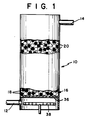
- Figure 1 is a cross-sectional side view of a vertical reactor for use in a preferred embodiment of the invention.
- Figure 2 is a cross-sectional side view of a horizontal reactor for use in the process of this invention.
- Figure 3 is a cross-sectional view of a bioreactor for use in this invention comprising a plurality of dispersed biologically active bodies and a plurality of dispersed substantially open spaces.
- Figure 4 is a cross-sectional view of a preferred biologically active body for use in the process of this invention having an absorbent for at least one of the materials in the feed stream on the surface of a substrate.
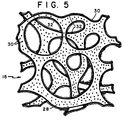
- Figure 5 is a cross-sectional view of a preferred biologically active body for use in the process of this invention in which the surface of the body is an absorbent for at least one of the materials in the aqueous stream.
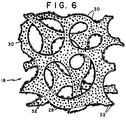
- Figure 6 is a perspective view of a preferred biologically active body for use in the process of this invention having an absorbent for at least one material in the aqueous feed stream on and in a substrate.
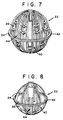
- Figure 7 is a perspective view of a preferred open space body for use in providing an open or substantially open space about all or a portion of the external and internal surfaces of a biologically active body.
- Figure 8 is a perspective view of a preferred open space body for use in providing an open or substantially open space about all or a portion of the external or internal surfaces of a biologically active body.
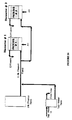
- Figure 9 is a schematic of the experimental system employed in Example I.
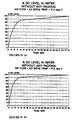
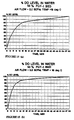
- Figure 10 is a graph of the % of dissolved oxygen in the water (%DO) in a reactor in which there is no bed as a function of time in minute.
- Figure 11 is a graph of %DO in a reactor containing a fixed bed of 100% tripack (TP) as a function of time in minutes.
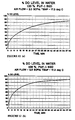
- Figure 12 is a graph of %DO in a reactor containing a fixed bed of 100% polyurethane foam 1 (PUF-1) as a function of time in minutes.
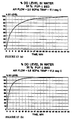
- Figure 13 is a graph of %DO in a reactor containing a fixed bed of PUF-1 and TP at a ratio of 1:1 as a function of time in minutes.
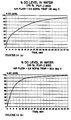
- Figure 14 is a graph of % DO in a reactor containing a fixed bed of 100% polyurethane foam 2 (PUF-2) as a function of time in minutes.
- Figure 15 is a graph of % DO in a reactor containing a fixed bed of PUF-2 and TP at a ratio of 1:1 as a function of time in minutes.
- Figure 16 is a schematic of the experimental system employed in Example II.
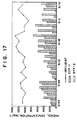
- Figure 17 is a graph of phenol concentration in influent and effluent streams of Example II as a function of time for a mixed fixed bed of 1:1 TP and PUF-1 and for a fixed bed of PUF-1.
- Figure 18 is a graph of phenol concentration in the influent and effluent streams of Example III as a function of time for a mixed fixed bed of 1:1 TP and PUF-1 and for a fixed bed of TP.
- the numeral 10 indicates a reactor for use in the process of this invention.
- FIGs. 1 and 2 are depicted reactors 10 for biodegradation of materials contained in a feed stream by aerobic or anaerobic microbes.
- biodegradation includes metabolic decomposition of organic compounds into compounds of lower molecular weight, metabolic conversion of inorganic nitrogen containing species such as NH 3 and NO - 3 , NO - 2 etc. into nitrogen gas; and dehalogenation, the removal of halogen atoms, such as chlorine atoms, from halogenated organic compounds.
- Reactors 10 in figures 1 and 2 are vertical and horizontal reactors, respectively, of a specific design and configuration.
- design and configuration and the materials of construction may vary widely and other reactor designs and configuration may be conveniently used in the practice of this invention provided that all or a portion of the reactive bed is a fixed bed or substantially fixed bed.
- a "fixed bed or substantially fixed bed reactor” is a reactor in which the plurality of biologically active particles are stationary or substantially stationary as the feed flows through the reactor.
- Reactor 10 contains biomass 16 comprising a plurality of biologically active bodies identified in Figures 1 and 2 by the numeral 18 and open or substantially open regions identified in Figures 1 and 2 by the numeral 20.
- Biomass 16 is supported by porous screen or plate 36 having a porosity which is sufficient to allow flow through of an effective amount of gas required for the metabolic processes of the microorganism during bioremediation.
- Reactor 10 also includes diffusers 38 for introduction of the gas into reactor 10.
- open or substantially open regions 20 are formed from a plurality of open structures 22 (not depicted) which are dispersed around biomass 16.
- open structures 22 are comprised basically of rigid opens framework 24 which skeletally defining said structures having a plurality of passages 26 thereto which together encompass and define open or substantially open regions 20.
- shape is not critical, and substantially any shape can be used in the embodiments depicted in Figures 7 and 8 structures 22 are spherical or substantially spherical.
- Framework 24 preferably comprises a plurality of spaces longitudinal or substantially longitudinal ribs 40 converging at the open or poles of structure 22 spherical or substantially spherical. Also as depicted in Figures 7 and 8 structure 22 includes at least one latitudinal rib 42 about the circumference of the spherical structure 22, at or about its greater and a plurality of internal vanes, ribs, fins 44 and the like which together define passages 26 through structure 22, for flow through of the fluid stream.
- open regions 20 comprise predominantly the fluid feed stream flowing through reactor 10 allowing contact with all or substantially all of the internal and external surfaces of all or substantially all bodies 18 contained in biomass 16 as the fluid stream passes through the reactor.
- structures 22 comprise substantially passages 26 (at least about 40 vol%, preferably at least about 50 vol%, more preferably at least about 80 volt and most preferably at least about 95 vol% based on the total volume of structures) such that the surface to volume ratio of structures 22 is less than that of bodies 18, and that passages 26 and framework 24 are positioned or distributed in structures 22 so as to allow flow of the fluid stream through structures 22 to allow contact between the fluid-stream flowing through reactor 10 and the external and internal surfaces of adjacent bodies 18 of the desired number of bodies 16 to the desired extent.
- biologically active bodies 18 comprise a substrate 28.
- Biologically active bodies 18 also include one or more types of microorganisms 30 usually aerobic or anaerobic, and preferably aerobic which are capable of metabolizing at least one of the materials contained in the waste stream on, in or on and in substrate 28.
- bodies 18 also include some capacity for absorbing one or more of the materials from the fluid feed stream to enhance the biodegradation of the material by the microorganisms.
- this function can be provided by placing the desired amount of absorbent 32 which is capable of absorbing, adsorbing or both absorbing and adsorbing at least one material in the feed stream on all or a part of the portion of substrate 28 forming the outer surface of body 18.
- the material forming that portion of substrate 28 which forms the outer surface of body 18 itself may absorb, adsorb, or both absorb and adsorb the desired material, for example where the material forming that portion of substrate 28 is a hydrophobic polyurethane, no absorbent 32 is required.
- body 18 is such that absorbent 32 can be placed on and in, or in substrate such may be done as depicted in Figure 6.
- the relative positioning and relative proportions of biologically active bodies 18 and the open or substantially open regions 20 defined by said structures 22 in biomass 16 are critical to the advantage of this invention. Such proportions, and positioning are such as to provide contact between the fluid feed stream comprising predominantly said one or more of said open regions 20 and all or a portion of the external or internal surfaces of said body 18 adjacent to said region 20. While we do not wish to be bound by any theory, it is believed that such positioning and proportions result in the enhanced gas/liquid/solid distribution in biomass 16 and therefore enhances contact between the material to be biodegraded in the fluid stream flowing through regions 20 and microbes 32 on, in and on and in substrate 28 of body 18 which enhances the effectiveness of the biodegradation process.
- An advantage of enhanced distribution is that the bioremediation process, apparatus and biomass of this invention are more effective than analogous prior art process, apparatus and biomass and processes in which the biomass is primarily composed of biologically active bodies 16 such as those described in United States Patent No. 4,576,718 and 4,983,299, and PCT WO 90/11970. Moreover, data shows that another advantage over these prior art processes, reactors and biomass is believed to result from enhanced distribution is enhanced resistance to upset.
- the relative proportions and relative positioning of bodies 18 and open regions 20 in biomass 16 of a first reactor 10 are such that bulk removal rate of at least one material from the feed stream at a residence time of about 13 hours is greater than that of a second reactor of same configuration, and components operated in the same manner as the first reactor 10 of this invention where the second reactor incorporates solely said bodies 18 in the absence or substantial absence of open species 22 where the number of bodies 18 in said second reactor is equal to the sum of regions 20 and bodies 18 in said first reactor.
- the relative positioning and proportions of bodies 18 and regions 20 are preferably such that the bulk removal rate of the first reactor of this invention is more than about 10 %, preferably equal to or greater than about 20 %, more preferably equal to or greater than about 30 % and most preferably from about 50 to about 100 % of that of the second reactor in which the biomass is solely bodies 18.
- Bodies 18 and regions 20 are preferably positioned such that at least about 50 area % of internal and external surface of at least about 50 % of total number of bodies 18 is adjacent to a region 20 and in contact with the fluid feed stream flowing through regions 20.
- bodies 18 and regions 20 are positioned such that at least about 60 area % of internal and external surfaces of at least about 60 % of total number of bodies 18 is adjacent to an open region 20 and in contact with the fluid feed stream flowing through open region 20, and in the most preferred embodiments of the invention bodies 18 and open regions 20 are positioned such that at least about 80 area % of internal and external surfaces of at least about 80 % of the total number of bodies 18 is adjacent to an open region 20 and in contact with the fluid feed stream flowing through said open region 24.
- bodies 18 and open regions 20 are distributed in biomass 16 in a homogeneous or substantially homogeneous fashion.
- Biomass 16 comprises an effective amount of open regions 20 dispersed in the biomass.
- an effective amount of open regions 20 is an amount capable of providing any increase in the gas/liquid/solid distribution in biomass 16, and an improvement in bulk removal rate at a residence time of about 13 hours as compared to an analogous biomass of all or substantially all bodies 18.
- the amount of open regions 20 can be defined in terms of the % volume of the biomass composed of region 20.
- the total % volume of biomass 16 composed of regions 20 is from about 30 to about 90 vol%, the remaining volume percent being all or substantially all bodies 18.
- the total % volume of biomass 16 composed of regions 20 is from about 80 to about 40 vol%, the remaining volume percent being all or substantially all bodies 18. In the most preferred embodiments of the invention, the total % volume of biomass 16 composed of regions 20 is from about 50 to about 70 vol%, the remaining volume percent being predominantly bodies 18.
- structure 22 may vary widely provided that structure 22 provides the desired results in enhanced bioremediation, and/or resistance to upset or surges in concentration levels in the influent therein.
- the only requirement is that the material is suitable for use as a substrate in a bioreactor, and is suitable for use in microbial processes.
- structures 22 may be formed from organic materials or inorganic materials.
- Illustrative of useful inorganic materials for fabrication of structures 22 are ceramics such as bentonite, kaolinite, kieselguhr, diatomaceous earth, aluminum, silica, zirconia, barium titanate, synthetic carbides, synthetic nitrides and synthetic borides, glasses such as soda-lime-silica glasses, lead glasses, borosilicate glasses, laser glasses, silica glasses, and glass-ceramics and the like.
- Suitable organic materials for fabrication of structures 22 are polymers such as polyamides, polyesters, polyester carbonates, polycarbonates, polyolefins and the like.
- structures 22 are molded of a rigid plastic such as polypropylene or polyethylene.
- structure 22 may vary widely, the only requirement is that such structure include sufficient open space so that when in the reactor in operation structure 22 comprises predominantly passages 26.
- Structure 22 used in the practice of this invention is in particulate form.
- "in particulate form” merely means that the size of structure 22 is less than that of the reactor selected from use such that the relative size of structure 22 and reactor is such that the reactor may contain a plurality of structure 22.
- the size and shape of structure 22 can vary widely in longitudinal dimension of length and traverse dimensions of thickness, width and diameter.
- structure 22 may be in particulate form of regular shape such as cubular, rod shaped, rectangular, spherical, hexagonal or the like, or may be of irregular shape.
- the particle size (length, thickness, width and diameter for regular shaped structures 22 and equivalent diameter for irregular shaped structure 22) may vary widely and is not critical and depends on the reactor size. Particle size is preferably from about 0.25 cm to about 30.5 cm (about 0.10 in. to about 12 in.) More preferred particle sizes are from about 1.27 cm to about 12.7 cm (about 0.5 in. to about 5 in.), and most preferred particle sizes are from about 1.9 cm to about 7.6 cm (about 0.75 in. to about 3 in.) with a particle size of from 2.5 cm to about 5.1 cm (about 1.0 in. to about 2.0 in.) being the particle size of choice.
- passages 26 are predominantly passages 26.
- passages 26 comprises at least about 40 volume % of the total volume of structures 22.
- Passages 26 preferably comprises at least about 60 volume % of the total volume of structure 22, more preferably at least about 80 volume % of the total volume of structure 22 and most preferably at least about 95 % of the total volume of structure 22.
- Preferred structures 22 are depicted in Figures 7 and 8.
- preferred structures 22 consist of rigid spherical oval or substantially oval or spherical bodies defined by plural ribs, fins, conduits and other structural elements 24 skeletally comprising each spherical body and having a plurality of cavities and passages there through forming passages 26.
- open passages 26 are positioned in structure 22 such that passages 26 are adjacent to bodies 18 and the cavities and passages forming open passages 26 allow relatively high liquid and gas flow rates without substantial back pressure and enhanced mass distribution in passages 26 and contact between the fluid stream flowing through passages 26 and the surfaces of adjacent bodies 18.
- Bodies 18 used in the practice of this invention are also particulate form.
- "in particulate form” merely means that the size of bodies 18 is less than of reactor 10 selected from use such that the relative size of bodies 18 and reactor 10 is such that the reactor may contain a plurality of bodies 18.
- the size and shape of bodies 18 can vary widely in longitudinal dimension of length and traverse dimensions of thickness, width and diameter.
- bodies 18 may be in particulate form of regular shape such as cubular, rod shaped, rectangular, spherical, hexagonal or the like, or may be or irregular shape.
- the particle size length, thickness, width and diameter for regular shaped bodies 18 and equivalent diameter for irregular shaped bodies 18) may vary widely and is not critical and depends on the reactor size.
- Particle size is preferably from about 0.25 cm to about 30.5 cm (about 0.10 in. to about 12 in.) More preferred particle sizes are from about 1.27 cm to about 12.7 cm (about 0.5 in. to about 5 in.), and most preferred particle sizes are from about 1.9 cm to about 7.6 cm (about 0.75 in. to about 3 in.) with a particle size of from about 2.5 cm to about 5.1 cm (about 1.0 in. to about 2.0 in.) being the particle size of choice.
- bodies 18 One critical requirement for bodies 18 is that the internal and external surface area to volume ratio of bodies 18 is greater than that of open regions 20. The greater the difference in the ratio, the more effective the process and the less the difference the less effective the process. In the embodiments of this invention of choice open spaces 20 and bodies 18 are such that the difference in the surface area to volume ratio is as great as possible, while at the same time retaining the required relative positioning and proportions of bodies 18 and regions 20 in biomass 16.
- the ratio of the internal and external surface area to volume of bodies 18 is preferably at least about 20 times greater than that of regions 20, more preferably at least about 10 times greater of than that of regions 20 and is most preferably at least about 5 times greater than that of regions 20.
- Bodies 18 comprises primarily a substrate 28.
- substrate 28 is preferably porous which allows some degree of inflow of the fluid stream into and through bodies 18.
- substrate 28 includes from about 2 to about 60 pores per linear inch.
- the number of pores per linear inch is more preferably from about 5 to about 30, and most preferably from about 10 to about 20. In the embodiments of choice, the number of pores per linear inch is from about 10 to about 15.
- Substrate 28 is preferably resistant to the shear forces and abrasion present in the reactor, and preferably has good crush strength.
- substrate 28 is preferably semiflexible, with a density of under about 2 pounds per cubic foot for optimum economic feasibility. However, higher density substrates, of from about 4 to about 5 pounds per cubic foot or even higher, are usable. It should be realized that substrate density is related to the economics of the invention and not to its performance; the invention may be practiced with a large range of substrate densities, even if certain ranges may present distinct economic advantages.
- the amount of substrate 28 included in the biologically active particles 18 may vary widely. In general, the amount of substrate 28 is from about 50 to about 95 weight percent based on that total weight of biologically article particle 18. In the preferred embodiments of the invention, the amount of substrate 28 is from about 60 to about 90 weight percent based on the total weight of particle 18, and in the particularly preferred embodiments is from about 70 to about 85 weight percent on the aforementioned basis.
- Substrate 28 is formed from any material capable of forming a body 18 useful materials include inorganic materials and organic plastics.
- useful materials for fabrication of bodies 18 are synthetic and naturally occurring polymeric materials such as polyamides such as poly(hexamethylene adipamide) (nylon 66), poly(4-aminobutyric acid) (nylon 4), poly(6-aminohexanoic acid) (nylon 6), poly(hexamethylene sebacamide) (nylon 6,10) and the like; polyesters such as poly(ethylene terephthalate), poly(butylene terephthalate), poly(1,4-cyclohexane dimethylene terephthalate) and the like; polyolefins such as polyethylene, polypropylene, poly(4-methyl pentene), polystyrene and the like; polyvinyls such as polyvinyl alcohol, poly(vinyl methyl ether), poly(vinyl methyl ketone), poly(vinyl pyrrolidon
- polyurethanes such as those derived from reaction of diisocyanates such as toluene diisocyanates, diphenyl methane diisocyanates, hexamethylene 1,6-diisocyanate, dicyclohexylmethane diisocyanate, 1,5-naphalene diisocyanate, p-phenylene diisocyanate, m-phenylene diisocyanate, 2,4-toluene diisocyanate, 4,4' diphenylmethane diisocyanate, 3,3'-dimethyl-4,4' diphenylmethane diisocyanate, 3,3'-dimethyl-4,4' biphenyl diisocyanate, 4,4'-diphenylisopropylidiene diisocyanate, 3,3'-dimethyl-4,4'-diphenyl diisocyanate, 3,3'-dimethyl-4,4'-diphenyl diisocyanate, 3,3'
- substrate 28 is formed of a flexible, semi-flexible or rigid polymeric foam.
- the more preferred polymeric substrate material in the present invention is a flexible open-celled foams with a relatively high permeability at least about 60 %, preferably at least about 75 %, more preferably at least about 85 % and most preferably at least about 95 % to the fluid contained in the fluid feed stream.
- the foam used in the practice of this invention must accommodate feed flow in the fixed bed configuration. To this end, it is important that the foam has a relatively highly interconnected porosity where the foam voids desirably are at least about 40 volume % and can range up to about 98 volume %
- the voids preferably are on the order of from about 40 volume % to about 98 % in volume, more preferably from about 60 volume % to about 96 volume % and most preferably from about 85 volume % to about 95 volume %.
- Flexible cellular polymeric materials are usually compressible.
- flexible cellular polymeric material means a cellular organic polymeric material which will not rupture when a specimen 200 by 25 by 25 mm is bent around at 25 mm diameter mandrel at a uniform rate of one lap in 5 s at a temperature between 18 and 29°C (deg C) as specified by ASTM Standards D 1565, D 1667, D 3574 and D 3575.
- agglomeration of flexible bodies 18 is greatly reduced by increasing fluid flow through and around bodies 18 and decreasing the effective buoyant force acting on said bodies, resulting in more effective bioremediation and/or enhanced resistance against upset due to surges in material concentration levels in the feed stream, as compared to a process or reactor using all or substantially all bodies 18.
- substrate 28 is formed from open-celled polyurethanes, such as cross-linked polymeric materials which can be foamed with an appropriate foaming agent such as nitrogen, helium, carbon-dioxide, azodicarbonamide and the like, to form open celled foams having the void characteristics described above.
- substrate 28 can be prepared and foamed in the presence of the selected microorganism without adversely affecting same.
- substrate 28 is formed from cross-linked poly- urethane-hydrogels.
- Such materials can be obtained from commercial sources or prepared in accordance with known techniques. For example, such materials may be obtained by reacting isocyanate prepolymers with water (in which diamines or polyamines are optionally contained as chain lengthening agents), or as cross-linking agents or by reacting a suitable polyol with a suitable diisocyanate or polycyanate reagent.
- Suitable polyols include long chain aliphatic diols and polyoxyalkylene ethers.
- the isocyanate prepolymers have isocyanate end-groups and are prepared by reacting poly oxyalkylene ethers with an excess of diisocyanate or polyisocyanates.
- useful polyoxyalkylene ethers are those which have a molecular weight of from about 500 to about 10,000, preferably from about 2,000 to about 8,000, which have at least two active hydrogens and which contain at least 30% by weight based on the total weight of the polyethers of oxyethylene groups.
- Other useful oxyalkylene groups include oxypropylene, oxybutylene and the like.
- Polyethers of this type are produced by reacting compounds which have reactive hydrogen atoms such as dialcohols, polyalcohols, diphenols, polyphenols, aliphatic diamines, aliphatic polyamines, aromatic diamines, or aromatic polyamines with a suitable alkylene oxide such as ethylene oxide, propylene oxide, butylene oxide, styrene oxide and the like.
- compounds which have reactive hydrogen atoms such as dialcohols, polyalcohols, diphenols, polyphenols, aliphatic diamines, aliphatic polyamines, aromatic diamines, or aromatic polyamines with a suitable alkylene oxide such as ethylene oxide, propylene oxide, butylene oxide, styrene oxide and the like.
- Suitable diisocyanates include toluene 4,4'-diisocyanate, toluene 2,4-diisocyanate, toluene 2,2-diisocyanate, diphenylmethane 4,4'-diisocyanate, diphenylmethane 2,4'-diisocyanate, diphenylmethane 2,2'-diisocyanate, toluene 2,6-diisocyanate, hexamethylene 1,6- diisocyanate and useful diamines and polyamines include aliphalic, cycloaliphatic and aromatic di- and polyamines such as ethylene diamine, hexamethylene diamine, diethylene triamine, hydrazine, guanidine, carbonate, N,N'-diisopropylhexamethylene diamine, 1,3-bisaminomethylbenzene, N,N'-bis-(2-aminopropyl)- ethylene diamine, N,N
- Biologically active bodies 18 may include various optional ingredients such as a material having cationic groups.
- a material having cationic groups Illustrative of such materials are standard ion exchange resins which have cationic groups or other polymers which have structures containing positively-charged nitrogen atoms such as polyaminocarboxylic acid esters having cationic groups, polyacrylamides having cationic groups, polyethylene imines having cationic groups, copolymers of acrylonitrile, styrene and dimethylaminoethyl methacrylate having cationic groups, and condensation products of diethylene triamine and maleic anhydride having cationic groups, copolymers of isobutylene and maleic anhydride, followed by imidization with specific diamines, having cationic groups.
- the content of polymers having cationic groups in the composition according to the invention may vary widely and is usually from about 0.2 to about 20% by weight based on the total weight of the biologically active particle, preferably from about 0.5 to about 15% by weight, and most preferably from about 1 to about 10% by weight, based on the total weight of the reaction mixture for the preparation of the composition.
- density-increasing substances such as barite, metal powder, powdered rubber, clay powder, pumice powder, glass powder, powder obtained from the kernels and shells of olives and nuts, and rock-flour; density-reducing substrates such as small polystyrene globules, wood powder, powder from plastic waste, hollow microbeads, and polyethylene foam flakes; coloring agents such as coloring pigments, and dyes; short fibers of an organic or inorganic base such as glass fibers and gel-forming macromolecular substances such as types of cellulose, alginate, starch, and carrageenan.
- bodies 16 comprises a substrate 28 formed of a material which is an absorbent for one or more of the materials in the fluid feed stream having aerobic or anaerobic microorganisms 30 which are capable of growth and of metabolizing at least one of the materials in the feed stream under process conditions, on, in or on and in substrate 28.
- substrate 28 is formed from a "hydrophobic polyurethanes", which are absorbent for organic materials such as phenol.
- hydrophobic polyurethanes are family of polymers containing repeat urethane groups of the formula: -N(H)C(O)O - or -N(H)C(NH)O- preferably of the formula: -N(H)C(0)0-
- Hydrophobic polyurethane are those which cannot be wetted by water. That is, a droplet of water on the surface of the polyurethane has an angle of contact of greater than 0° and preferably greater than 90° as measured by a goniometer.
- hydrophobic polyurethane are those in which the molar ratio of carbon and hydrogen atoms to oxygen and nitrogen atoms in the polymeric backbone is greater than 1.4.
- the upper level of hydrophobicity of the polyurethane is not critical and in general hydrophobic polyurethanes having higher hydrophobicity are preferred.
- the hydrophobic polyurethanes are selected such that the molar ratio of carbon and hydrogen atoms to oxygen and nitrogen atoms in equal to or greater than about 2.0, and in the more preferred embodiments of this invention the ratio of carbon and hydrogen atoms to oxygen and nitrogen atoms in equal to or greater than about 2.5.
- most preferred are those embodiments in which the molar ratio of carbon and hydrogen atoms to oxygen and nitrogen atoms is equal to or greater than about 3.0.
- Illustrative of useful hydrophobic polyurethanes are those described above in which molar quantities of polyisocyanate and polyol reactants have been adjusted to provide the desired hydrophobicity.
- the adsorption and/or absorption of materials in the fluid feed stream, such as substituted and unsubstituted phenol, onto and into the polyurethane foam can be affected by both the type of polyol used as well as the portion of cross-linked isocyanate compounds present in the foam.
- aromatic isocyanates and/or polyols having a larger ratio of carbon and hydrogen to oxygen such as polyols such as those polyols which contain increased carbon atoms such as poly(propylene ether) glycol and other polyols having pendant aliphatic groups.
- polyols such as those polyols which contain increased carbon atoms such as poly(propylene ether) glycol and other polyols having pendant aliphatic groups.
- the hydrophobic moieties derived from one or more types of polyurethane contains more than about 15% by weight of an aromatic isocyanate and less than about 85% by weight of a moiety derived from one or more types of a poly(alkylene ether) glycol wherein at least about 40% by weight of the diol derived moieties are derived from such glycols where the alkylene repeat units include more than three carbon atoms especially poly(propylene oxide).
- the hydrophobic polymer has at least 50% by weight of poly (alkylene ether) glycol and more than about 20% by weight of aromatic isocyanate.
- the polyol content of hydrophobic polyurethane is at least 80% by weight of which less than about 60% by weight is polyethylene ether glycol, and less than about 25% by weight of aromatic isocyanate. In the more particularly preferred embodiments of invention, the polyol content is greater than about 70% by weight polyethylene oxide and less than about 30% by weight of aromatic isocyanate.
- biologically active bodies 18 comprise a substrate 28 having a particulate absorbent 32 for at least one of the pollutants contained in the aqueous feed stream on the surface of substrate 28 and having aerobic or anaerobic microorganisms 30 (which are capable of growth and of metabolizing at least one of the materials in the fee stream under process conditions) on, in or on and in substrate 28 and/or absorbent 32.
- absorbent 32 is on the surface of substrate 28 and microorganism 30 are on, and on and in the substrate 28 and on absorbent 32.
- Absorbent 32 for use in the practice of this invention may vary widely. The only requirement is that absorbent 32 is capable of absorbing the target pollutant on its surface and is capable of binding or being bound to the substrate surface by a number of mechanisms such as surface compatibility, charge and by a binding polymer such as polypropylene (See U.S. Patent No. 4,089,609, col. 4, lines 14 to 30).
- absorbent 32 is formed from carbons such as coal, charcoal, carbon black and activated carbon, and in the particularly preferred embodiments of the invention, the particulate absorbent 32 is formed from activated carbon.
- the activated carbon which is preferably used may be produced by heat treatment of vegetable matter, animal matter, coal, lignite, petroleum residues or synthetic organic polymers either with or without the addition of chemicals, and is characterized by rapid and effective absorption of the targeted pollutants.
- Absorbent 32 is in particulate form and is preferably porous to provide for greater surface area.
- the preferred particulate absorbent 20 has a surface area at least about 500 m 2 /g, preferably at least about 700 m 2 /g, and is preferably of a size such that at least about 70% of the absorbent particles are smaller than about 44 microns. That is, a minimum of about 70% of the absorbent particles pass through a 325 mesh sieve.
- powdered absorbent 32 has as high a pore volume as is practical, more preferably at least about 0.5 cm 3 /g, and most preferably at least about 0.7 cm 3 /g, with as great a porosity as possible contributed by pores preferably of greater than about 1 micron in size. Maximization of the macropores maximizes the concentration of microorganisms in the immediate proximity of the surface of absorbent 32.
- Powdered absorbent 32 used in the practice of the preferred embodiments of this invention have a surface area of from about 700 to about 2000 m 2 /g, a pore volume of from about 0.7 to about 1.0 cm 3 /g, with from about 70 to about 100% of the particles being under 44 microns in size. Although these correspond to characteristics of commercially available material, the invention per se imposes no such limitations and materials having as high a surface area as possible are the materials of choice.
- the amount of absorbent 20 employed may vary widely and depends on a number of factors including the specific activity of absorbent 20 for the target pollutant.
- the amount of absorbent 32 is an amount which is at least sufficient to maintain a steady state of an amount of the target pollutant which will allow the microorganism to metabolize the pollutant in the required time period to provide an effluent stream having less than about 22 ppm of the target pollutants.
- the amount of absorbent 32 is from about 5 weight percent to about 85 weight percent on a dry basis and based on the total weight of substrate 18 and absorbent 20.
- the amount of absorbent 20 is from about 10% by weight to about 50 weight percent on a dry basis and based in the total weight of substrate 18 and absorbent 20, and in the most preferred embodiments of the invention, the amount of absorbent 20 is from about 20% by weight to about 40% by weight on the aforementioned basis.
- Microorganisms 30 used in the practice of this invention are anaerobic or aerobic microorganisms selected to degrade target materials in the fluid stream in ways well known in the art.
- the microorganisms can be employed as a pure strain or as a consortium of microorganisms. Although anaerobic microorganisms often degrade pollutant materials at a slower rate than aerobic microorganism, an anaerobic process may be required to degrade a pollutant or an intermediate product of an aerobic process to an nontoxic level or to a non pollutant material.
- Useful microorganisms 30 may vary widely and may be naturally occurring microorganisms 30 or may be genetically engineered microorganisms 30.
- microorganisms 30 are capable of metabolizing the target pollutant(s) to the required effluent levels over the required period of time.
- microorganism 30 are obtained from the pollutant-containing waste stream or from soil which has been in contact with the waste stream.
- a fluids stream as for example a aqueous feed fluid stream, containing one or more biodegradable materials is introduced into reactor 10 via inlet 12, passes through reactor 10 and exits the reactor via exit 14 at a rate sufficient to reduce the concentration of at least one of the materials in the effluent stream to the desired levels.
- the process of this invention can be conducted under aerobic or anaerobic conditions. In the preferred embodiments of the invention where aerobic microbes are employed, the process is carried out under aerobic conditions in which the process is carried out in the presence of a gas comprising an effective amount of oxygen. In these preferred embodiment, it is important that reactor 10 be oxygenated to provide the necessary amount of oxygen for proper microbial metabolism and pollutant degradation.
- the amount of oxygen required in any situation will vary widely and will depend to a significant extent on the requirements of the particular microorganism(s) employed in the process and other factors known to those of skill in the art.
- the amount of oxygen distributed in the process feed stream is at least about 2 mg of oxygen per liter of aqueous feed.
- the amount of oxygen is from about 5 mg per liter of feed to about 10 mg per liter of feed and in the most preferred embodiments of the invention, the amount of the oxygen is from about 6 mg/liter of feed to about 8 mg/liter of feed.
- the gas is distributed uniformly or substantially uniformly throughout all or a portion of the biologically active biomass. The manner in which the gas is introduced into reactor 10 may vary widely.
- the gas may be introduced into reactor 10 employing conventional methods.
- the gas in the vertical or up-flow reactor 10 of Figure 1, the gas is introduced into reactor 10 with the aqueous feed stream at the bottom of the reactor 10 through use of diffuser 38 which introduces the gas in the form of small diameter gas bubbles.
- Supplemental gas can be introduced, if required, at various points along the vertical length of reactor 10 (not depicted in the drawing).
- the gas in which reactor 10 is a horizontal reactor as for example the reactor of Figure 2, the gas can be introduced along the horizontal length of reactor 10 at various points to achieve a substantially uniform distribution of the gas in the feed stream in reactor 10.
- the up-flow of the gas is orthogonal or substantially orthogonal to the direction of the flow of the aqueous feed stream.
- reactor 10 is in a horizontal configuration in which the gas is distributed uniformly or substantially uniformly throughout all or substantially of reactor 10.
- the gas is introduced into reactor 10 along the horizontal length of reactor 10 as depicted in figure 2. In this mode, a more uniform distribution of the gas in the feed stream is achieved.
- Process temperatures may vary widely and will depend on the particular microorganisms chosen for use. In general, the process is carried out at a temperature sufficiently high so as to not unduly interfere with the metabolism of the microorganism and sufficiently low as to not kill the microorganism. Process temperatures are usually from about 5°C to about 65°C. Process temperatures are preferably in the range of from about 15°C to about 65°C, more preferably in the range of from about 20°C to about 40°C and most preferably in the range of from about 25°C to about 35°C.
- the fluid stream is treated in the process of this for a time sufficient to reduce concentration levels of at least one of the material in the effluent stream the desired extent.
- concentration levels of at least one material is equal to or less than about 12,000 (ppm) (preferably equal to or less than about 6,000 ppm, more preferably equal to or less than about 3,000 ppm, more preferably equal to or less than about 2,000 ppm)
- a residence time equal to or less than about 200 hours, preferably equals or less than about 100 hours, more preferably equal to or less than about 25 hours and most preferably equal to or less than about 13 hours, suffices to attain a concentration for at least one pollutant in the effluent stream to equal to or less than about 100 parts per million (ppm), preferably equal to or less than about 10 ppm, more preferably equal to or less than about 1 ppm most preferably equal to or less than about 0.1 ppm.
- ppm parts per million
- an effluent concentration of equal to or less than about 0.02 ppm is the concentration of choice.
- the particular residence time depends upon the amount and type of organic materials in the feedstock, operating temperature, the presence of other materials in the feedstock, the density of microorganisms in the and so forth.
- upset is a surge in concentration levels of material in the feed stream. Resistance to upset is that when such surges or upset occurs, variations in concentration levels of the material in the effluent stream are minimum.
- concentration of a pollutant in the influent stream is increased by a certain increment for a period of one hydraulic residence time (HRT) preferably the concentration of said pollutant in the effluent stream preferably increases by an amount less than or equal to about 25% of the said increment, more preferably increases by an amount less than or equal to about 10 % of the said increment, and most preferably increases by an amount less than or equal to about 1% of the said increment within about one HRT or less.
- the fluid streams which may be treated in the process of this invention may vary widely.
- such streams may be gaseous streams containing one or more materials or may be liquid streams.
- the pollutants contained in such streams may vary widely.
- the only requirement is that at least one of the materials can be degraded or metabolized by an aerobic or anaerobic microorganism.
- the materials may be inorganic nitrogen compounds such as ammonia and nitrates.
- the materials may also be organic materials.
- organic pollutants are phenolic materials such as phenol, the cresols, resorcinols, catechol, halogenated phenols as for example, 2-chlorophenol, 3-chlorophenol, 4-chlorophenol, 2,4-dichlorophenol, pentachlorophenol, nitrophenols as 2-nitrophenol and 4-nitrophenol and 2,4-dimethylphenol.
- phenolic materials such as phenol, the cresols, resorcinols, catechol, halogenated phenols as for example, 2-chlorophenol, 3-chlorophenol, 4-chlorophenol, 2,4-dichlorophenol, pentachlorophenol, nitrophenols as 2-nitrophenol and 4-nitrophenol and 2,4-dimethylphenol.
- aromatic hydrocarbons such as benzene, toluene, xylenes, ethylbenzene, and so forth.
- Polynuclear aromatic hydrocarbons are an important subclass as represented by naphthalene, anthracene, chrysene, acenaphthylene, acenaphthene, phenanthrene, fluorene, fluoranthene, naphthacene, and pyrene. Still other materials are halogenated alkanes such as trichloroethane and the like.
- the materials are those which are common in waste streams from industrial manufacturing facilities.
- various substituted and unsubstituted phenols such as phenol, chlorophenols and nitro-phenols, and aromatics such as benzene are preferred pollutants for treatment in the process of this invention, and substituted and unsubstituted phenols, especially phenol, are the most preferred pollutants.
- Phenol is found in waste streams of phenol manufacturers, of phenol users as phenol resin producers, of coal tar processing facilities, of wood pulping plants and other facilities practicing delignification. This is not to say that the process can or must be practiced only on such streams.
- the process which is the invention herein may be practiced on any feed containing levels of one or more materials which are to be reduced.
- the initial concentration of materials contained in the aqueous waste stream used in the process of this invention may vary widely.
- One of the advantages of this invention relative to prior art bioremediation processes is that fluid streams containing relatively high amounts of materials to be removed or reduced in concentration can be treated.
- the concentration of materials to be removed or reduced in concentration in process streams treatable in the process of this invention are "biologically treatable levels".
- biologically treatable levels are materials to be removed or reduced in concentration which do not inhibit or excessively inhibit the metabolism of the pollutants by the microorganism.
- Effluent streams from industrial processes such as phenol manufacturing plants and coal tar processing plants may have materials to be removed or reduced in concentration levels in excess of 20,000 ppm which may interfere with the process.
- the concentration of materials to be removed or reduced in concentration in the fluid streams is equal to or less than about 12,000 ppm.
- the lower concentration is not critical and does not represent a limitation on the process.
- the concentration of materials to be removed or reduced in concentration is equal to or less than about 6,000 ppm, and in the particularly preferred embodiments of the invention the concentration of materials to be removed or reduced in concentration is equal to or less than about 3000 ppm.
- concentration of materials to be removed or reduced in concentration is equal to or less than about 2000 ppm with a material concentration of equal to or less than about 1000 ppm being the concentration level of choice.
- the pH of the pollutant-containing feed may need to be adjusted for optimum biodegradation.
- the pH is within the pH range allowing metabolism of the target pollutant(s).
- the pH of the feed is from about 6 to about 9, and in the most preferred embodiment of the invention, the pH of the feed is from about 6.5 to about 7.5.
- Nutrients may need to be provided. Such materials may be added through use of known additives such as fish meal peptine, soybean flour, peanut oil, cotton seed oil, and usually salts capable of providing phosphate, sodium, potassium, ammonium, calcium, sulfate, chloride, bromide, nitrate, carbonate or like ions. Usually sufficient amounts often are present in the aqueous feed to satisfy minimum requirements of the microorganism.
- an "effective hydraulic retention time” is a time which is sufficient for the process to reduce the concentration of pollutants in the effluent stream to the desired levels. Hydraulic retention times may vary widely and in general depend on such factors as the concentration pollutants in the aqueous feed stream, desired maximum concentration of pollutants in the aqueous effluent stream, the microorganisms contained in the biomass, the pollutant, and the like. An advantage of the process of this invention is that reductions in pollutant concentration can be obtained with relatively short hydraulic retention times.
- hydraulic retention times are equal to or less than about 72 hrs, and in the particularly preferred embodiments of the invention such times are from about 1 to about 48 hrs. Amongst these particularly preferred embodiments of the invention, most preferred are those embodiments in which the hydraulic retention time is from about 2 to about 24 hrs.
- the effluent stream has reduced materials concentration and contains no or substantially no sludge.
- Such effluent stream can be disposed in compliance with EPA regulations.
- the effluent stream can be treated to remove any sludge that may be present, as for example, through use of a clarifier and may be recycled for internal use in the process that produced the effluent stream or for other purposes as for example in cooling towers, boilers for steam generation, heat exchangers, scrubbers, reactors and the like.
- Rigid open spheres were obtained from Jaeger Products, Inc., under a trade designation of Tripack. These spheres were used as Spacers in the mass transfer experiments.
- Two different kinds of porous polyurethane foam (PUF) were purchased from two separate PUF manufacturers.
- a hydrophobic polyurethane foam (PUF-1) was obtained from General Foam, under a trade designation of 1300 series, with a high degree of cross-linking, a polyol content of less than about 80% by weight (50% by weight ethylene oxide and 50% by weight propylene oxide) or less and a toluene diisocyanate content of approx. materials 25% to 35% by weight. This foam had approximately 24 pores/cm (60 pores per inch).
- PUF-2 Another hydrophobic polyurethane foam (PUF-2) was obtained from Foamex, Inc., under a trade designation of SIF II, which had a polyol content of 75% by weight (approximately 40% by weight ethylene oxide and 60% by weight propylene oxide) and a toluene diisocyanate content of approximately 25 to 35% by weight of reactants.
- PUF-2 had approximately 6-8 pores per cm (15-20 pores per inch) of varying sizes.
- PUF and Spacers were mixed together in different proportions in order to achieve a certain amount of openness in the system.
- One 208 L (55 gallon) Nalgene tank was used as a fixed bed reactor for this experiment.
- This reactor consisted of a total capacity of 208 L (55 gallon), a height of 91.4 cm (36 inch) and 55.9 cm (22 inch) internal diameter.
- the reactor volume occupied by packing was approximately 170 L (45 gallon).
- the height of the packed bed was 66 cm (26 inch).
- Plastic spacers and foam blocks were retained between two perforated plexiglass discs, each having a diameter of 7.9 cm (20 inch). Underneath the bottom supporting plate, coarse bubble diffusers were placed so that air or nitrogen could be passed through the bed as required.
- This reactor was filled up with different mixtures of PUF and spacers and an aeration experiment was conducted with each packing configuration.
- Tripack The size of Tripack was 5.1 cm (2") in diameter, while the PUF blocks were 5.1 cm (2") cubes.
- PUF and Tripack were mixed randomly in a 1:1 ratio.
- the 208 L (55 gallon) reactor was initially filled up with fresh tap water.
- Two YSI dissolved oxygen probes were placed in the packed bed, one foot apart ( Figure 9) from each other, and an average of their readings were collected.
- the saturated dissolved oxygen (DO) level in this water was 9.6 mg/l at 17.2°C (deg C).
- the bed was deaerated and aerated successively. The change in DO level was measured during the aeration cycle for each case.
- the water bed was deaerated completely i.e., the DO level was reduced to 0.1 mg/l, by bubbling pure nitrogen gas through it. Then air was turned on, 57 L/min (2.0 scfm), and the change in DO level in water was noted. When DO level reached its saturation level at that temperature, aeration was turned off. After this first cycle, nitrogen gas was turned on again to deaerate the bed. After this second deaeration cycle, the bed was aerated at a higher flow rate of 99 L/min (3.5 scfm). This cycle of deaeration and aeration was performed with all the packed beds at two different air flow rates. At the end of each run, the reactor was unloaded and filled up with another set of packings.
- FIG 10 through Figure 15 show rate of oxygen transfer from air to water.
- 100% Do level stands for the saturation DO level in water, which was 9.6 mg/l, at that temperature of 17.2°C (deg C) and pressure of 101 kPa (1 atm). At constant temperature and pressure, this rate of oxygen transfer is a function of mixing and distribution of air and water in the fixed bed.
- Table I & II summarize the time taken to reach 50% & 80% saturation DO level for different systems under the same conditions.
- the transfer rate in an empty bed i.e., water without any packing is the ideal rate of transfer that one can have under any given temperature, pressure and air flow rate.
- Table I & II show that 50% and 80% DO levels in the water were reached in the mixed media system much quicker than in the all foam system. This clearly proved that the mass transfer rate was always higher in the mixed media system than that in the all-foam systems. This can be explained by the fact that in case of the mixed media system because of its open nature of the bed air mixed with water and stayed in dispersion for a longer period of time. In addition to this, the mixed media system eliminated the problem of compression of the foam bed completely which resulted in better distribution of air and liquid in the packed bed and thereby increasing the rate of mass transfer.
- Polyurethane foam is an excellent support for fixed biological growth, but loot PUF bed suffers from an inherent problem of bed compression under hydraulic pressure. In any application where the height of the PUF bed is more than a few inches, distribution and dispersion of gas & liquid are severely hindered, because the packed bed collapses under hydraulic pressure.
- Table III shows the compression of different beds under buoyant pressure. Compression of PUF Bed in Water Bed Composition Initial Bed Height Final Bed Height % Compression cm (in) cm (in) 1.Tripack Only 66 (26) 66 (26) -- 2.PUF-1 Only 66 (26) 51 (20) 30 3-Miked PUF-1 66 (26) 66 (26) -- 4.PUF-2 Only 66 (26) 56 (22) 15 5.Mixed PUF-2 66 (26) 66 (26) --
- the spacers not only contributed to better mixing and distribution of gas and liquid by providing open spaces around the foam cubes, but also added rigidity to the mixed matrix. Since the specific gravity of PUF is less than that of water because of buoyant pressure the entire bed either floats out of water or gets compressed against the top plate, which is generally used to prevent the bed from floating out of water. PUF-2 appeared to be less compressible under hydraulic pressure in a submerged liquid bed. This can be well explained by the macroporosity of PUF-2, which had 5.9 pores per centimeter (15 pores per inch) i.e., diameter of each pore was 0.17 cm (0.067 inch).
- Compressed air 276 kPa (gauge) (40 psig) was used to aerate the column through three sintered glass diffuser located at the bottom of the tank.
- a gas regulator was used to regulate the aeration through the diffusers at a level between 8 l/min and 13 l/min. Same amount of air was supplied to both the systems. Rate of aeration was determined on the basis of stoichiometric requirement for complete phenol degradation and a transfer efficiency (from air to water) of St was assumed. Waste water was pumped to the bottom of the tank with a Masterflex peristaltic pump.
- Figure 16 shows the process flow of phenol.
- the feed consisted of an aqueous solution containing 0.1 g/l diammonium phosphate and 0.2 g/l diammonium sulphate, 0.1 g/l magnesium sulphate, 0.05 g/l calcium chloride, 0.01 g/l yeast extract, and 1000 mg/l phenol (approx.)
- the microorganisms selected to degrade phenol were aerobic microorganisms and were isolated from a phenol containing waste stream by known techniques.
- enrichment cultures were set up by adding to the samples of the waste stream 100 mg/l ammonium sulphate and 25 mg/l sodium phosphate followed by adjustment of the pH to 7.0.
- 100 ml portions of the foregoing sample were dispensed into 250 ml flasks and inoculated with sludge, then incubated at 25°C (deg C) on a rotary shaker (250 rpm) for 7 days. At this time 1 ml subcultures were dispensed into new wastewater samples and incubated for another 7 days.
- These isolated microbial cultures were used to inoculate the reactors.
- a synthetic wastewater was made up to provide a feed concentration of phenol around 1000 ppm.
- Example III Using the procedure of Example III, the phenol removal efficiencies for both the systems were determined, Two 28.4 L (7.5 gallon) reactors were packed with Tripack, which were obtained from Jaeger Products, and a mixture of PUF blocks, obtained from Foamex, and Tripack. The reactors were inoculated with aerobic microbes following the same method as explained in Example III. A synthetic wastewater containing a phenol at a concentration around 1000 ppm was used as a feed. Since the bulk removal of phenol was determined in this experiment, analysis was done by 4-Aminoantipyrine method only.
- Table V & Figure 18 show that the phenol concentration in the effluent (EFF-2) from the reactor containing mixed media was consistently lower than that (EFF-1) from the all plastic media. Since accuracy of 4-AAP method can be questioned below 1 ppm phenol concentration, any analytical results below 1 ppm is shown as 1 ppm in Table V & Figure 18.
- the mixed media system performed at par and in most of the cases even better than the all plastic media system. This is because of the following factors i) the macroporosity contributed by the polyurethane foam, which provided high surface areas for biological growth and ii) openness and rigidity from the plastic spacers, which increased the gas-liquid distribution.
- Poamex polyurethane foam (PUF-2, a reticulated foam containing 5.9 to 7.9 pores per centimeter (15-20 pores per inch, ppi), 13000 series General Foam polyurethane foam (PUF-1, a smaller pore foam possessing about 23.6 pores per centimeter (60 ppi)) or Tripack rings (made from polypropylene) were coated by a slurry of powdered activated carbon (PAC) by the procedure described below.
- PPF-2 a reticulated foam containing 5.9 to 7.9 pores per centimeter (15-20 pores per inch, ppi)
- PPF-1 13000 series General Foam polyurethane foam
- Tripack rings made from polypropylene
- the two polyurethane foams were cut into 10 slabs each with 11.8 cm x 1.27 cm x 1.27 cm (3" x 0.5" x 0.5") dimensions.
- Bach slab was immersed in the above described slurry and squeezed four or five times to express all entrapped air.
- the excess slurry was removed from the slabs by passing the slabs through a pair of rollers set at 1.02 mm from each other.
- the slabs were then dried at room temperature for three days.
- a typical slab of the PUF-1 weighed 1.116 g prior to treatment and 3.997 g (dry weight) after treatment.
- a typical slab of PUF-2 weighed 1.267 g before treatment and 1.992 g after treatment (dry weight).
- the coated slabs were cut into 1.27 cm x 1.27 cm x 1.27 ⁇ 0.32 cm (0.5" x 0.5" x 0.5" +/- 1/8") cubes.
- Tripack rings were immersed in the slurry and agitated for 10 seconds. Excess slurry was removed by simple draining. After three days drying, the coating and drying steps were repeated. A typical Tripack ring weighed 1.302 g. After one coating the ring weighed 1.403 g and after two coatings, 1.507 g (dry weight).
- Example V Into a glass column reactor as described in figure 1, were placed PAC-coated cubes PUF-2 prepared as described in Example V. Into a second identical column was placed a mixed media consisting of equal number of pieces of PUF-1, PUF-2 and Tripack rings, all PAC-coated, all prepared as describe in Example V. A mineral salts media supplemented with 750 ppm phenol, as described in Table VI, and sparged with air at a rate of 200 ml per minute was percolated though the reactors in an upflow fashion with a liquid residency time of one day, based on a void volume of 637 ml. The reactors were operated for 32.75 days whereupon interstitial biomass was removed.
- Example VI Into a glass column reactor identical to that described in Example VI, were placed PAC-coated tripack rings prepared as described in Example V. Into a second identical column was placed a mixed media consisting of equal number of pieces of PUF-1, PUF-2 and Tripack rings, all PAC-coated, all prepared as describe in Example V. A mineral salts media supplemented with 750 ppm phenol and sparged with air at a rate of 200 ml per minute was percolated though the reactors in an upflow fashion with a liquid residency time of one day, based on a void volume of 637 ml. The reactors were operated for 32.75 days whereon interstitial biomass was removed.
Landscapes
- Life Sciences & Earth Sciences (AREA)
- Chemical & Material Sciences (AREA)
- Organic Chemistry (AREA)
- Microbiology (AREA)
- Engineering & Computer Science (AREA)
- Environmental & Geological Engineering (AREA)
- Water Supply & Treatment (AREA)
- Hydrology & Water Resources (AREA)
- Biodiversity & Conservation Biology (AREA)
- Physics & Mathematics (AREA)
- Thermal Sciences (AREA)
- Chemical Kinetics & Catalysis (AREA)
- Biological Treatment Of Waste Water (AREA)
- Separation Using Semi-Permeable Membranes (AREA)
- Removal Of Specific Substances (AREA)
- Physical Water Treatments (AREA)
Applications Claiming Priority (3)
| Application Number | Priority Date | Filing Date | Title |
|---|---|---|---|
| US07/802,931 US5217616A (en) | 1991-12-06 | 1991-12-06 | Process and apparatus for removal of organic pollutants from waste water |
| US802931 | 1991-12-06 | ||
| PCT/US1992/010294 WO1993011075A1 (en) | 1991-12-06 | 1992-11-30 | Process and apparatus for removal of organic pollutants from waste water |
Publications (2)
| Publication Number | Publication Date |
|---|---|
| EP0624149A1 EP0624149A1 (en) | 1994-11-17 |
| EP0624149B1 true EP0624149B1 (en) | 1998-03-11 |
Family
ID=25185125
Family Applications (1)
| Application Number | Title | Priority Date | Filing Date |
|---|---|---|---|
| EP19920925461 Expired - Lifetime EP0624149B1 (en) | 1991-12-06 | 1992-11-30 | Process and apparatus for removal of organic pollutants from waste water |
Country Status (9)
| Country | Link |
|---|---|
| US (1) | US5217616A (da) |
| EP (1) | EP0624149B1 (da) |
| AT (1) | ATE163906T1 (da) |
| CA (1) | CA2123208C (da) |
| DE (1) | DE69224759T2 (da) |
| DK (1) | DK0624149T3 (da) |
| ES (1) | ES2113445T3 (da) |
| MX (1) | MX9206961A (da) |
| WO (1) | WO1993011075A1 (da) |
Cited By (1)
| Publication number | Priority date | Publication date | Assignee | Title |
|---|---|---|---|---|
| WO2025179024A1 (en) * | 2024-02-22 | 2025-08-28 | Donaldson Company, Inc. | Volumetric media and uses thereof |
Families Citing this family (114)
| Publication number | Priority date | Publication date | Assignee | Title |
|---|---|---|---|---|
| US5580770A (en) * | 1989-11-02 | 1996-12-03 | Alliedsignal Inc. | Support containing particulate adsorbent and microorganisms for removal of pollutants |
| US6395522B1 (en) * | 1989-11-02 | 2002-05-28 | Alliedsignal Inc. | Biologically active support containing bound adsorbent particles and microorganisms for waste stream purification |
| US6153094A (en) * | 1992-05-13 | 2000-11-28 | E. Craig Jowett | Wastewater treatment method and apparatus |
| US5531897A (en) * | 1992-10-13 | 1996-07-02 | Idaho Research Foundation, Inc. | Dynamic bed reactor |
| US5403487A (en) * | 1992-12-22 | 1995-04-04 | The B. F. Goodrich Company | Process for biochemical oxidation of ultra-toxic wastewater in a packed bed bioreactor |
| US5413714A (en) * | 1993-04-16 | 1995-05-09 | Alliedsignal Inc. | Process for biological remediation of vaporous pollutants |
| US5439590A (en) * | 1993-05-25 | 1995-08-08 | Envirogen, Inc. | Methods for treating toxic material |
| CA2139554C (en) * | 1994-01-06 | 2008-09-09 | E. Craig Jowett | Waste water treatment method and apparatus |
| US5653883A (en) * | 1994-03-14 | 1997-08-05 | Newman; William A. | Stirred tank biological activated carbon adsorption-desorption process |
| DE9409077U1 (de) * | 1994-06-03 | 1994-08-11 | Augst, Reiner, 02689 Wehrsdorf | Schwimmfähiges, verwirbelbares Trägermaterial für biotechnologische Prozesse |
| US5482630A (en) * | 1994-06-20 | 1996-01-09 | Board Of Regents, The University Of Texas System | Controlled denitrification process and system |
| DK0772571T3 (da) * | 1994-07-21 | 2002-01-14 | Knud Peter Brockdorff | Reaktor til brug ved vandrensning og mikrofilmbærere til brug i forbindelse hermed samt en fremgangsmåde til drift af reaktoren |
| US5492139A (en) * | 1994-08-01 | 1996-02-20 | B&S Research, Inc. | Method and apparatus for remediating contaminated material |
| US6328045B1 (en) | 1994-09-30 | 2001-12-11 | Chemfree Corporation | Parts washing system |
| AU3823595A (en) * | 1994-09-30 | 1996-05-02 | Chemfree Corporation | Parts washing system |
| JP2975276B2 (ja) * | 1994-11-16 | 1999-11-10 | ベスト工業株式会社 | 生物濾過装置用浮上濾材の洗浄方法 |
| CA2146062A1 (en) * | 1995-03-31 | 1996-10-01 | Huazhong Mao | A biological method of waste water treatment |
| US5906745A (en) * | 1995-04-04 | 1999-05-25 | Aquatech, Ltd. | Apparatus and method for purifying polluted water |
| US5747311A (en) * | 1995-08-22 | 1998-05-05 | Microgen Corporation | Process for chemical modification of reactants by microbes |
| CN1152958C (zh) * | 1995-10-04 | 2004-06-09 | 索罗蒂亚公司 | 多孔聚合生物载体及其在废水生物处理中的应用 |
| USD403738S (en) * | 1995-10-19 | 1999-01-05 | Hall Thomas F | Plastic contact bacteria starter for septic tanks |
| US5833857A (en) * | 1996-06-07 | 1998-11-10 | Lytal Family Trust | Mobile Bioreactor and Biogenerator |
| US6045700A (en) * | 1996-07-29 | 2000-04-04 | Solutia Inc. | Retrievable organic carbon scavengers for cleaning of contaminated surface water sediments |
| ES2128962B1 (es) * | 1996-12-27 | 2000-04-01 | Univ Cantabria | Proceso de tratamiento biologico de aguas basado en biopelicula sobre soporte de diseño especifico. |
| US5908555A (en) * | 1997-08-29 | 1999-06-01 | Hydrometrics, Inc. | Anoxic biotreatment cell |
| CA2221476A1 (en) * | 1997-11-18 | 1999-05-18 | Laleh Yerushalmi | Method and system for bioremediation of hydrocarbon contaminated water |
| US6235196B1 (en) | 1998-04-23 | 2001-05-22 | Alliedsignal Inc. | Biological wastewater treatment system |
| EP0960648A1 (de) * | 1998-05-27 | 1999-12-01 | D.I. Wieser-Linhart, Emil A.J. | Verfahren und Anlage zum Reinigen des Abgases einer Trocknungsanlage |
| JP2000185293A (ja) * | 1998-12-22 | 2000-07-04 | Sumitomo Heavy Ind Ltd | 生物ろ過装置 |
| WO2000078923A1 (fr) * | 1999-06-22 | 2000-12-28 | Japan As Represented By Director General Of National Institute Of Agro-Environmental Sciences, Them Inistry Of Agriculture, Forestry And Fisheriesof Japan | Procede d'accumulation de bacteries de decomposition isolees, support porteur de ces bacteries de decomposition et technique de rehabilitation de sol pollue ou de prevention de la pollution d'eau souterraine a l'aide de ce support |
| US6461510B1 (en) | 1999-07-23 | 2002-10-08 | Tennessee Valley Authority | High-efficiency processes for destruction of contaminants |
| US6447675B1 (en) | 2000-08-29 | 2002-09-10 | Ron James | Fish pond filter system |
| US6685826B1 (en) * | 2000-08-29 | 2004-02-03 | Ron James | Fish pond filter system |
| US6444126B1 (en) | 2000-09-19 | 2002-09-03 | T. M. Gates, Inc. | System and method for treating sanitary wastewater for on-site disposal |
| CA2321404A1 (en) * | 2000-09-29 | 2002-03-29 | Bernhard Van Dyk | Air filter system |
| US6592755B1 (en) * | 2001-04-13 | 2003-07-15 | Harry L. Nurse, Jr. | System for treating wastewater |
| US6890433B2 (en) * | 2001-04-13 | 2005-05-10 | Harry L. Nurse, Jr. | System for treating wastewater |
| US7160460B2 (en) * | 2001-04-13 | 2007-01-09 | Quanics, Inc. | System and method for treating wastewater using coir filter |
| US6458276B1 (en) * | 2001-05-16 | 2002-10-01 | Shell Oil Company | Method and apparatus for biodegradation of alkyl ethers and tertiary butyl alcohol |
| US6726838B2 (en) | 2002-01-07 | 2004-04-27 | Agwise Wise Water Technologies Ltd. | Biofilm carrier, method of manufacture thereof and waste water treatment system employing biofilm carrier |
| US20030172944A1 (en) * | 2001-08-10 | 2003-09-18 | Jong-Pyng Hsu | Method for manufacturing a filter capable of trapping carcinogens and toxic chemicals |
| US6524849B1 (en) * | 2001-08-23 | 2003-02-25 | Bio-Reaction Industries, Llc | Biological filter structures |
| US6666965B1 (en) * | 2002-06-14 | 2003-12-23 | Cornell Research Foundation, Inc. | Cellular microbead filter for use in water recirculating system |
| US6936446B2 (en) * | 2002-06-19 | 2005-08-30 | Eliminite, Inc. | Light weight medium for growing microorganisms |
| US6666436B1 (en) * | 2002-09-25 | 2003-12-23 | Beco Engineering Co. | Mixed-size packed beds |
| US20040170749A1 (en) * | 2003-02-27 | 2004-09-02 | Neivandt David J. | Modified starch compositions |
| US7166211B1 (en) * | 2003-05-01 | 2007-01-23 | Hydros, Inc. | Process and apparatus for microbial filtration and bacterial injection for one or more environmental contaminants |
| WO2005066081A1 (en) * | 2004-01-06 | 2005-07-21 | Hans Bioshaft Limited | Waste water treatment plant and method |
| US7081203B2 (en) * | 2004-03-16 | 2006-07-25 | Glenn Helm | Compact surface mounted on-site wastewater treatment unit |
| WO2005095287A1 (en) * | 2004-03-30 | 2005-10-13 | New Water Pty Limited | Water treatment |
| US6843909B1 (en) * | 2004-04-09 | 2005-01-18 | Imagine Gold, L.L.C. | Three-stage aquarium filtration |
| US7309434B2 (en) * | 2004-06-28 | 2007-12-18 | Potts David A | Apparatus and method for wastewater treatment |
| GB2418373A (en) * | 2004-12-07 | 2006-03-29 | Abc Macintosh Ltd | Method and apparatus for processing waste fluorinated products |
| US7316776B2 (en) * | 2005-01-24 | 2008-01-08 | Eric Kieselbach | Aquarium filtration system with bio-reactor |
| US20080041796A1 (en) * | 2005-06-27 | 2008-02-21 | Ruprecht John C | High back pressure filter for removing non-water component(s) from water |
| US20070221586A1 (en) * | 2005-06-27 | 2007-09-27 | Ruprecht John C | High pressure oil removing filter |
| US7582474B2 (en) * | 2005-07-11 | 2009-09-01 | Honeywell International Inc. | Process reactor with layered packed bed |
| US7431848B2 (en) | 2005-08-26 | 2008-10-07 | Ron James | Modular ultraviolet sterilizer |
| US7850766B1 (en) * | 2005-08-31 | 2010-12-14 | Cocona, Inc. | Systems and methods for preferentially heating active particles and articles produced thereof |
| US7329350B2 (en) | 2005-09-12 | 2008-02-12 | Aqua Ultraviolet | Filtration system |
| JP5111757B2 (ja) * | 2005-12-09 | 2013-01-09 | 月島機械株式会社 | 濾過ユニット |
| US7524421B2 (en) * | 2006-03-03 | 2009-04-28 | Sam Houston State University | Method of forming alginate particles in an aqueous solution containing metal ions |
| US7431832B2 (en) * | 2006-03-03 | 2008-10-07 | Sam Houston State University | Systems for reducing water contamination |
| US20070205148A1 (en) * | 2006-03-03 | 2007-09-06 | Jones Robert G | Systems and methods of creating a biofilm for the reduction of water contamination |
| US20070205150A1 (en) * | 2006-03-03 | 2007-09-06 | Jones Robert G | Systems and methods for preserving bacteria in a starvation phase |
| US20070205149A1 (en) * | 2006-03-03 | 2007-09-06 | Jones Robert G | Bacteria-alginate bead systems and methods |
| US7485224B2 (en) * | 2006-03-03 | 2009-02-03 | Sam Houston State University | Mobile bioremediation systems |
| US7378022B2 (en) * | 2006-06-06 | 2008-05-27 | Honeywell International Inc. | System and methods for biological selenium removal from water |
| US7452468B2 (en) * | 2006-09-25 | 2008-11-18 | Smith William G | Method and apparatus for treatment of wastewater |
| CZ302850B6 (cs) * | 2007-08-28 | 2011-12-14 | Ústav makromolekulární chemie, AV CR, v. v. i. | Zpusob separace vodíku z plynných smesí |
| US7740816B1 (en) * | 2008-02-06 | 2010-06-22 | Vapor Point, LLC | Method for treating gases to be scrubbed |
| US7803337B1 (en) | 2008-02-06 | 2010-09-28 | Vapor Point, LLC | Method for treating a fluid to be scrubbed |
| WO2010026564A1 (en) * | 2008-09-03 | 2010-03-11 | Aqwise - Wise Water Technologies Ltd. | Integrated biological wastewater treatment and clarification |
| EP2251308A1 (en) * | 2009-05-14 | 2010-11-17 | GLV Finance Hungary Kft. | Carrier element and biological water treatment system |
| DE102009043110A1 (de) * | 2009-09-25 | 2011-03-31 | Tilz, Wolfgang | Filterelement |
| US8758613B2 (en) * | 2009-10-16 | 2014-06-24 | Aqwise-Wise Water Technologies Ltd | Dynamic anaerobic aerobic (DANA) reactor |
| US8372285B2 (en) * | 2009-12-01 | 2013-02-12 | Imet Corporation | Method and apparatus for the bio-remediation of aqueous waste compositions |
| WO2011117864A2 (en) * | 2010-03-25 | 2011-09-29 | Agrobics Ltd. | Compositions of matter and uses thereof in the treatment of waste materials |
| JP5620188B2 (ja) * | 2010-08-06 | 2014-11-05 | 月島機械株式会社 | 嫌気性消化方法 |
| EP2615067B1 (en) * | 2010-10-15 | 2019-04-24 | SNU R & DB Foundation | Container in which biofilm formation-inhibiting microorganisms are immobilized, and water treatment apparatus using membrane using same |
| US20160030890A1 (en) * | 2010-10-15 | 2016-02-04 | Snu R&Db Foundation | Container with biofilm formation-inhibiting microorganisms immobilized therein and membrane water treatment apparatus using the same |
| WO2012162527A2 (en) | 2011-05-25 | 2012-11-29 | Sam Houston State University | Method for the remediation of salt containing wastewater streams |
| WO2012162533A2 (en) | 2011-05-25 | 2012-11-29 | Sam Houston State University | Bioremediation reactor systems |
| WO2012162518A2 (en) | 2011-05-25 | 2012-11-29 | Sam Houston State University | Method for the remediation of water generated from natural resource production operations |
| JP5848073B2 (ja) * | 2011-09-15 | 2016-01-27 | 株式会社エイブル | 好気性生物処理装置 |
| JP5865097B2 (ja) * | 2012-01-30 | 2016-02-17 | 株式会社クボタ | 水処理用濾材及び浄化槽 |
| EP2657319B1 (de) * | 2012-04-27 | 2017-08-02 | K+S KALI GmbH | Zusammensetzung basierend auf magnesiumsulfat und diammoniumhydrogenphosphat |
| US9162909B2 (en) * | 2013-02-28 | 2015-10-20 | Imet Corporation | Method and apparatus for the bio-remediation of aqueous waste compositions |
| US10512957B2 (en) | 2013-08-02 | 2019-12-24 | Regenesis Bioremediation Products | Colloidal agents for aquifer and metals remediation |
| HUE063316T2 (hu) | 2014-01-08 | 2024-01-28 | Airnov Inc | Aktív anyag, az elõállítására szolgáló eljárás és aktív elemet tartalmazó tartály |
| US9776898B2 (en) * | 2014-02-14 | 2017-10-03 | Regenesis Bioremediation Products | Treatment of aquifer matrix back diffusion |
| WO2015132107A2 (fr) * | 2014-03-05 | 2015-09-11 | Aliaxis R&D S.A.S | Dispositif et procédé d'épuration d'eaux usées, supports de bactéries utilisables dans un tel dispositif et procédé de fabrication de supports |
| US20160046898A1 (en) * | 2014-08-12 | 2016-02-18 | Pbs Biotech, Inc. | Cell growth macrocarriers for bioreactors |
| US10744426B2 (en) * | 2015-12-31 | 2020-08-18 | Crystaphase Products, Inc. | Structured elements and methods of use |
| US10054140B2 (en) | 2016-02-12 | 2018-08-21 | Crystaphase Products, Inc. | Use of treating elements to facilitate flow in vessels |
| EP3429719B1 (en) | 2016-03-18 | 2021-10-13 | Parkson Corporation | Improved method for cleaning filtration system media |
| WO2017184391A1 (en) | 2016-04-20 | 2017-10-26 | Uop Llc | Non-stripping bioreactor for biological sulfide oxidation from wastewaters |
| US10478876B2 (en) | 2016-06-13 | 2019-11-19 | Regenesis Bioremediation Products | Method of increasing hydrophobicity of native water-bearing zones |
| SE540480C2 (en) * | 2017-02-15 | 2018-09-25 | Pharem Biotech Ab | Enzymatic purification of water |
| WO2018209136A1 (en) | 2017-05-10 | 2018-11-15 | Regenesis Bioremediation Products | Metal-based membranes for vapor intrusion mitigation |
| US11820897B2 (en) | 2017-05-12 | 2023-11-21 | Regenesis Bioremediation Products | Vapor mitigation barriers |
| US10913667B2 (en) | 2017-12-08 | 2021-02-09 | Westech Engineering, Inc. | Multi-media clarification systems and methods |
| US11253895B2 (en) | 2018-01-03 | 2022-02-22 | Regenesis Bioremediation Products | Methods for remediating contaminated soil and groundwater using solid-phase organic materials |
| US11278943B2 (en) | 2018-08-01 | 2022-03-22 | Regenesis Bioremediation Products | Compositions and methods for removing chlorinated hydrocarbons |
| WO2020124179A1 (pt) | 2018-12-19 | 2020-06-25 | Bio Proj Tecnologia Ambiental Ltda | Reator combinado anaeróbio-aeróbio de biofilme fixo para tratamento de águas residuárias |
| CN110540329B (zh) * | 2019-09-09 | 2020-07-28 | 陕西煤业化工集团神木天元化工有限公司 | 酚氨废水处理方法和系统 |
| WO2021112803A2 (en) * | 2019-12-04 | 2021-06-10 | Baktek Cevre Teknolojileri Sanayi Ve Ticaret Anonim Sirketi | Intelligent hybrid bioremediation device |
| MX2022007367A (es) | 2019-12-20 | 2022-07-12 | Crystaphase Products Inc | Resaturacion de gas en una corriente de alimentacion liquida. |
| JP7588959B2 (ja) * | 2020-02-27 | 2024-11-25 | 日東電工株式会社 | エマルションの製造方法および製造装置 |
| KR20230070206A (ko) | 2020-09-09 | 2023-05-22 | 크라이스타페이즈 프로덕츠, 인크. | 공정 용기 진입 구역 |
| RU202217U1 (ru) * | 2020-11-23 | 2021-02-08 | Роман Александрович Сазонов | Элемент наполнителя для насадочных колонн |
| CN112723693B (zh) * | 2020-12-18 | 2022-03-29 | 长沙坚诺环境科技有限公司 | 一种协同污泥减量的生化处理城镇污水的方法 |
| CN114031188B (zh) * | 2021-11-26 | 2022-08-23 | 南京高科环境科技有限公司 | 一种生物降解有机微污染物的方法 |
| CN114262063B (zh) * | 2021-12-28 | 2023-01-03 | 惠州市兴牧环保科技股份有限公司 | 保持粪污治理曝气池池壁清洁的方法及消泡悬浮填料 |
Family Cites Families (17)
| Publication number | Priority date | Publication date | Assignee | Title |
|---|---|---|---|---|
| NL40395C (da) * | 1932-09-14 | 1937-04-15 | ||
| US2188162A (en) * | 1938-02-21 | 1940-01-23 | Henry B Schulhoff | Sewage treatment |
| US2364298A (en) * | 1941-12-20 | 1944-12-05 | Graver Tank & Mfg Co Inc | Sewage treatment |
| GB1034076A (en) * | 1962-03-08 | 1966-06-29 | Ici Ltd | Improved plant and processes for the treatment of effluent and sewage |
| US3232865A (en) * | 1962-06-11 | 1966-02-01 | Johns Manville | Method of purifying waste water |
| US3371033A (en) * | 1965-08-11 | 1968-02-27 | Fmc Corp | Method of treating sewage and apparatus therefor |
| US3452871A (en) * | 1967-04-10 | 1969-07-01 | Carl E Hoover | Wood product for water and sewage treatment |
| DE2739236C2 (de) * | 1977-08-31 | 1986-09-18 | Ernst 8000 München Hackenjos | Füllkörper |
| CH653978A5 (de) * | 1981-10-08 | 1986-01-31 | Sulzer Ag | Anlage fuer die biologische reinigung von wasser oder abwasser. |
| US4427548A (en) * | 1982-01-06 | 1984-01-24 | The Dow Chemical Company | Filtering method and apparatus |
| BE896430A (nl) * | 1983-04-12 | 1983-08-01 | Vissers Frank | Stijf dragerelement verbonden met van aktieve kernen voorzien schuimstofmateriaal voor het gebruik als reaktorvulling in biologische processen |
| US4708792A (en) * | 1985-10-17 | 1987-11-24 | Takara Kogyo Co., Ltd. | Filter medium |
| ATA177787A (de) * | 1986-08-04 | 1991-08-15 | Mueanyagfel Dolgozo Vall | Kugel- oder kreisringfoermiges fuellelement aus kunststoff mit zentraler durchflussoeffnung fuer ungeordnete fuellungen von biologischen tropfkoerpern |
| FR2604990B1 (fr) * | 1986-10-01 | 1991-04-05 | Omnium Traitement Valorisa | Procede de purification, par voie biologique, d'eaux residuaires sur lit de materiau granulaire |
| DE8707144U1 (de) * | 1987-05-18 | 1987-10-15 | Hochhuth, Jürgen, 3520 Hofgeismar | Tropfkörper zur Reinigung von Abwasser |
| US4908128A (en) * | 1987-09-15 | 1990-03-13 | Envirocycle Pty. Ltd. | Composite bacteria support medium |
| EP0467969B1 (en) * | 1989-04-10 | 1994-06-15 | AlliedSignal Inc. | Process for removal of organic pollutants from waste water |
-
1991
- 1991-12-06 US US07/802,931 patent/US5217616A/en not_active Expired - Lifetime
-
1992
- 1992-11-30 WO PCT/US1992/010294 patent/WO1993011075A1/en not_active Ceased
- 1992-11-30 DK DK92925461T patent/DK0624149T3/da active
- 1992-11-30 DE DE69224759T patent/DE69224759T2/de not_active Expired - Lifetime
- 1992-11-30 ES ES92925461T patent/ES2113445T3/es not_active Expired - Lifetime
- 1992-11-30 CA CA 2123208 patent/CA2123208C/en not_active Expired - Lifetime
- 1992-11-30 AT AT92925461T patent/ATE163906T1/de not_active IP Right Cessation
- 1992-11-30 EP EP19920925461 patent/EP0624149B1/en not_active Expired - Lifetime
- 1992-12-03 MX MX9206961A patent/MX9206961A/es unknown
Cited By (1)
| Publication number | Priority date | Publication date | Assignee | Title |
|---|---|---|---|---|
| WO2025179024A1 (en) * | 2024-02-22 | 2025-08-28 | Donaldson Company, Inc. | Volumetric media and uses thereof |
Also Published As
| Publication number | Publication date |
|---|---|
| CA2123208A1 (en) | 1993-06-10 |
| MX9206961A (es) | 1993-08-01 |
| DE69224759D1 (de) | 1998-04-16 |
| ES2113445T3 (es) | 1998-05-01 |
| DK0624149T3 (da) | 1998-09-28 |
| DE69224759T2 (de) | 1998-07-16 |
| WO1993011075A1 (en) | 1993-06-10 |
| US5217616A (en) | 1993-06-08 |
| EP0624149A1 (en) | 1994-11-17 |
| ATE163906T1 (de) | 1998-03-15 |
| CA2123208C (en) | 2005-04-26 |
Similar Documents
| Publication | Publication Date | Title |
|---|---|---|
| EP0624149B1 (en) | Process and apparatus for removal of organic pollutants from waste water | |
| US7582474B2 (en) | Process reactor with layered packed bed | |
| US5413714A (en) | Process for biological remediation of vaporous pollutants | |
| EP0467969B1 (en) | Process for removal of organic pollutants from waste water | |
| US5580770A (en) | Support containing particulate adsorbent and microorganisms for removal of pollutants | |
| US3293174A (en) | Plant and processes for the treatment of effluent and sewage | |
| EP0675857B1 (en) | Process for biochemical oxidation of ultra-toxic wastewater in a packed bed bioreactor | |
| Verma et al. | Aerobic biofiltration processes—Advances in wastewater treatment | |
| GB1574922A (en) | Method and unit for wastewater treatment by microorganisms | |
| EP0639159B1 (en) | Apparatus and process for removal of pollutants from waste water | |
| US5543052A (en) | Process for removal of organic pollutants from waste water | |
| CN102225322A (zh) | 一种具有间隔填充床的反应器 | |
| EP0600989B1 (en) | Process for removal of organic pollutants from wastewater | |
| Moe et al. | Polyurethane foam based biofilter media for toluene removal | |
| WO1992006043A1 (en) | Process for removal of organic pollutants from waste water | |
| Yu et al. | Performance comparison of Biological Aerated Filters packed with plolyurethane sponge and ceramic particles | |
| Oon et al. | A 3-stage Wastewater Treatment System: Part I. Development |
Legal Events
| Date | Code | Title | Description |
|---|---|---|---|
| PUAI | Public reference made under article 153(3) epc to a published international application that has entered the european phase |
Free format text: ORIGINAL CODE: 0009012 |
|
| AK | Designated contracting states |
Kind code of ref document: A1 Designated state(s): AT BE CH DE DK ES FR GB GR IE IT LI LU MC NL PT SE |
|
| 17P | Request for examination filed |
Effective date: 19940516 |
|
| GRAG | Despatch of communication of intention to grant |
Free format text: ORIGINAL CODE: EPIDOS AGRA |
|
| 17Q | First examination report despatched |
Effective date: 19970206 |
|
| GRAG | Despatch of communication of intention to grant |
Free format text: ORIGINAL CODE: EPIDOS AGRA |
|
| GRAH | Despatch of communication of intention to grant a patent |
Free format text: ORIGINAL CODE: EPIDOS IGRA |
|
| GRAH | Despatch of communication of intention to grant a patent |
Free format text: ORIGINAL CODE: EPIDOS IGRA |
|
| GRAA | (expected) grant |
Free format text: ORIGINAL CODE: 0009210 |
|
| AK | Designated contracting states |
Kind code of ref document: B1 Designated state(s): AT BE CH DE DK ES FR GB GR IE IT LI LU MC NL PT SE |
|
| REF | Corresponds to: |
Ref document number: 163906 Country of ref document: AT Date of ref document: 19980315 Kind code of ref document: T |
|
| ITF | It: translation for a ep patent filed | ||
| REG | Reference to a national code |
Ref country code: CH Ref legal event code: EP |
|
| ET | Fr: translation filed | ||
| REF | Corresponds to: |
Ref document number: 69224759 Country of ref document: DE Date of ref document: 19980416 |
|
| REG | Reference to a national code |
Ref country code: ES Ref legal event code: FG2A Ref document number: 2113445 Country of ref document: ES Kind code of ref document: T3 |
|
| REG | Reference to a national code |
Ref country code: PT Ref legal event code: SC4A Free format text: AVAILABILITY OF NATIONAL TRANSLATION Effective date: 19980313 |
|
| REG | Reference to a national code |
Ref country code: IE Ref legal event code: FG4D Free format text: 79276 |
|
| REG | Reference to a national code |
Ref country code: DK Ref legal event code: T3 |
|
| PG25 | Lapsed in a contracting state [announced via postgrant information from national office to epo] |
Ref country code: LU Free format text: LAPSE BECAUSE OF NON-PAYMENT OF DUE FEES Effective date: 19981130 |
|
| PLBE | No opposition filed within time limit |
Free format text: ORIGINAL CODE: 0009261 |
|
| STAA | Information on the status of an ep patent application or granted ep patent |
Free format text: STATUS: NO OPPOSITION FILED WITHIN TIME LIMIT |
|
| 26N | No opposition filed | ||
| PG25 | Lapsed in a contracting state [announced via postgrant information from national office to epo] |
Ref country code: MC Free format text: LAPSE BECAUSE OF NON-PAYMENT OF DUE FEES Effective date: 19990531 |
|
| REG | Reference to a national code |
Ref country code: GB Ref legal event code: IF02 |
|
| PGFP | Annual fee paid to national office [announced via postgrant information from national office to epo] |
Ref country code: ES Payment date: 20071126 Year of fee payment: 16 |
|
| PGFP | Annual fee paid to national office [announced via postgrant information from national office to epo] |
Ref country code: IT Payment date: 20071119 Year of fee payment: 16 |
|
| PGFP | Annual fee paid to national office [announced via postgrant information from national office to epo] |
Ref country code: SE Payment date: 20071105 Year of fee payment: 16 Ref country code: BE Payment date: 20071212 Year of fee payment: 16 |
|
| PGFP | Annual fee paid to national office [announced via postgrant information from national office to epo] |
Ref country code: FR Payment date: 20071105 Year of fee payment: 16 |
|
| PGFP | Annual fee paid to national office [announced via postgrant information from national office to epo] |
Ref country code: IE Payment date: 20081016 Year of fee payment: 17 Ref country code: DK Payment date: 20081008 Year of fee payment: 17 Ref country code: CH Payment date: 20081028 Year of fee payment: 17 |
|
| PGFP | Annual fee paid to national office [announced via postgrant information from national office to epo] |
Ref country code: PT Payment date: 20081010 Year of fee payment: 17 Ref country code: AT Payment date: 20081008 Year of fee payment: 17 |
|
| BERE | Be: lapsed |
Owner name: *ALLIEDSIGNAL INC. Effective date: 20081130 |
|
| PGFP | Annual fee paid to national office [announced via postgrant information from national office to epo] |
Ref country code: GR Payment date: 20081014 Year of fee payment: 17 |
|
| EUG | Se: european patent has lapsed | ||
| PG25 | Lapsed in a contracting state [announced via postgrant information from national office to epo] |
Ref country code: IT Free format text: LAPSE BECAUSE OF NON-PAYMENT OF DUE FEES Effective date: 20081130 |
|
| REG | Reference to a national code |
Ref country code: FR Ref legal event code: ST Effective date: 20090731 |
|
| PG25 | Lapsed in a contracting state [announced via postgrant information from national office to epo] |
Ref country code: BE Free format text: LAPSE BECAUSE OF NON-PAYMENT OF DUE FEES Effective date: 20081130 |
|
| REG | Reference to a national code |
Ref country code: ES Ref legal event code: FD2A Effective date: 20081201 |
|
| PG25 | Lapsed in a contracting state [announced via postgrant information from national office to epo] |
Ref country code: ES Free format text: LAPSE BECAUSE OF NON-PAYMENT OF DUE FEES Effective date: 20081201 |
|
| REG | Reference to a national code |
Ref country code: PT Ref legal event code: MM4A Free format text: LAPSE DUE TO NON-PAYMENT OF FEES Effective date: 20100531 |
|
| REG | Reference to a national code |
Ref country code: CH Ref legal event code: PL |
|
| REG | Reference to a national code |
Ref country code: DK Ref legal event code: EBP |
|
| PG25 | Lapsed in a contracting state [announced via postgrant information from national office to epo] |
Ref country code: SE Free format text: LAPSE BECAUSE OF NON-PAYMENT OF DUE FEES Effective date: 20081201 Ref country code: PT Free format text: LAPSE BECAUSE OF NON-PAYMENT OF DUE FEES Effective date: 20100531 |
|
| PG25 | Lapsed in a contracting state [announced via postgrant information from national office to epo] |
Ref country code: AT Free format text: LAPSE BECAUSE OF NON-PAYMENT OF DUE FEES Effective date: 20091130 |
|
| REG | Reference to a national code |
Ref country code: IE Ref legal event code: MM4A |
|
| PG25 | Lapsed in a contracting state [announced via postgrant information from national office to epo] |
Ref country code: LI Free format text: LAPSE BECAUSE OF NON-PAYMENT OF DUE FEES Effective date: 20091130 Ref country code: IE Free format text: LAPSE BECAUSE OF NON-PAYMENT OF DUE FEES Effective date: 20091130 Ref country code: GR Free format text: LAPSE BECAUSE OF NON-PAYMENT OF DUE FEES Effective date: 20100602 Ref country code: CH Free format text: LAPSE BECAUSE OF NON-PAYMENT OF DUE FEES Effective date: 20091130 |
|
| PG25 | Lapsed in a contracting state [announced via postgrant information from national office to epo] |
Ref country code: DK Free format text: LAPSE BECAUSE OF NON-PAYMENT OF DUE FEES Effective date: 20091130 |
|
| PGFP | Annual fee paid to national office [announced via postgrant information from national office to epo] |
Ref country code: GB Payment date: 20101022 Year of fee payment: 19 |
|
| PG25 | Lapsed in a contracting state [announced via postgrant information from national office to epo] |
Ref country code: FR Free format text: LAPSE BECAUSE OF NON-PAYMENT OF DUE FEES Effective date: 20081130 |
|
| PGFP | Annual fee paid to national office [announced via postgrant information from national office to epo] |
Ref country code: NL Payment date: 20111110 Year of fee payment: 20 |
|
| PGFP | Annual fee paid to national office [announced via postgrant information from national office to epo] |
Ref country code: DE Payment date: 20111130 Year of fee payment: 20 |
|
| REG | Reference to a national code |
Ref country code: DE Ref legal event code: R071 Ref document number: 69224759 Country of ref document: DE |
|
| REG | Reference to a national code |
Ref country code: DE Ref legal event code: R071 Ref document number: 69224759 Country of ref document: DE |
|
| REG | Reference to a national code |
Ref country code: NL Ref legal event code: V4 Effective date: 20121130 |
|
| REG | Reference to a national code |
Ref country code: GB Ref legal event code: PE20 Expiry date: 20121129 |
|
| PG25 | Lapsed in a contracting state [announced via postgrant information from national office to epo] |
Ref country code: GB Free format text: LAPSE BECAUSE OF EXPIRATION OF PROTECTION Effective date: 20121129 |