EP0619764B1 - Process for removing heavy metals from soils - Google Patents
Process for removing heavy metals from soils Download PDFInfo
- Publication number
- EP0619764B1 EP0619764B1 EP19920919788 EP92919788A EP0619764B1 EP 0619764 B1 EP0619764 B1 EP 0619764B1 EP 19920919788 EP19920919788 EP 19920919788 EP 92919788 A EP92919788 A EP 92919788A EP 0619764 B1 EP0619764 B1 EP 0619764B1
- Authority
- EP
- European Patent Office
- Prior art keywords
- soil
- dispersed
- leachant
- extractant
- liquid phase
- Prior art date
- Legal status (The legal status is an assumption and is not a legal conclusion. Google has not performed a legal analysis and makes no representation as to the accuracy of the status listed.)
- Expired - Lifetime
Links
Images




Classifications
-
- C—CHEMISTRY; METALLURGY
- C22—METALLURGY; FERROUS OR NON-FERROUS ALLOYS; TREATMENT OF ALLOYS OR NON-FERROUS METALS
- C22B—PRODUCTION AND REFINING OF METALS; PRETREATMENT OF RAW MATERIALS
- C22B43/00—Obtaining mercury
-
- B—PERFORMING OPERATIONS; TRANSPORTING
- B03—SEPARATION OF SOLID MATERIALS USING LIQUIDS OR USING PNEUMATIC TABLES OR JIGS; MAGNETIC OR ELECTROSTATIC SEPARATION OF SOLID MATERIALS FROM SOLID MATERIALS OR FLUIDS; SEPARATION BY HIGH-VOLTAGE ELECTRIC FIELDS
- B03B—SEPARATING SOLID MATERIALS USING LIQUIDS OR USING PNEUMATIC TABLES OR JIGS
- B03B5/00—Washing granular, powdered or lumpy materials; Wet separating
-
- B—PERFORMING OPERATIONS; TRANSPORTING
- B09—DISPOSAL OF SOLID WASTE; RECLAMATION OF CONTAMINATED SOIL
- B09B—DISPOSAL OF SOLID WASTE NOT OTHERWISE PROVIDED FOR
- B09B3/00—Destroying solid waste or transforming solid waste into something useful or harmless
- B09B3/80—Destroying solid waste or transforming solid waste into something useful or harmless involving an extraction step
-
- B—PERFORMING OPERATIONS; TRANSPORTING
- B09—DISPOSAL OF SOLID WASTE; RECLAMATION OF CONTAMINATED SOIL
- B09C—RECLAMATION OF CONTAMINATED SOIL
- B09C1/00—Reclamation of contaminated soil
- B09C1/02—Extraction using liquids, e.g. washing, leaching, flotation
-
- B—PERFORMING OPERATIONS; TRANSPORTING
- B09—DISPOSAL OF SOLID WASTE; RECLAMATION OF CONTAMINATED SOIL
- B09C—RECLAMATION OF CONTAMINATED SOIL
- B09C1/00—Reclamation of contaminated soil
- B09C1/10—Reclamation of contaminated soil microbiologically, biologically or by using enzymes
-
- C—CHEMISTRY; METALLURGY
- C22—METALLURGY; FERROUS OR NON-FERROUS ALLOYS; TREATMENT OF ALLOYS OR NON-FERROUS METALS
- C22B—PRODUCTION AND REFINING OF METALS; PRETREATMENT OF RAW MATERIALS
- C22B1/00—Preliminary treatment of ores or scrap
- C22B1/005—Preliminary treatment of scrap
-
- C—CHEMISTRY; METALLURGY
- C22—METALLURGY; FERROUS OR NON-FERROUS ALLOYS; TREATMENT OF ALLOYS OR NON-FERROUS METALS
- C22B—PRODUCTION AND REFINING OF METALS; PRETREATMENT OF RAW MATERIALS
- C22B13/00—Obtaining lead
- C22B13/04—Obtaining lead by wet processes
-
- C—CHEMISTRY; METALLURGY
- C22—METALLURGY; FERROUS OR NON-FERROUS ALLOYS; TREATMENT OF ALLOYS OR NON-FERROUS METALS
- C22B—PRODUCTION AND REFINING OF METALS; PRETREATMENT OF RAW MATERIALS
- C22B13/00—Obtaining lead
- C22B13/04—Obtaining lead by wet processes
- C22B13/045—Recovery from waste materials
-
- C—CHEMISTRY; METALLURGY
- C22—METALLURGY; FERROUS OR NON-FERROUS ALLOYS; TREATMENT OF ALLOYS OR NON-FERROUS METALS
- C22B—PRODUCTION AND REFINING OF METALS; PRETREATMENT OF RAW MATERIALS
- C22B15/00—Obtaining copper
- C22B15/0063—Hydrometallurgy
- C22B15/0065—Leaching or slurrying
- C22B15/0067—Leaching or slurrying with acids or salts thereof
-
- C—CHEMISTRY; METALLURGY
- C22—METALLURGY; FERROUS OR NON-FERROUS ALLOYS; TREATMENT OF ALLOYS OR NON-FERROUS METALS
- C22B—PRODUCTION AND REFINING OF METALS; PRETREATMENT OF RAW MATERIALS
- C22B25/00—Obtaining tin
- C22B25/04—Obtaining tin by wet processes
-
- C—CHEMISTRY; METALLURGY
- C22—METALLURGY; FERROUS OR NON-FERROUS ALLOYS; TREATMENT OF ALLOYS OR NON-FERROUS METALS
- C22B—PRODUCTION AND REFINING OF METALS; PRETREATMENT OF RAW MATERIALS
- C22B25/00—Obtaining tin
- C22B25/06—Obtaining tin from scrap, especially tin scrap
-
- C—CHEMISTRY; METALLURGY
- C22—METALLURGY; FERROUS OR NON-FERROUS ALLOYS; TREATMENT OF ALLOYS OR NON-FERROUS METALS
- C22B—PRODUCTION AND REFINING OF METALS; PRETREATMENT OF RAW MATERIALS
- C22B3/00—Extraction of metal compounds from ores or concentrates by wet processes
- C22B3/04—Extraction of metal compounds from ores or concentrates by wet processes by leaching
- C22B3/06—Extraction of metal compounds from ores or concentrates by wet processes by leaching in inorganic acid solutions, e.g. with acids generated in situ; in inorganic salt solutions other than ammonium salt solutions
-
- C—CHEMISTRY; METALLURGY
- C22—METALLURGY; FERROUS OR NON-FERROUS ALLOYS; TREATMENT OF ALLOYS OR NON-FERROUS METALS
- C22B—PRODUCTION AND REFINING OF METALS; PRETREATMENT OF RAW MATERIALS
- C22B3/00—Extraction of metal compounds from ores or concentrates by wet processes
- C22B3/04—Extraction of metal compounds from ores or concentrates by wet processes by leaching
- C22B3/16—Extraction of metal compounds from ores or concentrates by wet processes by leaching in organic solutions
- C22B3/1608—Leaching with acyclic or carbocyclic agents
- C22B3/1616—Leaching with acyclic or carbocyclic agents of a single type
-
- C—CHEMISTRY; METALLURGY
- C22—METALLURGY; FERROUS OR NON-FERROUS ALLOYS; TREATMENT OF ALLOYS OR NON-FERROUS METALS
- C22B—PRODUCTION AND REFINING OF METALS; PRETREATMENT OF RAW MATERIALS
- C22B3/00—Extraction of metal compounds from ores or concentrates by wet processes
- C22B3/04—Extraction of metal compounds from ores or concentrates by wet processes by leaching
- C22B3/16—Extraction of metal compounds from ores or concentrates by wet processes by leaching in organic solutions
- C22B3/1608—Leaching with acyclic or carbocyclic agents
- C22B3/1616—Leaching with acyclic or carbocyclic agents of a single type
- C22B3/165—Leaching with acyclic or carbocyclic agents of a single type with organic acids
-
- C—CHEMISTRY; METALLURGY
- C22—METALLURGY; FERROUS OR NON-FERROUS ALLOYS; TREATMENT OF ALLOYS OR NON-FERROUS METALS
- C22B—PRODUCTION AND REFINING OF METALS; PRETREATMENT OF RAW MATERIALS
- C22B3/00—Extraction of metal compounds from ores or concentrates by wet processes
- C22B3/20—Treatment or purification of solutions, e.g. obtained by leaching
- C22B3/22—Treatment or purification of solutions, e.g. obtained by leaching by physical processes, e.g. by filtration, by magnetic means, or by thermal decomposition
- C22B3/24—Treatment or purification of solutions, e.g. obtained by leaching by physical processes, e.g. by filtration, by magnetic means, or by thermal decomposition by adsorption on solid substances, e.g. by extraction with solid resins
-
- C—CHEMISTRY; METALLURGY
- C22—METALLURGY; FERROUS OR NON-FERROUS ALLOYS; TREATMENT OF ALLOYS OR NON-FERROUS METALS
- C22B—PRODUCTION AND REFINING OF METALS; PRETREATMENT OF RAW MATERIALS
- C22B3/00—Extraction of metal compounds from ores or concentrates by wet processes
- C22B3/20—Treatment or purification of solutions, e.g. obtained by leaching
- C22B3/42—Treatment or purification of solutions, e.g. obtained by leaching by ion-exchange extraction
-
- C—CHEMISTRY; METALLURGY
- C22—METALLURGY; FERROUS OR NON-FERROUS ALLOYS; TREATMENT OF ALLOYS OR NON-FERROUS METALS
- C22B—PRODUCTION AND REFINING OF METALS; PRETREATMENT OF RAW MATERIALS
- C22B3/00—Extraction of metal compounds from ores or concentrates by wet processes
- C22B3/20—Treatment or purification of solutions, e.g. obtained by leaching
- C22B3/44—Treatment or purification of solutions, e.g. obtained by leaching by chemical processes
- C22B3/46—Treatment or purification of solutions, e.g. obtained by leaching by chemical processes by substitution, e.g. by cementation
-
- C—CHEMISTRY; METALLURGY
- C22—METALLURGY; FERROUS OR NON-FERROUS ALLOYS; TREATMENT OF ALLOYS OR NON-FERROUS METALS
- C22B—PRODUCTION AND REFINING OF METALS; PRETREATMENT OF RAW MATERIALS
- C22B7/00—Working up raw materials other than ores, e.g. scrap, to produce non-ferrous metals and compounds thereof; Methods of a general interest or applied to the winning of more than two metals
- C22B7/006—Wet processes
- C22B7/007—Wet processes by acid leaching
-
- Y—GENERAL TAGGING OF NEW TECHNOLOGICAL DEVELOPMENTS; GENERAL TAGGING OF CROSS-SECTIONAL TECHNOLOGIES SPANNING OVER SEVERAL SECTIONS OF THE IPC; TECHNICAL SUBJECTS COVERED BY FORMER USPC CROSS-REFERENCE ART COLLECTIONS [XRACs] AND DIGESTS
- Y02—TECHNOLOGIES OR APPLICATIONS FOR MITIGATION OR ADAPTATION AGAINST CLIMATE CHANGE
- Y02P—CLIMATE CHANGE MITIGATION TECHNOLOGIES IN THE PRODUCTION OR PROCESSING OF GOODS
- Y02P10/00—Technologies related to metal processing
- Y02P10/20—Recycling
Definitions
- the invention pertains to a process for removing heavy metals from soil and paint chips.
- EP 402 737 A teaches that heavy metals are dissolved out of sludge by strong mineral acid, and that the resulting mineral acid solution containing the heavy metals is treatable with a heavily alkaline solution containing flocculent and foaming agent.
- EP 278 328 A teaches a process of extracting heavy metals from contaminated soils by treating the soils with a number of successive acid extractions in a counter-current fashion and precipitating the heavy metals from the recovered acid solutions.
- DE 3 742 235 A teaches removal of heavy metals from contaminated soils by treating the soils with a 2-40 wt. % EDTA solution having a pH of about 6.
- U.S. 4 824 576 A teaches an improved process for the purification of an impure aqueous solution containing heavy metal ions which comprises passing the impure solution through a bed of activated alumina absorbent.
- U.S. 4 746 439 A teaches a process for the decontamination and removal of at least one of silver, lead, chromium(III), zinc, or nickel ions from aqueous waste streams by contacting the contaminated waste water at a pH of from 4 to 6 with an alkaline earth silicate solid having a surface area in the range of about 0.1-1000 m 2 /g.
- U.S. 4 883 599 A teaches removal of metals from aqueous solutions by passing the solutions through an ion exchange material which consists essentially of sulfhydrated cellulose.
- Mercury contamination is a particularly difficult and insidious type of contamination to remediate because of the prevalence and interconvertability of ionic and elemental forms of mercury within a single site by natural weathering action as well as biological redox mechanisms.
- M. Meltzer, et al. [Pollution Technology Reviews, No. 196, Noyes Data Corp, Park Ridge, NJ, 1990, p. 373] teaches that water soluble and insoluble ionic mercury compounds are bioavailable for reduction to mercury metal by bacterial action, including the highly insoluble mercuric sulfide. The conversion of elemental mercury into water soluble ionic forms is also biologically possible as well as conversion into volatile dimethyl mercury. All forms and compounds of mercury are toxic including elemental mercury.
- Hot nitric acid solutions are known to oxidatively dissolve mercury while reducing nitrate to nitrogen oxides.
- nitric acid solutions are known to oxidatively dissolve mercury while reducing nitrate to nitrogen oxides.
- At room temperature an excess of nitric acid is required and extended periods of time. Under field conditions this will produce substantial quantities of volatile and regulated nitrogen oxides which will require scrubbing before venting to the atmosphere. Additionally, nitrate contamination of groundwater remains a concern because of the large excess of nitric acid required.
- Hydrogen peroxide is also claimed to oxidize mercury metal to mercuric ions.
- DE-A-38 12 986 discloses a two step process for leaching mercury from soils wherein a two step process wherein a leaching solution containing HNO 3 and NaCl and a precipitation solution containing (NH 4 ) 2 S are used. Furthermore, ion exchanges and activated carbon filters are used.
- DE-A-26 47 007 discloses a process for leaching heavy metals from lacked chips with a leachant consisting of hydrochloric acid. The process is completed by the addition of aluminum. Also iron is cited instead of aluminum.
- One process generally removes heavy metals including ionic forms thereof from the soil and comprises leaching or washing soil with a mild leachant.
- the leachant solution is comprised of an aqueous solution of an acid and a salt.
- the anion of the acid forms a water-soluble salt with all of the heavy metals which contaminate the soil.
- the salt component is comprised of at least one alkali metal, alkaline earth metal, or ammonium chloride which also form a water-soluble salt with the heavy metals leached from the contaminated soil.
- the process can be modified by adding a second step.
- a liquid phase containing dissolved heavy metal ions is formed and is separated from the solids.
- the clarified liquid phase which remains after the solids have separated is treated with an extractant or a precipitant to remove the heavy metal ions.
- the extractant is adsorbed on an inert solid support or is a solid ion exchange material, the process can also be modified by accomplishing simultaneously both the leaching and extraction steps described above.
- a heavy metal is a metal other than mercury and includes a transition metal, a lanthanide, an actinide, thallium, lead, bismuth or tin.
- soil means the upper layer or layers of the earth and includes sediment or silt below a body of water. Contaminated soil is soil that contains unacceptably high levels of heavy metals.
- paint chip refers to a particle of solid paint film which had been applied to a surface as a liquid and subsequently cured to become a protective coating and then removed by some mechanical means such as by scraping, sandblasting, or blasting with plastic shot balls.
- the paint chips may or may not be mixed with other solid particles such as sandblasting or plastic shot residues and the like.
- An ammonium salt according to the invention is a salt having an ammonium ion of the formula R 1 R 2 R 3 NH + wherein each of R 1 , R 2 , and R 3 is independently hydrogen, methyl, or ethyl.
- Examples of such salts include but are not limited to those salts the cations of which are NH 4 + , Ca 2+ , Mg 2+ , Na + , K + , or Li + .
- the process according to the invention for removing heavy metals other than mercury from soil can be carried out by mixing contaminated soil with a leachant which is an aqueous solution comprised of: (a) a strong acid which is selected from the group consisting of hydrochloric acid and sulfuric acid and (b) at least one alkali metal, alkaline earth metal, or ammonium chloride
- a leachant which is an aqueous solution comprised of: (a) a strong acid which is selected from the group consisting of hydrochloric acid and sulfuric acid and (b) at least one alkali metal, alkaline earth metal, or ammonium chloride
- the contaminated soil and leachant are mixed together in any convenient manner such as by stirring the contaminated soil and the leachant solution together in a container.
- the ratio of soil to leachant will typically be 1 part by weight soil to from 2 to 10 parts by weight leachant.
- the ratio of soil to leachant is 1 part by weight soil to from 2 to 5 parts by weight lea
- the soil will be contacted for a time sufficient to transfer at least a portion of the heavy metals to the leachant.
- the soil will typically be in contact with the leachant for up to 60 minutes.
- Soil containing elemental heavy metals may require longer leaching times to achieve dissolution.
- a coarse solid phase of denser or larger soil particles which is generally leached more rapidly than the soil fines, is separated by known size separation techniques, such as wet classification, centrifugal separation, hydrocyclone separation, or wet screening. Such techniques are further described in "Solids-Liquid Separation,” Chem. Eng ., 1955 , 62 , 175-238.
- This operation classifies, or size segregates, the soil so that the remaining aqueous slurry contains only fine soil, silt and clay particles having a diameter of generally less than 0.02 mm. Since the majority of the heavy metal contaminants are associated with the soil fines, more extensive leaching of the soil fines is normally required than for the coarse soil components. In this way, the majority of the soil containing the coarse constituents can be quickly freed of contaminants and disposed of, and the remaining soil fines can be further leached to more completely dissolve the contained heavy metals.
- the process according to the invention can be carried out at any temperature and will typically be carried out at ambient temperature.
- the minimum acid concentration in the leachant solution must be such that a pH of 7 or below is maintained during the leaching period in which the soil and/or the soil fines are contacted by the leachant solution.
- the maintenance of the pH of the leachant solution can be accomplished by intermittent addition of the acid to the solution or by continuous addition of the acid to the solution.
- the method of addition is not critical as long as the pH is maintained below 7.
- the acid concentration can be any concentration required to maintain the pH at or below 7, the maximum acid concentration in the leachant solution will typically be about 2 moles per liter.
- the preferred concentration is in the range of 0.01-1 molar and more preferably in the range of 0.05-0.5 molar.
- the minimum salt concentration in the leachant solution will be typically 0.05% while the maximum salt concentration in the leachant solution will be about 20% by weight.
- a preferred salt concentration is within the range of 1-20 wt %.
- a more preferred salt concentration is within the range of 2-10%.
- the soil can be contacted with leachant multiple times to obtain sufficient removal of the heavy metals.
- Liquid-solid separation of partially leached soil gives a liquid phase containing a portion of the total of the heavy metal ions originally present in the soil and a solid phase which can be recycled for further leaching with fresh or regenerated leachant.
- Contacting and separating soil and leachant can be done continuously or in a batch mode.
- Figure 1 is a process flow diagram for the simplest aspect of the process according to the invention, in which soil is agitated with the leachant.
- the leaching step may be preceded by a classification step in the presence of the leachant to wash and remove a coarse fraction of soil.
- the soil fines can optionally be separated from the leachant in the solid/liquid separation step.
- the soil or clay/humus soil fines may be disposed of if they are sufficiently free of heavy metals or they may be subjected to further leaching.
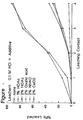
- Figure 2 illustrates the degree of effectiveness of a lower pH leachant, 0.1 M hydrochloric acid plus ammonium or calcium chloride for leaching lead oxide from a clay matrix.
- the novel leachants are substantially and surprisingly more effective than acetic acid or hydrochloric acid alone, ammonium or calcium acetate alone or with other additives as shown in Figure 2.
- the process can be modified by adding subsequent liquid-solid separation and heavy metal recovery steps. Accordingly, in this first modification of the process according to the invention, the leaching step as described above is followed by the steps of separating the liquid leachant from the solid soil particles by any liquid-solid separation technique such as settling, filtering or centrifuging, and recovering the dissolved heavy metal from the separated liquid leachant by contacting with a water-insoluble extractant or a precipitant in order to remove the heavy metal ions.
- any liquid-solid separation technique such as settling, filtering or centrifuging
- the choice of the precipitant will depend upon the nature of the heavy metal contaminants and can be readily made by those skilled in the art.
- the use of such precipitants for aqueous waste solutions is described in "Treatment Technologies," Office of Solid Waste, U.S. EPA, Govt. Inst., Inc., 1990 .
- the precipitants will be calcium hydroxide, sodium hydroxide, sodium carbonate, sodium sulfide or sodium dimethyldithiocarbamate.
- Such precipitants will typically be used in stoichiometric excess to the heavy metals in the leachant solution when the leachant is not recycled back to the leaching step.
- the water insoluble extractant can be: (a) a complexing agent for the heavy metal ions which is either dissolved in a water-immiscible solvent, adsorbed on an inert, solid support or adsorbed on a membrane support; (b) an ion exchange resin or an ion selective membrane; or (c) a solid adsorbent material.
- complexing agents which can be used as extractants include but are not limited to: carboxylic acids, such as VersaticTM 911 (Shell), NeodecanoicTM acid (Exxon) or alpha-bromolauric acid; phosphorus acids, such as di-2-ethylhexylphosphoric acid, CyanexTM 302 (Cyanamid, bis(2,2,4,4-trimethylpentyl)monothiophosphinic acid); phosphorus esters, such as tributyl phosphate or dibutyl butylphosphonate; phosphine oxides, such as trioctylphosphine oxide; phenolic oximes, such as LIXTM 84 (Henkel, 2-hydroxy-5-nonylacetophenone oxime) or LIXTM 860 (Henkel, 5-dodecylsalicylaldehyde oxime); beta-diketones, such as LIXTM 54 (Henkel, 1-phenyldecan-1,3-
- water immiscible solvents for dissolving the extractants are the aliphatic and aromatic hydrocarbons having flash points of 65.5°C (150 °F) and higher and solubilities in water of less than 0.1% by weight. These solvents are also essentially non-toxic and chemically inert and the costs thereof are currently within practical ranges.
- Representative commercially available solvents include but are not limited to: Kermac® 470B (an aliphatic kerosene available from Kerr-McGee--Flash Point 79.4°C (175 °F)), Chevron Ion Exchange Solvent (available from Standard Oil of California--Flash Point 90.5°C (195 °F)), Escaid® 100 and 110 (available from Exxon-Europe--Flash Point of ⁇ 82.2°C (180 °F)), Norpar® 12 (available from Exxon-U.S.A.--Flash Point 71.1°C (160 °F)), Conoco C-1214 L (available from Conoco--Flash Point 71.1°C (160 °F)), Aromatic 150® (an aromatic kerosene available from Exxon-U.S.A.--Flash Point 65.5°C (150 °F)) and various other kerosenes and petroleum fractions available from other oil companies.
- Kermac® 470B an alipha
- Solid supports for insoluble extractants can be nonfunctionalized resin beads.
- nonfunctionalized resin beads are the AmberliteTM XAD series, XAD-2, XAD-4, XAD-7 produced by Rohm and Haas.
- Membrane supports are microporous polymeric films which may be imbibed with liquid extractants to selectively allow heavy metal ions to pass through. Such membranes are described in "Interphase Transfer Kinetics from Transport Measurements Through Supported Liquid Membranes", “ISEC '86 Int. Solv. Extract. Conf., Preprints, Vol. II,” 1986 , 255-262.
- Extractants with a variety of functionalities can be adsorbed onto a solid support and used to extract heavy metals.
- the appropriate combination of extractant and solid support will depend on the metal to be extracted and the conditions desired for extraction and stripping and can be determined by one of ordinary skill in the art.
- One method of determining the appropriate combination for a particular application would be to select an extractant which shows the desired characteristics in liquid-liquid extraction, imbibing that extractant onto a candidate solid support, and evaluating its extraction and stripping performance with a representative leach solution containing the heavy metal to be extracted.
- the water insoluble extractant can be an ion exchange resin which will exchange another ion or ions for the heavy metal ions.
- the functionality which can be used on the ion exchange resin will depend on the heavy metal to be extracted, the presence of other ions, and the pH of the aqueous phase. Examples of representative functionalities include sulfonic acid, carboxylic acid, tertiary amine, quaternary ammonium, and chelating groups such as amino-diacetic acid.
- Such ion exchange resins are described in "Ion Exchangers, Properties and Applications," K. Dorfner, Ann Arbor Sci. Publ., Ann Arbor, MI, 1972 and “Ion Exchange,” F. Helfferich, McGraw-Hill, NY, 1962 and their use is known to those skilled in the art.
- Ion selective membranes are described in "Encyclopedia of Chemical Technology", Kirk-Othmer, 8 , 727-9.
- the solid adsorbent material can be coal, carbon, or crumb rubber.
- Coal is particulate bituminous, sub-bituminous, lignite or peat having a particle size of greater than about 16 mesh.
- Carbon is particulate carbon or activated carbon having a particle size greater than about (16 mesh) 1.00 mm .
- Commercially available examples having a mesh size of 6 x 16 are Calgon type GRC-22TM, GRC-20TM, Norit-ROTM, and Norit-CTM.
- the use of coal and carbon for heavy metal extraction is described in Water Research 1982 , 16 , 1113-1118; Water Research 1986 , 20 , 449-452; and Water Research 1982 , 16 , 1357-1366.
- Crumb rubber is particulate rubber from recycled tires having a particle size of greater than about 1.00 mm (16 mesh).
- the use of crumb rubber as a heavy metal extractant is described in Water Research 1981 , 15 , 275-282 .
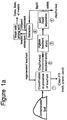
- Figure 1a is a process flow diagram of the first modification of the process according to the invention.
- soil is mixed with a leachant.
- a prior size classification can be conducted in which the coarse particles which are removed are substantially free of heavy metal ions and are returned to the earth as clean fill.
- the soil or soil fines, which remain suspended as a slurry in step 2, and the leachant are further mixed together with the leachant in step 3 until the heavy metal ions are transferred from the soil or soil fines to the leachant as indicated by an analysis of a sample of the fines such as by atomic absorption spectroscopy.
- the time required to leach the heavy metals from the soil fines will typically be about 60 minutes or less.
- the soil or soil fines are then separated from the leachant in the solid/liquid separation step 4.
- the solid or clay/humus soil fines may be disposed of if they are sufficiently free of heavy metals or they may be returned to step 3 for further leaching.
- the liquid phase which results from the solid/liquid separation step contains dissolved heavy metal ions.
- This heavy metal-containing leachant is then extracted in step 5 with a solid or liquid extractant to remove the dissolved heavy metal ions.
- the heavy metal-loaded extractant is stripped by washing with strong acid to remove the heavy metals.
- the stripped extractant is then reused in the extraction step and the regenerated leachant is returned to the classification or leaching steps.
- the soil may be preclassified by another technique and only the soil fines leached, or the soil may be leached without classification.
- the amount of extractant and mode of extraction are chosen so that the ion exchange capacity of the extractant or the adsorption capacity of the adsorbent for heavy metals is greater than the amount of heavy metals to be extracted.
- an extraction or adsorption agent with an excess capacity for extraction or adsorption would be present.
- a preferred embodiment of the process according to the invention comprises mixing contaminated soil comprised of coarse and fine particles with an aqueous solution comprised of (a) an acid which is selected from the group consisting of hydrochloric acid and sulfuric acid and (b) at least one alkali metal, alkaline earth metal, or ammonium chloride to produce a liquid slurry phase and a coarse solid soil phase.
- the coarse solid phase is removed by classification, and the liquid slurry phase continues to be leached.
- the liquid slurry phase is then subjected to a liquid-solid separation to produce a clarified liquid phase containing at least a portion of the heavy metals and a solid phase containing the soil fines.
- the clarified liquid phase is then contacted with a water-insoluble extractant dissolved in a water-immiscible solvent, a water-insoluble extractant adsorbed on an inert solid support, an adsorbent, or an ion exchange resin to remove the heavy metals from the clarified liquid to produce regenerated leachant which is then returned for further leaching of contaminated soil.
- the solid phase containing the soil fines may be returned to further leaching with fresh or regenerated leachant.
- the leaching and liquid-solid separation of the soil fines is repeated until the heavy metal contaminants in the soil fines have been reduced to the desired levels such as those prescribed by state and federal regulatory agencies.
- this second modification of the process according to the invention comprises carrying out the leaching and extracting steps simultaneously by mixing contaminated soil fines simultaneously with a leachant component and a water-insoluble solid extractant component as disclosed herein. In this second modification the soil must be classified to the extent that the remaining soil fines are separable from the solid extractant.
- the size difference between the soil particles and extractant particles should be at least a factor of two and preferably at least a factor of ten.
- the leachant component is an aqueous solution comprised of an acid which is selected from the group consisting of hydrochloric acid and sulfuric acid and at least one alkali metal, alkaline earth metal, or ammonium chloride.
- the extractant component is either a water-insoluble extractant adsorbed on an inert, solid adsorbent material or adsorbed on a membrane support; an ion selective membrane; a solid adsorbent; or an ion exchange resin.
- a liquid slurry phase is thus obtained which contains the leachant component, soil fines, dissolved heavy metal ions, and the extractant component now containing at least a portion of the heavy metal in complexed form.
- This extractant component is separated from the liquid slurry phase to remove the extractant component loaded with the heavy metal ion complex.
- the loaded extractant component is then contacted with a stripping solution to remove the heavy metal in concentrated form, and regenerate the extractant for further contact with liquid slurry phase.
- the solid extraction component can be removed by passing the liquid slurry phase through a screen.
- a liquid slurry stream containing soil fines and heavy metals not removed in the first contact passes through the screen.
- This liquid slurry phase stream is then recycled back through the leaching process with fresh or regenerated solid extractant component for a number of cycles sufficient to reduce the heavy metal concentration in the soil fines to the desired levels such as those prescribed by state and federal regulatory agencies.
- An advantage of this modification is the avoidance of expensive and time-consuming repetitive liquid-solid separation to produce clarified aqueous solution following each successive contact of leachant with the soil.
- This modification of the process according to the invention can also be carried out in a continuous manner by continuously removing the loaded extractant component from the liquid slurry phase and adding fresh or regenerated extractant component so that the continuous leaching of the soil fines allows high metal removal.
- the liquid slurry phase and the solid extractant may also be continuously advanced counter-currently to each other.
- the heavy metals dissolve into the leachant and are directly complexed by the extractant component. This prevents buildup of high heavy metal concentrations in the leachant, and displaces the dissolution equilibrium toward completion, giving more rapid and complete removal of heavy metals from the soil.
- the resulting low concentration of heavy metals in solution permits the use of leachant acids and salts that might not otherwise have adequate solubility with the heavy metal, such as lead sulfate, but will give sufficient solubility for simultaneous leaching and extraction.
- the amount of solid extractant and mode of extraction are chosen so that the ion exchange capacity of the extractant or the adsorption capacity of the adsorbent for heavy metals is greater than the amount of heavy metals to be extracted.
- an extraction or adsorption agent with an excess capacity for extraction or adsorption would be present.
- the heavy metal concentration may initially be in excess of the capacity of the extractant present, but further contacting of the soil with fresh or regenerated extractant provides the excess capacity needed to remove substantially all of the heavy metal ions from the leachant solution.
- Figure 1b is a process flow diagram for one aspect of the second modification of the process according to the invention wherein the extractant is a solid as set forth herein.
- the soil is classified with the leachant
- the soil fines remain suspended as a slurry in the leachant and are further mixed together with solid extractant in step 4 to transfer the heavy metals ions from the soil fines via the leachant to the solid extractant.
- the total time for steps 1 and 4 is the time required to leach the metals from the soil fines and will typically take about 60 minutes or less.
- the solid extractant is then removed in step 5 by passing the leachant-soil fines-extractant slurry through a screen and recovering a regenerated leachant/soil fines slurry from which the soil fines are then removed in step 6 to produce a regenerated leachant stream for recycle to the classification/leaching step.
- the heavy metal-loaded solid extractant is stripped by washing with strong acid to remove the heavy metals.
- the stripped extractant in step 3 is then reused in the extraction step 4.
- the contaminated soil may be preclassified by another technique and only the soil fines leached in step 4.
- FIG. 1c A process flow diagram for another aspect of the second modification of the process according to the invention is depicted in Figure 1c.
- the aspect is similar to that depicted in Figure 1b except that the regenerated leachant containing the soil fines and formed after step 5 is recycled back into step 4.
- the soil fines are continuously and repeatedly contacted by the leachant and solid extractant until the heavy metal ion content reaches an acceptable value.
- This continuous process is depicted by the solid arrows.
- the process continues through the hatched arrows wherein the cleaned soil fines are separated from the leachant and returned to the earth as fill.
- the heavy metal-free regenerated leachant can be returned to step 1 of the process.
- a preferred embodiment of the modification of the process according to the invention is comprised of a leaching step which comprises contacting contaminated soil with a leachant comprised of an acid which is selected from the group consisting of hydrochloric acid and sulfuric acid and one alkali metal, alkaline earth metal, or ammonium chloride.
- a leachant comprised of an acid which is selected from the group consisting of hydrochloric acid and sulfuric acid and one alkali metal, alkaline earth metal, or ammonium chloride.
- the coarse solid phase of denser or larger soil particles is then separated by known size separation techniques. This classifies, or size segregates, the soil so that the remaining first liquid slurry contains only fine soil particles, generally less than 0.02 mm in diameter.
- Carbon is added to produce a first liquid slurry phase and a coarse solid extractant phase.
- the first liquid slurry phase is passed through a screen having a mesh size of from about 80 (0.177 mm) to about 5 (4.00 mm) to remove the solid extractant phase which contains the heavy metal ion-carbon complex.
- a second liquid slurry phase stream containing soil fines and heavy metal ions not removed in the first contact results from this separation step and is recycled back to the leaching step.
- the solid extractant phase which remains on the screen is removed from the screen and the heavy metal ions are stripped by washing with a strong acid such as 3 M hydrochloric acid. The stripped extractant-solid is recycled back to the leaching step.
- the heavy metals are then present in an acid solution in concentrated form for further isolation or processing to recover the heavy metals.
- the treated solid soil may be separated from the leachant and returned to the earth.
- the processes according to the invention are particularly effective in removing lead, zinc, cadmium, and bismuth from contaminated soil.
- the modified processes according to the invention can be even further altered by adding a bioremediation step at the end of the process.
- soil treated by the modified processes according to the invention in which the leaching step is followed by or carried out simultaneously with the extracting step or continuously with the extracting step can be freed of unwanted organic matter by subjecting the treated soil to bioremediation.
- Bioremediation is a process in which microorganisms are used to degrade organic contaminants to harmless by-products.
- An organic contaminant is any organic matter whose presence in soil renders the soil unfit for plant, animal or human contact or use.
- organic contaminants include hydrocarbon oils, gasoline, and heavier petroleum hydrocarbons; aromatic compounds such as benzene, toluene, xylene, and polynuclear aromatics; chlorinated hydrocarbons such as chlorinated benzenes, pentachlorophenol, and poly-chlorinated biphenyls; dioxin, herbicides and/or insecticides, and the like.
- Bioremediation may be accomplished by any method known to those skilled in the art such as by land treatment, bioreactors, and in-situ treatment. The use of bioremediation as a means of cleaning wastes of hazardous organic materials is described in the August 26, 1991 edition of Chemical and Engineering News , pages 23-34. Bioremediation is often hindered or even prevented when heavy metals are present due to their high toxicity. Thus, removal of heavy metals may be a necessary first step to allow bioremediation to take place.
- the process for removing mercury from soil can be modified by the addition of a cementation step after leaching.
- the cementation step comprises contacting the liquid phase containing the leached, soluble mercury species liquid phase with aluminum, iron, or magnesium to remove the soluble mercury species from liquid phase.
- the resulting process amounts to a complete remediation of mercury from the mercury-containing soil.
- Aluminum is the preferred metal for cementation.
- the amount of metal used in the cementation step is from about 1 eq to about 100 eq based on 1 eq of Hg with the preferred amount being in the range of from about 5 eq to about 50 eq.
- the metal will be in contact with the liquid phase for a period of time from about 1 min to about 5 hr, preferably from about 10 min to about 1 hr.
- a cementation step can also be added to the process for removing heavy metals other than mercury from soil or from paint chips when the metals removed are reduceable by the cementing metal, examples of which are copper or lead.
- the liquid phase containing the leached, soluble lead or copper species is contacted with aluminum, iron, or magnesium to remove the soluble mercury species from liquid phase.
- Aluminum is the preferred metal for cementation.
- the amount of metal used in the cemetation step is from about 1 eq to about 100 eq based on 1 eq metal with the preferred amount being in the range of from about 5 eq to about 50 eq.
- the metal will be in contact with the liquid phase for a period of time from about 1 min to about 5 hr, preferably from about 10 min to about 1 hr.
- the process according to the invention which removes lead and/or copper from paint chips containing one or more of said metals comprises contacting the paint chips with an aqueous acid leachant selected from the group consisting of hydrochloric acid, and sulfuric acid for a period of time sufficient to transfer at least a portion of lead and/or copper from the paint chips to one or more soluble species in the leachant.
- the process is carried out by contacting the paint chips with the leachant preferably by mixing the leachant and paint chips together in a vessel for a period of time from about 2 hr to about 12 hr.
- the ratio of leachant to paint chips or residue containing paint chips can be from about 2 to about 10 and is preferably from about 3 to about 5.
- the leaching process can be carried out at a temperature of from 10°C to 100°C or, preferably, from 20°C to 80°C.
- the paint chips will be reduced to a fine particle size by grinding or the like to increase the surface area of the chips and hence facilitate the removal of the lead, copper, or tin therefrom.
- the time required to remove the metal will vary with the nature of the paint chips and the amount of metal in the paint chips and can be easily determined by those having ordinary skill in the art.
- the paint chips can be contacted repeatedly by the leachant until the metal level is sufficiently reduced to meet a level set by law or some other standard.
- the leaching is continued until the lead level is below the TCLP limit (Toxicity Characteristic Leaching Procedure) as determined by RCRA SW-846, Method 1311.
- the soluble lead or copper species or a combination thereof can be removed from the solution which remains after leaching by contacting the liquid phase containing the leached, soluble lead or copper species with aluminum, iron, or magnesium to remove the soluble mercury species from liquid phase.
- a stock solution of 968 ppm lead was prepared in 5% acetic acid/2.5% ammonium acetate.
- a series of 6 dram vials were loaded with the stock solution (15 mL) and carbon (3 g). The vials were mixed by rotation and aliquots removed for analysis. The lead remaining in each starting solution is tabulated below.
- Activated carbon efficiently adsorbs lead from the acetic acid/ammonium acetate leachant.
- the lead bearing carbon (Calgon® GRC-22, 3.00 g) from reference example 1 was rotated in a vial with 3M HCl (10 mL) for 3 hrs.
- the acid solution was removed and analyzed by atomic absorption, and fresh hydrochloric acid was added and stripping continued another 2 hr.
- the carbon was stripped of 54 % of the bound lead.
- Sandblasting waste sieved to a ⁇ 2.00 mm fraction, contained sand, paint chips, and fines.
- the waste (2.00 g) and leachant (10.0 mL) were loaded into a polyethylene centrifuge tube, capped and shaken for 2 hr at room temperature (20-22 °C).
- the tube and contents were centrifuged to give a solid pellet and leachant.
- the leachant was removed by pipette and weighed.
- the solid pellet was contacted again with fresh leachant. This contacting, centrifuging and replacement with fresh leachant was repeated a total of 5 times.
- the leachates were filtered ( ⁇ 0.45 ⁇ m) and analyzed by ICP for lead.
- the final treated solids were digested by the EPA acid digestion method and analyzed for lead.
- the results are shown in Table 1 for three leachants. The results indicate that at room temperature after five contacts partial lead removal (58-79%) from the waste was achieved.
- Example 3 The procedure described in Example 3 above was repeated at 60 °C. The agitation was accomplished by magnetic stirring while heating in a water bath. The results are shown in Table 2 and show that the lead removal was much higher (87-96%) than in the corresponding experiments at room temperature.
Landscapes
- Engineering & Computer Science (AREA)
- Chemical & Material Sciences (AREA)
- Mechanical Engineering (AREA)
- Manufacturing & Machinery (AREA)
- Materials Engineering (AREA)
- Metallurgy (AREA)
- Organic Chemistry (AREA)
- Life Sciences & Earth Sciences (AREA)
- Environmental & Geological Engineering (AREA)
- General Life Sciences & Earth Sciences (AREA)
- Geology (AREA)
- Geochemistry & Mineralogy (AREA)
- Soil Sciences (AREA)
- Inorganic Chemistry (AREA)
- General Chemical & Material Sciences (AREA)
- Chemical Kinetics & Catalysis (AREA)
- Health & Medical Sciences (AREA)
- Biomedical Technology (AREA)
- Biotechnology (AREA)
- General Health & Medical Sciences (AREA)
- Microbiology (AREA)
- Molecular Biology (AREA)
- Mycology (AREA)
- Processing Of Solid Wastes (AREA)
Abstract
Description
- The invention pertains to a process for removing heavy metals from soil and paint chips.
- The removal of heavy metal contaminants from soils represents a major contemporary environmental problem. Heavy metal pollution can leave the affected ground unusable for agricultural or residential purposes, and the metals can eventually leach into the groundwater system and lead to more widespread problems. While a number of soil classification or solidification/stabilization techniques which leave the offending metals in the soil have been developed, only removal of the metals actually solves the problem by removing the cause. Several attempts to remove metals from soils have been reported but none have been completely successful. One such method is described in Draft Report to the EPA, Contract No. 68-03-3255, US EPA, Emergency Response Branch, Edison , NJ, 1986 and CSIRO Aust. Div. Soils Tech. Pap. No. 41, 1979, 1-17 wherein the extracted metals which were bound to clay and humic materials were removed with a strong complexing agent such as EDTA. However, the EDTA remained in the wetted soil causing the treated soil to fail the TCLP test of the EPA for extractable metals. Sci. Total Environ. 1989, 79, 253-270; Geoderma 1971, 5, 197-208; Soil Sci. Soc. Am. J. 1986, 50, 598-601; Can. J. Soil Sci. 1976, 56, 37-42; Can. J. Soil Sci. 1969, 49, 327-334; and Plant Soil 1973, 38, 605-619 teach the use of aqueous acetic acid or ammonium acetate solutions as extractants. This method resulted in only slight leaching of metals from the soil. EP 278,328 (1988); Environ. Prog. 1990, 9, 79-86; EP 377,766 (1990); and Chemiker-Zeitung 1982, 106, 289-292 teach the use of strongly acidic leachant solutions such as HCl. This method leads to substantial (ca. 30%) dissolution of soil components and requires extensive basification of each HCl extract and/or the washed soil. DE 3,703,922 and DE 3,705,519 teach that isolation of the metal values is often impossible due to the metals having been precipitated as sulfides. EP 291,746 and SU 1,444,377 teach that complete separation of the soil and aqueous phases in an extraction process is difficult. J. Indian Chem. Soc., Sect. A 1982, 21A, 444-446; Hydrometallurgy 1987, 17, 215-228; Nippon Kinzoku Gakkaishi, 1978, 42, 1007-1012; Hydrometallurgy, 1985, 14, 171-188; J. Indian Chem. Soc. 1985, 62, 707-709; J. Anal. Chem. USSR, 1983, 38, 630-635; J. Inorg. Nucl. Chem. 1970, 32, 3667-3672; Russ. J. Inorg. Chem. 1960, 5, 906; I. M. M. Bull. 1961, 70, 355 and SU 710,487 teach the use of carboxylic acids such as fatty acids or Versatic™ acids for extraction of certain metals in standard liquid ion exchange processes. "The Theory and Practice of Ion Exchange: Proceedings of an International Conference," Cambridge, July 1976, Streat, M. ed., Soc. of Chemical Industry: London, 1976, 38.1-38.7; Trans. Instn. Min. Metall. (Sect. C: Mineral Process. Extr. Metall.), 1974, 83, C101-104; Trans. Instn. Min. Metall. (Sect. C: Mineral Process. Extr. Metall.), 1979, 88, C31-35; "Using Solvent-Impregnated Carbon to Recover Copper from Oxidized Mill Tailings," Rep. of Invest., USDI, Bur. Mines, No. 8966, 1985, pp 7 teach the use of solid-supported ion exchange reagents to remove copper from clarified solutions and from a slurry of oxidized mine tailings. Hydrometallurgy, 1982, 8, 83-94; J. Chem. Tech. Biotechnol. 1981, 31, 345-350; Proc. - Indian Acad. Sci., Chem. Sci. 1988, 100, 359-361; Proc. - Indian Acad. Sci., Chem. Sci. 1988, 100, 455-457 teach the use of LIX™ 34, LIX™ 622, LIX™ 51, LIX™ 54, LIX™ 70, and Kelex™ 100 as extractants for lead from aqueous feeds, but only at more basic pHs than with the carboxylic acids extractants mentioned above. "ISEC '86 Int. Solv. Extract. Conf., Preprints, Vol. II," 1986, 19-26; and Hydrometallurgy 1985, 14, 287-293 teach the use of diethylhexylphosphoric acid as a lead extractant under acidic conditions, but the S-shaped isotherm prohibits reducing the Pb concentration in the aqueous feed down to very low levels. Separation Science 1971, 6, 443-450 teaches the extraction of metals from aqueous solutions by SRS-100, a high molecular weight synthetic carboxylic acid. Various soil removal processes which include the use of mineral acids, bases, surfactants, and sequestering agents are reviewed in International Conf. on New Frontiers for Hazardous Waste Management, Sept., 1987; The Fourth Environ. International Conf. 1983, 856-895; and Environmental Progress 1990, 9, 79-86. EP 402 737 A teaches that heavy metals are dissolved out of sludge by strong mineral acid, and that the resulting mineral acid solution containing the heavy metals is treatable with a heavily alkaline solution containing flocculent and foaming agent. EP 278 328 A teaches a process of extracting heavy metals from contaminated soils by treating the soils with a number of successive acid extractions in a counter-current fashion and precipitating the heavy metals from the recovered acid solutions.
DE 3 742 235 A teaches removal of heavy metals from contaminated soils by treating the soils with a 2-40 wt. % EDTA solution having a pH of about 6. U.S. 4 824 576 A teaches an improved process for the purification of an impure aqueous solution containing heavy metal ions which comprises passing the impure solution through a bed of activated alumina absorbent. U.S. 4 746 439 A teaches a process for the decontamination and removal of at least one of silver, lead, chromium(III), zinc, or nickel ions from aqueous waste streams by contacting the contaminated waste water at a pH of from 4 to 6 with an alkaline earth silicate solid having a surface area in the range of about 0.1-1000 m2/g. U.S. 4 883 599 A teaches removal of metals from aqueous solutions by passing the solutions through an ion exchange material which consists essentially of sulfhydrated cellulose. - Mercury contamination is a particularly difficult and insidious type of contamination to remediate because of the prevalence and interconvertability of ionic and elemental forms of mercury within a single site by natural weathering action as well as biological redox mechanisms. M. Meltzer, et al. [Pollution Technology Reviews, No. 196, Noyes Data Corp, Park Ridge, NJ, 1990, p. 373] teaches that water soluble and insoluble ionic mercury compounds are bioavailable for reduction to mercury metal by bacterial action, including the highly insoluble mercuric sulfide. The conversion of elemental mercury into water soluble ionic forms is also biologically possible as well as conversion into volatile dimethyl mercury. All forms and compounds of mercury are toxic including elemental mercury. ["The Merck Index," 11th Ed., Merck & Co., Inc., Rahway, NJ, 1989, p 5805; P.C. Bidstrup, "Toxicity of Mercury and its Compounds," Elsevier, Amsterdam, 1964; L. Magos, Br. Med. Bull. 1975, 31, 241-5] The toxicity of the elemental form can not only be experienced by direct ingestion, but also by inhalation due to the relatively high vapor pressure of mercury, 2 × 10⁻³ mm (25 °C). The vapor pressure of mercury alone results in a concentration 200 times higher than the maximum allowed contentration, 0.01 ppm. Long exposure to mercury also produces a cummulative effect. A number of processes have been disclosed which claim to oxidatively dissolve elemental mercury and allow the reclamation of the metal. These processes all have disadvantages. Hot nitric acid solutions are known to oxidatively dissolve mercury while reducing nitrate to nitrogen oxides. [DE 3812986A, 1989; DE 3703922A, 1988] At room temperature an excess of nitric acid is required and extended periods of time. Under field conditions this will produce substantial quantities of volatile and regulated nitrogen oxides which will require scrubbing before venting to the atmosphere. Additionally, nitrate contamination of groundwater remains a concern because of the large excess of nitric acid required. Hydrogen peroxide is also claimed to oxidize mercury metal to mercuric ions. [USSR 431115, 1974] Catalysis by ferric or iodide ion is also reported. [EP 88-118930A, 1988] Hypochlorite in combination with hydrogen peroxide is also claimed. [JP Kokai 63156586, 1988] Hydrogen peroxide suffers the drawback in soil remediation use of being decomposed rapidly and irreversibly with manganese dioxide, a ubiquitous soil constitutent. [EP 88-118930, 1988] This reaction produces useless oxygen gas and water. Peracetic acid at 80 °C has been used to produce mercuric acetate from mercury metal. Hydrogen peroxide in the presence of acetic acid was also successful. [US 2873289, 1959]. Hypochlorite oxidation of metallic mercury is known. Control of the pH and chloride ion concentration is required to ensure solubility of the mercuric ion. [US 3476552, 1969; Eng. Mining J. 1970, 171, 107-9]. Halogens, including chlorine, bromine, and chlorine with a bromide ion catalyst, are known to dissolve mercury metal and mercuric sulfide. [US 5013358A, 1991; US 3424552A, 1969; Chem. Abstr. 1990, 114, 232369c; Chem. Abstr. 1988, 109, 173955n] In soil remediation applications, this requires the use of highly toxic, volatile and corrosive materials in highly populated areas which makes this option less desirable than its use in remote mining locations. Additionally, halogens will react rapidly with organic humic matter in the soil to produce substantial amounts of chlorinated material, including chlorinated phenols. These chlorinated species would present difficulties with regulatory agencies. Cyanide solutions are known to dissolve mercury metal to produce soluble mercuricyanide complexes. The danger of using cyanide solutions in populated areas limits the utility of this approach.
In addition, thermal methods of removing mercury from contaminated soil by distilling the metal are known. These suffer the drawback of the high cost of heating soil to approximately 600 °C. [DE 3928427A, 1991; DE 3706684A, 1987; "Treatment Technologies," US EPA, Office of Solid Waste, Government Inst., Inc., 1990, p 17-1]. Methods for treating metallic mercury and leaving it in the soil are also known. The long term acceptability of such practice is unknown.
One example, ferric chloride oxidation of finely divided mercury metal, produces a thin layer of mercurous/mercuric chlorides which were reacted with a sulfide salt to produce a mercury particle reportedly coated with a layer of mercuric sulfide. This material could be further stabilized by known solidification techniques. [JP Kokai 81 07697, 1981; DE 3814684A, 1989]. Amalgamation of metallic mercury with aluminum or iron deposited onto carbon is reported. The amalgam was claimed to be nonhazardous. [JP Kokai 73 75354, 1973; EP 342898A, 1989]. Extraction of mercuric ions from the loaded leachate can be accomplished by a number of processes. [J. Ortega, J. Gutierrez, in "Recovery of Valuable Products from Wastes," Ortega et al. ed.] Recovery of mercury from concentrated solutions is also known by electrochemical reduction as disclosed in US 3,647,958 and D. Bender, F. Riordan, "Metal Bearing Waste Streams, Minimizing, Recycling and Treatment," M. Meltzer, et al., ed., Noyes Data Corp., Pollution Technology Review No. 196, Park Ridge, NJ, 1990, p. 298], and by reduction by iron as disclosed in US 5013358A; by reduction by sodium borohydride [Morton Thiokiol, Inc., Ven Met Brochure, Ventron Division, 1984], and precipitation with sulfide is known [N.H. Feigenbaum, Ind. Wastes (Chicago), 1977, 23, 324]. - COMM. EUR. COMMUNITIES (REP) EUR 1983 EUR 8022 pages 147-160 discloses a process for leaching heavy metals from soils. In particular leaching solutions are disclosed in Examples 13 to 16 of page 149 (Table II).
- DE-A-38 12 986 discloses a two step process for leaching mercury from soils wherein a two step process wherein a leaching solution containing HNO3 and NaCl and a precipitation solution containing (NH4)2S are used. Furthermore, ion exchanges and activated carbon filters are used.
- DE-A-26 47 007 discloses a process for leaching heavy metals from lacked chips with a leachant consisting of hydrochloric acid. The process is completed by the addition of aluminum. Also iron is cited instead of aluminum.
- It is an object of the present invention to efficiently remove heavy metals from contaminated soil or paint chips. The present invention achieves this objective by simple and concise processes. One process generally removes heavy metals including ionic forms thereof from the soil and comprises leaching or washing soil with a mild leachant. The leachant solution is comprised of an aqueous solution of an acid and a salt. The anion of the acid forms a water-soluble salt with all of the heavy metals which contaminate the soil. The salt component is comprised of at least one alkali metal, alkaline earth metal, or ammonium chloride which also form a water-soluble salt with the heavy metals leached from the contaminated soil. The process can be modified by adding a second step. After the leachant solution has contacted the contaminated soil, a liquid phase containing dissolved heavy metal ions is formed and is separated from the solids. The clarified liquid phase which remains after the solids have separated is treated with an extractant or a precipitant to remove the heavy metal ions. Where the extractant is adsorbed on an inert solid support or is a solid ion exchange material, the process can also be modified by accomplishing simultaneously both the leaching and extraction steps described above.
- Figure 1 is a process flow diagram for the simplest aspect of the process according to the invention which comprises a leaching step preceded by an optional classification step.
- Figure 1a is a process flow diagram for the first modification of the process according to the invention wherein the leaching step is continued after the optional classification step, the soil or soil fines are separated from the leachant solution, and the heavy metals are extracted from the clarified leachant solution.
- Figure 1b is a process flow diagram for the second modification of the process according to the invention wherein the leaching step is continued after the classification step and combined with the extraction step wherein the extractant is a solid. The solid extractant is separated prior to the separation of the soil fines from the leachant solution. The solid extractant is stripped of extracted heavy metal ions, and the separated leachant solution is recycled for further leaching of contaminated soil.
- Figure 1c is a process flow diagram for the operation of the second modification of the process according to the invention wherein the process of Figure 1b is varied by recycling both the soil fines-leachant slurry and stripped extractant to leaching-extraction until an acceptable level of heavy metal removal has been attained.
- Figure 2 is a graph of the leaching effectiveness of various hydrochloric acid solutions.
- Figure 3 is a graphic illustration of the relative effectiveness of various solutions as leachants for lead.
- Other than in the operating examples, or where otherwise indicated, all numbers expressing quantities of ingredients or reaction conditions used herein are to be understood as modified in all instances by the term "about". For purposes of this invention, a heavy metal is a metal other than mercury and includes a transition metal, a lanthanide, an actinide, thallium, lead, bismuth or tin. The term soil means the upper layer or layers of the earth and includes sediment or silt below a body of water. Contaminated soil is soil that contains unacceptably high levels of heavy metals. Additionally, organic compounds deleterious to the health and safety of plants, animals and humans such as hydrocarbons, chlorinated hydrocarbons, poly-chlorinated biphenyls, dioxin, high concentrations of herbicides and/or insecticides, and the like may be present. Unacceptably high levels of contaminants are those levels which are higher than threshold levels set by governmental regulatory agencies. The term paint chip refers to a particle of solid paint film which had been applied to a surface as a liquid and subsequently cured to become a protective coating and then removed by some mechanical means such as by scraping, sandblasting, or blasting with plastic shot balls. The paint chips may or may not be mixed with other solid particles such as sandblasting or plastic shot residues and the like. An ammonium salt according to the invention is a salt having an ammonium ion of the formula R1R2R3NH+ wherein each of R1, R2, and R3 is independently hydrogen, methyl, or ethyl. Examples of such salts include but are not limited to those salts the cations of which are NH4 +, Ca2+, Mg2+, Na+, K+, or Li+.
- In its simplest aspect, the process according to the invention for removing heavy metals other than mercury from soil can be carried out by mixing contaminated soil with a leachant which is an aqueous solution comprised of: (a) a strong acid which is selected from the group consisting of hydrochloric acid and sulfuric acid and (b) at least one alkali metal, alkaline earth metal, or ammonium chloride The contaminated soil and leachant are mixed together in any convenient manner such as by stirring the contaminated soil and the leachant solution together in a container. The ratio of soil to leachant will typically be 1 part by weight soil to from 2 to 10 parts by weight leachant. Preferably, the ratio of soil to leachant is 1 part by weight soil to from 2 to 5 parts by weight leachant. The soil will be contacted for a time sufficient to transfer at least a portion of the heavy metals to the leachant. The soil will typically be in contact with the leachant for up to 60 minutes. Soil containing elemental heavy metals may require longer leaching times to achieve dissolution. Optionally, at the start of the contacting period, a coarse solid phase of denser or larger soil particles, which is generally leached more rapidly than the soil fines, is separated by known size separation techniques, such as wet classification, centrifugal separation, hydrocyclone separation, or wet screening. Such techniques are further described in "Solids-Liquid Separation," Chem. Eng., 1955, 62, 175-238. This operation classifies, or size segregates, the soil so that the remaining aqueous slurry contains only fine soil, silt and clay particles having a diameter of generally less than 0.02 mm. Since the majority of the heavy metal contaminants are associated with the soil fines, more extensive leaching of the soil fines is normally required than for the coarse soil components. In this way, the majority of the soil containing the coarse constituents can be quickly freed of contaminants and disposed of, and the remaining soil fines can be further leached to more completely dissolve the contained heavy metals. The process according to the invention can be carried out at any temperature and will typically be carried out at ambient temperature. The minimum acid concentration in the leachant solution must be such that a pH of 7 or below is maintained during the leaching period in which the soil and/or the soil fines are contacted by the leachant solution. The maintenance of the pH of the leachant solution can be accomplished by intermittent addition of the acid to the solution or by continuous addition of the acid to the solution. The method of addition is not critical as long as the pH is maintained below 7. While the acid concentration can be any concentration required to maintain the pH at or below 7, the maximum acid concentration in the leachant solution will typically be about 2 moles per liter. In cases of a strong acid such as hydrochloric acid, the preferred concentration is in the range of 0.01-1 molar and more preferably in the range of 0.05-0.5 molar. The minimum salt concentration in the leachant solution will be typically 0.05% while the maximum salt concentration in the leachant solution will be about 20% by weight. A preferred salt concentration is within the range of 1-20 wt %. A more preferred salt concentration is within the range of 2-10%.
- It is contemplated in this invention that the soil can be contacted with leachant multiple times to obtain sufficient removal of the heavy metals. Liquid-solid separation of partially leached soil gives a liquid phase containing a portion of the total of the heavy metal ions originally present in the soil and a solid phase which can be recycled for further leaching with fresh or regenerated leachant. Contacting and separating soil and leachant can be done continuously or in a batch mode.
- Figure 1 is a process flow diagram for the simplest aspect of the process according to the invention, in which soil is agitated with the leachant. The total time required to leach the heavy metals from the soil or soil fines and will typically take about 60 minutes or less. Optionally, the leaching step may be preceded by a classification step in the presence of the leachant to wash and remove a coarse fraction of soil. After the leaching step, the soil fines can optionally be separated from the leachant in the solid/liquid separation step. The soil or clay/humus soil fines may be disposed of if they are sufficiently free of heavy metals or they may be subjected to further leaching.
- Figure 2 illustrates the degree of effectiveness of a lower pH leachant, 0.1 M hydrochloric acid plus ammonium or calcium chloride for leaching lead oxide from a clay matrix. The novel leachants are substantially and surprisingly more effective than acetic acid or hydrochloric acid alone, ammonium or calcium acetate alone or with other additives as shown in Figure 2.
- The process can be modified by adding subsequent liquid-solid separation and heavy metal recovery steps. Accordingly, in this first modification of the process according to the invention, the leaching step as described above is followed by the steps of separating the liquid leachant from the solid soil particles by any liquid-solid separation technique such as settling, filtering or centrifuging, and recovering the dissolved heavy metal from the separated liquid leachant by contacting with a water-insoluble extractant or a precipitant in order to remove the heavy metal ions.
- When a precipitant is used to remove the heavy metal ions the choice of the precipitant will depend upon the nature of the heavy metal contaminants and can be readily made by those skilled in the art. The use of such precipitants for aqueous waste solutions is described in "Treatment Technologies," Office of Solid Waste, U.S. EPA, Govt. Inst., Inc., 1990. Typically, the precipitants will be calcium hydroxide, sodium hydroxide, sodium carbonate, sodium sulfide or sodium dimethyldithiocarbamate. Such precipitants will typically be used in stoichiometric excess to the heavy metals in the leachant solution when the leachant is not recycled back to the leaching step.
- The water insoluble extractant can be: (a) a complexing agent for the heavy metal ions which is either dissolved in a water-immiscible solvent, adsorbed on an inert, solid support or adsorbed on a membrane support; (b) an ion exchange resin or an ion selective membrane; or (c) a solid adsorbent material. Examples of complexing agents which can be used as extractants include but are not limited to: carboxylic acids, such as Versatic™ 911 (Shell), Neodecanoic™ acid (Exxon) or alpha-bromolauric acid; phosphorus acids, such as di-2-ethylhexylphosphoric acid, Cyanex™ 302 (Cyanamid, bis(2,2,4,4-trimethylpentyl)monothiophosphinic acid); phosphorus esters, such as tributyl phosphate or dibutyl butylphosphonate; phosphine oxides, such as trioctylphosphine oxide; phenolic oximes, such as LIX™ 84 (Henkel, 2-hydroxy-5-nonylacetophenone oxime) or LIX™ 860 (Henkel, 5-dodecylsalicylaldehyde oxime); beta-diketones, such as LIX™ 54 (Henkel, 1-phenyldecan-1,3-dione) or LIX™ 51 (Henkel, 1-(p-dodecylphenyl)-4,4,4-trifluorobutan-1,3-dione; amines, such as trilaurylamine or trioctylamine; quaternary ammonium salts, such as Aliquat™ 336 (Henkel, tricaprylammonium chloride); and 8-hydroxyquinolines, such as LIX™ 26 (Henkel, 7-dodecenyl-8-hydroxyquinoline). The preferred extractants are saturated, linear and branched carboxylic acids having from 7 to about 30 carbon atoms. Particularly preferred carboxylic acids are Neodecanoic™ acid (Exxon) and Versatic™ acids (Shell).
- Examples of water immiscible solvents for dissolving the extractants are the aliphatic and aromatic hydrocarbons having flash points of 65.5°C (150 °F) and higher and solubilities in water of less than 0.1% by weight. These solvents are also essentially non-toxic and chemically inert and the costs thereof are currently within practical ranges. Representative commercially available solvents include but are not limited to: Kermac® 470B (an aliphatic kerosene available from Kerr-McGee--Flash Point 79.4°C (175 °F)), Chevron Ion Exchange Solvent (available from Standard Oil of California--Flash Point 90.5°C (195 °F)),
Escaid® 100 and 110 (available from Exxon-Europe--Flash Point of ≈ 82.2°C (180 °F)), Norpar® 12 (available from Exxon-U.S.A.--Flash Point 71.1°C (160 °F)), Conoco C-1214 L (available from Conoco--Flash Point 71.1°C (160 °F)), Aromatic 150® (an aromatic kerosene available from Exxon-U.S.A.--Flash Point 65.5°C (150 °F)) and various other kerosenes and petroleum fractions available from other oil companies. The use of said water immiscible solvents to recover the heavy metal by solvent extraction is especially advantageous when the heavy metal extraction process is followed by bioremediation. - Solid supports for insoluble extractants can be nonfunctionalized resin beads. Examples of nonfunctionalized resin beads are the Amberlite™ XAD series, XAD-2, XAD-4, XAD-7 produced by Rohm and Haas.
- Membrane supports are microporous polymeric films which may be imbibed with liquid extractants to selectively allow heavy metal ions to pass through. Such membranes are described in "Interphase Transfer Kinetics from Transport Measurements Through Supported Liquid Membranes", "ISEC '86 Int. Solv. Extract. Conf., Preprints, Vol. II," 1986, 255-262.
- Extractants with a variety of functionalities can be adsorbed onto a solid support and used to extract heavy metals. The appropriate combination of extractant and solid support will depend on the metal to be extracted and the conditions desired for extraction and stripping and can be determined by one of ordinary skill in the art. One method of determining the appropriate combination for a particular application would be to select an extractant which shows the desired characteristics in liquid-liquid extraction, imbibing that extractant onto a candidate solid support, and evaluating its extraction and stripping performance with a representative leach solution containing the heavy metal to be extracted.
- The water insoluble extractant can be an ion exchange resin which will exchange another ion or ions for the heavy metal ions. The functionality which can be used on the ion exchange resin will depend on the heavy metal to be extracted, the presence of other ions, and the pH of the aqueous phase. Examples of representative functionalities include sulfonic acid, carboxylic acid, tertiary amine, quaternary ammonium, and chelating groups such as amino-diacetic acid. Such ion exchange resins are described in "Ion Exchangers, Properties and Applications," K. Dorfner, Ann Arbor Sci. Publ., Ann Arbor, MI, 1972 and "Ion Exchange," F. Helfferich, McGraw-Hill, NY, 1962 and their use is known to those skilled in the art.
- Ion selective membranes are described in "Encyclopedia of Chemical Technology", Kirk-Othmer, 8, 727-9.
- The solid adsorbent material can be coal, carbon, or crumb rubber. Coal is particulate bituminous, sub-bituminous, lignite or peat having a particle size of greater than about 16 mesh. Carbon is particulate carbon or activated carbon having a particle size greater than about (16 mesh) 1.00 mm . Commercially available examples having a mesh size of 6 x 16 are Calgon type GRC-22™, GRC-20™, Norit-RO™, and Norit-C™. The use of coal and carbon for heavy metal extraction is described in Water Research 1982, 16, 1113-1118;
Water Research 1986, 20, 449-452; and Water Research 1982, 16, 1357-1366. Crumb rubber is particulate rubber from recycled tires having a particle size of greater than about 1.00 mm (16 mesh). The use of crumb rubber as a heavy metal extractant is described in Water Research 1981, 15, 275-282 . - Figure 1a is a process flow diagram of the first modification of the process according to the invention. In the first step, soil is mixed with a leachant. Optionally, a prior size classification can be conducted in which the coarse particles which are removed are substantially free of heavy metal ions and are returned to the earth as clean fill. The soil or soil fines, which remain suspended as a slurry in
step 2, and the leachant are further mixed together with the leachant instep 3 until the heavy metal ions are transferred from the soil or soil fines to the leachant as indicated by an analysis of a sample of the fines such as by atomic absorption spectroscopy. The time required to leach the heavy metals from the soil fines will typically be about 60 minutes or less. The soil or soil fines are then separated from the leachant in the solid/liquid separation step 4. The solid or clay/humus soil fines may be disposed of if they are sufficiently free of heavy metals or they may be returned tostep 3 for further leaching. The liquid phase which results from the solid/liquid separation step contains dissolved heavy metal ions. This heavy metal-containing leachant is then extracted instep 5 with a solid or liquid extractant to remove the dissolved heavy metal ions. The heavy metal-loaded extractant is stripped by washing with strong acid to remove the heavy metals. The stripped extractant is then reused in the extraction step and the regenerated leachant is returned to the classification or leaching steps. Alternatively, the soil may be preclassified by another technique and only the soil fines leached, or the soil may be leached without classification. - The amount of extractant and mode of extraction are chosen so that the ion exchange capacity of the extractant or the adsorption capacity of the adsorbent for heavy metals is greater than the amount of heavy metals to be extracted. Thus in a single, batchwise contact of heavy metal containing leachant and extractant, an extraction or adsorption agent with an excess capacity for extraction or adsorption would be present.
- A preferred embodiment of the process according to the invention comprises mixing contaminated soil comprised of coarse and fine particles with an aqueous solution comprised of (a) an acid which is selected from the group consisting of hydrochloric acid and sulfuric acid and (b) at least one alkali metal, alkaline earth metal, or ammonium chloride to produce a liquid slurry phase and a coarse solid soil phase. The coarse solid phase is removed by classification, and the liquid slurry phase continues to be leached. The liquid slurry phase is then subjected to a liquid-solid separation to produce a clarified liquid phase containing at least a portion of the heavy metals and a solid phase containing the soil fines. The clarified liquid phase is then contacted with a water-insoluble extractant dissolved in a water-immiscible solvent, a water-insoluble extractant adsorbed on an inert solid support, an adsorbent, or an ion exchange resin to remove the heavy metals from the clarified liquid to produce regenerated leachant which is then returned for further leaching of contaminated soil. The solid phase containing the soil fines may be returned to further leaching with fresh or regenerated leachant. The leaching and liquid-solid separation of the soil fines is repeated until the heavy metal contaminants in the soil fines have been reduced to the desired levels such as those prescribed by state and federal regulatory agencies.
- In a modification of the process according to the invention, both steps of leaching and contacting with a solid extractant as set forth herein are accomplished simultaneously. Since contacting the soil one time with a leachant may remove less than all of the heavy metals present in the soil sample, repeated contacts of soil with leachant will often be needed to sufficiently remove the metal ions. Therefore, this second modification of the process according to the invention comprises carrying out the leaching and extracting steps simultaneously by mixing contaminated soil fines simultaneously with a leachant component and a water-insoluble solid extractant component as disclosed herein. In this second modification the soil must be classified to the extent that the remaining soil fines are separable from the solid extractant. The size difference between the soil particles and extractant particles should be at least a factor of two and preferably at least a factor of ten. The leachant component is an aqueous solution comprised of an acid which is selected from the group consisting of hydrochloric acid and sulfuric acid and at least one alkali metal, alkaline earth metal, or ammonium chloride. The extractant component is either a water-insoluble extractant adsorbed on an inert, solid adsorbent material or adsorbed on a membrane support; an ion selective membrane; a solid adsorbent; or an ion exchange resin. A liquid slurry phase is thus obtained which contains the leachant component, soil fines, dissolved heavy metal ions, and the extractant component now containing at least a portion of the heavy metal in complexed form. This extractant component is separated from the liquid slurry phase to remove the extractant component loaded with the heavy metal ion complex. The loaded extractant component is then contacted with a stripping solution to remove the heavy metal in concentrated form, and regenerate the extractant for further contact with liquid slurry phase.
- The solid extraction component can be removed by passing the liquid slurry phase through a screen. A liquid slurry stream containing soil fines and heavy metals not removed in the first contact passes through the screen. This liquid slurry phase stream is then recycled back through the leaching process with fresh or regenerated solid extractant component for a number of cycles sufficient to reduce the heavy metal concentration in the soil fines to the desired levels such as those prescribed by state and federal regulatory agencies. An advantage of this modification is the avoidance of expensive and time-consuming repetitive liquid-solid separation to produce clarified aqueous solution following each successive contact of leachant with the soil. This modification of the process according to the invention can also be carried out in a continuous manner by continuously removing the loaded extractant component from the liquid slurry phase and adding fresh or regenerated extractant component so that the continuous leaching of the soil fines allows high metal removal. The liquid slurry phase and the solid extractant may also be continuously advanced counter-currently to each other. Thus the heavy metals dissolve into the leachant and are directly complexed by the extractant component. This prevents buildup of high heavy metal concentrations in the leachant, and displaces the dissolution equilibrium toward completion, giving more rapid and complete removal of heavy metals from the soil. The resulting low concentration of heavy metals in solution permits the use of leachant acids and salts that might not otherwise have adequate solubility with the heavy metal, such as lead sulfate, but will give sufficient solubility for simultaneous leaching and extraction.
- The amount of solid extractant and mode of extraction are chosen so that the ion exchange capacity of the extractant or the adsorption capacity of the adsorbent for heavy metals is greater than the amount of heavy metals to be extracted. Thus in a single, batchwise contact of contaminated soil and extractant, an extraction or adsorption agent with an excess capacity for extraction or adsorption would be present. Alternatively, when the process is conducted continuously or with multiple contacts of the soil with extractant, the heavy metal concentration may initially be in excess of the capacity of the extractant present, but further contacting of the soil with fresh or regenerated extractant provides the excess capacity needed to remove substantially all of the heavy metal ions from the leachant solution.
- Figure 1b is a process flow diagram for one aspect of the second modification of the process according to the invention wherein the extractant is a solid as set forth herein. In the first step the soil is classified with the leachant, in the second step the soil fines remain suspended as a slurry in the leachant and are further mixed together with solid extractant in
step 4 to transfer the heavy metals ions from the soil fines via the leachant to the solid extractant. The total time forsteps step 5 by passing the leachant-soil fines-extractant slurry through a screen and recovering a regenerated leachant/soil fines slurry from which the soil fines are then removed instep 6 to produce a regenerated leachant stream for recycle to the classification/leaching step. The heavy metal-loaded solid extractant is stripped by washing with strong acid to remove the heavy metals. The stripped extractant instep 3 is then reused in theextraction step 4. Alternatively, the contaminated soil may be preclassified by another technique and only the soil fines leached instep 4. - A process flow diagram for another aspect of the second modification of the process according to the invention is depicted in Figure 1c. The aspect is similar to that depicted in Figure 1b except that the regenerated leachant containing the soil fines and formed after
step 5 is recycled back intostep 4. Thus, the soil fines are continuously and repeatedly contacted by the leachant and solid extractant until the heavy metal ion content reaches an acceptable value. This continuous process is depicted by the solid arrows. After the heavy metal ion concentration reaches an acceptable level, the process continues through the hatched arrows wherein the cleaned soil fines are separated from the leachant and returned to the earth as fill. The heavy metal-free regenerated leachant can be returned tostep 1 of the process. - A preferred embodiment of the modification of the process according to the invention is comprised of a leaching step which comprises contacting contaminated soil with a leachant comprised of an acid which is selected from the group consisting of hydrochloric acid and sulfuric acid and one alkali metal, alkaline earth metal, or ammonium chloride. The coarse solid phase of denser or larger soil particles is then separated by known size separation techniques. This classifies, or size segregates, the soil so that the remaining first liquid slurry contains only fine soil particles, generally less than 0.02 mm in diameter. Carbon is added to produce a first liquid slurry phase and a coarse solid extractant phase. After sufficient time to transfer at least a portion of the heavy metals to the solid extractant, the first liquid slurry phase is passed through a screen having a mesh size of from about 80 (0.177 mm) to about 5 (4.00 mm) to remove the solid extractant phase which contains the heavy metal ion-carbon complex. A second liquid slurry phase stream containing soil fines and heavy metal ions not removed in the first contact results from this separation step and is recycled back to the leaching step. The solid extractant phase which remains on the screen is removed from the screen and the heavy metal ions are stripped by washing with a strong acid such as 3 M hydrochloric acid. The stripped extractant-solid is recycled back to the leaching step. The heavy metals are then present in an acid solution in concentrated form for further isolation or processing to recover the heavy metals. After a sufficient number of leaching cycles, the treated solid soil may be separated from the leachant and returned to the earth. The processes according to the invention are particularly effective in removing lead, zinc, cadmium, and bismuth from contaminated soil.
- The modified processes according to the invention can be even further altered by adding a bioremediation step at the end of the process. In other words, soil treated by the modified processes according to the invention in which the leaching step is followed by or carried out simultaneously with the extracting step or continuously with the extracting step can be freed of unwanted organic matter by subjecting the treated soil to bioremediation. Bioremediation is a process in which microorganisms are used to degrade organic contaminants to harmless by-products. An organic contaminant is any organic matter whose presence in soil renders the soil unfit for plant, animal or human contact or use. Examples of organic contaminants include hydrocarbon oils, gasoline, and heavier petroleum hydrocarbons; aromatic compounds such as benzene, toluene, xylene, and polynuclear aromatics; chlorinated hydrocarbons such as chlorinated benzenes, pentachlorophenol, and poly-chlorinated biphenyls; dioxin, herbicides and/or insecticides, and the like. Bioremediation may be accomplished by any method known to those skilled in the art such as by land treatment, bioreactors, and in-situ treatment. The use of bioremediation as a means of cleaning wastes of hazardous organic materials is described in the August 26, 1991 edition of Chemical and Engineering News, pages 23-34. Bioremediation is often hindered or even prevented when heavy metals are present due to their high toxicity. Thus, removal of heavy metals may be a necessary first step to allow bioremediation to take place.
- The process for removing mercury from soil can be modified by the addition of a cementation step after leaching. The cementation step comprises contacting the liquid phase containing the leached, soluble mercury species liquid phase with aluminum, iron, or magnesium to remove the soluble mercury species from liquid phase. The resulting process amounts to a complete remediation of mercury from the mercury-containing soil. Aluminum is the preferred metal for cementation. The amount of metal used in the cementation step is from about 1 eq to about 100 eq based on 1 eq of Hg with the preferred amount being in the range of from about 5 eq to about 50 eq. The metal will be in contact with the liquid phase for a period of time from about 1 min to about 5 hr, preferably from about 10 min to about 1 hr. A cementation step can also be added to the process for removing heavy metals other than mercury from soil or from paint chips when the metals removed are reduceable by the cementing metal, examples of which are copper or lead. In such a case, the liquid phase containing the leached, soluble lead or copper species is contacted with aluminum, iron, or magnesium to remove the soluble mercury species from liquid phase. Aluminum is the preferred metal for cementation. The amount of metal used in the cemetation step is from about 1 eq to about 100 eq based on 1 eq metal with the preferred amount being in the range of from about 5 eq to about 50 eq. The metal will be in contact with the liquid phase for a period of time from about 1 min to about 5 hr, preferably from about 10 min to about 1 hr.
- The process according to the invention which removes lead and/or copper from paint chips containing one or more of said metals comprises contacting the paint chips with an aqueous acid leachant selected from the group consisting of hydrochloric acid, and sulfuric acid for a period of time sufficient to transfer at least a portion of lead and/or copper from the paint chips to one or more soluble species in the leachant. The process is carried out by contacting the paint chips with the leachant preferably by mixing the leachant and paint chips together in a vessel for a period of time from about 2 hr to about 12 hr. The ratio of leachant to paint chips or residue containing paint chips can be from about 2 to about 10 and is preferably from about 3 to about 5. The leaching process can be carried out at a temperature of from 10°C to 100°C or, preferably, from 20°C to 80°C. Most preferably, the paint chips will be reduced to a fine particle size by grinding or the like to increase the surface area of the chips and hence facilitate the removal of the lead, copper, or tin therefrom. The time required to remove the metal will vary with the nature of the paint chips and the amount of metal in the paint chips and can be easily determined by those having ordinary skill in the art. The paint chips can be contacted repeatedly by the leachant until the metal level is sufficiently reduced to meet a level set by law or some other standard. In one embodiment wherein paint chips containing lead are leached according to the process of the invention, the leaching is continued until the lead level is below the TCLP limit (Toxicity Characteristic Leaching Procedure) as determined by RCRA SW-846, Method 1311. The soluble lead or copper species or a combination thereof can be removed from the solution which remains after leaching by contacting the liquid phase containing the leached, soluble lead or copper species with aluminum, iron, or magnesium to remove the soluble mercury species from liquid phase.
- The following examples are meant to illustrate but not limit the invention.
- Lead oxide (10 mg), clay (2 g), and leachant (10 mL) were stirred for 1 hr, centrifuged, the filtrate removed and analyzed, and fresh leachant added. The leachings were repeated three times. The results are shown in Figure 3. The 0.1 M HCl/NH4Cl and 0.1 M HCl/CaCl2 combinations are especially effective, but the rate at which Pb is removed is slower than with the acetic acid based leachants.
- A stock solution of 968 ppm lead was prepared in 5% acetic acid/2.5% ammonium acetate. A series of 6 dram vials were loaded with the stock solution (15 mL) and carbon (3 g). The vials were mixed by rotation and aliquots removed for analysis. The lead remaining in each starting solution is tabulated below. Activated carbon efficiently adsorbs lead from the acetic acid/ammonium acetate leachant.
Carbon % Available Lead adsorbed on C 1 4 22 hr Calgon GRC-22 77 95 96 Norit-RO 91 83 89 Norit-C 94 94 95 - The lead bearing carbon (Calgon® GRC-22, 3.00 g) from reference example 1 was rotated in a vial with 3M HCl (10 mL) for 3 hrs. The acid solution was removed and analyzed by atomic absorption, and fresh hydrochloric acid was added and stripping continued another 2 hr. The carbon was stripped of 54 % of the bound lead.
- Sandblasting waste, sieved to a <2.00 mm fraction, contained sand, paint chips, and fines. The waste (2.00 g) and leachant (10.0 mL) were loaded into a polyethylene centrifuge tube, capped and shaken for 2 hr at room temperature (20-22 °C). The tube and contents were centrifuged to give a solid pellet and leachant. The leachant was removed by pipette and weighed. The solid pellet was contacted again with fresh leachant. This contacting, centrifuging and replacement with fresh leachant was repeated a total of 5 times. The leachates were filtered (<0.45 µm) and analyzed by ICP for lead. The final treated solids were digested by the EPA acid digestion method and analyzed for lead. The results are shown in Table 1 for three leachants. The results indicate that at room temperature after five contacts partial lead removal (58-79%) from the waste was achieved.

- The procedure described in Example 3 above was repeated at 60 °C. The agitation was accomplished by magnetic stirring while heating in a water bath. The results are shown in Table 2 and show that the lead removal was much higher (87-96%) than in the corresponding experiments at room temperature.

- Two solutions of mercuric chloride in (a) 5% acetic acid/5% calcium acetate (reference) and (b) 0.1 M HCl/5% calcium chloride (invention) were prepared, approximately 350 ppm Hg. A portion of each solution (25 mL) was stirred with crushed aluminum foil pieces (25 mg) under nitrogen. Aliquots (5 mL) were removed periodically to monitor the cementation of the mercuric ion by the aluminum, filtered and subjected to ICP analysis. The results are in Table 3. It is readily apparent that aluminum successfully removed the mercuric ion by reduction to insoluble elemental mercury or reduction and amalgation to excess aluminum.
Table 3 Leachant Hg Concentration (µg/mL) % Hg Removal t = 0 t = 0.5 hr t = 1 hr t = 2 hr HOAc/Ca(OAc)2 365 311 23 <1 >99 HCl/CaCl2 359 12 <1 <1 >99
Claims (20)
- A process for removing heavy metals from contaminated soil comprising the steps of mixing said soil and a liquid leachant composition which is an aqueous solution comprising (i) a strong acid selected from the group consisting of hydrochloric acid and sulfuric acid in a concentration of 0.01 to 1.0 molar and (ii) from 1 to 20 % of an alkali metal, alkaline earth metal, or ammonium chloride to disperse at least part of said soil in the leachant to form a liquid phase containing dispersed soil solids (1), maintaining the soil solids in the liquid phase containing the dispersed solids in dispersed form (2), transferring at least a portion of the said metals from the dispersed solids to a soluble species in the liquid phase, and (3) separating said dispersed solids from said liquid phase.
- A process according to claim 1 further comprising the steps of: (4) contacting said liquid phase with an extractant to remove said heavy metals, wherein said extractant is selected from the group consisting of (a) a complexing agent for said heavy metal being dissolved in a water-immiscible solvent or adsorbed on a water-insoluble solid support or on a membrane-support (b) an ion exchange resin or an ion-selective membrane, (c) a precipitating agent, and (d) coal, carbon or crumb rubber.
- A process according to claim 1 comprising the steps of: (1) mixing said soil and said liquid leachant composition; (2) adding an extractant selected from the group consisting of (a) a complexing agent for said heavy metal being dissolved in a water-immiscible solvent or adsorbed on a water-insoluble solid support or on a membrane-support, (b) an ion exchange resin or an ion-selective membrane, (c) a precipitating agent, and (d) coal, carbon or crumb rubber having a particle size at least twice as large as said dispersed soil solids to said liquid phase containing said dispersed soil solids to form a first dispersed phase; (3) maintaining the soil particles and the solid extractant in said first dispersed phase each in dispersed form and transferring at least a portion of the heavy metals from the dispersed solids to an adsorbed species on said solid extractant; (4) separating said solid extractant from said first dispersed phase to form a second dispersed phase containing the dispersed solids in dispersed form; (5) stripping said heavy metals from said solid extractant to form a stripped solid extractant; (6) adding said stripped solid extractant to step (2).
- The process of claims 1 to 3 wherein said acid is hydrochloric acid.
- The process of claim 4 wherein the concentration of said hydrochloric acid is from 0.05 to 0.5 molar.
- The process of claims 1 to 3 wherein said salt is calcium chloride.
- The process of claim 1 to 3 wherein said salt is ammonium chloride.
- The process of claim 6 or 7 wherein the concentration of said ammonium chloride or calcium chloride is from 2 to 10 weight percent.
- The process of claim 1, 2 or 3 wherein said leachant is comprised of from 0.05 to 0.5 molar hydrochloric acid and 2 % to 10 % by weight of ammonium chloride or calcium chloride.
- The process of claim 1 to 3 further comprising prior to said step (2) the step of separating said liquid phase containing the dispersed soil solids as prepared in said step (1) from any part of the soil which is not dispersed therein.
- A process according to claim 1 further comprising step (4) of contacting said liquid phase containing the leached heavy metal with a metal selected from the group consisting of aluminium, iron and magnesium to remove the soluble heavy metals from the liquid phase.
- A process as defined in claim 11 wherein said metal is aluminium.
- The process of claim 3 further comprising the step of adding said second dispersed phase formed in step (4) to step (2) and repeating steps (2), (3), (4), (5) and (6).
- The process of claim 3 wherein said extractant is selected from the group consisting of: (a) a complexing agent for said heavy metal adsorbed on a solid support (b) an ion exchange resin and; (c) a solid adsorbent material.
- The process of claim 14 wherein said complexing agent is a linear or branched carboxylic acid having from 7 to 30 carbon atoms adsorbed on a support.
- The process of claim 14 wherein said solid support is carbon.
- A process according to claim 1 wherein said soil comprises sand and wherein said heavy metal contamination comprises copper or lead contained in a matrix of solid pieces of cured paint film.
- A process according to claim 17 further comprising the step (4) of recovering said copper or lead from the separated liquid phase of step (3) containing the soluble species by contacting the liquid phase with a metal selected from the group consisting of aluminium, iron and magnesium to remove the soluble copper or lead from the liquid phase.
- A process according to claim 1 for removing copper, lead or a combination thereof from sand contaminated with paint chips containing copper or lead which comprises, contacting said sand and solid paint chips with the liquid leachant defined in claim 1 to disperse at least a part of said sand in the leachant to form a liquid phase containing dispersed sand and paint solids and rendering at least a portion of the copper or lead from the dispersed solids to a soluble species in the liquid, and (b) recovering the copper or lead from the liquid phase.
- A process according to claim 19 further comprising recovering the copper or lead by (c) contacting the liquid phase from step (b) containing the soluble species with a metal selected from the group consisting of aluminium, iron and magnesium to remove the soluble copper or lead from the liquid phase.
Priority Applications (2)
| Application Number | Priority Date | Filing Date | Title |
|---|---|---|---|
| EP19960113210 EP0745439A3 (en) | 1991-10-03 | 1992-09-15 | Process for removing heavy metals from soil |
| EP19960113209 EP0745438A3 (en) | 1991-10-03 | 1992-09-15 | Process for removing heavy metals from soil |
Applications Claiming Priority (5)
| Application Number | Priority Date | Filing Date | Title |
|---|---|---|---|
| US77128691A | 1991-10-03 | 1991-10-03 | |
| US07/930,638 US5494649A (en) | 1991-10-03 | 1992-08-17 | Process for removing heavy metals from paint chips |
| US930638 | 1992-08-17 | ||
| PCT/US1992/007657 WO1993006952A2 (en) | 1991-10-03 | 1992-09-15 | Process for removing heavy metals from soils |
| US771286 | 1996-12-20 |
Related Child Applications (4)
| Application Number | Title | Priority Date | Filing Date |
|---|---|---|---|
| EP19960113210 Division EP0745439A3 (en) | 1991-10-03 | 1992-09-15 | Process for removing heavy metals from soil |
| EP19960113209 Division EP0745438A3 (en) | 1991-10-03 | 1992-09-15 | Process for removing heavy metals from soil |
| EP96113210.7 Division-Into | 1996-08-17 | ||
| EP96113209.9 Division-Into | 1996-08-17 |
Publications (2)
| Publication Number | Publication Date |
|---|---|
| EP0619764A1 EP0619764A1 (en) | 1994-10-19 |
| EP0619764B1 true EP0619764B1 (en) | 1997-10-29 |
Family
ID=27118434
Family Applications (3)
| Application Number | Title | Priority Date | Filing Date |
|---|---|---|---|
| EP19960113209 Withdrawn EP0745438A3 (en) | 1991-10-03 | 1992-09-15 | Process for removing heavy metals from soil |
| EP19960113210 Withdrawn EP0745439A3 (en) | 1991-10-03 | 1992-09-15 | Process for removing heavy metals from soil |
| EP19920919788 Expired - Lifetime EP0619764B1 (en) | 1991-10-03 | 1992-09-15 | Process for removing heavy metals from soils |
Family Applications Before (2)
| Application Number | Title | Priority Date | Filing Date |
|---|---|---|---|
| EP19960113209 Withdrawn EP0745438A3 (en) | 1991-10-03 | 1992-09-15 | Process for removing heavy metals from soil |
| EP19960113210 Withdrawn EP0745439A3 (en) | 1991-10-03 | 1992-09-15 | Process for removing heavy metals from soil |
Country Status (7)
| Country | Link |
|---|---|
| US (5) | US5494649A (en) |
| EP (3) | EP0745438A3 (en) |
| AU (1) | AU663728B2 (en) |
| CA (1) | CA2119021A1 (en) |
| DE (1) | DE69222949T2 (en) |
| PH (1) | PH31149A (en) |
| WO (1) | WO1993006952A2 (en) |
Cited By (1)
| Publication number | Priority date | Publication date | Assignee | Title |
|---|---|---|---|---|
| TWI785616B (en) * | 2021-05-19 | 2022-12-01 | 中臺科技大學 | Method of treating lead-contaminated soils |
Families Citing this family (74)
| Publication number | Priority date | Publication date | Assignee | Title |
|---|---|---|---|---|
| US5372650A (en) * | 1993-04-27 | 1994-12-13 | Westinghouse Electric Corporation | Method for treatment of waste sand |
| US5466426A (en) * | 1993-08-11 | 1995-11-14 | Cognis, Inc. | Method and apparatus for removing metal contamination from soil |
| EP0671223B1 (en) * | 1994-03-11 | 2001-08-08 | Dec N.V. | Process for the treatment of contaminated sediments |
| US5495062A (en) * | 1994-09-12 | 1996-02-27 | Commodore Laboratories, Inc. | Methods of decontaminating nuclear waste-containing soil |
| IL115270A (en) * | 1994-09-12 | 1998-03-10 | Commodore Applied Technologies | Methods of decontaminating soils containing hazardous substances |
| US5906748A (en) * | 1995-06-27 | 1999-05-25 | The Regents Of The University Of California | Separation of toxic metal ions, hydrophilic hydrocarbons, hydrophobic fuel and halogenated hydrocarbons and recovery of ethanol from a process stream |
| US5919001A (en) * | 1996-06-21 | 1999-07-06 | Lin; Hsing Kuang | Process for simultaneously removing lead, copper and mercury from contaminated soils |
| CA2211481A1 (en) * | 1996-07-26 | 1998-01-26 | National Research Council Of Canada | An improved method of soil remediation, by concurrent removal of hydrocarbons and fixation of heavy metals |
| US6221128B1 (en) * | 1997-06-20 | 2001-04-24 | Brij P. Giri | Recovery and removal of mercury from effluent |
| US5968461A (en) * | 1997-09-22 | 1999-10-19 | Merck & Co., Inc. | Process for cleaning mercury-contaminated soils |
| US6120579A (en) * | 1997-09-22 | 2000-09-19 | Merck & Co., Inc. | Process for cleaning mercury-contaminated soils |
| WO1999015283A1 (en) * | 1997-09-22 | 1999-04-01 | Merck & Co., Inc. | Process for cleaning mercury-contaminated soils |
| US6019548A (en) | 1998-05-05 | 2000-02-01 | United Technologies Corporation | Chemical oxidation of volatile organic compounds |
| US5945342A (en) * | 1998-05-18 | 1999-08-31 | Westinghouse Savannah River Company | Method for digesting spent ion exchange resins and recovering actinides therefrom using microwave radiation |
| AT407163B (en) * | 1998-05-20 | 2001-01-25 | Matthaeus Dipl Ing Siebenhofer | METHOD FOR PROCESSING AT LEAST ONE NON-FERROUS METAL AND / OR COMPOUNDS CONTAINING THEREOF |
| US6210078B1 (en) * | 1999-06-02 | 2001-04-03 | Southern Company Services | Methods for the in situ removal of a contaminant from soil |
| US6596053B2 (en) | 1999-07-08 | 2003-07-22 | Cognis Corporation | Processes for the recovery of copper from aqueous solutions containing nitrate ions |
| US6702872B1 (en) * | 1999-07-08 | 2004-03-09 | Cognis Corporation | Processes for the recovery of copper from aqueous solutions containing nitrate ions |
| US6432167B1 (en) | 1999-07-08 | 2002-08-13 | Cognis Corporation | Processes for the recovery of copper from aqueous solutions containing nitrate ions |
| MXPA02001433A (en) * | 1999-08-12 | 2002-07-02 | Cognis Corp | Method for separating copper from iron. |
| US6174275B1 (en) | 1999-08-26 | 2001-01-16 | Nicholls State University | Processes for immobilizing waste using bagasse |
| RU2162059C1 (en) * | 2000-01-06 | 2001-01-20 | Пермский государственный технический университет | Method of removing heavy metals from waste waters from solid domestic waste dumps |
| ES2228904T3 (en) * | 2000-02-04 | 2005-04-16 | Rastof Og Genanvendelse Selskabet Af 1990 A/S | A METHOD OF TREATMENT OF COMBUSTION GAS DEPURATION PRODUCTS. |
| JP2004502705A (en) * | 2000-07-03 | 2004-01-29 | メルク エンド カムパニー インコーポレーテッド | Coding methods in combinatorial libraries |
| RU2207987C2 (en) * | 2000-09-07 | 2003-07-10 | НПП "Баромембранная технология" | Method for purifying drain water of solid domestic waste polygons |
| AU2002219907A1 (en) * | 2000-11-28 | 2002-06-11 | Ada Technologies, Inc. | Improved method for fixating sludges and soils contaminated with mercury and other heavy metals |
| US6653265B2 (en) * | 2001-06-20 | 2003-11-25 | Cornell Research Foundation, Inc. | Removable marking system |
| JP4996023B2 (en) * | 2001-09-14 | 2012-08-08 | 中越合金鋳工株式会社 | Prevention of lead elution from lead-containing copper alloy materials |
| US20050207954A1 (en) * | 2002-10-24 | 2005-09-22 | Teijin Fibers Limited | Soil cleaning process |
| JPWO2004037453A1 (en) * | 2002-10-24 | 2006-02-23 | 帝人ファイバー株式会社 | Soil purification method |
| US10828596B2 (en) | 2003-04-23 | 2020-11-10 | Midwest Energy Emissions Corp. | Promoted ammonium salt-protected activated carbon sorbent particles for removal of mercury from gas streams |
| US11179673B2 (en) | 2003-04-23 | 2021-11-23 | Midwwest Energy Emission Corp. | Sorbents for the oxidation and removal of mercury |
| US7435286B2 (en) | 2004-08-30 | 2008-10-14 | Energy & Environmental Research Center Foundation | Sorbents for the oxidation and removal of mercury |
| BG856Y1 (en) * | 2004-02-02 | 2007-01-31 | Институт По Инженерна Химия При Бан | Means of rendering harmless of heavy metals, pesticides and organic pollutantsin the soil |
| US20060052760A1 (en) * | 2004-08-20 | 2006-03-09 | Ulrich Batzdorf | Bone dust accumulator |
| US10343114B2 (en) | 2004-08-30 | 2019-07-09 | Midwest Energy Emissions Corp | Sorbents for the oxidation and removal of mercury |
| US7481878B1 (en) * | 2005-08-12 | 2009-01-27 | Racional Energy & Environment Co. | Activated clays from oil contaminated drill cuttings |
| SI22156A (en) * | 2005-11-18 | 2007-06-30 | Domen Lestan | Cleaning of soil and sediments by using advanced oxidation |
| MX2008010955A (en) * | 2006-03-01 | 2008-11-14 | Basf Se | Process for the acid digestion of metal-containing compounds. |
| US7767079B2 (en) * | 2006-09-06 | 2010-08-03 | Darcy Michael J | Amalgam separator |
| BG1029U1 (en) * | 2007-01-03 | 2008-03-31 | Лидия МИШЕВА | Means for removing metals from the soil |
| CA2605053A1 (en) | 2007-10-02 | 2009-04-02 | Institut National De La Recherche Scientifique (Inrs) | Treatment of contaminated areas using hydrophobic organics and metals |
| US7901486B2 (en) | 2008-10-02 | 2011-03-08 | Conocophillips Company | Removal of heavy metals from hydrocarbon gases |
| US9334436B2 (en) | 2010-10-29 | 2016-05-10 | Racional Energy And Environment Company | Oil recovery method and product |
| US8356678B2 (en) | 2010-10-29 | 2013-01-22 | Racional Energy & Environment Company | Oil recovery method and apparatus |
| SI23762A (en) | 2011-06-17 | 2012-12-31 | Envit D.O.O. | Reuse of EDTA after washing contaminated soil |
| US9322105B2 (en) * | 2012-11-13 | 2016-04-26 | The University Of British Columbia | Recovering lead from a lead material including lead sulfide |
| US9322104B2 (en) * | 2012-11-13 | 2016-04-26 | The University Of British Columbia | Recovering lead from a mixed oxidized material |
| CN105188910B (en) | 2013-03-06 | 2018-10-19 | 能源及环境研究中心基金会 | Nitrogen-containing activated carbon adsorbent and method of using same |
| SE537085C2 (en) * | 2013-03-08 | 2014-12-30 | Ragn Sells Ab | Use of acidogenic leachate, procedure and plant for soil washing |
| CA2906744A1 (en) * | 2013-03-15 | 2014-09-18 | American Peat Technology, Llc | Particulate sorption medium prepared from partially decomposed organic matter |
| US9649620B2 (en) * | 2013-03-15 | 2017-05-16 | American Peat Technology, Llc | Particulate sorption medium prepared from partially decomposed organic matter |
| WO2015168533A1 (en) * | 2014-05-02 | 2015-11-05 | The Regents Of The University Of Michigan | Method and kit for detecting lead in a solid sample |
| WO2016100688A1 (en) * | 2014-12-18 | 2016-06-23 | Novinda Corp. | Calcium carboxylate amended mercury sorbent |
| BR112017015815A2 (en) * | 2015-01-26 | 2018-03-27 | Basf Se | method for separating radioactive elements from a mixture, and using at least one alkanesulfonic acid and at least one additional acid |
| TWI549764B (en) * | 2015-06-30 | 2016-09-21 | 中臺科技大學 | A treating method of removing heavy metals in soil grains with mobility |
| RU2600752C1 (en) * | 2015-08-06 | 2016-10-27 | Гуля Абаевна Джамалова | Method and apparatus for cleaning and decontamination of waste water |
| WO2017147384A1 (en) * | 2016-02-24 | 2017-08-31 | American Peat Technology, Llc | Particulate medium prepared from partially decomposed organic matter for selective sorption between competing metal ions in aqueous solutions |
| CN105598144B (en) * | 2016-03-22 | 2019-01-18 | 安徽工程大学 | A kind of restorative procedure of contaminated soil |
| KR101869734B1 (en) * | 2017-02-07 | 2018-06-21 | 이상섭 | Method for treating contaminated deposit soil and reclamation soil using the same |
| AU2019262648B2 (en) | 2018-05-04 | 2024-09-19 | Albemarle Corporation | Processes for reducing environmental availability of environmental pollutants |
| US11517950B2 (en) * | 2019-04-11 | 2022-12-06 | The Board Of Trustees Of The Leland Stanford Junior University | Remediation of heavy metal contaminated soil by asymmetrical alternating current electrochemistry |
| CA3138551A1 (en) * | 2019-04-29 | 2020-11-05 | HMR Solutions, Inc. | Method and reagents for treating materials contaminated with mercury, pfas, or other contaminants |
| CN110252270B (en) * | 2019-07-05 | 2022-04-19 | 生态环境部华南环境科学研究所 | Desorption recycling method and device for thallium-containing titanium peroxide |
| CN110551900B (en) * | 2019-09-29 | 2021-05-14 | 湖南仁发材料科技有限公司 | Combined treatment method for waste tin-plated copper scraps and copper electrolyte |
| RU195498U1 (en) * | 2019-10-08 | 2020-01-29 | Владимир Викторович Янушкевич | SEWAGE TREATMENT PLANT |
| IT201900018491A1 (en) * | 2019-10-10 | 2021-04-10 | Dr Schaer S P A | PROCEDURE FOR PURIFICATION OF TRIS- (3-HYDROXYBUTYRATE) -GLYCERYL ESTER |
| CN110665957B (en) * | 2019-10-21 | 2021-11-12 | 湖南省蚕桑科学研究所 | Method for fixing cadmium in farmland soil |
| CN111057853B (en) * | 2019-12-04 | 2020-11-27 | 江西一元再生资源有限公司 | Method for efficiently recovering multiple valuable substances from waste diamond tool bit raw materials |
| US20220074019A1 (en) * | 2020-09-04 | 2022-03-10 | United States Department Of Energy | Process for Extraction of Recoverable Rare Earth Elements (REE) Using Organic Acids and Chelating Compounds |
| CN113311135B (en) * | 2020-10-20 | 2023-01-31 | 贵州省烟草科学研究院 | A method of using the undisturbed soil layered collection and transfer simulation leaching system |
| US20240116094A1 (en) * | 2021-02-02 | 2024-04-11 | William Marsh Rice University | Ultrafast flash joule heating synthesis methods and systems for performing same |
| CN113637482B (en) * | 2021-06-29 | 2022-12-20 | 四川正升环保科技有限公司 | Petroleum hydrocarbon organic contaminated soil remediation agent, preparation method thereof and contaminated soil remediation method |
| KR102716331B1 (en) * | 2021-11-11 | 2024-10-15 | 성균관대학교산학협력단 | Removing method of heavy metals in clay |
Family Cites Families (89)
| Publication number | Priority date | Publication date | Assignee | Title |
|---|---|---|---|---|
| CA517626A (en) * | 1955-10-18 | E. Byler Raymond | Process for the recovery of precious metal values | |
| USRE17276E (en) * | 1929-04-23 | Method of producing mercury | ||
| US1143110A (en) * | 1907-02-26 | 1915-06-15 | Chadeloid Chemical Co | Paint and varnish remover. |
| US1480110A (en) * | 1920-11-08 | 1924-01-08 | Platten Maxwell George | Process for producing metallic lead from ores, products, and compounds |
| DE487006C (en) * | 1924-07-06 | 1929-11-30 | Franz Bischitzky | Extraction of tin from alloys and mechanical batches |
| US1774883A (en) * | 1924-11-14 | 1930-09-02 | Glaeser Res Corp | Method of producing mercury |
| US1731699A (en) * | 1926-09-24 | 1929-10-15 | Cavalli Italo | Process for the extraction of mercury from its ores and from residues of their roasting |
| GB285462A (en) * | 1927-02-17 | 1929-04-18 | Max Meyer | Improved process for working down metal residues |
| US2128548A (en) * | 1937-07-23 | 1938-08-30 | Clarence B White | Process for recovery of metals from scrap and metallurgical residues |
| US2328089A (en) * | 1940-09-14 | 1943-08-31 | Lillian R Birkenstein | Recovery of soluble lead salts from insoluble lead compounds |
| US2648601A (en) * | 1948-07-16 | 1953-08-11 | Merrill Co | Process for the recovery of precious metal values |
| US2873289A (en) * | 1957-04-22 | 1959-02-10 | Fmc Corp | Manufacture of mercuric acetate |
| US3106929A (en) * | 1960-09-26 | 1963-10-15 | Vincent W Jones | Process for stripping paints |
| FR1377900A (en) * | 1963-12-23 | 1964-11-06 | Degussa | Process in particular for the disintegration and separation of hardly soluble substances and products conforming to those obtained by the present process or similar process |
| US3394061A (en) * | 1964-11-23 | 1968-07-23 | Vulcan Detinning Division | Tin recovery |
| US3476552A (en) * | 1966-09-07 | 1969-11-04 | Mountain Copper Co Of Californ | Mercury process |
| US3424552A (en) * | 1967-04-05 | 1969-01-28 | Woodridge Chem Corp | Process for production of mercuric chloride and red oxide of mercury |
| US3627482A (en) * | 1969-05-02 | 1971-12-14 | Dow Chemical Co | Mercury ore leaching process |
| DE2012754B2 (en) * | 1970-03-18 | 1974-07-04 | Badische Anilin- & Soda-Fabrik Ag, 6700 Ludwigshafen | Process for the recovery of mercury from the brine filter sludge of a chlor-alkali electrolysis system operating according to the amalgam process |
| US3732094A (en) * | 1970-06-29 | 1973-05-08 | D Brown | Process for preparing elemental mercury |
| US3639222A (en) * | 1970-10-30 | 1972-02-01 | Us Interior | Extraction of mercury from mercury-bearing materials |
| US3697567A (en) * | 1971-03-24 | 1972-10-10 | Du Pont | Removal of dissolved organic lead from aqueous alkyllead process effluents |
| US3691037A (en) * | 1971-03-25 | 1972-09-12 | Fmc Corp | Mercury recovery from chlorine cells utilizing mercury cathodes |
| JPS4875354A (en) * | 1972-01-22 | 1973-10-11 | ||
| SU431115A1 (en) * | 1972-07-04 | 1974-06-05 | Б. В. Емель нов, О. И. Дёмин, А. И. Савельев , А. Г. Кольцов | METHOD OF OBTAINING A SULEMA |
| US3930847A (en) * | 1974-03-15 | 1976-01-06 | The Anaconda Company | Recovery of copper by cementation |
| US4120810A (en) * | 1974-10-07 | 1978-10-17 | Palmer David A | Paint remover with improved safety characteristics |
| US3993804A (en) * | 1975-04-02 | 1976-11-23 | Amchem Products, Inc. | Sulfuric acid paint stripper for rubber |
| SE404178B (en) * | 1975-07-07 | 1978-09-25 | Laszlo Marcel | WAY TO REMOVE ONE OR MORE HEAVY METALS FROM A SOLUTION |
| DE2647007A1 (en) * | 1975-12-11 | 1977-06-23 | Dso Vtoritschni Surovini | Tin recovery from lacquered tinned iron sheet scrap - by heating and leaching with hydrochloric acid and formalin |
| US4039471A (en) * | 1975-12-15 | 1977-08-02 | Union Oil Company Of California | Process for rejuvenating automobile emission control catalysts |
| US4082546A (en) * | 1975-12-24 | 1978-04-04 | Wallace Richard A | Recovery of waste heavy metals from solutions by cementation with aluminum |
| US4012297A (en) * | 1976-01-16 | 1977-03-15 | Basf Wyandotte Corporation | Mercury recovery and recycle process |
| US4902343A (en) * | 1976-07-20 | 1990-02-20 | Societe Miniere Et Metallurgique De Penarroya | Hydrometallurgical process for the treatment of sulphidized compounds containing lead |
| US4137291A (en) * | 1976-10-18 | 1979-01-30 | Deepsea Ventures, Inc. | Extraction of metal values from manganese nodules |
| US4113471A (en) * | 1976-12-02 | 1978-09-12 | The Dow Chemical Company | Extraction of non-ferrous metal values from dolomitic oxide ores |
| US4112191A (en) * | 1977-05-31 | 1978-09-05 | United Technologies Corporation | Detoxification of lead paint |
| US4317803A (en) * | 1978-05-05 | 1982-03-02 | Provincial Holdings Ltd. | Recovery of non-ferrous metals by thermal treatments of solutions containing non-ferrous and iron sulphates |
| SU710487A1 (en) * | 1978-07-24 | 1981-10-07 | Институт Неорганической Химии Со Ан Ссср | Method of lead extraction |
| US4216187A (en) * | 1979-06-14 | 1980-08-05 | The United States Of America As Represented By The Secretary Of Transportation | Method of detoxifying organotin-containing paint residues |
| JPS567697A (en) * | 1979-07-02 | 1981-01-26 | Asahi Denka Kogyo Kk | Mercury elution preventing method for soil polluted by mercury |
| AU541816B2 (en) * | 1980-02-29 | 1985-01-24 | Freeport Minerals Co. | Process for the recovery of gold from carbonaceous ores |
| FR2495640A1 (en) * | 1980-09-08 | 1982-06-11 | Asturienne Mines Comp Royale | Hydrometallurgical recovery of lead and silver from secondary material - with trivalent iron redn. after leaching and before cementation |
| US4352786A (en) * | 1981-02-24 | 1982-10-05 | Institute Of Nuclear Energy Research | Treatment of copper refinery anode slime |
| US4372782A (en) * | 1981-05-20 | 1983-02-08 | Provincial Holdings Ltd. | Recovery of lead and silver from minerals and process residues |
| DD207933A1 (en) * | 1981-09-23 | 1984-03-21 | Erdgasfoerderung Salzwedel Veb | PROCESS FOR OBTAINING MERCURY AND HEAVY METALS FROM SLEEPING |
| DD207311A3 (en) * | 1982-01-20 | 1984-02-22 | Erdgasfoerderung Salzwedel Veb | METHOD FOR CLEANING MERCURY |
| JPS58141346A (en) * | 1982-02-15 | 1983-08-22 | Dowa Mining Co Ltd | Collecting method of metal from industrial by-product |
| US4410496A (en) * | 1982-05-07 | 1983-10-18 | The United States Of America As Represented By The Secretary Of The Interior | Recovery of metal values from complex sulfides |
| EP0097478B1 (en) * | 1982-06-22 | 1989-06-07 | Seitetsu Kagaku Co., Ltd. | Process for removal and recovery of mercury from waste water |
| US4435284A (en) * | 1982-08-05 | 1984-03-06 | North American Philips Electric Corp. | Recovery of mercury from scrap glass |
| US4552589A (en) * | 1984-01-27 | 1985-11-12 | Getty Oil Company | Process for the recovery of gold from refractory ores by pressure oxidation |
| US4557759A (en) * | 1984-04-10 | 1985-12-10 | In-Situ, Inc. | Iodine leach for the dissolution of gold |
| US4734171A (en) * | 1984-04-10 | 1988-03-29 | In-Situ, Inc. | Electrolytic process for the simultaneous deposition of gold and replenishment of elemental iodine |
| US4614543A (en) * | 1985-01-31 | 1986-09-30 | Amax Inc. | Mixed lixiviant for separate recovery of zinc and lead from iron-containing waste materials |
| US4610722A (en) * | 1985-01-31 | 1986-09-09 | Amax Inc. | Process for metal recovery from steel plant dust |
| US4824576A (en) * | 1986-07-14 | 1989-04-25 | Aluminum Company Of America | Process for removal, separation and recovery of heavy metal ions from solutions using activated alumina including acid treated activated alumina |
| US4859293A (en) * | 1986-07-16 | 1989-08-22 | Tanaka Kikinzoku Kogyo K.K. | Process for refining gold and apparatus employed therefor |
| SE464471B (en) * | 1986-10-16 | 1991-04-29 | Goetaverken Miljoe Ab | PROCEDURE TO CLEAN METALLIC SOLUTIONS |
| JPS63156586A (en) * | 1986-12-18 | 1988-06-29 | Osaka Soda Co Ltd | Method and device for treating spent fluorescent lamp |
| NL8603266A (en) * | 1986-12-23 | 1988-07-18 | Projectbureau Voor Ind Afval P | METHOD FOR TREATING CONTAMINATED SOIL |
| SU1444377A1 (en) * | 1987-01-06 | 1988-12-15 | Государственный научно-исследовательский институт цветных металлов | Composition for recovering lead from metallurgical products |
| DE3860465D1 (en) * | 1987-02-07 | 1990-09-27 | Siemens Ag | METHOD FOR EXTRACTION OF HEAVY METALS FROM LOADED SOILS AND DEVICE FOR COUNTERFLOW EXTRACTION IN SUCH A METHOD. |
| DE3703922A1 (en) * | 1987-02-09 | 1988-08-18 | Sonnenschein Accumulatoren | METHOD FOR REMOVING HEAVY METALS FROM BOATS |
| DE3705519A1 (en) * | 1987-02-20 | 1988-09-01 | Allied Colloids Mfg Gmbh | Process for the disposal of soil containing heavy-metal compounds |
| US4746439A (en) * | 1987-05-15 | 1988-05-24 | Manville Corporation | Process for removal of heavy metal contamination in waste water |
| DE3716646A1 (en) * | 1987-05-18 | 1988-12-08 | Eugen Dipl Chem Dr Phil Dumont | REMOVAL OF METALS FROM EARTH, DUST AND SLUDGE |
| US4784757A (en) * | 1987-07-13 | 1988-11-15 | Nelson Edgar E | Solid material separator |
| DE3742063A1 (en) * | 1987-12-11 | 1989-06-22 | Varta Batterie | METHOD FOR DETOXIFYING SEWAGE CONTAINING ELEMENTAL MERCURY |
| US4859295A (en) * | 1988-03-22 | 1989-08-22 | Wolfgang Dietz | Method for the precipitation of mercury by electrolysis |
| DE3812986A1 (en) * | 1988-04-19 | 1989-11-02 | Landesgewerbeanstalt Bayern Lg | Decontamination process for soils contaminated by heavy metal, especially for mercury |
| DE3814684A1 (en) * | 1988-04-30 | 1989-11-09 | Wartig Chemieberatung Gmbh | Process for decontaminating soils containing elemental mercury |
| CA1325993C (en) * | 1988-05-16 | 1994-01-11 | Mitsui Chemicals, Incorporated | Method of removing mercury from hydrocarbon oils |
| US4888053A (en) * | 1988-07-07 | 1989-12-19 | Union Oil Co. Of California | Chloride leaching of iron-based, heavy metal-containing sludges |
| NZ226529A (en) * | 1988-10-12 | 1990-10-26 | Nz Scientific & Ind Res | Process for recovering a valuable metal from an ore |
| ATE82740T1 (en) * | 1989-01-13 | 1992-12-15 | Ind Automation Sondertechnik G | PROCEDURES FOR PREVENTING HEAVY METAL HAZARDOUS WASTE DURING DECONTAMINATION OF NATURAL AND TECHNICAL SLUDGE, THERMAL RESIDUE AND SOIL. |
| PH25777A (en) * | 1989-02-15 | 1991-10-18 | Philippine Associated Smelting | Process for removing impurities from the flue dust |
| DE3919788C1 (en) * | 1989-06-16 | 1990-07-05 | Siebtechnik Gmbh, 4330 Muelheim, De | |
| CA1338463C (en) * | 1989-08-25 | 1996-07-23 | Donald Lorne Ball | Method for the recovery of mercury from mercury- containing material |
| DE3928427C2 (en) * | 1989-08-28 | 1999-08-12 | Ebara Germany Gmbh | Method and device for cleaning material contaminated with heavy metals, in particular mercury |
| US5193936B1 (en) * | 1990-03-16 | 1996-03-19 | Maecorp Inc | Fixation and stabilization of lead in contaminated soil and solid waste |
| CA2057217C (en) * | 1990-12-11 | 1999-08-31 | Bruce Edward Holbein | A process for the decontamination of toxic, heavy-metal containing soils |
| US5127963A (en) * | 1991-03-21 | 1992-07-07 | Rubber Recycling, Inc. | Process for detoxifying lead contaminated materials |
| US5238488A (en) * | 1992-03-26 | 1993-08-24 | Gas Research Institute | Process and solution for transforming insoluble mercury metal into a soluble compound |
| US5209774A (en) * | 1992-04-28 | 1993-05-11 | Universal Dynamics Limited | Hydrometallurgical process for treating mercury contaminated muds |
| US5244492A (en) * | 1992-06-26 | 1993-09-14 | Ppg Industries, Inc. | Process for recovery of metallic mercury from contaminated mercury-containing soil |
| US5300137A (en) * | 1992-09-18 | 1994-04-05 | Pittsburgh Mineral And Environmental Technology, Inc. | Method for removing mercury from contaminated soils and industrial wastes and related apparatus |
| US5226545A (en) * | 1992-10-19 | 1993-07-13 | General Electric Company | Extraction of mercury and mercury compounds from contaminated material and solutions |
| JPH08107697A (en) * | 1994-10-04 | 1996-04-23 | Hitachi Home Tec Ltd | DC fan motor abnormality detection circuit |
-
1992
- 1992-08-17 US US07/930,638 patent/US5494649A/en not_active Expired - Fee Related
- 1992-09-15 CA CA 2119021 patent/CA2119021A1/en not_active Abandoned
- 1992-09-15 AU AU25824/92A patent/AU663728B2/en not_active Ceased
- 1992-09-15 WO PCT/US1992/007657 patent/WO1993006952A2/en not_active Ceased
- 1992-09-15 DE DE69222949T patent/DE69222949T2/en not_active Expired - Fee Related
- 1992-09-15 EP EP19960113209 patent/EP0745438A3/en not_active Withdrawn
- 1992-09-15 EP EP19960113210 patent/EP0745439A3/en not_active Withdrawn
- 1992-09-15 EP EP19920919788 patent/EP0619764B1/en not_active Expired - Lifetime
- 1992-10-02 PH PH45041A patent/PH31149A/en unknown
-
1994
- 1994-07-11 US US08/273,256 patent/US5505925A/en not_active Expired - Fee Related
- 1994-07-11 US US08/273,078 patent/US5785935A/en not_active Expired - Fee Related
- 1994-12-16 US US08/359,245 patent/US5744107A/en not_active Expired - Fee Related
-
1995
- 1995-06-07 US US08/474,815 patent/US5660806A/en not_active Expired - Fee Related
Cited By (1)
| Publication number | Priority date | Publication date | Assignee | Title |
|---|---|---|---|---|
| TWI785616B (en) * | 2021-05-19 | 2022-12-01 | 中臺科技大學 | Method of treating lead-contaminated soils |
Also Published As
| Publication number | Publication date |
|---|---|
| EP0619764A1 (en) | 1994-10-19 |
| US5505925A (en) | 1996-04-09 |
| US5744107A (en) | 1998-04-28 |
| US5660806A (en) | 1997-08-26 |
| CA2119021A1 (en) | 1993-04-15 |
| EP0745438A2 (en) | 1996-12-04 |
| AU2582492A (en) | 1993-05-03 |
| US5494649A (en) | 1996-02-27 |
| US5785935A (en) | 1998-07-28 |
| DE69222949D1 (en) | 1997-12-04 |
| EP0745439A2 (en) | 1996-12-04 |
| EP0745439A3 (en) | 1999-02-24 |
| AU663728B2 (en) | 1995-10-19 |
| DE69222949T2 (en) | 1998-06-18 |
| WO1993006952A2 (en) | 1993-04-15 |
| WO1993006952A3 (en) | 1993-05-27 |
| PH31149A (en) | 1998-03-20 |
| EP0745438A3 (en) | 1999-02-24 |
Similar Documents
| Publication | Publication Date | Title |
|---|---|---|
| US5785935A (en) | Process for removing mercury from soil | |
| JP2908029B2 (en) | Method of decontaminating soil containing harmful metals | |
| JPH07973A (en) | Method for removing heavy metals and radioactive pollutants | |
| EP0682806B1 (en) | Process for the treatment of particulate material | |
| JPH04505639A (en) | Two-phase extraction method of metal ions from solid metal oxide-containing phases, extractants and their use | |
| CN1145976C (en) | Method for decontaminating radioactive substances | |
| MXPA97001827A (en) | Methods to decontaminate lands that continue metallic noci | |
| Twidwell et al. | Potential technologies for removing thallium from mine and process wastewater: an annotation of the literature | |
| DE69525755T2 (en) | METHOD FOR DECONTAMINATING NUCLEAR WASTE-CONTAINING SOIL | |
| US5466426A (en) | Method and apparatus for removing metal contamination from soil | |
| US4256587A (en) | Siliceous adsorbent for heavy metals | |
| US4317804A (en) | Process for the selective removal of ferric ion from an aqueous solution containing ferric and other metal ions | |
| US5290528A (en) | Process for removing arsenic from soil | |
| US5968364A (en) | Process for the removal of toxic cyanide and heavy metal species from alkaline solutions | |
| CA2072188A1 (en) | Metal recovery process | |
| CN115369266A (en) | Method for removing and recycling arsenic in chloride acid leaching solution | |
| Peters et al. | Treatment of soils contaminated with heavy metals | |
| JP2000157964A (en) | How to clean contaminated soil | |
| JP2003220302A (en) | Method for dissolving ore and recovering element | |
| SK11694A3 (en) | Method of detoxification of combustion residues by removing of movable toxic compounds by binding and concentrating these compounds and method of their obtaining of treatment solutions | |
| Gao et al. | Hydrometallurgical detoxification and metal recovery from flyash | |
| Goudsmit et al. | Aspects of the Hazardous Waste Programme in the Netherlands |
Legal Events
| Date | Code | Title | Description |
|---|---|---|---|
| PUAI | Public reference made under article 153(3) epc to a published international application that has entered the european phase |
Free format text: ORIGINAL CODE: 0009012 |
|
| 17P | Request for examination filed |
Effective date: 19940315 |
|
| AK | Designated contracting states |
Kind code of ref document: A1 Designated state(s): DE FR GB NL SE |
|
| 17Q | First examination report despatched |
Effective date: 19941202 |
|
| GRAG | Despatch of communication of intention to grant |
Free format text: ORIGINAL CODE: EPIDOS AGRA |
|
| GRAH | Despatch of communication of intention to grant a patent |
Free format text: ORIGINAL CODE: EPIDOS IGRA |
|
| GRAH | Despatch of communication of intention to grant a patent |
Free format text: ORIGINAL CODE: EPIDOS IGRA |
|
| GRAA | (expected) grant |
Free format text: ORIGINAL CODE: 0009210 |
|
| AK | Designated contracting states |
Kind code of ref document: B1 Designated state(s): DE FR GB NL SE |
|
| DX | Miscellaneous (deleted) | ||
| REF | Corresponds to: |
Ref document number: 69222949 Country of ref document: DE Date of ref document: 19971204 |
|
| ET | Fr: translation filed | ||
| PGFP | Annual fee paid to national office [announced via postgrant information from national office to epo] |
Ref country code: FR Payment date: 19980820 Year of fee payment: 7 Ref country code: SE Payment date: 19980820 Year of fee payment: 7 |
|
| PGFP | Annual fee paid to national office [announced via postgrant information from national office to epo] |
Ref country code: NL Payment date: 19980825 Year of fee payment: 7 |
|
| PGFP | Annual fee paid to national office [announced via postgrant information from national office to epo] |
Ref country code: DE Payment date: 19980826 Year of fee payment: 7 Ref country code: GB Payment date: 19980826 Year of fee payment: 7 |
|
| PLBE | No opposition filed within time limit |
Free format text: ORIGINAL CODE: 0009261 |
|
| STAA | Information on the status of an ep patent application or granted ep patent |
Free format text: STATUS: NO OPPOSITION FILED WITHIN TIME LIMIT |
|
| 26N | No opposition filed | ||
| PG25 | Lapsed in a contracting state [announced via postgrant information from national office to epo] |
Ref country code: GB Free format text: LAPSE BECAUSE OF NON-PAYMENT OF DUE FEES Effective date: 19990915 |
|
| PG25 | Lapsed in a contracting state [announced via postgrant information from national office to epo] |
Ref country code: SE Free format text: THE PATENT HAS BEEN ANNULLED BY A DECISION OF A NATIONAL AUTHORITY Effective date: 19990929 |
|
| PG25 | Lapsed in a contracting state [announced via postgrant information from national office to epo] |
Ref country code: NL Free format text: LAPSE BECAUSE OF NON-PAYMENT OF DUE FEES Effective date: 20000401 |
|
| GBPC | Gb: european patent ceased through non-payment of renewal fee |
Effective date: 19990915 |
|
| EUG | Se: european patent has lapsed |
Ref document number: 92919788.7 |
|
| PG25 | Lapsed in a contracting state [announced via postgrant information from national office to epo] |
Ref country code: FR Free format text: LAPSE BECAUSE OF NON-PAYMENT OF DUE FEES Effective date: 20000531 |
|
| NLV4 | Nl: lapsed or anulled due to non-payment of the annual fee |
Effective date: 20000401 |
|
| PG25 | Lapsed in a contracting state [announced via postgrant information from national office to epo] |
Ref country code: DE Free format text: LAPSE BECAUSE OF NON-PAYMENT OF DUE FEES Effective date: 20000701 |
|
| REG | Reference to a national code |
Ref country code: FR Ref legal event code: ST |