EP0586154A2 - Die Melaninbildung hemmendes Protein, seine Herstellung und Anwendungen - Google Patents
Die Melaninbildung hemmendes Protein, seine Herstellung und Anwendungen Download PDFInfo
- Publication number
- EP0586154A2 EP0586154A2 EP93306618A EP93306618A EP0586154A2 EP 0586154 A2 EP0586154 A2 EP 0586154A2 EP 93306618 A EP93306618 A EP 93306618A EP 93306618 A EP93306618 A EP 93306618A EP 0586154 A2 EP0586154 A2 EP 0586154A2
- Authority
- EP
- European Patent Office
- Prior art keywords
- protein
- cell
- activity
- water
- melanin formation
- Prior art date
- Legal status (The legal status is an assumption and is not a legal conclusion. Google has not performed a legal analysis and makes no representation as to the accuracy of the status listed.)
- Withdrawn
Links
Images

Classifications
-
- C—CHEMISTRY; METALLURGY
- C07—ORGANIC CHEMISTRY
- C07K—PEPTIDES
- C07K14/00—Peptides having more than 20 amino acids; Gastrins; Somatostatins; Melanotropins; Derivatives thereof
- C07K14/435—Peptides having more than 20 amino acids; Gastrins; Somatostatins; Melanotropins; Derivatives thereof from animals; from humans
-
- C—CHEMISTRY; METALLURGY
- C07—ORGANIC CHEMISTRY
- C07K—PEPTIDES
- C07K14/00—Peptides having more than 20 amino acids; Gastrins; Somatostatins; Melanotropins; Derivatives thereof
- C07K14/435—Peptides having more than 20 amino acids; Gastrins; Somatostatins; Melanotropins; Derivatives thereof from animals; from humans
- C07K14/46—Peptides having more than 20 amino acids; Gastrins; Somatostatins; Melanotropins; Derivatives thereof from animals; from humans from vertebrates
- C07K14/47—Peptides having more than 20 amino acids; Gastrins; Somatostatins; Melanotropins; Derivatives thereof from animals; from humans from vertebrates from mammals
- C07K14/4701—Peptides having more than 20 amino acids; Gastrins; Somatostatins; Melanotropins; Derivatives thereof from animals; from humans from vertebrates from mammals not used
- C07K14/4702—Regulators; Modulating activity
- C07K14/4703—Inhibitors; Suppressors
-
- A—HUMAN NECESSITIES
- A61—MEDICAL OR VETERINARY SCIENCE; HYGIENE
- A61K—PREPARATIONS FOR MEDICAL, DENTAL OR TOILETRY PURPOSES
- A61K8/00—Cosmetics or similar toiletry preparations
- A61K8/18—Cosmetics or similar toiletry preparations characterised by the composition
- A61K8/30—Cosmetics or similar toiletry preparations characterised by the composition containing organic compounds
- A61K8/64—Proteins; Peptides; Derivatives or degradation products thereof
-
- A—HUMAN NECESSITIES
- A61—MEDICAL OR VETERINARY SCIENCE; HYGIENE
- A61K—PREPARATIONS FOR MEDICAL, DENTAL OR TOILETRY PURPOSES
- A61K8/00—Cosmetics or similar toiletry preparations
- A61K8/18—Cosmetics or similar toiletry preparations characterised by the composition
- A61K8/96—Cosmetics or similar toiletry preparations characterised by the composition containing materials, or derivatives thereof of undetermined constitution
- A61K8/98—Cosmetics or similar toiletry preparations characterised by the composition containing materials, or derivatives thereof of undetermined constitution of animal origin
- A61K8/981—Cosmetics or similar toiletry preparations characterised by the composition containing materials, or derivatives thereof of undetermined constitution of animal origin of mammals or bird
-
- A—HUMAN NECESSITIES
- A61—MEDICAL OR VETERINARY SCIENCE; HYGIENE
- A61Q—SPECIFIC USE OF COSMETICS OR SIMILAR TOILETRY PREPARATIONS
- A61Q19/00—Preparations for care of the skin
- A61Q19/02—Preparations for care of the skin for chemically bleaching or whitening the skin
-
- A—HUMAN NECESSITIES
- A61—MEDICAL OR VETERINARY SCIENCE; HYGIENE
- A61K—PREPARATIONS FOR MEDICAL, DENTAL OR TOILETRY PURPOSES
- A61K2800/00—Properties of cosmetic compositions or active ingredients thereof or formulation aids used therein and process related aspects
- A61K2800/74—Biological properties of particular ingredients
- A61K2800/78—Enzyme modulators, e.g. Enzyme agonists
- A61K2800/782—Enzyme inhibitors; Enzyme antagonists
-
- A—HUMAN NECESSITIES
- A61—MEDICAL OR VETERINARY SCIENCE; HYGIENE
- A61K—PREPARATIONS FOR MEDICAL, DENTAL OR TOILETRY PURPOSES
- A61K38/00—Medicinal preparations containing peptides
Definitions
- the present invention relates to a protein, and its preparation and uses, more particularly, to a novel protein having a melanin formation-inhibitory activity derived from a human cell, and its preparation and uses.
- Melanin is present in the skin and plays an important role in the protection of the body from the affects of ultraviolet rays. Melanin is also an important factor in medical science and cosmetology. It has been known that melanin is formed or synthesized in skin tissues. The presence of an excessive amount of melanin makes the skin dark, and the inhomogeneous distribution therein causes chloasma and ephelis, both of which are the defects in cosmetology. Conventionally, tyrosinase inhibitors such as vitamin C, glutathione and cysteine have been used to decrease the melanin level in the skin and to produce a pigmentation-lighted skin.
- tyrosinase inhibitors such as vitamin C, glutathione and cysteine have been used to decrease the melanin level in the skin and to produce a pigmentation-lighted skin.
- tyrosinase inhibitors are, however, unfavorably stable and insufficient in their skin-whitening effect in viable cells.
- Hydroquinone and monobenzyl ether of hydroquinone (MBEH) which have been used as a tyrosinase inhibitor, exert a strong efficacy in realizing a pigmentation-lighted skin, but destroy the inherent physiological functions of the skin and cause side effects such as alphos, pigmentary disorder and contact dermatitis.
- MBEH monobenzyl ether of hydroquinone
- ventral skin-tissues of frogs are whiter than the dorsal skin-tissues, and tried to extract a melanin formation-inhibitory substance from the ventral skin-tissues.
- the protein is, however, frog origin so that it has a limitation to be used to whiten human skins.
- the present invention is to provide a composition which has a satisfiable efficacy in the improvement of a dark skin and in the treatment of chloasma and ephelis, as well as having a satisfiable safeness and purity with a relatively-high specific activity, and to establish a preparation of a protein having a melanin formation-inhibitory activity derived from a human cell.
- the present invention also provides a novel technique useful in the study of the mechanism of melanin formation.
- the present inventors have studied melanin formation-inhibitory substances produced by established human cell lines.
- the present inventors purified and recovered a melanin formation-inhibitory protein from a culture supernatant of such an established human cell line by using sequential chromatographic techniques.
- the present inventors studied the physicochemical properties of the protein to find that it has a melanin formation-inhibitory activity, and established the preparation.
- the present inventors accomplished this invention.
- the present protein having a melanin formation-inhibitory activity has the following physicochemical properties:
- FIG.1 shows an SDS-PAGE pattern of the present melanin formation-inhibitory protein.
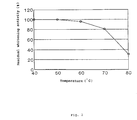
- FIG.2 shows a thermostability of the present melanin formation-inhibitory protein.
- the preparation of the melanin formation- inhibitory protein according to the present invention is attained by allowing an inducer to act on a human cell such as leukocytes, lymphocytes and established cell lines capable of producing the protein.
- a human cell such as leukocytes, lymphocytes and established cell lines capable of producing the protein.
- the established human cell lines satisfactorily usable in the invention are, for example, myelomonocytic cell lines such as HL-60 cells (ATCC CCL 240), U937 cells (ATCC CRL 1593) and HBL-38 cells as described in Japanese Journal of Cancer Research , Vol.79, pp.757-765 (1988); T-cells such as HPB-MLT (FERM BP-2430); and B-cells such as RAMOS cells (ATCC CRL 1596), all of which have a satisfactorily-high producibility of the present protein.
- myelomonocytic cell lines such as HL-60 cells (ATCC CCL 240), U937 cells (AT
- the methods to proliferate such a human cell usable in the invention are in vitro and i n vivo proliferations.
- the in vivo proliferation as described in Japanese Patent Publication No.54,158/81, wherein a cell needed to be proliferated is transplanted to a non-human warm-blooded animal, can be employed in the invention as an in vivo proliferation.
- By using the in vivo proliferation a large amount of cells is readily prepared so that it is advantageously useful for such a purpose.
- New born hamsters were injected with an antiserum, prepared from rabbits in conventional manner, to decrease their immunoreaction, subcutaneously transplanted with HPB-MLT cells (FERM BP-2430), and bred for 3 weeks in usual manner. Tumors subcutaneously formed in the hamsters were extracted, cut into pieces, dispersed and suspended in physiological saline. The resultant cells were washed with serum-free RPMI 1640 medium (pH 7.2), and resuspened in the same fresh medium to give a concentration of about 5x10⁶ cells/ml. The resultant cell suspension was added with one ⁇ g/ml of lipopolysaccharide of Escherichia coli , and incubated at 37° C for 48 hours to induce a melanin formation-inhibitory protein.
- the resultant culture was subjected to centrifugation to obtain a supernatant which was then concentrated with an ultrafilter membrane having a molecular weight cut-off 6,000-10,000.
- the resultant filtrate was dialyzed against 20mM Tris-HCl buffer (pH 7.4) for 16 hours, and subjected to "DEAE-5PW column", a column product commercialized by Tosoh Corporation, Tokyo, Japan, to adsorb thereon a melanin formation-inhibitory protein.
- the column was washed with the same fresh buffer, and the melanin formation-inhibitory protein adsorbed on the column was eluted therefrom with a gradient buffer while increasing the concentration of saline from OM to 0.5M.
- the resultant active fractions were pooled and dialyzed against 25mM BisTris buffer (pH 7.1) for 16 hours, and the resultant solution containing an active protein was allowed to adsorb on "Mono P column" commercialized by Pharmacia LKB Biotechnology Uppsala, Sweden, and eluted from the column with a gradient buffer while decreasing the pH from 7 to 5, followed by recovering fractions containing the active protein. About 2mg of a purified product was recovered from 100L of the above-mentioned supernatant.
- the physicochemical properties of the present melanin formation-inhibitory protein was studied with the purified product.
- the present melanin formation-inhibitory protein does not directly inhibit the melanin formation or tyrosinase activity, but inhibits a process after the translation of a gene coding tyrosinase into a protein.
- Acute toxicity of the melanin formation-inhibitory protein obtained in Experiment 1 was tested with 20-day old mice. As a result, it was revealed that the LD50 of the protein is 150,000 units/kg or higher when orally and intraperitoneally administered to mice, as well as being administered to mice by the application to their grained skins. As evident from the above experiment, the present melanin formation-inhibitory protein has a strong melanin formation-inhibitory activity, i.e a satisfactorily-high skin-whitening effect, as well as having a satisfactorily-high safeness in view of its effective dose.
- Skin-whitening agents containing the present melanin formation-inhibitory protein can be administered at a dose of 0.01-10,000 units/day/adult, based on the amount of the protein, on a dry solid basis (d.s.b.); preferably, 0.01-1,000 units/day/adult in systematic administrations such as intramuscular injections and the like; and 0.01-10,000 units/day/adult in oral administrations such as internal medicines, and percutaneous- and permucosal-administrations such as milky lotions and creams.
- the dose is suitably changed dependently on the administration route and/or patient's symptom.
- the melanin formation-inhibitory protein can be used alone and suitably used as a skin-whitening agent in combination with biologically active substances, nutrient agents, bases, fillers, excipients and the like, to meet to their final formulation such as pharmaceuticals and cosmetics, as well as to their actual use.
- a seed culture of HL-60 cells (ATCC CCL 240) was allowed to proliferate in a culture flask in conventional manner, and similarly as in Experiment 1 the proliferated cells were added with an inducer to form a melanin formation-inhibitory protein which was then purified and recovered. About 100 ⁇ g of a purified specimen was obtained from 10L of the culture supernatant. The melanin formation-inhibitory protein thus obtained has the same physicochemical properties as the protein in Experiment 1.
- the product can be used as a skin-whitening agent in pharmaceuticals such as injections, orally administrable agents, externally administrable agents, and bath salts, as well as in cosmetics such as milky lotions, packs and creams; and exerts a relatively-high effect in the prevention and/or treatment for local chromatosises such as chloasma, ephelis and sunburn, as well as systemic chromatosises such as addisonism.
- a seed culture of RAMOS cells (ATCC CRL 1596) was allowed to proliferate in hamsters similarly as in Experiment 1, and the proliferated cells were added with an inducer to form a melanin formation-inhibitory protein similarly as in Experiment 1, followed by purifying and recovering the resultant protein. About one mg of a purified protein was obtained from 50L of the culture supernatant. The melanin formation-inhibitory protein thus obtained has the same physicochemical properties as the melanin formation-inhibitory protein in Experiment 1.
- Example A-1 the product can be used as pharmaceuticals and cosmetics, and exerts a satisfactorily-high effect in the prevention and/or treatment for chromatosises.
- Examples B will illustrate skin-whitening agents containing the present melanin formation-inhibitory protein as an effective ingredient.
- the product can be advantageously used as a skin-whitening agent in the prevention and/or treatment for local chromatosises such as chloasma, ephelis and sunburn, as well as systemic chromatosises such as addisonism.
- a base in the form of a milky lotion prepared in usual manner, 1,000 units of a melanin formation-inhibitory protein prepared by the method in Experiment 1, and the resultant mixture was subjected to a homogenizer to obtain a milky lotion.
- the product can be advantageously used as a skin-whitening agent in the prevention and/or treatment for chromatosises such as chloasma, ephelis and sunburn.
- the present invention is to establish a preparation of a novel melanin formation-inhibitory protein which exerts a melanin formation-inhibitory activity without substantially inhibiting the enzymatic activity of tyrosinase, but inhibiting the synthesis of tyrosinase in pigment cells, and to establish a skin-whitening agent containing the protein as an effective ingredient.
- the present melanin formation-inhibitory protein exerts a relatively-strong melanin formation-inhibitory activity and skin-whitening effect so that it exerts a relatively-high skin-whitening effect when used as a skin-whitening agent in the prevention and/or treatment for local chromatosises such as chloasma, ephelis and sunburn in pharmaceuticals such as injections, orally administrable agents, externally administrable agents and bath salts, as well as in cosmetics such as milky lotions, packs and creams.
- local chromatosises such as chloasma, ephelis and sunburn
- pharmaceuticals such as injections, orally administrable agents, externally administrable agents and bath salts, as well as in cosmetics such as milky lotions, packs and creams.
- the present melanin formation-inhibitory protein has a satisfactorily-high safeness and is used without side effects in view of its effective dose, and this renders it industrially useful in the fields of pharmaceuticals and cosmetics.
Landscapes
- Health & Medical Sciences (AREA)
- Life Sciences & Earth Sciences (AREA)
- General Health & Medical Sciences (AREA)
- Chemical & Material Sciences (AREA)
- Veterinary Medicine (AREA)
- Public Health (AREA)
- Animal Behavior & Ethology (AREA)
- Organic Chemistry (AREA)
- Birds (AREA)
- Epidemiology (AREA)
- Zoology (AREA)
- Biochemistry (AREA)
- Dermatology (AREA)
- Gastroenterology & Hepatology (AREA)
- Biophysics (AREA)
- Genetics & Genomics (AREA)
- Medicinal Chemistry (AREA)
- Molecular Biology (AREA)
- Proteomics, Peptides & Aminoacids (AREA)
- Toxicology (AREA)
- Cosmetics (AREA)
- Medicines That Contain Protein Lipid Enzymes And Other Medicines (AREA)
- Peptides Or Proteins (AREA)
- Preparation Of Compounds By Using Micro-Organisms (AREA)
Applications Claiming Priority (2)
| Application Number | Priority Date | Filing Date | Title |
|---|---|---|---|
| JP264025/92 | 1992-08-21 | ||
| JP4264025A JPH0665297A (ja) | 1992-08-21 | 1992-08-21 | メラニン合成抑制蛋白質とその製造方法並びに用途 |
Publications (2)
| Publication Number | Publication Date |
|---|---|
| EP0586154A2 true EP0586154A2 (de) | 1994-03-09 |
| EP0586154A3 EP0586154A3 (de) | 1995-01-18 |
Family
ID=17397510
Family Applications (1)
| Application Number | Title | Priority Date | Filing Date |
|---|---|---|---|
| EP93306618A Withdrawn EP0586154A3 (de) | 1992-08-21 | 1993-08-20 | Die Melaninbildung hemmendes Protein, seine Herstellung und Anwendungen. |
Country Status (6)
| Country | Link |
|---|---|
| US (1) | US5331091A (de) |
| EP (1) | EP0586154A3 (de) |
| JP (1) | JPH0665297A (de) |
| KR (1) | KR940003968A (de) |
| CA (1) | CA2104043A1 (de) |
| TW (1) | TW267171B (de) |
Cited By (1)
| Publication number | Priority date | Publication date | Assignee | Title |
|---|---|---|---|---|
| WO1999012518A1 (en) * | 1997-09-09 | 1999-03-18 | Unilever Plc | Skin lightening composition |
Families Citing this family (5)
| Publication number | Priority date | Publication date | Assignee | Title |
|---|---|---|---|---|
| WO1994012534A2 (en) * | 1992-11-24 | 1994-06-09 | University Of Cincinnati | Melanogenic inhibitor, and methods of producing and using the same |
| FR2742658B1 (fr) * | 1995-12-22 | 1998-01-30 | Oreal | Utilisation de la procysteine comme agent depigmentant |
| JP2004535792A (ja) * | 2001-04-27 | 2004-12-02 | ザ ジェネラル ホスピタル コーポレーション | チロシナーゼアッセイ法 |
| US20080070982A1 (en) * | 2006-09-15 | 2008-03-20 | Graham Timmins | System and methods of melanoma prevention |
| CN118894928B (zh) * | 2024-07-11 | 2025-04-25 | 西安巨子生物基因技术股份有限公司 | I型重组胶原蛋白、其金属螯合物及美白化妆品 |
Family Cites Families (4)
| Publication number | Priority date | Publication date | Assignee | Title |
|---|---|---|---|---|
| GB2016015B (en) * | 1978-01-22 | 1982-05-06 | Hayashibara Co | Method of preparing interferon and preparations containing interferon |
| JPS5654158A (en) * | 1979-10-09 | 1981-05-14 | Hitachi Ltd | Control system for call waiting |
| JPH01174389A (ja) * | 1987-12-29 | 1989-07-10 | Hayashibara Biochem Lab Inc | メラニン生成抑制物質の製造方法とそれを含有する色白剤 |
| DE69017921T2 (de) * | 1990-01-23 | 1995-10-12 | Morinaga Milk Industry Co. Ltd., Tokio/Tokyo | Lactoferrinhydrolysat zur Verwendung als tyrosinagehemmendes Mittel. |
-
1992
- 1992-08-21 JP JP4264025A patent/JPH0665297A/ja active Pending
-
1993
- 1993-08-13 CA CA002104043A patent/CA2104043A1/en not_active Abandoned
- 1993-08-16 TW TW082106557A patent/TW267171B/zh active
- 1993-08-19 KR KR1019930016084A patent/KR940003968A/ko not_active Withdrawn
- 1993-08-20 US US08/109,249 patent/US5331091A/en not_active Expired - Fee Related
- 1993-08-20 EP EP93306618A patent/EP0586154A3/de not_active Withdrawn
Cited By (1)
| Publication number | Priority date | Publication date | Assignee | Title |
|---|---|---|---|---|
| WO1999012518A1 (en) * | 1997-09-09 | 1999-03-18 | Unilever Plc | Skin lightening composition |
Also Published As
| Publication number | Publication date |
|---|---|
| CA2104043A1 (en) | 1994-02-22 |
| US5331091A (en) | 1994-07-19 |
| TW267171B (de) | 1996-01-01 |
| EP0586154A3 (de) | 1995-01-18 |
| KR940003968A (ko) | 1994-03-14 |
| JPH0665297A (ja) | 1994-03-08 |
Similar Documents
| Publication | Publication Date | Title |
|---|---|---|
| US6645934B1 (en) | Peptide with radio protective effect | |
| Ando et al. | Tyrosinase gene transcription and its control by melanogenic inhibitors | |
| KR100347880B1 (ko) | 상어연골추출물,그의제조방법및용도 | |
| JPH08231370A (ja) | 皮膚化粧料 | |
| EP0215662A2 (de) | Antitumor-Proteasepräparate | |
| RU97114752A (ru) | Экстракты хрящей акулы, способ их получения и применения | |
| JP3249844B2 (ja) | 皮膚化粧料 | |
| US5565431A (en) | Cancer cell inhibitors and method | |
| EP0586154A2 (de) | Die Melaninbildung hemmendes Protein, seine Herstellung und Anwendungen | |
| US4307082A (en) | Method for the extraction of a factor that mediates contact inhibition of cell growth | |
| US5077059A (en) | Process for preparing melanogenic inhibitor, and pigmentation-lightening agent containing the same | |
| Jimbow et al. | Characterization of structural properties for morphological differentiation of melanosomes: I. Purification of tyrosinase by tyrosine affinity chromatography and its characterization in B16 and Harding Passey melanomas | |
| EP0200090B1 (de) | Gewebetumorwachstumsinhibitoren, Verfahren zur Herstellung und Verwendungen | |
| Nakasaki et al. | Purification and properties of alkaline phosphatase from the mucosa of rat small intestine | |
| CA1186255A (en) | Immobilized superoxide dismutase and its production | |
| ES2333000T3 (es) | Manganexo superoxido dismutasa humana modificada y sus usos. | |
| EP0246861A2 (de) | Verwendung von Zusammensetzungen auf Basis von Crotoxin, zur Herstellung von Medikamenten zur Behandlung von Carcinomen | |
| CN105963184A (zh) | 恢复lox和nrage蛋白质正常共同表达和相互作用的物质 | |
| JPH0881378A (ja) | ヒト表皮角化細胞賦活剤 | |
| Garcia-Borron et al. | Aggregation equilibria of tyrosinase of Harding-Passey mouse melanoma | |
| AU638681B2 (en) | Compound and method for the retardation of collagen cross-linking | |
| JP3815726B2 (ja) | 緩衝液からなるローヤルゼリーの鮮度保持剤 | |
| US3655875A (en) | Clam extract effective against sarcoma 180 and krebs-2 carcinoma in mice | |
| Earp et al. | Dimethyl sulfoxide increases EGF receptor tyrosine phosphorylation in human A431 cells and rat liver | |
| TWI664973B (zh) | 荷葉萃取物用於治療色素沉積綜合症之用途 |
Legal Events
| Date | Code | Title | Description |
|---|---|---|---|
| PUAI | Public reference made under article 153(3) epc to a published international application that has entered the european phase |
Free format text: ORIGINAL CODE: 0009012 |
|
| AK | Designated contracting states |
Kind code of ref document: A2 Designated state(s): DE FR GB |
|
| PUAL | Search report despatched |
Free format text: ORIGINAL CODE: 0009013 |
|
| AK | Designated contracting states |
Kind code of ref document: A3 Designated state(s): DE FR GB |
|
| 17P | Request for examination filed |
Effective date: 19950420 |
|
| STAA | Information on the status of an ep patent application or granted ep patent |
Free format text: STATUS: THE APPLICATION HAS BEEN WITHDRAWN |
|
| 18W | Application withdrawn |
Withdrawal date: 19980629 |