EP0531187A1 - Promoteur de levure et son utilisation - Google Patents
Promoteur de levure et son utilisation Download PDFInfo
- Publication number
- EP0531187A1 EP0531187A1 EP92402301A EP92402301A EP0531187A1 EP 0531187 A1 EP0531187 A1 EP 0531187A1 EP 92402301 A EP92402301 A EP 92402301A EP 92402301 A EP92402301 A EP 92402301A EP 0531187 A1 EP0531187 A1 EP 0531187A1
- Authority
- EP
- European Patent Office
- Prior art keywords
- promoter
- recombinant
- fragment
- plasmid
- gene
- Prior art date
- Legal status (The legal status is an assumption and is not a legal conclusion. Google has not performed a legal analysis and makes no representation as to the accuracy of the status listed.)
- Ceased
Links
- 0 C1CC=*CC1 Chemical compound C1CC=*CC1 0.000 description 2
Images






Classifications
-
- C—CHEMISTRY; METALLURGY
- C12—BIOCHEMISTRY; BEER; SPIRITS; WINE; VINEGAR; MICROBIOLOGY; ENZYMOLOGY; MUTATION OR GENETIC ENGINEERING
- C12Y—ENZYMES
- C12Y302/00—Hydrolases acting on glycosyl compounds, i.e. glycosylases (3.2)
- C12Y302/01—Glycosidases, i.e. enzymes hydrolysing O- and S-glycosyl compounds (3.2.1)
- C12Y302/01031—Beta-glucuronidase (3.2.1.31)
-
- C—CHEMISTRY; METALLURGY
- C07—ORGANIC CHEMISTRY
- C07K—PEPTIDES
- C07K14/00—Peptides having more than 20 amino acids; Gastrins; Somatostatins; Melanotropins; Derivatives thereof
- C07K14/435—Peptides having more than 20 amino acids; Gastrins; Somatostatins; Melanotropins; Derivatives thereof from animals; from humans
- C07K14/76—Albumins
- C07K14/765—Serum albumin, e.g. HSA
-
- C—CHEMISTRY; METALLURGY
- C12—BIOCHEMISTRY; BEER; SPIRITS; WINE; VINEGAR; MICROBIOLOGY; ENZYMOLOGY; MUTATION OR GENETIC ENGINEERING
- C12N—MICROORGANISMS OR ENZYMES; COMPOSITIONS THEREOF; PROPAGATING, PRESERVING, OR MAINTAINING MICROORGANISMS; MUTATION OR GENETIC ENGINEERING; CULTURE MEDIA
- C12N15/00—Mutation or genetic engineering; DNA or RNA concerning genetic engineering, vectors, e.g. plasmids, or their isolation, preparation or purification; Use of hosts therefor
- C12N15/09—Recombinant DNA-technology
- C12N15/63—Introduction of foreign genetic material using vectors; Vectors; Use of hosts therefor; Regulation of expression
- C12N15/79—Vectors or expression systems specially adapted for eukaryotic hosts
- C12N15/80—Vectors or expression systems specially adapted for eukaryotic hosts for fungi
- C12N15/81—Vectors or expression systems specially adapted for eukaryotic hosts for fungi for yeasts
- C12N15/815—Vectors or expression systems specially adapted for eukaryotic hosts for fungi for yeasts for yeasts other than Saccharomyces
-
- C—CHEMISTRY; METALLURGY
- C12—BIOCHEMISTRY; BEER; SPIRITS; WINE; VINEGAR; MICROBIOLOGY; ENZYMOLOGY; MUTATION OR GENETIC ENGINEERING
- C12N—MICROORGANISMS OR ENZYMES; COMPOSITIONS THEREOF; PROPAGATING, PRESERVING, OR MAINTAINING MICROORGANISMS; MUTATION OR GENETIC ENGINEERING; CULTURE MEDIA
- C12N9/00—Enzymes; Proenzymes; Compositions thereof; Processes for preparing, activating, inhibiting, separating or purifying enzymes
- C12N9/10—Transferases (2.)
- C12N9/12—Transferases (2.) transferring phosphorus containing groups, e.g. kinases (2.7)
-
- C—CHEMISTRY; METALLURGY
- C12—BIOCHEMISTRY; BEER; SPIRITS; WINE; VINEGAR; MICROBIOLOGY; ENZYMOLOGY; MUTATION OR GENETIC ENGINEERING
- C12N—MICROORGANISMS OR ENZYMES; COMPOSITIONS THEREOF; PROPAGATING, PRESERVING, OR MAINTAINING MICROORGANISMS; MUTATION OR GENETIC ENGINEERING; CULTURE MEDIA
- C12N9/00—Enzymes; Proenzymes; Compositions thereof; Processes for preparing, activating, inhibiting, separating or purifying enzymes
- C12N9/14—Hydrolases (3)
- C12N9/24—Hydrolases (3) acting on glycosyl compounds (3.2)
- C12N9/2402—Hydrolases (3) acting on glycosyl compounds (3.2) hydrolysing O- and S- glycosyl compounds (3.2.1)
- C12N9/2405—Glucanases
- C12N9/2434—Glucanases acting on beta-1,4-glucosidic bonds
Definitions
- the present invention relates to the field of molecular biology. More particularly, it relates to a new DNA sequence exhibiting transcriptional promoter activity, expression vectors containing this sequence, and its use for the production of recombinant proteins, and for example heterologous proteins. The invention also relates to the recombinant cells containing this DNA sequence.
- This situation can cause various drawbacks, and in particular limit the activity of the promoter because of the absence of certain elements of the transcriptional machinery (for example of trans-activators), present a certain toxicity for the host cell due to an absence of regulation, or affect the stability of the vector.
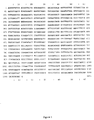
- the Applicant has now identified, cloned and sequenced a region of the Kluyveromyces lactis genome exhibiting transcriptional promoter activity (see FIG. 1). More specifically, this region corresponds to the promoter of the ADH4 gene of K. lactis (K1 ADH4 ) coding for alcohol dehydrogenase IV. This region, or derivatives or fragments thereof, can be used very efficiently for the production of recombinant proteins in yeasts of the genus Kluyveromyces . It is understood that this sequence can also be used in other host organisms.
- promoter activity obtained lies in its regulable nature. Therefore, according to the conditions of use (medium, strain), it is possible to control the activity of the promoter, and therefore to trigger or repress the expression of a recombinant gene.
- Another advantage of the promoter region obtained lies in the absence of glucose repression. This result is surprising since it is the first example of a promoter derived from an ADH gene induced by ethanol and not repressed by glucose. Indeed, in the case of S.cerevisiae . the ADH2 gene is expressed on different non-fermentable carbon sources (glycerol, ethanol, lactate, pyruvate), but, unlike Kl ADH4 , the expression of this gene is very strongly repressed when glucose is added to the medium (Denis et al ., J. Mol. Biol. 148 (1981) 355).
- alcA gene which codes for an alcohol dehydrogenase I in Aspergillus nidulans is induced by ethanol, but sensitive to repression by glucose (Falenbok, J. Biotechnol. 17 (1991) 11).
- An object of the present invention therefore resides in a DNA sequence comprising all or part of the sequence presented in FIG. 1 or of its complementary strand, or of a derivative thereof, and having a transcriptional promoter activity.
- the term “derivative” is intended to mean any sequence obtained from the sequence given in FIG. 1 by structural modifications (mutations, deletions, substitutions, additions, fragmentations, etc.) retaining promoter activity.
- the mutations can relate to one or more nucleotides, and the additions and / or substitutions can relate to regulatory elements, or activating regions such as "UAS”.
- a derivative When a derivative is produced, its activity as a transcriptional promoter can be demonstrated in several ways, and in particular by placing under the control of the sequence studied, a resistance gene or a complementation marker. Any other technique known to those skilled in the art of pot can obviously be used for this purpose.
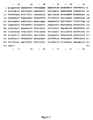
- a promoter comprising the SacI-BamHI fragment of approximately 500 bp whose sequence is shown in FIG. 2 or a SalI-HindIII fragment of approximately 700 bp whose sequence is presented in FIG. 3, or the BglII-SacI fragment of approximately 700 bp corresponding to the fragment between nucleotides 1 and 723 of the strand complementary to the sequence presented in FIG. 1.
- the sequence presented in FIG. 1 was obtained from a BamHI fragment of approximately 8 kb, obtained by screening a library of total genomic DNA from Kluyveromyces lactis using a heterologous probe originating from the structural gene ADH2 from S.cerevisiae.
- the Applicant has indeed shown that it is possible to clone a promoter region in Kluyveromyces , by hybridization from heterologous probes corresponding to a gene from S. cerevisiae . Details of the cloning of the sequence are given in the examples.
- the derivatives according to the invention can then be prepared from these sequences, as indicated in the examples.
- Another subject of the invention relates to a recombinant DNA comprising a DNA sequence as defined above.
- This recombinant DNA can contain, for example, the promoter sequence presented in FIG. 1 or a derivative thereof, in which a restriction site is inserted, facilitating the use of this sequence as a "portable" promoter.
- this recombinant DNA also contains one or more structural genes.
- they may be genes coding for proteins of pharmaceutical or agrifood interest.
- enzymes such as in particular superoxide dismutase, catalase, amylases, lipases, amidases, chymosin etc.
- lymphokines such as interleukins, interferons, colony stimulating factors [G-CSF, GM-CSF, M-CSF ...], TNF, TRF etc.
- growth factors such as growth hormone, erythropoietin, FGF, EGF, PDGF, TGF etc.
- apolipoproteins antigenic polypeptides for carrying out vaccines (hepatitis, cytomegalovirus, Eppstein-Barr, herpes etc.) .
- fusions of polypeptides such as in particular fusions comprising an active part fused with a stabilizing part (for example fusions between albumin or albumin fragments and the receptor or part of a virus receptor [CD4, etc.]).
- the recombinant DNA also contains signals allowing the secretion of the expression product of the said structural gene (s).
- signals may correspond to the natural secretion signals of the protein in question, but they may also be of a different origin.
- secretion signals derived from yeast genes can be used, such as those of the killer toxin (Stark and Boyd, EMBO J. 5 (1986) 1995) or the alpha pheromone (Kurjan and Herskowitz, Cell 30) genes. (1982) 933; Brake et al., Yeast 4 (1988) S436).
- the recombinant DNA is part of an expression plasmid, which can be autonomously replicating or integrative.
- autonomously replicating vectors can be obtained using autonomous replicating sequences in the chosen host.
- these may be origins of replication derived from plasmids (pKD1, 2 ⁇ , etc.), or else chromosomal sequences (ARS).
- Integrative vectors can be obtained in particular by using sequences homologous to certain regions of the host genome, allowing, by homologous recombination, the integration of the vector.
- Another subject of the invention relates to recombinant cells containing a DNA sequence as defined above.
- the cells are chosen from yeasts, and even more preferably from yeasts of the genus Kluyveromyces. It is understood, however, that the invention covers all the recombinant cells in which the promoter regions of the invention are active.
- These cells can be obtained by any method which makes it possible to introduce foreign DNA into a cell. It may especially be transformation, electroporation, or any other technique known to those skilled in the art.
- Another object of the invention known the use of a sequence as defined above for the expression of recombinant genes.
- DNA sequences according to the invention indeed allow production at high levels of recombinant proteins.
- the bidirectional promoter activity of the sequences of the invention allows a particularly advantageous use.
- the invention relates to the use of a sequence as defined above for the simultaneous expression of two recombinant genes inserted on either side of the promoter, in the two opposite orientations.
- sequences of the invention can be used for the expression of genes coding for proteins of pharmaceutical or agrifood interest.
- proteins of pharmaceutical or agrifood interest By way of example, mention may be made of the proteins listed above.
- the present invention also makes it possible to carry out a method for producing recombinant proteins, according to which a recombinant cell as defined above is cultivated and the protein produced is recovered.
- a recombinant cell as defined above is cultivated and the protein produced is recovered.
- a protein mention may be made of the proteins listed above.
- the method of the invention is applicable to the production of human serum albumin, or one of its molecular variants.
- molecular variant of albumin is understood to mean the natural variants resulting from the polymorphism of albumin, truncated forms, or any hybrid protein based on albumin.
- Mutagenesis directed in vitro by oligodeoxynucleotides is carried out according to the method developed by Taylor et al. (Nucleic Acids Res. 13 (1985) 8749-8764) using the kit distributed by Amersham.
- the nucleotide sequencing is carried out according to the dideoxy technique described by Sanger et al. (Proc. Natl. Acad. Sci. USA, 74 (1977) 5463-5467).
- the enzymatic amplification of specific DNA fragments is carried out by PCR reaction ("Polymerase-catalyzed Chain reaction") under the conditions described by Mullis and Faloona (Meth. Enzym., 155 (1987) 335-350) and Saiki and al (Science 230 (1985) 1350-1354), using a "DNA thermal cycler" (Perkin Elmer Cetus) following the manufacturer's recommendations.
- the sequence presented in FIG. 1 was obtained by screening a library of total genomic DNA from Kluyveromyces lactis CBS2359 / 152 using a heterologous probe originating from the ADH2 gene of S. cerevisiae . More specifically, the library was obtained by cloning at the BamHI site of the replacement vector Lambda-L47 of the product of a partial digestion with the enzyme Sau3A of the DNA of K. lactis CBS2359 / 152.
- the probe used for the hybridization is an EcoRV-BamHI fragment of 980 bp comprising the coding region of the structural gene ADH2 from S. cerevisiae , with the exception of the first 70 bp (probe A).
- This fragment is obtained by enzymatic digestion from a plasmid named pBR322.ADR2.BSa (Williamson et al., Cell 23 (1981) 605-614; Russell et al., J. Biol.Chem., 258 (1983) 2674-2682).
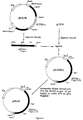
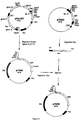
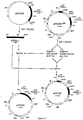
- the plasmid p6-4-98 was digested with the enzyme HindIII and a 2.2 kb fragment was isolated. This fragment was then purified by standard techniques and subcloned to the HindIII site of the plasmid pTZ19 to generate the plasmid p6-2200-2 ( Figure 4). Analysis of the subcloned fragment reveals that it contains the first 14 codons of the Kl ADH4 gene and the region located upstream thereof, comprising the elements for regulating expression.
- a portable promoter was prepared by insertion on the HindIII fragment of 2.2 kb present on the plasmid p6-2200-2 of a BamHI restriction site in position - 16 relative to the ATG codon of the Kl ADH4 gene.
- the BamHI site was introduced at position -16 relative to the translation initiation site (ATG) of the Kl ADH4 gene by site-directed mutagenesis using the double primer technique (Sambrook, Fritsch, Maniatis, Molecular Cloning Laboratory Manual, Cold Spring Harbor Lab Press, 1989).
- the sequence of the synthetic oligodeoxynucleotides used for this mutagenesis is given below.
- the BamHI site generated is underlined, the ATG is indicated in italics and the asterisks denote the bases modified with respect to the initial sequence.
- SI Initial sequence
- SM Sequence modified.
- pP4-33 The plasmid thus obtained is called pP4-33 (FIG. 4).
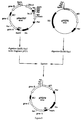
- the DNA of the plasmid pP4-33 was digested with BglII and BamHI to generate the 1.2 kb fragment containing the promoter K1 ADH4 .
- This fragment was then introduced into the BamHI site of the plasmid pSK-Kan401, upstream of the reporter gene aph coding for aminoglycoside-3′-phosphotransferase (I) (Oka et al., J. Mol. Biol. 147 (1981) 217) lacking its own promoter, which, when expressed, gives yeast resistance to geneticin (G418) (Jimenez and Davies, ref).
- the plasmid pP4R-Kan was digested with EcoRI and BamHI. Furthermore, from the plasmid pBI221, the ⁇ -glucuronidase gene from E. coli was isolated in the form of a 2.1 kb BamHI-EcoRI fragment. The latter was then introduced by ligation into the linearized plasmid pP4R-Kan as indicated to generate the plasmid pP4-GUS (see FIG. 6).
- a control plasmid was prepared by insertion of the 2.1 kb BamHI-EcoRI fragment from the plasmid pBI221 carrying the GUS gene in the plasmid pSK-Kan401 previously digested with BamHI and EcoRI.
- the plasmid thus obtained is called pSK-GUS (FIG. 6).
- This construction differs from the plasmid pP4-GUS only by the absence of the promoter Kl ADH4 of 1.2 kb.
- This plasmid differs from pYG404 only in the destruction of the HindIII site, located in the aph gene, by site-directed mutagenesis. This modification then made it possible to substitute the LAC4 promoter present in the plasmid pYG404 ⁇ H in the form of a SalI-HindIII fragment with different variants of the K1 ADH4 promoter also constructed as portable promoters in the form of SalI-HindIII fragments.
- pYG72 (FIG. 9).
- This vector corresponds to the plasmid pKan707 (EP 361 991) in which the SacI fragment containing the URA3 gene has been eliminated as well as the unique HindIII site present in the aph gene.
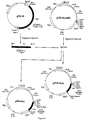
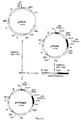
- the 1.3 kb PstI fragment carrying the aph gene was subcloned from the plasmid pKan707 into the bacteriophage M13mp7 to give the vector pYG64 (FIG. 7).
- the HindIII site was destroyed by site-directed mutagenesis (see general cloning techniques) using the following oligodeoxynucleotide: 5′-GAA ATG CAT AAG CT C TTG CCA TTC TCA CCG-3 ′, allowing the replacement of the triplet CTT coding for leucine 185 by the CTC triplet. This change does not alter the resulting protein sequence.
- the plasmid obtained was called pYG65 ( Figure 7).
- To construct the plasmid pYG72 the part containing the bacterial replicon of the vector pKan707 was isolated by digestion with the enzyme EcoRI and recircularization with the T4 DNA ligase, generating the intermediate plasmid pYG69.
- the vector pYG404 ⁇ H was obtained by inserting the expression cassette originating from the plasmid pYG404 (EP 361 991) in the form of a SalI-SacI fragment at the corresponding sites of pYG72 (FIG. 10).
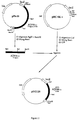
- the promoter K1 ADH4 carried on the BglII-BamHI fragment originating from the plasmid pP4-33 was modified in the following manner to adapt it for use in expression vectors derived from the plasmid pYG404 ⁇ H: After digestion of the plasmid pP4-33 with the enzymes BglII and BamHI followed by a nuclease treatment 'Mung Bean' to make the ends blunt, the 1.2 kb fragment carrying the promoter Kl ADH4 was isolated from an agarose gel and subcloned into the vector pBC SK + (Stratagene, La Jolla, CA, USA) previously linearized with the enzyme ClaI and treated with the nuclease 'Mung Bean' as well as with alkaline phosphatase of calf ( CIP). The plasmid obtained in this way (pYG128, FIG. 11) allows the isolation of the promoter K1 ADH4 in the form of a
- the plasmids pP4-Kan and pP4R-Kan (Example 3.1.) Were used to prepare constructs containing reduced forms of the promoter. For this, the plasmids pP4-Kan and pP4R-Kan were digested with the enzyme SacI and then religated, according to the diagram described in FIG. 13.
- the MW98-8C strain has a Rag2 ⁇ phenotype due to a mutation ( rag2 ) in the gene coding for phosphoglucose isomerase ( PGI ), which makes it incapable of producing ethanol on a glucose medium.
- the 2359/152 strain is Rag2+.
- the activity of the ADH4 promoter was determined under different culture conditions, by demonstrating the ADH IV activity using the technique described by Lutstorf and Megnet (Archiv. Biochem. Biophys. 126 (1968) 933). The results obtained are collated in Table 3.
- the activity of the promoter K1 ADH4 is specifically induced by ethanol and not depressed in the absence of glucose.
- the promoter K1 ADH4 is not repressed by glucose (table 3).
- the inducing ethanol can either be added to the culture medium or can be produced intracellularly by fermentation of a carbon source such as glucose or fructose (Table 3).
- the promoter Kl ADH4 is inactive in a medium containing glucose as the only carbon source in strains such as MW98-8C ( rag2 ) whose gene coding for phosphoglucose isomerase is defective.
- the activation of the promoter K1 ADH4 is carried out by the addition of ethanol to the culture medium.
- the different strains of Kluyveromyces used were transformed by treating the whole cells in the presence of lithium acetate and of polyethylene glycol, according to the technique described by Ito et al. (J. Bacteriol. 153 (1983) 163-168).
- the transformation technique described by Durrens et al. (Curr.Genet. 18 (1990) 7) using ethylene glycol and dimethyl sulfoxide was also used. It is also possible to transform the yeasts by electroporation, for example according to the method described by Karube et al. (FEBS Letters 182 (1985) 90).
- the expression plasmids pP4-Kan and pP4R-Kan (Example 3.1) as well as the cloning plasmid pSK-Kan401 (control) were used to transform the yeast K. lactis MW98-8C.
- the cells transformed with pP4-Kan and pP4R-Kan have resistance to G418 in YPD medium (yeast extract 10 g / l; peptone 20 g / l; glucose 20 g / l) containing 2% ethanol and doses of geneticin ranging from 200 to 400 ⁇ g / ml, while the cells transformed by the plasmid pSK-Kan401 are sensitive to geneticin.
- the plasmids pP4-15Kan and pP4-60Kan confer, after transformation, resistance to geneticin to strain MW98-8C cultivated in a YPD medium containing 2% ethanol and doses of geneticin greater than 200 ⁇ g / ml.
- the plasmids pP4-GUS and pSK-GUS were used to transform the K. lactis MW98-8C strain ( ura3 lysA argA ) by selecting the recombinant cells for their prototrophy vis-à-vis uracil on a synthetic medium SD ('yeast nitrogen base w / o amino acids' 0.67%, glucose 2%) supplemented with arginine (20 mg / l) and lysine (30 mg / l).
- the recombinant cells were cultured in 10 ml of YPD until the stationary phase. The cells were then broken using glass beads in Eppendorf tubes, centrifuged, and the supernatants analyzed by electrophoresis on minigel (5% acrylamide) under non-denaturing conditions. The gels and buffers used have been described by Williamson et al. (Nature 283 (1980) 214-216).
- the ⁇ -glucuronidase activity is demonstrated by soaking the gels in a coloring solution containing 50 mM Na2HPO4, pH 7.0 and 50 ⁇ g / ml of bromo-5-chloro-4-indoyl-3 glucuronide (X-Glu) in 5 mg / ml of dimethylformamide (Jefferson RA, Plant. mol. Biol. Report 5 (1987) 387-405).
- X-Glu bromo-5-chloro-4-indoyl-3 glucuronide
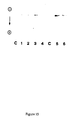
- the results obtained are presented in FIG. 15.
- the gel represented clearly shows a band in lines 1 to 6, corresponding to cells MW98-8C transformed by the plasmid pP4-GUS, and no signal in lines C corresponding to cells MW98- 8C transformed by the plasmid pSK-GUS, which does not contain a promoter region of the invention.
- cells transformed with the plasmids pP4-GUS and pSK-GUS were also cultured on a YPD medium supplemented with geneticin (200 mg / l).
- the transformants containing pP4-GUS have acquired resistance against this antibiotic while the control strain containing pSK-GUS remains sensitive.
- the expression plasmid pYG132 was used to transform the yeast strains K. lactis MW98-8C (Rag2 ⁇ , unable to produce ethanol from glucose) and CBS 293.91 (Rag2+, metabolizing glucose to produce ethanol).
- YPD medium supplemented with geneticin (200 mg / l)
- the transformants were precultured for approximately 20 hours in Erlenmeyer flasks in M9EL10 medium (M9 medium [Maniatis et al., Cited above] supplemented with 10 g / l yeast extract) in the presence of glucose (20 g / l) at 28 ° C with stirring.
- This preculture was then used to inoculate, at a dilution of 10 ⁇ 3, 300 ml Erlenmeyer flasks containing 50 ml of M9EL10 medium in the presence of different carbon sources (either glucose alone [20 g / l] or glucose [20 g / l] plus ethanol [20 g / l], either glycerol alone [20 g / l], or glycerol [20 g / l] plus ethanol [20 g / l]).
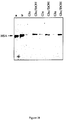
- FIG. 16 shows the result obtained with the strain MW98-8C / pYG132 for which a high level of albumin secretion is observed when the cells have been cultured in the presence of ethanol added to the culture medium.
- HSA is not detected in the supernatant when the cells have been cultured in the presence of glucose or glycerol.
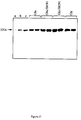
- the transformants CBS293.91 / pYG132 are capable of producing HSA under all the culture conditions mentioned above (FIG. 17).
- albumin production is 2 to 3 times higher in a culture containing ethanol added to the medium compared to a culture where ethanol is the product of cell metabolism.
- the expression plasmid pYG130 was used to transform the strain K. lactis CBS 293.91 (Rag2+). After selection of the recombinant cells on YPD medium supplemented with geneticin (200 mg / l), the transformants were precultured and cultured as described in the previous example. Albumin secretion was evaluated by electrophoresis of samples of culture supernatants as described in 7.2.1. The result obtained with the truncated derivative of the promoter K1 ADH4 is shown in FIG. 18: the host / vector couple CBS293.91 / pYG130 is clearly capable of producing and secreting recombinant albumin.
- K. lactis 2359/152 strain was deposited on June 4, 1991 with the Centraalbureau voor Schimmelkulturen (CBS) in Baarn in the Netherlands under the conditions of the Budapest Treaty, under number CBS 289.91.
- the K. lactis CBS 293.91 strain corresponds to the CBS1065 strain redeposited on June 11, 1991 according to the conditions of the Budapest Treaty.
Landscapes
- Life Sciences & Earth Sciences (AREA)
- Health & Medical Sciences (AREA)
- Chemical & Material Sciences (AREA)
- Genetics & Genomics (AREA)
- Organic Chemistry (AREA)
- Zoology (AREA)
- Engineering & Computer Science (AREA)
- Wood Science & Technology (AREA)
- Bioinformatics & Cheminformatics (AREA)
- General Health & Medical Sciences (AREA)
- Biochemistry (AREA)
- General Engineering & Computer Science (AREA)
- Molecular Biology (AREA)
- Biomedical Technology (AREA)
- Biotechnology (AREA)
- Medicinal Chemistry (AREA)
- Microbiology (AREA)
- Biophysics (AREA)
- Mycology (AREA)
- Physics & Mathematics (AREA)
- Plant Pathology (AREA)
- Proteomics, Peptides & Aminoacids (AREA)
- Gastroenterology & Hepatology (AREA)
- Toxicology (AREA)
- Micro-Organisms Or Cultivation Processes Thereof (AREA)
- Preparation Of Compounds By Using Micro-Organisms (AREA)
- Pharmaceuticals Containing Other Organic And Inorganic Compounds (AREA)
- Medicines Containing Material From Animals Or Micro-Organisms (AREA)
Applications Claiming Priority (2)
| Application Number | Priority Date | Filing Date | Title |
|---|---|---|---|
| FR9110476 | 1991-08-21 | ||
| FR9110476A FR2680518A1 (fr) | 1991-08-21 | 1991-08-21 | Promoteur de levure et son utilisation. |
Publications (1)
| Publication Number | Publication Date |
|---|---|
| EP0531187A1 true EP0531187A1 (fr) | 1993-03-10 |
Family
ID=9416307
Family Applications (2)
| Application Number | Title | Priority Date | Filing Date |
|---|---|---|---|
| EP92402301A Ceased EP0531187A1 (fr) | 1991-08-21 | 1992-08-19 | Promoteur de levure et son utilisation |
| EP92918265A Expired - Lifetime EP0599971B1 (fr) | 1991-08-21 | 1992-08-19 | Promoteur de levure et son utilisation |
Family Applications After (1)
| Application Number | Title | Priority Date | Filing Date |
|---|---|---|---|
| EP92918265A Expired - Lifetime EP0599971B1 (fr) | 1991-08-21 | 1992-08-19 | Promoteur de levure et son utilisation |
Country Status (13)
| Country | Link |
|---|---|
| US (1) | US5627046A (enExample) |
| EP (2) | EP0531187A1 (enExample) |
| JP (1) | JPH07500008A (enExample) |
| AT (1) | ATE239087T1 (enExample) |
| AU (1) | AU2489392A (enExample) |
| CA (1) | CA2113925A1 (enExample) |
| DE (1) | DE69233031T2 (enExample) |
| DK (1) | DK0599971T3 (enExample) |
| ES (1) | ES2199217T3 (enExample) |
| FR (1) | FR2680518A1 (enExample) |
| NZ (1) | NZ244018A (enExample) |
| PT (1) | PT599971E (enExample) |
| WO (1) | WO1993004176A1 (enExample) |
Cited By (1)
| Publication number | Priority date | Publication date | Assignee | Title |
|---|---|---|---|---|
| US6265186B1 (en) | 1997-04-11 | 2001-07-24 | Dsm N.V. | Yeast cells comprising at least two copies of a desired gene integrated into the chromosomal genome at more than one non-ribosomal RNA encoding domain, particularly with Kluyveromyces |
Families Citing this family (14)
| Publication number | Priority date | Publication date | Assignee | Title |
|---|---|---|---|---|
| FR2706485B1 (fr) * | 1993-06-15 | 1995-09-01 | Rhone Poulenc Rorer Sa | Promoteur de levure et son utilisation. |
| US6630324B1 (en) * | 1999-07-29 | 2003-10-07 | Baylor College Of Medicine | Aldehyde reductase bidirectional promoter and its use |
| US6388170B1 (en) | 2000-04-07 | 2002-05-14 | University Of Kentucky Research Foundation | Bidirectional promoters and methods related thereto |
| WO2002064804A2 (en) * | 2001-02-13 | 2002-08-22 | University Of Florida | A bi-directional dual promoter complex with enhanced promoter activity for transgene expression in eukaryotes |
| US6596513B2 (en) * | 2001-07-24 | 2003-07-22 | University Of Victoria Innovation And Development Corporation | Kluyveromyces lactis maltase/maltose permease bi-directional promoter and use thereof |
| AU2005282380A1 (en) * | 2004-09-07 | 2006-03-16 | Archemix Corp. | Aptamer medicinal chemistry |
| US7566701B2 (en) * | 2004-09-07 | 2009-07-28 | Archemix Corp. | Aptamers to von Willebrand Factor and their use as thrombotic disease therapeutics |
| AU2005287273B2 (en) | 2004-09-07 | 2011-05-12 | Archemix Corp. | Aptamers to von Willebrand Factor and their use as thrombotic disease therapeutics |
| US20090203766A1 (en) * | 2007-06-01 | 2009-08-13 | Archemix Corp. | vWF aptamer formulations and methods for use |
| DE102007038037A1 (de) | 2007-08-10 | 2009-02-19 | Leibniz-Institut für Pflanzengenetik und Kulturpflanzenforschung | Eurkaryotische Promotoren zur Genexpression |
| US12629445B2 (en) | 2020-03-20 | 2026-05-19 | Bard Peripheral Vascular, Inc. | Reactive hydrogel forming formulations and related methods, including methods of preparation |
| US12161777B2 (en) | 2020-07-02 | 2024-12-10 | Davol Inc. | Flowable hemostatic suspension |
| US11739166B2 (en) | 2020-07-02 | 2023-08-29 | Davol Inc. | Reactive polysaccharide-based hemostatic agent |
| EP4267210A1 (en) | 2020-12-28 | 2023-11-01 | Davol Inc. | Reactive dry powdered hemostatic materials comprising a protein and a multifunctionalized modified polyethylene glycol based crosslinking agent |
Citations (1)
| Publication number | Priority date | Publication date | Assignee | Title |
|---|---|---|---|---|
| FR2635115A1 (fr) * | 1988-08-05 | 1990-02-09 | Rhone Poulenc Sante | Procede de preparation de la serum albumine humaine a partir d'une levure |
Family Cites Families (3)
| Publication number | Priority date | Publication date | Assignee | Title |
|---|---|---|---|---|
| BR8307525A (pt) * | 1982-05-19 | 1984-08-21 | Unilever Nv | Expressao de proteinas semelhantes a pretrotaumatina em leveduras kluyveromyces |
| FR2579223B1 (fr) * | 1985-03-25 | 1988-12-09 | Genetica | Procede de preparation microbiologique de la serum-albumine humaine |
| US5017478A (en) * | 1987-07-16 | 1991-05-21 | Berlex Laboratories, Inc. | Transfected cells containing plasmids having genes oriented in opposing directions and methods of using |
-
1991
- 1991-08-21 FR FR9110476A patent/FR2680518A1/fr active Granted
-
1992
- 1992-08-19 EP EP92402301A patent/EP0531187A1/fr not_active Ceased
- 1992-08-19 PT PT92918265T patent/PT599971E/pt unknown
- 1992-08-19 AU AU24893/92A patent/AU2489392A/en not_active Abandoned
- 1992-08-19 ES ES92918265T patent/ES2199217T3/es not_active Expired - Lifetime
- 1992-08-19 DK DK92918265T patent/DK0599971T3/da active
- 1992-08-19 JP JP5504150A patent/JPH07500008A/ja active Pending
- 1992-08-19 US US08/196,178 patent/US5627046A/en not_active Expired - Lifetime
- 1992-08-19 WO PCT/FR1992/000803 patent/WO1993004176A1/fr not_active Ceased
- 1992-08-19 EP EP92918265A patent/EP0599971B1/fr not_active Expired - Lifetime
- 1992-08-19 NZ NZ244018A patent/NZ244018A/en unknown
- 1992-08-19 CA CA002113925A patent/CA2113925A1/fr not_active Abandoned
- 1992-08-19 AT AT92918265T patent/ATE239087T1/de active
- 1992-08-19 DE DE69233031T patent/DE69233031T2/de not_active Expired - Lifetime
Patent Citations (1)
| Publication number | Priority date | Publication date | Assignee | Title |
|---|---|---|---|---|
| FR2635115A1 (fr) * | 1988-08-05 | 1990-02-09 | Rhone Poulenc Sante | Procede de preparation de la serum albumine humaine a partir d'une levure |
Non-Patent Citations (2)
| Title |
|---|
| BIOTECHNOLOGY vol. 8, no. 2, Février 1990, NEW YORK US pages 135 - 139 J.A. VAN DEN BERG ET AL. 'Kluyveromyces as a host for heterologous gene expression: expression and secretion of prochymosin' * |
| YEAST vol. 7, no. 4, Juin 1991, CHICESTER, UK pages 391 - 400 M. SALIOLA ET AL. 'Two genes encoding putative mitochondrila alcohol dehydrogenases are present in the yeast Kluyveromyces lactis' * |
Cited By (1)
| Publication number | Priority date | Publication date | Assignee | Title |
|---|---|---|---|---|
| US6265186B1 (en) | 1997-04-11 | 2001-07-24 | Dsm N.V. | Yeast cells comprising at least two copies of a desired gene integrated into the chromosomal genome at more than one non-ribosomal RNA encoding domain, particularly with Kluyveromyces |
Also Published As
| Publication number | Publication date |
|---|---|
| EP0599971A1 (fr) | 1994-06-08 |
| US5627046A (en) | 1997-05-06 |
| DE69233031D1 (de) | 2003-06-05 |
| CA2113925A1 (fr) | 1993-03-04 |
| PT599971E (pt) | 2003-09-30 |
| AU2489392A (en) | 1993-03-16 |
| JPH07500008A (ja) | 1995-01-05 |
| DK0599971T3 (da) | 2003-08-18 |
| NZ244018A (en) | 1994-06-27 |
| ATE239087T1 (de) | 2003-05-15 |
| EP0599971B1 (fr) | 2003-05-02 |
| FR2680518B1 (enExample) | 1994-08-19 |
| WO1993004176A1 (fr) | 1993-03-04 |
| FR2680518A1 (fr) | 1993-02-26 |
| DE69233031T2 (de) | 2003-12-24 |
| ES2199217T3 (es) | 2004-02-16 |
Similar Documents
| Publication | Publication Date | Title |
|---|---|---|
| EP0597035B1 (fr) | Levures recombinantes hautement stables pour la production de proteines recombinantes | |
| EP0625202B1 (fr) | Serum-albumine humaine, preparation et utilisation | |
| EP0599971B1 (fr) | Promoteur de levure et son utilisation | |
| EP0584166B1 (fr) | Promoteur de levure et son utilisation | |
| EP0652964B1 (fr) | Promoteur du gene de la transaldolase de k. lactis et son utilisation | |
| EP0651810B1 (fr) | Promoteur du gene de la pyruvate decarboxylase de k. lactis et son utilisation | |
| EP0651811B1 (fr) | Promoteur du gene de la proteine ribosomique rp28 de k. lactis et son utilisation | |
| EP0519829A1 (fr) | Vecteurs de clonage et/ou d'expression préparation et utilisation | |
| EP0592574B1 (fr) | Procede de production de proteines recombinantes et cellules hotes utilisees | |
| JP3379133B2 (ja) | オルニチンカルバモイルトランスフェラーゼ遺伝子およびその利用 | |
| EP0703986A1 (fr) | Promoteur de levure et son utilisation |
Legal Events
| Date | Code | Title | Description |
|---|---|---|---|
| PUAI | Public reference made under article 153(3) epc to a published international application that has entered the european phase |
Free format text: ORIGINAL CODE: 0009012 |
|
| AK | Designated contracting states |
Kind code of ref document: A1 Designated state(s): PT |
|
| STAA | Information on the status of an ep patent application or granted ep patent |
Free format text: STATUS: REQUEST FOR EXAMINATION WAS MADE |
|
| 17P | Request for examination filed |
Effective date: 19930902 |
|
| XX | Miscellaneous (additional remarks) |
Free format text: VERFAHREN ABGESCHLOSSEN INFOLGE VERBINDUNG MIT 92918265.7/0599971 (EUROPAEISCHE ANMELDENUMMER/VEROEFFENTLICHUNGSNUMMER) DURCH ENTSCHEIDUNG VOM 05.03.99. |