EP0495373A2 - Verdickungsmittel auf der Basis von Blockpolymeren mit Polyurethan- und Polyethergruppen - Google Patents
Verdickungsmittel auf der Basis von Blockpolymeren mit Polyurethan- und Polyethergruppen Download PDFInfo
- Publication number
- EP0495373A2 EP0495373A2 EP92100169A EP92100169A EP0495373A2 EP 0495373 A2 EP0495373 A2 EP 0495373A2 EP 92100169 A EP92100169 A EP 92100169A EP 92100169 A EP92100169 A EP 92100169A EP 0495373 A2 EP0495373 A2 EP 0495373A2
- Authority
- EP
- European Patent Office
- Prior art keywords
- radical
- compounds according
- value
- carbon atoms
- formula
- Prior art date
- Legal status (The legal status is an assumption and is not a legal conclusion. Google has not performed a legal analysis and makes no representation as to the accuracy of the status listed.)
- Granted
Links
- 239000002562 thickening agent Substances 0.000 title claims abstract description 11
- 229920000570 polyether Polymers 0.000 title abstract description 15
- 229920000642 polymer Polymers 0.000 title abstract description 15
- 239000004721 Polyphenylene oxide Substances 0.000 title abstract description 12
- 239000004814 polyurethane Substances 0.000 title abstract description 8
- 229920002635 polyurethane Polymers 0.000 title abstract description 8
- 239000003973 paint Substances 0.000 claims abstract description 7
- 239000000839 emulsion Substances 0.000 claims abstract description 6
- -1 alkyl radical Chemical class 0.000 claims description 53
- 150000001875 compounds Chemical class 0.000 claims description 32
- 125000004432 carbon atom Chemical group C* 0.000 claims description 27
- 150000003254 radicals Chemical class 0.000 claims description 23
- 125000005442 diisocyanate group Chemical group 0.000 claims description 14
- 239000000203 mixture Substances 0.000 claims description 13
- 150000002009 diols Chemical class 0.000 claims description 11
- 239000004215 Carbon black (E152) Substances 0.000 claims description 8
- 229930195733 hydrocarbon Natural products 0.000 claims description 8
- 229910052739 hydrogen Inorganic materials 0.000 claims description 8
- 239000001257 hydrogen Substances 0.000 claims description 8
- 238000002360 preparation method Methods 0.000 claims description 7
- 238000000034 method Methods 0.000 claims description 6
- UFHFLCQGNIYNRP-UHFFFAOYSA-N Hydrogen Chemical compound [H][H] UFHFLCQGNIYNRP-UHFFFAOYSA-N 0.000 claims description 4
- YZCKVEUIGOORGS-IGMARMGPSA-N Protium Chemical compound [1H] YZCKVEUIGOORGS-IGMARMGPSA-N 0.000 claims description 4
- 230000015572 biosynthetic process Effects 0.000 claims description 4
- QUPDWYMUPZLYJZ-UHFFFAOYSA-N ethyl Chemical compound C[CH2] QUPDWYMUPZLYJZ-UHFFFAOYSA-N 0.000 claims description 4
- 125000002496 methyl group Chemical group [H]C([H])([H])* 0.000 claims description 4
- JOYRKODLDBILNP-UHFFFAOYSA-N Ethyl urethane Chemical compound CCOC(N)=O JOYRKODLDBILNP-UHFFFAOYSA-N 0.000 claims description 3
- IQPQWNKOIGAROB-UHFFFAOYSA-N isocyanate group Chemical group [N-]=C=O IQPQWNKOIGAROB-UHFFFAOYSA-N 0.000 claims description 3
- 125000001183 hydrocarbyl group Chemical group 0.000 claims 1
- NIHNNTQXNPWCJQ-UHFFFAOYSA-N o-biphenylenemethane Natural products C1=CC=C2CC3=CC=CC=C3C2=C1 NIHNNTQXNPWCJQ-UHFFFAOYSA-N 0.000 claims 1
- 229920001228 polyisocyanate Polymers 0.000 description 18
- 239000005056 polyisocyanate Substances 0.000 description 12
- 238000006243 chemical reaction Methods 0.000 description 9
- 239000000047 product Substances 0.000 description 9
- IAYPIBMASNFSPL-UHFFFAOYSA-N Ethylene oxide Chemical compound C1CO1 IAYPIBMASNFSPL-UHFFFAOYSA-N 0.000 description 7
- 239000007795 chemical reaction product Substances 0.000 description 7
- GOOHAUXETOMSMM-UHFFFAOYSA-N Propylene oxide Chemical compound CC1CO1 GOOHAUXETOMSMM-UHFFFAOYSA-N 0.000 description 6
- YXFVVABEGXRONW-UHFFFAOYSA-N Toluene Chemical compound CC1=CC=CC=C1 YXFVVABEGXRONW-UHFFFAOYSA-N 0.000 description 6
- 229920000233 poly(alkylene oxides) Polymers 0.000 description 6
- XLYOFNOQVPJJNP-UHFFFAOYSA-N water Substances O XLYOFNOQVPJJNP-UHFFFAOYSA-N 0.000 description 6
- LFQSCWFLJHTTHZ-UHFFFAOYSA-N Ethanol Chemical compound CCO LFQSCWFLJHTTHZ-UHFFFAOYSA-N 0.000 description 5
- 125000002947 alkylene group Chemical group 0.000 description 5
- 125000001165 hydrophobic group Chemical group 0.000 description 5
- 239000003607 modifier Substances 0.000 description 5
- 125000005702 oxyalkylene group Chemical group 0.000 description 5
- 230000002209 hydrophobic effect Effects 0.000 description 4
- 125000002887 hydroxy group Chemical group [H]O* 0.000 description 4
- 229920005862 polyol Polymers 0.000 description 4
- 150000003077 polyols Chemical class 0.000 description 4
- 230000008719 thickening Effects 0.000 description 4
- 229920005789 ACRONAL® acrylic binder Polymers 0.000 description 3
- 239000002202 Polyethylene glycol Substances 0.000 description 3
- DNIAPMSPPWPWGF-UHFFFAOYSA-N Propylene glycol Chemical compound CC(O)CO DNIAPMSPPWPWGF-UHFFFAOYSA-N 0.000 description 3
- UKLDJPRMSDWDSL-UHFFFAOYSA-L [dibutyl(dodecanoyloxy)stannyl] dodecanoate Chemical compound CCCCCCCCCCCC(=O)O[Sn](CCCC)(CCCC)OC(=O)CCCCCCCCCCC UKLDJPRMSDWDSL-UHFFFAOYSA-L 0.000 description 3
- 150000001298 alcohols Chemical class 0.000 description 3
- 229910052799 carbon Inorganic materials 0.000 description 3
- 239000003795 chemical substances by application Substances 0.000 description 3
- 239000012975 dibutyltin dilaurate Substances 0.000 description 3
- 230000000694 effects Effects 0.000 description 3
- 125000004435 hydrogen atom Chemical group [H]* 0.000 description 3
- 229920001223 polyethylene glycol Polymers 0.000 description 3
- 239000007787 solid Substances 0.000 description 3
- HFDVRLIODXPAHB-UHFFFAOYSA-N 1-tetradecene Chemical compound CCCCCCCCCCCCC=C HFDVRLIODXPAHB-UHFFFAOYSA-N 0.000 description 2
- IJGRMHOSHXDMSA-UHFFFAOYSA-N Atomic nitrogen Chemical compound N#N IJGRMHOSHXDMSA-UHFFFAOYSA-N 0.000 description 2
- OKTJSMMVPCPJKN-UHFFFAOYSA-N Carbon Chemical compound [C] OKTJSMMVPCPJKN-UHFFFAOYSA-N 0.000 description 2
- LCGLNKUTAGEVQW-UHFFFAOYSA-N Dimethyl ether Chemical compound COC LCGLNKUTAGEVQW-UHFFFAOYSA-N 0.000 description 2
- LYCAIKOWRPUZTN-UHFFFAOYSA-N Ethylene glycol Chemical compound OCCO LYCAIKOWRPUZTN-UHFFFAOYSA-N 0.000 description 2
- LRHPLDYGYMQRHN-UHFFFAOYSA-N N-Butanol Chemical compound CCCCO LRHPLDYGYMQRHN-UHFFFAOYSA-N 0.000 description 2
- NBIIXXVUZAFLBC-UHFFFAOYSA-N Phosphoric acid Chemical compound OP(O)(O)=O NBIIXXVUZAFLBC-UHFFFAOYSA-N 0.000 description 2
- 238000010533 azeotropic distillation Methods 0.000 description 2
- JQVDAXLFBXTEQA-UHFFFAOYSA-N dibutylamine Chemical compound CCCCNCCCC JQVDAXLFBXTEQA-UHFFFAOYSA-N 0.000 description 2
- SBZXBUIDTXKZTM-UHFFFAOYSA-N diglyme Chemical compound COCCOCCOC SBZXBUIDTXKZTM-UHFFFAOYSA-N 0.000 description 2
- 239000006185 dispersion Substances 0.000 description 2
- 125000002924 primary amino group Chemical group [H]N([H])* 0.000 description 2
- 239000000376 reactant Substances 0.000 description 2
- 125000000467 secondary amino group Chemical group [H]N([*:1])[*:2] 0.000 description 2
- 239000000243 solution Substances 0.000 description 2
- 125000003396 thiol group Chemical group [H]S* 0.000 description 2
- 239000002966 varnish Substances 0.000 description 2
- BTOOAFQCTJZDRC-UHFFFAOYSA-N 1,2-hexadecanediol Chemical compound CCCCCCCCCCCCCCC(O)CO BTOOAFQCTJZDRC-UHFFFAOYSA-N 0.000 description 1
- WZKHBEGQWSEAJI-UHFFFAOYSA-N 2-(2-hydroxyethoxy)ethanol;1-methoxy-2-(2-methoxyethoxy)ethane Chemical compound OCCOCCO.COCCOCCOC WZKHBEGQWSEAJI-UHFFFAOYSA-N 0.000 description 1
- PRIQYLBTXALASW-XQRVVYSFSA-N CC(C)/C(/N)=C/C Chemical compound CC(C)/C(/N)=C/C PRIQYLBTXALASW-XQRVVYSFSA-N 0.000 description 1
- 239000005057 Hexamethylene diisocyanate Substances 0.000 description 1
- WYURNTSHIVDZCO-UHFFFAOYSA-N Tetrahydrofuran Chemical compound C1CCOC1 WYURNTSHIVDZCO-UHFFFAOYSA-N 0.000 description 1
- 239000004480 active ingredient Substances 0.000 description 1
- 230000002411 adverse Effects 0.000 description 1
- 125000001931 aliphatic group Chemical group 0.000 description 1
- 229910000147 aluminium phosphate Inorganic materials 0.000 description 1
- 125000000129 anionic group Chemical group 0.000 description 1
- 239000003945 anionic surfactant Substances 0.000 description 1
- 239000007864 aqueous solution Substances 0.000 description 1
- 125000003178 carboxy group Chemical group [H]OC(*)=O 0.000 description 1
- 239000003054 catalyst Substances 0.000 description 1
- 125000002091 cationic group Chemical group 0.000 description 1
- 239000003093 cationic surfactant Substances 0.000 description 1
- 230000000052 comparative effect Effects 0.000 description 1
- 229920001577 copolymer Polymers 0.000 description 1
- 125000002704 decyl group Chemical group [H]C([H])([H])C([H])([H])C([H])([H])C([H])([H])C([H])([H])C([H])([H])C([H])([H])C([H])([H])C([H])([H])C([H])([H])* 0.000 description 1
- CZZYITDELCSZES-UHFFFAOYSA-N diphenylmethane Chemical compound C=1C=CC=CC=1CC1=CC=CC=C1 CZZYITDELCSZES-UHFFFAOYSA-N 0.000 description 1
- 238000004821 distillation Methods 0.000 description 1
- 230000007717 exclusion Effects 0.000 description 1
- 238000005227 gel permeation chromatography Methods 0.000 description 1
- RRAMGCGOFNQTLD-UHFFFAOYSA-N hexamethylene diisocyanate Chemical compound O=C=NCCCCCCN=C=O RRAMGCGOFNQTLD-UHFFFAOYSA-N 0.000 description 1
- 125000004836 hexamethylene group Chemical group [H]C([H])([*:2])C([H])([H])C([H])([H])C([H])([H])C([H])([H])C([H])([H])[*:1] 0.000 description 1
- WGCNASOHLSPBMP-UHFFFAOYSA-N hydroxyacetaldehyde Natural products OCC=O WGCNASOHLSPBMP-UHFFFAOYSA-N 0.000 description 1
- 239000012948 isocyanate Substances 0.000 description 1
- 150000002513 isocyanates Chemical class 0.000 description 1
- 239000007788 liquid Substances 0.000 description 1
- 238000005259 measurement Methods 0.000 description 1
- WCYWZMWISLQXQU-UHFFFAOYSA-N methyl Chemical compound [CH3] WCYWZMWISLQXQU-UHFFFAOYSA-N 0.000 description 1
- 239000000178 monomer Substances 0.000 description 1
- 229910052757 nitrogen Inorganic materials 0.000 description 1
- 239000002736 nonionic surfactant Substances 0.000 description 1
- 125000002347 octyl group Chemical group [H]C([*])([H])C([H])([H])C([H])([H])C([H])([H])C([H])([H])C([H])([H])C([H])([H])C([H])([H])[H] 0.000 description 1
- 150000002924 oxiranes Chemical class 0.000 description 1
- 125000006353 oxyethylene group Chemical group 0.000 description 1
- 229940113125 polyethylene glycol 3000 Drugs 0.000 description 1
- BDAWXSQJJCIFIK-UHFFFAOYSA-N potassium methoxide Chemical compound [K+].[O-]C BDAWXSQJJCIFIK-UHFFFAOYSA-N 0.000 description 1
- 239000013558 reference substance Substances 0.000 description 1
- 239000001488 sodium phosphate Substances 0.000 description 1
- 229910000162 sodium phosphate Inorganic materials 0.000 description 1
- 239000002904 solvent Substances 0.000 description 1
- 239000007858 starting material Substances 0.000 description 1
- 238000003786 synthesis reaction Methods 0.000 description 1
- 229940095068 tetradecene Drugs 0.000 description 1
- 238000004448 titration Methods 0.000 description 1
- DVKJHBMWWAPEIU-UHFFFAOYSA-N toluene 2,4-diisocyanate Chemical compound CC1=CC=C(N=C=O)C=C1N=C=O DVKJHBMWWAPEIU-UHFFFAOYSA-N 0.000 description 1
- RYFMWSXOAZQYPI-UHFFFAOYSA-K trisodium phosphate Chemical compound [Na+].[Na+].[Na+].[O-]P([O-])([O-])=O RYFMWSXOAZQYPI-UHFFFAOYSA-K 0.000 description 1
- 239000004711 α-olefin Substances 0.000 description 1
Classifications
-
- C—CHEMISTRY; METALLURGY
- C08—ORGANIC MACROMOLECULAR COMPOUNDS; THEIR PREPARATION OR CHEMICAL WORKING-UP; COMPOSITIONS BASED THEREON
- C08G—MACROMOLECULAR COMPOUNDS OBTAINED OTHERWISE THAN BY REACTIONS ONLY INVOLVING UNSATURATED CARBON-TO-CARBON BONDS
- C08G18/00—Polymeric products of isocyanates or isothiocyanates
- C08G18/06—Polymeric products of isocyanates or isothiocyanates with compounds having active hydrogen
- C08G18/28—Polymeric products of isocyanates or isothiocyanates with compounds having active hydrogen characterised by the compounds used containing active hydrogen
- C08G18/2805—Compounds having only one group containing active hydrogen
- C08G18/2815—Monohydroxy compounds
- C08G18/283—Compounds containing ether groups, e.g. oxyalkylated monohydroxy compounds
-
- C—CHEMISTRY; METALLURGY
- C08—ORGANIC MACROMOLECULAR COMPOUNDS; THEIR PREPARATION OR CHEMICAL WORKING-UP; COMPOSITIONS BASED THEREON
- C08G—MACROMOLECULAR COMPOUNDS OBTAINED OTHERWISE THAN BY REACTIONS ONLY INVOLVING UNSATURATED CARBON-TO-CARBON BONDS
- C08G18/00—Polymeric products of isocyanates or isothiocyanates
- C08G18/06—Polymeric products of isocyanates or isothiocyanates with compounds having active hydrogen
- C08G18/08—Processes
- C08G18/10—Prepolymer processes involving reaction of isocyanates or isothiocyanates with compounds having active hydrogen in a first reaction step
-
- C—CHEMISTRY; METALLURGY
- C08—ORGANIC MACROMOLECULAR COMPOUNDS; THEIR PREPARATION OR CHEMICAL WORKING-UP; COMPOSITIONS BASED THEREON
- C08G—MACROMOLECULAR COMPOUNDS OBTAINED OTHERWISE THAN BY REACTIONS ONLY INVOLVING UNSATURATED CARBON-TO-CARBON BONDS
- C08G18/00—Polymeric products of isocyanates or isothiocyanates
- C08G18/06—Polymeric products of isocyanates or isothiocyanates with compounds having active hydrogen
- C08G18/28—Polymeric products of isocyanates or isothiocyanates with compounds having active hydrogen characterised by the compounds used containing active hydrogen
- C08G18/40—High-molecular-weight compounds
- C08G18/48—Polyethers
- C08G18/4825—Polyethers containing two hydroxy groups
-
- C—CHEMISTRY; METALLURGY
- C08—ORGANIC MACROMOLECULAR COMPOUNDS; THEIR PREPARATION OR CHEMICAL WORKING-UP; COMPOSITIONS BASED THEREON
- C08G—MACROMOLECULAR COMPOUNDS OBTAINED OTHERWISE THAN BY REACTIONS ONLY INVOLVING UNSATURATED CARBON-TO-CARBON BONDS
- C08G18/00—Polymeric products of isocyanates or isothiocyanates
- C08G18/06—Polymeric products of isocyanates or isothiocyanates with compounds having active hydrogen
- C08G18/28—Polymeric products of isocyanates or isothiocyanates with compounds having active hydrogen characterised by the compounds used containing active hydrogen
- C08G18/40—High-molecular-weight compounds
- C08G18/48—Polyethers
- C08G18/4833—Polyethers containing oxyethylene units
-
- C—CHEMISTRY; METALLURGY
- C09—DYES; PAINTS; POLISHES; NATURAL RESINS; ADHESIVES; COMPOSITIONS NOT OTHERWISE PROVIDED FOR; APPLICATIONS OF MATERIALS NOT OTHERWISE PROVIDED FOR
- C09D—COATING COMPOSITIONS, e.g. PAINTS, VARNISHES OR LACQUERS; FILLING PASTES; CHEMICAL PAINT OR INK REMOVERS; INKS; CORRECTING FLUIDS; WOODSTAINS; PASTES OR SOLIDS FOR COLOURING OR PRINTING; USE OF MATERIALS THEREFOR
- C09D7/00—Features of coating compositions, not provided for in group C09D5/00; Processes for incorporating ingredients in coating compositions
- C09D7/40—Additives
- C09D7/43—Thickening agents
-
- C—CHEMISTRY; METALLURGY
- C08—ORGANIC MACROMOLECULAR COMPOUNDS; THEIR PREPARATION OR CHEMICAL WORKING-UP; COMPOSITIONS BASED THEREON
- C08L—COMPOSITIONS OF MACROMOLECULAR COMPOUNDS
- C08L75/00—Compositions of polyureas or polyurethanes; Compositions of derivatives of such polymers
- C08L75/04—Polyurethanes
- C08L75/08—Polyurethanes from polyethers
Definitions
- the invention further relates to a process for the preparation of these compounds and their use as thickeners for predominantly aqueous systems, in particular emulsion paints.
- the present invention is therefore concerned with the technical problem of detecting thickeners based on block polymers those that have polyurethane and polyether groups, as well as hydrophobic groups and whose thickening effect is to a certain extent independent of the shear force.
- the thickened solutions obtained with the compounds according to the invention should thus show at least approximately Newtonian behavior. The aim is that the thickening effect is as high as possible.
- the R 1 radical is an alkyl radical having 1 to 22 carbon atoms or an alkylaryl radical whose alkyl radical has 8 to 12 carbon atoms.
- R 1 OH represents the starting alcohol on the alkylene oxides of the formula and have been added and forms the residue A after deduction of a terminal hydrogen residue. Depending on the chain length, the rest contribute to the hydrophobicity of the compound.
- the radical R 1 is a lower alkyl radical, in particular a methyl radical, the index a> 1 must be.
- the R 1 radical is a longer-chain alkyl radical, such as an octyl, decyl or hexadecyl radical, the R 1 radical is a hydrophobic radical.
- the R 1 radical is an alkylaryl radical, the octylphenyl, decylphenyl and dodecylphenyl radical are preferred .
- the radical R 2 is an alkyl radical with 6 to 26 carbon atoms and can be straight-chain or branched.
- the radical R 2 particularly preferably has 10 to 18 carbon atoms.
- the R 3 radical is a hydrogen, methyl or ethyl radical.
- the oxyalkylene unit denoted by the index b can thus be an oxyethylene, oxypropylene or oxybutylene unit, although the condition must be met that at least 50% of the R 3 radicals are hydrogen radicals, ie at least half of the oxyalkylene units are oxyethylene Units are.
- R 3 is preferably a hydrogen radical.
- R 4 is a divalent hydrocarbon radical with 2 to 15 carbon atoms, preferably with 2 to 6 carbon atoms.
- the radical R 4 is in particular a straight-chain alkylene radical, the radical - (CH 2) 2 - 6, or an aromatic radical such. B. the rest
- the compound HO-R 4- OH is the dihydric starting alcohol to which alkylene oxide is added and which formally forms the radical C after the two terminal H atoms have been subtracted.
- the radical R 5 is a divalent hydrocarbon radical with 6 to 13, preferably 6 to 10, carbon atoms.
- the R 5 radical can be an aliphatic or aromatic radical.
- the radical R 5 is preferably the hexamethylene, diphenylmethane or tolylene radical.
- the index a in the polymer block A denotes the number of oxyalkylene units carrying a hydrophobic residue and has a value of 1 to 10, preferably 2 to 5.
- the index b in the polymer block A denotes the number of hydrophilic oxyalkylene units and has a value from 0 to 200, preferably 5 to 100, particularly preferably 5 to 50.
- the index c in the polymer block C denotes the number of oxyalkylene units and has a value from 5 to 200, preferably 50 to 100.
- m denotes the number of recurring polymer blocks (B - C) and has a value from 0 to 20, preferably 0 to 5.
- the individual process steps run in a manner known per se.
- the reaction of the organic diisocyanate (I) with the diol (11) and the monool (III) is carried out with the exclusion of water.
- the reactants before the reaction in a suitable solvent, such as. B. toluene, dissolved, and any water removed by azeotropic distillation.
- a suitable solvent such as. B. toluene
- catalysts known per se such as dibutyltin dilaurate, are added.
- the reaction temperature is generally between 50 and 150 ° C, in particular 70 to 120 ° C, particularly preferably 70 to 90 ° C.
- the compounds according to the invention can be combined with known anionic, cationic and nonionic surfactants. As a rule, this increases the viscosity of the aqueous solutions of the compounds according to the invention.
- the compounds according to the invention meet the requirements set out at the outset and show high thickening activity, which is largely independent of shear force.
- Another object of the invention is therefore the use of the compounds according to the invention as thickeners for predominantly aqueous systems, in particular emulsion paints. They have no adverse influence on the properties of the emulsion paints and, in particular, do not impair their weather resistance. They improve the flow properties of the emulsion paints and their film formation.
- a mixture of 180 g (approx. 0.09 mol) of a polyethylene glycol with a molecular weight of 2000 and 48.8 g (approx. 0.02 mol) of a monofunctional polyether with a hydrophobic end group (product 1A) is prepared by azeotropic distillation in the presence carefully dehydrated from 50 g of toluene. Then 0.2 g of dibutyltin dilaurate and 101.3 g of the dimethyl ether of diethylene glycol (diglyme) are added. At a temperature of 80 ° C, 16.8 g (about 0.1 mol) of hexamethylene diisocyanate are added over a period of one hour.
- the mixture is diluted with 56.6 g of diglyme, and the reaction is complete after approx. 5 h.
- a product is obtained which is solid at room temperature, can be liquefied at 50 ° C. and is soluble in a mixture of propylene glycol and water in a weight ratio of 2: 1.
- the compounds 2 B to 37 B according to the invention are prepared in an analogous manner. Different polyalkylene oxide monools (compounds 1 A to 29 A), different polyalkylene oxide diols and diisocyanates are used. In addition, the molar ratio of diisocyanate and polyalkylene oxide diol is varied. The polyalkylene oxide monool is used in an amount which is sufficient for the complete conversion of all isocyanate groups.
- Table 2 shows the composition and the amount of the polyalkylene oxide diol, the type and amount of the diisocyanate, and the viscosity of 0.1 or 1% by weight solutions of the compounds according to the invention measured in a Brookfield viscometer in one aqueous Acronal 603 dispersion varnish from BASF AG, Ludwigshafen, with an initial viscosity of 250 cP and a solids content of 53% by weight and the viscosity index, ie the quotient of the viscosity measured at 1.5 and 15 revolutions / minute.
- viscosity measurements have been made for comparison on commercial products.
- the paint based on Acronal A 603 without thickener has a viscosity of 250 cP.
- the comparative product according to US Pat. No. 4,496,708, Example 17 is a urethane made of polyethylene glycol 3000, 1,2-hexadecanediol and toluene diisocyanate in a molar ratio of 26.7: 15.3: 39.0.
- This reference substance has a high intrinsic viscosity.
Landscapes
- Chemical & Material Sciences (AREA)
- Organic Chemistry (AREA)
- Polymers & Plastics (AREA)
- Health & Medical Sciences (AREA)
- Chemical Kinetics & Catalysis (AREA)
- Medicinal Chemistry (AREA)
- Materials Engineering (AREA)
- Wood Science & Technology (AREA)
- Engineering & Computer Science (AREA)
- Life Sciences & Earth Sciences (AREA)
- Polyurethanes Or Polyureas (AREA)
- Paints Or Removers (AREA)
- Polyethers (AREA)
Abstract
Description
- Die Erfindung betrifft neue Verbindungen der allgemeinen Formel

- A ein Rest der Formel

- B ein Rest der Formel

- C ein Rest der Formel

- R1 = Alkylrest mit 1 bis 22 Kohlenstoffatomen, oder ein Alkylarylrest, dessen Alkylrest 8 bis 12 Kohlenstoffatome aufweist,
- R2 = Alkylrest mit 6 bis 26 Kohlenstoffatomen,
- R3 = Wasserstoff-, Methyl- oder Ethylrest, mit der Maßgabe, daß mindestens 50 % der Reste R3 Wasserstoffreste sind,
- R4 = zweiwertiger Kohlenwasserstoffrest mit 2 bis 15 Kohlenstoffatomen,
- R5 = zweiwertiger Kohlenwasserstoffrest mit 6 bis 13 Kohlenstoffatomen,
- a = Wert von 1 bis 10,
- b = Wert von 0 bis 200,
- c = Wert von 5 bis 200,
- d = Wert von 0 oder 1,
- m = Wert von 0 bis 20.
- Die Erfindung betrifft ferner ein Verfahren zur Herstellung dieser Verbindungen und deren Verwendung als Verdickungsmittel für überwiegend wäßrige Systeme, insbesondere Dispersionsfarben.
- Verdickungsmittel auf der Basis von Blockpolymeren mit Polyurethan- und Polyethergruppen sind bereits aus dem Stand der Technik bekannt:
- Die DE-OS 36 30 319 betrifft ein Verfahren zur Herstellung von Verdickungsmitteln, insbesondere flüssigen Verdickungsmitteln, durch Alkoxylierung von Alkoholen mit Alkylenoxiden und Umsetzung des erhaltenen Polyethers mit Diisocyanaten, bei dem man einwertige Alkohole mit 8 bis 30 Kohlenstoffatomen mit einem Gemisch Ethylenoxid/Propylenoxid, wobei das molare Verhältnis Ethylenoxid zu Propylenoxid im Gemisch etwa 30 : 70 bis 90 : 10 beträgt und pro Mol Alkohol 20 bis 200 Mol Alkylenoxide eingesetzt werden, alkoxyliert und den erhaltenen Polyether in einem molaren Verhältnis von 1 : 0,7 bis 1 : 0,25 mit einem Diisocyanat umsetzt.
- Aus der US-PS 4 499 233 ist ein ein wasserdispergierbares modifiziertes Polyurethan bekannt, welches ein unter wasserfreien Bedingungen erhaltenes Reaktionsprodukt eines
- (a) Polyisocyanates,
- (b) eines Polyetherpolyols in einer Menge von etwa 0,10 bis etwa 10,00 Mol/Mol Polyisocyanat,
- (c) eines Modifizierungsmittels in einer Menge von etwa 0,015 bis etwa 3,400 Mol/Mol Polyisocyanat, wobei das Modifizierungsmittel die Formel

- R eine Gruppe mit 0 bis 10 Kohlenstoffatomen darstellt,
- X jeweils eine Gruppe mit wenigstens einem aktiven Wasserstoffrest (primäre Amino-, sekundäre Amino- , Carboxylgruppe oder Mischungen hiervon), und
- Y jeweils eine Gruppe mit wenigstens einem aktiven Wasserstoffrest (primäre Amino-, sekundäre Amino- , Carboxyl-, Hydroxyl- oder Mercaptogruppe oder Mischungen hiervon) ist,
- x + y eine ganze Zahl größer als 1 und x wenigstens = 1 ist, wobei das Modifizierungsmittel aus weniger als etwa 20 Mol-% von Verbindungen mit x + y 3 3 gebildet wird, und wobei das Polyisocyanat, das Polyetherpolyol zur Bildung der Kette des Polymeren dienen, und (d) eines Verkappungsmittels, welches mit dem Reaktionsprodukt von
- (a), (b) und (c) reagieren kann und in einer zur Verkappung dieses Reaktionsproduktes ausreichenden Menge vorliegt, ist.
- Die europäische Patentanmeldung EP-A 0 307 775 offenbart ein ähnliches wasserdispergierbares modifiziertes Polyurethan, welches das Reaktionsprodukt eines
- (a) Polyisocyanates,
- (b) eines Polyetherpolyols in einer Menge von etwa 0,10 bis etwa 10,00 Mol/Mol Polyisocyanat,
- (c) eines Modifizierungsmittels in einer Menge von etwa 0,015 bis etwa 3,400 Mol/Mol Polyisocyanat, wobei das Modifizierungsmittel wenigstens zwei aktive Wasserstoffreste und wenigstens eine seitenständige hydrophobe Gruppe hat, wobei die seitenständige hydrophobe Gruppe wenigstens 10 Kohlenstoffatome aufweist und frei von gegenüber dem Polyisocyanat oder dem Polyetherpolyol reaktiven Gruppen ist, und
- (d) eines Verkappungsmittels, welches mit dem Reaktionsprodukt von (a), (b) und (c) reagieren kann und in einer zur Verkappung dieses Reaktionsproduktes ausreichenden Menge vorliegt,
- Es ist ferner auf die US-PS 4 496 708 hinzuweisen, welche ein Kammpolymer betrifft, das ein wasserlösliches Polyurethan mit den wiederkehrenden Einheiten

- X der Rest eines organischen Polyisocyanates ist,
- Y der Rest eines Polyethylenglykol-homo- oder -copolymeren mit bis zu 50 Mol-% C3 bis Cs-Polyoxyalkylen oder das monomere Equivalent des vorgenannten Polyethylenglykols ist,
- Z der Rest eines hydrophoben Reaktanden mit einer einwertigen hydrophoben Gruppe ist, dessen Beitrag zum Molvolumen wenigstens etwa 130 cc/Mol ist,
- b wenigstens etwa 2,
- c wenigstens etwa 2,
- m 0 oder 1 ist,
- a' einen solchen Wert hat, daß

- (1) das Polymere wenigstens eine Z-Einheit hat, die von jedem Ende des Polymeren durch wenigstens eine X-Einheit getrennt ist, und
- (2) der HLB-Wert des Polymeren zwischen etwa 14 und etwa 19,5 liegt.
- Diese bekannten Verdickungsmittel haben im allgemeinen eine ausgeprägte Strukturviskosität und eine nicht immer befriedigende und ausreichende verdickende Eigenschaft. Die vorliegende Erfindung befaßt sich deshalb mit dem technischen Problem, Verdickungsmittel auf der Basis von Blockpolymeren aufzufinden, die Polyurethan- und Polyethergruppen, sowie hydrophobe Gruppen aufweisen und deren verdickende Wirkung in gewissem Umfange scherkraftunabhängig ist. Die mit den erfindungsgemäßen Verbindungen erhaltenen verdickten Lösungen sollen somit wenigstens annähernd Newton'sches Verhalten zeigen. Dabei wird angestrebt, daß die verdickende Wirkung möglichst hoch ist.
- Diese und weitere vorteilhafte Eigenschaften zeigen die erfindungsgemäßen Verbindungen der allgemeinen Formel


- R1 = Alkylrest mit 1 bis 22 Kohlenstoffatomen, oder ein Alkylarylrest, dessen Alkylrest 8 bis 12 Kohlenstoffatome aufweist,
- R2 = Alkylrest mit 6 bis 26 Kohlenstoffatomen,
- R3 = Wasserstoff-, Methyl- oder Ethylrest, mit der Maßgabe, daß mindestens 50 % der Reste R3 Wasserstoffreste sind,
- R4 = zweiwertiger Kohlenwasserstoffrest mit 2 bis 15 Kohlenstoffatomen,
- R5 = zweiwertiger Kohlenwasserstoffrest mit 6 bis 13 Kohlenstoffatomen,
- a = Wert von 1 bis 10,
- b = Wert von 0 bis 200,
- c = Wert von 5 bis 200,
- d = Wert von 0 oder 1,
- m = Wert von 0 bis 20, wobei b 2 sein muß, wenn m einen Wert von 0 hat.
- Der Rest R1 ist ein Alkylrest mit 1 bis 22 Kohlenstoffatomen oder ein Alkylarylrest, dessen Alkylrest 8 bis 12 Kohlenstoffatome aufweist. Als Rest R1OH stellt er den Startalkohol dar, an den Alkylenoxide der Formel

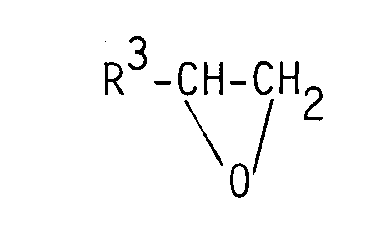
- Der Rest R2 ist ein Alkylrest mit 6 bis 26 Kohlenstoffatomen und kann geradkettig oder verzweigt sein. Besonders bevorzugt weist der Rest R2 10 bis 18 Kohlenstoffatome auf.
- Der Rest R3 ist ein Wasserstoff-, Methyl- oder Ethylrest. Die mit dem Index b bezeichnete Oxyalkyleneinheit kann somit eine Oxyethylen-, Oxypropylen- oder Oxybutylen-Einheit sein, wobei allerdings die Bedingung zu erfüllen ist, daß mindestens 50 % der Reste R3 Wasserstoffreste sind, d. h. daß mindestens die Hälfte der Oxyalkylen-Einheiten Oxyethylen-Einheiten sind. Vorzugsweise ist R3 ein Wasserstoffrest.
- R4 ist ein zweiwertiger Kohlenwasserstoffrest mit 2 bis 15 Kohlenstoffatomen, vorzugsweise mit 2 bis 6 Kohlenstoffatomen. Der Rest R4 ist insbesondere ein geradkettiger Alkylenrest, wie der Rest -(CH2)2-6 oder ein aromatischer Rest, wie z. B. der

- Dabei stellt die Verbindung HO-R4-OH den zweiwertigen Startalkohol dar, an den Alkylenoxid angelagert wird und der formal nach Abzug der beiden endständigen H-Atome den Rest C bildet. Die Gruppe -R4-0- kann allerdings entfallen (d = 0), wenn zur Herstellung des Polyoxyalkylenglykols Wasser als Starter verwendet worden ist.
- Der Rest R5 ist ein zweiwertiger Kohlenwasserstoffrest mit 6 bis 13, vorzugsweise 6 bis 10 Kohlenstoffatomen. Der Rest R5 kann ein aliphatischer oder aromatischer Rest sein. Vorzugsweise ist der Rest R5 der Hexamethylen-, Diphenylmethan- oder Toluylenrest.
- Der Index a kennzeichnet in dem Polymerblock A die Anzahl der einen hydrophoben Rest tragenden Oxyalkylen-Einheiten und hat einen Wert von 1 bis 10, vorzugsweise 2 bis 5.
- Der Index b kennzeichnet in dem Polymerblock A die Anzahl der hydrophilen Oxyalkylen-Einheiten und hat einen Wert von 0 bis 200, vorzugsweise 5 bis 100, insbesondere bevorzugt 5 bis 50.
- Der Index c kennzeichnet in dem Polymerblock C die Anzahl der Oxyalkylen-Einheiten und hat einen Wert von 5 bis 200, vorzugsweise 50 bis 100.
- m kennzeichnet die Anzahl der wiederkehrenden Polymer-Blöcke ( B - C ) und hat einen Wert von 0 bis 20, vorzugsweise 0 bis 5.
- Durch die Bedingung b 2, wenn m = 0, wird sichergestellt, daß die dann vorliegenden Verbindungen des Typs A-B-A wasserdispergierbar sind.
- Beispiele erfindungsgemäßer Verbindungen sind:

- Ein weiterer Gegenstand der Erfindung ist ein Verfahren zur Herstellung der erfindungsgemäßen Verbindungen. Dieses ist dadurch gekennzeichnet, daß man entweder
- a) zunächst Diisocyanate der allgemeinen Formel


- b) das Gemisch der Polyoxyalkylenmono- und -diole mit den Diisocyanaten in den oben angegebenen Molverhältnissen und der oben angegebenen Weise umsetzt.
- Die einzelnen Verfahrensschritte verlaufen in an sich bekannter Weise. Die Umsetzung des organischen Diisocyanates (I) mit dem Diol (11) und dem Monool (III) wird unter Ausschluß von Wasser durchgeführt. Vorzugsweise werden die Reaktionspartner vor der Umsetzung in einem geeigneten Lösungsmittel, wie z. B. Toluol, gelöst, und etwa vorhandenes Wasser durch azeotrope Destillation entfernt. Es werden für die Umsetzung von organischen Diisocyanaten mit Hydroxylgruppen enthaltenden Verbindungen an sich übliche und bekannte Katalysatoren, wie Dibutylzinndilaurat, zugesetzt. Die Reaktionstemperatur beträgt im allgemeinen zwischen 50 und 150°C, insbesondere 70 bis 120°C, besonders bevorzugt 70 bis 90 ° C.
- Die erfindungsgemäßen Verbindungen können mit bekannten anionaktiven, kationaktiven und nichtionogenen Tensiden kombiniert werden. Im Regelfall erhöht sich hierdurch die Viskosität der wäßrigen Lösungen der erfindungsgemäßen Verbindungen.
- Die erfindungsgemäßen Verbindungen erfüllen die eingangs gestellten Forderungen und zeigen hohe verdickende Wirksamkeit, welche weitgehend scherkraftunabhängig ist.
- Ein weiterer Gegenstand der Erfindung ist deshalb die Verwendung der erfindungsgemäßen Verbindungen als Verdickungsmittel für überwiegend wäßrige Systeme, insbesondere Dispersionsfarben. Sie üben keinen nachteiligen Einfluß auf die Eigenschaften der Dispersionsfarben aus und beeinträchtigen insbesondere nicht deren Witterungsbeständigkeit. Sie verbessern die Fließeigenschaften der Dispersionsfarben und deren Filmbildung.
- Herstellung und Eigenschaften der erfindungsgemäßen Verbindungen sollen durch die folgenden Beispiele noch näher erläutert werden.
- 14,8 g (ca. 0,2 Mol) n-Butanol und 1,4 g (ca. 0,02 Mol) Kaliummethylat werden in einem Druckreaktor mit einem zwangsfördernden Umlaufsystem sorgfältig mit Reinstickstoff gespült und auf 110°C erhitzt. Zu diesem Gemisch werden 93,3 g (ca. 0,44 Mol) Tetradecenoxid-1 gegeben und über einen Zeitraum von 2 h bei 120°C erhitzt. Anschließend werden 484,0 g (ca. 11,0 Mol) Ethylenoxid und 19,1 g (ca. 0,3 Mol) Propylenoxid so schnell zugegeben, daß die Innentemperatur des Reaktors 120 ° C und der Innendruck 6 bar nicht überschreiten. Nach der vollständigen Zugabe des Ethylenoxids und des Propylenoxids wird die Temperatur so lange auf 115 ° C gehalten, bis ein konstant bleibender Druck das Ende der Reaktion anzeigt. Schließlich wird unumgesetztes Monomeres bei 80 bis 90 ° C im Vakuum entfernt. Das Reaktionsprodukt wird mit Phosphorsäure neutralisiert, das Wasser durch Destillation im Vakuum entfernt und das gebildete Natriumphosphat unter Verwendung eines Filterhilfsmittels abfiltriert. Die Hydroxylzahl des Produktes beträgt 23. Bei Annahme einer Funktionalität von 1 entspricht dies einem Molekulargewicht von 2440.
- Es wird wie oben gezeigt verfahren, jedoch mit dem Unterschied, daß Startalkohole unterschiedlicher Kohlenstoffzahl, langkettige a-Olefinepoxide unterschiedlicher Kohlenstoffzahl und Molmenge, sowie Alkylenoxide, wie Ethylenoxid, Propylenoxid und Butylenoxid in unterschiedlicher Molmenge eingesetzt werden. Die Tabelle 1 zeigt die Zusammensetzung, die Hydroxylzahl und das bei Annahme einer Funktionalität von 1 errechnete Molekulargewicht der erhaltenen Polyether.


- Ein Gemisch aus 180 g (ca. 0,09 Mol) eines Polyethylenglykols mit einem Molekulargewicht von 2000 und 48,8 g (ca. 0,02 Mol) eines monofunktionellen Polyethers mit hydrophober Endgruppe (Produkt 1 A) wird durch azeotrope Destillation in Gegenwart von 50 g Toluol sorgfältig entwässert. Anschließend werden 0,2 g Dibutylzinndilaurat und 101,3 g des Dimethylethers des Diethylenglykols (Diglyme) zugegeben. Bei einer Temperatur von 80 ° C werden über einen Zeitraum von einer Stunde 16,8 g (ca. 0,1 Mol) Hexamethylendiisocyanat zugegeben. Nach Ablauf von 3 h wird mit 56,6 g Diglyme verdünnt, nach ca. 5 h ist die Reaktion beendet. Das Reaktionsende wird dabei durch Bestimmung des Isocyanatwertes (= 0) durch Titration durch Dibutylamin ermittelt. Durch Gelpermeationschromatographie werden die Molekulargewichte des erhaltenen Polyurethans mit Mn = 18 900 und Mw = 70 300 bestimmt. Es wird ein Produkt erhalten, das bei Raumtemperatur fest ist, bei 50 C verflüssigt werden kann und in einem Gemisch von Propylenglykol und Wasser im Gewichtsverhältnis 2 : 1 löslich ist.
- Die erfindungsgemäßen Verbindungen 2 B bis 37 B werden in analoger Weise hergestellt. Dabei werden unterschiedliche Polyalkylenoxidmonoole (Verbindungen 1 A bis 29 A), unterschiedliche Polyalkylenoxiddiole und Diisocyanate eingesetzt. Darüber hinaus wird das Molverhältnis von Diisocyanat und Polyalkylenoxiddiol variiert. Das Polyalkylenoxidmonool wird jeweils in einer Menge eingesetzt, die zur vollständigen Umsetzung aller Isocyanatgruppen ausreicht.
- In der Tabelle 2 sind neben dem umgesetzten Polyalkylenoxidmonool die Zusammensetzung und die Menge des Polyalkylenoxiddiols, Art und Menge des Diisocyanates, sowie die mit dem Brookfield-Viskosimeter gemessene Viskosität von 0,1 bzw. 1 gew.-%igen Lösungen der erfindungsgemäßen Verbindungen in einem wäßrigen Dispersionslack Acronal 603 der Firma BASF AG, Ludwigshafen, mit einer Ausgangsviskosität von 250 cP und einem Festkörpergehalt von 53 Gew.-% und der Viskositätsindex, d. h. der Quotient der bei 1,5 und 15 Umdrehungen/Minute gemessenen Viskosität angegeben. Darüber hinaus sind Viskositätsmessungen zum Vergleich an Handelsprodukten vorgenommen worden.


- Der Lack auf Basis Acronal A 603 ohne Verdicker hat eine Viskosität von 250 cP.
- Das Vergleichsprodukt gemäß US-PS 4 496 708, Beispiel 17, ist ein Urethan aus Polyethylenglykol 3000, 1,2-Hexadecandiol und Toluoldiisocyanat im Molverhältnis 26,7 : 15,3 : 39,0. Diese Vergleichssubstanz weist eine hohe Strukturviskosität auf.
-
- 1) Viskosität Brookfield Spindel LV-2 bei 3 Upm
- 2) Synthese: zweistufig, 60 %ig in Diglyme bei 80 ° C, Zusatz von 0,1 Gew.-% Dibutylzinndilaurat
- 3) Viskosität Brookfield Spindel LV-3 bei 3 Upm 1,0 % Wirkstoff im Dispersionslack auf Basis Acronal A 603; Festkörpergehalt ca. 53 %
ist, daß das Polymere ein Molekulargewicht von wenigstens etwa 10 000 aufweist, und wobei
Claims (12)


Applications Claiming Priority (2)
| Application Number | Priority Date | Filing Date | Title |
|---|---|---|---|
| DE4101239A DE4101239C1 (de) | 1991-01-17 | 1991-01-17 | |
| DE4101239 | 1991-01-17 |
Publications (3)
| Publication Number | Publication Date |
|---|---|
| EP0495373A2 true EP0495373A2 (de) | 1992-07-22 |
| EP0495373A3 EP0495373A3 (de) | 1992-08-19 |
| EP0495373B1 EP0495373B1 (de) | 1994-08-03 |
Family
ID=6423184
Family Applications (1)
| Application Number | Title | Priority Date | Filing Date |
|---|---|---|---|
| EP92100169A Revoked EP0495373B1 (de) | 1991-01-17 | 1992-01-08 | Verdickungsmittel auf der Basis von Blockpolymeren mit Polyurethan- und Polyethergruppen |
Country Status (2)
| Country | Link |
|---|---|
| EP (1) | EP0495373B1 (de) |
| DE (2) | DE4101239C1 (de) |
Cited By (14)
| Publication number | Priority date | Publication date | Assignee | Title |
|---|---|---|---|---|
| EP0639595A1 (de) * | 1993-08-16 | 1995-02-22 | Bayer Ag | Als Verdickungsmittel geeignete Polyurethane und ihre Verwendung zur Verdickung wässriger Systeme |
| EP0725097A1 (de) | 1995-02-02 | 1996-08-07 | Bayer Ag | Als Verdickungsmittel für wässrige Systeme geeignete Polyurethane |
| AU699692B2 (en) * | 1995-05-01 | 1998-12-10 | Dow Chemical Company, The | A liquid urethane containing adduct |
| US5936019A (en) * | 1996-08-19 | 1999-08-10 | Bayer Aktiengesellschaft | Polyurethane-based thickener compositions and their use for thickening aqueous compositions |
| US6090876A (en) * | 1996-10-29 | 2000-07-18 | Borchers Gmbh | Aqueous polyurethane thickener compositions having improved viscosity and rheological properties |
| US6642302B2 (en) | 2001-03-12 | 2003-11-04 | Bayer Aktiengesellschaft | Polyurethanes and their use for the thickening of aqueous systems |
| US6916876B2 (en) | 2001-03-12 | 2005-07-12 | Borchers Gmbh | Powdered thickener preparations based on polyurethane and their use for thickening aqueous systems |
| US7189772B2 (en) | 2002-09-27 | 2007-03-13 | Goldschmidt Gmbh | Polyurethane thickeners for aqueous systems |
| EP2184304A1 (de) * | 2008-05-06 | 2010-05-12 | Basf Se | Polyurethanverdicker |
| WO2010083960A1 (de) * | 2009-01-24 | 2010-07-29 | Bayer Materialscience Ag | Tenside auf basis von polyurethanen |
| WO2010083952A1 (de) * | 2009-01-24 | 2010-07-29 | Bayer Materialscience Ag | Polyurethan-tensid-stabilisierte polyurethan-schäume |
| US7828994B2 (en) * | 2004-10-26 | 2010-11-09 | Ortec, Inc. | Conductive paint compositions for forming conductive coatings on substrates |
| US8679465B2 (en) | 2001-06-12 | 2014-03-25 | Fiabila | Cosmetic composition for nails, free of phthalates, camphor and aromatic solvent |
| CN102123696B (zh) * | 2008-05-06 | 2014-07-23 | 巴斯夫欧洲公司 | 作为化妆品制剂的流变改善手段的聚氨酯 |
Families Citing this family (2)
| Publication number | Priority date | Publication date | Assignee | Title |
|---|---|---|---|---|
| FR2826014B1 (fr) * | 2001-06-19 | 2007-04-13 | Coatex Sas | Epaississants non ioniques pour compositions pigmentaires, notamment pour peintures, assurant la compatibilite pigmentaire, et leurs applications |
| DE10207891A1 (de) | 2002-02-23 | 2003-09-04 | Goldschmidt Ag Th | Verzweigte Polyurethane, diese enthaltende Formulierungen und deren Verwendung zur Verdickung wässriger Systeme |
Family Cites Families (4)
| Publication number | Priority date | Publication date | Assignee | Title |
|---|---|---|---|---|
| DE1720705B2 (de) * | 1967-08-26 | 1977-03-31 | Hoechst Ag, 6000 Frankfurt | Konzentrat von biociden thiophosphorsaeureestern |
| US4079028A (en) * | 1975-10-03 | 1978-03-14 | Rohm And Haas Company | Polyurethane thickeners in latex compositions |
| DE2638859A1 (de) * | 1976-08-28 | 1978-03-02 | Basf Ag | Harte, steife, nicht elastomere polyurethan-gegenstaende und -formmassen |
| DE3630319A1 (de) * | 1986-09-05 | 1988-03-10 | Akzo Gmbh | Verdickungsmittel |
-
1991
- 1991-01-17 DE DE4101239A patent/DE4101239C1/de not_active Expired - Lifetime
-
1992
- 1992-01-08 DE DE59200328T patent/DE59200328D1/de not_active Revoked
- 1992-01-08 EP EP92100169A patent/EP0495373B1/de not_active Revoked
Cited By (17)
| Publication number | Priority date | Publication date | Assignee | Title |
|---|---|---|---|---|
| US5594087A (en) * | 1993-08-16 | 1997-01-14 | Bayer Aktiengesellschaft | Polyurethane thickeners and their use for thickening aqueous systems |
| EP0639595A1 (de) * | 1993-08-16 | 1995-02-22 | Bayer Ag | Als Verdickungsmittel geeignete Polyurethane und ihre Verwendung zur Verdickung wässriger Systeme |
| EP0725097A1 (de) | 1995-02-02 | 1996-08-07 | Bayer Ag | Als Verdickungsmittel für wässrige Systeme geeignete Polyurethane |
| AU699692B2 (en) * | 1995-05-01 | 1998-12-10 | Dow Chemical Company, The | A liquid urethane containing adduct |
| US5936019A (en) * | 1996-08-19 | 1999-08-10 | Bayer Aktiengesellschaft | Polyurethane-based thickener compositions and their use for thickening aqueous compositions |
| US6090876A (en) * | 1996-10-29 | 2000-07-18 | Borchers Gmbh | Aqueous polyurethane thickener compositions having improved viscosity and rheological properties |
| US6642302B2 (en) | 2001-03-12 | 2003-11-04 | Bayer Aktiengesellschaft | Polyurethanes and their use for the thickening of aqueous systems |
| US6916876B2 (en) | 2001-03-12 | 2005-07-12 | Borchers Gmbh | Powdered thickener preparations based on polyurethane and their use for thickening aqueous systems |
| US8679465B2 (en) | 2001-06-12 | 2014-03-25 | Fiabila | Cosmetic composition for nails, free of phthalates, camphor and aromatic solvent |
| US7189772B2 (en) | 2002-09-27 | 2007-03-13 | Goldschmidt Gmbh | Polyurethane thickeners for aqueous systems |
| US7828994B2 (en) * | 2004-10-26 | 2010-11-09 | Ortec, Inc. | Conductive paint compositions for forming conductive coatings on substrates |
| EP2184304A1 (de) * | 2008-05-06 | 2010-05-12 | Basf Se | Polyurethanverdicker |
| CN102123696B (zh) * | 2008-05-06 | 2014-07-23 | 巴斯夫欧洲公司 | 作为化妆品制剂的流变改善手段的聚氨酯 |
| US10240110B2 (en) | 2008-05-06 | 2019-03-26 | Basf Se | Polyurethane thickener |
| WO2010083960A1 (de) * | 2009-01-24 | 2010-07-29 | Bayer Materialscience Ag | Tenside auf basis von polyurethanen |
| WO2010083952A1 (de) * | 2009-01-24 | 2010-07-29 | Bayer Materialscience Ag | Polyurethan-tensid-stabilisierte polyurethan-schäume |
| CN102292368A (zh) * | 2009-01-24 | 2011-12-21 | 拜尔材料科学股份公司 | 基于聚氨酯的表面活性剂 |
Also Published As
| Publication number | Publication date |
|---|---|
| DE59200328D1 (de) | 1994-09-08 |
| EP0495373A3 (de) | 1992-08-19 |
| DE4101239C1 (de) | 1992-04-02 |
| EP0495373B1 (de) | 1994-08-03 |
Similar Documents
| Publication | Publication Date | Title |
|---|---|---|
| EP0495373B1 (de) | Verdickungsmittel auf der Basis von Blockpolymeren mit Polyurethan- und Polyethergruppen | |
| DE69317568T2 (de) | Polyurethan, dessen verwendung sowie das polyurethan als verdickungsmittel enthaltender wässeriger anstrichstoff | |
| EP0725097B1 (de) | Als Verdickungsmittel für wässrige Systeme geeignete Polyurethane | |
| EP2274355B1 (de) | Polyurethanverdicker | |
| DE69209595T2 (de) | Polyurethan-Polyol sowie daraus hergestellte Polyurethan-Beschichtungszusammensetzung | |
| EP0260430B1 (de) | Verdickungsmittel | |
| EP1125961B1 (de) | Neue polyoxyalkylenpolyole und verfahren zur herstellung eines polymers mit ringöffnung | |
| EP0262529B1 (de) | Hydroxyl- und Sulfonatgruppen aufweisende Polyoxyalkylenether und deren Verwendung zur Herstellung von dispergierbaren Polyurethanen | |
| DE69613610T2 (de) | Beschichtungen aus Fluororpolyethern | |
| DE69622553T2 (de) | Flüssiges urethan enthaltendes addukt | |
| DE1495749C3 (de) | Verfahren zur Herstellung wasserlöslicher bzw. in Wasser quellbarer oberflächenaktiver Umsetzungsprodukte aus Polyäthylenglykoläthern und Isocyanaten | |
| DE2541100B2 (de) | Verfahren zur zersetzung von polyurethanen | |
| EP0011162B1 (de) | Wasserlösliche, ultrafiltrierbare Polyurethan-Anionomere und ihre Verwendung als Schlichtemittel in der Textilindustrie | |
| EP0060430B1 (de) | Verfahren zur Herstellung von Polymerisaten mit seitenständig gebundenen Polyalkylenoxidketten | |
| DE19512789A1 (de) | Thermoplastisches Polyurethanharz mit breiter Gummizustandsregion und Verfahren zur Herstellung desselben | |
| DE10245099A1 (de) | Polyurethan-Verdickungsmittel zur Verdickung wässriger Systeme | |
| EP2049581B1 (de) | Polyetheramin-makromonomere mit zwei benachbarten hydroxylgruppen und ihre verwendung zur herstellung von polyurethanen | |
| WO1989004333A1 (fr) | Procede pour la fabrication de macromonomeres et macromonomeres ainsi obtenus | |
| EP0136396B1 (de) | Verwendung ausgewählter Polyetherole und Polyisocyanate zur Herstellung von Klebmitteln auf Polyurethanbasis | |
| DE69428994T2 (de) | Polymerer verdicker für wässerige zusammensetzungen | |
| DE2348922B2 (de) | Verfahren zur Herstellung eines flexiblen Polyätherurethanschaumstoffs und Polyätherurethanschaumstoff | |
| DE3906220C1 (de) | ||
| DE3909597A1 (de) | Verfahren zur herstellung von vernetzten polyurethan-polyharnstoff-pulvern und ihre verwendung als organische fuellstoffe in zweikomponenten-polyurethanlacken | |
| DE2206328A1 (de) | Als Katalysator für die Herstellung von Polyurethanharzen geeignete Zubereitung | |
| DE2142161A1 (de) | Verfahren zur Herstellung flexibler Polyurethanschaume |
Legal Events
| Date | Code | Title | Description |
|---|---|---|---|
| PUAI | Public reference made under article 153(3) epc to a published international application that has entered the european phase |
Free format text: ORIGINAL CODE: 0009012 |
|
| PUAL | Search report despatched |
Free format text: ORIGINAL CODE: 0009013 |
|
| 17P | Request for examination filed |
Effective date: 19920114 |
|
| AK | Designated contracting states |
Kind code of ref document: A2 Designated state(s): BE DE FR GB IT NL |
|
| AK | Designated contracting states |
Kind code of ref document: A3 Designated state(s): BE DE FR GB IT NL |
|
| 17Q | First examination report despatched |
Effective date: 19940125 |
|
| GRAA | (expected) grant |
Free format text: ORIGINAL CODE: 0009210 |
|
| AK | Designated contracting states |
Kind code of ref document: B1 Designated state(s): BE DE FR GB IT NL |
|
| ITF | It: translation for a ep patent filed | ||
| GBT | Gb: translation of ep patent filed (gb section 77(6)(a)/1977) |
Effective date: 19940810 |
|
| REF | Corresponds to: |
Ref document number: 59200328 Country of ref document: DE Date of ref document: 19940908 |
|
| ET | Fr: translation filed | ||
| PGFP | Annual fee paid to national office [announced via postgrant information from national office to epo] |
Ref country code: DE Payment date: 19950110 Year of fee payment: 4 |
|
| PGFP | Annual fee paid to national office [announced via postgrant information from national office to epo] |
Ref country code: BE Payment date: 19950302 Year of fee payment: 4 |
|
| PLBI | Opposition filed |
Free format text: ORIGINAL CODE: 0009260 |
|
| 26 | Opposition filed |
Opponent name: HUELS AKTIENGESELLSCHAFT Effective date: 19950502 |
|
| NLR1 | Nl: opposition has been filed with the epo |
Opponent name: HUELS AKTIENGESELLSCHAFT |
|
| PGFP | Annual fee paid to national office [announced via postgrant information from national office to epo] |
Ref country code: FR Payment date: 19960109 Year of fee payment: 5 |
|
| PGFP | Annual fee paid to national office [announced via postgrant information from national office to epo] |
Ref country code: NL Payment date: 19960130 Year of fee payment: 5 |
|
| RDAG | Patent revoked |
Free format text: ORIGINAL CODE: 0009271 |
|
| STAA | Information on the status of an ep patent application or granted ep patent |
Free format text: STATUS: PATENT REVOKED |
|
| 27W | Patent revoked |
Effective date: 19951116 |
|
| GBPR | Gb: patent revoked under art. 102 of the ep convention designating the uk as contracting state |
Free format text: 951116 |
|
| NLR2 | Nl: decision of opposition |