EP0478682B1 - Nachweis von schimmeln - Google Patents
Nachweis von schimmeln Download PDFInfo
- Publication number
- EP0478682B1 EP0478682B1 EP90910599A EP90910599A EP0478682B1 EP 0478682 B1 EP0478682 B1 EP 0478682B1 EP 90910599 A EP90910599 A EP 90910599A EP 90910599 A EP90910599 A EP 90910599A EP 0478682 B1 EP0478682 B1 EP 0478682B1
- Authority
- EP
- European Patent Office
- Prior art keywords
- sample
- chromosomes
- dyeing
- cell
- buildings
- Prior art date
- Legal status (The legal status is an assumption and is not a legal conclusion. Google has not performed a legal analysis and makes no representation as to the accuracy of the status listed.)
- Expired - Lifetime
Links
- 230000002538 fungal effect Effects 0.000 title claims abstract description 36
- 238000001514 detection method Methods 0.000 title description 8
- 238000000034 method Methods 0.000 claims abstract description 54
- 210000004027 cell Anatomy 0.000 claims abstract description 51
- 210000000349 chromosome Anatomy 0.000 claims abstract description 37
- 238000004043 dyeing Methods 0.000 claims abstract description 37
- 241000233866 Fungi Species 0.000 claims abstract description 33
- FWBHETKCLVMNFS-UHFFFAOYSA-N 4',6-Diamino-2-phenylindol Chemical compound C1=CC(C(=N)N)=CC=C1C1=CC2=CC=C(C(N)=N)C=C2N1 FWBHETKCLVMNFS-UHFFFAOYSA-N 0.000 claims abstract description 25
- 239000004566 building material Substances 0.000 claims abstract description 24
- 230000035899 viability Effects 0.000 claims abstract description 20
- 210000003855 cell nucleus Anatomy 0.000 claims abstract description 18
- QTBSBXVTEAMEQO-UHFFFAOYSA-N Acetic acid Chemical compound CC(O)=O QTBSBXVTEAMEQO-UHFFFAOYSA-N 0.000 claims description 10
- LFQSCWFLJHTTHZ-UHFFFAOYSA-N Ethanol Chemical compound CCO LFQSCWFLJHTTHZ-UHFFFAOYSA-N 0.000 claims description 10
- 238000000799 fluorescence microscopy Methods 0.000 claims description 10
- 239000003599 detergent Substances 0.000 claims description 9
- 239000000203 mixture Substances 0.000 claims description 8
- 206010017533 Fungal infection Diseases 0.000 claims description 7
- 208000031888 Mycoses Diseases 0.000 claims description 7
- 239000000126 substance Substances 0.000 claims description 7
- GPRLSGONYQIRFK-MNYXATJNSA-N triton Chemical compound [3H+] GPRLSGONYQIRFK-MNYXATJNSA-N 0.000 claims description 7
- XLYOFNOQVPJJNP-UHFFFAOYSA-N water Chemical compound O XLYOFNOQVPJJNP-UHFFFAOYSA-N 0.000 claims description 7
- CSCPPACGZOOCGX-UHFFFAOYSA-N Acetone Chemical compound CC(C)=O CSCPPACGZOOCGX-UHFFFAOYSA-N 0.000 claims description 6
- 230000022534 cell killing Effects 0.000 claims description 6
- 239000012153 distilled water Substances 0.000 claims description 6
- 229960000583 acetic acid Drugs 0.000 claims description 5
- 239000012362 glacial acetic acid Substances 0.000 claims description 5
- 238000001035 drying Methods 0.000 claims description 4
- 238000004108 freeze drying Methods 0.000 claims description 4
- 239000003795 chemical substances by application Substances 0.000 claims description 3
- 238000010438 heat treatment Methods 0.000 claims description 3
- 238000007654 immersion Methods 0.000 claims description 3
- QSHDDOUJBYECFT-UHFFFAOYSA-N mercury Chemical compound [Hg] QSHDDOUJBYECFT-UHFFFAOYSA-N 0.000 claims description 3
- 229910052753 mercury Inorganic materials 0.000 claims description 3
- 238000010298 pulverizing process Methods 0.000 claims description 2
- 210000004940 nucleus Anatomy 0.000 abstract description 19
- 239000000523 sample Substances 0.000 description 25
- 239000000975 dye Substances 0.000 description 19
- 108020004414 DNA Proteins 0.000 description 12
- 239000000463 material Substances 0.000 description 7
- 238000012258 culturing Methods 0.000 description 6
- 239000012472 biological sample Substances 0.000 description 3
- 239000007850 fluorescent dye Substances 0.000 description 3
- 238000000386 microscopy Methods 0.000 description 3
- 108020004707 nucleic acids Proteins 0.000 description 3
- 102000039446 nucleic acids Human genes 0.000 description 3
- 150000007523 nucleic acids Chemical class 0.000 description 3
- 230000008439 repair process Effects 0.000 description 3
- 238000005070 sampling Methods 0.000 description 3
- 239000000758 substrate Substances 0.000 description 3
- 239000002023 wood Substances 0.000 description 3
- PRDFBSVERLRRMY-UHFFFAOYSA-N 2'-(4-ethoxyphenyl)-5-(4-methylpiperazin-1-yl)-2,5'-bibenzimidazole Chemical compound C1=CC(OCC)=CC=C1C1=NC2=CC=C(C=3NC4=CC(=CC=C4N=3)N3CCN(C)CC3)C=C2N1 PRDFBSVERLRRMY-UHFFFAOYSA-N 0.000 description 2
- 230000001066 destructive effect Effects 0.000 description 2
- 238000004321 preservation Methods 0.000 description 2
- PFNFFQXMRSDOHW-UHFFFAOYSA-N spermine Chemical compound NCCCNCCCCNCCCN PFNFFQXMRSDOHW-UHFFFAOYSA-N 0.000 description 2
- FMHHVULEAZTJMA-UHFFFAOYSA-N trioxsalen Chemical compound CC1=CC(=O)OC2=C1C=C1C=C(C)OC1=C2C FMHHVULEAZTJMA-UHFFFAOYSA-N 0.000 description 2
- 238000005406 washing Methods 0.000 description 2
- SBUGAZMUOSDWJZ-UHFFFAOYSA-N 3-(oxadiazol-4-yl)benzene-1,2-diamine Chemical compound NC1=CC=CC(C=2N=NOC=2)=C1N SBUGAZMUOSDWJZ-UHFFFAOYSA-N 0.000 description 1
- ZRIMVGGATAJQIO-UHFFFAOYSA-N 5-[3-[3-[3-[(6-chloro-2-methoxyacridin-9-yl)amino]propylamino]propylamino]propyl]-6-phenylphenanthridin-5-ium-3,8-diamine;chloride;pentahydrochloride Chemical compound Cl.Cl.Cl.Cl.Cl.[Cl-].C12=CC(OC)=CC=C2N=C2C=C(Cl)C=CC2=C1NCCCNCCCNCCC[N+](C1=CC(N)=CC=C1C1=CC=C(N)C=C11)=C1C1=CC=CC=C1 ZRIMVGGATAJQIO-UHFFFAOYSA-N 0.000 description 1
- XYJODUBPWNZLML-UHFFFAOYSA-N 5-ethyl-6-phenyl-6h-phenanthridine-3,8-diamine Chemical compound C12=CC(N)=CC=C2C2=CC=C(N)C=C2N(CC)C1C1=CC=CC=C1 XYJODUBPWNZLML-UHFFFAOYSA-N 0.000 description 1
- IHHSSHCBRVYGJX-UHFFFAOYSA-N 6-chloro-2-methoxyacridin-9-amine Chemical compound C1=C(Cl)C=CC2=C(N)C3=CC(OC)=CC=C3N=C21 IHHSSHCBRVYGJX-UHFFFAOYSA-N 0.000 description 1
- YXHLJMWYDTXDHS-IRFLANFNSA-N 7-aminoactinomycin D Chemical compound C[C@H]1OC(=O)[C@H](C(C)C)N(C)C(=O)CN(C)C(=O)[C@@H]2CCCN2C(=O)[C@@H](C(C)C)NC(=O)[C@H]1NC(=O)C1=C(N)C(=O)C(C)=C2OC(C(C)=C(N)C=C3C(=O)N[C@@H]4C(=O)N[C@@H](C(N5CCC[C@H]5C(=O)N(C)CC(=O)N(C)[C@@H](C(C)C)C(=O)O[C@@H]4C)=O)C(C)C)=C3N=C21 YXHLJMWYDTXDHS-IRFLANFNSA-N 0.000 description 1
- 108700012813 7-aminoactinomycin D Proteins 0.000 description 1
- XJGFWWJLMVZSIG-UHFFFAOYSA-N 9-aminoacridine Chemical compound C1=CC=C2C(N)=C(C=CC=C3)C3=NC2=C1 XJGFWWJLMVZSIG-UHFFFAOYSA-N 0.000 description 1
- BFOMVRGJRFLFCJ-UHFFFAOYSA-N 9-azidoacridine Chemical compound C1=CC=C2C(N=[N+]=[N-])=C(C=CC=C3)C3=NC2=C1 BFOMVRGJRFLFCJ-UHFFFAOYSA-N 0.000 description 1
- HRPVXLWXLXDGHG-UHFFFAOYSA-N Acrylamide Chemical compound NC(=O)C=C HRPVXLWXLXDGHG-UHFFFAOYSA-N 0.000 description 1
- 229920001817 Agar Polymers 0.000 description 1
- 241001158878 Antrodia sp. Species 0.000 description 1
- IVRMZWNICZWHMI-UHFFFAOYSA-N Azide Chemical compound [N-]=[N+]=[N-] IVRMZWNICZWHMI-UHFFFAOYSA-N 0.000 description 1
- 229920002101 Chitin Polymers 0.000 description 1
- 241001600093 Coniophora Species 0.000 description 1
- 102000053602 DNA Human genes 0.000 description 1
- QTANTQQOYSUMLC-UHFFFAOYSA-O Ethidium cation Chemical compound C12=CC(N)=CC=C2C2=CC=C(N)C=C2[N+](CC)=C1C1=CC=CC=C1 QTANTQQOYSUMLC-UHFFFAOYSA-O 0.000 description 1
- 241001492300 Gloeophyllum trabeum Species 0.000 description 1
- 241001674251 Serpula lacrymans Species 0.000 description 1
- 241000519995 Stachys sylvatica Species 0.000 description 1
- 238000010521 absorption reaction Methods 0.000 description 1
- 239000000999 acridine dye Substances 0.000 description 1
- DPKHZNPWBDQZCN-UHFFFAOYSA-N acridine orange free base Chemical compound C1=CC(N(C)C)=CC2=NC3=CC(N(C)C)=CC=C3C=C21 DPKHZNPWBDQZCN-UHFFFAOYSA-N 0.000 description 1
- PEJLNXHANOHNSU-UHFFFAOYSA-N acridine-3,6-diamine;10-methylacridin-10-ium-3,6-diamine;chloride Chemical compound [Cl-].C1=CC(N)=CC2=NC3=CC(N)=CC=C3C=C21.C1=C(N)C=C2[N+](C)=C(C=C(N)C=C3)C3=CC2=C1 PEJLNXHANOHNSU-UHFFFAOYSA-N 0.000 description 1
- 239000008272 agar Substances 0.000 description 1
- 229960001441 aminoacridine Drugs 0.000 description 1
- 238000004458 analytical method Methods 0.000 description 1
- DZBUGLKDJFMEHC-UHFFFAOYSA-N benzoquinolinylidene Natural products C1=CC=CC2=CC3=CC=CC=C3N=C21 DZBUGLKDJFMEHC-UHFFFAOYSA-N 0.000 description 1
- 238000009835 boiling Methods 0.000 description 1
- 239000011449 brick Substances 0.000 description 1
- 238000009435 building construction Methods 0.000 description 1
- 210000002421 cell wall Anatomy 0.000 description 1
- 210000003850 cellular structure Anatomy 0.000 description 1
- 239000004035 construction material Substances 0.000 description 1
- 239000006059 cover glass Substances 0.000 description 1
- 230000000694 effects Effects 0.000 description 1
- ZMMJGEGLRURXTF-UHFFFAOYSA-N ethidium bromide Chemical compound [Br-].C12=CC(N)=CC=C2C2=CC=C(N)C=C2[N+](CC)=C1C1=CC=CC=C1 ZMMJGEGLRURXTF-UHFFFAOYSA-N 0.000 description 1
- 229960005542 ethidium bromide Drugs 0.000 description 1
- GTSMOYLSFUBTMV-UHFFFAOYSA-N ethidium homodimer Chemical compound [H+].[H+].[Cl-].[Cl-].[Cl-].[Cl-].C12=CC(N)=CC=C2C2=CC=C(N)C=C2C(C)=[N+]1CCCNCCNCCC[N+](C1=CC(N)=CC=C1C1=CC=C(N)C=C11)=C1C1=CC=CC=C1 GTSMOYLSFUBTMV-UHFFFAOYSA-N 0.000 description 1
- 230000005284 excitation Effects 0.000 description 1
- 230000002349 favourable effect Effects 0.000 description 1
- 230000035784 germination Effects 0.000 description 1
- 238000011534 incubation Methods 0.000 description 1
- 238000011081 inoculation Methods 0.000 description 1
- 230000001678 irradiating effect Effects 0.000 description 1
- 238000009533 lab test Methods 0.000 description 1
- 231100000518 lethal Toxicity 0.000 description 1
- 230000001665 lethal effect Effects 0.000 description 1
- FDZZZRQASAIRJF-UHFFFAOYSA-M malachite green Chemical compound [Cl-].C1=CC(N(C)C)=CC=C1C(C=1C=CC=CC=1)=C1C=CC(=[N+](C)C)C=C1 FDZZZRQASAIRJF-UHFFFAOYSA-M 0.000 description 1
- 229940107698 malachite green Drugs 0.000 description 1
- 230000004060 metabolic process Effects 0.000 description 1
- 239000004570 mortar (masonry) Substances 0.000 description 1
- NMKIHZILXGGHHL-UHFFFAOYSA-N n,n'-bis[3-[(6-chloro-2-methoxyacridin-9-yl)amino]propyl]butane-1,4-diamine Chemical compound C1=C(OC)C=C2C(NCCCNCCCCNCCCNC3=C4C=CC(Cl)=CC4=NC4=CC=C(C=C43)OC)=C(C=CC(Cl)=C3)C3=NC2=C1 NMKIHZILXGGHHL-UHFFFAOYSA-N 0.000 description 1
- -1 pararosanilin Chemical compound 0.000 description 1
- 238000002135 phase contrast microscopy Methods 0.000 description 1
- INAAIJLSXJJHOZ-UHFFFAOYSA-N pibenzimol Chemical compound C1CN(C)CCN1C1=CC=C(N=C(N2)C=3C=C4NC(=NC4=CC=3)C=3C=CC(O)=CC=3)C2=C1 INAAIJLSXJJHOZ-UHFFFAOYSA-N 0.000 description 1
- 238000002360 preparation method Methods 0.000 description 1
- XJMOSONTPMZWPB-UHFFFAOYSA-M propidium iodide Chemical compound [I-].[I-].C12=CC(N)=CC=C2C2=CC=C(N)C=C2[N+](CCC[N+](C)(CC)CC)=C1C1=CC=CC=C1 XJMOSONTPMZWPB-UHFFFAOYSA-M 0.000 description 1
- 230000005855 radiation Effects 0.000 description 1
- 238000007430 reference method Methods 0.000 description 1
- 230000035945 sensitivity Effects 0.000 description 1
- 229940063675 spermine Drugs 0.000 description 1
- 238000010186 staining Methods 0.000 description 1
- 239000004575 stone Substances 0.000 description 1
- 239000000725 suspension Substances 0.000 description 1
- ACOJCCLIDPZYJC-UHFFFAOYSA-M thiazole orange Chemical compound CC1=CC=C(S([O-])(=O)=O)C=C1.C1=CC=C2C(C=C3N(C4=CC=CC=C4S3)C)=CC=[N+](C)C2=C1 ACOJCCLIDPZYJC-UHFFFAOYSA-M 0.000 description 1
- 210000002268 wool Anatomy 0.000 description 1
Images
Classifications
-
- C—CHEMISTRY; METALLURGY
- C12—BIOCHEMISTRY; BEER; SPIRITS; WINE; VINEGAR; MICROBIOLOGY; ENZYMOLOGY; MUTATION OR GENETIC ENGINEERING
- C12Q—MEASURING OR TESTING PROCESSES INVOLVING ENZYMES, NUCLEIC ACIDS OR MICROORGANISMS; COMPOSITIONS OR TEST PAPERS THEREFOR; PROCESSES OF PREPARING SUCH COMPOSITIONS; CONDITION-RESPONSIVE CONTROL IN MICROBIOLOGICAL OR ENZYMOLOGICAL PROCESSES
- C12Q1/00—Measuring or testing processes involving enzymes, nucleic acids or microorganisms; Compositions therefor; Processes of preparing such compositions
- C12Q1/02—Measuring or testing processes involving enzymes, nucleic acids or microorganisms; Compositions therefor; Processes of preparing such compositions involving viable microorganisms
Definitions
- the present invention relates to a method of detecting the viability of fungal cells from fungi infected buildings or building materials after a cell kill treatment.
- Detection and assessment of the extent of damage to buildings or building materials in connection with controlling fungal infections may today be performed by various techniques including destructive sampling as well as physically non-destructive measuring methods.
- growth of other fungi may often conceal the growth of the fungus which it is desired to detect, i.e. lack of growth of the interesting fungus in the test culturing may both be due to the fungus being dead or to unsuccessful attempts to revive it from its dormant state.
- Revival by simple culturing is thus a slow and uncertain method of detecting viability.
- Laurits W. Olson, Opera Botanica, No. 73, 1984, p. 65-66 discloses the Feulgen nucleus dyeing reference method in which the DNA of the chromosomes is dyed by means of basic fuchin.
- US Patent No. 4,544,546 discloses a method of detecting nucleic acids in a biological sample which comprises contacting said biological sample with an effective amount of a dye, thereby producing a complex between the dye and the nucleic acid; irradiating the complex with light of excitation wavelength, thereby causing the complex to emit fluorescence; and measuring the emitted fluorescence. Detection viability of fungal cells from fungi infected buildings or building materials is neither diclosed nor suggested.
- World Patent Index, Acc. No. 5408875, G. Varekhov et al. discloses a method of determining the viability of fungi by treating a suspension of mycelium with amino acridine dye and measuring the obtained fluorescence at two wavelengths. None is disclosed or suggested about detecting viability of fungal cells in samples from fungi infected buildings or building materials.
- Another fluorecsence based method is the DAPI-nucleus dyeing method according to which the fluorescence dye 4',6-diamino-2-phenylindol, DAPI, is used for dyeing chromosome DNA which subsequently exhibits a blue or bluish colour in the fluorescence microscope.
- the method has been used for detecting nuclei in spores from dry rot cultivated in laboratory cultures with the purpose of examining the structure and germination of basidiospores, B. Hegarty and U. Schmitt Int. Res. Group. Wood Preservation, 19. Annual Meeting, Madrid, Spain 24-29 April 1988.
- Use of the DAPI dyeing method in these examinations however does not concern detection of viability within the meaning of the present invention, neither as regards spores nor fungal cells.
- a method of detecting the viability of fungal cells from fungi infected buildings or building materials after a cell killing treatment wherein a sample from the treated buildings or building materials is subjected to a dyeing treatment with a substance containing a dye used for dyeing the chromosomes in the cell nucleus whereafter the dyed cell nucleus chromosomes are detected, characterized in that the sample is stored for a period long enough for the chromosomes of the killed cells to disappear from the cell nuclei before the dyeing treatment is effected.
- nucleus dyeing method Although it is known to dye the DNA, i.e. deoxyribonucleic acid, of the chromosomes in connection with cellular structure examinations and the like, no so-called nucleus dyeing method has until now been provided in connection with detection of the viability of fungal cells from fungi infected buildings or building materials after a cell kill treatment.
- sampled cell material must be fixed immediately after the sampling in order to preserve the sample for later laboratory analysis. If this preservation is not performed, the cells easily become overgrown by other organisms, in particular if the fungal cells are dead, whereby the samples are ruined and the risk of misinterpretation of the viability of the sampled specimens is increased.
- the sample from the cell kill treated buildings and building materials after a cell killing treatment is not fixed immediately upon sampling, but it is fixed after a storage period, which ensures that the chromosome material in the nuclei of non-viable cells disappears before fixation, dyeing, and microscoping is effected, whereby the risk of misinterpreting dead cells as viable cells is reduced.
- the storage period may advantageously be adjusted to the treatment method of the fungal infection.
- the storage period can be as long as 48 hours, preferably up to 24 hours; however, shorter periods are possible. Optimum periods are easily adjusted according to the treatment method, the exposure effect and the exposure time.
- the method is thus characterized in that the sample optionally is pretreated by drying or freeze drying whereafter it is kept dry in a storage period before it is fixed and/or optionally posttreated to separate hyphae.
- the sample Before the dyeing treatment, the sample is advatageously fixed.
- the fixing agent is advantageously selected in view of the treatment method and the test material.
- the fixing agent perferably comprises ethanol/glacial acetic acid mixtures, particularly in a preferred ratio of 3:1.
- the dye used for dyeing the chromosomes in the cell nucleus is a DNA dye, i.e. a substance which dyes DNA, or a fluorescent DNA dye, and the detection is performed by means of light microscopy or fluorescence microscopy, respectively, or by another suitable detection method.
- fluorescence dyes such as bis-amino-phenyl-oxadiazol, acriflavin, pararosanilin, bis-benzimide (Hoechst 33258) and 4',6-diamino-2-phenyl-indol, DAPI.
- fluorescence dyes such as bis-amino-phenyl-oxadiazol, acriflavin, pararosanilin, bis-benzimide (Hoechst 33258) and 4',6-diamino-2-phenyl-indol, DAPI.
- examples of typical DNA fluorescence dyes are propidium iodide, ethidium bromide, dihydroethidium, ethidium monoazide, 9-azidoacridine, ethidium homodimer (5,5'-diazadecamethylene)bis(3,8-diamino-6-phenylphenanthridium) dichloride, acridine-ethidium heterodimer, acridine homodimer (bis-(6-chloro-2-methoxy-9-acridinyl) spermine), acridine orange, Hoechst 33342, 7-aminoactinomycin D, thiazole orange, 9-amino-6-chloro-2-methoxyacridine, 4,5',8-trimethylpsoralen, and Malachite Green acrylamide.
- Other useful dyes may be selected by a person skilled in the art.
- the fluorescent DNA dye for dyeing the chromosomes is 4',6-diamino-2-phenylindol, DAPI, in a concentration of preferably 1-5 ⁇ g/ml.
- the sample is post-treated to separate hyphae, preferably by mechanical pulverization, before being microscoped.
- detergent solutions include known detergents preferably Triton 100-X and various detergent concentrations, preferably 5 %.
- the cell nucleus chromosome dye containing substance is dissolved in a detergent solution, preferably about 5% of Triton 100-X.
- viability designates the capability of the fungal cells to reproduce themselves so that the fungal cells may propagate and the myceliae spread to the surrounding buildings and building materials.
- the fungal cells are capable of metabolizing, as fungi under certain conditions, especially of low humidity, may enter a sort of "dormant state", in which their metabolic process act very slowly. In dependence on the kind of fungus the dormant state may last 2-10 years before the fungal cell dies, wherefore the fungal cells are still viable and may be revived under suitable conditions of growth.
- Viable cells within the meaning of the invention however all comprise a nucleus with chromosomes which enable the cell to reproduce itself. When a fungal cell is no longer viable in the meaning of the invention the chromosomes of the cell nucleus disappear and the cell is no longer capable of reproducing itself.
- Fungal cells having a cell nucleus with chromosomes will thus either be viable cells in the form of active cells capable of reproducing themselves or of cells in a dormant state, or be non-viable cells, the chromosomes of which in the nucleus have not yet been dissolved. In the absence of cell nucleus containing chromosomes the fungal cells are no longer viable within the meaning of the invention.
- fungi include Serpula lacrymans, Coniophora putana, Antrodia sp., Gloeophyllum trabeum, etc. and other fungi capable of infecting buildings and building materials.
- samples of buildings or building materials include thallus, mycelium, hyphae, unit cells or spores of the fungus.
- Buildings or building materials in the meaning of the invention comprise all materials which form part of or may form part of buildings and building constructions which the fungus may infect no matter whether it e.g. means the end of the life of the building material.
- the method according to the invention has been used for detecting the viability of fungal cells in both live and dead mycelium from dry rot.
- Live myceliae have been cultured non-sterilized from fungi infected wood, stone wool and bridgework, i.e. mortar and bricks, in the laboratory, whereafter they have been tested for sensitivity to the dyes.
- Dead mycelium has been provided by heat treating the live mycelium in a microwave oven and by boiling for e.g. about 4 to 10 minutes, respectively. Old presumably inactive mycelium has also been provided.
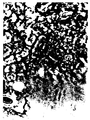
- Fig. 1 shows fluorescence microscopy of fungal hyphae from live mycelium of dry rot having been dyed by means of the Feulgen-dyeing method.
- the arrow in the centre of the picture refers to a nucleus which in a colour picture shows itself as dark red approaching violet on a reddish background.
- the Feulgen dyeing method which usually dyes the chromosomes in the nuclei a bright reddish only dyes fungal myceliae faintly. This is probably due to the chitin content of the cell wall and the scarce amount of chromosomes present in the cell nuclei.
- DAPI nucleus dyeing method has been used on the previously mentioned live and dead mycelium from dry rot.
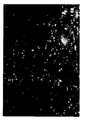
- Fig. 2 shows fluorescence microscopy of viable fungal hyphae in a dormant state.
- nuclei dyed bright blue appear as white spots in the more dim contours of the fungal hyphae.
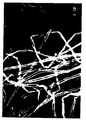
- Fig. 3 shows fluorescence microscopy of non-viable fungal hyphae from mycelium having been boiled for 4 minutes and fixed 24 hours later on whereafter they have been dyed by means of the DAPI nucleus dyeing method. The picture clearly shows the absence of dyed nuclei.
Landscapes
- Chemical & Material Sciences (AREA)
- Organic Chemistry (AREA)
- Life Sciences & Earth Sciences (AREA)
- Health & Medical Sciences (AREA)
- Wood Science & Technology (AREA)
- Proteomics, Peptides & Aminoacids (AREA)
- Zoology (AREA)
- Engineering & Computer Science (AREA)
- Immunology (AREA)
- Biochemistry (AREA)
- Microbiology (AREA)
- Molecular Biology (AREA)
- Analytical Chemistry (AREA)
- Biotechnology (AREA)
- Physics & Mathematics (AREA)
- Biophysics (AREA)
- Bioinformatics & Cheminformatics (AREA)
- General Engineering & Computer Science (AREA)
- General Health & Medical Sciences (AREA)
- Genetics & Genomics (AREA)
- Measuring Or Testing Involving Enzymes Or Micro-Organisms (AREA)
- Moulds For Moulding Plastics Or The Like (AREA)
- Agricultural Chemicals And Associated Chemicals (AREA)
- Investigating Or Analysing Materials By The Use Of Chemical Reactions (AREA)
Claims (9)
- Ein Verfahren zum Bestimmen der Lebensfähigkeit von Pilzzellen aus pilzinfizierten Gebäuden oder Baumaterialien nach einer Zell-Abtötungsbehandlung, wobei eine Probe von den behandelten Gebäuden oder Baumaterialen einer Anfärbebehandlung mit einer Substanz unterworfen wird, die einen Farbstoff enthält, der zum Anfärben der Chromosomen im Zellkern verwendet wird, worauf die angefärbten Zellkernchromosomen festgestellt werden,
dadurch gekennzeichnet, daß
die Probe während einer Zeitdauer abgelagert wird, die lange genug ist, um die Chromosomen der abgetöteten Zellen aus den Zellkernen verschwinden zu lassen, bevor die Anfärbebehandlung ausgeführt wird. - Ein Verfahren nach Anspruch 1, dadurch gekennzeichnet, daß die Ablagerungsdauer bis zu 48 Stunden, vorzugsweise bis zu 24 Stunden oder kürzer ist.
- Ein Verfahren nach Anspruch 1-2, dadurch gekennzeichnet, daß die Probe vor der Ablagerungsperiode getrocknet wird.
- Ein Verfahren nach Ansprüchen 1-3, dadurch gekennzeichnet, daß die Probe vor Ausführung der Anfärbebehandlung mit einem Fixiermittel, vorzugsweise einer 3:1 Äthanol/Eisessigsäure fixiert wird.
- Ein Verfahren nach den Ansprüchen 1-4, dadurch gekennzeichnet, daß nach der Anfärbehandlung die Probe behandelt wird, um Hyphen, vorzugsweise durch mechanische Pulverisierung, abzutrennen.
- Ein Verfahren nach Ansprüchen 1-5, dadurch gekennzeichnet, daß der Farbstoff zum Anfärben der Chromosomen ein fluoreszierender DNA-Farbstoff ist, vorzugsweise ein 4',6-Diamino-2-Phenyl-Indol, DAPI, in einer Konzentration von 1-5 µg/ml.
- Ein Verfahren nach den Ansprüchen 1-6, dadurch gekennzeichnet, daß die Substanz, welche den Zellkernchromosomenfarbstoff enthält, in einer Detergens-Lösung aufgelöst wird, vorzugsweise etwa 5% Triton® 100-X.
- Ein Verfahren zum Bestimmen der Lebensfähigkeit von Pilzzellen aus pilzinfizierten Gebäuden oder Baumaterialien nach einer Zell-Abtötungsbehandlung, wobei eine Probe von den behandelten Gebäuden oder dem Baumaterial einer Anfärbebehandlung mit einer Substanz unterworfen wird, die einen Farbstoff enthält, der zum Anfärben der Chromosomen im Zellkern verwendet wird, worauf die angefärbten Zellkernchromosomen festgestellt werden, dadurch gekennzeichnet, daßa) die Probe wahlweise durch Trocknen oder Gefriertrocknen vorbehandelt wird, worauf sie in einer Ablagerungsperiode trockengehalten wird, bevor sie fixiert und/oder wahlweise zur Abtrennung von Hylphen nachbehandelt wird;b) die wahlweise vorbehandelte Probe in einer Äthanol/Eisessigsäuremischung, vorzugsweise im Verhältnis 3:1 fixiert wird;c) die Probe in destilliertem Wasser gewaschen wird;d) die Probe während einer Zeitdauer von etwa 5 Minuten bis zu etwa 2 Stunden angefärbt wird, vorzugsweise mit einer Mischung aus 2% 4',6-Diamino- Phenyl-Indol, DAPI, in Aceton und 5% Triton® 100-X Detergens mit einer endgültigen DAPI-Konzentration von 1-5 µg/ml;e) die Probe in destilliertem Wasser gewaschen wird;f) die Probe wahlweise zerkleinert wird, um die einzelnen Hyphen abzutrennen; undg) die Probe mit Hilfe der Fluoreszenzmikroskopie bei 1000-facher Vergrößerung mikroskopiert wird, unter Verwendung einer Quecksilberlampe, 365 bis 366 nm, Filter, 40 bis 100 x Ojektiv und Ölimmersion.
- In einem Verfahren zur Kontrolle der Pilzinfektion von Gebäuden oder Baumaterialien, wobei die infizierten Bereiche einer Zell-Abtötungsbehandlung unterworfen werden, vorzugsweise einer Hitzebehandlung unter Verwendung von Mikrowellen, werden Proben der durch Pilzzellabtötung behandelten Gebäude oder Baumaterialien getrocknet und anschliepend während einer Zeitdauer abgelagert, die lange genug ist, um die Chromosomen der abgetöteten Zellen aus den Zellkernen verschwinden zu lassen, und im Falle einer Wärmebehandlung typischerweise bis zu 48 Stunden, vorzugsweise bis zu 24 Stunden oder kürzer; und werden die abgelagerten Proben einer Anfärbehandlung mit einer Substanz unterworfen, die einen Farbstoff enthält, der zum Anfärben der Chromosomen im Zellkern verwendet wird, vorzugsweise eine Mischung aus 4',6-Diamino-2-Phenyl-Indol, DAPI, und Triton® 100-X, worauf die angefärbten Zellkernchromosomen festgestellt werden.
Applications Claiming Priority (2)
| Application Number | Priority Date | Filing Date | Title |
|---|---|---|---|
| DK295289A DK295289D0 (da) | 1989-06-15 | 1989-06-15 | Paavisning af svampevaekst |
| DK2952/89 | 1989-06-15 |
Publications (2)
| Publication Number | Publication Date |
|---|---|
| EP0478682A1 EP0478682A1 (de) | 1992-04-08 |
| EP0478682B1 true EP0478682B1 (de) | 1994-03-16 |
Family
ID=8117505
Family Applications (1)
| Application Number | Title | Priority Date | Filing Date |
|---|---|---|---|
| EP90910599A Expired - Lifetime EP0478682B1 (de) | 1989-06-15 | 1990-06-15 | Nachweis von schimmeln |
Country Status (5)
| Country | Link |
|---|---|
| EP (1) | EP0478682B1 (de) |
| AT (1) | ATE103004T1 (de) |
| DE (1) | DE69007482T2 (de) |
| DK (2) | DK295289D0 (de) |
| WO (1) | WO1990015879A1 (de) |
Cited By (1)
| Publication number | Priority date | Publication date | Assignee | Title |
|---|---|---|---|---|
| CN105043842A (zh) * | 2015-07-10 | 2015-11-11 | 中国农业科学院植物保护研究所 | 一种用于确定小麦黑穗菌(Tilletia controversa Kühn)侵染小麦组织的染色方法 |
Families Citing this family (3)
| Publication number | Priority date | Publication date | Assignee | Title |
|---|---|---|---|---|
| DE10063632B4 (de) * | 2000-12-20 | 2006-02-09 | Ingenieurbüro Ekkehard Flohr GmbH | Verfahren und Vorrichtung zur Durchführung von Vitalitätstest von Pilzmyzelien |
| DE102015219540A1 (de) * | 2015-10-08 | 2017-04-13 | Fraunhofer-Gesellschaft zur Förderung der angewandten Forschung e.V. | Vorrichtung und verfahren zur schimmeldetektion an baustoffoberflächen |
| CN109444104A (zh) * | 2018-12-19 | 2019-03-08 | 上海市农业科学院 | 一种金针菇菌丝核相的观察方法 |
Family Cites Families (1)
| Publication number | Priority date | Publication date | Assignee | Title |
|---|---|---|---|---|
| US4544546A (en) * | 1980-04-21 | 1985-10-01 | Abbott Laboratories | Fluorescent nucleic acid stains |
-
1989
- 1989-06-15 DK DK295289A patent/DK295289D0/da unknown
-
1990
- 1990-06-15 WO PCT/DK1990/000153 patent/WO1990015879A1/en not_active Ceased
- 1990-06-15 EP EP90910599A patent/EP0478682B1/de not_active Expired - Lifetime
- 1990-06-15 DE DE69007482T patent/DE69007482T2/de not_active Expired - Lifetime
- 1990-06-15 AT AT90910599T patent/ATE103004T1/de not_active IP Right Cessation
- 1990-06-15 DK DK90910599.1T patent/DK0478682T3/da active
Non-Patent Citations (1)
| Title |
|---|
| PHYTOPATHOLOGY, vol. 75, no. 3, 1985, J.J. MORELL et al.; pp. 329-332* * |
Cited By (2)
| Publication number | Priority date | Publication date | Assignee | Title |
|---|---|---|---|---|
| CN105043842A (zh) * | 2015-07-10 | 2015-11-11 | 中国农业科学院植物保护研究所 | 一种用于确定小麦黑穗菌(Tilletia controversa Kühn)侵染小麦组织的染色方法 |
| CN105043842B (zh) * | 2015-07-10 | 2018-11-23 | 中国农业科学院植物保护研究所 | 一种用于确定小麦黑穗菌(Tilletia controversa Kühn)侵染小麦组织的染色方法 |
Also Published As
| Publication number | Publication date |
|---|---|
| DE69007482T2 (de) | 1994-06-23 |
| WO1990015879A1 (en) | 1990-12-27 |
| DK295289D0 (da) | 1989-06-15 |
| EP0478682A1 (de) | 1992-04-08 |
| DE69007482D1 (de) | 1994-04-21 |
| ATE103004T1 (de) | 1994-04-15 |
| DK0478682T3 (da) | 1994-04-05 |
Similar Documents
| Publication | Publication Date | Title |
|---|---|---|
| Jepras et al. | Development of a robust flow cytometric assay for determining numbers of viable bacteria | |
| EP0745139B1 (de) | Verfahren zur präparierung und hybridisierung von spezifischen proben | |
| EP1031630B1 (de) | Verfahren zum Nachweis von Bakterien | |
| JP6401146B2 (ja) | フローサイトメトリーのための試料調製 | |
| Morgan et al. | The internal architecture of anaerobic sludge granules | |
| EP0581953A1 (de) | VERFAHREN ZUR BESTIMMUNG VON $i(IN VITRO) AMPLIFIZIERTEN NUKLEINSÄUREN | |
| Postma et al. | Bacteria in thin soil sections stained with the fluorescent brightener calcofluor white M2R | |
| CN1209172A (zh) | 检测细菌的方法 | |
| US20090123959A1 (en) | Microorganism discriminator and method | |
| Gray | 10 Methods for Studying the Microbial Ecology of Soil | |
| US4639421A (en) | Fluorescent gram stain | |
| CN113234840A (zh) | 一种快速诊断桃细菌性穿孔病的试剂盒 | |
| EP0478682B1 (de) | Nachweis von schimmeln | |
| Beck et al. | Detection of cell viability in cultures of hyperthermophiles | |
| CA1089339A (en) | Method of staining micro-organisms | |
| O'Sullivan et al. | Quantitative fluorescence in situ hybridization (QFISH) of telomere lengths in tissue and cells | |
| CN111751345A (zh) | 一种苜蓿黄萎病菌活性检测方法 | |
| JPH11146798A (ja) | 微生物細胞迅速識別法と微生物細胞用識別キット | |
| CN107383927B (zh) | 一种叠氮吲哚二甲川菁染料分子及应用 | |
| Aimi et al. | Cytological analysis of anastomoses and vegetative incompatibility reactions in Helicobasidium monpa | |
| CA2427106A1 (en) | Method and apparatus for prokaryotic and eukaryotic cell quantitation | |
| ITMI980506A1 (it) | Procedimento per la determinazione della frazione cellulare vitale in un campione biologico e tipizzazione delle cellule in esame | |
| JP2807775B2 (ja) | 藻類のシストの定量方法 | |
| Garcia et al. | Use of fluorescent probes for determination of yeast cell viability by gravitational field‐flow fractionation | |
| Roser et al. | Fluorescent staining of fungi from soil and plant tissues with ethidium bromide |
Legal Events
| Date | Code | Title | Description |
|---|---|---|---|
| PUAI | Public reference made under article 153(3) epc to a published international application that has entered the european phase |
Free format text: ORIGINAL CODE: 0009012 |
|
| 17P | Request for examination filed |
Effective date: 19911212 |
|
| AK | Designated contracting states |
Kind code of ref document: A1 Designated state(s): AT BE CH DE DK ES FR GB IT LI LU NL SE |
|
| 17Q | First examination report despatched |
Effective date: 19930204 |
|
| GRAA | (expected) grant |
Free format text: ORIGINAL CODE: 0009210 |
|
| AK | Designated contracting states |
Kind code of ref document: B1 Designated state(s): AT BE CH DE DK ES FR GB IT LI LU NL SE |
|
| PG25 | Lapsed in a contracting state [announced via postgrant information from national office to epo] |
Ref country code: SE Free format text: THE PATENT HAS BEEN ANNULLED BY A DECISION OF A NATIONAL AUTHORITY Effective date: 19940316 Ref country code: IT Free format text: LAPSE BECAUSE OF FAILURE TO SUBMIT A TRANSLATION OF THE DESCRIPTION OR TO PAY THE FEE WITHIN THE PRESCRIBED TIME-LIMIT;WARNING: LAPSES OF ITALIAN PATENTS WITH EFFECTIVE DATE BEFORE 2007 MAY HAVE OCCURRED AT ANY TIME BEFORE 2007. THE CORRECT EFFECTIVE DATE MAY BE DIFFERENT FROM THE ONE RECORDED. Effective date: 19940316 Ref country code: CH Effective date: 19940316 Ref country code: AT Effective date: 19940316 Ref country code: BE Effective date: 19940316 Ref country code: NL Effective date: 19940316 Ref country code: LI Effective date: 19940316 Ref country code: FR Effective date: 19940316 Ref country code: ES Free format text: THE PATENT HAS BEEN ANNULLED BY A DECISION OF A NATIONAL AUTHORITY Effective date: 19940316 |
|
| REF | Corresponds to: |
Ref document number: 103004 Country of ref document: AT Date of ref document: 19940415 Kind code of ref document: T |
|
| REG | Reference to a national code |
Ref country code: DK Ref legal event code: T3 |
|
| REF | Corresponds to: |
Ref document number: 69007482 Country of ref document: DE Date of ref document: 19940421 |
|
| PG25 | Lapsed in a contracting state [announced via postgrant information from national office to epo] |
Ref country code: GB Effective date: 19940616 |
|
| PG25 | Lapsed in a contracting state [announced via postgrant information from national office to epo] |
Ref country code: LU Free format text: LAPSE BECAUSE OF NON-PAYMENT OF DUE FEES Effective date: 19940630 |
|
| REG | Reference to a national code |
Ref country code: CH Ref legal event code: PL |
|
| EN | Fr: translation not filed | ||
| NLV1 | Nl: lapsed or annulled due to failure to fulfill the requirements of art. 29p and 29m of the patents act | ||
| PLBE | No opposition filed within time limit |
Free format text: ORIGINAL CODE: 0009261 |
|
| STAA | Information on the status of an ep patent application or granted ep patent |
Free format text: STATUS: NO OPPOSITION FILED WITHIN TIME LIMIT |
|
| GBPC | Gb: european patent ceased through non-payment of renewal fee |
Effective date: 19940616 |
|
| 26N | No opposition filed | ||
| PGFP | Annual fee paid to national office [announced via postgrant information from national office to epo] |
Ref country code: DK Payment date: 20090615 Year of fee payment: 20 |
|
| PGFP | Annual fee paid to national office [announced via postgrant information from national office to epo] |
Ref country code: DE Payment date: 20090615 Year of fee payment: 20 |
|
| REG | Reference to a national code |
Ref country code: DK Ref legal event code: EUP |
|
| PG25 | Lapsed in a contracting state [announced via postgrant information from national office to epo] |
Ref country code: DE Free format text: LAPSE BECAUSE OF EXPIRATION OF PROTECTION Effective date: 20100615 |