EP0475974B1 - Wellen der haare - Google Patents
Wellen der haare Download PDFInfo
- Publication number
- EP0475974B1 EP0475974B1 EP90908425A EP90908425A EP0475974B1 EP 0475974 B1 EP0475974 B1 EP 0475974B1 EP 90908425 A EP90908425 A EP 90908425A EP 90908425 A EP90908425 A EP 90908425A EP 0475974 B1 EP0475974 B1 EP 0475974B1
- Authority
- EP
- European Patent Office
- Prior art keywords
- hair
- former
- setting
- infrared
- composition
- Prior art date
- Legal status (The legal status is an assumption and is not a legal conclusion. Google has not performed a legal analysis and makes no representation as to the accuracy of the status listed.)
- Expired - Lifetime
Links
- 239000000203 mixture Substances 0.000 claims abstract description 30
- 238000010438 heat treatment Methods 0.000 claims abstract description 24
- 230000005855 radiation Effects 0.000 claims abstract description 21
- XLYOFNOQVPJJNP-UHFFFAOYSA-N water Substances O XLYOFNOQVPJJNP-UHFFFAOYSA-N 0.000 claims description 31
- 238000000034 method Methods 0.000 claims description 21
- CWERGRDVMFNCDR-UHFFFAOYSA-M thioglycolate(1-) Chemical compound [O-]C(=O)CS CWERGRDVMFNCDR-UHFFFAOYSA-M 0.000 claims description 12
- 230000002745 absorbent Effects 0.000 claims description 8
- 239000002250 absorbent Substances 0.000 claims description 8
- VYPSYNLAJGMNEJ-UHFFFAOYSA-N Silicium dioxide Chemical compound O=[Si]=O VYPSYNLAJGMNEJ-UHFFFAOYSA-N 0.000 claims description 6
- 230000003213 activating effect Effects 0.000 claims description 6
- 230000009471 action Effects 0.000 claims description 5
- 230000000694 effects Effects 0.000 claims description 5
- 239000006260 foam Substances 0.000 claims description 5
- 239000000377 silicon dioxide Substances 0.000 claims description 3
- 229910001220 stainless steel Inorganic materials 0.000 claims description 3
- 239000010935 stainless steel Substances 0.000 claims description 3
- 229920006395 saturated elastomer Polymers 0.000 claims description 2
- 229920003023 plastic Polymers 0.000 claims 1
- 239000004033 plastic Substances 0.000 claims 1
- 238000004804 winding Methods 0.000 abstract description 4
- 229910000953 kanthal Inorganic materials 0.000 description 9
- 230000008569 process Effects 0.000 description 7
- 238000011282 treatment Methods 0.000 description 6
- 230000008901 benefit Effects 0.000 description 5
- 239000000463 material Substances 0.000 description 5
- 238000012546 transfer Methods 0.000 description 4
- 229910052751 metal Inorganic materials 0.000 description 3
- 239000002184 metal Substances 0.000 description 3
- 239000013307 optical fiber Substances 0.000 description 3
- 201000004624 Dermatitis Diseases 0.000 description 2
- MHAJPDPJQMAIIY-UHFFFAOYSA-N Hydrogen peroxide Chemical compound OO MHAJPDPJQMAIIY-UHFFFAOYSA-N 0.000 description 2
- 239000004411 aluminium Substances 0.000 description 2
- 229910052782 aluminium Inorganic materials 0.000 description 2
- XAGFODPZIPBFFR-UHFFFAOYSA-N aluminium Chemical compound [Al] XAGFODPZIPBFFR-UHFFFAOYSA-N 0.000 description 2
- 230000015556 catabolic process Effects 0.000 description 2
- 238000001816 cooling Methods 0.000 description 2
- 238000001704 evaporation Methods 0.000 description 2
- 238000012986 modification Methods 0.000 description 2
- 230000004048 modification Effects 0.000 description 2
- 229920006327 polystyrene foam Polymers 0.000 description 2
- 230000000717 retained effect Effects 0.000 description 2
- 239000000126 substance Substances 0.000 description 2
- 238000005406 washing Methods 0.000 description 2
- 229910000619 316 stainless steel Inorganic materials 0.000 description 1
- ZOKXTWBITQBERF-UHFFFAOYSA-N Molybdenum Chemical compound [Mo] ZOKXTWBITQBERF-UHFFFAOYSA-N 0.000 description 1
- BQCADISMDOOEFD-UHFFFAOYSA-N Silver Chemical compound [Ag] BQCADISMDOOEFD-UHFFFAOYSA-N 0.000 description 1
- 239000004809 Teflon Substances 0.000 description 1
- 229920006362 Teflon® Polymers 0.000 description 1
- 239000005030 aluminium foil Substances 0.000 description 1
- COOGPNLGKIHLSK-UHFFFAOYSA-N aluminium sulfide Chemical compound [Al+3].[Al+3].[S-2].[S-2].[S-2] COOGPNLGKIHLSK-UHFFFAOYSA-N 0.000 description 1
- 239000012080 ambient air Substances 0.000 description 1
- ZZTCCAPMZLDHFM-UHFFFAOYSA-N ammonium thioglycolate Chemical compound [NH4+].[O-]C(=O)CS ZZTCCAPMZLDHFM-UHFFFAOYSA-N 0.000 description 1
- 230000008859 change Effects 0.000 description 1
- 238000004140 cleaning Methods 0.000 description 1
- 238000009833 condensation Methods 0.000 description 1
- 230000005494 condensation Effects 0.000 description 1
- 238000010276 construction Methods 0.000 description 1
- 238000001035 drying Methods 0.000 description 1
- 230000008020 evaporation Effects 0.000 description 1
- 238000002474 experimental method Methods 0.000 description 1
- 239000011888 foil Substances 0.000 description 1
- 230000003806 hair structure Effects 0.000 description 1
- 230000000977 initiatory effect Effects 0.000 description 1
- 239000012212 insulator Substances 0.000 description 1
- 239000010445 mica Substances 0.000 description 1
- 229910052618 mica group Inorganic materials 0.000 description 1
- 229910052750 molybdenum Inorganic materials 0.000 description 1
- 239000011733 molybdenum Substances 0.000 description 1
- 230000007935 neutral effect Effects 0.000 description 1
- 238000013021 overheating Methods 0.000 description 1
- 230000004044 response Effects 0.000 description 1
- 229910052709 silver Inorganic materials 0.000 description 1
- 239000004332 silver Substances 0.000 description 1
- 238000010998 test method Methods 0.000 description 1
- 238000012360 testing method Methods 0.000 description 1
- 238000009736 wetting Methods 0.000 description 1
Images

Classifications
-
- A—HUMAN NECESSITIES
- A45—HAND OR TRAVELLING ARTICLES
- A45D—HAIRDRESSING OR SHAVING EQUIPMENT; EQUIPMENT FOR COSMETICS OR COSMETIC TREATMENTS, e.g. FOR MANICURING OR PEDICURING
- A45D2/00—Hair-curling or hair-waving appliances ; Appliances for hair dressing treatment not otherwise provided for
- A45D2/36—Hair curlers or hair winders with incorporated heating or drying means, e.g. electric, using chemical reaction
-
- A—HUMAN NECESSITIES
- A45—HAND OR TRAVELLING ARTICLES
- A45D—HAIRDRESSING OR SHAVING EQUIPMENT; EQUIPMENT FOR COSMETICS OR COSMETIC TREATMENTS, e.g. FOR MANICURING OR PEDICURING
- A45D4/00—Separate devices designed for heating hair curlers or hair-wavers
- A45D4/02—Separate devices designed for heating hair curlers or hair-wavers for steep curling, e.g. with means for decreasing the heat
- A45D4/06—Separate devices designed for heating hair curlers or hair-wavers for steep curling, e.g. with means for decreasing the heat heated by electricity
-
- A—HUMAN NECESSITIES
- A45—HAND OR TRAVELLING ARTICLES
- A45D—HAIRDRESSING OR SHAVING EQUIPMENT; EQUIPMENT FOR COSMETICS OR COSMETIC TREATMENTS, e.g. FOR MANICURING OR PEDICURING
- A45D7/00—Processes of waving, straightening or curling hair
- A45D7/06—Processes of waving, straightening or curling hair combined chemical and thermal
Definitions
- the present invention relates to apparatus for use in the permanent setting of hair and more particularly to an apparatus that uses infrared radiation as the source of energy to control the temperature at which setting occurs.
- permanent setting of the hair refers to the process of chemically treating the hair whereby the breaking down and reformation of covalent bonds in the hair causes the structure of the hair to be altered. Permanent setting is used to create waves, curls and the like in the hair on a "permanent" basis.
- a cohesive set whilst also able to produce wave or curled hair lacks permanency due to the fact that as soon as the cohesively set hair is wet, the curl or wave is lost. Such wetting as that caused by excessive ambient humidity or washing is sufficient to defeat a cohesive set.
- a permanent set may be achieved by the treatment of the hair using various compositions, typically aqueous thioglycollate solutions such as those based on ammonium thioglycollate, under neutral or alkaline condition.
- aqueous thioglycollate solutions such as those based on ammonium thioglycollate, under neutral or alkaline condition.
- the hair to be set is wet with the thioglycollate solution and then wound onto curling or perming rods. The hair is then left for up to about thirty minutes after which time the hair is treated with a neutralizer solution, the curlers removed and the so treated hair washed to remove substantially all of the chemicals used in the treatment.
- the purpose of the neutralizer solution is to terminate the reaction of the thioglycollate with the hair.
- infrared hair dryers In other art such as Australian patent 514,434, there are disclosed infrared hair dryers. In this patent and the other art known to the present applicant, such apparatus utilise infrared radiation sources external to the hair generally in conjunction with blowers to dry the hair. Clearly the infrared sources in these apparatus are used merely as a source of heat, ambient air being drawn over the sources, heated and blown onto the hair.
- US 4602143 (Mack et al) discloses an apparatus for use in cohesive hair setting in which moistened hair is wound on a member in which there is disposed an infrared radiation source. By controlling the duration of action of the source, the extent of heating can be controlled to effect drying of the hair rapidly, whilst the cohesive set is formed.
- EP-A-0 244 522 implicitly discloses (see particularly Column 1, Lines 13-19, 45-53; Column 2, Lines 27-47) a method for the permanent setting of hair. Implicitly, an effective amount of a composition whose rate of action increases with temperature and which is capable of acting on the hair to cause it to be set whilst the hair is wound on a hollow former 2 containing a heat source, is applied to the hair. The hair with the composition applied is heated with infrared radiation from the former. In other words, the infrared radiation is emitted from the surface of the former. A member 1 is provided to cover the hair.
- the present inventor has recognised that there continues to exist a need for an apparatus and a method by which the hair may be set quickly, reliably, reproducibly and permanently, that is a set not lost in water or high humidities.
- an object of the present invention to provide an apparatus and a method that is capable of affecting setting of the hair rapidly, reliably, reproducibly and permanently using infrared radiation to obtain rapid initiation, delivery and cessation of energy to the hair.
- the use of an infrared energy source is vital to the rapidity, reliability and reproducibility of the setting of the hair.
- the present invention consists in a permanent hair setting apparatus comprising a hollow infrared radiation transparent or absorbent former adapted to have hair wound thereon, an infrared radiation source comprising a hot wire within said former, the hot wire being capable of being heated continuously up to a temperature of 1100°C using a voltage in the range of from 4 to 30 volts, a water impermeable member to cover the hair wound on the former and a water absorbent member disposed between the water impermeable member and the former.
- the present invention consists in a method for the permanent setting of the hair using an apparatus as above described in which an effective amount of a composition capable of acting on the hair to cause it to be set whilst the hair is wound on the former, is applied to the hair the rate of action of said composition increasing with increasing temperature, heating the hair with an apparatus as the above described either directly or indirectly with infrared radiation from within the former for a time sufficient to effect the setting.
- the present invention concerns such a method in which the composition comprises 1-4% w/v of thioglycollate.
- the advantage of the present invention lies in the use of infrared radiation to heat the hair with the setting composition from within the former on which the hair is wound thereby minimising heat loss with the consequence that heating time is greatly reduced and the heat application to the hair is initiated and stopped within a time span of less than one second enabling the reaction rate of the composition on the hair to proceed in a controlled manner. Further, because of the elevated temperature at which the change in the hair occurs, less breakdown and hence less damage occurs in the hair. In a typical permanent wave process using the present invention, the breakdown of covalent bonds in the hair structure was shown to be less than one third that in a normal permanent setting procedure.
- the apparatus disclosed herein also includes as an essential feature a temperature sensor adapted to sense the temperature within the hair winding portion and control it within a predetermined range.
- this temperature sensor is required is to ensure that the infrared source will be deactivated once the hair is substantially dry or otherwise the hair would be heated to an excessive temperature.
- the applicants also state that their aim is to obtain uniform heating of the hair and avoid overheating.
- the aim of the present invention is that sufficient water be retained in the hair so that the reaction with the setting composition is able to proceed and to control the temperature of the hair to substantially a maximum of 100°C.
- the hollow former of the invention may be formed from a variety of materials known in the relevant art.
- One useful material to form an infrared transparent former is silica formed into a vitreous tube.
- Silica does, however, suffer from the disadvantage that it may be breakable in use, or may be perceived to be easily broken.
- An alternative to vitreous tube for an infrared absorbent former is metallic tube, wherein the metal is appropriately resistant to the hairsetting composition.
- a particularly useful metal is stainless steel 316, 0.5mm thick.
- the dimensions of the former may be varied between wide limits. Generally, however, the length will be about 8cm which corresponds approximately with the length of prior art perming and curling rods.
- the width of the former may be varied over wide limits, though the width selected will be determined by the extent of curling or waving of the hair required. Thus, as the width of the former increases, the width of the curl will generally be increased.
- a useful width may be about 6mm.
- the former will be tubular although other cross sectional shapes are also contemplated by the invention; a non-limiting example being hexagonal.
- the wall thickness may be of the order of 1mm.
- a wire gauze or guard may be placed over the outside of the tube so that it overlaps at least one end of the tube. In this arrangement, the diameter of the wire selected to form the gauze or guard would be sufficient to ensure that it would not be broken or damaged in use.
- the selection of the material from which the wire is formed is important in that it should be inert toward the setting composition used.
- the wire could be a molybdenum based stainless steel.
- the infrared radiation source comprises a hot wire, such as Kanthal, capable of being heated continuously up to a temperature of 1100°C using a voltage in the range of about 4 - 30 volts.
- a fine wire source is capable of rapid attainment of temperature and loss of temperature on application and removal of voltage. Further, the high temperature results in an energy transfer being proportional to the fourth power of the absolute temperature of the wire.
- the heat transfer being from a low heat inertia source and the transfer itself being via infrared radiation results in the rapid response to the application and removal of heat.
- a particularly preferred infrared radiation source comprises a spirally wound wire formed from Kanthal.
- Kanthal 6 volts at about 5 amps will provide a temperature of about 850°C, although an effective temperature range is about 800-1000°C.
- the infrared radiation source be capable of being readily removed from the former to allow it to be cleaned by rinsing with water to remove setting composition.
- the infrared source is operatively connected by a pair of wires, preferably the infrared source will be capable of being readily plugged into the former and removed as required.
- the infrared source is for example a tube, only the tube itself will require cleaning.
- the utility of such an arrangement extends further, in that in use, hair may be readily wound onto each former, with the respective infrared sources removed. Once the hair is wound on, the infrared sources could then be plugged into each former.
- a water impermeable member may be placed over the hair wound on the former.
- the dimensions of the member are selected to ensure that all the hair being set is substantially covered.
- this member will also be infrared opaque, thereby ensuring that either none or at most a minimal amount of infrared radiation escapes from the environment immediate the hair and former.
- a member which is infrared reflective on its surface in contact with the hair is particularly preferred.
- a useful construction of the member might be a metal foil, in particular aluminium foil. Such material may be readily wrapped around the hair once it has been wound on the former. It is also to be noted that since this material contacts a setting composition, it needs to be substantially unreactive towards the composition. In the case of aluminium, where the composition contains thioglycollate, aluminium sulphide will rapidly form on the surface of the aluminium in contact therewith, and thereafter the surface will be unreactive towards the composition.
- the water absorbent member may be disposed in a manner so as to substantially cover the hair wound on the former. This too will serve to maintain an adequate moisture content in the hair.
- the means for activating the infrared source, recognising the source will be electrically operated, may comprise any one of a wide range of switches known in the art.
- the infrared source in the form of a hot wire is operated at 6 to 12 volts, for safety and reasons of convenience, the voltage will be derived from a transformer operating from a mains voltage.
- a suitable switch would allow the low voltage to be switched on or off as required.
- the transformer will be of a suitable leakage reactance and saturated core type, so that if the mains voltage fluctuates by say 10% or electrical contact resistance to the infrared source varies, the transformer will maintain a constant current in the connected infrared sources.
- the sources are connected in parallel.
- the actual heating time of the hair may be about 30 to 60 seconds.
- a control means may be operatively connected to the energizing means for intermittently activating the infrared source in a predetermined manner.
- Such a control means will usually comprise a timer, generally electrically driven and well known in the relevant art, equipped with a means that cuts off current to the source after the selected time has elapsed.
- control means and the means for activating the infrared source may be a single piece of apparatus comprising a timer equipped with a suitable switch.
- the apparatus of the invention When used in a hairdressing salon, generally the apparatus of the invention will comprise a plurality of infrared transparent hollow formers, infrared sources and water impermeable members.
- the advantage of this arrangement is that a substantial portion of the hair on a head may be set concurrently.
- the numbers of former sources and members required will be about 30 per half head where the length of a former is about 8 cm and the diameter about 10 mm.
- a second set of formers may be used to wind on the hair of the other side of the head. The infrared sources may then be conveniently plugged into the second set of formers allowing setting to proceed.
- the control means and means for activating the infrared source would not have to be duplicated but naturally the power rating of the transformer selected to operate the infrared sources would have to be adequate.
- a remote infrared lamp is used together with an optical fibre as the infrared source
- a single infrared lamp may be used to provide infrared radiation for a plurality of optical fibre.
- at least one optical fibre is used for each former.
- compositions containing about 1-4% thioglycollate are operative when used with the inventive apparatus. This concentration range is substantially lower than that used in compositions for salon use, up to 11% thioglycollate and for home use, 5-8% thioglycollate.
- the present invention does not require the use of a neutralizer.
- the hair need only be rinsed after the heat treatment.
- thioglycollate concentration is important in that the hair will be less damaged during the perming procedure. Furthermore, as most salon operators do not wear gloves, the incidence of dermatitis would be substantially reduced.
- the present invention has one marked advantage over the prior art, when it is realised that the hair may be typically set within a few minutes as opposed to the prior art treatments which require 20 to 30 minutes at least.
- a further advantage that flows from the invention is that since it is usual for a test portion of the hair to be set prior to the whole of the hair being set, in order to determine a suitable setting time, this test procedure may be accomplished in a relatively short time compared to prior art treatment. Therefore, the total time for setting is greatly reduced.
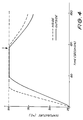
- Fig. 4 There is also shown in Fig. 4 a graph of the temperatures measured in hair curl near the surface of the former and on the outer surface of the hair curl, when the present invention is used in a permanent setting procedure.
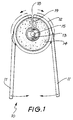
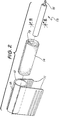
- the apparatus 10 described with reference to Figs. 1 and 2 comprises a former 13 surrounded over its length by a water absorbent member which is a tubular piece of polystyrene foam 14 enclosed by a water impermeable member which is a clamp 12.
- the former 13 comprises a tube 22 formed from 316 stainless steel having a wall thickness of 0.5mm.
- an infrared source which comprises a spirally wound length of 23 gauge (0,5 mm) Kanthal 17 which is supported intermediate its length by mica insulator 20.
- the Kanthal is silver soldered into a metallic cap 21 which is crimped onto the tube 22. In this way, electrical contact is established between one end of the Kanthal and the tube 22.
- the Kanthal is connected to a plug 15.
- the plug 15 is insulated from tube 22 by a teflon plug 16.
- the plug 15 is adapted to receive an appropriately dimensioned electrical connector so that electrical connection is made between ends of the Kanthal and the voltage source.
- the former 13 is surrounded about its length by a tubular piece of polystyrene foam 14, which has a length substantially that of the clamp 12.
- a longitudinally extending slit 19 which is aligned with a longitudinally extending opening 18 in the clamp 12.
- the foam 14 is dimensioned to fit snugly within the clamp and to contact the former 13 over its length.
- clamp 12 is, as shown in Fig. 1, normally closed.
- a force exerted on the legs 11 in the direction arrowed in Fig. 1 will cause the enlargening of the opening 18, as shown arrowed, and slit 19 to enable the former 13 to be removed.
- hair to which an appropriate amount of perming composition has been added, is wound on the former 13.
- the clamp 12 is then opened by moving legs 11 in the direction arrowed in Fig. 1 and the former 13 placed in contact with the foam 14 through opening 18 and slit 19.
- the clamp 12 will close and the hair on the former 13 surrounded by the foam 14 and the tubular portion of the clamp. This process is repeated until half of the hair on the head is ready for setting.
- the plugs 15 are then placed into appropriate sockets and current applied for an appropriate amount of time, generally about 30-60 seconds.
- the current supplying the infrared sources is obtained from a high leakage reactance transformer.
- a means to vary the voltage such as a simple rheostat is included in order to vary the infrared output.
- a timer is used to electrically switch off the power to the infrared sources.
- the formers are removed from the clamps and the hair unwound. The other half of the head is then treated as described. On completion, the hair is rinsed with water and then further prepared in the usual manner.
- thermocouples were placed in a hair curl near the surface of a former (inside) and near the outer surface of the curl (outside).
- the heat input to the infrared source was 15.5 watts with heating commenced at zero time and terminating at about 120 seconds.
Landscapes
- Physics & Mathematics (AREA)
- Thermal Sciences (AREA)
- Cosmetics (AREA)
- Hair Curling (AREA)
Claims (13)
- Dauerhaarformungsapparat, der einen hohlen infrarotstrahlungsdurchlässigen oder -absorbierenden Former, der dazu eingerichtet ist, Haare darauf gewickelt zu haben, eine Infrarotstrahlungsquelle mit einem heißen Draht in dem Former, wobei der heiße Draht geeignet ist, unter Verwendung einer Spannung in dem Bereich zwischen 4 und 30 V kontinuierlich bis auf eine Temperatur von 1100 °C erhitzt zu werden, ein wasserundurchlässiges Teil, um das auf den Former aufgewickelte Haar abzudecken, und ein wasserabsorbierendes Teil, das zwischen dem wasserundurchlässigen Teil und dem Former angeordnet ist.
- Apparat gemäß Anspruch 1, wobei der Former ein Rohr ist, das ein aus Silizium(IV)-oxid geformtes glasartiges Rohr ist oder rostfreier Stahl ist.
- Apparat gemäß Anspruch 2, wobei das Mittel zum Abdecken des auf den Former aufgewickelten Haares eine wasserundurchlässiges Teil aufweist, das so dimensioniert ist, daß sicherstellt ist, daß im wesentlichen das gesamte auf dem Former aufgelegte Haar abgedeckt ist.
- Apparat gemäß Anspruch 3, wobei das wasserundurchlässige Teil eine Zwinge mit einem röhrenförmigen Bereich, der angepaßt ist, den Former abzudecken, wobei der röhrenförmige Teil einen sich in Längsrichtung erstreckende Öffnung hat, und ein Paar von Schenkeln aufweist, die jeweils an gegenüberliegenden Seiten des röhrenförmigen Teils mit der Öffnung zwischen ihnen angeordnet sind.
- Apparat gemäß Anspruch 4, wobei das wasserabsorbierende Teil einen röhrenförmigen Bereich aus Kunststoffschaum mit einer sich in Längsrichtung erstreckenden Öffnung darin aufweist, die so angepaßt ist, daß sie mit der sich in Längsrichtung erstreckenden Öffnung in der Zwinge in Deckung ist.
- Apparat gemäß einem der Ansprüche 1 bis 5, der ein Erregermittel aufweist, das zum Aktivieren der Quelle betriebsmäßig an dieselbe angeschlossen ist.
- Apparat gemäß Anspruch 6, wobei zum intermittierenden Aktivieren der Infrarotquelle auf eine vorbestimmte Weise ein Steuermittel betriebsmäßig an das Erregermittel angeschlossen ist .
- Apparat gemäß Anspruch 7, wobei das Erregermittel eine sekundäre Streureaktanz und einen Transformator mit einem gesättigten Kern aufweist.
- Verfahren zur Haardauerformung, bei dem, während das Haar auf einen Former aufgewickelt ist, eine effektive Menge einer Zusammensetzung, die geeignet ist, auf das Haar derart einzuwirken, daß es verformt wird, auf das Haar aufgebracht wird, wobei die Wirkungsrate der Zusammensetzung mit zunehmender Temperatur zunimmt, und bei dem das Haar mit der Zusammensetzung erhitzt wird, wobei das Verfahren das entweder direkt oder indirekt Erhitzen des Haares mit einem Apparat gemäß Anspruch 1 mittels Infrarotstrahlung von innerhalb des Formers über eine Zeitspanne aufweist, die ausreicht, um das Verformen zu bewirken.
- Verfahren gemäß Anspruch 9, wobei die Zusammensetzung 1 bis 4 % Gewicht pro Volumen Thioglycolat (L) aufweist.
- Verfahren gemäß Anspruch 10, wobei das Haar für zwischen 5 und 60 Sekunden erhitzt wird.
- Verfahren gemäß Anspruch 11, wobei bei Beendigung des Heizens das Haar gespült wird, ohne mit Neutralisationsmittel behandelt zu werden.
- Verfahren gemäß Anspruch 12, wobei das Haar verformt wird, indem ein Apparat gemäß einem der Ansprüche 2 bis 8 verwendet wird.
Applications Claiming Priority (4)
| Application Number | Priority Date | Filing Date | Title |
|---|---|---|---|
| AUPJ462589 | 1989-06-07 | ||
| AU4625/89 | 1989-06-07 | ||
| PCT/AU1990/000251 WO1990014780A1 (en) | 1989-06-07 | 1990-06-07 | Hair setting |
| AU57241/90A AU637106B2 (en) | 1989-06-07 | 1990-06-07 | Hair setting |
Publications (3)
| Publication Number | Publication Date |
|---|---|
| EP0475974A1 EP0475974A1 (de) | 1992-03-25 |
| EP0475974A4 EP0475974A4 (en) | 1993-01-07 |
| EP0475974B1 true EP0475974B1 (de) | 1997-04-09 |
Family
ID=25631577
Family Applications (1)
| Application Number | Title | Priority Date | Filing Date |
|---|---|---|---|
| EP90908425A Expired - Lifetime EP0475974B1 (de) | 1989-06-07 | 1990-06-07 | Wellen der haare |
Country Status (2)
| Country | Link |
|---|---|
| EP (1) | EP0475974B1 (de) |
| WO (1) | WO1990014780A1 (de) |
Families Citing this family (2)
| Publication number | Priority date | Publication date | Assignee | Title |
|---|---|---|---|---|
| FR3062786B1 (fr) * | 2017-02-13 | 2021-06-25 | Oreal | Dispositif de traitement de cheveux |
| EP4581981A1 (de) * | 2024-01-04 | 2025-07-09 | Koninklijke Philips N.V. | Lockenwickler |
Family Cites Families (7)
| Publication number | Priority date | Publication date | Assignee | Title |
|---|---|---|---|---|
| BE364636A (de) * | 1928-10-23 | |||
| US3126895A (en) * | 1960-04-20 | 1964-03-31 | Leclabart | |
| DE2720961A1 (de) * | 1977-05-10 | 1978-11-16 | Braun Ag | Vorrichtung zum trocknen und/oder formen des haares |
| US4263500A (en) * | 1978-06-19 | 1981-04-21 | Clairol Incorporated | Infrared heating hair dryer |
| DE3133851A1 (de) * | 1981-08-27 | 1983-03-24 | Wella Ag | Waermebehandlungsgeraet fuer kopfhaare |
| US4602143A (en) | 1984-11-14 | 1986-07-22 | Clairol Incorporated | Infrared hair styling device |
| US4740669A (en) | 1986-05-07 | 1988-04-26 | Toyosaku Takimae | Electric curling iron with infrared radiating curling rod surface |
-
1990
- 1990-06-07 EP EP90908425A patent/EP0475974B1/de not_active Expired - Lifetime
- 1990-06-07 WO PCT/AU1990/000251 patent/WO1990014780A1/en not_active Ceased
Also Published As
| Publication number | Publication date |
|---|---|
| EP0475974A4 (en) | 1993-01-07 |
| EP0475974A1 (de) | 1992-03-25 |
| WO1990014780A1 (en) | 1990-12-13 |
Similar Documents
| Publication | Publication Date | Title |
|---|---|---|
| US5365953A (en) | Hair setting apparatus | |
| US1455696A (en) | Electric oven for hair | |
| US7586066B2 (en) | Hair styling device and method | |
| US3224454A (en) | Curling iron having different sized hair winding tubes | |
| US4877042A (en) | Dynamic hair grooming appliance | |
| EP0475974B1 (de) | Wellen der haare | |
| AU637106B2 (en) | Hair setting | |
| US20210196020A1 (en) | Hair styling device | |
| KR102293558B1 (ko) | 펌용 헤어클립 | |
| US3515851A (en) | Roller curler | |
| JPH05500013A (ja) | 髪のセット装置 | |
| KR20140039839A (ko) | 퍼머용 롯드 클립 | |
| JP2024152516A (ja) | 髪処理装置 | |
| US5174311A (en) | Device for the shaping of human hair | |
| JP2005304902A (ja) | 整髪処理装置 | |
| JPH04250104A (ja) | ヘアーアイロン | |
| JP2003093132A (ja) | ヘアアイロン | |
| KR200194891Y1 (ko) | 모발 셋팅용 롤 | |
| KR100413239B1 (ko) | 웨이브 퍼머 방법 및 그 장치 | |
| GB2026052A (en) | Permanent waving | |
| KR200190845Y1 (ko) | 가열 퍼머넌트 장치 | |
| JPH1175927A (ja) | 頭髪整形用アイロン | |
| US1340738A (en) | Process of and apparatus for curling hair | |
| JP2024152517A (ja) | 縮毛矯正方法 | |
| KR810002291Y1 (ko) | 파마촉진 및 트리트먼트 촉진용 헤어캪 |
Legal Events
| Date | Code | Title | Description |
|---|---|---|---|
| PUAI | Public reference made under article 153(3) epc to a published international application that has entered the european phase |
Free format text: ORIGINAL CODE: 0009012 |
|
| 17P | Request for examination filed |
Effective date: 19911219 |
|
| AK | Designated contracting states |
Kind code of ref document: A1 Designated state(s): DE FR GB IT |
|
| A4 | Supplementary search report drawn up and despatched |
Effective date: 19921119 |
|
| AK | Designated contracting states |
Kind code of ref document: A4 Designated state(s): DE FR GB IT |
|
| 17Q | First examination report despatched |
Effective date: 19940510 |
|
| GRAG | Despatch of communication of intention to grant |
Free format text: ORIGINAL CODE: EPIDOS AGRA |
|
| GRAH | Despatch of communication of intention to grant a patent |
Free format text: ORIGINAL CODE: EPIDOS IGRA |
|
| GRAH | Despatch of communication of intention to grant a patent |
Free format text: ORIGINAL CODE: EPIDOS IGRA |
|
| GRAA | (expected) grant |
Free format text: ORIGINAL CODE: 0009210 |
|
| AK | Designated contracting states |
Kind code of ref document: B1 Designated state(s): DE FR GB IT |
|
| REF | Corresponds to: |
Ref document number: 69030438 Country of ref document: DE Date of ref document: 19970515 |
|
| PG25 | Lapsed in a contracting state [announced via postgrant information from national office to epo] |
Ref country code: GB Free format text: LAPSE BECAUSE OF NON-PAYMENT OF DUE FEES Effective date: 19970709 |
|
| ET | Fr: translation filed | ||
| PLBE | No opposition filed within time limit |
Free format text: ORIGINAL CODE: 0009261 |
|
| STAA | Information on the status of an ep patent application or granted ep patent |
Free format text: STATUS: NO OPPOSITION FILED WITHIN TIME LIMIT |
|
| PG25 | Lapsed in a contracting state [announced via postgrant information from national office to epo] |
Ref country code: FR Free format text: LAPSE BECAUSE OF NON-PAYMENT OF DUE FEES Effective date: 19980227 |
|
| PG25 | Lapsed in a contracting state [announced via postgrant information from national office to epo] |
Ref country code: DE Free format text: LAPSE BECAUSE OF NON-PAYMENT OF DUE FEES Effective date: 19980303 |
|
| GBPC | Gb: european patent ceased through non-payment of renewal fee |
Effective date: 19970709 |
|
| 26N | No opposition filed | ||
| REG | Reference to a national code |
Ref country code: FR Ref legal event code: ST |
|
| REG | Reference to a national code |
Ref country code: FR Ref legal event code: ST |
|
| PG25 | Lapsed in a contracting state [announced via postgrant information from national office to epo] |
Ref country code: IT Free format text: LAPSE BECAUSE OF NON-PAYMENT OF DUE FEES;WARNING: LAPSES OF ITALIAN PATENTS WITH EFFECTIVE DATE BEFORE 2007 MAY HAVE OCCURRED AT ANY TIME BEFORE 2007. THE CORRECT EFFECTIVE DATE MAY BE DIFFERENT FROM THE ONE RECORDED. Effective date: 20050607 |