EP0462572B1 - Vielfachzugriffsprotokoll - Google Patents
Vielfachzugriffsprotokoll Download PDFInfo
- Publication number
- EP0462572B1 EP0462572B1 EP91109985A EP91109985A EP0462572B1 EP 0462572 B1 EP0462572 B1 EP 0462572B1 EP 91109985 A EP91109985 A EP 91109985A EP 91109985 A EP91109985 A EP 91109985A EP 0462572 B1 EP0462572 B1 EP 0462572B1
- Authority
- EP
- European Patent Office
- Prior art keywords
- channel
- reverse
- central station
- station
- code
- Prior art date
- Legal status (The legal status is an assumption and is not a legal conclusion. Google has not performed a legal analysis and makes no representation as to the accuracy of the status listed.)
- Expired - Lifetime
Links
Images

Classifications
-
- H—ELECTRICITY
- H04—ELECTRIC COMMUNICATION TECHNIQUE
- H04W—WIRELESS COMMUNICATION NETWORKS
- H04W74/00—Wireless channel access
- H04W74/002—Transmission of channel access control information
-
- H—ELECTRICITY
- H04—ELECTRIC COMMUNICATION TECHNIQUE
- H04W—WIRELESS COMMUNICATION NETWORKS
- H04W74/00—Wireless channel access
- H04W74/02—Hybrid access
-
- H—ELECTRICITY
- H04—ELECTRIC COMMUNICATION TECHNIQUE
- H04W—WIRELESS COMMUNICATION NETWORKS
- H04W74/00—Wireless channel access
- H04W74/08—Non-scheduled access, e.g. ALOHA
- H04W74/0833—Random access procedures, e.g. with 4-step access
Definitions
- each cell is served by a base station communicating with multiple mobile stations.
- Each cell has the use of a set of radio frequency channels. At least one channel is dedicated for the purpose of setting up radio phone calls in each cell.
- This "setup" channel is shared by all the mobile stations to communicate with the base station.
- the setup channel is a full duplex channel with separate frequencies in the forward (base to mobile) and reverse (mobile to base) directions.
- the forward setup channel is used by the base station to transmit messages to all the mobiles.
- This channel is a broadcast channel in which all the mobile stations can receive all the messages transmitted from the base station.
- the reverse channel is a random contention multiple access channel, in which mobile stations may transmit messages to the base station with relatively little coordination.
- the access is random in the sense that mobile stations are not assigned a fixed transmission schedule. The access is based on contention in which mobile stations with messages to transmit will try to seize channel openings as they appear. If multiple mobile stations decide to transmit at the same time, the messages may collide and mutually destroy each other. There is also a possibility that one of the messages is received with significantly higher power than the others and is correctly received at the base station. In any case the mobile stations whose transmissions are not successful have to retransmit after some random delay.
- the base station and mobile stations transmit on separate frequencies to form a full duplex channel.
- the base station broadcasts the status of the multiple access setup channel to all the mobiles communicating with the base periodically.
- a busy/idle bit inserted every 11 bits in the base to mobile transmission indicates if the mobile station (terminal) to base station multiple access channel was busy or idle in the last period. Such timely feedback enables a mobile station to make sure the channel is idle before transmitting again.
- a mobile station continues to monitor the busy/idle bit during transmission. If the busy/idle bit does not change from indicating idle to indicating busy within a short window at the beginning of a message transmission, the transmitting mobile station assumes a collision and the transmission is immediately aborted.
- the problem associated with this approach is that the busy/idle bit does not distinguish between a collision state and a real idle state. Without such information, the mobile station cannot make more efficient decisions on when to start or abort a transmission.
- Reservation ALOHA allows a message of multiple slots (words) in length to be transmitted without interruption once the first word of the message is successfully transmitted.
- Reservation ALOHA if a station has successfully transmitted in a predetermined time slot, all the subsequent slots are implicitly reserved for that station until the station stops transmission. The problem with this scheme is that it expends one idle slot to indicate the channel's relinquishment. IEEE Transactions on Vehicular Technology, Vol.38, No.
- each forward burst further comprises a code (FAA) indicating whether or not a reverse burst was successfully received by the central station on the last time slot of the reverse channel.
- FAA code
- the code indicating whether or not a burst was successfully received by the central station comprises a remote station identifier (FAA) when a reverse burst (12) was successfully received by the central station on the last time slot of the reverse channel.
- FAA remote station identifier
- each reverse burst (12) comprises a remote station identifier identifying the remote station which transmitted the reverse burst.
- the invention also relates to a communication system according to claim 12, a central station according to claim 13, and a remote station according to claim 14.
- each cell is served by a base station communicating with multiple mobile stations.
- the setup channel is a full duplex channel with separate frequencies in the forward (base to mobile) and reverse (mobile to base) directions.
- the forward setup channel is used by the base station to transmit messages to the mobiles.
- This channel is a broadcast channel in which all the mobile stations can receive all the messages transmitted from the base station.
- the reverse channel is a random contention multiple access channel, in which mobile stations may transmit messages to the base station with relatively little coordination.
- a new multiple access protocol is used in the setup channel.
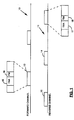
- both the forward channel 10 and reverse channel 11 are divided into timeslots.
- the forward and reverse channel time slots are arranged in such a way that after a mobile station transmits a burst 12 on reverse channel 11, an acknowledgement burst 13 from the base station will be transmitted and received by the mobile station before the mobile transmits burst 14.
- the time slots need not occupy the complete channel. Duration not used by the forward or reverse channel can be allocated to other services or form other pairs of time divisional multiple access channels.
- FAA forward access/acknowledgement
- FM forward "more”
- RAA reverse access/ acknowledgement
- RM reverse access/more
- the RAA field carries an abbreviated identifier of the mobile station. This identifier need not uniquely identify the mobile station as long as the probability of mis-identification is much less than the probability of correct identification. If the identifier in the RAA field does not uniquely identify the transmitting mobile station, the rest of the message must contain a full identifier which will uniquely identify the mobile station. Messages in either direction may be of one or more bursts (words).
- the RM is a binary field which is set to Open if the current message is not continued on the next burst, otherwise the RM is set to Reserved.
- the FAA field is used to reflect the result of access in the last received slot in the reverse channel. If the last received slot in the reverse channel contained a successful transmission burst, the FAA will provide an acknowledgement code which is the same as the content of the RAA field of the last slot received by the base station. If the last reverse channel slot received is idle, the FAA will contain a distinct idle code which is different from all possible abbreviated identities of mobiles. If multiple mobile stations transmitted in the last reverse channel slot resulting in mutual destruction of the collided messages, a distinct Collision code which is different from all possible abbreviated mobile identities will be transmitted.
- the FM field holds a binary value representing either an Open or Reserved state.
- the value or state representing Open indicates the next reverse channel slot is available for contention access.
- the value representing Reserved indicates the next reverse channel slot is reserved for the mobile station whose abbreviated identifier is transmitted in the FAA field of the current forward burst.
- the base station will set the FAA and FM Fields according to the result of the last reversed slot, as follows: Last Reverse Access Channel Slot Status RM FM FAA Idle n/a Open Idle Code Single Successful Open Open Abbr.identifier Transmission Reserved Reserved Abbr.identifier Multiple Open Open Abbr.identifier Transmission with one success Reserved Reserved Abbr.identifier Multiple Transmission without success X Open Collision Code Transmission by radio channel errors X Open Collision Code n/a indicates not applicable, X indicates don't care.
- a mobile station with a message to send to the base station will use the following algorithm to determine when to transmit:
- the FAA can be assigned a 7-bit field which can hold an arbitrary value ranging from 0 to 127 (decimal).
- the abbreviated identifier uses the last two digits of the telephone number of a mobile station. The valid abbreviated identifier therefore can range between 00 (decimal) to 99 (decimal).
- the idle and Collision codes for the FAA field must be set to numbers that are greater than 99, since numbers 00 to 99 are reserved for abbreviated identifiers. In this embodiment, an idle code field number of 120 (decimal) and a collision code field number of 127 (decimal) is used. It will be understood by those knowledgeable in this art that the above idle and collision codes are arbitrary and may be assigned differently.
- the RAA field can have the same length as the FAA with a valid abbreviated identifier range of 0 to 99 decimal. Both the RM and FM can be assigned a one bit field with 0 indicating Open and 1 indicating Reserved.
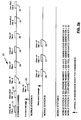
- Figure 2(a) shows a successful transmission of bursts without collisions.
- bursts 21 and 22 are transmitted and received to and by mobile stations A, B and C.
- RAA 72 i.e. the mobile's last two telephone number digits
- RM reverse field 0 indicating only one burst is sent.
- the acknowledgment burst 24 sent by the base station on the forward channel, the FAA field indicates that transmission was received since station's A abbreviated identifier is transmitted.
- the FM field is set to 0 indicating to all mobiles that the next reverse channel slot is available for contention access since only one burst was to be sent by station A.
- the base station responds again in the forward channel with a similar burst 28.
- Mobile station B sends its last burst 29 for that message.
- the base station responds with a burst 30 indicating to all mobiles that the next reverse channel slot is now available for contention access. If no mobile station sends a burst, the next two bursts 31 and 32 from the base station indicate the status of the channel as being idle.
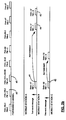
- Figure 2(b) shows a burst transmission scenario in which a collision destroys messages from mobile station B and C. A subsequent successful retransmission of the messages is also shown.
- station B Upon receiving burst 40 from the base station indicating that the channel is idle, station B sends burst 41 and station C sends burst 42. Since both are sent simultaneously, a collision occurs resulting in destruction of the bursts.
- a status burst 43 indicating that a collision has occurred is transmitted.
- transmission from both mobiles is terminated. After a randomly selected delay, both mobile stations will try a retransmission of a burst.
- mobile station C is the first to retransmit its burst after identifying that the channel is IDLE again.
- a one-word message is sent by station C.
- mobile B sends its message, which consist of a two-word message, i.e. bursts 44 and 45.
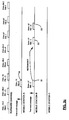
- Figure 2 (c) shows a burst transmission in which a prospective collision event results in the successful transmission of one message to the base station but the loss of the other burst. This is reflected in the next burst transmitted by the base station with the FAA code set to the abbreviated identifier of the successful mobile station (i.e. station A).
- station A the abbreviated identifier of the successful mobile station
- station A transmits burst 50 and station B transmits burst 51. Since the base station's acknowledgement burst includes identifier 72, station A identifies a successful transmission. However, station B identifies an unsuccessful transmission and therefore terminates the transmission of its second burst. After a random delay, mobile station B will retransmit its message, i.e. bursts 52 and 53.
- Figure 3 illustrate a number of systems which can make use of the protocol defined herein.
- the protocol of the present invention could be used in a cellular communication system, in the "setup" channel between a base station 60 and a mobile station 61.
- it could be used in the communication access channel of trunk line 62 between base station 60 and an MTX switch 63.
- MTX switch 63 between MTX switch 63 and a central office 64 or between the central office 64 and a satellite ground station 65.
- the protocol can be used in a wireless communication access channel between the ground base station 65 and a satellite 66.
- the protocol of the present invention is thus not limited to either wire or wireless based communication access channels.
Landscapes
- Engineering & Computer Science (AREA)
- Computer Networks & Wireless Communication (AREA)
- Signal Processing (AREA)
- Mobile Radio Communication Systems (AREA)
Claims (14)
- Verfahren zur Aussendung von Nachrichten unter Verwendung eines Vielfachzugriffskanals zwischen einer Vielzahl von entfernt angeordneten Stationen (61) einerseits und einer Zentralstation (60) andererseits, wobei der Vielfachzugriffskanal einen Vorwärtskanal (10) zur Aussendung von Nachrichten von der Zentralstation zu den entfernt angeordneten Stationen und einen mit zufälligen Konkurrenzbetrieb arbeitenden Vielfachzugriffs-Rückwärtskanal (11) für die Aussendung von Nachrichten von den entfernt angeordneten Stationen zu der Zentralstation umfaßt, und wobei der Status (Belegt/Unbelegt) des Vielfachzugriffskanals den entfernt angeordneten Stationen durch die Zentralstation identifiziert wird,
dadurch gekennzeichnet, daß das Verfahren folgende Schritte umfaßt:Aussendung von Vorwärts-Datenblöcken (13) in Zeitschlitzen des Vorwärtskanals (10), wobei jeder Vorwärts-Datenblock einen Code (FM) umfaßt, der anzeigt, ob der nächste Zeitschlitz des Rückwärtskanals zur Verwendung durch eine bestimmte entfernt angeordnete Station reserviert oder für einen Konkurrenzbetrieb aller entfernt angeordneter Stationen frei ist,Aussendung von Rückwärts-Datenblöcken (12) in Zeitschlitzen des Rückwärtskanals (11), wobei jeder Rückwärts-Datenblock einen Code (RM) umfaßt, der anzeigt, ob die sendende entfernt angeordnete Station zumindest einen weiteren Zeitschlitz des Rückwärtskanals benötigt, um die Aussendung einer Nachricht an die Zentralstation abzuschließen,und wobei die Vorwärts- und Rückwärtskanäle Zeitschlitze umfassen, die mit zeitlichem Abstand angeordnet zeitlich versetzt sind, derart daß die Zeitschlitze des Vorwärtskanals mit den Zeitschlitzen des Rückwärtskanals verschachtelt sind. - Verfahren nach Anspruch 1,
dadurch gekennzeichnet, daß jeder Vorwärts-Datenblock weiterhin einen Code (FAA) umfaßt, der anzeigt, ob ein Rückwärts-Datenblock von der Zentralstation auf dem letzten Zeitschlitz des Rückwärtskanals erfolgreich empfangen wurde oder nicht. - Verfahren nach Anspruch 2,
dadurch gekennzeichnet, daß der Code, der anzeigt, ob ein Datenblock von der Zentralstation erfolgreich empfangen wurde oder nicht, eine die entfernte Station identifizierende Identifikation (FAA) umfaßt, wenn ein Rückwärts-Datenblock von der Zentralstation auf dem letzten Zeitschlitz des Rückwärtskanals erfolgreich empfangen wurde. - Verfahren nach Anspruch 1, 2 oder 3,
dadurch gekennzeichnet, daß jeder Rückwärts-Datenblock (12) eine eine entfernt angeordnete Station identifizierende Identifikation (RAA) umfaßt, die die entfernt angeordnete Station identifiziert, die den Rückwärts-Datenblock ausgesandt hat. - Verfahren nach Anspruch 2,
dadurch gekennzeichnet, daß der Code (FAA), der anzeigt, ob ein Rückwärts-Datenblock (12) von der Zentralstation (60) erfolgreich empfangen wurde oder nicht, einen ersten Code (FM, FAA) umfaßt, wenn kein Rückwärts-Datenblock von der Zentralstation (60) auf dem letzten Zeitschlitz des Rückwärtskanals empfangen wurde, während er einen zweiten, von dem ersten Code verschiedenen Code (FM, FAA) umfaßt, wenn zumindest zwei Rückwärts-Datenblöcke von der Zentralstation auf dem letzten Zeitschlitz des Rückwärtskanals empfangen wurden und die genannten zumindest zwei Rückwärts-Datenblöcke einander derart störten, daß keiner der Rückwärts-Datenblöcke von der Zentralstation erfolgreich empfangen werden konnte. - Verfahren nach Anspruch 1,
dadurch gekennzeichnet, daß die Zentralstation (60) auf den Empfang eines Codes (RM), der anzeigt, daß eine entfernt angeordnete Station (61) zumindest einen weiteren Zeitschlitz des Rückwärtskanals benötigt, um die Aussendung einer Nachricht an die Zentralstation abzuschließen, dadurch anspricht, daß sie einen Code (FM, FAA) aussendet, der anzeigt, daß der nächste Zeitschlitz des Rückwärtskanals für die Verwendung durch die entfernt angeordnete Station reserviert ist;daß die Zentralstation auf den Empfang eines Codes, der anzeigt, daß die entfernt angeordnete Station nicht zumindest einen weiteren Zeitschlitz des Rückwärtskanals zum Abschluß der Aussendung einer Nachricht an die Zentralstation benötigt, durch Aussenden eines Codes (FM, FAA) anspricht, der anzeigt, daß der nächste Zeitschlitz des Rückwärtskanals für einen Konkurrenzbetrieb aller entfernt angeordneter Stationen frei ist, unddie Zentralstation auf den Empfang keines Rückwärts-Datenblocks dadurch anspricht, daß sie einen Code (FM, FAA) aussendet, der anzeigt, daß der nächste Zeitschlitz des Rückwärtskanals für einen Konkurrenzbetrieb aller entfernt angeordneter Stationen frei ist. - Verfahren nach Anspruch 6,
dadurch gekennzeichnet, daß die entfernt angeordneten Stationen (61) mit der Aussendung von Nachrichten auf dem Rückwärtskanal lediglich bei Empfang eines Codes (FM, FAA) beginnen, der anzeigt, daß der nächste Zeitschlitz des Rückwärtskanals für einen Konkurrenzbetrieb aller entfernt angeordneter Stationen frei ist. - Verfahren nach Anspruch 7,
dadurch gekennzeichnet, daß eine entfernt angeordnete Station (61), die einen ersten Datenblock einer mehrere Datenblöcke umfassenden Nachricht auf dem Rückwärtskanal ausgesandt hat, weitere Datenblöcke der Nachricht auf den Rückwärtskanal nur dann aussendet, wenn sie einen Code (FM, FAA) empfängt, der anzeigt, daß ein vorhergehender Datenblock erfolgreich von der Zentralstation (60) empfangen wurde. - Verfahren nach Anspruch 8,
dadurch gekennzeichnet, daß die entfernt angeordnete Station (61) weitere Datenblöcke der Nachricht auf dem Rückwärtskanal nur dann weiter aussendet, wenn der Code (FAA), der anzeigt, daß der vorhergehende Datenblock erfolgreich empfangen wurde, die entfernt angeordnete Station identifiziert. - Verfahren nach Anspruch 4,
dadurch gekennzeichnet, daß die Zentralstation (60) auf den Empfang eines Codes (FM, FAA), der eine sendende entfernt angeordnete Station identifiziert und eines Codes, der anzeigt, daß die entfernt angeordnete Station zumindest einen weiteren Zeitschlitz des Rückwärtskanals benötigt, um die Aussendung einer Nachricht an die Zentralstation abzuschließen, dadurch anspricht, daß sie einen Code (RM) aussendet, der anzeigt, daß der nächste Zeitschlitz des Rückwärtskanals zur Verwendung durch die entfernt angeordnete Station reserviert ist, und daß sie einen Code (RAA) aussendet, der die Identität der entfernt angeordneten Station anzeigt. - Verfahren nach Anspruch 5,
dadurch gekennzeichnet, daß entfernt angeordnete Stationen (61), die an die Zentralstation (60) auszusendende Nachrichten haben, auf den Empfang des Codes (FM), der anzeigt, daß der Rückwärtskanal für einen Konkurrenzbetrieb offen ist, zusammen mit dem ersten Code (FAA), der anzeigt, daß kein Rückwärts-Datenblock von der Zentralstation auf dem letzten Zeitschlitz des Rückwärtskanals empfangen wurde, dadurch ansprechen, daß sie einen Rückwärts-Datenblock (12) auf dem nächsten Zeitschlitz des Rückwärtskanals aussenden, und daß
entfernt angeordnete Stationen, die an die Zentralstation auszusendende Nachrichten haben, auf den Empfang des Codes (FM), der anzeigt, daß der Rückwärtskanal (11) für einen Konkurrenzbetrieb frei ist, zusammen mit dem zweiten Code (FAA = Kollisions-Code), der anzeigt, daß zumindest zwei Rückwärts-Datenblöcke von der Zentralstation auf dem letzten Zeitschlitz des Rückwärtskanals empfangen wurden, dadurch ansprechen, daß sie eine pseudo-zufällige Anzahl von Zeitschlitzen warten, bevor sie einen RückwärtsDatenblock (12) auf den Rückwärtskanal (11) aussenden. - Kommunikationssystem mit einer Zentralstation (60), einer Vielzahl von entfernt angeordneten Stationen (61) und einem Vielfachzugriffskanal zwischen den entfernt angeordneten Stationen einerseits und der Zentralstation andererseits, wobei der Vielfachzugriffskanal einen Vorwärtskanal (10) zur Aussendung von Nachrichten von der Zentralstation an die entfernt angeordneten Stationen und einen mit zufälligem Konkurrenzbetrieb arbeitenden Vielfachzugriffs-Rückwärtskanal (11) zur Übertragung von Nachrichten von den entfernt angeordneten Stationen zu der Zentralstation umfaßt, und wobei der Status (Belegt/Unbelegt) des Mehrfachzugriffskanals den entfernt angeordneten Stationen durch die Zentralstation identifiziert wird,
dadurch gekennzeichnet, daß:die Zentralstation betreibbar ist, um Vorwärts-Datenblöcke (13) in Zeitschlitzen des Vorwärtskanals zu senden, wobei jeder Vorwärts-Datenblock einen Code (FM) umfaßt, der anzeigt, ob der nächste Zeitschlitz des Rückwärtskanals für die Verwendung durch eine bestimmte entfernt angeordnete Station reserviert oder für den Konkurrenzbetrieb aller entfernt angeordneter Stationen frei ist, unddie entfernt angeordneten Stationen zur Aussendung von Rückwärts-Datenblöcken (12) in Zeitschlitzen des Rückwärtskanals betreibbar sind, wobei die Zeitschlitze des Rückwärtskanals zeitlich mit Abstand voneinander und zeitlich versetzt gegenüber den Zeitschlitzen des Vorwärtskanals derart angeordnet sind, daß die Zeitschlitze des Rückwärtskanals mit den Zeitschlitzen des Vorwärtskanals verschachtelt sind, wobei jeder Rückwärts-Datenblock einen Code (RM) umfaßt, der anzeigt, ob die sendende entfernt angeordnete Station zumindest einen weiteren Zeitschlitz des Rückwärtskanals benötigt, um die Aussendung einer Nachricht an die Zentralstation abzuschließen. - Zentralstation (60) für ein Kommunikationssystem, das die Zentralstation, eine Vielzahl von entfernt angeordneten Stationen (61) und einen Vielfachzugriffskanal zwischen den entfernt angeordneten Stationen einerseits und der Zentralstation andererseits umfaßt, wobei der Vielfachzugriffskanal einen Vorwärtskanal (10) zur Aussendung von Nachrichten von der Zentralstation an die entfernt angeordneten Stationen und einen mit zufälligem Konkurrenzbetrieb arbeitenden Vielfachzugriffs-Rückwärtskanal (11) zur Aussendung von Nachrichten von den entfernt angeordneten Stationen zu der Zentralstation umfaßt, und wobei der Status (Belegt/Unbelegt) des Vielfachzugriffskanals den entfernt angeordneten Stationen durch die Zentralstation identifiziert wird,
dadurch gekennzeichnet, daß:
die Zentralstation zur Aussendung von Vorwärts-Datenblöcken (13) in Zeitschlitzen des Vorwärtskanals betreibbar ist, wobei jeder Vorwärts-Datenblock einen Code (FM) umfaßt, der anzeigt, ob der nächste Zeitschlitz des Rückwärtskanals zur Verwendung durch eine bestimmte entfernt angeordnete Station reserviert oder für einen Konkurrenzbetrieb aller entfernt angeordneter Stationen frei ist. - Entfernt angeordnete Station (61) für ein Kommunikationssystem, das eine Zentralstation (60), eine Vielzahl von entfernt angeordneten Stationen (61) und einen Vielfachzugriffskanal zwischen den entfernt angeordneten Stationen einerseits und der Zentralstation andererseits umfaßt, wobei der Vielfachzugriffskanal einen Vorwärtskanal (10) zur Aussendung von Nachrichten von der Zentralstation an die entfernt angeordneten Stationen und einen mit zufälligem Konkurrenzbetrieb arbeitenden Vielfachzugriffs-Rückwärtskanal (11) zur Aussendung von Nachrichten von den entfernt angeordneten Stationen an die Zentralstation umfaßt, und wobei der Status (Belegt/Unbelegt) des Vielfachzugriffskanals den entfernt angeordneten Stationen von der Zentralstation identifiziert wird,
dadurch gekennzeichnet, daß:
die entfernt angeordnete Station zur Aussendung von Rückwärts-Datenblöcken (12) in Zeitschlitzen des Rückwärtskanals betreibbar ist, wobei die Zeitschlitze des Rückwärtskanals zeitlich mit Abstand voneinander angeordnet und zeitlich gegenüber den Zeitschlitzen des Vorwärtskanals derart versetzt sind, daß die Zeitschlitze des Rückwärtskanals mit den Zeitschlitzen des Vorwärtskanals verschachtelt sind, wobei jeder Rückwärts-Datenblock einen Code (RM) umfaßt, der anzeigt, ob die sendende entfernt angeordnete Station zumindest einen weiteren Zeitschlitz des Rückwärtskanals benötigt, um die Aussendung einer Nachricht an die Zentralstation abzuschließen.
Applications Claiming Priority (2)
| Application Number | Priority Date | Filing Date | Title |
|---|---|---|---|
| US539832 | 1975-01-09 | ||
| US07/539,832 US5166929A (en) | 1990-06-18 | 1990-06-18 | Multiple access protocol |
Publications (3)
| Publication Number | Publication Date |
|---|---|
| EP0462572A2 EP0462572A2 (de) | 1991-12-27 |
| EP0462572A3 EP0462572A3 (en) | 1992-10-07 |
| EP0462572B1 true EP0462572B1 (de) | 1997-08-06 |
Family
ID=24152840
Family Applications (1)
| Application Number | Title | Priority Date | Filing Date |
|---|---|---|---|
| EP91109985A Expired - Lifetime EP0462572B1 (de) | 1990-06-18 | 1991-06-18 | Vielfachzugriffsprotokoll |
Country Status (4)
| Country | Link |
|---|---|
| US (2) | US5166929A (de) |
| EP (1) | EP0462572B1 (de) |
| CA (1) | CA2043705C (de) |
| DE (1) | DE69127140T2 (de) |
Cited By (10)
| Publication number | Priority date | Publication date | Assignee | Title |
|---|---|---|---|---|
| US6697350B2 (en) | 1995-06-30 | 2004-02-24 | Interdigital Technology Corporation | Adaptive vector correlator for spread-spectrum communications |
| US6707805B2 (en) | 1995-06-30 | 2004-03-16 | Interdigital Technology Corporation | Method for initial power control for spread-spectrum communications |
| US6788662B2 (en) | 1995-06-30 | 2004-09-07 | Interdigital Technology Corporation | Method for adaptive reverse power control for spread-spectrum communications |
| US6816473B2 (en) | 1995-06-30 | 2004-11-09 | Interdigital Technology Corporation | Method for adaptive forward power control for spread-spectrum communications |
| US6940840B2 (en) | 1995-06-30 | 2005-09-06 | Interdigital Technology Corporation | Apparatus for adaptive reverse power control for spread-spectrum communications |
| US7020111B2 (en) | 1996-06-27 | 2006-03-28 | Interdigital Technology Corporation | System for using rapid acquisition spreading codes for spread-spectrum communications |
| US7072380B2 (en) | 1995-06-30 | 2006-07-04 | Interdigital Technology Corporation | Apparatus for initial power control for spread-spectrum communications |
| US7123600B2 (en) | 1995-06-30 | 2006-10-17 | Interdigital Technology Corporation | Initial power control for spread-spectrum communications |
| US7903613B2 (en) | 1995-06-30 | 2011-03-08 | Interdigital Technology Corporation | Code division multiple access (CDMA) communication system |
| US7929498B2 (en) | 1995-06-30 | 2011-04-19 | Interdigital Technology Corporation | Adaptive forward power control and adaptive reverse power control for spread-spectrum communications |
Families Citing this family (121)
| Publication number | Priority date | Publication date | Assignee | Title |
|---|---|---|---|---|
| CA2094710C (en) * | 1990-10-23 | 1998-12-01 | Robert Clyde Dixon | Method and apparatus for establishing spread spectrum communications |
| US5559805A (en) * | 1990-12-12 | 1996-09-24 | Gpt Limited | Outstation ranging in demand assignment, time division multiple access, communication system |
| FI87615C (fi) * | 1991-04-05 | 1993-01-25 | Nokia Mobile Phones Ltd | Styrsystem foer ett paketkopplat cdma-datanaet |
| US5815525A (en) | 1991-05-13 | 1998-09-29 | Omnipoint Corporation | Multi-band, multi-mode spread-spectrum communication system |
| US5887020A (en) | 1991-05-13 | 1999-03-23 | Omnipoint Corporation | Multi-band, multi-mode spread-spectrum communication system |
| US5694414A (en) | 1991-05-13 | 1997-12-02 | Omnipoint Corporation | Multi-band, multi-mode spread-spectrum communication system |
| US5790587A (en) | 1991-05-13 | 1998-08-04 | Omnipoint Corporation | Multi-band, multi-mode spread-spectrum communication system |
| US5796772A (en) | 1991-05-13 | 1998-08-18 | Omnipoint Corporation | Multi-band, multi-mode spread-spectrum communication system |
| US5285469A (en) | 1991-06-03 | 1994-02-08 | Omnipoint Data Corporation | Spread spectrum wireless telephone system |
| US5315636A (en) * | 1991-06-28 | 1994-05-24 | Network Access Corporation | Personal telecommunications system |
| MX9301888A (es) * | 1992-04-10 | 1993-11-30 | Ericsson Telefon Ab L M | Acceso multiple de division de tiempo para acceso de un movil en un sistema de acceso multiple de division de codigo. |
| US5568511A (en) * | 1992-08-26 | 1996-10-22 | Ericsson Ge Mobile Communications Inc. | System and method for radio disconnect and channel access for digitized speech trunked radio systems |
| US5604744A (en) * | 1992-10-05 | 1997-02-18 | Telefonaktiebolaget Lm Ericsson | Digital control channels having logical channels for multiple access radiocommunication |
| US6041047A (en) * | 1992-10-05 | 2000-03-21 | Telefonaktiebolaget Lm Ericsson | Digital control channels having logical channels supporting broadcast SMS |
| US5603081A (en) * | 1993-11-01 | 1997-02-11 | Telefonaktiebolaget Lm Ericsson | Method for communicating in a wireless communication system |
| US5768276A (en) * | 1992-10-05 | 1998-06-16 | Telefonaktiebolaget Lm Ericsson | Digital control channels having logical channels supporting broadcast SMS |
| FI94994C (fi) * | 1992-10-19 | 1995-11-27 | Nokia Telecommunications Oy | Hajapääsymenetelmä radiojärjestelmässä |
| SE500565C2 (sv) * | 1992-10-26 | 1994-07-18 | Ericsson Telefon Ab L M | Metod att åstadkomma slumpmässig access i ett mobilradiosystem |
| JP3212169B2 (ja) * | 1993-01-06 | 2001-09-25 | 株式会社東芝 | 無線通信システム及び基地局 |
| EP0608587A1 (de) * | 1993-01-27 | 1994-08-03 | Rockwell International Corporation | Frequenzwahl durch Qualitätsmessung in TDMA Funkanordnung mit Zeitschlitz bestehend aus Verkehr- und Sensorteilen |
| TW234224B (de) * | 1993-04-19 | 1994-11-01 | Ericsson Ge Mobile Communicat | |
| FR2705179B1 (fr) * | 1993-05-12 | 1995-06-16 | Gemplus Card Int | Procédé de gestion de la transmission des messages d'un ensemble d'émetteurs vers un récepteur unique sur un canal unique. |
| FI97517C (fi) * | 1993-09-06 | 1996-12-27 | Nokia Mobile Phones Ltd | Pakettidatan siirto digitaalisessa solukkoverkossa |
| DE4335305A1 (de) * | 1993-10-16 | 1995-04-20 | Philips Patentverwaltung | Verfahren und Schaltungsanordnung zur Übertragung von Sprachsignalen |
| US5594738A (en) * | 1993-10-18 | 1997-01-14 | Motorola, Inc. | Time slot allocation method |
| US6088590A (en) * | 1993-11-01 | 2000-07-11 | Omnipoint Corporation | Method and system for mobile controlled handoff and link maintenance in spread spectrum communication |
| EP0677223A4 (de) * | 1993-11-01 | 1996-01-10 | Ericsson Telefon Ab L M | Anforderung zur automatischen sendungswiederholung. |
| IL111469A0 (en) * | 1993-11-01 | 1994-12-29 | Omnipoint Corp | Despreading/demodulating direct sequence spread spectrum signals |
| US6005856A (en) | 1993-11-01 | 1999-12-21 | Omnipoint Corporation | Communication protocol for spread spectrum wireless communication system |
| CA2152946C (en) * | 1993-11-01 | 2000-02-15 | Anthony J. Sammarco | Layer 2 protocol in a cellular communication system |
| US6094575A (en) * | 1993-11-01 | 2000-07-25 | Omnipoint Corporation | Communication system and method |
| US5586150A (en) * | 1993-11-24 | 1996-12-17 | Rajupandaram K. Balasubramaniam | Method and apparatus for symbol synchronization in multi-level digital FM radio |
| FI941333L (fi) * | 1994-03-22 | 1995-09-23 | Nokia Telecommunications Oy | Menetelmä lähetysvuorojen jakamiseksi radioyksiköiden välillä ja radioyksikkö |
| FR2717969B1 (fr) * | 1994-03-22 | 1996-05-31 | Nortel Matra Cellular | Procédé et équipements pour diffuser des messages vers des stations mobiles de radiocommunication. |
| US6329902B1 (en) * | 1994-04-20 | 2001-12-11 | Cellco Partnership | Wide area two-way paging using a mesh network with paging receivers |
| FI98426C (fi) * | 1994-05-03 | 1997-06-10 | Nokia Mobile Phones Ltd | Järjestelmä pakettidatan siirtämiseksi digitaalisen aikajakomonikäyttöön TDMA perustuvan solukkojärjestelmän ilmarajapinnassa |
| FI98427C (fi) * | 1994-06-08 | 1997-06-10 | Nokia Mobile Phones Ltd | Järjestelmäpakettidatan siirtämiseksi eri bittinopeuksilla TDMA-solukkojärjestelmässä |
| US5638412A (en) * | 1994-06-15 | 1997-06-10 | Qualcomm Incorporated | Method for providing service and rate negotiation in a mobile communication system |
| US5542115A (en) | 1994-06-24 | 1996-07-30 | Pioneer Tech Development Limited | Paging method and apparatus |
| US5561852A (en) * | 1994-07-01 | 1996-10-01 | Motorola, Inc. | Method and apparatus for establishing a communication link |
| US5535210A (en) * | 1994-07-29 | 1996-07-09 | Motorola, Inc. | Method and system for resolution of channel access in data transmission systems |
| US6175557B1 (en) | 1994-10-31 | 2001-01-16 | Telefonaktiebolaget Lm Ericsson (Publ) | Layer 2 protocol in a cellular communication system |
| US5657326A (en) * | 1994-12-20 | 1997-08-12 | 3Com Corporation | Radio based collision detection for wireless communication system |
| US5745479A (en) * | 1995-02-24 | 1998-04-28 | 3Com Corporation | Error detection in a wireless LAN environment |
| SE504049C2 (sv) | 1995-03-31 | 1996-10-28 | Ericsson Telefon Ab L M | Accessbegäran i ett momentant överbelastat mobilradiosystem |
| US5802046A (en) * | 1995-06-05 | 1998-09-01 | Omnipoint Corporation | Efficient time division duplex communication system with interleaved format and timing adjustment control |
| US5745484A (en) * | 1995-06-05 | 1998-04-28 | Omnipoint Corporation | Efficient communication system using time division multiplexing and timing adjustment control |
| US5689502A (en) * | 1995-06-05 | 1997-11-18 | Omnipoint Corporation | Efficient frequency division duplex communication system with interleaved format and timing adjustment control |
| US5959980A (en) * | 1995-06-05 | 1999-09-28 | Omnipoint Corporation | Timing adjustment control for efficient time division duplex communication |
| US6831905B1 (en) | 1995-06-30 | 2004-12-14 | Interdigital Technology Corporation | Spread spectrum system assigning information signals to message-code signals |
| US5638369A (en) * | 1995-07-05 | 1997-06-10 | Motorola, Inc. | Method and apparatus for inbound channel selection in a communication system |
| US6041046A (en) * | 1995-07-14 | 2000-03-21 | Omnipoint Corporation | Cyclic time hopping in time division multiple access communication system |
| US5541924A (en) * | 1995-07-28 | 1996-07-30 | Motorola, Inc. | Method and device for channel contention and data transmission for packet-switched subscriber units in a communication system |
| US6577618B2 (en) | 1995-10-18 | 2003-06-10 | Telefonaktiebolaget L.M. Ericsson (Publ) | Packet control channel feedback support for contention and reservation based access |
| US5822311A (en) * | 1996-03-05 | 1998-10-13 | Ericsson Inc. | Random access scheme for mobile satellite communications |
| GB2314730B (en) * | 1996-06-26 | 2000-10-04 | Roke Manor Research | Improvements in or relating to packet radio systems |
| US5790534A (en) * | 1996-09-20 | 1998-08-04 | Nokia Mobile Phones Limited | Load control method and apparatus for CDMA cellular system having circuit and packet switched terminals |
| US6069901A (en) * | 1996-12-04 | 2000-05-30 | Philips Electronics North America Corporation | Use of energy bursts for wireless networks |
| US6542481B2 (en) | 1998-06-01 | 2003-04-01 | Tantivy Communications, Inc. | Dynamic bandwidth allocation for multiple access communication using session queues |
| US6081536A (en) | 1997-06-20 | 2000-06-27 | Tantivy Communications, Inc. | Dynamic bandwidth allocation to transmit a wireless protocol across a code division multiple access (CDMA) radio link |
| EP0888021A1 (de) * | 1997-06-24 | 1998-12-30 | Motorola, Inc. | TDMA Kommunikationsanordnung mit mehreren Basisstationen in Verbindung mit mobilen Einheiten mittels Funkschnittstellen mit konfigurierbarer Rückwärtskanal |
| SE509542C2 (sv) * | 1997-06-27 | 1999-02-08 | Ericsson Telefon Ab L M | Paketförmedling i ett cellulärt radiokommunikationssystem |
| US6134231A (en) * | 1997-08-08 | 2000-10-17 | Telefonaktiebolaget Lm Ericsson (Publ) | Uplink channel puncturing for reduced interference within a wireless data communications network |
| US6614773B1 (en) * | 1997-12-02 | 2003-09-02 | At&T Corp. | Packet transmissions over cellular radio |
| US6222832B1 (en) | 1998-06-01 | 2001-04-24 | Tantivy Communications, Inc. | Fast Acquisition of traffic channels for a highly variable data rate reverse link of a CDMA wireless communication system |
| US7394791B2 (en) | 1997-12-17 | 2008-07-01 | Interdigital Technology Corporation | Multi-detection of heartbeat to reduce error probability |
| US9525923B2 (en) | 1997-12-17 | 2016-12-20 | Intel Corporation | Multi-detection of heartbeat to reduce error probability |
| US7936728B2 (en) | 1997-12-17 | 2011-05-03 | Tantivy Communications, Inc. | System and method for maintaining timing of synchronization messages over a reverse link of a CDMA wireless communication system |
| KR100506250B1 (ko) * | 1997-12-30 | 2005-10-21 | 삼성전자주식회사 | 이동통신단말기에서 쇼트메시지 발신 실패시 쇼트메시지자동 재 발신방법 |
| WO1999043171A1 (en) * | 1998-02-20 | 1999-08-26 | Fujitsu Network Communications, Inc. | Short message device for wireless telephone |
| WO1999049687A2 (en) * | 1998-03-26 | 1999-09-30 | Koninklijke Philips Electronics N.V. | Communication network with improved access protocol |
| US8134980B2 (en) | 1998-06-01 | 2012-03-13 | Ipr Licensing, Inc. | Transmittal of heartbeat signal at a lower level than heartbeat request |
| US7221664B2 (en) | 1998-06-01 | 2007-05-22 | Interdigital Technology Corporation | Transmittal of heartbeat signal at a lower level than heartbeat request |
| US6075794A (en) * | 1998-06-16 | 2000-06-13 | Motorola, Inc. | Method for coordinating inbound channels in a selective call communication system |
| CN1134937C (zh) | 1998-07-21 | 2004-01-14 | 塔奇昂公司 | 通信系统内用于多址接入的方法和装置 |
| KR100413419B1 (ko) * | 1998-08-04 | 2004-02-14 | 엘지전자 주식회사 | 이동통신 시스템에서 랜덤 액세스방법 |
| US6674730B1 (en) | 1998-08-04 | 2004-01-06 | Tachyon, Inc. | Method of and apparatus for time synchronization in a communication system |
| US6339713B1 (en) | 1998-08-11 | 2002-01-15 | Telefonaktiebolaget Lm Ericsson | Decreasing battery consumption of mobile terminals by decreasing monitoring of the multiple access channel downlinks |
| US6963580B2 (en) * | 2000-03-31 | 2005-11-08 | At&T Corp. | Method and apparatus for controlling access to a communication channel |
| US7457307B1 (en) * | 1998-09-04 | 2008-11-25 | At&T Intellectual Property Ii, L.P. | Method and apparatus for controlling access to a communication channel |
| US6389474B1 (en) * | 1998-09-04 | 2002-05-14 | At&T Corp. | Method and apparatus for accessing a shared channel in a wireless network using a time slot allocation technique based on detecting the usage of the channel during a round trip interval |
| US6724813B1 (en) * | 1998-10-14 | 2004-04-20 | Telefonaktiebolaget Lm Ericsson (Publ) | Implicit resource allocation in a communication system |
| US6256483B1 (en) * | 1998-10-28 | 2001-07-03 | Tachyon, Inc. | Method and apparatus for calibration of a wireless transmitter |
| US6504827B1 (en) * | 1998-12-18 | 2003-01-07 | Lucent Technologies Inc. | Discontinuous transmission on high speed data channels |
| GB9900389D0 (en) * | 1999-01-09 | 1999-02-24 | Philips Electronics Nv | Radio communication system |
| FI990995L (fi) * | 1999-04-30 | 2000-10-31 | Nokia Networks Oy | Matkaviestinjärjestelmä |
| US6947469B2 (en) | 1999-05-07 | 2005-09-20 | Intel Corporation | Method and Apparatus for wireless spread spectrum communication with preamble processing period |
| US6937609B1 (en) | 1999-05-25 | 2005-08-30 | Cingular Wireless Ii, Inc. | Method for improving efficiency in a time sharing network |
| GB9914926D0 (en) * | 1999-06-26 | 1999-08-25 | Koninkl Philips Electronics Nv | Radio communication system |
| US6463070B1 (en) | 1999-08-27 | 2002-10-08 | Tachyon, Inc. | System and method for clock correlated data flow in a multi-processor communication system |
| US6674731B1 (en) | 1999-08-27 | 2004-01-06 | Tachyon, Inc. | Transmission and reception of TCP/IP data over a wireless communication channel |
| US6735188B1 (en) | 1999-08-27 | 2004-05-11 | Tachyon, Inc. | Channel encoding and decoding method and apparatus |
| US6532220B1 (en) | 1999-08-27 | 2003-03-11 | Tachyon, Inc. | System and method for efficient channel assignment |
| US6665292B1 (en) | 1999-08-27 | 2003-12-16 | Tachyon, Inc. | Transmission and reception of TCP/IP data over a wireless communication channel |
| US6982969B1 (en) | 1999-09-28 | 2006-01-03 | Tachyon, Inc. | Method and system for frequency spectrum resource allocation |
| US6650636B1 (en) | 1999-08-27 | 2003-11-18 | Tachyon, Inc. | Transmission and reception of TCP/IP data over a wireless communication channel |
| US6218896B1 (en) | 1999-08-27 | 2001-04-17 | Tachyon, Inc. | Vectored demodulation and frequency estimation apparatus and method |
| JP2003516665A (ja) | 1999-12-09 | 2003-05-13 | コーニンクレッカ フィリップス エレクトロニクス エヌ ヴィ | 最小化された往復の回線競合遅延を有する通信ネットワーク |
| WO2001058044A2 (en) | 2000-02-07 | 2001-08-09 | Tantivy Communications, Inc. | Minimal maintenance link to support synchronization |
| US20030060224A1 (en) | 2000-02-23 | 2003-03-27 | Tantivy Communications, Inc. | Reverse link initial power setting using effective radiated power message to compute path loss |
| AU5252101A (en) * | 2000-04-28 | 2001-11-12 | Hi-G-Tek Ltd. | Apparatus and methods for cellular communication |
| US7468972B2 (en) * | 2000-07-26 | 2008-12-23 | Hughes Network Systems, Llc | Method and system for providing efficient data transmission based upon a contention protocol |
| US8155096B1 (en) | 2000-12-01 | 2012-04-10 | Ipr Licensing Inc. | Antenna control system and method |
| US6954448B2 (en) * | 2001-02-01 | 2005-10-11 | Ipr Licensing, Inc. | Alternate channel for carrying selected message types |
| US7551663B1 (en) | 2001-02-01 | 2009-06-23 | Ipr Licensing, Inc. | Use of correlation combination to achieve channel detection |
| US6937562B2 (en) * | 2001-02-05 | 2005-08-30 | Ipr Licensing, Inc. | Application specific traffic optimization in a wireless link |
| EP2479904B1 (de) | 2001-06-13 | 2017-02-15 | Intel Corporation | Vorrichtungen zur Senden eines Herzschlagsignals mit einem niedrigeren Pegel als eine Herzschlaganforderung |
| US6753775B2 (en) * | 2002-08-27 | 2004-06-22 | Hi-G-Tek Ltd. | Smart container monitoring system |
| US6778083B2 (en) * | 2002-08-27 | 2004-08-17 | Hi-G-Tek Ltd. | Electronic locking seal |
| US7411495B2 (en) * | 2002-08-27 | 2008-08-12 | Hi-G-Tek Ltd. | Smart container monitoring system |
| TWI259731B (en) * | 2002-09-26 | 2006-08-01 | Interdigital Tech Corp | Method for providing fast feedback information for random access channel in a wireless communication system |
| US7420952B2 (en) | 2002-10-28 | 2008-09-02 | Mesh Dynamics, Inc. | High performance wireless networks using distributed control |
| US7042354B2 (en) | 2002-12-11 | 2006-05-09 | Hi-G-Tek Ltd. | Tamper-resistant electronic seal |
| US7551920B1 (en) * | 2003-09-18 | 2009-06-23 | Sprint Spectrum L.P. | Signal strength-based call forwarding for wireless phones |
| WO2005094172A2 (en) * | 2004-03-30 | 2005-10-13 | Hi-G-Tek Inc. | Monitorable locking assemblies |
| US8652705B2 (en) * | 2005-09-26 | 2014-02-18 | W.L. Gore & Associates, Inc. | Solid polymer electrolyte and process for making same |
| WO2008070688A1 (en) * | 2006-12-04 | 2008-06-12 | Commvault Systems, Inc. | Systems and methods for creating copies of data, such as archive copies |
| US7978646B2 (en) * | 2007-10-19 | 2011-07-12 | Telefonaktiebolaget Lm Ericsson (Publ) | Hybrid contention-based and schedule-based access to a communication link |
| US7989115B2 (en) * | 2007-12-14 | 2011-08-02 | Gore Enterprise Holdings, Inc. | Highly stable fuel cell membranes and methods of making them |
| US8848626B2 (en) | 2010-04-07 | 2014-09-30 | Telefonaktiebolaget Lm Ericsson (Publ) | Scheduling retransmissions for contention-based access |
| WO2025217090A1 (en) * | 2024-04-11 | 2025-10-16 | Ofinno, Llc | Preemption during uplink transmission opportunity |
Family Cites Families (12)
| Publication number | Priority date | Publication date | Assignee | Title |
|---|---|---|---|---|
| JPS55109042A (en) * | 1979-02-14 | 1980-08-21 | Nec Corp | Selective individual calling system |
| DE2932701C2 (de) * | 1979-08-11 | 1982-06-09 | Licentia Patent-Verwaltungs-Gmbh, 6000 Frankfurt | Verfahren für eine Datenübertragung nach dem Prinzip der Zeitmultiplexübertragung |
| GB2063011B (en) * | 1979-11-09 | 1983-10-12 | Philips Electronic Associated | Information transmission system |
| US4477809A (en) * | 1982-06-18 | 1984-10-16 | General Electric Company | Method for random-access radio-frequency data communications |
| GB2144310A (en) * | 1983-08-01 | 1985-02-27 | Philips Electronic Associated | Multiple-access communications system |
| JPS62147822A (ja) * | 1985-12-23 | 1987-07-01 | Nec Corp | 時分割多元接続通信装置 |
| CA1261080A (en) * | 1985-12-30 | 1989-09-26 | Shunichiro Tejima | Satellite communications system with random multiple access and time slot reservation |
| US4704734A (en) * | 1986-02-18 | 1987-11-03 | Motorola, Inc. | Method and apparatus for signal strength measurement and antenna selection in cellular radiotelephone systems |
| JPH07123314B2 (ja) * | 1986-05-09 | 1995-12-25 | 日本電気株式会社 | 無線通信装置 |
| US4774707A (en) * | 1986-09-10 | 1988-09-27 | General Electric Company | Random access communication system with scheduled data transmission and asynchronous contention scheduling |
| FR2605820B1 (fr) * | 1986-10-24 | 1988-12-02 | Mouly Michel | Procede de commande de la retransmission de messages a partir de stations emettrices appartenant a un systeme cellulaire |
| US4987571A (en) * | 1989-07-25 | 1991-01-22 | Motorola, Inc. | Data communication system with prioritized periodic and aperiodic messages |
-
1990
- 1990-06-18 US US07/539,832 patent/US5166929A/en not_active Ceased
-
1991
- 1991-05-31 CA CA002043705A patent/CA2043705C/en not_active Expired - Fee Related
- 1991-06-18 EP EP91109985A patent/EP0462572B1/de not_active Expired - Lifetime
- 1991-06-18 DE DE69127140T patent/DE69127140T2/de not_active Expired - Lifetime
-
1999
- 1999-01-22 US US09/235,576 patent/USRE37301E1/en not_active Expired - Lifetime
Cited By (20)
| Publication number | Priority date | Publication date | Assignee | Title |
|---|---|---|---|---|
| US7123600B2 (en) | 1995-06-30 | 2006-10-17 | Interdigital Technology Corporation | Initial power control for spread-spectrum communications |
| US6707805B2 (en) | 1995-06-30 | 2004-03-16 | Interdigital Technology Corporation | Method for initial power control for spread-spectrum communications |
| US6721301B2 (en) | 1995-06-30 | 2004-04-13 | Interdigital Technology Corporation | Centroid tracking for spread-spectrum communications |
| US6788662B2 (en) | 1995-06-30 | 2004-09-07 | Interdigital Technology Corporation | Method for adaptive reverse power control for spread-spectrum communications |
| US6816473B2 (en) | 1995-06-30 | 2004-11-09 | Interdigital Technology Corporation | Method for adaptive forward power control for spread-spectrum communications |
| US6940840B2 (en) | 1995-06-30 | 2005-09-06 | Interdigital Technology Corporation | Apparatus for adaptive reverse power control for spread-spectrum communications |
| US6983009B2 (en) | 1995-06-30 | 2006-01-03 | Interdigital Technology Corporation | Median weighted tracking for spread-spectrum communications |
| US6985467B2 (en) | 1995-06-30 | 2006-01-10 | Interdigital Technology Corporation | Rapid acquisition spreading codes for spread-spectrum communications |
| US7072380B2 (en) | 1995-06-30 | 2006-07-04 | Interdigital Technology Corporation | Apparatus for initial power control for spread-spectrum communications |
| US9564963B2 (en) | 1995-06-30 | 2017-02-07 | Interdigital Technology Corporation | Automatic power control system for a code division multiple access (CDMA) communications system |
| US7535874B2 (en) | 1995-06-30 | 2009-05-19 | Interdigital Technology Corporation | Method and apparatus for adaptive power control for spread-spectrum communications |
| US7502406B2 (en) | 1995-06-30 | 2009-03-10 | Interdigital Technology Corporation | Automatic power control system for a code division multiple access (CDMA) communications system |
| US6697350B2 (en) | 1995-06-30 | 2004-02-24 | Interdigital Technology Corporation | Adaptive vector correlator for spread-spectrum communications |
| US7593453B2 (en) | 1995-06-30 | 2009-09-22 | Interdigital Technology Corporation | Efficient multipath centroid tracking circuit for a code division multiple access (CDMA) system |
| US7706332B2 (en) | 1995-06-30 | 2010-04-27 | Interdigital Technology Corporation | Method and subscriber unit for performing power control |
| US7756190B2 (en) | 1995-06-30 | 2010-07-13 | Interdigital Technology Corporation | Transferring voice and non-voice data |
| US7903613B2 (en) | 1995-06-30 | 2011-03-08 | Interdigital Technology Corporation | Code division multiple access (CDMA) communication system |
| US7929498B2 (en) | 1995-06-30 | 2011-04-19 | Interdigital Technology Corporation | Adaptive forward power control and adaptive reverse power control for spread-spectrum communications |
| US8737363B2 (en) | 1995-06-30 | 2014-05-27 | Interdigital Technology Corporation | Code division multiple access (CDMA) communication system |
| US7020111B2 (en) | 1996-06-27 | 2006-03-28 | Interdigital Technology Corporation | System for using rapid acquisition spreading codes for spread-spectrum communications |
Also Published As
| Publication number | Publication date |
|---|---|
| EP0462572A3 (en) | 1992-10-07 |
| CA2043705A1 (en) | 1991-12-19 |
| US5166929A (en) | 1992-11-24 |
| EP0462572A2 (de) | 1991-12-27 |
| DE69127140T2 (de) | 1997-12-11 |
| CA2043705C (en) | 1999-08-10 |
| USRE37301E1 (en) | 2001-07-31 |
| DE69127140D1 (de) | 1997-09-11 |
Similar Documents
| Publication | Publication Date | Title |
|---|---|---|
| EP0462572B1 (de) | Vielfachzugriffsprotokoll | |
| US8254975B2 (en) | Method for uplink access transmissions in a radio communication system | |
| CA1242537A (en) | Multiple access communications system | |
| JP2733110B2 (ja) | 無線信号伝送方式 | |
| US5740167A (en) | Dual mode multiple access method for common radio channel | |
| EP0821860B1 (de) | Temporäre rahmenidentifikationsnummer für arq in einem "reservation-slotted-aloha"-protokoll | |
| US7899404B2 (en) | Random access burst transmission scheme | |
| US6038223A (en) | Access scheme for packet data in a digital cellular communication system | |
| US6574212B1 (en) | Transmission of random access bursts with at least one message part | |
| CN100512067C (zh) | 自动再发送请求 | |
| EP0924896A1 (de) | Übertragung von isochronen und asynchronen Daten | |
| WO1999021328A1 (en) | Digital cellular communication system with several multiple access schemes for packet data | |
| KR19990006735A (ko) | 텔레서비스 긍정 응답 메시지를 동시 통신하기 위한 랜덤 액세스 채널 폭주 제어 | |
| EP0870385B1 (de) | Nachrichten-kollisionsarbitrierung unter verwendung von mini-schlitzen | |
| JP2527660B2 (ja) | 通信方法 | |
| WO2002065798A1 (en) | Neighbor-assisted contention resolution for multi-user communication | |
| KR100212190B1 (ko) | 전송매체의 전송프레임 분할 방법 | |
| CA2217059C (en) | Temporary frame identification for arq in a reservation-slotted-aloha type of protocol | |
| HK1010440B (en) | Multiple access method for common radio channel |
Legal Events
| Date | Code | Title | Description |
|---|---|---|---|
| PUAI | Public reference made under article 153(3) epc to a published international application that has entered the european phase |
Free format text: ORIGINAL CODE: 0009012 |
|
| AK | Designated contracting states |
Kind code of ref document: A2 Designated state(s): DE FR GB SE |
|
| PUAL | Search report despatched |
Free format text: ORIGINAL CODE: 0009013 |
|
| AK | Designated contracting states |
Kind code of ref document: A3 Designated state(s): DE FR GB SE |
|
| 17P | Request for examination filed |
Effective date: 19930215 |
|
| 17Q | First examination report despatched |
Effective date: 19950328 |
|
| GRAG | Despatch of communication of intention to grant |
Free format text: ORIGINAL CODE: EPIDOS AGRA |
|
| GRAH | Despatch of communication of intention to grant a patent |
Free format text: ORIGINAL CODE: EPIDOS IGRA |
|
| GRAH | Despatch of communication of intention to grant a patent |
Free format text: ORIGINAL CODE: EPIDOS IGRA |
|
| GRAA | (expected) grant |
Free format text: ORIGINAL CODE: 0009210 |
|
| AK | Designated contracting states |
Kind code of ref document: B1 Designated state(s): DE FR GB SE |
|
| REF | Corresponds to: |
Ref document number: 69127140 Country of ref document: DE Date of ref document: 19970911 |
|
| ET | Fr: translation filed | ||
| PLBE | No opposition filed within time limit |
Free format text: ORIGINAL CODE: 0009261 |
|
| STAA | Information on the status of an ep patent application or granted ep patent |
Free format text: STATUS: NO OPPOSITION FILED WITHIN TIME LIMIT |
|
| RAP2 | Party data changed (patent owner data changed or rights of a patent transferred) |
Owner name: NORTHERN TELECOM LIMITED |
|
| 26N | No opposition filed | ||
| REG | Reference to a national code |
Ref country code: GB Ref legal event code: IF02 |
|
| REG | Reference to a national code |
Ref country code: FR Ref legal event code: CD |
|
| PGFP | Annual fee paid to national office [announced via postgrant information from national office to epo] |
Ref country code: FR Payment date: 20100617 Year of fee payment: 20 |
|
| PGFP | Annual fee paid to national office [announced via postgrant information from national office to epo] |
Ref country code: SE Payment date: 20100604 Year of fee payment: 20 Ref country code: GB Payment date: 20100524 Year of fee payment: 20 Ref country code: DE Payment date: 20100630 Year of fee payment: 20 |
|
| REG | Reference to a national code |
Ref country code: DE Ref legal event code: R071 Ref document number: 69127140 Country of ref document: DE |
|
| REG | Reference to a national code |
Ref country code: DE Ref legal event code: R071 Ref document number: 69127140 Country of ref document: DE |
|
| REG | Reference to a national code |
Ref country code: GB Ref legal event code: PE20 Expiry date: 20110617 |
|
| PG25 | Lapsed in a contracting state [announced via postgrant information from national office to epo] |
Ref country code: GB Free format text: LAPSE BECAUSE OF EXPIRATION OF PROTECTION Effective date: 20110617 |
|
| REG | Reference to a national code |
Ref country code: SE Ref legal event code: EUG |
|
| PG25 | Lapsed in a contracting state [announced via postgrant information from national office to epo] |
Ref country code: DE Free format text: LAPSE BECAUSE OF EXPIRATION OF PROTECTION Effective date: 20110619 |