EP0426176B1 - 5-(alpha-D-Glucopyranosyloxymethyl)-furan-2-carboxaldehyd und dessen Derivate und Folgeprodukte sowie Verfahren zur Herstellung der Verbindungen und deren Verwendung - Google Patents
5-(alpha-D-Glucopyranosyloxymethyl)-furan-2-carboxaldehyd und dessen Derivate und Folgeprodukte sowie Verfahren zur Herstellung der Verbindungen und deren Verwendung Download PDFInfo
- Publication number
- EP0426176B1 EP0426176B1 EP90120948A EP90120948A EP0426176B1 EP 0426176 B1 EP0426176 B1 EP 0426176B1 EP 90120948 A EP90120948 A EP 90120948A EP 90120948 A EP90120948 A EP 90120948A EP 0426176 B1 EP0426176 B1 EP 0426176B1
- Authority
- EP
- European Patent Office
- Prior art keywords
- glucopyranosyloxymethyl
- furan
- gmf
- formula
- isomaltulose
- Prior art date
- Legal status (The legal status is an assumption and is not a legal conclusion. Google has not performed a legal analysis and makes no representation as to the accuracy of the status listed.)
- Expired - Lifetime
Links
- 150000001875 compounds Chemical class 0.000 title claims abstract description 8
- NXMDETQZWAXQAU-ZIQFBCGOSA-N 5-[[(2s,3r,4s,5s,6r)-3,4,5-trihydroxy-6-(hydroxymethyl)oxan-2-yl]oxymethyl]furan-2-carbaldehyde Chemical compound O[C@@H]1[C@@H](O)[C@H](O)[C@@H](CO)O[C@@H]1OCC1=CC=C(C=O)O1 NXMDETQZWAXQAU-ZIQFBCGOSA-N 0.000 title claims description 7
- 238000000034 method Methods 0.000 title abstract description 11
- 238000002360 preparation method Methods 0.000 title abstract description 6
- 230000002378 acidificating effect Effects 0.000 claims abstract description 12
- 125000002252 acyl group Chemical group 0.000 claims abstract description 6
- 125000004435 hydrogen atom Chemical group [H]* 0.000 claims abstract description 6
- 125000004432 carbon atom Chemical group C* 0.000 claims abstract description 3
- 125000003178 carboxy group Chemical group [H]OC(*)=O 0.000 claims abstract description 3
- PVXPPJIGRGXGCY-TZLCEDOOSA-N 6-O-alpha-D-glucopyranosyl-D-fructofuranose Chemical compound O[C@@H]1[C@@H](O)[C@H](O)[C@@H](CO)O[C@@H]1OC[C@@H]1[C@@H](O)[C@H](O)C(O)(CO)O1 PVXPPJIGRGXGCY-TZLCEDOOSA-N 0.000 claims abstract 4
- 239000013543 active substance Substances 0.000 claims abstract 2
- XLYOFNOQVPJJNP-UHFFFAOYSA-N water Substances O XLYOFNOQVPJJNP-UHFFFAOYSA-N 0.000 claims description 28
- 239000002904 solvent Substances 0.000 claims description 18
- 239000003054 catalyst Substances 0.000 claims description 11
- 150000002923 oximes Chemical class 0.000 claims description 7
- 239000007858 starting material Substances 0.000 claims description 4
- 238000002425 crystallisation Methods 0.000 claims description 3
- 230000008025 crystallization Effects 0.000 claims description 3
- 238000004519 manufacturing process Methods 0.000 claims description 3
- PGKHTNSUWPMYOT-ZIQFBCGOSA-N (2r,3s,4s,5r,6s)-2-(hydroxymethyl)-6-[[5-(hydroxymethyl)furan-2-yl]methoxy]oxane-3,4,5-triol Chemical compound O[C@@H]1[C@@H](O)[C@H](O)[C@@H](CO)O[C@@H]1OCC1=CC=C(CO)O1 PGKHTNSUWPMYOT-ZIQFBCGOSA-N 0.000 claims description 2
- JOTASGXJCPWMPI-ZIQFBCGOSA-N (2s,3r,4s,5s,6r)-2-[[5-(hydroxyiminomethyl)furan-2-yl]methoxy]-6-(hydroxymethyl)oxane-3,4,5-triol Chemical compound O[C@@H]1[C@@H](O)[C@H](O)[C@@H](CO)O[C@@H]1OCC1=CC=C(C=NO)O1 JOTASGXJCPWMPI-ZIQFBCGOSA-N 0.000 claims description 2
- CIPIUXCEIYZCHM-OBKDMQGPSA-N 1-phenyl-3-[5-[[(2S,3R,4S,5S,6R)-3,4,5-trihydroxy-6-(hydroxymethyl)oxan-2-yl]oxymethyl]furan-2-yl]prop-2-en-1-one Chemical compound C(C1=CC=CC=C1)(=O)C=CC=1OC(=CC=1)CO[C@@H]1[C@H](O)[C@@H](O)[C@H](O)[C@H](O1)CO CIPIUXCEIYZCHM-OBKDMQGPSA-N 0.000 claims description 2
- ZQZAPFOMNGMWMR-GPTQDWHKSA-N 5-[[(2s,3r,4s,5s,6r)-3,4,5-trihydroxy-6-(hydroxymethyl)oxan-2-yl]oxymethyl]furan-2-carboxylic acid Chemical compound O[C@@H]1[C@@H](O)[C@H](O)[C@@H](CO)O[C@@H]1OCC1=CC=C(C(O)=O)O1 ZQZAPFOMNGMWMR-GPTQDWHKSA-N 0.000 claims description 2
- JYLFAJKADXIQCM-QMIVOQANSA-N C(#N)C(=CC=1OC(=CC=1)CO[C@@H]1[C@H](O)[C@@H](O)[C@H](O)[C@H](O1)CO)C#N Chemical compound C(#N)C(=CC=1OC(=CC=1)CO[C@@H]1[C@H](O)[C@@H](O)[C@H](O)[C@H](O1)CO)C#N JYLFAJKADXIQCM-QMIVOQANSA-N 0.000 claims description 2
- 239000003960 organic solvent Substances 0.000 claims description 2
- 239000003880 polar aprotic solvent Substances 0.000 claims description 2
- 125000000217 alkyl group Chemical group 0.000 claims 2
- 230000010933 acylation Effects 0.000 claims 1
- 238000005917 acylation reaction Methods 0.000 claims 1
- 150000001298 alcohols Chemical class 0.000 claims 1
- 150000001735 carboxylic acids Chemical class 0.000 claims 1
- WUKXGZCVWSKOSJ-RGDJUOJXSA-N n-[[5-[[(2s,3r,4s,5s,6r)-3,4,5-trihydroxy-6-(hydroxymethyl)oxan-2-yl]oxymethyl]furan-2-yl]methyl]acetamide Chemical compound O1C(CNC(=O)C)=CC=C1CO[C@@H]1[C@H](O)[C@@H](O)[C@H](O)[C@@H](CO)O1 WUKXGZCVWSKOSJ-RGDJUOJXSA-N 0.000 claims 1
- -1 acyl radical Chemical class 0.000 abstract description 14
- HYBBIBNJHNGZAN-UHFFFAOYSA-N furfural Chemical compound O=CC1=CC=CO1 HYBBIBNJHNGZAN-UHFFFAOYSA-N 0.000 abstract description 13
- 238000010438 heat treatment Methods 0.000 abstract description 5
- 150000005840 aryl radicals Chemical class 0.000 abstract description 2
- 238000005325 percolation Methods 0.000 abstract 1
- OKKJLVBELUTLKV-UHFFFAOYSA-N Methanol Chemical compound OC OKKJLVBELUTLKV-UHFFFAOYSA-N 0.000 description 93
- IAZDPXIOMUYVGZ-UHFFFAOYSA-N Dimethylsulphoxide Chemical compound CS(C)=O IAZDPXIOMUYVGZ-UHFFFAOYSA-N 0.000 description 30
- HEDRZPFGACZZDS-UHFFFAOYSA-N Chloroform Chemical compound ClC(Cl)Cl HEDRZPFGACZZDS-UHFFFAOYSA-N 0.000 description 28
- 239000000243 solution Substances 0.000 description 28
- XZKUCJJNNDINKX-HGLHLWFZSA-N (2r,3s,4s,5r,6s)-2-(hydroxymethyl)-6-[[(2r,3s,4s)-3,4,5-trihydroxy-5-(hydroxymethyl)oxolan-2-yl]methoxy]oxane-3,4,5-triol;hydrate Chemical compound O.O[C@@H]1[C@@H](O)[C@H](O)[C@@H](CO)O[C@@H]1OC[C@@H]1[C@@H](O)[C@H](O)C(O)(CO)O1 XZKUCJJNNDINKX-HGLHLWFZSA-N 0.000 description 24
- LFQSCWFLJHTTHZ-UHFFFAOYSA-N Ethanol Chemical compound CCO LFQSCWFLJHTTHZ-UHFFFAOYSA-N 0.000 description 22
- 239000000047 product Substances 0.000 description 22
- WFDIJRYMOXRFFG-UHFFFAOYSA-N Acetic anhydride Chemical compound CC(=O)OC(C)=O WFDIJRYMOXRFFG-UHFFFAOYSA-N 0.000 description 18
- IAZDPXIOMUYVGZ-WFGJKAKNSA-N Dimethyl sulfoxide Chemical compound [2H]C([2H])([2H])S(=O)C([2H])([2H])[2H] IAZDPXIOMUYVGZ-WFGJKAKNSA-N 0.000 description 18
- 238000006243 chemical reaction Methods 0.000 description 18
- 238000005160 1H NMR spectroscopy Methods 0.000 description 17
- 239000006188 syrup Substances 0.000 description 17
- 235000020357 syrup Nutrition 0.000 description 17
- CSCPPACGZOOCGX-UHFFFAOYSA-N Acetone Chemical compound CC(C)=O CSCPPACGZOOCGX-UHFFFAOYSA-N 0.000 description 15
- WEVYAHXRMPXWCK-UHFFFAOYSA-N Acetonitrile Chemical compound CC#N WEVYAHXRMPXWCK-UHFFFAOYSA-N 0.000 description 15
- HEMHJVSKTPXQMS-UHFFFAOYSA-M Sodium hydroxide Chemical compound [OH-].[Na+] HEMHJVSKTPXQMS-UHFFFAOYSA-M 0.000 description 15
- HEDRZPFGACZZDS-MICDWDOJSA-N Trichloro(2H)methane Chemical compound [2H]C(Cl)(Cl)Cl HEDRZPFGACZZDS-MICDWDOJSA-N 0.000 description 14
- 239000000203 mixture Substances 0.000 description 14
- 229910052799 carbon Inorganic materials 0.000 description 12
- 150000002500 ions Chemical class 0.000 description 12
- 238000001644 13C nuclear magnetic resonance spectroscopy Methods 0.000 description 10
- YMWUJEATGCHHMB-UHFFFAOYSA-N Dichloromethane Chemical compound ClCCl YMWUJEATGCHHMB-UHFFFAOYSA-N 0.000 description 9
- XEKOWRVHYACXOJ-UHFFFAOYSA-N Ethyl acetate Chemical compound CCOC(C)=O XEKOWRVHYACXOJ-UHFFFAOYSA-N 0.000 description 9
- VYPSYNLAJGMNEJ-UHFFFAOYSA-N Silicium dioxide Chemical compound O=[Si]=O VYPSYNLAJGMNEJ-UHFFFAOYSA-N 0.000 description 9
- 239000013078 crystal Substances 0.000 description 9
- 238000010828 elution Methods 0.000 description 9
- 239000000741 silica gel Substances 0.000 description 9
- 229910002027 silica gel Inorganic materials 0.000 description 9
- NOEGNKMFWQHSLB-UHFFFAOYSA-N 5-hydroxymethylfurfural Chemical compound OCC1=CC=C(C=O)O1 NOEGNKMFWQHSLB-UHFFFAOYSA-N 0.000 description 8
- JUJWROOIHBZHMG-UHFFFAOYSA-N Pyridine Chemical compound C1=CC=NC=C1 JUJWROOIHBZHMG-UHFFFAOYSA-N 0.000 description 8
- RJGBSYZFOCAGQY-UHFFFAOYSA-N hydroxymethylfurfural Natural products COC1=CC=C(C=O)O1 RJGBSYZFOCAGQY-UHFFFAOYSA-N 0.000 description 8
- 238000003756 stirring Methods 0.000 description 8
- 238000004809 thin layer chromatography Methods 0.000 description 8
- WQZGKKKJIJFFOK-GASJEMHNSA-N Glucose Natural products OC[C@H]1OC(O)[C@H](O)[C@@H](O)[C@@H]1O WQZGKKKJIJFFOK-GASJEMHNSA-N 0.000 description 7
- 239000000539 dimer Substances 0.000 description 7
- 125000002496 methyl group Chemical group [H]C([H])([H])* 0.000 description 7
- QGZKDVFQNNGYKY-UHFFFAOYSA-N Ammonia Chemical compound N QGZKDVFQNNGYKY-UHFFFAOYSA-N 0.000 description 6
- YXFVVABEGXRONW-UHFFFAOYSA-N Toluene Chemical compound CC1=CC=CC=C1 YXFVVABEGXRONW-UHFFFAOYSA-N 0.000 description 6
- 239000008103 glucose Substances 0.000 description 6
- 238000002844 melting Methods 0.000 description 6
- 230000008018 melting Effects 0.000 description 6
- 150000002825 nitriles Chemical class 0.000 description 5
- KWOLFJPFCHCOCG-UHFFFAOYSA-N Acetophenone Chemical compound CC(=O)C1=CC=CC=C1 KWOLFJPFCHCOCG-UHFFFAOYSA-N 0.000 description 4
- HASDUOHKNMHNJA-GDLVSTOPSA-N Gynocardin Chemical compound O[C@@H]1[C@@H](O)[C@H](O)[C@@H](CO)O[C@H]1O[C@]1(C#N)[C@H](O)[C@@H](O)C=C1 HASDUOHKNMHNJA-GDLVSTOPSA-N 0.000 description 4
- CSNNHWWHGAXBCP-UHFFFAOYSA-L Magnesium sulfate Chemical compound [Mg+2].[O-][S+2]([O-])([O-])[O-] CSNNHWWHGAXBCP-UHFFFAOYSA-L 0.000 description 4
- VMHLLURERBWHNL-UHFFFAOYSA-M Sodium acetate Chemical compound [Na+].CC([O-])=O VMHLLURERBWHNL-UHFFFAOYSA-M 0.000 description 4
- QAOWNCQODCNURD-UHFFFAOYSA-N Sulfuric acid Chemical compound OS(O)(=O)=O QAOWNCQODCNURD-UHFFFAOYSA-N 0.000 description 4
- 150000001412 amines Chemical class 0.000 description 4
- 150000001732 carboxylic acid derivatives Chemical class 0.000 description 4
- 229920001429 chelating resin Polymers 0.000 description 4
- 238000001704 evaporation Methods 0.000 description 4
- 230000008020 evaporation Effects 0.000 description 4
- 238000004128 high performance liquid chromatography Methods 0.000 description 4
- UMJSCPRVCHMLSP-UHFFFAOYSA-N pyridine Natural products COC1=CC=CN=C1 UMJSCPRVCHMLSP-UHFFFAOYSA-N 0.000 description 4
- 239000001632 sodium acetate Substances 0.000 description 4
- 235000017281 sodium acetate Nutrition 0.000 description 4
- 239000007787 solid Substances 0.000 description 4
- NAWXUBYGYWOOIX-SFHVURJKSA-N (2s)-2-[[4-[2-(2,4-diaminoquinazolin-6-yl)ethyl]benzoyl]amino]-4-methylidenepentanedioic acid Chemical compound C1=CC2=NC(N)=NC(N)=C2C=C1CCC1=CC=C(C(=O)N[C@@H](CC(=C)C(O)=O)C(O)=O)C=C1 NAWXUBYGYWOOIX-SFHVURJKSA-N 0.000 description 3
- FFCXAIXOQUDZNX-YKYAKREZSA-N (3s,4r,5r)-1,3,4,5-tetrahydroxy-6-[(2s,3r,4s,5s,6r)-3,4,5-trihydroxy-6-(hydroxymethyl)oxan-2-yl]oxyhexan-2-one;hydrate Chemical compound O.OC[C@H]1O[C@H](OC[C@@H](O)[C@@H](O)[C@H](O)C(=O)CO)[C@H](O)[C@@H](O)[C@@H]1O FFCXAIXOQUDZNX-YKYAKREZSA-N 0.000 description 3
- QTBSBXVTEAMEQO-UHFFFAOYSA-N Acetic acid Chemical compound CC(O)=O QTBSBXVTEAMEQO-UHFFFAOYSA-N 0.000 description 3
- RTZKZFJDLAIYFH-UHFFFAOYSA-N Diethyl ether Chemical compound CCOCC RTZKZFJDLAIYFH-UHFFFAOYSA-N 0.000 description 3
- WSFSSNUMVMOOMR-UHFFFAOYSA-N Formaldehyde Chemical compound O=C WSFSSNUMVMOOMR-UHFFFAOYSA-N 0.000 description 3
- VEXZGXHMUGYJMC-UHFFFAOYSA-N Hydrochloric acid Chemical compound Cl VEXZGXHMUGYJMC-UHFFFAOYSA-N 0.000 description 3
- KFZMGEQAYNKOFK-UHFFFAOYSA-N Isopropanol Chemical compound CC(C)O KFZMGEQAYNKOFK-UHFFFAOYSA-N 0.000 description 3
- ZMXDDKWLCZADIW-UHFFFAOYSA-N N,N-Dimethylformamide Chemical compound CN(C)C=O ZMXDDKWLCZADIW-UHFFFAOYSA-N 0.000 description 3
- 239000007868 Raney catalyst Substances 0.000 description 3
- NPXOKRUENSOPAO-UHFFFAOYSA-N Raney nickel Chemical compound [Al].[Ni] NPXOKRUENSOPAO-UHFFFAOYSA-N 0.000 description 3
- 229910000564 Raney nickel Inorganic materials 0.000 description 3
- MJOQJPYNENPSSS-XQHKEYJVSA-N [(3r,4s,5r,6s)-4,5,6-triacetyloxyoxan-3-yl] acetate Chemical compound CC(=O)O[C@@H]1CO[C@@H](OC(C)=O)[C@H](OC(C)=O)[C@H]1OC(C)=O MJOQJPYNENPSSS-XQHKEYJVSA-N 0.000 description 3
- 229910021529 ammonia Inorganic materials 0.000 description 3
- 239000000010 aprotic solvent Substances 0.000 description 3
- 239000007864 aqueous solution Substances 0.000 description 3
- WQZGKKKJIJFFOK-VFUOTHLCSA-N beta-D-glucose Chemical compound OC[C@H]1O[C@@H](O)[C@H](O)[C@@H](O)[C@@H]1O WQZGKKKJIJFFOK-VFUOTHLCSA-N 0.000 description 3
- 238000004587 chromatography analysis Methods 0.000 description 3
- 238000001816 cooling Methods 0.000 description 3
- 239000012043 crude product Substances 0.000 description 3
- 239000000284 extract Substances 0.000 description 3
- 238000005984 hydrogenation reaction Methods 0.000 description 3
- WTDHULULXKLSOZ-UHFFFAOYSA-N hydroxylamine hydrochloride Substances Cl.ON WTDHULULXKLSOZ-UHFFFAOYSA-N 0.000 description 3
- 239000005457 ice water Substances 0.000 description 3
- 230000003647 oxidation Effects 0.000 description 3
- 238000007254 oxidation reaction Methods 0.000 description 3
- 229920001467 poly(styrenesulfonates) Polymers 0.000 description 3
- 239000011541 reaction mixture Substances 0.000 description 3
- KBPLFHHGFOOTCA-UHFFFAOYSA-N 1-Octanol Chemical compound CCCCCCCCO KBPLFHHGFOOTCA-UHFFFAOYSA-N 0.000 description 2
- HSJKGGMUJITCBW-UHFFFAOYSA-N 3-hydroxybutanal Chemical compound CC(O)CC=O HSJKGGMUJITCBW-UHFFFAOYSA-N 0.000 description 2
- YXHKONLOYHBTNS-UHFFFAOYSA-N Diazomethane Chemical compound C=[N+]=[N-] YXHKONLOYHBTNS-UHFFFAOYSA-N 0.000 description 2
- 229930091371 Fructose Natural products 0.000 description 2
- RFSUNEUAIZKAJO-ARQDHWQXSA-N Fructose Chemical compound OC[C@H]1O[C@](O)(CO)[C@@H](O)[C@@H]1O RFSUNEUAIZKAJO-ARQDHWQXSA-N 0.000 description 2
- 239000005715 Fructose Substances 0.000 description 2
- 208000007976 Ketosis Diseases 0.000 description 2
- BAVYZALUXZFZLV-UHFFFAOYSA-N Methylamine Chemical compound NC BAVYZALUXZFZLV-UHFFFAOYSA-N 0.000 description 2
- MJOQJPYNENPSSS-WUHRBBMRSA-N [(3s,4s,5r,6r)-4,5,6-triacetyloxyoxan-3-yl] acetate Chemical compound CC(=O)O[C@H]1CO[C@H](OC(C)=O)[C@H](OC(C)=O)[C@H]1OC(C)=O MJOQJPYNENPSSS-WUHRBBMRSA-N 0.000 description 2
- 125000003172 aldehyde group Chemical group 0.000 description 2
- CBHOOMGKXCMKIR-UHFFFAOYSA-N azane;methanol Chemical compound N.OC CBHOOMGKXCMKIR-UHFFFAOYSA-N 0.000 description 2
- 238000003776 cleavage reaction Methods 0.000 description 2
- 230000018044 dehydration Effects 0.000 description 2
- 238000006297 dehydration reaction Methods 0.000 description 2
- 238000001035 drying Methods 0.000 description 2
- 239000003480 eluent Substances 0.000 description 2
- 125000001495 ethyl group Chemical group [H]C([H])([H])C([H])([H])* 0.000 description 2
- 239000000706 filtrate Substances 0.000 description 2
- 238000001914 filtration Methods 0.000 description 2
- 125000002485 formyl group Chemical group [H]C(*)=O 0.000 description 2
- GNOIPBMMFNIUFM-UHFFFAOYSA-N hexamethylphosphoric triamide Chemical compound CN(C)P(=O)(N(C)C)N(C)C GNOIPBMMFNIUFM-UHFFFAOYSA-N 0.000 description 2
- 150000002584 ketoses Chemical class 0.000 description 2
- 229910052943 magnesium sulfate Inorganic materials 0.000 description 2
- 235000019341 magnesium sulphate Nutrition 0.000 description 2
- 125000000956 methoxy group Chemical group [H]C([H])([H])O* 0.000 description 2
- 150000004702 methyl esters Chemical class 0.000 description 2
- 150000004682 monohydrates Chemical class 0.000 description 2
- 229910000402 monopotassium phosphate Inorganic materials 0.000 description 2
- 235000019796 monopotassium phosphate Nutrition 0.000 description 2
- 230000007935 neutral effect Effects 0.000 description 2
- PJNZPQUBCPKICU-UHFFFAOYSA-N phosphoric acid;potassium Chemical compound [K].OP(O)(O)=O PJNZPQUBCPKICU-UHFFFAOYSA-N 0.000 description 2
- 239000000843 powder Substances 0.000 description 2
- 239000002244 precipitate Substances 0.000 description 2
- BDERNNFJNOPAEC-UHFFFAOYSA-N propan-1-ol Chemical compound CCCO BDERNNFJNOPAEC-UHFFFAOYSA-N 0.000 description 2
- 238000000746 purification Methods 0.000 description 2
- 238000001953 recrystallisation Methods 0.000 description 2
- 230000009467 reduction Effects 0.000 description 2
- 238000006722 reduction reaction Methods 0.000 description 2
- 229920005989 resin Polymers 0.000 description 2
- 239000011347 resin Substances 0.000 description 2
- 150000003839 salts Chemical class 0.000 description 2
- 230000007017 scission Effects 0.000 description 2
- 238000000926 separation method Methods 0.000 description 2
- NDVLTYZPCACLMA-UHFFFAOYSA-N silver oxide Chemical compound [O-2].[Ag+].[Ag+] NDVLTYZPCACLMA-UHFFFAOYSA-N 0.000 description 2
- SQGYOTSLMSWVJD-UHFFFAOYSA-N silver(1+) nitrate Chemical compound [Ag+].[O-]N(=O)=O SQGYOTSLMSWVJD-UHFFFAOYSA-N 0.000 description 2
- 239000012279 sodium borohydride Substances 0.000 description 2
- 229910000033 sodium borohydride Inorganic materials 0.000 description 2
- UKLNMMHNWFDKNT-UHFFFAOYSA-M sodium chlorite Chemical compound [Na+].[O-]Cl=O UKLNMMHNWFDKNT-UHFFFAOYSA-M 0.000 description 2
- 229960002218 sodium chlorite Drugs 0.000 description 2
- 239000000126 substance Substances 0.000 description 2
- IIACRCGMVDHOTQ-UHFFFAOYSA-N sulfamic acid Chemical compound NS(O)(=O)=O IIACRCGMVDHOTQ-UHFFFAOYSA-N 0.000 description 2
- 239000000725 suspension Substances 0.000 description 2
- JOXIMZWYDAKGHI-UHFFFAOYSA-N toluene-4-sulfonic acid Chemical compound CC1=CC=C(S(O)(=O)=O)C=C1 JOXIMZWYDAKGHI-UHFFFAOYSA-N 0.000 description 2
- PGKHTNSUWPMYOT-OZRWLHRGSA-N (2r,3s,4s,5r)-2-(hydroxymethyl)-6-[[5-(hydroxymethyl)furan-2-yl]methoxy]oxane-3,4,5-triol Chemical compound O[C@@H]1[C@@H](O)[C@H](O)[C@@H](CO)OC1OCC1=CC=C(CO)O1 PGKHTNSUWPMYOT-OZRWLHRGSA-N 0.000 description 1
- CQHSUEBGVIMMAO-ZIQFBCGOSA-N (2s,3r,4s,5s,6r)-2-[[5-(aminomethyl)furan-2-yl]methoxy]-6-(hydroxymethyl)oxane-3,4,5-triol Chemical compound O1C(CN)=CC=C1CO[C@@H]1[C@H](O)[C@@H](O)[C@H](O)[C@@H](CO)O1 CQHSUEBGVIMMAO-ZIQFBCGOSA-N 0.000 description 1
- RYHBNJHYFVUHQT-UHFFFAOYSA-N 1,4-Dioxane Chemical compound C1COCCO1 RYHBNJHYFVUHQT-UHFFFAOYSA-N 0.000 description 1
- HORQAOAYAYGIBM-UHFFFAOYSA-N 2,4-dinitrophenylhydrazine Chemical compound NNC1=CC=C([N+]([O-])=O)C=C1[N+]([O-])=O HORQAOAYAYGIBM-UHFFFAOYSA-N 0.000 description 1
- MCSXGCZMEPXKIW-UHFFFAOYSA-N 3-hydroxy-4-[(4-methyl-2-nitrophenyl)diazenyl]-N-(3-nitrophenyl)naphthalene-2-carboxamide Chemical compound Cc1ccc(N=Nc2c(O)c(cc3ccccc23)C(=O)Nc2cccc(c2)[N+]([O-])=O)c(c1)[N+]([O-])=O MCSXGCZMEPXKIW-UHFFFAOYSA-N 0.000 description 1
- JGOUZNRFVCFYQO-ZIQFBCGOSA-N 5-[[(2s,3r,4s,5s,6r)-3,4,5-trihydroxy-6-(hydroxymethyl)oxan-2-yl]oxymethyl]furan-2-carbonitrile Chemical compound O[C@@H]1[C@@H](O)[C@H](O)[C@@H](CO)O[C@@H]1OCC1=CC=C(C#N)O1 JGOUZNRFVCFYQO-ZIQFBCGOSA-N 0.000 description 1
- ZQZAPFOMNGMWMR-BGNLRFAXSA-N 5-[[(3r,4s,5s,6r)-3,4,5-trihydroxy-6-(hydroxymethyl)oxan-2-yl]oxymethyl]furan-2-carboxylic acid Chemical compound O[C@@H]1[C@@H](O)[C@H](O)[C@@H](CO)OC1OCC1=CC=C(C(O)=O)O1 ZQZAPFOMNGMWMR-BGNLRFAXSA-N 0.000 description 1
- NLXLAEXVIDQMFP-UHFFFAOYSA-N Ammonium chloride Substances [NH4+].[Cl-] NLXLAEXVIDQMFP-UHFFFAOYSA-N 0.000 description 1
- OKTJSMMVPCPJKN-UHFFFAOYSA-N Carbon Chemical compound [C] OKTJSMMVPCPJKN-UHFFFAOYSA-N 0.000 description 1
- ZAMOUSCENKQFHK-UHFFFAOYSA-N Chlorine atom Chemical compound [Cl] ZAMOUSCENKQFHK-UHFFFAOYSA-N 0.000 description 1
- QOSSAOTZNIDXMA-UHFFFAOYSA-N Dicylcohexylcarbodiimide Chemical compound C1CCCCC1N=C=NC1CCCCC1 QOSSAOTZNIDXMA-UHFFFAOYSA-N 0.000 description 1
- YLQBMQCUIZJEEH-UHFFFAOYSA-N Furan Chemical compound C=1C=COC=1 YLQBMQCUIZJEEH-UHFFFAOYSA-N 0.000 description 1
- UFHFLCQGNIYNRP-UHFFFAOYSA-N Hydrogen Chemical compound [H][H] UFHFLCQGNIYNRP-UHFFFAOYSA-N 0.000 description 1
- ZRKWMRDKSOPRRS-UHFFFAOYSA-N N-Methyl-N-nitrosourea Chemical compound O=NN(C)C(N)=O ZRKWMRDKSOPRRS-UHFFFAOYSA-N 0.000 description 1
- SECXISVLQFMRJM-UHFFFAOYSA-N N-Methylpyrrolidone Chemical compound CN1CCCC1=O SECXISVLQFMRJM-UHFFFAOYSA-N 0.000 description 1
- DPEXVDZPVFUXNJ-BDHVOXNPSA-N O1C(CNC(=O)C)=CC=C1CO[C@@H]1[C@H](OC(C)=O)[C@@H](OC(C)=O)[C@H](OC(C)=O)[C@@H](COC(C)=O)O1 Chemical compound O1C(CNC(=O)C)=CC=C1CO[C@@H]1[C@H](OC(C)=O)[C@@H](OC(C)=O)[C@H](OC(C)=O)[C@@H](COC(C)=O)O1 DPEXVDZPVFUXNJ-BDHVOXNPSA-N 0.000 description 1
- UIIMBOGNXHQVGW-UHFFFAOYSA-M Sodium bicarbonate Chemical class [Na+].OC([O-])=O UIIMBOGNXHQVGW-UHFFFAOYSA-M 0.000 description 1
- 229920002472 Starch Polymers 0.000 description 1
- 229910000831 Steel Inorganic materials 0.000 description 1
- PTEXYVPMPPFVOR-OBKDMQGPSA-N [(2R,3R,4S,5R,6S)-3,4,5-triacetyloxy-6-[(5-formylfuran-2-yl)methoxy]oxan-2-yl]methyl acetate Chemical compound C(C)(=O)O[C@H]1[C@H](O[C@@H]([C@H]([C@@H]1OC(C)=O)OC(C)=O)COC(C)=O)OCC1=CC=C(O1)C=O PTEXYVPMPPFVOR-OBKDMQGPSA-N 0.000 description 1
- JOBKIVWUZXUMMZ-OBKDMQGPSA-N [(2r,3r,4s,5r,6s)-3,4,5-triacetyloxy-6-[(5-cyanofuran-2-yl)methoxy]oxan-2-yl]methyl acetate Chemical compound CC(=O)O[C@@H]1[C@@H](OC(C)=O)[C@H](OC(C)=O)[C@@H](COC(=O)C)O[C@@H]1OCC1=CC=C(C#N)O1 JOBKIVWUZXUMMZ-OBKDMQGPSA-N 0.000 description 1
- 230000021736 acetylation Effects 0.000 description 1
- 238000006640 acetylation reaction Methods 0.000 description 1
- 150000001299 aldehydes Chemical group 0.000 description 1
- 238000005882 aldol condensation reaction Methods 0.000 description 1
- 125000001931 aliphatic group Chemical group 0.000 description 1
- 238000007098 aminolysis reaction Methods 0.000 description 1
- 235000011114 ammonium hydroxide Nutrition 0.000 description 1
- 238000005915 ammonolysis reaction Methods 0.000 description 1
- 239000008346 aqueous phase Substances 0.000 description 1
- 238000010923 batch production Methods 0.000 description 1
- 230000015572 biosynthetic process Effects 0.000 description 1
- 125000005521 carbonamide group Chemical group 0.000 description 1
- 239000003795 chemical substances by application Substances 0.000 description 1
- 239000000460 chlorine Substances 0.000 description 1
- 229910052801 chlorine Inorganic materials 0.000 description 1
- 238000013375 chromatographic separation Methods 0.000 description 1
- 238000011097 chromatography purification Methods 0.000 description 1
- 238000009833 condensation Methods 0.000 description 1
- 230000005494 condensation Effects 0.000 description 1
- 238000010924 continuous production Methods 0.000 description 1
- 238000006199 crossed Cannizzaro oxidation reduction reaction Methods 0.000 description 1
- 230000006735 deficit Effects 0.000 description 1
- JRBPAEWTRLWTQC-UHFFFAOYSA-N dodecylamine Chemical compound CCCCCCCCCCCCN JRBPAEWTRLWTQC-UHFFFAOYSA-N 0.000 description 1
- 230000008030 elimination Effects 0.000 description 1
- 238000003379 elimination reaction Methods 0.000 description 1
- VYVUPSDVWBRQPD-DIACKHNESA-N ethyl 5-[[(2s,3r,4s,5s,6r)-3,4,5-trihydroxy-6-(hydroxymethyl)oxan-2-yl]oxymethyl]furan-2-carboxylate Chemical compound O1C(C(=O)OCC)=CC=C1CO[C@@H]1[C@H](O)[C@@H](O)[C@H](O)[C@@H](CO)O1 VYVUPSDVWBRQPD-DIACKHNESA-N 0.000 description 1
- 125000004494 ethyl ester group Chemical group 0.000 description 1
- 238000000605 extraction Methods 0.000 description 1
- 239000012530 fluid Substances 0.000 description 1
- 239000006260 foam Substances 0.000 description 1
- 235000013305 food Nutrition 0.000 description 1
- TVFIYRKPCACCNL-UHFFFAOYSA-N furan-2-carboxamide Chemical compound NC(=O)C1=CC=CO1 TVFIYRKPCACCNL-UHFFFAOYSA-N 0.000 description 1
- 229930014097 furanoid Natural products 0.000 description 1
- 239000007789 gas Substances 0.000 description 1
- 125000003147 glycosyl group Chemical group 0.000 description 1
- 150000004678 hydrides Chemical class 0.000 description 1
- 229910052739 hydrogen Inorganic materials 0.000 description 1
- 239000001257 hydrogen Substances 0.000 description 1
- 230000007062 hydrolysis Effects 0.000 description 1
- 238000006460 hydrolysis reaction Methods 0.000 description 1
- 125000002887 hydroxy group Chemical group [H]O* 0.000 description 1
- WCYJQVALWQMJGE-UHFFFAOYSA-M hydroxylammonium chloride Chemical compound [Cl-].O[NH3+] WCYJQVALWQMJGE-UHFFFAOYSA-M 0.000 description 1
- 239000013067 intermediate product Substances 0.000 description 1
- 238000005342 ion exchange Methods 0.000 description 1
- CUONGYYJJVDODC-UHFFFAOYSA-N malononitrile Chemical compound N#CCC#N CUONGYYJJVDODC-UHFFFAOYSA-N 0.000 description 1
- 239000000463 material Substances 0.000 description 1
- OXDUVHNHEFDPCW-HMUNZLOLSA-N methyl 5-[[(2s,3r,4s,5s,6r)-3,4,5-trihydroxy-6-(hydroxymethyl)oxan-2-yl]oxymethyl]furan-2-carboxylate Chemical compound O1C(C(=O)OC)=CC=C1CO[C@@H]1[C@H](O)[C@@H](O)[C@H](O)[C@@H](CO)O1 OXDUVHNHEFDPCW-HMUNZLOLSA-N 0.000 description 1
- 238000004452 microanalysis Methods 0.000 description 1
- 239000012452 mother liquor Substances 0.000 description 1
- 150000002823 nitrates Chemical class 0.000 description 1
- DQTPDOWHFOJTLG-NUABRCLCSA-N octyl 5-[[(2s,3r,4s,5s,6r)-3,4,5-trihydroxy-6-(hydroxymethyl)oxan-2-yl]oxymethyl]furan-2-carboxylate Chemical compound O1C(C(=O)OCCCCCCCC)=CC=C1CO[C@@H]1[C@H](O)[C@@H](O)[C@H](O)[C@@H](CO)O1 DQTPDOWHFOJTLG-NUABRCLCSA-N 0.000 description 1
- 125000002347 octyl group Chemical group [H]C([*])([H])C([H])([H])C([H])([H])C([H])([H])C([H])([H])C([H])([H])C([H])([H])C([H])([H])[H] 0.000 description 1
- JRZJOMJEPLMPRA-UHFFFAOYSA-N olefin Natural products CCCCCCCC=C JRZJOMJEPLMPRA-UHFFFAOYSA-N 0.000 description 1
- 229920001542 oligosaccharide Polymers 0.000 description 1
- 150000002482 oligosaccharides Chemical class 0.000 description 1
- 239000012074 organic phase Substances 0.000 description 1
- 239000007800 oxidant agent Substances 0.000 description 1
- 230000001590 oxidative effect Effects 0.000 description 1
- 238000006146 oximation reaction Methods 0.000 description 1
- TWNQGVIAIRXVLR-UHFFFAOYSA-N oxo(oxoalumanyloxy)alumane Chemical compound O=[Al]O[Al]=O TWNQGVIAIRXVLR-UHFFFAOYSA-N 0.000 description 1
- 239000012071 phase Substances 0.000 description 1
- CHKVPAROMQMJNQ-UHFFFAOYSA-M potassium bisulfate Chemical class [K+].OS([O-])(=O)=O CHKVPAROMQMJNQ-UHFFFAOYSA-M 0.000 description 1
- 238000012746 preparative thin layer chromatography Methods 0.000 description 1
- 150000003141 primary amines Chemical class 0.000 description 1
- 238000000425 proton nuclear magnetic resonance spectrum Methods 0.000 description 1
- 230000035484 reaction time Effects 0.000 description 1
- 238000006268 reductive amination reaction Methods 0.000 description 1
- 229920006395 saturated elastomer Polymers 0.000 description 1
- 238000006748 scratching Methods 0.000 description 1
- 230000002393 scratching effect Effects 0.000 description 1
- 229910052709 silver Inorganic materials 0.000 description 1
- 239000004332 silver Substances 0.000 description 1
- 229910001961 silver nitrate Inorganic materials 0.000 description 1
- 229910001923 silver oxide Inorganic materials 0.000 description 1
- 239000011734 sodium Substances 0.000 description 1
- 238000004611 spectroscopical analysis Methods 0.000 description 1
- 239000008107 starch Substances 0.000 description 1
- 235000019698 starch Nutrition 0.000 description 1
- 239000010959 steel Substances 0.000 description 1
- 238000003786 synthesis reaction Methods 0.000 description 1
- 238000005406 washing Methods 0.000 description 1
Images
Classifications
-
- C—CHEMISTRY; METALLURGY
- C07—ORGANIC CHEMISTRY
- C07H—SUGARS; DERIVATIVES THEREOF; NUCLEOSIDES; NUCLEOTIDES; NUCLEIC ACIDS
- C07H15/00—Compounds containing hydrocarbon or substituted hydrocarbon radicals directly attached to hetero atoms of saccharide radicals
- C07H15/26—Acyclic or carbocyclic radicals, substituted by hetero rings
Definitions
- acyl residues come from aliphatic or aromatic carboxylic acids; typical representatives are the O-acetyl and O-benzoyl derivatives.
- alkyl radicals are the methyl, ethyl and octyl groups.
- the starting material for the preparation of the compounds of the general formula given above is isomaltulose, ie the D-glucopyranosyl- ⁇ (1 -> 6) -D-fructofuranose of the formula ( 1 ) given below, which, when heated in polar, aprotic solvents , such as dimethyl sulfoxide, in the presence of a weakly or strongly acidic ion exchanger in the H+ form or other acidic catalysts, is subject to triple elimination of water exclusively in the fructosyl part.
- the product of this highly selective dehydration is 5- ( ⁇ -D-glucopyranosyloxymethyl) furan-2-carboxaldehyde of the formula ( 2 ) in the formula scheme below.
- the isomaltulose is anhydrous (formula 1 ) or as a monohydrate in a strongly polar, aprotic solvent such as dimethyl sulfoxide, N, N-dimethylformamide, hexamethylphosphoric acid triamide (HMPT), N -Methylpyrrolidon, or a mixture of these solvents, dissolved, and heated in the presence of an acidic ion exchanger such as Amberlite IR-120 or Dowex 50 WX 4, each in the H+ form, at 70 to 150 ° C for 0.1 - 24 h.
- aprotic solvent such as dimethyl sulfoxide, N, N-dimethylformamide, hexamethylphosphoric acid triamide (HMPT), N -Methylpyrrolidon, or a mixture of these solvents, dissolved, and heated in the presence of an acidic ion exchanger such as Amberlite IR-120 or Dowex 50 WX 4, each in the H+ form, at 70 to 150 ° C
- Preferred conditions are heating for 4 h at 120 ° C in the presence of a strongly acidic ion exchanger (Amberlite IR-120, H+-form, dried), or 3 h at 130 ° C in the presence of Dowex 50 WX 4 (H+- Mold, dried); the reaction mixture thus obtained contains 65-70% GMF, 5-10% glucose and HMF (formed by glycosidic cleavage of the GMF formed), 5-10% isomaltulose dimers and 10-15% educt according to chromatographic analysis (DG or HPLC) . Longer reaction times reduce the amount of unreacted isomaltulose, but they increase the content of glucose and HMF (up to 20% after 10 h), while the proportion of isomaltulose dimers remains unchanged.
- a strongly acidic ion exchanger Amberlite IR-120, H+-form, dried
- Dowex 50 WX 4 H+- Mold, dried
- isomaltulose can be converted into mixtures of the above composition containing 65-70% GMF by dissolving them anhydrous or with one mole of water of crystallization, in dimethyl sulfoxide or other strongly polar aprotic solvents (10-100g / 100g solvent) over one with the same strongly acidic ones
- GMF formula ( 2 ) formed
- the catalyst is filtered off, the solvent i.Vak. removed and the remaining syrup separated by elution from a silica gel or ion exchange column.
- dimers of isomaltulose and isomaltulose itself are eluted, then GMF, which is obtained in the form of a highly viscous syrup, in yields which are consistently above 65% (cf. Example 1: 68% of theory).
- GMF can be characterized as 2,4-dinitrophenylhydrazone. If the last eluted fraction consisting of unconverted isomaltulose and its dimers i.Vak. evaporated to dryness and again subjected to batch operation or the continuous process in the flow reactor, a further 15-20% GMF can be isolated after analogous working up, which increases the overall yield of isomaltulose -> GMF to 80-85% of theory.
- the GMF of formula ( 2 ) was mentioned in a Japanese work as early as 1988: T. Urashima, K. Suyama and S. Adachi report in Food Chem. 29 (1988), pp. 7-17, about the heating of hydroxymethylfurfural and D-glucose in dioxane for 6 h at 150 ° C. From the resulting mixture of at least 4 chromatographically detectable, new substances, a series of syrupy products was isolated by complex separation (preparative thin-layer chromatography), one of which, according to 13 C-NMR data, is said to be the GMF of the formula ( 2 ). Although the presence of GMF of the formula ( 2 ) in the resulting mixture or in one of the syrupy separation fractions cannot be ruled out, that of the Japanese Structural evidence given to authors is inconclusive because their GMF does not crystallize.
- GMF of formula ( 2 ) or its derivatives obtained from isomaltulose of the formula ( 1 ) by means of reduction, oxidation, condensations of the aldol type or oximation, the associated alcohol, the carboxylic acid, C-extension products or the oxime of the formulas ( 3 ), ( 4 ), ( 9 ), ( 15 ) and ( 16 ).
- O-acyl derivatives especially the O-acetyl and O-benzoyl derivatives of the above-mentioned glucosyloxymethyl furfural and its derivatives can be obtained by treating the respective non-O-acylated starting compounds with acylating agents in anhydrous organic solvents.
- the selective oxidation of the aldehyde group of the GMF to the carboxylic acid function takes place when converted with sodium chlorite in an aqueous solution buffered by potassium dihydrogen phosphate without any impairment of the four hydroxyl groups in the glycosyl part.
- the resulting free chlorine is trapped with amidosulfuric acid.
- the reaction proceeds rapidly, is complete after the addition of the oxidant, and provides the 5-glucosyloxymethylfuran-2-carboxylic acid of formula ( 4 ) in 80 percent. Yield.
- the GMF carboxylic acid of the formula ( 4 ) can be esterified smoothly, as evidenced by the representation of the methyl (formula 5 ), ethyl (formula 6 ) and octyl ester (formula 7 ) (cf. Examples 5-7) . Furthermore, the methyl ester can be converted smoothly into the beautifully crystalline GMF carbonamide of the formula ( 8 ) by ammonolysis.
- the GMF oxime of the formula ( 9 ) is formed by reacting GMF with hydroxylammonium chloride / sodium acetate in an aqueous ethanolic solution and is beautiful in form trained crystals in 71 percent. Yield. Reaction of the GMF oxime of the formula ( 9 ) with acetic anhydride initially leads to the penta-O-acetyl compound, which, when the conditions are warmed up (heating), passes smoothly (78%) into the nitrile of the formula ( 14 ) with the release of acetic acid. Its hydrogenation over Raney nickel in ethyl acetate provides the corresponding amine, which was characterized as N-acetate (formula 11 ) in crystalline form.
- the free amine of formula ( 10 ) can be obtained directly from GMF by reductive amination by subjecting GMF in methanolic ammonia to Raney nickel with a pressure hydrogenation (150 bar).
- primary amines instead of ammonia
- the corresponding N-alkylamino compounds of the formula ( 12 ) are obtained in yields which are generally above 80%.
- the aldehyde group of the GMF gives subsequent reactions of the aldol condensation type with the formation of the corresponding carbonyl olefin products; the reaction of GMF with acetophenone in the presence of NaOH results in the benzoylvinyl-substituted derivative of the formula ( 15 ), or in the reaction with malodinitrile the dicyanovinyl analog of the formula ( 16 ).
- Method A In a 1.5 1 round-bottom flask, a solution of 90 g (0.25 mol) of isomaltulose / monohydrate (formula 1 ) in 900 ml of dimethyl sulfoxide is heated to 120 ° C., then with 10 g of a strongly acidic ion exchanger (Amberlite IR 120, H + - Form, i.Vak.
- a strongly acidic ion exchanger Amberlite IR 120, H + - Form, i.Vak.
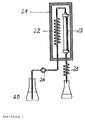
- Method B Using a pump, a solution of. Is pumped through a column in a reaction chamber filled with a strongly acidic ion exchanger of the type Dowex 50 XW 4 (H+-form) (1.6 x 25 cm, reactor of Fig. 1) at 130 ° C 250 g of isomaltulose monohydrate passed into 1 1 of DMSO, the flow rate being chosen so that the residence time of the solution on the ion exchanger does not exceed 4 minutes.
- the reaction mixture cooled on leaving the reaction chamber and the mixture obtained in the above batch process is composed largely analogously is separated as described in Method A and provides 138 g (69% of theory) of GMF of the formula ( 2 ).
- Method C A double-walled steel column (2.5 x 80 cm) is filled with approx. 400 ml of a catalyst resin pre-swollen in DMSO, eg of the type K 2413 (Bayer), in the H+-shape and closed with sieve plates.
- the column is heated to 90 ° C by the jacket using a circulating thermostat and bath fluid.
- a solution of 9 kg of isomaltulose monohydrate in 9 kg of DMSO is passed over the catalyst resin by means of a pump, the flow rate being selected so that the residence time of the solution on the catalyst is about 30 min. is.
- the GMF content in the eluate is 50-60% of the dry matter.
- reaction mixture is largely freed from the solvent in a high vacuum at a bath temperature of 80-90 ° C.
- the remaining residue is diluted with the same volume of water and separated by chromatography on a Lewatit TSW 40 column (Ca++ shape, dimensions: 0.25 x 12m) at 65 ° C.
- the fractions containing GMF are evaporated to a dry matter content of 80-85%.
- the yield is 2.1 kg (29%, based on the isomaltulose monohydrate used).
- Additional product can be obtained from the mother liquor.
Landscapes
- Chemical & Material Sciences (AREA)
- Organic Chemistry (AREA)
- Engineering & Computer Science (AREA)
- Health & Medical Sciences (AREA)
- Biochemistry (AREA)
- Biotechnology (AREA)
- General Health & Medical Sciences (AREA)
- Genetics & Genomics (AREA)
- Molecular Biology (AREA)
- Life Sciences & Earth Sciences (AREA)
- Saccharide Compounds (AREA)
- Pharmaceuticals Containing Other Organic And Inorganic Compounds (AREA)
- Seasonings (AREA)
- Emulsifying, Dispersing, Foam-Producing Or Wetting Agents (AREA)
Description
- Die vorliegende Erfindung betrifft ein neues Verfahren zur Herstellung von 5-(α-D-Glucopyranosyloxymethyl)-furan-2-carboxaldehyd (im nachfolgenden auch als 5-Glucosyloxyrethyl-furfural oder GMF bezeichnet) und dessen Derivate und Folgeprodukte der allgemeinen Formel (I)

in der R' ein Wasserstoffatom, einen Acyl-Rest oder einen Alkyl-Rest darstellt und X-CH₂OH, -COOH, -C(H)=NOH, -CN, -CH₂NHR'', oder CH=CR''R''' 1 bedeutet,
wobei R'' ein Wasserstoffatom, ein Acyl-Rest, Aryl-Rest oder Alkyl-Rest mit bis zu 20 C-Atomen ist,
R''' ein Wasserstoffatom -NO₂, -CN, -COOAlkyl oder Acyl. - Die Acyl-Reste stammen von aliphatischen oder aromatischen Carbonsäuren; typische Vertreter sind die O-Acetyl- und O-Benzoyl-Derivate.
- Typische Beispiele für Alkyl-Reste sind die Methyl-, Ethyl- und Octyl-Gruppierungen.
- Die Verbindungen gemäß der obigen Formel (I) sind neu; sie finden u.a. als Zwischenprodukte für chemische Synthesen, beispielsweise zur Herstellung von oberflächenaktiven Verbindungen, technische Anwendung.
- Das Ausgangsmaterial für die Herstellung der Verbindungen der oben angegebenen allgemeinen Formel bildet die Isomaltulose, d.i. die D-Glucopyranosyl-α(1-->6)-D-fructofuranose der unten angegebenen Formel (1), die bei Erhitzen in polaren, aprotischen Lösungsmitteln, wie z.B. Dimethylsulfoxid, in Gegenwart eines schwach oder stark sauren Ionenaustauschers in der H⁺-Form oder anderer saurer Katalysatoren einer ausschließlich im Fructosyl-Teil erfolgenden dreifachen Wasserabspaltung unterliegt. Produkt dieser hochselektiven Dehydratisierung ist der 5-(α-D-Glucopyranosyloxymethyl)-furan-2-carboxaldehyd der Formel (2) in nachstehendem Formelschema.

- Zur Überführung in das 5-Glucosyloxymethyl-furfural der Formel (2) wird die Isomaltulose wasserfrei (Formel 1) oder als Monohydrat in einem stark polaren, aprotischen Lösungsmittel wie z.B. Dimethylsulfoxid, N,N-Dimethylformamid, Hexamethylphosphorsäure-triamid (HMPT), N-Methylpyrrolidon, oder einem Gemisch dieser Solventien, gelöst, und in Gegenwart eines sauren Ionenaustauschers wie z.B. Amberlite IR-120 oder Dowex 50 WX 4, jeweils in der H⁺-Form, auf 70 bis 150°C für 0.1 - 24 h erhitzt. Bevorzugte Bedingungen sind hierbei Erhitzen für 4 h bei 120°C in Gegenwart eines stark sauren Ionenaustauschers (Amberlite IR-120, H⁺-Form, getrocknet) , oder 3 h bei 130°C in Anwesenheit von Dowex 50 WX 4(H⁺-Form, getrocknet); das so erhaltene Reaktionsgemisch enthält nach chromatographischer Analyse (DG bzw. HPLC) 65 - 70% GMF, 5 - 10% Glucose und HMF (entstanden durch glycosidische Spaltung des gebildeten GMF), 5 - 10% Isomaltulose-Dimere und 10 - 15% Edukt. Längere Reaktionszeiten verringern zwar die Menge nicht umgesetzter Isomaltulose, lassen jedoch den Gehalt an Glucose und HMF ansteigen (bis zu 20% nach 10 h), während der Anteil an Isomaltulose-Dimeren unverändert bleibt.
- Alternativ kann Isomaltulose dadurch in 65 - 70% GMF enthaltende Gemische obiger Zusammensetzung übergeführt werden, daß sie wasserfrei oder mit einem Mol Kristallwasser, in Dimethylsulfoxid oder anderen stark polaren aprotischen Lösungsmitteln gelöst (10 - 100g / 100g Lösungsmittel) über eine mit den gleichen stark sauren Ionenaustauschern gefüllte Säule bei Temperaturen von 70 - 150°C perkoliert, mit Verweilzeiten zwischen 20 sec und min. Eine Erschöpfung des Katalysators konnte hierbei nicht festgestellt werden.
- Zur Isolierung des gebildeten GMF der Formel (2) wird vom Katalysator abfiltriert, das Lösungsmittel i.Vak. abgezogen und der verbleibende Sirup durch Elution von einer Kieselgel- oder Ionenaustauscher-Säule aufgetrennt. Zunächst werden Dimere der Isomaltulose und Isomaltulose selbst eluiert, danach GMF, das in Form eines hochviskosen Sirups anfällt, in Ausbeuten, die durchweg über 65% liegen (vgl. Beispiel 1: 68% der Theorie). In kristalliner Form kann GMF als 2,4-Dinitrophenylhydrazon charakterisiert werden. Wird die zuletzt eluierte, aus unumgesetzter Isomaltulose und ihren Dimeren bestehende Fraktion i.Vak. zur Trockne eingedampft, und nochmals dem Batchbetrieb oder dem kontinuierlichen Prozeß im Durchflußreaktor unterworfen, lassen sich nach analoger Aufarbeitung weitere 15 - 20% GMF isolieren, was die Gesamtausbeute Isomaltulose --> GMF auf 80 - 85% der Theorie erhöht.
- An sich ist bei Ketosen die dreifache Abspaltung von Wasser zur Bildung von furanoiden Produkten bekannt, wie der Übersicht von H.E. van Dam, A.P.G. Kieboom und H. van Bekkum in Stärke 38 (1986), S. 95 ff. und der dort zitierten Literatur zu entnehmen ist; Fructose z.B., läßt sich in guten Ausbeuten in 5-Hydroxymethyl-furfural (HMF) überführen, u.a. durch Erhitzen in aprotischen Lösungsmitteln in Gegenwart saurer Ionenaustauscher. Wie die Angaben von A. Gaset et al. in FR 2 551 754 A1 ausweisen, wird hierbei jedoch in der Praxis ein Verhältnis Fructose : Ionenaustauscher von 1 : mindestens 1 benötigt. Die Übertragung derartiger Bedingungen auf Isomaltulose würde in beträchtlichem Ausmaß zur Hydrolyse GMF -> HMF + Glucose führen. Dies dürfte auch der Grund sein, daß die selektive Dehydratisierung von Ketosen im Oligosaccharid-Verband zu den entsprechenden Analogen des GMF bislang unbekannt ist. Daß dies im Falle der Isomaltulose unter vergleichsweise milden Bedingungen selektiv durchgeführt werden kann, d.h. ohne extensive Spaltung der glycosidischen Bindung im Molekül, ist in hohem Maße überraschend, und unter anderem darauf zurückzuführen, daß bei der Umsetzung selbst mit einem Verhältnis Isomaltulose : Ionenaustauscher von 20 : 1 gearbeitet werden kann.
- Zwar ist das GMF der Formel (2) schon 1988 in einer japanischen Arbeit erwähnt worden: T. Urashima, K. Suyama und S. Adachi berichten in Food Chem. 29 (1988), S. 7 - 17, über das Erhitzen von Hydroxymethylfurfural und D-Glucose in Dioxan für 6 h auf 150°C. Aus dem dabei entstehenden Gemisch von mindestens 4 chromatographisch nachweisbaren, neuen Substanzen wurde durch aufwendige Trennung (präparative Dünnschichtchromatopraphie) eine Reihe sirupöser Produkte isoliert, deren eines nach ¹³C-NMR-Daten das GMF der Formel (2) sein soll. Obwohl das Vorhandensein von GMF der Formel (2) in dem entstandenen Gemisch bzw. in einer der sirupösen Trennfraktionen nicht ausgeschlossen werden kann, ist der von den japanischen Autoren gegebene Strukturbeweis nicht schlüssig, da ihr GMF nicht kristallisiert.
- Demgegenüber finden wir, daß das von uns aus Isomaltulose hergestellte GMF außerordentlich leicht aus Aceton oder Wasser kristallisiert und besonders schön ausgebildete Kristalle (Prismen) ergibt.
- Durch Weiterverarbeitung des aus Isomaltulose der Formel (1) gewonnen GMF der Formel (2) oder seiner Derivate mittels Reduktion, Oxidation, Kondensationen des Aldol-Typs oder Oximierung wird der zugehörige Alkohol, die Carbonsäure, C-Extensionsprodukte oder das Oxim der Formeln (3), (4), (9), (15) und (16) erhalten.
- Die O-Acylderivate, insbesondere die O-Acetyl- und O-Benzoylderivate des vorstehend angeführten Glucosyloxymethyl-furfurals und seiner Abkömmlinge können durch Behandeln der jeweiligen nicht O-acylierten Ausgangsverbindungen mit Acylierungsmitteln in wasserfreien organischen Lösungsmitteln erhalten werden.
- Die Abläufe der genannten Umsetzungen und Weiterverarbeitungen sowie einige der dabei entstehenden Produkte sind aus nachstehendem Formelschema ersichtlich.

- Die Darstellung von Derivaten des Glucosyloxymethylfurfurals (GMF, Formel 2) , z.B. des Tetraacetats ist unter den üblichen Bedingungen (Acetanhydrid/Pyridin) ohne weiteres durchführbar (vgl. Beispiel 2). Ebenso verläuft die Reduktion der Aldehyd-Funktion des GMF zum 2-Glucosyloxymethyl-5-hydroxymethylfuran der Formel (3) glatt mit einer ganzen Reihe unterschiedlicher Verfahren: Hydrid-Addition durch Behandeln mit Natriumborhydrid in Methanol oder Druckhydrierung mit Cu/Cr-Katalysator bei 140°C/100 bar oder gekreuzte Cannizzaro-Reaktion bei Umsetzung mit Formaldehyd in Natronlauge.
- Die selektive Oxidation der Aldehyd-Gruppe des GMF zur Carbonsäure-Funktion erfolgt bei Umsatz mit Natriumchlorit in einer durch Kaliumdihydrogenphosphat gepufferten wäßrigen Lösung ohne jegliche Beeinträchtigung der vier Hydroxyl-Gruppen im Glycosyl-Teil. Das dabei entstehende freie Chlor wird mit Amidoschwefelsäure abgefangen. Die Reaktion verläuft rasch, ist nach vollständiger Zugabe des Oxidans bereits beendet, und liefert die 5-Glucosyloxymethylfuran-2-carbonsäure der Formel (4) in 80proz. Ausbeute.
- Die GMF-Carbonsäure der Formel (4) läßt sich glatt verestern, wie durch die Darstellung des Methyl- (Formel 5), Ehtyl- (Formel 6) und Octyl-esters (Formel 7) belegt wird (vgl. Beispiele 5 - 7). Desweiteren kann der Methylester durch Ammonolyse glatt in das schön kristalline GMF-Carbonamid der Formel (8) übergeführt werden.
- Das GMF-Oxim der Formel (9) bildet sich durch Umsetzung von GMF mit Hydroxylammoniumchlorid/Natriumacetat in wäßrig-ethanolischer Lösung und fällt an in Form schön ausgebildeter Kristalle in 71proz. Ausbeute. Umsetzung des GMF-Oxims der Formel (9) mit Acetanhydrid führt zunächst zur Penta-O-acetyl-Verbindung, die bei Verschärfung der Bedingungen (Erwärmen) unter Abspaltung von Essigsäure glatt (78%) in das Nitril der Formel (14) übergeht. Dessen Hydrierung über Raney-Nickel in Essigester liefert das entsprechende Amin, das als N-Acetat (Formel 11) in kristalliner Form charakterisiert wurde. Das freie Amin der Formel (10) kann direkt aus GMF durch reduktive Aminierung erhalten werden, indem man GMF in methanolischem Ammoniak mit Raney-Nickel einer Druckhydrierung (150 bar) unterwirft. Bei Einsatz primärer Amine (anstelle Ammoniak), wie z.B. Methylamin oder Dodecylamin, werden die entsprechenden N-Alkylamino-Verbindungen der Formel (12) erhalten in Ausbeuten, die generell über 80% liegen.
- Die Aldehydgruppe des GMF gibt zwanglos Folgereaktionen des Typs der Aldol-Kondensation unter Bildung der entsprechenden Carbonyl-Olefinierungsprodukte; so entsteht bei der Umsetzung von GMF mit Acetophenon in Gegenwart von NaOH glatt das Benzoylvinyl-substituierte Derivat der Formel (15), oder bei Reaktion mit Malodinitril das Dicyanovinyl-Analogon der Formel (16).
- Alle aus dem Formelschema ersichtlichen, erstmals dargestellten Verbindungen, das sind die Produkte der Formel (3) bis (16) wurden mikroanalytisch und chromatographisch einhellig als Reinsubstanzen charakterisiert; ihre Konstitution und Konfiguration wurde durch 300 MHz-1H-NMR-Spektren sowie anhand ¹³C-NMR- und massenspektroskopischer Daten zweifelsfrei bewiesen.
- Die Erfindung wird anhand der folgenden Beispiele näher erläutert.
- Methode A: In einem 1.5 1 Rundkolben wird eine Lösung von 90g (0,25 mol) Isomaltulose-/Monohydrat (Formel 1) in 900ml Dimethylsulfoxid auf 120°C erhitzt, sodann mit 10g eines stark sauren Ionenaustauschers (Amberlite IR 120, H+-Form, i.Vak. getrocknet über P₂O₅ für 24 h) versetzt und das Gemisch unter Rühren 4 h bei 120°C gehalten; nach DC [Laufmittel: Acetonitril/Wasser (4:1); Rf-Werte: 0.10 (Dimere der Isomaltulose), 0.15 (Isomaltulose), 0.26 (Glucose), 0.48 (GMF), 0.61 (HMF)] sowie HPLC, besteht das Gemisch aus 65 - 70% GMF, ca. 10% Isomaltulose-Dimeren, 5 - 10% HMF + Glucose und ca. 10% Edukt. Zur Aufarbeitung wird vom Ionenaustauscher abfiltriert und das Lösungsmittel i.Vak. bei 80°C Badtemperatur abgezogen. Der verbleibende braune Sirup wird in Wasser (250ml) gelöst, auf eine auf 60°C vorgeheizte Lewatit TSW 40-Säule (Ca²⁺-Form, 8 x 200cm) aufgegeben, und mit Wasser (10 l/h) eluiert. Die nach einem Vorlauf von ca. 3 l Wasser erscheinende erste Fraktion (2 l) enthielt die Dimere der Isomaltulose und nicht umgesetzte Isomaltulose (Weiterverarbeitung dieser Fraktion vide infra); danach wird Glucose eluiert, gefolgt von GMF (ca. 6 l). Einengen der GMF enthaltenden Eluate liefert 49g (68 % der Theorie) eines chromatographisch und ¹H-NMR-spektroskopisch einheitlichen viskosen Sirups mit [α]D²⁰ = + 125° (c= 1.3, Methanol) der für Folgereaktionen direkt verwendet werden kann.
- Reinigung des Rohproduktes durch Elution von einer Kieselgelsäule (3 x 30cm für 5g Sirup) mit Aceton und Einengen des Eluats liefert zunächst gelbliche Kristalle vom Schmp. 88 - 89°C; Nach zweifacher Umkristallisation wird das GMF in Form schön ausgebildeter farbloser Prismen vom Schmp. 96°C und [α]D²⁰ = + 131° (c= 1, Methanol) erhalten.
- ¹H-NMR (300 MHz, DMSO-d₆): δ = 3.12 (m, 1 H, 4'-H), 3.25 (m, 1H, 2'-H), 3.38 - 3.64 (m, 4 H, 3'-H, 5'-H, 6'-H₂) 4.54 (t, 1 H, 6'-OH), 4.56 (d, 1 H, 7-Ha), 4.69 (d, 1 H, 7-Hb), 4.80 (d, 1 H, 1'-H), 4.84 (d, 1 H, OH), 4.87 (d 1 H, OH), 4.95 (d, 1 H, OH), 6.77 (d, 1 H, 4 H), 7.53 (d, 1 H, 3-H), 9.59 (s, 1 H, CHO); J3,4 = 3.3, J7
a ,7b = 13.5, J1',2' = 3.3, J6',6'-OH = 6.2 Hz. - ¹³C-NMR (75.5 MHz, DMSO-d₆): δ = 60.5 (C-7), 60.8 (C-6'), 70.1 (C-4'), 71.8 (C-2'), 73.1 (C-3', C-5'), 98.4 (C-1'), 112.0 (C-4), 124.2 (C-3), 152.2 (C-5), 158.0 (C-2), 178.3 (C-6).
- MS (FD): m/z = 288 (M⊕), 289 (M⊕ +1).
- C₁₂H₁₆O₈ (288.25)
- Ber. C 50.00 H 5.60
Gef. C 49.81 H 5.63 - Wird die zuerst, aus Isomaltulose und ihren Dimeren bestehende Fraktion (s. oben) zur Trockne eingedampft und der Rückstand, in DMSO-Lösung, obigen Reaktionsbedingungen unterworfen, werden nach chromatographischer Auftrennung weitere 11g (15% der Theorie) GMF erhalten (Gesamtausbeute 80%). Präparativ praktikabler ist allerdings die Zumischung dieser, Isomaltulose und ihre Dimere enthaltenden DMSO-Lösung zu dem dem Durchflußreaktor der Abbild. 1 zugeführten Material.
- Methode B: Über eine in einer Reaktionskammer befindlichen, mit stark saurem Ionenaustauscher des Typs Dowex 50 XW 4 (H⁺-Form) gefüllten Säule (1.6 x 25cm, Reaktor der Abbild. 1) wird bei 130°C mittels einer Pumpe eine Lösung von 250g Isomaltulose-Monohydrat in 1 1 DMSO geleitet, wobei die Durchflußgeschwindigkeit so gewählt wird, daß die Verweilzeit der Lösung am Ionenaustauscher 4 min nicht übersteigt. Die Auftrennung des beim Verlassen der Reaktionskammer gekühlten Reaktionsgemischs, das dem obigen Batch-Verfahren erhaltenen Gemisch weitgehend analog zusammengesetzt ist, erfolgt wie bei Methode A beschrieben, und liefert 138g (69% der Theorie) GMF der Formel (2).
- GMF-Dinitrophenylhydrazon: Eine Lösung von 5.0 g (25 mmol) 2,4-Dinitrophenylhydrazin in 25 ml konz. Schwefelsäure wird vorsichtig mit 60 ml Wasser und 200 ml Ethanol verdünnt, und zu der noch heißen Lösung 2.9 g (10 mmol) GMF, in 25 ml Ethanol gelöst, zugegeben. Nach 24 h wird der tiefrote Niederschlag abfiltriert, mit Wasser gewaschen und aus Ethylacetat umkristallisiert: 2.5 g (54 %) oranger Kristalle; Schmp. 186°C; [ α ]

- ¹H-NMR (300 MHz, DMSO-d₆): δ = 3.15 (dd, 1 H, 4`-H), 3.25 (dd, 1 H, 2'-H] , 3.4 - 3.7 (m, 4 H, 3'-H, 5'-H, 6 'H₂ ] , 4.7 (m, 4 H, 2'-OH, 3'-OH, 4'-OH, 6'-OH), 4.66 (d, 1 H, 7-Ha), 4.78 (d, 1 H, 7-Hb), 4.86 (d, 1 H, 1`-H), 6.78 (d, 1 H, 4-H), 7.11 (d, 1 H, 3-H), 7.61 (s, 1 H, 6-H), 7.96 (d, 1 H, 6''-H) , 8.37 (dd, 1 H, 5''-H), 8.83 (d, 1 H, 3''-H) , 12.72 (s, 1 H, N-H) ; J3,4 = 3,5, J7a,7b = 13.6, J1'.2' = 3.6, J2' .3' = 9,7, J3' .4' = 9.0, J4' .5' = 9.2 J3'' .5'' = 2.5, J5'' .6'' = 9.6 Hz.
- ¹³C-NMR (75,5 MHz, DMSO-d₆) : δ = 60.5 (C-6') , 60.9 (C-7) , 69.8 (C-4') , 71.6 (C-2') 72.9, 73.0 (2 C, C-5' , C-3') 98.7 (C-1'), 111.5 (C-4) , 116.0 (C-6'') , 118.7 (C-3) , 122.7 (C-3'') 129.6, 137.5, 144.4 (3 C, C-1'', C-2'', C-4''), 130.0 (C-5'') , 131.5 (C-6) 147.0 (C-5), 155.2 (C-2).
- C₁₈H₂₀N₄O₁₁
- (468.4) Ber. C 46.16 H 4.30 N 11.96
Gef. C 46.23 H 4.29 N 11.84 - Methode C: Eine doppelwandige Stahlsäule (2,5 x 80 cm) wird mit ca. 400 ml eines in DMSO vorgequollenen Katalysatorharzes z.B. des Typs K 2413 (Bayer) in der H⁺-Form gefüllt und mit Siebplatten verschlossen.
- Die Säule wird durch den Mantel mittels Umwälzthermostat und Temperierflüssigkeit auf 90°C aufgeheizt.
- Über das Katalysatorharz wird mittels einer Pumpe eine Lösung von 9 kg Isomaltulose-Monohydrat in 9 kg DMSO geleitet, wobei die Durchflußgeschwindigkeit so gewählt wird, daß die Verweilzeit der Lösung am Katalysator ca. 30 min. beträgt. Der Gehalt an GMF im Eluat beträgt 50-60 % der Trockensubstanz.
- Das Reaktionsgemisch wird im Hochvakuum bei einer Badtemperatur von 80-90°C weitgehend vom Lösungsmittel befreit. Der verbleibende Rückstand wird mit dem gleichen Volumen Wasser verdünnt und über eine Lewatit TSW 40-Säule (Ca⁺⁺-Form, Abmessungen: 0,25 x 12m) bei 65°C chromatographisch aufgetrennt.
- Die GMF enthaltenden Fraktionen werden eingedampft bis zu einem Trockensubstanzgehalt von 80-85 %.
- Durch langsames Abkühlen der wässrigen Lösung von 70°C mit einer Kühlrate von 1 K·h⁻¹ erhält man GMF-Kristalle mit einer Reinheit von ca. 97 % (HPLC).
- Die Ausbeute beträgt 2.1 kg (29 %, bezogen auf eingesetztes Isomaltulose-Monohydrat).
- Weiteres Produkt kann aus der Mutterlauge gewonnen werden.
- Durch Umkristallisation unter gleichen Bedingungen erhält man GMF in einer Reinheit von 100 (HPLC).
- Schmelzp. 88°C; [α]D²⁰ = + 98° (c=1, H₂O), + 131° (c=1, Methanol).
- Eine Lösung von 60 mg (0.3 mmol) Glucosyloxymethyl-furfural (Formel 2, Produkt von Beispiel 1) in 25 ml Pyridin wird bei 0°C mit 0.3 ml Acetanhydrid versetzt. Nach Erwärmen des Ansatzes auf Raumtemperatur und weiterem Rühren über 2 h wird mit Eiswasser hydrolysiert. Aufnehmen der Reaktionslösung in Chloroform, neutral Waschen mit 2 N Schwefelsäure, gesättigter Natriumhydrogencarbonat-Lösung und Wasser, Trocknen über Magnesiumsulfat und Abziehen des Lösungsmittels ergeben 98 mg (84 %) GMF-Tetraacetat als Sirup mit [α]D²⁰ = + 132,8° (c=2,7, Chloroform).
- ¹H-NMR (300 MHz,CDCl₃): δ = 1.94, 1.96, 1.97, 2.02 (4 s, je 3 H, 4 Ac-CH₃), 3.99 (m, 2 H, 5'-H, 6'-Ha), 4.19 (dd, 1 H, 6'-Hb), 4.57 (d, 1 H, 7-Ha), 4.66 (d, 1 H, 7-Hb), 4.79 (dd, 1 H, 2'-H), 5.01 (dd, 1 H, 4'-H), 5.13 (d. 1 H, 1'-H), 5.41 (dd, 1 H, 3'-H), 6.50 (d, 1 H, 4-H), 7.16 (d, 1 H, 3-H], 9.56 (s, 1 H, CHO); J3,4 = 3.5, J7
a ,7b = 13.5, J1',2' = 3.8, J2',3' = 10.3, J3',4' = 9.7, J4',5' = 9.6, J5',6' = 4.8, J6'a ,6'b = 12.9 Hz. - ¹³C-NMR (75.5 MHz, CDCl₃): δ = 20.5, 20.6, 20.7, (4 C, Ac-CH₃), 61.6 (C-6'), 62.0 (C-7), 67.7 (C-5'), 68.3 (C-4'), 69.8 (C-3'), 70.6 (C-2'), 95.4 (C-1'), 112.1 (C-4), 121.9 (C-3), 152.9, 156.2 (2 C, C-5, C-2), 169.5, 170.0, 170.5 (4 C, 4 Ac-C=0), 177.6 (C-6).
- MS (FD): m/z = 456 (M⊕), 457 (M⊕ +1).
- 520 mg (1.8 mmol) Glucosyloxymethyl-furfural (Formel 2, Produkt von Beispiel 1) werden in 30 ml Methanol gelöst und mit 138 mg (3.6 mmol) Natriumborhydrid versetzt. Nach 2 h Rühren bei Raumtemperatur zeigt das Dünnschichtchromatogramm kein Edukt mehr an. Zur Aufarbeitung wird das Lösungsmittel i. Vak. abgezogen und der verbleibende Sirup durch Elution mit Chloroform/Methanol (3:1) gereinigt. Nach Eindampfen der Fraktionen verbleiben 443 mg (85 %) Glucosyloxymethyl-hydroxymethylfuran der Formel (3) als farbloser Sirup mit [α]

- ¹H-NMR (300 MHz, CDCl₃): δ = 3.13 (dd, 1 H, 4'-H), 3.27 (dd, 1 H, 2'-H), 3.41 - 3.70 (m, 4 H, 3'-H, 5'-H, 6'-H₂), 4.41 (d, 1 H, 7-Ha), 4.41 (s, 2 H, 6-H₂), 4.59 (d, 1 H, 7-Hb), 4.79 (d, 1 H, 1'-H), 5.2 (m, 5 H, 6-OH, 2'-OH, 3'-OH, 4'-OH, 6'-OH), 6.28 (d, 1 H, 4-H), 6.40 (d, 1 H, 3-H); J3,4 = 2.8, J7
a ,7b = 12.8, J1',2' = 3.3, J2',3' = 9.6, J3',4' = 9.0, J₄',5', = 9.0 Hz. - ¹³C-NMR (75.5 MHz, CDCl₃): δ = 56.1, 60.6, 61.3 (3 C, C-6, C-7, C-6'), 70.7, 72.2, 73.2, 73.6 (4 C, C-2', C-3', C-4', C-5'), 99.1 (C-1'), 107.9 (C-4), 110.5 (C-3), 150.9 (C-2), 156.0 (6-5).
- MS (FD): m/z = 290 (M⊕).
- In 50 ml Wasser werden 3.16 g (11 mmol) GMF (Formel 2, Produkt von Beispiel 1) und 2.13 g (22 mmol) Amidoschwefelsäure gelöst. Dazu tropft man innerhalb von 20 min 20 ml einer wäßrigen Lösung aus 1.0 g (11 mmol) Natriumchlorit und 1.1 g (8.1 mmol) Kaliumdihydrogenphosphat. Nach Zugabe der Oxidationslösung zeigt das Chromatogramm vollständigen Umsatz. Das Lösungsmittel wird i.Vak. entfernt und der verbleibende Sirup in einem Gemisch aus 40 ml Methanol und 40 ml Ethanol aufgenommen. Die ausfallenden anorganischen Salze werden abfiltriert und das Lösungsmittel erneut entfernt. Filtration des Rückstandes über eine Kieselgelsäule mit Methanol/Chloroform (2:1), und Eindampfen des Eluats liefert 2.9 g (89 %) Carbonsäure der Formel (4) als bislang nicht kristallisierender Feststoff.
- Alternativ werden einer Lösung von 0.6 g (3.5 mmol) Silbernitrat in 10 ml Wasser unter Rühren 1.6 ml (4.0 mmol) 10proz. NaOH zugetropft. Das ausgefallene Silberoxid wird abfiltriert, mit 100 ml Wasser nitratfrei gewaschen und noch feucht in einen Kolben überführt, in dem es in 15 ml Wasser, das 0.7 ml (1.7 mmol) 10proz. NaOH enthält, suspendiert wird. Zu dieser Suspension gibt man unter heftigem Rühren 0.5 g (1.7 mmol) GMF, wobei ein Farbumschlag von braun nach schwarz und eine Temperaturerhöhung auf 30°C beobachtbar ist. Nach 15 min (DC-Kontrolle mit Laufmittel Acetonitril/Wasser (4:1), R f (Produkt) = 0.22) filtriert man vom Silber ab, neutralisiert das Filtrat mit saurem Ionenaustauscher (Amberlite IR-120, H -Form) und dampft i.Vak. ein. Der resultierende farblose Sirup wird an einer Kieselgelsäule (3 x 20 cm) durch Elution mit Chloroform/Methanol (2:3) gereinigt. Es fallen 460 mg (89%) chromatographisch sowie ¹H-NMR-spektroskopisch einheitlicher, amorpher Feststoff mit [α]

- ¹H-NMR (300 MHz, DMSO-d₆): δ = 3.06 (dd, 1 H, 4'-H), 3.19 (dd, 1 H, 2'-H), 3.41 (m, 4 H, 3'-H, 5'-H, 6'-H₂), 3.63 (d, 1 H, OH), 4.18 (m, 1 H, OH), 4.38 (d, 1 H, 7-Ha), 4.53 (d, 1H, 7-Hb), 4.74 (d, 1 H, 1'-H), 4.99 (m, 1 H, OH), 5.16 (m, 1 H, OH), 6.38 (d, 1 H, 4-H), 6.65 (d, 1 H, 3-H); J3,4 = 3.5 J7
a ,7b = 12.8, J1',2' = 3.6, J2',3' = 9.4, J3',4' = 9.2 Hz. - ¹³C-NMR (75.5 MHz, DMSO-d₆): δ = 60.6 (C-7), 61.0 (C-6'), 70.4 (C-4'), 72.0 (C-2'), 73.2 (C-3', C5'), 98.2 (C-1'), 111.4 (C-4), 116.7 (C-3), 145.5 (C-5), 154.2 (C-2), 161.0 (C-6).
- MS (FD, 10-15 mA): m/z = 305 (M⊕ + 1), 327 (M⊕ + Na).
- C₁₂H₁₆O₉ (304.25)
- Ber. C 47.37 H 5.30
Gef. C 47.30 H 5.27 - Zur Darstellung von Diazomethan wird 1.0 g (10 mmol) N-Methyl-N-nitrosoharnstoff in 20 ml Diethylether, der mit 7 ml 40proz. KOH unterschichtet ist, unter Kühlung portionsweise so zugegeben, daß die Reaktionstemperatur +5°C nicht übersteigt. 30 min nach der letzten Zugabe wird die gelbe organische Phase abgetrennt und 3 h über wenig festem KOH stehen gelassen. Von der so bereiteten etherischen Diazomethan-Lösung wird unter Rühren bei Raumtemperatur über einen Zeitraum von 15 min soviel zu einer Lösung von 500 mg (1.6 mmol) GMF-Carbonsäure (Formel 4, Produkt von Beispiel 4) in 18 ml Methanol und 2 ml Wasser gegeben, daß die gelbe Farbe gerade bestehen bleibt und keine Gasentwicklung mehr feststellbar ist. Nach weiteren 15 min Rühren ist die Umsetzung vervollständigt (DC-Kontrolle mit Laufmittel Chloroform/Methanol (2:1), R f (Edukt) = 0 , R f (Produkt) = 0.41), woraufhin man das Lösungsmittel i. Vak. abzieht und das Rohprodukt durch Elution von einer Kieselgelsäule (3 x 20 cm) mit Chloroform/Methanol (2:1) reinigt. Einengen der das Produkt enthaltenden Fraktionen ergibt 440 mg (84 %) farblosen Sirup mit [α]

- ¹H-NMR (300 MHz, D₂O) δ = 3.44 (dd, 1 H, 4'-H), 3.57 (dd, 1 H, 2'-H), 3.66 (ddd, 1 H, 5'-H). 3.71 (dd, 1 H, 3'-H), 3.75 (d, 2 H, 6'-H₂) 3.91 (s, 3 H, OCH₃), 4.73 (s, 2 H, 7-H₂), 5.05 (d. 1 H, 1'-H), 6.67 (d, 1 H, 4-H), 7.29 (d, 1 H, 3-H); J3,4 = 3.5, J1',2' = 3.7, J2',3' = 9.8, J3',4' = 9.3, J4',5' = 10.0, J5',6' = 3.6 Hz.
- MS (FD, 0 - 15 mA): m/z = 318 (M⊕).
- C₁₃H₁₈O₉ (318.28)
- Ber. C 49.06 H 5.70
Gef. C 48.72 H 5.65 - Zu einer Lösung von 300 mg (1 mmol) GMF-Carbonsäure der Formel (4), 0.6 g (13.0 mmol) Ethanol und 20 mg p-Toluolsulfonsäure in 3 ml Pyridin werden 200 mg (1.0 mmol) Dicyclohexylcarbodiimid zugegeben, und 24 h bei Raumtemperatur gerührt. Nach Filtration wird i .Vak. vollständig eingeengt, mehrmals mit Toluol nachgedampft, und der anfallende Sirup wird über eine Kieselgelsäule (3 x 20 cm) durch Elution mit Chloroform/Methanol (7:2) gereinigt. Eindampfen der Fraktionen mit R f = 0.31 ergibt 190 mg (60 %) Ethylester der Formel (6) als farblosen Sirup, mit [α]

- ¹H-NMR (300 MHz, D₂O): δ = 1.37 (t, 3H, OCH₂CH₃), 3.44 (dd, 1 H, 4'-H), 3.56 (dd, 1 H, 2'-H), 3.65 (ddd, 1 H, 5'-H), 3.70 (dd. 1 H, 3'-H), 3.75 (d, 2 H, 6'-H₂), 4.38 (q, 2H, OCH₂CH₃), 4.73 (s, 2 H, 7-H₂), 5.04 (d, 1 H, 1'-H), 6.67 (d, 1 H, 4-H), 7.30 (d, 1 H, 3-H);J3,4 = 3.5, J8,9 = 7.1, J1',2' = 3.8, J2',3' = 9.8, J3',4' = 9.3, J4',5' = 10.2, J5',6' = 3.6 Hz.
- MS (FD, 0 - 12 mA): m/z = 332 (M⊕).
- C₁₄H₂₀O₉ (332.31)
- Ber. C 50.60 H 6.07
Gef. C 49.91 H 6.31 - Wird Ethanol in der vorhergehenden Vorschrift durch die equivalente Menge 1-Octanol ersetzt, so erhält man den entsprechenden Octylester der Formel (7) nach chromatographischer Reinigung (Elution mit Chloroform/Methanol (7:2)) in Form eines weißen amorphen Pulvers; [α]

- ¹H-NMR (300 MHz, DMSO-d₆): δ = 0.86 (t, 3 H, CH₃), 1.03 - 1.77 (m, 12 H, [CH₂]₆), 3.09 (m, 1 H, 2'-H), 3.23 (m, 1 H, 4'-H), 3.34 - 3.64 (m, 4 H, 3'-H, 5'-H, 6'-H₂), 4.23 (t, 2 H, OCH₃), 4.48 (m, 1 H, OH), 4.52 (d. 1 H, 7 Ha), 4.64 (d, 1 H, 7-Hb), 4.75 - 4.82 (m, 3 H, 1'-H, 2 OH), 4.90 (d, 1 H, OH), 6.56 (d, 1 H, 4-H), 6.87 (d, 1 H, 1'-H); J3,4 = 3.4, J7
a ,7b = 13.4, J8,9 = 6.7, J14,15 = 6.7, J1',2' = 3.6 Hz. - MS (FD, 0 - 20 mA): m/z = 416 (M⊕), 417 (M⊕ +1).
- C₂₀H₃₂O₉ (416.47)
- Ber. C 57.68 H 7.74
Gef. C 56.75 H 7.91 - In 5 ml einer methanolischen Ammoniaklösung werden 300 mg (1.1 mmol) Methylester der Formel (7) gelöst. Nach 24stdg. Rühren bei Raumtemperatur ist die Aminolyse vollständig (DC-Kontrolle in Acetonitril/Wasser (4:1). Lösungsmittel und überschüssiges Ammoniak werden i. Vak. entfernt und der verbleibende weiße Feststoff kristallisiert beim Digerieren mit Methanol/Wasser: 270 mg (86 %) eines unter dem Mikroskop opaleszierenden Kristallpulvers vom Schmp. 218°C mit [α]

- ¹H-NMR (300 MHz, DMSO-d₆): 3.07 (m, 1 H, 4'-H), 3.23 (m, 1 H, 2'-H), 3.35-3.61 (m, 4 H, 3'-H, 5'-H, 6'-H₂), 4.47 (d, 1 H, 7-Ha), 4.53 (t, 1 H, 6'-OH), 4.60 (d, 1 H, 7-Hb), 4.76 (m, 3 H, 1'-H, 2 OH), 4.89 (d, 1 H, OH), 6.57 (d, 1 H, 4-H), 7.07 (d, 1 H, 3-H), 7.37 (s, 1 H, NH), 7.74 (s, 1 H, NH); J3,4 = 3.3, J7
a ,7b = 13.2, J6',6'-OH = 5.7 Hz. - MS (FD, 0 - 20 mA): m/z = 303 (M⊕), 304 (M⊕ +1).
- C₁₂H₁₇NO₈ (303.27)
- Ber. C 47.53 H 5.65 N 4.62
Gef. C 47.57 H 5.60 N 4.51 - Eine Lösung von 3.1 g (10.7 mmol) Glucosyloxymethyl-furfural (Formel 2, Produkt. von Beispiel 1) in 50 ml Ethanol wird mit einer Lösung von 2.2 g (31.6 mmol) Hydroxylammoniumhydrochlorid und 2.1 g (25 mmol) Natriumacetat in 10 ml Wasser versetzt und 10 min bei Raumtemperatur gerührt. Danach zeigt das Dünnschichtchromatogramm (Laufmittel: Wasser/n-Propanol, 1:7) kein Edukt mehr an. Zur Aufarbeitung wird das Lösungsmittel i.Vak. entfernt und der zurückbleibende Sirup in 2-Propanol aufgenommen. Die dabei ausfallenden Salze werden abgenutscht. Ein erneutes Abziehen des Lösungsmittels ergibt einen leicht gefärbten Sirup, der zwecks weiterer Reinigung auf Kieselgel gegeben und mit Chloroform/Methanol (7:2) eluiert wird. Eindampfen der das GMF-Oxim (Formel 9) enthaltenden Eluate, und Stehen des gelblichen Sirups liefert 2.3 g (71 %) farbloser Kristalle vom Schmp. 138 - 139°C; [α]

- ¹H-NMR (300 MHz, D₂O): δ = 3.4 - 3.8 (m, 5 H, 2'-H, 3'-H, 4'-H, 6'-H₂), 3.57 (ddd, 1 H, 5'-H), 4.7 - 4.9 (m, 2 H, 7-H₂), 5.04 (d, 1 H, 1'-H), 6.66 (d, 1 H, 4-H), 7.27 (d, 1 H, 3-H), 8.06 (s, 1 H, 6-H); J3,4 = 3.4, J1',2' = 3.6, J4',5' = 9.8, J5',6'
a = 1.3, J5',6'b = 3.5 Hz. - ¹³C-NMR (75.5 MHz, D₂O): δ = 63.1, 64.3 (2 C, C-7, C-6'), 72.2 (C-4'), 74.0 (C-5'), 74.8 (C-2'), 75.8 (C-3'), 100.7 (C-1'), 115.3 (C-4), 121.8 (C-3), 140.4 (C-6), 147.9 (C-5), 155.2 (C-2).
- MS (FD): m/z = 303 (M⊕), 304 (M⊕ +1).
- C₁₂H₁₇NO₈ (303.27)
- Ber. C 47.53 H 5.65 N 4.62
Gef. C 47.48 H 5.60 N 4.64 - In einem 125 ml Rührautoklaven werden 5.76 g (0.02 mol) GMF in 50 ml mit Ammoniak bei 10°C gesättigtem Methanol (ca. 5.5 M) gelöst. Nach Zusatz von 1 g alkalischem Raney-Nickel leitet man Wasserstoff bis zu einem Druck von 100 atm ein und erwärmt den Ansatz auf 60°C . Die Temperatur wird 1 h konstant gehalten, danach läßt man über einen Zeitraum von 4 h Abkühlen und filtriert nach Entspannen des Reaktionsgefäßes vom Katalysator ab. Das Filtrat wird i. Vak. vollständig eingeengt, woraus ein aus Amin der Formel (10) bestehender Hartschaum resultiert.
- ¹H-NMR (300 MHz, [D₆]-DMSO + D₂O): δ = 3.10 (dd, 1 H, 4'-H), 3.19 (s, 2 H, 6-H₂), 3.24 (dd, 1 H, 2'-H), 3.45 (m, 2 H, 3'-H, 5'-H), 3.63 (m, 2 H, 6'-H₂). 4.38 (d, 1 H, 7-Ha), 4.52 (d, 1 H, 7-Hb), 4.77 (d, 1 H, 1'-H), 6.18 (d, 1 H, 4-H), 6.35 (d, 1 H, 3-H); J3,4 = 2.9, J7
a ,7b = 12.8, J1',2' = 3.5, J2',3' = 9.6 Hz. - Eine Lösung von 0.9 g (2 mmol) des Nitrils der Formel (14) in 50 ml Ethylacetat wird in Gegenwart von 100 mg 10proz. Pd auf Kohle bei Raumtemperatur hydriert. Nach 12 h ist vollständiger Umsatz erreicht (DC in Methanol/Chloroform, 2:1). Es wird vom Katalysator abfiltriert, mit heißem Methanol gewaschen (4 x 20 ml), und die methanolische Lösung tropfenweise mit Acetanhydrid (1.5 ml) versetzt, und über Nacht stehen gelassen. Abziehen des Methanols, Digerieren des Rückstandes mit Eiswasser, Ausschütteln mit Chloroform, Trocknen der vereinigten Extrakte über Magnesiumsulfat, und Entfernung des Lösungsmittels i. Vak. liefert 1.1 g (74 %) Produkt der Formel (11) als farblose Kristalle vom Schmp. 134 - 135°C; [α]

- C₂₂H₂₉NO₁₂ (499.48)
- Ber. 52.90 H 5.85 N 2.80
Gef. 52.93 H 5.60 N 2.77 - Dasselbe Produkt wird auch durch Acetylierung des Amins der Formel (10) aus Beispiel 10 mit Pyridin/Acetanhydrid in 87proz. Ausbeute erhalten.
- Eine Lösung von 1.0 g (3.5 mmol) GMF der Formel (2) in 30 ml DMSO wird auf 110°C erhitzt, Nach Zugabe von 310 mg (4.5 mmol) Hydroxylammoniumhydrochlorid wird die Temperatur über eine Zeitraum von 30 min (DC-Kontrolle mit 4:1 Acetonitril/Wasser) beibehalten und sodann rasch abgesenkt. Der Reaktionsansatz wird i. Vak. eingeengt, der Rückstand mit 30 ml Wasser verdünnt und mit Dichlormethan (2 x 20 ml) ausgeschüttelt. Die i. Vak. eingedampfte wäßrige Phase wird durch Elution von einer Kieselgelsäule (3 x 30 cm) mit Aceton gereinigt. Die das Nitril enthaltenden Fraktionen liefern beim Einengen 0.6 g (61 %) Nitril der Formel (13) als farblose Nadeln vom Schmp. 113°C und [α]

- ¹H-NMR (300 MHz, [D₆]-DMSO): δ = 3.04 (m, 1 H, 4'-H), 3.17 (m, 1 H, 2'-H), 3.27 - 3.58 (m, 4 H, 3'-H, 5'-H, 6'-H₂), 4.45 (t, 1 H, 6'-OH), 4.47 (d, 1 H, 7-Ha), 4.59 (d, 1 H, 7-Hb), 4.70 (d, 1 H, 1'-H), 4.77 (m, 2 H, OH), 4.87 (d, 1 H, OH), 6.54 (d, 1 H, 4-H), 7.51 (d, 1 H, 3-H); J3,4 = 3.6, J7
a ,7b = 13.5, J1',2' = 3.6, J6',6'-OH = 5.7 Hz. - MS (FD): m/z =285 (M⊕), 286 (M⊕ +1).
- C₁₂H₁₅NO₇ (285.25)
- Ber. C 50.53 H 5.30 N 4.91
Gef. C 50.49 H 5.32 N 4.86 - Eine Suspension von 3.0 g (10 mmol) GMF-Oxim (Formel (9), Produkt von Beispiel 9) und 1.0 g frisch geschmolzenem Natriumacetat in 10 ml Acetanhydrid wird für 30 min bei Raumtemperatur gerührt. Die nunmehr klare Lösung wird sodann durch Zugabe von Salzsäure (4 ml 4 N HCl, 1.3 Molequiv. bezogen auf das eingesetzte Natriumacetat) schwach mineralsauer gemacht, und kurz (5 - 8 min) auf 60°C erwärmt. Einrühren in Eiswasser, Extraktion mit Dichlormethan und Eindampfen der vereinigten Extrakte liefert 3.5 g (78 %) des Nitrils der Formel (14) als chromatographisch einheitlichen Sirup mit R f = 0.31 (DC in Toluol/Aceton, 4:1) und [α]

- ¹H-NMR (300 MHz, CDCl₃): δ = 2.01, 2.04, 2.06, 2.10 (4 s, je 3 H, Ac-CH₃), 4.02 - 4.10 (m,2 H, 5'-H, 6'-Ha), 4.27 (dd. 1 H, 6'-Hb), 4.59 (d, 1 H, 7-Ha), 4.69 (d, 1 H, 7-Hb), 4.86 (dd, 1 H, 2'-H), 5.08 (dd, 1 H, 4'-H), 5.18 (d, 1 H, 1'-H), 5.47 (dd, 1 H, 3'-H), 6.51 (d, 1 H, 4-H); J3,4 = 3.5, J7
a ,7b = 13.4, J1',2' = 3.8, J2',3' = 10.3, J3',4' = 9.7, J4',5' = 10.0, J5',6'b = 4.5, J6'a ,6'b = 12.5 Hz. - ¹³C-NMR (75.5 MHz, CDCl₃): δ = 20.5, 20.6, 20.7 (4 C, Ac-CH₃), 61.5, 61.8 (2 C, C-7, C-6'), 67.9, 68.5, 69.8, 70.7 (4 C, C-2', C-3', C-4', C-5'), 95.3 (C-1'), 111.1 (C-5), 111.2 (C-4), 122.7 (C-3), 125.6 (C-2), 155.7 (C-6), 169.5, 169.9, 170.1, 170.5 (4 C, Ac-CO).
- MS (FD): m/z = 453 (M⊕), 454 (M⊕ +1).
- C₂₀H₂₃NO₁₁ (453.41)
- Ber. C 52.98 H 5.11 N 3.09
Gef. C 52.99 H 4.87 N 3.06 - Eine Lösung von 4.5 g GMF (15 mmol) und 1.8 g (15 mmol) Acetophenon in 50 ml Ethanol wird auf 0°C abgekühlt und unter Rühren tropfenweise mit 15 ml 10proz. NaOH versetzt. Nach 30 min wird mit 50 ml Wasser verdünnt, mit Dichlormethan ausgeschüttelt (3 x 60 ml), die vereinigten organischen Extrakte mit gesättigter Kaliumhydrogensulfat-Lösung und wenig Wasser neutral gewaschen und getrocknet (MgSO₄). Beim Einengen der Lösung tritt Kristallisation ein: 4.1 g (70 %) hellgelbe Kristalle vom Schmp. 127°C ; [α]

- ¹H-NMR (300 MHz, CDCl₃): δ = 3.48 - 3.78 (m, 7 H, 2'-H, 3'-H, 4'-H, 5'-H, 6'-H₂, OH), 4.10 (d, 1 H, OH), 4.50 (d, 1 H, 9-Ha), 4.57 (d, 1 H, 9-Hb), 4.75 (s, 1-H, OH), 4.92 (d, 1 H, 1'-H), 4.98 (s, 1 H, OH), 6.39 (d, 1 H, 4-H), 6.56 (d, 1 H, 3-H), 7.28 - 7.52 (m, 5 H, COC₆H₅), 7.93 (d' 2 H, 6-H, 7-H); J3,4 = 3.3, J9
a ,9b = 13.5, J1',2' = 3.2 Hz. - ¹³C-NMR (75.5 MHz, DMSO-d₆): δ = 60.2 (C-9), 60.8 (C-6'), 70.1 (C-4'), 71.4 (C-2'), 73.1 (C-3',C-5'), 98.0 (C-1'), 112.4 (C-4), 118.0 (C-3), 118.5, 128.2, 130.4, 133.0 und 137.4 (C₆H₅), 128.8 (C-6, C-7), 151.0 (C-5), 154.8 (C-2), 188.5 (C=O).
- MS (FD): m/z = 390 (M⊕).
- C₂₀H₂₂O₈ (390.38)
- Ber. C 61.53 H 5.68
Gef. C 61.49 H 5.65 - 1 g (3.5 mmol) GMF der Formel (1) und 230 mg (3.5 mmol) Malonsäuredinitril werden in 10 ml Methanol gelöst und mit 600 mg Aluminiumoxid (24 h bei 120°C getrocknet) versetzt. Nachdem 3 h bei Raumtemperatur gerührt wurde (DC-Kontrolle mit Acetonitril/Wasser, (4:1) wird vom Katalysator abfiltriert und das Lösungsmittel i. Vak. abgezogen. Nach Reinigen des Rohprodukts durch Elution von einer Kieselgelsäule (3 x 20 cm) mit Aceton kristallisieren 780 mg (66 %) Produkt der Formel (16) beim Einengen des Lösungsmittels in Form hellgelber Nadeln vom Schmp. 138°C und [α]

- ¹H-NMR (300 MHz, D₂O): δ = 3.44 (dd, 1 H, 4'-H), 3.58 (dd, 1 H, 2'-H), 3.68-3.76 (m, 4 H, 3'-H, 5'-H, 6'-H₂), 4.77 (d, 1 H, 7a-H), 4.84 (d, 1 H, 7b-H), 5.09 (d, 1 H, 1'-H), 6.83 (d, 1 H, 4-H), 7.39 (d, 1 H, 3-H), 7.91 (s, 1 H, 6-H); J3,4 = 3,7 , J7
a ,7b = 13.5, J1',2' = 3.7, J=2',3' = 9.8 Hz. - IR (KBr): ν= 2240 cm⁻¹ (C≡N).
- MS (FD, 10 mA): m/z = 336 (M⊕).
- C₁₅H₁₇NO₉ (336.30)
- Ber. C 53.57 H 4.80 N 8.33
Gef. C 53.42 H 4.83 N 8.25
Claims (5)
- Verfahren zur Herstellung von 5-(α-D-Glucopyranosyloxymethyl)-furan-2-carboxaldehyd,
dadurch gekennzeichnet,
daß man Isomaltulose, wasserfrei oder mit einem Mol Kristallwasser, in einem stark polaren aprotischen Lösungsmittel löst (10 bis 100g Isomaltulose / 100g Lösungsmittel) und die Lösung- entweder
in Gegenwart eines sauren Ionenaustauschers in der H⁺ -Form als Katalysator während 0.1 bis 24 Stunden auf 70 bis 150°C batchweise erhitzt, wobei das Verhältnis von Isomaltulose: Ionenaustauscher 20:1 bis 10:1 beträgt.- oder
über eine mit dem gleichen Ionenaustauscher gefüllte Säule bei Temperaturen zwischen 70 und 150°C und Verweilzeiten zwischen 20 sec. und 60 min perkoliert. - Derivate von 5-(α-D-Glucopyranosyloxymethyl)-furan-2-carboxaldehyd und Folgeprodukte gemäß der allgemeinen Formel (I)

R' ein Wasserstoffatom, einen Acyl-Rest oder einen Alkyl-Rest darstellt und X-CH₂OH, -COOH, -C(H)=NOH, -CN, -CH₂NHR'', -CH=CR''R'' ' (wobei R'' ein Wasserstoffatom, ein Acyl-Rest oder Alkyl-Rest mit bis zu 20 C-Atomen ist, und R''' ein Wasserstoffatom, -NO₂, -CN, -COOAlkyl oder Acyl) bedeutet, insbesondere die Verbindungen
2- (α-D-Glucopyranosyloxymethyl)-5-hydroxymethylfuran,
5- (α-D-Glucopyranosyloxymethyl)-furan-2-carboxaldehydoxim (GMF-Oxim),
5-(α-D-Glucopyranosyloxymethyl)-furan-2-carbonsäure,
5-(2',3',4',6',-Tetra-O-acetyl-α-D-glucopyranosyloxymethyl)-furan-2-carbonitril,
5-Acetamidomethyl-2-(α-D-glucopyranosyloxymethyl) -furan,
2-(Benzoylvinyl)-5-(α-D-glucopyranosyloxymethyl)-furan und
2-(Dicyanovinyl)-5-(α-D-glucopyranosyloxymethyl)-furan. - Verfahren zur Herstellung der O-Acylderivate des GMF und seiner Abkömmlinge,
dadurch gekennzeichnet,
daß man die jeweiligen nicht O-acylierten Ausgangsverbindungen mit Acylierungsmitteln in wasserfreien organischen Lösungsmitteln behandelt. - Weiterverarbeitung von GMF und seiner Derivate zur Gewinnung der zugehörigen Alkohole, Carbonsäuren und Oxime,
dadurch gekennzeichnet,
daß man die Ausgangsprodukte in an sich bekannter Weise reduziert, oxidiert oder oximiert. - Verwendung der Verbindungen gemäß Anspruch 2 zur Herstellung von oberflächenaktiven Stoffen.
Applications Claiming Priority (2)
| Application Number | Priority Date | Filing Date | Title |
|---|---|---|---|
| DE3936522 | 1989-11-02 | ||
| DE3936522A DE3936522A1 (de) | 1989-11-02 | 1989-11-02 | 5-((alpha)-d-glucopyranosyloxymethyl)-furan-2-carboxaldehyd und dessen derivate und folgeprodukte sowie verfahren zur herstellung der verbindungen und deren verwendung |
Publications (3)
| Publication Number | Publication Date |
|---|---|
| EP0426176A2 EP0426176A2 (de) | 1991-05-08 |
| EP0426176A3 EP0426176A3 (en) | 1991-10-02 |
| EP0426176B1 true EP0426176B1 (de) | 1994-03-23 |
Family
ID=6392742
Family Applications (1)
| Application Number | Title | Priority Date | Filing Date |
|---|---|---|---|
| EP90120948A Expired - Lifetime EP0426176B1 (de) | 1989-11-02 | 1990-10-31 | 5-(alpha-D-Glucopyranosyloxymethyl)-furan-2-carboxaldehyd und dessen Derivate und Folgeprodukte sowie Verfahren zur Herstellung der Verbindungen und deren Verwendung |
Country Status (7)
| Country | Link |
|---|---|
| US (1) | US5218098A (de) |
| EP (1) | EP0426176B1 (de) |
| JP (1) | JPH03153697A (de) |
| AT (1) | ATE103288T1 (de) |
| DE (2) | DE3936522A1 (de) |
| DK (1) | DK0426176T3 (de) |
| ES (1) | ES2053054T3 (de) |
Families Citing this family (10)
| Publication number | Priority date | Publication date | Assignee | Title |
|---|---|---|---|---|
| DE19709787A1 (de) * | 1997-03-11 | 1998-09-17 | Bayer Ag | Oligosaccaride und deren Derivate sowie ein chemo-enzymatisches Verfahren zu deren Herstellung |
| JP4422819B2 (ja) * | 1999-06-21 | 2010-02-24 | 株式会社ロッテ | 消臭剤、及びそれを含む飲食品、口腔用組成物並びにトイレタリー製品 |
| DE10041221A1 (de) * | 2000-08-22 | 2002-03-14 | Deutsches Krebsforsch | Verfahren zur Herstellung von wasserlöslichen Saccharidkonjugaten und Saccharidmimetika durch Diels-Alder-Reaktion und ihre Verwendung als Therapeutika oder Diagnostika |
| EP2474552A1 (de) * | 2011-01-07 | 2012-07-11 | Deutsches Krebsforschungszentrum | Neue Saccharid-Mimetika und deren Verwendung als Hemmer von Angiogenese und Metastasenbildung |
| CN104478968A (zh) * | 2015-01-14 | 2015-04-01 | 佛山市赛维斯医药科技有限公司 | 含噻唑基的o-半乳糖苷衍生物、其制备方法和用途 |
| CN104530149A (zh) * | 2015-01-14 | 2015-04-22 | 佛山市赛维斯医药科技有限公司 | 卤代苯基双o-葡萄糖苷衍生物、其制备方法和用途 |
| CN104478966A (zh) * | 2015-01-14 | 2015-04-01 | 佛山市赛维斯医药科技有限公司 | 含苯胺噻唑基的o-半乳糖苷衍生物、其制备方法和用途 |
| CN104478963A (zh) * | 2015-01-15 | 2015-04-01 | 佛山市赛维斯医药科技有限公司 | 一种含腈基苯s-葡萄糖苷结构的化合物及其用途 |
| CN104478965A (zh) * | 2015-01-15 | 2015-04-01 | 佛山市赛维斯医药科技有限公司 | 一类烷氧基苯基s-葡萄糖苷衍生物、其制备方法和用途 |
| CN104497070A (zh) * | 2015-01-15 | 2015-04-08 | 佛山市赛维斯医药科技有限公司 | 一种含三氟甲基苯s-葡萄糖苷结构的化合物和用途 |
Family Cites Families (1)
| Publication number | Priority date | Publication date | Assignee | Title |
|---|---|---|---|---|
| DE3601281A1 (de) * | 1986-01-17 | 1987-07-23 | Sueddeutsche Zucker Ag | Verfahren zur herstellung von 5-hydroxymethylfurfural einschliesslich eines kristallinen produktes unter ausschliesslicher verwendung von wasser als loesungsmittel |
-
1989
- 1989-11-02 DE DE3936522A patent/DE3936522A1/de not_active Ceased
-
1990
- 1990-10-31 ES ES90120948T patent/ES2053054T3/es not_active Expired - Lifetime
- 1990-10-31 AT AT90120948T patent/ATE103288T1/de active
- 1990-10-31 EP EP90120948A patent/EP0426176B1/de not_active Expired - Lifetime
- 1990-10-31 US US07/606,278 patent/US5218098A/en not_active Expired - Lifetime
- 1990-10-31 DK DK90120948.6T patent/DK0426176T3/da active
- 1990-10-31 DE DE90120948T patent/DE59005091D1/de not_active Expired - Fee Related
- 1990-11-01 JP JP2297030A patent/JPH03153697A/ja active Pending
Non-Patent Citations (1)
| Title |
|---|
| Food Chemistry 1988, vol. 29, p.7-17; Can J Chem. 1973, vol 51, p. 1359-62 * |
Also Published As
| Publication number | Publication date |
|---|---|
| EP0426176A3 (en) | 1991-10-02 |
| US5218098A (en) | 1993-06-08 |
| ATE103288T1 (de) | 1994-04-15 |
| ES2053054T3 (es) | 1994-07-16 |
| DK0426176T3 (da) | 1994-08-01 |
| EP0426176A2 (de) | 1991-05-08 |
| JPH03153697A (ja) | 1991-07-01 |
| DE59005091D1 (de) | 1994-04-28 |
| DE3936522A1 (de) | 1991-05-08 |
Similar Documents
| Publication | Publication Date | Title |
|---|---|---|
| EP1958944A1 (de) | Verfahren zur Herstellung von 5-Hydroxymethyl-furfural über 5-Acyloxymethyl-furfural als Zwischenprodukt | |
| EP0021231B1 (de) | Verfahren zur Herstellung von 5'-Deoxy-5-fluoruridin und Zwischenprodukte in diesem Verfahren | |
| WO1990004597A1 (de) | Tumorhemmende saccharid-konjugate | |
| EP0426176A2 (de) | 5-(alpha-D-Glucopyranosyloxymethyl)-furan-2-carboxaldehyd und dessen Derivate und Folgeprodukte sowie Verfahren zur Herstellung der Verbindungen und deren Verwendung | |
| EP0114954B1 (de) | Derivate und Reduktionsprodukte der D-Glucopyranosyl-alpha(1-5)-D-arabonsäure, deren Herstellung und Verwendung | |
| EP0007040A1 (de) | Herstellung von 1-Desoxy-nojirimycin und N-substituierten Derivaten | |
| DE3856477T2 (de) | Verfahren zur Herstellung von 2'-deoxy-2',2'-difluornukleosiden | |
| DE68905831T2 (de) | Verfahren zur synthese von 3'-azido-3'-deoxythymidin und analoge. | |
| DE68915067T2 (de) | Verfahren zur Herstellung von 2'-Deoxy-beta-adenosin. | |
| DE2004718A1 (de) | Verfahren zur Herstellung von 4-Alkylprolinen sowie 4-Alkylpyrroline und 4-Alkylpyrollidine | |
| DE69008052T2 (de) | Verfahren zur Herstellung von Isepamicin. | |
| DE69600958T2 (de) | Verfahren zur Herstellung von 1-Beta-D-Arabinofuranosylcytosine | |
| DE602004002692T2 (de) | Verfahren zur Herstellung von Topiramate | |
| DE10013328C2 (de) | Verfahren zur Herstellung von perbenzylierten 1-O-Glycosiden | |
| DE60005513T2 (de) | Verfahren zur herstellung von sphingosinen und ceramide im grossmassstab | |
| DE69808457T2 (de) | Verfahren zur herstellung von deoxyuridinderivate | |
| DE2519157A1 (de) | Verfahren zur herstellung von glycosiden mit antitumorwirksamkeit | |
| DE3106463C2 (de) | Verfahren zur Herstellung von Derivaten des Kanamycin A | |
| DE3135840C1 (de) | 2-Azido-3-benzyloxy-propionsaeure-benzylester und Verfahren zu dessen Herstellung | |
| CH648326A5 (en) | Maltotriose derivatives, processes for their preparation | |
| DE3503620A1 (de) | Verfahren zur herstellung von 1-azidoaldosen | |
| EP0394907A1 (de) | Verfahren zur Herstellung von Etoposiden | |
| DE10129677C2 (de) | Verfahren zur Herstellung von perbenzylierten 1-O-Glycosiden | |
| DE10129888C2 (de) | Verfahren zur Herstellung von perbenzylierten 1-O-Glycosiden | |
| DE2026040A1 (de) | Imidazolnbosylcyclophosphate |
Legal Events
| Date | Code | Title | Description |
|---|---|---|---|
| PUAI | Public reference made under article 153(3) epc to a published international application that has entered the european phase |
Free format text: ORIGINAL CODE: 0009012 |
|
| AK | Designated contracting states |
Kind code of ref document: A2 Designated state(s): AT BE CH DE DK ES FR GB GR IT LI LU NL SE |
|
| PUAL | Search report despatched |
Free format text: ORIGINAL CODE: 0009013 |
|
| AK | Designated contracting states |
Kind code of ref document: A3 Designated state(s): AT BE CH DE DK ES FR GB GR IT LI LU NL SE |
|
| 17P | Request for examination filed |
Effective date: 19911107 |
|
| 17Q | First examination report despatched |
Effective date: 19930811 |
|
| GRAA | (expected) grant |
Free format text: ORIGINAL CODE: 0009210 |
|
| AK | Designated contracting states |
Kind code of ref document: B1 Designated state(s): AT BE CH DE DK ES FR GB GR IT LI LU NL SE |
|
| PG25 | Lapsed in a contracting state [announced via postgrant information from national office to epo] |
Ref country code: GR Free format text: LAPSE BECAUSE OF FAILURE TO SUBMIT A TRANSLATION OF THE DESCRIPTION OR TO PAY THE FEE WITHIN THE PRESCRIBED TIME-LIMIT Effective date: 19940323 |
|
| REF | Corresponds to: |
Ref document number: 103288 Country of ref document: AT Date of ref document: 19940415 Kind code of ref document: T |
|
| REF | Corresponds to: |
Ref document number: 59005091 Country of ref document: DE Date of ref document: 19940428 |
|
| ITF | It: translation for a ep patent filed | ||
| REG | Reference to a national code |
Ref country code: ES Ref legal event code: FG2A Ref document number: 2053054 Country of ref document: ES Kind code of ref document: T3 |
|
| GBT | Gb: translation of ep patent filed (gb section 77(6)(a)/1977) |
Effective date: 19940621 |
|
| ET | Fr: translation filed | ||
| REG | Reference to a national code |
Ref country code: DK Ref legal event code: T3 |
|
| PLBE | No opposition filed within time limit |
Free format text: ORIGINAL CODE: 0009261 |
|
| STAA | Information on the status of an ep patent application or granted ep patent |
Free format text: STATUS: NO OPPOSITION FILED WITHIN TIME LIMIT |
|
| EAL | Se: european patent in force in sweden |
Ref document number: 90120948.6 |
|
| 26N | No opposition filed | ||
| PGFP | Annual fee paid to national office [announced via postgrant information from national office to epo] |
Ref country code: LU Payment date: 19960901 Year of fee payment: 7 |
|
| PGFP | Annual fee paid to national office [announced via postgrant information from national office to epo] |
Ref country code: GB Payment date: 19960913 Year of fee payment: 7 |
|
| PGFP | Annual fee paid to national office [announced via postgrant information from national office to epo] |
Ref country code: SE Payment date: 19960916 Year of fee payment: 7 |
|
| PGFP | Annual fee paid to national office [announced via postgrant information from national office to epo] |
Ref country code: CH Payment date: 19960924 Year of fee payment: 7 |
|
| PGFP | Annual fee paid to national office [announced via postgrant information from national office to epo] |
Ref country code: FR Payment date: 19960930 Year of fee payment: 7 Ref country code: BE Payment date: 19960930 Year of fee payment: 7 |
|
| PGFP | Annual fee paid to national office [announced via postgrant information from national office to epo] |
Ref country code: AT Payment date: 19961007 Year of fee payment: 7 |
|
| PGFP | Annual fee paid to national office [announced via postgrant information from national office to epo] |
Ref country code: DE Payment date: 19961016 Year of fee payment: 7 |
|
| PGFP | Annual fee paid to national office [announced via postgrant information from national office to epo] |
Ref country code: DK Payment date: 19961017 Year of fee payment: 7 |
|
| PGFP | Annual fee paid to national office [announced via postgrant information from national office to epo] |
Ref country code: ES Payment date: 19961025 Year of fee payment: 7 |
|
| PGFP | Annual fee paid to national office [announced via postgrant information from national office to epo] |
Ref country code: NL Payment date: 19961031 Year of fee payment: 7 |
|
| PG25 | Lapsed in a contracting state [announced via postgrant information from national office to epo] |
Ref country code: LU Free format text: LAPSE BECAUSE OF NON-PAYMENT OF DUE FEES Effective date: 19971031 Ref country code: LI Free format text: LAPSE BECAUSE OF NON-PAYMENT OF DUE FEES Effective date: 19971031 Ref country code: GB Free format text: LAPSE BECAUSE OF NON-PAYMENT OF DUE FEES Effective date: 19971031 Ref country code: FR Free format text: THE PATENT HAS BEEN ANNULLED BY A DECISION OF A NATIONAL AUTHORITY Effective date: 19971031 Ref country code: DK Free format text: LAPSE BECAUSE OF NON-PAYMENT OF DUE FEES Effective date: 19971031 Ref country code: CH Free format text: LAPSE BECAUSE OF NON-PAYMENT OF DUE FEES Effective date: 19971031 Ref country code: BE Free format text: LAPSE BECAUSE OF NON-PAYMENT OF DUE FEES Effective date: 19971031 Ref country code: AT Free format text: LAPSE BECAUSE OF NON-PAYMENT OF DUE FEES Effective date: 19971031 |
|
| REG | Reference to a national code |
Ref country code: DK Ref legal event code: EBP |
|
| PG25 | Lapsed in a contracting state [announced via postgrant information from national office to epo] |
Ref country code: SE Free format text: LAPSE BECAUSE OF NON-PAYMENT OF DUE FEES Effective date: 19971101 |
|
| PG25 | Lapsed in a contracting state [announced via postgrant information from national office to epo] |
Ref country code: ES Free format text: LAPSE BECAUSE OF THE APPLICANT RENOUNCES Effective date: 19971103 |
|
| BERE | Be: lapsed |
Owner name: SUDZUCKER A.G. MANNHEIM/OCHSENFURT Effective date: 19971031 |
|
| PG25 | Lapsed in a contracting state [announced via postgrant information from national office to epo] |
Ref country code: NL Free format text: LAPSE BECAUSE OF NON-PAYMENT OF DUE FEES Effective date: 19980501 |
|
| REG | Reference to a national code |
Ref country code: CH Ref legal event code: PL |
|
| GBPC | Gb: european patent ceased through non-payment of renewal fee |
Effective date: 19971031 |
|
| NLV4 | Nl: lapsed or anulled due to non-payment of the annual fee |
Effective date: 19980501 |
|
| PG25 | Lapsed in a contracting state [announced via postgrant information from national office to epo] |
Ref country code: DE Free format text: LAPSE BECAUSE OF NON-PAYMENT OF DUE FEES Effective date: 19980701 |
|
| EUG | Se: european patent has lapsed |
Ref document number: 90120948.6 |
|
| REG | Reference to a national code |
Ref country code: FR Ref legal event code: ST |
|
| REG | Reference to a national code |
Ref country code: ES Ref legal event code: FD2A Effective date: 20001102 |
|
| PG25 | Lapsed in a contracting state [announced via postgrant information from national office to epo] |
Ref country code: IT Free format text: LAPSE BECAUSE OF NON-PAYMENT OF DUE FEES Effective date: 20051031 |