EP0416829B1 - A positive type photosensitive resinous composition - Google Patents
A positive type photosensitive resinous composition Download PDFInfo
- Publication number
- EP0416829B1 EP0416829B1 EP90309586A EP90309586A EP0416829B1 EP 0416829 B1 EP0416829 B1 EP 0416829B1 EP 90309586 A EP90309586 A EP 90309586A EP 90309586 A EP90309586 A EP 90309586A EP 0416829 B1 EP0416829 B1 EP 0416829B1
- Authority
- EP
- European Patent Office
- Prior art keywords
- parts
- positive type
- resin
- type photosensitive
- acid
- Prior art date
- Legal status (The legal status is an assumption and is not a legal conclusion. Google has not performed a legal analysis and makes no representation as to the accuracy of the status listed.)
- Expired - Lifetime
Links
Classifications
-
- G—PHYSICS
- G03—PHOTOGRAPHY; CINEMATOGRAPHY; ANALOGOUS TECHNIQUES USING WAVES OTHER THAN OPTICAL WAVES; ELECTROGRAPHY; HOLOGRAPHY
- G03F—PHOTOMECHANICAL PRODUCTION OF TEXTURED OR PATTERNED SURFACES, e.g. FOR PRINTING, FOR PROCESSING OF SEMICONDUCTOR DEVICES; MATERIALS THEREFOR; ORIGINALS THEREFOR; APPARATUS SPECIALLY ADAPTED THEREFOR
- G03F7/00—Photomechanical, e.g. photolithographic, production of textured or patterned surfaces, e.g. printing surfaces; Materials therefor, e.g. comprising photoresists; Apparatus specially adapted therefor
- G03F7/004—Photosensitive materials
- G03F7/022—Quinonediazides
- G03F7/023—Macromolecular quinonediazides; Macromolecular additives, e.g. binders
- G03F7/0233—Macromolecular quinonediazides; Macromolecular additives, e.g. binders characterised by the polymeric binders or the macromolecular additives other than the macromolecular quinonediazides
-
- Y—GENERAL TAGGING OF NEW TECHNOLOGICAL DEVELOPMENTS; GENERAL TAGGING OF CROSS-SECTIONAL TECHNOLOGIES SPANNING OVER SEVERAL SECTIONS OF THE IPC; TECHNICAL SUBJECTS COVERED BY FORMER USPC CROSS-REFERENCE ART COLLECTIONS [XRACs] AND DIGESTS
- Y10—TECHNICAL SUBJECTS COVERED BY FORMER USPC
- Y10S—TECHNICAL SUBJECTS COVERED BY FORMER USPC CROSS-REFERENCE ART COLLECTIONS [XRACs] AND DIGESTS
- Y10S430/00—Radiation imagery chemistry: process, composition, or product thereof
- Y10S430/1053—Imaging affecting physical property or radiation sensitive material, or producing nonplanar or printing surface - process, composition, or product: radiation sensitive composition or product or process of making binder containing
- Y10S430/1055—Radiation sensitive composition or product or process of making
- Y10S430/106—Binder containing
- Y10S430/107—Polyamide or polyurethane
-
- Y—GENERAL TAGGING OF NEW TECHNOLOGICAL DEVELOPMENTS; GENERAL TAGGING OF CROSS-SECTIONAL TECHNOLOGIES SPANNING OVER SEVERAL SECTIONS OF THE IPC; TECHNICAL SUBJECTS COVERED BY FORMER USPC CROSS-REFERENCE ART COLLECTIONS [XRACs] AND DIGESTS
- Y10—TECHNICAL SUBJECTS COVERED BY FORMER USPC
- Y10S—TECHNICAL SUBJECTS COVERED BY FORMER USPC CROSS-REFERENCE ART COLLECTIONS [XRACs] AND DIGESTS
- Y10S430/00—Radiation imagery chemistry: process, composition, or product thereof
- Y10S430/1053—Imaging affecting physical property or radiation sensitive material, or producing nonplanar or printing surface - process, composition, or product: radiation sensitive composition or product or process of making binder containing
- Y10S430/1055—Radiation sensitive composition or product or process of making
- Y10S430/106—Binder containing
- Y10S430/111—Polymer of unsaturated acid or ester
Definitions
- the present invention relates to a positive type photosensitive resinous composition which is specifically useful for the formation of resist coatings to be advantageously used for the preparation of printed circuit boards.
- a positive type photosensitive resinous composition has been widely used in the manufacturing process of semi-conductor devices, printed circuit boards, printing plates and the like.
- Most popular positive type photosensitive resinous composition comprises an alkali soluble novolak resin added with a quinone diazide compound.
- the quinone diazide compound is soluble in an organic solvent but insoluble in water, the formed resinous coating is hardly soluble in an aqueous alkaline developer.
- the exposed area may be converted to soluble nature, and such decomposition is ingeniously utilized in that system.
- positive type photosensitive material typical examples are 1,2-quinone diazide compounds described in, for example, "Light-sensitive Systems” J. Kosar, John Wiley and Sons Inc. 339-357, and various patents and publications.
- Such positive type photosensitive compositions are, in general, far better in resolving power than those of negative type photosensitive resinous compositions and hence are widely used as etching resists in the preparation of printed circuit boards, integrated circuits and the like.
- the base material is a novolac resin prepared by a polycondensation
- the softening point is considerably high despite the comparatively lower molecular weight of the resin
- the adhesion to the base plate is not so good, it is still desired to increase the adhesion properties.
- This system may give the desired flexibility to the resist film, therefore resulting in excellent adhesion between the base plate and the formed resist film.
- the content of ⁇ , ⁇ -ethylenically unsaturated carboxylic acid in said acrylic resin should be as high as possible, which, in turn, will cause undesired swelling of unexposed image area in the developing stage, resulting in poor resolving power.
- the etching time in the actual production line is usually set in a range of 1.1 to 1.5 times the required etching time to remove the undesired copper, paying due consideration to fluctuation in plating thickness in the base plate and between the respective base plates.
- Japanese Patent Publication No. 27457/76 a composition comprising, as essential components, ester of phosphoric acid with a hydroxyl of polymerizable monomer, vinyl monomers and particular urethane modified oil-free alkyd resin; in Japanese Patent Publication (unexamined) No. 99202/81, a photo-curing type composition containing a particular phosphoric acid component and having improved adhesion property to metal substrate; and in Japanese Patent Publication (unexamined) No. 10668/82, a photo-curing type adhesive composition based on a low molecular weight acrylic copolymer containing a specified amount of particular organic phosphoric acid ester monomer.
- compositions containing phosphoric acid ester compounds having polymerizable unsaturated bonds are described in Japanese Patent Publication (unexamined) Nos. 67751/78; 117569/82; 18263/83; 208313/85; 32044/87; and 92618/88.
- the phosphoric acid ester compounds used in these techniques are characterized in that at least one free phosphoric acid group is necessarily contained in the molecule of said compound.
- the unexposed area (the so-called pattern area desired) must be resistant toward alkaline developer and should not be dissolved or swollen in the developer, while the exposed area (the so-called undesired portion) is dissolved and removed by the alkaline developer.
- an object of the present invention to provide a positive type photosensitive resinous composition which has good adhesion toward metal and whose coating is extremely resistant to swelling, at the unexposed area, in an alkaline developer and which is specifically useful as a resist film.
- a positive type photosensitive resinous composition comprising as essential components a binder resin component and a quinone diazide compound, the resin being a copolymer of
- the abovementioned phosphoric acid ester monomer (a) has an extremely large metal-adhesion providing effect and has no free acid proton, and therefore, when introduced in the molecule of binder resin, the desired adhesion can be obtained without causing any decrease in alkaline resistance of the resin.
- Such phosphoric acid ester monomers bearing polymerizable unsaturation bond may be advantageously prepared by the known processes as disclosed in, for example, Japanese Patent Publication Nos. 10311/60, 13476/60, and 5393/61, and typical examples are as follows. (m and n are as defined herein before)
- the content of such monomer in the resin may be sufficient in a range of 0.05 to 20 parts by weight, preferably 0.01 to 10 parts by weight, to give the desired adhesion toward metal.
- diphenyl acryloyloxy ethyl phosphate and diphenyl methacryloyl oxy ethyl phosphate.
- the present acrylic resin composition may be advantageously prepared by effecting copolymerization, by conventional means, of such phosphoric acid ester monomer bearing polymerizable unsaturated bond and other copolymerizable ⁇ , ⁇ -ethylenically unsaturated monomer.
- the desired solubility difference between the exposed and unexposed areas of the resist layer is hardly obtained with the acryl copolymer containing sulfonic acid group or phosphoric acid group bearing monomer alone due to its strong alkali-affinity, and therefore it is much preferred to rely on carboxylic acid group containing monomer and to add a small amount of sulfonic acid or phosphoric acid group containing monomer as an alkali-solubilization assistant.
- Such acid group containing monomer is usually employed in an amount to give an acid value of the copolymer of 20 to 200.
- appropriate monomers are selected from the known various types of ⁇ , ⁇ -ethylenically unsaturated compounds by paying due regard to the desired Tg, Sp, solubility and other properties of the binder resin.
- acrylates and methacrylates e.g. methyl acrylate, methyl methacrylate, ethyl acrylate, ethyl methacrylate, n-butyl acrylate, n-butyl methacrylate, i-butyl acrylate, i-butyl methacrylate, t-butyl acrylate, t-butyl methacrylate, 2-ethyl hexyl acrylate, 2-ethyl hexyl methacrylate, lauryl acrylate and lauryl methacrylate); polymerizable aromatic compounds such as styrene and vinyl toluene; polymerizable amide compounds such as acryl amide, methacryl amide, diacetone acryl amide and N-methylol acryl amide; polymerizable nitrile compounds such as acrylonitrile and methacrylonitrile; and hydroxyl group containing compounds such as 2-hydroxy e
- phenolic hydroxyl bearing unsaturated monomers stated in Japanese Patent Publication (unexamined) Nos. 206293/86 and 281153/88, including the reaction products of aromatic compound having both phenolic hydroxyl group and carboxyl group and a glycidyl group of unsaturated monomer or hydroxyl group of unsaturated monomer.
- Such monomers are used alone or in combination of two or more, together with the abovementioned monomers (a) and (b).
- Polymerization is carried out by using any conventional polymerization means.
- the molecular weight of those obtained acryl resins to be used in the present invention should be, in terms of weight average molecular weight, in a range of 1,000 to 200,000, and preferably 3,000 to 100,000.
- the weight-average molecular weight of the resin is more than 200,000, it cannot be used in the present resinous composition because the solubility of the resin in an alkaline developer is extremely low and hence excessively long development time is required.
- weight-average molecular weight is less than 1,000, the solubility of the resin in an aqueous alkaline solution will become excessively high, causing the formation of slender line pattern.
- any of the heretofore known compounds may be satisfactorily used.
- Examples are 1,2-benzoquinone diazide-4-sulfonic acid ester, 1,2-naphthoquinone diazide-5-sulfonic acid ester, 1,2-benzoquinone diazide sulfonic acid amide, 1,2-naphthoquinone diazide-4-sulfonic acid amide and 1,2-naphthoquinone diazide-5-sulfonic acid amide.
- 1,2-benzoquinone diazide-4-sulfonic acid phenyl ester 1,2,1',2'-di (benzoquinone diazide-4-sulfonyl)-dihydroxy biphenyl, 1,2-benzoquinone diazide-4-(N-ethyl-N- ⁇ -naphthyl)-sulfonamide, 1,2-naphthoquinone diazide-5-sulfonic acid cyclohexyl ester, 1-(1,2-naphthoquinone diazide-5-sulfonyl)-3,5-dimethyl pyrazole, 1,2-naphthoquinone diazide-5-sulfonic acid-4'-hydroxy diphenyl-4'-azo- ⁇ -naphthol ester, N,N'-di-(1,2-naphthoquinone diazide-5-sulf
- quinone diazide ester compounds derived from polyepoxide compounds and phenolic hydroxyl group of other compounds as disclosed in Japanese Patent Publication (unexamined) 6948/89 may also be advantageously used.
- the adding amount of such quinone diazide compound is preferably in a range of 3 to 150 parts by weight, more preferably 5 to 100 parts by weight, per 100 parts by weight of the acrylic resin composition.
- the quinone diazide compound is used in an amount of less than 3 parts by weight, the amount of carboxylic acid to be generated after exposure will be too limited and hence it is unable to give the desired difference in solubility of the resist layer toward alkaline developer, before and after exposure, resulting in difficulty in its patterning.
- the quinone diazide compound is used in an amount greater than the upper limit of 150 parts by weight, most of the quinone diazide compounds will remain as they are after short-time exposure, and it is quite difficult to effect an optimum development of the exposed resist layer.
- a phenolic hydroxyl group of unsaturated monomer is included in the constituting monomers of acrylic resin, all or part of said hydroxyl groups may be reacted with a reactive derivative of quinone diazide compound such as 1,2-benzoquinone diazide-4-sulfonic halide, 1,2-naphthoquinone diazide-4-sulfonic halide or 1,2-naphthoquinone diazide-5-sulfonic halide, to give a comparatively higher molecular weight naphthoquinone compound.
- quinone diazide compound such as 1,2-benzoquinone diazide-4-sulfonic halide, 1,2-naphthoquinone diazide-4-sulfonic halide or 1,2-naphthoquinone diazide-5-sulfonic halide
- a photosensitive group is included in the resinous body, such resin may be used alone or in combination with the present acrylic resin composition or other quinone diazide compound as desired.
- the present positive type photosensitive resinous composition may further include other optional additives such as storage stabilizer, pigment and colouring matter.
- the present resinous composition may be dissolved in an appropriate solvent, applied on a substrate by using a conventional application means such as spinner, coater and the like, and dried to form a photosensitive resinous layer.
- Appropriate solvents are glycol ethers such as ethylene glycol monomethyl ether, ethylene glycol monoethyl ether, ethylene glycol monobutyl ether and the like; cellosolve acetates such as methyl cellosolve acetate, ethyl cellosolve acetate and the like; aromatic hydrocarbons such as toluene, xylene and the like; ketones such as methyl ethyl ketone, cyclohexanone and the like; and esters such as ethyl acetate and butyl acetate.
- glycol ethers such as ethylene glycol monomethyl ether, ethylene glycol monoethyl ether, ethylene glycol monobutyl ether and the like
- cellosolve acetates such as methyl cellosolve acetate, ethyl cellosolve acetate and the like
- aromatic hydrocarbons such as toluene, xylene and the like
- Such solvents may be used alone or in combination of two or more.
- any of silicone wafer, aluminium plate, plastic film, paper, glass plate, steel plate and printed circuit board using copper-clad laminate may be appropriately selected and used.
- the present positive type photosensitive resinous composition is specifically useful for the coating of conductive substrates such as copper-clad laminates for printed circuit boards, by an electrodeposition coating means.
- the present positive type photosensitive resinous composition should be dissolved or dispersed in water, and to this end, the acidic groups contained in the binder resin should be neutralized with a basic material.
- alkanol amines such as monoethanol amine, diethanol amine and triethanol amine
- alkylamines such as monoethyl amine, diethyl amine and triethylamine
- alkyl alkanol amines such as dimethylamino ethanol
- alkali metal hydroxides such as sodium hydroxide and potassium hydroxide; and ammonia.
- Such basic materials are used alone or in combination of two or more.
- the amount of basic material to be used for neutralization may be preferably selected in a range of 0.2 to 1.0 equivalent per equivalent of acidic group contained in the acrylic resin.
- the amount of basic material is less than 0.2 equivalent, there is a tendency that water dispersion stability may be adversely affected and a quantity of precipitation may be formed with lapse of time.
- An aqueous dispersion or solution of the electrodeposition coating composition of this invention may be advantageously prepared by first making a mixture of acid group bearing alkali soluble binder resin having acid group quinone diazide compound, neutralizing agent, other optional additives and organic solvent, and then diluting the mixture with water.
- additives may be added as desired, e.g. organic solvent for the control of electrodeposition coating, thickness and thermal flow characteristics of the electrodeposition coating, dyestuff and pigment for the formation of visual image, defoaming agent and surfactant.
- the present positive type photosensitive resinous composition may be easily applied on any shaped material having a conductive surface thereon.
- a particularly important application is for the coating of copper-clad laminates and electro-plated boards for printed circuit boards having small size through-holes.
- the electrodeposition bath is controlled in a solid content of 3 to 40%, preferably 5 to 25%, bath temperature is maintained in a range of 10 to 40°C, preferably 15 to 35°C, the substrate having a conductive surface is dipped in the bath and connected to an anode, the bath wall is connected to a cathode, and a direct current is applied to the electrodes until a coating with desired thickness is obtained.
- the coated plate is taken out, washed with water and dried in a conventional way to obtain a plate coated with a positive type photosensitive resin layer having no pinholes and uniform thickness.
- Said drying may be advantageously carried out at 40° to 150°C, preferably 60° to 130°C.
- the drying temperature is less than 40°C, the desired drying may be obtained in a long drying time but it is unable to restore the pinholes resulting from the generation of gas by an electrode reaction.
- the photosensitive layer prepared by using the present positive type photosensitive resinous composition is exposed, through a positive pattern film (circuit pattern mask), to an actinic light and the exposed area is dissolved out by the subsequent development operation.
- the light source used may be any actinic light having a wave-length band of 300 to 450nm.
- Examples are high pressure mercury lamp, super high pressure mercury lamp, metal halide lamp, xenon lamp and arc lamp.
- the development may be easily carried out with a conventional weak aqueous alkaline solution, by dipping, spraying, brushing and the like; particular preference is given to spraying.
- developers are aqueous solutions of such alkaline materials as inorganic alkali like sodium carbonate, sodium silicate, sodium metasilicate, trisodium phosphate, sodium hydroxide and potassium hydroxide; organic amines, e.g. n-propyl amine, di-n-propy lamine, pyrrol, piperadine, piperidine, triethylenediamine, dimethyl ethanol amine, triethanol amine and diethyl hydroxyl amine; quaternary ammonium salts, e.g. tetramethyl ammonium hydroxide and tetraethyl ammonium hydroxide; ammonia.
- organic amines e.g. n-propyl amine, di-n-propy lamine, pyrrol, piperadine, piperidine, triethylenediamine, dimethyl ethanol amine, triethanol amine and diethyl hydroxyl amine
- quaternary ammonium salts e.g. te
- additives such as water soluble organic solvent, surfactant, defoaming agent and the like may be added to the developer.
- a plate with a circuit resist pattern is subjected to an etching operation with an etching solution containing ferric chloride or cupric chloride.
- the unexposed resist still remaining on the conductive layer including the resist on the inside surfaces of minute holes is removed by treatment with a strong alkaline aqueous solution such as sodium hydroxide or potassium hydroxide and the desired copper circuit pattern is obtained.
- a strong alkaline aqueous solution such as sodium hydroxide or potassium hydroxide
- the present positive type photosensitive resinous composition has excellent metal adhesion and the formed layer has the characteristic that, at the time of development, there is extremely little swelling of unexposed (image) area and hence the layer has excellent resolving power and has a wide development latitude.
- the present resinous composition When the present resinous composition is formulated in an aqueous dispersion to be used as an electrodeposition coating bath, said dispersion has excellent storage stability, provides excellent coverage on uneven surfaces, and is capable of providing a non-tacky, smooth and uniform resist coating.
- the thus obtained photosensitive resin film is specifically useful for the preparation of high density fine circuit pattern boards.
- a positive film having a line-and-space pattern with 10 ⁇ m unit-stepped lines from 30 ⁇ to 100 ⁇ m was placed on the resinous film and the product was exposed by using a HMW-201B exposing machine (manufactured by Oak Seisakusho K.K.) to an exposure of 300 mj/cm 2 , developed by spraying 1% sodium metasilicate aqueous solution (30°C) for 1 minute and finally subjected to etching with ferric chloride aqueous solution (40°C) for 2 minutes to obtain a copper pattern having up to 80 ⁇ m line width.
- HMW-201B exposing machine manufactured by Oak Seisakusho K.K.
- the acid value of the reactive acrylic monomer was 114 and the reaction percentage calculated from said acid value was 97%.
- reaction mixture After adding 284 parts of glycidyl methacrylate, the reaction mixture was stirred at 100°C for 6 hours while introducing air.
- Placcel FM-2 (2:1 mole addition product of ⁇ -caprolactone and 2-hydroxy ethyl methacrylate, manufactured by Daicel Chem. Co.).
- a circuit base substrate consisting of an insulating base plate with 0.6mm through-holes was previously subjected to electroless copper plating and electrolytic copper plating to obtain a base plate for a double sided, printed circuit board having a copper film of 43 ⁇ m thickness.
- This board was dipped into the abovementioned aqueous dispersion, the board was connected to an anode and the metallic wall of the bath was connected to a cathode.
- the thus obtained resin film had no pin-holes and was of uniform thickness.
- the board was etched by using a ferric chloride solution at 40°C for 150 seconds, the treated plate was washed with water, and the resin film still remaining on the circuit pattern was removed by using an aqueous 3% sodium hydroxide solution at 50°C to obtain a desired circuit pattern having a minimum line width of 50 ⁇ m and having no defects.
- Example 2 Into a similar reaction vessel as used in Example 2 were placed 148 parts of phthalic anhydride, 400 parts of Blenmer PP-1,000 (5.5:1 mole addition product of propylene oxide and methacrylic acid, manufactured by Nippon Yushi K.K.) and 500 ppm of hydroquinone monomethyl ether to the total charge,and the mixture was reacted, while introducing an air, at 150°C for 60 minutes under stirring.
- the thus obtained reactive acrylic monomer had an acid value of 108, indicating a reaction percentage of 95%.
- an acrylic resin varnish was prepared, following the procedures of Example 1, with the materials shown below.
- the abovementioned acrylic monomer 75 parts methyl methacrylate 75 n-butyl acrylate 50 acrylonitrile 23 diphenyl methacryloyloxy ethyl phosphate 2 t-butyl peroxy-2-ethyl hexanoate 4.5 ethylene glycol monobutyl ether 180
- the weight-average molecular weight of the reaction product was 32,000.
- the acid value of the reaction mixture was 5.6, indicating a reaction percentage of 96.2%.
- the content was cooled to 10°C, added with 105 parts of 1,2-naphthoquinone diazide-5-sulfonyl chloride and 160 parts of dioxane, and to the thus obtained solution were dropwise added 43.5 parts of triethylamine, and the reaction mixture was reacted at 10°C for 2 hours. Thereafter the reaction mixture was dropwise added to a large quantity of 2% aqueous HCl solution to effect precipitation.
- a similar board having a copper film of 43 ⁇ m thickness as used in Example 4 was dipped in the abovementioned electrodeposition coating composition, and a direct current of 50 mA/dm 2 was applied for 90 seconds as in Example 4, to obtain a positive type photosensitive resin layer of 7 ⁇ m thickness.
- the thus obtained coating was free from pin-holes, had a uniform film thickness, and even the inside of the respective through-hole was completely covered with said coating.
- Example 4 Thereafter, similar exposure, development and etching procedures as stated in Example 4 were carried out to obtain a circuit pattern having a minimum line width of 40 ⁇ m and being free from defects.
- Example 2 Into a similar reaction vessel as used in Example 2 were placed 77 parts of trimellitic anhydride, 300 parts of Placcel FM-5 (5:1 mole addition product of ⁇ -caprolactone and 2-hydroxyethyl methacrylate, manufactured by Daicel Chem. Co.) and 500 ppm of hydroquinone monomethyl ether to the total charge and, while introducing air, the content was stirred at 165°C (inner temperature) for 30 minutes to effect reaction.
- Trimellitic anhydride 300 parts of Placcel FM-5 (5:1 mole addition product of ⁇ -caprolactone and 2-hydroxyethyl methacrylate, manufactured by Daicel Chem. Co.
- the reaction product was a semi-solid material (25°C) having an acid value of 125.
- Cardula E-10 glycol versatate, manufactured by Shell Chem.
- the thus obtained reactive acrylic monomer had an acid value of 52, indicating a reaction percentage of 95%.
- the weight average molecular weight of the reaction product was 16,000.
- reaction mixture was allowed to cool to 10°C, and added with 125 parts of 1,2-naphthoquinone diazide-5-sulfonyl chloride and 600 parts of acetone.
- reaction mixture was dropwise added to a large quantity of 2% aqueous HCl solution to effect precipitation.
- the precipitate was filtered, washed with water and dried under reduced pressure at 40°C for 18 hours, to obtain a positive type photosensitive resin (95% yield).
- Example 4 a positive type photosensitive resin coating of 7 ⁇ m thickness was prepared on a board having a 43 ⁇ m copper layer by using an electrodeposition coating means (direct current 50 mA/dm 2 : electrodeposition time 90 seconds).
- the thus formed resin coating was free from pin-holes, had a uniform coating thickness, and the whole inside of the respective through-hole was completely covered with the resin layer.
- the formed plate was exposed to UV radiation, developed and etched to obtain a circuit pattern having a minimum line width of 30 ⁇ m and being free from defects.
Landscapes
- Physics & Mathematics (AREA)
- Spectroscopy & Molecular Physics (AREA)
- General Physics & Mathematics (AREA)
- Manufacturing Of Printed Circuit Boards (AREA)
- Compositions Of Macromolecular Compounds (AREA)
Description
- The present invention relates to a positive type photosensitive resinous composition which is specifically useful for the formation of resist coatings to be advantageously used for the preparation of printed circuit boards.
- A positive type photosensitive resinous composition has been widely used in the manufacturing process of semi-conductor devices, printed circuit boards, printing plates and the like.
- Most popular positive type photosensitive resinous composition comprises an alkali soluble novolak resin added with a quinone diazide compound.
- Since the quinone diazide compound is soluble in an organic solvent but insoluble in water, the formed resinous coating is hardly soluble in an aqueous alkaline developer.
- However, when the coating is exposed to UV radiation, the exposed quinone diazide group is decomposed, after going through ketene turning to carboxylic group.
- Therefore, the exposed area may be converted to soluble nature, and such decomposition is ingeniously utilized in that system.
- As the positive type photosensitive material typical examples are 1,2-quinone diazide compounds described in, for example, "Light-sensitive Systems" J. Kosar, John Wiley and Sons Inc. 339-357, and various patents and publications.
- Such positive type photosensitive compositions are, in general, far better in resolving power than those of negative type photosensitive resinous compositions and hence are widely used as etching resists in the preparation of printed circuit boards, integrated circuits and the like.
- However, since the base material is a novolac resin prepared by a polycondensation, there is a wide fluctuation in the properties of the resin product, and since the softening point is considerably high despite the comparatively lower molecular weight of the resin, there is a drawback of excessive brittleness of the resist film prepared. Furthermore, since the adhesion to the base plate is not so good, it is still desired to increase the adhesion properties.
- There is an another approach wherein a 1,2-quinone diazide compound is admixed with an acrylic resin which is a copolymer of conjugated diolefinic hydrocarbon, monoolefinic unsaturated compound and α,β-ethylenically unsaturated carboxylic acid, as disclosed in Japanese Patent Publication (unexamined) 122031/81.
- This system may give the desired flexibility to the resist film, therefore resulting in excellent adhesion between the base plate and the formed resist film.
- However, in order to give the desired alkali solubility to the exposed resist film, it is essential that the content of α,β-ethylenically unsaturated carboxylic acid in said acrylic resin should be as high as possible, which, in turn, will cause undesired swelling of unexposed image area in the developing stage, resulting in poor resolving power.
- The present inventors have previously proposed, under the circumstances, positive type photosensitive resinous compositions which are excellent in flexibility and adhesion of the formed resist film and extremely low in swelling of the unexposed resist at the time of development (as, for example, Japanese Patent Publication Nos. (unexamined) 189857/88, 281153/88, and 281154/88).
- However, despite such proposals, there is undesired decrease in film properties under severe conditions.
- In particular, in the case of using such composition as an etching resist for the preparation of printed circuit board with an electrolytically copper-plated board, the etching time in the actual production line is usually set in a range of 1.1 to 1.5 times the required etching time to remove the undesired copper, paying due consideration to fluctuation in plating thickness in the base plate and between the respective base plates.
- Therefore, as an etching resist film, a far better adhesion to the copper surface is usually required.
- Neverthless, the proposed resinous compositions cannot fully overcome this problem.
- In order to improve the adhesion of photosensitive resinous compositions toward metal and the like, various proposals making use of phosphoric ester compounds have been made.
- For example, there is mentioned, in Japanese Patent Publication No. 27457/76, a composition comprising, as essential components, ester of phosphoric acid with a hydroxyl of polymerizable monomer, vinyl monomers and particular urethane modified oil-free alkyd resin; in Japanese Patent Publication (unexamined) No. 99202/81, a photo-curing type composition containing a particular phosphoric acid component and having improved adhesion property to metal substrate; and in Japanese Patent Publication (unexamined) No. 10668/82, a photo-curing type adhesive composition based on a low molecular weight acrylic copolymer containing a specified amount of particular organic phosphoric acid ester monomer.
- Other compositions containing phosphoric acid ester compounds having polymerizable unsaturated bonds are described in Japanese Patent Publication (unexamined) Nos. 67751/78; 117569/82; 18263/83; 208313/85; 32044/87; and 92618/88.
- The phosphoric acid ester compounds used in these techniques are characterized in that at least one free phosphoric acid group is necessarily contained in the molecule of said compound.
- It is understood that due to its higher polarity and large dissociation constant alone or to its synergism with the particular type of combined materials, adhesion toward metal or other substrate must be increased.
- It is, therefore, easily thought of by those skilled in the art, to make use of the abovementioned technique in a positive type photosensitive resinous composition.
- In fact, in Japanese Patent Publication (unexamined) Nos. 206293/86, 189857/88 and 281153/88, all applied for by Nippon Paint Co. Ltd, such phosphoric acid ester groups have been incorporated into acrylic resin by effecting copolymerization of phosphoric acid ester compound having polymerizable unsaturation bond and other copolymerizable acrylic monomers.
- However, in the case of positive type photosensitive resinous compositions, the unexposed area (the so-called pattern area desired) must be resistant toward alkaline developer and should not be dissolved or swollen in the developer, while the exposed area (the so-called undesired portion) is dissolved and removed by the alkaline developer.
- However, if a phosphoric acid compound is introduced in the resin in a sufficient quantity required for the generation of improved adhesion to the metal, alkaline resistance at the unexposed area will inevitably be lowered due to the alkaline affinity of the phosphoric acid group, and there always occurs, at the time of development, undesired swelling of unexposed area or undesired solution problem.
- Thus, there occurs a new problem that solubility difference between the unexposed and exposed areas will become very small.
- It is, therefore, an object of the present invention to provide a positive type photosensitive resinous composition which has good adhesion toward metal and whose coating is extremely resistant to swelling, at the unexposed area, in an alkaline developer and which is specifically useful as a resist film.
- According to the present invention, there is provided a positive type photosensitive resinous composition comprising as essential components a binder resin component and a quinone diazide compound, the resin being a copolymer of
- (a) at least one phosphoric acid ester monomer represented by the formula:


- (b) at least one acid group containing α,β-ethylenically unsaturated monomer in an amount to give an acid value of the copolymer of 20 to 200, and
- (c) at least one copolymerizable α,β-ethylenically unsaturated monomer other than (a) and (b).
- The abovementioned phosphoric acid ester monomer (a) has an extremely large metal-adhesion providing effect and has no free acid proton, and therefore, when introduced in the molecule of binder resin, the desired adhesion can be obtained without causing any decrease in alkaline resistance of the resin.
- Such phosphoric acid ester monomers bearing polymerizable unsaturation bond may be advantageously prepared by the known processes as disclosed in, for example, Japanese Patent Publication Nos. 10311/60, 13476/60, and 5393/61, and typical examples are as follows.


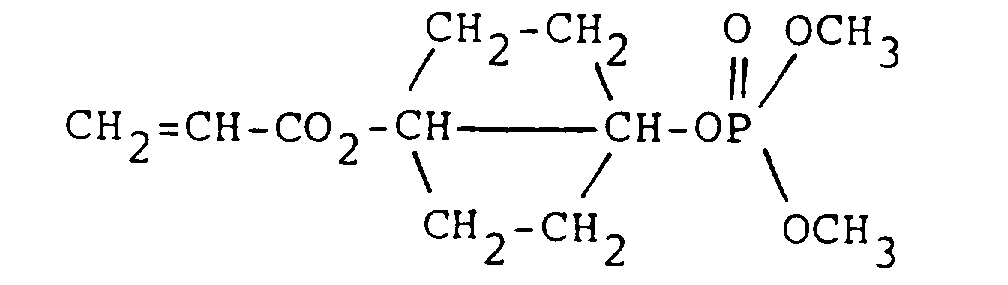


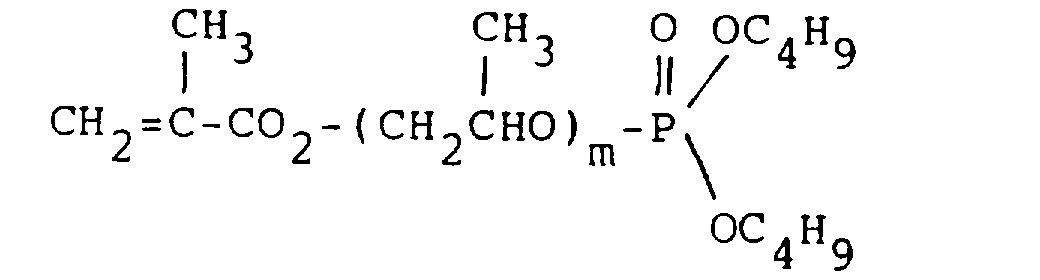

- Since the phosphoric acid ester monomers have an extremely strong metal-adhesion providing effect, the content of such monomer in the resin may be sufficient in a range of 0.05 to 20 parts by weight, preferably 0.01 to 10 parts by weight, to give the desired adhesion toward metal.
- Among them, particular preference is given to diphenyl acryloyloxy ethyl phosphate and diphenyl methacryloyl oxy ethyl phosphate.
- The present acrylic resin composition may be advantageously prepared by effecting copolymerization, by conventional means, of such phosphoric acid ester monomer bearing polymerizable unsaturated bond and other copolymerizable α,β-ethylenically unsaturated monomer.
- However, for electrodeposition coating purposes and for alkali-solubilization purposes at the development stage, it is essential to copolymerize with monomer containing at least one acid group as mentioned, e.g. carboxylic acid group, sulfonic acid group or phosphoric acid group.
- Examples of monomers containing such acid group are:
- (1) monomer containing carboxylic acid group:
acrylic acid, methacrylic acid, crotonic acid, itaconic acid, maleic acid and fumaric acid; - (2) monomer containing sulfonic acid group:
1-acryloxy-1-propane sulfonic acid, 2-acrylamide-2-methyl propane sulfonic acid and 3-methacrylamide-1-hexane sulfonic acid; - (3) monomer containing phosphoric acid group:
acid phosphoxy ethyl methacrylate and acid phosphoxy propyl methacrylate; - (4) unsaturated monomers represented by the formula [I] or [II] of Japanese Patent Publication (unexamined) 189857/88.
- However, the desired solubility difference between the exposed and unexposed areas of the resist layer is hardly obtained with the acryl copolymer containing sulfonic acid group or phosphoric acid group bearing monomer alone due to its strong alkali-affinity, and therefore it is much preferred to rely on carboxylic acid group containing monomer and to add a small amount of sulfonic acid or phosphoric acid group containing monomer as an alkali-solubilization assistant.
- Such acid group containing monomer is usually employed in an amount to give an acid value of the copolymer of 20 to 200.
- If the content of such monomer is less than the amount to give an acid value of 20, there results an acrylic resin which is poor in alkaline solubility, causing inferior developing property.
- On the other hand, if the content of such monomer exceeds the amount to give an acid value of 200, the desired resistance toward alkaline developer is lost, causing undesired solution of the unexposed image area.
- As the third monomer component of α,β-ethylenically unsaturated compounds, appropriate monomers are selected from the known various types of α,β-ethylenically unsaturated compounds by paying due regard to the desired Tg, Sp, solubility and other properties of the binder resin.
- Examples of such compounds are acrylates and methacrylates (e.g. methyl acrylate, methyl methacrylate, ethyl acrylate, ethyl methacrylate, n-butyl acrylate, n-butyl methacrylate, i-butyl acrylate, i-butyl methacrylate, t-butyl acrylate, t-butyl methacrylate, 2-ethyl hexyl acrylate, 2-ethyl hexyl methacrylate, lauryl acrylate and lauryl methacrylate); polymerizable aromatic compounds such as styrene and vinyl toluene; polymerizable amide compounds such as acryl amide, methacryl amide, diacetone acryl amide and N-methylol acryl amide; polymerizable nitrile compounds such as acrylonitrile and methacrylonitrile; and hydroxyl group containing compounds such as 2-hydroxy ethyl acrylate, 2-hydroxy ethyl methacrylate, hydroxy propyl acrylate, hydroxy propyl methacrylate and allyl alcohol.
- Other compounds are phenolic hydroxyl bearing unsaturated monomers stated in Japanese Patent Publication (unexamined) Nos. 206293/86 and 281153/88, including the reaction products of aromatic compound having both phenolic hydroxyl group and carboxyl group and a glycidyl group of unsaturated monomer or hydroxyl group of unsaturated monomer.
- Such monomers are used alone or in combination of two or more, together with the abovementioned monomers (a) and (b).
- Polymerization is carried out by using any conventional polymerization means.
- The molecular weight of those obtained acryl resins to be used in the present invention should be, in terms of weight average molecular weight, in a range of 1,000 to 200,000, and preferably 3,000 to 100,000.
- If the weight-average molecular weight of the resin is more than 200,000, it cannot be used in the present resinous composition because the solubility of the resin in an alkaline developer is extremely low and hence excessively long development time is required.
- If the weight-average molecular weight is less than 1,000, the solubility of the resin in an aqueous alkaline solution will become excessively high, causing the formation of slender line pattern.
- As the quinone diazide compound, any of the heretofore known compounds may be satisfactorily used.
- Examples are 1,2-benzoquinone diazide-4-sulfonic acid ester, 1,2-naphthoquinone diazide-5-sulfonic acid ester, 1,2-benzoquinone diazide sulfonic acid amide, 1,2-naphthoquinone diazide-4-sulfonic acid amide and 1,2-naphthoquinone diazide-5-sulfonic acid amide.
- More specifically, mention is made of such 1,2-quinone diazide compounds as disclosed in J. Kosar "Light-Sensitive Systems" 339-352 (1965) John Wiley & Sons Inc. (New York) and W.S. De Forest "Photoresist" 50 (1975), McGraw-Hill, Inc. (New York).
- That is, there may be used 1,2-benzoquinone diazide-4-sulfonic acid phenyl ester, 1,2,1',2'-di (benzoquinone diazide-4-sulfonyl)-dihydroxy biphenyl, 1,2-benzoquinone diazide-4-(N-ethyl-N-β-naphthyl)-sulfonamide, 1,2-naphthoquinone diazide-5-sulfonic acid cyclohexyl ester, 1-(1,2-naphthoquinone diazide-5-sulfonyl)-3,5-dimethyl pyrazole, 1,2-naphthoquinone diazide-5-sulfonic acid-4'-hydroxy diphenyl-4'-azo-β-naphthol ester, N,N'-di-(1,2-naphthoquinone diazide-5-sulfonyl)-aniline, 2'-(1,2-naphthoquinone diazide-5-sulfonyl oxy)-1-hydroxy-anthraquinone, 1,2-naphthoquinone diazide-5-sulfonic acid-2,3,4-trihydroxy benzophenone ester, condensation product of 2 moles of 1,2-naphthoquinone diazide-5-sulfonyl chloride and 1 mole of 4,4'-diamino benzophenone, condensation product of 2 moles of 1,2-naphthoquinone diazide-5-sulfonyl chloride and 1 mole of 4,4'-dihydroxy-1,1'-diphenyl sulfone, condensation product of 1 mole of 1,2-naphthoquinone diazide-5-sulfonyl chloride and 1 mole of purpurogallin and 1,2-naphthoquinone diazide-5-(N-dihydro abietyl)-sulfonamide.
- Furthermore, such quinone diazide ester compounds derived from polyepoxide compounds and phenolic hydroxyl group of other compounds as disclosed in Japanese Patent Publication (unexamined) 6948/89 may also be advantageously used.
- The adding amount of such quinone diazide compound is preferably in a range of 3 to 150 parts by weight, more preferably 5 to 100 parts by weight, per 100 parts by weight of the acrylic resin composition.
- If the quinone diazide compound is used in an amount of less than 3 parts by weight, the amount of carboxylic acid to be generated after exposure will be too limited and hence it is unable to give the desired difference in solubility of the resist layer toward alkaline developer, before and after exposure, resulting in difficulty in its patterning.
- If the quinone diazide compound is used in an amount greater than the upper limit of 150 parts by weight, most of the quinone diazide compounds will remain as they are after short-time exposure, and it is quite difficult to effect an optimum development of the exposed resist layer.
- It a phenolic hydroxyl group of unsaturated monomer is included in the constituting monomers of acrylic resin, all or part of said hydroxyl groups may be reacted with a reactive derivative of quinone diazide compound such as 1,2-benzoquinone diazide-4-sulfonic halide, 1,2-naphthoquinone diazide-4-sulfonic halide or 1,2-naphthoquinone diazide-5-sulfonic halide, to give a comparatively higher molecular weight naphthoquinone compound.
- Since a photosensitive group is included in the resinous body, such resin may be used alone or in combination with the present acrylic resin composition or other quinone diazide compound as desired.
- The present positive type photosensitive resinous composition may further include other optional additives such as storage stabilizer, pigment and colouring matter.
- The present resinous composition may be dissolved in an appropriate solvent, applied on a substrate by using a conventional application means such as spinner, coater and the like, and dried to form a photosensitive resinous layer.
- Appropriate solvents are glycol ethers such as ethylene glycol monomethyl ether, ethylene glycol monoethyl ether, ethylene glycol monobutyl ether and the like; cellosolve acetates such as methyl cellosolve acetate, ethyl cellosolve acetate and the like; aromatic hydrocarbons such as toluene, xylene and the like; ketones such as methyl ethyl ketone, cyclohexanone and the like; and esters such as ethyl acetate and butyl acetate.
- Such solvents may be used alone or in combination of two or more.
- As the coating substrate, any of silicone wafer, aluminium plate, plastic film, paper, glass plate, steel plate and printed circuit board using copper-clad laminate may be appropriately selected and used.
- The present positive type photosensitive resinous composition is specifically useful for the coating of conductive substrates such as copper-clad laminates for printed circuit boards, by an electrodeposition coating means.
- In such an electrodeposition coating method as stated in Japanese Patent Publication (unexamined) Nos. 206293/86, 189857/86 and 281153/86, by the adoption of the present resinous composition, it is possible to attain an improved adhesion of the coating on the base plate, without causing any problems in relation to the electrodeposition properties of the said composition.
- This is because the phosphoric acid ester compound is included in the binder resin, but there are no free phosphoric acid protons in the system.
- In order to obtain an electrodeposition coating composition, the present positive type photosensitive resinous composition should be dissolved or dispersed in water, and to this end, the acidic groups contained in the binder resin should be neutralized with a basic material.
- Examples of such basic material are alkanol amines such as monoethanol amine, diethanol amine and triethanol amine; alkylamines such as monoethyl amine, diethyl amine and triethylamine; alkyl alkanol amines such as dimethylamino ethanol; alkali metal hydroxides such as sodium hydroxide and potassium hydroxide; and ammonia.
- Such basic materials are used alone or in combination of two or more.
- The amount of basic material to be used for neutralization may be preferably selected in a range of 0.2 to 1.0 equivalent per equivalent of acidic group contained in the acrylic resin.
- If the amount of basic material is less than 0.2 equivalent, there is a tendency that water dispersion stability may be adversely affected and a quantity of precipitation may be formed with lapse of time.
- On the other hand, if the amount of basic material exceeds 1.0 equivalent, there is a tendency that stability of quinone diazide compound is liable to be decreased and water dispersion will be coloured with lapse of time.
- An aqueous dispersion or solution of the electrodeposition coating composition of this invention may be advantageously prepared by first making a mixture of acid group bearing alkali soluble binder resin having acid group quinone diazide compound, neutralizing agent, other optional additives and organic solvent, and then diluting the mixture with water.
- In this invention, besides the abovementioned main ingredients, various additives may be added as desired, e.g. organic solvent for the control of electrodeposition coating, thickness and thermal flow characteristics of the electrodeposition coating, dyestuff and pigment for the formation of visual image, defoaming agent and surfactant.
- By the adoption of electrodeposition coating means, the present positive type photosensitive resinous composition may be easily applied on any shaped material having a conductive surface thereon.
- A particularly important application is for the coating of copper-clad laminates and electro-plated boards for printed circuit boards having small size through-holes.
- In carrying out an electrodeposition coating with the abovementioned coating composition, the electrodeposition bath is controlled in a solid content of 3 to 40%, preferably 5 to 25%, bath temperature is maintained in a range of 10 to 40°C, preferably 15 to 35°C, the substrate having a conductive surface is dipped in the bath and connected to an anode, the bath wall is connected to a cathode, and a direct current is applied to the electrodes until a coating with desired thickness is obtained.
- After electrodeposition coating, the coated plate is taken out, washed with water and dried in a conventional way to obtain a plate coated with a positive type photosensitive resin layer having no pinholes and uniform thickness.
- Said drying may be advantageously carried out at 40° to 150°C, preferably 60° to 130°C.
- If the drying temperature is less than 40°C, the desired drying may be obtained in a long drying time but it is unable to restore the pinholes resulting from the generation of gas by an electrode reaction.
- If the temperature exceeds 150°C, there is a tendency that quinone diazide compound is vainly decomposed.
- In obtaining the desired resist pattern, the photosensitive layer prepared by using the present positive type photosensitive resinous composition is exposed, through a positive pattern film (circuit pattern mask), to an actinic light and the exposed area is dissolved out by the subsequent development operation.
- The light source used may be any actinic light having a wave-length band of 300 to 450nm.
- Examples are high pressure mercury lamp, super high pressure mercury lamp, metal halide lamp, xenon lamp and arc lamp.
- The development may be easily carried out with a conventional weak aqueous alkaline solution, by dipping, spraying, brushing and the like; particular preference is given to spraying.
- Examples of developers are aqueous solutions of such alkaline materials as inorganic alkali like sodium carbonate, sodium silicate, sodium metasilicate, trisodium phosphate, sodium hydroxide and potassium hydroxide; organic amines, e.g. n-propyl amine, di-n-propy lamine, pyrrol, piperadine, piperidine, triethylenediamine, dimethyl ethanol amine, triethanol amine and diethyl hydroxyl amine; quaternary ammonium salts, e.g. tetramethyl ammonium hydroxide and tetraethyl ammonium hydroxide; ammonia.
- If desired, other additives such as water soluble organic solvent, surfactant, defoaming agent and the like may be added to the developer.
- Next, in the preparation of a printed circuit board, a plate with a circuit resist pattern is subjected to an etching operation with an etching solution containing ferric chloride or cupric chloride.
- At that time, inside surfaces of minute holes, if any, may be effectively and safely protected by the said etching resist.
- Finally, the unexposed resist still remaining on the conductive layer including the resist on the inside surfaces of minute holes is removed by treatment with a strong alkaline aqueous solution such as sodium hydroxide or potassium hydroxide and the desired copper circuit pattern is obtained.
- The present positive type photosensitive resinous composition has excellent metal adhesion and the formed layer has the characteristic that, at the time of development, there is extremely little swelling of unexposed (image) area and hence the layer has excellent resolving power and has a wide development latitude.
- When the present resinous composition is formulated in an aqueous dispersion to be used as an electrodeposition coating bath, said dispersion has excellent storage stability, provides excellent coverage on uneven surfaces, and is capable of providing a non-tacky, smooth and uniform resist coating.
- The thus obtained photosensitive resin film is specifically useful for the preparation of high density fine circuit pattern boards.
- The present invention will be further described with reference to the following Examples.
- Unless otherwise stated, all parts and percentages are by weight.
- Into a 1 ℓ glass reactor fitted with a stirrer, a condenser, a thermometer, a dropping funnel and a nitrogen gas inlet tube, were placed 300 parts of ethylene glycol monobutyl ether.
- To this, a mixture of 200 parts of methyl methacrylate, 167.3 parts of n-butyl methacrylate, 30.7 parts of methacrylic acid, 2 parts of dibutyl methacryloyl oxy ethyl phosphate and 16 parts of t-butyl peroxy-2-ethyl hexanoate (polymerization initiator) was dropwise added while maintaining the temperature at 120°C and introducing a nitrogen gas stream into the reactor, in 3 hours, and then the mixture was maintained at the same temperature for an additional 2 hours to obtain a resinous varnish of acryl resin having a weight-average molecular weight of 20,000.
- Next, 20 parts of said resinous varnish were mixed with a solution of 3 parts of 1,2-naphthoquinone diazide-5-sulfonic acid-2,3,4-trihydroxybenzophenone ester in 20 parts of methyl ethyl ketone and the thus obtained composition was applied by using a coater onto a copper-clad laminate (Cu thickness 35µm) and dried at 80°C for 10 minutes to obtain a positive type photosensitive resin layer of dry film thickness of 6µm.
- Next, a positive film having a line-and-space pattern with 10µm unit-stepped lines from 30µ to 100µm was placed on the resinous film and the product was exposed by using a HMW-201B exposing machine (manufactured by Oak Seisakusho K.K.) to an exposure of 300 mj/cm2, developed by spraying 1% sodium metasilicate aqueous solution (30°C) for 1 minute and finally subjected to etching with ferric chloride aqueous solution (40°C) for 2 minutes to obtain a copper pattern having up to 80 µm line width.
- Into a 1ℓ glass reactor fitted with a stirrer, a condenser, a thermometer and an air inlet tube, were placed 207.2 parts of phthalic anhydride, 501.2 parts of Placcel FM-2 (2:1 mole addition product of ε-caprolactone and 2-hydroxy ethyl methacrylate, manufactured by Daicel Chem. Co.) and 500 ppm (to the total material) of hydroquinone monomethyl ether and the mixture was reacted, while introducing an air, at 150°C for 1 hour.
- Thereafter, the mixture was allowed to cool to room temperature and filtered to obtain a reactive acrylic monomer.
- The acid value of the reactive acrylic monomer was 114 and the reaction percentage calculated from said acid value was 97%.
- Into a 1ℓ glass reactor fitted with a stirrer, a condenser, a thermometer, a dropping funnel and a nitrogen gas inlet tube, were placed 300 parts of ethylene glycol monobutyl ether.
- To this, a mixture of 140 parts of the abovementioned acryl monomer, 130 parts of methyl methacrylate, 26 parts of n-butyl acrylate, 4 parts of dibutyl methacryloyloxy ethyl phosphate and 10 parts of t-butyl peroxy-2-ethyl hexanoate (polymerization initiator) was dropwise added while maintaining the temperature at 120°C and introducing air into the reactor, in 3 hours, and then the mixture was maintained at the same temperature for an additional 2 hours to obtain a resinous varnish of acrylic resin having a weight-average molecular weight of 30,000.
- Next, 20 parts of said resinous varnish were mixed with a solution of 4 parts of 1,2-naphthoquinone diazide-5-sulfonic acid-2,3,4-trihydroxybenzophenone ester in 20 parts of methyl ethyl ketone and the thus obtained composition was applied, dried, exposed, developed and etched as in Example 1 to obtain a copper pattern having up to 50µm line width.
- Into a 1ℓ glass reactor were placed 276 parts of a o-hydroxy benzoic acid, 5.4 parts of N,N'-dimethyl benzylamine, 0.14 part of hydroquinone and 150 parts of dioxane and the mixture was stirred and heated to 100°C.
- After adding 284 parts of glycidyl methacrylate, the reaction mixture was stirred at 100°C for 6 hours while introducing air.
- The thus obtained product was confirmed to be 3-(o-hydroxy benzoyloxy)-2-(hydroxy) propyl methacrylate from IR spectrum and NMR spectrum analysis.
- Next, into a reactor were placed 260 parts of ethylene glycol monomethyl ether, and to this a monomer mixture of 100 parts of the abovementioned reactive acryl monomer, 200 parts of methyl methacrylate, 80.5 parts of n-butyl acrylate, 24.5 parts of methacrylic acid, 10 parts of t-butyl peroxy-2-ethyl hexanoate and 3 parts of diphenyl acryloyloxy ethyl phosphate and a solution of 12 parts of 2-acrylamide-2-methyl propanesulfonic acid in a mixture of 20 parts of ethyleneglycol monomethyl ether and 20 parts of deionized water were dropwise added, under a nitrogen gas stream and while maintaining the inner temperature of 120°C, in 3 hours.
- Thereafter, the reaction mixture was maintained at the same temperature for an additional two hours to obtain a resinous varnish of acryl resin having a weight-average molecular weight of 26,000.
- Next, 20 parts of the thus obtained varnish were combined with a solution of 3 parts of 1,2-naphthoquinone diazide-5-sulfonic acid-2,3,4-trihydroxy benzophenone ester in 20 parts of methyl ethyl ketone and the resulting composition was applied, dried and exposed, developed and etched as in Example 1, to obtain a copper pattern having up to 30µm line pattern.
- Into a 1ℓ glass reactor fitted with a stirrer, a condenser, a decanter and an air inlet tube, were placed 358 parts of Placcel FM-2 (2:1 mole addition product of ε-caprolactone and 2-hydroxy ethyl methacrylate, manufactured by Daicel Chem. Co.).
- To this, 131 parts of salicylic acid, 0.5 part of dibutyl tin oxide, 15 parts of xylene and 1.5 parts of hydroquinone were added and the reaction mixture was, while introducing air, heated to 180°C and reacted until the acid value reached 3 or less, and was then allowed to cool.
- Next, in a separate reactor, were placed 250 parts of ethylene glycol monobutyl ether, and a mixture of 135 parts of the abovementioned reactive acryl monomer, 140 parts of methyl methacrylate, 208 parts of n-butyl acrylate, 20 parts of acrylic acid, 2 parts of diphenyl methacryloyloxy ethyl phosphate and 10 parts of azobis isobutyronitrile was dropwise added, while introducing a nitrogen gas stream and maintaining the inner temperature at 120°C, in 3 hours.
- After 30 minutes, a mixture of 25 parts of ethylene glycol monobutyl ether and 1 part of azobisisobutyronitrile was dropwise added in 1 hour and the reaction mixture was maintained at the same temperature for 1 hour.
- Into a 3 liter separable flask fitted with a thermometer, a condenser, and a stirrer, were placed 500 parts of the thus obtained acryl resin varnish, and a solution of 44 parts of 1,2-naphthoquinone diazide-5-sulfonyl chloride in 1520 parts of acetone was added thereto, at room temperature.
- Thereafter, 19.6 parts of triethylamine were dropwise added in 1 hour and the reaction mixture was reacted at room temperature for 2 hours, to effect precipitation.
- After removing the precipitate, the filtrate was dropwise added to about 20 times water under stirring, in 1 hour, and a brown coloured resinous material was separated and dried (number-average molecular weight 6,400, quinone diazide equivalent determined by fluorecent X-ray analysis 4.2x10⁻⁴ equivalent/g).
- 60 parts of the thus prepared photosensitive resin were dissolved in 40 parts of methyl ethyl ketone and to this were added 2,2 parts of triethyl amine and 497 parts of deionized water under stirring to obtain an aqueous dispersion of photosensitive resin.
- A circuit base substrate consisting of an insulating base plate with 0.6mm through-holes was previously subjected to electroless copper plating and electrolytic copper plating to obtain a base plate for a double sided, printed circuit board having a copper film of 43µm thickness.
- This board was dipped into the abovementioned aqueous dispersion, the board was connected to an anode and the metallic wall of the bath was connected to a cathode.
- Thereafter, a direct current of 50 mA/dm2 was passed for 90 seconds, and the board was washed with water and dried in a drier at 100°C for 5 minutes to form a positive type, photosensitive resin film of 7µm dry thickness.
- The thus obtained resin film had no pin-holes and was of uniform thickness.
- Even the inside of the respective through hole was completely covered by the resin film.
- On said photosensitive resin film was placed a positive type photomask with a circuit pattern and the product was illuminated from both sides by using a HMW-201B type exposing machine (Oak Seisakusho) so as to give an exposure of 350 mj/cm2 on each surface, and developed in an aqueous 1% sodium metasilicate solution at 35°C for 1 minute to obtain a reproduction of line pattern with precise line width, which was free from pin-holes, resist separation and cracks.
- After exposure, the board was etched by using a ferric chloride solution at 40°C for 150 seconds, the treated plate was washed with water, and the resin film still remaining on the circuit pattern was removed by using an aqueous 3% sodium hydroxide solution at 50°C to obtain a desired circuit pattern having a minimum line width of 50µm and having no defects.
- At that time, the copper coating within the unexposed through-hole completely remained without being etched and electrical passage was secured at that portion.
- Into a similar reaction vessel as used in Example 2 were placed 148 parts of phthalic anhydride, 400 parts of Blenmer PP-1,000 (5.5:1 mole addition product of propylene oxide and methacrylic acid, manufactured by Nippon Yushi K.K.) and 500 ppm of hydroquinone monomethyl ether to the total charge,and the mixture was reacted, while introducing an air, at 150°C for 60 minutes under stirring.
- The thus obtained reactive acrylic monomer had an acid value of 108, indicating a reaction percentage of 95%.
- Next, an acrylic resin varnish was prepared, following the procedures of Example 1, with the materials shown below.
the abovementioned acrylic monomer 75 parts methyl methacrylate 75 n-butyl acrylate 50 acrylonitrile 23 diphenyl methacryloyloxy ethyl phosphate 2 t-butyl peroxy-2-ethyl hexanoate 4.5 ethylene glycol monobutyl ether 180 - The weight-average molecular weight of the reaction product was 32,000.
- Into a 1ℓ glass reactor fitted with a stirrer, a condenser and a thermometer, were placed 100 parts of polyethylene glycol diglycidyl ether (epoxy equivalent 192.5), 71.8 parts of salicylic acid and 28 parts of ethylene glycol monoethyl ether acetate and, after heating to 120°C, 0.5 part of benzyl dimethylamine (catalyst) was added and the reaction mixture was reacted for 6 hours.
- The acid value of the reaction mixture was 5.6, indicating a reaction percentage of 96.2%.
- Next, the content was cooled to 10°C, added with 105 parts of 1,2-naphthoquinone diazide-5-sulfonyl chloride and 160 parts of dioxane, and to the thus obtained solution were dropwise added 43.5 parts of triethylamine, and the reaction mixture was reacted at 10°C for 2 hours. Thereafter the reaction mixture was dropwise added to a large quantity of 2% aqueous HCℓ solution to effect precipitation.
- The thus formed precipitate was filtered, washed with water and dried in vacuo at 40°C for 15 hours to obtain a positive type photosensitive resin (93% yield).
- To 144 parts of the abovementioned acrylic resin varnish, a solution of 20 parts of the abovementioned positive type photosensitive resin in 20 parts of propyleneglycol monomethyl ether was added, and the reaction mixture was then added with 4.5 parts of triethylamine and 815.5 parts of deionized water to obtain an electrodeposition coating composition.
- A similar board having a copper film of 43µm thickness as used in Example 4 was dipped in the abovementioned electrodeposition coating composition, and a direct current of 50 mA/dm2 was applied for 90 seconds as in Example 4, to obtain a positive type photosensitive resin layer of 7µm thickness.
- The thus obtained coating was free from pin-holes, had a uniform film thickness, and even the inside of the respective through-hole was completely covered with said coating.
- Thereafter, similar exposure, development and etching procedures as stated in Example 4 were carried out to obtain a circuit pattern having a minimum line width of 40µm and being free from defects.
- The copper within the unexposed through-hole remained as it was and thus the desired electrical passage was secured.
- Into a similar reaction vessel as used in Example 2 were placed 77 parts of trimellitic anhydride, 300 parts of Placcel FM-5 (5:1 mole addition product of ε-caprolactone and 2-hydroxyethyl methacrylate, manufactured by Daicel Chem. Co.) and 500 ppm of hydroquinone monomethyl ether to the total charge and, while introducing air, the content was stirred at 165°C (inner temperature) for 30 minutes to effect reaction.
- Thereafter, the content was hot-filtered to remove a small amount of unreacted materials.
- The reaction product was a semi-solid material (25°C) having an acid value of 125.
- To the abovementioned product, 100 parts of Cardula E-10 (glycidyl versatate, manufactured by Shell Chem.) were added and again reacted, while introducing air and stirring, at 150°C (inner temperature) for 40 minutes.
- The thus obtained reactive acrylic monomer had an acid value of 52, indicating a reaction percentage of 95%.
- Similar procedures as stated in Example 1 were repeated except using the following materials, to obtain an acryl resin varnish.
the abovementioned acrylic monomer 77 parts methacrylic acid 6.2 methyl methacrylate 79.5 n-butyl methacrylate 36 diphenyl methacryloyloxy ethyl phosphate 0.8 Phosmer PP* 0.5 t-butyl peroxy-2-ethyl hexanoate 6 propyleneglycol monopropyl ether 130 * ... acid phosphoxy polyoxy propylene glycol monomethacrylate propylenoxide 5-6 moles, Koni Chem. K.K. - The weight average molecular weight of the reaction product was 16,000.
- In a separate 1ℓ glass reactor fitted with a stirrer, a condenser and a thermometer, were placed 67 parts of trimethylol propane triglycidyl ether (epoxy equivalent 150), 71 parts of 3-methyl salicylic acid and 46 parts of ethyleneglycol monobutyl ether acetate and, after heating to 120°C, the mixture was added with 1.3 parts of trimethyl ammonium chloride (as a catalyst) and reacted for 5 hours.
- At that stage, the acid value of the reaction mixture was 5.5, indicating a reaction percentage of 96.6%.
- Next, the reaction mixture was allowed to cool to 10°C, and added with 125 parts of 1,2-naphthoquinone diazide-5-sulfonyl chloride and 600 parts of acetone.
- To this, 40 parts of triethylamine were dropwise added and the reaction mixture was reacted at 10°C for 2 hours.
- Thereafter, the reaction mixture was dropwise added to a large quantity of 2% aqueous HCℓ solution to effect precipitation.
- The precipitate was filtered, washed with water and dried under reduced pressure at 40°C for 18 hours, to obtain a positive type photosensitive resin (95% yield).
- To 107 parts of the abovementioned acrylic resin varnish, a solution of 20 parts of the abovementioned positive type photosensitive resin in 20 parts of propyleneglycol monomethyl ether was added, and 3.6 parts of triethyl amine and 825.4 parts of deionized water were further added to obtain an electrodeposition coating composition.
- Next, following the procedures of Example 4, a positive type photosensitive resin coating of 7µm thickness was prepared on a board having a 43µm copper layer by using an electrodeposition coating means (direct current 50 mA/dm2: electrodeposition time 90 seconds).
- The thus formed resin coating was free from pin-holes, had a uniform coating thickness, and the whole inside of the respective through-hole was completely covered with the resin layer.
- Using the same procedures as stated in Example 4, the formed plate was exposed to UV radiation, developed and etched to obtain a circuit pattern having a minimum line width of 30 µm and being free from defects.
- The copper within the unexposed through-hole completely remained and electrical passage was secured.
Claims (1)
- A positive type photosensitive resinous composition comprising a binder resin component and a quinone diazide compound as essential components, the resin being a copolymer of(a) at least one phosphoric acid ester monomer represented by the formula:

A is -R4-O-, (b) at least one acid group containing α,β-ethylenically unsaturated monomer in an amount to give an acid value of the copolymer of 20 to 200, and(c) at least one copolymerizable α,β-ethylenically unsaturated monomer other than (a) and (b).
Applications Claiming Priority (2)
| Application Number | Priority Date | Filing Date | Title |
|---|---|---|---|
| JP227828/89 | 1989-09-01 | ||
| JP1227828A JPH0389353A (en) | 1989-09-01 | 1989-09-01 | Positive type photosensitive resin composition |
Publications (3)
| Publication Number | Publication Date |
|---|---|
| EP0416829A2 EP0416829A2 (en) | 1991-03-13 |
| EP0416829A3 EP0416829A3 (en) | 1991-11-13 |
| EP0416829B1 true EP0416829B1 (en) | 1997-05-14 |
Family
ID=16867009
Family Applications (1)
| Application Number | Title | Priority Date | Filing Date |
|---|---|---|---|
| EP90309586A Expired - Lifetime EP0416829B1 (en) | 1989-09-01 | 1990-08-31 | A positive type photosensitive resinous composition |
Country Status (6)
| Country | Link |
|---|---|
| US (1) | US5232816A (en) |
| EP (1) | EP0416829B1 (en) |
| JP (1) | JPH0389353A (en) |
| AU (1) | AU634809B2 (en) |
| CA (1) | CA2024482A1 (en) |
| DE (1) | DE69030699T2 (en) |
Families Citing this family (10)
| Publication number | Priority date | Publication date | Assignee | Title |
|---|---|---|---|---|
| US5444123A (en) * | 1991-09-06 | 1995-08-22 | Basf Aktiengesellschaft | Halogen-free flameproofed thermoplastic molding materials based on polyphenylene ethers and polystyrene |
| JPH05181281A (en) * | 1991-11-01 | 1993-07-23 | Fuji Photo Film Co Ltd | Photoresist composition and etching method |
| DE69425862T2 (en) * | 1993-11-17 | 2001-05-03 | At & T Corp., New York | Method of manufacturing a device using a photosensitive composition |
| JP6012344B2 (en) * | 2011-10-24 | 2016-10-25 | キヤノン株式会社 | Method for forming film |
| JP6241226B2 (en) * | 2013-10-09 | 2017-12-06 | Jsr株式会社 | Photoresist composition, resist pattern forming method, polymer and compound |
| US10492888B2 (en) | 2015-07-07 | 2019-12-03 | Align Technology, Inc. | Dental materials using thermoset polymers |
| US12006384B2 (en) * | 2017-10-27 | 2024-06-11 | Lg Chem, Ltd. | Random copolymer and pinning composition comprising the same |
| CN117736392A (en) | 2018-05-04 | 2024-03-22 | 阿莱恩技术有限公司 | Curable composition for high Wen Guangke-based photopolymerization process and method of preparing crosslinked polymer therefrom |
| US10781274B2 (en) * | 2018-05-04 | 2020-09-22 | Align Technology, Inc. | Polymerizable monomers and method of polymerizing the same |
| US12215223B2 (en) | 2019-10-31 | 2025-02-04 | Align Technology, Inc. | Crystallizable resins |
Family Cites Families (9)
| Publication number | Priority date | Publication date | Assignee | Title |
|---|---|---|---|---|
| US2993033A (en) * | 1958-12-11 | 1961-07-18 | Rohm & Haas | Flame-resistant methyl methacrylate copolymers |
| US4123279A (en) * | 1974-03-25 | 1978-10-31 | Fuji Photo Film Co., Ltd. | Light-sensitive o-quinonediazide containing planographic printing plate |
| JPS56122031A (en) * | 1980-03-01 | 1981-09-25 | Japan Synthetic Rubber Co Ltd | Positive type photosensitive resin composition |
| JPS5946643A (en) * | 1982-09-09 | 1984-03-16 | Fuji Photo Film Co Ltd | Photosensitive lithographic printing plate |
| JPS61206293A (en) * | 1985-03-08 | 1986-09-12 | 日本ペイント株式会社 | Manufacture of circuit board |
| DE3619130A1 (en) * | 1986-06-06 | 1987-12-10 | Basf Ag | LIGHT SENSITIVE RECORDING ELEMENT |
| JPS63147159A (en) * | 1986-12-11 | 1988-06-20 | Fuji Photo Film Co Ltd | Photopolymerizable composition |
| JP2593305B2 (en) * | 1987-02-02 | 1997-03-26 | 日本ペイント株式会社 | Positive photosensitive resin composition |
| US4797345A (en) * | 1987-07-01 | 1989-01-10 | Olin Hunt Specialty Products, Inc. | Light-sensitive 1,2-naphthoquinone-2-diazide-4-sulfonic acid monoesters of cycloalkyl substituted phenol and their use in light-sensitive mixtures |
-
1989
- 1989-09-01 JP JP1227828A patent/JPH0389353A/en active Pending
-
1990
- 1990-08-31 CA CA002024482A patent/CA2024482A1/en not_active Abandoned
- 1990-08-31 EP EP90309586A patent/EP0416829B1/en not_active Expired - Lifetime
- 1990-08-31 DE DE69030699T patent/DE69030699T2/en not_active Expired - Fee Related
- 1990-08-31 AU AU62061/90A patent/AU634809B2/en not_active Ceased
- 1990-08-31 US US07/575,651 patent/US5232816A/en not_active Expired - Fee Related
Also Published As
| Publication number | Publication date |
|---|---|
| JPH0389353A (en) | 1991-04-15 |
| DE69030699T2 (en) | 1997-11-27 |
| EP0416829A3 (en) | 1991-11-13 |
| CA2024482A1 (en) | 1991-03-02 |
| EP0416829A2 (en) | 1991-03-13 |
| AU6206190A (en) | 1991-03-07 |
| US5232816A (en) | 1993-08-03 |
| DE69030699D1 (en) | 1997-06-19 |
| AU634809B2 (en) | 1993-03-04 |
Similar Documents
| Publication | Publication Date | Title |
|---|---|---|
| EP0194824B1 (en) | A method for preparing a printed circuit board | |
| EP0354018B1 (en) | An electrodeposition coating composition and image-forming method using the same | |
| EP0265387B1 (en) | Method of forming images | |
| EP0301101B1 (en) | Positive photosensitive resin composition | |
| US5314789A (en) | Method of forming a relief image comprising amphoteric compositions | |
| US5232816A (en) | Positive type photosensitive resinous composition comprising a resin copolymer having at least a phosphoric acid ester monomer | |
| KR100211433B1 (en) | Positive anion electrodeposition photosensitive resist composition and pattern formation method using the same | |
| US5166036A (en) | Electrodeposition coating composition and image-forming method using the same | |
| AU633592B2 (en) | A method for forming a resist pattern | |
| US5422222A (en) | Electrodeposition coating composition | |
| EP0471326B1 (en) | Positive type photoresist composition | |
| US5427888A (en) | Positive photosensitive resin composition comprising a polymer having carbon-carbon double bonds, a maleic acid group and a maleimide group | |
| JP2594053B2 (en) | Positive photosensitive resin composition | |
| JP2608408B2 (en) | Positive photosensitive resin composition | |
| JP2935207B2 (en) | Positive photosensitive anion electrodeposition resist composition and method for producing printed wiring board using this composition | |
| JPH03100073A (en) | Positive photosensitive electrodeposition coating resin composition | |
| JPH04175381A (en) | Positive photosensitive electrodeposition coating composition | |
| JPH04311775A (en) | Positive-type photo-sensitive anionic electrodeposition coating resin composition, electrodeposition bath and electrodeposition method using the same | |
| JPH0675370A (en) | Positive photosensitive cation electrodeposition resist composition and manufacture of printed board using the same | |
| JPH03281671A (en) | Electrodeposition positive photoresist composition | |
| JPH06230566A (en) | Positive photosensitive resin composition | |
| JPH04311774A (en) | Positive-type photo-sensitive cationic electrodeposition coating resin composition, electrodeposition bath and electrodeposition method using the same | |
| JPH03100071A (en) | Positive photosensitive cationic electrodeposition coating resin composition | |
| JPH04261475A (en) | Positive type photosensitive electrodeposition coating composition | |
| JPH0683048A (en) | Positive photosensitive resin composition |
Legal Events
| Date | Code | Title | Description |
|---|---|---|---|
| PUAI | Public reference made under article 153(3) epc to a published international application that has entered the european phase |
Free format text: ORIGINAL CODE: 0009012 |
|
| AK | Designated contracting states |
Kind code of ref document: A2 Designated state(s): DE FR GB NL |
|
| PUAL | Search report despatched |
Free format text: ORIGINAL CODE: 0009013 |
|
| AK | Designated contracting states |
Kind code of ref document: A3 Designated state(s): DE FR GB NL |
|
| 17P | Request for examination filed |
Effective date: 19920508 |
|
| 17Q | First examination report despatched |
Effective date: 19951017 |
|
| GRAG | Despatch of communication of intention to grant |
Free format text: ORIGINAL CODE: EPIDOS AGRA |
|
| GRAH | Despatch of communication of intention to grant a patent |
Free format text: ORIGINAL CODE: EPIDOS IGRA |
|
| GRAH | Despatch of communication of intention to grant a patent |
Free format text: ORIGINAL CODE: EPIDOS IGRA |
|
| GRAA | (expected) grant |
Free format text: ORIGINAL CODE: 0009210 |
|
| AK | Designated contracting states |
Kind code of ref document: B1 Designated state(s): DE FR GB NL |
|
| REF | Corresponds to: |
Ref document number: 69030699 Country of ref document: DE Date of ref document: 19970619 |
|
| ET | Fr: translation filed | ||
| PLBE | No opposition filed within time limit |
Free format text: ORIGINAL CODE: 0009261 |
|
| STAA | Information on the status of an ep patent application or granted ep patent |
Free format text: STATUS: NO OPPOSITION FILED WITHIN TIME LIMIT |
|
| 26N | No opposition filed | ||
| PGFP | Annual fee paid to national office [announced via postgrant information from national office to epo] |
Ref country code: FR Payment date: 20010810 Year of fee payment: 12 |
|
| PGFP | Annual fee paid to national office [announced via postgrant information from national office to epo] |
Ref country code: DE Payment date: 20010828 Year of fee payment: 12 |
|
| PGFP | Annual fee paid to national office [announced via postgrant information from national office to epo] |
Ref country code: NL Payment date: 20010830 Year of fee payment: 12 Ref country code: GB Payment date: 20010830 Year of fee payment: 12 |
|
| REG | Reference to a national code |
Ref country code: GB Ref legal event code: IF02 |
|
| PG25 | Lapsed in a contracting state [announced via postgrant information from national office to epo] |
Ref country code: GB Free format text: LAPSE BECAUSE OF NON-PAYMENT OF DUE FEES Effective date: 20020831 |
|
| PG25 | Lapsed in a contracting state [announced via postgrant information from national office to epo] |
Ref country code: NL Free format text: LAPSE BECAUSE OF NON-PAYMENT OF DUE FEES Effective date: 20030301 Ref country code: DE Free format text: LAPSE BECAUSE OF NON-PAYMENT OF DUE FEES Effective date: 20030301 |
|
| GBPC | Gb: european patent ceased through non-payment of renewal fee |
Effective date: 20020831 |
|
| PG25 | Lapsed in a contracting state [announced via postgrant information from national office to epo] |
Ref country code: FR Free format text: LAPSE BECAUSE OF NON-PAYMENT OF DUE FEES Effective date: 20030430 |
|
| NLV4 | Nl: lapsed or anulled due to non-payment of the annual fee |
Effective date: 20030301 |
|
| REG | Reference to a national code |
Ref country code: FR Ref legal event code: ST |