EP0394557B1 - Verfahren zur Herstellung chloridarmer Gipsprodukte aus calciumhaltigen Rückständen von Abgasreinigungsanlagen - Google Patents
Verfahren zur Herstellung chloridarmer Gipsprodukte aus calciumhaltigen Rückständen von Abgasreinigungsanlagen Download PDFInfo
- Publication number
- EP0394557B1 EP0394557B1 EP89123335A EP89123335A EP0394557B1 EP 0394557 B1 EP0394557 B1 EP 0394557B1 EP 89123335 A EP89123335 A EP 89123335A EP 89123335 A EP89123335 A EP 89123335A EP 0394557 B1 EP0394557 B1 EP 0394557B1
- Authority
- EP
- European Patent Office
- Prior art keywords
- gypsum
- process according
- residues
- chloride
- low
- Prior art date
- Legal status (The legal status is an assumption and is not a legal conclusion. Google has not performed a legal analysis and makes no representation as to the accuracy of the status listed.)
- Expired - Lifetime
Links
- 238000000034 method Methods 0.000 title claims abstract description 34
- 239000010440 gypsum Substances 0.000 title claims abstract description 33
- 229910052602 gypsum Inorganic materials 0.000 title claims abstract description 33
- 239000002699 waste material Substances 0.000 title claims abstract description 13
- 239000011575 calcium Substances 0.000 title claims description 14
- OYPRJOBELJOOCE-UHFFFAOYSA-N Calcium Chemical compound [Ca] OYPRJOBELJOOCE-UHFFFAOYSA-N 0.000 title claims description 12
- 229910052791 calcium Inorganic materials 0.000 title claims description 12
- 239000003546 flue gas Substances 0.000 title claims description 4
- 238000000746 purification Methods 0.000 title claims description 4
- UGFAIRIUMAVXCW-UHFFFAOYSA-N Carbon monoxide Chemical compound [O+]#[C-] UGFAIRIUMAVXCW-UHFFFAOYSA-N 0.000 title claims description 3
- 238000004519 manufacturing process Methods 0.000 title description 7
- 239000000126 substance Substances 0.000 claims abstract description 21
- 229910052925 anhydrite Inorganic materials 0.000 claims abstract description 18
- OSGAYBCDTDRGGQ-UHFFFAOYSA-L calcium sulfate Chemical compound [Ca+2].[O-]S([O-])(=O)=O OSGAYBCDTDRGGQ-UHFFFAOYSA-L 0.000 claims abstract description 18
- 239000007789 gas Substances 0.000 claims abstract description 17
- NINIDFKCEFEMDL-UHFFFAOYSA-N Sulfur Chemical compound [S] NINIDFKCEFEMDL-UHFFFAOYSA-N 0.000 claims abstract description 14
- XLYOFNOQVPJJNP-UHFFFAOYSA-N water Substances O XLYOFNOQVPJJNP-UHFFFAOYSA-N 0.000 claims abstract description 14
- UXVMQQNJUSDDNG-UHFFFAOYSA-L Calcium chloride Chemical compound [Cl-].[Cl-].[Ca+2] UXVMQQNJUSDDNG-UHFFFAOYSA-L 0.000 claims abstract description 13
- 239000001110 calcium chloride Substances 0.000 claims abstract description 13
- 229910001628 calcium chloride Inorganic materials 0.000 claims abstract description 13
- 235000011148 calcium chloride Nutrition 0.000 claims abstract description 13
- 238000010521 absorption reaction Methods 0.000 claims abstract description 6
- 239000007921 spray Substances 0.000 claims abstract description 6
- VEXZGXHMUGYJMC-UHFFFAOYSA-M Chloride anion Chemical compound [Cl-] VEXZGXHMUGYJMC-UHFFFAOYSA-M 0.000 claims abstract description 4
- LSNNMFCWUKXFEE-UHFFFAOYSA-L sulfite Chemical compound [O-]S([O-])=O LSNNMFCWUKXFEE-UHFFFAOYSA-L 0.000 claims abstract description 3
- 239000005864 Sulphur Substances 0.000 claims abstract 7
- QAOWNCQODCNURD-UHFFFAOYSA-L Sulfate Chemical compound [O-]S([O-])(=O)=O QAOWNCQODCNURD-UHFFFAOYSA-L 0.000 claims abstract 2
- 229910021653 sulphate ion Inorganic materials 0.000 claims abstract 2
- QAOWNCQODCNURD-UHFFFAOYSA-N Sulfuric acid Chemical compound OS(O)(=O)=O QAOWNCQODCNURD-UHFFFAOYSA-N 0.000 claims description 7
- 239000002253 acid Substances 0.000 claims description 6
- 150000007513 acids Chemical class 0.000 claims description 6
- 238000004140 cleaning Methods 0.000 claims description 5
- 239000000203 mixture Substances 0.000 claims description 4
- 238000007254 oxidation reaction Methods 0.000 claims description 4
- 235000010261 calcium sulphite Nutrition 0.000 claims description 3
- 230000008030 elimination Effects 0.000 claims description 3
- 238000003379 elimination reaction Methods 0.000 claims description 3
- 239000003921 oil Substances 0.000 claims description 3
- 230000003647 oxidation Effects 0.000 claims description 3
- 239000002912 waste gas Substances 0.000 claims description 3
- LSNNMFCWUKXFEE-UHFFFAOYSA-N Sulfurous acid Chemical class OS(O)=O LSNNMFCWUKXFEE-UHFFFAOYSA-N 0.000 claims description 2
- 238000004061 bleaching Methods 0.000 claims description 2
- 150000004649 carbonic acid derivatives Chemical class 0.000 claims description 2
- 150000001805 chlorine compounds Chemical class 0.000 claims description 2
- 238000011143 downstream manufacturing Methods 0.000 claims description 2
- 150000004679 hydroxides Chemical class 0.000 claims description 2
- 239000010731 rolling oil Substances 0.000 claims description 2
- 150000003467 sulfuric acid derivatives Chemical class 0.000 claims description 2
- VTYYLEPIZMXCLO-UHFFFAOYSA-L Calcium carbonate Chemical compound [Ca+2].[O-]C([O-])=O VTYYLEPIZMXCLO-UHFFFAOYSA-L 0.000 claims 2
- 230000015556 catabolic process Effects 0.000 claims 2
- 239000001117 sulphuric acid Substances 0.000 claims 2
- 235000011149 sulphuric acid Nutrition 0.000 claims 2
- 235000010216 calcium carbonate Nutrition 0.000 claims 1
- 229910000019 calcium carbonate Inorganic materials 0.000 claims 1
- AXCZMVOFGPJBDE-UHFFFAOYSA-L calcium dihydroxide Chemical compound [OH-].[OH-].[Ca+2] AXCZMVOFGPJBDE-UHFFFAOYSA-L 0.000 claims 1
- 239000000920 calcium hydroxide Substances 0.000 claims 1
- 235000011116 calcium hydroxide Nutrition 0.000 claims 1
- 229910001861 calcium hydroxide Inorganic materials 0.000 claims 1
- 239000003245 coal Substances 0.000 claims 1
- 238000007670 refining Methods 0.000 claims 1
- 239000010913 used oil Substances 0.000 claims 1
- 238000006243 chemical reaction Methods 0.000 abstract description 8
- VEXZGXHMUGYJMC-UHFFFAOYSA-N Hydrochloric acid Chemical compound Cl VEXZGXHMUGYJMC-UHFFFAOYSA-N 0.000 abstract description 6
- 239000000969 carrier Substances 0.000 abstract description 3
- QVGXLLKOCUKJST-UHFFFAOYSA-N atomic oxygen Chemical compound [O] QVGXLLKOCUKJST-UHFFFAOYSA-N 0.000 abstract 1
- 239000001301 oxygen Substances 0.000 abstract 1
- 229910052760 oxygen Inorganic materials 0.000 abstract 1
- 239000000047 product Substances 0.000 description 16
- 239000007787 solid Substances 0.000 description 9
- ZAMOUSCENKQFHK-UHFFFAOYSA-N Chlorine atom Chemical compound [Cl] ZAMOUSCENKQFHK-UHFFFAOYSA-N 0.000 description 7
- 239000000460 chlorine Substances 0.000 description 7
- 229910052801 chlorine Inorganic materials 0.000 description 7
- VYPSYNLAJGMNEJ-UHFFFAOYSA-N Silicium dioxide Chemical compound O=[Si]=O VYPSYNLAJGMNEJ-UHFFFAOYSA-N 0.000 description 6
- 239000011593 sulfur Substances 0.000 description 6
- 229910052717 sulfur Inorganic materials 0.000 description 6
- 239000010881 fly ash Substances 0.000 description 4
- PNEYBMLMFCGWSK-UHFFFAOYSA-N aluminium oxide Inorganic materials [O-2].[O-2].[O-2].[Al+3].[Al+3] PNEYBMLMFCGWSK-UHFFFAOYSA-N 0.000 description 3
- 229910052681 coesite Inorganic materials 0.000 description 3
- 229910052593 corundum Inorganic materials 0.000 description 3
- 229910052906 cristobalite Inorganic materials 0.000 description 3
- 239000000428 dust Substances 0.000 description 3
- 239000000377 silicon dioxide Substances 0.000 description 3
- 235000012239 silicon dioxide Nutrition 0.000 description 3
- 238000005245 sintering Methods 0.000 description 3
- 229910052682 stishovite Inorganic materials 0.000 description 3
- 229910052905 tridymite Inorganic materials 0.000 description 3
- 229910001845 yogo sapphire Inorganic materials 0.000 description 3
- BPQQTUXANYXVAA-UHFFFAOYSA-N Orthosilicate Chemical compound [O-][Si]([O-])([O-])[O-] BPQQTUXANYXVAA-UHFFFAOYSA-N 0.000 description 2
- 150000004645 aluminates Chemical class 0.000 description 2
- 239000007795 chemical reaction product Substances 0.000 description 2
- 150000004683 dihydrates Chemical class 0.000 description 2
- 239000000446 fuel Substances 0.000 description 2
- 239000000463 material Substances 0.000 description 2
- 238000002844 melting Methods 0.000 description 2
- 239000002245 particle Substances 0.000 description 2
- 239000007858 starting material Substances 0.000 description 2
- 230000019635 sulfation Effects 0.000 description 2
- 238000005670 sulfation reaction Methods 0.000 description 2
- 230000002745 absorbent Effects 0.000 description 1
- 239000002250 absorbent Substances 0.000 description 1
- 239000000654 additive Substances 0.000 description 1
- 239000004566 building material Substances 0.000 description 1
- 238000001354 calcination Methods 0.000 description 1
- 235000012255 calcium oxide Nutrition 0.000 description 1
- ZOMBKNNSYQHRCA-UHFFFAOYSA-J calcium sulfate hemihydrate Chemical compound O.[Ca+2].[Ca+2].[O-]S([O-])(=O)=O.[O-]S([O-])(=O)=O ZOMBKNNSYQHRCA-UHFFFAOYSA-J 0.000 description 1
- 239000000470 constituent Substances 0.000 description 1
- 238000001816 cooling Methods 0.000 description 1
- 238000000354 decomposition reaction Methods 0.000 description 1
- 238000006477 desulfuration reaction Methods 0.000 description 1
- 230000023556 desulfurization Effects 0.000 description 1
- 238000011161 development Methods 0.000 description 1
- 230000018109 developmental process Effects 0.000 description 1
- 238000010586 diagram Methods 0.000 description 1
- -1 for example Chemical class 0.000 description 1
- 239000012535 impurity Substances 0.000 description 1
- JTJMJGYZQZDUJJ-UHFFFAOYSA-N phencyclidine Chemical class C1CCCCN1C1(C=2C=CC=CC=2)CCCCC1 JTJMJGYZQZDUJJ-UHFFFAOYSA-N 0.000 description 1
- 239000000725 suspension Substances 0.000 description 1
Images
Classifications
-
- C—CHEMISTRY; METALLURGY
- C01—INORGANIC CHEMISTRY
- C01F—COMPOUNDS OF THE METALS BERYLLIUM, MAGNESIUM, ALUMINIUM, CALCIUM, STRONTIUM, BARIUM, RADIUM, THORIUM, OR OF THE RARE-EARTH METALS
- C01F11/00—Compounds of calcium, strontium, or barium
- C01F11/46—Sulfates
- C01F11/466—Conversion of one form of calcium sulfate to another
-
- C—CHEMISTRY; METALLURGY
- C01—INORGANIC CHEMISTRY
- C01F—COMPOUNDS OF THE METALS BERYLLIUM, MAGNESIUM, ALUMINIUM, CALCIUM, STRONTIUM, BARIUM, RADIUM, THORIUM, OR OF THE RARE-EARTH METALS
- C01F11/00—Compounds of calcium, strontium, or barium
- C01F11/46—Sulfates
- C01F11/468—Purification of calcium sulfates
Definitions
- the present invention relates to a process for the thermal production of low-chloride gypsum products from the calcium-containing residues of dry or wet exhaust gas purification systems which contain sulfites, chlorides, sulfates, hydroxides, carbonates and / or oxides of calcium or mixtures thereof.
- the calcium-containing residues mentioned arise e.g. in the removal of SO2 and other environmentally harmful components from exhaust gases or flue gases from coal-fired power plants, incineration and remelting plants.
- Processes for the thermal conversion of such residues into gypsum products by oxidation and calcination are already known.
- no residues with high CaCl2 contents can be processed into high-quality, low-chloride gypsum products using these processes.
- chloride contents of less than 0.5% by weight can only be achieved in the product at high temperatures of well above 600 ° C.
- Another disadvantage of this process is the necessarily high proportion of silicate or aluminate components in the end product.
- the object of the method according to the invention is to enable the production of high-quality gypsum products with chlorine contents below 0.5% by weight from calcium-containing residues with CaCl 2 contents of up to 10% by weight, at low temperatures between 500 and 650 ° C and independently of fly ash or SiO2 / Al2O3 proportions in the starting mixture.
- waste materials should be able to be used as far as possible as additional feedstocks, so that the process serves on the one hand to produce valuable building materials and on the other hand to dispose of waste materials, the economic processing of which has not yet been given.
- furnace operation is disrupted by caking on the walls.
- Furnace units such as Rotary tube furnaces or simple fluidized bed furnaces without solids recirculation are not suitable due to the relatively poor heat and mass transfers. But even in the circulating fluidized bed, it is not possible to produce a low-chloride and sulfite-based gypsum product by pure oxidation without further measures, although there are excellent mass and heat transfers due to high gas flow rates and high degrees of suspension.
- the temperatures set in the circulating fluidized bed should not exceed a value of 650 ° C., since the sintering processes mentioned above start above this temperature.
- the spray absorption residues according to claim 3 are particularly suitable as starting materials for the process according to the invention.
- Sulfur blooms from power plant residues and / or waste acids are advantageously used as sulfur carriers for the sulfation of the free CaO fractions.
- the waste acids mentioned can also be used as water-releasing substances for pyrohydrolytic decomposition of CaCl2 to form HCl.
- the amounts of sulfur carriers added should be such that the active constituents are introduced into the circulating fluidized bed in an almost stoichiometrically necessary ratio.
- oil-containing waste materials such as e.g. Bleaching earth from waste oil treatment plants or filter earth from rolling oil cleaning plants.
- the product from the circulating fluidized bed is a low-chloride gypsum anhydrite.
- This gypsum anhydrite can optionally be rehydrated in a downstream process step in the exhaust gas stream of the circulating fluidized bed to give a low-chloride ⁇ -hemihydrate gypsum.
- the rehydration is preferably carried out in a temperature range from 150 to 200 ° C.
- the water required for the conversion can either be introduced directly, as water vapor or via water-releasing substances. At most, these substances may have very low levels of impurities since they can be transferred into the product without further reactions.
- REA gypsum flue gas desulfurization gypsum
- chemical gypsum from wet exhaust gas purification systems are particularly suitable for this.
- the substances added in this process stage serve at the same time for cooling the exhaust gas from the circulating fluidized bed.
- high-quality gypsum products with low chlorine contents of significantly less than 0.5% by weight can be achieved, even if the starting material has high CaCl2 contents of up to 10% by weight.
- the process works at relatively low temperatures between 500 and 650 ° C.
- the choride content in the end product is independent of fly ash or SiO2 / Al2O3 components in the starting mixture.
- the process allows the production of largely fly ash or SiO2 / Al2O3-free gypsum products.
- Another advantage of the process is the ability to dispose of a large number of waste materials in an environmentally friendly manner.
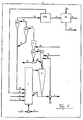
- Fig. 1 shows the schematic flow diagram of a plant according to the invention for the simultaneous production of gypsum anhydrite and ⁇ -hemihydrate gypsum.
- the reactor (I) is fluidized with hot gas (1) and steam (2). Spray absorption residues (3), sulfur-containing residues (4), filter dust (5) and cyclone dust (6) are reacted in this reactor (I) at 500 - 650 ° C.
- the recirculated solid (8) is returned to this reactor via the cyclone (II).
- the discharged solid can be removed as product (9) or can be transported pneumatically with air (7) as material stream (10) into the reactor (III).
- This reactor (III) is fluidized with dust-laden exhaust gas (12) from the cyclone (II). With the addition of water vapor (11), the gypsum anhydrite reacts to form beta hemihydrate gypsum.
- the solid-laden waste gas (14) from the reactor (III) is passed over the cyclone (IV), the solid being separated off and the non-recirculated solid (15) being removed as product and the recirculated solid (13) being returned to the reactor ( III) arrives.
- Water, rea gypsum or chemical gypsum dihydrate (16) are fed to the reactor (III) via the venturi (V).
- the dust-laden exhaust gases (17) chilled.
- the solid streams (19) and (6) are returned to the reactor (I) via the cyclones (VI) and (VII).
- the dust-laden gas (20) is dust-cleaned in a filter (VIII), the dust being fed back to the reactor I as material stream (5).
- the dust-free exhaust gas (21) is cleaned of the HCl components in a dry gas cleaning system (IX) with the aid of an absorbent (22). This produces the cleaned exhaust gas (24) and the calcium chloride-containing enriched residue (23).
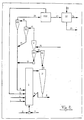
- Fig. 2 shows the slightly modified plant for the sole production of gypsum anhydrite.
- the gypsum anhydrite (9) discharged from the return cyclone (II) is completely removed as a product.
- the dust-laden exhaust gas (12) is fed into the cyclone (IV) via the reactor (III).
- the solid (15) is separated off and returned to the reactor (I).
- the further process sequence corresponds to that according to FIG. 1.
- a spray absorption residue (analysis in% by weight see table) was processed at a temperature of 550 ° C. in a process according to FIG. 2 to form a gypsum anhydrite.
- Water vapor and sulfuric acid were used as additives. The amounts added were measured such that the sulfur input was almost stoichiometrically necessary and the water input was almost double stoichiometric. Under these conditions, a high-quality, almost sulfite- and chlorine-free anhydrite was produced (analysis in% by weight see table).
Landscapes
- Chemical & Material Sciences (AREA)
- Organic Chemistry (AREA)
- Life Sciences & Earth Sciences (AREA)
- Geology (AREA)
- Inorganic Chemistry (AREA)
- Compounds Of Alkaline-Earth Elements, Aluminum Or Rare-Earth Metals (AREA)
- Treating Waste Gases (AREA)
- Processing Of Solid Wastes (AREA)
Description
- Die vorliegende Erfindung betrifft ein Verfahren zur thermischen Herstellung chloridarmer Gipsprodukte aus den calciumhaltigen Rückständen trockener oder nasser Abgasreinigungsanlagen, die Sulfite, Chloride, Sulfate, Hydroxide, Carbonate und/oder Oxide des Calciums bzw. deren Gemische enthalten.
- Die genannten calciumhaltigen Rückstände entstehen z.B. bei der Entfernung von SO₂ und anderen umweltschädlichen Bestandteilen aus Abgasen bzw. Rauchgasen von Kohlekraftwerken, Verbrennungs- und Umschmelzanlagen. Verfahren zur thermischen Umwandlung derartiger Rückstände in Gipsprodukte durch Oxidation und Kalzination sind bereits bekannt. Allerdings können nach diesen Verfahren keine Rückstände mit hohen CaCl₂-Gehalten zu hochwertigen, chloridarmen Gipsprodukten verarbeitet werden.
- Einige dieser Rückstände, insbesondere die Sprühabsorptionsrückstände aus trockenen Abgasreinigungsanlagen enthalten jedoch hohe Gehalte an CaCl₂ von bis zu 10 Gew.-%. Ein Verfahren zur Erzeugung eines chloridarmen Gips-Anhydrits aus derartigen Rückständen wird in der EP 0 074 772 vorgeschlagen. Dabei wird in zwei getrennten Verfahrensstufen zunächst der CaSO₃-Anteil des Rückstandes zu CaSO₄ oxidiert und anschließend Chlor durch Zugabe von Wasserdampf bei Temperaturen zwischen 600 und 950 °C entfernt. Zwingend notwendig zur Erzielung geringer Chlorgehalte im Produkt sind nach diesem Verfahren hohe Mengen an Flugasche bzw. SiO₂- und Al₂O₃-haltigen Stoffen. Diese sollen den Calciumanteil des CaCl₂ binden als Ca-Silikat bzw. Ca-Aluminat und dadurch eine ausreichende Reaktion des freiwerdenden Chlors mit Wasserdampf zu gasförmigem HCl ermöglichen.
- Trotz dieser Maßnahme können nur bei hohen Temperaturen von deutlich über 600 °C Chloridgehalte unter 0,5 Gew.-% im Produkt erreicht werden. Ein weiterer Nachteil dieses Verfahrens ist der zwangsläufig hohe Anteil an Silikat- bzw. Aluminatbestandteilen im Endprodukt.
- Aufgabe des erfindungsgemäßen Verfahrens ist es, die Herstellung hochwertiger Gipsprodukte mit Chlorgehalten unter 0,5 Gew.-% aus calciumhaltigen Rückständen mit CaCl₂-Gehalten von bis zu 10 Gew.-% zu ermöglichen, bei niedrigen Temperaturen zwischen 500 und 650 °C und unabhängig von Flugasche- bzw. SiO₂/Al₂O₃-Anteilen in der Ausgangsmischung. Zusätzlich sollen als weitere Einsatzstoffe soweit möglich Abfallstoffe verwertet werden können, so daß das Verfahren einerseits der Erzeugung wertvoller Baustoffe und andererseits der Entsorgung von Abfallstoffen, deren wirtschaftliche Aufarbeitung bisher nicht gegeben ist, dient.
- Die Lösung dieser Aufgabe wird erfindungsgemäß durch die im kennzeichnenden Teil des Anspruchs 1 angegebenen Merkmale erreicht. Vorteilhafte Ausgestaltungen und Weiterbildungen dieser Aufgabenlösung ergeben sich aus den Unteransprüchen.
- Bei einer Oxidation der eingangs erwähnten calciumhaltigen Rückstände mit hohen CaCl₂-Gehalten laufen in Anwesenheit von O₂ bei erhöhten Temperaturen folgende Reaktionen ab:

- Bereits bei Temperaturen oberhalb von etwa 450°C kommt es im Reaktor zur Bildung von niedrigschmelzenden Phasen zwischen den reagierenden Stoffen, insbesondere zwischen CaCl₂ und CaO. Dies führt zu Sintervorgängen zwischen den einzelnen Feststoffpartikeln, die dementsprechend agglomerieren. Dadurch wird die weitere Umsetzung der Partikel stark behindert oder sogar vollständig unterbunden. Das Produkt enthält in diesem Falle unerwünscht hohe Gehalte an CaSO₃, CaCl₂ und CaO.
- Gleichzeitig kommt es zu Störungen des Ofenbetriebes durch Anbackungen an den Wänden.
- Temperaturen unterhalb von 500°C reichen zudem für einen vollständigen Ablauf der Oxidationsreaktionen und der Chlorabspaltung nicht aus.
- Ofenaggregate wie z.B. Drehrohröfen oder einfache Wirbelschichtöfen ohne Feststoffrezirkulation sind aufgrund der relativ schlechten Wärme- und Stoffübergänge nicht geeignet. Aber auch in der zirkulierenden Wirbelschicht gelingt es nicht, durch eine reine Oxidation ohne weitere Maßnahmen ein chlorid- und sulfitarmes Gipsprodukt zu erzeugen, obwohl hier ausgezeichnete Stoffund Wärmeübergänge durch hohe Gasströmungsgeschwindigkeiten und hohe Suspensionsgrade vorliegen.
- Es wurde festgestellt, daß durch Zugabe von schwefelhaltigen Substanzen bei Anwesenheit von Wasserdampf im Reaktor die Temperatur, bei der sich niedrigschmelzende Phasen bilden zu deutlich höheren Werten verschoben werden.
- Auf diese Weise wird es möglich, die zum nahezu vollständigen Ablauf der pyrohydrolytischen Chlorabspaltung nach Reaktion (d) notwendigen Temperaturen oberhalb von 500°C zu erreichen, ohne das Auftreten von Sintervorgängen. Das Gleichgewicht der Reaktion (d) wird deutlich auf die rechte Seite verschoben, indem die Produkte kontinuierlich abgeführt werden. Dieses wird bewirkt einerseits durch die Sulfatisierung des gebildeten CaO zu CaSO₄, und andererseits den sehr schnellen Abtransport des gebildeten gasförmigen HCl aufgrund der geringen mittleren Verweilzeit der gasförmigen Stoffe. Vorteilhaft anzuwendende mittlere Verweilzeiten für das vorgeschlagene Verfahren liegen zwischen 2 und 4 sec.
- Die in der zirkulierenden Wirbelschicht eingestellten Temperaturen sollten einen Wert von 650°C nicht überschreiten, da oberhalb dieser Temperatur die bereits erwähnten Sintervorgänge einsetzen.
- Als Ausgangsstoffe für das erfindungsgemäße Verfahren eignen sich insbesondere die Sprühabsorptionsrückstände gemäß Anspruch 3.
- Als Schwefelträger für die Sulfatisierung der freien CaO-Anteile werden vorteilhafterweise Schwefelblüte aus Kraftwerksrückständen und/oder Abfallsäuren wie z.B. Schwefelsäure oder schwefelhaltige Säuren aus Eloxalbädern verwandt. Die genannten Abfallsäuren können gleichzeitig als wasserabspaltende Substanzen zur pyrohydrolytischen Aufspaltung des CaCl₂ unter Bildung von HCl ausgenutzt werden. Die zugegebenen Mengen der Schwefelträger sollten dabei so bemessen sein, daß die wirksamen Bestandteile nahezu im stöchiometrisch notwendigen Verhältnis in die zirkulierende Wirbelschicht eingebracht werden.
- Die hervorragenden Stoff- und Wärmeübergänge in der zirkulierenden Wirbelschicht erlauben es, einen Teil des Wärmehaushaltes durch Verbrennung bzw. Vergasung von Alternativbrennstoffen zu decken. Als derartige Alternativbrennstoffe eignen sich ölhaltige Abfallstoffe wie z.B. Bleicherden aus Altölaufbereitungsanlagen oder Filtererden aus Walzölreinigungsanlagen.
- Als Produkt aus der zirkulierenden Wirbelschicht ergibt sich ein chloridarmer Gips-Anhydrit. Dieser Gips-Anhydrit kann ggf. in einer nachgeschalteten Verfahrensstufe im Abgasstrom der zirkulierenden Wirbelschicht zu einem chloridarmen β-Halbhydrat-Gips rehydratisiert werden. Die Rehydratisierung erfolgt vorzugsweise in einem Temperaturbereich von 150 bis 200°C. Das zur Umwandlung benötigte Wasser kann entweder unmittelbar, als Wasserdampf oder über wasserabspaltende Substanzen eingebracht werden. Diese Substanzen dürfen allenfalls sehr geringe Verunreinigungsgehalte aufweisen, da sie ohne weitere Reaktionen in das Produkt überführt werden. Hierzu eignen sich insbesondere REA-Gips (Rauchgasentschwefelungs-Gips) oder Chemie-Gips aus nassen Abgasreinigungsanlagen. Die in dieser Verfahrensstufe zugegebenen Substanzen (Wasser, REA-Gips oder Chemiegips) dienen gleichzeitig zur Kühlung des Abgases aus der zirkulierenden Wirbelschicht.
- Nach dem vorgeschlagenen Verfahren lassen sich hochwertige Gipsprodukte mit geringen Chlorgehalten von deutlich unter 0,5 Gew.-% erzielen, auch wenn im Ausgangsstoff hohe CaCl₂-Anteile von bis zu 10 Gew.-% vorliegen. Das Verfahren arbeitet bei relativ geringen Temperaturen zwischen 500 und 650°C. Der Choridgehalt im Endprodukt ist unabhängig von Flugasche- bzw. SiO₂/Al₂O₃-Bestandteilen in der Ausgangsmischung. Das Verfahren erlaubt die Herstellung weitgehend Flugasche- bzw. SiO₂/Al₂O₃-freier Gipsprodukte. Ein weiterer Vorteil des Verfahrens ist die Möglichkeit eine Vielzahl von Abfallstoffen umweltfreundlich zu entsorgen.
- Im folgenden soll der Ablauf des erfindungsgemäßen Verfahrens anhand von Zeichnungen beispielsweise erläutert werden.
- Fig. 1 zeigt das schematische Fließbild einer erfindungsgemäßen Anlage zur gleichzeitigen Herstellung von Gips-Anhydrit und β-Halbhydrat Gips.
- Der Reaktor (I) wird mit Heißgas (1) und Wasserdampf (2) fluidisiert. Sprühabsorptionsrückstände (3), schwefelhaltige Rückstände (4), Filterstaub (5) und Zyklonstaub (6) werden in diesem Reaktor (I) bei 500 - 650°C zur Reaktion gebracht. Der rezirkulierte Feststoff (8) wird über den Zyklon (II) in diesen Reaktor zurückgeführt. Der ausgeschleuste Feststoff kann als Produkt (9) abgeführt werden, oder pneumatisch mit Luft (7) als Stoffstrom (10) in den Reaktor (III) transportiert werden. Dieser Reaktor (III) wird mit staubbeladenem Abgas (12) aus dem Zyklon (II) fluidisiert. Unter Zusatz von Wasserdampf (11) reagiert der Gips-Anhydrit zu Beta-Halbhydrat-Gips. Das feststoffbeladene Abgas (14) aus dem Reaktor (III) wird über den Zyklon (IV) geführt, wobei der Feststoff abgeschieden wird und der nicht rezirkulierte Feststoff (15) als Produkt abgeführt wird und der rezirkulierte Feststoff (13) wieder in den Reaktor (III) gelangt. Dem Reaktor (III) werden über den Venturi (V) Wasser, Rea-Gips bzw. Chemiegipsdihydrat (16) zugeführt. Hierdurch werden gleichzeitig die staubbeladenen Abgase (17) gekühlt. Über die Zyklone (VI) und (VII) werden die Feststoffströme (19) und (6) in den Reaktor (I) rückgeführt. Das staubbeladene Gas (20) wird in einem Filter (VIII) staubgereinigt, wobei der Staub als Stoffstrom (5) dem Reaktor I wieder zugeführt wird.
- Das staubfreie Abgas (21) wird in einer Trockengasreinigung (IX) mit Hilfe eines Absorptionsmittels (22) von den HCl-Bestandteilen gereinigt. Hierbei entsteht das gereinigte Abgas (24) und der calciumchloridhaltige angereicherte Rückstand (23).
- Fig. 2 zeigt die leicht modifizierte Anlage zur alleinigen Herstellung von Gips Anhydrit. Hier wird der aus dem Rückfuhrzyklon (II) ausgeschleuste Gips-Anhydrit (9) vollständig als Produkt abgeführt. Das staubbeladene Abgas (12) wird über den Reaktor (III) in den Zyklon (IV) geführt. Hier wird der Feststoff (15) abgeschieden und in den Reaktor (I) zurückgeführt. Der weitere Verfahrensablauf entspricht demjenigen nach Fig. 1.
- Ein Sprühabsorptionsrückstand (Analyse in Gew.-% s. Tab.) wurde bei einer Temperatur von 550°C in einem Verfahren gemäß Fig. 2 zu einem Gips-Anhydrit verarbeitet. Als Zusätze wurden Wasserdampf und Schwefelsäure verwendet. Die zugesetzten Mengen wurden dabei so bemessen, daß der Eintrag an Schwefel in nahezu stöchiometrisch notwendigem Verhältnis und der Eintrag an Wasser in nahezu doppelt stöchiometrischem Verhältnis erfolgte. Unter diesen Bedingungen wurde ein hochwertiger nahezu sulfit- und chlorfreier Anydrit erzeugt (Analyse in Gew.-% s. Tab.).

Claims (11)
- Verfahren zur Herstellung chloridarmer Gipsprodukte aus calciumhaltigen Rückständen trockener oder nasser Abgasreinigungsanlagen, wie z.B. von Kohlekraftwerken, Verbrennungs- oder Umschmelzanlagen, die Sulfite, Chloride, Sulfate, Hydroxide, Carbonate oder Oxide des Calciums bzw. deren Gemische enthalten, durch Oxidation und pyrohydrolytische Chloridspaltung, dadurch gekennzeichnet, daß die calciumhaltigen Rückstände
zusammen mit schwefelhaltigen, weitgehend Ca-freien Substanzen, zur Sulfatisierung der nicht als Sulfit oder Sulfat gebundenen Calciumanteile der Rückstände,
und zusammen mit Wasser, Wasserdampf und/oder wasserabspaltender Substanzen, zur pyrohydrolytischen Aufspaltung der Calciumchloridanteile der Rückstände
in einer zirkulierenden Wirbelschicht in Anwesenheit eines O₂-haltigen, heißen Gases zur Reaktion gebracht werden, wobei als Produkt ein chloridarmer Gips-Anhydrit entsteht. - Verfahren nach Anspruch 1, dadurch gekennzeichnet, daß der in der zirkulierenden Wirbelschicht erzeugte chloridarme Gips-Anhydrit in einer nachgeschalteten Verfahrensstufe durch Zugabe von Wasser, Wasserdampf und/oder gipshaltiger, wasserabspaltender Substanzen zu einem β-Halbhydrat-Gips rehydratisiert wird.
- Verfahren nach einem der vorhergehenden Ansprüche, dadurch gekennzeichnet, daß als calciumhaltige Rückstände, Sprühabsorptionsrückstände mit 20-70 Gew.-% CaSO₃, 2-10 Gew.-% CaCl₂, 2-30 Gew.-% Ca(OH)₂, 5-10 Gew.-% CaCO₃ und 5-10 Gew.-% CaSO₄ verwendet werden.
- Verfahren nach einem der vorhergehenden Ansprüche, dadurch gekennzeichnet, daß die Temperatur in der zirkulierenden Wirbelschicht zwischen 500 und 650 °C liegt.
- Verfahren nach einem der vorhergehenden Ansprüche, dadurch gekennzeichnet, daß als schwefelhaltige, weitgehend Ca-freie Substanzen Schwefelblüte aus Kraftwerksrückständen und/oder Abfallsäuren wie z.B. Schwefelsäure und/oder schwefelige Säuren aus Eloxalbädern in die zirkulierende Wirbelschicht eingebracht werden.
- Verfahren nach einem der vorhergehenden Ansprüche, dadurch gekennzeichnet, daß als wasserabspaltende Substanzen zur pyrohydrolytischen Aufspaltung des CaCl₂ Abfallsäuren wie z.B. Schwefelsäure und/oder schwefelige Säuren aus Eloxalbädern in die zirkulierende Wirbelschicht eingebracht werden.
- Verfahren nach einem der vorhergehenden Ansprüche, dadurch gekennzeichnet, daß zusätzliche Energieträger in Form von ölhaltigen Abfallstoffen in die zirkulierende Wirbelschicht eingebracht werden.
- Verfahren nach Anspruch 7, dadurch gekennzeichnet, daß als zusätzliche Energieträger Bleicherden aus Altölaufbereitungsanlagen und/oder Filtererden aus Walzölreinigungsanlagen verwendet werden.
- Verfahren nach einem der vorhergehenden Ansprüche, dadurch gekennzeichnet, daß die Rehydratisierung des chloridarmen Gips-Anhydrits bei Temperaturen zwischen 150 und 200 °C erfolgt.
- Verfahren nach einem der vorhergehenden Ansprüche, dadurch gekennzeichnet, daß als gipshaltige, wasserabspaltende Substanzen Rauchgasentschwefelungs-Gips (REA-Gips) und/oder Chemie-Gips aus nassen Abgasreinigungsanlagen in die Rehydratisierungsstufe eingebracht werden.
- Verfahren nach einem der vorhergehenden Ansprüche, dadurch gekennzeichnet, daß die mittlere Verweilzeit der gasförmigen Stoffe in der zirkulierenden Wirbelschicht 2 bis 4 s beträgt.
Priority Applications (1)
| Application Number | Priority Date | Filing Date | Title |
|---|---|---|---|
| AT89123335T ATE86588T1 (de) | 1989-04-26 | 1989-12-16 | Verfahren zur herstellung chloridarmer gipsprodukte aus calciumhaltigen rueckstaenden von abgasreinigungsanlagen. |
Applications Claiming Priority (2)
| Application Number | Priority Date | Filing Date | Title |
|---|---|---|---|
| DE3913822 | 1989-04-26 | ||
| DE3913822A DE3913822A1 (de) | 1989-04-26 | 1989-04-26 | Verfahren zur herstellung chloridarmer gipsprodukte |
Publications (2)
| Publication Number | Publication Date |
|---|---|
| EP0394557A1 EP0394557A1 (de) | 1990-10-31 |
| EP0394557B1 true EP0394557B1 (de) | 1993-03-10 |
Family
ID=6379535
Family Applications (1)
| Application Number | Title | Priority Date | Filing Date |
|---|---|---|---|
| EP89123335A Expired - Lifetime EP0394557B1 (de) | 1989-04-26 | 1989-12-16 | Verfahren zur Herstellung chloridarmer Gipsprodukte aus calciumhaltigen Rückständen von Abgasreinigungsanlagen |
Country Status (5)
| Country | Link |
|---|---|
| US (1) | US5324501A (de) |
| EP (1) | EP0394557B1 (de) |
| AT (1) | ATE86588T1 (de) |
| DE (2) | DE3913822A1 (de) |
| ES (1) | ES2047650T3 (de) |
Families Citing this family (9)
| Publication number | Priority date | Publication date | Assignee | Title |
|---|---|---|---|---|
| DE4227815A1 (de) * | 1992-08-21 | 1994-02-24 | Air Beteiligungs Gmbh | Verfahren zur spontanen chemischen Fällung von in Wasser gelösten Sulfaten als Ettringit und Anwendung dieses Verfahrens zur Herstellung eines chloridarmen, aluminiumoxidhaltigen Gips-Anhydrits |
| FI945805L (fi) * | 1993-12-16 | 1995-06-17 | Sicowa Verfahrenstechnik Fuet | Sideaine sisärappauslaastia varten |
| US5881359A (en) * | 1995-06-01 | 1999-03-09 | Advanced Recovery Systems, Inc. | Metal and fluorine values recovery from fluoride salt matrices |
| DE19708907C1 (de) * | 1997-03-05 | 1998-04-16 | Gfr Aufbereitung Reststoffe | Verfahren zur stofflichen Verwertung von mit organischem Material verunreinigtem Gips und seine Verwendung |
| US6295794B1 (en) | 1998-01-09 | 2001-10-02 | Universal Forest Products, Inc. | Joint compound including recycled constituents and method and system for making the same |
| US7045110B1 (en) | 2004-11-17 | 2006-05-16 | Poly Systems Usa, Inc. | High yield co-production of anhydrous hydrogen bromide and sodium bisulfate |
| CN102351447B (zh) * | 2011-07-02 | 2013-01-02 | 河海大学 | 一种改善脱硫石膏凝结性能的加工方法 |
| CN103011643B (zh) * | 2012-12-25 | 2014-04-16 | 陶小勇 | 一种磷石膏、煤矸石综合利用方法 |
| CN111054197B (zh) * | 2019-12-30 | 2022-04-22 | 江苏垦乐节能环保科技有限公司 | 一种含硫烟气半干法深度脱硫方法 |
Family Cites Families (14)
| Publication number | Priority date | Publication date | Assignee | Title |
|---|---|---|---|---|
| US3864458A (en) * | 1973-06-11 | 1975-02-04 | Dorr Oliver Inc | Fluid bed incineration of chloride-containing waste streams |
| DE2435512A1 (de) * | 1974-07-24 | 1976-02-05 | Bayer Ag | Verfahren zur herstellung von fluorwasserstoff und calciumsulfat |
| US4120939A (en) * | 1977-05-26 | 1978-10-17 | E. I. Du Pont De Nemours And Company | Hydrogen fluoride process |
| US4301137A (en) * | 1977-12-21 | 1981-11-17 | Occidental Research Corporation | Removal of chlorine from pyrolysis vapors |
| DE2928368A1 (de) * | 1979-07-13 | 1981-02-05 | Metallgesellschaft Ag | Verfahren zur herstellung von fluorwasserstoff |
| DE3108444A1 (de) * | 1981-03-06 | 1983-01-20 | Vereinigte Elektrizitätswerke Westfalen AG, 4600 Dortmund | Verfahren und anlage zum aufbereiten von chloride enthaltenden abwaessern |
| US4595576A (en) * | 1981-09-04 | 1986-06-17 | A/S Niro Atomizer | Process for flue gas desulfurization |
| US4495162A (en) * | 1981-09-04 | 1985-01-22 | A/S Niro Atomizer | Preparation of a calcium sulfate anhydrite material of low chloride content |
| DE3135200A1 (de) * | 1981-09-05 | 1983-03-17 | L. & C. Steinmüller GmbH, 5270 Gummersbach | Verfahren zur behandlung von endprodukten aus der rauchgasentschwefelung |
| JPS5851974A (ja) * | 1981-09-21 | 1983-03-26 | Kobe Steel Ltd | 排ガス脱硫処理液からCaCl↓2を回収する方法 |
| DK189784D0 (da) * | 1984-04-12 | 1984-04-12 | Niro Atomizer As | Fremgangsmaade og apparat til behandling af biprodukter fra roeggasafsvovlning |
| US4544542A (en) * | 1984-04-16 | 1985-10-01 | Dorr-Oliver Incorporated | Method for oxidation of flue gas desulfurization absorbent and the product produced thereby |
| DE3433759A1 (de) * | 1984-09-11 | 1986-03-20 | Mitsubishi Jukogyo K.K., Tokio/Tokyo | Verfahren zur nassbehandlung eines so(pfeil abwaerts)2(pfeil abwaerts)-und hcl-haltigen verbrennungsabgases |
| DE3639612A1 (de) * | 1986-11-20 | 1988-06-01 | Steinmueller Gmbh L & C | Verfahren zur behandlung von trockenen reststoffen aus der entschwefelung von gasen mit einem calciumhaltigen absorptionsmittel |
-
1989
- 1989-04-26 DE DE3913822A patent/DE3913822A1/de active Granted
- 1989-12-16 AT AT89123335T patent/ATE86588T1/de active
- 1989-12-16 DE DE8989123335T patent/DE58903743D1/de not_active Expired - Fee Related
- 1989-12-16 EP EP89123335A patent/EP0394557B1/de not_active Expired - Lifetime
- 1989-12-16 ES ES89123335T patent/ES2047650T3/es not_active Expired - Lifetime
-
1992
- 1992-03-02 US US07/845,731 patent/US5324501A/en not_active Expired - Fee Related
Also Published As
| Publication number | Publication date |
|---|---|
| ATE86588T1 (de) | 1993-03-15 |
| DE3913822C2 (de) | 1992-04-09 |
| DE3913822A1 (de) | 1990-10-31 |
| US5324501A (en) | 1994-06-28 |
| EP0394557A1 (de) | 1990-10-31 |
| DE58903743D1 (de) | 1993-04-15 |
| ES2047650T3 (es) | 1994-03-01 |
Similar Documents
| Publication | Publication Date | Title |
|---|---|---|
| EP0234188B1 (de) | Verfahren zur Reinigung von Oxide des Stickstoffs und Schwefels enthaltenden Abgasen aus Verbrennungsanlagen | |
| EP0005301B1 (de) | Verfahren zum Entfernen von Schwefeloxiden aus chloridhaltigen Verbrennungsabgasen | |
| DE3586880T2 (de) | Verfahren zur oxydation des absorbents der rauchgasentschwefelung und das dabei hergestellte produkt. | |
| DE102008032355B4 (de) | Verfahren zur Verbrennung eines kohlenstoffhaltigen Brennstoffs und Verwendung von Calciumverbindungen, die zuvor an einem Hochtemperaturprozess zur Entcarbonisierung von Rauchgas teilgenommen haben | |
| DE2928061C2 (de) | Verfahren zur Abgasbehandlung | |
| DE3607929A1 (de) | Verfahren zur herstellung von desulfurierenden und denitrierenden mitteln | |
| DE3701527C2 (de) | ||
| DE2708919A1 (de) | Verfahren zur reinigung von industrieabgasen | |
| DE69509224T2 (de) | Verfahren und anlage zur herstellung mineralisierter portland-zement-klinker | |
| DE3913822C2 (de) | ||
| DE69325008T2 (de) | Verfahren zur Entfernung von Schwefeldioxid aus Gasströmen unter Herstellung von Alpha-Hemihydrat-Gips | |
| EP0204091A2 (de) | Verfahren zur Reinigung von mit Stäuben und Schadgasen verunreinigten Abgasen | |
| DE19837148A1 (de) | Verfahren zum Reinigen von Rauchgas | |
| EP0132820A2 (de) | Verfahren zur Aufarbeitung metallsulfathaltiger Schwefelsäuren | |
| DE2939744A1 (de) | Verfahren zum entfernen von schadstoffen aus rauchgasen | |
| DE19936930A1 (de) | Verfahren und Vorrichtung zur Abtrennung von Quecksilber aus heißen Pyrolysegasen | |
| DE3334106A1 (de) | Verfahren und vorrichtung zum reinigen von rauchgasen | |
| DE3015977C2 (de) | Verfahren zum Reinigen von Rauchgas mittels Chemiesorptionsmassen | |
| DE3840858A1 (de) | Verfahren und anlage zur thermischen entsorgung von feinkoernigen abfallstoffen, insbesondere klaerschlamm | |
| DE3146143C2 (de) | Verfahren zur Herstellung von synthetischem Anhydrit in feinstkristalliner Form | |
| DE3706533C2 (de) | ||
| DE3119749A1 (de) | Verfahren zur herstellung von calciumsulfathalbhydrat | |
| DE3830390C1 (en) | Regenerative SO2 flue gas purification | |
| DE3743818C2 (de) | Verfahren zur Herstellung eines wasserauslaugungsfesten Baustoffes und seine Verwendung | |
| DE3117601A1 (de) | "trockenentschwefelungsverfahren mit sichterwirkung des endproduktes |
Legal Events
| Date | Code | Title | Description |
|---|---|---|---|
| PUAI | Public reference made under article 153(3) epc to a published international application that has entered the european phase |
Free format text: ORIGINAL CODE: 0009012 |
|
| AK | Designated contracting states |
Kind code of ref document: A1 Designated state(s): AT BE CH DE ES FR GB GR IT LI LU NL SE |
|
| 17P | Request for examination filed |
Effective date: 19910411 |
|
| 17Q | First examination report despatched |
Effective date: 19920518 |
|
| RAP1 | Party data changed (applicant data changed or rights of an application transferred) |
Owner name: VAW ALUMINIUM AG |
|
| GRAA | (expected) grant |
Free format text: ORIGINAL CODE: 0009210 |
|
| AK | Designated contracting states |
Kind code of ref document: B1 Designated state(s): AT BE CH DE ES FR GB GR IT LI LU NL SE |
|
| REF | Corresponds to: |
Ref document number: 86588 Country of ref document: AT Date of ref document: 19930315 Kind code of ref document: T |
|
| GBT | Gb: translation of ep patent filed (gb section 77(6)(a)/1977) |
Effective date: 19930315 |
|
| REF | Corresponds to: |
Ref document number: 58903743 Country of ref document: DE Date of ref document: 19930415 |
|
| ITF | It: translation for a ep patent filed | ||
| ET | Fr: translation filed | ||
| REG | Reference to a national code |
Ref country code: GR Ref legal event code: FG4A Free format text: 3008091 |
|
| PLBE | No opposition filed within time limit |
Free format text: ORIGINAL CODE: 0009261 |
|
| STAA | Information on the status of an ep patent application or granted ep patent |
Free format text: STATUS: NO OPPOSITION FILED WITHIN TIME LIMIT |
|
| EPTA | Lu: last paid annual fee | ||
| 26N | No opposition filed | ||
| REG | Reference to a national code |
Ref country code: CH Ref legal event code: PUE Owner name: A.I.R. LIPPEWERK RECYCLING GMBH |
|
| REG | Reference to a national code |
Ref country code: FR Ref legal event code: TP |
|
| NLS | Nl: assignments of ep-patents |
Owner name: A.I.R. LIPPEWERK RECYCLING GMBH TE LUENEN, BONDSRE |
|
| REG | Reference to a national code |
Ref country code: GB Ref legal event code: 732E |
|
| EAL | Se: european patent in force in sweden |
Ref document number: 89123335.5 |
|
| ITPR | It: changes in ownership of a european patent |
Owner name: CESSIONE;A.I.R. LIPPEWERK RECYCLING GMBH |
|
| REG | Reference to a national code |
Ref country code: ES Ref legal event code: PC2A Owner name: A.I.R. LIPPEWERK RECYCLING GMBH. |
|
| PGFP | Annual fee paid to national office [announced via postgrant information from national office to epo] |
Ref country code: GR Payment date: 19951221 Year of fee payment: 7 |
|
| PGFP | Annual fee paid to national office [announced via postgrant information from national office to epo] |
Ref country code: LU Payment date: 19961201 Year of fee payment: 8 |
|
| PGFP | Annual fee paid to national office [announced via postgrant information from national office to epo] |
Ref country code: SE Payment date: 19961219 Year of fee payment: 8 |
|
| NLT1 | Nl: modifications of names registered in virtue of documents presented to the patent office pursuant to art. 16 a, paragraph 1 |
Owner name: RETHMANN LIPPEWERK RECYCLING GMBH |
|
| PG25 | Lapsed in a contracting state [announced via postgrant information from national office to epo] |
Ref country code: GR Free format text: THE PATENT HAS BEEN ANNULLED BY A DECISION OF A NATIONAL AUTHORITY Effective date: 19970630 |
|
| REG | Reference to a national code |
Ref country code: GR Ref legal event code: MM2A Free format text: 3008091 |
|
| REG | Reference to a national code |
Ref country code: FR Ref legal event code: CD |
|
| PGFP | Annual fee paid to national office [announced via postgrant information from national office to epo] |
Ref country code: GB Payment date: 19971127 Year of fee payment: 9 |
|
| PG25 | Lapsed in a contracting state [announced via postgrant information from national office to epo] |
Ref country code: LU Free format text: LAPSE BECAUSE OF NON-PAYMENT OF DUE FEES Effective date: 19971216 |
|
| PG25 | Lapsed in a contracting state [announced via postgrant information from national office to epo] |
Ref country code: SE Free format text: LAPSE BECAUSE OF NON-PAYMENT OF DUE FEES Effective date: 19971217 |
|
| PGFP | Annual fee paid to national office [announced via postgrant information from national office to epo] |
Ref country code: FR Payment date: 19971217 Year of fee payment: 9 |
|
| PGFP | Annual fee paid to national office [announced via postgrant information from national office to epo] |
Ref country code: BE Payment date: 19971222 Year of fee payment: 9 Ref country code: AT Payment date: 19971222 Year of fee payment: 9 |
|
| PGFP | Annual fee paid to national office [announced via postgrant information from national office to epo] |
Ref country code: ES Payment date: 19971230 Year of fee payment: 9 |
|
| PGFP | Annual fee paid to national office [announced via postgrant information from national office to epo] |
Ref country code: NL Payment date: 19971231 Year of fee payment: 9 |
|
| PGFP | Annual fee paid to national office [announced via postgrant information from national office to epo] |
Ref country code: CH Payment date: 19980107 Year of fee payment: 9 |
|
| PGFP | Annual fee paid to national office [announced via postgrant information from national office to epo] |
Ref country code: DE Payment date: 19980219 Year of fee payment: 9 |
|
| EUG | Se: european patent has lapsed |
Ref document number: 89123335.5 |
|
| PG25 | Lapsed in a contracting state [announced via postgrant information from national office to epo] |
Ref country code: GB Free format text: LAPSE BECAUSE OF NON-PAYMENT OF DUE FEES Effective date: 19981216 Ref country code: AT Free format text: LAPSE BECAUSE OF NON-PAYMENT OF DUE FEES Effective date: 19981216 |
|
| PG25 | Lapsed in a contracting state [announced via postgrant information from national office to epo] |
Ref country code: ES Free format text: LAPSE BECAUSE OF THE APPLICANT RENOUNCES Effective date: 19981217 |
|
| PG25 | Lapsed in a contracting state [announced via postgrant information from national office to epo] |
Ref country code: LI Free format text: LAPSE BECAUSE OF NON-PAYMENT OF DUE FEES Effective date: 19981231 Ref country code: CH Free format text: LAPSE BECAUSE OF NON-PAYMENT OF DUE FEES Effective date: 19981231 Ref country code: BE Free format text: LAPSE BECAUSE OF NON-PAYMENT OF DUE FEES Effective date: 19981231 |
|
| BERE | Be: lapsed |
Owner name: RETHMANN LIPPEWERK RECYCLIING G.M.B.H. Effective date: 19981231 |
|
| PG25 | Lapsed in a contracting state [announced via postgrant information from national office to epo] |
Ref country code: NL Free format text: LAPSE BECAUSE OF NON-PAYMENT OF DUE FEES Effective date: 19990701 |
|
| GBPC | Gb: european patent ceased through non-payment of renewal fee |
Effective date: 19981216 |
|
| REG | Reference to a national code |
Ref country code: CH Ref legal event code: PL |
|
| PG25 | Lapsed in a contracting state [announced via postgrant information from national office to epo] |
Ref country code: FR Free format text: LAPSE BECAUSE OF NON-PAYMENT OF DUE FEES Effective date: 19990831 |
|
| NLV4 | Nl: lapsed or anulled due to non-payment of the annual fee |
Effective date: 19990701 |
|
| REG | Reference to a national code |
Ref country code: FR Ref legal event code: ST |
|
| PG25 | Lapsed in a contracting state [announced via postgrant information from national office to epo] |
Ref country code: DE Free format text: LAPSE BECAUSE OF NON-PAYMENT OF DUE FEES Effective date: 19991001 |
|
| REG | Reference to a national code |
Ref country code: ES Ref legal event code: FD2A Effective date: 20010402 |
|
| PG25 | Lapsed in a contracting state [announced via postgrant information from national office to epo] |
Ref country code: IT Free format text: LAPSE BECAUSE OF NON-PAYMENT OF DUE FEES Effective date: 20051216 |