EP0368208A2 - Immunoassay-Verfahren und Testsatz dafür - Google Patents
Immunoassay-Verfahren und Testsatz dafür Download PDFInfo
- Publication number
- EP0368208A2 EP0368208A2 EP89120513A EP89120513A EP0368208A2 EP 0368208 A2 EP0368208 A2 EP 0368208A2 EP 89120513 A EP89120513 A EP 89120513A EP 89120513 A EP89120513 A EP 89120513A EP 0368208 A2 EP0368208 A2 EP 0368208A2
- Authority
- EP
- European Patent Office
- Prior art keywords
- labelled
- component
- immobilized
- buffer
- solution
- Prior art date
- Legal status (The legal status is an assumption and is not a legal conclusion. Google has not performed a legal analysis and makes no representation as to the accuracy of the status listed.)
- Withdrawn
Links
Images
Classifications
-
- G—PHYSICS
- G01—MEASURING; TESTING
- G01N—INVESTIGATING OR ANALYSING MATERIALS BY DETERMINING THEIR CHEMICAL OR PHYSICAL PROPERTIES
- G01N33/00—Investigating or analysing materials by specific methods not covered by groups G01N1/00 - G01N31/00
- G01N33/48—Biological material, e.g. blood, urine; Haemocytometers
- G01N33/50—Chemical analysis of biological material, e.g. blood, urine; Testing involving biospecific ligand binding methods; Immunological testing
- G01N33/53—Immunoassay; Biospecific binding assay; Materials therefor
- G01N33/543—Immunoassay; Biospecific binding assay; Materials therefor with an insoluble carrier for immobilising immunochemicals
- G01N33/54393—Improving reaction conditions or stability, e.g. by coating or irradiation of surface, by reduction of non-specific binding, by promotion of specific binding
-
- G—PHYSICS
- G01—MEASURING; TESTING
- G01N—INVESTIGATING OR ANALYSING MATERIALS BY DETERMINING THEIR CHEMICAL OR PHYSICAL PROPERTIES
- G01N33/00—Investigating or analysing materials by specific methods not covered by groups G01N1/00 - G01N31/00
- G01N33/48—Biological material, e.g. blood, urine; Haemocytometers
- G01N33/50—Chemical analysis of biological material, e.g. blood, urine; Testing involving biospecific ligand binding methods; Immunological testing
- G01N33/53—Immunoassay; Biospecific binding assay; Materials therefor
- G01N33/5306—Improving reaction conditions, e.g. reduction of non-specific binding, promotion of specific binding
-
- G—PHYSICS
- G01—MEASURING; TESTING
- G01N—INVESTIGATING OR ANALYSING MATERIALS BY DETERMINING THEIR CHEMICAL OR PHYSICAL PROPERTIES
- G01N33/00—Investigating or analysing materials by specific methods not covered by groups G01N1/00 - G01N31/00
- G01N33/48—Biological material, e.g. blood, urine; Haemocytometers
- G01N33/50—Chemical analysis of biological material, e.g. blood, urine; Testing involving biospecific ligand binding methods; Immunological testing
- G01N33/53—Immunoassay; Biospecific binding assay; Materials therefor
- G01N33/543—Immunoassay; Biospecific binding assay; Materials therefor with an insoluble carrier for immobilising immunochemicals
- G01N33/54306—Solid-phase reaction mechanisms
-
- Y—GENERAL TAGGING OF NEW TECHNOLOGICAL DEVELOPMENTS; GENERAL TAGGING OF CROSS-SECTIONAL TECHNOLOGIES SPANNING OVER SEVERAL SECTIONS OF THE IPC; TECHNICAL SUBJECTS COVERED BY FORMER USPC CROSS-REFERENCE ART COLLECTIONS [XRACs] AND DIGESTS
- Y10—TECHNICAL SUBJECTS COVERED BY FORMER USPC
- Y10S—TECHNICAL SUBJECTS COVERED BY FORMER USPC CROSS-REFERENCE ART COLLECTIONS [XRACs] AND DIGESTS
- Y10S436/00—Chemistry: analytical and immunological testing
- Y10S436/824—Immunological separation techniques
-
- Y—GENERAL TAGGING OF NEW TECHNOLOGICAL DEVELOPMENTS; GENERAL TAGGING OF CROSS-SECTIONAL TECHNOLOGIES SPANNING OVER SEVERAL SECTIONS OF THE IPC; TECHNICAL SUBJECTS COVERED BY FORMER USPC CROSS-REFERENCE ART COLLECTIONS [XRACs] AND DIGESTS
- Y10—TECHNICAL SUBJECTS COVERED BY FORMER USPC
- Y10S—TECHNICAL SUBJECTS COVERED BY FORMER USPC CROSS-REFERENCE ART COLLECTIONS [XRACs] AND DIGESTS
- Y10S436/00—Chemistry: analytical and immunological testing
- Y10S436/825—Pretreatment for removal of interfering factors from sample
Definitions
- This invention relates to an immunoassay method and a test kit therefor.
- immunoassay methods there have been known those comprising reacting an immobilized component (B) to bind specifically to a material (A) to be measured with a labelled component (B) or a labelled component (A) at a pH of 7 - 8, followed by measuring the amount of the label (such as JPN Patent No.118159/1982).
- an immunoassay comprising the steps of : (1) reacting a material (A) to be measured, an immobilized component (B) to bind specifically to the material (A), and a labelled component selected from the group consisting of (i) a labelled component (C) to bind specifically to the material (A) and (ii) a labelled component (A), to obtain an immuno-complex; and (2) detecting or determining the labelling fragment, wherein the reaction of the material (A) with the immobilized (B) or the reaction of the material (A) with the immobilized (B) and the labelled component is carried out at a pH of 2 - 4.5.
- Suitable materials (A) to be measured include, for example, antigenic substances, enzymes and the like.
- Illustrative examples of suitable materials employed in the present invention are
- serum proteins particularly those of necessity of dilution, such as AFP, beta2-microglobulin, TBG, IAP, C3, C4, C5, CRP, alpha2-microglobulin, IgA, IgM, IgG, IgD, IgE, HPL and transferrine.
- Suitable components (B) include antibodies and antigens, reacting specifically with the material (A).
- Examples of (B) are anti-AFP antibody in case where (A) is AFP antigen, anti-TBG antibody when (A) is TBG antigen.
- preferred are one having a molecular weight of about 10,000 - about 500,000.
- Suitable antibodies include polyclonal antibodies and monoclonal antibodies.
- Polyclonal antibodies can be obtained by immunizing a mammal (such as rabbit, goat, sheep, guinea pig and the like) with the antigen.
- Monoclonal antibodies useful in the present invention can be obtained by known process, as described in Nature 256 , 495-497, for example. Basically, it involves injecting a mouse or other suitable animal with an immunogen, fusing antibody-producing cells taken from the animal with myeloma cells (originated from a mouse or other suitable animal), and culturing or asciting the resulting hybridoma or hybrid cell.
- These antibodies may be purified by known methods, such as ammonium-sulfate precipitation, DEAE-cellulose chromatography, affinity chromatography and the like.
- Said component (B), in the invention can be immobilized on a substrate, such as inorganic or organic carrier (insoluble solid).
- Suitable carriers include inorganic carriers, for example, siliceous materials [such as glass (porous glass, frosted glass and so on), silica (silica gel, colloidal silica), bentonite, wollastonite, cordierite and the like], and nonsiliceous metal oxides [such as alumina, spinel, apatite, hydroxy apatite, titania, zirconia and magnetic substances (such as iron oxides, ferrite, nickel oxides, cobalt oxides and the like)]; and organic carriers, for instance, plastics [such as polystyrene, and derivatives thereof, such as poly(amino-styrene); acrylic polymers, such as polyacrylonitrile; polymethacrylates, such as polymethylmethacrylate; polyolefines, such as polyethylene, polypropyrene, polybutene and polybutadiene; halogen-containing polymers, such as poly(vinyl chloride) and poly(vinylidine
- These carriers may be particulate in nature, varying from a finely divided powder to a coarse granular material (e.g. about 20 - about 100 mesh or more, U.S. Standard Sieve), or may be a shaped article, such as sheet or pellet or three-dimensional articles, such as beads, test tubes, trays, discs and so on.
- a shaped article such as sheet or pellet or three-dimensional articles, such as beads, test tubes, trays, discs and so on.
- glass particularly glass beads and glass test tubes and plastics (plastic tubes and plastic trays).
- These carriers may be porous, or surface-modified by known methods, such as etching or frosting, chemical treatment, chemical coating and the like.
- the component (B) can be immobilized by any known means, which can vary from simple adsorption to chemical coupling.
- Chemical coupling typically involves treating the carrier with one or more chemical compounds (silanes, polyisocyanates and the like), followed by contacting the treated carrier with an aqueous solution of (B).
- Adsorption usually involves contacting an aqueous solution of (B) with the carrier for a time sufficient to permit the desired or maximum degree of immobilization.
- Examples of methods suitable for immobilization of (B) are those by physical adsorption or chemical coupling to glass with a silane coupling agent with or without a crosslinking agent, as described in U.S.Patents 4,280,992 and 3,652,761; and those by physical adsorption to plastics, as written in E.Engvall, J.Johnson, P.Parlman: Biochim. Biophys, Acta, 251 (1971)427-434.
- silane coupling and physical adsorption are those by physical adsorption or chemical coupling to glass with a silane coupling agent with or without a crosslinking agent, as described in U.S.Patents 4,280,992 and 3,652,761; and those by physical adsorption to plastics, as written in E.Engvall, J.Johnson, P.Parlman: Biochim. Biophys, Acta, 251 (1971)427-434.
- preferred are silane coupling and physical adsorption
- immobilized components (B) are anti-AFP antibody supported on glass bead, and anti-HBs antibody supported on plastic tray.
- a labelled component is used (i) a labelled component (C) to bind specifically to the material (A) or (ii) a labelled material (A).
- Suitable labelled components (C), hereinafter referred to as label-C are obtainable by labelling of components to bind specifically to the material (A), which components may be the same ones as in the component (B) or different ones therefrom, and are inclusive of labelled antibodies, labelled antigens, and the like.
- labelled antigens are labelled serum proteins, such as beta2-microglobulin, TBG, IAP, C3, C4, C5, CRP, alpha2-microglobulin, IgA, IgM, IgG, IgE, IgD, HPL, transferrine, albumin, and the like.
- preferred are labelled ones from beta2-microglobulin, TBG, IgE and albumin.
- Suitable labelled antibodies include, for example, ones from antibodies produced by immunizing mammals with the antigens as mentioned above.
- Markers used for labelling include usually employed for this purpose.
- suitable markers include isotopes (radioisotopes, such as I125 and the like), enzymes (such as peroxidase, beta-galactosidase, alkaline phosphatase, and the like), fluorescent substances (such as europeum as europeum derivatives), illuminant substances (such as N-methyl acridium), and so on.
- isotopes and enzymes are preferred are the latters, particularly peroxidase.
- Labelling may be performed by any known methods, for example, enzyme labelling by periodic acid oxidation methods, as described in Nakane et al , J.Histochem. Cytochem. 22 ,1084(1974); and those described in S. Yoshitake, M.Imagawa, E.Ishikawa, et al, J.Biochem. 92 ,1413-1424(1982).
- Suitable labelled materials (A), hereinafter referred to as label-A include those obtainable from materials (A) as mentioned above, by labelling in the same manners as above.
- label-A preferred are beta2-microglobulin, TBG and albumin.
- Immuno-complexes can be produced by reacting a material (A) with an immobilized (B), and then, after B/F separation, bonding thereto a label-C or a label-A; by reacting simultaneously a material (A), an immobilized (B) and a label-C; or by reacting simultaneously a material (A), an immobilized (B) and a label-A.
- Immunoassay methods for measuring the labelling fragment include any known methods, such as RIA using isotopes, EIA using enzymes, FIA using fluorescent substances and ones using illuminant substances, and set forth.
- buffers are used in the invention, which may be either solid or liquid (buffer solutions) and are not particularly restricted.
- buffer solutions there can be used any ones having buffer action to maintain pH between 2 - 4.5, preferably 3.5 - 4.3.
- suitable buffer solutions include those comprising combinations of one or more acidic components (such as acetic, hydrochloric, citric, succinic, maleic, barbituric, benzoic and p-hydroxy-benzoic acids and the like) with one or more basic components (such as sodium acetate, Na2HPO4, K2HPO4, sodium citrate, KCl, glycine and the like).
- Mole concentration of buffer solutions is preferably at least 0.05 M for stabilizing pH, more preferably 0.05 - 0.3 M in view of stability of the measuring systems.
- Buffers may be added to the reaction systems or reaction mixtures, in such as amount of generally at least 0.05 M, preferably 0.05 - 0.3 M.
- the reaction or incubation, to obtain an immuno-complex can be carried out under usual conditions except pH, for example, 5 - 50°C, preferably 34 - 40°C, for 5 minutes - 1 day, preferably 5 - 60 minutes.
- a material (A) and an immobilized component (B) are reacted in a buffer solution of pH 2 - 4.5 for 5 minutes - 1 day or so.
- B/F separation is carried out to form an complex of the (A) and the immobilized (B).
- the resulting complex is reacted with a label-C or a label-A for 5 minutes - 1 day or so to label the complex, followed by carrying out B/F separation and determining the labelling.
- a material (A), an immobilized component (B) and a label-C are reacted simultaneously in a buffer solution of pH 2 - 4.5 for 5 minutes - 1 day or so. After reaction of a certain period, B/F separation is carried out to form an immuno-complex of the (A), the immobilized (B) and the label-C. Then, B/F separation is carried out, followed by determining the labelling.
- a material (A), an immobilized component (B) and a label-A are reacted simultaneously in a buffer solution of pH 2 - 4.5 for 5 minutes - 1 hour or so. After reaction of a certain period, B/F separation is carried out to form a complex of the (A), the immobilized (B) and the label-A. Then, B/F separation is carried out, followed by determining the labelling.
- B/F separation can be carried out in the usual way, for example, by removing the liquid under suction using an aspirator.
- Separated solid materials may be washed, for instance with 1 - 5 ml of a washing liquid (such as distilled water, physiologic saline, a phosphate buffer or the like), and the procedure may be repeated several times (for example, twice - five times) to obtain an immono-complex separated from unreacted materials.
- a washing liquid such as distilled water, physiologic saline, a phosphate buffer or the like
- Immunoassay according to the present invention can be applied to detection or determination of materials of even high concentration.
- this invention provides test kits for immunoassay applicable to materials even at high concentration without dilution.
- kits of the invention include those comprising 1) an immobilized component (B) binding specifically to said material (A), 2) a labelled component (C) binding specifically to said material (A), and 3) a buffer maintaining the pH at 2 - 4.5; and those comprising 1) an immobilized component (B) binding specifically to said material (A), 2) a labelled material (A), and 3) a buffer maintaining the pH at 2 - 4.5.
- the invention can provide convenient immunometrical assay methods of wider calibration range, for example, 0.1 - 20 micro-grams/ml in case of beta2MG, 1 - 50 micro-grams/ml in case of TBG, 1 - 2000 IU/ml in case of IgE and 1 - 60 micro-grams/ml in case of albumin.
- Test kits of this invention are useful as diagnostic reagents, having no need of dilution, for beta2MG, TBG, IgE, albumin and the like, which needed dilution heretofore.
- beta2-Microglobulin solution obtained from human urea
- beta2-Microglobulin measuring kit [Beta2-Microglobulin,RIA:Pharmacia] followed by diluting the solution with 0.02M tris/HCl buffer containing 0.1% bovine serum albumin(BSA) to obtain standard solution of 1,2.5,5 and 10 ⁇ g/ml, respectively.
- BSA bovine serum albumin
- a mouse (Balb/c) was immunized by injection with a high concentration human beta2-Microglobulin solution. After 6 weeks, a cell suspension was produced from the spleen; and then about 1x10⁸ cells of the spleen and about 2x10⁷ mouse myeloma cells were fused with PEG treatment. The resulting fused cells were cultured in HAT medium, followed by screening to select antibody-producing cells (hybridoma). Afterwards,this hybridoma was grown as monoclone by cloning, followed by asciting the monoclone with a mouse. The resulting ascites fluid was purified to obtain an anti-beta2-Microglobulin monoclonal immunoglobulin.
- Anti-beta2-Microglobulin monoclonal antibody was coated onto the surface of glass beads, according to the method of U.S.Pat. No.3652761.
- Buffer (I) composition was as follows; 0.1 M sodium acetate, 0.1 M HCl containing 1%BSA and 0.85%NaCl; this buffer was adjusted to pH of 3.5 ⁇ 0.1.
- Buffer (A) composition was as follows; 0.02M sodium phosphate containing 0.5% BSA and 0.85% NaCl; this buffer was adjusted to pH 7.3 ⁇ 0.1. Buffer(A) was employed in all experiments.
- Substrate solution composition was as follows: 0.017 M citric acid, 0.033 M sodium phosphate, 0.028 M o-phenylenedianine, and 0.0053 M hydrogen peroxide; this buffer was adjusted to pH 4.9 ⁇ 0.1
- Color development stopping solution composition was 1.5N sulfuric acid solution.
- Glass beads washing solution was 0.85% NaCl aqueous solution.
- the glass bead was washed 4 times by each time adding 3 ml of washing solution.To the washed bead then was added 300 ⁇ l of peroxidase labelled rabbit anti-beta2-Microglobulin polyclonal antibody diluted to 5000 times with buffer-A, followed by incubating for 60 mins. at 37 °C(second incubation). The bead was washed 4 times by each time adding 3 ml of washing solution. To the washed bead then was added, on a times schedule, 0.5 ml of enzyme substrate solution. After a precise 15-min incubation period at 37 °C, color development was terminated by the addition of 2 ml of stopping solution.
- the absorbance at 492 nm of each solution was determined spectrophotometrically.
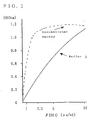
- the calibration curve(as show in Fig-1) was obtained by plotting absorbance vs. beta2-Microglobulin concentration in ⁇ g/ml. Beta2-Microglobulin concentration of each sample was determined by using this calibration curve.
- TBG solution Concentration of high concentration TBG solution, obtained from human serum, was detected by TBG in measuring kit [TBG,RIA:EIKEN ] followed by diluting the solution with 0.02 M sodium phosphate buffer containing 1.0% BSA to obtain standard solutions of 5,10,25 and 40 ⁇ g/ml, respectively.
- Anti-TBG antibody(produced by ATAB) was coated onto the surface of glass beads, according to the method of U.S.Pat.No. 3652761.
- Buffer (II) composition was as follows; 0.15 M Na2HPO4, 0.12 M citrate containing 1%BSA and 0.85%NaCl; this buffer was adjusted to pH 4.0 ⁇ 0.1.
- Example 1-f was repeated.
- Example 1-g was repeated.
- IgE Concentration of high concentration IgE solution, obtained from human serum, was detected by using IgE International Reference Standard(No. 68/341) of WHO, with use of IgE-measuring kit [IgE-RIA, DAINABOTO ] followed by diluting the solution with 0.02M sodium phosphate buffer containing 50% horse serum to obtain standard solutions of 50,200,500,1000 and 2000 IU/ml, respectively.
- a mouse (Balb/c) was immunized by injection with a high concentration human IgE solution. After 6 weeks, a cell suspension was produced from the spleen; and then about 1x10⁸ cells of the spleen and about 2x10⁷ mouse myeloma cells were fused with PEG treatment. The resulting fused cells were cultured in HAT medium, followed by screening to select antibody-producing cells (hybridoma). Afterwards, this hybridoma was grown as monoclone by cloning, followed by asciting the monoclone with a mouse. The resulting ascites fluid was purified to obtain an anti-IgE monoclonal immunoglobulin.
- Anti-IgE antibody was coated onto the surface of glass beads, according to the method of U.S.Pat.No. 3652761.
- Buffer (III) composition was as follows; 0.18 M glycine, 0.02 M HCl containing 1%BSA and 0.85%NaCl; this buffer was adjusted to pH 3.5 ⁇ 0.1.
- Example 1-f was repeated.
- Example 1-g was repeated.
- the bead was washed 4 times by each time adding 3 ml of washing solution. To the washed bead then was added, on a times schedule, 0.5 ml of enzyme substrate solution. After a precise 15-min incubation period at 37°C, color development was terminated by the addition of 2 ml of stopping solution. The absorbance at 492 nm of each solution was determined spectrophotometrically. The calibration curve was obtained by plotting absorbance vs. IgE concentration in IU/ml. IgE concentration of each sample was determined by using this calibration curve.
- Concentration of high concentration human albumin solution obtained from human serum, was detected by albumin measuring kit [Albumin, RIA: Pharmacia] followed by diluting the solution with 0.02 M sodium phosphate buffer containing 0.1% BSA to obtain standard solutions of 5,10,30 and 60 mg/l, respectively.
- a mouse (Balb/c) was immunized by injection with a high concentration human albumin solution. After 6 weeks, a cell suspension was produced from the spleen; and then about 1x10⁸ cells of the spleen and about 2x10⁷ mouse myeloma cells were fused with PEG treatment. The resulting fused cells were cultured in HAT medium, followed by screening to select antibody-producing cells (hybridoma). Afterwards, this hybridoma was grown as monoclone by cloning, followed by asciting the monoclone with a mouse. The resulting ascites fluid was purified to obtain an anti-albumin monoclonal immunoglobulin.
- Anti-albumin antibodies were coated onto the surface of glass beads, according to the method of U.S.Pat.No. 3652761.
- Buffer (IV) composition was as follows; 0.22 M citrate, 0.03 M sodium acetate containing 0.5%BSA and 0.85%NACl; this buffer was adjusted to pH 3.8 ⁇ 0.1.
- Example 1-f was repeated.
- Example 1-g was repeated.
Landscapes
- Health & Medical Sciences (AREA)
- Life Sciences & Earth Sciences (AREA)
- Immunology (AREA)
- Engineering & Computer Science (AREA)
- Chemical & Material Sciences (AREA)
- Urology & Nephrology (AREA)
- Hematology (AREA)
- Biomedical Technology (AREA)
- Molecular Biology (AREA)
- Medicinal Chemistry (AREA)
- Analytical Chemistry (AREA)
- Cell Biology (AREA)
- Chemical Kinetics & Catalysis (AREA)
- Food Science & Technology (AREA)
- Biotechnology (AREA)
- Physics & Mathematics (AREA)
- Microbiology (AREA)
- Biochemistry (AREA)
- General Health & Medical Sciences (AREA)
- General Physics & Mathematics (AREA)
- Pathology (AREA)
- Medicines Containing Antibodies Or Antigens For Use As Internal Diagnostic Agents (AREA)
- Measuring Or Testing Involving Enzymes Or Micro-Organisms (AREA)
- Investigating Or Analysing Biological Materials (AREA)
Applications Claiming Priority (2)
| Application Number | Priority Date | Filing Date | Title |
|---|---|---|---|
| JP63280667A JPH0754322B2 (ja) | 1988-11-07 | 1988-11-07 | 免疫学的定量法および検査用試薬 |
| JP280667/88 | 1988-11-07 |
Publications (2)
| Publication Number | Publication Date |
|---|---|
| EP0368208A2 true EP0368208A2 (de) | 1990-05-16 |
| EP0368208A3 EP0368208A3 (de) | 1990-12-27 |
Family
ID=17628257
Family Applications (1)
| Application Number | Title | Priority Date | Filing Date |
|---|---|---|---|
| EP19890120513 Withdrawn EP0368208A3 (de) | 1988-11-07 | 1989-11-06 | Immunoassay-Verfahren und Testsatz dafür |
Country Status (3)
| Country | Link |
|---|---|
| US (1) | US5073485A (de) |
| EP (1) | EP0368208A3 (de) |
| JP (1) | JPH0754322B2 (de) |
Cited By (2)
| Publication number | Priority date | Publication date | Assignee | Title |
|---|---|---|---|---|
| WO1999053321A1 (fr) * | 1998-04-10 | 1999-10-21 | Bio Merieux | Fixation d'une molecule biologique sur une surface d'un support |
| EP1483586A4 (de) * | 2002-03-11 | 2006-05-03 | Beckman Coulter Inc | Immunassays für beta2-mikroglobulin |
Families Citing this family (4)
| Publication number | Priority date | Publication date | Assignee | Title |
|---|---|---|---|---|
| US5869349A (en) * | 1990-12-12 | 1999-02-09 | University Of Utah Reseach Foundation | Immobilization of acid-treated antibodies on siliceous support |
| US5698393A (en) * | 1995-08-18 | 1997-12-16 | Abbott Laboratories | Method for elimination of rheumatoid factor interference in diagnostic assays |
| US20090111122A1 (en) * | 2006-04-06 | 2009-04-30 | Eisai R&D Management Co., Ltd. | METHOD FOR NON-INVASIVE EXAMINATION OF NON-ALCOHOLIC STEATOHEPATITIS BY QUANTIFICATION OF CYTOCHROME-c, AND TEST KIT |
| EP2753624B1 (de) * | 2011-09-09 | 2017-11-08 | GABA International Holding GmbH | Stabile zusammensetzungen und verfahren zu ihrer herstellung |
Family Cites Families (6)
| Publication number | Priority date | Publication date | Assignee | Title |
|---|---|---|---|---|
| US3776698A (en) * | 1972-01-24 | 1973-12-04 | Nuclear Med Lab | Test for thyroid hormone |
| JPS608745B2 (ja) * | 1978-02-14 | 1985-03-05 | 三洋化成工業株式会社 | 免疫活性物質−つや消しガラス複合体,その製造法及び該複合体を含有してなる測定試薬 |
| US4687734A (en) * | 1984-06-07 | 1987-08-18 | Chester Samuel J | Immunoassay for the detection of human colon cancer using a polyclonal antibody derived from a capillary culture of tumor cells |
| US4743542A (en) * | 1985-04-11 | 1988-05-10 | Ortho Diagnostic | Method for forestalling the hook effect in a multi-ligand immunoassay system |
| US4703001A (en) * | 1985-10-23 | 1987-10-27 | Synbiotics, Corporation | Immunoassay for the detection of serum analytes using pH dependent chastropic acids |
| US4788138A (en) * | 1987-04-30 | 1988-11-29 | Beckman Instruments, Inc. | Method to achieve a linear standard curve in a sandwich immunoassay |
-
1988
- 1988-11-07 JP JP63280667A patent/JPH0754322B2/ja not_active Expired - Lifetime
-
1989
- 1989-11-06 EP EP19890120513 patent/EP0368208A3/de not_active Withdrawn
- 1989-11-07 US US07/432,916 patent/US5073485A/en not_active Expired - Fee Related
Cited By (4)
| Publication number | Priority date | Publication date | Assignee | Title |
|---|---|---|---|---|
| WO1999053321A1 (fr) * | 1998-04-10 | 1999-10-21 | Bio Merieux | Fixation d'une molecule biologique sur une surface d'un support |
| AU758648B2 (en) * | 1998-04-10 | 2003-03-27 | Bio Merieux | Method for fixing a biological molecule on a support surface |
| US6660533B2 (en) | 1998-04-10 | 2003-12-09 | Bio Merieux | Attaching a biological molecule to a support surface |
| EP1483586A4 (de) * | 2002-03-11 | 2006-05-03 | Beckman Coulter Inc | Immunassays für beta2-mikroglobulin |
Also Published As
| Publication number | Publication date |
|---|---|
| EP0368208A3 (de) | 1990-12-27 |
| US5073485A (en) | 1991-12-17 |
| JPH0754322B2 (ja) | 1995-06-07 |
| JPH02128159A (ja) | 1990-05-16 |
Similar Documents
| Publication | Publication Date | Title |
|---|---|---|
| US4474892A (en) | Two-site immunoassays using monoclonal antibodies of different classes or subclasses and test kits for performing same | |
| US4376110A (en) | Immunometric assays using monoclonal antibodies | |
| US4595661A (en) | Immunoassays and kits for use therein which include low affinity antibodies for reducing the hook effect | |
| CA1340201C (en) | Receptors for immune complexes | |
| CA1215644A (en) | Immunoassay for class specific immunoglobulin antibodies | |
| IE890683L (en) | Method for determination of a polyvalent substance using an immunoaggregate | |
| JPH0258590B2 (de) | ||
| US5650333A (en) | Immunoassay method and kit using superaggregated complex | |
| US5366859A (en) | Radioimmunoassay method | |
| US4803171A (en) | Reagent paper for immunologically analysis, a process for the preparation thereof and the use thereof | |
| JPH1026621A (ja) | イムノアッセイ法 | |
| GB2190490A (en) | Enzyme immunoassay | |
| US5073485A (en) | Immunoassay method conducted at low ph | |
| US5792606A (en) | Nucleic acid hybridization based assay for determining a substance of interest | |
| CA2093494A1 (en) | Method for the elimination of non-specific reactions in immuno-assays | |
| Buchs et al. | Development of an ABO-ELISA for the quantitation of human blood group anti-A and anti-B IgM and IgG antibodies | |
| CA1334507C (en) | Simple method for immunological assay | |
| CA1335265C (en) | Solid phase matrices and a process for the production thereof | |
| US5043288A (en) | Immobilize molecular binding partners to contact activating supports | |
| JPS6146784B2 (de) | ||
| JP2736058B2 (ja) | 免疫検定用器具の製造方法 | |
| JPH01209370A (ja) | 免疫活性物質の測定法及び測定試薬 | |
| EP0368674A2 (de) | Immunoessay und dafür geeignete Testsätze | |
| JPH0510952A (ja) | 固定化担体の製造方法 | |
| JP2816767B2 (ja) | 固定化抗体の製造方法 |
Legal Events
| Date | Code | Title | Description |
|---|---|---|---|
| PUAI | Public reference made under article 153(3) epc to a published international application that has entered the european phase |
Free format text: ORIGINAL CODE: 0009012 |
|
| AK | Designated contracting states |
Kind code of ref document: A2 Designated state(s): DE ES FR IT |
|
| PUAL | Search report despatched |
Free format text: ORIGINAL CODE: 0009013 |
|
| AK | Designated contracting states |
Kind code of ref document: A3 Designated state(s): DE ES FR IT |
|
| 17P | Request for examination filed |
Effective date: 19901221 |
|
| 17Q | First examination report despatched |
Effective date: 19930223 |
|
| STAA | Information on the status of an ep patent application or granted ep patent |
Free format text: STATUS: THE APPLICATION IS DEEMED TO BE WITHDRAWN |
|
| 18D | Application deemed to be withdrawn |
Effective date: 19940803 |