EP0352477B1 - Verwendung vpn Adenosin-5'-phosphate in der Behandlung von Krebscachexia - Google Patents
Verwendung vpn Adenosin-5'-phosphate in der Behandlung von Krebscachexia Download PDFInfo
- Publication number
- EP0352477B1 EP0352477B1 EP89111399A EP89111399A EP0352477B1 EP 0352477 B1 EP0352477 B1 EP 0352477B1 EP 89111399 A EP89111399 A EP 89111399A EP 89111399 A EP89111399 A EP 89111399A EP 0352477 B1 EP0352477 B1 EP 0352477B1
- Authority
- EP
- European Patent Office
- Prior art keywords
- atp
- tumor
- adenosine
- blood
- treatment
- Prior art date
- Legal status (The legal status is an assumption and is not a legal conclusion. Google has not performed a legal analysis and makes no representation as to the accuracy of the status listed.)
- Expired - Lifetime
Links
Images


Classifications
-
- A—HUMAN NECESSITIES
- A61—MEDICAL OR VETERINARY SCIENCE; HYGIENE
- A61K—PREPARATIONS FOR MEDICAL, DENTAL OR TOILETRY PURPOSES
- A61K31/00—Medicinal preparations containing organic active ingredients
- A61K31/70—Carbohydrates; Sugars; Derivatives thereof
-
- A—HUMAN NECESSITIES
- A61—MEDICAL OR VETERINARY SCIENCE; HYGIENE
- A61P—SPECIFIC THERAPEUTIC ACTIVITY OF CHEMICAL COMPOUNDS OR MEDICINAL PREPARATIONS
- A61P35/00—Antineoplastic agents
-
- C—CHEMISTRY; METALLURGY
- C07—ORGANIC CHEMISTRY
- C07H—SUGARS; DERIVATIVES THEREOF; NUCLEOSIDES; NUCLEOTIDES; NUCLEIC ACIDS
- C07H19/00—Compounds containing a hetero ring sharing one ring hetero atom with a saccharide radical; Nucleosides; Mononucleotides; Anhydro-derivatives thereof
- C07H19/02—Compounds containing a hetero ring sharing one ring hetero atom with a saccharide radical; Nucleosides; Mononucleotides; Anhydro-derivatives thereof sharing nitrogen
- C07H19/04—Heterocyclic radicals containing only nitrogen atoms as ring hetero atom
- C07H19/16—Purine radicals
- C07H19/20—Purine radicals with the saccharide radical esterified by phosphoric or polyphosphoric acids
Definitions
- the present invention is concerned with the use of adenosine 5' phosphate as an active substance or pharmaceutically acceptable salts, chelates or radio-nuclides thereof together with usual carrier substances for the manufacture of a medicament for the treatment of cancer cachexia.
- antimetabolites e.g., cytotoxic nucleosides or bases
- purines and pyrimidines as antineoplastic drugs.
- antimetabolites are taken up by both normal and tumor cells and, therefore, not only can inhibit the growth of tumor cells, but also adversely affect normal cells in the host.
- ATP is a known vasodilator that may cause circulatory changes in humans and experimental animals. See Davies, et al., "Circulatory and Respiratory Effects of Adenosine Triphosphate in Man” in Circulation 3 :543-550 (April 1951); Duff, et al., "A Quantitative Study of the Response to Adenosine Triphosphate of the Blood Vessels of the Human Hand and Forearm” in J. Physiol. 125 :581-589 (1954); Rowe, et al., "The Systemic and Coronary Hemodynamic Effects of Adenosine Triphosphate and Adenosine” in American Heart J. 64 :228-234 (1962).
- Rapaport, et al. "Selective High Metabolic Lability of Uridine, Guanosine and Cytosine Triphosphates in Response to Glucose Deprivation and Refeeding of Untransformed and Polyoma Virus-transformed Hamster Fibroblasts" in J. Cell. Physiol. , Vol. 101, No. 2:229-236 (November 1979); Rapaport, et al., "Selective High Metabolic Lability of Uridine Triphosphate in Response to Glucosamine Feeding of Untransformed and Polyoma Virus-transformed Hamster Fibroblasts" in J. Cell. Physiol.
- Rapaport "Compartmentalized ATP Pools Produced from Adenosine Are Nuclear Pools" in J. Cell. Physiol. , 105:267-274 (1980); and Rapaport, et al., "Retinoic Acid-Promoted Expansion of Total Cellular ATP Pools in 3T3 Cells Can Mediate its Stimulatory and Growth Inhibitory Effects” in J. Cell. Physiol. , 110:318-322 (1982).
- Cancer associated cachexia results in severe anatomical alterations that originate in the interrelationship between the tumor and host tissues, organs, and their functions.
- One of the most profound conditions exhibited in tumor-bearing hosts is host tissue depletion which leads to a rapid weight loss (for a review see Costa, G., "Cachexia, The Metabolic Component of Neoplastic Diseases", Cancer Research , 37, 2327-2335, 1977).
- total parenteral nutrition or the anabolic hormone insulin were shown to be effective against rapid weight losses in tumor-bearing hosts (Moley, J.F., et al., "Body Composition Changes in Rats with Experimental Cancer Cachexia: Improvement with Exogenous Insulin", Cancer Research , 48, 2784-2787, 1988).
- the present application provides the initial disclosure of a mechanism for inhibiting cancer cachexia in tumor-bearing hosts.
- the administration of AMP and/or ATP into tumor-bearing hosts result not only in the inhibition of host weight loss, but also act in inhibiting the growth of the tumor.
- Experimental evidence presented in this disclosure shows that the inhibition of host weight loss in tumor-bearing hosts (which is the most severe outcome of cancer cachexia) and the inhibition of tumor growth by administration of AMP and/or ATP are two separate consequences of this treatment and are not dependent or related to each other. Namely, the inhibition of host weight loss in tumor-bearing hosts is not simply the result of the inhibition of tumor growth after administration of AMP or ATP. Both phenomena (inhibition of weight loss in tumor-bearing hosts and inhibition of tumor growth), however, originate with the same physiological mechanism, the expansion of blood (total cellular), and blood plasma (extracellular) ATP levels.
- An aspect of the present invention is concerned with treating a host afflicted with a tumor where the affliction or disease has progressed to an advanced stage whereby there has been a profound deterioration in host tissues or organ functions.
- This aspect of the present invention arrests the growth of tumor cells in such a host and while substantially inhibiting weight loss caused by cancer cachexia in the host.
- the treatment involves increasing the blood and plasma ATP levels of the host to a level sufficient to thereby arrest the growth of the tumor and while substantially inhibiting weight loss caused by cancer cachexia.
- Figure 1 illustrates the inhibition of growth of CT26 tumors in CB6F1 mice and changes in host body weight during and after treatment with adenine nucleotides.
- Figure 2 illustrates inhibition of tumor growth and host weight loss in tumor-bearing mice by treatment with adenine nucleotides.
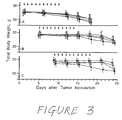
- Figure 3 illustrates inhibition of host weight loss in tumor-bearing animals by treatment with adenine nucleotides.
- Tumor refers to cancer cells such as malignant cells.
- the blood and plasma ATP levels of the host can be increased by administering to the host adenosine 5'-monophosphate (AMP), and/or adenosine 5'-diphosphate (ADP), and/or adenosine 5'-triphosphate (ATP).
- AMP adenosine 5'-monophosphate
- ADP adenosine 5'-diphosphate
- ATP adenosine 5'-triphosphate
- a tumor-bearing host including a host wherein the progression of the disease is not to the extent discussed above can be treated by administering adenosine 5'-monophosphate (AMP) in an amount sufficient to increase the blood and plasma levels of adenosine 5'-triphosphate (ATP) in said host sufficiently to thereby arrest the growth of the tumor cells.
- AMP adenosine 5'-monophosphate
- ATP adenosine 5'-triphosphate
- AMP is preferred according to the present invention since it reduces the chances for adverse side-effects as compared to using ADP and ATP, especially since ATP is a known vasodilator.
- tumor cells in a host that can be treated according to the present invention are CAPAN-1 and CT26.
- the AMP and/or ADP and/or ATP treatment is employed in a pharmaceutically acceptable salt form and in a variety of conventional pharmaceutical preparations. These preparations can contain organic or inorganic material suitable for internal administration.
- the high solubility of AMP and/or ADP and/or ATP salts in isotonic aqueous solutions of sodium chloride enable administration of these agents in the form of injection or infusion of single or multiple doses.
- the injection or infusion can be intraperitoneal, intravenous, or intra-arterial.
- AMP and/or ADP and/or ATP are also suitable for oral, enteral, or topical application when employed with conventional organic or inorganic carrier substances.
- the effective doses should be in the range of about 1-1,000 mg/kg of body weight for oral or topical administration and about 1-1,000 mg/kg of body weight for injections.
- Intravenous, intraperitoneal, or intraarterial infusions of AMP and/or ADP and/or ATP in a suitable salt form is preferably administered at a rate of about 0.001-15 mg/kg of body weight per minute.
- AMP or ADP or ATP can be employed not only as pharmaceutically acceptable salts, but as chelates to radio-nuclides such as, but not limited to, Tc-99m, In-111, or Ga-67.
- the AMP or ADP or ATP chelates of these agents can be employed for treatment as well as diagnosis of human tumors.
- adenosine 5'-triphosphate (ATP) and adenosine 5'-monophosphate (AMP) exhibit significant anticancer activities such as against established footpad CT26 colon adenocarcinoma in CB6F1 mice.
- ATP adenosine 5'-triphosphate
- AMP adenosine 5'-monophosphate
- adenosine, inorganic phosphate, or inorganic pyrophosphate were without such effects under identical conditions.
- the tumor cell lines employed were CT26, a mouse undifferentiated, aggressive colon carcinoma, and CAPAN-1, a well-differentiated human pancreatic adenocarcinoma. These two tumors represent a broad spectrum of accepted tumor models and, therefore, are suitable for demonstrating the clinical efficacy of therapeutic agents for cancers in general not limited to the specific tumors tested.
- the cells are shown to be free of Mycoplasma contamination.
- Cells are cultured at 37°C in a humidified atmosphere of 5% CO2/95% air in MEM supplemented with antibiotics (100 units of penicillin per ml and 100 ⁇ g streptomycin per ml), L-glutamine (2 mM), non-essential amino acids (0.1 mM), sodium pyruvate (1 mM), and 10% fetal bovine serum.
- mice a standard F1 hybrid of BALB/C and C57BL/6 obtained from Jackson Laboratories, Bar Harbor, Maine and athymic outbred NCr nu/nu mice (males and females) from the Department of Radiation Medicine, Massachusetts General Hospital, Boston, Massachusetts 02114 are used. All the mice are kept for at least two weeks before inoculation of the tumors and the start of treatment and are 7-9 weeks old (CB6F1) or 6-7 weeks old (athymic nu/nu ) at the start of the procedure. Animals weigh 20-25 g (females) or 23-28 g (males), are housed 5-12 per cage, and have ad libitum access to food and water.
- Tumor cells are removed from subconfluent cultures by a mild trypsin-EDTA treatment, the cell pellet is washed once with MEM without serum and the cells are suspended at the desired cell numbers in PBS (phosphate-buffered saline, 8 g NaCl, 0.2 g KCl, 1.15 g Na2HPO4 ⁇ 7H2O, and 0.2 g KH2PO4 per liter). Cell suspensions are shown to be at least 90% viable by trypan blue exclusion. Mice are injected subcutaneously in the right hind footpad with tumor cells suspended in 50 ⁇ l of PBS. The regular protocol (unless otherwise stated) consists of daily i.p.
- injections of 1 ml of 0.85% NaCl solution or 1 ml of 50 mM of AMP, ADP, or ATP in 0.85% NaCl starting one day after tumor inoculation and given for ten consecutive days.
- Injections are administered with 30 gauge needles and the mice are lightly anesthetized with ether. The mice are weighed before the start of treatment and once a week during and after treatment. After the tumors become palpable, tumor sizes are determined every three days. The animals are sacrificed, tumors are excised and weighed before they reach 10% of the animals' weight.
- the blood (0.25 ml) is collected into syringes (25 gauge needles) containing citrate (0.05 ml of 93 mM sodium citrate, 7 mM citric acid, 140 mM dextrose, pH 6.5) from the inferior vena cava after i.p. injections of 1 ml of saline or 1 ml of 50 mM adenine nucleotides in saline.
- the mice are anesthetized with ether during the procedure.
- the plasma is prepared by immediate centrifugation of the blood in a Beckman microfuge (30 sec at 8000 xg).
- ATP levels in the extracts is performed by bioluminometry (luciferinluciferase) using a Turner Designs Bioluminescence Photometer. According to the procedure reported by Karl DM, Holm-Hansen O. "Effects of Luciferin Concentration on the Quantitative Assay of ATP Using Crude Luciferase Preparations", Anal. Biochem. , 1976, 75 , 100-112.
- Figure 1 illustrates the inhibition of growth of CT26 tumors in CB6F1 mice and changes in host body weights during and after treatment with adenine nucleotides.
- Tumor-bearing mice are treated with saline ( ⁇ ), AMP (o), ADP ( ⁇ ) or ATP ( ⁇ ) following procedures described above.
- Figure 1 presents data from experiment number 4 of Table 1 hereinbelow. The values are the mean of 11 animals (per group). The standard deviations did not exceed 30% of the mean for any of the data points presented.
- adenine nucleotides against CT26 murine colon carcinoma which are inoculated s.c. in the hind footpad of CB6F1 mice, are illustrated in Table 1 hereinbelow.
- the efficacy of adenine nucleotides is demonstrated against high, intermediate and low tumor burdens. No significant differences between males and females are observed either in the rate of tumor growth or in the tumor's response to adenine nucleotides treatment.
- Table 2 below, demonstrates the effects of adenine nucleotides on the arrest of CT26 tumors in CB6F1 mice and of CAPAN-1 xenografts in athymic nude mice.
- Concentrations of AMP and ATP which are lower than 50 mM are as effective against CT26 footpad tumors in CB6F1 mice when administered by daily intraperitoneal injections in volumes of 1.4-1.8 ml of saline.
- the start of the treatment schedule can be delayed until the tumors are palpable (6-10 days after tumor inoculation, depending on the number of tumor cells implanted) without any significant effects on the magnitude of tumor growth inhibition.
- the efficacy of the inhibition of tumor growth is also dependent to a small extent on the pH of the AMP and ATP solutions which are administered i.p., with pHs 5.5-6.2 being the most effective.
- Treatment schedules consist of single daily i.p. injections for 10 consecutive days, starting one day after tumor inoculation. Tumor burden is relatively low (0.5-1x10⁵ cells implanted) and tumor growth is slow (tumors became palpable 4-6 weeks after inoculation).
- the effects of AMP, ADP, and ATP are evaluated by the total arrest of tumor growth for a period of 6-10 weeks (lack of palpable footpad tumors) and in all cases the tumor-free mice do not develop any tumors for a period of 4 months.
- the data presented in Table 2 demonstrate the effects of adenine nucleotides on the arrest of CAPAN-1 xenografts in athymic nude mice.
- the data outlined in Table 3 indicate that the magnitude of the increases in plasma ATP concentrations is linked to the increases in blood (total cellular) ATP concentrations.
- the increase in total blood ATP levels after i.p. injections of AMP or ATP last for more than 5 hours and less than 18 hours, at which point total blood ATP pools drop back to normal levels. All the expanded ATP pools are accounted for in red blood cells and are stable after extensive washing of the isolated red blood cells in Hanks balanced salt solution. Slow release of ATP from red blood cells containing expanded ATP pools are responsible for the increases in the plasma ATP levels.
- citrate-dextrose as an anticoagulant as compared to heparin, yields higher levels of plasma ATP pools (data for heparin is not shown).
- Citrate, but not heparin was shown recently to inhibit the activity of a blood plasma phosphodiesterase, which is active in catalyzing the degradation of ATP, by chelating divalent cations required for the enzymatic activity (see Luthje J. Ogilvie A., "Catalobism of Ap3A and Ap4A in Human Plasma. Purification and Characterization of Glycoprotein Complex with 5'-Nucleotide Phosphodiesterase Activity", Eur. J. Biochem. , 1985, 149, 119-127).
- a further series of tests are conducted whereby tumors are inoculated by injections of 2.5x10⁵ CT26 cells (over 90% viability) in 50 ⁇ l of phosphate-buffered saline into the right hind footpad of CB6F1 mice.
- the treatments were initiated at a variety of times after inoculation of the tumors.
- the injection schedules started either 1 or 5 days after tumor inoculation when none of the tumors are palpable or when the tumors are clearly palpable (average calculated weight of 100 mg), which occur in 100% of the inoculated mice after 8-11 days.
- mice are randomized, divided into groups, and injected daily with 2.2 ml of saline, adenosine, AMP, or ATP (compounds are in sterile saline solutions at concentrations of 25 mM with AMP and ATP solutions adjusted to pH 6.2). Injections are administered intraperitoneally with 30 gauge needles and the mice are lightly anesthetized with ether. The mice are weighed and tumor sizes measured before the start of the treatment schedule and every three days during and after the treatment schedule. These determinations are performed before injections during the treatment period.
- the blood (0.25 ml) is collected into 1 ml syringes (26 gauge needles) containing either citrate-dextrose (0.05 ml of 93 mM sodium citrate, 7 mM citric acid, 140 mM dextrose, pH 6.5) or sodium heparin (0.05 ml of 3 units of sodium heparin in saline) from the inferior vena cava.
- citrate-dextrose 0.05 ml of 93 mM sodium citrate, 7 mM citric acid, 140 mM dextrose, pH 6.5
- sodium heparin 0.05 ml of 3 units of sodium heparin in saline
- Plasma or Hanks (Balanced Salt Solution) BSS media from incubated isolated RBCs are prepared by centrifugation of whole blood or RBCs in a Beckman microfuge (30 seconds at 8000 xg) and samples of 100 ⁇ l are added to 1 ml of ice-cold 7% trichloroacetic acid. Red blood cells are prepared by centrifugation of whole blood (1500 xg for 5 minutes at 4°C) and removal of plasma and the buffy coat is followed by a wash of the pelleted RBCs (from 250 ⁇ l of whole blood) in 5 ml of ice-cold Hanks' BSS.
- the RBCs pellet is resuspended in Hanks' BSS to yield a total volume with the original hematocrit (percent of RBCs volume in the whole blood).
- Aliquots of 20 ⁇ l of RBCs suspensions or whole blood are added to 1 ml of ice-cold 7% trichloroacetic acid. Extraction of acid-soluble nucleotides and determinations of ATP levels by luminometry followed procedures discussed hereinabove.
- [3H]ATP pools For the determination of whole blood or isolated RBC [3H]ATP pools, 10 ⁇ l of a 1 ml initial trichloroacetic acid extract are chromatographed. Determinations of [3H]ATP levels in blood plasma or RBCs incubation media are performed on 300 ⁇ l of an initial 1 ml trichloroacetic acid extract which are lyophilized and redissolved in 15 ⁇ l of water. After chromatography, the spots corresponding to the ATP carrier are cut, eluted with 0.5 ml of 4 N ammonium hydroxide, and radioactivity determined in 10 ml of scintillation fluid.
- FIG. 2 illustrates inhibition of tumor growth (---) and host weight loss ( ⁇ ) in tumor-bearing mice by treatment with adenine nucleotides.
- Mice (CB6F1, 8 week old males) bearing palpable CT26 footpad tumors (on day 9 after tumor inoculation) are treated with saline ( ⁇ ), adenosine (o), AMP ( ⁇ ), or ATP ( ⁇ ) as described herein.
- An untreated group is also included (x). Arrows indicate days of injection. This representative experiment included 10 animals per treatment group and data points are expressed as the means ⁇ S.D. No deaths occurred before day 22 after tumor inoculation.
- mice remain tumor-free for at least two months.
- inhibition of tumor growth by ATP is more pronounced than that obtained with AMP ( Figure 2).
- AMP is as effective as ATP in inhibiting tumor growth in the same model system when the treatment schedule is initiated one day after tumor inoculation.
- Figure 3 further illustrates inhibition of host weight loss in tumor-bearing animals by treatment with adenine nucleotides.
- Mice CB6F1, males, 7 weeks old, in A, 10 weeks old in B, C) are inoculated with CT26 tumors and daily treatments (for 10 consecutive days) with saline ( ⁇ ), adenosine (o), AMP ( ⁇ ), or ATP ( ⁇ ) are initiated 1 day (A), 5 days (B), or 9 days after tumor inoculation (when all the tumors were palpable) (C).
- Arrows indicate days of injection.
- Experimental procedures were outlined in the text. Each treatment group included 10 animals and data points are expressed as means ⁇ S.D. No deaths occurred before day 19 (A) or day 25 (B,C).
- [3H]Adenosine was taken up by whole blood for 10 seconds and half of the blood sample was immediately spun-down for plasma isolation. The other half was used for the isolation of washed RBCs which were resuspended in a volume of Hanks' BSS to yield the original hematocrit before the removal of an aliquot for ATP determination.
- Plasma[3H]ATP levels were calculated from the radioactivity of plasma [3H]ATP after correlation with the specific radioactivity of RBC [3H]ATP pools which, in turn, were determined by bioluminometry and two-dimensional thin layer chromatography. Data represent the means ⁇ S.D. of three separate experiments. +Determined by bioluminometry.
- RBC ATP pools after i.p. injections of AMP or ATP could be detected 30 minutes after injections and lasted for approximately 6-8 hours after the nucleotides were completely adsorbed across the peritoneal membrane and into the systemic circulation.
- the rates of adsorption of intraperitoneal AMP or ATP solutions varied in different strains of mice.
- the increases in RBC ATP pools are comparable to the increases observed in total blood ATP levels after similar i.p. injections of AMP or ATP as illustrated above in Table 3.
- Adenosine, at levels similar to those of AMP or ATP, is only slightly effective in expanding mouse RBC ATP pools (Table 4). Plasma (extracellular) ATP levels are markedly increased after i.p. administration of AMP or ATP.
- Plasma ATP levels originate in RBCs since they can be metabolically labeled by [3H]adenosine.
- Plasma ATP pools which originate in the dense granules of blood platelets would not be radioactively labeled under the same conditions (e.g., Holmsen, 1985, Seminars in Hematol, 22, 219-240).
- the experiments described in Tables 4 and 5 include uptake of [3H]adenosine by whole blood (Table 4) or isolated washed RBCs (Table 5 below). In both cases, all the extracellular ATP, determined seconds after the uptake of [3H]adenosine, is metabolically labeled.
- Plasma and buffy coat were removed after centrifugation and RBCs were washed with 5 ml of Hanks' BSS. RBCs were resuspended in a volume of Hanks' BSS to yield the original hematocrit and [3H]adenosine was taken up by the cells for 10 seconds. An aliquot of the total cell suspension was fixed in 1 ml of trichloroacetic acid and the remaining RBCs suspension was used for the determination of the 120 minute time point or was centrifuged for the isolation of the medium. ATP levels in the media were determined at time 0. Determinations of [3H]ATP levels in the Hanks' BSS incubation media were identical to determinations performed in blood plasma and which were described in the footnote to Table 4. Data represent the average of two separate experiments. +Determined by bioluminometry.
- Normal levels of ATP in human plasma are submicromolar, such as about 0.1-0.5 ⁇ M.
- the elevated levels for the purposes of the present invention need only be one order of magnitude higher, such as about 1 to about 5 ⁇ M.
Landscapes
- Health & Medical Sciences (AREA)
- Chemical & Material Sciences (AREA)
- Life Sciences & Earth Sciences (AREA)
- General Health & Medical Sciences (AREA)
- Organic Chemistry (AREA)
- Molecular Biology (AREA)
- Medicinal Chemistry (AREA)
- Veterinary Medicine (AREA)
- Public Health (AREA)
- Animal Behavior & Ethology (AREA)
- Pharmacology & Pharmacy (AREA)
- Biotechnology (AREA)
- Genetics & Genomics (AREA)
- Biochemistry (AREA)
- Engineering & Computer Science (AREA)
- Epidemiology (AREA)
- General Chemical & Material Sciences (AREA)
- Nuclear Medicine, Radiotherapy & Molecular Imaging (AREA)
- Chemical Kinetics & Catalysis (AREA)
- Pharmaceuticals Containing Other Organic And Inorganic Compounds (AREA)
- Saccharide Compounds (AREA)
Claims (4)
- Verwendung von Adenosin-5'-phosphat als wirksame Substanz oder pharmazeutisch verträgliche Salze, Chelate oder Radionuclide davon, zusammen mit üblichen Trägersubstanzen für die Herstellung eines Medikaments zur Behandlung der Krebskachexie.
- Verwendung nach Anspruch 1, dadurch gekennzeichnet, daß diese wirksame Substanz Adenosin-5'-triphosphat ist.
- Verwendung nach Anspruch 1, dadurch gekennzeichnet, daß diese wirksame Substanz Adenosin-5'-diphosphat ist.
- Verwendung nach Anspruch 1, dadurch gekennzeichnet, daß diese wirksame Substanz Adenosin-5'-monophosphat ist.
Applications Claiming Priority (2)
| Application Number | Priority Date | Filing Date | Title |
|---|---|---|---|
| US223503 | 1988-07-25 | ||
| US07/223,503 US5049372A (en) | 1982-07-13 | 1988-07-25 | Anticancer activities in a host by increasing blood and plasma adenosine 5'-triphosphate (ATP) levels |
Publications (3)
| Publication Number | Publication Date |
|---|---|
| EP0352477A2 EP0352477A2 (de) | 1990-01-31 |
| EP0352477A3 EP0352477A3 (de) | 1991-10-09 |
| EP0352477B1 true EP0352477B1 (de) | 1995-01-18 |
Family
ID=22836791
Family Applications (1)
| Application Number | Title | Priority Date | Filing Date |
|---|---|---|---|
| EP89111399A Expired - Lifetime EP0352477B1 (de) | 1988-07-25 | 1989-06-22 | Verwendung vpn Adenosin-5'-phosphate in der Behandlung von Krebscachexia |
Country Status (6)
| Country | Link |
|---|---|
| US (1) | US5049372A (de) |
| EP (1) | EP0352477B1 (de) |
| JP (1) | JPH02111724A (de) |
| AT (1) | ATE117209T1 (de) |
| DE (2) | DE68920656T2 (de) |
| ES (1) | ES2066806T3 (de) |
Families Citing this family (27)
| Publication number | Priority date | Publication date | Assignee | Title |
|---|---|---|---|---|
| US5679650A (en) * | 1993-11-24 | 1997-10-21 | Fukunaga; Atsuo F. | Pharmaceutical compositions including mixtures of an adenosine compound and a catecholamine |
| US5677290A (en) * | 1990-05-10 | 1997-10-14 | Fukunaga; Atsuo F. | Therapeutic use of adenosine compounds as surgical anesthetics |
| US6180616B1 (en) | 1990-05-10 | 2001-01-30 | Atsuo F. Fukunaga | Use of purine receptor agonists to alleviate or normalize physiopathologically excited sensory nerve function |
| US6004945A (en) * | 1990-05-10 | 1999-12-21 | Fukunaga; Atsuo F. | Use of adenosine compounds to relieve pain |
| US5264220A (en) * | 1991-11-12 | 1993-11-23 | Long David M Jr | Method of extending the vascular dwell-time of particulate therapeutic and particulate diagnostic agents |
| WO1994017177A1 (en) * | 1993-01-27 | 1994-08-04 | Batle Luminetrics Enterprises, Inc. | Methods and kits for determining effects of anti-cancer agents on cancer cells |
| US7671038B1 (en) * | 1993-10-08 | 2010-03-02 | Eliezer Rapaport | Method of therapeautic treatments including human immunodeficiency virus (HIV) disease and other conditions in a human host by administering adenine nucleotides |
| US5874420A (en) * | 1995-12-26 | 1999-02-23 | Allegheny University Of The Health Sciences | Process for regulating vagal tone |
| US6159701A (en) * | 1996-11-08 | 2000-12-12 | Link Technology Incorporated | Method and compositions for treating and diagnosing tumors using adenosine receptor activated cells |
| JP2000516641A (ja) * | 1997-07-02 | 2000-12-12 | エスディージー インコーポレイテッド | 診断および治療用途の目標指向性リポソーム構成物 |
| US6579857B1 (en) | 1999-06-11 | 2003-06-17 | Evanston Northwestern Healthcare Research Institute | Combination cancer therapy comprising adenosine and deaminase enzyme inhibitors |
| EP1221945A4 (de) * | 1999-10-20 | 2005-06-15 | Eliezer Rapaport | Verfahren sowie pharmazeutische und therapeutische zusammensetzungen zur verabreichung von adenosin |
| US6680052B1 (en) | 1999-11-08 | 2004-01-20 | Endacea, Inc. | Methods of inhibiting tumor growth using adenosine receptor activated cells |
| US20030036077A1 (en) * | 2001-05-31 | 2003-02-20 | Chronix Biomedical | Methods for generating an mRNA expression profile from an ecellular mRNA containing blood sample and using the same to identify functional state markers |
| US7629329B2 (en) * | 2001-06-04 | 2009-12-08 | Tsi Health Sciences, Inc. | Method for increasing muscle mass and strength through administration of adenosine triphosphate |
| EP1583543A4 (de) * | 2002-01-16 | 2009-09-09 | Eliezer Rapaport | Verfahren und therapeutische zusammensetzungen bei der behandlung fortgeschrittener karzinome |
| US7148210B2 (en) * | 2002-10-15 | 2006-12-12 | Trustees Of Dartmouth College | Method of treating bone metastasis |
| GB0312845D0 (en) * | 2003-06-04 | 2003-07-09 | Paradigm Therapeutics Ltd | Use of componds in medicine |
| US20070203091A1 (en) * | 2006-02-28 | 2007-08-30 | Eliezer Rapaport | Methods and therapeutic compositions for improving liver, blood flow and skeletal muscle functions in advanced diseases and aging |
| US20080114055A1 (en) * | 2006-11-10 | 2008-05-15 | Zoltan Laboratories Llc | Thioxanthone Compounds to Reverse Weight Loss |
| US20080207738A1 (en) * | 2007-02-28 | 2008-08-28 | Cancure Laboratories, Llc | Drug combinations to treat drug resistant tumors |
| EP2135612A1 (de) * | 2008-06-20 | 2009-12-23 | Universiteit van Maastricht | ATP-Verwendung bei der Herstellung eines Medikaments zur Behandlung, Linderung und/oder Überlebensverbesserung von Krebspatienten vor dem Endstadium |
| JP4923074B2 (ja) * | 2009-02-25 | 2012-04-25 | 株式会社オーティス | 軒樋支持具セット |
| CL2011002020A1 (es) * | 2011-08-18 | 2012-04-20 | Univ Santiago Chile | Metodo in vitro para modificar el perfil de celulas treg presentes en una poblacion total de esplenocitos de una muestra biologica porque comprende aislar, cultivar y exponer los esplenocitos a un medio de atp y polimixina b.10 ug/ml a 100 ug/ml y uso combinado de polomixina b y atp para preparar un medicamento util en el tratamiento de tumores. |
| DE102014004512A1 (de) * | 2014-03-28 | 2015-10-01 | Georg-August-Universität Göttingen Stiftung Öffentlichen Rechts Bereich Universitätsmedizin | Anorganisch-organische Hybridverbindung |
| US10925899B2 (en) | 2015-12-29 | 2021-02-23 | Marc Purcell | Composition for energy supplementation |
| JP6433949B2 (ja) * | 2016-08-01 | 2018-12-05 | 新潟麦酒株式会社 | アルコール代謝促進剤及びアルコール障害予防飲食品 |
Family Cites Families (6)
| Publication number | Priority date | Publication date | Assignee | Title |
|---|---|---|---|---|
| US4141972A (en) * | 1974-03-29 | 1979-02-27 | Sanraku-Ocean Co., Ltd. | Purine nucleoside 5'-phosphate (mono, di or tri) 3'(2')-diphosphates and processes for their preparation |
| JPS5253897A (en) * | 1975-10-30 | 1977-04-30 | Kikkoman Corp | Process for preparing, n6-etheno-2-subtituted-thio-adenosine-2', 5'pho sphates |
| JPS5540635A (en) * | 1978-09-19 | 1980-03-22 | Seishin Seiyaku Kk | Remedy for cardiac insufficiency |
| JPS5634697A (en) * | 1979-08-31 | 1981-04-06 | Wakunaga Yakuhin Kk | Preparation of 5'-triphosphoryladnylyl-(2'-5')-adenylyl-(2'-5')-adenosine |
| US4880918A (en) * | 1982-07-13 | 1989-11-14 | Eliezer Rapaport | Arrest and killing of tumor cells by adenosine 5-diphosphate and adenosine-5-triphosphate |
| JPS60126220A (ja) * | 1983-12-09 | 1985-07-05 | Otsuka Pharmaceut Factory Inc | 核酸成分組成物 |
-
1988
- 1988-07-25 US US07/223,503 patent/US5049372A/en not_active Expired - Lifetime
-
1989
- 1989-06-22 DE DE68920656T patent/DE68920656T2/de not_active Expired - Fee Related
- 1989-06-22 AT AT89111399T patent/ATE117209T1/de not_active IP Right Cessation
- 1989-06-22 DE DE198989111399T patent/DE352477T1/de active Pending
- 1989-06-22 EP EP89111399A patent/EP0352477B1/de not_active Expired - Lifetime
- 1989-06-22 ES ES89111399T patent/ES2066806T3/es not_active Expired - Lifetime
- 1989-07-22 JP JP1190377A patent/JPH02111724A/ja active Pending
Also Published As
| Publication number | Publication date |
|---|---|
| EP0352477A2 (de) | 1990-01-31 |
| ES2066806T3 (es) | 1995-03-16 |
| US5049372A (en) | 1991-09-17 |
| EP0352477A3 (de) | 1991-10-09 |
| JPH02111724A (ja) | 1990-04-24 |
| DE68920656T2 (de) | 1995-05-18 |
| DE352477T1 (de) | 1990-06-13 |
| ATE117209T1 (de) | 1995-02-15 |
| DE68920656D1 (de) | 1995-03-02 |
Similar Documents
| Publication | Publication Date | Title |
|---|---|---|
| EP0352477B1 (de) | Verwendung vpn Adenosin-5'-phosphate in der Behandlung von Krebscachexia | |
| US4880918A (en) | Arrest and killing of tumor cells by adenosine 5-diphosphate and adenosine-5-triphosphate | |
| Rapaport et al. | Anticancer activities of adenine nucleotides in mice are mediated through expansion of erythrocyte ATP pools. | |
| FI91764C (fi) | Analogiamenetelmä asyylideoksiribonukleosidijohdannaisten valmistamiseksi | |
| US6579857B1 (en) | Combination cancer therapy comprising adenosine and deaminase enzyme inhibitors | |
| Kern et al. | Inhibition of established rat fibrosarcoma growth by the glucose antagonist 2-deoxy-D-glucose | |
| Rapaport | Experimental cancer therapy in mice by adenine nucleotides | |
| JP3885006B2 (ja) | 造血改善のためのオキシプリンヌクレオシド、およびそれらの同族体、ならびにそのアシル誘導体 | |
| Rapaport et al. | Generation of extracellular ATP in blood and its mediated inhibition of host weight loss in tumor-bearing mice | |
| US6103701A (en) | Method for enhancing hematopoiesis with acyl deoxyribonucleosides | |
| US5227371A (en) | Utilization of adenine nucleotides and/or adenosine and inorganic phosphate for elevation of liver, blood and blood plasma adenosine 5'-triphosphate concentrations | |
| Tonetti et al. | Liver targeting of autologous erythrocytes loaded with doxorubicin | |
| Tazawa et al. | Inhibitory effects of fluorinated pyrimidines, 5¢-DFUR, UFT and T-506, in a model of hepatic metastasis of mouse colon 26 adenocarcinoma-assessment of inhibitory activity and adverse reactions at the maximum tolerated dose | |
| WO2003061568A2 (en) | Methods and therapeutic compositions in the treatment of advanced cancer | |
| Lapis et al. | Effectiveness of tiazofurin (NSC 286193) in treating disseminated tumor cells and micrometastases in mice | |
| JPH0427965B2 (de) | ||
| JP3755019B2 (ja) | リボフラノース誘導体を含む放射線障害防護剤 | |
| Rijkers et al. | Purine Nucleoside Phosphorylase (PNP) Deficiency Leading to Accumulation of Lymphocytes in S-Phase | |
| Rodriguez et al. | Initial clinical trials with arabinosyl-6-mercaptopurine | |
| Campbell | CELLULAR DETERMINANTS OF 3-DEAZAURIDINE SENSITIVITY IN THE L1210 MURINE SYSTEM AND THE CHEMOTHERAPEUTIC POTENTIAL OF DAUR ADMINISTERED IN COMBINATION WITH 1-BETA-D-ARABINOFURANOSYL CYTOSINE AGAINST L1210. | |
| Curt et al. | Cytosine arabinoside | |
| JPS5925325A (ja) | 癌治療剤 | |
| HK1004854B (en) | Acyl deoxyribonucleoside derivatives and uses thereof |
Legal Events
| Date | Code | Title | Description |
|---|---|---|---|
| PUAI | Public reference made under article 153(3) epc to a published international application that has entered the european phase |
Free format text: ORIGINAL CODE: 0009012 |
|
| AK | Designated contracting states |
Kind code of ref document: A2 Designated state(s): AT CH DE ES FR GB IT LI SE |
|
| ITCL | It: translation for ep claims filed |
Representative=s name: JACOBACCI CASETTA & PERANI S.P.A. |
|
| EL | Fr: translation of claims filed | ||
| DET | De: translation of patent claims | ||
| TCAT | At: translation of patent claims filed | ||
| 17P | Request for examination filed |
Effective date: 19900924 |
|
| PUAL | Search report despatched |
Free format text: ORIGINAL CODE: 0009013 |
|
| AK | Designated contracting states |
Kind code of ref document: A3 Designated state(s): AT CH DE ES FR GB IT LI SE |
|
| 17Q | First examination report despatched |
Effective date: 19920317 |
|
| RAP1 | Party data changed (applicant data changed or rights of an application transferred) |
Owner name: RAPAPORT, ELIEZER |
|
| ITF | It: translation for a ep patent filed | ||
| GRAA | (expected) grant |
Free format text: ORIGINAL CODE: 0009210 |
|
| AK | Designated contracting states |
Kind code of ref document: B1 Designated state(s): AT CH DE ES FR GB IT LI SE |
|
| REF | Corresponds to: |
Ref document number: 117209 Country of ref document: AT Date of ref document: 19950215 Kind code of ref document: T |
|
| REF | Corresponds to: |
Ref document number: 68920656 Country of ref document: DE Date of ref document: 19950302 |
|
| ET | Fr: translation filed | ||
| REG | Reference to a national code |
Ref country code: ES Ref legal event code: FG2A Ref document number: 2066806 Country of ref document: ES Kind code of ref document: T3 |
|
| PLBE | No opposition filed within time limit |
Free format text: ORIGINAL CODE: 0009261 |
|
| STAA | Information on the status of an ep patent application or granted ep patent |
Free format text: STATUS: NO OPPOSITION FILED WITHIN TIME LIMIT |
|
| 26N | No opposition filed | ||
| REG | Reference to a national code |
Ref country code: GB Ref legal event code: IF02 |
|
| PGFP | Annual fee paid to national office [announced via postgrant information from national office to epo] |
Ref country code: AT Payment date: 20020620 Year of fee payment: 14 |
|
| PGFP | Annual fee paid to national office [announced via postgrant information from national office to epo] |
Ref country code: SE Payment date: 20020624 Year of fee payment: 14 |
|
| PG25 | Lapsed in a contracting state [announced via postgrant information from national office to epo] |
Ref country code: AT Free format text: LAPSE BECAUSE OF NON-PAYMENT OF DUE FEES Effective date: 20030622 |
|
| PG25 | Lapsed in a contracting state [announced via postgrant information from national office to epo] |
Ref country code: SE Free format text: LAPSE BECAUSE OF NON-PAYMENT OF DUE FEES Effective date: 20030623 |
|
| PGFP | Annual fee paid to national office [announced via postgrant information from national office to epo] |
Ref country code: ES Payment date: 20030728 Year of fee payment: 15 |
|
| EUG | Se: european patent has lapsed | ||
| PG25 | Lapsed in a contracting state [announced via postgrant information from national office to epo] |
Ref country code: ES Free format text: LAPSE BECAUSE OF NON-PAYMENT OF DUE FEES Effective date: 20040623 |
|
| PGFP | Annual fee paid to national office [announced via postgrant information from national office to epo] |
Ref country code: GB Payment date: 20050615 Year of fee payment: 17 |
|
| PGFP | Annual fee paid to national office [announced via postgrant information from national office to epo] |
Ref country code: FR Payment date: 20050617 Year of fee payment: 17 |
|
| PG25 | Lapsed in a contracting state [announced via postgrant information from national office to epo] |
Ref country code: IT Free format text: LAPSE BECAUSE OF NON-PAYMENT OF DUE FEES;WARNING: LAPSES OF ITALIAN PATENTS WITH EFFECTIVE DATE BEFORE 2007 MAY HAVE OCCURRED AT ANY TIME BEFORE 2007. THE CORRECT EFFECTIVE DATE MAY BE DIFFERENT FROM THE ONE RECORDED. Effective date: 20050622 |
|
| PGFP | Annual fee paid to national office [announced via postgrant information from national office to epo] |
Ref country code: CH Payment date: 20050622 Year of fee payment: 17 |
|
| PGFP | Annual fee paid to national office [announced via postgrant information from national office to epo] |
Ref country code: DE Payment date: 20050801 Year of fee payment: 17 |
|
| REG | Reference to a national code |
Ref country code: ES Ref legal event code: FD2A Effective date: 20040623 |
|
| PG25 | Lapsed in a contracting state [announced via postgrant information from national office to epo] |
Ref country code: GB Free format text: LAPSE BECAUSE OF NON-PAYMENT OF DUE FEES Effective date: 20060622 |
|
| PG25 | Lapsed in a contracting state [announced via postgrant information from national office to epo] |
Ref country code: LI Free format text: LAPSE BECAUSE OF NON-PAYMENT OF DUE FEES Effective date: 20060630 Ref country code: CH Free format text: LAPSE BECAUSE OF NON-PAYMENT OF DUE FEES Effective date: 20060630 |
|
| PG25 | Lapsed in a contracting state [announced via postgrant information from national office to epo] |
Ref country code: DE Free format text: LAPSE BECAUSE OF NON-PAYMENT OF DUE FEES Effective date: 20070103 |
|
| REG | Reference to a national code |
Ref country code: CH Ref legal event code: PL |
|
| GBPC | Gb: european patent ceased through non-payment of renewal fee |
Effective date: 20060622 |
|
| REG | Reference to a national code |
Ref country code: FR Ref legal event code: ST Effective date: 20070228 |
|
| PG25 | Lapsed in a contracting state [announced via postgrant information from national office to epo] |
Ref country code: FR Free format text: LAPSE BECAUSE OF NON-PAYMENT OF DUE FEES Effective date: 20060630 |