EP0351907A2 - Antivirales Wischtuch - Google Patents
Antivirales Wischtuch Download PDFInfo
- Publication number
- EP0351907A2 EP0351907A2 EP19890201827 EP89201827A EP0351907A2 EP 0351907 A2 EP0351907 A2 EP 0351907A2 EP 19890201827 EP19890201827 EP 19890201827 EP 89201827 A EP89201827 A EP 89201827A EP 0351907 A2 EP0351907 A2 EP 0351907A2
- Authority
- EP
- European Patent Office
- Prior art keywords
- package according
- article
- sheet
- liquid
- water
- Prior art date
- Legal status (The legal status is an assumption and is not a legal conclusion. Google has not performed a legal analysis and makes no representation as to the accuracy of the status listed.)
- Withdrawn
Links
Images
Classifications
-
- A—HUMAN NECESSITIES
- A01—AGRICULTURE; FORESTRY; ANIMAL HUSBANDRY; HUNTING; TRAPPING; FISHING
- A01N—PRESERVATION OF BODIES OF HUMANS OR ANIMALS OR PLANTS OR PARTS THEREOF; BIOCIDES, e.g. AS DISINFECTANTS, AS PESTICIDES OR AS HERBICIDES; PEST REPELLANTS OR ATTRACTANTS; PLANT GROWTH REGULATORS
- A01N25/00—Biocides, pest repellants or attractants, or plant growth regulators, characterised by their forms, or by their non-active ingredients or by their methods of application, e.g. seed treatment or sequential application; Substances for reducing the noxious effect of the active ingredients to organisms other than pests
- A01N25/34—Shaped forms, e.g. sheets, not provided for in any other sub-group of this main group
-
- A—HUMAN NECESSITIES
- A61—MEDICAL OR VETERINARY SCIENCE; HYGIENE
- A61L—METHODS OR APPARATUS FOR STERILISING MATERIALS OR OBJECTS IN GENERAL; DISINFECTION, STERILISATION OR DEODORISATION OF AIR; CHEMICAL ASPECTS OF BANDAGES, DRESSINGS, ABSORBENT PADS OR SURGICAL ARTICLES; MATERIALS FOR BANDAGES, DRESSINGS, ABSORBENT PADS OR SURGICAL ARTICLES
- A61L2/00—Methods or apparatus for disinfecting or sterilising materials or objects other than foodstuffs or contact lenses; Accessories therefor
- A61L2/16—Methods or apparatus for disinfecting or sterilising materials or objects other than foodstuffs or contact lenses; Accessories therefor using chemical substances
-
- A—HUMAN NECESSITIES
- A61—MEDICAL OR VETERINARY SCIENCE; HYGIENE
- A61L—METHODS OR APPARATUS FOR STERILISING MATERIALS OR OBJECTS IN GENERAL; DISINFECTION, STERILISATION OR DEODORISATION OF AIR; CHEMICAL ASPECTS OF BANDAGES, DRESSINGS, ABSORBENT PADS OR SURGICAL ARTICLES; MATERIALS FOR BANDAGES, DRESSINGS, ABSORBENT PADS OR SURGICAL ARTICLES
- A61L2/00—Methods or apparatus for disinfecting or sterilising materials or objects other than foodstuffs or contact lenses; Accessories therefor
- A61L2/16—Methods or apparatus for disinfecting or sterilising materials or objects other than foodstuffs or contact lenses; Accessories therefor using chemical substances
- A61L2/18—Liquid substances or solutions comprising solids or dissolved gases
-
- Y—GENERAL TAGGING OF NEW TECHNOLOGICAL DEVELOPMENTS; GENERAL TAGGING OF CROSS-SECTIONAL TECHNOLOGIES SPANNING OVER SEVERAL SECTIONS OF THE IPC; TECHNICAL SUBJECTS COVERED BY FORMER USPC CROSS-REFERENCE ART COLLECTIONS [XRACs] AND DIGESTS
- Y10—TECHNICAL SUBJECTS COVERED BY FORMER USPC
- Y10T—TECHNICAL SUBJECTS COVERED BY FORMER US CLASSIFICATION
- Y10T442/00—Fabric [woven, knitted, or nonwoven textile or cloth, etc.]
- Y10T442/60—Nonwoven fabric [i.e., nonwoven strand or fiber material]
- Y10T442/674—Nonwoven fabric with a preformed polymeric film or sheet
- Y10T442/678—Olefin polymer or copolymer sheet or film [e.g., polypropylene, polyethylene, ethylene-butylene copolymer, etc.]
Definitions
- the invention relates to a package containing a sheet-like article for wiping and disinfecting surfaces. More in particular, it relates to a package containing an anti-viral wipe.
- a powdered product may contain dusty components which may render it hazardous to handle, as it is essentially a rather aggressive chemical composition.
- Another objective of the present invention is to provide a method of disinfecting liquid spillages which does not exhibit the drawbacks of the known methods.
- a package containing a sheet-like article for wiping surfaces, said article comprising a highly absorbent material capable of absorbing and retaining a hydrophilic liquid and of reversibly releasing at least some of that liquid on the application of hand pressure, and further containing an anti-viral agent, whereby the highly absorbent material is contained between two sheets of material, at least one of them being permeable to the liquid.
- the sheet-like article is contained in a package, which is preferably a re-sealable, watertight plastic bag, such as a bag made of heavy-duty polyethylene having skirt-welded seams and a re-sealable closure of the tongue-and-groove type.
- the wipe comprises a highly absorbent material, which in principle may be any highly absorbent material, such as cellulose foam, or a polyvinyl formal foam, such as the material commercially available from Kanebo Ltd.
- it is essential for the proper functioning of the sheet-like article that it is capable of absorbing and retaining a hydrophilic liquid, without dripping, until said liquid is needed to disinfect a surface contaminated with blood, urine or other body fluids which may be infectious. At that moment, the liquid is reversibly released from the wipe in a controlled fashion by moderate squeezing. Thereafter, the wipe is used to reabsorb the liquid which is now mixed with the spillage.
- the highly absorbent material is the polymerization product of a high internal phase emulsion having an aqueous internal phase and a continuous phase comprising one or more polymerisable hydrophobic monomers (a so-called Polyhipe ® material).
- a so-called Polyhipe ® material Such materials and wipes carrying such materials are described in more detail in the European patent applications 60,138 and 68,830, which are incorporated herein by reference.
- Vinyl polymers are of especial interest, styrene homo- and copolymers being preferred.
- Especially sulphonated Polyhipe materials proved to be suitable.
- the Polyhipes can be used both in their collapsed and their non-collapsed form, but the non-collapsed are greatly preferred.
- the highly absorbent material is contained between two sheets of material.
- a large variety of fabrics, woven or non-woven, are suitable for this purpose.
- one permeable sheet is preferably equipped with abrasive particles. It is advantageous when the two sides have different colours, so that a distinction between them can be easily made.
- abrasive particles comprise granules of a synthetic polymeric material such as polystyrene, polymethyl methacrylate, polyvinyl chloride or, preferably, polyamide. The application of these and other abrasive materials to the surface of wipes is described in the European patent application 211,664.
- a further essential ingredient of the wipe is the anti-viral agent.
- This compound must be capable of irreversibly inactivating most known dangerous viruses, such as HIV (which may cause AIDS) and the Hepatitis B virus.
- the anti-viral agent is defined in the present invention as a chemical compound or composition or a precursor thereof, which in solution is capable of irreversibly inactivating pathogenic viruses, for humans as well as for animals, which viruses may be present in liquid spillages of body fluids.
- Nonidet P-40 octyl phenol ethoxylate - 9EO
- a suitable anti-viral agent is the non-ionic compound Nonidet P-40 (octyl phenol ethoxylate - 9EO), which was shown to be effective in killing the AIDS-virus (L. Resnick et al., J. Am. Med. Assoc. 225 ,14 (1986), 1887-1891).
- the anti-viral agent is preferably a hypohalite, hypochlorite being especially preferred. This compound cannot be incorporated in the wipe, since it is not stable in an aqueous solution and it may also react with the wipe material.
- the hypohalite is generated in the wipe at or shortly before the moment of use.
- the wipe contains a dry compound, preferably in the form of non-dusty granules, which generates a hypohalite upon contact with water, for example an alkali metal dichloroisocyanurate, preferably sodium dichloroisocyanurate dihydrate.
- the anti-viral agent When the wipe is brought into contact with the aqueous spillage, the anti-viral agent could be generated and the spillage as well as the area which it covers would be disinfected.
- the package contains a separate, rupturable or openable container wherein a sufficient amount of water is provided to generate an effective concentration of at least 0.5% (w/w), preferably at least 2% (w/w) of active chlorine.
- the absorbent capacity of the wipe is thereby chosen such that the dilution upon contacting the spillage is not greater than a factor of 2, corresponding to a concentration of at least 0.25% by weight active chlorine.
- the water in the container may also contain a small amount of a detergent and/or abrasive, which must be compatible with the anti-viral agent.
- the container is a plastic bottle having a twist-off top.
- the bottle containing the water Before usage, the bottle containing the water must be opened while it is still contained in the closed package. This can be easily achieved by twisting the top off. Then the amount of water is absorbed by the wipe by squeezing it several times until it is thoroughly soaked. The package is opened after approximately 5-30 sec. and the wipe, which now contains an effective amount of active chlorine, is applied to the spillage.
- a method of disinfecting a liquid spillage, in particular blood is characterized in that a package according to the invention is used by first breaking the breakable water-containing bag and waiting for 5-30 seconds, if such bag is provided, subsequently opening the package and taking out the sheet-like article, squeezing it slightly to liberate some of the anti-viral agent and wiping the spillage, whereafter the hand pressure is released to absorb as much of the spillage as possible into the sheet-like article.
- a wipe of 12 x 12 cm was manufactured using on one side a hydrophilic spun-bonded viscose non-woven fabric sold by Mitsubishi under the trade mark TCF 406.
- the fabric was equipped with polyethylene beads on one side according to standard techniques by uniformly covering it with 0.6 g polyethylene beads. Subsequently, the sheet was placed in an oven at 140°C for 2 minutes, removed and allowed to cool.
- the fabric weighed 100 grams per m2.
- the other side of the wipe consisted of a smooth hydrophobic sheath of polyproplyene, sold by Kimberley-Clark under the trade mark Kimtex EHP. This fabric weighed 60 grams per m2.
- the TCF 406 fabric and the Kimtex EHP were placed together, the polyethylene-covered side facing the Kimtex EHP. The two fabrics were welded together by applying heat under pressure along 3 edges of the fabrics to form an open pouch.
- a Polyhipe material consisting of a non-collapsed sulphonated polystyrene/divinyl benzene material, 90% void volume and containing approximately 0.7 SO3 moiety per benzene ring were put into the pouch, which was subsequently heat-sealed along the fourth side to form a closed pouch.
- the wipe was placed in a re-sealable polyethylene bag together with a rupturable sachet containing 46.5 g water.
- a wipe of 12 x 12 cm was manufactured using on one side a hydrophilic viscose non-woven fabric sold by Bonded Fibre Fabric, U.K., under the trade mark EVA 40 KP.
- the fabric was equipped with polyamide beads on one side and weighed 40 grams per m2.
- the other side of the wipe consisted of of a smooth hydrophilic viscose non-woven fabric, sold by Bonded Fibre Fabric under the trade mark PRR 55. This fabric weighed 55 grams per m2. It was printed with a blue diamond pattern for ready distinction. On one side it was covered by a layer of sinter-coated polyethylene particles.
- the EVA 40 KP fabric and the PRR 55 were placed together, the polyethylene-covered side facing the EVA, with the polyamide beads facing outwards.
- the two fabrics were welded together by applying heat under pressure along 3 edges of the fabrics to form an open pouch.
- the wipe was placed in a re-sealable, skirt-welded polyethylene bag together with a plastic bottle having a twist-off neck and containing 50.0 g sterile water. The bag was then sealed.
- a package containing the wipe described in Example 2 was used to clean and disinfect a melamine-topped bench on which samples of fresh human blood were applied.
- the blood was obtained from a male volunteer. 1 ml blood was spread on the bench, using an Eppendorff pipette having a disposable tip.
- the wetted wipe which now contained hypochlorite was taken out of the package.
- the wipe was slightly squeezed to liberate some of the anti-viral solution which was applied to the blood on the surface.
- the blood was wiped first with the abrasive side to loosen any dried blood, and subsequently any residues were mopped up with the smooth side.
- the wipe was put into the re-sealable polyethylene bag again together with the disposable gloves. Subsequently the package was sealed and disposed of.
- the area on the bench on which the blood had been spread was effectively cleaned and showed no traces of blood.
- the anti-viral activity of the wipes according to the present invention was tested as follows.
- a wipe according to Example 1 was used.
- the anti-viral solution was recovered from the wipe by squeezing the liquid into a container after activation.
- a wipe containing only Polyhipe was also tested in the same way, to ensure that the anti-viral effect was not due to residues of the Polyhipe.
- a solution of 4.2% formaldehyde was used as a further control.
- Poliovirus was used as the indicator virus. Poliovirus type 1 (Mahoney strain) was obtained from Natec, Hamburg, and the Vero cell line (Green Monkey Kidney) was purchased from Flow Laboratories.
- the poliovirus was grown in confluent layers of Vero until complete cytopathic effect was observed. Cultures were then frozen and thawed, after which they were centrifuged to remove cell debris. The supernatant was stored in aliquots at -70°C. The virus content of the suspension was determined by titration.
- Monolayers of Vero cells were cultured in 96 well microtitre plates in a 5% carbon dioxide atmosphere. Ten-fold dilutions of virus suspension were made in maintenance medium. One hundred microlitres of each dilution was added to a single well, five replicates of each dilution were made. Cell controls were included on every plate. The plates were incubated at 37°C in a CO2 incubator and observed daily and discarded after seven days. The virus titre was calculated from the Kärber formula (Lenette, E.H. and Schmidt, N.J., Diagnostic Procedures for Viral, Rikettsial and Chlamydial Infections, 5th Edition, p. 32-35 (1979)).
- the suspension tests were carried out at room temperature (20°C), but, after appropriate contact times, dilutions were made in ice cold medium.
- a virus suspension of known titre of at least 108 TCID50 (50 per cent tissue culture infectious dose) was used.
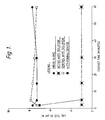
- Virus suspension was mixed with one part distilled water and eight parts of anti-viral solution. The mixture was kept at 20°C for the duration of the contact time. The following contact times were used: 2, 5, 15, 30 and 60 minutes.
- microtitre plates were incubated at 37°C in an incubator with a 5% CO2 atmosphere, and examined daily until they were discarded on day 7.
- the virus titre for each contact time was calculated as before from the Kärber formula.
Landscapes
- Health & Medical Sciences (AREA)
- Life Sciences & Earth Sciences (AREA)
- General Health & Medical Sciences (AREA)
- Chemical & Material Sciences (AREA)
- Chemical Kinetics & Catalysis (AREA)
- General Chemical & Material Sciences (AREA)
- Epidemiology (AREA)
- Animal Behavior & Ethology (AREA)
- Public Health (AREA)
- Veterinary Medicine (AREA)
- Agronomy & Crop Science (AREA)
- Pest Control & Pesticides (AREA)
- Plant Pathology (AREA)
- Toxicology (AREA)
- Engineering & Computer Science (AREA)
- Dentistry (AREA)
- Wood Science & Technology (AREA)
- Zoology (AREA)
- Environmental Sciences (AREA)
- Agricultural Chemicals And Associated Chemicals (AREA)
- Cleaning Implements For Floors, Carpets, Furniture, Walls, And The Like (AREA)
- Absorbent Articles And Supports Therefor (AREA)
Applications Claiming Priority (2)
| Application Number | Priority Date | Filing Date | Title |
|---|---|---|---|
| GB8817199 | 1988-07-19 | ||
| GB8817199A GB8817199D0 (en) | 1988-07-19 | 1988-07-19 | Package containing sheet-like article |
Publications (2)
| Publication Number | Publication Date |
|---|---|
| EP0351907A2 true EP0351907A2 (de) | 1990-01-24 |
| EP0351907A3 EP0351907A3 (de) | 1991-05-15 |
Family
ID=10640739
Family Applications (1)
| Application Number | Title | Priority Date | Filing Date |
|---|---|---|---|
| EP19890201827 Withdrawn EP0351907A3 (de) | 1988-07-19 | 1989-07-11 | Antivirales Wischtuch |
Country Status (6)
| Country | Link |
|---|---|
| US (1) | US5006339A (de) |
| EP (1) | EP0351907A3 (de) |
| AU (1) | AU636567B2 (de) |
| GB (1) | GB8817199D0 (de) |
| NZ (1) | NZ229920A (de) |
| ZA (1) | ZA895507B (de) |
Cited By (16)
| Publication number | Priority date | Publication date | Assignee | Title |
|---|---|---|---|---|
| WO1994026317A1 (en) * | 1993-05-18 | 1994-11-24 | Steris Corporation | Controlled oxygen/anti-microbial release films |
| FR2723010A1 (fr) * | 1994-07-26 | 1996-02-02 | Mignot Gerard Jean Francois | Systemes de nettoyage munis de dispositifs relargant un antiseptique |
| WO2001047705A1 (en) * | 1999-12-28 | 2001-07-05 | Kimberly-Clark Worldwide, Inc. | Controlled release anti-microbial wipe for hard surfaces |
| GB2393438A (en) * | 2002-07-09 | 2004-03-31 | Galip Akay | Production of functionalized high internal phase emulsion polymers and their uses |
| US6794318B2 (en) | 1999-12-28 | 2004-09-21 | Kimberly-Clark Worldwide, Inc. | Use-dependent indicator system for absorbent articles |
| US6916480B2 (en) | 1999-12-28 | 2005-07-12 | Kimberly-Clark Worldwide, Inc. | Wiper containing a controlled-release anti-microbial agent |
| US7442439B2 (en) | 2005-12-28 | 2008-10-28 | Kimberly-Clark Worldwide, Inc. | Microencapsulated heat delivery vehicles |
| US7497351B2 (en) | 2006-05-30 | 2009-03-03 | Kimberly-Clark Worldwide, Inc. | Wet wipe dispensing system |
| US7517582B2 (en) | 2006-12-14 | 2009-04-14 | Kimberly-Clark Worldwide, Inc. | Supersaturated solutions using crystallization enthalpy to impart temperature change to wet wipes |
| US7614812B2 (en) | 2005-09-29 | 2009-11-10 | Kimberly-Clark Worldwide, Inc. | Wiper with encapsulated agent |
| US7654412B2 (en) | 2006-05-30 | 2010-02-02 | Kimberly-Clark Worldwide, Inc. | Wet wipe dispensing system for dispensing warm wet wipes |
| US7914891B2 (en) | 2005-12-28 | 2011-03-29 | Kimberly-Clark Worldwide, Inc. | Wipes including microencapsulated delivery vehicles and phase change materials |
| US7924142B2 (en) | 2008-06-30 | 2011-04-12 | Kimberly-Clark Worldwide, Inc. | Patterned self-warming wipe substrates |
| US8192841B2 (en) | 2006-12-14 | 2012-06-05 | Kimberly-Clark Worldwide, Inc. | Microencapsulated delivery vehicle having an aqueous core |
| US8986407B2 (en) | 2008-04-18 | 2015-03-24 | Saint-Gobain Abrasives, Inc. | High porosity abrasive articles and methods of manufacturing same |
| WO2020120193A1 (en) * | 2018-12-14 | 2020-06-18 | Medentech Limited | A disinfection system |
Families Citing this family (35)
| Publication number | Priority date | Publication date | Assignee | Title |
|---|---|---|---|---|
| US5811113A (en) * | 1989-04-27 | 1998-09-22 | Cancer Technologies, Inc. | Method and composition for deactivating HIV infected blood and for deactivating and decolorizing anticancer drugs |
| DE4029593C2 (de) * | 1990-09-19 | 1994-07-07 | Stockhausen Chem Fab Gmbh | Verfahren zur Herstellung von Absorptionsmaterial auf Polymerbasis mit verbesserter Abbaubarkeit und Absorption von Wasser, wäßrigen Lösungen und Körperflüssigkeiten und die Verwendung in Hygieneartikeln und zur Bodenverbesserung |
| WO1995001736A1 (en) * | 1993-07-06 | 1995-01-19 | Utecht Leo J | Personal protection apparatus |
| IL107060A (en) * | 1993-09-21 | 2000-01-31 | Levy David | Cleaning assembly |
| JP4045365B2 (ja) * | 1993-11-15 | 2008-02-13 | 株式会社日本吸収体技術研究所 | 抗菌性複合不織布およびその製造方法 |
| US5977194A (en) * | 1995-11-15 | 1999-11-02 | The Dow Chemical Company | High internal phase emusions and porous materials prepared therefrom |
| US6147131A (en) | 1995-11-15 | 2000-11-14 | The Dow Chemical Company | High internal phase emulsions (HIPEs) and foams made therefrom |
| US5674513A (en) * | 1996-02-20 | 1997-10-07 | Viro-Kote, Inc. | Anti-bacterial/anti-viral coatings, coating process and parameters thereof |
| US6120784A (en) * | 1996-02-20 | 2000-09-19 | Viro-Kote, Inc. | Anti-bacterial/anti-viral coatings, coating process and parameters thereof |
| US5951588A (en) * | 1996-02-29 | 1999-09-14 | Moenning; Stephen P. | Apparatus and method for protecting a port site opening in the wall of a body cavity |
| US5813416A (en) * | 1997-04-03 | 1998-09-29 | Rudolph; James M. | File with sanitizing agent |
| US6063390A (en) | 1998-08-07 | 2000-05-16 | Chesebrough-Pond's Usa Co., A Division Of Conopco, Inc. | Cosmetic effervescent cleansing pillow |
| US6641591B1 (en) | 1999-08-26 | 2003-11-04 | John H. Shadduck | Instruments and techniques for controlled removal of epidermal layers |
| BR0016826A (pt) * | 1999-12-30 | 2002-12-03 | Kimberly Clarke Worldwide Inc | Artigo absorvente antimicrobiano, métodos de produção e uso dos mesmos |
| US6451331B1 (en) | 2000-01-31 | 2002-09-17 | Unilever Home & Personal Care Usa, Division Of Conopco, Inc. | Pleated cosmetic effervescent cleansing pillow |
| US20030068454A1 (en) * | 2001-05-04 | 2003-04-10 | Smith Carolyn J. | Packaged pre-moistened wipes and method for cleaning breasts during nursing regimen |
| US7179772B2 (en) * | 2004-06-24 | 2007-02-20 | Unilever Home & Personal Care Usa, Division Of Conopco, Inc. | Extended lathering pillow article for personal care |
| US8048089B2 (en) | 2005-12-30 | 2011-11-01 | Edge Systems Corporation | Apparatus and methods for treating the skin |
| US9566088B2 (en) | 2006-03-29 | 2017-02-14 | Edge Systems Llc | Devices, systems and methods for treating the skin |
| US10172644B2 (en) | 2006-03-29 | 2019-01-08 | Edge Systems Llc | Devices, systems and methods for treating the skin |
| KR20100129269A (ko) * | 2008-01-04 | 2010-12-08 | 엣지 시스템즈 코포레이션 | 피부 처리 장치 및 방법 |
| US9056193B2 (en) | 2008-01-29 | 2015-06-16 | Edge Systems Llc | Apparatus and method for treating the skin |
| EP2451367B1 (de) | 2009-07-08 | 2020-01-22 | Edge Systems Corporation | Vorrichtungen zur hautbehandlung mithilfe zeitgesteuert freigesetzter substanzen |
| US8557178B2 (en) * | 2010-12-21 | 2013-10-15 | Ecolab Usa Inc. | Corrosion inhibition of hypochlorite solutions in saturated wipes |
| US8603392B2 (en) * | 2010-12-21 | 2013-12-10 | Ecolab Usa Inc. | Electrolyzed water system |
| US10238812B2 (en) | 2013-03-15 | 2019-03-26 | Edge Systems Llc | Skin treatment systems and methods using needles |
| EP2967633B1 (de) | 2013-03-15 | 2018-04-25 | Edge Systems LLC | Vorrichtungen zur hautbehandlung |
| US10179229B2 (en) | 2014-12-23 | 2019-01-15 | Edge Systems Llc | Devices and methods for treating the skin using a porous member |
| EP4324414A3 (de) | 2014-12-23 | 2024-05-01 | HydraFacial LLC | Vorrichtungen und verfahren zur hautbehandlung mit einem rollball oder einem dochtelement |
| JP2018527052A (ja) | 2015-07-08 | 2018-09-20 | エッジ システムズ エルエルシー | 育毛を促進するための装置、システムおよび方法 |
| US11291474B2 (en) | 2020-01-06 | 2022-04-05 | Ed F. Nicolas | Skin treatment tool applicator tip |
| USD1016615S1 (en) | 2021-09-10 | 2024-03-05 | Hydrafacial Llc | Container for a skin treatment device |
| USD1065551S1 (en) | 2021-09-10 | 2025-03-04 | Hydrafacial Llc | Skin treatment device |
| USD1042807S1 (en) | 2021-10-11 | 2024-09-17 | Hydrafacial Llc | Skin treatment tip |
| USD1084369S1 (en) | 2023-02-10 | 2025-07-15 | Hydrafacial Llc | Skin treatment tip |
Family Cites Families (20)
| Publication number | Priority date | Publication date | Assignee | Title |
|---|---|---|---|---|
| US2066946A (en) * | 1934-03-08 | 1937-01-05 | Clarence K Reiman | Deodorizing and sterilizing bandage |
| GB646075A (en) * | 1948-01-17 | 1950-11-15 | Fritz Freuthal | Improvements in and relating to cleaning or sanitary wiping material |
| US3386619A (en) * | 1966-02-24 | 1968-06-04 | Colgate Palmolive Co | Prepackaged applicator dispensing |
| US3580254A (en) * | 1967-07-13 | 1971-05-25 | Henry P Stuart | Bandage containing a medicinal material and method of using |
| US3636922A (en) * | 1970-02-19 | 1972-01-25 | David C Ketner | Fluid applicators |
| DE2408296A1 (de) * | 1973-02-23 | 1974-08-29 | Procter & Gamble | Wegwerfwindelstruktur |
| DE2828724A1 (de) * | 1978-06-30 | 1980-01-10 | Schuelke & Mayr Gmbh | Desinfektionstuch |
| US4252119A (en) * | 1979-06-13 | 1981-02-24 | The Kendall Company | Pack for moist patient therapy |
| US4330220A (en) * | 1980-06-12 | 1982-05-18 | The Kendall Company | Scrub sponge |
| SE432194B (sv) * | 1980-09-17 | 1984-03-26 | Landstingens Inkopscentral | Fukthemmande och bakteriedodande absorptionskropp for urin och faeces, vilken innehaller ett vattenlosligt kopparsalt |
| NZ199916A (en) * | 1981-03-11 | 1985-07-12 | Unilever Plc | Low density polymeric block material for use as carrier for included liquids |
| CA1196620A (en) * | 1981-06-26 | 1985-11-12 | Donald Barby | Substrate carrying a porous polymeric material |
| DE3141098C2 (de) * | 1981-10-16 | 1987-01-29 | Chemische Fabrik Stockhausen GmbH, 4150 Krefeld | Verfahren zur Herstellung eines Absorptionsmaterials |
| US4473611A (en) * | 1982-11-26 | 1984-09-25 | Lever Brothers Company | Porous polymeric material containing a reinforcing and heat-sealable material |
| US4575891A (en) * | 1984-11-09 | 1986-03-18 | Mark Valente | Toilet seat disinfectant wipe |
| US4643725A (en) * | 1985-07-01 | 1987-02-17 | Marilyn Schlesser | Combination package and applicator |
| GB8520100D0 (en) * | 1985-08-09 | 1985-09-18 | Unilever Plc | Article for wiping surfaces |
| GB8531271D0 (en) * | 1985-12-19 | 1986-01-29 | Surgikos Inc | Disinfection of spillages |
| US4764418A (en) * | 1986-02-28 | 1988-08-16 | Kimberly-Clark Corporation | Virucidal tissue products containing water-soluble humectants |
| EP0387274A1 (de) * | 1987-11-28 | 1990-09-19 | Fibre Treatments (Holding) Ltd. | Wischprodukt |
-
1988
- 1988-07-19 GB GB8817199A patent/GB8817199D0/en active Pending
-
1989
- 1989-07-11 EP EP19890201827 patent/EP0351907A3/de not_active Withdrawn
- 1989-07-12 NZ NZ229920A patent/NZ229920A/en unknown
- 1989-07-17 AU AU38136/89A patent/AU636567B2/en not_active Ceased
- 1989-07-19 ZA ZA895507A patent/ZA895507B/xx unknown
- 1989-07-19 US US07/382,129 patent/US5006339A/en not_active Expired - Fee Related
Cited By (20)
| Publication number | Priority date | Publication date | Assignee | Title |
|---|---|---|---|---|
| US5407685A (en) * | 1986-02-06 | 1995-04-18 | Steris Corporation | Controlled oxygen/anti-microbial release films |
| WO1994026317A1 (en) * | 1993-05-18 | 1994-11-24 | Steris Corporation | Controlled oxygen/anti-microbial release films |
| FR2723010A1 (fr) * | 1994-07-26 | 1996-02-02 | Mignot Gerard Jean Francois | Systemes de nettoyage munis de dispositifs relargant un antiseptique |
| WO2001047705A1 (en) * | 1999-12-28 | 2001-07-05 | Kimberly-Clark Worldwide, Inc. | Controlled release anti-microbial wipe for hard surfaces |
| US6734157B2 (en) | 1999-12-28 | 2004-05-11 | Kimberly-Clark Worldwide, Inc. | Controlled release anti-microbial hard surface wiper |
| AU774686B2 (en) * | 1999-12-28 | 2004-07-01 | Kimberly-Clark Worldwide, Inc. | Controlled release anti-microbial wipe for hard surfaces |
| US6794318B2 (en) | 1999-12-28 | 2004-09-21 | Kimberly-Clark Worldwide, Inc. | Use-dependent indicator system for absorbent articles |
| US6916480B2 (en) | 1999-12-28 | 2005-07-12 | Kimberly-Clark Worldwide, Inc. | Wiper containing a controlled-release anti-microbial agent |
| GB2393438A (en) * | 2002-07-09 | 2004-03-31 | Galip Akay | Production of functionalized high internal phase emulsion polymers and their uses |
| US7614812B2 (en) | 2005-09-29 | 2009-11-10 | Kimberly-Clark Worldwide, Inc. | Wiper with encapsulated agent |
| US7914891B2 (en) | 2005-12-28 | 2011-03-29 | Kimberly-Clark Worldwide, Inc. | Wipes including microencapsulated delivery vehicles and phase change materials |
| US7442439B2 (en) | 2005-12-28 | 2008-10-28 | Kimberly-Clark Worldwide, Inc. | Microencapsulated heat delivery vehicles |
| US7497351B2 (en) | 2006-05-30 | 2009-03-03 | Kimberly-Clark Worldwide, Inc. | Wet wipe dispensing system |
| US7654412B2 (en) | 2006-05-30 | 2010-02-02 | Kimberly-Clark Worldwide, Inc. | Wet wipe dispensing system for dispensing warm wet wipes |
| US7850041B2 (en) | 2006-05-30 | 2010-12-14 | John David Amundson | Wet wipes dispensing system |
| US7517582B2 (en) | 2006-12-14 | 2009-04-14 | Kimberly-Clark Worldwide, Inc. | Supersaturated solutions using crystallization enthalpy to impart temperature change to wet wipes |
| US8192841B2 (en) | 2006-12-14 | 2012-06-05 | Kimberly-Clark Worldwide, Inc. | Microencapsulated delivery vehicle having an aqueous core |
| US8986407B2 (en) | 2008-04-18 | 2015-03-24 | Saint-Gobain Abrasives, Inc. | High porosity abrasive articles and methods of manufacturing same |
| US7924142B2 (en) | 2008-06-30 | 2011-04-12 | Kimberly-Clark Worldwide, Inc. | Patterned self-warming wipe substrates |
| WO2020120193A1 (en) * | 2018-12-14 | 2020-06-18 | Medentech Limited | A disinfection system |
Also Published As
| Publication number | Publication date |
|---|---|
| AU636567B2 (en) | 1993-05-06 |
| US5006339A (en) | 1991-04-09 |
| ZA895507B (en) | 1991-03-27 |
| GB8817199D0 (en) | 1988-08-24 |
| AU3813689A (en) | 1990-01-25 |
| EP0351907A3 (de) | 1991-05-15 |
| NZ229920A (en) | 1991-04-26 |
Similar Documents
| Publication | Publication Date | Title |
|---|---|---|
| US5006339A (en) | Anti-viral wipe | |
| US6753306B2 (en) | Germicidal and disinfectant composition | |
| US4917238A (en) | Waste cleanup kit | |
| Weber et al. | The effect of blood on the antiviral activity of sodium hypochlorite, a phenolic, and a quaternary ammonium compound | |
| JPH03164403A (ja) | 二酸化塩素発生体 | |
| JPH07148232A (ja) | 独立生物標示装置 | |
| JPS6365211B2 (de) | ||
| WO1994008634A1 (en) | Blood product disposal system and method | |
| Look et al. | Preliminary results from disinfection of irreversible hydrocolloid impressions | |
| US4749080A (en) | Packaged reusable moist cloth and method | |
| US20020139392A1 (en) | Liquid waste absorbing compositions | |
| WO1992013713A1 (en) | Liquid-impermeable tissue | |
| EP0387274A1 (de) | Wischprodukt | |
| Maillard et al. | Virucidal activity of microbicides | |
| CA2406888A1 (en) | Wiping device | |
| Van Bueren et al. | Inactivation of HIV-1 by chemical disinfectants: sodium hypochlorite | |
| US4578119A (en) | Method for clean-up of blood spills | |
| AU3801699A (en) | Improvements relating to pouches for collecting matter excreted by the body | |
| CN212234279U (zh) | 一种用于清洁的免洗卫生用品 | |
| JP2009148519A (ja) | 感染性胃腸炎ウィルス消毒セット | |
| Coates et al. | Powders, composed of chlorine-releasing agent acrylic resin mixtures or based on peroxygen compounds, for spills of body fluids | |
| JPS62155854A (ja) | 流出液の滅菌方法 | |
| JP3253529U (ja) | 嘔吐物処理キット | |
| Coates et al. | Use of sodium dichloroisocyanurate granules for spills of body fluids | |
| Maillard | Viricidal activity of biocides |
Legal Events
| Date | Code | Title | Description |
|---|---|---|---|
| PUAI | Public reference made under article 153(3) epc to a published international application that has entered the european phase |
Free format text: ORIGINAL CODE: 0009012 |
|
| AK | Designated contracting states |
Kind code of ref document: A2 Designated state(s): CH DE ES FR GB IT LI NL SE |
|
| 17P | Request for examination filed |
Effective date: 19900130 |
|
| PUAL | Search report despatched |
Free format text: ORIGINAL CODE: 0009013 |
|
| AK | Designated contracting states |
Kind code of ref document: A3 Designated state(s): CH DE ES FR GB IT LI NL SE |
|
| 17Q | First examination report despatched |
Effective date: 19920703 |
|
| RAP3 | Party data changed (applicant data changed or rights of an application transferred) |
Owner name: UNILEVER N.V. Owner name: UNILEVER PLC |
|
| STAA | Information on the status of an ep patent application or granted ep patent |
Free format text: STATUS: THE APPLICATION IS DEEMED TO BE WITHDRAWN |
|
| 18D | Application deemed to be withdrawn |
Effective date: 19930831 |