EP0349435B1 - Verfahren zur Herstellung eines Proteins durch Hefe mit Hilfe eines induzierbaren Systems, Vektoren und entsprechende transformierte Stämme - Google Patents
Verfahren zur Herstellung eines Proteins durch Hefe mit Hilfe eines induzierbaren Systems, Vektoren und entsprechende transformierte Stämme Download PDFInfo
- Publication number
- EP0349435B1 EP0349435B1 EP89401871A EP89401871A EP0349435B1 EP 0349435 B1 EP0349435 B1 EP 0349435B1 EP 89401871 A EP89401871 A EP 89401871A EP 89401871 A EP89401871 A EP 89401871A EP 0349435 B1 EP0349435 B1 EP 0349435B1
- Authority
- EP
- European Patent Office
- Prior art keywords
- receptor
- sequence
- yeast
- ligand
- expression
- Prior art date
- Legal status (The legal status is an assumption and is not a legal conclusion. Google has not performed a legal analysis and makes no representation as to the accuracy of the status listed.)
- Expired - Lifetime
Links
Images



Classifications
-
- C—CHEMISTRY; METALLURGY
- C12—BIOCHEMISTRY; BEER; SPIRITS; WINE; VINEGAR; MICROBIOLOGY; ENZYMOLOGY; MUTATION OR GENETIC ENGINEERING
- C12N—MICROORGANISMS OR ENZYMES; COMPOSITIONS THEREOF; PROPAGATING, PRESERVING, OR MAINTAINING MICROORGANISMS; MUTATION OR GENETIC ENGINEERING; CULTURE MEDIA
- C12N15/00—Mutation or genetic engineering; DNA or RNA concerning genetic engineering, vectors, e.g. plasmids, or their isolation, preparation or purification; Use of hosts therefor
- C12N15/09—Recombinant DNA-technology
- C12N15/63—Introduction of foreign genetic material using vectors; Vectors; Use of hosts therefor; Regulation of expression
- C12N15/79—Vectors or expression systems specially adapted for eukaryotic hosts
- C12N15/80—Vectors or expression systems specially adapted for eukaryotic hosts for fungi
- C12N15/81—Vectors or expression systems specially adapted for eukaryotic hosts for fungi for yeasts
-
- C—CHEMISTRY; METALLURGY
- C07—ORGANIC CHEMISTRY
- C07K—PEPTIDES
- C07K14/00—Peptides having more than 20 amino acids; Gastrins; Somatostatins; Melanotropins; Derivatives thereof
- C07K14/435—Peptides having more than 20 amino acids; Gastrins; Somatostatins; Melanotropins; Derivatives thereof from animals; from humans
- C07K14/705—Receptors; Cell surface antigens; Cell surface determinants
- C07K14/72—Receptors; Cell surface antigens; Cell surface determinants for hormones
- C07K14/721—Steroid/thyroid hormone superfamily, e.g. GR, EcR, androgen receptor, oestrogen receptor
Definitions
- the invention relates to inducible expression systems, the corresponding transformed strains and their methods of production for producing proteins, in particular heterologous proteins, in yeasts.
- yeast promoter sequences corresponding to the genes of glycolytic enzymes of Saccharomyces cerevisiae such as 3-phosphoglycerate kinase (PGK), an alcohol dehydrogenase (ADH1) or glyceraldehyde 3 phosphate dehydrogenase (GPD)
- PGK 3-phosphoglycerate kinase
- ADH1 alcohol dehydrogenase
- GPD glyceraldehyde 3 phosphate dehydrogenase
- a allowed to produce proteins of interest by fusion of their coding sequence to the yeast promoter for example leukocyte interferon according to Hitzeman RA et al. Nature 293, 717-722 (1981) or the hepatitis B surface antigen according to Bitter GA et al. Gene 263-274 (1984).
- the heterologous protein produced is toxic to the host cell and causes the instability of the plasmids and the selection of cells which no longer express the protein concerned.
- Methods to suppress gene expression of the protein during the cell growth phase, and then induce high protein production during the final stage of culture have been found using a promoter regulated by a change in sources carbonaceous, for example the promoter of the galactokinase gene (GAL1) or the promoter of the uridine diphosphoglucose 4-epimerase gene (GAL10) which correspond to two of the four genes responsible for the use of galactose in yeast and of which l expression is suppressed by glucose and induced by galactose.
- GAL1 galactokinase gene
- GAL10 uridine diphosphoglucose 4-epimerase gene
- Vectors comprising the promoter GAL1 linked to a heterologous gene have been described, making it possible to grow the yeast in a medium containing glucose, then to make the protein express when the galactose is present in the medium.
- Yeast strains transformed with such vectors are described, for example in patent application GB 2 137 208 which, under the control of the GAL1 promoter, express proteins such as galactose than bovine growth hormone or prorenin.
- Most yeast promoters contain upstream TATA elements which mediate the initiation of transcription, upstream activating sequence transcription regulatory elements (denoted UAS) which represent the binding site of proteins regulating transcription, such as GAL4 for the activation of genes for galactose metabolism, themselves under the control of their own promoters.
- Webster et al. (Cell, Vol. 52, No. 2, pages 169-178, 1988) describes the stimulation of gene transcription in human HeLa cells by the yeast transactivating protein GAL4, under the control of a higher eukaryotic promoter comprising a yeast UAS G regulatory sequence as well as a GAL4 chimeric transactivator-binding domain of the human estrogen receptor hER, under the control of a promoter of higher eukaryotes comprising a human sequence "estrogen-responsive enhancer element " TIME.
- hybrid promoters which comprise, upstream of the TATA element of a yeast constitutive promoter, an extrinsic UAS regulatory sequence, such as UASg which corresponds to the intergenic sequence GAL1-GAL10 and which is inserted for example upstream of the TATA element of a yeast constitutive promoter such as GPD, as described in patent application WO 86/00680, or such as PGK, as described in Patent application EP 258 067.
- the UASg sequences inserted successively make it possible to repress and then to express the constitutive promoter by the carbon source used such as glucose as repressor and galactose as inducer.
- promoters in general or of any hybrid promoter implies control which is difficult to achieve at levels which are completely repressed or induced because they involve a set of proteins which regulate transcription.
- the GAL4 gene activates transcription by the presence of galactose which is directly or indirectly responsible for the dissociation of a complex between GAL4 and an antagonist protein GAL80, while other proteins are involved in repression by glucose, such as GAL82 and GAL83 according to Yocum RR et al., MBC 4 1985-1998 (1984).
- this type of galactose inducing and / or glucose repressor systems are not very versatile, in fact, they cannot be used for yeasts. which do not assimilate glucose and / or galactose and cannot be used in the case where one of these elements constitutes all or part of the carbonaceous substrate of the culture medium.
- proteins by yeasts using recombinant DNA techniques is considered to be well known to those skilled in the art.
- a considerable number of publications have already described the preparation of proteins, in particular heterologous proteins, using yeasts using expression vectors.
- These expression vectors mostly include, in addition to the sequence coding for said protein, the elements controlling its expression in yeasts, that is to say in general a promoter and a terminator.
- these vectors are non-integrative vectors, that is to say plasmids, they then comprise an origin of effective replication in yeasts, in particular the origin of plasmid 2 "or an ars sequence specific to said yeast.
- non-integrative expression vectors furthermore include elements making it possible to ensure their maintenance in the cells, either by using as a selection marker a resistance gene or else an element complementing an auxotrophy of the host strain URA3 or LEU2 by example.
- the integration vectors usually include at least one sequence homologous to a chromosomal sequence which will ensure exchange and integration.
- the expression vectors which will be used can be of both an integrative and a non-integrative type.
- the process in question is more particularly intended for the preparation of heterologous protein, it is possible to use it to express yeast proteins, in particular in the case of systems ensuring the hyperexpression of a gene which can lead in certain case of cell death before the optimum biomass is obtained.
- heterologous protein is meant a protein foreign to the host cell which expresses it, that is to say of a different origin from that of the host cell which, according to the invention, is a yeast.
- the protein can be of bacterial origin, for example beta-galactosidase from Escherichia coli , or of higher eukaryotic origin, for example of human origin, such as as for example lymphokines, blood coagulation factors, hormones, vaccine antigens, and, in general, any protein of therapeutic or industrial interest.
- the essential element of the invention is the association of a transcription control sequence and of a complexed receptor with a ligand.
- the choice of the first is conditioned by the choice of the second.
- transcription control sequences which can be used, mention may be made in particular of the sequences which are usually functional in higher eukaryotic cells, that is to say natural sequences for activating the transcription of higher eukaryotic cells, such as for example a HRE "for" hormone responsive element ") or a variant or a synthetic derivative of such a sequence, and which in yeast also fulfills this transcription activation function.
- sequences are, in general, perfect or imperfect palindromic sequences , natural or synthetic.
- the receptor is complexed with the corresponding hormone.
- the transcription control sequence represents one of the elements ensuring expression in the yeast of the desired protein. Expression in yeast can therefore be ensured by hybrid sequences which comprise, in addition to the transcription control sequence defined in the context of the invention, sequences corresponding to sequences of yeast promoters.
- hybrid sequences which comprise, in addition to the transcription control sequence defined in the context of the invention, sequences corresponding to sequences of yeast promoters.
- promoters which can be used, mention may be made of the inducible promoter GAL 1 mentioned above, but also promoters constituting yeast such as the promoter PGK.
- the TATA element of the promoter is kept and the transcription control sequence can be placed at variable distances upstream of the TATA element. It is particularly interesting to have a minimal structure for the hybrid promoter, that is to say a structure where the distance between the TATA element and the transcription control sequence is small while remaining sufficient to ensure satisfactory inducibility.
- receptor therefore means a protein functional in higher eukaryotic cells, or corresponding synthetic variants or derivatives which exhibit in functional yeast the functional properties of the native receptor.
- receptor also includes chimeric proteins, that is to say a structure in which the two essential parts are of different origins.
- a preferred combination is to prepare a hybrid receptor in which the part which recognizes the ligand is of higher eukaryotic origin and the part which binds to the transcription control sequence is of yeast origin, but it is possible to use sequences originating from any other microorganism, for example bacteria.
- the transcription control sequence then comprises a functional sequence in yeasts, that is to say a natural sequence for activating transcription in yeasts. Mention may be made, for example, of the UAS of the GAL1 promoter which is a yeast promoter.
- the subject of the invention is therefore the different functional combinations between a transcription control sequence, whether natural or derived, in particular by chemical synthesis, and the receptor which can be a natural, derivative or chimeric receptor.
- the nature of the ligand is in turn determined by the choice of receptor.
- the steroid receptor may be a natural receptor for steroid hormones, for example the estrogen receptor, the progesterone receptor, the testosterone receptor or a variant receptor or a chimeric derivative, functional with respect to the sequence control of the transcription.
- the steroid can be a natural steroid such as estradiol, progesterone, testosterone or an analog or a derivative, functional in the complex to which the transcription control sequence which the vector of the invention contains is sensitive.
- the estrogen receptor can be the natural receptor (hereinafter referred to as hER) or a variant or a chimeric derivative, functional in the presence of estradiol with respect to the transcription control sequence which the vector of the invention contains.
- the subject of the invention is the case where the essential part of the receptor recognizing the ligand comes from the human estrogen receptor designated by hERG which, relative to the receptor designated by hER, presents a glycine instead of a valine in position 400 , the ligand then being estradiol.
- the entire hERG receiver it is possible to use as a receiver, the entire hERG receiver.
- the hERG receptor Compared to the human estrogen receptor hER whose complementary DNA sequence had been published in Green S. et al. (1986) (Nature, 320 , 134-139), the hERG receptor therefore includes a glycine instead of a valine in position 400.
- estradiol is added at a concentration of between 2 and 50 nM, preferably of the order of 10 nM.
- the invention particularly relates to the case in which the control sequence is the sequence -605 to -634 of the chicken vitellogenin gene which is the transcription control sequence of this gene, sensitive to estradiol (noted below ERE for "estrogen responsive element”).
- ERE estradiol
- the synthesis of oligonucleotides, containing this sequence or repetitions thereof makes it possible to obtain, according to the invention, an expression vector comprising this sequence or repetitions thereof (noted below ERE1 or ERE3).
- the suitable time for the introduction of the ligand can be easily determined; in practice, this will be the moment when a high level of biomass has been reached in the fermentation tank.
- the invention relates very particularly to the vectors whose structure and method of obtaining will be given below by way of example in the experimental part.
- the expression elements of the protein and the elements ensuring the expression of the receptor can be found on a single plasmid or on two different plasmids each comprising an origin of functional replication in yeasts.
- the present invention also relates to the vectors carrying the sequences which can be used for the transformation of yeast cells.
- the invention also extends to yeast strains which can be used in the process according to the invention.
- yeast strains all the strains usually used for obtaining recombinant proteins can be used. Mention may in particular be made of strains of Saccharomyces such as S. cerevisiae . In particular, mention may be made of strains exhibiting one or more deficiencies in proteolytic activity, for example exhibiting the pep4 mutation. Mention may also be made of strains exhibiting a suppression of the proteolytic function encoded by the PRC1 gene. The use of these strains improves the quality of the proteins obtained.
- EXAMPLE 1 Construction of the pYERE / hER vectors
- the plasmids used carry the ampicillin resistance gene, which allows the selection of bacteria transformed by a plasmid on an agar dish containing ampicillin (50 g / ml).
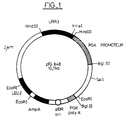
- the yeast strain used is TGY14-1a, pep4.3 genotype Mat a, ura3-251-373-328, leu2, pep4.3 the parent plasmid pTG848, described in patent No. EP200655, is an E. coli / yeast shuttle plasmid which allows the expression in yeast of an exogenous gene under the control of the promoter of the phosphoglycerate kinase (PGK) gene.
- This plasmid contains an origin of replication pBR 322 and the ampicillin resistance gene for selection in E. coli, an origin of replication 2 »m and the genes ura3 and leu2 for selection in yeast, as well as the promoter of the PGK gene and its 3 'end containing the polyadenylation signal.
- This gene was modified so as to introduce a BglII site at the level of the initiating ATG, which makes it possible to insert the coding region of another protein between this site and the BglII site situated upstream of the polyadenylation signal (FIG. 1)
- the plasmid pUC18 (C. Yanisch-Perron, J. Vieira and J. Messing, Gene 33, 103-1190 (1986)) contains an origin of replication pBR322, the gene for resistance to ampicillin and a polylinker comprising in particular the sites XbaI and HindIII.
- This plasmid was digested with the restriction enzymes XmaI and HindIII; the plasmid thus digested is then added by complementary oligonucleotide techniques: 5'-CCGGGTCTAGAAGATCTA3 ' 3'CAGATCTTCTAGATTCGA5 '
- the plasmid derived pUC18 BglII then has a polylinker which contains in order the XmaI, XbaI, BglII and HindlII sites.
- the plasmid pLR1 ..20 is described in the article by RW West, RR Yocum and M. Ptashne, Molecular and Cellular Biology 4, 2 467-2 478 (1984).
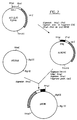
- This plasmid contains an active and chimeric beta-galactosidase gene under the control of the GAl1 promoter (FIG. 2).
- the aim of the construction is to replace the UAS (upstream activating sequence) of the Gal1 gene, located between the XmaI and XhoI sites of the Gal1 promoter region, by the fragments ERE1, EREm, ERE3, respectively.
- pLRERE1 The plasmid pUC18ERE1 is digested with the restriction enzyme BglII.
- the site is filled with DNA polymerase I (Klenow fragment) in the presence of the 4 deoxynucleotides triphosphates.
- An XhoI linker (Biolabs ref. 1030) is then added to the ends: the plasmid is then digested with XmaI and XhoI and the XmaI-XhoI fragment containing the EREI sequence is isolated.
- This fragment is then cloned into the plasmid pLR1 between the XmaI and XhoI sites to give the plasmid pLRERE1.
- the plasmids pLREREm and pLRERE3 are constructed in the same way by replacing pUC18ERE1 with pUC18EREm and pUC18ERE3, respectively, in the above protocol.
- the plasmids pLRERE1, pLREREm, pLRERE3 have at the 3 ′ end of the chimeric lacZ (beta-galactosidase) gene a Tth111I site (FIG. 2).
- the plasmid pLRERE1 is digested with the enzyme Tth111I; the site is then filled with DNA Polymerase I (Klenow fragment).
- An XmaI linker (Biolabs ref. 1048) is then added to the ends.
- the DNA is digested with XmaI, and the XmaI-XmaI fragment containing the chimeric lac Z gene under the control of the hybrid promoter (EREA-Gal1) is inserted at the unique XmaI site of the plasmid pTG848, to give the plasmid pYERE1.
- the plasmids pYEREm and pYERE3 are constructed in the same way by replacing pLRERE1 with pLREREm and pLRERE3, respectively, in the above protocol.
- the plasmid pLR1 20 is digested with the restriction enzyme Tth111I, the site is then filled with DNA polymerase I (Klenow fragment).
- An XmaI linker (Biolabs ref. 1048) is added to the ends, then the DNA is digested by the enzyme XmaI.
- the XmaI fragment containing the lacZ chimeric gene under the control of the Gal1 promoter is inserted at the XmaI site of the plasmid pTG848, giving the plasmid pYGAL.
- the plasmid pKCR2-ER containing the cDNA of the human estrogen receptor (S. Green et al. Nature 320, 134-139 (1986)) is digested with the restriction enzyme EcoRI, the site is then filled with DNA polymerase I (Klenow fragment). A BamHI linker (Biolabs ref. 102) is then added to the ends. After digestion with BamHI, the fragment coding for the human estrogen receptor is isolated.
- the PGK promoter is located 5 ′ of the hER cDNA and therefore induces the transcription of the mRNA coding for the hER protein.
- pYERE1 / hERR the orientation is opposite and therefore induces the transcription of an anti-sense RNA of the hER messenger RNA.
- pYEREm / hER, pYERE3 / hER, pYGAL / hER are built on the same model as pYERE1 / hER by replacing pYERE1 by pYEREm, pYERE3, pYGAL, respectively, in the previous construction.
- plasmids constructed in E. coli DH5 are transferred into the yeast strain TGY14.1a which carries the ura3 mutation.
- the presence of the ura3 gene on these plasmids allows complementation, for yeasts transformed with a plasmid, which are therefore selected on an agar dish containing a medium without uracil (preparation: 0.67 g Difco medium n ° 0919-15, 0.5 g casamino acids, 1 g glucose, 2 g Agar, per 100 ml).
- EXAMPLE 2 Induction by estradiol of the transcription for the ERE Gal1 hybrid promoters carried by the pYERE / hER vectors :
- the different yeasts containing the plasmids pYERE1 / hER, pYEREm / hER, pYERE3 / hER, pYERE1 / hERR, pYGAL / hER, respectively, are cultivated in the base medium for yeast (Difco n ° 0919-15) at a rate of 0, 67 g / 100 ml and 0.5% casamino acids containing 1% glucose or 2% galactose or 100 nM estradiol (added to the culture 2 hours before recovering the cells) as indicated in fig. 4b.
- RNA is prepared from 109 cells according to the protocol described in Methods in Yeast Genetics, p 143-144.
- RNAs are hybridized with a radiolabelled RNA probe derived from the 5 'end of the Gal1 gene (complementary strand of the messenger RNA).
- the hybridized fragments will be protected from digestion by RNases A and T1.
- the probe is prepared from the EcoRI fragment (containing the Gal1 promoter) of the plasmid pLR1 20 (RW West, RR Yocum and M. Plashne, Molecular and Cellular Biology 4, 2467-2478 (1984)) cloned into the plasmid Bluescribe M13 + ( Stratagene ref. 211201).
- the resulting plasmid is then linearized with HindIII and the radiolabeled probe is then synthesized from the promoter of phage T7 with the Stratagene Kit No. 211604.
- the size of the probe is of the order of 1000 nucleotides.
- the probe is complementary to the RNA of Gal1 over a length of 154 to 165 nucleotides.
- the probe is incubated with 20 g of RNA and the mixture containing the possible hybrids is digested with ribonucleases A and T1 according to the protocol described in Current Protocols in Molecular Biology.
- the undigested fragments are then identified by polyacrilamide-urea gel electrophoresis and autoradiography (fig. 4b).
- the induction of a messenger RNA specific for the hybrid promoter ERE-Gal1 is observed in the presence of estradiol; the transcription initiation sites are identical to those of the Gal1 promoter (pYGAL) induced by galactose: protected fragments of the same size.
- the induction of transcription from the ERE-Gal1 hybrid promoter is strictly dependent on the presence of estradiol. Induction with estradiol requires the presence of the hER receptor (the pYERE / hERR construct is inactive). It also requires the presence of an ERE element (for the construction of pYGAL / hER there is no induction by estradiol.
- the amount of Gal1 RNA detected for cells containing pYERE3 / hER is approximately 10 times higher than for those containing pYERE1 / hER: the tandem repetition of the ERE elements (pYERE3 contains an ERE trimer, pYERE1 a monomer) therefore seems to have a synergistic effect on activation of transcription.
- the beta-galactosidase activity is measured according to the protocol of West et al. (1984).
- Table 1 shows the beta-galactosidase activity of the yeast strains carrying respectively the plasmids pYERE1 / hER, pYERE3 / hER, pYEREm / hER, pYERE1 / hERR, pYGAL / hER in the presence or absence of glucose, galactose or oestradiol , as shown in the table.
- the level of activity constituting the promoters is very low and is not affected by the presence of the protein hER (pYGAL and pYGAL / hER or pYERE1 / hER and pYERE1 / hERR, give the same level of activity).
- the addition of estradiol leads to a strong induction of the hybrid promoters of pYERE1 / hER and pYERE3 / hER.
- the level of expression achieved is comparable to that obtained from the Gal1 promoter (case of pYGAL / hER) in the presence of galactose.
- the yeasts transformed with the indicated plasmids are cultured in the presence of 1% glucose or 2% galactose, as mentioned in the table; for estradiol induction, 100 nM of hormone is added 2 hours before harvesting the cells.
- beta-galactosidase activity tests are carried out in a conventional manner (West RW jr., Yocum RR and Ptashne M., Mol. Cell. Biol., 4, 2467-2478 (1984).
- the hER expression cassette is inserted into a fragment of the PRC1 gene in order to obtain, after transformation of a yeast strain with pTG3809, a yeast strain exhibiting a suppression of the proteolytic function encoded by the PRC1 gene.
- This hER expression cassette is then inserted into the PRC1 gene to give the plasmid pTG3809 allowing its integration into the yeast genome.
- the PRC1 gene sequence has been published by Valls, LA et al. (1987) (Cell 48 , p887-897). Two oligonucleotides are constructed from this sequence. The first is complementary to the 5 'region of the gene and its sequence is as follows: 5 'AAG AAA GAC TGG GAC TTT GTG 3' The second is complementary to the 3 'region of the gene and its sequence is as follows: 5 'GAT TGG ATG AAG CCT TAC CAC 3' From a yeast genomic library (fragments of chromosomal DNA partially digested with Sau3A inserted into the BamHI site of pFL1 (Parent, SA et al. (1985) Yeast 1 p83-138) and by hybridization with these two oligonucleotides on selects an E. coli clone containing the PRC1 gene inserted into pFL1 and called pTG2863.
- the 1.1 kb BamHI fragment of pTG2863 carrying part of the coding sequence of the PRC1 gene is introduced into the BamHI site of the plasmid pUC8. This insertion is carried out in tandem and the plasmid pTG2893 is obtained (FIG. 5a).
- the coordinates of the first base of the restriction sites with respect to the ATG adenine of the coding sequence of PRC1 are as follows: BamHI-1: 482; EcoRV-1: 1102; EcoRV-2: 1153; EcoRV-3: 1234 and BamHI-2: 1574.
- a deletion in the coding sequence of PRC1 is carried out by EcoRV digestion of pTG2893 to give pTG2894 (FIG. 5b).
- the transformed yeast strain is a strain of S. cerevisiae TGY2sp13b ( MATa ; ura 3-251, -373, -328; leu 2-3, -112).
- Plasmid pTG3809 is cleaved with BamHI.
- the DNA sequences of the ends of the fragment thus isolated are homologous to those of the sequence of the PRC1 gene. These sequences will allow the integration of the fragment into the genomic part of the PRC1 gene of the yeast strain. This insertion destroys the genomic PRC1 gene by deletion.
- the plasmid pLRERE3 is used as a cotransformation vector. It allows the selection of Ura+ prototrophs.
- the clones which have integrated the hER expression cassette carry a mutation in the PRC1 gene which results in a loss of the activity of the yscY carboxypeptidase. These mutants are detected by a colorimetric test (Jones, EW (1977) Genetics 85 p23-33). The structure of the modified PRC1 locus is verified by the Southern method.
- This strain of S. cerevisiae having integrated the hER expression cassette into the deleted PRC1 gene is called TGY2sp13b prc1-d :: hER.
- This vector carries the TATA sequence and the transcription initiation site, the second downstream activating sequence noted HSE, from -256 to -377 (Piper, PW et al. (1988) Nucleic Acids Res. 16 p1333) but does not further increases the UAS from -402 to -479.
- the XhoI site allows ligation with the ERE3 sequence and the BglII site the introduction of a gene which makes it possible to detect an activity by enzymatic test.
- the host phage strain M13 is the E. coli JM103 strain (delta ( lac , pro ), thi , str A, sup E, end A, sbcB , hsd R, F ' tra D36, pro AB, lac IQ, lac ZdeltaM15 ).
- the plasmid pLRERE3 is digested with XmaI and EcoRI.
- the DNA fragment containing the ERE3 sequences is purified on an agarose gel and then inserted into the XmaI-EcoRI sites of the plasmid pTZ18R (Pharmacia, LKB Biotechnology) to give the plasmid pTG3833.
- the host strain of the plasmids is the E. coli 1106 strain ( sup E, hsd R, hsd M, met , sup F).
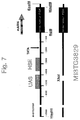
- the phage M13TG3829 (FIG. 7) is treated with XhoI and EcoRI then is inserted at the XhoI-EcoRI site of the plasmid pTG3833 to give pTG3834.
- the lac Z gene came out of pCH110 (Hall, CV et al. (1983) J. Mol. Appl. Gen. 2 p101-109) by HindIII-BamHI digestion and cloned into pPolyII (Lathe, R. et al. (1987) ) Gene 57 p193-201) to give pTG1174.
- Plasmid pTG2145 corresponds to plasmid pTG1174 from which the HindIII, PstI and SalI sites have been deleted. It contains in a BglII-BamHI fragment the following E. coli gene fusion: gpt :: trp S :: lac Z.
- the plasmid pTG848 (FIG. 1) is digested with BglII then religated to give pTG2886.
- the large HindIII-EcoRI fragment of pTG2886 is ligated in the presence of T4 ligase to the 2.1 kb HindIII-EcoRI fragment of the plasmid pFL1 (parent SA et al. (1985) Yeast 1 p83-138) which carries a sequence of the plasmid 2 By S. cerevsiae to give the plasmid pTG2886 LEU2-d, URA3-d.
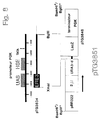
- the plasmid pTG3843 is digested with BglII and BamHI, the fragment carrying the lac Z fusion gene is purified on agarose gel. This fragment is then inserted at the BglII site of pTG3846 ( Figure 8).
- the plasmid pTG3834 is digested with XmaI and BglII and the fragment is introduced into the XmaI and BglII site of pTG3846 to give the plasmid pTG3851 ( Figure 8).
- the strain of S. cerevisiae TGY2sp13b prc1-d :: hER is cured of its cotransformation plasmid pLRERE3 and then transformed by the plasmid pTG3851 by the lithium acetate method (Ito, H. et al. (1983) J. Bacteriol . 153 p163-168) and the prototrophs Ura+ are selected. They are then cultured in an Erlenmeyer flask at 30 ° C. on a selective medium (0.7% of nitrogenous bases for yeasts without amino acid (Yeast Nitrogen Bases), 0.5% of casamino acids, 2% of glucose and if necessary 2% agar). These cultures are carried out with or without estradiol.
- estradiol induction 100 nM of hormone is added 2 hours before harvesting the cells.
- the cells are harvested, washed and crushed in the presence of protease inhibitors, then the cell debris is precipitated by centrifugation (10,000 rpm).
- the protein concentration is determined in the supernatant by the method described by Bradford (1976) (Anal. Biochem. 72 p248) then the beta-galactosidase activity by the same assay method as that described in Example 3.
- the beta-galactosidase activity is also determined by the method used in example 3, the assay is carried out on permeabilized cells.
- Table 2 presents the basal (in the absence of estradiol, [- (Oest)]) and induced (in the presence of estradiol [+ (Oest)])) activities of beta-galactosidase under the control of the ERE3 hybrid promoters :: PGK -dp.
- This activity is expressed in nmol of ONPG (O-nitrophenyl-beta-D-glucopyranoside) hydrolyzed per minute and per mg of protein at 30 ° C; the values in brackets are directly comparable to those presented in table 1, expressed in "unit”.
- Inducibility corresponds to the ratio specific activity without estradiol / specific activity with estradiol.
- EXAMPLE 5 Preparation of a vector for expression of beta-galactosidase in yeast which also carries a sequence coding for the hERG receptor (PYERE1 / hERG)
- Single stranded DNA is then prepared and a point mutation in the GTG codon coding for valine at position 400 is carried out by localized mutagenesis so as to obtain a GGG codon coding for glycine using the oligonucleotide defined above. above (change of nucleotide is underlined).
- the DNA sequences are checked.
- the vector pYERE1 / hERG is then constructed by inserting the complementary DNA hERG into the vector pYERE1 / hER.
- the strain Saccharomyces TGY 14-1a pYERE3 / hER was deposited at the National Collection of Cultures of Microorganisms (CNCM) of the Institut Pasteur - 25 rue du Dondel-Roux, 75724 Paris Cédex 15 (France) - on June 17, 1988 under n ° I-770.
Landscapes
- Health & Medical Sciences (AREA)
- Life Sciences & Earth Sciences (AREA)
- Chemical & Material Sciences (AREA)
- Genetics & Genomics (AREA)
- Organic Chemistry (AREA)
- Engineering & Computer Science (AREA)
- Zoology (AREA)
- Mycology (AREA)
- Wood Science & Technology (AREA)
- Biochemistry (AREA)
- Biophysics (AREA)
- General Health & Medical Sciences (AREA)
- Biomedical Technology (AREA)
- Biotechnology (AREA)
- Molecular Biology (AREA)
- Bioinformatics & Cheminformatics (AREA)
- General Engineering & Computer Science (AREA)
- Medicinal Chemistry (AREA)
- Proteomics, Peptides & Aminoacids (AREA)
- Immunology (AREA)
- Cell Biology (AREA)
- Gastroenterology & Hepatology (AREA)
- Toxicology (AREA)
- Physics & Mathematics (AREA)
- Plant Pathology (AREA)
- Microbiology (AREA)
- Endocrinology (AREA)
- Preparation Of Compounds By Using Micro-Organisms (AREA)
- Micro-Organisms Or Cultivation Processes Thereof (AREA)
- Breeding Of Plants And Reproduction By Means Of Culturing (AREA)
- Instructional Devices (AREA)
- Prostheses (AREA)
Claims (21)
- Verfahren zur Herstellung eines Proteins durch Hefen, bei dem man- Hefezellen kultiviert, die enthalten:· eine DNA-Sequenz, die für das genannte Protein unter der Kontrolle von Elementen codiert, die seine Expression in den Hefen gewährleisten, wobei die genannten Elemente, die eine Kontroll-Sequenz der Transcription umfassen, vom Ursprung höherer Eucaryoten sind, umfassend eine natürliche Aktivator-Sequenz "HRE", eine Variante oder ein Derivat von dieser, induzierbar durch einen von einem Rezeptor und einem Liganden gebildeten Komplex,· eine funktionelle DNA-Sequenz in der Hefe, die für den genannten Rezeptor codiert, der ein natürlicher nuklearer Rezeptor ist, ausgewählt unter den Rezeptoren für ein Steroid, den Rezeptoren für Retinoide, für Thyroid-Hormone und für Vitamin D3, einer Rezeptor-Variante oder einer Rezeptor-Chimäre, wobei der Rezeptor zwei essentielle Teile umfaßt, von denen einer den Liganden erkennt, so daß ein Komplex mit dem genannten Liganden gebildet wird, und der andere sich an der genannten Kontroll-Sequenz der Transcription fixiert, und der Ligand bei der Kultur der Zellen nicht erforderlich, aber befähigt ist, in die genannten Zellen einzudringen, wenn er dem Kulturmilieu zugegeben wird,- den genannten Liganden dem Kulturmilieu in einem Moment zusetzt, der für die Induktion geeignet ist,- das synthetisierte Protein gewinnt.
- Verfahren nach Anspruch 1, dadurch gekennzeichnet, daß die Kontroll-Sequenz der Transcription "HRE" eine Sequenz ERE ist.
- Verfahren nach einem der Ansprüche 1 oder 2, dadurch gekennzeichnet, daß die Kontroll-Sequenz der Transcription eine natürliche oder synthetische, vollständige oder unvollständige palindromische Sequenz ist.
- Verfahren nach Anspruch 3, dadurch gekennzeichnet, daß die genannte palindromische Sequenz mehrmals wiederholt wird.
- Verfahren nach einem der Ansprüche 1 bis 4, dadurch gekennzeichnet, daß der Rezeptor ein nuklearer Rezeptor ist und der Ligand die entsprechende spezifische Verbindung ist.
- Verfahren nach Anspruch 5, dadurch gekennzeichnet, daß der genannte Rezeptor der Rezeptor von Östrogen ist, der genannte Ligand ein Östrogen ist und der essentielle Teil, der den Liganden erkennt, vom Rezeptor hER abstammt.
- Verfahren nach Anspruch 5, dadurch gekennzeichnet, daß der essentielle Teil des Rezeptors, der den Liganden erkennt, vom humanen Östrogen-Rezeptor abstammt, bezeichnet als hERG, wobei der Ligand ein Östrogen ist.
- Verfahren nach Anspruch 7, dadurch gekennzeichnet, daß der Rezeptor der Rezeptor hERG ist und der Ligand Östradiol ist.
- Verfahren nach einem der Ansprüche 7 oder 8, dadurch gekennzeichnet, daß das Östradiol in einer Konzentration zwischen 2 und 50 nM, vorzugsweise in der Größenordnung von 10 nM, zugesetzt wird.
- Verfahren nach einem der Ansprüche 1 bis 9, dadurch gekennzeichnet, daß sich die DNA-Sequenz in der Hefe, die für das genannte Protein unter Kontrolle von Elementen codiert, die seine Expression in den Hefen und/oder der DNA-Sequenz gewährleisten, die für den genannten Rezeptor codiert, auf einem Plasmid befindet, das einen Anfang der funktionellen Replikation in der Hefe umfaßt.
- Verfahren nach Anspruch 10, dadurch gekennzeichnet, daß sich die beiden DNA-Sequenzen auf dem gleichen Plasmid befinden.
- Verfahren nach einem der Ansprüche 1 bis 11, dadurch gekennzeichnet, daß die funktionelle DNA-Sequenz in der Hefe, die für den genannten Rezeptor codiert, durch ein Chromosom der Hefe getragen wird.
- Verfahren nach einem der Ansprüche 1 bis 12, dadurch gekennzeichnet, daß man einen Hefestamm mit einem Defizit an Proteasen verwendet.
- Verfahren nach einem der Ansprüche 1 bis 13, dadurch gekennzeichnet, daß der Ligand am Ende der Stufe des Zellwachstums zugesetzt wird.
- Expressions-Vektor, induzierbar von einem bestimmten Protein in Hefezellen, die durch den genannten Vektor transformiert wurden, dadurch gekennzeichnet, daß er umfaßt:- eine DNA-Sequenz, die für das genannte Protein unter der Kontrolle von Elementen codiert, die seine Expression in den Hefen gewährleisten, wobei die genannten Elemente umfassen:- eine Kontroll-Sequenz der Transcription vom Ursprung höherer Eucaryoten, umfassend eine natürliche Aktivator-Sequenz "HRE", eine Variante oder ein Derivat von dieser, induzierbar durch einen von einem Rezeptor und seinem Liganden gebildeten Komplex,wobei die genannten Hefezellen eine funktionelle DNA-Sequenz in der Hefe umfassen, die für den genannten Rezeptor codiert, der ein natürlicher nuklearer Rezeptor ist, ausgewählt unter den Rezeptoren für ein Steroid, den Rezeptoren für Retinoide, für Thyroid-Hormone und für Vitamin D3, einer Rezeptor-Variante oder einer Rezeptor-Chimäre, für die Durchführung des Verfahrens nach einem der Ansprüche 1 bis 14.
- Vektor nach Anspruch 15, dadurch gekennzeichnet, daß die DNA-Sequenz, die für den genannten Rezeptor codiert, durch den induzierbaren Expressions-Vektor getragen wird.
- Expressions-Vektor nach einem der Ansprüche 15 oder 16, dadurch gekennzeichnet, daß die Kontroll-Sequenz der Transcription vom Ursprung höherer Eucaryoten sensibel für den Komplex ist, der durch einen Steroid-Rezeptor und das entsprechende Steroid gebildet wird.
- Expressions-Vektor nach einem der Ansprüche 15 bis 17, dadurch gekennzeichnet, daß die Kontroll-Sequenz der Transcription vom Ursprung höherer Eucaryoten sensibel für den Komplex ist, der durch den Östradiol-Rezeptor und Östradiol gebildet wird.
- Expressions-Vektor nach einem der Ansprüche 15 bis 18, dadurch gekennzeichnet, daß die Kontroll-Sequenz der Transcription vom Ursprung höherer Eucaryoten die Sequenz oder deren Wiederholungen von -605 bis -634 des Gens vom Vitellogenin des Hühnchens umfaßt.
- Expressions-Vektor nach Anspruch 19, bestehend aus dem Plasmid pYERE3/hER, hinterlegt bei CNCM unter der Nummer I-770.
- Hefestämme, transformiert durch den Expressions-Vektor nach einem der Ansprüche 15 bis 20.
Applications Claiming Priority (2)
| Application Number | Priority Date | Filing Date | Title |
|---|---|---|---|
| FR8808978A FR2634495B1 (fr) | 1988-07-01 | 1988-07-01 | Procede de preparation d'une proteine par des levures utilisant un systeme inductible, vecteurs et souches transformees correspondantes |
| FR8808978 | 1988-07-01 |
Publications (2)
| Publication Number | Publication Date |
|---|---|
| EP0349435A1 EP0349435A1 (de) | 1990-01-03 |
| EP0349435B1 true EP0349435B1 (de) | 1995-05-24 |
Family
ID=9368010
Family Applications (1)
| Application Number | Title | Priority Date | Filing Date |
|---|---|---|---|
| EP89401871A Expired - Lifetime EP0349435B1 (de) | 1988-07-01 | 1989-06-29 | Verfahren zur Herstellung eines Proteins durch Hefe mit Hilfe eines induzierbaren Systems, Vektoren und entsprechende transformierte Stämme |
Country Status (10)
| Country | Link |
|---|---|
| US (2) | US6444438B1 (de) |
| EP (1) | EP0349435B1 (de) |
| JP (1) | JP2973430B2 (de) |
| AT (1) | ATE123068T1 (de) |
| CA (1) | CA1341192C (de) |
| DE (1) | DE68922790T2 (de) |
| DK (1) | DK176000B1 (de) |
| ES (1) | ES2075068T3 (de) |
| FR (1) | FR2634495B1 (de) |
| GR (1) | GR3016996T3 (de) |
Families Citing this family (10)
| Publication number | Priority date | Publication date | Assignee | Title |
|---|---|---|---|---|
| US5879926A (en) * | 1989-03-31 | 1999-03-09 | Transgene S.A. | Yeast strains for the production of mature heterologous proteins, especially hirudin |
| FR2645175B1 (fr) * | 1989-03-31 | 1994-02-18 | Transgene Sa | Souche de saccharomyces cerevisiaeproductrice d'une proteine heterologue et procede de preparation de ladite proteine heterologue par fermentation de ladite souche |
| FR2645174B1 (fr) * | 1989-03-31 | 1994-01-07 | Transgene Sa | Souches de levure ameliorees pour la production de proteines heterologues matures en particulier d'hirudine et procede de preparation d'hirudine correspondant |
| FR2649994A1 (fr) * | 1989-06-30 | 1991-01-25 | Aderegem | Procede d'obtention d'un recepteur humain natif sauvage des oestrogenes et ses applications |
| CA2034220A1 (en) * | 1990-01-16 | 1991-07-17 | Donald P. Mcdonnell | Expression vectors that produce steroid receptors, steroid receptor chimera, screening assays for steroid receptors and clinical assays using synthesized receptors and receptor vector |
| US5733732A (en) * | 1996-01-03 | 1998-03-31 | University Of Iowa Research Foundation | Methods for detecting primary adhalinopathy |
| ATE366745T1 (de) * | 1999-12-07 | 2007-08-15 | Sumitomo Chemical Co | Mutant er-alpha und nachweissysteme für transaktivierung |
| US6737262B1 (en) * | 2000-07-11 | 2004-05-18 | Robert I. Bolla | Animal feed containing polypeptides |
| US7009045B2 (en) * | 2000-07-14 | 2006-03-07 | Archer-Daniels-Midland Company | Transformation systems for flavinogenic yeast |
| CA2511359A1 (en) * | 2002-12-23 | 2004-07-15 | Glycofi, Inc. | Steroid receptor modulation of gene expression |
Family Cites Families (3)
| Publication number | Priority date | Publication date | Assignee | Title |
|---|---|---|---|---|
| GB8620926D0 (en) * | 1986-08-29 | 1986-10-08 | Delta Biotechnology Ltd | Yeast promoter |
| US5071773A (en) * | 1986-10-24 | 1991-12-10 | The Salk Institute For Biological Studies | Hormone receptor-related bioassays |
| MY103358A (en) * | 1987-04-15 | 1993-06-30 | Novartis Ag | Process for the production of protiens. |
-
1988
- 1988-07-01 FR FR8808978A patent/FR2634495B1/fr not_active Expired - Lifetime
-
1989
- 1989-06-29 AT AT89401871T patent/ATE123068T1/de not_active IP Right Cessation
- 1989-06-29 DE DE68922790T patent/DE68922790T2/de not_active Expired - Lifetime
- 1989-06-29 ES ES89401871T patent/ES2075068T3/es not_active Expired - Lifetime
- 1989-06-29 EP EP89401871A patent/EP0349435B1/de not_active Expired - Lifetime
- 1989-06-30 CA CA000604628A patent/CA1341192C/fr not_active Expired - Lifetime
- 1989-06-30 JP JP1169713A patent/JP2973430B2/ja not_active Expired - Lifetime
- 1989-06-30 DK DK198903262A patent/DK176000B1/da not_active IP Right Cessation
-
1995
- 1995-05-30 US US08/453,998 patent/US6444438B1/en not_active Expired - Lifetime
- 1995-05-30 US US08/453,888 patent/US5817503A/en not_active Expired - Lifetime
- 1995-08-02 GR GR950402113T patent/GR3016996T3/el unknown
Non-Patent Citations (1)
| Title |
|---|
| Biochemical and biophysical research communications, vol.178, no.3 (1991) pp.1167-1175. * |
Also Published As
| Publication number | Publication date |
|---|---|
| CA1341192C (fr) | 2001-02-27 |
| JP2973430B2 (ja) | 1999-11-08 |
| US6444438B1 (en) | 2002-09-03 |
| US5817503A (en) | 1998-10-06 |
| JPH02242693A (ja) | 1990-09-27 |
| DK326289A (da) | 1990-01-02 |
| DK326289D0 (da) | 1989-06-30 |
| EP0349435A1 (de) | 1990-01-03 |
| GR3016996T3 (en) | 1995-11-30 |
| DE68922790T2 (de) | 1995-11-30 |
| FR2634495B1 (fr) | 1990-10-26 |
| ES2075068T3 (es) | 1995-10-01 |
| DK176000B1 (da) | 2005-11-14 |
| DE68922790D1 (de) | 1995-06-29 |
| FR2634495A1 (fr) | 1990-01-26 |
| ATE123068T1 (de) | 1995-06-15 |
Similar Documents
| Publication | Publication Date | Title |
|---|---|---|
| CN101128581B (zh) | 突变aox1启动子 | |
| Cregg et al. | Functional characterization of the two alcohol oxidase genes from the yeast Pichia pastoris | |
| Beier et al. | Deletion analysis identifies a region, upstream of the ADH2 gene of Saccharomyces cerevisiae, which is required for ADR1-mediated derepression | |
| EP2250270B1 (de) | Verfahren zur gezielten integration mehrerer kopien eines interessierenden gens in einen yarrowia-stamm | |
| EP0531181A1 (de) | Hochstabile rekombinante Hefer zur Produktion rekombinanter Proteine | |
| CA1341490C (fr) | Bloc fonctionnel d'adn et plasmide codant pour l'hirudine, levure transformee procede de preparation de l'hirudine, hirudine obtenue et son utilisation pharmaceutique | |
| FR2820145A1 (fr) | Souche de levure produisant des steroides de facon autonome | |
| EP0329501A1 (de) | Für Yarrowia lipolytica verwendbare ARS-Sequenz und deren Herstellung | |
| CA1341192C (fr) | Procede de preparation d'une proteine par des levures utilisant un systeme inductible, vecteurs et souches transformees correspondantes | |
| EP0749489B1 (de) | Expressionskassette, die einen aus dem Schizosaccharomyces pombe-Pho4-Gene stammenden Promotor enthält | |
| EP0599971B1 (de) | Hefepromotor und seine verwendung | |
| CA2229328C (fr) | Souches de levures genetiquement modifiees | |
| EP0652964B1 (de) | Promotor des transaldolase-genes von k.lactis und dessen verwendung | |
| CA2341776C (fr) | Procede de transformation non-homologue de yarrowia lipolytica | |
| WO1984004539A1 (fr) | Production de la catechol 2,3-oxygenase par des levures, plasmide pour sa mise en oeuvre et application | |
| EP0819175A1 (de) | Neuartige promotoren zur expression van entsprechenden proteinen in der zelle | |
| CA2376878A1 (fr) | Promoteur permettant l'expression de transgenes dans toute la plante hormis dans la graine | |
| FR2693464A1 (fr) | Promoteur de levure et son utilisation. | |
| FR2656531A1 (fr) | Promoteur artificiel pour l'expression de proteines dans le levure. | |
| EP0260160A1 (de) | Amyloglukosidase-Expressionsblock für Hefe und auch diese enthaltende Hefen | |
| FR2693475A1 (fr) | Procédé d'identification et/ou de clonage de promoteurs transcriptionnels, et utilisation de ces promoteurs pour l'expression de gènes. | |
| FR2976949A1 (fr) | Procede de preparation de levures genetiquement transformees capables de produire une molecule d'interet a haut titre | |
| FR2599755A1 (fr) | Bloc d'expression d'une amyloglucosidase dans une levure, levure transformee et procede de preparation d'enzyme |
Legal Events
| Date | Code | Title | Description |
|---|---|---|---|
| PUAI | Public reference made under article 153(3) epc to a published international application that has entered the european phase |
Free format text: ORIGINAL CODE: 0009012 |
|
| AK | Designated contracting states |
Kind code of ref document: A1 Designated state(s): AT BE CH DE ES FR GB GR IT LI LU NL SE |
|
| 17P | Request for examination filed |
Effective date: 19900402 |
|
| 17Q | First examination report despatched |
Effective date: 19920424 |
|
| RAP1 | Party data changed (applicant data changed or rights of an application transferred) |
Owner name: CENTRE NATIONAL DE LA RECHERCHE SCIENTIFIQUE (CNRS |
|
| GRAA | (expected) grant |
Free format text: ORIGINAL CODE: 0009210 |
|
| AK | Designated contracting states |
Kind code of ref document: B1 Designated state(s): AT BE CH DE ES FR GB GR IT LI LU NL SE |
|
| REF | Corresponds to: |
Ref document number: 123068 Country of ref document: AT Date of ref document: 19950615 Kind code of ref document: T |
|
| REF | Corresponds to: |
Ref document number: 68922790 Country of ref document: DE Date of ref document: 19950629 |
|
| GBT | Gb: translation of ep patent filed (gb section 77(6)(a)/1977) |
Effective date: 19950712 |
|
| ITF | It: translation for a ep patent filed | ||
| REG | Reference to a national code |
Ref country code: ES Ref legal event code: FG2A Ref document number: 2075068 Country of ref document: ES Kind code of ref document: T3 |
|
| REG | Reference to a national code |
Ref country code: GR Ref legal event code: FG4A Free format text: 3016996 |
|
| PLBE | No opposition filed within time limit |
Free format text: ORIGINAL CODE: 0009261 |
|
| STAA | Information on the status of an ep patent application or granted ep patent |
Free format text: STATUS: NO OPPOSITION FILED WITHIN TIME LIMIT |
|
| 26N | No opposition filed | ||
| REG | Reference to a national code |
Ref country code: GB Ref legal event code: IF02 |
|
| PGFP | Annual fee paid to national office [announced via postgrant information from national office to epo] |
Ref country code: AT Payment date: 20080612 Year of fee payment: 20 |
|
| PGFP | Annual fee paid to national office [announced via postgrant information from national office to epo] |
Ref country code: IT Payment date: 20080625 Year of fee payment: 20 |
|
| PGFP | Annual fee paid to national office [announced via postgrant information from national office to epo] |
Ref country code: CH Payment date: 20080710 Year of fee payment: 20 Ref country code: ES Payment date: 20080717 Year of fee payment: 20 Ref country code: DE Payment date: 20080703 Year of fee payment: 20 Ref country code: SE Payment date: 20080609 Year of fee payment: 20 Ref country code: NL Payment date: 20080603 Year of fee payment: 20 Ref country code: LU Payment date: 20080702 Year of fee payment: 20 |
|
| PGFP | Annual fee paid to national office [announced via postgrant information from national office to epo] |
Ref country code: FR Payment date: 20080617 Year of fee payment: 20 |
|
| PGFP | Annual fee paid to national office [announced via postgrant information from national office to epo] |
Ref country code: GB Payment date: 20080702 Year of fee payment: 20 |
|
| PGFP | Annual fee paid to national office [announced via postgrant information from national office to epo] |
Ref country code: BE Payment date: 20080814 Year of fee payment: 20 |
|
| PGFP | Annual fee paid to national office [announced via postgrant information from national office to epo] |
Ref country code: GR Payment date: 20080515 Year of fee payment: 20 |
|
| BE20 | Be: patent expired |
Owner name: CENTRE NATIONAL DE LA RECHERCHE SCIENTIFIQUE *CNRS Effective date: 20090629 |
|
| REG | Reference to a national code |
Ref country code: CH Ref legal event code: PL |
|
| REG | Reference to a national code |
Ref country code: GB Ref legal event code: PE20 Expiry date: 20090628 |
|
| PG25 | Lapsed in a contracting state [announced via postgrant information from national office to epo] |
Ref country code: NL Free format text: LAPSE BECAUSE OF EXPIRATION OF PROTECTION Effective date: 20090629 |
|
| EUG | Se: european patent has lapsed | ||
| REG | Reference to a national code |
Ref country code: ES Ref legal event code: FD2A Effective date: 20090630 |
|
| NLV7 | Nl: ceased due to reaching the maximum lifetime of a patent |
Effective date: 20090629 |
|
| PG25 | Lapsed in a contracting state [announced via postgrant information from national office to epo] |
Ref country code: ES Free format text: LAPSE BECAUSE OF EXPIRATION OF PROTECTION Effective date: 20090630 |
|
| PG25 | Lapsed in a contracting state [announced via postgrant information from national office to epo] |
Ref country code: GB Free format text: LAPSE BECAUSE OF EXPIRATION OF PROTECTION Effective date: 20090628 |