EP0346868B1 - Im Time Sharing Betrieb arbeitender Leistungsverstärker - Google Patents
Im Time Sharing Betrieb arbeitender Leistungsverstärker Download PDFInfo
- Publication number
- EP0346868B1 EP0346868B1 EP89110794A EP89110794A EP0346868B1 EP 0346868 B1 EP0346868 B1 EP 0346868B1 EP 89110794 A EP89110794 A EP 89110794A EP 89110794 A EP89110794 A EP 89110794A EP 0346868 B1 EP0346868 B1 EP 0346868B1
- Authority
- EP
- European Patent Office
- Prior art keywords
- signal
- storage means
- data
- data storage
- power amplifier
- Prior art date
- Legal status (The legal status is an assumption and is not a legal conclusion. Google has not performed a legal analysis and makes no representation as to the accuracy of the status listed.)
- Expired - Lifetime
Links
Images


Classifications
-
- H—ELECTRICITY
- H04—ELECTRIC COMMUNICATION TECHNIQUE
- H04B—TRANSMISSION
- H04B7/00—Radio transmission systems, i.e. using radiation field
- H04B7/14—Relay systems
- H04B7/15—Active relay systems
- H04B7/185—Space-based or airborne stations; Stations for satellite systems
- H04B7/1851—Systems using a satellite or space-based relay
- H04B7/18517—Transmission equipment in earth stations
Definitions
- This invention is in the general field of radio transmitter power amplifiers for satellite communications, and more particularly in the field of voice and communications power amplifiers which simultaneously amplify for transmission two different signals on different carrier frequencies for communication via very small aperture terminals.
- an earth station for transmitting information from a remote computer terminal to a central computer via satellite must at various times transmit voice and computer data signals.
- Each data signal must be transmitted on a different carrier frequency, and a power amplifier for use in such a transmitter must be capable of amplifying a carrier signal of either frequency to a sufficient level of power for transmission.
- transmitters of this type are satellite communication terminals in which concurrent communications of voice and data is desired. It is highly desireable that the transmitter be co-located with each antenna at a user site to reduce the overall cost of such systems. However, such use places severe demands on the complexity, cost and performance of such systems.
- the power amplifier must simultaneously amplify a carrier signal carrying the computer data signal and a carrier signal carrying the voice signal to a sufficient level of power for transmission. If the required power level is the same for each carrier signal, the amplifier must be able to provide a total power output of twice the maximum power which would have been required to transmit either carrier signal alone, a difference of three dB.
- a power amplifier which can simulataneously amplify two different carrier signals to a required level of power must have a maximum power rating six to nine dB higher than would be required to amplify only one signal to the same power level.
- the power amplifier represents a significant part of the cost of a transmitter and, in a relatively small installation such as an earth station for a remote computer terminal, may represent a major fraction of the cost of the entire station. If it were possible to transmit both voice and computer data carrier signals by means of a power amplifier no more powerful than would be required to transmit only one signal, significant cost savings and increased efficiency of operation could be achieved.
- Document US-A-4 131 849 discloses a control circuitry for a two-way mobile radio voice data shared communications system. This control circuitry inhibits the transmission of digital data from the base station to the mobile stations when the voice signal is being transmitted from the base to the mobile stations.
- This invention particularly relates to the field of voice and data communication via very small aperture terminals (VSATs), but is of general utility to a variety of satellite communication systems.
- VSATs very small aperture terminals
- a single transmitter equipment is made to function as the equivalent of two such systems supporting concurrent communications of voice and data, thus substantially reducing the cost of such services.
- VSATs very small aperture terminals
- Such terminals are usually required to support one voice and one data channel concurrently.
- the terminal With different destinations for each circuit, the terminal has to generate and transmit two independent carriers, one for voice and one for the data channel. This, in effect, requires the equivalent of two transmitters, although some components may be combined where practical to save costs.
- the two carrier signals share a common up-converter and a common power amplifier. While this does not impose too much burden on the up-converter, the implications for the power amplifying are substantial. These implications are due to the fact that a power amplifier, which has to simultaneously amplify two different carrier signals to a required level of power, must have a maximum power rating of six to nine dB higher than that required to amplify only one signal to the same power level.
- the power amplifier portion of a VSAT represents about 20% of the total VSAT cost and each of the modems represents about 25% of the cost. Since the total cost of a VSAT has a great bearing on the final cost of the communications services to the end users, any reduction of the number of subsystems or lowering of the design performance requirements of the major components of the VSAT would result in substantial savings in VSAT-based communications networks.
- the present invention uses the concept of time sharing and makes it possible for each of the voice and computer data signals at a VSAT to share one modulator (instead of each channel having a dedicated modulator) and thereby requires the transmission of only one RF carrier signal at any instant. Also, since the system of the present invention only requires the up-conversion and amplification of one carrier signal, instead of two in the traditional situation, substantial reductions in the required amplifier power rating (on the order of six to nine dB) is possible. Thus, by use of the present invention it is estimated that the cost of the amplifier may be cut at least in half. The overall cost reduction in the VSAT system as a result of the present invention could thus easily reach 25% or more.
- the present invention resides in a time shared power amplifier which amplifies two different carrier signals, each carrying different data signals, to a power level equal to that to which a conventional amplifier having similar powerhandling capability could amplify a single carrier signal.
- a time shared power amplifier unit embodying the invention includes first and second data storage means, control means to initiate transfer of stored data signals out of the storage means, modulation means to provide a carrier signal modulated with any stored data signal being transferred out of either storage means, and a power amplifier to amplify the modulated carrier signal.
- the carrier signal has a first frequency when modulated with a signal from the first storage means and a second frequency when modulated with a signal from the second storage means.
- the power amplifier is never called on to amplify more than one carrier signal at any one time because only one data signal can be transferred out of store at a time and therefore only one modulated carrier signal can be provided at a time.
- the storage means may comprise first-in, first-out serial storage means. Conversion means may be provided to convert an analog signal into digital form. Means may be provided to sense the presence of a signal and to cause one of the data storage means to store the sensed signal.
- the modulation means may comprise two separate modulators, each with its own carrier signal generator, and means to prevent the amplifier from receiving more than one carrier signal at a time.
- the modulation means may comprise a single modulator and a carrier signal generator which provides a carrier signal having a first frequency when being modulated with a data signal from the first storage means and a second frequency when being modulated with a data signal from the second storage means.
- the modulation means may comprise means to modulate an intermediate signal with any data signal from either storage means and means to provide the carrier signal by shifting the frequency of the modulated intermediate signal to either of two desired frequencies according to whether the intermediate signal is being modulated with a data signal from the first storage means or from the second storage means.
- the carrier signal may be provided by a conventional oscillator, a digital frequency synthesizer, or other suitable frequency generation means.
- any data signal being held in the second storage means for transmission must wait while any data signal already in the first storage means is being transmitted, and vice versa.
- the first and second data signals occur in bursts sufficiently brief that any delays introduced by this time sharing will not have adverse effects.
- speech bursts average about one second and packet data bursts average less than 0.1 second. Delaying a speech burst by 0.1 second would not be noticeable to the listener at the receiving end of the system. Similarly, delaying a data burst by one second would not adversely affect real-time transaction processing, which normally involves computer processing and transmission delays of several seconds.
- a much smaller power amplifier can be used than would be required to transmit both data signals simultaneously, thereby inparting the benefits described above.
- FIG. 1 is a block diagram of a voice-data VSAT according to the prior art.
- Figure 2 is a block diagram of the basic system of the present invention as applied to a VSAT system.
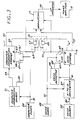
- FIG. 3 is a more detailed block diagram of the general arrangement of the system providing input to the power amplifier according to the invention.
- FIG 4 is a block diagram of an embodiment of the modulation means of Figure 3 wherein two separate modulators are employed.
- FIG 5 is a block diagram of a first embodiment of the modulation means of Figure 3 wherein a single modulator is employed.
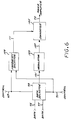
- Figure 6 is a block diagram of a second embodiment of the modulation means of Figure 3 wherein a single modulator and an up-converter are employed.
- a time shared power amplifier unit amplifies for transmission two carrier signals, each carrying different data signals, to a power level as great as the maximum power level to which a conventional amplifier could amplify a single carrier signal by separately amplifying each carrier signal when a data signal to be carried by that carrier signal is ready for transmission. If data to be carried by both carriers are ready for transmission at the same time, the data are transmitted sequentially rather than simultaneously. In order to provide for this eventuality, data or voice transmissions is stored in memory until transmission capability is available.
- a typical voice channel is quiet about 60% of the time, and its actual information content occurs in relatively short bursts of not more than a few seconds duration.
- a typical computer data channel is likewise silent more than half the time with its actual information content also occurring in relatively brief bursts.
- a time shared power amplifier according to the invention takes advantage of these silent periods by transmitting a burst of computer data when the voice channel is silent and a burst of voice data when the computer channel is silent. If computer data is presented for transmission while voice data is being sent, the computer data is held in temporary storage until the voice channel becomes quiet, and vice versa. Thus, only one carrier need be transmitted at any one time, and a much smaller and less expensive amplifier can be used than would be required to amplify both carriers simultaneously.
- FIG. 1 An example of a prior art VSAT system is illustrated in Figure 1.
- the voice processing channel is entirely separate from the data interface and processing until the two are summed, prior to up-conversion, and input to the power amplifier.
- the two carrier signals in the transmit direction share a common up-converter and a common power amplifier.
- the implications of this arrangement on the power amplifier are quite substantial, although other portions of the system such as the up-converter are not as drastically effected. Since the power amplifier in this arrangement has to simultaneously amplify two different carrier signals to an ouput required for transmission, the power amplifier must have a maximum power rating of approximately 6 to 9 dB greater power output than that which would be required to amplify a single signal at the same power level.
- the power amplifier for the VSAT system represents a substantial portion of the total cost of the system (typically about 20% of the cost of a VSAT system) and since the total cost of the VSAT has a substantial bearing on the total cost of a communication system due to a large number of VSATs used in such a system, any reduction in the cost of the VSAT subsystem will have a strong influence on the total cost of VSAT based satellite communications networks.
- the present invention thus provides an important improvement on the prior art systems of Figure 1.
- Figure 2 illustrates a generalized block diagram of a VSAT according to the present invention which uses time sharing in the transmit direction.
- Time sharing is not desireable in the receive direction, since receive data is normally contained in a continuous transmission broadcast from a hub terminal to a number of VSATs.
- the primary savings and effienciences of the present invention are directed to the time sharing of transmission of voice and data information.
- the primary difference between the prior art systems of Figure 1 and the present invention is related to the transmit interface and processing function, in that it switches the modulator input between the voice and data transmit interfaces to time share the output prior to up-conversion and input to the power amplifier.
- the separate voice and data interface processing of the prior art is replaced by an intergrated voice data processing block that differs in the transmit direction only and, as will be explained in more detail below, provides for the time sharing of voice and data information prior to input to the power amplifier.
- an intergrated voice data processing block that differs in the transmit direction only and, as will be explained in more detail below, provides for the time sharing of voice and data information prior to input to the power amplifier.
- a preferred embodiment of a time shared power amplifier as illustrated in Figure 3 includes first data storage means 11 operative to store a first data signal; second data storage means 13, operative to store a second data signal; and control means 15, responsive to the first storage means 11 to initiate transfer of a stored data signal out of the first storage means 11 and during the transfer to inhibit initiation of transfer of any signal out of the second storage means 13, and responsive to the second storage means 13 to initiate transfer of a stored data signal out of the second storage means 13 and during the transfer to inhibit initiation of transfer of any signal out of the first storage means 11.
- modulation means 17 operative to provide a carrier signal, to receive a data signal being transferred out of either storage means, and to modulate the carrier signal with the received data signal, the carrier signal having a first frequency when modulated with a data signal from the first storage means 11 and a second frequency when modulated with a signal from the second storage means 13.
- a power amplifier 19 is operative to receive any modulated carrier signal from the modulation means and to amplify the same to a desired power level.
- a time shared power amplifier according to the invention may be used, for example, in a remotely located earth station to transmit a computer data signal and a voice signal to a central location or perhaps to two different locations.
- the first storage means 11 may be adapted to receive and store the computer data signal
- the second storage means 13 may be adapted to receive and store the voice signal.
- the first storage means 11 may comprise first-in, first-out serial storage means such as a serial shift register of random access memory.
- the storage means 11 receives the computer data signal from a computer source 21 through a line 23.
- the computer source 21 provides a control signal to indicate when it is ready to send a computer data signal to the storage means 11. This control signal is sent from the source 21 through a line 25 to a first input of an AND gate 27.
- a computer clock source 29 provides clock pulses to the computer source 21 and to a second input of the AND gate 27 through a line 31.
- the control signal carried by the line 25 enables the AND gate 27.
- clock pulses from the clock source 29 pass from the AND gate 27 to a "write" input of the storage means 11 by a line 33, clocking the computer data signal from the source 21 into the storage means 11.
- the second storage means 13 receives the voice signal from a voice source 35.
- the voice source 35 provides a voice signal in analog form.
- Voice conversion means 37 such as an analog-to-digital converter, converts the analog voice signal into digital form for storage.
- the conversion means 37 receives the analog voice signal from the source 35 through a line 39 and provides the voice signal in digital form to the storage means 13 through a line 41.
- Means 43 such as a voice detector senses the presence of a voice signal on the line 41 and causes the storage means 13 to store the sensed voice signal by providing a control signal through a line 45 to a first input of an AND gate 47.
- a voice clock source 49 provides clock pulses to the conversion means 37 and to a second input of the AND gate 47 through a line 51.
- the control signal carried by the line 45 enables the AND gate 47.
- clock pulses from the voice clock source 49 pass from the AND gate 47 to a "write" input of the storage means 13 through a line 53, clocking the digital voice signal from the conversion means 37 into the storage means 13.
- the storage means 11 When a computer data signal has been stored in the storage means 11, the storage means 11 provides a "computer data ready” signal to the control means 15 through a line 55.
- the control means 15 may comprise, for example, logic such as first and second AND gates 57 and 59.
- the "computer data ready” signal carried by the line 55 is applied to a non-inverting input of the first AND gate 57.
- the "computer data ready” signal passes through the AND gate 57 and is applied to a first input of an AND state 61 through a line 63, thereby enabling the gate 61.
- the gate 61 receives computer clock pulses from the computer clock source 29 through the line 31, and when the gate 61 has been enabled by the "computer data ready” signal it passes the clock pulses through a line 65 to a "read" input of the storage means 11 to clock the stored computer data signal out of the storage means 11.
- a "voice data ready” signal is provided to the control means 15 through a line 67.
- the "voice data ready” signal carried by the line 67 is applied to a non-inverting input of the second AND gate 59.
- the "voice data ready” signal passes through the AND gate 59 and is applied to a first input of an AND gate 69 through a line 71, thereby enabling the gate 69.
- the gate 69 receives voice clock pulses from the voice clock source 49 through the line 51, and when the gate 69 has been enabled by the "voice data ready” signal it passes the clock pulses through a line 73 to a "read” input of the storage means 13 to clock the stored voice signal out of the storage means 13.
- the "computer data ready” signal from the AND gate 57 on the line 63 is applied to an inverting input of the gate 59.
- the "computer data ready” signal inhibits any "voice data ready” signal from passing through the gate 59 and thereby prevents voice clock pulses from clocking any signal out of the storage means 13.
- the "voice data ready” signal from the AND gate 59 on the line 71 is applied to an inverting input of the gate 57, and, when present at this inverting input of the gate 57, the "voice data ready” signal inhibits any "computer data ready” signal from passing through the gate 57 and thereby prevents computer clock pulses from clocking any signal out of the storage means 11.
- a computer data signal gets transmitted first and, if a voice signal is ready for transmission at this time, the voice signal is kept in the storage means 13 until the computer data signal has been transmitted, and vice versa. Since computer data (e.g. transaction or packer data), and voice signals both occur in short bursts, neither signal ever has to wait very long to be transmitted.
- computer data e.g. transaction or packer data
- voice signals both occur in short bursts, neither signal ever has to wait very long to be transmitted.
- the modulation means 17 receives a stored computer data signal from the storage means 11 through a line 75 and a stored voice signal from the storage means 13 through a line 77.
- the modulation means 17 provides a carrier signal modulated with any data signal being transferred out of either storage means, the carrying signal having a first frequency when modulated with a computer data signal from the storage means 11 and a second frequency when modulated with a voice signal from the storage means 13.
- the modulated carrier signal is provided to the power amplifier 19 through a line 79.
- the modulation means 17 may comprise a first modulator 81, operative to provide a carrier signal having the first frequency and to modulate the same with a data signal being transferred out of the first storage means 11 through the line 75, and the second modulator 83, operative to provide a carrier signal having the second frequency and to modulate the same with a data signal being transferred out of the second storage means 13 through the line 77.
- the first carrier switch 85 receives the modulated first carrier signal from the first modulator 81 through a line 89.
- the first carrier switch 85 enables the modulated first carrier signal to be provided to the power amplifier 19 through the line 79 only when the switch 85 is activated by a "computer data ready" signal carried by the line 63.
- the second carrier switch 87 receives the modulated second carrier signal from the second modulator 83 through a line 91 and passes the same to the power amplifier 19 through the line 79 only when enabled by a "voice data ready” signal carried by the line 71.
- the modulation means 17 comprises a carrier generator 93, operative to provide a carrier signal having the first frequency when a data signal is being transferred from the first storage means 11, and the second frequency when a data signal is being transferred from the second storage means 13; and a modulator 95, operative to modulate the carrier signal with any data signal being transferred out of either storage means 11 or 13.
- the modulator 95 receives the carrier signal from the carrier generator 93 through a line 97.
- a data selector 99 may also be provided to select a data signal from one or the other of the storage means 11 or 13. The data signal as selected by the data selector 99 is provided to the modulator 95 through a line 101.
- the data selector and the carrier generator both receive the "computer data ready" and "voice data ready” signals through the lines 63 and 71, respectively.
- the data selector 99 may be omitted if the storage means 11 and 13 are equipped with tri-state outputs or with some other means to insure that neither will interfere with data being provided by the other at any time.
- FIG. 6 Another embodiment of the modulation means 17 is shown in Figure 6.
- This embodiment comprises means such as a modulator 103 to generate an intermediate signal and modulate the same with any data signal being transferred out of either storage means; and means such as an up-converter 105 to provide the modulated carrier signal by shifting the frequency of the modulated intermediate signal to the first carrier frequency when the intermediate signal is being modulated with a data signal from the first storage means 11 and to the second carrier frequency when the intermediate signal is being modulated with a data signal from the second storage means 13.
- the up-converter 105 receives the modulated intermediate signal from the modulator 103 through a line 107.
- the modulator 103 receives the data signal from the data selector 99 as previously described through the line 101, or directly from the storage means 11 and 13 if a data selector is not used.
- a frequency selector 109 receives the "computer data ready” and “voice data ready” signals from the control means 15 through the lines 63 and 71, respectively, and selects the appropriate carrier frequency accordingly.
- the frequency selector 109 may comprise an oscillator which provides a signal to be combined with the intermediate signal in the up-converter 105 to produce the carrier signal, or it may comprise means to select a frequency control signal to be applied to the up-converter 105.
- the up-converter 105 includes frequency generation means such as, for example, a digital frequency synthesizer to provide a signal to be combined with the intermediate signal.
- the frequency selector signal is applied to the up-converter 105 from the frequency selector 109 through a line 111.
- a time shared power amplifier can amplify two different modulated carrier signals to a level of power equal to that to which a conventional amplifier could amplify a single modulated carrier signal. Two signals can thus be transmitted by a transmitter having no more power than would be required to transmit only one such signal, resulting in a significantly smaller, less expensive and more efficient transmitter than would otherwise be required.
Landscapes
- Engineering & Computer Science (AREA)
- Physics & Mathematics (AREA)
- Astronomy & Astrophysics (AREA)
- Aviation & Aerospace Engineering (AREA)
- General Physics & Mathematics (AREA)
- Computer Networks & Wireless Communication (AREA)
- Signal Processing (AREA)
- Transmitters (AREA)
- Radio Relay Systems (AREA)
- Amplifiers (AREA)
- Time-Division Multiplex Systems (AREA)
Claims (10)
- Zeitlich geschachtelt arbeitende Leistungsverstärkereinheit, gekennzeichnet durch:
erste Datenspeichermittel (11), die derart wirken, daß sie ein erstes Datensignal speichern,
zweite Datenspeichermittel (13), die derart wirken, daß sie ein zweites Datensignal speichern,
Steuermittel (15), welche auf die ersten Datenspeichermittel (11) ansprechen, um eine Übertragung eines gespeicherten Datensignales aus den ersten Datenspeichermitteln (11) anzustoßen und während der Übertragung das Anstoßen einer Übertragung eines beliebigen Signales aus den zweiten Datenspeichermitteln (13) zu verhindern, und die auf die zweiten Datenspeichermittel (13) ansprechen, um eine Übertragung eines gespeicherten Datensignales aus den zweiten Datenspeichermitteln (13) anzustoßen und während der Übertragung das Anstoßen einer Übertragung eines beliebigen Signales aus den ersten Datenspeichermitteln (11) zu verhindern,
Modulationsmittel (17), welche derart wirken, daß sie ein Trägersignal bereitstellen, ein aus einem der Datenspeichermittel (11, 13) übertragenes Datensignal empfangen und das Trägersignal mit dem empfangenen Datensignal modulieren, und
einen Leistungsverstärker (19), welcher derart wirkt, daß er ein beliebiges moduliertes Trägersignal von den Modulationsmitteln (17) empfängt und dasselbe auf einen gewünschten Leistungspegel verstärkt, wobei das Trägersignal weiter eine erste Frequenz umfaßt, wenn es mit einem Datensignal aus den ersten Datenspeichermitteln (11) moduliert ist, und eine zweite Frequenz umfaßt, wenn es mit einem Datensignal aus den zweiten Datenspeichermitteln (13) moduliert ist. - Zeitlich geschachtelt arbeitende Leistungsverstärkereinheit nach Anspruch 1, dadurch gekennzeichnet, daß die ersten Datenspeichermittel (11) Schieberegistermittel vom First-In First-Out-Typ umfassen.
- Zeitlich geschachtelt arbeitende Leistungsverstärkereinheit nach Anspruch 1 oder 2, gekennzeichnet durch Konvertermittel (37) zum Konvertieren eines analogen Signales in digitale Form zur Speicherung in einem der Datenspeichermittel (11, 13).
- Zeitlich geschachtelt arbeitende Leistungsverstärkereinheit nach einem der Ansprüche 1 bis 3, gekennzeichnet durch Mittel (27, 29; 47, 49), welche das Vorliegen eines zu speichernden Datensignales messen und die entsprechenden Datenspeichermittel (11, 13) veranlassen, das gemessene Signal zu speichern.
- Zeitlich geschachtelt arbeitende Leistungsverstärkereinheit nach einem der Ansprüche 1 bis 4, dadurch gekennzeichnet, daß die Modulationsmittel (17) weiter umfassen:
einen ersten Modulator (81), welcher derart wirkt, daß er ein Trägersignal mit einer ersten Frequenz bereitstellt und dasselbe mit einem Datensignal moduliert, welches aus den ersten Datenspeichermitteln (11) übertragen wird, und
einen zweiten Modulator (83), welcher derart wirkt, daß er ein Trägersignal mit einer zweiten Frequenz bereitstellt und dasselbe mit einem Datensignal moduliert, das aus den zweiten Datenspeichermitteln (13) übertragen wird. - Zeitlich geschachtelt arbeitende Leistungsverstärkereinheit nach Anspruch 5, gekennzeichnet durch Mittel (85, 87), welche verhindern, daß der Verstärker (19) mehr als eines der Trägersignale zu einem gegebenen Zeitpunkt empfängt.
- Zeitlich geschachtelt arbeitende Leistungsverstärkereinheit nach einem der Ansprüche 1 bis 4, dadurch gekennzeichnet, daß die Modulationsmittel (17) weiter umfassen:
einen Trägersignalgenerator (93), welcher derart wirkt, daß er ein Trägersignal mit der ersten Frequenz bereitstellt, wenn ein Datensignal aus den ersten Datenspeichermitteln (11) übertragen wird, und ein Trägersignal mit der zweiten Frequenz bereitstellt, wenn ein Datensignal aus den zweiten Datenspeichermitteln (13) übertragen wird, und
einen Modulator (95), welcher derart wirkt, daß er das Trägersignal mit jedem Datensignal moduliert, das aus beliebigen der Datenspeichermittel (11, 13) übertragen wird. - Zeitlich geschachtelt arbeitende Leistungsverstärkereinheit nach Anspruch 7, dadurch gekennzeichnet, daß der Trägersignalgenerator (93) einen digitalen Frequenzsynthesizer umfaßt.
- Zeitlich geschachtelt arbeitende Leistungsverstärkereinheit nach einem der Ansprüche 1 bis 4, dadurch gekennzeichnet, daß die Modulationsmittel (17) weiter umfassen:
Mittel (99, 103) zum Erzeugen eines Zwischensignales und zum Modulieren desselben mit beliebigen Datensignalen, welche aus beliebigen der Datenspeichermittel (11, 13) übertragen werden, und
Mittel (105) zum Bereitstellen des Trägersignales durch Verschiebung der Frequenz des modulierten Zwischensignales auf die erste Frequenz, wenn das Zwischensignal mit einem Datensignal aus den ersten Datenspeichermitteln (11) moduliert wird, und auf die zweite Frequenz, wenn das Zwischensignal mit einem Datensignal aus den zweiten Datenspeichermitteln (13) moduliert wird. - Zeitlich geschachtelt arbeitende Leistungsverstärkereinheit nach Anspruch 9, dadurch gekennzeichnet, daß die Mittel (105) zum Bereitstellen des Trägersignales einen digitalen Frequenzsynthesizer umfassen.
Applications Claiming Priority (2)
| Application Number | Priority Date | Filing Date | Title |
|---|---|---|---|
| US207425 | 1988-06-16 | ||
| US07/207,425 US4995055A (en) | 1988-06-16 | 1988-06-16 | Time shared very small aperture satellite terminals |
Publications (3)
| Publication Number | Publication Date |
|---|---|
| EP0346868A2 EP0346868A2 (de) | 1989-12-20 |
| EP0346868A3 EP0346868A3 (de) | 1991-08-07 |
| EP0346868B1 true EP0346868B1 (de) | 1994-02-09 |
Family
ID=22770497
Family Applications (1)
| Application Number | Title | Priority Date | Filing Date |
|---|---|---|---|
| EP89110794A Expired - Lifetime EP0346868B1 (de) | 1988-06-16 | 1989-06-14 | Im Time Sharing Betrieb arbeitender Leistungsverstärker |
Country Status (7)
| Country | Link |
|---|---|
| US (1) | US4995055A (de) |
| EP (1) | EP0346868B1 (de) |
| JP (1) | JPH06103861B2 (de) |
| AU (1) | AU597200B1 (de) |
| CA (1) | CA1314079C (de) |
| DE (1) | DE68912971T2 (de) |
| ES (1) | ES2048788T3 (de) |
Families Citing this family (59)
| Publication number | Priority date | Publication date | Assignee | Title |
|---|---|---|---|---|
| GB9215619D0 (en) * | 1992-07-23 | 1992-09-09 | Ncr Int Inc | Method and apparatus for transmitting digital data packets on a wireless channel |
| US6047003A (en) * | 1993-12-27 | 2000-04-04 | Hyundai Electronics Industries Co., Inc. | Framing identification and timing signal extraction apparatus for very small aperture terminal system and method thereof |
| DE19609235A1 (de) | 1996-03-09 | 1997-09-18 | Deutsche Telekom Ag | Verfahren und Anordnung zur verbesserten Funkkommunikation in einem Satellitengestützten VSAT-Netz |
| US6061551A (en) * | 1998-10-21 | 2000-05-09 | Parkervision, Inc. | Method and system for down-converting electromagnetic signals |
| US6694128B1 (en) | 1998-08-18 | 2004-02-17 | Parkervision, Inc. | Frequency synthesizer using universal frequency translation technology |
| US6091940A (en) | 1998-10-21 | 2000-07-18 | Parkervision, Inc. | Method and system for frequency up-conversion |
| US7515896B1 (en) | 1998-10-21 | 2009-04-07 | Parkervision, Inc. | Method and system for down-converting an electromagnetic signal, and transforms for same, and aperture relationships |
| US6370371B1 (en) | 1998-10-21 | 2002-04-09 | Parkervision, Inc. | Applications of universal frequency translation |
| US7027786B1 (en) | 1998-10-21 | 2006-04-11 | Parkervision, Inc. | Carrier and clock recovery using universal frequency translation |
| US6813485B2 (en) | 1998-10-21 | 2004-11-02 | Parkervision, Inc. | Method and system for down-converting and up-converting an electromagnetic signal, and transforms for same |
| US6049706A (en) | 1998-10-21 | 2000-04-11 | Parkervision, Inc. | Integrated frequency translation and selectivity |
| US7295826B1 (en) | 1998-10-21 | 2007-11-13 | Parkervision, Inc. | Integrated frequency translation and selectivity with gain control functionality, and applications thereof |
| US7236754B2 (en) * | 1999-08-23 | 2007-06-26 | Parkervision, Inc. | Method and system for frequency up-conversion |
| US6061555A (en) | 1998-10-21 | 2000-05-09 | Parkervision, Inc. | Method and system for ensuring reception of a communications signal |
| US6542722B1 (en) | 1998-10-21 | 2003-04-01 | Parkervision, Inc. | Method and system for frequency up-conversion with variety of transmitter configurations |
| US7039372B1 (en) * | 1998-10-21 | 2006-05-02 | Parkervision, Inc. | Method and system for frequency up-conversion with modulation embodiments |
| US6560301B1 (en) * | 1998-10-21 | 2003-05-06 | Parkervision, Inc. | Integrated frequency translation and selectivity with a variety of filter embodiments |
| US6704549B1 (en) | 1999-03-03 | 2004-03-09 | Parkvision, Inc. | Multi-mode, multi-band communication system |
| US7006805B1 (en) | 1999-01-22 | 2006-02-28 | Parker Vision, Inc. | Aliasing communication system with multi-mode and multi-band functionality and embodiments thereof, such as the family radio service |
| US6704558B1 (en) | 1999-01-22 | 2004-03-09 | Parkervision, Inc. | Image-reject down-converter and embodiments thereof, such as the family radio service |
| US6879817B1 (en) | 1999-04-16 | 2005-04-12 | Parkervision, Inc. | DC offset, re-radiation, and I/Q solutions using universal frequency translation technology |
| US6873836B1 (en) * | 1999-03-03 | 2005-03-29 | Parkervision, Inc. | Universal platform module and methods and apparatuses relating thereto enabled by universal frequency translation technology |
| US6853690B1 (en) * | 1999-04-16 | 2005-02-08 | Parkervision, Inc. | Method, system and apparatus for balanced frequency up-conversion of a baseband signal and 4-phase receiver and transceiver embodiments |
| US7110435B1 (en) | 1999-03-15 | 2006-09-19 | Parkervision, Inc. | Spread spectrum applications of universal frequency translation |
| US7693230B2 (en) | 1999-04-16 | 2010-04-06 | Parkervision, Inc. | Apparatus and method of differential IQ frequency up-conversion |
| US7110444B1 (en) * | 1999-08-04 | 2006-09-19 | Parkervision, Inc. | Wireless local area network (WLAN) using universal frequency translation technology including multi-phase embodiments and circuit implementations |
| US7065162B1 (en) * | 1999-04-16 | 2006-06-20 | Parkervision, Inc. | Method and system for down-converting an electromagnetic signal, and transforms for same |
| US7054296B1 (en) | 1999-08-04 | 2006-05-30 | Parkervision, Inc. | Wireless local area network (WLAN) technology and applications including techniques of universal frequency translation |
| US7072390B1 (en) | 1999-08-04 | 2006-07-04 | Parkervision, Inc. | Wireless local area network (WLAN) using universal frequency translation technology including multi-phase embodiments |
| US8295406B1 (en) | 1999-08-04 | 2012-10-23 | Parkervision, Inc. | Universal platform module for a plurality of communication protocols |
| US7082171B1 (en) | 1999-11-24 | 2006-07-25 | Parkervision, Inc. | Phase shifting applications of universal frequency translation |
| US6963734B2 (en) | 1999-12-22 | 2005-11-08 | Parkervision, Inc. | Differential frequency down-conversion using techniques of universal frequency translation technology |
| US7292835B2 (en) * | 2000-01-28 | 2007-11-06 | Parkervision, Inc. | Wireless and wired cable modem applications of universal frequency translation technology |
| US7010286B2 (en) | 2000-04-14 | 2006-03-07 | Parkervision, Inc. | Apparatus, system, and method for down-converting and up-converting electromagnetic signals |
| US7554508B2 (en) | 2000-06-09 | 2009-06-30 | Parker Vision, Inc. | Phased array antenna applications on universal frequency translation |
| US7010559B2 (en) | 2000-11-14 | 2006-03-07 | Parkervision, Inc. | Method and apparatus for a parallel correlator and applications thereof |
| US7454453B2 (en) * | 2000-11-14 | 2008-11-18 | Parkervision, Inc. | Methods, systems, and computer program products for parallel correlation and applications thereof |
| US7072427B2 (en) * | 2001-11-09 | 2006-07-04 | Parkervision, Inc. | Method and apparatus for reducing DC offsets in a communication system |
| US7085335B2 (en) | 2001-11-09 | 2006-08-01 | Parkervision, Inc. | Method and apparatus for reducing DC offsets in a communication system |
| US6975848B2 (en) | 2002-06-04 | 2005-12-13 | Parkervision, Inc. | Method and apparatus for DC offset removal in a radio frequency communication channel |
| US7321640B2 (en) | 2002-06-07 | 2008-01-22 | Parkervision, Inc. | Active polyphase inverter filter for quadrature signal generation |
| US7460584B2 (en) | 2002-07-18 | 2008-12-02 | Parkervision, Inc. | Networking methods and systems |
| US7379883B2 (en) * | 2002-07-18 | 2008-05-27 | Parkervision, Inc. | Networking methods and systems |
| TWI280690B (en) * | 2003-03-18 | 2007-05-01 | Tdk Corp | Electronic device for wireless communications and reflector device for wireless communication cards |
| US7327803B2 (en) * | 2004-10-22 | 2008-02-05 | Parkervision, Inc. | Systems and methods for vector power amplification |
| US7355470B2 (en) * | 2006-04-24 | 2008-04-08 | Parkervision, Inc. | Systems and methods of RF power transmission, modulation, and amplification, including embodiments for amplifier class transitioning |
| US8013675B2 (en) | 2007-06-19 | 2011-09-06 | Parkervision, Inc. | Combiner-less multiple input single output (MISO) amplification with blended control |
| US9106316B2 (en) * | 2005-10-24 | 2015-08-11 | Parkervision, Inc. | Systems and methods of RF power transmission, modulation, and amplification |
| US7911272B2 (en) | 2007-06-19 | 2011-03-22 | Parkervision, Inc. | Systems and methods of RF power transmission, modulation, and amplification, including blended control embodiments |
| US8031804B2 (en) * | 2006-04-24 | 2011-10-04 | Parkervision, Inc. | Systems and methods of RF tower transmission, modulation, and amplification, including embodiments for compensating for waveform distortion |
| US7937106B2 (en) * | 2006-04-24 | 2011-05-03 | ParkerVision, Inc, | Systems and methods of RF power transmission, modulation, and amplification, including architectural embodiments of same |
| US8315336B2 (en) | 2007-05-18 | 2012-11-20 | Parkervision, Inc. | Systems and methods of RF power transmission, modulation, and amplification, including a switching stage embodiment |
| JP5190233B2 (ja) * | 2006-09-01 | 2013-04-24 | パナソニック株式会社 | 無線通信装置 |
| US7620129B2 (en) * | 2007-01-16 | 2009-11-17 | Parkervision, Inc. | RF power transmission, modulation, and amplification, including embodiments for generating vector modulation control signals |
| WO2009005768A1 (en) * | 2007-06-28 | 2009-01-08 | Parkervision, Inc. | Systems and methods of rf power transmission, modulation, and amplification |
| KR20140026458A (ko) | 2011-04-08 | 2014-03-05 | 파커비전, 인크. | Rf 전력 송신, 변조 및 증폭 시스템들 및 방법들 |
| KR20140034895A (ko) | 2011-06-02 | 2014-03-20 | 파커비전, 인크. | 안테나 제어 |
| EP4538829A3 (de) | 2013-09-17 | 2025-06-25 | Parkervision, Inc. | Verfahren, vorrichtung und system zur darstellung einer informationstragenden zeitfunktion |
| US20170363358A1 (en) * | 2016-06-21 | 2017-12-21 | Evapco, Inc. | All-secondary air cooled industrial steam condenser |
Family Cites Families (15)
| Publication number | Priority date | Publication date | Assignee | Title |
|---|---|---|---|---|
| US3310742A (en) * | 1963-11-22 | 1967-03-21 | Sichak Associates | Frequency diversity transmitting system |
| US3823375A (en) * | 1971-11-08 | 1974-07-09 | K Wycoff | System for transmitting priority messages and secondary messages |
| IT980651B (it) * | 1973-03-21 | 1974-10-10 | Cselt Centro Studi Lab Telecom | Sistema elettronico centralizzato di commutazione di segnali tele fonici e dati ad alta velocita |
| US4038600A (en) * | 1976-02-17 | 1977-07-26 | Westinghouse Electric Corporation | Power control on satellite uplinks |
| US4025855A (en) * | 1976-04-30 | 1977-05-24 | General Aviation Electronics, Inc. | Multi-channel R.F. transducer with channel selector coupled to selected channel filter |
| US4131849A (en) * | 1976-10-21 | 1978-12-26 | Motorola, Inc. | Two-way mobile radio voice/data shared communications system |
| DE2835751C2 (de) * | 1978-08-16 | 1980-07-03 | Standard Elektrik Lorenz Ag, 7000 Stuttgart | HF-Leistungsverstärker mit einer Modulationseinrichtung |
| JPS5544624A (en) * | 1978-09-25 | 1980-03-29 | Nec Corp | Information input/output unit |
| US4352201A (en) * | 1979-04-30 | 1982-09-28 | M.L. Engineering (Plymouth) Limited | Data transmission system |
| US4262355A (en) * | 1979-05-11 | 1981-04-14 | Rca Corporation | System for limiting intermodulation distortion of talkspurt signals |
| JPS5625864A (en) * | 1979-08-09 | 1981-03-12 | Nippon Telegr & Teleph Corp <Ntt> | Information transmission system |
| JPS56161735A (en) * | 1980-05-16 | 1981-12-12 | Tech Res & Dev Inst Of Japan Def Agency | Signal transmission circuit |
| US4338579A (en) * | 1980-07-30 | 1982-07-06 | Communications Satelite Corp. | Frequency shift offset quadrature modulation and demodulation |
| US4418416A (en) * | 1981-04-06 | 1983-11-29 | Bell Telephone Laboratories, Incorporated | Frequency modulation transmitter for voice or data |
| US4481489A (en) * | 1981-07-02 | 1984-11-06 | Motorola Inc. | Binary signal modulating circuitry for frequency modulated transmitters |
-
1988
- 1988-06-16 US US07/207,425 patent/US4995055A/en not_active Expired - Lifetime
-
1989
- 1989-05-26 CA CA000600820A patent/CA1314079C/en not_active Expired - Lifetime
- 1989-05-30 AU AU35812/89A patent/AU597200B1/en not_active Expired
- 1989-06-14 EP EP89110794A patent/EP0346868B1/de not_active Expired - Lifetime
- 1989-06-14 DE DE68912971T patent/DE68912971T2/de not_active Expired - Lifetime
- 1989-06-14 ES ES89110794T patent/ES2048788T3/es not_active Expired - Lifetime
- 1989-06-16 JP JP1152444A patent/JPH06103861B2/ja not_active Expired - Lifetime
Also Published As
| Publication number | Publication date |
|---|---|
| DE68912971D1 (de) | 1994-03-24 |
| US4995055A (en) | 1991-02-19 |
| JPH06103861B2 (ja) | 1994-12-14 |
| ES2048788T3 (es) | 1994-04-01 |
| AU597200B1 (en) | 1990-05-24 |
| CA1314079C (en) | 1993-03-02 |
| EP0346868A2 (de) | 1989-12-20 |
| JPH0239641A (ja) | 1990-02-08 |
| EP0346868A3 (de) | 1991-08-07 |
| DE68912971T2 (de) | 1994-08-25 |
Similar Documents
| Publication | Publication Date | Title |
|---|---|---|
| US4995055A (en) | Time shared very small aperture satellite terminals | |
| US5377255A (en) | RF repeaters for time division duplex cordless telephone systems | |
| US4135156A (en) | Satellite communications system incorporating ground relay station through which messages between terminal stations are routed | |
| US5809398A (en) | Channel selective repeater | |
| US5854571A (en) | Method and apparatus for controlling a peak envelope power of a power amplifier | |
| AU659189B2 (en) | Fully meshed CDMA network for personal communications terminals | |
| AU642427B2 (en) | Cellular radio communication system for use with low-power remote stations | |
| GB2253770A (en) | Multichannel radiotelephony system using bidirectional cable T.V. network | |
| JPS60140935A (ja) | 移動加入者との接続形成方法 | |
| GB2198316A (en) | Transceiver using local oscillator leakage radiation | |
| US20020123306A1 (en) | Channelized booster amplifier for cellular communications | |
| US5349300A (en) | Method and apparatus for controlling a peak envelope power of a PA | |
| US6097251A (en) | Pre-recorded sigma delta values for power amplifier control | |
| US6246873B1 (en) | Satellite communication conference system for use in a satellite communication system | |
| US6650868B1 (en) | Mobile satellite phone system incorporating symmetrical and non-symmetrical waveform modes | |
| CA2102735C (en) | Apparatus for adjusting the efficiency of electric power amplification | |
| JPH09162801A (ja) | 双方向中継増幅器 | |
| JPH07297783A (ja) | 無線通信システム | |
| JPS58186236A (ja) | 衛星通信用多元接続方式 | |
| JPS6072337A (ja) | 衛星塔載用中継器 | |
| JP3055613B2 (ja) | レピーター機能付き携帯端末の通信方式 | |
| JPS63156431A (ja) | 電力切替形増幅器 | |
| JPS58178640A (ja) | 衛星通信方式 | |
| KR20020014260A (ko) | 티디디 방식을 이용한 씨디엠에이 이동통신 시스템의 이동단말장치 | |
| JPH0140538B2 (de) |
Legal Events
| Date | Code | Title | Description |
|---|---|---|---|
| PUAI | Public reference made under article 153(3) epc to a published international application that has entered the european phase |
Free format text: ORIGINAL CODE: 0009012 |
|
| 17P | Request for examination filed |
Effective date: 19890706 |
|
| AK | Designated contracting states |
Kind code of ref document: A2 Designated state(s): DE ES FR GB IT |
|
| PUAL | Search report despatched |
Free format text: ORIGINAL CODE: 0009013 |
|
| AK | Designated contracting states |
Kind code of ref document: A3 Designated state(s): DE ES FR GB IT |
|
| 17Q | First examination report despatched |
Effective date: 19930716 |
|
| GRAA | (expected) grant |
Free format text: ORIGINAL CODE: 0009210 |
|
| ITF | It: translation for a ep patent filed | ||
| AK | Designated contracting states |
Kind code of ref document: B1 Designated state(s): DE ES FR GB IT |
|
| REF | Corresponds to: |
Ref document number: 68912971 Country of ref document: DE Date of ref document: 19940324 |
|
| REG | Reference to a national code |
Ref country code: ES Ref legal event code: FG2A Ref document number: 2048788 Country of ref document: ES Kind code of ref document: T3 |
|
| ET | Fr: translation filed | ||
| PLBE | No opposition filed within time limit |
Free format text: ORIGINAL CODE: 0009261 |
|
| STAA | Information on the status of an ep patent application or granted ep patent |
Free format text: STATUS: NO OPPOSITION FILED WITHIN TIME LIMIT |
|
| 26N | No opposition filed | ||
| REG | Reference to a national code |
Ref country code: GB Ref legal event code: 732E |
|
| REG | Reference to a national code |
Ref country code: ES Ref legal event code: PC2A |
|
| REG | Reference to a national code |
Ref country code: FR Ref legal event code: TP Ref country code: FR Ref legal event code: CA Ref country code: FR Ref legal event code: CD |
|
| REG | Reference to a national code |
Ref country code: GB Ref legal event code: IF02 |
|
| PGFP | Annual fee paid to national office [announced via postgrant information from national office to epo] |
Ref country code: ES Payment date: 20080605 Year of fee payment: 20 |
|
| PGFP | Annual fee paid to national office [announced via postgrant information from national office to epo] |
Ref country code: IT Payment date: 20080530 Year of fee payment: 20 |
|
| PGFP | Annual fee paid to national office [announced via postgrant information from national office to epo] |
Ref country code: DE Payment date: 20080523 Year of fee payment: 20 |
|
| PGFP | Annual fee paid to national office [announced via postgrant information from national office to epo] |
Ref country code: GB Payment date: 20080521 Year of fee payment: 20 |
|
| REG | Reference to a national code |
Ref country code: GB Ref legal event code: PE20 Expiry date: 20090613 |
|
| REG | Reference to a national code |
Ref country code: ES Ref legal event code: FD2A Effective date: 20090615 |
|
| PG25 | Lapsed in a contracting state [announced via postgrant information from national office to epo] |
Ref country code: ES Free format text: LAPSE BECAUSE OF EXPIRATION OF PROTECTION Effective date: 20090615 |
|
| PG25 | Lapsed in a contracting state [announced via postgrant information from national office to epo] |
Ref country code: GB Free format text: LAPSE BECAUSE OF EXPIRATION OF PROTECTION Effective date: 20090613 |
|
| PGFP | Annual fee paid to national office [announced via postgrant information from national office to epo] |
Ref country code: FR Payment date: 20080513 Year of fee payment: 20 |