EP0316769A2 - Zyklische Peptide mit Disulfidbrücke, welche eine Cgridri-Sequenz enthalten und deren Verwendung bei der Kontrolle von Hypertension - Google Patents
Zyklische Peptide mit Disulfidbrücke, welche eine Cgridri-Sequenz enthalten und deren Verwendung bei der Kontrolle von Hypertension Download PDFInfo
- Publication number
- EP0316769A2 EP0316769A2 EP88118754A EP88118754A EP0316769A2 EP 0316769 A2 EP0316769 A2 EP 0316769A2 EP 88118754 A EP88118754 A EP 88118754A EP 88118754 A EP88118754 A EP 88118754A EP 0316769 A2 EP0316769 A2 EP 0316769A2
- Authority
- EP
- European Patent Office
- Prior art keywords
- ser
- arg
- gly
- leu
- phe
- Prior art date
- Legal status (The legal status is an assumption and is not a legal conclusion. Google has not performed a legal analysis and makes no representation as to the accuracy of the status listed.)
- Withdrawn
Links
Images




Classifications
-
- C—CHEMISTRY; METALLURGY
- C07—ORGANIC CHEMISTRY
- C07K—PEPTIDES
- C07K14/00—Peptides having more than 20 amino acids; Gastrins; Somatostatins; Melanotropins; Derivatives thereof
- C07K14/435—Peptides having more than 20 amino acids; Gastrins; Somatostatins; Melanotropins; Derivatives thereof from animals; from humans
- C07K14/575—Hormones
- C07K14/58—Atrial natriuretic factor complex; Atriopeptin; Atrial natriuretic peptide [ANP]; Cardionatrin; Cardiodilatin
-
- A—HUMAN NECESSITIES
- A61—MEDICAL OR VETERINARY SCIENCE; HYGIENE
- A61P—SPECIFIC THERAPEUTIC ACTIVITY OF CHEMICAL COMPOUNDS OR MEDICINAL PREPARATIONS
- A61P9/00—Drugs for disorders of the cardiovascular system
- A61P9/12—Antihypertensives
-
- A—HUMAN NECESSITIES
- A61—MEDICAL OR VETERINARY SCIENCE; HYGIENE
- A61K—PREPARATIONS FOR MEDICAL, DENTAL OR TOILETRY PURPOSES
- A61K38/00—Medicinal preparations containing peptides
Definitions
- This invention is in the field of cardiovascular therapeutics and relates to peptides useful for control of hypertension.
- peptides useful for control of hypertension are disulfide bridged cyclic peptides which potentiate mean arterial pressure response to naturally-occurring or synthetic atrial peptides.
- Atriopeptins I, II and III A group of atrial peptides of significant interest, known as Atriopeptins I, II and III (AP-I, AP-II and AP-III), are described, for example, in a publication of Currie et al, Science 223, 67-69 (1984), in a publication of Geller et al, Biochem. Biophys. Res. Commun., 120 (2), 333-338 (1984), and in U.S. Patent 4,496,554 to Needleman. These peptides are in the oxidized, that is, cyclized form, and have the following amino acid sequences:
- the 26 amino acid peptide arg-arg-AP-III also known as atrial natriuretic factor or ANF (8-33), is disclosed as a fragment of a larger 33 amino acid peptide by Seidah et al, Proc. Nat'l. Acad. Sci. USA, 81, 2640-44 (1984).
- the 25 amino acid analog of AP-III having an arg extension at the amino terminus is described by Yamanaka et al., Nature, 309, 719-22 (1984).
- AP has been used for referring to any peptide of the family of atrial peptides or atriopeptins.All of these peptides have a common amino acid sequence but may differ in length.
- Atrial peptides have therapeutic potential in the treatment of congestive heart failure and hypertension and have been recognized as important for regulation of body fluid volume and blood pressure.
- Some of the physiological effects of atrial peptides are well-known.
- AP-III has a natriuretic and diuretic effect and it inhibits the contractile response of vascular smooth muscle to several agents.
- AP-III blocks angiotensin II-stimulated aldosterone secretion from the adrenal cortex and inhibits renin release.
- AP-III acts through specific receptors at its target tissues. AP-III induces activation of particulate guanylate cyclase and increases cyclic GMP formation [J. Tremblay et al, FEBS Lett., 181, 17-22 (1985); S.A. Waldman et al, J. Biol. Chem., 259, 14332-14334 (1984)].
- AP receptors At least two different types have been identified recently [R. Takayanagi et al, J. Biol. Chem., 262, 12104-12113 (1987)].
- One of the receptors is coupled to the particulate guanyl cyclase ("guanyl cyclase-coupled receptor") while the second is uncoupled to the cyclase (“guanyl cyclase-free receptor").
- the relative populations of the two receptors vary with the tissues and the species.
- AP-III binds with equal affinity to both receptors.
- AP-I binds with some selectivity to the guanyl cyclase-free receptor as shown by affinity cross-linking techniques and binding experiments [D. C. Leitman et al, J.
- EP Application No. 223,143 published May 27, 1987, describes a large class of several hundred peptides or modified peptides, a predominant number of which are characterized by inclusion of the pentapeptide sequence arg-ile-asp-arg-ile.
- These peptides are mentioned as having high affinity for bovine aortic smooth muscle receptor sites which may be involved in the clearance and removal of atrial peptides.lt is further stated that the effect of these peptides in vivo is due to their ability to potentiate the effect of endogenous ANP, possibly through blockade of the receptors involved in the binding and clearance of endogenous atrial peptide.
- Salk Institute PCT Application US85/00746 describes a class of peptides of 18 to 24 amino acid residues characterized by inclusion of the pentapeptide sequence arg-ile-asp-arg-ile connected to the oligopeptide ala-glu-ser by either a glycine or D-alanine residue. These peptides are characterized as atrial peptide analogues that are more potent and longer lasting than AP-I or AP-II in functioning as a diuretic or a smooth muscle relaxant.
- Treatment of hypertension is accomplished by administering to a mammal susceptible to hypertension a therapeutically-effective amount of a compound of a class of disulfide bridged cyclic peptides represented by Formula I: wherein
- a first sub-class of preferred compounds of Formula I consists of those wherein X' is a peptidic fragment consisting of one to eight amino acid residues and m is zero or one. More preferred are those compounds wherein X 1 is a fragment consisting of one to six amino acid residues selected from ser, arg and leu. Even more preferred are those compounds wherein X 1 is a fragment consisting of one to four amino acid residues selected from ser and arg. Most preferred within this first sub-class of Formula I are compounds wherein X' is a fragment consisting of one or two serine residues.
- a second sub-class of preferred compounds consists of those compounds wherein X 2 is a peptidic fragment consisting of two to six amino acid residues and n is one. More preferred are those compounds wherein X 2 is a fragment consisting of two or four amino-acid residues selected from gly-ala-gly-leu, gly-ser-gly-leu, gly-ala-gln-leu, gln-ser-gly-leu, gly-ala-gln-ser, gln-leu, gly-ser and gly-ala.
- X 2 is a fragment consisting of four amino-acid residues, then most preferred is a fragment selected from gly-ser-gly-leu and gly-ala-gly-leu. Where X 2 is a fragment consisting of two amino-acid residues, then most preferred is the fragment gly-leu. Also, the most preferred peptides are characterized by the absence of glutamine in the X 2 fragment.
- a third sub-class of preferred compounds of Formula I consists of those compounds wherein X 3 is a peptidic fragment consisting of one to six amino-acid residues and r is zero or one. More preferred are those compounds wherein X 3 is a fragment consisting of four or five amino-acid residues. Where X 3 is a five amino acid fragment, then most preferred is the fragment asn-ser-phe-arg-tyr. Where X 3 is a fragment consisting of four amino-acid residues, then most preferred are residues selected from asn, ser, phe and arg. A particularly preferred four amino acid fragment is asn-ser-phe-arg. Even more preferred are peptides having a C-terminus arginineamide.
- a fourth sub-class of preferred compounds of Formula I consists of those compounds wherein X 1 is selected from arg-arg, arg-ser and ser-ser; wherein X 2 is selected from gly-ser-gly-leu, gly-ala-gly-leu, gin-ser-gly-leu, gly-ala-gln-ser, gly-ala-gln-leu, gly-ser, gin-leu, gly-ala and gly-leu; wherein X 3 is selected from asn-ser-phe, asn-ser-phe-arg, lys-ser-phe-arg, asn-ser-phe-arg-tyr, lys-ser-phe-arg-tyr, asn-ser-phe-arg- 125 1- tyr, and lys-ser-phe-arg-' 25 1-tyr; where
- X' is selected from arg-arg, arg-ser and ser-ser; wherein X 2 is gly-ser-gly-leu; and wherein X 3 is selected from asn-ser-phe-arg-tyr and lys-ser-phe-arg-tyr.
- a particularly preferred compound is the peptide
- Another particularly preferred compound is the peptide
- a fifth sub-class of preferred compounds of Formula I consists of those peptides wherein X' is selected from arg-arg, arg-ser and ser-ser; wherein X 2 is selected from gly-ser, gly-leu, gln-leu and gly-ala; wherein X 3 is selected from asn-ser-phe-arg, lys-ser-phe-arg, asn-ser-phe-arg-tyr, lys-ser-phe-arg-tyr, asn-ser.-phe-arg- 125 l-tyr and lys-ser-phe-arg' 25 tyr; wherein m is zero or one, n is one and r is one.
- B terminus is a primary amide or a lower alkyl secondary or tertiary amide moiety.
- “Lower alkyl” means linear or branched radicals having one to about eight carbon atoms.
- Another more preferred group of compounds within the fifth sub-class of Formula I consists of those peptides wherein X' is selected from arg-arg, arg-ser and ser-ser; wherein X 2 is gly-ser-gly-leu; and wherein X 3 is selected from asn-sr-phe-arg and lys-ser-phe-arg.
- X' is selected from arg-arg, arg-ser and ser-ser
- X 2 is gly-ser-gly-leu
- X 3 is selected from asn-sr-phe-arg and lys-ser-phe-arg.
- a sixth sub-class of preferred compounds of Formula I consists of those compounds wherein X 1 is selected from arg-arg, arg-ser and ser-ser; wherein X 2 is selected from gly-ser-gly-leu, gly-ala-gly-leu, gln-ser-gly-leu, gly-ala-gln-ser, gly-ala-gin-leu, gly-ala, gly-ser and gin-leu; wherein X 3 is selected from asn-ser-phe-arg and lys-ser-phe-arg; and wherein each of m, n and r is one.
- a more preferred group of compounds within this sixth sub-class of Formula I consists of those peptides wherein X 1 is ser-ser; wherein X 2 is selected from gly-ser-gly-leu, gly-ala-gly-leu, gln-ser-gly-leu, gly-ala-gln-ser and gly-ala-gin-leu: and wherein X 3 is asn-ser-phe-arg.
- Particularly preferred are the following peptides:
- a seventh sub-class of preferred compounds of Formula I consists of those compounds wherein X' is selected from arg-arg, arg-ser and ser-ser; wherein X 2 is selected from gin-leu, gly-ser, gly-ala and gly-leu; and wherein X 3 is selected from asn-ser-phe-arg and lys-ser-phe-arg; and wherein each of m, n and r is one.
- a more preferred group of compounds within this seventh sub-class of Formula I consists of those peptides wherein X' 1 is ser-ser; and X 2 is selected from gin-leu, gly-ser, gln-ala and gly-leu; wherein X 3 is selected from asn-ser-phe-arg and lys-ser-phe-arg.
- Particularly preferred are the following peptides:
- a class of particularly preferred peptides of Formula I consists of those peptides wherein m is zero or one, n is one, and r is zero or one. Representative peptides of this class are listed in Table I. wherein
- a preferred group of intermediate compounds within Formula II consists of those compounds wherein X' is selected from arg-arg, arg-ser and ser-ser; wherein X 2 is selected from gly-ser-gly-leu, gly-ala-gly-leu, gln-ser-gly-leu, gly-ala-gln-ser, gly-ala-gin-leu, gly-ser, gln-leu and gly-ala; wherein X 3 is selected from asn-ser-phe, lys-ser-phe, asn-ser-phe-arg, lys-ser-phe-arg, asn-ser-phe-arg-tyr and lys-ser-phe-arg-tyr; and wherein m is zero or one, n is one, and r is zero or one.
- All compounds of Formulas I and II are characterized in having a sequence of amino-acid residues cys-gly-arg-ile-asp-arg-ile, called the "CGRIDRI sequence".
- the compounds of Formula I are also further characterized by the absence of an amino-acid residue having an aromatic side chain within the endocyclic moiety which includes the CGRIDRI sequence.
- the compounds of Formula II are characterized by the absence of aromatic amino-acid residues between the X' and X 2 substituents. All of these compounds are still further characterized in being about 13 to about 25 amino-acid residues in length.
- Preferred peptides consist of 13 to 20 amino-acid residues.
- Peptides of Formulas I and II can be assembled from amino acid in the D- or L-optical isomer configuration; it is preferred that the peptides of this invention be assembled from amino-acid residues of the natural (L-) configuration.
- the group 125 l-tyr indicates a radioactive mono-iodinated tyrosine residue.
- Peptides of Formula I can be synthesized by a suitable method, such as by exclusively solid-phase techniques, by partial solid-phase techniques, by fragment condensation or by classical solution addition.
- a suitable method such as by exclusively solid-phase techniques, by partial solid-phase techniques, by fragment condensation or by classical solution addition.
- SPPS exclusively solid-phase peptide synthesis
- the fragment condensation method of synthesis is exemplified in U.S. Patent No. 3,972.859.
- Synthesis by the use of recombinant DNA techniques may also be used when no unnatural residues are present and should be understood to include the suitable employment of a structural gene coding for the desired form of analog.
- the synthetic peptide may be obtained by transforming a microorganism using an expression vector including a promoter and operator together with such structural gene and causing such transformed microorganism to express the peptide.
- a non-human animal may also be used to produce the peptide by gene-farming using such a structural gene.
- the synthetic peptide is then suitably recovered from the animal by extraction from sera or the like.
- the peptides are preferably prepared using solid phase synthesis, such as that described by Merrifield, J. Amer. Chem. Soc., 85, 2149 (1964), although other equivalent chemical syntheses known in the art can also be used as previously mentioned.
- Solid-phase synthesis is commenced from the carboxyl terminal end of the peptide by coupling a protected a-amino acid to a suitable resin.
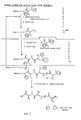
- a suitable resin Such a starting material can be prepared by attaching a-amino protected amino acid residue to a suitably functionalized resin. See Fig. 1 which shows the general scheme for solid phase peptide synthesis.
- the protecting group should be stable to the reagent and under the reaction conditions selected for removing the a-amino protecting group at each step of the synthesis, (b) the protecting group should retain its protecting properties and not be split off under coupling conditions and (c) the side chain protecting group must be removable, upon the completion of the synthesis containing the desired amino acid sequence, under reaction conditions that will not alter the peptide chain.
- the term P identifies a protecting group of the amino acid function, and identifies a protecting group for a function on a side chain.
- the a-amino protecting groups designated by P are those known to be useful in the art in the step-wise synthesis of polypeptides.
- acyl-type protecting groups such as formyl, trifluoroacetyl, phthalyl, p-toluenesulfonyl (Tos), benzenesulfonyl, nitrophenylsulfenyl, tritylsulfenyl, o-nitrophenoxyacetyl, chloroacetyl, acetyl, and y-chlorobutyryl
- aromatic urethan-type protecting groups such as benzyloxycarbonyl (Z) and substituted Z, such as p-chlorobenzyloxycarbonyl (CBZ), p-nitrobenzyloxycarbonyl, p-bromobenzyloxycarbonyl, p-methoxybenzyloxycarbonyl
- the most preferred protecting group is Bzl. can be H, which means there is no protecting group on the hydroxyl group.
- the most preferred protecting group is acetamidomethyl. can also be H, meaning that there is no protecting group on the sulfur.
- guanidino group of arg is preferably selected from the class consisting of H, nitro, Tos, Z, adamantyloxycarbonyl and Boc. Tos is most preferred.
- an ester-forming protecting group for the ⁇ -carboxyl group of Asp is preferably selected from the class consisting of Bzl, 2,6-dichlorobenzyl (Dcb), CBZ, methyl and ethyl. Bzl is most preferred.
- a protecting group for the amido group of Gln or Asn is preferably xanthyl (Xan).
- the protecting group for carboxyl terminus is selected from the class consisting of OH, OCH 3 , amides, hydrazides and esters, including an amide, a benzyl ester and a hydroxymethyl ester anchoring bond used in solid phase syntheses for linking to a solid resin support, such resin support exemplified by the following:
- the polystyrene polymer is preferably a copolymer of styrene with about 0.5 to 2% divinyl benzene as a cross-linking agent, such that the polystyrene polymer is completely insoluble in certain organic solvents.
- the a-amino protecting group is removed, as by using trifluoroacetic acid (TFA) in methylene chloride (CH 2 CI 2 ), TFA alone or with HCI in dioxane.
- TFA trifluoroacetic acid
- CH 2 CI 2 methylene chloride
- HCI hydrogen chloride
- 50 volume % TFA in methylene chloride is used.
- the deprotection is carried out at a temperature between about 0°C and room temperature.
- Other standard cleaving reagents and conditions for removal of specific a-amino protecting groups may be used as described in Schroder & Lubke, "The Peptides", Academic Press, 1, 72-75 (1965).
- the remaining a-amino- and side chain-protected amino acids are coupled step-wise in the desired order to obtain the intermediate compound defined hereinbefore.
- some of the amino acids may be coupled to one another prior to addition to the solid phase reactor.
- the selection of an appropriate coupling reagent is within the skill of the art. Particularly suitable as coupling reagents are N,N -dicyclohexylcarbodiimide (DCC) and N,N -diisopropylcarbodiimide (DIC).
- activating reagents compatible with the routine operations of the solid phase synthesis of the peptides are well known in the peptide art.
- suitable activating reagents are: (1) carbodiimides, such as N,N -diisopropyl carbodiimide, N-ethyl-N -(3-dimethylaminopropyl)carbodiimide; (2) cyanamides such as N,N'-dibenzylcyanamide; (3) ketenimines; (4) isoxazolium salts, such as N-ethyl-5-phenyl isoxazolium-3'-sulfonate; (5) monocyclic nitrogen-containing heterocyclic amides of aromatic character containing one through four nitrogen atoms in the ring, such as imidazole, pyrazole, and 1,2,4-triazole derivatives.
- heterocyclic amides that are useful include N,N'-carbonyl diimidazole, N,N'-carbonyl-di-1,2,4-triazole; (6) alkoxylated acetylene, such as ethoxyacetylene; (7) reagents which form a mixed anhydride with the carboxyl moiety of the amino acid, such as ethylchloroformate and isobutylchloroformate and (8) nitrogen-containing heterocyclic compounds having a hydroxy group on one ring nitrogen, such as N-hydroxyphthalimide, N-hydroxysuccinimide and 1-hydroxybenzotriazole (HOBt).
- Other activating reagents and their use in peptide coupling are described in Schroder & Lubke, supra, in Chapter III, (vide supra) and by Kapoor, J. Phar. Sci., 59, 1-27 (1970).
- Each protected amino acid or amino-acid sequence is introduced into the solid phase reactor in about a two-to-ten fold excess, and the coupling is carried out in a medium of dimethylformamide (DMF):CH 2 CI 2 -(1:1) or in DMF or CH 2 CI 2 alone.
- DMF dimethylformamide
- the success of the coupling reaction at each stage of the synthesis is monitored by the ninhydrin reaction, as described by E. Kaiser et al, Anal. Biochem., 34, 595 (1970).
- the coupling procedure is repeated before removal of the a-amino protecting group prior to the coupling of the next amino acid.
- the coupling reactions can be performed automatically, as for example on Applied Biosystems Inc. model 430A peptide synthesizer.
- the intermediate peptide is removed from the resin support by treatment with a reagent, such as liquid hydrogen fluoride, which not only cleaves the peptide from the resin but also cleaves all remaining side chain protecting groups to obtain the peptide in its linear form.
- a reagent such as liquid hydrogen fluoride
- the cyclic form of the peptide is obtained by oxidization using iodine [as described by B. Kamber et al, Helvetica Chemica Acta., 63, 899-915 (1980)] or by air oxidation, or in accordance with other known procedures suitable for the considered type of protecting group for the sulfhydryl function of the cysteine.
- the intermediate peptide may be separated from the resin support by alcoholysis after which the recovered carboxyl terminal ester is converted to the acid by hydrolysis.
- Any side chain protecting groups may then be cleaved as previously described or by other known procedures, such as by catalytic reduction (e.g. Pd on BaSOa).
- catalytic reduction e.g. Pd on BaSOa
- anisole and 2-mercaptopyridine are included in the reaction vessel for scavenging.
- a much more labile system can be used for the synthesis.
- Such systems are provided, among others, by other resins used with Bpoc, Fmoc, or Nps protected amino acids.
- Peptide No. 1 was prepared by solid phase synthesis on a phenylacetamidomethyl resin loaded with t-Boc-L-Tyr(BrZ) (substitution range: 0.6 to 0.8 mmol/g) that was purchased from Applied Biosystems Inc.
- amino-acid derivatives used to assemble the peptide were chosen from the following list: t-Boc-L-Ser-(Bzl), t-Boc-L-Cys(Acm), t-Boc-L-Phe, t-Boc-Gly, t-Boc-L-Arg(Tos), t-Boc-L-Ile, t-Boc-L-Asp(OBzl), t-Boc-L-Leu, t-Boc-L-Asn (commercially available from Peptide International Inc. and,or Peninsula Laboratories and/or Applied Biosystems, Inc.). Characterization of the peptides include amino acids analysis (Beckman 6300HPA), sequencing (Applied Biosystem Protein Sequences 620) and FAB mass spectroscopy.
- Peptide No. 1 was synthesized by automated machine synthesis (Applied Biosystems Inc. Model 430A Peptide Synthesizer) utilizing the standard protocols described in the Applied Biosystems Inc. System Software Version 1.30.
- the above solution was filtered through a Whatman 934 AH glass fiber filter and was applied to a chromatography column (50 mm x 300 mm) packed with 200 g of Vydac C18 silica (Vydac 218TPB 15-20; 30 m ⁇ , pore size).
- the column was eluted at a flow of 8 mlimin., first with 5% acetonitrile in water containing 0.05% TFA followed by a 2 hour gradient from 5 to 40% acetonitrile in water containing 0.05% TFA while collecting fractions.
- the product usually eluted after 1 hour of the gradient as indicated by monitoring the fractions by Sakaguchi reagent (G. Borin et al, Int. J. Pep.
- the peptide- containing fractions were analyzed by analytical HPLC. ThoSe fractions determined to be greater than 85% pure were combined.
- the peptide was obtained in homogeneous form by semi-preparative HPLC on a Vydac C18 column (218TP510, i.d. 10mm, length 25 cm, 5 micron particle size) using a linear gradient of 15 to 35% acetonitrile in 0.05% trifluoroacetic acid at a flow rate of 4 ml/min. Homogeneity of the collected fractions was determined by analytical HPLC.
- Peptide Nos. 2-12 were prepared by solid phase synthesis on a 4-methylbenzhydrylamine resin (p-MBHA, 1% cross-linked polystyrene/divinylbenzene, 200-400 mesh) substituted with 0.3 to 0.5 meq / g of t-Boc-L-Arg(Tos).
- p-MBHA 4-methylbenzhydrylamine resin
- 1% cross-linked polystyrene/divinylbenzene 200-400 mesh
- the amino acid derivatives 25utilized to assemble the peptide chain include: t-Boc-Ser-(Bzl), t-Boc-Cys(Acm), t-Boc-Phe, t-Boc-Gly, t-Boc-Arg(Tos), t-Boc-Ile, t-Boc-Asp (OBzi), t-Boc-Ala, t-Boc-Gln(Xan), t-Boc-Gln, t-Boc-Leu, t-Boc-Asn, t-Boc-Asn(Xan) commercially available from Peptide International Inc.
- the peptides were synthesized by automated machine synthesis or by manual synthesis. In the case of automated machine synthesis, an Applied Biosystems Inc. Peptide Synthesizer (model 430A) was used and the synthetic steps were performed according to the standard protocols described in the Applied Biosystems Inc. System Software Version 1.30.
- the peptide chain was assembled by a procedure based on repetition of the following three operations (multiple couplings were performed when necessary):
- Peptide No. 2 having the formula was synthesized using the automated procedure as described in the peptide synthesis section.
- Peptide No. 3 having the formula was synthesized using the manual procedure as described in the peptide synthesis section, above. Sequence analysis shows that the peptide with the correct sequence was isolated.
- Peptide No. 4 having the formula was synthesized using the manual procedure as described in the peptide synthesis section. Sequence analysis shows that the peptide with the correct sequence was isolated.
- Peptide No. 5 having the formula was synthesized using the manual procedure as described in the peptide synthesis section, above. Sequence analysis shows that the peptide with the correct sequence was isolated.
- Peptide No. 6 having the formula was synthesized using the manual procedure as described in the peptide synthesis section, above.
- Peptide No. 7 having the formula was synthesized using the manual procedure as described in the peptide synthesis section, above.
- Peptide No. 8 having the formula was synthesized using the manual procedure as described in the peptide synthesis section, above.
- Peptide No. 9 having the formula was synthesized using the manual procedure as described in the peptide synthesis section, abov Sequence analysis shows that the peptide with the correct sequence was isolated.
- Peptide No. 10 having the formula was synthesized using the manual procedure as described in the peptide synthesis section, above. Sequence analysis shows that the peptide with the correct sequence was isolated.
- Peptide No. 11 having the formula was synthesized using the manual procedure as described in the peptide synthesis section, above.
- Peptide No. 12 having the formula was synthesized using the manual procedure as described in the peptide synthesis section, above.
- Peptide Nos. 1 through 12 were evaluated for their biological activity.
- the biological assays used to evaluate the compounds are listed below and then described in greater detail thereafter:
- Frozen rabbit lung lobes (Pel-Freez, Rogers, AR) were minced and then homogenized for 30 sec. with a Brinkmann Polytron in 5 volumes of a solution containing 0.25 M sucrose, 3 mM MgCl 2 , 1 mM EDTA and 5 mM Tris pH 7.5.
- the homogenate was filtered through cheesecloth to remove some fat and connective tissue and the filtrate was centrifuged at 5,000 x g for 20 min. The supernatant was centrifuged at 100,000 x g for 90 min.
- the washed pellet was suspended in 50 mM Tris pH 7.5 at a final concentration of 4 mg/ml.
- the Biorad protein assay kit was used to assay membrane protein.
- the rabbit lung membrane preparation was stored in aliquots at -80°C and was stable for at least 2 months.
- the binding assay utilized 0.25 ml of a solution containing 50 mM Tris pH 7.5, 0.1% bovine serum albumin, 100 ⁇ g membrane protein and 125 l-AP-III (2-3 x 10 4 cpm; specific activity of about 740 Cilmmol) in the absence or presence of unlabelled peptide.
- the reaction was initiated by the addition of membranes and the mixture was incubated at 25 °C for 30 min.
- the incubation was terminated with 4 ml ice-cold 50 mM Tris pH 7.5 and the mixture was filtered to separate membrane-bound labelled peptide from free ligand using a PHD Cell Harvester (Cambridge Technology, Inc., Mass.). The incubation tube and filter were washed with ice-cold buffer. Filters were assayed for radioactivity in a Micromedic gamma counter. Nonspecific binding was defined as binding in the presence of 10- 6 M unlabelled AP-III. Specific binding was calculated as total binding minus nonspecific binding. Binding data were analyzed by a nonlinear least- squares curve fitting program.
- the selectivity factor (defined as the ratio of the K; for the vasorelaxant site to the K i for the non-vasorelaxant site) is provided for each compound.
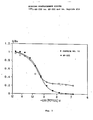
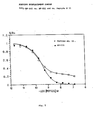
- Figs. 2 to 5 show competitive binding between radioiodinated AP-III and peptides of the invention to rabbit lung membranes.
- Figs. 2 to 5 present the binding data as a plot of the ratio B / Bo versus the negative logarithm of the molar concentration of unlabelled peptides.
- the ratio B to Bo expresses the ratio of specific binding of the radiolabelled ligand in the absence (Bo) or in the presence (B) of various concentrations of the unlabelled peptides.
- the membranes were equilibrated with 70 pM 125 l-AP-III and varying concentrations of unlabelled peptides of the invention: 125 l-AP-III vs. AP-III; vs. Peptide No. 9 (Fig. 2); vs. Peptide No. 10 (Fig. 3); vs. Peptide No. 12 (Fig. 4); and vs. Peptide No. 11 (Fig. 5).
- Isolated rat aorta segments were incubated with AP-III (20 nM) under conditions which result in a maximal response in the production of cGMP.
- Peptide No. 1 which binds selectively to the uncoupled AP binding site, was incubated under conditions identical to the control at a concentration of 700 nM.
- Table III There was little or no stimulation of guanylate cyclase activity, under conditions which produced an average 4.5 fold increase in cGMP in the presence of AP-III.
- the following protocol was used to generate cyclic GMP in rat aortic tissue.
- the cGMP levels were measured using a radioimmunoassay kit.
- the thoracic aorta of male Sprague-Dawley rats was surgically removed and placed in a beaker of oxygenated Krebs-Bicarbonate Buffer, pH 7.4.
- the tissue was cleaned of fat and blood and each aorta was cut into two 10 mm segments. Each of these 10 mm segments was longitudinally split, thus yielding four segments per thoracic aorta.
- the segments of aorta, each weighing approximately 600-800 micrograms, were preincubated for 30 minutes in a small petri dish containing the following:
- the incubation period for the stimulation of cyclic GMP in the presence of AP-III was 30 minutes.
- tissue segments were removed and frozen on dry-ice, the segments were then weighed and placed in test tubes for extraction with absolute ethanol.
- the tissues were homogenized with the Polytron and then centrifuged at 3000 rpm for 15 minutes at 4 C. The supernatant was poured off into another set of tubes and evaporated to dryness in a vacuum oven. After the tubes were dry, the samples were taken up in 2 ml 0.05 M sodium acetate buffer, pH 6.2. One hundred microliters of each extract was used for assay in the radioimmunoassay (NEN RIA Kit, 125 1 tracer).
- Peptide No. 1 which binds selectively to the guanylcyclase-free receptor of AP produces no increase of cyclic GMP production.Since many studies have implied that increases in cyclic GMP levels mediate the action of atrial peptide [R.J. Winquist. et al, Proc. Nat'l. Acad. Sci. USA, 81, 17661-64 (1984); M.
- Group II was infused with Peptide No. 1 during E1, E2 and E3.
- Group III was infused with AP-III during E1, E2 and E3.
- Group IV received Peptide No. 1 from time zero to the end of the experiment, and received AP-III during E1, E2 and E3.
- Fig. 6 shows that mean arterial pressure, urine flow rate, and urinary sodium excretion were stable in the time-control group.
- Peptide No. 1 had no effect on mean arterial pressure when infused alone, but produced a mild diuresis and natriuresis.
- Fig. 7 shows that Peptide No. 1 potentiated the depressor (but not the diuretic or natriuretic) response to AP-III.
- Pharmacological blockade of guanyl cyclase-free receptors with Peptide No. 1 has a small effect on baseline levels of urine flow rate and urinary sodium excretion, and potentiates the mean arterial pressure.
- Peptides of Formula I have been demonstrated to have a high affinity associated with high selectivity for one single type of receptor site of AP-III. This particular type of receptor site could be hypothesized to affect the level of free atriopeptides in plasma. The in vivo effects found with the peptides of Formula I relate to interaction with this particular type of receptor site.
Landscapes
- Health & Medical Sciences (AREA)
- Chemical & Material Sciences (AREA)
- Organic Chemistry (AREA)
- Life Sciences & Earth Sciences (AREA)
- Cardiology (AREA)
- Medicinal Chemistry (AREA)
- General Health & Medical Sciences (AREA)
- Proteomics, Peptides & Aminoacids (AREA)
- Heart & Thoracic Surgery (AREA)
- Biophysics (AREA)
- Gastroenterology & Hepatology (AREA)
- Genetics & Genomics (AREA)
- Zoology (AREA)
- Molecular Biology (AREA)
- Toxicology (AREA)
- Endocrinology (AREA)
- Engineering & Computer Science (AREA)
- Bioinformatics & Cheminformatics (AREA)
- Biochemistry (AREA)
- Chemical Kinetics & Catalysis (AREA)
- General Chemical & Material Sciences (AREA)
- Nuclear Medicine, Radiotherapy & Molecular Imaging (AREA)
- Pharmacology & Pharmacy (AREA)
- Animal Behavior & Ethology (AREA)
- Public Health (AREA)
- Veterinary Medicine (AREA)
- Peptides Or Proteins (AREA)
- Medicines That Contain Protein Lipid Enzymes And Other Medicines (AREA)
Applications Claiming Priority (2)
| Application Number | Priority Date | Filing Date | Title |
|---|---|---|---|
| US12005687A | 1987-11-13 | 1987-11-13 | |
| US120056 | 1987-11-13 |
Publications (2)
| Publication Number | Publication Date |
|---|---|
| EP0316769A2 true EP0316769A2 (de) | 1989-05-24 |
| EP0316769A3 EP0316769A3 (de) | 1990-07-18 |
Family
ID=22388012
Family Applications (1)
| Application Number | Title | Priority Date | Filing Date |
|---|---|---|---|
| EP88118754A Withdrawn EP0316769A3 (de) | 1987-11-13 | 1988-11-10 | Zyklische Peptide mit Disulfidbrücke, welche eine Cgridri-Sequenz enthalten und deren Verwendung bei der Kontrolle von Hypertension |
Country Status (2)
| Country | Link |
|---|---|
| EP (1) | EP0316769A3 (de) |
| JP (1) | JPH01258697A (de) |
Family Cites Families (1)
| Publication number | Priority date | Publication date | Assignee | Title |
|---|---|---|---|---|
| FI872959A7 (fi) * | 1985-11-05 | 1987-07-03 | California Biotechnology Inc | Natriureettisen vaikutuksen omaavien sydämen eteispeptidien analogeja . |
-
1988
- 1988-11-10 EP EP88118754A patent/EP0316769A3/de not_active Withdrawn
- 1988-11-11 JP JP63285603A patent/JPH01258697A/ja active Pending
Also Published As
| Publication number | Publication date |
|---|---|
| JPH01258697A (ja) | 1989-10-16 |
| EP0316769A3 (de) | 1990-07-18 |
Similar Documents
| Publication | Publication Date | Title |
|---|---|---|
| US4607023A (en) | Natriuretic | |
| US5583108A (en) | Vasonatrin peptide and analogs thereof | |
| US5229489A (en) | Parathyroid hormone antagonists | |
| JP4130671B2 (ja) | カルジオジラチンフラグメントの調製方法 | |
| US5106834A (en) | Linear free-sulfhydryl-containing oligopeptide derivatives as antihypertensive agents | |
| EP0212432B1 (de) | Calcitoningen-verwandte Peptidderivate | |
| EP0356124A2 (de) | Inhibitoren des Abbaus von atrial-natriuretischen Peptiden | |
| US5049654A (en) | Calcitonin gene related peptide derivatives | |
| CA1340096C (en) | Analogs of atrial natriuretic peptides | |
| US4716147A (en) | Synthetic airial peptides | |
| EP0136475A2 (de) | Wachstumshormone freisetzende Peptiden und Methode für die Behandlung von Säugetieren | |
| AU737057B2 (en) | Cyclic CRF antagonist peptides | |
| EP0988320A1 (de) | Zyklische agonisten des crf | |
| US4824937A (en) | Synthetic natriuretic peptides | |
| US5814610A (en) | Osteogenic growth oligopeptides and pharmaceutical compositions containing them | |
| AU8237187A (en) | Derivatives of atrial natriuretic peptides | |
| US4721704A (en) | Potent synthetic atrial peptide analogs | |
| US4599324A (en) | V1-vasopressin antagonists | |
| US4684622A (en) | Compositions and methods for producing vasodilation and antioxytocic activity | |
| EP0300737B1 (de) | Derivate von Calcitonin verwandten Gen-Peptiden | |
| EP0316769A2 (de) | Zyklische Peptide mit Disulfidbrücke, welche eine Cgridri-Sequenz enthalten und deren Verwendung bei der Kontrolle von Hypertension | |
| CN114736289A (zh) | 一种带有酪氨酸硫酸化修饰的水蛭素的化学合成方法 | |
| JPS60105697A (ja) | ペプチド及びその製造方法並びに該ペプチドを含有する医薬 | |
| JPS62209096A (ja) | バソプレシン化合物 | |
| WO1994006453A1 (en) | Bradykinin antagonists containing aliphatic amino acids in the 5-position |
Legal Events
| Date | Code | Title | Description |
|---|---|---|---|
| PUAI | Public reference made under article 153(3) epc to a published international application that has entered the european phase |
Free format text: ORIGINAL CODE: 0009012 |
|
| AK | Designated contracting states |
Kind code of ref document: A2 Designated state(s): AT BE CH DE ES FR GB GR IT LI LU NL SE |
|
| PUAL | Search report despatched |
Free format text: ORIGINAL CODE: 0009013 |
|
| AK | Designated contracting states |
Kind code of ref document: A3 Designated state(s): AT BE CH DE ES FR GB GR IT LI LU NL SE |
|
| 17P | Request for examination filed |
Effective date: 19901126 |
|
| 17Q | First examination report despatched |
Effective date: 19920406 |
|
| STAA | Information on the status of an ep patent application or granted ep patent |
Free format text: STATUS: THE APPLICATION IS DEEMED TO BE WITHDRAWN |
|
| 18D | Application deemed to be withdrawn |
Effective date: 19930406 |