EP0315212A2 - Interferenzverfahren und -system - Google Patents
Interferenzverfahren und -system Download PDFInfo
- Publication number
- EP0315212A2 EP0315212A2 EP88118455A EP88118455A EP0315212A2 EP 0315212 A2 EP0315212 A2 EP 0315212A2 EP 88118455 A EP88118455 A EP 88118455A EP 88118455 A EP88118455 A EP 88118455A EP 0315212 A2 EP0315212 A2 EP 0315212A2
- Authority
- EP
- European Patent Office
- Prior art keywords
- inference
- knowledge
- priority level
- items
- series
- Prior art date
- Legal status (The legal status is an assumption and is not a legal conclusion. Google has not performed a legal analysis and makes no representation as to the accuracy of the status listed.)
- Withdrawn
Links
Images







Classifications
-
- G—PHYSICS
- G06—COMPUTING OR CALCULATING; COUNTING
- G06N—COMPUTING ARRANGEMENTS BASED ON SPECIFIC COMPUTATIONAL MODELS
- G06N5/00—Computing arrangements using knowledge-based models
- G06N5/04—Inference or reasoning models
- G06N5/046—Forward inferencing; Production systems
Definitions
- a prior-art inference machine is constructed of a rule set portion which stores a set of rules, an inference portion which interprets and executes the rule, and a working memory which stores the initial state and intermediate state of an inference.
- the single optimum solution has existed for one problem.
- problem settlements from various standpoints, and the optimum solutions of the individual standpoints can exist for one problem.
- the problem of the plan of shopping involves the standpoint of saving, the standpoint of hoarding, the standpoint of lightening baggage, etc., which have the optimum solutions, respectively.
- the inference machine which is truly useful for a user is an inference machine which finds the optimum solution from the user's standpoint, or an inference machine which finds the plurality of optimum solutions of various standpoints, thereby permitting the user to extensively study a problem on the basis of these solutions.
- the conventional inference method in the prior art has been capable of finding only one optimum solution.
- Fig. 3 is a diagram showing the functional construction of this embodiment.
- a block 301 indicates processes or processors, which are configured of an input/output process or processor 302, a control process or processor 303, a translating process or processor 304, a finding process or processor 305, a conflict resolution process or processor 306, and an execution process or processor 307.
- a block 308 indicates a memory, which is configured of a rule set portion 309, a working area 310, an executable rule portion 311, a resolution method portion 312, and a procedures portion 313.
- the conflict resolution method information and the priority level select information are stored as the values of the variables in the resolution method portion 312. Accordingly, receiving the conflict resolution method information and the priority level select information as inputs signifies to substitute values into these variables through the I/O process 302. Owing to the substitution process, the user can designate the conflict resolution method and select the priority level information.
- Fig. 4 is a diagram showing the format of the rule of this embodiment stored in the rule set portion 309.
- a block 401 is the condition part of the rule, which indicates those conditions on the working area 310 under which this rule is executable.
- Each of ⁇ working-area-condition 1> - ⁇ working-area-condition k > indicates equalities, inequalities or the negations thereof concerning the variable and frame in the working area.
- the finding process 305 sets as the executable rule the rule for which all the conditions ⁇ working-area-condition 1> - ⁇ working-area-condition k > hold good in the current initial or intermediate state.
- the priority ⁇ precedence-degree i > of the rule a and the priority ⁇ precedence-degree i > of the rule b are compared, and the rule whose priority ⁇ precedence-degree i > is greater is preferred.
- Fig. 5 shows the format of that rule in intermediate representation which is a result obtained in such a way that the translating process 304 shown in Fig. 3 has translated the rule explained with reference to Fig. 4.
- the rule in the intermediate representation shall be expressed by a list structure.
- a list is described by enclosing any desired number of elements with "(" and ")".
- the element of the list, per se, may well be a list.
- Such a nested list is expressed by further describing "(" and ")" with "(" and ")”.
- the depth of the nesting is as desired.
- the rule in the intermediate representation is the intermediate representation corresponding to one rule
- the intermediate representation of the rule set is the list of the rules in the intermediate representation.
- the lists of the rules in the intermediate representation are stored in the rule set portion 309 and the executable rule portion 311 in Fig. 3.
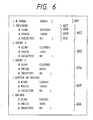
- the block 701 signifies that, if there is the commodity which is not selected as the article to-be-purchased yet and whose price is smaller than the funds, it is selected, whereupon the funds are reduced to the amount of the price of the commodity, and this block is the rule instructive of the purchase of any commodity which can be bought.
- a block 707 indicates the priority level information items of this rule.
- the step 104 removes the first member of the list EList, namely, the block 802. Only the list of the block 804 is substituted into the list EList.
- the step 105 decides that all the executable rules have not been examined.
- the step 106 substitutes the block 804 into the variable ER1.
- the step 107 substitutes the information items (3 2 1) into the list PList.
- the step 108 substitutes "3" into the precedence degree P.
- the step 109 compares the precedence degree of the block 802 and that of the block 804 in the current series of priority level information items. Here, the comparison results in "No.”
- the step 110 replaces the alternative of the rule to-be-executed with the block 804.
- the step 111 replaces the precedence degree of the alternative of the rule to-be-executed with the precedence degree of the block 804.
- the executable rules become the blocks 801 and 803 in each of which the record is substituted.
- the user can form the plan of shopping conforming to his/her standpoint, through the selection of the series of priority level information items. It is also possible that the user forms the plans of shopping from various standpoints and compares and studies them.
- a problem can be settled from different standpoints by selecting the series of priority level information items.
- a user can obtain a solution conforming to his/her standpoint.
- the user can obtain a plurality of solutions for the different standpoints and then compare and study them.
- the conflict resolution process 3061 selects a rule to-be-executed from within the executable rule set portion 311, depending upon the determined value of the information " Level-Select" and delivers the selected rule to the execution prccess 307. This process is the same as in the case of the first embodiment.
- ⁇ data-read 1>, ⁇ data-read 2>, . and ⁇ data-read p > denote data inputs from the user through the I/O process 302.
- Each of the ⁇ data-read> formulas expresses a process in which the value of a specified variable is read and is stored in the working area 310. More specifically, it expresses a process in which a prompt is given to the user by the use of the I/O process 302 so een the name of the designated variable and the input data is stored in the working area.
- the inference machine can determine the priority level select information, depending upon the initial and intermediate states of the inference stored in the working area and the input data from the user, and then carry forward the inference on the basis of the series of priority level information items indicated by the determined priority level select information. Accordingly, when a plurality of series of priority levels are previously set for the respective standpoints of the settlement of a problem, it is permitted by this embodiment that the standpoint of the user is inferred while inquiring of the user in accordance with the situation of the inference, and that a solution conforming to the user's standpoint is found on the basis of the corresponding series of priority level information items.
- the hardware architecture of this embodiment is similar to that of the first embodiment.
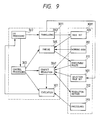
- FIG. 11 shows the functional construction of this embodiment.
- a block 3012 indicates processing, which is configured of an input/output process 302, a control process 303, a translating process 304, a finding process 305, a conflict resolution process 3062 and an execution process 307.
- a block 3082 indicates a memory, which is configured of a rule set portion 3092, a working area 310, an executable rule portion 311, a resolution method portion 3122 and a procedures portion 313.
- the conflict resolution process 3062 fetches the value of priority level select information, namely, information "$ Level-Select" stored in the resolution method portion 3122. Subsequently, it fetches interclass priority levels corresponding to this priority level select information, also from the resolution method portion 3122. Subsequently, if the rule belonging to the highest-precedence-degree class in this interclass priority level series is contained in the set of executable rules, the process 3062 sets this rule as a rule to-be-executed.
- the rule belonging to the class of the highest precedence degree is not contained in the set of executable rules, the rule belonging to the class of the second-highest precedence degree is searched for in the set of executable rules. Similar processes are repeated until the rule to-be-executed is found.
- the first rule is set as the rule to-be-executed in accordance with the order in which the rules have been described. After determining the rule to-be-executed, the process 3062 delivers it to the execution process 307.
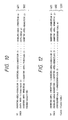
- the rule set portion 3092 stores a set of rules as in the case of the first embodiment. However, this embodiment differs from the first embodiment in that the name of the class to which each rule belongs is affixed to the rule. The details of the rule will be described later with reference to Fig. 12.
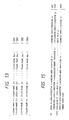
- Fig. l3 shows the plurality of series of interclass priority level information items which are stored in the resolution method portion 3l22.
- Each of blocks l30l - l304 denotes one series of interclass priority level information items.
- the block l303 expresses that a class indicated by ⁇ class-name jl> is the most preferential, that a class indicated by ⁇ class-name j2> is subsequently preferential, and that a class indicated by ⁇ class-name jmj> has the lowest precedence degree.
- the hardware architecture of this embodiment is similar to that of the first embodiment.
- the rule group selection process l40l selects the rule group suitable for the phase of the problem settlement from among a plurality of rule groups stored in the rule group portion l402, according to the situation of the working area 3l0, and stores the selected rule group in the rule set portion 309.
- the conflict resolution method is any method other than the priority level method
- the prior-art resolution method is conformed to without performing the above processes.
- the hardware architecture of this embodiment is similar to that of the first embodiment, and is as shown in Fig. 2.
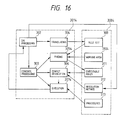
- FIG. l6 shows the functional construction of this embodiment.
- a block 30l4 indicates processing, which is configured of an input/output process 302, a control process 303, a translating process 304, a finding process 3054, a conflict resolution process 306 and an execution process 3074.
- a block 3084 indicates a memory, which is configured of a rule set portion 309, a working area 3l04, an executable rule portion 3ll, a resolution method portion 3l2 and a procedures portion 3l3.
- the conflict resolution process 3054 of this embodiment performs the following operation: First, the priority level select information is fetched from the resolution method portion 3l2. Subsequently, whether or not the condition part of the rule holds is decided. In a case where the conflict of data as stated above has occurred in the course, one of the plurality of kinds of precedence degrees set for the each data item corresponding to the priority level select information, is fetched, and the data item whose precedence degree is the highest in the fetched kind of precedence degrees is selected. By way of example, in a case where the priority level select information is 2, the data item whose precedence degree is the highest in the second kind of precedence degrees is selected among the conflicting data items.
- an inference machine having a rule set memory portion for storing a set of rules therein, an inference portion for interpreting the rules for execution, and a working memory for storing an initial state and an intermediate state of an inference therein; is constructed so as to comprise the step of storing a plurality of series of priority level information items which set precedence degrees among the rules within the rule set, the step of selecting or designating one of the plurality of series of priority level information items, and the step of selecting one rule on the basis of the priority level information series selected or designated by the selecting or designating step, in a case where a plurality of executable rules exist when said inference portion interprets the rules for execution. Therefore, the invention achieves the remarkable effect that an inference method which makes it possible to find the optimum solutions for a plurality of standpoints can be realized.
Landscapes
- Engineering & Computer Science (AREA)
- Theoretical Computer Science (AREA)
- Computing Systems (AREA)
- Data Mining & Analysis (AREA)
- Evolutionary Computation (AREA)
- Physics & Mathematics (AREA)
- Computational Linguistics (AREA)
- General Engineering & Computer Science (AREA)
- General Physics & Mathematics (AREA)
- Mathematical Physics (AREA)
- Software Systems (AREA)
- Artificial Intelligence (AREA)
- Management, Administration, Business Operations System, And Electronic Commerce (AREA)
- Devices For Executing Special Programs (AREA)
Applications Claiming Priority (2)
| Application Number | Priority Date | Filing Date | Title |
|---|---|---|---|
| JP279878/87 | 1987-11-05 | ||
| JP27987887 | 1987-11-05 |
Publications (2)
| Publication Number | Publication Date |
|---|---|
| EP0315212A2 true EP0315212A2 (de) | 1989-05-10 |
| EP0315212A3 EP0315212A3 (de) | 1992-11-25 |
Family
ID=17617195
Family Applications (1)
| Application Number | Title | Priority Date | Filing Date |
|---|---|---|---|
| EP19880118455 Withdrawn EP0315212A3 (de) | 1987-11-05 | 1988-11-04 | Interferenzverfahren und -system |
Country Status (2)
| Country | Link |
|---|---|
| US (1) | US4959799A (de) |
| EP (1) | EP0315212A3 (de) |
Families Citing this family (19)
| Publication number | Priority date | Publication date | Assignee | Title |
|---|---|---|---|---|
| JPH0341519A (ja) * | 1989-07-10 | 1991-02-22 | Hitachi Ltd | 知識処理システム |
| WO1991006050A1 (en) * | 1989-10-17 | 1991-05-02 | Applied Biosystems, Inc. | Robotic interface |
| JPH03164832A (ja) * | 1989-11-22 | 1991-07-16 | Toshiba Corp | フレーム構造を有する推論システムにおける継承情報の格納方法 |
| US5204939A (en) * | 1989-12-14 | 1993-04-20 | Fujitsu Limited | Rule base processing system and rule evaluation control method therein |
| US5355444A (en) * | 1990-01-23 | 1994-10-11 | International Business Machines Corporation | Expert system wtih a plurality of independent knowledge bases |
| US5122976A (en) * | 1990-03-12 | 1992-06-16 | Westinghouse Electric Corp. | Method and apparatus for remotely controlling sensor processing algorithms to expert sensor diagnoses |
| JPH047743A (ja) * | 1990-04-26 | 1992-01-13 | Toshiba Corp | 推論システム |
| US5159662A (en) * | 1990-04-27 | 1992-10-27 | Ibm Corporation | System and method for building a computer-based rete pattern matching network |
| US5222197A (en) * | 1990-06-28 | 1993-06-22 | Digital Equipment Corporation | Rule invocation mechanism for inductive learning engine |
| JP2778309B2 (ja) * | 1991-09-21 | 1998-07-23 | 日産自動車株式会社 | 知識ベースコンピュータシステム |
| JP3175849B2 (ja) * | 1991-10-07 | 2001-06-11 | 株式会社日立製作所 | 電子秘書システム |
| JPH05274145A (ja) * | 1992-03-26 | 1993-10-22 | Hitachi Ltd | プロダクションシステム |
| US5263126A (en) * | 1992-09-10 | 1993-11-16 | Chang Hou Mei H | Automatic expert system |
| CA2124479A1 (en) * | 1993-06-30 | 1994-12-31 | Thaddeus Julius Kowalski | Methods and apparatus for optimizing decision making |
| US5740321A (en) * | 1994-11-30 | 1998-04-14 | Semborg Recrob, Corp. | Behavioral based environmental system and method for an interactive playground |
| US7020869B2 (en) * | 2000-12-01 | 2006-03-28 | Corticon Technologies, Inc. | Business rules user interface for development of adaptable enterprise applications |
| US7668824B2 (en) * | 2004-03-01 | 2010-02-23 | Denso Corporation | Interface device, inferring system, and visual expression method |
| US20060059530A1 (en) * | 2004-09-15 | 2006-03-16 | E-Cast, Inc. | Distributed configuration of entertainment devices |
| US8990168B1 (en) | 2012-06-21 | 2015-03-24 | Emc Corporation | Efficient conflict resolution among stateless processes |
-
1988
- 1988-11-03 US US07/266,898 patent/US4959799A/en not_active Expired - Lifetime
- 1988-11-04 EP EP19880118455 patent/EP0315212A3/de not_active Withdrawn
Non-Patent Citations (4)
| Title |
|---|
| IBM TECHNICAL DISCLOSURE BULLETIN. vol. 29, no. 10, March 1987, NEW YORK US pages 4468 - 4471 'Adaptive context-dependent decision making' * |
| PETER JACKSON 'INTRODUCTION to EXPERT SYSTEMS' 1986 , ADDISON- WESLEY * |
| PROCEEDINGS OF THE IASTED INTERNATIONAL SYMPOSIUM APPLIED SIMULATION AND MODELLING 27 May 1987, SANTA BARBARA, CA, USA pages 169 - 173 I. POPESCU 'Search modelling in expert systems' * |
| PROCEEDINGS OF THE THIRD INTERNATIONAL CONFERENCE ON DATA ENGINEERING 3 February 1987, LOS ANGELES pages 365 - 374 M. STONEBRAKER ET AL 'The design of the POSTGRES rules system' * |
Also Published As
| Publication number | Publication date |
|---|---|
| US4959799A (en) | 1990-09-25 |
| EP0315212A3 (de) | 1992-11-25 |
Similar Documents
| Publication | Publication Date | Title |
|---|---|---|
| US4959799A (en) | Inference method and system | |
| US5123103A (en) | Method and system of retrieving program specification and linking the specification by concept to retrieval request for reusing program parts | |
| EP0142735B1 (de) | Tabellengesteuerter Übersetzer | |
| US5142681A (en) | APL-to-Fortran translators | |
| US4656583A (en) | Method for improving global common subexpression elimination and code motion in an optimizing compiler | |
| US5119465A (en) | System for selectively converting plurality of source data structures through corresponding source intermediate structures, and target intermediate structures into selected target structure | |
| US6439783B1 (en) | Range-based query optimizer | |
| US5805911A (en) | Word prediction system | |
| US4782463A (en) | Method for generating display screens for a set of application programs by calling screen management subroutines | |
| US5442780A (en) | Natural language database retrieval system using virtual tables to convert parsed input phrases into retrieval keys | |
| JP3522141B2 (ja) | 修正プログラムを継承したプログラムの自動生成方法、プログラム自動生成装置及び修正プログラムを継承したプログラムを自動生成するプログラムを記録した記録媒体 | |
| US5615308A (en) | Rule-based production system adapted for complex procedures flow | |
| US7774337B2 (en) | Method for controlling a relational database system | |
| CN111158663B (zh) | 用于处理程序代码中的变量的引用的方法和系统 | |
| US5241678A (en) | Program translation based on generalized partial computation | |
| US5086408A (en) | Method and apparatus for merging | |
| US5946490A (en) | Automata-theoretic approach compiler for adaptive software | |
| Liu et al. | Heuristic target class selection for advancing performance of coverage-based rule learning | |
| US5666469A (en) | Method for generating solutions for sequencing problems | |
| KR970005018B1 (ko) | 퍼지검색장치, 방법 및 멤버십 함수 작성 장치 | |
| Tharwat | Using Loop Statements for Searching, Removing, and Updating Lists | |
| Hoffmann et al. | Generating Efficient Predictive Shift-Reduce Parsers for Hyperedge Replacement Grammars | |
| JP3585944B2 (ja) | データ処理方法及びその装置 | |
| JPH01230133A (ja) | 推論処理方法 | |
| JP3018579B2 (ja) | 名前検索処理装置 |
Legal Events
| Date | Code | Title | Description |
|---|---|---|---|
| PUAI | Public reference made under article 153(3) epc to a published international application that has entered the european phase |
Free format text: ORIGINAL CODE: 0009012 |
|
| AK | Designated contracting states |
Kind code of ref document: A2 Designated state(s): DE FR GB |
|
| 17P | Request for examination filed |
Effective date: 19901212 |
|
| PUAL | Search report despatched |
Free format text: ORIGINAL CODE: 0009013 |
|
| AK | Designated contracting states |
Kind code of ref document: A3 Designated state(s): DE FR GB |
|
| 17Q | First examination report despatched |
Effective date: 19940601 |
|
| STAA | Information on the status of an ep patent application or granted ep patent |
Free format text: STATUS: THE APPLICATION IS DEEMED TO BE WITHDRAWN |
|
| 18D | Application deemed to be withdrawn |
Effective date: 19951205 |