EP0315110A2 - Verwendung des Tumor-Nekrose-Faktors als Adjuvans der Immunantwort - Google Patents
Verwendung des Tumor-Nekrose-Faktors als Adjuvans der Immunantwort Download PDFInfo
- Publication number
- EP0315110A2 EP0315110A2 EP88118155A EP88118155A EP0315110A2 EP 0315110 A2 EP0315110 A2 EP 0315110A2 EP 88118155 A EP88118155 A EP 88118155A EP 88118155 A EP88118155 A EP 88118155A EP 0315110 A2 EP0315110 A2 EP 0315110A2
- Authority
- EP
- European Patent Office
- Prior art keywords
- onf
- immune response
- mice
- antigen
- response against
- Prior art date
- Legal status (The legal status is an assumption and is not a legal conclusion. Google has not performed a legal analysis and makes no representation as to the accuracy of the status listed.)
- Granted
Links
- 230000028993 immune response Effects 0.000 title claims abstract description 22
- 239000002671 adjuvant Substances 0.000 title description 9
- 108060008682 Tumor Necrosis Factor Proteins 0.000 title 1
- 102000003390 tumor necrosis factor Human genes 0.000 title 1
- 241000282414 Homo sapiens Species 0.000 claims abstract description 15
- 230000003389 potentiating effect Effects 0.000 claims abstract description 13
- 230000017074 necrotic cell death Effects 0.000 claims abstract description 8
- 239000008194 pharmaceutical composition Substances 0.000 claims abstract 3
- 238000000034 method Methods 0.000 claims description 8
- 239000000203 mixture Substances 0.000 claims description 8
- 108010008038 Synthetic Vaccines Proteins 0.000 claims description 7
- 239000002904 solvent Substances 0.000 claims description 2
- 239000000427 antigen Substances 0.000 abstract description 32
- 102000036639 antigens Human genes 0.000 abstract description 32
- 108091007433 antigens Proteins 0.000 abstract description 32
- 238000001727 in vivo Methods 0.000 abstract description 8
- 238000002560 therapeutic procedure Methods 0.000 abstract description 4
- 230000002163 immunogen Effects 0.000 abstract description 2
- 210000002966 serum Anatomy 0.000 description 35
- 241000699670 Mus sp. Species 0.000 description 32
- 230000003308 immunostimulating effect Effects 0.000 description 14
- 230000000694 effects Effects 0.000 description 9
- 239000002158 endotoxin Substances 0.000 description 9
- 102000004169 proteins and genes Human genes 0.000 description 8
- 108090000623 proteins and genes Proteins 0.000 description 8
- 102000000589 Interleukin-1 Human genes 0.000 description 7
- 108010002352 Interleukin-1 Proteins 0.000 description 7
- 210000004698 lymphocyte Anatomy 0.000 description 7
- 210000004027 cell Anatomy 0.000 description 6
- 230000005847 immunogenicity Effects 0.000 description 6
- 210000000952 spleen Anatomy 0.000 description 6
- 206010018910 Haemolysis Diseases 0.000 description 5
- 238000010790 dilution Methods 0.000 description 5
- 239000012895 dilution Substances 0.000 description 5
- 239000000725 suspension Substances 0.000 description 5
- 241000283973 Oryctolagus cuniculus Species 0.000 description 4
- 230000008588 hemolysis Effects 0.000 description 4
- 210000000987 immune system Anatomy 0.000 description 4
- 230000003053 immunization Effects 0.000 description 4
- 238000011081 inoculation Methods 0.000 description 4
- 230000004044 response Effects 0.000 description 4
- 239000000126 substance Substances 0.000 description 4
- 230000000259 anti-tumor effect Effects 0.000 description 3
- 230000000295 complement effect Effects 0.000 description 3
- 230000009089 cytolysis Effects 0.000 description 3
- 230000003248 secreting effect Effects 0.000 description 3
- 230000004913 activation Effects 0.000 description 2
- WNROFYMDJYEPJX-UHFFFAOYSA-K aluminium hydroxide Chemical compound [OH-].[OH-].[OH-].[Al+3] WNROFYMDJYEPJX-UHFFFAOYSA-K 0.000 description 2
- 229910021502 aluminium hydroxide Inorganic materials 0.000 description 2
- 230000001939 inductive effect Effects 0.000 description 2
- 239000013641 positive control Substances 0.000 description 2
- 150000003839 salts Chemical class 0.000 description 2
- 239000000243 solution Substances 0.000 description 2
- 210000001519 tissue Anatomy 0.000 description 2
- 241000894006 Bacteria Species 0.000 description 1
- 241000700199 Cavia porcellus Species 0.000 description 1
- 101000761506 Homo sapiens Caveolae-associated protein 3 Proteins 0.000 description 1
- 206010028980 Neoplasm Diseases 0.000 description 1
- 108020004511 Recombinant DNA Proteins 0.000 description 1
- 206010039491 Sarcoma Diseases 0.000 description 1
- FAPWRFPIFSIZLT-UHFFFAOYSA-M Sodium chloride Chemical compound [Na+].[Cl-] FAPWRFPIFSIZLT-UHFFFAOYSA-M 0.000 description 1
- 206010000269 abscess Diseases 0.000 description 1
- 230000005875 antibody response Effects 0.000 description 1
- 230000001580 bacterial effect Effects 0.000 description 1
- 230000015572 biosynthetic process Effects 0.000 description 1
- 210000000601 blood cell Anatomy 0.000 description 1
- 230000037396 body weight Effects 0.000 description 1
- 239000000872 buffer Substances 0.000 description 1
- 230000001413 cellular effect Effects 0.000 description 1
- 230000008614 cellular interaction Effects 0.000 description 1
- 239000002299 complementary DNA Substances 0.000 description 1
- 230000001419 dependent effect Effects 0.000 description 1
- 239000000839 emulsion Substances 0.000 description 1
- 239000000284 extract Substances 0.000 description 1
- 108010074605 gamma-Globulins Proteins 0.000 description 1
- 102000056571 human CAVIN3 Human genes 0.000 description 1
- 238000002649 immunization Methods 0.000 description 1
- 238000000338 in vitro Methods 0.000 description 1
- 230000003993 interaction Effects 0.000 description 1
- 229920006008 lipopolysaccharide Polymers 0.000 description 1
- 239000007791 liquid phase Substances 0.000 description 1
- 210000002540 macrophage Anatomy 0.000 description 1
- 230000002503 metabolic effect Effects 0.000 description 1
- 244000005700 microbiome Species 0.000 description 1
- 239000002480 mineral oil Substances 0.000 description 1
- 235000010446 mineral oil Nutrition 0.000 description 1
- 230000001613 neoplastic effect Effects 0.000 description 1
- 230000003287 optical effect Effects 0.000 description 1
- 239000012188 paraffin wax Substances 0.000 description 1
- 239000008363 phosphate buffer Substances 0.000 description 1
- 238000009877 rendering Methods 0.000 description 1
- 230000035939 shock Effects 0.000 description 1
- 239000011780 sodium chloride Substances 0.000 description 1
- 239000007787 solid Substances 0.000 description 1
- 230000004936 stimulating effect Effects 0.000 description 1
- 230000000638 stimulation Effects 0.000 description 1
- 230000001225 therapeutic effect Effects 0.000 description 1
- 210000001541 thymus gland Anatomy 0.000 description 1
- 229960005486 vaccine Drugs 0.000 description 1
- 238000005406 washing Methods 0.000 description 1
- XLYOFNOQVPJJNP-UHFFFAOYSA-N water Substances O XLYOFNOQVPJJNP-UHFFFAOYSA-N 0.000 description 1
Images
Classifications
-
- A—HUMAN NECESSITIES
- A61—MEDICAL OR VETERINARY SCIENCE; HYGIENE
- A61K—PREPARATIONS FOR MEDICAL, DENTAL OR TOILETRY PURPOSES
- A61K38/00—Medicinal preparations containing peptides
- A61K38/16—Peptides having more than 20 amino acids; Gastrins; Somatostatins; Melanotropins; Derivatives thereof
- A61K38/17—Peptides having more than 20 amino acids; Gastrins; Somatostatins; Melanotropins; Derivatives thereof from animals; from humans
- A61K38/19—Cytokines; Lymphokines; Interferons
- A61K38/191—Tumor necrosis factors [TNF], e.g. lymphotoxin [LT], i.e. TNF-beta
-
- A—HUMAN NECESSITIES
- A61—MEDICAL OR VETERINARY SCIENCE; HYGIENE
- A61K—PREPARATIONS FOR MEDICAL, DENTAL OR TOILETRY PURPOSES
- A61K39/00—Medicinal preparations containing antigens or antibodies
- A61K39/39—Medicinal preparations containing antigens or antibodies characterised by the immunostimulating additives, e.g. chemical adjuvants
-
- A—HUMAN NECESSITIES
- A61—MEDICAL OR VETERINARY SCIENCE; HYGIENE
- A61P—SPECIFIC THERAPEUTIC ACTIVITY OF CHEMICAL COMPOUNDS OR MEDICINAL PREPARATIONS
- A61P37/00—Drugs for immunological or allergic disorders
- A61P37/02—Immunomodulators
- A61P37/04—Immunostimulants
-
- A—HUMAN NECESSITIES
- A61—MEDICAL OR VETERINARY SCIENCE; HYGIENE
- A61K—PREPARATIONS FOR MEDICAL, DENTAL OR TOILETRY PURPOSES
- A61K39/00—Medicinal preparations containing antigens or antibodies
- A61K2039/555—Medicinal preparations containing antigens or antibodies characterised by a specific combination antigen/adjuvant
- A61K2039/55511—Organic adjuvants
- A61K2039/55522—Cytokines; Lymphokines; Interferons
Definitions
- the present invention relates to a new use of the Oncogen Necrosis Factor (ONF) in the therapeutic field.
- ONF Oncogen Necrosis Factor
- the present invention relates to the use of ONF for potentiating in a living organism the primary and secondary immune response against natural or synthetic antigenes per se insufficiently immunogenic.
- the present invention also relates to a composition containing a pharmacologically effective quantity of said factor.
- An antigen is defined as any extraneous substance to a living organism which, once in contact with the immune system, activates a complex series of cellular interactions the scope of which is that of eliminating the same antigen and or reestablishing the preceding equilibrium.
- Characteristic aspects of an antigen are: immunogenicity, that is to say the capacity of inducing specific antibodies and the antigenicity, that is to say the capacity of being selectively recognized by the antibodies that the antigen has induced.
- the stimulation of the immune response may be deliberately obtained administering a specified antigen by means of a vaccine.
- This procedure permits to obtain a state of immune "memory" in the organism that shall allow a quicker and more effective response thereof in case of a subsequent contact with the antigen itself.
- Some antigens are provided with a low immunogenicity and induce an immune response which is not sufficient to impart to the organism an effective protection.
- the immunogenicity of an antigen may be enhanced by administering it together with substances, called adjuvants, which potentiate the immune response against the antigen by acting either directly on the immune system or modifying the pharmacokinetic characteristics of the antigen, increasing in this way the interaction time with the immune system.
- adjuvants substances, called adjuvants, which potentiate the immune response against the antigen by acting either directly on the immune system or modifying the pharmacokinetic characteristics of the antigen, increasing in this way the interaction time with the immune system.
- the more common adjuvants are the Freund adjuvant, emulsion comprising mineral oil and killed bacteria, and aluminium hydroxide.
- Said adjuvants are able either to prolonge the antigen residence time in the organism or to produce an aspecific activation of the immune system.
- indesirable effects such as: uprising of a sharp pain and abscesses, in the case of the Freund adjuvant or ineffectiveness towards specific antigens, in the case of aluminium hydroxide, however, make the use thereof in human therapy not completely satisfactory.
- Oncogen Necrosis Factor a protein provided with antitumor and anti-carcinemia activity, possesses the property of potentiating in vivo the primary and secondary immune response against specific antigens.
- said factor is capable of exerting this activity at doses well below those which have been observed to cause carcinemia shock and damages to the cellular tissue.
- One scope of the present invention is therefore the use of the Oncogen Necrosis Factor for potentiating in vivo the primary and secondary immune response against natural or synthetic antigens having low immunogenicity.
- a further object of the present invention is a composition useful in human therapy containing a pharmacologically effective quantity of said factor.
- a further object of the present invention is a method of potentiating the primary or secondary immune response against natural or synthetic antigens which comprises administering said composition intravenously, intraperitoneally or intramuscularly to a living organism, contemporaneously or separately to the antigen itself.
- the ONF is a protein produced and released in the outer environment by cells of the monocite - macrophage type as a consequence of activation caused by a bacterial lipopolysaccharide.
- Said protein the aminoacidic sequence of which was deduced from the nucleotidic sequence of cDNA (Pennica D. et a. (1984) Nature, 312: 724), possesses antitumor activity and causes either in vitro or in vivo the necrosis of solid tumors (sarcoma Meth A). Besides these properties, the OFN is able to induce in vivo a cachexic state, that is to say, a metabolic decay, called cachexie, which is often observed during a desease of neoplastic or contageous origin (Beutler, B. and Cerami, A. (1986), Nature, 320 :584).
- cachexie a metabolic decay
- the immune stimulating activity of the ONF was determined by means of the hemolysis plaques method, described by Cunningham and Szeberg (Immunology 14 : 599, 1968), method that allows to determine the number of the lymphocytes of the IgM class, characteristic of a primary immune response and antibody of the IgG class, characteristic of a secondary immune response.
- said method consists of immunizing mice with the antigen to test, contacting in liquid phase the lymphocytes obtained from the spleen of said mice with the immunizing antigen, adding to said suspension the complement and finally determining, by means of an optical monitor , the number of the lysis zones (Plaque Forming Cells, PFC), formed by the lymphocytes as a consequence of the antigene-antibody reaction.
- the lysis plaques formed as a consequence of a primary immune response are called direct, whereas those formed as a consequence of a secondary immune response are called total.
- the immunostimulating activity of the ONF was tested at different dose levels determining g the increase in the number of the cells secreting antibodies of the IgM class and of the IgG class against antigenes with low immunogenicity.
- thymus-dependent antigens such as ram blood corpuscles (SRBC) were used.
- mice and male and female C3H/HeJ mice of 10-12 weeks of age were used, with the same results, and ONF prepared by means of recombinant DNA technics, having purity higher than 95% and an endotoxin content below 0.06 ng/mg of protein, was employed.
- mice were immunized intravenously using an apyrogenic physiologic serum containing the SRBC antigen and, after about 2 hours, some mice were inoculated intraperitoneally with the physiologic serum alone (control), others with a physiologic serum containing ONF at a concentration of from 0.013 picograms (pg) to 8 ug per Kg of body weight and some others with a physiological serum containing the human interleukin-1 adjuvant (positive control).
- mice Four days after the immunization, the mice were sacrificed and their spleens withdrawn and mechanically disrupted to separate the lymphocytes secreting anti-SRBC IgM antibodies.
- Said lymphocytes appropriately diluted in a buffer or minimum medium (MEM), were tested with the hemolysis plaques method to determine the immunostimulating effects of ONF on the primary immune response.
- MEM buffer or minimum medium
- ONF of potentiating the secondary immune response against SRBC was tested, according to the present invention, by intravenously administering to the mice, 10 days after the first inoculation, the SRBC antigen and immediately afterwards by intraperitoneally administering serums containing different concentrations of ONF.
- mice immunized with SRBC were endovenously inoculated with serums containing different concentrations of ONF, and 4 days after, the increase of the spleen-directed plaques was determined.
- the minimum effective dose in this case is of 2 pg/Kg, that is to say about 6500 times lower of the minimum effective dose observed introducing intraperitoneally the ONF (13 ng/Kg).
- Said protein may be used as solid susceptible of restoration or as solution or suspension and may be introduced in an organism intraperitoneally, intramuscularly or intravenously.
- compositions to achieve the objects of the present invention are those comprising a pharmaceutical acceptable solvent selected among saline physiologic serum, phosphate buffer and or water and ONF in concentrations of from 0.013 pg/Kg to 8 ug/Kg per dose.
- compositions may further contain a therapeutically effective quantity of one or more immunizing antigens.
- Said antigenes may be selected among natural or synthetic antigens and may be used alone or supported on a macromolecular support.
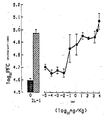
- the anti-SRBC directed PFC are determined 4 days after the administration of SRBC in apyrogenic physiologic serum (time 0), of SRBC and human interleukin-1 (IL.1 - 20 ng/Kg) and of human SRBC and ONF (doses represented in x-coordinate).
- IL1 against the control 0 p 0.01
- Human ONF against the control 0 doses of from 0.013 pg/Kg to 1.3 ng/Kg not significant; doses of from 13 ng/Kg to 8 ug/Kg p 0.01.
- the vertical lines represent the standard deviation of the average values.
- mice Two hours later the mice are intraperitoneally treated according to the following scheme: - 3 mice with 0.2 ml of apyrogenic physiologic serum (control); - 3 mice with 0.2 ml of apyrogenic physiologic serum containing 20 ng/Kg of human Interleukin-1 (IL1 ) (Genzyme Corporation-Boston, MA) having a specific activity of 1x10 Units per mg of protein; - 10 groups of 3 mice each with 0.2 ml of apyrogenic physiologic serum containing different doses (from 0.013 pg/Kg to 8 ug/Kg) of Oncogen Necrosis Factor (ONF) (Biogen Research Corporation, Ginevra, CH) having a specific activity of 1.5 x 10 U/mg of protein and an endotoxin content below 0.06 ng/mg.
- ONF Oncogen Necrosis Factor
- mice Four days later, the mice are sacrificed and the spleen thereof withdrawn and mechanically disrupted to separate the lymphocytes.
- lymphocytes so separated were washed 3 times, using each time 15 ml of minimum medium containing the Earle salts (MEM) (MA. BioProducts, Walkerville, U.S.A.) and then resuspended in 4 ml of the same washing medium and used to determine the number of cells forming the direct hemolysis plaques (PFC) (Cunningham and Szenber (1968), Immunology 14:599).
- MEM Earle salts
- PFC direct hemolysis plaques
- each suspension is brought to a final volume of 2.5 ml with MEM medium (final dilution 1:1000) and 100 ul of each dilution are added, in double, in microplaques holes containing 25 ul of MEM medium, 25 ul of a 10% SRBC antigen solution and 25 ul of guinea-pig serum to a final dilution of 1:64 (complement).
- the whole suspensions are immediately transferred, by capillarity, on appropriate superimposed slides.
- Said slides, edge-sealed with paraffin, are incubated in thermostat at 37 C for 30 minutes and are examined by means of a light contrast monitor, to determine the number of lysis plaques.
- the minimum effective dose being of 13 ng/Kg.
- mice immunized with SRBC as reported in the preceding example 1 are endovenously inoculated 10 days after the first inoculation with the same dose of SRBC antigen and, immediately afterwards, some mice are intraperitoneally inoculated with 0.2 ml of physiologic serum (control), others with 0.2 ml of physiologic serum containing 20 ng/Kg of human IL-1 and some other groups with 0.2 ml of physiologic serum containing ONF doses of from 1.3 pg/Kg to 1.3 ug/Kg.
- mice Four days after the recall dose, the mice are sacrificed and the total number of spleen-hemolysis plaques (PFC) is determined as described in the example 1 adding, before the complement, a rabbit serum against the mice gamma globulins at a final dilution of 1:80, and to the scope of rendering easier the formation of visible plaques.
- PFC spleen-hemolysis plaques
- mice 36 male C3H/HeNCrlBr mice are endovenously inoculated with a SRBC antigen suspension (100-200 milions/0.2 ml of physiologic serum) and immediately afterwards some mice are inoculated with 0.2 ml of physiologic serum, others with physiologic serum (0.2 ml) containing 20 ug/Kg of IL-1 and some others with physiologic serum (0.2 ml) containing variable doses of ONF (2,20,200 and 2000 pg/Kg).
- SRBC antigen suspension 100-200 milions/0.2 ml of physiologic serum
- mice Four days after the mice are sacrificed and the spleen-directed PFC are determined as reported in the example 1.
- mice inoculated with different doses of ONF show an increase in the number of spleen/PFC in mice inoculated with different doses of ONF with respect to the control.
- the minimum effective dose is 2 pg/Kg, that is to say 6500 times lower of the minimum effective dose observed inoculating ONF intraperitoneally (13 ng/Kg).
- mice Groups of 3 male C3H/HeJ mice (Calco) of 10 weeks of age, insensible to the endotoxin, are intraperitoneally inoculated with 0.2 ml of apyrogenic physiologic serum containing 100-200 millions of SRBC antigens and, immediately afterwards, some mice are inoculated with only the physiologic serum, others with physiologic serum containing human IL-1 (20 ng/Kg) and some others with physiologic serum containing 13 ng/Kg of ONF.
- mice Four days after the inoculation, the mice are sacrificed and spleen-directed PFC are determined as described in the example 1.
- the spleen-directed PFC are determined as reported in the example 1.
Landscapes
- Health & Medical Sciences (AREA)
- Life Sciences & Earth Sciences (AREA)
- Immunology (AREA)
- Chemical & Material Sciences (AREA)
- Medicinal Chemistry (AREA)
- Pharmacology & Pharmacy (AREA)
- Animal Behavior & Ethology (AREA)
- General Health & Medical Sciences (AREA)
- Public Health (AREA)
- Veterinary Medicine (AREA)
- General Chemical & Material Sciences (AREA)
- Engineering & Computer Science (AREA)
- Chemical Kinetics & Catalysis (AREA)
- Bioinformatics & Cheminformatics (AREA)
- Epidemiology (AREA)
- Microbiology (AREA)
- Gastroenterology & Hepatology (AREA)
- Zoology (AREA)
- Mycology (AREA)
- Proteomics, Peptides & Aminoacids (AREA)
- Nuclear Medicine, Radiotherapy & Molecular Imaging (AREA)
- Organic Chemistry (AREA)
- Medicines Containing Antibodies Or Antigens For Use As Internal Diagnostic Agents (AREA)
- Pharmaceuticals Containing Other Organic And Inorganic Compounds (AREA)
- Medicinal Preparation (AREA)
- Medicines That Contain Protein Lipid Enzymes And Other Medicines (AREA)
- Steroid Compounds (AREA)
- Medicines Containing Material From Animals Or Micro-Organisms (AREA)
Applications Claiming Priority (2)
| Application Number | Priority Date | Filing Date | Title |
|---|---|---|---|
| IT2248687 | 1987-11-02 | ||
| IT8722486A IT1223339B (it) | 1987-11-02 | 1987-11-02 | Uso del fattore di necrosi tumorale come adiuvante della risposta immunitaria |
Publications (3)
| Publication Number | Publication Date |
|---|---|
| EP0315110A2 true EP0315110A2 (de) | 1989-05-10 |
| EP0315110A3 EP0315110A3 (en) | 1989-08-09 |
| EP0315110B1 EP0315110B1 (de) | 1993-04-28 |
Family
ID=11196921
Family Applications (1)
| Application Number | Title | Priority Date | Filing Date |
|---|---|---|---|
| EP88118155A Expired - Lifetime EP0315110B1 (de) | 1987-11-02 | 1988-10-31 | Verwendung des Tumor-Nekrose-Faktors als Adjuvans der Immunantwort |
Country Status (7)
| Country | Link |
|---|---|
| EP (1) | EP0315110B1 (de) |
| JP (1) | JPH01221322A (de) |
| AT (1) | ATE88640T1 (de) |
| DE (1) | DE3880625T2 (de) |
| ES (1) | ES2054768T3 (de) |
| GR (1) | GR3007746T3 (de) |
| IT (1) | IT1223339B (de) |
-
1987
- 1987-11-02 IT IT8722486A patent/IT1223339B/it active
-
1988
- 1988-10-31 AT AT88118155T patent/ATE88640T1/de not_active IP Right Cessation
- 1988-10-31 EP EP88118155A patent/EP0315110B1/de not_active Expired - Lifetime
- 1988-10-31 ES ES88118155T patent/ES2054768T3/es not_active Expired - Lifetime
- 1988-10-31 DE DE8888118155T patent/DE3880625T2/de not_active Expired - Fee Related
- 1988-11-02 JP JP63276323A patent/JPH01221322A/ja active Pending
-
1993
- 1993-04-29 GR GR920403136T patent/GR3007746T3/el unknown
Non-Patent Citations (6)
| Title |
|---|
| Journal of Immunology, Vol. 138, No. 6, March 15, 1987, pages 1786-1790, Am. Ass. Imm., US, P. SCHEURICH et al.: "Immunoregulatory activity of recombinant human tumor necrosis factor (TNF)-alpha: induction of TNF receptors on human T cells and TNF-alpha-mediated enhancement of T cell responses" * |
| JOURNAL OF IMMUNOLOGY, vol. 139, no. 11, 01 December 1987, Am. Ass. Imm. (US); P.GHIARA et al., pp. 3676-3679* * |
| Journal of immunology, Vol. 139, No. 11, December 1, 1987, pages 3676-3679, Am. Ass. Imm. US, P. GHIARA et al.: "Enhancement of in vivo immune response by tumor necrosis factor" * |
| Journal of Immunology, Vol. 139, No. 6, September 15, 1987, pages 1935-1938, Am. Ass. Imm., US, J.C. LEE et al.: "Induction of interleukin 2 receptor (TAC) by tumor necrosis factor in Yt cells" * |
| NATURE, vol. 323, no. 6083, 05-10 September 1986, Neptune, NJ (US); R.PHILIP et al., pp. 86-89* * |
| Nature, Vol. 323, No. 6083, September 5-10, 1986, pages 86-89, Neptune, NJ, US, R. PHILIP et al.: "Tumour necrosis factor as immunomodulator and mediator of monocyte cytotoxicity induced by itself, lambda-interferon and interleukin-1" * |
Also Published As
| Publication number | Publication date |
|---|---|
| ATE88640T1 (de) | 1993-05-15 |
| IT8722486A0 (it) | 1987-11-02 |
| EP0315110B1 (de) | 1993-04-28 |
| IT1223339B (it) | 1990-09-19 |
| GR3007746T3 (de) | 1993-08-31 |
| DE3880625T2 (de) | 1993-08-12 |
| ES2054768T3 (es) | 1994-08-16 |
| EP0315110A3 (en) | 1989-08-09 |
| JPH01221322A (ja) | 1989-09-04 |
| DE3880625D1 (de) | 1993-06-03 |
Similar Documents
| Publication | Publication Date | Title |
|---|---|---|
| JP2648305B2 (ja) | 多糖類ワクチン | |
| KR101214766B1 (ko) | 면역약화된 집단에 사용하기 위한 당결합체 백신 | |
| US8017584B2 (en) | GD3-mimetic peptides | |
| JPH041728B2 (de) | ||
| JP2008285675A (ja) | 修飾したメニンゴコッカスのポリサッカライドを結合したワクチン | |
| JPH07504683A (ja) | Gm−csfのワクチンアジュバントとしての利用 | |
| JPH09511737A (ja) | 免疫治療剤とその使用 | |
| US4567041A (en) | Mutant strain of Listeria monocytogenes and its use in production of IgM antibodies and as an immunotherapeutic agent | |
| DE69534382T2 (de) | Peptide, verwendet als träger in immunogenen konstrukten, die in der entwicklung synthetischer impfstoffe geeignet sind | |
| EP0422164B1 (de) | Multivalentes immunogen lmi | |
| Kojima et al. | Effect of Nippostrongylus brasiliensis infection on anti-hapten IgE antibody response in the mouse: II. Mechanism of potentiation of the IgE antibody response to a heterologous hapten-carrier conjugate | |
| US6287573B1 (en) | Method and vaccine for treatment of Pythiosis insidiosi in humans and lower animals | |
| US4315914A (en) | Pharmaceutical compositions useful as cellular immunopotentiator and antitumor agent and process for production thereof | |
| AU4338189A (en) | Immunotherapy vaccine for melanoma tumors | |
| EP0315110B1 (de) | Verwendung des Tumor-Nekrose-Faktors als Adjuvans der Immunantwort | |
| Koyama et al. | Effect of chemical cationization of antigen on glomerular localization of immune complexes in active models of serum sickness nephritis in rabbits | |
| CN115594770B (zh) | 一种针对人TNFα分子的类风湿关节炎治疗性疫苗的构建 | |
| Farthing et al. | Experiments designed to determine the mechanism of the adjuvant activity of Gram-negative organisms upon antibody production | |
| Cameron et al. | Studies on the enhancement of immunity to Corynebacterium pseudotuberculosis | |
| Livingston et al. | The serologic response to Meth A sarcoma vaccines after cyclophosphamide treatment is additionally increased by various adjuvants. | |
| EP0037441A1 (de) | Pharmazeutische Zusammensetzungen zur zellulären Immunopotentialisation und als Antitumor-Mittel, Verfahren zu ihrer Herstellung und der darin verwendete Mikroorganismus | |
| McMaster et al. | Mechanisms of antibody formation: II. Use of DNP-Ficoll in studies of hapten-specific B-cell responses | |
| RU2021818C1 (ru) | Ассоциированная вакцина против лептоспироза и кампилобактериоза крупного рогатого скота | |
| US5206014A (en) | Synthetic nonapeptide for use as an adjuvant | |
| US4728639A (en) | Type-specific opsonic antibodies evoked with a synthetic peptide of streptococcal M protein conjugated to polylysine without adjuvant |
Legal Events
| Date | Code | Title | Description |
|---|---|---|---|
| PUAI | Public reference made under article 153(3) epc to a published international application that has entered the european phase |
Free format text: ORIGINAL CODE: 0009012 |
|
| AK | Designated contracting states |
Kind code of ref document: A2 Designated state(s): AT BE CH DE ES FR GB GR LI LU NL SE |
|
| PUAL | Search report despatched |
Free format text: ORIGINAL CODE: 0009013 |
|
| AK | Designated contracting states |
Kind code of ref document: A3 Designated state(s): AT BE CH DE ES FR GB GR LI LU NL SE |
|
| 17P | Request for examination filed |
Effective date: 19890907 |
|
| 17Q | First examination report despatched |
Effective date: 19910724 |
|
| GRAA | (expected) grant |
Free format text: ORIGINAL CODE: 0009210 |
|
| AK | Designated contracting states |
Kind code of ref document: B1 Designated state(s): AT BE CH DE ES FR GB GR LI LU NL SE |
|
| PG25 | Lapsed in a contracting state [announced via postgrant information from national office to epo] |
Ref country code: SE Effective date: 19930428 Ref country code: NL Effective date: 19930428 Ref country code: LI Effective date: 19930428 Ref country code: CH Effective date: 19930428 Ref country code: AT Effective date: 19930428 |
|
| REF | Corresponds to: |
Ref document number: 88640 Country of ref document: AT Date of ref document: 19930515 Kind code of ref document: T |
|
| REF | Corresponds to: |
Ref document number: 3880625 Country of ref document: DE Date of ref document: 19930603 |
|
| ET | Fr: translation filed | ||
| REG | Reference to a national code |
Ref country code: GR Ref legal event code: FG4A Free format text: 3007746 |
|
| REG | Reference to a national code |
Ref country code: CH Ref legal event code: PL |
|
| PGFP | Annual fee paid to national office [announced via postgrant information from national office to epo] |
Ref country code: FR Payment date: 19930916 Year of fee payment: 6 |
|
| PGFP | Annual fee paid to national office [announced via postgrant information from national office to epo] |
Ref country code: GR Payment date: 19930929 Year of fee payment: 6 |
|
| PGFP | Annual fee paid to national office [announced via postgrant information from national office to epo] |
Ref country code: ES Payment date: 19931006 Year of fee payment: 6 |
|
| NLV1 | Nl: lapsed or annulled due to failure to fulfill the requirements of art. 29p and 29m of the patents act | ||
| PGFP | Annual fee paid to national office [announced via postgrant information from national office to epo] |
Ref country code: DE Payment date: 19931021 Year of fee payment: 6 |
|
| PG25 | Lapsed in a contracting state [announced via postgrant information from national office to epo] |
Ref country code: LU Free format text: LAPSE BECAUSE OF NON-PAYMENT OF DUE FEES Effective date: 19931031 |
|
| PGFP | Annual fee paid to national office [announced via postgrant information from national office to epo] |
Ref country code: BE Payment date: 19931203 Year of fee payment: 6 |
|
| PLBE | No opposition filed within time limit |
Free format text: ORIGINAL CODE: 0009261 |
|
| STAA | Information on the status of an ep patent application or granted ep patent |
Free format text: STATUS: NO OPPOSITION FILED WITHIN TIME LIMIT |
|
| PGFP | Annual fee paid to national office [announced via postgrant information from national office to epo] |
Ref country code: GB Payment date: 19940316 Year of fee payment: 6 |
|
| 26N | No opposition filed | ||
| REG | Reference to a national code |
Ref country code: ES Ref legal event code: FG2A Ref document number: 2054768 Country of ref document: ES Kind code of ref document: T3 |
|
| PG25 | Lapsed in a contracting state [announced via postgrant information from national office to epo] |
Ref country code: GB Effective date: 19941031 Ref country code: BE Effective date: 19941031 |
|
| PG25 | Lapsed in a contracting state [announced via postgrant information from national office to epo] |
Ref country code: ES Free format text: LAPSE BECAUSE OF THE APPLICANT RENOUNCES Effective date: 19941102 |
|
| BERE | Be: lapsed |
Owner name: SCLAVO S.P.A. Effective date: 19941031 |
|
| PG25 | Lapsed in a contracting state [announced via postgrant information from national office to epo] |
Ref country code: GR Free format text: THE PATENT HAS BEEN ANNULLED BY A DECISION OF A NATIONAL AUTHORITY Effective date: 19950430 |
|
| GBPC | Gb: european patent ceased through non-payment of renewal fee |
Effective date: 19941031 |
|
| PG25 | Lapsed in a contracting state [announced via postgrant information from national office to epo] |
Ref country code: FR Effective date: 19950630 |
|
| REG | Reference to a national code |
Ref country code: GR Ref legal event code: MM2A Free format text: 3007746 |
|
| PG25 | Lapsed in a contracting state [announced via postgrant information from national office to epo] |
Ref country code: DE Effective date: 19950701 |
|
| REG | Reference to a national code |
Ref country code: FR Ref legal event code: ST |
|
| REG | Reference to a national code |
Ref country code: ES Ref legal event code: FD2A Effective date: 19991102 |