EP0291897A2 - Zwei- oder mehrlagiges Papiererzeugnis - Google Patents
Zwei- oder mehrlagiges Papiererzeugnis Download PDFInfo
- Publication number
- EP0291897A2 EP0291897A2 EP88107789A EP88107789A EP0291897A2 EP 0291897 A2 EP0291897 A2 EP 0291897A2 EP 88107789 A EP88107789 A EP 88107789A EP 88107789 A EP88107789 A EP 88107789A EP 0291897 A2 EP0291897 A2 EP 0291897A2
- Authority
- EP
- European Patent Office
- Prior art keywords
- paper
- closing area
- paper product
- layers
- product according
- Prior art date
- Legal status (The legal status is an assumption and is not a legal conclusion. Google has not performed a legal analysis and makes no representation as to the accuracy of the status listed.)
- Granted
Links
Images
Classifications
-
- B—PERFORMING OPERATIONS; TRANSPORTING
- B29—WORKING OF PLASTICS; WORKING OF SUBSTANCES IN A PLASTIC STATE IN GENERAL
- B29C—SHAPING OR JOINING OF PLASTICS; SHAPING OF MATERIAL IN A PLASTIC STATE, NOT OTHERWISE PROVIDED FOR; AFTER-TREATMENT OF THE SHAPED PRODUCTS, e.g. REPAIRING
- B29C65/00—Joining or sealing of preformed parts, e.g. welding of plastics materials; Apparatus therefor
- B29C65/02—Joining or sealing of preformed parts, e.g. welding of plastics materials; Apparatus therefor by heating, with or without pressure
- B29C65/08—Joining or sealing of preformed parts, e.g. welding of plastics materials; Apparatus therefor by heating, with or without pressure using ultrasonic vibrations
-
- B—PERFORMING OPERATIONS; TRANSPORTING
- B29—WORKING OF PLASTICS; WORKING OF SUBSTANCES IN A PLASTIC STATE IN GENERAL
- B29C—SHAPING OR JOINING OF PLASTICS; SHAPING OF MATERIAL IN A PLASTIC STATE, NOT OTHERWISE PROVIDED FOR; AFTER-TREATMENT OF THE SHAPED PRODUCTS, e.g. REPAIRING
- B29C66/00—General aspects of processes or apparatus for joining preformed parts
- B29C66/01—General aspects dealing with the joint area or with the area to be joined
- B29C66/05—Particular design of joint configurations
- B29C66/20—Particular design of joint configurations particular design of the joint lines, e.g. of the weld lines
- B29C66/22—Particular design of joint configurations particular design of the joint lines, e.g. of the weld lines said joint lines being in the form of recurring patterns
- B29C66/221—Particular design of joint configurations particular design of the joint lines, e.g. of the weld lines said joint lines being in the form of recurring patterns being in the form of a sinusoidal wave
-
- B—PERFORMING OPERATIONS; TRANSPORTING
- B29—WORKING OF PLASTICS; WORKING OF SUBSTANCES IN A PLASTIC STATE IN GENERAL
- B29C—SHAPING OR JOINING OF PLASTICS; SHAPING OF MATERIAL IN A PLASTIC STATE, NOT OTHERWISE PROVIDED FOR; AFTER-TREATMENT OF THE SHAPED PRODUCTS, e.g. REPAIRING
- B29C66/00—General aspects of processes or apparatus for joining preformed parts
- B29C66/70—General aspects of processes or apparatus for joining preformed parts characterised by the composition, physical properties or the structure of the material of the parts to be joined; Joining with non-plastics material
- B29C66/73—General aspects of processes or apparatus for joining preformed parts characterised by the composition, physical properties or the structure of the material of the parts to be joined; Joining with non-plastics material characterised by the intensive physical properties of the material of the parts to be joined, by the optical properties of the material of the parts to be joined, by the extensive physical properties of the parts to be joined, by the state of the material of the parts to be joined or by the material of the parts to be joined being a thermoplastic or a thermoset
- B29C66/739—General aspects of processes or apparatus for joining preformed parts characterised by the composition, physical properties or the structure of the material of the parts to be joined; Joining with non-plastics material characterised by the intensive physical properties of the material of the parts to be joined, by the optical properties of the material of the parts to be joined, by the extensive physical properties of the parts to be joined, by the state of the material of the parts to be joined or by the material of the parts to be joined being a thermoplastic or a thermoset characterised by the material of the parts to be joined being a thermoplastic or a thermoset
- B29C66/7392—General aspects of processes or apparatus for joining preformed parts characterised by the composition, physical properties or the structure of the material of the parts to be joined; Joining with non-plastics material characterised by the intensive physical properties of the material of the parts to be joined, by the optical properties of the material of the parts to be joined, by the extensive physical properties of the parts to be joined, by the state of the material of the parts to be joined or by the material of the parts to be joined being a thermoplastic or a thermoset characterised by the material of the parts to be joined being a thermoplastic or a thermoset characterised by the material of at least one of the parts being a thermoplastic
- B29C66/73921—General aspects of processes or apparatus for joining preformed parts characterised by the composition, physical properties or the structure of the material of the parts to be joined; Joining with non-plastics material characterised by the intensive physical properties of the material of the parts to be joined, by the optical properties of the material of the parts to be joined, by the extensive physical properties of the parts to be joined, by the state of the material of the parts to be joined or by the material of the parts to be joined being a thermoplastic or a thermoset characterised by the material of the parts to be joined being a thermoplastic or a thermoset characterised by the material of at least one of the parts being a thermoplastic characterised by the materials of both parts being thermoplastics
-
- B—PERFORMING OPERATIONS; TRANSPORTING
- B29—WORKING OF PLASTICS; WORKING OF SUBSTANCES IN A PLASTIC STATE IN GENERAL
- B29C—SHAPING OR JOINING OF PLASTICS; SHAPING OF MATERIAL IN A PLASTIC STATE, NOT OTHERWISE PROVIDED FOR; AFTER-TREATMENT OF THE SHAPED PRODUCTS, e.g. REPAIRING
- B29C66/00—General aspects of processes or apparatus for joining preformed parts
- B29C66/80—General aspects of machine operations or constructions and parts thereof
-
- B—PERFORMING OPERATIONS; TRANSPORTING
- B42—BOOKBINDING; ALBUMS; FILES; SPECIAL PRINTED MATTER
- B42D—BOOKS; BOOK COVERS; LOOSE LEAVES; PRINTED MATTER CHARACTERISED BY IDENTIFICATION OR SECURITY FEATURES; PRINTED MATTER OF SPECIAL FORMAT OR STYLE NOT OTHERWISE PROVIDED FOR; DEVICES FOR USE THEREWITH AND NOT OTHERWISE PROVIDED FOR; MOVABLE-STRIP WRITING OR READING APPARATUS
- B42D15/00—Printed matter of special format or style not otherwise provided for
- B42D15/02—Postcards; Greeting, menu, business or like cards; Letter cards or letter-sheets
- B42D15/04—Foldable or multi-part cards or sheets
- B42D15/08—Letter-cards or letter-sheets, i.e. cards or sheets each of which is to be folded with the message inside and to serve as its own envelope for mailing
-
- B—PERFORMING OPERATIONS; TRANSPORTING
- B29—WORKING OF PLASTICS; WORKING OF SUBSTANCES IN A PLASTIC STATE IN GENERAL
- B29C—SHAPING OR JOINING OF PLASTICS; SHAPING OF MATERIAL IN A PLASTIC STATE, NOT OTHERWISE PROVIDED FOR; AFTER-TREATMENT OF THE SHAPED PRODUCTS, e.g. REPAIRING
- B29C66/00—General aspects of processes or apparatus for joining preformed parts
- B29C66/01—General aspects dealing with the joint area or with the area to be joined
- B29C66/05—Particular design of joint configurations
- B29C66/306—Applying a mark during joining
- B29C66/3062—Applying a mark during joining in the form of letters or numbers
- B29C66/30621—Applying a mark during joining in the form of letters or numbers in the form of letters
-
- B—PERFORMING OPERATIONS; TRANSPORTING
- B29—WORKING OF PLASTICS; WORKING OF SUBSTANCES IN A PLASTIC STATE IN GENERAL
- B29C—SHAPING OR JOINING OF PLASTICS; SHAPING OF MATERIAL IN A PLASTIC STATE, NOT OTHERWISE PROVIDED FOR; AFTER-TREATMENT OF THE SHAPED PRODUCTS, e.g. REPAIRING
- B29C66/00—General aspects of processes or apparatus for joining preformed parts
- B29C66/01—General aspects dealing with the joint area or with the area to be joined
- B29C66/05—Particular design of joint configurations
- B29C66/306—Applying a mark during joining
- B29C66/3062—Applying a mark during joining in the form of letters or numbers
- B29C66/30623—Applying a mark during joining in the form of letters or numbers in the form of numbers
-
- B—PERFORMING OPERATIONS; TRANSPORTING
- B29—WORKING OF PLASTICS; WORKING OF SUBSTANCES IN A PLASTIC STATE IN GENERAL
- B29C—SHAPING OR JOINING OF PLASTICS; SHAPING OF MATERIAL IN A PLASTIC STATE, NOT OTHERWISE PROVIDED FOR; AFTER-TREATMENT OF THE SHAPED PRODUCTS, e.g. REPAIRING
- B29C66/00—General aspects of processes or apparatus for joining preformed parts
- B29C66/80—General aspects of machine operations or constructions and parts thereof
- B29C66/81—General aspects of the pressing elements, i.e. the elements applying pressure on the parts to be joined in the area to be joined, e.g. the welding jaws or clamps
- B29C66/814—General aspects of the pressing elements, i.e. the elements applying pressure on the parts to be joined in the area to be joined, e.g. the welding jaws or clamps characterised by the design of the pressing elements, e.g. of the welding jaws or clamps
- B29C66/8141—General aspects of the pressing elements, i.e. the elements applying pressure on the parts to be joined in the area to be joined, e.g. the welding jaws or clamps characterised by the design of the pressing elements, e.g. of the welding jaws or clamps characterised by the surface geometry of the part of the pressing elements, e.g. welding jaws or clamps, coming into contact with the parts to be joined
- B29C66/81427—General aspects of the pressing elements, i.e. the elements applying pressure on the parts to be joined in the area to be joined, e.g. the welding jaws or clamps characterised by the design of the pressing elements, e.g. of the welding jaws or clamps characterised by the surface geometry of the part of the pressing elements, e.g. welding jaws or clamps, coming into contact with the parts to be joined comprising a single ridge, e.g. for making a weakening line; comprising a single tooth
-
- B—PERFORMING OPERATIONS; TRANSPORTING
- B29—WORKING OF PLASTICS; WORKING OF SUBSTANCES IN A PLASTIC STATE IN GENERAL
- B29C—SHAPING OR JOINING OF PLASTICS; SHAPING OF MATERIAL IN A PLASTIC STATE, NOT OTHERWISE PROVIDED FOR; AFTER-TREATMENT OF THE SHAPED PRODUCTS, e.g. REPAIRING
- B29C66/00—General aspects of processes or apparatus for joining preformed parts
- B29C66/80—General aspects of machine operations or constructions and parts thereof
- B29C66/81—General aspects of the pressing elements, i.e. the elements applying pressure on the parts to be joined in the area to be joined, e.g. the welding jaws or clamps
- B29C66/814—General aspects of the pressing elements, i.e. the elements applying pressure on the parts to be joined in the area to be joined, e.g. the welding jaws or clamps characterised by the design of the pressing elements, e.g. of the welding jaws or clamps
- B29C66/8141—General aspects of the pressing elements, i.e. the elements applying pressure on the parts to be joined in the area to be joined, e.g. the welding jaws or clamps characterised by the design of the pressing elements, e.g. of the welding jaws or clamps characterised by the surface geometry of the part of the pressing elements, e.g. welding jaws or clamps, coming into contact with the parts to be joined
- B29C66/81433—General aspects of the pressing elements, i.e. the elements applying pressure on the parts to be joined in the area to be joined, e.g. the welding jaws or clamps characterised by the design of the pressing elements, e.g. of the welding jaws or clamps characterised by the surface geometry of the part of the pressing elements, e.g. welding jaws or clamps, coming into contact with the parts to be joined being toothed, i.e. comprising several teeth or pins, or being patterned
-
- B—PERFORMING OPERATIONS; TRANSPORTING
- B29—WORKING OF PLASTICS; WORKING OF SUBSTANCES IN A PLASTIC STATE IN GENERAL
- B29C—SHAPING OR JOINING OF PLASTICS; SHAPING OF MATERIAL IN A PLASTIC STATE, NOT OTHERWISE PROVIDED FOR; AFTER-TREATMENT OF THE SHAPED PRODUCTS, e.g. REPAIRING
- B29C66/00—General aspects of processes or apparatus for joining preformed parts
- B29C66/80—General aspects of machine operations or constructions and parts thereof
- B29C66/81—General aspects of the pressing elements, i.e. the elements applying pressure on the parts to be joined in the area to be joined, e.g. the welding jaws or clamps
- B29C66/814—General aspects of the pressing elements, i.e. the elements applying pressure on the parts to be joined in the area to be joined, e.g. the welding jaws or clamps characterised by the design of the pressing elements, e.g. of the welding jaws or clamps
- B29C66/8145—General aspects of the pressing elements, i.e. the elements applying pressure on the parts to be joined in the area to be joined, e.g. the welding jaws or clamps characterised by the design of the pressing elements, e.g. of the welding jaws or clamps characterised by the constructional aspects of the pressing elements, e.g. of the welding jaws or clamps
- B29C66/81463—General aspects of the pressing elements, i.e. the elements applying pressure on the parts to be joined in the area to be joined, e.g. the welding jaws or clamps characterised by the design of the pressing elements, e.g. of the welding jaws or clamps characterised by the constructional aspects of the pressing elements, e.g. of the welding jaws or clamps comprising a plurality of single pressing elements, e.g. a plurality of sonotrodes, or comprising a plurality of single counter-pressing elements, e.g. a plurality of anvils, said plurality of said single elements being suitable for making a single joint
-
- B—PERFORMING OPERATIONS; TRANSPORTING
- B29—WORKING OF PLASTICS; WORKING OF SUBSTANCES IN A PLASTIC STATE IN GENERAL
- B29C—SHAPING OR JOINING OF PLASTICS; SHAPING OF MATERIAL IN A PLASTIC STATE, NOT OTHERWISE PROVIDED FOR; AFTER-TREATMENT OF THE SHAPED PRODUCTS, e.g. REPAIRING
- B29C66/00—General aspects of processes or apparatus for joining preformed parts
- B29C66/80—General aspects of machine operations or constructions and parts thereof
- B29C66/83—General aspects of machine operations or constructions and parts thereof characterised by the movement of the joining or pressing tools
- B29C66/834—General aspects of machine operations or constructions and parts thereof characterised by the movement of the joining or pressing tools moving with the parts to be joined
- B29C66/8341—Roller, cylinder or drum types; Band or belt types; Ball types
- B29C66/83411—Roller, cylinder or drum types
Definitions
- the invention relates to a two- or multi-layer paper product with the features of the preamble of claim 1.
- a hot-melt adhesive which can be applied as a thermoplastic coating evenly and finely distributed over the entire surface of the paper sheet.
- the paper can be labeled on the coated side by hand or by machine.
- the layers of paper for example a folded one-sheet letter, can be connected at the closing area, preferably at the edge of the sheet, using temperature and pressure.
- the connection of the paper layers in the closing area is insufficient because the layers of the Paper can be held together essentially only by gluing the thermoplastic coating.
- Such a connection can be opened with careful and skillful manipulation and closed again after taking note of the inscription on the inside, without such unauthorized opening and closing subsequently being noticed or proven, so that protection of the data on the coated inside of the paper is not guaranteed.
- the object of the invention is to further develop a paper product with the features of the preamble of claim 1 in such a way that a secure closure of the paper layers is achieved, which allows an unauthorized attempt to open to be clearly identified even subsequently.
- the paper product 1 according to the invention shown in the drawing is preferably designed as a so-called one-sheet letter, which can be rectangular and folded in the middle, so that an upper paper layer 2 and a lower paper layer 3 lie flat on one another, which on one long side of the paper folding edge 4 are limited.
- the other three side edges 5, 6, 7 of the double-layer single-sheet letter 1 have a strip-shaped closing area 8, which can preferably be about 2 to 10 mm wide.
- the paper layers 2, 3 have on the mutually facing inner surfaces a thermoplastic coating 9, which can preferably consist of a hot melt adhesive.
- the coating 9 can expediently be applied uniformly and finely distributed over the entire inner surface of the paper layers 2, 3.
- the coated inner surface of the paper layers 2, 3 can be done mechanically or by hand applied data are in the form of a label, drawing or the like.
- the closing area 8 of the one-sheet letter 1 has been closed by means of a preferably fully automated mechanical operation by means of heat and pressure, by first activating the thermoplastic coating 9 by applying heat and then immediately pressing the paper layers 2, 3 firmly at defined points such that an embossing 10 there, the fibers of the two paper layers 2, 3 offset from one another and in engagement with one another in such a way that they form a braided structure 11 which represents a form-fitting paper layer composite and inevitably tears when it is separated.
- the impressions of the embossing 10 can be formed in a simple embodiment on a single side or outer surface in the closing area 8 of the one-sheet letter 1. In a preferred embodiment, however, it can be favorable to mutually form the impressions of the embossing 10 in the closing area 8 on both opposite sides or outer surfaces of the paper layers 2, 3, as a result of which a particularly reliable paper fiber braid dressing 11 is achieved. For this purpose, it may be expedient to design the embossing 10 of the paper layers 2, 3 in such a way that binding points 12 which intersect or are approximately cruciform are formed in the closing region 8.
- predetermined tearing incisions 13 can be formed in the closing area 8 of the single-sheet letter 1, which are preferably located in the area of the embossing 10 and at the same time are formed by small cutting knives arranged on the embossing wheel during the manufacture of the embossing closure. Due to the predetermined tearing incisions 13, the paper fiber braid 11 is interrupted at predetermined points, which makes an attempt to open the single-sheet letter 1 without authorization even more difficult, since the connected paper layers immediately attempt to tear open the predetermined tearing incisions 13 in the closing area 8 even in the case of extremely careful opening manipulations tear off and be damaged so that, as shown in FIG. 3 frayed side edges 5 ', 6', 7 'arise.
- the one-sheet letter 1 can also have an edge zone perforation 14, which is formed next to the paper fiber braid 11 and limits the width of the closing area 8.
- edge zone perforation 14 is formed next to the paper fiber braid 11 and limits the width of the closing area 8.
- the closing area in the case of a two-layer or multilayer paper product provided with a plasticizable coating, in particular a one-sheet letter, leaflet, form or the like can also be easily closed by the closing area instead of using temperature only by ultrasound, possibly in conjunction with pressure is closed. Accordingly, regardless of the formation of an at least two-ply paper product provided with a thermoplastic coating, the closing area can be produced in a very simple manner and without this paper product needing to be heated as a whole, and furthermore with simple mechanical devices only by using ultrasound, preferably in combination be securely closed with pressure.
- the sheets of a paper product to be connected are preferably exposed in the sealing area in a simple manner to only an ultrasound source and a corresponding closing pressure, which can be so great that the desired deformation of the fibers of the paper product described occurs in the flow area.
- the individual sheets of paper no longer need to be heated, whereby the disadvantages associated with the heating and depending on the paper quality, such as warpage of the sheets, partial change in sheet moisture, are avoided. If the closing area is closed by applying pressure and under ultrasound, the paper treated in this way maintains its flatness, which in turn causes the subsequent ones Operations, for example when collating the individual interconnected paper products can be simplified.
Landscapes
- Engineering & Computer Science (AREA)
- Mechanical Engineering (AREA)
- Paper (AREA)
- Cartons (AREA)
- Decoration Of Textiles (AREA)
- Materials For Medical Uses (AREA)
- Containers And Packaging Bodies Having A Special Means To Remove Contents (AREA)
- Sanitary Thin Papers (AREA)
- Laminated Bodies (AREA)
Abstract
- 1. Die Verschlüsse bei bekannten Papiererzeugnissen (1) sind insofern unzulänglich, da die Verschlüsse bei geschickter Manipulation unbemerkt geöffnet und wieder verschlossen werden können. Bei dem neuen Papiererzeugnis (1) soll ein unbefugter Öffnungsversuch nachträglich ohne weiteres erkennbar sein.
- 2. Beim neuen Papiererzeugnis (1) sind die Fasern der Papierlagen (2,3) im Schließbereich (8) derart zueinander versetzt, daß sie einen Flechtverband (11) bilden, der beim Auftrennen zwangsläufig aufreißt.
- 3. Einblattbriefe, Formularblätter und dergleichen.
Description
- Die Erfindung betrifft ein zwei- oder mehrlagiges Papiererzeugnis mit den Merkmalen des Oberbegriffs des Anspruchs 1.
- Bekannte Papiererzeugnisse dieser Art sind mit einem Schmelzkleber versehen, der als thermoplastische Beschichtung auf der gesamten Fläche des Papierblatts gleichmäßig und fein verteilt aufgetragen sein kann. Das Papier kann auf der beschichteten Seite von Hand oder maschinell beschriftet sein. Nach der Beschriftung können die Papierlagen, beispielsweise eines gefalteten Einblattbriefes, am Schließbereich, vorzugsweise am Blattrand, unter Anwendung von Temperatur und Druck verbunden werden. Hierbei wird bemängelt, daß die Verbindung der Papierlagen im Schließbereich insofern unzulänglich ist, da die Lagen des Papiers im wesentlichen nur durch Verklebung der thermoplastischen Beschichtung zusammengehalten werden.Eine derartige Verbindung kann bei vorsichtiger und geschickter Manipulation geöffnet und nach zur Kenntnisnahme der innenseitigen Beschriftung wieder geschlossen werden, ohne daß ein derart unbefugtes Öffnen und Schließen nachträglich gemerkt oder nachgewiesen werden kann, so daß ein Schutz der auf der beschichteten Innenseite des Papiers befindlichen Daten nicht gewährleistet ist.
- Die Aufgabe der Erfindung besteht darin, ein Papiererzeugnis mit den Merkmalen des Oberbegriffs des Anspruchs 1 dahingehend weiterzubilden, daß ein sicherer Verschluß der Papierlagen erzielt wird, der einen unbefugten Öffnungsversuch auch nachträglich ohne weiteres deutlich erkennen läßt.
- Diese Aufgabe wird erfindungsgemäß durch die kennzeichnenden Merkmale des Anspruchs 1 gelöst.
- Bevorzugte Ausgestaltungen und Weiterbildungen sowie weitere Vorteile und wesentliche Einzelheiten der Erfindung sind den Merkmalen der Unteransprüche, der nachfolgenden Beschreibung und der Zeichnung zu entnehmen, die in schematischer Darstellung bevorzugte Ausführungsformen als Beispiel zeigt. Es stellen dar:
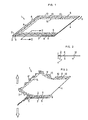
- FIG. 1 ein erfindungsgemäßes Papiererzeugnis in isometrischer Darstellung,
- FIG. 2 einen Teil des Papiererzeugnisses gemäß dem Schnitt II - II der FIG. 1 und
- FIG. 3 das Papiererzeugnis gemäß FIG. 1, jedoch mit einem durch unbefugte Manipulation ausgefransten Verschlußrand.
- Das in der Zeichnung dargestellte erfindungsgemäße Papiererzeugnis 1 ist bevorzugt als sogenannter Einblattbrief ausgebildet, der rechteckförmig ausgeführt und in der Mitte gefaltet sein kann, so daß eine obere Papierlage 2 und eine untere Papierlage 3 flächig aufeinander liegen, die an der einen Längsseite von dem Papierfaltrand 4 begrenzt sind. Die anderen drei Seitenränder 5,6,7 des doppellagigen Einblattbriefes 1 weisen einen streifenförmigen Schließbereich 8 auf, der bevorzugt etwa 2 bis 10 mm breit sein kann.
- Die Papierlagen 2,3 besitzen an den einander zugewandten Innenflächen eine thermoplastifizierbare Beschichtung 9 auf, die vorzugsweise aus einem Heißschmelzkleber bestehen kann. Die Beschichtung 9 kann zweckmäßig auf der gesamten Innenfläche der Papierlagen 2,3 gleichmäßig und fein verteilt aufgebracht sein. Auf der beschichteten Innenfläche der Papierlagen 2,3 können sich maschinell oder von Hand aufgebrachte Daten in Form einer Beschriftung, Zeichnung oder dergleichen befinden.
- Der Schließbereich 8 des Einblattbriefes 1 ist durch einen bevorzugt vollautomatisch durchgeführten maschinellen Arbeitsgang mittels Hitze und Druck verschlossen worden, indem zunächst die thermoplastische Beschichtung 9 durch Hitzeanwendung aktiviert und unmittelbar anschließend die Papierlagen 2,3 an definierten Stellen derart fest zusammengedrückt wurden, daß eine Verprägung 10 besteht, wobei die Fasern der beiden Papierlagen 2,3 so zueinander versetzt und miteinander in Eingriff sind, daß sie einen Flechtverband 11 bilden, der einen formschlüssigen Papierlagenverbund darstellt und beim Auftrennen zwangsläufig zerreißt.
- Die Eindrücke der Verprägung 10 können in einfacher Ausführung an einer einzigen Seite bzw. Außenfläche im Schließbereich 8 des Einblattbriefes 1 ausgebildet sein. In bevorzugter Ausführung kann es jedoch günstig sein, die Eindrücke der Verprägung 10 im Schließbereich 8 an beiden gegenüberliegenden Seiten bzw. Außenflächen der Papierlagen 2,3 wechselseitig auszubilden, wodurch ein besonders zuverlässiger Papierfaser-Flechtverband 11 erzielt wird. Dazu kann es zweckmäßig sein, die Verprägung 10 der Papierlagen 2,3 so auszubilden,daß sich kreuzende bzw. etwa kreuzförmig ausgeführte Bindestellen 12 im Schließbereich 8 ausgebildet sind.
- Darüber hinaus können im Schließbereich 8 des Einblattbriefes 1 Sollreißeinschnitte 13 ausgebildet sein, die sich bevorzugt im Bereich der Verprägung 10 befinden und gleichzeitig bei der Herstellung des Prägeverschlusses durch am Prägerad angeordnete kleine Schneidmesser mit ausgebildet werden. Durch die Sollreißeinschnitte 13 ist der Papierfaser-Flechtverband 11 an vorbestimmten Stellen unterbrochen, wodurch ein Versuch, den Einblattbrief 1 unbefugt zu öffnen, zusätzlich erschwert wird, da die verbundenen Papierlagen bei einem Auftrennversuch im Schließbereich 8 selbst bei äußerst vorsichtigen Öffnungsmanipulationen sofort an den Sollreißeinschnitten 13 abreißen und so beschädigt werden, daß gemäß der Darstellung in FIG. 3 ausgefranste Seitenränder 5′,6′,7′ entstehen. Der Einblattbrief 1 kann außerdem eine Randzonenperforation 14 besitzen, die neben dem Papierfaser-Flechtverband 11 ausgebildet ist und den Schließbereich 8 in der Breite begrenzt. Beim befugten Öffnen des Einblattbriefes 1 kann der mit dem Papierfaser-Flechtverband 11 versehene Schließbereich 8 einfach entlang der Randzonenperforation 14 abgetrennt werden.
- Durch die erfindungsgemäß innige Verflechtung der Fasern und der Thermoplastbeschichtung 9 im Schließbereich 8 der übereinandern liegenden Papierlagen 2,3 ist ein großer Schutz der auf der Innenseite durch Beschriftung aufgebrachten Daten des Einblattbriefes 1 gegeben. Wenn an dem mit dem Papierfaser- Flechtverband 11 verschlossenen Einblattbrief 1, z.B. bei einem Lotterielos, ein unbefugter Öffnungsversuch durchgeführt wird, reißt die Papierfaserverflechtung auf oder ab und läßt sich nicht mehr in der Originalweise zusammenfügen, so daß ein etwaiger unbefugter Öffnungsversuch eindeutig und ohne weiteres nachgewiesen werden kann, da die Faserstruktur im Schließbereich 8 dabei zwangsläufig zerstört wurde.
- Nach einem weiteren erfindungsgemäßen Merkmal kann der Schließbereich bei einem zwei- oder mehrlagigen mit einer plastifizierbaren Beschichtung versehenen Papiererzeugnis, insbesondere einem Einblattbrief, Faltblatt, Formular oder dergleichen auch dadurch einfach verschlossen werden, indem der Verschließbereich anstelle von Temperaturanwendung nur durch Ultraschall gegebenenfalls in Verbindung mit Druck verschlossen wird. Demgemäß kann der Schließbereich unabhängig von der Ausbildung eines mindestens zweilagigen, mit einer thermoplastifizierbaren Beschichtung versehenen Papiererzeugnisses in sehr einfacher Weise, und ohne daß dieses Papiererzeugnis als Ganzes erwärmt zu werden braucht, und ferner mit einfachen maschinellen Einrichtungen lediglich durch Anwendung von Ultraschall, vorzugsweise in Kombination mit Druck sicher verschlossen werden. Die miteinander zu verbindenden Blätter eines Papiererzeugnisses werden vorzugsweise im Verschließbereich in einfacher Weise lediglich einer Ultraschallquelle und einem entsprechenden Schliessdruck ausgesetzt, der so groß sein kann, daß die beschriebene gewünschte Verformung der Fasern des Papiererzeugnisses im Fließbereich entsteht. Die einzelnen Papierblätter brauchen nicht mehr erwärmt zu werden, wodurch die mit der Erwärmung möglicherweise und abhängig von der Papierqualität verbundenen Nachteile, wie Verzug der Blätter, partielle Änderung der Blattfeuchte, vermieden werden. Wird der Schließbereich durch Anwendung von Druck und unter Ultraschall verschlossen, so behält das so behandelte Papier seine Planlage bei, wodurch wiederum die sich anschließenden Arbeitsgänge, beispielsweise beim Zusammentragen der einzelnen miteinander verbundenen Papiererzeugnisse vereinfacht werden.
Claims (8)
dadurch gekennzeichnet, daß im beschichteten Schließbereich (8) die Fasern der Papierlagen (2, 3) derart zueinander versetzt sind, daß sie einen beim Auftrennen zerreißenden Flechtverband (11) bilden.
dadurch gekennzeichnet, daß im Papierfaser-Flechtverband (11) des Schließbereichs (8) eine Verprägung (10) der Papierlagen (2, 3) mit Sollreißeinschnitten (13) ausgebildet ist.
dadurch gekennzeichnet, daß im verprägten Schließbereich (8) der Papierlagen (2, 3) bevorzugt kreuzförmig angeordnete Bindestellen (12) eingebracht sind.
dadurch gekennzeichnet, daß die Eindrücke der Verprägung (10) des Schließbereichs (8) der Papierlagen (2, 3) wechselseitig an gegenüberliegenden Seiten angeordnet sind.
dadurch gekennzeichnet, daß der Papierfaser-Flechtverband (11) des Schließbereichs (8) der Papierlagen (2, 3) neben einer Randzonenperforation (14) ausgebildet ist.
dadurch gekennzeichnet, daß der Papierfaser-Flechtverband (11) an mehreren Papierseitenrändern (5, 6, 7) ausgebildet ist und an einen Papierfaltrand (4) angrenzt.
dadurch gekennzeichnet, daß der Schließbereich (8) durch Anwendng von Druck und Temperatur verschlossen ist.
dadurch gekennzeichnet, daß der Schließbereich (8) durch Anwendung von Druck und/oder Ultraschall verschlossen ist.
Priority Applications (1)
| Application Number | Priority Date | Filing Date | Title |
|---|---|---|---|
| AT88107789T ATE71885T1 (de) | 1987-05-19 | 1988-05-14 | Zwei- oder mehrlagiges papiererzeugnis. |
Applications Claiming Priority (4)
| Application Number | Priority Date | Filing Date | Title |
|---|---|---|---|
| DE3716716 | 1987-05-19 | ||
| DE3716716 | 1987-05-19 | ||
| DE3815267A DE3815267A1 (de) | 1987-05-19 | 1988-05-05 | Zwei- oder mehrlagiges papiererzeugnis |
| DE3815267 | 1988-05-05 |
Publications (3)
| Publication Number | Publication Date |
|---|---|
| EP0291897A2 true EP0291897A2 (de) | 1988-11-23 |
| EP0291897A3 EP0291897A3 (en) | 1989-03-29 |
| EP0291897B1 EP0291897B1 (de) | 1992-01-22 |
Family
ID=25855752
Family Applications (1)
| Application Number | Title | Priority Date | Filing Date |
|---|---|---|---|
| EP88107789A Expired - Lifetime EP0291897B1 (de) | 1987-05-19 | 1988-05-14 | Zwei- oder mehrlagiges Papiererzeugnis |
Country Status (5)
| Country | Link |
|---|---|
| EP (1) | EP0291897B1 (de) |
| AT (1) | ATE71885T1 (de) |
| DE (2) | DE3815267A1 (de) |
| ES (1) | ES2028172T3 (de) |
| GR (1) | GR3003837T3 (de) |
Cited By (4)
| Publication number | Priority date | Publication date | Assignee | Title |
|---|---|---|---|---|
| US5486436A (en) * | 1993-10-15 | 1996-01-23 | The Standard Register Company | Sealable web or sheet product |
| EP0719656A2 (de) | 1994-11-23 | 1996-07-03 | The Standard Register Company | Produkt und Verfahren zum thermischen Versiegeln |
| GB2333060A (en) * | 1998-05-22 | 1999-07-14 | Philip Miles Hardy | Pressure seal forms with local weakening of adhesive regions |
| WO2010003705A1 (de) | 2008-07-11 | 2010-01-14 | Bundesdruckerei Gmbh | Verbundkörper für ein wert- und/oder sicherheitsdokument mit einem beschriftbaren papierfeld sowie verfahren und vorrichtung zur herstellung eines solchen verbundkörpers |
Family Cites Families (6)
| Publication number | Priority date | Publication date | Assignee | Title |
|---|---|---|---|---|
| DE92355C (de) * | ||||
| CH150628A (de) * | 1930-12-15 | 1931-11-15 | Clare Hermann | Briefumschlag. |
| GB442972A (en) * | 1935-02-02 | 1936-02-19 | Max Vogel | Improvements in and relating to envelopes |
| CH333188A (fr) * | 1956-02-07 | 1958-10-15 | Beltrand Joseph | Enveloppe |
| US4566627A (en) * | 1983-09-27 | 1986-01-28 | Westvaco Corporation | Tamper detection envelope |
| DE3508114C1 (de) * | 1985-03-07 | 1986-05-22 | O. T. Drescher GmbH, 7255 Rutesheim | Verfahren zum Verkleben von Erzeugnissen aus Papier,Folien usw.,insbesondere von Beschriftungsblaettern |
-
1988
- 1988-05-05 DE DE3815267A patent/DE3815267A1/de not_active Withdrawn
- 1988-05-14 DE DE8888107789T patent/DE3867904D1/de not_active Expired - Fee Related
- 1988-05-14 ES ES198888107789T patent/ES2028172T3/es not_active Expired - Lifetime
- 1988-05-14 EP EP88107789A patent/EP0291897B1/de not_active Expired - Lifetime
- 1988-05-14 AT AT88107789T patent/ATE71885T1/de not_active IP Right Cessation
-
1992
- 1992-02-18 GR GR920400259T patent/GR3003837T3/el unknown
Cited By (7)
| Publication number | Priority date | Publication date | Assignee | Title |
|---|---|---|---|---|
| US5486436A (en) * | 1993-10-15 | 1996-01-23 | The Standard Register Company | Sealable web or sheet product |
| US6309495B1 (en) | 1993-10-15 | 2001-10-30 | The Standard Register Company | Method of making a sealable web or sheet product |
| EP0719656A2 (de) | 1994-11-23 | 1996-07-03 | The Standard Register Company | Produkt und Verfahren zum thermischen Versiegeln |
| AU675903B2 (en) * | 1994-11-23 | 1997-02-20 | Standard Register Company, The | Thermal seal product and process |
| GB2333060A (en) * | 1998-05-22 | 1999-07-14 | Philip Miles Hardy | Pressure seal forms with local weakening of adhesive regions |
| GB2333060B (en) * | 1998-05-22 | 1999-12-01 | Philip Miles Hardy | Pressure sealed forms |
| WO2010003705A1 (de) | 2008-07-11 | 2010-01-14 | Bundesdruckerei Gmbh | Verbundkörper für ein wert- und/oder sicherheitsdokument mit einem beschriftbaren papierfeld sowie verfahren und vorrichtung zur herstellung eines solchen verbundkörpers |
Also Published As
| Publication number | Publication date |
|---|---|
| ATE71885T1 (de) | 1992-02-15 |
| DE3815267A1 (de) | 1989-01-05 |
| EP0291897A3 (en) | 1989-03-29 |
| EP0291897B1 (de) | 1992-01-22 |
| ES2028172T3 (es) | 1992-07-01 |
| DE3867904D1 (de) | 1992-03-05 |
| GR3003837T3 (de) | 1993-03-16 |
Similar Documents
| Publication | Publication Date | Title |
|---|---|---|
| DE69113089T2 (de) | Laminierprodukt für die Herstellung einer Identifikationskarte. | |
| EP2379339B1 (de) | Datenträger mit durchsichtsbereich | |
| EP2344343B1 (de) | Sicherheitselement-transfermaterial mit mehrschichtigem träger | |
| DE4334847A1 (de) | Wertdokument mit Fenster | |
| DE4334848C1 (de) | Wertpapier mit Fenster | |
| DE60027638T2 (de) | Originalitätsverschlüss | |
| EP0815040A1 (de) | Verfahren zum verschliessen einer behälteröffnung, behälter mit einem behälterverschluss sowie deckelmaterial zur herstellung eines solchen behälterverschlusses | |
| DE2736852A1 (de) | Ueberzug fuer kennkarten | |
| EP3215371B1 (de) | Datenträger mit durchsichtssicherheitselement | |
| DE1797428B1 (de) | Schallplattenhuelle | |
| EP0824478B1 (de) | Verfahren zum herstellen von an einem träger gehaltenen produkten, wie kredit-, identifikations- und ausweiskarten und dergleichen | |
| EP0951397B1 (de) | Formular mit integrierter karte | |
| EP0291897B1 (de) | Zwei- oder mehrlagiges Papiererzeugnis | |
| DE102013105023B4 (de) | Einlageblatt, Buchblock, buchartiges Dokument sowie Verfahren zur Herstellung eines Einlageblattes | |
| DE2511367C3 (de) | Aus mehreren Schichten aufgebauter, verfälschungssicherer Aufzeichnungsträger, insbesondere Ausweiskarte | |
| DE2831853C2 (de) | Fälschungssicheres Kennzeichen | |
| EP1522984B1 (de) | Manipulationsgeschützter Folienaufbau für Etiketten und Verfahren zu dessen Herstellung | |
| DE3802711C1 (de) | ||
| DE69218579T2 (de) | Betrugssicheres Identitätsdokument sowie Verfahren zu seiner Herstellung | |
| DE3883663T2 (de) | Aus einer Papierbahn hergestellter Briefumschlag. | |
| DE69306227T2 (de) | Identifikationsdokument aus Schichtstoff, und Verfahren zu seiner Herstellung | |
| DE3851240T2 (de) | Umschläge. | |
| DE2819390C2 (de) | Zur Verwendung als Kennzeichenschild für Kraftfahrzeuge, Krafträder od. dgl. bzw. als Siegelplakette für Urkunden od. dgl. vorgesehenes Folienschild | |
| DE3342256A1 (de) | Versandumschlag | |
| DE2059108A1 (de) | Klebeplakette |
Legal Events
| Date | Code | Title | Description |
|---|---|---|---|
| PUAI | Public reference made under article 153(3) epc to a published international application that has entered the european phase |
Free format text: ORIGINAL CODE: 0009012 |
|
| AK | Designated contracting states |
Kind code of ref document: A2 Designated state(s): AT BE CH DE ES FR GB GR IT LI LU NL SE |
|
| PUAL | Search report despatched |
Free format text: ORIGINAL CODE: 0009013 |
|
| RAP1 | Party data changed (applicant data changed or rights of an application transferred) |
Owner name: DRESCHER GESCHAEFTSDRUCKE GMBH |
|
| AK | Designated contracting states |
Kind code of ref document: A3 Designated state(s): AT BE CH DE ES FR GB GR IT LI LU NL SE |
|
| 17P | Request for examination filed |
Effective date: 19890811 |
|
| 17Q | First examination report despatched |
Effective date: 19901210 |
|
| GRAA | (expected) grant |
Free format text: ORIGINAL CODE: 0009210 |
|
| ITF | It: translation for a ep patent filed | ||
| AK | Designated contracting states |
Kind code of ref document: B1 Designated state(s): AT BE CH DE ES FR GB GR IT LI LU NL SE |
|
| REF | Corresponds to: |
Ref document number: 71885 Country of ref document: AT Date of ref document: 19920215 Kind code of ref document: T |
|
| REF | Corresponds to: |
Ref document number: 3867904 Country of ref document: DE Date of ref document: 19920305 |
|
| GBT | Gb: translation of ep patent filed (gb section 77(6)(a)/1977) | ||
| ET | Fr: translation filed | ||
| REG | Reference to a national code |
Ref country code: ES Ref legal event code: FG2A Ref document number: 2028172 Country of ref document: ES Kind code of ref document: T3 Ref country code: GB Ref legal event code: 727 |
|
| REG | Reference to a national code |
Ref country code: GB Ref legal event code: 727A |
|
| PLBE | No opposition filed within time limit |
Free format text: ORIGINAL CODE: 0009261 |
|
| STAA | Information on the status of an ep patent application or granted ep patent |
Free format text: STATUS: NO OPPOSITION FILED WITHIN TIME LIMIT |
|
| REG | Reference to a national code |
Ref country code: GR Ref legal event code: FG4A Free format text: 3003837 |
|
| REG | Reference to a national code |
Ref country code: GB Ref legal event code: 727B |
|
| 26N | No opposition filed | ||
| REG | Reference to a national code |
Ref country code: GB Ref legal event code: SP |
|
| EPTA | Lu: last paid annual fee | ||
| EAL | Se: european patent in force in sweden |
Ref document number: 88107789.5 |
|
| PGFP | Annual fee paid to national office [announced via postgrant information from national office to epo] |
Ref country code: GR Payment date: 19970410 Year of fee payment: 10 |
|
| PG25 | Lapsed in a contracting state [announced via postgrant information from national office to epo] |
Ref country code: GR Free format text: LAPSE BECAUSE OF NON-PAYMENT OF DUE FEES Effective date: 19980531 |
|
| PGFP | Annual fee paid to national office [announced via postgrant information from national office to epo] |
Ref country code: AT Payment date: 20000303 Year of fee payment: 13 |
|
| PGFP | Annual fee paid to national office [announced via postgrant information from national office to epo] |
Ref country code: BE Payment date: 20000314 Year of fee payment: 13 |
|
| PGFP | Annual fee paid to national office [announced via postgrant information from national office to epo] |
Ref country code: SE Payment date: 20000323 Year of fee payment: 13 |
|
| REG | Reference to a national code |
Ref country code: CH Ref legal event code: PUE Owner name: DRESCHER GESCHAEFTSDRUCKE GMBH TRANSFER- DRESCHER Ref country code: CH Ref legal event code: NV Representative=s name: ISLER & PEDRAZZINI AG |
|
| PGFP | Annual fee paid to national office [announced via postgrant information from national office to epo] |
Ref country code: ES Payment date: 20000418 Year of fee payment: 13 |
|
| REG | Reference to a national code |
Ref country code: FR Ref legal event code: TP |
|
| PGFP | Annual fee paid to national office [announced via postgrant information from national office to epo] |
Ref country code: GB Payment date: 20000510 Year of fee payment: 13 |
|
| PGFP | Annual fee paid to national office [announced via postgrant information from national office to epo] |
Ref country code: NL Payment date: 20000531 Year of fee payment: 13 Ref country code: CH Payment date: 20000531 Year of fee payment: 13 |
|
| REG | Reference to a national code |
Ref country code: GB Ref legal event code: 732E |
|
| PGFP | Annual fee paid to national office [announced via postgrant information from national office to epo] |
Ref country code: DE Payment date: 20000621 Year of fee payment: 13 |
|
| NLS | Nl: assignments of ep-patents |
Owner name: DRESCHER DRUCK UND MARKETING GMBH |
|
| REG | Reference to a national code |
Ref country code: ES Ref legal event code: PC2A |
|
| PGFP | Annual fee paid to national office [announced via postgrant information from national office to epo] |
Ref country code: LU Payment date: 20010228 Year of fee payment: 14 Ref country code: FR Payment date: 20010228 Year of fee payment: 14 |
|
| PG25 | Lapsed in a contracting state [announced via postgrant information from national office to epo] |
Ref country code: GB Free format text: LAPSE BECAUSE OF NON-PAYMENT OF DUE FEES Effective date: 20010514 Ref country code: AT Free format text: LAPSE BECAUSE OF NON-PAYMENT OF DUE FEES Effective date: 20010514 |
|
| PG25 | Lapsed in a contracting state [announced via postgrant information from national office to epo] |
Ref country code: SE Free format text: LAPSE BECAUSE OF NON-PAYMENT OF DUE FEES Effective date: 20010515 |
|
| PG25 | Lapsed in a contracting state [announced via postgrant information from national office to epo] |
Ref country code: ES Free format text: LAPSE BECAUSE OF NON-PAYMENT OF DUE FEES Effective date: 20010516 |
|
| PG25 | Lapsed in a contracting state [announced via postgrant information from national office to epo] |
Ref country code: BE Free format text: LAPSE BECAUSE OF NON-PAYMENT OF DUE FEES Effective date: 20010531 |
|
| PG25 | Lapsed in a contracting state [announced via postgrant information from national office to epo] |
Ref country code: LI Free format text: LAPSE BECAUSE OF NON-PAYMENT OF DUE FEES Effective date: 20010613 Ref country code: CH Free format text: LAPSE BECAUSE OF NON-PAYMENT OF DUE FEES Effective date: 20010613 |
|
| BERE | Be: lapsed |
Owner name: DRESCHER DRUCK UND MARKETING G.M.B.H. Effective date: 20010531 |
|
| PG25 | Lapsed in a contracting state [announced via postgrant information from national office to epo] |
Ref country code: NL Free format text: LAPSE BECAUSE OF NON-PAYMENT OF DUE FEES Effective date: 20011201 |
|
| GBPC | Gb: european patent ceased through non-payment of renewal fee |
Effective date: 20010514 |
|
| REG | Reference to a national code |
Ref country code: CH Ref legal event code: PL |
|
| NLV4 | Nl: lapsed or anulled due to non-payment of the annual fee |
Effective date: 20011201 |
|
| PG25 | Lapsed in a contracting state [announced via postgrant information from national office to epo] |
Ref country code: DE Free format text: LAPSE BECAUSE OF NON-PAYMENT OF DUE FEES Effective date: 20020301 |
|
| PG25 | Lapsed in a contracting state [announced via postgrant information from national office to epo] |
Ref country code: LU Free format text: LAPSE BECAUSE OF NON-PAYMENT OF DUE FEES Effective date: 20020514 |
|
| PG25 | Lapsed in a contracting state [announced via postgrant information from national office to epo] |
Ref country code: FR Free format text: LAPSE BECAUSE OF NON-PAYMENT OF DUE FEES Effective date: 20030131 |
|
| REG | Reference to a national code |
Ref country code: FR Ref legal event code: ST |
|
| REG | Reference to a national code |
Ref country code: ES Ref legal event code: FD2A Effective date: 20030203 |
|
| PG25 | Lapsed in a contracting state [announced via postgrant information from national office to epo] |
Ref country code: IT Free format text: LAPSE BECAUSE OF NON-PAYMENT OF DUE FEES;WARNING: LAPSES OF ITALIAN PATENTS WITH EFFECTIVE DATE BEFORE 2007 MAY HAVE OCCURRED AT ANY TIME BEFORE 2007. THE CORRECT EFFECTIVE DATE MAY BE DIFFERENT FROM THE ONE RECORDED. Effective date: 20050514 |