EP0259762B1 - Graphite monochromator for x-rays and neutrons and production thereof - Google Patents
Graphite monochromator for x-rays and neutrons and production thereof Download PDFInfo
- Publication number
- EP0259762B1 EP0259762B1 EP87112748A EP87112748A EP0259762B1 EP 0259762 B1 EP0259762 B1 EP 0259762B1 EP 87112748 A EP87112748 A EP 87112748A EP 87112748 A EP87112748 A EP 87112748A EP 0259762 B1 EP0259762 B1 EP 0259762B1
- Authority
- EP
- European Patent Office
- Prior art keywords
- film
- graphite
- denotes
- formula
- polymer
- Prior art date
- Legal status (The legal status is an assumption and is not a legal conclusion. Google has not performed a legal analysis and makes no representation as to the accuracy of the status listed.)
- Expired - Lifetime
Links
- 0 C[C@](CC1)C*(CC2CC2)C1[C@@]1[C@](CC*)C1 Chemical compound C[C@](CC1)C*(CC2CC2)C1[C@@]1[C@](CC*)C1 0.000 description 2
Images
Classifications
-
- G—PHYSICS
- G21—NUCLEAR PHYSICS; NUCLEAR ENGINEERING
- G21K—HANDLING OF PARTICLES OR IONISING RADIATION NOT OTHERWISE PROVIDED FOR; IRRADIATION DEVICES; GAMMA RAY OR X-RAY MICROSCOPES
- G21K1/00—Arrangements for handling particles or ionising radiation, e.g. focusing or moderating
- G21K1/06—Arrangements for handling particles or ionising radiation, e.g. focusing or moderating using diffraction, refraction or reflection, e.g. monochromators
-
- C—CHEMISTRY; METALLURGY
- C01—INORGANIC CHEMISTRY
- C01B—NON-METALLIC ELEMENTS; COMPOUNDS THEREOF; METALLOIDS OR COMPOUNDS THEREOF NOT COVERED BY SUBCLASS C01C
- C01B32/00—Carbon; Compounds thereof
- C01B32/20—Graphite
- C01B32/205—Preparation
-
- G—PHYSICS
- G21—NUCLEAR PHYSICS; NUCLEAR ENGINEERING
- G21K—HANDLING OF PARTICLES OR IONISING RADIATION NOT OTHERWISE PROVIDED FOR; IRRADIATION DEVICES; GAMMA RAY OR X-RAY MICROSCOPES
- G21K2201/00—Arrangements for handling radiation or particles
- G21K2201/06—Arrangements for handling radiation or particles using diffractive, refractive or reflecting elements
- G21K2201/067—Construction details
-
- G—PHYSICS
- G21—NUCLEAR PHYSICS; NUCLEAR ENGINEERING
- G21K—HANDLING OF PARTICLES OR IONISING RADIATION NOT OTHERWISE PROVIDED FOR; IRRADIATION DEVICES; GAMMA RAY OR X-RAY MICROSCOPES
- G21K2201/00—Arrangements for handling radiation or particles
- G21K2201/06—Arrangements for handling radiation or particles using diffractive, refractive or reflecting elements
- G21K2201/068—Arrangements for handling radiation or particles using diffractive, refractive or reflecting elements specially adapted for particle beams
Definitions
- This invention relates to process for producing a graphite monochromator for X-rays and neutrons which uses a graphitized product of polymer film.
- X-rays are very widely used as a means of analysis including, for example, the structural analysis of materials.
- characteristic X-rays obtained from copper, iron, molybdenum etc. are used and, to obtain the strongest K ⁇ characteristic rays alone, monochromators which utilize the reflection at the (002) plane of graphite are commonly used.
- neutrons are actively used for the study of material properties and, they are made monochromatic by the use of graphite monochromators.
- graphite monochromators are used, besides to make neutrons monochromatic by passing them through a graphite monochromator before their incidence upon a sample, also to cut off 1/2 higher harmonics by passing the neutrons reflected by the sample through a graphite monochromator.
- the latter monochromator is sometimes called an analyzer or a filter.
- HOPG highly oriented pyrolytic graphite
- the HOPG mentioned above has disadvantages in that it requires an special apparatus for its production since the production involves steps of preparing pyrolytic carbon by thermal decomposition of hydrocarbon gas and then graphitizing the carbon under severe conditions mentioned above, that only a small portion of the HOPG thus obtained is usable for a monochromator, and that a great difficulty is encountered in preparing a curved monochromator used for focusing X-rays. Accordingly, it is eagerly awaited in the art to obtain a graphite monochromator from a material which can be highly oriented easily and can be worked into a curved form without difficulty.
- the object of this invention is to provide a process for producing a graphite monochromator which can overcome the above-mentioned defects.
- a process for producing a graphite monochromator for X-rays and neutrons which comprises pyrolyzing a polymer film in an inert atmosphere at a temperature of 2,000 to 3,500°C, and laminating the resulting graphitized film or the polymer film prior to the pyrolysis.
- This invention has been accomplished based on the finding that a graphitized product obtained by pyrolyzing a polymer film in an inert atmosphere under specified conditions can be easily worked into a curved form and can exhibit an excellent property when used for a graphite monochromator for X-rays and neutrons.
- the graphite film thus obtained has an extremely excellent plane orientation. Further, when subjected to pretreatment, the film has an excellent smoothness and an excellent characteristic for a monochromator, namely a mosaic spread of 4° or less. Further, the mosaic spread of the graphite monochromator can be controlled by varying the heat treatment conditions.
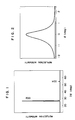
- Figs. 1 and 2 are each a graph showing the X-ray diffraction pattern of a graphite film, the ordinate indicating the reflection intensity (relative intensity) and the abscissa indicating the angle of diffraction.
- R in the above formulae (II) and (III) there may be given a p-phenylene group and di-substituted p-phenylene groups wherein the 2- and 5-position of the p-phenylene group are substituted with chlorine, an alkyl of 1 to 6 carbon atoms (e.g. methyl, ethyl, propyl, butyl and hexyl), or an alkoxy group of 1 to 6 carbon atoms (e.g. methoxy, ethoxy, propoxy, and butoxy).
- the polymeric sulfonium salt having the repeating unit of the formula (III) and when R is for example the p-phenylene group, the polymer goes via.
- the incompletely sulfonium salt-eliminated product contains a small amount of sulfur since it is an intermediate in the course of attaining poly-p-phenylene-vinylene.
- These polymer films can be prepared by methods described in Japanese Patent publication (Examined) No. 97/62 and Japanese Patent Application Laid-Open No. 199,746/84, etc.
- polymer films are preferably oriented ones which have been subjected to orientation, more preferably plane orientation.
- Polymer films subjected to substantially biaxial stretching are particularly preferred.
- these polymer films is not restricted especially, it is usually 50 ⁇ m or less, more preferably 30 ⁇ m or less.
- these polymer films may be subjected to pyrolysis as they are, it is preferable to subject them to a pre-heating prior to the aforesaid pyrolysis to obtain smooth and substantially wrinkle-free graphite films.
- the pre-heating of the polymer film is carried out in an inert atmosphere (e.g. nitrogen, argon) or under vacuum at a temperature of 500 to 1,500°C, preferably 700 to 1,500°C.
- the pre-heating is preferably conducted while the polymer film is being hold between thermally stable plates such as graphite plates or quartz glass plates, more preferably while the film is being closely contacted with the plates of the both sides. When a gap is present between the film and the plate, the film will often develop wrinkles during the pre-heating.
- a heating rate above the temperature at which the polymer begins to decompose is preferably 1°C/minute or more, more preferably 5°C/minute or more, up to the pre-heating temperature.
- the heating rate of not less than 1°C/minute tends to cause bubble formation in the film.
- the graphite film obtained after subjected to the said pre-heating and successively to the pyrolysis described below is free from bubbles and wrinkles and highly excellent in smoothness as compared with that obtained by the pyrolysis alone.
- the pyrolysis is carried out at a temperature of 2,000 to 3,500°C.
- the pyrolyzing temperature is below 2,000°C, graphitization does not proceed substantially; whereas the temperature exceeding 3,500°C leads to a marked sublimation of carbon and enormous energy consumption.
- the pyrolyzing time is not limited particularly, but preferably, it should be determined appropriately, taking the pyrolyzing temperature into consideration, so that the graphitization of the film can be attained sufficiently.
- the pyrolysis may be carried out while the film is either in an unrestrained state or under tension, it is preferably conducted while the film is being hold between graphite plates.
- the clearance between the graphite plates is preferably set at 3 to 100 times, more preferably 5 to 20 times the thickness of the film.
- the clearance is too small, the film will be directly pressed against the graphite plate, which prevents the smooth extension of the film during the graphitization; whereas when it is too large, it will cause wrinkles to develop in the resulting film.
- the graphite film thus prepared is preferably used in a laminated form in order to increase the reflection intensity of X-rays and neutrons.
- the thickness of laminate is preferably 200 ⁇ m to 10 mm, more preferably 300 ⁇ m to 5 mm.
- the lamination can also be accomplished by a method which comprises piling up the sheets of pre-heated film and then subjecting them to pyrolysis or one which comprises piling up the sheets of polymer film and then subjecting them to pyrolysis.
- Some appropriate adhesive may also be used in the lamination which can be turned into carbon atoms alone by the heating.
- Those adhesives which contain an easily graphitizable material are preferable.
- easily graphitizable materials include polyvinyl chloride, pitch and polymeric sulfonium salts represented by the formula (III).
- the sheets of graphite film are in good adhesion to one another and do not peel off to pieces. Accordingly, they can be easily used for monochromators.
- the desired product can be easily prepared by putting the film between thermally stable plates having a predetermined curvature and treating it by the above-mentioned methods.
- the film was fixed onto the sample stage of an X-ray diffractometer and its diffraction pattern was determined by a conventional reflection method using the characteristic X-rays from the copper target. Reflection peaks coming only from the (002) and (004) plane of graphite were observed as shown in Fig. 1, revealing that the film was highly oriented in the plane.
- a diffraction pattern shown in Fig. 2 was obtained, showing a high degree of orientation, namely a mosaic spread of 0.8°.
- the X-ray characteristic of the film was extremely excellent, revealing that the film could be satisfactorily used as a monochromator for X-rays and neutrons.
- An aromatic polyamide-acid film obtained in the same manner as in Example 1 was fixed along its 4 edges and heat-treated at 400°C to effect plane orientation.
- an aromatic polyimide film of 25. ⁇ m thickness was obtained.
- the film was subjected to pre-heating and then to pyrolysis in the same manner as in Example 1 to obtain a graphite film of 10 ⁇ m thickness.
- the film had a surface with a metallic luster and an excellent smoothness and was free from bubbles and wrinkles.
- the X-ray diffraction pattern of the film showed that the film was highly oriented in the plane and the reflection from the (002) plane had a half value width of 0.12°.
- the mosaic spread was 1.2°.
- Example 2 The polyimide film obtained in Example 2 was subjected to preheating and then to pyrolysis in the same manner as in Example 1 except that the maximum temperature of the pyrolysis was altered to 2,900°C.
- the film thus obtained was excellent in smoothness.
- the X-ray diffraction pattern of the film showed that the film was highly oriented in the plane and the reflection from the (002) plane had a half value width of 0.13°.
- the mosaic spread was 2.4°.
- p-Phenylene-bis(methylenedimethylsulfonium bromide) and an aqueous sodium hydroxide solution were mixed and allowed to react to give an aqueous solution of polymeric sulfonium salt.
- the reaction solution obtained above was dialyzed against water for one day by use of a dialysis membrane (Cellotube®, cut-off molecular weight: 8,000).
- the dialyzate was cast and dried under reduced pressure to obtain a polymeric intermediate film.
- the film was subjected to sulfonium salt elimination at a temperature of 300°C while being stretched biaxially.
- a poly-p-phenylenevinylene film of a stretching ratio of 3 and a thickness of 15 ⁇ m was obtained.
- the film was subjected to preheating and pyrolysis in the same manner as in Example 1 to give a graphite film.
- the film was smooth and free from bubbles and wrinkles.
- the X-ray diffraction pattern of the film showed that the film was highly oriented in the plane and the reflection from the (002) plane had a half value width of 0.11°.
- the mosaic spread was 1.64°.
- Example 2 Forty sheets of the graphite film obtained in Example 2 were piled up and put between two graphite plates. Then, the two graphite plates were bound tightly with graphite bolts and nuts. While pressure was thus being applied to the sample, the sample was heated up to 3,000°C in an argon gas atmosphere taking 2 hours and kept at 3,000°C for 20 minutes. The resulting sample comprised 40 sheets of the graphite film closely adhered to one another and was excellent also in smoothness.
- An aromatic polyimide film was obtained in the same manner as in Example 2.
- the film was subjected to pretreatment in the same manner as in Example 2.
- Forty sheets of the pretreated film was piled up and put between two graphite plates. Then, the two graphite plates were bound tightly with graphite bolts and nuts. While pressure was thus being applied to the sample, the sample was heated up to 3,000°C in an argon gas atmosphere taking 2 hours and kept at 3,000°C for 20 minutes.
- the resulting sample composed of 40 sheets of the graphite film closely adhered to one another and showed no peeling. The sample could be cut with a knife, which confirmed that the adhesion between the sheets was excellent.
- One hundred sheets of the graphite film obtained in Example 2 were adhered to one another by using as an adhesive an aqueous solution of the polymeric sulfonium salt represented by the formula (III) and then pressed at 150°C and at 500 kg/cm2 to effect lamination.
- the laminated product was put between graphite plates, then brought up to 850°C in a nitrogen atmosphere and kept at 850°C for one hour to remove off other elements than carbon in the polymeric sulfonium salt.
- the sample obtained after cooling showed that the sheets of graphite film therein were in close adhesion to one another. Determination of the orientation showed that its mosaic spread was 1.9°.
Landscapes
- Physics & Mathematics (AREA)
- Organic Chemistry (AREA)
- Chemical & Material Sciences (AREA)
- General Life Sciences & Earth Sciences (AREA)
- High Energy & Nuclear Physics (AREA)
- Life Sciences & Earth Sciences (AREA)
- General Engineering & Computer Science (AREA)
- Geology (AREA)
- Engineering & Computer Science (AREA)
- Inorganic Chemistry (AREA)
- Spectroscopy & Molecular Physics (AREA)
- Carbon And Carbon Compounds (AREA)
- Ceramic Products (AREA)
- Analysing Materials By The Use Of Radiation (AREA)
Description
- This invention relates to process for producing a graphite monochromator for X-rays and neutrons which uses a graphitized product of polymer film.
- In recent years, X-rays are very widely used as a means of analysis including, for example, the structural analysis of materials. In such cases, usually characteristic X-rays obtained from copper, iron, molybdenum etc. are used and, to obtain the strongest Kα characteristic rays alone, monochromators which utilize the reflection at the (002) plane of graphite are commonly used. Also, neutrons are actively used for the study of material properties and, they are made monochromatic by the use of graphite monochromators.
- In the latter case, graphite monochromators are used, besides to make neutrons monochromatic by passing them through a graphite monochromator before their incidence upon a sample, also to cut off 1/2 higher harmonics by passing the neutrons reflected by the sample through a graphite monochromator. The latter monochromator is sometimes called an analyzer or a filter.
- Hitherto, for graphite monochromators, highly oriented pyrolytic graphite (hereinafter abbreviated as "HOPG") has been used which is obtained by graphitizing pyrolitic carbon at a high temperature and a high pressure of, for example, 3,000°C and 400 kg/cm².
- However, the HOPG mentioned above has disadvantages in that it requires an special apparatus for its production since the production involves steps of preparing pyrolytic carbon by thermal decomposition of hydrocarbon gas and then graphitizing the carbon under severe conditions mentioned above, that only a small portion of the HOPG thus obtained is usable for a monochromator, and that a great difficulty is encountered in preparing a curved monochromator used for focusing X-rays. Accordingly, it is eagerly awaited in the art to obtain a graphite monochromator from a material which can be highly oriented easily and can be worked into a curved form without difficulty.
- The object of this invention is to provide a process for producing a graphite monochromator which can overcome the above-mentioned defects.
- According to this invention, there is provided a process for producing a graphite monochromator for X-rays and neutrons which comprises pyrolyzing a polymer film in an inert atmosphere at a temperature of 2,000 to 3,500°C, and laminating the resulting graphitized film or the polymer film prior to the pyrolysis.
- This invention has been accomplished based on the finding that a graphitized product obtained by pyrolyzing a polymer film in an inert atmosphere under specified conditions can be easily worked into a curved form and can exhibit an excellent property when used for a graphite monochromator for X-rays and neutrons.
- The graphite film thus obtained has an extremely excellent plane orientation. Further, when subjected to pretreatment, the film has an excellent smoothness and an excellent characteristic for a monochromator, namely a mosaic spread of 4° or less. Further, the mosaic spread of the graphite monochromator can be controlled by varying the heat treatment conditions.
- This invention is now described in detail below.
- Figs. 1 and 2 are each a graph showing the X-ray diffraction pattern of a graphite film, the ordinate indicating the reflection intensity (relative intensity) and the abscissa indicating the angle of diffraction.
- The polymer film used in this invention is not restricted particularly so long as it can be graphitized while keeping its shape in the pyrolysis. However, it is preferably selected from films of an aromatic polyimide having the repeating unit represented by the general formula (I)

wherein X denotes O, CH₂ or SO₂;
of an aromatic conjugated polymer having the repeating unit represented by the general formula (II)
(̵R - CH = CH)̵ (II)
wherein R denotes an aromatic hydrocarbon group conjugating with the adjacent vinylene group;
of a polymeric sulfonium salt which is one of the precursors of the polymer having the repeating unit represented by the above-mentioned general formula (II) and which has the repeating unit represented by the general formula (III)
wherein R is the same as defined in the formula (II) above and R¹ and R² each denote an alkyl group of 1 to 10 carbon atoms; and Y denotes a counter ion; or the incompletely sulfonium salt-eliminated product (containing sulfur) thereof; and of polyoxadiazole having the repeating unit represented by the general formula (IV)
and the like. - As examples of R in the above formulae (II) and (III), there may be given a p-phenylene group and di-substituted p-phenylene groups wherein the 2- and 5-position of the p-phenylene group are substituted with chlorine, an alkyl of 1 to 6 carbon atoms (e.g. methyl, ethyl, propyl, butyl and hexyl), or an alkoxy group of 1 to 6 carbon atoms (e.g. methoxy, ethoxy, propoxy, and butoxy). In the case of the polymeric sulfonium salt having the repeating unit of the formula (III) and when R is for example the p-phenylene group, the polymer goes via. poly-p-phenylenevinylene in the course of heating. Further, the incompletely sulfonium salt-eliminated product contains a small amount of sulfur since it is an intermediate in the course of attaining poly-p-phenylene-vinylene.
- As preferred examples, there may be given films of poly-N,Nʹ-(p,pʹ-oxydiphenylene)pyromellitic imide represented by the above-mentioned formula (I) wherein X is 0 (oxygen), and of poly-p-phenylenevinylene represented by the above-mentioned formula (II) wherein R is the p-phenylene group.
- These polymer films can be prepared by methods described in Japanese Patent publication (Examined) No. 97/62 and Japanese Patent Application Laid-Open No. 199,746/84, etc.
- These polymer films are preferably oriented ones which have been subjected to orientation, more preferably plane orientation. Polymer films subjected to substantially biaxial stretching are particularly preferred.
- Though the thickness of these polymer films is not restricted especially, it is usually 50 µm or less, more preferably 30 µm or less.
- Although these polymer films may be subjected to pyrolysis as they are, it is preferable to subject them to a pre-heating prior to the aforesaid pyrolysis to obtain smooth and substantially wrinkle-free graphite films. The pre-heating of the polymer film is carried out in an inert atmosphere (e.g. nitrogen, argon) or under vacuum at a temperature of 500 to 1,500°C, preferably 700 to 1,500°C. The pre-heating is preferably conducted while the polymer film is being hold between thermally stable plates such as graphite plates or quartz glass plates, more preferably while the film is being closely contacted with the plates of the both sides. When a gap is present between the film and the plate, the film will often develop wrinkles during the pre-heating.
- In the pre-heating, a heating rate above the temperature at which the polymer begins to decompose is preferably 1°C/minute or more, more preferably 5°C/minute or more, up to the pre-heating temperature. The heating rate of not less than 1°C/minute tends to cause bubble formation in the film.
- The graphite film obtained after subjected to the said pre-heating and successively to the pyrolysis described below is free from bubbles and wrinkles and highly excellent in smoothness as compared with that obtained by the pyrolysis alone.
- The pyrolysis is carried out at a temperature of 2,000 to 3,500°C. When the pyrolyzing temperature is below 2,000°C, graphitization does not proceed substantially; whereas the temperature exceeding 3,500°C leads to a marked sublimation of carbon and enormous energy consumption. The pyrolyzing time is not limited particularly, but preferably, it should be determined appropriately, taking the pyrolyzing temperature into consideration, so that the graphitization of the film can be attained sufficiently. Although the pyrolysis may be carried out while the film is either in an unrestrained state or under tension, it is preferably conducted while the film is being hold between graphite plates. In this case, the clearance between the graphite plates is preferably set at 3 to 100 times, more preferably 5 to 20 times the thickness of the film. When the clearance is too small, the film will be directly pressed against the graphite plate, which prevents the smooth extension of the film during the graphitization; whereas when it is too large, it will cause wrinkles to develop in the resulting film.
- The graphite film thus prepared is preferably used in a laminated form in order to increase the reflection intensity of X-rays and neutrons. The thickness of laminate is preferably 200 µm to 10 mm, more preferably 300 µm to 5 mm.
- Although the use of a plurality of the graphite film, in mere piles is effective in increasing the reflection intensity, it is more preferable to laminate them by piling up the sheets of the graphite film and then subjecting them again to heating at 700° to 3,500°C in an inert atmosphere.
- To accomplish the lamination smoothly it is preferable, in the heating, to put the laminated sheets of the graphite film between thermally stable plates applying pressure thereto by binding the plates tightly with bolts and the like.
- The lamination can also be accomplished by a method which comprises piling up the sheets of pre-heated film and then subjecting them to pyrolysis or one which comprises piling up the sheets of polymer film and then subjecting them to pyrolysis.
- Some appropriate adhesive may also be used in the lamination which can be turned into carbon atoms alone by the heating.
- Those adhesives which contain an easily graphitizable material are preferable. Examples of such easily graphitizable materials include polyvinyl chloride, pitch and polymeric sulfonium salts represented by the formula (III).
- In the laminated products thus obtained by these methods, the sheets of graphite film are in good adhesion to one another and do not peel off to pieces. Accordingly, they can be easily used for monochromators.
- For curved monochromators capable of focusing X-rays, the desired product can be easily prepared by putting the film between thermally stable plates having a predetermined curvature and treating it by the above-mentioned methods.
- This invention is further described in detail below with reference to Examples.
- Pyromellitic acid and diaminodiphenyl ether were polycondensed by a conventional method and then formed into film. The aromatic polyamide-acid film thus obtained was fixed along its 4 edges and heat-treated at 400°C to effect plane orientation. Thus, aromatic polyimide film of 13 µm thickness was obtained. The film was put between graphite plates and brought up to 700°C in a nitrogen gas atmosphere at a heating rate of 10°C/minute to effect pretreatment. After cooled down to room temperature, the film was put between graphite plates provided with a spacer of 0.5 mm thickness and was heated in an argon gas atmosphere from room temperature up to 3,000°C in the course of 2 hours and then maintained at 3,000°C for 20 minutes. The graphitized film thus obtained had a thickness of 5 µm, a surface with a metallic luster and an excellent smoothness and was free from bubbles and wrinkles.
- The film was fixed onto the sample stage of an X-ray diffractometer and its diffraction pattern was determined by a conventional reflection method using the characteristic X-rays from the copper target. Reflection peaks coming only from the (002) and (004) plane of graphite were observed as shown in Fig. 1, revealing that the film was highly oriented in the plane.
- The reflection from the (002) plane showed a very sharp peak, its half value width being 0.11°.
- Further, to examine the orientation in the plane more quantitatively, the counter tube of the diffractometer was fixed at 2ϑ = 26.5° and the sample stage alone was rotated to determine the mosaic spread. A diffraction pattern shown in Fig. 2 was obtained, showing a high degree of orientation, namely a mosaic spread of 0.8°. The X-ray characteristic of the film was extremely excellent, revealing that the film could be satisfactorily used as a monochromator for X-rays and neutrons.
- An aromatic polyamide-acid film obtained in the same manner as in Example 1 was fixed along its 4 edges and heat-treated at 400°C to effect plane orientation. Thus, an aromatic polyimide film of 25. µm thickness was obtained. The film was subjected to pre-heating and then to pyrolysis in the same manner as in Example 1 to obtain a graphite film of 10 µm thickness. The film had a surface with a metallic luster and an excellent smoothness and was free from bubbles and wrinkles. The X-ray diffraction pattern of the film showed that the film was highly oriented in the plane and the reflection from the (002) plane had a half value width of 0.12°. The mosaic spread was 1.2°.
- The polyimide film obtained in Example 2 was subjected to preheating and then to pyrolysis in the same manner as in Example 1 except that the maximum temperature of the pyrolysis was altered to 2,900°C. The film thus obtained was excellent in smoothness. The X-ray diffraction pattern of the film showed that the film was highly oriented in the plane and the reflection from the (002) plane had a half value width of 0.13°. The mosaic spread was 2.4°.
- p-Phenylene-bis(methylenedimethylsulfonium bromide) and an aqueous sodium hydroxide solution were mixed and allowed to react to give an aqueous solution of polymeric sulfonium salt.
- The reaction solution obtained above was dialyzed against water for one day by use of a dialysis membrane (Cellotube®, cut-off molecular weight: 8,000). The dialyzate was cast and dried under reduced pressure to obtain a polymeric intermediate film. The film was subjected to sulfonium salt elimination at a temperature of 300°C while being stretched biaxially. Thus, a poly-p-phenylenevinylene film of a stretching ratio of 3 and a thickness of 15 µm was obtained. The film was subjected to preheating and pyrolysis in the same manner as in Example 1 to give a graphite film. The film was smooth and free from bubbles and wrinkles.
- The X-ray diffraction pattern of the film showed that the film was highly oriented in the plane and the reflection from the (002) plane had a half value width of 0.11°. The mosaic spread was 1.64°.
- Ten sheets of the graphite film obtained in Example 1 were fixed in piles onto the sample stage to determine their X-ray diffraction. It was confirmed that owing to the effect of lamination, the integrated reflection intensity from the (002) plane of graphite was six-fold or more as compared with that of a single sheet film. In this case, no difference was observed in the mosaic spread between the laminated film and the single sheet film, showing that a high orientation was maintained even after lamination.
- Forty sheets of the graphite film obtained in Example 2 were piled up and put between two graphite plates. Then, the two graphite plates were bound tightly with graphite bolts and nuts. While pressure was thus being applied to the sample, the sample was heated up to 3,000°C in an argon gas atmosphere taking 2 hours and kept at 3,000°C for 20 minutes. The resulting sample comprised 40 sheets of the graphite film closely adhered to one another and was excellent also in smoothness.
- An aromatic polyimide film was obtained in the same manner as in Example 2. The film was subjected to pretreatment in the same manner as in Example 2. Forty sheets of the pretreated film was piled up and put between two graphite plates. Then, the two graphite plates were bound tightly with graphite bolts and nuts. While pressure was thus being applied to the sample, the sample was heated up to 3,000°C in an argon gas atmosphere taking 2 hours and kept at 3,000°C for 20 minutes. The resulting sample composed of 40 sheets of the graphite film closely adhered to one another and showed no peeling. The sample could be cut with a knife, which confirmed that the adhesion between the sheets was excellent.
- One hundred sheets of the graphite film obtained in Example 2 were adhered to one another by using as an adhesive an aqueous solution of the polymeric sulfonium salt represented by the formula (III) and then pressed at 150°C and at 500 kg/cm² to effect lamination. The laminated product was put between graphite plates, then brought up to 850°C in a nitrogen atmosphere and kept at 850°C for one hour to remove off other elements than carbon in the polymeric sulfonium salt. The sample obtained after cooling showed that the sheets of graphite film therein were in close adhesion to one another. Determination of the orientation showed that its mosaic spread was 1.9°.
Claims (5)
- A process for producing a graphite monochromator which comprises pyrolyzing a film of polymer in an inert atmosphere at a temperature of 2,000° to 3,500°C and laminating the resulting graphitized film or the polymer film prior to the pyrolysis.
- The process according to Claim 1, wherein the polymer is a member selected from the group consisting of aromatic polyimides having the repeating unit represented by the formula (I);

polyphenylenvinylenes having the repeating unit represented by the formula (II);
(̵R - CH = CH)̵ (II)
wherein R denotes an aromatic hydrocarbon group conjugating with the adjacent vinylene group,
polymeric sulfonium salts represented by the formula (III),

- The process according to Claim 1, wherein the lamination of the graphite films is carried out by adhering a plurality of the graphite film with an adhesive containing a graphitizable material and then heating the laminate at 700° to 3,500°C.
- The process according to Claim 3, wherein the graphitizable material is polyvinyl chloride, a pitch or a polymeric sulfonium salt represented by the formula (III);

- The process according to Claim 1, wherein a pre-heating of the polymer film is carried out in an inert atmosphere at a temperature of 500° to 1,500°C and a plurality of the pre-heated film are laminated prior to the pyrolysis.
Applications Claiming Priority (4)
| Application Number | Priority Date | Filing Date | Title |
|---|---|---|---|
| JP21295886 | 1986-09-09 | ||
| JP212958/86 | 1986-09-09 | ||
| JP62150699A JPH0772760B2 (en) | 1986-09-09 | 1987-06-16 | Graphite monochromator for X-rays and neutrons and method for producing the same |
| JP150699/87 | 1987-06-16 |
Publications (3)
| Publication Number | Publication Date |
|---|---|
| EP0259762A2 EP0259762A2 (en) | 1988-03-16 |
| EP0259762A3 EP0259762A3 (en) | 1988-11-09 |
| EP0259762B1 true EP0259762B1 (en) | 1992-12-02 |
Family
ID=26480211
Family Applications (1)
| Application Number | Title | Priority Date | Filing Date |
|---|---|---|---|
| EP87112748A Expired - Lifetime EP0259762B1 (en) | 1986-09-09 | 1987-09-01 | Graphite monochromator for x-rays and neutrons and production thereof |
Country Status (4)
| Country | Link |
|---|---|
| US (1) | US4842665A (en) |
| EP (1) | EP0259762B1 (en) |
| JP (1) | JPH0772760B2 (en) |
| DE (1) | DE3782892T2 (en) |
Families Citing this family (17)
| Publication number | Priority date | Publication date | Assignee | Title |
|---|---|---|---|---|
| JP2517063B2 (en) * | 1988-05-02 | 1996-07-24 | 新技術事業団 | Radiation optics |
| DE68923890T2 (en) * | 1988-02-25 | 1996-02-22 | Japan Res Dev Corp | Radiation optical elements with graphite layers. |
| JP2850442B2 (en) * | 1990-02-13 | 1999-01-27 | 松下電器産業株式会社 | Gas appliances |
| EP0488356B1 (en) * | 1990-11-30 | 1997-03-05 | Matsushita Electric Industrial Co., Ltd. | Processes for producing graphite blocks from graphitizable organic polymers and process for carbonizing graphitizable polymer films |
| DE4127778C2 (en) * | 1991-04-30 | 1994-11-03 | Picolab Oberflaechen Und Spure | Device for total reflection X-ray fluorescence analysis |
| DE4143530C2 (en) * | 1991-04-30 | 1995-02-09 | Picolab Oberflaechen Und Spure | Device for neutron activation analysis |
| JP3152316B2 (en) * | 1991-05-31 | 2001-04-03 | 東邦レーヨン株式会社 | Carbon film and method for producing the same |
| JPH0720293A (en) * | 1993-06-30 | 1995-01-24 | Canon Inc | X-ray mirror, X-ray exposure apparatus using the same, and device manufacturing method |
| US5798075A (en) * | 1996-10-11 | 1998-08-25 | Advanced Ceramics Corporation | Adjustment of mosaic spread for highly oriented pyrolytic graphite |
| JP2002308611A (en) * | 2001-04-06 | 2002-10-23 | Ube Ind Ltd | Graphite layered sheet and method for producing the same |
| KR101060829B1 (en) * | 2003-08-08 | 2011-08-30 | 코닌클리즈케 필립스 일렉트로닉스 엔.브이. | Alignment layer with reactive mesogens to align the liquid crystal molecules |
| WO2006129632A1 (en) | 2005-05-30 | 2006-12-07 | Kaneka Corporation | Process for producing graphite film and graphite film produced thereby |
| JP5019751B2 (en) * | 2006-01-31 | 2012-09-05 | 株式会社カネカ | Graphite film and method for producing graphite film |
| JP5322587B2 (en) * | 2008-08-12 | 2013-10-23 | 株式会社カネカ | Method for producing graphite film |
| WO2012133311A1 (en) * | 2011-03-28 | 2012-10-04 | 株式会社カネカ | Process for producing graphite film |
| US10020087B1 (en) * | 2015-04-21 | 2018-07-10 | Michael Kozhukh | Highly reflective crystalline mosaic neutron monochromator |
| CN118837390B (en) * | 2024-07-05 | 2025-03-21 | 中国科学院高能物理研究所 | A hyperbolic single crystal graphite neutron analyzer and preparation method thereof |
Family Cites Families (10)
| Publication number | Priority date | Publication date | Assignee | Title |
|---|---|---|---|---|
| US3424428A (en) * | 1965-08-09 | 1969-01-28 | Thiokol Chemical Corp | X-ray spectroscope assembly having an analyzer block composed of annealed pyrolytic graphite on an optically accurate surface |
| US3671385A (en) * | 1970-07-17 | 1972-06-20 | Atomic Energy Commission | Fibrous carbonaceous composites and method for manufacturing same |
| US3859158A (en) * | 1971-04-20 | 1975-01-07 | Celanese Corp | Production of pervious low density carbon fiber reinforced composite articles |
| US4599193A (en) * | 1983-06-30 | 1986-07-08 | Director-General Of The Agency Of Industrial Science And Technology, An Organ Of The Ministry Of International Trade And Industry Of Japan | Highly electroconductive pyrolyzed product retaining its original shape and composition formed therefrom |
| JPS60181129A (en) * | 1984-02-28 | 1985-09-14 | Agency Of Ind Science & Technol | Production of heat-treated polyimide having high electrical conductivity, and its composition |
| US4626588A (en) * | 1984-06-26 | 1986-12-02 | Director-General Of The Agency Of Industrial Science And Technology | Conjugated polymer film and pyrolyzed product thereof |
| EP0203581B1 (en) * | 1985-05-30 | 1991-08-14 | Research Development Corporation of Japan | Process for producing graphite |
| JPS61275116A (en) * | 1985-05-30 | 1986-12-05 | Res Dev Corp Of Japan | Production of graphite film and fiber |
| EP0205970B1 (en) * | 1985-05-30 | 1990-10-24 | Research Development Corporation of Japan | Process for producing graphite films |
| JPS6287899A (en) * | 1985-10-15 | 1987-04-22 | 新技術事業団 | Radiation optical element |
-
1987
- 1987-06-16 JP JP62150699A patent/JPH0772760B2/en not_active Expired - Lifetime
- 1987-09-01 EP EP87112748A patent/EP0259762B1/en not_active Expired - Lifetime
- 1987-09-01 DE DE8787112748T patent/DE3782892T2/en not_active Expired - Fee Related
- 1987-09-02 US US07/092,141 patent/US4842665A/en not_active Expired - Fee Related
Also Published As
| Publication number | Publication date |
|---|---|
| US4842665A (en) | 1989-06-27 |
| JPH01105199A (en) | 1989-04-21 |
| DE3782892T2 (en) | 1993-04-15 |
| EP0259762A2 (en) | 1988-03-16 |
| DE3782892D1 (en) | 1993-01-14 |
| JPH0772760B2 (en) | 1995-08-02 |
| EP0259762A3 (en) | 1988-11-09 |
Similar Documents
| Publication | Publication Date | Title |
|---|---|---|
| US4842665A (en) | Method of producing a graphite monochromator for X-rays and neutrons | |
| DE69026158T2 (en) | Printed circuit on flexible printed circuit board and process for its manufacture | |
| Bajwa et al. | Swift heavy ion induced modification of C 60 thin films | |
| CA1287938C (en) | Polyimide film and process for producing the same | |
| US4954193A (en) | Method for making a graphite film or sheet | |
| EP0528288B1 (en) | Process for producing curved graphite articles | |
| Sen et al. | The effect of plasticizer on the polarization of poly (vinylidene fluoride) films | |
| EP0449312A2 (en) | Process for preparing a graphite film or block from polyamido acid films | |
| JPS61210179A (en) | Coating blade for microtome and its production | |
| JP4195205B2 (en) | Preparation method of organic polymer thin film | |
| US4788703A (en) | Radiation optical element | |
| Berrehar et al. | Polydiacetylene single crystal thin films | |
| Wu et al. | Further investigation of the preparation process of poly (p-phenylenevinylene) Langmuir-Blodgett films | |
| Shimomura et al. | Infrared spectroscopic studies on the molecular orientation of vacuum-deposited thin films of poly (dimethylsilane) and a linear oligosilane | |
| Kiuchi | Advantages of dynamic ion beam mixing | |
| Li et al. | Preparation and characterization of high temperature resistant polyimide films | |
| Popov et al. | Study of the structure of oriented blends of polypropylene and polyethylene obtained by the method of polymerization in situ combination | |
| JPH11349305A (en) | Method for producing carbon film and target film | |
| JPH04202052A (en) | Production of graphite | |
| JPS6381300A (en) | Manufacture of graphite monochromator | |
| EP0645416A1 (en) | Resin-impregnated fiber sheet | |
| JPH03150216A (en) | Production of graphite | |
| JPH04202054A (en) | Production of graphite | |
| LIKHATCHEV¹ et al. | Highly oriented poly (4, 4'-diphenylene) pyromellitimide | |
| CN118994668A (en) | Application of self-supporting graphene film as heat conduction film |
Legal Events
| Date | Code | Title | Description |
|---|---|---|---|
| PUAI | Public reference made under article 153(3) epc to a published international application that has entered the european phase |
Free format text: ORIGINAL CODE: 0009012 |
|
| AK | Designated contracting states |
Kind code of ref document: A2 Designated state(s): DE FR GB |
|
| PUAL | Search report despatched |
Free format text: ORIGINAL CODE: 0009013 |
|
| AK | Designated contracting states |
Kind code of ref document: A3 Designated state(s): DE FR GB |
|
| RAP3 | Party data changed (applicant data changed or rights of an application transferred) |
Owner name: SUMITOMO CHEMICAL COMPANY, LIMITED |
|
| 17P | Request for examination filed |
Effective date: 19890320 |
|
| 17Q | First examination report despatched |
Effective date: 19910524 |
|
| GRAA | (expected) grant |
Free format text: ORIGINAL CODE: 0009210 |
|
| AK | Designated contracting states |
Kind code of ref document: B1 Designated state(s): DE FR GB |
|
| ET | Fr: translation filed | ||
| REF | Corresponds to: |
Ref document number: 3782892 Country of ref document: DE Date of ref document: 19930114 |
|
| PLBE | No opposition filed within time limit |
Free format text: ORIGINAL CODE: 0009261 |
|
| STAA | Information on the status of an ep patent application or granted ep patent |
Free format text: STATUS: NO OPPOSITION FILED WITHIN TIME LIMIT |
|
| 26N | No opposition filed | ||
| PGFP | Annual fee paid to national office [announced via postgrant information from national office to epo] |
Ref country code: GB Payment date: 19990901 Year of fee payment: 13 |
|
| PGFP | Annual fee paid to national office [announced via postgrant information from national office to epo] |
Ref country code: FR Payment date: 19990928 Year of fee payment: 13 |
|
| PGFP | Annual fee paid to national office [announced via postgrant information from national office to epo] |
Ref country code: DE Payment date: 19991130 Year of fee payment: 13 |
|
| PG25 | Lapsed in a contracting state [announced via postgrant information from national office to epo] |
Ref country code: GB Free format text: LAPSE BECAUSE OF NON-PAYMENT OF DUE FEES Effective date: 20000901 |
|
| GBPC | Gb: european patent ceased through non-payment of renewal fee |
Effective date: 20000901 |
|
| PG25 | Lapsed in a contracting state [announced via postgrant information from national office to epo] |
Ref country code: FR Free format text: LAPSE BECAUSE OF NON-PAYMENT OF DUE FEES Effective date: 20010531 |
|
| PG25 | Lapsed in a contracting state [announced via postgrant information from national office to epo] |
Ref country code: DE Free format text: LAPSE BECAUSE OF NON-PAYMENT OF DUE FEES Effective date: 20010601 |
|
| REG | Reference to a national code |
Ref country code: FR Ref legal event code: ST |