EP0257399A2 - Haarfärbemittel - Google Patents
Haarfärbemittel Download PDFInfo
- Publication number
- EP0257399A2 EP0257399A2 EP87111380A EP87111380A EP0257399A2 EP 0257399 A2 EP0257399 A2 EP 0257399A2 EP 87111380 A EP87111380 A EP 87111380A EP 87111380 A EP87111380 A EP 87111380A EP 0257399 A2 EP0257399 A2 EP 0257399A2
- Authority
- EP
- European Patent Office
- Prior art keywords
- peroxide
- hair
- hair dye
- dye according
- oxidation
- Prior art date
- Legal status (The legal status is an assumption and is not a legal conclusion. Google has not performed a legal analysis and makes no representation as to the accuracy of the status listed.)
- Granted
Links
- 239000000203 mixture Substances 0.000 title claims description 21
- 238000004043 dyeing Methods 0.000 title claims description 4
- 239000000975 dye Substances 0.000 claims abstract description 22
- 239000000118 hair dye Substances 0.000 claims abstract description 22
- 230000003647 oxidation Effects 0.000 claims abstract description 21
- 238000007254 oxidation reaction Methods 0.000 claims abstract description 21
- 150000002978 peroxides Chemical class 0.000 claims abstract description 15
- 239000000126 substance Substances 0.000 claims abstract description 11
- 239000004094 surface-active agent Substances 0.000 claims abstract description 8
- 238000004806 packaging method and process Methods 0.000 claims abstract description 4
- MHAJPDPJQMAIIY-UHFFFAOYSA-N Hydrogen peroxide Chemical compound OO MHAJPDPJQMAIIY-UHFFFAOYSA-N 0.000 claims description 11
- IAYPIBMASNFSPL-UHFFFAOYSA-N Ethylene oxide Chemical compound C1CO1 IAYPIBMASNFSPL-UHFFFAOYSA-N 0.000 claims description 7
- KDNFLUWYIMPBSA-UHFFFAOYSA-N hydrogen peroxide;1,3,5-triazine-2,4,6-triamine Chemical compound OO.NC1=NC(N)=NC(N)=N1 KDNFLUWYIMPBSA-UHFFFAOYSA-N 0.000 claims description 7
- GOOHAUXETOMSMM-UHFFFAOYSA-N Propylene oxide Chemical compound CC1CO1 GOOHAUXETOMSMM-UHFFFAOYSA-N 0.000 claims description 6
- DNIAPMSPPWPWGF-UHFFFAOYSA-N monopropylene glycol Natural products CC(O)CO DNIAPMSPPWPWGF-UHFFFAOYSA-N 0.000 claims description 5
- WCUXLLCKKVVCTQ-UHFFFAOYSA-M Potassium chloride Chemical compound [Cl-].[K+] WCUXLLCKKVVCTQ-UHFFFAOYSA-M 0.000 claims description 4
- 239000000725 suspension Substances 0.000 claims description 4
- DNIAPMSPPWPWGF-GSVOUGTGSA-N (R)-(-)-Propylene glycol Chemical compound C[C@@H](O)CO DNIAPMSPPWPWGF-GSVOUGTGSA-N 0.000 claims description 3
- 235000013772 propylene glycol Nutrition 0.000 claims description 3
- LHENQXAPVKABON-UHFFFAOYSA-N 1-methoxypropan-1-ol Chemical compound CCC(O)OC LHENQXAPVKABON-UHFFFAOYSA-N 0.000 claims description 2
- PMZURENOXWZQFD-UHFFFAOYSA-L Sodium Sulfate Chemical compound [Na+].[Na+].[O-]S([O-])(=O)=O PMZURENOXWZQFD-UHFFFAOYSA-L 0.000 claims description 2
- 238000000034 method Methods 0.000 claims description 2
- 239000001103 potassium chloride Substances 0.000 claims description 2
- 235000011164 potassium chloride Nutrition 0.000 claims description 2
- 229910052938 sodium sulfate Inorganic materials 0.000 claims description 2
- 235000011152 sodium sulphate Nutrition 0.000 claims description 2
- 239000002562 thickening agent Substances 0.000 claims description 2
- 239000003085 diluting agent Substances 0.000 claims 2
- 239000002904 solvent Substances 0.000 claims 2
- 125000002081 peroxide group Chemical group 0.000 claims 1
- CWLKGDAVCFYWJK-UHFFFAOYSA-N 3-aminophenol Chemical compound NC1=CC=CC(O)=C1 CWLKGDAVCFYWJK-UHFFFAOYSA-N 0.000 description 10
- -1 aluminum silicates Chemical class 0.000 description 9
- BFNBIHQBYMNNAN-UHFFFAOYSA-N ammonium sulfate Chemical compound N.N.OS(O)(=O)=O BFNBIHQBYMNNAN-UHFFFAOYSA-N 0.000 description 9
- 229910052921 ammonium sulfate Inorganic materials 0.000 description 9
- 235000011130 ammonium sulphate Nutrition 0.000 description 9
- RYFMWSXOAZQYPI-UHFFFAOYSA-K trisodium phosphate Chemical compound [Na+].[Na+].[Na+].[O-]P([O-])([O-])=O RYFMWSXOAZQYPI-UHFFFAOYSA-K 0.000 description 9
- GHMLBKRAJCXXBS-UHFFFAOYSA-N resorcinol Chemical compound OC1=CC=CC(O)=C1 GHMLBKRAJCXXBS-UHFFFAOYSA-N 0.000 description 8
- 239000003795 chemical substances by application Substances 0.000 description 7
- JVBXVOWTABLYPX-UHFFFAOYSA-L sodium dithionite Chemical compound [Na+].[Na+].[O-]S(=O)S([O-])=O JVBXVOWTABLYPX-UHFFFAOYSA-L 0.000 description 7
- RTZKZFJDLAIYFH-UHFFFAOYSA-N Diethyl ether Chemical compound CCOCC RTZKZFJDLAIYFH-UHFFFAOYSA-N 0.000 description 6
- VYPSYNLAJGMNEJ-UHFFFAOYSA-N Silicium dioxide Chemical compound O=[Si]=O VYPSYNLAJGMNEJ-UHFFFAOYSA-N 0.000 description 6
- QAOWNCQODCNURD-UHFFFAOYSA-L Sulfate Chemical compound [O-]S([O-])(=O)=O QAOWNCQODCNURD-UHFFFAOYSA-L 0.000 description 6
- 239000002243 precursor Substances 0.000 description 6
- 239000008119 colloidal silica Substances 0.000 description 5
- 229940018563 3-aminophenol Drugs 0.000 description 4
- 239000000443 aerosol Substances 0.000 description 4
- 150000002191 fatty alcohols Chemical class 0.000 description 4
- 229920000151 polyglycol Polymers 0.000 description 4
- 239000010695 polyglycol Substances 0.000 description 4
- 150000003839 salts Chemical class 0.000 description 4
- RVGOBWDGAVAVPJ-UHFFFAOYSA-N (4-hydroxyphenyl)azanium;chloride Chemical compound Cl.NC1=CC=C(O)C=C1 RVGOBWDGAVAVPJ-UHFFFAOYSA-N 0.000 description 3
- 239000003086 colorant Substances 0.000 description 3
- 238000004040 coloring Methods 0.000 description 3
- 235000014113 dietary fatty acids Nutrition 0.000 description 3
- 239000000194 fatty acid Substances 0.000 description 3
- 229930195729 fatty acid Natural products 0.000 description 3
- 150000004665 fatty acids Chemical class 0.000 description 3
- 230000037308 hair color Effects 0.000 description 3
- 239000007788 liquid Substances 0.000 description 3
- 229920001983 poloxamer Polymers 0.000 description 3
- UEUXEKPTXMALOB-UHFFFAOYSA-J tetrasodium;2-[2-[bis(carboxylatomethyl)amino]ethyl-(carboxylatomethyl)amino]acetate Chemical class [Na+].[Na+].[Na+].[Na+].[O-]C(=O)CN(CC([O-])=O)CCN(CC([O-])=O)CC([O-])=O UEUXEKPTXMALOB-UHFFFAOYSA-J 0.000 description 3
- PUPZLCDOIYMWBV-UHFFFAOYSA-N (+/-)-1,3-Butanediol Chemical compound CC(O)CCO PUPZLCDOIYMWBV-UHFFFAOYSA-N 0.000 description 2
- VUGGTQQTXVXDTG-UHFFFAOYSA-N 2-[(5-aminopyridin-2-yl)amino]ethanol Chemical compound NC1=CC=C(NCCO)N=C1 VUGGTQQTXVXDTG-UHFFFAOYSA-N 0.000 description 2
- CDAWCLOXVUBKRW-UHFFFAOYSA-N 2-aminophenol Chemical compound NC1=CC=CC=C1O CDAWCLOXVUBKRW-UHFFFAOYSA-N 0.000 description 2
- PLIKAWJENQZMHA-UHFFFAOYSA-N 4-aminophenol Chemical compound NC1=CC=C(O)C=C1 PLIKAWJENQZMHA-UHFFFAOYSA-N 0.000 description 2
- NLXLAEXVIDQMFP-UHFFFAOYSA-N Ammonia chloride Chemical compound [NH4+].[Cl-] NLXLAEXVIDQMFP-UHFFFAOYSA-N 0.000 description 2
- CIWBSHSKHKDKBQ-JLAZNSOCSA-N Ascorbic acid Chemical compound OC[C@H](O)[C@H]1OC(=O)C(O)=C1O CIWBSHSKHKDKBQ-JLAZNSOCSA-N 0.000 description 2
- QIGBRXMKCJKVMJ-UHFFFAOYSA-N Hydroquinone Chemical compound OC1=CC=C(O)C=C1 QIGBRXMKCJKVMJ-UHFFFAOYSA-N 0.000 description 2
- JUJWROOIHBZHMG-UHFFFAOYSA-N Pyridine Chemical compound C1=CC=NC=C1 JUJWROOIHBZHMG-UHFFFAOYSA-N 0.000 description 2
- 239000003513 alkali Substances 0.000 description 2
- 239000002775 capsule Substances 0.000 description 2
- YCIMNLLNPGFGHC-UHFFFAOYSA-N catechol Chemical compound OC1=CC=CC=C1O YCIMNLLNPGFGHC-UHFFFAOYSA-N 0.000 description 2
- 239000001913 cellulose Substances 0.000 description 2
- 229920002678 cellulose Polymers 0.000 description 2
- GUJOJGAPFQRJSV-UHFFFAOYSA-N dialuminum;dioxosilane;oxygen(2-);hydrate Chemical compound O.[O-2].[O-2].[O-2].[Al+3].[Al+3].O=[Si]=O.O=[Si]=O.O=[Si]=O.O=[Si]=O GUJOJGAPFQRJSV-UHFFFAOYSA-N 0.000 description 2
- DMBHHRLKUKUOEG-UHFFFAOYSA-N diphenylamine Chemical compound C=1C=CC=CC=1NC1=CC=CC=C1 DMBHHRLKUKUOEG-UHFFFAOYSA-N 0.000 description 2
- 239000000982 direct dye Substances 0.000 description 2
- 239000007800 oxidant agent Substances 0.000 description 2
- 229920000642 polymer Polymers 0.000 description 2
- 239000003380 propellant Substances 0.000 description 2
- WQGWDDDVZFFDIG-UHFFFAOYSA-N pyrogallol Chemical compound OC1=CC=CC(O)=C1O WQGWDDDVZFFDIG-UHFFFAOYSA-N 0.000 description 2
- GEHJYWRUCIMESM-UHFFFAOYSA-L sodium sulfite Chemical compound [Na+].[Na+].[O-]S([O-])=O GEHJYWRUCIMESM-UHFFFAOYSA-L 0.000 description 2
- CWERGRDVMFNCDR-UHFFFAOYSA-N thioglycolic acid Chemical compound OC(=O)CS CWERGRDVMFNCDR-UHFFFAOYSA-N 0.000 description 2
- AQLJVWUFPCUVLO-UHFFFAOYSA-N urea hydrogen peroxide Chemical compound OO.NC(N)=O AQLJVWUFPCUVLO-UHFFFAOYSA-N 0.000 description 2
- WZCQRUWWHSTZEM-UHFFFAOYSA-N 1,3-phenylenediamine Chemical compound NC1=CC=CC(N)=C1 WZCQRUWWHSTZEM-UHFFFAOYSA-N 0.000 description 1
- CBCKQZAAMUWICA-UHFFFAOYSA-N 1,4-phenylenediamine Chemical compound NC1=CC=C(N)C=C1 CBCKQZAAMUWICA-UHFFFAOYSA-N 0.000 description 1
- PZKPUGIOJKNRQZ-UHFFFAOYSA-N 1-methylcyclohexa-3,5-diene-1,3-diamine Chemical class CC1(N)CC(N)=CC=C1 PZKPUGIOJKNRQZ-UHFFFAOYSA-N 0.000 description 1
- KZTWOUOZKZQDMN-UHFFFAOYSA-N 2,5-diaminotoluene sulfate Chemical compound OS(O)(=O)=O.CC1=CC(N)=CC=C1N KZTWOUOZKZQDMN-UHFFFAOYSA-N 0.000 description 1
- RLYCRLGLCUXUPO-UHFFFAOYSA-N 2,6-diaminotoluene Chemical class CC1=C(N)C=CC=C1N RLYCRLGLCUXUPO-UHFFFAOYSA-N 0.000 description 1
- BXBOXUNPNIJELB-UHFFFAOYSA-N 2,6-dimethoxypyridine-3,5-diamine Chemical compound COC1=NC(OC)=C(N)C=C1N BXBOXUNPNIJELB-UHFFFAOYSA-N 0.000 description 1
- IOLOLKAVXSYJSX-UHFFFAOYSA-N 2-[(3-amino-6-methoxypyridin-2-yl)amino]ethanol Chemical compound COC1=CC=C(N)C(NCCO)=N1 IOLOLKAVXSYJSX-UHFFFAOYSA-N 0.000 description 1
- VEAWFIZYHVCIBA-UHFFFAOYSA-N 2-[(6-methoxy-3-nitropyridin-2-yl)amino]ethanol Chemical compound COC1=CC=C([N+]([O-])=O)C(NCCO)=N1 VEAWFIZYHVCIBA-UHFFFAOYSA-N 0.000 description 1
- LXHIUCRCODJALA-UHFFFAOYSA-N 2-[[6-(2-hydroxyethylamino)-3,5-dinitropyridin-2-yl]amino]ethanol Chemical compound OCCNC1=NC(NCCO)=C([N+]([O-])=O)C=C1[N+]([O-])=O LXHIUCRCODJALA-UHFFFAOYSA-N 0.000 description 1
- JMCDFZGHBZLEAP-UHFFFAOYSA-N 2-[methyl-(5-nitropyridin-2-yl)amino]ethanol Chemical compound OCCN(C)C1=CC=C([N+]([O-])=O)C=N1 JMCDFZGHBZLEAP-UHFFFAOYSA-N 0.000 description 1
- HCPJEHJGFKWRFM-UHFFFAOYSA-N 2-amino-5-methylphenol Chemical compound CC1=CC=C(N)C(O)=C1 HCPJEHJGFKWRFM-UHFFFAOYSA-N 0.000 description 1
- SWZVJOLLQTWFCW-UHFFFAOYSA-N 2-chlorobenzene-1,3-diol Chemical compound OC1=CC=CC(O)=C1Cl SWZVJOLLQTWFCW-UHFFFAOYSA-N 0.000 description 1
- HGUYBLVGLMAUFF-UHFFFAOYSA-N 2-methoxybenzene-1,4-diamine Chemical compound COC1=CC(N)=CC=C1N HGUYBLVGLMAUFF-UHFFFAOYSA-N 0.000 description 1
- OBCSAIDCZQSFQH-UHFFFAOYSA-N 2-methyl-1,4-phenylenediamine Chemical class CC1=CC(N)=CC=C1N OBCSAIDCZQSFQH-UHFFFAOYSA-N 0.000 description 1
- MMUHTLWRWVMQLS-UHFFFAOYSA-N 2-n,2-n-diethylpyridine-2,3,5-triamine Chemical compound CCN(CC)C1=NC=C(N)C=C1N MMUHTLWRWVMQLS-UHFFFAOYSA-N 0.000 description 1
- OBOSXEWFRARQPU-UHFFFAOYSA-N 2-n,2-n-dimethylpyridine-2,5-diamine Chemical compound CN(C)C1=CC=C(N)C=N1 OBOSXEWFRARQPU-UHFFFAOYSA-N 0.000 description 1
- NDNQUJQOJSNZGA-UHFFFAOYSA-N 2-n-phenylpyridine-2,5-diamine Chemical compound N1=CC(N)=CC=C1NC1=CC=CC=C1 NDNQUJQOJSNZGA-UHFFFAOYSA-N 0.000 description 1
- YTZJHEGRZSRVDQ-UHFFFAOYSA-N 2-n-propylpyridine-2,5-diamine Chemical compound CCCNC1=CC=C(N)C=N1 YTZJHEGRZSRVDQ-UHFFFAOYSA-N 0.000 description 1
- HLTDBMHJSBSAOM-UHFFFAOYSA-N 2-nitropyridine Chemical class [O-][N+](=O)C1=CC=CC=N1 HLTDBMHJSBSAOM-UHFFFAOYSA-N 0.000 description 1
- GVEXOXFTENPDOH-UHFFFAOYSA-N 3,4-diamino-2-methylphenol Chemical class CC1=C(O)C=CC(N)=C1N GVEXOXFTENPDOH-UHFFFAOYSA-N 0.000 description 1
- FRIBMENBGGCKPD-UHFFFAOYSA-N 3-(2,3-dimethoxyphenyl)prop-2-enal Chemical compound COC1=CC=CC(C=CC=O)=C1OC FRIBMENBGGCKPD-UHFFFAOYSA-N 0.000 description 1
- FLROJJGKUKLCAE-UHFFFAOYSA-N 3-amino-2-methylphenol Chemical class CC1=C(N)C=CC=C1O FLROJJGKUKLCAE-UHFFFAOYSA-N 0.000 description 1
- QLILRKBRWXALIE-UHFFFAOYSA-N 3-nitropyridine Chemical compound [O-][N+](=O)C1=CC=CN=C1 QLILRKBRWXALIE-UHFFFAOYSA-N 0.000 description 1
- TZEVSKPZTQIPLS-UHFFFAOYSA-N 3-nitropyridine-2,6-diamine Chemical compound NC1=CC=C([N+]([O-])=O)C(N)=N1 TZEVSKPZTQIPLS-UHFFFAOYSA-N 0.000 description 1
- JQVAPEJNIZULEK-UHFFFAOYSA-N 4-chlorobenzene-1,3-diol Chemical compound OC1=CC=C(Cl)C(O)=C1 JQVAPEJNIZULEK-UHFFFAOYSA-N 0.000 description 1
- HSWAACWBNMVEEW-UHFFFAOYSA-N 4-methylpyridine-2,5-diamine Chemical compound CC1=CC(N)=NC=C1N HSWAACWBNMVEEW-UHFFFAOYSA-N 0.000 description 1
- DBFYESDCPWWCHN-UHFFFAOYSA-N 5-amino-2-methylphenol Chemical compound CC1=CC=C(N)C=C1O DBFYESDCPWWCHN-UHFFFAOYSA-N 0.000 description 1
- NDTRUILHKVKGFL-UHFFFAOYSA-N 5-amino-6-hydroxy-1h-pyridin-2-one Chemical compound NC=1C=CC(=O)NC=1O NDTRUILHKVKGFL-UHFFFAOYSA-N 0.000 description 1
- PVNAZDZXJCCLNK-UHFFFAOYSA-N 6-ethoxy-n,n-dimethyl-3-nitropyridin-2-amine Chemical compound CCOC1=CC=C([N+]([O-])=O)C(N(C)C)=N1 PVNAZDZXJCCLNK-UHFFFAOYSA-N 0.000 description 1
- ATCBPVDYYNJHSG-UHFFFAOYSA-N 6-methoxy-2-n-methylpyridine-2,3-diamine Chemical compound CNC1=NC(OC)=CC=C1N ATCBPVDYYNJHSG-UHFFFAOYSA-N 0.000 description 1
- ATFIVLKHEYEYDI-UHFFFAOYSA-N 6-methoxy-2-n-phenylpyridine-2,3-diamine Chemical compound COC1=CC=C(N)C(NC=2C=CC=CC=2)=N1 ATFIVLKHEYEYDI-UHFFFAOYSA-N 0.000 description 1
- QWGRGJKYXUUFTK-UHFFFAOYSA-N 6-methoxy-3,5-dinitropyridin-2-amine Chemical compound COC1=NC(N)=C([N+]([O-])=O)C=C1[N+]([O-])=O QWGRGJKYXUUFTK-UHFFFAOYSA-N 0.000 description 1
- YQPRITMJAWILPL-UHFFFAOYSA-N 6-methoxy-n-(4-methoxyphenyl)-3-nitropyridin-2-amine Chemical compound C1=CC(OC)=CC=C1NC1=NC(OC)=CC=C1[N+]([O-])=O YQPRITMJAWILPL-UHFFFAOYSA-N 0.000 description 1
- 239000004342 Benzoyl peroxide Substances 0.000 description 1
- OMPJBNCRMGITSC-UHFFFAOYSA-N Benzoylperoxide Chemical compound C=1C=CC=CC=1C(=O)OOC(=O)C1=CC=CC=C1 OMPJBNCRMGITSC-UHFFFAOYSA-N 0.000 description 1
- KCXVZYZYPLLWCC-UHFFFAOYSA-N EDTA Chemical compound OC(=O)CN(CC(O)=O)CCN(CC(O)=O)CC(O)=O KCXVZYZYPLLWCC-UHFFFAOYSA-N 0.000 description 1
- VEXZGXHMUGYJMC-UHFFFAOYSA-N Hydrochloric acid Chemical compound Cl VEXZGXHMUGYJMC-UHFFFAOYSA-N 0.000 description 1
- 229920000877 Melamine resin Polymers 0.000 description 1
- 229910019142 PO4 Inorganic materials 0.000 description 1
- 241000872198 Serjania polyphylla Species 0.000 description 1
- 229920002125 Sokalan® Polymers 0.000 description 1
- 239000002253 acid Substances 0.000 description 1
- 150000007513 acids Chemical class 0.000 description 1
- 239000013543 active substance Substances 0.000 description 1
- 229910052783 alkali metal Inorganic materials 0.000 description 1
- 150000001340 alkali metals Chemical class 0.000 description 1
- 230000003113 alkalizing effect Effects 0.000 description 1
- 150000008051 alkyl sulfates Chemical class 0.000 description 1
- 229910052782 aluminium Inorganic materials 0.000 description 1
- XIWMTQIUUWJNRP-UHFFFAOYSA-N amidol Chemical compound NC1=CC=C(O)C(N)=C1 XIWMTQIUUWJNRP-UHFFFAOYSA-N 0.000 description 1
- 150000001412 amines Chemical class 0.000 description 1
- 150000003927 aminopyridines Chemical class 0.000 description 1
- 235000019270 ammonium chloride Nutrition 0.000 description 1
- 150000003863 ammonium salts Chemical class 0.000 description 1
- 239000003963 antioxidant agent Substances 0.000 description 1
- 230000003078 antioxidant effect Effects 0.000 description 1
- 235000006708 antioxidants Nutrition 0.000 description 1
- 239000012736 aqueous medium Substances 0.000 description 1
- 239000011668 ascorbic acid Substances 0.000 description 1
- 235000010323 ascorbic acid Nutrition 0.000 description 1
- 229960005070 ascorbic acid Drugs 0.000 description 1
- 235000012216 bentonite Nutrition 0.000 description 1
- 235000019400 benzoyl peroxide Nutrition 0.000 description 1
- 229920003086 cellulose ether Polymers 0.000 description 1
- 239000003638 chemical reducing agent Substances 0.000 description 1
- 229940075614 colloidal silicon dioxide Drugs 0.000 description 1
- 230000001143 conditioned effect Effects 0.000 description 1
- 230000003750 conditioning effect Effects 0.000 description 1
- 229920001577 copolymer Polymers 0.000 description 1
- 239000002537 cosmetic Substances 0.000 description 1
- SASYSVUEVMOWPL-NXVVXOECSA-N decyl oleate Chemical compound CCCCCCCCCCOC(=O)CCCCCCC\C=C/CCCCCCCC SASYSVUEVMOWPL-NXVVXOECSA-N 0.000 description 1
- 150000002009 diols Chemical class 0.000 description 1
- 150000002170 ethers Chemical class 0.000 description 1
- 239000003925 fat Substances 0.000 description 1
- 239000007789 gas Substances 0.000 description 1
- 230000035876 healing Effects 0.000 description 1
- 150000003840 hydrochlorides Chemical class 0.000 description 1
- 229910052739 hydrogen Inorganic materials 0.000 description 1
- 239000002563 ionic surfactant Substances 0.000 description 1
- SUMDYPCJJOFFON-UHFFFAOYSA-N isethionic acid Chemical class OCCS(O)(=O)=O SUMDYPCJJOFFON-UHFFFAOYSA-N 0.000 description 1
- 230000005923 long-lasting effect Effects 0.000 description 1
- 229940018564 m-phenylenediamine Drugs 0.000 description 1
- 238000004519 manufacturing process Methods 0.000 description 1
- 239000002609 medium Substances 0.000 description 1
- JDSHMPZPIAZGSV-UHFFFAOYSA-N melamine Chemical compound NC1=NC(N)=NC(N)=N1 JDSHMPZPIAZGSV-UHFFFAOYSA-N 0.000 description 1
- 125000002496 methyl group Chemical group [H]C([H])([H])* 0.000 description 1
- 125000000250 methylamino group Chemical group [H]N(*)C([H])([H])[H] 0.000 description 1
- 125000000325 methylidene group Chemical group [H]C([H])=* 0.000 description 1
- 229910052901 montmorillonite Inorganic materials 0.000 description 1
- HKHGKYUDPOLSFT-UHFFFAOYSA-N n',n'-dimethyl-n-(5-nitropyridin-2-yl)propane-1,3-diamine Chemical compound CN(C)CCCNC1=CC=C([N+]([O-])=O)C=N1 HKHGKYUDPOLSFT-UHFFFAOYSA-N 0.000 description 1
- VEEUCCPATNOHPT-UHFFFAOYSA-N n'-(3-nitropyridin-2-yl)ethane-1,2-diamine Chemical compound NCCNC1=NC=CC=C1[N+]([O-])=O VEEUCCPATNOHPT-UHFFFAOYSA-N 0.000 description 1
- LCBOUOIZAQDTRX-UHFFFAOYSA-N n'-(6-methoxy-3-nitropyridin-2-yl)ethane-1,2-diamine Chemical compound COC1=CC=C([N+]([O-])=O)C(NCCN)=N1 LCBOUOIZAQDTRX-UHFFFAOYSA-N 0.000 description 1
- 230000036963 noncompetitive effect Effects 0.000 description 1
- 239000002736 nonionic surfactant Substances 0.000 description 1
- 150000004987 o-phenylenediamines Chemical class 0.000 description 1
- 239000003921 oil Substances 0.000 description 1
- 239000005022 packaging material Substances 0.000 description 1
- 150000004986 phenylenediamines Chemical class 0.000 description 1
- 235000021317 phosphate Nutrition 0.000 description 1
- 150000003013 phosphoric acid derivatives Chemical class 0.000 description 1
- QXYMVUZOGFVPGH-UHFFFAOYSA-N picramic acid Chemical compound NC1=CC([N+]([O-])=O)=CC([N+]([O-])=O)=C1O QXYMVUZOGFVPGH-UHFFFAOYSA-N 0.000 description 1
- 239000004584 polyacrylic acid Substances 0.000 description 1
- 229920000259 polyoxyethylene lauryl ether Polymers 0.000 description 1
- 238000010944 pre-mature reactiony Methods 0.000 description 1
- UMJSCPRVCHMLSP-UHFFFAOYSA-N pyridine Natural products COC1=CC=CN=C1 UMJSCPRVCHMLSP-UHFFFAOYSA-N 0.000 description 1
- MIROPXUFDXCYLG-UHFFFAOYSA-N pyridine-2,5-diamine Chemical compound NC1=CC=C(N)N=C1 MIROPXUFDXCYLG-UHFFFAOYSA-N 0.000 description 1
- VHNQIURBCCNWDN-UHFFFAOYSA-N pyridine-2,6-diamine Chemical compound NC1=CC=CC(N)=N1 VHNQIURBCCNWDN-UHFFFAOYSA-N 0.000 description 1
- WLFXSECCHULRRO-UHFFFAOYSA-N pyridine-2,6-diol Chemical compound OC1=CC=CC(O)=N1 WLFXSECCHULRRO-UHFFFAOYSA-N 0.000 description 1
- 150000003222 pyridines Chemical class 0.000 description 1
- 229940079877 pyrogallol Drugs 0.000 description 1
- 125000001453 quaternary ammonium group Chemical group 0.000 description 1
- 239000001026 semi permanent hair color Substances 0.000 description 1
- 239000011734 sodium Substances 0.000 description 1
- 235000010265 sodium sulphite Nutrition 0.000 description 1
- 239000007787 solid Substances 0.000 description 1
- 238000003860 storage Methods 0.000 description 1
- 150000003467 sulfuric acid derivatives Chemical class 0.000 description 1
- 229920001059 synthetic polymer Polymers 0.000 description 1
- HRXKRNGNAMMEHJ-UHFFFAOYSA-K trisodium citrate Chemical compound [Na+].[Na+].[Na+].[O-]C(=O)CC(O)(CC([O-])=O)C([O-])=O HRXKRNGNAMMEHJ-UHFFFAOYSA-K 0.000 description 1
- 229940099259 vaseline Drugs 0.000 description 1
- 238000005406 washing Methods 0.000 description 1
- XLYOFNOQVPJJNP-UHFFFAOYSA-N water Substances O XLYOFNOQVPJJNP-UHFFFAOYSA-N 0.000 description 1
Classifications
-
- A—HUMAN NECESSITIES
- A61—MEDICAL OR VETERINARY SCIENCE; HYGIENE
- A61K—PREPARATIONS FOR MEDICAL, DENTAL OR TOILETRY PURPOSES
- A61K8/00—Cosmetics or similar toiletry preparations
- A61K8/18—Cosmetics or similar toiletry preparations characterised by the composition
- A61K8/19—Cosmetics or similar toiletry preparations characterised by the composition containing inorganic ingredients
- A61K8/22—Peroxides; Oxygen; Ozone
-
- A—HUMAN NECESSITIES
- A61—MEDICAL OR VETERINARY SCIENCE; HYGIENE
- A61K—PREPARATIONS FOR MEDICAL, DENTAL OR TOILETRY PURPOSES
- A61K8/00—Cosmetics or similar toiletry preparations
- A61K8/02—Cosmetics or similar toiletry preparations characterised by special physical form
- A61K8/04—Dispersions; Emulsions
- A61K8/044—Suspensions
-
- A—HUMAN NECESSITIES
- A61—MEDICAL OR VETERINARY SCIENCE; HYGIENE
- A61K—PREPARATIONS FOR MEDICAL, DENTAL OR TOILETRY PURPOSES
- A61K8/00—Cosmetics or similar toiletry preparations
- A61K8/18—Cosmetics or similar toiletry preparations characterised by the composition
- A61K8/72—Cosmetics or similar toiletry preparations characterised by the composition containing organic macromolecular compounds
- A61K8/90—Block copolymers
-
- A—HUMAN NECESSITIES
- A61—MEDICAL OR VETERINARY SCIENCE; HYGIENE
- A61Q—SPECIFIC USE OF COSMETICS OR SIMILAR TOILETRY PREPARATIONS
- A61Q5/00—Preparations for care of the hair
- A61Q5/10—Preparations for permanently dyeing the hair
Definitions
- the present invention relates to a hair dye with improved performance properties.
- the object was therefore to develop a hair dye which has the advantages of intensive hair coloring using oxidation dyes but no longer has the disadvantages of cumbersome handling.
- a hair colorant which contains at least one oxidation dye, optionally further coupler and developer substances and at least one surfactant is present as a suspension or paste only in one packaging unit, is essentially anhydrous and at least one peroxide contains that is not kept separate from the oxidation dye before use.
- a hair dye is already known to be applied as an aerosol and is characterized in that some of the dyes, u. a.
- Oxidation dyes are present in microencapsulated form in suspension in a liquid, in particular aqueous medium. Since the peroxides should also be in microencapsulated form in this agent, the product can be packaged in a packaging unit and also does not require any premixing when used.
- microencapsulated active substances is problematic because, on the one hand, the capsules must be so stable that they do not break open during the manufacture and filling of the respective agents and release the contents prematurely, which is particularly the case with hair dyes. if a small part of peroxide or oxidation dye were destroyed prematurely, this would cause extremely disadvantageous consequences in terms of a color change.
- the capsules must immediately and completely break open when applied to the hair, as otherwise a satisfactory hair coloring is not possible.
- compositions according to the invention can be conditioned both as a suspension or paste in conventional packaging materials such as tubes and as aerosol compositions.
- the hair dye according to the invention can also be a solution or. Contain thinners.
- any physiologically acceptable, suitable non-aqueous liquid; cosmetic fats and oils and in particular diols and their derivatives such as 1,2-propanediol, 1,3-butanediol and 1-methoxypropanol (-2) and mixtures thereof are preferred.
- These substances are used in an amount of about 10 to about 80, preferably 20 to 50, in particular 25 to 40% by weight of the total composition. All the substances customary in such compositions can be added to the hair colorants according to the invention.
- the various polymers preferably those with quaternary ammonium groups, such as quaternary cellulose ethers of the "Polymer JR” type or quaternized synthetic polymers of the "Merquat” type should be mentioned as such.
- Suitable surfactants for use in the hair dyeing and tinting agents according to the invention are alkyl sulfates, alkane sulfonates, fatty acid amide sulfates, alkyl ether carboxylic acids, fatty acid sarcosinates, isethionates and mixtures of the substances mentioned, in particular in the form of their alkali metal or amine salts.
- Nonionic surfactants such as fatty acid mono- and dialkylolamides, fatty alcohol polyglycol ethers, amine oxides, can also be used.
- ampholytic surfactants such as betaines, sulfobetaines and N - alkylaminocarboxylic acids.
- Surfactants which can preferably be used in the context of the invention are ethylene oxide / propylene oxide mixed condensates of the Pluronic® type, which additionally have properties which regulate consistency.
- the surfactants are present in the agents according to the invention in an amount of about 0.5 to about 80% by weight, preferably 5 to 50, in particular 10 to 30% by weight.
- concentration of surfactants also depends on their physical state (solid or liquid).
- Particularly suitable oxidation dye precursors are phenylenediamines and their derivatives, for example p-phenylenediamine, m-phenylenediamine and their N-substituted derivatives and salts, N-substituted derivatives of o-phenylenediamine, o- and p-toluenediamine and their N-substituted derivatives or salts and N-substituted derivatives of m-toluenediamine, aminocresols and diaminocresols and their methyl derivatives.
- phenylenediamines and their derivatives for example p-phenylenediamine, m-phenylenediamine and their N-substituted derivatives and salts, N-substituted derivatives of o-phenylenediamine, o- and p-toluenediamine and their N-substituted derivatives or salts and N-substituted derivatives of
- a class of substances suitable as oxidation dye precursors are also the aminopyridines, for example 2,5-diaminopyridine, 2,5-diamino-4-methylpyridine, 2- (2-hydroxyethylamino) -5-aminopyridine, 2-phenylamino-5-aminopyridine, 2 , 6-diaminopyridine, 2,6-dihydroxy-3-aminopyridine, 2-bis (2-hydroxyethylamino) -5-aminopyridine, 3-amino-2-methylamino-6-methoxypyridine, 3-amino-2- (2nd -hydroxyethytamino) -6-methoxypyridine, 2,6-dihydroxypyridine, 2,6-dimethoxy-3,5-diaminopyridine, 2-diethylamino-3,5-diaminopyridine and 2- (2-hydroxyethylamino) -3- amino-6-methoxypyridine, preferably in the form of their salts such
- pyridine derivatives are, for example, 3-amino-6- (dimethylamino) pyridine, 3-amino-6-methoxy-2-phenylaminopyridine, 3,5-diamino-2- (N, N-diethyiamino) pyridine and 2- ( -Propylamino) -5-aminopyridine.
- Nitropyridines such as N- (2-hydroxypheny)) - 6-methoxy-3-nitropyridine, 2- (N, N-dimethylamino) 6-ethoxy-3-nitropyridine, 2- (methylamino) -6-ethoxy- are also particularly suitable.
- the hair colorants according to the invention can contain further known developer and coupler substances and also nuances.
- o-, m- and p-aminophenol 1-methyl-2-hydroxy-4-aminobenzene, 1,2-dihydroxybenzene, resorcinol and 2-or.
- 4-chlororesorcinol 2,5-diaminoanisole, a-naphthol, diphenylamine and its derivatives, pyrogallol, 1-hydroxy-2,4-diaminobenzene, picramic acid, 6-amino-3-methylphenol and hydroquinone.
- any oxidation hair dye possibly in combination with developers, couplers and nuances, is suitable for producing the desired shades.
- the use of direct dyes is also possible and useful in some cases.
- the peroxides are preferably used in the compositions of this invention, benzoyl peroxide, urea peroxide, cumene hydroperoxide and p particular melamine used eroxid, but in principle may be any suitable peroxide or also a mixture of peroxides are used.
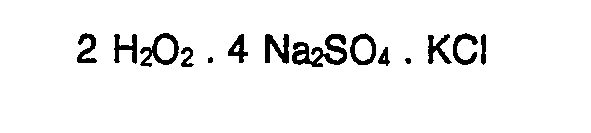
- a complex adduct of hydrogen peroxide, sodium sulfate and potassium chloride with the empirical formula is well suited as a peroxidic oxidation component in the hair colorants according to the invention.
- this peroxide By using this peroxide, a rapid, complete oxidation of the oxidation dye precursor is achieved when using the agent according to the invention; on the other hand, this peroxide compound remains exceptionally stable during storage of the agent.
- the amount of peroxide used is about 2 to about 10, preferably 3 to 8, in particular 4 to 6%, H 2 O 2 .
- Alkali phosphates such as trisodium orthophosphate can be used in particular as alkalizing agents, in particular in combination with ammonium salts such as ammonium sulfate or ammonium chloride.
- the hair dyeing composition according to the invention is applied by applying and evenly distributing the mixture to hair that has been thoroughly watered with water and allowing it to act in a manner known per se.
- This mixture can be filled into a tube or in the inner container of a two-chamber aerosol can, the content of which is kept separate from the propellant, for example according to DE-OS 2 705 549.
- This medium gives a rich brown tone when coloring the hair.
- This color mixture gives a brown color.
- Example 62 5-diaminopyridine hydrochloride 1.0 (% by weight)
- the hair can be dyed deep black with this composition.
- This mixture is introduced into the flexible inner container of a two-chamber aerosol can, and the can is filled up with propellant gas in the usual way.
- propellant gas When applying the product to wet hair, a dark brown color is achieved.
Landscapes
- Health & Medical Sciences (AREA)
- Life Sciences & Earth Sciences (AREA)
- Veterinary Medicine (AREA)
- Public Health (AREA)
- General Health & Medical Sciences (AREA)
- Animal Behavior & Ethology (AREA)
- Epidemiology (AREA)
- Birds (AREA)
- Chemical & Material Sciences (AREA)
- Inorganic Chemistry (AREA)
- Emergency Medicine (AREA)
- Dispersion Chemistry (AREA)
- Cosmetics (AREA)
Abstract
Description
- Die vorliegende Erfindung betrifft ein Haarfärbemittel mit verbesserten Gebrauchseigenschaften.
- Die im Handel befindlichen Haarfärbemittel gliedern sich in zwei unterschiedliche Kategorien:
- Einerseits die sogenannten permanenten Haarfärbemittel auf Basis von Oxidations-Farbstoffen bzw. Farbstoff-Vorprodukten, die nach Mischen mit Oxidationsmittetn, insbesondere Wasserstoffperoxid. zumeist in Gegenwart von Nuanceuren und Ehtwicklersubstanzen, zur Einwirkung gebracht werden. Mit Hilfe dieser Oxidationsfärbemittel kann eine längere Zeit anhaltende Färbung des Haares erzielt werden. Die Anwendung dieser Farbstoffprodukte durch den Verbraucher ist insofern umständlich, als Färbemittel bzw. Farbstoffvorprodukte einerseits und Peroxid andererseits bis zur Anwendung getrennt gehalten werden müssen, um eine vorzeitige Reaktion zu vermeiden. Eine zweite Gruppe von im Einsatz befindlichen Haarfärbemitteln weist diesen Nachteil nicht auf, da sie zur Farbentwicklung nicht der Einwirkung von Oxidationsmittein bedürfen, dies sind die sogenannten semipermanenten Haarfärbemittel auf Basis direktziehender Farbstoffe. Diese Zusammensetzungen können in einer Verpackung untergebracht werden und sind daher für den Verbraucher leicht zu handhaben. Sie weisen jedoch den Nachteil auf, daß lediglich eine oberflächliche Färbung des Haares erzielt wird, die nur kurze Zeit anhält und in ihrer Intensität mit derjenigen durch Oxidationsfarbstoffe erzielten nicht zu vergleichen ist.
- Es bestand daher die Aufgabe, ein Haarfärbemittel zu entwickeln, das die Vorteile einer intensiven Haarfärbung durch Oxidationsfarbstoffe aufweist, jedoch die Nachteile der umständlichen Handhabung nicht mehr besitzt.
- Diese Aufgabe wird erfindungsgemäß dadurch gelöst, daß ein Haarfärbemittel, das mindestens einen Oxidationsfarbstoff, ggf. weitere Kuppler-und Entwicklersubstanzen sowie mindestens ein Tensid enthält, als Suspension.oder:=Paste lediglich in einer Verpackungseinheit vorliegt, im wesentlichen wasserfrei ist und mindestens ein Peroxid enthält, das vom Oxidationsfarbstoff vor der Anwendung nicht getrennt gehalten wird.
- Durch dieses Mittel ist es möglich, ohne vorherigen separaten- Mischvorgang von Peroxid und Oxidationsfarbstoff eine direkte Applikation auf das nasse Haar vorzunehmen.
- Aus der DE-OS 2 005 074 ist bereits ein Haarfärbemittel bekannt, das als Aerosol appliziert werden soll und dadurch gekennzeichnet ist, daß ein Teil der Farbstoffe, u. a. Oxidationsfarbstoffe, in mikroverkapselter Form in Suspension in einem flüssigen, insbesondere wäßrigen Medium vorliegen. Da in diesem Mittel auch die Peroxide in mikroverkapseiter Form vorliegen sollen, kann das Produkt in einer Verpackungseinheit konfektioniert werden und bedarf bei der Anwendung ebenfalls keiner Vormischung.
- Diese bekannte Lösung ist jedoch aus mehreren Gründen unzweckmäßig:
- Zum einen ist die Mikroverkapselung ein sehr kostenintensives Verfahren, so daß die solchermaßen hergestellten Haarfärbemittel für den Verbraucher nahezu unerschwinglich wären. Dies dürfte auch der Grund dafür sein, daß derartige Produkte nicht auf den Markt gelangt sind, da sie offenbar als nicht wettbewerbsfähig angesehen werden.
- Darüberhinaus ist der Einsatz mikroverkapselter Wirkstoffe deshalb problematisch, weil die Kapsein einerseits so stabii sein müssen, daß sie während der Herstellung und Abfüllung der jeweiligen Mittel nicht aufbrechen und den Inhalt vorzeitig freigeben, was insbesondere bei Haarfärbemitteln -. schon beim vorzeitigen Zerstören eines kleinen Teils von Peroxid bzw. Oxidationsfarbstoff äußerst nachteilige Folgen im Sinne einer Farbveränderung hervorrufen würde.
- Andererseits müssen die Kapseln bei der Anwendung auf dem Haar sofort und vollständig aufbrechen, da sonst eine befriedigende Haarfärbung nicht möglich ist.
- Die gleichzeitige Lösung beider Probleme hat sich in der Praxis als nicht möglich erwiesen.
- Die erfindungsgemäßen Zusammensetzungen können sowohl als Suspension bzw. Paste in üblichen Verpackungsmaterialien wie Tuben als auch als Aerosol-Zusammensetzungen konditioniert sein.
- Sie enthalten vorzugsweise ein oder mehrere Verdickungsmittel, insbesondere Salze der Polyacrylsäure, Cellulosederivate, Alkali-und Erdalkalialuminiumsilikate, Bentonite wie Montmorillonit, kolloidales Siliciumdioxid, etc.. Die geeignete Menge dieser Stoffe liegt bei etwa 0,2 bis etwa 20, insbesondere etwa 1 bis 10, vorzugsweise 1,5 bis 5 Gew.-% der Gesamtzusammensetzung. Die erfindungsgemäßen Haarfärbemittel können auch ein Lösungs-bzw. Verdünnungsmittel enthalten. Als solches ist jede physiologisch verträgliche, nichtwässrige Flüssigkeit geeignet; bevorzugt sind kosmetische Fette und Öle sowie insbesondere Diole und deren Derivate wie 1,2-Propandiol, 1,3-Butandiol und 1-Methoxypropanol(-2) und deren Gemische. Diese Stoffe werden in einer Menge von etwa 10 bis etwa 80, vorzugsweise 20 bis 50, insbesondere 25 bis 40 Gew.-% der Gesamtzusammensetzung eingesetzt. Den erfindungsgemäßen Haarfärbemitteln können alle in solchen Mitteln üblichen Stoffe zugesetzt werden.
- Neben den obligatorischen Tensiden sind dies insbesondere Reduktionsmittel wie Natriumsulfit oder Ascorbinsäure und Stoffe mit konditionierender Wirkung.
- Als solche sind vor allem die verschiedenen Polymeren, vorzugsweise solche mit quaternären Ammoniumgruppen, zu nennen wie quaternäre Celluloseether vom Typ "Polymer JR" oder quaternierte synthetische Polymere vom Typ "Merquat".
- Geeignete Tenside zum Einsatz in den erfindungsgemäßen Haarfärbe-und -tönungsmittein sind Alkylsulfate, Alkansulfonate, Fettsäureamidsulfate, Alkylethercarbonsäuren, Fettsäuresarkosinate, lsethionate und Gemische aus den genannten Substanzen, insbesondere in Form ihrer Alkali-oder Aminsalze. Verwendet werden können auch nichtionische Tenside wie Fettsäuremono-und -dialkylolamide, Fettalkoholpolyglykolether, Aminoxide, . ampholytische Tenside wie Betaine, Sulfobetaine und N - Alkylaminocarbonsäuren.
- Tenside, die im Rahmen der Erfindung bevorzugt eingesetzt werden können, sind Ethylenoxid/Propylenoxid-Mischkondensate vom Typ Pluronic®, die zusätzlich konsistenzregelnde Eigenschaften aufweisen.
- Die Tenside sind in den erfindungsgemäßen Mitteln in einer Menge von etwa 0,5 bis etwa 80 Gew.-%, vorzugsweise 5 bis 50, insbesondere 10 bis 30 Gew.-%, enthalten. Die zweckmäßige Konzentration an Tensiden ist auch von deren Aggregatzustand (fest oder flüssig) abhängig.
- Als Oxidationsfarbstoff-Vorprodukte sind insbesondere Phenylendiamine und deren Derivate geeignet, beispielsweise p-Phenylendiamin, m-Phenylendiamin und ihre N-substituierten Derivate und Salze, N-substituierte Derivate des o-Phenylendiamins, o-und p-Toluylendiamin und ihre N-substituierten Derivate bzw. Salze sowie N-substituierte Derivate des m-Toluylendiamins, Aminokresole und Diaminokresole und deren Methyl-Derivate.
- Eine als Oxidationsfarbstoff-Vorprodukte geeignete Substanzklasse sind auch die Aminopyridine, beispielsweise 2,5-Diaminopyridin, 2,5-Diamino-4-methylpyridin, 2-(2-Hydroxyethylamino)-5-aminopyridin, 2-Phenylamino-5-aminopyridin, 2,6-Diaminopyridin, 2,6-Dihydroxy-3-aminopyridin, 2-Bis(2-hy- droxyethylamino)-5-aminopyridin, 3-Amino-2-methylamino-6-methoxypyridin, 3-Amino-2-(2-hy- droxyethytamino)-6-methoxypyridin, 2,6-Dihydroxypyridin, 2,6-Dimethoxy-3,5-diaminopyridin, 2-Diethylamino-3,5-diaminopyridin und 2-(2-Hydro- xyethylamino)-3-amino-6-methoxypyridin, vorzugsweise in Form ihrer Salze wie der Hydrochloride.
- Weitere geeignete Pyridin-Derivate sind beispielsweise 3-Amino-6-(dimethylamino)pyridin, 3-Amino-6-methoxy-2-phenylaminopyridin, 3,5-Diamino-2-(N,N-diethyiamino)pyridin und 2-(-Propy- lamino)-5-aminopyridin. Besonders geeignet sind auch Nitropyridine wie N-(2-Hydroxypheny))-6-methoxy-3-nitropyridin, 2-(N,N-Dimethylamino)6-ethoxy-3-nitropyridin, 2-(Methylamino)-6-ethoxy-3-nitropyridin, 2-(3-Dime- thylaminopropylamino)-5-nitropyridin, 2-(4-Metho- xyphenylamino)-6-methoxy-3-nitropyridin, 2-(2-Ami- noethylamino)-6-methoxy-3-nitropyridin, 2-(2-Hy- droxyethylaminor6-methoxy-3-nitropyridin, 2,6-Diamino-3-nitropyridin, 2,6-Bis-(2-hydroxyethyla- mino)-3,5-dinitropyridin, 2-(2-Aminomethylamino)-5-nitropyridin, 2-((2-Hydroxyethyl)-methylamino)-5-ni- tropyridin, 2-(2-Aminoethylamino)-3-nitropyridin und 3,5-Dinitro-6-methoxy-2-aminopyridin, insbesondere in Form ihrer Hydrochloride.
- Die erfindungsgemäßen Haarfärbemittel können, neben den Oxidationsfarbstoff-Vorprodukten, weitere bekannte Entwickler - und Kupplersubstanzen sowie Nuanceure enthalten.
- Als solche sein insbesondere o-, m-und p-Aminophenol, 1-Methyl-2-hydroxy-4-aminobenzol, 1,2-Dihydroxybenzol, Resorcin und 2-bzw. 4-Chlorresorcin, 2,5-Diaminoanisol, a-Naphtol, Diphenylamin und dessen Derivate, Pyrogallol, 1-Hydroxy-2,4-diaminobenzol, Picraminsäure, 6-Amino-3-methylphenol und Hydrochinon genannt.
- Außer den obengenannten ist im Prinzip jeder Oxidationshaarfarbstoff, ggf. in Kombination mit Entwicklem, Kupplem und Nuanceuren, zur Herstellung der gewünschten Farbtöne geeignet. Möglich und in manchen Fällen zweckmäßig ist auch die Mitverwendung direktziehender Farbstoffe. Als Peroxide werden in den erfindungsgemäßen Zusammensetzungen vorzugsweise Benzoylperoxid, Harnstoffperoxid, Cumolhydroperoxid und insbesondere Melaminperoxid eingesetzt, jedoch kann im Prinzip jedes geeignete Peroxid oder auch ein Gemisch aus Peroxiden Verwendung finden.
- Ein komplexes Addukt aus Wasserstoffperoxid, Natriumsulfat und Kaliumchlorid mit der empirischen Formel

- Durch die Verwendung dieses Peroxids wird eine schnelle, vollständige Oxidation des Oxidationsfarbstoff-Vorproduktes bei der Anwendung des erfindungsgemäßen Mittels erreicht; andererseits bleibt diese Peroxidverbindung während der Lagerung des Mittels außergewöhnlich stabil.
- Die Menge an eingesetztem Peroxid beträgt, ausgedrückt als Wasserstoffperoxid-Gehalt, etwa 2 bis etwa 10, vorzugsweise 3 bis 8, insbesondere 4 bis 6 % H202.
- Als Alkalisierungsmittel können insbesondere Alkaliphosphate wie Trinatriumorthophosphat mitverwendet werden, insbesondere in Kombination mit Ammoniumsalzen wie Ammoniumsulfat oder Ammoniumchlorid.
- Die Anwendung der erfindungsgemäßen Zusammensetzung zum Haarfärben erfolgt durch das Auftragen und gleichmäßige Verteilen der Mischung auf mit Wasser kräftig gewässertes Haar und Einwirkenlassen in an sich bekannter Weise.
- Die folgenden Beispiele dienen der Illustration der Erfindung.
-
- Resorcin 0,5
- p-Aminophenolhydrochlorid 0,2
- 1,2-Propandiol 10,0
- Ammoniumsulfat 6,0
- Trinatriumorthophosphat 10,0
- Melaminperoxid 10,0
- Kolloidales Siliciumdioxid 1,0
- Natriumdithionit 0,1
- Fettalkoholpolyglykolether ad. 100,0
- Diese Mischung kann in eine Tube abgefüllt oder im Innenbehälter einer Zweikammeraerosoldose, deren Inhalt separat vom Treibmittel gehalten wird, beispielsweise nach der DE-OS 2 705 549, untergebracht werden.
- Beim Aufbringen auf nasses Haar wird nach 20-30 minütiger Einwirkung und anschließender Wäsche ein braunroter Farbton erhalten
-
- Resorcin 0,1
- p-Aminophenolhydrochlorid 1,0
- m-Aminophenol 0,12
- Vaseline - 23,0
- Ammoniumsulfat 6,0
- Trinatriumorthophosphat 6,0
- Melaminperoxid 10,0
- Natriumdithionit 0,2
- Polyoxyethylenlaurylether ad. 100,00
- Nach der Haarbehandlung analog Beispiel 1 wird ein heilbrauner Farbton erhalten.
-
- m-Aminophenol 0,5
- Kolloidales Siliciumdioxid 2,5
- Trinatriumorthophosphat 12,0
- Ammoniumsulfat 10,0
- Natriumdithionit 0,05
- EDTA, Tetranatriumsalz 0,5
- Melaminperoxid 16,0
- Ethylenoxid/Propylenoxid-Kondensat (Pluronic® L 64) ' ad 100,0
- Dieses Mittel ergibt bei der Haarfärbung einen satten Braunton.
-
- m-Phenyiendiamin 0,5
- Kolloidales Siliciumdioxid 2,0
- Trinatriumorthophosphat 12,0
- Ammoniumsulfat 10,0
- Melaminperoxid 10,0
- EDTA, Tetranatriumsalz 0,5
- Natriumdithionit 0,2
- Ethylenoxid/Propylenoxid-Mischkondensat ad 100,0
- Mit dieser Färbemischung kann menschlichem Haar ein blauer Farbton verliehen werden.
-
- m-Aminophenol 0,5
- Kolloidales Siliciumdioxid 2,06
- Trinatriumorthophosphat 12,0
- Ammoniumsulfat 10,0
- EDTA, Tetranatriumsalz 0,5
- Melaminperoxid 16,0
- Natriumdithionit 0,1
- Antioxidans 0,1
- Ethylenoxid/Propylenoxid-Mischkondensat ad 100,0
- Diese Farbmischung ergibt eine Braunfärbung.
-
- 2,6-Bis(2-hydroxyethylamino)- 0,5
- 2,5-dinitropyridinhydrochlorid
- Decyloleat 10,5
- Fettalkoholpolyglykolether 21,0
- Trinatriumorthophosphat 7,5
- Ammoniumsulfat 6,5
- Kolloidales Siliciumdioxid 2,0
- Harnstoffperoxid 10,0
- Natriumdithionit 0,2
- Ethylenoxid/Propylenoxid-Mischkondensat
- (Pluronic@ L 64) ad 100,0
- Mit dieser Farbmischung läßt sich eine kupferrote Haarfarbe erzielen.
-
- 3-Amino-2-(2-hydroxyethyiamino)-6-methoxypyridin
- 0,3
- Resorcin 0,3
- n-Aminophenol 0,2
- 1-Methoxypropanoi(-2) 10,5
- Melaminperoxid 10,0
- Trinatriumorthophosphat 12,0
- Ammoniumsulfat 10,0
- Natriumdithionit 0,2
- Organisch modifizierter Montmorillonit (Bentoneø)-2,0
- Fettalkoholpolyglykolether ad 100,0
- Die Haare können mit dieser Zusammensetzung tiefschwarz gefärbt werden.
-
- Ammoniumsulfat 15,6
- EDTA, Trinatriumsalz 0,9
- 4 Na2SO4.2 H202.KCI 60,0
- (Oxycal®)
- 1,2-Propylenglycol 68,2
- Methylencellulose 0,7
- Thioglycolsäure 0,5
- Ethylenoxid/Propylenoxid-Copolymer 22,0
- p-Toluylendiaminsulfat 1,5
- p-Aminophenolhydrochlorid 0,5
- 2-Chlorresorcin 0,2
- m-Aminophenol 0,2
- α-Naphtol 0,1
- Diese Mischung wird in den flexiblen Innenbehälter einer Zweikammer-Aerosoldose eingebracht, und die Dose in üblicher Weise mit Treibgas aufgefüllt. Beim Aufbringen des Mittels auf nasses Haar wird eine dunkelbraune Färbung erzielt.
Claims (8)
Priority Applications (1)
| Application Number | Priority Date | Filing Date | Title |
|---|---|---|---|
| AT87111380T ATE59548T1 (de) | 1986-08-13 | 1987-08-06 | Haarfaerbemittel. |
Applications Claiming Priority (4)
| Application Number | Priority Date | Filing Date | Title |
|---|---|---|---|
| DE3627434 | 1986-08-13 | ||
| DE3627434 | 1986-08-13 | ||
| DE3641282 | 1986-12-03 | ||
| DE3641282 | 1986-12-03 |
Publications (3)
| Publication Number | Publication Date |
|---|---|
| EP0257399A2 true EP0257399A2 (de) | 1988-03-02 |
| EP0257399A3 EP0257399A3 (en) | 1988-04-20 |
| EP0257399B1 EP0257399B1 (de) | 1991-01-02 |
Family
ID=25846525
Family Applications (1)
| Application Number | Title | Priority Date | Filing Date |
|---|---|---|---|
| EP87111380A Expired - Lifetime EP0257399B1 (de) | 1986-08-13 | 1987-08-06 | Haarfärbemittel |
Country Status (5)
| Country | Link |
|---|---|
| EP (1) | EP0257399B1 (de) |
| JP (1) | JP2607536B2 (de) |
| AU (1) | AU591578B2 (de) |
| DE (1) | DE3766916D1 (de) |
| ES (1) | ES2020666B3 (de) |
Cited By (3)
| Publication number | Priority date | Publication date | Assignee | Title |
|---|---|---|---|---|
| DE3814685A1 (de) * | 1988-04-30 | 1988-09-01 | Schwarzkopf Gmbh Hans | Zweikomponenten-zubereitung zur anfertigung einer breiartigen, auftragefaehigen zubereitung zur behandlung von humanhaar |
| DE3814356A1 (de) * | 1988-04-28 | 1988-09-08 | Schwarzkopf Gmbh Hans | Zweikomponenten-zubereitung bzw. auftragefaehige, breiartige zubereitung zum bleichen von humanhaaren |
| WO2015090806A1 (de) * | 2013-12-19 | 2015-06-25 | Henkel Ag & Co. Kgaa | Oxidationsfärbemittel mit natürlichem pflegestoff |
Families Citing this family (5)
| Publication number | Priority date | Publication date | Assignee | Title |
|---|---|---|---|---|
| JP2848372B2 (ja) * | 1997-02-07 | 1999-01-20 | ライオン株式会社 | 泡状毛髪処理剤 |
| FR2773475B1 (fr) * | 1998-01-13 | 2001-02-02 | Oreal | Composition tinctoriale et procedes de teinture des fibres keratiniques la mettant en oeuvre |
| FR2818541B1 (fr) * | 2000-12-22 | 2004-02-13 | Oreal | Composition pour la teinture d'oxydation des fibres keratiniques comprenant au moins un 4,5 ou 3,4-diamino pyrazole ou un triamino pyrazole et au moins un compose mineral selectionne, et un procede de teinture |
| FR2968206B1 (fr) * | 2010-12-07 | 2012-12-07 | Oreal | Composition de coloration d'oxydation, un polycondensat d'oxyde d'ethylene et d'oxyde de propylene et un alcool gras insature |
| FR2968207B1 (fr) * | 2010-12-07 | 2013-04-12 | Oreal | Composition de coloration d'oxydation, un polycondensat d'oxyde d'ethylene et d'oxyde de propylene et un tensioactif non ionique glycerole non oxyalkylene |
Family Cites Families (6)
| Publication number | Priority date | Publication date | Assignee | Title |
|---|---|---|---|---|
| US3041244A (en) * | 1957-09-17 | 1962-06-26 | Jerome A Feit | Quinone hair dye compositions |
| FR1274158A (fr) * | 1960-11-23 | 1961-10-20 | Hans Schwartzkopf | Procédé pour la coloration de matières à base de kératine et produits conformesà ceux obtenus par la mise en oeuvre du procédé précédent ou procédé similaires |
| US4021538A (en) * | 1975-09-29 | 1977-05-03 | Yu Ruey J | Method for producing pigmentation in hair or skin |
| US4183366A (en) | 1977-10-19 | 1980-01-15 | Helene Curtis Industries, Inc. | Henna hair coloring and/or conditioning compositions |
| FR2430932A1 (fr) * | 1978-07-12 | 1980-02-08 | Oreal | Metaphenylenediamines et compositions tinctoriales les contenant |
| DE3434468A1 (de) * | 1984-09-20 | 1986-03-27 | Henkel KGaA, 4000 Düsseldorf | Verfahren zur herstellung pulverfoermiger, lagerbestaendiger wasserstoffperoxid-addukte |
-
1987
- 1987-08-06 EP EP87111380A patent/EP0257399B1/de not_active Expired - Lifetime
- 1987-08-06 ES ES87111380T patent/ES2020666B3/es not_active Expired - Lifetime
- 1987-08-06 DE DE8787111380T patent/DE3766916D1/de not_active Expired - Lifetime
- 1987-08-10 AU AU76746/87A patent/AU591578B2/en not_active Ceased
- 1987-08-12 JP JP62200130A patent/JP2607536B2/ja not_active Expired - Lifetime
Cited By (3)
| Publication number | Priority date | Publication date | Assignee | Title |
|---|---|---|---|---|
| DE3814356A1 (de) * | 1988-04-28 | 1988-09-08 | Schwarzkopf Gmbh Hans | Zweikomponenten-zubereitung bzw. auftragefaehige, breiartige zubereitung zum bleichen von humanhaaren |
| DE3814685A1 (de) * | 1988-04-30 | 1988-09-01 | Schwarzkopf Gmbh Hans | Zweikomponenten-zubereitung zur anfertigung einer breiartigen, auftragefaehigen zubereitung zur behandlung von humanhaar |
| WO2015090806A1 (de) * | 2013-12-19 | 2015-06-25 | Henkel Ag & Co. Kgaa | Oxidationsfärbemittel mit natürlichem pflegestoff |
Also Published As
| Publication number | Publication date |
|---|---|
| DE3766916D1 (de) | 1991-02-07 |
| AU7674687A (en) | 1988-02-18 |
| JP2607536B2 (ja) | 1997-05-07 |
| AU591578B2 (en) | 1989-12-07 |
| JPS6348207A (ja) | 1988-02-29 |
| EP0257399A3 (en) | 1988-04-20 |
| EP0257399B1 (de) | 1991-01-02 |
| ES2020666B3 (es) | 1991-09-01 |
Similar Documents
| Publication | Publication Date | Title |
|---|---|---|
| EP1036557B1 (de) | Voremulsion und Verwendung derselben zur Herstellung eines Haarfärbemittels sowie Verfahren zur Herstellung einer Haarfärbeemulsion | |
| EP0642783B1 (de) | Mittel zum gleichzeitigen Färben und Aufhellen von menschlichen Haaren | |
| EP0950395B1 (de) | Verfahren zur Herstellung von stabilen wässrigen Haarfärbeemulsionen | |
| DE69911305T2 (de) | 1-(4-Aminophenyl)-2-pyrrolidinemethanole enthaltende oxidative Haarfärbemittel und Verfahren | |
| DE19901886C2 (de) | Verfahren zur Herstellung eines Haarfärbemittels | |
| EP1138316B1 (de) | Verfahren und Zusammensetzung zum oxidativen Färben von menschlichen Haaren | |
| EP0739622A1 (de) | Haarfärbemittel | |
| EP0650718B1 (de) | Oxidationshaarfärbemittel aus einer cremeförmigen Farbstoffträgermasse und einer ein Polymer und ein Oxidationsmittel enthaltenden Zubereitungen sowie Verfahren zum oxidativen Färben von Haaren | |
| DE19721785C1 (de) | Verfahren zum gleichzeitigen Färben und Aufhellen von menschlichen Haaren | |
| EP0257399B1 (de) | Haarfärbemittel | |
| DE3222647A1 (de) | Verwendung von hydrochinon-alkyl-derivaten als antioxidierendes agens, oxidationsfaerbemittel, die diese derivate enthalten und ein anwendungsverfahren zum schutz von oxidationsfaerbemitteln | |
| DE19815341C1 (de) | Verfahren zur Herstellung von stabilen wäßrigen Haarfärbeemulsionen und wäßrige Haarfärbeemulsion | |
| EP0965324B1 (de) | Haarfärbemittel und Verfahren zu dessen Herstellung | |
| DE20104441U1 (de) | Haarfärbemittel | |
| DE19827434C2 (de) | Haarfärbemittel und Verfahren zu dessen Herstellung | |
| DE19904291C2 (de) | Verfahren zum oxidativen Färben von menschlichen Haaren | |
| DE19724337C1 (de) | Haarfärbemittel | |
| DE10112436C2 (de) | Haarfärbemittel enthaltend ein Pyrazolo [5,1c]-1,2,4-triazol-Derivat | |
| DE19825134C1 (de) | Verfahren zum oxidativen Färben von menschlichen Haaren | |
| EP1310232B1 (de) | Verfahren zum Färben von menschlichen Haaren | |
| EP1222912B1 (de) | Haarfärbemittel und Verfahren zum Färben von menschlichen Haaren | |
| EP1310231B1 (de) | Verfahren zum Färben von menschlichen Haaren | |
| EP1166758B1 (de) | Verfahren zum oxidativen Färben von menschlichen Haaren | |
| DE19729081C1 (de) | Haarfärbemittel | |
| DE19628343C1 (de) | Haarfärbemittel |
Legal Events
| Date | Code | Title | Description |
|---|---|---|---|
| PUAI | Public reference made under article 153(3) epc to a published international application that has entered the european phase |
Free format text: ORIGINAL CODE: 0009012 |
|
| AK | Designated contracting states |
Kind code of ref document: A2 Designated state(s): AT BE CH DE ES FR GB GR IT LI LU NL SE |
|
| PUAL | Search report despatched |
Free format text: ORIGINAL CODE: 0009013 |
|
| AK | Designated contracting states |
Kind code of ref document: A3 Designated state(s): AT BE CH DE ES FR GB GR IT LI LU NL SE |
|
| 17P | Request for examination filed |
Effective date: 19880323 |
|
| RAP1 | Party data changed (applicant data changed or rights of an application transferred) |
Owner name: BLENDAX GMBH |
|
| 17Q | First examination report despatched |
Effective date: 19890928 |
|
| RAP1 | Party data changed (applicant data changed or rights of an application transferred) |
Owner name: BERATUNGSLABOR FUER DIE KOSMETISCHE UND PHARMAZEUT |
|
| GRAA | (expected) grant |
Free format text: ORIGINAL CODE: 0009210 |
|
| AK | Designated contracting states |
Kind code of ref document: B1 Designated state(s): AT BE CH DE ES FR GB GR IT LI LU NL SE |
|
| PG25 | Lapsed in a contracting state [announced via postgrant information from national office to epo] |
Ref country code: GR Free format text: LAPSE BECAUSE OF FAILURE TO SUBMIT A TRANSLATION OF THE DESCRIPTION OR TO PAY THE FEE WITHIN THE PRESCRIBED TIME-LIMIT Effective date: 19910102 Ref country code: SE Effective date: 19910102 Ref country code: IT Free format text: LAPSE BECAUSE OF FAILURE TO SUBMIT A TRANSLATION OF THE DESCRIPTION OR TO PAY THE FEE WITHIN THE PRESCRIBED TIME-LIMIT;WARNING: LAPSES OF ITALIAN PATENTS WITH EFFECTIVE DATE BEFORE 2007 MAY HAVE OCCURRED AT ANY TIME BEFORE 2007. THE CORRECT EFFECTIVE DATE MAY BE DIFFERENT FROM THE ONE RECORDED. Effective date: 19910102 |
|
| REF | Corresponds to: |
Ref document number: 59548 Country of ref document: AT Date of ref document: 19910115 Kind code of ref document: T |
|
| REF | Corresponds to: |
Ref document number: 3766916 Country of ref document: DE Date of ref document: 19910207 |
|
| ET | Fr: translation filed | ||
| GBT | Gb: translation of ep patent filed (gb section 77(6)(a)/1977) | ||
| PG25 | Lapsed in a contracting state [announced via postgrant information from national office to epo] |
Ref country code: AT Effective date: 19910806 |
|
| PGFP | Annual fee paid to national office [announced via postgrant information from national office to epo] |
Ref country code: ES Payment date: 19910829 Year of fee payment: 5 |
|
| PG25 | Lapsed in a contracting state [announced via postgrant information from national office to epo] |
Ref country code: LU Free format text: LAPSE BECAUSE OF NON-PAYMENT OF DUE FEES Effective date: 19910831 |
|
| PGFP | Annual fee paid to national office [announced via postgrant information from national office to epo] |
Ref country code: NL Payment date: 19910831 Year of fee payment: 5 |
|
| PGFP | Annual fee paid to national office [announced via postgrant information from national office to epo] |
Ref country code: BE Payment date: 19910904 Year of fee payment: 5 |
|
| PGFP | Annual fee paid to national office [announced via postgrant information from national office to epo] |
Ref country code: CH Payment date: 19910918 Year of fee payment: 5 |
|
| PLBE | No opposition filed within time limit |
Free format text: ORIGINAL CODE: 0009261 |
|
| STAA | Information on the status of an ep patent application or granted ep patent |
Free format text: STATUS: NO OPPOSITION FILED WITHIN TIME LIMIT |
|
| 26N | No opposition filed | ||
| PG25 | Lapsed in a contracting state [announced via postgrant information from national office to epo] |
Ref country code: ES Free format text: LAPSE BECAUSE OF NON-PAYMENT OF DUE FEES Effective date: 19920807 |
|
| PG25 | Lapsed in a contracting state [announced via postgrant information from national office to epo] |
Ref country code: BE Effective date: 19920831 Ref country code: CH Effective date: 19920831 Ref country code: LI Effective date: 19920831 |
|
| BERE | Be: lapsed |
Owner name: BERATUNGSLABOR FUR DIE KOSMETISCHE UND PHARMAZEUT Effective date: 19920831 |
|
| PG25 | Lapsed in a contracting state [announced via postgrant information from national office to epo] |
Ref country code: NL Effective date: 19930301 |
|
| NLV4 | Nl: lapsed or anulled due to non-payment of the annual fee | ||
| REG | Reference to a national code |
Ref country code: CH Ref legal event code: PL |
|
| REG | Reference to a national code |
Ref country code: GB Ref legal event code: 732E |
|
| REG | Reference to a national code |
Ref country code: FR Ref legal event code: TP |
|
| REG | Reference to a national code |
Ref country code: GB Ref legal event code: IF02 |
|
| REG | Reference to a national code |
Ref country code: ES Ref legal event code: FD2A Effective date: 19930910 |
|
| PGFP | Annual fee paid to national office [announced via postgrant information from national office to epo] |
Ref country code: GB Payment date: 20060706 Year of fee payment: 20 |
|
| PGFP | Annual fee paid to national office [announced via postgrant information from national office to epo] |
Ref country code: FR Payment date: 20060803 Year of fee payment: 20 |
|
| PGFP | Annual fee paid to national office [announced via postgrant information from national office to epo] |
Ref country code: DE Payment date: 20060831 Year of fee payment: 20 |
|
| PG25 | Lapsed in a contracting state [announced via postgrant information from national office to epo] |
Ref country code: GB Free format text: LAPSE BECAUSE OF EXPIRATION OF PROTECTION Effective date: 20070805 |