EP0253755A2 - Schweissbacke für Säcke - Google Patents
Schweissbacke für Säcke Download PDFInfo
- Publication number
- EP0253755A2 EP0253755A2 EP87630122A EP87630122A EP0253755A2 EP 0253755 A2 EP0253755 A2 EP 0253755A2 EP 87630122 A EP87630122 A EP 87630122A EP 87630122 A EP87630122 A EP 87630122A EP 0253755 A2 EP0253755 A2 EP 0253755A2
- Authority
- EP
- European Patent Office
- Prior art keywords
- bar
- sealing bar
- bridge
- slot
- heat
- Prior art date
- Legal status (The legal status is an assumption and is not a legal conclusion. Google has not performed a legal analysis and makes no representation as to the accuracy of the status listed.)
- Withdrawn
Links
Images
Classifications
-
- B—PERFORMING OPERATIONS; TRANSPORTING
- B29—WORKING OF PLASTICS; WORKING OF SUBSTANCES IN A PLASTIC STATE IN GENERAL
- B29C—SHAPING OR JOINING OF PLASTICS; SHAPING OF MATERIAL IN A PLASTIC STATE, NOT OTHERWISE PROVIDED FOR; AFTER-TREATMENT OF THE SHAPED PRODUCTS, e.g. REPAIRING
- B29C65/00—Joining or sealing of preformed parts, e.g. welding of plastics materials; Apparatus therefor
- B29C65/02—Joining or sealing of preformed parts, e.g. welding of plastics materials; Apparatus therefor by heating, with or without pressure
- B29C65/18—Joining or sealing of preformed parts, e.g. welding of plastics materials; Apparatus therefor by heating, with or without pressure using heated tools
-
- B—PERFORMING OPERATIONS; TRANSPORTING
- B29—WORKING OF PLASTICS; WORKING OF SUBSTANCES IN A PLASTIC STATE IN GENERAL
- B29C—SHAPING OR JOINING OF PLASTICS; SHAPING OF MATERIAL IN A PLASTIC STATE, NOT OTHERWISE PROVIDED FOR; AFTER-TREATMENT OF THE SHAPED PRODUCTS, e.g. REPAIRING
- B29C65/00—Joining or sealing of preformed parts, e.g. welding of plastics materials; Apparatus therefor
- B29C65/02—Joining or sealing of preformed parts, e.g. welding of plastics materials; Apparatus therefor by heating, with or without pressure
- B29C65/18—Joining or sealing of preformed parts, e.g. welding of plastics materials; Apparatus therefor by heating, with or without pressure using heated tools
- B29C65/24—Joining or sealing of preformed parts, e.g. welding of plastics materials; Apparatus therefor by heating, with or without pressure using heated tools characterised by the means for heating the tool
- B29C65/30—Electrical means
- B29C65/305—Electrical means involving the use of cartridge heaters
-
- B—PERFORMING OPERATIONS; TRANSPORTING
- B29—WORKING OF PLASTICS; WORKING OF SUBSTANCES IN A PLASTIC STATE IN GENERAL
- B29C—SHAPING OR JOINING OF PLASTICS; SHAPING OF MATERIAL IN A PLASTIC STATE, NOT OTHERWISE PROVIDED FOR; AFTER-TREATMENT OF THE SHAPED PRODUCTS, e.g. REPAIRING
- B29C66/00—General aspects of processes or apparatus for joining preformed parts
- B29C66/01—General aspects dealing with the joint area or with the area to be joined
- B29C66/05—Particular design of joint configurations
- B29C66/10—Particular design of joint configurations particular design of the joint cross-sections
- B29C66/11—Joint cross-sections comprising a single joint-segment, i.e. one of the parts to be joined comprising a single joint-segment in the joint cross-section
- B29C66/112—Single lapped joints
- B29C66/1122—Single lap to lap joints, i.e. overlap joints
-
- B—PERFORMING OPERATIONS; TRANSPORTING
- B29—WORKING OF PLASTICS; WORKING OF SUBSTANCES IN A PLASTIC STATE IN GENERAL
- B29C—SHAPING OR JOINING OF PLASTICS; SHAPING OF MATERIAL IN A PLASTIC STATE, NOT OTHERWISE PROVIDED FOR; AFTER-TREATMENT OF THE SHAPED PRODUCTS, e.g. REPAIRING
- B29C66/00—General aspects of processes or apparatus for joining preformed parts
- B29C66/01—General aspects dealing with the joint area or with the area to be joined
- B29C66/346—Making joints having variable thicknesses in the joint area, e.g. by using jaws having an adapted configuration
-
- B—PERFORMING OPERATIONS; TRANSPORTING
- B29—WORKING OF PLASTICS; WORKING OF SUBSTANCES IN A PLASTIC STATE IN GENERAL
- B29C—SHAPING OR JOINING OF PLASTICS; SHAPING OF MATERIAL IN A PLASTIC STATE, NOT OTHERWISE PROVIDED FOR; AFTER-TREATMENT OF THE SHAPED PRODUCTS, e.g. REPAIRING
- B29C66/00—General aspects of processes or apparatus for joining preformed parts
- B29C66/40—General aspects of joining substantially flat articles, e.g. plates, sheets or web-like materials; Making flat seams in tubular or hollow articles; Joining single elements to substantially flat surfaces
- B29C66/41—Joining substantially flat articles ; Making flat seams in tubular or hollow articles
- B29C66/43—Joining a relatively small portion of the surface of said articles
- B29C66/431—Joining the articles to themselves
- B29C66/4312—Joining the articles to themselves for making flat seams in tubular or hollow articles, e.g. transversal seams
-
- B—PERFORMING OPERATIONS; TRANSPORTING
- B29—WORKING OF PLASTICS; WORKING OF SUBSTANCES IN A PLASTIC STATE IN GENERAL
- B29C—SHAPING OR JOINING OF PLASTICS; SHAPING OF MATERIAL IN A PLASTIC STATE, NOT OTHERWISE PROVIDED FOR; AFTER-TREATMENT OF THE SHAPED PRODUCTS, e.g. REPAIRING
- B29C66/00—General aspects of processes or apparatus for joining preformed parts
- B29C66/40—General aspects of joining substantially flat articles, e.g. plates, sheets or web-like materials; Making flat seams in tubular or hollow articles; Joining single elements to substantially flat surfaces
- B29C66/41—Joining substantially flat articles ; Making flat seams in tubular or hollow articles
- B29C66/43—Joining a relatively small portion of the surface of said articles
- B29C66/432—Joining a relatively small portion of the surface of said articles for making tubular articles or closed loops, e.g. by joining several sheets ; for making hollow articles or hollow preforms
- B29C66/4322—Joining a relatively small portion of the surface of said articles for making tubular articles or closed loops, e.g. by joining several sheets ; for making hollow articles or hollow preforms by joining a single sheet to itself
-
- B—PERFORMING OPERATIONS; TRANSPORTING
- B29—WORKING OF PLASTICS; WORKING OF SUBSTANCES IN A PLASTIC STATE IN GENERAL
- B29C—SHAPING OR JOINING OF PLASTICS; SHAPING OF MATERIAL IN A PLASTIC STATE, NOT OTHERWISE PROVIDED FOR; AFTER-TREATMENT OF THE SHAPED PRODUCTS, e.g. REPAIRING
- B29C66/00—General aspects of processes or apparatus for joining preformed parts
- B29C66/70—General aspects of processes or apparatus for joining preformed parts characterised by the composition, physical properties or the structure of the material of the parts to be joined; Joining with non-plastics material
- B29C66/73—General aspects of processes or apparatus for joining preformed parts characterised by the composition, physical properties or the structure of the material of the parts to be joined; Joining with non-plastics material characterised by the intensive physical properties of the material of the parts to be joined, by the optical properties of the material of the parts to be joined, by the extensive physical properties of the parts to be joined, by the state of the material of the parts to be joined or by the material of the parts to be joined being a thermoplastic or a thermoset
- B29C66/735—General aspects of processes or apparatus for joining preformed parts characterised by the composition, physical properties or the structure of the material of the parts to be joined; Joining with non-plastics material characterised by the intensive physical properties of the material of the parts to be joined, by the optical properties of the material of the parts to be joined, by the extensive physical properties of the parts to be joined, by the state of the material of the parts to be joined or by the material of the parts to be joined being a thermoplastic or a thermoset characterised by the extensive physical properties of the parts to be joined
- B29C66/7352—Thickness, e.g. very thin
- B29C66/73521—Thickness, e.g. very thin of different thickness, i.e. the thickness of one of the parts to be joined being different from the thickness of the other part
-
- B—PERFORMING OPERATIONS; TRANSPORTING
- B29—WORKING OF PLASTICS; WORKING OF SUBSTANCES IN A PLASTIC STATE IN GENERAL
- B29C—SHAPING OR JOINING OF PLASTICS; SHAPING OF MATERIAL IN A PLASTIC STATE, NOT OTHERWISE PROVIDED FOR; AFTER-TREATMENT OF THE SHAPED PRODUCTS, e.g. REPAIRING
- B29C66/00—General aspects of processes or apparatus for joining preformed parts
- B29C66/80—General aspects of machine operations or constructions and parts thereof
-
- B—PERFORMING OPERATIONS; TRANSPORTING
- B29—WORKING OF PLASTICS; WORKING OF SUBSTANCES IN A PLASTIC STATE IN GENERAL
- B29C—SHAPING OR JOINING OF PLASTICS; SHAPING OF MATERIAL IN A PLASTIC STATE, NOT OTHERWISE PROVIDED FOR; AFTER-TREATMENT OF THE SHAPED PRODUCTS, e.g. REPAIRING
- B29C66/00—General aspects of processes or apparatus for joining preformed parts
- B29C66/80—General aspects of machine operations or constructions and parts thereof
- B29C66/81—General aspects of the pressing elements, i.e. the elements applying pressure on the parts to be joined in the area to be joined, e.g. the welding jaws or clamps
- B29C66/814—General aspects of the pressing elements, i.e. the elements applying pressure on the parts to be joined in the area to be joined, e.g. the welding jaws or clamps characterised by the design of the pressing elements, e.g. of the welding jaws or clamps
- B29C66/8141—General aspects of the pressing elements, i.e. the elements applying pressure on the parts to be joined in the area to be joined, e.g. the welding jaws or clamps characterised by the design of the pressing elements, e.g. of the welding jaws or clamps characterised by the surface geometry of the part of the pressing elements, e.g. welding jaws or clamps, coming into contact with the parts to be joined
- B29C66/81427—General aspects of the pressing elements, i.e. the elements applying pressure on the parts to be joined in the area to be joined, e.g. the welding jaws or clamps characterised by the design of the pressing elements, e.g. of the welding jaws or clamps characterised by the surface geometry of the part of the pressing elements, e.g. welding jaws or clamps, coming into contact with the parts to be joined comprising a single ridge, e.g. for making a weakening line; comprising a single tooth
-
- B—PERFORMING OPERATIONS; TRANSPORTING
- B29—WORKING OF PLASTICS; WORKING OF SUBSTANCES IN A PLASTIC STATE IN GENERAL
- B29C—SHAPING OR JOINING OF PLASTICS; SHAPING OF MATERIAL IN A PLASTIC STATE, NOT OTHERWISE PROVIDED FOR; AFTER-TREATMENT OF THE SHAPED PRODUCTS, e.g. REPAIRING
- B29C66/00—General aspects of processes or apparatus for joining preformed parts
- B29C66/80—General aspects of machine operations or constructions and parts thereof
- B29C66/81—General aspects of the pressing elements, i.e. the elements applying pressure on the parts to be joined in the area to be joined, e.g. the welding jaws or clamps
- B29C66/814—General aspects of the pressing elements, i.e. the elements applying pressure on the parts to be joined in the area to be joined, e.g. the welding jaws or clamps characterised by the design of the pressing elements, e.g. of the welding jaws or clamps
- B29C66/8141—General aspects of the pressing elements, i.e. the elements applying pressure on the parts to be joined in the area to be joined, e.g. the welding jaws or clamps characterised by the design of the pressing elements, e.g. of the welding jaws or clamps characterised by the surface geometry of the part of the pressing elements, e.g. welding jaws or clamps, coming into contact with the parts to be joined
- B29C66/81431—General aspects of the pressing elements, i.e. the elements applying pressure on the parts to be joined in the area to be joined, e.g. the welding jaws or clamps characterised by the design of the pressing elements, e.g. of the welding jaws or clamps characterised by the surface geometry of the part of the pressing elements, e.g. welding jaws or clamps, coming into contact with the parts to be joined comprising a single cavity, e.g. a groove
-
- B—PERFORMING OPERATIONS; TRANSPORTING
- B29—WORKING OF PLASTICS; WORKING OF SUBSTANCES IN A PLASTIC STATE IN GENERAL
- B29C—SHAPING OR JOINING OF PLASTICS; SHAPING OF MATERIAL IN A PLASTIC STATE, NOT OTHERWISE PROVIDED FOR; AFTER-TREATMENT OF THE SHAPED PRODUCTS, e.g. REPAIRING
- B29C66/00—General aspects of processes or apparatus for joining preformed parts
- B29C66/80—General aspects of machine operations or constructions and parts thereof
- B29C66/81—General aspects of the pressing elements, i.e. the elements applying pressure on the parts to be joined in the area to be joined, e.g. the welding jaws or clamps
- B29C66/814—General aspects of the pressing elements, i.e. the elements applying pressure on the parts to be joined in the area to be joined, e.g. the welding jaws or clamps characterised by the design of the pressing elements, e.g. of the welding jaws or clamps
- B29C66/8145—General aspects of the pressing elements, i.e. the elements applying pressure on the parts to be joined in the area to be joined, e.g. the welding jaws or clamps characterised by the design of the pressing elements, e.g. of the welding jaws or clamps characterised by the constructional aspects of the pressing elements, e.g. of the welding jaws or clamps
- B29C66/81451—General aspects of the pressing elements, i.e. the elements applying pressure on the parts to be joined in the area to be joined, e.g. the welding jaws or clamps characterised by the design of the pressing elements, e.g. of the welding jaws or clamps characterised by the constructional aspects of the pressing elements, e.g. of the welding jaws or clamps being adaptable to the surface of the joint
-
- B—PERFORMING OPERATIONS; TRANSPORTING
- B29—WORKING OF PLASTICS; WORKING OF SUBSTANCES IN A PLASTIC STATE IN GENERAL
- B29C—SHAPING OR JOINING OF PLASTICS; SHAPING OF MATERIAL IN A PLASTIC STATE, NOT OTHERWISE PROVIDED FOR; AFTER-TREATMENT OF THE SHAPED PRODUCTS, e.g. REPAIRING
- B29C66/00—General aspects of processes or apparatus for joining preformed parts
- B29C66/80—General aspects of machine operations or constructions and parts thereof
- B29C66/81—General aspects of the pressing elements, i.e. the elements applying pressure on the parts to be joined in the area to be joined, e.g. the welding jaws or clamps
- B29C66/814—General aspects of the pressing elements, i.e. the elements applying pressure on the parts to be joined in the area to be joined, e.g. the welding jaws or clamps characterised by the design of the pressing elements, e.g. of the welding jaws or clamps
- B29C66/8145—General aspects of the pressing elements, i.e. the elements applying pressure on the parts to be joined in the area to be joined, e.g. the welding jaws or clamps characterised by the design of the pressing elements, e.g. of the welding jaws or clamps characterised by the constructional aspects of the pressing elements, e.g. of the welding jaws or clamps
- B29C66/81457—General aspects of the pressing elements, i.e. the elements applying pressure on the parts to be joined in the area to be joined, e.g. the welding jaws or clamps characterised by the design of the pressing elements, e.g. of the welding jaws or clamps characterised by the constructional aspects of the pressing elements, e.g. of the welding jaws or clamps comprising a block or layer of deformable material, e.g. sponge, foam, rubber
-
- B—PERFORMING OPERATIONS; TRANSPORTING
- B29—WORKING OF PLASTICS; WORKING OF SUBSTANCES IN A PLASTIC STATE IN GENERAL
- B29C—SHAPING OR JOINING OF PLASTICS; SHAPING OF MATERIAL IN A PLASTIC STATE, NOT OTHERWISE PROVIDED FOR; AFTER-TREATMENT OF THE SHAPED PRODUCTS, e.g. REPAIRING
- B29C66/00—General aspects of processes or apparatus for joining preformed parts
- B29C66/80—General aspects of machine operations or constructions and parts thereof
- B29C66/83—General aspects of machine operations or constructions and parts thereof characterised by the movement of the joining or pressing tools
- B29C66/832—Reciprocating joining or pressing tools
- B29C66/8322—Joining or pressing tools reciprocating along one axis
- B29C66/83221—Joining or pressing tools reciprocating along one axis cooperating reciprocating tools, each tool reciprocating along one axis
-
- B—PERFORMING OPERATIONS; TRANSPORTING
- B29—WORKING OF PLASTICS; WORKING OF SUBSTANCES IN A PLASTIC STATE IN GENERAL
- B29C—SHAPING OR JOINING OF PLASTICS; SHAPING OF MATERIAL IN A PLASTIC STATE, NOT OTHERWISE PROVIDED FOR; AFTER-TREATMENT OF THE SHAPED PRODUCTS, e.g. REPAIRING
- B29C66/00—General aspects of processes or apparatus for joining preformed parts
- B29C66/80—General aspects of machine operations or constructions and parts thereof
- B29C66/83—General aspects of machine operations or constructions and parts thereof characterised by the movement of the joining or pressing tools
- B29C66/836—Moving relative to and tangentially to the parts to be joined, e.g. transversely to the displacement of the parts to be joined, e.g. using a X-Y table
-
- B—PERFORMING OPERATIONS; TRANSPORTING
- B29—WORKING OF PLASTICS; WORKING OF SUBSTANCES IN A PLASTIC STATE IN GENERAL
- B29C—SHAPING OR JOINING OF PLASTICS; SHAPING OF MATERIAL IN A PLASTIC STATE, NOT OTHERWISE PROVIDED FOR; AFTER-TREATMENT OF THE SHAPED PRODUCTS, e.g. REPAIRING
- B29C66/00—General aspects of processes or apparatus for joining preformed parts
- B29C66/80—General aspects of machine operations or constructions and parts thereof
- B29C66/84—Specific machine types or machines suitable for specific applications
- B29C66/849—Packaging machines
-
- B—PERFORMING OPERATIONS; TRANSPORTING
- B65—CONVEYING; PACKING; STORING; HANDLING THIN OR FILAMENTARY MATERIAL
- B65B—MACHINES, APPARATUS OR DEVICES FOR, OR METHODS OF, PACKAGING ARTICLES OR MATERIALS; UNPACKING
- B65B51/00—Devices for, or methods of, sealing or securing package folds or closures; Devices for gathering or twisting wrappers, or necks of bags
- B65B51/10—Applying or generating heat or pressure or combinations thereof
- B65B51/14—Applying or generating heat or pressure or combinations thereof by reciprocating or oscillating members
-
- B—PERFORMING OPERATIONS; TRANSPORTING
- B65—CONVEYING; PACKING; STORING; HANDLING THIN OR FILAMENTARY MATERIAL
- B65B—MACHINES, APPARATUS OR DEVICES FOR, OR METHODS OF, PACKAGING ARTICLES OR MATERIALS; UNPACKING
- B65B51/00—Devices for, or methods of, sealing or securing package folds or closures; Devices for gathering or twisting wrappers, or necks of bags
- B65B51/10—Applying or generating heat or pressure or combinations thereof
- B65B51/26—Devices specially adapted for producing transverse or longitudinal seams in webs or tubes
- B65B51/30—Devices, e.g. jaws, for applying pressure and heat, e.g. for subdividing filled tubes
- B65B51/303—Devices, e.g. jaws, for applying pressure and heat, e.g. for subdividing filled tubes reciprocating along only one axis
-
- B—PERFORMING OPERATIONS; TRANSPORTING
- B29—WORKING OF PLASTICS; WORKING OF SUBSTANCES IN A PLASTIC STATE IN GENERAL
- B29C—SHAPING OR JOINING OF PLASTICS; SHAPING OF MATERIAL IN A PLASTIC STATE, NOT OTHERWISE PROVIDED FOR; AFTER-TREATMENT OF THE SHAPED PRODUCTS, e.g. REPAIRING
- B29C65/00—Joining or sealing of preformed parts, e.g. welding of plastics materials; Apparatus therefor
- B29C65/74—Joining or sealing of preformed parts, e.g. welding of plastics materials; Apparatus therefor by welding and severing, or by joining and severing, the severing being performed in the area to be joined, next to the area to be joined, in the joint area or next to the joint area
- B29C65/745—Joining or sealing of preformed parts, e.g. welding of plastics materials; Apparatus therefor by welding and severing, or by joining and severing, the severing being performed in the area to be joined, next to the area to be joined, in the joint area or next to the joint area using a single unit having both a severing tool and a welding tool
- B29C65/7451—Joining or sealing of preformed parts, e.g. welding of plastics materials; Apparatus therefor by welding and severing, or by joining and severing, the severing being performed in the area to be joined, next to the area to be joined, in the joint area or next to the joint area using a single unit having both a severing tool and a welding tool the severing tool and the welding tool being movable with respect to one-another
-
- B—PERFORMING OPERATIONS; TRANSPORTING
- B29—WORKING OF PLASTICS; WORKING OF SUBSTANCES IN A PLASTIC STATE IN GENERAL
- B29L—INDEXING SCHEME ASSOCIATED WITH SUBCLASS B29C, RELATING TO PARTICULAR ARTICLES
- B29L2031/00—Other particular articles
- B29L2031/712—Containers; Packaging elements or accessories, Packages
- B29L2031/7128—Bags, sacks, sachets
Definitions
- This invention relates generally to sealing bars for heat sealing a length of heat-sealable material.
- This invention has particular (albeit not exclusive) application to sealing bars for form-fill-seal packaging apparatus.
- the majority of form-fill-seal packaging machines form tubing having a longitudinal back seam, such as an overlap seam or a "fin seam".
- the tubing is then flattened and heat seals are formed transversely to the axis of the tubing (and transversely to the longitudinal seam) by heat sealing bars to form packages.
- the transverse seals are very difficult to form at high speed without imperfections, such as weak or inconsistant seals.
- One cause of these imperfections is believed to be variations in the thickness of tubing (e.g., variations in thickness caused by gussets or seams).
- flattened tubing having an overlap seal has an increased thickness portion roughly 50 percent thicker than the flattened tubing generally (i.e., two layers of material at the seam plus one layer of material at the opposite side of the tubing is 50 percent thicker than the two layers of material generally found at opposite sides of the flattened tubing).
- the increased thickness portion is roughly twice as thick as the flattened tubing generally (i.e., two layers of material at the seam plus one layer adjacent the seam plus one layer at the opposite side of the tubing is twice as thick as two layers of material).
- Another approach has been to cut away a portion of the heat sealing surface of the sealing bar to provide a relief for a longitudinal seam.
- One problem with this approach is that the longitudinal seam may "wander from side to side" and the overlap may not always be the same size, and thus this approach has not been found to be practicable.
- Yet another approach, which has been commercially applied, has been to precision grind teeth into the sealing surface, instead of machining the surface with a milling cutter. This approach reduces the severity of the sealing problems but does not eliminate them.
- an improved sealing bar particularly for sealing tubing having a longitudinal seam or gussets to form packages, thereby to improve the strength and quality of the seals for such packages; the provision of such a sealing bar that may be used on high-speed packaging machines such as form-fill-seal packaging machines; the provision of such a sealing bar which is of relatively low cost and which may be installed at low cost; and the provision of such a sealing bar which is durable.
- the sealing bar of this invention is used for heat sealing a length of heat-sealable material, such as tubing, to form packages and the like.
- the sealing bar has a surface adapted for pressure engagement with the heat-sealable material for flattening it and heating it.
- a slot extends substantially through the bar adjacent the surface of the bar, thereby defining the portion of the bar between the slot and the surface as a relatively thin resiliently flexible bridge.
- the bridge is engageable with a portion of the flattened heat-sealable material, such as a portion of tubing having a longitudinal seam or a gusset, thicker than other portions of the material and the bridge is adapted resiliently to yield on engagement with the thicker portion of the material.
- sealing bar of the present invention is designated in its entirety by the reference numeral l.
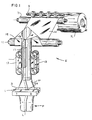
- sealing bar l is cooperable with a sealing bar designated 3 for heat sealing a length of heat-sealable material, such as tubing T formed in a form-fill-seal packaging machine, such as the vertical form-fill-seal packaging machine generally indicated at 5.
- the form-fill-seal packaging machine may be of the type described in coassigned U.S. patent 4,288,965, issued September l5, l98l. It will be understood, however, that the sealing bar of present invention is applicable to any type of form-fill-seal machine and that it has application to other types of heat-sealing apparatus as well.
- packaging machine 5 pulls web material W from a supply roll R, forms tubing T from the web material, and then makes packages P from the tubing. More specifically, the packaging material is pulled from supply roll R by web feed rolls 7, 9, and then fed by guide roll ll onto a forming shoulder l5, which forms it into tubing T. As tubing T is formed, it is heat sealed by sealing means (diagrammatically indicated at l7) to form a longitudinal seam L thereon. Tubing T is drawn downward by tube feeding means l3 and thereby taken-up as it is fed onto forming shoulder l5 with the take-up such that the web W is pulled over the forming device under tension.
- sealing means diagrammatically indicated at l7
- tubing T After filling tubing T with product, the tubing may be sealed by sealing bars l and 3, and cut by a knife (not shown) to form package P and simultanously seal the bottom end of the tubing.
- Packaging machine 5 is then ready for another cycle of forming, filling, and sealing tubing.
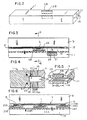
- sealing bar l is of rectangular cross-section and has a front rectangular surface l9 adapted for pressure engagement with tubing T for flattening and heating it. Heat may be provided, for example, by heating wires 2l shown in Figs. 3 through 5. As illustrated, surface l9 lies in a generally vertical plane, although it will be understood that it may assume other orientations in other sealing machines.
- a slot 23 extends substantially through sealing bar l and lies in a vertical plane substantially parallel to surface l9. As shown in Fig. 3, slot 23 is disposed adjacent surface l9 and thus defines a portion 25 of bar l between the slot and the surface as a relatively thin resiliently flexible bridge 25.
- the bridge is preferably located approximately midway between the ends of the sealing bar and is engageable with the longitudinal seam L of the tubing.
- Bridge 25 is adapted resiliently to yield on engagement with this thicker portion of the tubing (see Fig. 3), and thereby accomodate the longitudinal seam L.
- the thickness 25T and/or length 25L of the bridge may be varied according to the thickness of the longitudinal seam L that must be accommodated.
- the bridge may have a length 25L about 50% greater than the normal width of seam L and a thickness 25T of about 3 mm, with the slot 23 having a dimension 23D of about l.5 mm.
- the sealing bar l and bridge 25 may be of an aluminum or steel alloy (e.g., a high-temperature, nickel-steel alloy sold under the trade designation "Hastelloy” by Cabot Corporation of Kokomo, Indiana).
- the specific alloy used is selected on the basis of its ability to appropriately flex so that the bridge sufficiently accommodates and sufficiently presses against the seam to provide a good seal across the entire width of the tubing.
- Knife slot 27 extends back from surface l9 a depth sufficient to accommodate the stroke of a knife after it severs the tubing T, such as a depth further back from the surface than bridge forming slot 23, as shown in Fig. 4. As a result, it will be observed that bridge-forming slot 23 and knife slot 27 intersect.
- Sealing bar 3 is also provided with a knife slot 29, the knife (not shown) being movable through a stroke in which it extends from slot 29 through tubing T to sever it with the leading edge of the knife projecting into slot 27, and then retracts back into slot 29.
- Fig. 6 illustrates another embodiment of the invention wherein a sealing bar lA is particularly adapted for accommodating gussets in addition to a longitudinal seal L.
- Sealing bar lA has three bridge-forming slots 23A, 23B and 23C, which extend through the bar substantially parallel to surface l9A and substantially parallel to one another. The slots are spaced at intervals along the sealing bar lA and lie in a common plane generally parallel to and adjacent surface l9A.
- Slot 23A referred to as a center slot, is located generally at the middle of the sealing bar and defines the portion of the bar between the slot and surface l9A as a relatively thin flexible central bridge 25A.
- Slots 23B and 23C are located on opposite sides of the center slot 23A adjacent the ends of the bar and define the portions of the bar between the slots and surface l9A as relatively thin flexible outer bridges 25B and 25C.
- the central bridge 25A is particularly adapted resiliently to yield on engagement with a portion of the flattened tubing having a longitudinal seam L. It will be observed in this respect that bridge 25A is similar to bridge 25 of the one-bridge design.
- Bridges 25B and 25C are particularly adapted resiliently to yield on engagement with portions of the flattened tubing having gussets G, as shown in Fig. 6.
- Heat sealing bar 3 may or may not be of the same design as sealing bar l or lA. However, it is contemplated that sealing bar 3 may be of conventional design.
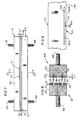
- Figs. 7 and 8 illustrate yet another embodiment of the invention wherein sealing bars lB and 3B are provided with separate sealing face plates 3l and 33, respectively, which are attached to the bodies 35 and 37, respectively, of the sealing bars by any suitable means, such as by soldering.
- the face plates 3l, 33 are of substantially uniform thickness UT (e.g., 3 mm), and they have conventional serrations (not shown) in their sealing surfaces l9B and 39, respectively.
- Means, such as indicated at 38, are provided for attaching the sealing bars to a form-fill-seal packaging machine.
- sealing bar lB has a central slot 4l extending vertically therethrough substantially parallel to surface l9B.
- the slot is formed by cutting (e.g. milling) a recess in the body 35 of the sealing bar and then securing the sealing face plate 3l in position.
- the portion of the sealing face plate 3l between the slot and the sealing surface l9B forms a relatively thin flexible central bridge 43 similar to bridge 25 described above in the embodiment of Figs. 2-5.
- Bridge 43 is adapted to yield on engagement with the portion of the flattened tubing having the longitudinal seam.
- Outer bridges (not shown) similar to the outer bridges 25B and 25C of Fig. 6 may also be provided in the sealing bar of Figs. 7 and 8.
- the sealing face plates 3l, 33 of bars lB and 3B, respectively, are preferably of highly corrosion resistant material since corrosive gases are released while tubing T is sealed.
- the high-temperature, nickel-steel alloy sold under the trade designation "Hastelloy” by Cabot Corporation of Kokomo, Indiana is recommended.
- the sealing bar bodies 35 and 37 may be of aluminum alloy, such as an extrusion of 7075-T6 Aluminum.
- the sealing face plates and sealing bar bodies may be heat treated or coated to provide further protection against corrosion.
- two spaced-apart silicone rubber strips 45 extend longitudinally of the sealing bar 3B on opposite sides of knife slot 47.
- the strips 45 project outwardly beyond the face plate 33 of the sealing bar and are engageable with tubing T when the sealing bars are closed for forcing portions of the tubing into grooves 49 extending longitudinally of the sealing bar lB on opposite sides of knife slot 5l. This serves to tension the tubing T in the area of the knife slots 47, 5l to facilitate cutting of the tubing.
- Fig. 9 shows an additional embodiment of the invention wherein the sealing bar lC has a slot 53 and a split bridge 55.
- Bridge 55 is split (as by cutting) transversely of the bridge to form two cantilever bridge sections 55A and 55B.
- Cantilever sections 55A, 55B are relatively thin and flexible, and are adapted resiliently to yield on engagement with the portion of flattened tubing having the longitudinal seam or gusset.
- the free ends of the cantilever bridge sections are separated by a gap indicated at 57. This gap 57 is sufficiently wide to allow the cantilever sections 55A, 55B to flex without interference from each other but no wider so that the area of tubing T that the sealing bar does not press against is minimized.
- gap 57 may have a width GW of about 0.003-0.005 in. or approximately l mm. It is believed to be advantageous for bridge 55 to be split since this serves to reduce stress, especially tensile stress, in the bridge when it flexes.
- sealing bar l of the present invention has particular application in form-fill-seal packaging apparatus, it will be apparent that it is useful for essentially any type of heat sealing operation wherein the length of heat-sealable material being heat sealed is of varying thickness.
Landscapes
- Engineering & Computer Science (AREA)
- Mechanical Engineering (AREA)
- Physics & Mathematics (AREA)
- Thermal Sciences (AREA)
- Package Closures (AREA)
Applications Claiming Priority (2)
| Application Number | Priority Date | Filing Date | Title |
|---|---|---|---|
| US887559 | 1986-07-17 | ||
| US06/887,559 US4693058A (en) | 1986-07-17 | 1986-07-17 | Bag sealing bar |
Publications (2)
| Publication Number | Publication Date |
|---|---|
| EP0253755A2 true EP0253755A2 (de) | 1988-01-20 |
| EP0253755A3 EP0253755A3 (de) | 1989-08-30 |
Family
ID=25391404
Family Applications (1)
| Application Number | Title | Priority Date | Filing Date |
|---|---|---|---|
| EP19870630122 Withdrawn EP0253755A3 (de) | 1986-07-17 | 1987-07-16 | Schweissbacke für Säcke |
Country Status (4)
| Country | Link |
|---|---|
| US (1) | US4693058A (de) |
| EP (1) | EP0253755A3 (de) |
| JP (1) | JPS6333231A (de) |
| CA (1) | CA1252708A (de) |
Cited By (1)
| Publication number | Priority date | Publication date | Assignee | Title |
|---|---|---|---|---|
| US11559950B2 (en) | 2019-04-19 | 2023-01-24 | Southwest Formseal | Adjustable sealing bar for pre-applied bottom gusset package and method of using the same |
Families Citing this family (25)
| Publication number | Priority date | Publication date | Assignee | Title |
|---|---|---|---|---|
| US4768326A (en) * | 1986-07-17 | 1988-09-06 | Hayssen Manufacturing Company | Bag sealing bar |
| US4807426A (en) * | 1987-09-08 | 1989-02-28 | Smith Larry E | Crimper bar set for forming hermetically sealed packages |
| US4991375A (en) * | 1988-11-14 | 1991-02-12 | Raque Food Systems, Inc. | Heat seal carrier assembly |
| DE4013273A1 (de) * | 1990-04-26 | 1991-10-31 | Bosch Gmbh Robert | Vorrichtung zum evakuieren und verschliessen von beutelpackungen |
| US5746043A (en) * | 1992-06-29 | 1998-05-05 | Pacmac, Inc. | Convertible form, fill and seal packaging machine and method |
| US5768852A (en) * | 1992-06-29 | 1998-06-23 | Pacmac, Inc. | Vertical form, fill and seal machine, components and method for making reclosable bags |
| US6553744B1 (en) | 1992-06-29 | 2003-04-29 | Pacmac, Inc. | Packaging machine |
| US5458730A (en) * | 1992-08-14 | 1995-10-17 | American Fluoroseal Corporation | Peel package sealing machine |
| US5360379A (en) * | 1993-10-25 | 1994-11-01 | Alliedsignal Inc. | Packaging machinery belt with non-directional splice |
| US5451189A (en) * | 1993-10-25 | 1995-09-19 | Alliedsignal Inc. | Packaging machinery belt with non-directional splice |
| JPH09309545A (ja) * | 1996-05-17 | 1997-12-02 | Dainippon Printing Co Ltd | 易開封性包装袋及びその製造方法 |
| US5868901A (en) * | 1996-09-13 | 1999-02-09 | Lako Tool & Manufacturing, Inc. | Crimper assembly for sealing overlapping portions of a sheet of packaging material |
| US6041580A (en) * | 1998-07-29 | 2000-03-28 | Greener Corp. | Crimping jaw assemblies for forming package closures |
| DE10149136A1 (de) * | 2001-10-05 | 2003-04-17 | Bosch Gmbh Robert | Vorrichtung und Verfahren zum Herstellen und Verschließen von aus wenigstens einer heißsiegelfähigen Packstoffbahn hergestellten Packung |
| US6877296B2 (en) * | 2002-07-22 | 2005-04-12 | Frito-Lay North America, Inc. | Isolated targeting of problem areas in hermetic seals |
| US20060130433A1 (en) * | 2004-12-22 | 2006-06-22 | Philip Morris Usa Inc. | Multi-stage heater plates for sealing and shrinking overwrap |
| US20070284050A1 (en) * | 2006-06-09 | 2007-12-13 | Illinois Tool Works Inc. | Method and apparatus for hermetically sealing a zipper into a reclosable package |
| JP4767786B2 (ja) * | 2006-08-02 | 2011-09-07 | 株式会社東陽機械製作所 | 背貼り部を有する包装袋の製袋装置 |
| TW200922855A (en) * | 2007-11-27 | 2009-06-01 | Chan Li Machinery Co Ltd | Positioning mechanism of pre-compressing and adhering paper sheets in paper-folding machine and method thereof |
| JP2010018300A (ja) * | 2008-07-09 | 2010-01-28 | Sumco Techxiv株式会社 | シール装置 |
| FI20080478A7 (fi) * | 2008-08-22 | 2010-03-26 | Lamican Oy | Pakkauksen saumain |
| GB2496645B (en) * | 2011-11-17 | 2014-04-09 | Frito Lay Trading Co Gmbh | Packaging apparatus and method of making packages |
| JP2018140779A (ja) * | 2017-02-24 | 2018-09-13 | 株式会社イシダ | シール装置 |
| JP2019023094A (ja) * | 2017-07-24 | 2019-02-14 | 株式会社イシダ | シール装置とそれを使用した包装装置 |
| CN109335142B (zh) * | 2018-11-08 | 2020-12-22 | 嘉兴市华染新能源有限公司 | 一种自动化油炸食品用塑料包装袋封口捋直包装机 |
Family Cites Families (19)
| Publication number | Priority date | Publication date | Assignee | Title |
|---|---|---|---|---|
| US2239133A (en) * | 1937-07-02 | 1941-04-22 | Harry F Waters | Method for forming closures |
| US2646105A (en) * | 1951-04-06 | 1953-07-21 | Langer Nicholas | Heat sealing machine |
| GB777279A (en) * | 1955-02-21 | 1957-06-19 | Marius Berghgracht | Improvements in bag making machines |
| GB971578A (en) * | 1962-10-02 | 1964-09-30 | Forgrove Mach | Improvements in wrapping machinery |
| GB1223305A (en) * | 1967-07-22 | 1971-02-24 | Goehlfennen & Spicka G M B H | A machine for finishing the application of a facing of plastics sheet material on a shaped component of wood or a wood product |
| CH478648A (it) * | 1968-07-11 | 1969-09-30 | Centra Anstalt | Ganascia per la termosaldatura o il raffreddamento di materiali in foglio in particolare termoplastici, anche di spessori non uniformi, o comunque irregolari |
| US3752725A (en) * | 1971-04-23 | 1973-08-14 | M Freeman | Resilient strip mounting for plastic bag fabricator |
| DK126167B (da) * | 1971-11-24 | 1973-06-18 | Elwis Ingf | Apparat til sammenføjning af to folier under tryk og varme. |
| US3830681A (en) * | 1972-11-08 | 1974-08-20 | Fmc Corp | Package sealing in steam atmosphere |
| US4024692A (en) * | 1976-02-18 | 1977-05-24 | William E. Young | Apparatus and method of packaging large items |
| US4016021A (en) * | 1976-03-29 | 1977-04-05 | Fleur Lee | Heat sealing unit and method of making same |
| US4082941A (en) * | 1976-07-13 | 1978-04-04 | Oster Corporation | Bag sealer |
| US4069643A (en) * | 1977-04-27 | 1978-01-24 | William E. Young | Apparatus and method of packaging large items |
| US4115182A (en) * | 1977-06-29 | 1978-09-19 | Arenco Machine Company | Sealing means |
| US4144003A (en) * | 1977-11-23 | 1979-03-13 | Curtiss-Wright Corporation | Bar type seal for rotary mechanism |
| CA1126150A (en) * | 1978-09-12 | 1982-06-22 | Frederick W. Beer | Package and automatic method of forming same |
| DE2934807A1 (de) * | 1979-08-29 | 1981-03-19 | Pohlig-Heckel-Bleichert Vereinigte Maschinenfabriken AG, 5000 Köln | Vorrichtung zum verschliessen bzw. verschweissen von kunststoffsaecken |
| KR870003314Y1 (ko) * | 1982-02-09 | 1987-10-15 | 부라더 고오교 가부시기 가이샤 | 초음파 가공기 |
| US4546596A (en) * | 1984-05-08 | 1985-10-15 | Hayssen Manufacturing Company | Method of and apparatus for forming, filling and sealing packages |
-
1986
- 1986-07-17 US US06/887,559 patent/US4693058A/en not_active Expired - Fee Related
-
1987
- 1987-04-30 CA CA000536052A patent/CA1252708A/en not_active Expired
- 1987-05-28 JP JP62133246A patent/JPS6333231A/ja active Pending
- 1987-07-16 EP EP19870630122 patent/EP0253755A3/de not_active Withdrawn
Cited By (1)
| Publication number | Priority date | Publication date | Assignee | Title |
|---|---|---|---|---|
| US11559950B2 (en) | 2019-04-19 | 2023-01-24 | Southwest Formseal | Adjustable sealing bar for pre-applied bottom gusset package and method of using the same |
Also Published As
| Publication number | Publication date |
|---|---|
| US4693058A (en) | 1987-09-15 |
| EP0253755A3 (de) | 1989-08-30 |
| CA1252708A (en) | 1989-04-18 |
| JPS6333231A (ja) | 1988-02-12 |
Similar Documents
| Publication | Publication Date | Title |
|---|---|---|
| EP0253755A2 (de) | Schweissbacke für Säcke | |
| US4768326A (en) | Bag sealing bar | |
| CA1315665C (en) | Apparatus for sealing and severing a web of film | |
| EP1070672B1 (de) | Reissverschluss und Verfahren zu dessen Anbringen an einer schlauchförmigen Folie in einer Form-Füll-Siegelmaschine | |
| FI84458B (fi) | Foerpackning avsedd foer styckevis foerpackade varor, samt tillverkning av saodana foerpackningar. | |
| CA1307157C (en) | Easy-open bag and apparatus and method for making same | |
| EP0950607B1 (de) | Leicht zu öffnender beutel und vorrichtung zur herstellung desselben | |
| EP1539578B1 (de) | Gesondertes abzielen auf problembereich in hermetischen dichtungen | |
| GB2171077A (en) | Carrier bag for prepacked products | |
| CA2125204A1 (en) | Vertical-Type Filling and Packaging Machine | |
| AU6389296A (en) | Reclosable storage bag | |
| US6041580A (en) | Crimping jaw assemblies for forming package closures | |
| US5966898A (en) | Easy open method, package, and apparatus | |
| EP0572270B1 (de) | Heisssiegelvorrichtung | |
| EP1136358B1 (de) | Verfahren zum Herstellen von wiederverschliessbaren Behältern | |
| FI85843C (fi) | Bandformig foerpackningsmaterial. | |
| EP1138597B1 (de) | Greiferklemme für eine Bandumreifungsmaschine | |
| JPS58159205U (ja) | 包装機 | |
| JPH09323715A (ja) | シーラー | |
| MY100252A (en) | Apparatus for sealing packages | |
| CA2214865C (en) | Crimper assembly for sealing overlapping portions of a sheet of packaging material | |
| JPS6258904B2 (de) | ||
| JPH0368160B2 (de) | ||
| JPH09290842A (ja) | 包装袋およびその製造方法 | |
| JPH0311974B2 (de) |
Legal Events
| Date | Code | Title | Description |
|---|---|---|---|
| PUAI | Public reference made under article 153(3) epc to a published international application that has entered the european phase |
Free format text: ORIGINAL CODE: 0009012 |
|
| AK | Designated contracting states |
Kind code of ref document: A2 Designated state(s): AT BE CH DE FR GB IT LI LU NL SE |
|
| PUAL | Search report despatched |
Free format text: ORIGINAL CODE: 0009013 |
|
| AK | Designated contracting states |
Kind code of ref document: A3 Designated state(s): AT BE CH DE FR GB IT LI LU NL SE |
|
| 17P | Request for examination filed |
Effective date: 19891030 |
|
| 17Q | First examination report despatched |
Effective date: 19910430 |
|
| STAA | Information on the status of an ep patent application or granted ep patent |
Free format text: STATUS: THE APPLICATION IS DEEMED TO BE WITHDRAWN |
|
| 18D | Application deemed to be withdrawn |
Effective date: 19920519 |
|
| RIN1 | Information on inventor provided before grant (corrected) |
Inventor name: KOVACS, LLOYD |