EP0235697A2 - Verfahren zur Herstellung von somatischen Hybriden der Lycopersicon-Gattung - Google Patents
Verfahren zur Herstellung von somatischen Hybriden der Lycopersicon-Gattung Download PDFInfo
- Publication number
- EP0235697A2 EP0235697A2 EP87102407A EP87102407A EP0235697A2 EP 0235697 A2 EP0235697 A2 EP 0235697A2 EP 87102407 A EP87102407 A EP 87102407A EP 87102407 A EP87102407 A EP 87102407A EP 0235697 A2 EP0235697 A2 EP 0235697A2
- Authority
- EP
- European Patent Office
- Prior art keywords
- species
- protoplasts
- regeneration
- plants
- medium
- Prior art date
- Legal status (The legal status is an assumption and is not a legal conclusion. Google has not performed a legal analysis and makes no representation as to the accuracy of the status listed.)
- Withdrawn
Links
Images
Classifications
-
- C—CHEMISTRY; METALLURGY
- C12—BIOCHEMISTRY; BEER; SPIRITS; WINE; VINEGAR; MICROBIOLOGY; ENZYMOLOGY; MUTATION OR GENETIC ENGINEERING
- C12N—MICROORGANISMS OR ENZYMES; COMPOSITIONS THEREOF; PROPAGATING, PRESERVING, OR MAINTAINING MICROORGANISMS; MUTATION OR GENETIC ENGINEERING; CULTURE MEDIA
- C12N5/00—Undifferentiated human, animal or plant cells, e.g. cell lines; Tissues; Cultivation or maintenance thereof; Culture media therefor
- C12N5/10—Cells modified by introduction of foreign genetic material
- C12N5/12—Fused cells, e.g. hybridomas
- C12N5/14—Plant cells
-
- A—HUMAN NECESSITIES
- A01—AGRICULTURE; FORESTRY; ANIMAL HUSBANDRY; HUNTING; TRAPPING; FISHING
- A01H—NEW PLANTS OR NON-TRANSGENIC PROCESSES FOR OBTAINING THEM; PLANT REPRODUCTION BY TISSUE CULTURE TECHNIQUES
- A01H1/00—Processes for modifying genotypes ; Plants characterised by associated natural traits
- A01H1/02—Methods or apparatus for hybridisation; Artificial pollination ; Fertility
- A01H1/022—Genic fertility modification, e.g. apomixis
-
- A—HUMAN NECESSITIES
- A01—AGRICULTURE; FORESTRY; ANIMAL HUSBANDRY; HUNTING; TRAPPING; FISHING
- A01H—NEW PLANTS OR NON-TRANSGENIC PROCESSES FOR OBTAINING THEM; PLANT REPRODUCTION BY TISSUE CULTURE TECHNIQUES
- A01H4/00—Plant reproduction by tissue culture techniques ; Tissue culture techniques therefor
Definitions
- This invention relates to a method of production a somatic hybrid of two species in the genus Lycopersicon.
- An object of this invention is to provide an method of producing a somatic hybrid in the genus Lvco p ersicon.
- one species is the wild species Lycopersicon peruvianum which is capable of regeneration from protoplasts.
- One desirable hybrid which can be produced by the method of this invention is the cross of L. peruvianum with the cultivated tomato L.esculentum which is not capable of regeneration from protoplasts.
- This invention relates to a method of producing a somatic hybrid plant of a wild species and a cultivated species of the genus Lvcocersicon, comprising fusing protoplasts of two species, at least one of which being incapable of regeneration from protoplasts, and recovering a hybrid plant from fused protoplasts under selective regeneration conditions wherein the wild species is capable of regeneration whilst the cultivated species is incapable of regeneration.
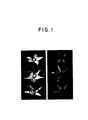
- Figure 1 is a photograph illustrating various features of a somatic hybrid and the two parental lines from which the hybrid was formed.
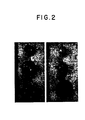
- Figure 2 is a photograph illustrating the fruit of the somatic hybrid and the fruit of the two parental lines from which the hybrid was derived.
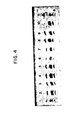
- Figure 4 shows the isoelectric focusing of fraction 1 protein for the small (nuclear) subunit of the somatic hybrids (channels 1-8), a physical mix of extracts (channel 9), L. peruvianum (channel 10) and L. esculentum (channel 11).
- the arrowed bands are mutually exclusive for the two parent species and are both present in somatic hybrids and the physical mix.
- the method of this invention enables the somatic hybridisation of species which do not regenerate from protoplasts, providing the other species involved in the cross is capable of regeneration in this manner.
- the inability to recover whole plants from protoplasts of L.esculentum c.v. Ailsa Craig is advantageous in this invention as it forms the basis of selection for somatic hybrid plants following fusion with L.peruvianum, the latter being capable of efficient regeneration from protoplasts.
- the other component of the selection procedure described here, for the somatic hybridisation of L.esculentum with L.peruvianum was based on the ability to distinguish, at the morphological level, regenerated shoots of somatic hybrids from those of L. p eruvianum regenerating alongside.
- the process of the invention may be applied to the hybridisation of cultivated non-regenerating species with other wild-type species.
- the skilled artisan may easily select the appropriate species for fusion by merely consulting the relevant literature in the field, for example it has been reported by Haberloch G.T. et al. (Plant Science 39: 67-74 (1985)) that Solanum p ennelii (subsequently reclassified as L y copersicon pennellii) is capable of regeneration from protoplasts.
- Protoplasts were centrifuged (100g, 5 min) and the enzyme supernatant replaced by CPW21S medium. Protoplasts were washed as described previously and resuspended in CPN9M medium at a density of 4 x 10 5 / ml .
- fluorescein isothiocyanate was added to the L. peruvianum cells in the enzyme solution. This was achieved by adding 50 ml of FITC stock (5 mg (w/v) in 1 ml acetone) to 20 ml of enzyme solution prior to incubation.
- a PEG fusion solution (39% (w.v) polyethylene glycol, MW 6000 (Koch-Light) 2.36% (w/v) Ca (NO 3 ) 2 ⁇ 4H 2 O and 9% (w/v) mannitol, pH 5.8) were added to the settled protoplasts in such a way that the drops gradually coalesced over a 25-30 min period.
- the PEG fusion solution was carefully removed, leaving the protoplasts undisturbed, and replaced by 0.5 ml of a high pH/Ca ++ fusion solution (0.74% (w/v) CaCl 2 ⁇ 2H 2 O; 9% (w/v) mannitol buffered at pH 10.4 using glycine/NaOH.
- the culture medium consisted of a 1:1 mix of MSP1 medium with 9% (w/v) mannitol and R9 medium also with 9% (w/v) mannitol, pH 5.8.
- Control dishes were also prepared for both parental protoplasts (unfused and subsequently mixed or plated separately) in TCM medium at a final density of 4 x 10 protoplasts/ml.
- Protoplasts from the fusion treatments were maintained in TCM medium (with 9% (w/v) mannitol) (4 ml of medium per dish) at 30 0 in the dark for 1 week, whereupon the dishes were transferred to give a continuous illumination of 4000 lux (daylight fluorescent tubes) at 25°C. After 1 month, small green colonies appeared in some of the dishes whereupon the mannitol concentration was progressively reduced, at 2 weekly intervals, by the addition, to each dish, of 0.5 ml TCM medium with 6% (w/v) mannitol, 3% (w.v) mannitol and finally no mannitol.
- Plants were transferred to pots, with soil-less compost, and maintained at high humidity for 5 days before final transfer to the open greenhouse. Plants were raised to flowering under an illumination of 10,000 lux, 16 hour day length and a temperature regime of 25 0 C day/20°C night.
- Leaf extracts were obtained by squeezing the ground material through a muslin cloth and 0.1 gm (per ml of extract) of Sephadex (G 50-80) added. The mixture was centrifuged (13,000 g 10 min) and the supernatant was used for protein analysis.
- a vertical electrophoresis unit (Model 2001,LKB) was used with a discontinuous buffer system and stacking gel above the separation gel.
- the separation gel about 10 cm in height, contained a final concentration of 6% acrylamide and 0.375 Tris-HCl (pH 8.4).
- the stacking gel about 2.5 cm in height, was layered over a separation gel which consisted of 3% acrylamide, and 0.125M Tris-HCl (pH 6.8).
- the electrode buffer contained 0.025M Tris-HC1 and 0.129M glycine (pH 8.3).
- the protein sample 50 - 100 microlitre approx. 70 microgram protein) was loaded in each well and the gels run with a constant current of 10 milliamps for 18 hours.
- Fraction 1 protein was visualised by staining for total protein for 5 min in a solution containing 0.1% Coomassie Brilliant Blue 50% (v/v) methanol and 10%(v/v) acetic acid. The gels were destained in a solution of 5% (v/v) methanol and 10% (v/v) acetic acid for 10 minutes. The position of fraction 1 protein was evident by its slow migration and high staining intensity.
- fraction 1 protein band cut from the gel, was immediately placed in a freshly prepared solution of 8M urea, 0.5% dithiothreitol, 5% (wv)sucrose, and 2.5% (vv) Ampholine (LKB), (pH 3.5 - 10) and incubated in the dark for 30 min at room temperature.
- 8M urea 0.5% dithiothreitol, 5% (wv)sucrose, and 2.5% (vv) Ampholine (LKB), (pH 3.5 - 10)
- Isoelectric focusing was performed on a 1.5 mm thick slab gel, using a LKB 2117 multiphore electrophoresis apparatus.
- Gels contained a final concentration of 4.85% (w/v) acrylamide, 0.15% (w/v) bisacrylamide, 8M urea, 2% (v/v) Ampholine (LKB) pH range 5-8 and 0.75% (v/v) Ampholine (LKB) pH range 3-10.
- Polymerisation of the gel was completed by the addition of TEMED (N,N,N,N-tetramethyl ethylenediamine) (final conc. of 0.1% (v/v)) and freshly prepared ammonium persulphate solution (final conc. 0.02%).
- Gels were prefocused for 1.5 hours form 0 to 1200v at a maximum current of 20 milliamps. Gel pieces containing disassociated fraction 1 protein, were then loaded onto the surface of the prefocused gel and were run for 2 hours at 15 0 C at a maximum current of 20 milliamps with a final constant voltage of 1200v.
- the gels were fixed overnight in a solution of 12% (w/v) trichloroacetic acid and 3.5% (w/v) sulphosalicylic acid, followed by staining, at 60°C, 30 min., in a solution of 0.15% (w/v) PAEG Blue 83 (BDH) in 25% (v/v) ethanol and 8% (v/v) acetic acid. Gels were destained several times with several changes of 25% (v/v) ethanol and 8% (v/v) acetic acid mixture.
- TCM medium unfused protoplasts of L. p eruvianum entered division to form large green colonies whereas protoplasts of L. esculentum did not grow beyond the small cell colony stage. TCM medium therefore proved suitable as a half selection for somatic hybrids since protoplasts (unfused or homokaryon) of L. esculentum cannot give rise to callus.
- heterokaryon frequency was 5-7% as judged by the presence of fluorescing, chloroplast-containing protoplasts. This relatively high level of heterokaryon formation was maintained for all 21 experiments based on the present protocol. Fusion treated protoplasts and heterokaryons entered division after 10 days which resulted in green colonies (3-4 mm diam.) after 2 weeks. When transferred to MSZ medium these colonies developed shoot-bearing calli after 30 days.
- Experiment 1 gave 4 calluses, of separate origin, and a total of 11 plants (arbitrarily numbered 1, 5, 9, 15, 16, 20, 21, 22, 23, 24, 25). These plants are subsequently referred to as Group 1.
- Experiment 2 gave rise to approximately 250 calli of which 6 calli produced morphologically distinct- shoots. Of these 6 events, 4 calli, each with a single shoot, were maintained separately and the four plants, hereafter referred to as Group 2a were numbered 8, 10, 12, 13. The two remaining calli each gave rise to 4 shoots numbered 2, 3, 4, 6 (Group 2b) and 7, 17, 18, 19 (Group 2c).
- Experiment 3 produced a few ( ⁇ 20) calli of which one underwent regeneration to give 2 shoots of interest (numbered 11,14), Group 3.
- Pollen viabilities are given in Table 1 below and the figure quoted represents the percentile count for 500 pollen grains per flower and for 5 flowers per plant taken at random.
- L. esculentum and L. p eruvianum had identical polypeptide bands for the large (chloroplast) subunit. They were distinguishable for the small (nuclear) subunit. Both species were characterised by 3 bands in the small subunit of which 2 bands were common. The position of the third band was mutually exclusive (Fig. 4) and this enabled unambiguous identification/confirmation of hybridity to be made.
- the fact that these hybrids are self fertile, set viable seed and, in preliminary experiments can be readily backcrossed to L. esculentum, is in contrast to the situation reported for sexually produced F 1 hybrids which are frequently self-sterile and do not backcross readily.
- This invention also provides the potential for the synthesis of gametosomatic hybrids in tomato, parallelling the situation in Nicotiana with the incorporation of a haploid genome from any wild-type species of L y copersicon.
Landscapes
- Life Sciences & Earth Sciences (AREA)
- Health & Medical Sciences (AREA)
- Genetics & Genomics (AREA)
- Engineering & Computer Science (AREA)
- Botany (AREA)
- Developmental Biology & Embryology (AREA)
- Biotechnology (AREA)
- Wood Science & Technology (AREA)
- Biomedical Technology (AREA)
- Environmental Sciences (AREA)
- Cell Biology (AREA)
- Zoology (AREA)
- Chemical & Material Sciences (AREA)
- Bioinformatics & Cheminformatics (AREA)
- Organic Chemistry (AREA)
- General Health & Medical Sciences (AREA)
- General Engineering & Computer Science (AREA)
- Biochemistry (AREA)
- Microbiology (AREA)
- Micro-Organisms Or Cultivation Processes Thereof (AREA)
- Breeding Of Plants And Reproduction By Means Of Culturing (AREA)
Applications Claiming Priority (2)
| Application Number | Priority Date | Filing Date | Title |
|---|---|---|---|
| US833738 | 1986-02-26 | ||
| US06/833,738 US4863863A (en) | 1986-02-26 | 1986-02-26 | Method of producing somatic hybrids of the genus Lycopersicon |
Publications (2)
| Publication Number | Publication Date |
|---|---|
| EP0235697A2 true EP0235697A2 (de) | 1987-09-09 |
| EP0235697A3 EP0235697A3 (de) | 1988-08-03 |
Family
ID=25265149
Family Applications (1)
| Application Number | Title | Priority Date | Filing Date |
|---|---|---|---|
| EP87102407A Withdrawn EP0235697A3 (de) | 1986-02-26 | 1987-02-20 | Verfahren zur Herstellung von somatischen Hybriden der Lycopersicon-Gattung |
Country Status (3)
| Country | Link |
|---|---|
| US (1) | US4863863A (de) |
| EP (1) | EP0235697A3 (de) |
| JP (1) | JPS62275631A (de) |
Cited By (3)
| Publication number | Priority date | Publication date | Assignee | Title |
|---|---|---|---|---|
| EP0262666A1 (de) * | 1986-10-01 | 1988-04-06 | DNA PLANT TECHNOLOGY CORPORATION (under the laws of the state of Delaware) | Verfahren zur Protoplastfusion von Tomaten und Regeneration von Hybridpflanzen daraus |
| EP0363819A1 (de) * | 1988-10-08 | 1990-04-18 | Nichirei Corporation | Verfahren zur Herstellung männlich steriler Tomatenpflanzen |
| EP2160399A4 (de) * | 2007-05-16 | 2010-09-15 | Univ Maryland | Neuartige verfahren zur wiederherstellung von blattproteinen |
Families Citing this family (2)
| Publication number | Priority date | Publication date | Assignee | Title |
|---|---|---|---|---|
| CA2032629A1 (en) * | 1989-12-21 | 1991-06-22 | Ikuo Ashikawa | Method of producing potato cyst nematode hatching stimulus |
| US5866764A (en) * | 1996-03-25 | 1999-02-02 | Seminis Vegetable Seeds, Inc. | Lycopersicon pimpinellifolium as a source of resistance to the plant pathogen phytophthora infestans |
Family Cites Families (1)
| Publication number | Priority date | Publication date | Assignee | Title |
|---|---|---|---|---|
| US4940839A (en) * | 1986-10-01 | 1990-07-10 | Dna Plant Technology Corporation | Method of tomato protoplast fusion and regeneration of hybrid plants therefrom |
-
1986
- 1986-02-26 US US06/833,738 patent/US4863863A/en not_active Expired - Lifetime
-
1987
- 1987-02-20 EP EP87102407A patent/EP0235697A3/de not_active Withdrawn
- 1987-02-26 JP JP62046648A patent/JPS62275631A/ja active Pending
Cited By (6)
| Publication number | Priority date | Publication date | Assignee | Title |
|---|---|---|---|---|
| EP0262666A1 (de) * | 1986-10-01 | 1988-04-06 | DNA PLANT TECHNOLOGY CORPORATION (under the laws of the state of Delaware) | Verfahren zur Protoplastfusion von Tomaten und Regeneration von Hybridpflanzen daraus |
| EP0363819A1 (de) * | 1988-10-08 | 1990-04-18 | Nichirei Corporation | Verfahren zur Herstellung männlich steriler Tomatenpflanzen |
| EP2160399A4 (de) * | 2007-05-16 | 2010-09-15 | Univ Maryland | Neuartige verfahren zur wiederherstellung von blattproteinen |
| US9321806B2 (en) | 2007-05-16 | 2016-04-26 | University Of Maryland, College Park | Methods for recovery of leaf proteins |
| US9944917B2 (en) | 2007-05-16 | 2018-04-17 | University Of Maryland, College Park | Methods for recovery of leaf proteins |
| US10006019B2 (en) | 2007-05-16 | 2018-06-26 | University Of Maryland, College Park | Methods for recovery of leaf proteins |
Also Published As
| Publication number | Publication date |
|---|---|
| EP0235697A3 (de) | 1988-08-03 |
| JPS62275631A (ja) | 1987-11-30 |
| US4863863A (en) | 1989-09-05 |
Similar Documents
| Publication | Publication Date | Title |
|---|---|---|
| Kinsara et al. | Somatic hybrid plants of Lycopersicon esculentum Mill. and Lycopersicon peruvianum Mill. | |
| Kalloo | Eggplant: Solanum melongena L. | |
| Rick | Tomato | |
| Sihachakr et al. | Somatic hybridization of eggplant (Solanum melongena L.) with its close and wild relatives | |
| US8173862B2 (en) | Rucola plants with cyptoplasmic male sterility (CMS) | |
| Daunay et al. | Production and characterization of fertile somatic hybrids of eggplant (Solanum melongena L.) with Solanum aethiopicum L. | |
| Sihachakr et al. | Somatic hybrid plants produced by electrofusion between Solanum melongena L. and Solanum torvum Sw | |
| JP3865264B2 (ja) | 長期にわたり高度に効率的な植物再生能力を持つ改善されたゼア・メイズ・エルの遺伝子型 | |
| Chiang Shiong et al. | Production of haploid plants from anther cultures and secondary embryoids of winter oilseed rape, Brassica napus ssp. oleifera | |
| Andersen et al. | Carrot (Daucus carota L.): In Vitro Productionof Haploids and Field Trials | |
| Cappadocia et al. | Plant regeneration from in vitro cultures of anthers and stem internodes in an interspecific hybrid, Lycopersicon esculentum L. x L. peruvianum Mill. and cytogenetic analysis of the regenerated plants | |
| Malaviya et al. | Development and characterization of interspecific hybrids of Trifolium alexandrinum× T. apertum using embryo rescue | |
| US5158879A (en) | Hybrid rice production utilizing perennial male sterile rice plants | |
| US4863863A (en) | Method of producing somatic hybrids of the genus Lycopersicon | |
| US20030110538A1 (en) | Novel 'oxy' CMS brassica napus corrrected for chlorosis using hexaploid bridging material generated through protoplast fusion and a method of producing the plant | |
| AU716124B2 (en) | Cytoplasmic male sterile brassica oleracea plants which contain the polima CMS cytoplasm and are male sterile at high and low temperatures | |
| CN103766212A (zh) | 利用甘蓝改良甘蓝型油菜的方法 | |
| Nikova et al. | Nicotiana tabacum L. as a source of cytoplasmic male sterility in interspecific cross with N. alata Link & Otto | |
| JP2824841B2 (ja) | 雄性不稔トマト植物の簡易作出法 | |
| Choi et al. | Haploidy in pearl millet [Pennisetum glaucum (L.) R. Br.] | |
| CN107996397A (zh) | 一种甘蓝型油菜闭花授粉突变体材料及其育种应用 | |
| NZ240874A (en) | Inbred sunflower plants with a frequency of regeneration of fertile plants of 80-100% from hypocotyl explants and protoplasts and their use | |
| Butenko et al. | Somatic Hybridization in Solanum tuberosum× S. chacoense | |
| BOHN | WASHINGTON, DC, JULY 15, 1948 SESQUIDIPLOID F, HYBRIDS OF LYCOPERSICON | |
| RAO | Date:(Chairman) |
Legal Events
| Date | Code | Title | Description |
|---|---|---|---|
| PUAI | Public reference made under article 153(3) epc to a published international application that has entered the european phase |
Free format text: ORIGINAL CODE: 0009012 |
|
| AK | Designated contracting states |
Kind code of ref document: A2 Designated state(s): AT BE CH DE ES FR GB GR IT LI LU NL SE |
|
| PUAL | Search report despatched |
Free format text: ORIGINAL CODE: 0009013 |
|
| AK | Designated contracting states |
Kind code of ref document: A3 Designated state(s): AT BE CH DE ES FR GB GR IT LI LU NL SE |
|
| 17P | Request for examination filed |
Effective date: 19881103 |
|
| 17Q | First examination report despatched |
Effective date: 19910402 |
|
| STAA | Information on the status of an ep patent application or granted ep patent |
Free format text: STATUS: THE APPLICATION IS DEEMED TO BE WITHDRAWN |
|
| 18D | Application deemed to be withdrawn |
Effective date: 19910813 |