EP0225886B1 - Neue pyridaziniumverbindungen, verfahren zu deren herstellung und diese enthaltende fungizide und algizide mittel - Google Patents
Neue pyridaziniumverbindungen, verfahren zu deren herstellung und diese enthaltende fungizide und algizide mittel Download PDFInfo
- Publication number
- EP0225886B1 EP0225886B1 EP86902407A EP86902407A EP0225886B1 EP 0225886 B1 EP0225886 B1 EP 0225886B1 EP 86902407 A EP86902407 A EP 86902407A EP 86902407 A EP86902407 A EP 86902407A EP 0225886 B1 EP0225886 B1 EP 0225886B1
- Authority
- EP
- European Patent Office
- Prior art keywords
- radical
- atoms
- denotes
- alkyl
- chain
- Prior art date
- Legal status (The legal status is an assumption and is not a legal conclusion. Google has not performed a legal analysis and makes no representation as to the accuracy of the status listed.)
- Expired - Lifetime
Links
- 0 C*c1*(*)*c(*)nc1 Chemical compound C*c1*(*)*c(*)nc1 0.000 description 2
Classifications
-
- A—HUMAN NECESSITIES
- A01—AGRICULTURE; FORESTRY; ANIMAL HUSBANDRY; HUNTING; TRAPPING; FISHING
- A01N—PRESERVATION OF BODIES OF HUMANS OR ANIMALS OR PLANTS OR PARTS THEREOF; BIOCIDES, e.g. AS DISINFECTANTS, AS PESTICIDES OR AS HERBICIDES; PEST REPELLANTS OR ATTRACTANTS; PLANT GROWTH REGULATORS
- A01N43/00—Biocides, pest repellants or attractants, or plant growth regulators containing heterocyclic compounds
- A01N43/48—Biocides, pest repellants or attractants, or plant growth regulators containing heterocyclic compounds having rings with two nitrogen atoms as the only ring hetero atoms
- A01N43/58—1,2-Diazines; Hydrogenated 1,2-diazines
-
- C—CHEMISTRY; METALLURGY
- C07—ORGANIC CHEMISTRY
- C07D—HETEROCYCLIC COMPOUNDS
- C07D237/00—Heterocyclic compounds containing 1,2-diazine or hydrogenated 1,2-diazine rings
- C07D237/02—Heterocyclic compounds containing 1,2-diazine or hydrogenated 1,2-diazine rings not condensed with other rings
- C07D237/06—Heterocyclic compounds containing 1,2-diazine or hydrogenated 1,2-diazine rings not condensed with other rings having three double bonds between ring members or between ring members and non-ring members
- C07D237/10—Heterocyclic compounds containing 1,2-diazine or hydrogenated 1,2-diazine rings not condensed with other rings having three double bonds between ring members or between ring members and non-ring members with hetero atoms or with carbon atoms having three bonds to hetero atoms with at the most one bond to halogen, e.g. ester or nitrile radicals, directly attached to ring carbon atoms
- C07D237/20—Nitrogen atoms
Definitions
- the invention relates to new pyridazinium compounds, processes for their preparation and fungicidal and algicidal compositions containing them, processes for their preparation and their use.
- DE-OS 2 245 248 discloses 3-, 4-, 5-, 6-substituted pyridazinium compounds with a blood pressure-increasing effect.
- Some 3-phenylpyridazinium compounds and their structure elucidation have been described in Acta Chemica Scandinavica, Volume 21 (1967), 1067-1080. Any biological properties of the investigated compounds are not specified.
- Heterocyclic compounds are known from EP 36 711, including some pyridazines, but they must be substituted in the 3-position by a 2-halophenyl radical. They are used to control acarids, insects or aphids, as well as their eggs and larvae.
- substituted pyridazinium compounds have now been found which have excellent fungicidal and algicidal properties. These compounds are new except for the methyl iodides of 6-methylamino-3-phenylpyridazine, 6-dimethylamino-3-phenylpyridazine and 6-amino-3-phenylpyridazine.
- A- means an anion which is compatible with plant physiology, with the exception of the methyl iodides of 6-methylamino-3-phenylpyridazine and 6-dimethylamino-3-phenylpyridazine and 6-amino-3-phenylpyridazine.
- the pyridazinium compounds according to the invention show strong fungicidal and algicidal properties and thus represent an enrichment of the technology.
- R denotes a hydrogen atom, a saturated or unsaturated alkyl radical with 1 to C atoms, preferably a saturated alkyl radical with 1-4 C atoms, such as the methyl, ethyl, propyl or butyl radical or the allyl radical .
- R 2 represents a hydrogen atom, a saturated or unsaturated, straight-chain or branched alkyl radical having 1 to 10 carbon atoms, a cycloalkyl radical, such as the cyclohexyl radical, an alkoxyalkyl radical, a hydroxyalkyl radical, or a phenyl radical which is optionally mono- or polysubstituted by halogen atoms, such as that various mono-, di- or tri-halogenophenyl radical.
- R 2 is a straight-chain or branched alkyl radical having 1 to 4 carbon atoms, an alkoxy or hydroxyalkyl radical having 1-4 carbon atoms in the alkyl chains, such as the methoxyethyl radical or the hydroxyethyl radical, or the cyclohexyl radical.
- R 1 and R 2 together with the nitrogen atom can form a 5 to 7-membered heterocyclic ring which can contain nitrogen or oxygen as a further heteroatom and is optionally substituted by alkyl or phenylalkyl radicals or a pyridyl radical.
- heterocyclic rings are optionally substituted pyrrolidino, piperidino, morpholino or azacycloheptyl rings.
- Preferred compounds are those in which R 1 and R 2 form a 6 or 7-membered ring together with the nitrogen atom, such as the piperidino or azacycloheptyl ring, which may be one or more times by alkyl radicals having 1 to 4 carbon atoms or by a benzyl radical is substituted. Particularly preferred are those compounds in which R 1 and R 2 together with the nitrogen atom form a 6-membered ring which is optionally substituted one or more times by an alkyl radical having 1 to 4 carbon atoms or the benzyl radical.
- R 3 denotes a phenyl radical which is optionally mono- or polysubstituted by halogen atoms in the 3-, 4- or 5-position or which is mono- or polysubstituted by alkyl or alkoxy groups, such as the p-chlorophenyltrimethoxyphenyl radical, butoxyphenyl radical or a methylphenyl radical Butylphenylrest or a tertiary-Butylrest.
- Preferred compounds are those in which R 3 is a phenyl radical which is optionally substituted by chlorine or straight-chain or branched alkyl radicals. Those compounds in which R 3 denotes a phenyl, a p-chloro or p-methylphenyl radical are particularly preferred.
- R 4 represents a hydrogen atom or a straight-chain or branched alkyl radical having 1 to 4 carbon atoms, preferably a methyl or ethyl radical.
- the radical R 5 denotes a hydrogen atom, a straight-chain or branched, saturated or unsaturated alkyl or oxoalkyl radical with 1 to 20 carbon atoms optionally substituted by halogen, nitrile, hydroxyl, alkoxy, phenyl, halophenyl or optionally halogenated phenoxy radicals , expediently with 1 to 15 carbon atoms, preferably with 1 to 8 carbon atoms or a cycloalkyl radical.
- radicals examples include methyl, i-propyl, i-butyl, n-heptyl, octyl, nonyl, decyl, undecyl, vinyl, allyl, butenyl 2-, 2-hydroxy 3-phenoxypropyl, cyanomethyl, benzyl, monochlorobenzyl, dichlorobenzyl radicals, the cyclohexyl radical and the like. the like
- A- is a plant physiologically compatible anion, for example a halogen ion such as chloride, bromide, iodide or the anions nitrate, hydrogen sulfate, methosulfate, trifluoromethyl sulfonate, tosylate, acetate, trifluoroacetate, lactate, benzoate, 2-hydroxybenzoate.
- a halogen ion such as chloride, bromide, iodide or the anions nitrate, hydrogen sulfate, methosulfate, trifluoromethyl sulfonate, tosylate, acetate, trifluoroacetate, lactate, benzoate, 2-hydroxybenzoate.
- the pyridazinium compounds of the general formula I can be prepared by reacting a pyridazine of the general formula II with at least one mole of a compound of the formula R s Y.
- the radical R 5 preferably goes to the nitrogen atom adjacent to the radical R 4 . Quaternization of the other nitrogen atom of the pyridazine ring is also possible. Both reaction products and any mixtures which occur are claimed according to the invention.
- the reaction can be carried out in bulk or in the presence of an inert diluent, for example in an organic diluent such as acetone, acetonitrile, dimethylformamide, nitromethane, N-methylpyrrolidone.
- an inert diluent for example in an organic diluent such as acetone, acetonitrile, dimethylformamide, nitromethane, N-methylpyrrolidone.
- reaction can be carried out at atmospheric pressure or elevated pressure, for example at pressures of 3 to 10 bar.
- the reaction is carried out at temperatures from 0 to 170 ° C, preferably at temperatures from 20 ° C to the reflux temperature of the respective reaction mixture.
- the reaction time is about 30 minutes to a few days, depending on the temperature and reactivity of the reactants.
- the volatile constituents of the reaction mixture are evaporated at atmospheric pressure or, preferably, under reduced pressure, whereupon the end product is usually obtained in high purity. If necessary, it can be recrystallized from a suitable solvent.
- the conversion can also take place in bulk, the reaction mixture being stirred into water after the reaction has ended, extracted once or more times with an organic solvent such as chloroform, 1,1,1-trichloroethane, dichloromethane, and the return sand isolated after evaporation of the solvent and, if appropriate is recrystallized.
- organic solvent such as chloroform, 1,1,1-trichloroethane, dichloromethane, and the return sand isolated after evaporation of the solvent and, if appropriate is recrystallized.
- halogen salts obtained in this way can be converted into other salts with different organic or inorganic anions by salting.
- the above halogen salts of the formula 111 are reacted with a heavy metal salt of an inorganic or organic acid.
- the conversion takes place, for example, in the presence of an inert diluent, preferably in the presence of water.
- the reaction is carried out at about 10 to 80 ° C., preferably at room temperature.
- the metal halide which precipitates practically immediately is separated off in a conventional manner, for example by filtering or centrifuging, and the remaining solution is freed of water at atmospheric pressure or preferably at reduced pressure and elevated temperature.
- the substances are mostly oily residues in great purity.
- the pyridazines of the formula 11 required as starting compounds are partly new and can be obtained by methods known per se, for example by using a 6-halopyridazine compound of the general formula IV in which R 3 and R 4 are as defined above and in which Hal represents a halogen atom, preferably chlorine, with at least one mole of a base of the general formula V.
- R 1 and R 2 are as defined above, optionally in the presence of an inert diluent and optionally in the presence of an acid acceptor.
- the starting compounds for the claimed pyridazinium compounds were prepared in one of the ways described.
- the agents according to the invention can be used for the treatment of plants or technical materials which are affected by the action of fungi, algae or bacteria, such as, for example, Xanthomonas species.
- fungi, algae or bacteria such as, for example, Xanthomonas species.
- the fungicidal and algicidal agents for controlling harmful organisms from the classes of the Schizomycetes , Myxomycetes, Phycomycetes, Ascomycetes, Basidiomycetes and Deuteromycetes and used to combat algae
- the good plant tolerance of the active ingredients and the partly systemic activity in the concentrations necessary for the treatment of plant diseases allows treatment of above-ground parts of plants, plant and seed and the Plants include cereals such as wheat, barley, rye or oats, rice, maize, cotton, soybeans, coffee, sugar cane, and vegetables such as cucumbers, beans, tomatoes or squashes.
- the substances can also be used as wood preservatives against wood-staining fungi or mold rot, e.g. to combat Merulius lacrimans, Polyporus vaporarius Poria placenta or Polystictus cinnabarinus.
- the agents according to the invention can furthermore be used to combat algae and slime in agricultural crops with flooding, in industrial processes, in cooling systems and waste water, in greenhouses, water bodies, in swimming pools and aquariums.
- the active ingredients can be converted into the customary formulations, such as solutions, wettable powders, emulsion concentrates, emulsions, suspensions, powders, foams, pastes, granules, aerosols, active ingredient-impregnated natural and synthetic substances, very fine encapsulations in polymeric substances and in Enveloping compositions for seeds, also in formulations with fuel sets, such as smoking cartridges, cans, spirals, etc., and ULV cold and warm mist formulations.
- customary formulations such as solutions, wettable powders, emulsion concentrates, emulsions, suspensions, powders, foams, pastes, granules, aerosols, active ingredient-impregnated natural and synthetic substances, very fine encapsulations in polymeric substances and in Enveloping compositions for seeds, also in formulations with fuel sets, such as smoking cartridges, cans, spirals, etc., and ULV cold and warm mist formulations.
- formulations are produced in a known manner, for example by mixing the active ingredients with extenders, that is to say liquid solvents, pressurized liquefied gases and / or solid carriers, if appropriate using surfactants, that is to say emulsifiers and / or dispersing and / or wetting agents and / or foaming agents. If water is used as an extender, organic solvents can, for example, also be used as auxiliary solvents.
- extenders that is to say liquid solvents, pressurized liquefied gases and / or solid carriers, if appropriate using surfactants, that is to say emulsifiers and / or dispersing and / or wetting agents and / or foaming agents.
- surfactants that is to say emulsifiers and / or dispersing and / or wetting agents and / or foaming agents.
- organic solvents can, for example, also be used as auxiliary solvents.
- liquid solvents aromatics, such as xylene, toluene or alkylnaphthalenes, chlorinated aromatics or chlorinated aliphatic hydrocarbons, such as cyclohexane or paraffins, for example petroleum fractions, alcohols, such as butanol or glycol, and their ethers and esters, ketones, such as acetone, Methyl ethyl ketone, methyl isobutyl ketone or cyclohexanone, strongly polar solvents such as dimethylformamide and dimethyl sulfoxide, and water.
- aromatics such as xylene, toluene or alkylnaphthalenes
- chlorinated aromatics or chlorinated aliphatic hydrocarbons such as cyclohexane or paraffins, for example petroleum fractions
- alcohols such as butanol or glycol
- ketones such as acetone, Methyl ethyl ketone, methyl is
- Liquefied, gaseous extenders or carriers mean those liquids which are gaseous at normal temperature and under normal pressure, for example aerosol propellant, such as halogenated hydrocarbons, and also butane, propane, nitrogen and carbon dioxide;
- Solid carrier materials are suitable: for example natural rock powder, such as kaolins, alumina, talc, chalk, quartz, attapulgite, montmorillonite or diatomaceous earth and synthetic products such as highly disperse silica, aluminum oxide and silicates; Solid carriers for granules are possible: e.g.
- suitable emulsifiers and / or foam-generating agents are: for example nonionic and ionogenic surfactants, white polyoxyethylene sorbitan tall oil esters, Na oleyl methyl tauride, polyoxyethylene fatty acid esters, polyoxyethylene fatty alcohol ethers, for example alkyl aryl polyglycol ethers, alkyl sulfonates, alkyl sulfates, aryl sulfates and aryl sulfate sulfates ; as Dispersants are possible: for example lignin sulfonates or condensation products of aryl sulfonates with formaldehyde.
- Adhesives and thickeners such as carboxymethyl cellulose, methyl cellulose, natural and synthetic powdery, granular and latex-shaped polymers, such as gum arabic, polyvinyl alcohol and polyvinyl acetate, can be used in the formulations.
- Dyes such as inorganic pigments, e.g. Iron oxide, titanium oxide, ferrocyan blue and organic dyes such as alizarin phthalocyanine dyes and trace nutrients such as salts of iron, manganese, boron, copper, cobalt, molybdenum and zinc can be used.
- the formulations generally contain between 0.1 and 95% by weight of active compound, preferably between 0.5 and 90%.
- the active compounds can be used as such, in the form of their formulations or in the use forms prepared therefrom by further dilution, such as ready-to-use solutions, emulsions, suspensions, powders, pastes and granules. They are used in the usual way, e.g. by pouring, dipping, spraying, spraying, atomizing, evaporating, injecting, slurrying, dusting, scattering, dry pickling, wet pickling, wet pickling, slurry pickling or incrusting.
- the active compound concentrations in the use forms can be verified over a wide range. They are generally between 1 and 0.0001% by weight, preferably between 0.5 and 0.001%.
- the application rates are between 0.015 and 4 kg active ingredient / ha area.
- the active ingredients can also be used in conjunction with 0.25% to 5% plastic dispersions, based on the weight of the dispersion.
- active compound 0.001 to 50 g per kilogram of seed, preferably 0.01 to 10 g, are generally required.
- active ingredient concentrations of 0.00001 to 0.1% by weight, preferably 0.0001 to 0.02%, are required at the site of action.
- Cucumber plants 10 days old were sprayed with an aqueous dilution of the formulated active ingredient. After the spray liquid had dried, the plants were inoculated with spores obtained from infected plants. The cucumber plants then remained in the greenhouse at around 60% humidity.
- the active substances, the active substance concentrations and the ratings are shown in the table below.
- the infected plants remained in the greenhouse at around 22 ° C. 10 days after the artificial infection, evaluation was carried out according to the rating scheme described in Example 1.
- the active substances, the active substance concentrations and the rating values are shown in the table below:
- the treated plants were then inoculated with conidiospores obtained from diseased apple seedlings.
- conidiospores obtained from diseased apple seedlings.
- Compound Nos. 106, 100, 101, 224 and 178 in an active ingredient concentration of 50 ppm were able to completely prevent the onset of the disease.
- the plants were sprayed with the active compound preparation to runoff point and then the plants were inoculated for 24 hours at 20 ° C. and around 95% atmospheric humidity in a climatic chamber.
- test plants stood in the greenhouse at around 20 ° C. and 70% atmospheric humidity.
- the agar was poured into petri dishes and inoculated with the test organism after cooling. As soon as the control was overgrown by the test organism, evaluation was carried out.
- Aqueous dispersions were prepared from the active ingredient formulations. Filter paper plates were soaked in it and then placed on the inoculated medium.
Landscapes
- Life Sciences & Earth Sciences (AREA)
- Organic Chemistry (AREA)
- Chemical & Material Sciences (AREA)
- Dentistry (AREA)
- Health & Medical Sciences (AREA)
- Engineering & Computer Science (AREA)
- Plant Pathology (AREA)
- General Health & Medical Sciences (AREA)
- Wood Science & Technology (AREA)
- Zoology (AREA)
- Environmental Sciences (AREA)
- Pest Control & Pesticides (AREA)
- Agronomy & Crop Science (AREA)
- Plural Heterocyclic Compounds (AREA)
- Agricultural Chemicals And Associated Chemicals (AREA)
Description
- Die Erfindung betrifft neue Pyridaziniumverbindungen, Verfahren zu ihrer Herstellung, sowie diese enthaltende fungizide und algizide Mittel, Verfahren zu deren Herstellung und deren Verwendung.
- Aus der DE-OS 2 245 248 sind 3-, 4-, 5-, 6-substituierte Pyridaziniumverbindungen mit blutdrucksteigernder Wirkung bekannt. Einige 3-Phenylpyridaziniumverbindungen und deren Strukturaufklärung wurden in der Acta Chemica Scandinavica, Band 21 (1967), 1067-1080 beschrieben. Etwaige bioligische Eigenschaften der untersuchten Verbindungen sind nicht angegeben. Aus der EP 36 711 sind heterocyclische Verbindungen bekannt, unter anderem auch einige Pyridazine, die aber in 3-Stellung zwingend durch einen 2-Halogenphenylrest substituiert sien müssen. Sie dienen zur Bekämpfung von Akariden, Insekten oder Aphiden, sowie deren Eier und Larven.
- Unerwarterweise wurden nun substituierte Pyridaziniumverbindungen gefunden, die ausgezeichnete fungizide und algizide Eigenschaften aufweisen. Diese Verbindungen sind mit Ausnahme der Methyliodide von 6-Methylamino-3-phenylpyridazin, von 6-Dimethylamino-3-phenylpyridazin und von 6-Amino-3-phenylpyridazin neu.
- Gegenstand der Erfindung sind demnach Pyridaziniumderivate der allgemeinen Formel I,

- R1 ein Wasserstoffatom, einen gesättigten oder ungesättigten Alkylrest mit 1-4 C-Atomen,
- R2 ein Wasserstoffatom, einen geradkettigen oder Verzweigten, gesättigten oder ungesättigten Alkylrest mit 1-10 C-Atomen, einen Cyclohexylrest, einen Alkoxyalkylrest mit 1-4 C-Atomen in der Alkylkette, einen Hydroxyalkylrest mit 1-4 C-Atomen in der Alkylkette, einen gegebenenfalls ein- oder mehrfach durch Halogenatome substituierten Phenylrest oder
- R1 und R2 gemeinsam mit dem N-Atom einen 5-7 gliedrigen Ring bilden, der als weiteres Heteroatom Stickstoff oder Sauerstoff enthalten kann und gegebenenfalls durch Alkyl-, Hydroxyalkyl-, Phenylalkylreste mit 1-4 C-Atomen in der Alkylkette, einen Hydroxyrest oder einen Pyridylrest substituiert ist mit der Maßgabe, daß der Substituent nicht Hydroxy ist, wenn R1 und R2 gemeinsam mit dem N-Atom einen 6 gliedrigen Ring bilden,
- R3 einen gegebenenfalls ein- oder mehrfach durch Halogenatome in 3-, 4-oder 5-Stellung, oder gegebenenfalls eine oder mehrfach durch geradket-tige oder verzweigte Alkyl- oder Alkoxygruppen mit 1-4 C-Atomen substituierten Phenylrest oder einen tertiär- Butylrest,
- R4 ein Wasserstoffatom oder einen geradkettigen oder verzweigten Alkylrest mit 1-4 C-Atomen,
- R5 ein Wasserstoffatom, einen geradkettigen oder verzweigten, gesättigten oder ungesättigten, gegebenenfalls durch Halogen-, Nitril-, Hydroxy-, Alkoxyreste mit 1-4 C-Atomen in der Alkylkette, Phenyl-, Halogenphenyl oder gegebenenfalls halogenierte Phenoxyrest substituierten Alkyl- oder Oxoalkylrest mit 1-20 C-Atomen, oder einen Cyclohexylrest und
- A- ein pflanzenphysiologisch verträgliches Anion bedeutet, mit Ausnahme der Methyliodide von 6-Methylamino-3-phenylpyridazin und 6-Dimethylamino-3-phenylpyridzin und 6-Amino-3-phenylpyridazin.
- Weiters wurde gefunden, daß man die erdindungsgemäßen Substanzen erhält, indem man
- a) ein Pyridazinverbindung der allgemeinen Formel II


- b) ein Verbindung der allgemeinen Formel III

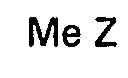
- Die erfindungsgemäßen Pyridaziniumverbindungen zeigen starke fungizide und algizide Figenschaften und stellen somit eine Bereicherung der Technik dar.
- In der Formel 1 bedeutet R, ein Wasserstoffatom, einen gesättigten oder ungesättigten Alkylrest mit 1 bis C-Atomen, bevorzugt einen gesättigten Alkylrest mit 1-4 C-Atomen, wie den Methyl-, Ethyl, -Propyl-, oder Butylrest oder den Allylrest.
- R2 bedeutet ein Wasserstoffatom, einen gesättigten oder ungesättigten, geradkettigen oder verzweigten Alkylrest mit 1 bis 10 C-Atomen, einen Cycloalkylrest, wie den Cyclohexylrest, einen Alkoxyalkylrest, einen Hydroxyalkylrest, oder einen gegebenenfalls ein- oder mehrfach durch Halogenatome substituierten Phenylrest, wie die verschiedenen Mono-, Di- oder Tri-halogenphenylrest. Bevorzugt sind jene Verbindungen in denen R2 einen geradkettigen oder verzweigten Alkylrest mit 1 bis 4 C-Atomen, einen Alkoxy- oder Hydroxyalkylrest mit 1-4 C-Atomen in den Alkylketten, wie den Methoxyethylrest oder den Hydroxyethylrest, oder den Cyclohexylrest bedeutet.
- Weiters können R1 und R2 gemeinsam mit dem Stickstoffatom einen 5 bis 7 gliedrigen heterocyclischen Ring bilden, der als weiteres Heteroatom Stickstoff oder Sauerstoff enthalten kann und gegebenenfalls durch Alkyl- oder Phenylalkylreste oder einen Pyridylrest substituiert ist. Beispiele für solche heterocyclischen Ringe sind gegebenenfalls substituierte Pyrrolidino-, Piperidino-, Morpholino-oder Azacycloheptylringe. Bevorzugt sind jene Verbindungen, in denen R1 und R2 gemeinsam mit dem Stickstoffatom einen 6 oder 7 gliedrigen Ring bilden, wie der Piperidino- oder Azacycloheptylring, der gegebenenfalls ein- oder mehrfach durch Alkylreste mit 1 bis 4 C-Atomen oder durch einen Benzylrest substituiert ist. Besonders bevorzugt sind solche Verbindungen, in denen R1 und R2 gemeinsam mit dem Stickstoffatom einen 6 gliedrigen Ring bilden, der gegebenenfalls ein oder mehrfach durch Alkylrest mit 1 bis 4 C-Atomen oder den Benzylrest substituiert ist.
- R3 bedeutet einen gegebenenfalls ein- oder mehrfach durch Halogenatome in 3-, 4- oder 5-Stellung substituierten, oder durch Alkyl oder Alkoxygruppen ein- oder mehrfach substituierten Phenylrest, wie den p-Chlorphenyl- Trimethoxyphenylrest, Butoxyphenyl-, einen Methylphenyl- oder Butylphenylrest oder einen tertiär-Butylrest. Bevorzugt sind solche Verbindungen, in denen R3 einen gegebenenfalls durch Chlor oder geradkettige oder verzweigte Alkylreste substituierte Phenylrest bedeutet. Besonders bevorzugt sind jene Verbindungen in denen R3 einen Phenyl-, einen p-Chlor- oder p-Methylphenylrest bedeutet.
- R4 bedeutet ein Wasserstoffatom oder einen geradkettigen oder verzweigten Alkylrest mit 1 bis 4 C-Atomen, vorzugsweise einen Methyl- oder Ethylrest.
- Der Rest R5 bedeutet ein Wasserstoffatom, einen geradkettigen oder verzweigten, gesättigten oder ungesättigten gegebenenfalls durch Halogen-, Nitril-, Hydroxy-, Alkoxy-, Phenyl-, Halogenphenyl oder gegebenenfalls halogenierte Phenoxyreste substituierten Alkyl- oder Oxoalkylrest mit 1 bis 20 C-Atomen, zweckmäßig mit 1 bis 15 C-Atomen, bevorzugt mit 1 bis 8 C-Atomen oder einen Cycloalkylrest. Beispiele für solche Reste sind Methyl-, i-Propyl-, i-Butyl-, n-Heptyl-, Octyl-, Nonyl-, Decyl-, Undecyl-, Vinyl-, Allyl-, Butenyl- 2-, 2-Hydroxy-3-phenoxypropyl-, Cyanomethyl, Benzyl-, Monochlorbenzyl-, Dichlorbenzylreste, der Cyclohexylrest u. dgl.
- Bevorzugt sind solche Verbindungen, in denen R5 einen gesättigten oder ungesättigten Alkylrest mit 1 bis 8 C-Atomen, besonders bevorzugt einen gesättigten oder ungesättigten Alkylrest mit 1-5 C-Atomen bedeutet.
- A- bedeutet ein pflanzenphysiologisch verträgliches Anion, beispielsweise ein Halogenion wie Chlorid, Bromid, lodid oder die Anionen Nitrat, Hydrogensulfat, Methosulfat, Trifluormethylsulfonat, Tosylat, Acetat, Trifluoracetat, Lactat, Bezoat, 2-Hydroxybenzoat.
- Die Herstellung der Pyridaziniumverbindungen der allgemeinen Formel I kann erfolgen, indem man ein Pyridazin der allgemeinen Formel II mit mindestens einem Mol einer Verbindung der Formel Rs Y umsetzt.
- Der Rest R5 geht dabei in Abhängigkeit von der Reaktivität der Ausgangsverbindungen und der Raumerfüllung der Substituenten bevorzugt an das dem Rest R4 benachbarte Stickstoffatom. Es ist aber auch eine Quarternisierung des anderen Stickstoffatoms des Pyridazinringes möglich. Beide Reaktionsprodukte, sowie evt. auftretende Gemische werden erfindungsgemäß beansprucht.
- Die Umsetzung kann in Substanz oder in Gegenwart eines inerten Verdünnungsmittels, etwa in einem organischen Verdünnungsmittel wie Aceton, Acetonitril, Dimethylformamid, Nitromethan, N-Methylpyrrolidon erfolgen.
- Ferner kann die Reaktion bei Atmosphärendruck oder erhöhtem Druck, etwa bei Drücken von 3 bis 10 bar, durchgeführt werden.
- Die Reaktion wird etwa bei Temperaturen von 0 bis 170°C, vorzugsweise bei Temperaturen von 20°C bis zur Rückflüßtemperatur der jeweiligen Reaktionsgemisches durchgeführt.
- Die Reaktionsdauer beträgt je nach Temperatur und Reaktivität der ReaktionsteIlnehmer etwa 30 Minuten bis einige Tage.
- Nach beendeter Reaktion werden die flüchtigen Bestandteile des Reaktionsgemisches bei Atmosphärendruck oder vorzugsweise bei vermindertem Druck verdampft, worauf das Endprodukt üblicherweise in großer Reinheit anfällt. Gegebenenfalls kann es aus einem geeigneten Lösungsmittel umkristallisiert werden.
- Der Umsatz kann auch in Substanz erfolgen, wobei das Reaktionsgemisch nach beendeter Reaktion etwa in Wasser eingerührt, mit einem organischen Lösungsmittel wie Chloroform, 1,1,1-Trichlorethan, Dichlormethan ein- oder mehrmals extrahiert und der Rücksand nach Verdampfen des Lösungsmittels isoliert und gegebenenfalls umkristallisiert wird.
- Die auf diesem Weg erhaltenen Halogensalze können durch Umsalzen in andere Salze mit verschiedenen organischen oder anorganischen Anionen umgewandelt werden.
- Hiebei werden die obigen Halogensalze der Formel 111 mit einem Schwermetallsalz einer anorganischen oder organischen Säure umgesetzt.
- Der Umsatz erfolgt beispielsweise in Gegenwart eines inerten Verdünnungsmittels, bevorzugt in Gegenwart von Wasser. Die Reaktion wird etwa bei Temperaturen von 10 bis 80°C, bevorzugt bei Raumtemperatur durchgeführt.
- Das praktisch sofort als Niederschlag anfallende Metallhalogenid wird in üblicher Weise, etwa durch Filtrieren oder Zentrifugieren, abgetrennt und die verbleibende Lösung bei Atmosphärendruck oder vorzugsweise bei vermindertem Druck und erhöhter Temperatur von Wasser befreit. Die Substanzen fallen als meist ölige Rückstände in großer Reinheit an.
- Die als Ausgangsverbindungen benötigten Pyridazine der Formel 11 sind teilweise neu und können nach in sich bekannten Methoden erhalten werden, indem man beispielsweise ein 6-Halogenpyridazinverbindung der allgemeinen Formel IV


- Beispielsweise wurde zur Herstellung von 4-Methyl-3-phenyl-6-piperidinopyridazin, wie folgt verfahren:
- a) 30,76 g (0,15 mol) 4-Methyl-3-phenyl-6-chlorpyridazin wurden in 150 ml (1,53 mol) Piperidin gelöst und die Lösung vorsichtig. auf 100°C erhitzt. Nach Abklingen der exothermen Reaktion wurde die Lösung 1,5 Stunden auf Rückflußtemperatur gehalten und anschließend durch Zugabe von Eis auf 20°C gekühlt. Der anfallende Niederschlag wurde isoliert, mit Wasser gewaschen und getrocknet. Nach dem Umkristallisieren aus einem Aceton-Diisopropylethergemisch wurden 36,6 g (0,144 mol) 4-Methyl-3-phenyl-6-piperidinopyridazin mit Fp. 116-118°C erhalten.
- b) 10,25 g (0,05 mol) 4-Methyl-3-phenyl-6-chlorpyridazin wurden in 100 ml Xylol augeschlämmt und 6 g Kaliumcarbonat zugegeben. Anschließend wurden 5,1 ml (0,05 mol) Piperidin zugefügt und das Reaktionsgemisch 40 Stunden unter Rückfluß gehalten. Nach Verdampfen des Xylols unter verminderten Druck wurde der Rückstand in Wasser eingerührt. Das anfailende Festprodukt wurde isoliert, mit Wasser gewaschen und getrocknet. Nach dem Umkristallisieren aus Diisopropylether wurden 11,95 g (0,047 mol) an 4-Methyl-3-phenyl-6-piperidinopyridazin mit Fb. 116-118°C erhalten.
- Auf einem der beschriebenen Wege wurden die Ausgangsverbindungen für die beanspruchten Pyridaziniumverbindungen hergestellt.
- "Die erfindungsgemäßen Mittel können zur Behandlung von Pflanzen oder technischen Materialien eingesetzt werden, die duch Einwirkung von Pilzen, Algen oder Bakterien, wie z.B. Xanthomonasarten, erkrankt sind. Im Pflanzenschutz werden beispielsweise die fungiziden und algiziden Mittel zur Bekämpfung von Schadorganismen aus den Klassen der Schizomyceten, Myxomyceten, Phycomyceten, Ascomyceten, Basidiomyceten und Deuteromyceten und zur Bekämpfung von Algen eingesetzt. Die gute Pflanzenverträglichkeit der Wirkstoffe und die zum Teil systemische Wirksamkeit in den zur Behandlung von Pflanzenkrankheiten notwendigen Konzentrationen erlaubt eine Behandlung von oberirdischen Pflanzenteilen, von Pflanz- und Saatgut und des Bodens. Als Pflanzen seien etwa Getreidearten, wie Weizen, Gerste, Roggen oder Hafer, weiters Reis, Mais, Baumwolle, Soja, Kaffee, Zuckerrohr, sowie Gemüsearten, wie Gurken, Bohnen, Tomaten oder Kürbisgewächse genannt.
- Mit besonders gutem Erfolg können die erfindungsgemäßen Mittel etwa zur Bekämpfung folgender Pflanzenkrankheiten eingesetzt werden:
- Erysiphe graminis (echter Mehltau) in Getreide
- Erysiphe betae an Zuckerrüben,
- Erysiphe chichoracearum an Kürbisgewächsen,
- Erysiphe polygoni an Bohnen,
- Podosphaera leucotricha an Äpfeln,
- Sphaerotheca pannosa an Rosen,
- Uncinula necator an Reben,
- Puccinia-Arten an Getreide,
- Ustilago-Arten an Getreide und Zuckerrohr,
- Uromyces appendiculatus und Uromyces phaseoli an Bohnen,
- Venturia inaequalis an Äpfeln,
- Septoria nodorum an Weizen,
- Septoria appii an Selleria,
- Phytophthora infestans an Kartoffeln und Tomaten,
- Plasmopora viticola an Wein,
- Pseudocercosporella herpotrichoides an Getreide.
- In entsprechenden Aufwandmengen können die Stoffe auch als Holzschutzmittel gegen holzverfärbende Pilze oder Moderfäulepilze eingesetzt werden, wie z.B. zur Bekämpfung von Merulius lacrimans, Polyporus vaporarius Poria placenta oder Polystictus cinnabarinus. Die erfindungsgemäßen Mittel können weiters zur Algen- und Schleimbekämpfung in landwirtschaftlichen Kulturen mit Überflutung, bei Industrieprozessen, in Kühlanlagen und Abwässern, in Gewächshäusern, Gewässern, in Schwimmbecken und Aquarien verwendet werden.
- Die Wirkstoffe können je nach ihrem Anwendungsgebiet in die üblichen Formulierungen übergeführt werden, wie Lösungen, Spritzpulver, Emulsionskonzentrate, Emulsionen, Suspensionen, Pulver, Schäume, Pasten, Granulate, Aerosole, Wirkstoff-imprägnierte Natur- und synthetische Stoffe, Feinstverkapselungen in polymeren Stoffen und in Hüllmassen für Saatgut, ferner in Formulierungen mit Brennsätzen, wie Räucherpatronen, -dosen, -spiralen u.a., sowie ULV-Kalt- und Warmnebel-Formulierungen.
- Diese Formulierungen werden bekannter Weise hergestellt, z.B. durch Vermischen der Wirkstoffe mit Streckmitteln, also flüssigen Lösungsmitteln, unter Druck stehenden verflüssigten Gasen und/oder festen Trägerstoffen, gegebenenfalls unter Verwendung von Tensiden, also Emulgatoren und/oder Dispergier-und/oder Netzmitteln und/oder schaumerzeugenden Mitteln. Im Falle der Benutzung von Wasser als Streckmittel können z.B. auch organische Lösungsmittel als Hilfslösungsmittel verwendet werden. Als flüssige Lösungsmittel kommen im wesentlichen in Frage: Aromaten, wie Xylol, Toluol oder Alkylnaphthaline, chlorierte Aromaten oder chlorierte aliphatische Kohlenwasserstoffe, wie Cyclohexan oder Paraffine, z.B. Erdölfraktionen, Alkohole, wie Butanol oder Glykol sowie deren Ether und Ester, Ketone, wie Aceton, Methylethylketon, Methylisobutylketon oder Cyclohexanon, stark polare Lösungsmittel, wie Dimethylformamid und Dimethylsulfoxid, sowie Wasser. Mit verflüssigten, gasförmigen Streckmitteln oder Trägerstoffen sind solche Flüssigkeiten gemeint, welche bei normaler Temperatur und unter Normaldruck gasförmig sind, z.B. Aerosol-Treibgas, wie Halogenkohlenwasserstoffe, sowie Butan, Propan, Stickstoff und Kohlendioxid; als feste Trägerstoffe kommen in Frage: z.B. natürliche Gesteinsmehle, wie Kaoline, Tonerde, Talkum, Kreide, Quarz, Attapulgit, Montmorillonit oder Diatomeenerde und synthetische Produkte, wie hochdisperse Kieselsäure, Aluminiumoxid und Silikate; als feste Trägerstoffe für Granulate kommen in Frage: z.B. gebrochene und fraktionierte natürliche Gesteine, wie Calcit, Marmor, Bims, Sepiolith, Dolomit sowie synthetische Granulate aus anorganischen und organischen Mehlen, sowie Granulate aus organischem Material, wie Sägemehl, Kokosnuss-Schalen, Maiskolben und Tabakstengel; als Emulgiermittel und/oder schaumerzeugende Mittel kommen in Frage: z.B. nichtionogene und ionogene Tenside, wei Polyoxyethylen-Sorbitan- Tallölester, Na-Oleylmethyltaurid, Polyoxyethylen-Fettsäure-Ester, Polyoxyethylen-Fettalkoholether, z.B. Alkylarylpolyglykolether, Alkylsulfonate, Alkylsulfate, Arylsulfate und Arylalkylsulfonate sowie Eiweisshydrolysate; als Dispergiermittel kommen in Frage: z.B. Ligninsulfonate oder Kondensationsprodukte von Arylsulfonaten mit Formaldehyd.
- Es können in den Formulierungen Haft- und Verdickungsmittel wie Carboxymethylcellulose, Methylcellulose, natürliche und synthetische pulverige, körnige und latexförmige Polymere verwendet werden, wie Gummi arabicum, Polyvinylalkohol, Polyvinylacetat.
- Es können Farbstoffe, wie anorganische Pigmente, z.B. Eisenoxid, Titanoxid, Ferrocyanblau und organische Farbstoffe, wie Alizarin- Phthalocyaninfarbstoffe und Spurennährstoffe, wie Salze von Eisen, Mangan, Bor, Kupfer, Kobalt, Molybdän und Zink verwendet werden.
- Die Formulierungen enthalten im allgemeinen zwischen 0,1 und 95 Gew.% Wirkstoff, vorzugsweise zwischen 0,5 und 90%.
- Die Wirkstoffe können als solche, in form ihrer Formulierungen oder den daraus durch weiters Verdünnen bereiteten Anwendungsformen, wie gebrauchsfertige Lösungen, Emulsionen, Suspensionen, Pulver, Pasten und Granulate angewendet werden. Die Anwendung geschieht in üblicher Weise, z.B. durch Gieben, Tauchen, Spritzen, Sprühen, Vernebeln, Verdampfen, Injizieren, Verschlämmen, Stäuben, Streuen, Trockenbeizen, Feuchtbeizen, Nassbeizen, Schlämmbeizen oder Inkrustieren.
- Bei der Behandlung von Pflanzenteilen können die Wirkstoffkonzentrationen in den Anwendungsformen in einem größeren Bereich veriiert werden. Sie liegen im allgemeinen zwischen 1 und 0,0001 Gew%, vorzugsweise zwischen 0,5 und 0,001%.
- Bei der Anwendung der Wirkstoff zur Behandlung von Pilzinfektionen liegen die Aufwandmengen zwischen 0,015, und 4 kg Wirkstoff/ha Fläche.
- Zum Oberflächenschutz von Bäumen und Früchten können die Wirkstoffe auch in Verbindung mit Kunststoffdispersionen 0,25%ig bis 5%ig, bezogen auf das Gewicht der Dispersion, verwendet werden.
- Bei der Saatgutbehandlung werden im allgemeinen Wirkstoffmengen von 0,001 bis 50 g je Kilogramm Saatgut, vorzugsweise 0,01 bis 10 g benötigt.
- Bei Behandlung des Bodens sind Wirkstoffkonzentrationen von 0,00001 bis 0,1 Gew.%, vorzugsweise 0,0001 bis 0,02%, am Wirkungsort erforderlich.
- 5,07 g (0,02 mol) 4-Methyl-3-phenyl-6-(piperidino-1)-pyridazin wurden in 30 ml Aceton gelöst und 3,12 g (0,022 mol) Methyliodid zugefügt und die Mischung 23 Stunden bei Raumtemperatur belassen. Anschließend wurde das Reaktionsgemisch in Vakuum zur Trockene gebracht und der anfallende Rückstand mit Methylacetat bei 60°C zur Kristallisation gebracht. Die anfallenden Kristalle wurden mit Methylacetate und Ether gewaschen und zur Gewichtskonstanz getrocknet. Es wurden, 7,6 g (0,019 mol) 2(1),4-DimethyI-3-phenyI-6-(piperidino-1)-pyridaziniumiodid mit Fp.169-171°C erhalten.
- 5,1 g (0.02 mol) 3-Phenyl-6-(4'-methylpiperidino-1)-pyridazin wurden mit 30 ml (0,2 mol) 1-lodhexan versetzt und die Mischung 6 Stunden bei 100°C gerührt. Anschließend wurde die Reaktionsmischung in Ether eingerührt und auf -30°C gekühlt. Der anfallende Feststoff wurde isoliert, mit Ether gewaschen und zur Gewichtskonstanz getrocknet. Es wurden 8,92 g (0,019 mol); 2,(1)Hexyl-3-phenyl-6-(4'-methylpiper- idino-1 )-pyridaziniumiodid mit Fp. 63-73°C erhalten.
- 6,0 g (0,024 mol) 4-Methyl-3-phenyl-6-(piperidino-1)-pyridazin wurden in 100 ml Aceton gelöst und 10 ml (0,07 mol) p-Toluolsulfonsäuremethylester zugefügt und die Mischung auf Rückflußtemperatur gehalten. Dann wurde das Lösungsmittel abgedampft und der verbleibende Rückstand mit methylacetat zur Kristallisation gebracht. Es wurden 10 g (0,023 mol) 2(1),4-Dimethyl-3-phenyl-6-(piperidino-1)-pyrid- aziniumtosylat mit Fp. 135-141°C erhalten.
- 6,4 g (0,024 mol) Silbersalycylat. H20 wurden in 5 I Wasser gelöst und bei Zimmertemperatur zu 300 ml einer wässrigen Lösung von 10 g (0,025 mol) 2,4-Dimethyl-3-phenyl-6(4'-methylpiperidino-1)-pyridaziniumiodid zugefügt. Das sofort als Niederschlag anfallende Silberiodid wurde abgetrennt und die erhaltene Lösung bei vermindertem Druck und bei einer Temperatur von 60°C vom Wasser befreit. Es wurden 10,1 g (0,024 mol) an 2,4-Dimethyl-3-phenyl-6-(4'-methylpiperidino-1 )-pyridaziniumsalycclat im Form eines Ols erhalten.
- 6,0 g (0,024 mol) 4-Methyl-3-phenyl-6-(piperidino-1 )-pyridazin wuden in 150 ml Aceton gelöst. Nach Zugabe von 40 g (0,42 mol) Methylbromid wurde die Mischung 20 Stunden bei 80°C unter einem Druck von 5 bar gerührt. Nach Abziehen der flüchtigen Bestandteile wurde der Rückstand mit Methylacetat zur Kristallisation gebracht. Es wurden 7,7 g (0,022 mol) 2 (1), 4-Dimethyl-3-phenyl-6-(piperidino-1)-pyrid- aziniumbromid mit Fp. 185-197°C erhalten.
- Auf analoge Weise wurden die in der Tabelle zusammengefaßten Verbindungen erhalten.
- Die als Ausgangsverbindungen für die Quartärsalze verwendeten Pyridazinbasen sind nicht mit einer Beispielnummer versehen und wei die Quartärsalze durch ihren Schmelzpunkt charakterisiert(*...... Zersetzung).
- In der Tabelle bedeuten:


- 1 Teil 2,4-Dimethyl-6-(4-methylpiperidino-1)-3-phenylpyridaziniumjodid wurden in 3 Teilen N-Methylpyrrolidon gelöst, und mit 1 Teil ethoxyliertem Nonylphenol mit einem durchschnittlichen Gehalt von 5-6 Mol Ethylenoxid/Mol Nonylphenol versetzt. Das erhaltene Konzentrat wurde mit Wasser zu einer Spritzbrühe der gewünschten Konzentration verdünnt.
- 1 Teil 2,4-Dimethyl-6-(4-methylpiperidino-1)-3-phenylpyridaziniumjodid wurden mit 2,5 Teilen Kaolin, 1 Teil Attaclay und 0,5 Teilen Natrium-oleoylmethyltaurid innig vermengt und dann mit einer Planetenkugelmühle 1 Stunde vermahlen. Man erhielt ein benetzbares Pulver, welches leicht in Wasser zu einer Spritzbrühe der gewünschten Konzentration dispergiert werden konnte.
- 1 Teil 2(1 )-Butyl-3-phenyl-6-(piperidino-1 )-pyridaziniumjodid wurden in 3 Teilen N-Methylpyrrolidon gelöst und 1 Teil ethoxyliertes Nonylphenol mit einem durchschnittlichen Gehalt von 5-6 Molen Ethylenoxid/Mol Nonylphenol zugegeben. Das erhaltene Konzentrat konnte mit Wasser zu einer Spritzbrühe der gewünschten Konzentration verdünnt werden.
- 5 Teile 2(1)-Butyl-3-phenyl-6-(piperidino-1)-pyridaziniumjodid wurden mit 1-Teil hochdisperser gefällter Kieselsäure, 3 Teilen Ataclay, 0,5 Teilen Natriumligninsulfonat und 0,5 Teilen Naoleoylmethyltaurid innig vermengt und anschließend auf einer Planetenkugelmühle 1 Stunde lang vermahlen. Man erhielt ein benetzbares Pulver, welches leicht in Wasser zu einer Spritzbrühe der gewünschten Konzentration dispergiert werden konnte.
- Prophylaktische Wirkung der Verbindungen gegen Echten Mehltau (Frysiphe cichoracearum) auf Gurken, durch Behandlung der Blätter.
- 10 Tage alte Gurkenpflanzen wurden mit einer wäßrigen Verdünnung des formulierten Wirkstoffes besprüht. Nach dem Trocknen der Spritzflüssigkeit wurden die Pflanzen mit von infizierten Pflanzen gewonnenen Sporen inokuliert. Die Gurkenpflanzen blieben anschließend im Gewächshaus bei rund 60% Luftfeuchtigkeit stehen.
- 14 Tage nach der künstlichen Infektion wurde der Befall mit Erysiphe cichoracearum nach folgenden Boniturschema ausgewertet:
- 1 = kein Befall
- 2 = bis 2,5% der Blattfläche befallen
- 3 = bis 5,0% der Blattfläche befallen
- 4 = 5-10% der Blattfläche befallen
- 5 = 10-15% der Blattfläche befallen
- 6 = 15-25% der Blattfläche befallen
- 7 = 25-35% der Blattfläche befallen
- 8 = 35-67% der Blattfläche befallen
- 9 = 67% der Blattfläche befallen
- Die Wirkstoffe, die Wirkstoffkonzentrationen und die Boniturwerte sind aus der nachfolgenden Tabelle ersichtlich.

- Prophylaktische Wirkung der Verbindungen gegen Getreidemehltau (Erysiphe graminis) auf Weizen und Gerte durch Behandlung der Blätter:
- Etwa 10 cm große Weizen-bzw. Gerstenpflanzen wurden mit einer wäßrigen Verdünnung des formulierten Wirkstoffes allseits besprüht. Nach 48 Stunden wurden die behandelten Pflanzen mit von infizierten Pflanzen gewonnenen Conidiosporen des Pilzes Erysiphe graminis var. tritici (a) bzw. Erysiphe graminis var. hordei (b) bestäubt.
- Bei rund 22°C blieben die infizierten Pflanzen im Gewächshaus stehen. 10 Tage nach der künstlichen Infektion wurde nach dem im Beispiel 1 beschriebenen Boniturschema ausgewertet.
- Die Wirkstoffe, die Wirkstoffkonzentrationen und die Boniturwerte sind aus der nachfolgenden Tabelle ersichtlich:

- Prophylaktische Wirkung der Verbindungen gegen Echten Mehltau (Phodosphaera leucotricha) an Apfelsämlingen:
- Junge Apfelsämlinge wurden mit einer wäßrigen Verdünnung des formulierten Wirkstoffes allseits besprüht und blieben anschließend für 24 Stunden im Gewächshaus stehen.
- Mit von erkrankten Apfelsämlingen gewonnenen Conidiosporen wurden die behandelten Pflanzen anschließend inokuliert. Dabei konnten beispielsweise die Verbindung Nr. 106, 100, 101, 224 und 178 in einer Wirkstoffkonzentration von 50 ppm den Ausbruch der Krankheit vollständig verhindern.
- Prophylaktische Wirkung gegen Weizenbraunrost (Puccinia recondita) an Weizen:
- Zu Prüfung auf protektive Wirksamkeit wurden junge Weizenpflanzen mit einer wäßrigen Sporensuspension von Puccinia recondita inokuliert.
- Nach dem Austrocknen wurden die Pflanzen mit der Wirkstoffzubereitung bis zur Tropfnässe besprüht und anschließend wurden die Pflanzen für 24 Stunden bei 20°C und rund 95% Luftfeuchtigkeit in einem Klimaschrank inokuliert.
- Bis zum Ausbruch der Krankheit an den Kontrollpflanzen standen die Testpflanzen im Gewächshaus bei rund 20°C und 70% Luftfeuchtigkeit.
- In dieser Prüfung verhinderten beispielsweise die Verbindungen Nr. 177, 179, 218, 224 und 106 in einer Konzentration von 100 ppm vollständig den Befall der Pflanzen.
- Fungizide Wirksamkeit im Agar-Plattentest:
- Die in Aceton gelösten Wirkstoffe wurden in Bestimmter Konzentration einem verflüssigten Nährboden zugesetzt.
- Der Agar wurde in Petrischalen ausgegossen und nach dem Erkalten mit dem Testorganismuns beimpft. Sobald die Kontrolle vom Testorganismus bewachsen war, wurde ausgewertet.
- In diesen Prüfungen wurde beispielsweise in einer Konzentration von 400 ppm das Wachstum von Poria placenta und Merulius lacrimans von den Verbindungen Nr37,84,85 und 235 verhindert. Ebenfalls in einer Konzentration von 400 ppm verhinderten die Verbindungen Nr. 214, 223, 224, 225, 226, 283 und 88 das Wachstum von Pseudocercosporella herpotrichoides vollständig. Mit 1000 ppm wurde das Wachstum von Rhizoctonia solani von dem Verbindungen Nr. 177, 178, 163 und 106 unterbunden.
- Von den Wirkstofformulierungen wurden wäßrige Dispersionen hergestellt. Filterpapierplättchen wurden darin getränkt und anschließend auf den beimpften Nährboden gelegt.
- Sobald die Kontrolle vom Testorganismus bewachsen war, wurde ausgewertet.
- Es verhinderten dabei beispielsweise die Verbindungen Nr. 37, 163, 177, 101 und 106 in einer Konzentration von 1000 ppm das Wachstum von Xanthomonas ssp. rund um das Filterpapierplättchen.
- Finfluß der Wirkstoffe auf das Wachstum der Alge Chlorella fusca:
- Zu 70 ml AIgensuspension, entsprechend 0,1 mg Algen/1 ml Nährlösung, wurde die zu prüfende Substanz, gelöst in Aceton, zugegeben. Die Algensuspensionen wurden 48 Stunden lang bei künstlicher Beleuchtung und Belüftung gehalten.
- Ausgewertet wurde der Prozentwert (P) = Algenkonzentration (in mg) in der Testlösung im Verhältnis zur Kontrolle (= 100 %).
- In einer Konzentration von 10 ppm war beispielsweise bei den Verbindungen Nr, 38, 280, 284, 263, 231, 232, 236, 179, 168, 103, 85, 87, und 93 P<1 %.
- Wirksamkeit gegen Echten Weizenmehltau der Verbindungen bei Anwendung als Beizmittel:
- Je 10 g gereinigtes Saatgut der Winterweizensorte "Gambrinus" wurden sorgfältig mit je 60 g Wirkstoff/100 kg Saatgut gebeizt und nach 24 Stunden eingelegt. Nachdem die Pflanzen das 3-Blattstadium erreicht hatten, wurden die Pflanzen täglich inokuliert. Sobald an den Kontrollpflanzen die Krankheit ausgebrochen war, wurde nach der in Beispiel 1 beschriebenen Methode ausgewertet.
- Eine 100 %ige Wirkung bei Bekämpfung des Weizenmehltaues (Erysphe graminus vartritici) erreichten dabei die Verbindungen Nr. 105, 100, 159, 174, 177, 16 und 106.
Claims (10)


Priority Applications (1)
| Application Number | Priority Date | Filing Date | Title |
|---|---|---|---|
| AT86902407T ATE53994T1 (de) | 1985-05-15 | 1986-04-18 | Neue pyridaziniumverbindungen, verfahren zu deren herstellung und diese enthaltende fungizide und algizide mittel. |
Applications Claiming Priority (2)
| Application Number | Priority Date | Filing Date | Title |
|---|---|---|---|
| DE19853517617 DE3517617A1 (de) | 1985-05-15 | 1985-05-15 | Neue pyridaziniumverbindungen, verfahren zu deren herstellung und diese enthaltende fungizide und algizide mittel |
| DE3517617 | 1985-05-15 |
Publications (2)
| Publication Number | Publication Date |
|---|---|
| EP0225886A1 EP0225886A1 (de) | 1987-06-24 |
| EP0225886B1 true EP0225886B1 (de) | 1990-06-20 |
Family
ID=6270872
Family Applications (1)
| Application Number | Title | Priority Date | Filing Date |
|---|---|---|---|
| EP86902407A Expired - Lifetime EP0225886B1 (de) | 1985-05-15 | 1986-04-18 | Neue pyridaziniumverbindungen, verfahren zu deren herstellung und diese enthaltende fungizide und algizide mittel |
Country Status (9)
| Country | Link |
|---|---|
| EP (1) | EP0225886B1 (de) |
| AU (1) | AU5699986A (de) |
| DD (1) | DD258808A1 (de) |
| DE (2) | DE3517617A1 (de) |
| ES (1) | ES8704933A1 (de) |
| GR (1) | GR861096B (de) |
| IL (1) | IL78693A0 (de) |
| PT (1) | PT82585B (de) |
| WO (1) | WO1986006719A1 (de) |
Families Citing this family (13)
| Publication number | Priority date | Publication date | Assignee | Title |
|---|---|---|---|---|
| EP0510562A1 (de) * | 1991-04-26 | 1992-10-28 | Byk Gulden Lomberg Chemische Fabrik GmbH | Neue Pyridazine |
| EP1812408B1 (de) * | 2004-11-02 | 2013-10-09 | Northwestern University | Pyridazinverbindungen, zusammensetzungen und verfahren |
| WO2008145681A2 (en) * | 2007-05-31 | 2008-12-04 | Boehringer Ingelheim International Gmbh | Ccr2 receptor antagonists and uses thereof |
| DK2379525T3 (en) | 2008-12-19 | 2015-10-19 | Boehringer Ingelheim Int | Cyclic pyrimidin-4-carboxamides, as CCR2 receptor antagonists for the treatment of inflammation, asthma and COPD |
| WO2011073154A1 (en) | 2009-12-17 | 2011-06-23 | Boehringer Ingelheim International Gmbh | New ccr2 receptor antagonists and uses thereof |
| EP2569295B1 (de) | 2010-05-12 | 2014-11-19 | Boehringer Ingelheim International GmbH | Neue ccr2-rezeptorantagnonisten, herstellungsverfahren dafür und verwendung davon als medikamente |
| US8877745B2 (en) | 2010-05-12 | 2014-11-04 | Boehringer Ingelheim International Gmbh | CCR2 receptor antagonists, method for producing the same, and use thereof as medicaments |
| US8841313B2 (en) | 2010-05-17 | 2014-09-23 | Boehringer Ingelheim International Gmbh | CCR2 antagonists and uses thereof |
| US9018212B2 (en) | 2010-05-25 | 2015-04-28 | Boehringer Ingelheim International Gmbh | Pyridazine carboxamides as CCR2 receptor antagonists |
| EP2576538B1 (de) | 2010-06-01 | 2015-10-28 | Boehringer Ingelheim International GmbH | Neue CCR2-Antagonisten |
| JP5786258B2 (ja) | 2011-07-15 | 2015-09-30 | ベーリンガー インゲルハイム インターナショナル ゲゼルシャフト ミット ベシュレンクテル ハフツング | 新規かつ選択的なccr2拮抗薬 |
| WO2017004537A1 (en) | 2015-07-02 | 2017-01-05 | Centrexion Therapeutics Corporation | (4-((3r,4r)-3-methoxytetrahydro-pyran-4-ylamino)piperidin-1-yl)(5-methyl-6-(((2r,6s)-6-(p-tolyl)tetrahydro-2h-pyran-2-yl)methylamino)pyrimidin-4yl)methanone citrate |
| WO2026048764A1 (ja) * | 2024-08-26 | 2026-03-05 | 国立大学法人 長崎大学 | 細菌感染症治療用医薬組成物 |
Citations (1)
| Publication number | Priority date | Publication date | Assignee | Title |
|---|---|---|---|---|
| EP0114770A2 (de) * | 1983-01-21 | 1984-08-01 | Sanofi S.A. | Verbindungen mit diazotiertem heterocyclischem Kern, Verfahren zu deren Herstellung und diese enthaltende, auf das zentrale Nervensystem wirkende Arzneimittel |
Family Cites Families (2)
| Publication number | Priority date | Publication date | Assignee | Title |
|---|---|---|---|---|
| FR1534690A (fr) * | 1966-10-14 | 1968-08-02 | Leuna Werke Veb | Procédé pour la fabrication de dérivés de la pyridazine substitués en position 3 par des groupes contenant de l'azote ainsi que produits conformes à ceux obtenus |
| DE3173083D1 (en) * | 1980-03-22 | 1986-01-16 | Fbc Ltd | Pesticidal heterocyclic compounds, processes for preparing them, compositions containing them, and their use |
-
1985
- 1985-05-15 DE DE19853517617 patent/DE3517617A1/de not_active Withdrawn
-
1986
- 1986-04-18 DE DE8686902407T patent/DE3672132D1/de not_active Expired - Fee Related
- 1986-04-18 AU AU56999/86A patent/AU5699986A/en not_active Abandoned
- 1986-04-18 EP EP86902407A patent/EP0225886B1/de not_active Expired - Lifetime
- 1986-04-18 WO PCT/EP1986/000232 patent/WO1986006719A1/de not_active Ceased
- 1986-04-25 GR GR861096A patent/GR861096B/el unknown
- 1986-05-05 IL IL78693A patent/IL78693A0/xx unknown
- 1986-05-13 DD DD86290189A patent/DD258808A1/de unknown
- 1986-05-14 ES ES554942A patent/ES8704933A1/es not_active Expired
- 1986-05-14 PT PT82585A patent/PT82585B/pt not_active IP Right Cessation
Patent Citations (1)
| Publication number | Priority date | Publication date | Assignee | Title |
|---|---|---|---|---|
| EP0114770A2 (de) * | 1983-01-21 | 1984-08-01 | Sanofi S.A. | Verbindungen mit diazotiertem heterocyclischem Kern, Verfahren zu deren Herstellung und diese enthaltende, auf das zentrale Nervensystem wirkende Arzneimittel |
Also Published As
| Publication number | Publication date |
|---|---|
| AU5699986A (en) | 1986-12-04 |
| GR861096B (en) | 1986-05-27 |
| ES8704933A1 (es) | 1987-04-16 |
| DE3672132D1 (de) | 1990-07-26 |
| ES554942A0 (es) | 1987-04-16 |
| WO1986006719A1 (fr) | 1986-11-20 |
| PT82585B (pt) | 1988-07-01 |
| DE3517617A1 (de) | 1986-11-20 |
| PT82585A (en) | 1986-06-01 |
| EP0225886A1 (de) | 1987-06-24 |
| IL78693A0 (en) | 1986-08-31 |
| DD258808A1 (de) | 1988-08-03 |
Similar Documents
| Publication | Publication Date | Title |
|---|---|---|
| EP0165448B1 (de) | 1-Heteroaryl-4-aryl-pyrozolin-5-one | |
| DE2742173A1 (de) | Phenoxy-pyridinyl(pyrimidinyl)-alkanole, verfahren zu ihrer herstellung sowie ihre verwendung als fungizide | |
| EP0332579A2 (de) | Mittel zum Schutz von Pflanzen gegen Krankheiten | |
| DD208752A5 (de) | Pflanzenschutzmittel, verfahren zu ihrer herstellung sowie verwendung von substituierten 1--hydroxyalkyl-azolyl-derivaten | |
| DE2951163A1 (de) | Substituierte triazolylmethyl-tert.-butyl-carbinole, verfahren zu ihrer herstellung und ihre verwendung als pflanzenschutzmittel sowie als zwischenprodukte | |
| DE3517617A1 (de) | Neue pyridaziniumverbindungen, verfahren zu deren herstellung und diese enthaltende fungizide und algizide mittel | |
| DE2600799A1 (de) | Acylierte triazolyl-0,n-acetale, verfahren zu ihrer herstellung und ihre verwendung als fungizide | |
| EP0079006A1 (de) | Azolyl-alkenone und -ole, Verfahren zu ihrer Herstellung sowie ihre Verwendung als Pflanzenwachstumsregulatoren und Fungizide | |
| DE2140863A1 (de) | Aminobenzimidazolcarbonsaeure-derivate, verfahren zu ihrer herstellung und ihre systemisch-fungizide und bakterizide verwendung | |
| EP0080102B1 (de) | Cycloalkyl-(alpha-triazolyl-beta-hydroxy)-ketone, Verfahren zu ihrer Herstellung sowie ihre Verwendung als Fungizide und Pflanzenwachstumsregulatoren | |
| DE3218176A1 (de) | Jodpropargylammoniumsalze, verfahren zu ihrer herstellung und ihre verwendung als schaedlingsbekaempfungsmittel | |
| EP0002679B1 (de) | 1-Halogen-1-propin-3-ole, Verfahren zu ihrer Herstellung sowie ihre Verwendung als Fungizide | |
| EP0058347A2 (de) | Benzyl-pyrimidinylalkyl-ether, Verfahren zu ihrer Herstellung, ihre Verwendung als Pflanzenwachstumsregulatoren und Fungizide sowie Zwischenprodukte und deren Herstellung | |
| EP0121054B1 (de) | N-sulfenylierte Hydantoine, ein Verfahren zu ihrer Herstellung und ihre Verwendung als Mikrobizide | |
| EP0094539B1 (de) | Halogenpropargylformamide | |
| EP0031114B1 (de) | Phenylpropylammoniumsalze, Verfahren zu ihrer Herstellung und diese Verbindungen enthaltende Mittel | |
| DE1955749A1 (de) | Amidophenylguanidine,Verfahren zu ihrer Herstellung und ihre fungizide Verwendung | |
| DE2128700C2 (de) | Fungitoxische Mittel | |
| DD231980A1 (de) | Biozide mittel und verfahren zur bekaempfung von schadorgaismen | |
| DE2502932C2 (de) | Metallkomplexe von N-Trityl-azolen, Verfahren zu ihrer Herstellung sowie ihre Verwendung als Fungizide | |
| DE3307216A1 (de) | Fungizide mittel | |
| DE3639901A1 (de) | Saccharin-salze von substituierten aminen | |
| DE3525221A1 (de) | Benzoyl-triazolyl-essigsaeure- oder -thioessigsaeurederivate, deren herstellung und diese enthaltende biozide mittel | |
| EP0224056B1 (de) | Triazolylglykolether, Fungizide und Bioregulatoren | |
| DE2114882A1 (de) | Cyclohexyhdeniminophenyl thioharnstoffe, Verfahren zu ihrer Herstellung und ihre fungi zide Verwendung |
Legal Events
| Date | Code | Title | Description |
|---|---|---|---|
| PUAI | Public reference made under article 153(3) epc to a published international application that has entered the european phase |
Free format text: ORIGINAL CODE: 0009012 |
|
| 17P | Request for examination filed |
Effective date: 19861210 |
|
| AK | Designated contracting states |
Kind code of ref document: A1 Designated state(s): AT BE CH DE FR GB IT LI LU NL SE |
|
| 17Q | First examination report despatched |
Effective date: 19890612 |
|
| RAP1 | Party data changed (applicant data changed or rights of an application transferred) |
Owner name: AGROLINZ AGRARCHEMIKALIEN GESELLSCHAFT M.B.H. |
|
| GRAA | (expected) grant |
Free format text: ORIGINAL CODE: 0009210 |
|
| AK | Designated contracting states |
Kind code of ref document: B1 Designated state(s): AT BE CH DE FR GB IT LI LU NL SE |
|
| REF | Corresponds to: |
Ref document number: 53994 Country of ref document: AT Date of ref document: 19900715 Kind code of ref document: T |
|
| ITF | It: translation for a ep patent filed | ||
| REF | Corresponds to: |
Ref document number: 3672132 Country of ref document: DE Date of ref document: 19900726 |
|
| GBT | Gb: translation of ep patent filed (gb section 77(6)(a)/1977) | ||
| ET | Fr: translation filed | ||
| PLBE | No opposition filed within time limit |
Free format text: ORIGINAL CODE: 0009261 |
|
| STAA | Information on the status of an ep patent application or granted ep patent |
Free format text: STATUS: NO OPPOSITION FILED WITHIN TIME LIMIT |
|
| 26N | No opposition filed | ||
| ITTA | It: last paid annual fee | ||
| PGFP | Annual fee paid to national office [announced via postgrant information from national office to epo] |
Ref country code: GB Payment date: 19940317 Year of fee payment: 9 Ref country code: BE Payment date: 19940317 Year of fee payment: 9 |
|
| PGFP | Annual fee paid to national office [announced via postgrant information from national office to epo] |
Ref country code: DE Payment date: 19940318 Year of fee payment: 9 |
|
| PGFP | Annual fee paid to national office [announced via postgrant information from national office to epo] |
Ref country code: CH Payment date: 19940321 Year of fee payment: 9 |
|
| PGFP | Annual fee paid to national office [announced via postgrant information from national office to epo] |
Ref country code: FR Payment date: 19940322 Year of fee payment: 9 Ref country code: AT Payment date: 19940322 Year of fee payment: 9 |
|
| PGFP | Annual fee paid to national office [announced via postgrant information from national office to epo] |
Ref country code: SE Payment date: 19940329 Year of fee payment: 9 |
|
| PGFP | Annual fee paid to national office [announced via postgrant information from national office to epo] |
Ref country code: LU Payment date: 19940331 Year of fee payment: 9 |
|
| PGFP | Annual fee paid to national office [announced via postgrant information from national office to epo] |
Ref country code: NL Payment date: 19940430 Year of fee payment: 9 |
|
| EPTA | Lu: last paid annual fee | ||
| EAL | Se: european patent in force in sweden |
Ref document number: 86902407.5 |
|
| PG25 | Lapsed in a contracting state [announced via postgrant information from national office to epo] |
Ref country code: LU Free format text: LAPSE BECAUSE OF NON-PAYMENT OF DUE FEES Effective date: 19950418 Ref country code: GB Effective date: 19950418 Ref country code: AT Effective date: 19950418 |
|
| PG25 | Lapsed in a contracting state [announced via postgrant information from national office to epo] |
Ref country code: SE Effective date: 19950419 |
|
| PG25 | Lapsed in a contracting state [announced via postgrant information from national office to epo] |
Ref country code: LI Effective date: 19950430 Ref country code: CH Effective date: 19950430 Ref country code: BE Effective date: 19950430 |
|
| BERE | Be: lapsed |
Owner name: AGROLINZ AGRARCHEMIKALIEN G.M.B.H. Effective date: 19950430 |
|
| PG25 | Lapsed in a contracting state [announced via postgrant information from national office to epo] |
Ref country code: NL Effective date: 19951101 |
|
| GBPC | Gb: european patent ceased through non-payment of renewal fee |
Effective date: 19950418 |
|
| REG | Reference to a national code |
Ref country code: CH Ref legal event code: PL |
|
| PG25 | Lapsed in a contracting state [announced via postgrant information from national office to epo] |
Ref country code: FR Effective date: 19951229 |
|
| NLV4 | Nl: lapsed or anulled due to non-payment of the annual fee |
Effective date: 19951101 |
|
| PG25 | Lapsed in a contracting state [announced via postgrant information from national office to epo] |
Ref country code: DE Effective date: 19960103 |
|
| EUG | Se: european patent has lapsed |
Ref document number: 86902407.5 |
|
| REG | Reference to a national code |
Ref country code: FR Ref legal event code: ST |
|
| PG25 | Lapsed in a contracting state [announced via postgrant information from national office to epo] |
Ref country code: IT Free format text: LAPSE BECAUSE OF NON-PAYMENT OF DUE FEES;WARNING: LAPSES OF ITALIAN PATENTS WITH EFFECTIVE DATE BEFORE 2007 MAY HAVE OCCURRED AT ANY TIME BEFORE 2007. THE CORRECT EFFECTIVE DATE MAY BE DIFFERENT FROM THE ONE RECORDED. Effective date: 20050418 |