EP0216621B1 - Calcium-phosphate type hydroxyapatite and process for producing it - Google Patents
Calcium-phosphate type hydroxyapatite and process for producing it Download PDFInfo
- Publication number
- EP0216621B1 EP0216621B1 EP86307257A EP86307257A EP0216621B1 EP 0216621 B1 EP0216621 B1 EP 0216621B1 EP 86307257 A EP86307257 A EP 86307257A EP 86307257 A EP86307257 A EP 86307257A EP 0216621 B1 EP0216621 B1 EP 0216621B1
- Authority
- EP
- European Patent Office
- Prior art keywords
- hydroxyapatite
- calcium
- powder
- phosphate type
- lattice constants
- Prior art date
- Legal status (The legal status is an assumption and is not a legal conclusion. Google has not performed a legal analysis and makes no representation as to the accuracy of the status listed.)
- Expired - Lifetime
Links
Images



Classifications
-
- B—PERFORMING OPERATIONS; TRANSPORTING
- B01—PHYSICAL OR CHEMICAL PROCESSES OR APPARATUS IN GENERAL
- B01J—CHEMICAL OR PHYSICAL PROCESSES, e.g. CATALYSIS OR COLLOID CHEMISTRY; THEIR RELEVANT APPARATUS
- B01J20/00—Solid sorbent compositions or filter aid compositions; Sorbents for chromatography; Processes for preparing, regenerating or reactivating thereof
- B01J20/02—Solid sorbent compositions or filter aid compositions; Sorbents for chromatography; Processes for preparing, regenerating or reactivating thereof comprising inorganic material
- B01J20/04—Solid sorbent compositions or filter aid compositions; Sorbents for chromatography; Processes for preparing, regenerating or reactivating thereof comprising inorganic material comprising compounds of alkali metals, alkaline earth metals or magnesium
- B01J20/048—Solid sorbent compositions or filter aid compositions; Sorbents for chromatography; Processes for preparing, regenerating or reactivating thereof comprising inorganic material comprising compounds of alkali metals, alkaline earth metals or magnesium containing phosphorus, e.g. phosphates, apatites, hydroxyapatites
-
- B—PERFORMING OPERATIONS; TRANSPORTING
- B01—PHYSICAL OR CHEMICAL PROCESSES OR APPARATUS IN GENERAL
- B01J—CHEMICAL OR PHYSICAL PROCESSES, e.g. CATALYSIS OR COLLOID CHEMISTRY; THEIR RELEVANT APPARATUS
- B01J20/00—Solid sorbent compositions or filter aid compositions; Sorbents for chromatography; Processes for preparing, regenerating or reactivating thereof
- B01J20/281—Sorbents specially adapted for preparative, analytical or investigative chromatography
- B01J20/282—Porous sorbents
-
- C—CHEMISTRY; METALLURGY
- C01—INORGANIC CHEMISTRY
- C01B—NON-METALLIC ELEMENTS; COMPOUNDS THEREOF; METALLOIDS OR COMPOUNDS THEREOF NOT COVERED BY SUBCLASS C01C
- C01B25/00—Phosphorus; Compounds thereof
- C01B25/16—Oxyacids of phosphorus; Salts thereof
- C01B25/26—Phosphates
- C01B25/32—Phosphates of magnesium, calcium, strontium, or barium
-
- C—CHEMISTRY; METALLURGY
- C01—INORGANIC CHEMISTRY
- C01B—NON-METALLIC ELEMENTS; COMPOUNDS THEREOF; METALLOIDS OR COMPOUNDS THEREOF NOT COVERED BY SUBCLASS C01C
- C01B25/00—Phosphorus; Compounds thereof
- C01B25/16—Oxyacids of phosphorus; Salts thereof
- C01B25/26—Phosphates
- C01B25/32—Phosphates of magnesium, calcium, strontium, or barium
- C01B25/322—Preparation by neutralisation of orthophosphoric acid
-
- Y—GENERAL TAGGING OF NEW TECHNOLOGICAL DEVELOPMENTS; GENERAL TAGGING OF CROSS-SECTIONAL TECHNOLOGIES SPANNING OVER SEVERAL SECTIONS OF THE IPC; TECHNICAL SUBJECTS COVERED BY FORMER USPC CROSS-REFERENCE ART COLLECTIONS [XRACs] AND DIGESTS
- Y10—TECHNICAL SUBJECTS COVERED BY FORMER USPC
- Y10S—TECHNICAL SUBJECTS COVERED BY FORMER USPC CROSS-REFERENCE ART COLLECTIONS [XRACs] AND DIGESTS
- Y10S435/00—Chemistry: molecular biology and microbiology
- Y10S435/814—Enzyme separation or purification
- Y10S435/815—Enzyme separation or purification by sorption
Definitions
- This invention relates to a calcium-phosphate type hydroxyapatite and a process for producing it.
- the invention is concerned with a novel calcium-phosphate type hydroxyapatite having specific crystal properties and principally useful as a column packing material for separation of biopolymers, as a material for biomedical use such as bone regeneration, and as a bioceramic material, catalyst support, fluorescent material, electronic material, inorganic ion exchanger, and genetic engineering material.
- the invention also concerns a process for producing the above hydroxyapatite.
- apatite-structure compounds is generically used to denote a large group of compounds having a common formula M 10 (ZO 4 ) 6 .
- X 2 where M represents a metallic atom of Ca, Ba, Sn, Mg, Na, K, Pb, Cd, Zn, Ni, Fe, AI or the like, Z0 4 represents an acid radical, such as P0 4 , As0 4 , V0 4 , S0 4 , or Si0 4 , and X represents an OH or F atom (group).
- the present invention is directed to a calcium phosphate compound of the above general formula in which M is essentially Ca, Z0 4 essentially P0 4 , and X essentially OH. The following description will, therefore, be centered around this particular compound.
- hydroxyapatite The calcium-phosphate type hydroxyapatite, Ca, O (PO 4 ) 6 (OH) 2 (hereinafter termed "hydroxyapatite” unless otherwise noted), has attracted growing attention in recent years as a material for biomedical use, typically for artificial teeth and bones. This is because it closely resembles in composition the inorganic ingredients of the teeth and bones of vertebrate animals and exhibits good affinity for living bodies. The affinity for living organisms has rendered it useful as a packing material to be filled in columns for chromatographic separation of biopolymers, for example, proteins, enzymes, and nucleic acids.
- the hydroxyapatites obtained in the foregoing processes have a crystal structure belonging to the hexagonal system, with a space group of P6 3 /m. Their unit lattice constants are 9.432 A (0.942 nm) for the a axis and 6.881 A (0.6881 nm) for the c axis. [M. 1. Kay & R. A. Young: Nature, 204, p. 1050 (Dec. 12,1964)].
- another object of the invention is to provide a novel calcium-phosphate type apatite for chromatographic separation having unique crystal properties and which excels in separability and selectivity.
- apatite-structure compounds have led to the discovery of a hydroxyapatite having a novel crystal structure with unittattice constants as determined by the X-ray diffraction (XRD) dissimilar to those of the apatite-structure compounds known in the art.
- XRD X-ray diffraction
- the particular compound has been found extremely useful, as noted above, as a material for biomedical applications such as artificial teeth and bones and as a bioceramic material, catalyst support, fluorescent material, electronic material, inorganic ion exchanger, and genetic engineering material especially as a column packing material for chromatographic separation of biopolymers.
- the present invention has now been perfected on the basis of these discoveries.
- the invention thus provides a hydroxyapatite that crystallizes in the hexagonal system and is characterized by a space group of PB s /m and unit lattice constants of 9.58 ⁇ 0.08 A (0.0958 ⁇ 0.008 nm) for the a axis and 7.00 ⁇ 0.05 A (0.700 ⁇ 0.005 nm) for the c axis. Also, according to the invention, a novel calcium-phosphate type apatite for chromatographic separation with particularly outstanding separability and selectivity is provided.
- a process for producing the calcium-phosphate type hydroxyapatite characterized in that a calcium-phosphate type hydroxyapatite in the form of a dispersion or powder is fired at a temperature in the range of 400° to 700°C.
- unit lattice means a unit cell as a minimum repeating unit of crystal in which atoms, atomic groups, and molecules are regularly arranged in three-dimensional space.
- the geometric symmetry of the unit cells is denoted by the crystal system and space group, and the size of the unit cells by the lattice constants.
- the unit cell of apatite-structure compounds is represented by a hexagonal lattice, for example, with a Ca2+, PO43-, or OH- arrangement therein.
- the unit lattice constants of the already disclosed apatite-structure compounds for example, of the calcium-phosphate type hydroxyapatite, are 9.432 A (0.9432 nm) for the a axis and 6.881 A (0.6881 nm) for the c axis.
- the hydroxyapatite according to the present invention by contrast, has unit lattice constants of 9.58 ⁇ 0.08 A (0.958 ⁇ 0.008 nm) for the a axis and 7.00 ⁇ 0.05 A (0.700 ⁇ 0.005 nm) for the c axis.
- the hydroxyapatite of the structure according to the invention is utterly dissimilar in crystal properties from those of the prior art and is a novel one not known in the art hitherto.
- the unit lattice constants can be determined by the X-ray diffraction technique.
- the angles of diffraction (Bragg angles) according to the powder X-ray diffraction are measured.
- the diffraction angles can be obtained from the X-ray diffraction pattern recorded on a chart by an X-ray diffraction apparatus equipped with a diffractometer (using CuKa X-rays).
- ⁇ is the wavelength of the CuKa rays
- 1.54184 A 0 . 154 184 nm
- the crystal system of the hydroxyapatite is hexagonal, and Miller indices (hkl) are given for each lattice spacing d as set forth in the powder X-ray diffraction file, JCPDS (Joint Committee on Powder Diffraction Standard) 9-432.
- the lattice spacing d(A) is expressed, from the lattice constants a and c and from Miller indices (hkl), as formulated below:
- the unit lattice constants a and b of the hydroxyapatite according to the invention are found from the theoretical formula of the hexagonal system using the Bragg angles of the individual diffracted lines obtained by the X-ray diffractometry and the known Miller indices.
- the most probable values and error ranges of the unit lattice constants a and c are determined by the method of least squares.
- Table 1 shows the lattice spacings, d, obtained by the X-ray diffraction of the hydroxyapatite of the invention.
- the hydroxyapatite of the invention having the unit lattice constants of 9.58 ⁇ 0.08 A (0.958 ⁇ 0.008 nm) for the a axis and 7.00 ⁇ 0.05 A (0.700 ⁇ 0.005 nm) for the c axis is useful, for example, as a bioceramic material, catalyst support, fluorescent material, electronic material, inorganic ion exchanger and so forth. It exhibits particularly advantageous performance in the separation of biopolymers, for example, of proteins. When the unit lattice constants of the apatite are not within the ranges specified above, the separation performance is seriously low.
- the hydroxyapatite of the invention having the unit lattice constants (a and c) within the specific ranges functions advantageously in the separation of biopolymers in particular are yet to be clarified.
- a biopolymer for example, of a nucleic acid such as DNA or of a protein
- an important role is played by the interactions between the adsorption points (adsorption sites) present in the hydroxyapatite substrate and the phosphoryl groups on the molecules of the nucleic acid or between the adsorption points and the amino and carboxyl groups of the protein.
- adsorption points c adsorption points each constituted by two positively charged calcium atoms
- adsorption points P adsorption points each constituted by six oxygen atoms derived from negatively charged phosphoryl ions. Located in the crystal, these points are arranged regularly and exist in a constant number per unit area. It follows that where the unit lattice constants a and c (values) are different, the distances between the adsorption points c and between the adsorption points P differ too.
- the interactions between the adsorption points of the hydroxyapatite and the various functional groups of the biopolymers are important, and it is obvious that the distances between the adsorption points c and between the points P, or between those adsorption points influence the interactions such as adsorption or desorption of the biopolymers. Appropriate distances must be provided between these adsorption points. It is presumed that the hydroxyapatite having the unit lattice constants conforming to the present invention satisfies the foregoing conditions and performs excellently in the biopolymer separation.
- the hydroxyapatite of the invention having such unique crystal properties is desired to have such composition that the atomic ratio of Ca to P, or Ca/P, ranges from 1.5 to 1.9.
- the hydroxyapatite of the invention useful as a column packing material for chromatographic separation is also characterized by a specific pyridine adsorption, in addition to the specific unit lattice constants as defined above.
- Our investigations have revealed that a hydroxyapatite capable of adsorbing 0.003 to 0.01 mmol of pyridine per gram performs excellently in the separation of biopolymers.
- the pyridine adsorption is expressed principally in terms of the solid acid amount based on the above- mentioned functional groups. If the pyridine adsorption is less than 0.003 mmol/g, the hydroxyapatite has a too low protein separation capability for practical service. If the pyridine adsorption exceeds 0.01 mmol/g, the separation performance is again inadequate.
- the third factor that characterizes the hydroxyapatite of the invention is that it is a crystallite aggregate consisting chiefly of tiny acicular crystals.
- the dimensions are 100 to 500 A (10 to 50 nm) wide and 500 to 3000 A (50 to 300 nm) long.
- the acircular crystallites are naturally easy to granulate into spherulites.
- the crystallite aggregates that usually take the form of spherulites have a mean particle diameter of 0.5 to 50 ⁇ m, preferably 1 to 10 pm. The granulation into spherulites brings with it the advantages of added mechanical strength and more uniform packing of the bed inside the separation column.
- proteins capable of being separated by chromatography are immunoglobulin G, transterrin, myeloma immunoglobulin D, serum albumin, and ovalbumin.
- the process of the invention may be carried out by firing the hydroxyapatite in the form of a dispersion or powder, obtained by the usual wet process involving a solution reaction, dry process involving a high-temperature, solid-phase reaction, or hydrothermal process involving hydrolysis as briefly outlined above, at a temperature of 400 to 700°C.
- the process of the invention comprises granulating the hydroxyapatite in the form of a dispersion and then firing the granular hydroxyapatite at 400 to 700°C.
- the hydroxyapatite in the form of a dispersion means a suspension or slurry in which acicular crystallites of hydroxyapatite are suspended or slurried with water or an aqueous solution containing the ions of calcium, phosphoric acid or the like. It can be prepared by any of the aforedescribed processes for hydroxyapatite synthesis. Also, a hydroxyapatite in the form of a dispersion may be obtained by mixing powdered crystallites in an aqueous solution.
- hydroxyapatite in the form of a powder is meant a product obtained by removing water from the hydroxyapatite in the form of a gel and then drying it at about 80 to about 130°C.
- the firing is carried out by heating a hydroxyapatite in the form of a dispersion or powder in a heating zone to a predetermined temperature and then maintaining the same temperature level.
- the firing temperature is in the range of 400 to 700°C, preferably in the range of 500 to 600°C.
- the firing time is not critical but is usually 0.1 to 20 hours, preferably 1 to 3 hours. Desirably, the firing is carried out in the presence of oxygen or air.
- the drying conditions are not specially limited but heating at 80 to 120°C for 0.1 to 10 hours usually gives good result.
- hydroxyapatite according to the invention When the hydroxyapatite according to the invention is to be utilized as a column packing material for chromatographic separation, it is advisable first to granulate a hydroxyapatite in the form of a dispersion and then fire the granulated hydroxyapatite in the same manner as described above.
- a desirable method of granulating the dispersion of hydroxyapatite is by spray drying.
- the spray drying consists of spraying a hydroxyapatite suspension or slurry into a high-temperature air stream and thereby drying it up instantaneously.
- the suspension ro slurry concentration is 0.1 to 20% by weight, preferably 1 to 10% by weight
- the temperature of the high-temperature air stream is 100 to 200°C, preferably 110 to 170°C.
- the spray nozzle configurations, air quantity, and other conditions may be suitably chosen as desired.
- the granulation yielded products with particle diameters controlled within the range of about 0.5 to about 50 ⁇ m, more particularly within the range of about 1 to about 20 pm. It was found possible that judicious granulation could afford spherules with diameters in an even narrower range of about 1 to about 10 um.
- hydroxyapatite thus obtained by firing the starting apatite in the form of a dispersion or powder in the manner described is a compound unknown in the art, novel with specific unit lattice constants and properties as follows:
- a one-liter, three-necked flask was charged with a suspension of calcium hydroxide (consisting of 15.6 g 95% Ca(OH) 2 and 400 g distilled water). With the injection of nitrogen gas and with vigorous stirring an aqueous solution of phosphoric acid (consisting of 13.8 g 85% H 3 P0 4 and 400 g distilled water) was slowly added. Following the conclusion of the addition, the pH was adjusted to 8.2 by the further addition of the aqueous phosphoric acid. The mixture was set in position on an oil bath and held at 90°C for about 18 hours. A white crystallite-containing product, or a hydroxyapatite in the form of a dispersion, was obtained.
- part of the product was passed through a spray drier to obtain spherical granules, or crystallite aggregates, about 1 to about 10 ⁇ m in diameter.
- the product was further subjected to drying at 100°C and firing at 580°C to prepare granules for separation columns.
- the lattice spacings found by X-ray diffraction of the granules are given in Table 1.
- the property values of the granules were as follows:
- a granulated hydroxyapatite 1 to 10 ⁇ m in particle diameter was lightly compacted by a pressure compactor.
- the compact was ground in an agate mortar to a finer size of 30 to 100 meshes.
- 0.075 g was exactly weighed and filled into a tubular sample tube, and dried in a nitrogen atmosphere at 100°C.
- a bubbler containing pyridine was immersed in a water bath kept at a constant temperature of 15.5°C, and bubbling with nitrogen was carried out to allow the hydroxyapatite filled in the reactor to adsorb the pyridine at 100°C for 15 minutes.
- the temperature was gradually increased up to 200°C in a nitrogen stream, and the temperature was maintained to cause desorption of the physically adsorbed content.
- gas chromatography of the hydrogen ion detection type it was confirmed that no more desorption of pyridine was detectable.
- the temperature was increased at a rate of 5°C/minute from 200°C up to 950°C.
- the quantity of pyridine desorbed thereby was determined by the gas chromatography. This quantity of pyridine eliminated was measured as the pyridine adsorption.
- Example 1 The same material as used in Example 1 was employed to prepare granules under the same reaction conditions.
- the granular product was dried at 100°C and then fired at 400°C for 3 hours.
- the lattice spacings of the fired granules as measured by X-ray diffraction were as shown in Table 1.
- Example 1 The same material and the same reaction conditions as used in Example 1 were employed to prepare granules.
- the product was dried at 100°C and fired at 700°C for 3 hours.
- the lattice spacings of the granules as measured by X-ray diffraction are given in Table 1.
- Example 2 The same material as used in Example 1 was treated under the same reaction conditions to give spherical granules 1 to 10 pm in diameter.
- the granular product was dried at 100°C and then fired in a muffle furnace, in the presence of air, at 1100°C for 3 hours.
- the lattice spacings of the granules measured by X-ray diffraction were as given in Table 1.
- hydroxyapatites obtained in Examples 1 to 3 and Comparative Examples 1 and 2 were used in separating samples of a mixture of cytochrome C, lysozyme, and bovine serum albumin (BSA).
- BSA bovine serum albumin
- hydroxyapatites prepared in accordance with the invention have far greater separation capabilities than the known hydroxyapatites.
- the present invention provides a novel apatite-structure compound having unique crystal properties and extremely useful as a material for biomedical applications such as artificial teeth and bones, as a bioceramic material, catalyst support, fluorescent material, electronic material, inorganic ion exchanger, genetic engineering material and so forth, and especially as a column packing material for chromatographic separation of biopolymers.
- the use of the apatite-structure compound of the invention, particularly as a column packing material for chromatographic separation of biopolymers, or proteins among others, permits marked improvements in the separabilities.
Landscapes
- Chemical & Material Sciences (AREA)
- Organic Chemistry (AREA)
- Analytical Chemistry (AREA)
- Inorganic Chemistry (AREA)
- Chemical Kinetics & Catalysis (AREA)
- Solid-Sorbent Or Filter-Aiding Compositions (AREA)
- Materials For Medical Uses (AREA)
- Cosmetics (AREA)
- Catalysts (AREA)
- Treatment Of Liquids With Adsorbents In General (AREA)
Abstract
Description
- This invention relates to a calcium-phosphate type hydroxyapatite and a process for producing it.
- More particularly, the invention is concerned with a novel calcium-phosphate type hydroxyapatite having specific crystal properties and principally useful as a column packing material for separation of biopolymers, as a material for biomedical use such as bone regeneration, and as a bioceramic material, catalyst support, fluorescent material, electronic material, inorganic ion exchanger, and genetic engineering material. The invention also concerns a process for producing the above hydroxyapatite.
- The term apatite-structure compounds is generically used to denote a large group of compounds having a common formula M10(ZO4)6 . X2 where M represents a metallic atom of Ca, Ba, Sn, Mg, Na, K, Pb, Cd, Zn, Ni, Fe, AI or the like, Z04 represents an acid radical, such as P04, As04, V04, S04, or Si04, and X represents an OH or F atom (group). The present invention is directed to a calcium phosphate compound of the above general formula in which M is essentially Ca, Z04 essentially P04, and X essentially OH. The following description will, therefore, be centered around this particular compound.
- The calcium-phosphate type hydroxyapatite, Ca,O(PO4)6(OH)2 (hereinafter termed "hydroxyapatite" unless otherwise noted), has attracted growing attention in recent years as a material for biomedical use, typically for artificial teeth and bones. This is because it closely resembles in composition the inorganic ingredients of the teeth and bones of vertebrate animals and exhibits good affinity for living bodies. The affinity for living organisms has rendered it useful as a packing material to be filled in columns for chromatographic separation of biopolymers, for example, proteins, enzymes, and nucleic acids.
- Conventionally, such hydroxyapatites are synthesized in most cases by
- (1) wet synthesis involving an aqueous solution reaction in which a water-soluble calcium salt and phosphate are allowed to react in aqueous solution,
- (2) dry synthesis involving a high-temperature solid-phase reaction in which calcium phosphate and calcium carbonate are allowed to react in the presence of water vapor at 900° to 1400°C, or
- (3) hydrothermal synthesis involving a reaction under high temperature, high-pressure steam in which calcium hydrogen-phosphate is hydrolyzed, for example, at 200°C and at 15 atm.
- In addition to these, a new synthetic process has been proposed by Japanese Patent Application Publication No. 500447/1980.
- The hydroxyapatites obtained in the foregoing processes have a crystal structure belonging to the hexagonal system, with a space group of P63/m. Their unit lattice constants are 9.432 A (0.942 nm) for the a axis and 6.881 A (0.6881 nm) for the c axis. [M. 1. Kay & R. A. Young: Nature, 204, p. 1050 (Dec. 12,1964)].
- We have found from extensive studies and experiments, that the hydroxyapatites having the crystal properties as above are not capable of constantly achieving adequate separability and selectivity when used as column packing materials for chromatographic separation, especially, of biopolymers.
- Therefore, it is an object of the present invention to provide a novel hydroxyapatite having unique crystal properties, or specific unit lattice constants, which is useful as a material for biomedical applications e.g. for artificial teeth and bones, as a bioceramic material, catalyst support, fluorescent material, electronic material, inorganic ion exchanger, genetic engineering material and so forth, and also a process for producing the same.
- In view of the fact that the hydroxyapatites proposed hitherto have had inadequate separability and selectivity when used as column packing materials for chromatographic separation of biopolymers, another object of the invention is to provide a novel calcium-phosphate type apatite for chromatographic separation having unique crystal properties and which excels in separability and selectivity.
- Our diversified investigations into the crystal properties of apatite-structure compounds have led to the discovery of a hydroxyapatite having a novel crystal structure with unittattice constants as determined by the X-ray diffraction (XRD) dissimilar to those of the apatite-structure compounds known in the art. The particular compound has been found extremely useful, as noted above, as a material for biomedical applications such as artificial teeth and bones and as a bioceramic material, catalyst support, fluorescent material, electronic material, inorganic ion exchanger, and genetic engineering material especially as a column packing material for chromatographic separation of biopolymers. The present invention has now been perfected on the basis of these discoveries.
- The invention thus provides a hydroxyapatite that crystallizes in the hexagonal system and is characterized by a space group of PBs/m and unit lattice constants of 9.58±0.08 A (0.0958±0.008 nm) for the a axis and 7.00±0.05 A (0.700±0.005 nm) for the c axis. Also, according to the invention, a novel calcium-phosphate type apatite for chromatographic separation with particularly outstanding separability and selectivity is provided.
- Further according to the present invention, there is provided a process for producing the calcium-phosphate type hydroxyapatite characterized in that a calcium-phosphate type hydroxyapatite in the form of a dispersion or powder is fired at a temperature in the range of 400° to 700°C.
- The invention will now be explained in more detial by way of example only in the following description to be read in conjunction with the accompanying drawings, in which:
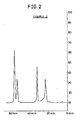
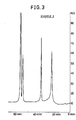
- Figs. 1 to 5 are exemplary chromatograms obtained by the use of hydroxyapatites prepared in accordance with the invention and of hydroxyapatites known in the art, both as column packing materials for liquid chromatographic separation of proteins.
- As used herein, the term "unit lattice" means a unit cell as a minimum repeating unit of crystal in which atoms, atomic groups, and molecules are regularly arranged in three-dimensional space. The geometric symmetry of the unit cells is denoted by the crystal system and space group, and the size of the unit cells by the lattice constants. The unit cell of apatite-structure compounds is represented by a hexagonal lattice, for example, with a Ca2+, PO43-, or OH- arrangement therein.
- The unit lattice constants of the already disclosed apatite-structure compounds, for example, of the calcium-phosphate type hydroxyapatite, are 9.432 A (0.9432 nm) for the a axis and 6.881 A (0.6881 nm) for the c axis.
- The hydroxyapatite according to the present invention, by contrast, has unit lattice constants of 9.58±0.08 A (0.958±0.008 nm) for the a axis and 7.00±0.05 A (0.700±0.005 nm) for the c axis. Thus, the hydroxyapatite of the structure according to the invention is utterly dissimilar in crystal properties from those of the prior art and is a novel one not known in the art hitherto.
- The unit lattice constants can be determined by the X-ray diffraction technique. To be more concrete, the angles of diffraction (Bragg angles) according to the powder X-ray diffraction are measured. The diffraction angles can be obtained from the X-ray diffraction pattern recorded on a chart by an X-ray diffraction apparatus equipped with a diffractometer (using CuKa X-rays). Also, from the Bragg equation λ=2αsinθ where λ is the wavelength of the CuKa rays, 1.54184 A=0.154184 nm) the lattice spacings d in angstroms or nanometres can be found. The crystal system of the hydroxyapatite is hexagonal, and Miller indices (hkl) are given for each lattice spacing d as set forth in the powder X-ray diffraction file, JCPDS (Joint Committee on Powder Diffraction Standard) 9-432. The lattice spacing d(A) is expressed, from the lattice constants a and c and from Miller indices (hkl), as formulated below:

- using the Bragg equation, it is written as:

- The unit lattice constants a and b of the hydroxyapatite according to the invention are found from the theoretical formula of the hexagonal system using the Bragg angles of the individual diffracted lines obtained by the X-ray diffractometry and the known Miller indices. The most probable values and error ranges of the unit lattice constants a and c are determined by the method of least squares. Table 1 shows the lattice spacings, d, obtained by the X-ray diffraction of the hydroxyapatite of the invention.
- The hydroxyapatite of the invention having the unit lattice constants of 9.58±0.08 A (0.958±0.008 nm) for the a axis and 7.00±0.05 A (0.700±0.005 nm) for the c axis is useful, for example, as a bioceramic material, catalyst support, fluorescent material, electronic material, inorganic ion exchanger and so forth. It exhibits particularly advantageous performance in the separation of biopolymers, for example, of proteins. When the unit lattice constants of the apatite are not within the ranges specified above, the separation performance is seriously low.
- The reasons why the hydroxyapatite of the invention having the unit lattice constants (a and c) within the specific ranges functions advantageously in the separation of biopolymers in particular are yet to be clarified. However, it may well be said that, ordinarily in the separation of a biopolymer, for example, of a nucleic acid such as DNA or of a protein, an important role is played by the interactions between the adsorption points (adsorption sites) present in the hydroxyapatite substrate and the phosphoryl groups on the molecules of the nucleic acid or between the adsorption points and the amino and carboxyl groups of the protein.
- It is to be noted here that on the surface of the hydroxyapatite there appear mainly two different planes; one parallel to the plane ac or bc of the crystal lattice (and called the plane b or a, respectively) which are equivalent crystallographically, and a plane parallel to the plane ab (and called the plane c). On the plane a or b of the crystal are arranged adsorption points (called the adsorption points c) each constituted by two positively charged calcium atoms, and on the plane c of the crystal, adsorption points (called the points P) each constituted by six oxygen atoms derived from negatively charged phosphoryl ions. Located in the crystal, these points are arranged regularly and exist in a constant number per unit area. It follows that where the unit lattice constants a and c (values) are different, the distances between the adsorption points c and between the adsorption points P differ too.
- As noted above, for the chromatographic separation of biopolymers the interactions between the adsorption points of the hydroxyapatite and the various functional groups of the biopolymers are important, and it is obvious that the distances between the adsorption points c and between the points P, or between those adsorption points influence the interactions such as adsorption or desorption of the biopolymers. Appropriate distances must be provided between these adsorption points. It is presumed that the hydroxyapatite having the unit lattice constants conforming to the present invention satisfies the foregoing conditions and performs excellently in the biopolymer separation.
- The hydroxyapatite of the invention having such unique crystal properties is desired to have such composition that the atomic ratio of Ca to P, or Ca/P, ranges from 1.5 to 1.9.
- The hydroxyapatite of the invention useful as a column packing material for chromatographic separation is also characterized by a specific pyridine adsorption, in addition to the specific unit lattice constants as defined above. Our investigations have revealed that a hydroxyapatite capable of adsorbing 0.003 to 0.01 mmol of pyridine per gram performs excellently in the separation of biopolymers. This is presumably ascribable to the control of the acid amount, particularly of the functional group OH-, among the functional groups OH-, ea2+, and P04 3- that play vital roles in the interactions between the hydroxyapatite substrate and the phosphoryl groups on the nucleic acid or between the substrate and the amino and carboxyl groups of the protein as described above.
- The pyridine adsorption is expressed principally in terms of the solid acid amount based on the above- mentioned functional groups. If the pyridine adsorption is less than 0.003 mmol/g, the hydroxyapatite has a too low protein separation capability for practical service. If the pyridine adsorption exceeds 0.01 mmol/g, the separation performance is again inadequate.
- The third factor that characterizes the hydroxyapatite of the invention is that it is a crystallite aggregate consisting chiefly of tiny acicular crystals. The dimensions are 100 to 500 A (10 to 50 nm) wide and 500 to 3000 A (50 to 300 nm) long. The acircular crystallites are naturally easy to granulate into spherulites. The crystallite aggregates that usually take the form of spherulites have a mean particle diameter of 0.5 to 50 µm, preferably 1 to 10 pm. The granulation into spherulites brings with it the advantages of added mechanical strength and more uniform packing of the bed inside the separation column.
- Examples of the proteins capable of being separated by chromatography are immunoglobulin G, transterrin, myeloma immunoglobulin D, serum albumin, and ovalbumin.
- The process for producing the hydroxyapatite in accordance with the present invention will now be described by way of example only.
- The process of the invention may be carried out by firing the hydroxyapatite in the form of a dispersion or powder, obtained by the usual wet process involving a solution reaction, dry process involving a high-temperature, solid-phase reaction, or hydrothermal process involving hydrolysis as briefly outlined above, at a temperature of 400 to 700°C. Preferably, the process of the invention comprises granulating the hydroxyapatite in the form of a dispersion and then firing the granular hydroxyapatite at 400 to 700°C.
- We have extensively studied the relationship between the crystal properties of apatite-structure compounds and the firing temperatures. As a result, it has been found that the unit lattice constants of the apatite-structure compounds increase with the rise of the firing temperature, to a maximum at a point short of about 600°C and then decreases with the further rise of the temperature beyond that point. The present invention is predicated upon this discovery.
- The expression "the hydroxyapatite in the form of a dispersion" as used herein means a suspension or slurry in which acicular crystallites of hydroxyapatite are suspended or slurried with water or an aqueous solution containing the ions of calcium, phosphoric acid or the like. It can be prepared by any of the aforedescribed processes for hydroxyapatite synthesis. Also, a hydroxyapatite in the form of a dispersion may be obtained by mixing powdered crystallites in an aqueous solution.
- By the expression "hydroxyapatite in the form of a powder" is meant a product obtained by removing water from the hydroxyapatite in the form of a gel and then drying it at about 80 to about 130°C.
- In the process of the invention, the firing is carried out by heating a hydroxyapatite in the form of a dispersion or powder in a heating zone to a predetermined temperature and then maintaining the same temperature level. The firing temperature is in the range of 400 to 700°C, preferably in the range of 500 to 600°C. The firing time is not critical but is usually 0.1 to 20 hours, preferably 1 to 3 hours. Desirably, the firing is carried out in the presence of oxygen or air. The drying conditions are not specially limited but heating at 80 to 120°C for 0.1 to 10 hours usually gives good result.
- When the hydroxyapatite according to the invention is to be utilized as a column packing material for chromatographic separation, it is advisable first to granulate a hydroxyapatite in the form of a dispersion and then fire the granulated hydroxyapatite in the same manner as described above.
- A desirable method of granulating the dispersion of hydroxyapatite is by spray drying. The spray drying consists of spraying a hydroxyapatite suspension or slurry into a high-temperature air stream and thereby drying it up instantaneously. As for the conditions for spray drying, the suspension ro slurry concentration is 0.1 to 20% by weight, preferably 1 to 10% by weight, and the temperature of the high-temperature air stream is 100 to 200°C, preferably 110 to 170°C. The spray nozzle configurations, air quantity, and other conditions may be suitably chosen as desired. Experiments showed that the granulation yielded products with particle diameters controlled within the range of about 0.5 to about 50 µm, more particularly within the range of about 1 to about 20 pm. It was found possible that judicious granulation could afford spherules with diameters in an even narrower range of about 1 to about 10 um.
- The hydroxyapatite thus obtained by firing the starting apatite in the form of a dispersion or powder in the manner described is a compound unknown in the art, novel with specific unit lattice constants and properties as follows:

- Next, the present invention is illustrated by the following non-limitative Examples.
- A one-liter, three-necked flask was charged with a suspension of calcium hydroxide (consisting of 15.6 g 95% Ca(OH)2 and 400 g distilled water). With the injection of nitrogen gas and with vigorous stirring an aqueous solution of phosphoric acid (consisting of 13.8 g 85% H3P04 and 400 g distilled water) was slowly added. Following the conclusion of the addition, the pH was adjusted to 8.2 by the further addition of the aqueous phosphoric acid. The mixture was set in position on an oil bath and held at 90°C for about 18 hours. A white crystallite-containing product, or a hydroxyapatite in the form of a dispersion, was obtained.
- After cooling, part of the product was passed through a spray drier to obtain spherical granules, or crystallite aggregates, about 1 to about 10 µm in diameter.
- The product was further subjected to drying at 100°C and firing at 580°C to prepare granules for separation columns. The lattice spacings found by X-ray diffraction of the granules are given in Table 1. The property values of the granules were as follows:
- (1) Unit lattice constants determined by X-ray diffraction:
- a=9.58 A (0.958 nm)
- c=7.01 A (0.701 nm)
- (2) Pyridine adsorption=0.0056 mmol/g
- (3) Ca/P ratio=1.67.
- X-Ray diffraction was carried out using the apparatus manufactured by Rigaku Denki Co., Model "RAD- rD". The measurement conditions employed were as follows:
- Output=40 kV, 30 mA CuKa
- DS/RS/SS=1/6°C/0.15 mm/1/6°C
- Preset time=0.1 sec
- Step width=1/100.

- Pyridine adsorption was determined in the following way.
- A
granulated hydroxyapatite 1 to 10 µm in particle diameter was lightly compacted by a pressure compactor. The compact was ground in an agate mortar to a finer size of 30 to 100 meshes. Of the ground apatite, 0.075 g was exactly weighed and filled into a tubular sample tube, and dried in a nitrogen atmosphere at 100°C. Meanwhile, a bubbler containing pyridine was immersed in a water bath kept at a constant temperature of 15.5°C, and bubbling with nitrogen was carried out to allow the hydroxyapatite filled in the reactor to adsorb the pyridine at 100°C for 15 minutes. Thereafter, the temperature was gradually increased up to 200°C in a nitrogen stream, and the temperature was maintained to cause desorption of the physically adsorbed content. By gas chromatography of the hydrogen ion detection type, it was confirmed that no more desorption of pyridine was detectable. Next, the temperature was increased at a rate of 5°C/minute from 200°C up to 950°C. The quantity of pyridine desorbed thereby was determined by the gas chromatography. This quantity of pyridine eliminated was measured as the pyridine adsorption. - The same material as used in Example 1 was employed to prepare granules under the same reaction conditions. The granular product was dried at 100°C and then fired at 400°C for 3 hours. The lattice spacings of the fired granules as measured by X-ray diffraction were as shown in Table 1.
- The property values of the product were as follows:
- (1) Unit lattice constants:
- a=9.51 A (0.951 nm)
- c=6.96 A (0.696 nm)
- (2) Pyridine adsorption=0.0092 mmol/g
- (3) Ca/P Ratio=1.67.
- The same material and the same reaction conditions as used in Example 1 were employed to prepare granules. The product was dried at 100°C and fired at 700°C for 3 hours. The lattice spacings of the granules as measured by X-ray diffraction are given in Table 1.
- The property values were as follows:
- (1) Unit lattice constants:
- a=9.55 A (0.955 nm)
- c=6.99 A (0.699 nm)
- (2) Pyridine adsorption=0.0038 mmol/g
- (3) Ca/P ratio=1.67.
- A one-liter, three-necked flask was charged with a suspension of calcium hydroxide (consisting of 15.6 g 95% Ca(OH)2 and 400 g water). With the introduction of nitrogen gas and with vigorous stirring, an aqueous solution of phosphoric acid (consisting of 13.8 g 85% H3P04 and 400 g water) was slowly added. Following the conclusion of the addition, the aqueous phosphoric acid was further added to adjust the pH to 8.2. The mixture was set in position on an oil bath and held at 90°C for about 18 hours. The product was cooled and part of it was passed through a spray drier to obtain
granules 1 to 10 pm in diameter. The granular product was dried at 100°C and used as a packing material for chromatograpic separation. The lattice spacings of the granules measured by X-ray diffraction were as shown in Table 1. - The property values were as follows:
- (1) Unit lattice constants:
- a=9.41 A (0.941 nm)
- c=6.88 A (0.688 nm)
- (2) Pyridine adsorption=0.0106 mmol/g
- (3) Ca/P ratio=1.67.
- The same material as used in Example 1 was treated under the same reaction conditions to give
spherical granules 1 to 10 pm in diameter. The granular product was dried at 100°C and then fired in a muffle furnace, in the presence of air, at 1100°C for 3 hours. The lattice spacings of the granules measured by X-ray diffraction were as given in Table 1. - The physical properties were as follows:
- (1) Unit lattice constants:
- a=9.46 A (0.946 nm)
- c=6.92 A (0.692 nm)
- (2) Pyridine adsorption=0 mmol/g
- (3) Ca/P ratio=1.67.
- The hydroxyapatites obtained in Examples 1 to 3 and Comparative Examples 1 and 2 were used in separating samples of a mixture of cytochrome C, lysozyme, and bovine serum albumin (BSA). The conditions employed for the chromatographic separating operations were as follows:
- Liquid chromatograph:
- Model "LC244" mfd. by Waters Co.
- Solvent (gradient solution):
- Aqueous solution of sodium phosphate (pH 6.8)
- 0.01-0.3 mol/hr gradient
- Flow rate:
- 0.8 ml/min
- Sample quantity:
- 100 µl each (50 µl where the hydroxyapatite of Example 2 was used)
- Detector:
- Model "UVDEC-100-III" mfd. by Japan Spectroscopic Co.
- Detection wavelength=280 nm
- Chromatogram record:
- Recording chart speed=2.5 mm/min.
- The results are graphically shown in Figs. 1 to 5.
- The hydroxyapatites prepared in accordance with the invention have far greater separation capabilities than the known hydroxyapatites.
- Numbers of theoretical plates were found so as to determine the separation capabilities in the separation of cytochrome C. The results obtained are shown in Table 2. For the purposes of the invention the term "number of theoretical plates" is calculated, on the basis of the resolution time (tR) in chromatography and the half-width (w) of the chromatograph, from the following formula:
- N (No. of theoretical plates)=16 (tR/w)2.

- The present invention provides a novel apatite-structure compound having unique crystal properties and extremely useful as a material for biomedical applications such as artificial teeth and bones, as a bioceramic material, catalyst support, fluorescent material, electronic material, inorganic ion exchanger, genetic engineering material and so forth, and especially as a column packing material for chromatographic separation of biopolymers. The use of the apatite-structure compound of the invention, particularly as a column packing material for chromatographic separation of biopolymers, or proteins among others, permits marked improvements in the separabilities.
- European Patent Application No. 86 30 7256.7 filed simultaneously herewith in the joint names of Toa Nenryo Kogyo Kabushiki Kaisha and Asahai Kogaku Kogyo Kabushiki Kaisha and claiming priority from JP 209562/1985 discloses and claims similar subject matter.
Claims (9)
Priority Applications (1)
| Application Number | Priority Date | Filing Date | Title |
|---|---|---|---|
| AT86307257T ATE59623T1 (en) | 1985-09-23 | 1986-09-22 | CALCIUM PHOSPHATE-TYPE HYDROXYAPATITE AND PROCESS FOR PRODUCTION THEREOF. |
Applications Claiming Priority (2)
| Application Number | Priority Date | Filing Date | Title |
|---|---|---|---|
| JP60209561A JPH0624964B2 (en) | 1985-09-23 | 1985-09-23 | Calcium phosphate-based hydroxyapatite and method for producing the same |
| JP209561/85 | 1985-09-23 |
Publications (3)
| Publication Number | Publication Date |
|---|---|
| EP0216621A2 EP0216621A2 (en) | 1987-04-01 |
| EP0216621A3 EP0216621A3 (en) | 1987-09-30 |
| EP0216621B1 true EP0216621B1 (en) | 1991-01-02 |
Family
ID=16574863
Family Applications (1)
| Application Number | Title | Priority Date | Filing Date |
|---|---|---|---|
| EP86307257A Expired - Lifetime EP0216621B1 (en) | 1985-09-23 | 1986-09-22 | Calcium-phosphate type hydroxyapatite and process for producing it |
Country Status (7)
| Country | Link |
|---|---|
| US (1) | US4794171A (en) |
| EP (1) | EP0216621B1 (en) |
| JP (1) | JPH0624964B2 (en) |
| CN (1) | CN1004480B (en) |
| AT (1) | ATE59623T1 (en) |
| AU (1) | AU595237B2 (en) |
| DE (1) | DE3676404D1 (en) |
Families Citing this family (36)
| Publication number | Priority date | Publication date | Assignee | Title |
|---|---|---|---|---|
| JPS61235752A (en) * | 1985-04-11 | 1986-10-21 | Asahi Optical Co Ltd | Material, device and method for separating cell |
| US5217699A (en) * | 1985-09-23 | 1993-06-08 | Toa Nenryo Kogyo Kabushiki Kaisha | Calcium-phosphate type hydroxyapatite |
| JPH0788205B2 (en) * | 1985-09-23 | 1995-09-27 | 東燃株式会社 | Chromatography-separation calcium phosphate-based hydroxyapatite and method for producing the same |
| JPH0762674B2 (en) * | 1986-03-07 | 1995-07-05 | 株式会社高研 | Chromatographic adsorbent, method for producing the same, and chromatographic column using the adsorbent |
| EP0239970A3 (en) * | 1986-03-31 | 1988-04-20 | Toa Nenryo Kogyo Kabushiki Kaisha | Assemblage of hydroxyl apatite particles and liquid chromatography column using the same |
| JPH0796445B2 (en) * | 1986-09-02 | 1995-10-18 | 東燃株式会社 | Hydroxyapatite secondary particle aggregate, method for producing the same, and use thereof as a chromatographic filler |
| EP0313090B1 (en) * | 1987-10-22 | 1994-03-02 | Asahi Kogaku Kogyo Kabushiki Kaisha | Porous ceramic material |
| US5205928A (en) * | 1988-03-11 | 1993-04-27 | Kanto Kagaku Kabushiki Kaisha | Process for the preparation of microspherical sintered bodies of hydroxyapatite and a chromatographic packing material comprising the microspherical sintered bodies of hydroxyapatite |
| JPH01230413A (en) * | 1988-03-11 | 1989-09-13 | Kanto Chem Co Inc | Production of spherical hydroxyapatite sintered form and chromatographic filler consisting thereof |
| JPH01278407A (en) * | 1988-04-28 | 1989-11-08 | Torao Otsuka | Production of calcium phosphate using phosphorus in vegetable |
| US4849193A (en) * | 1988-05-02 | 1989-07-18 | United States Gypsum Company | Process of preparing hydroxylapatite |
| JPH085712B2 (en) * | 1988-09-15 | 1996-01-24 | 旭光学工業株式会社 | Oriented calcium phosphate compound moldings and sintered bodies, and methods for producing the same |
| US5268174A (en) * | 1988-09-29 | 1993-12-07 | Kabushiki Kaisha Sangi | Antimicrobial hydroxyapatite powders containing hinokitiol, protamine or sorbic acid |
| US5009898A (en) * | 1988-09-29 | 1991-04-23 | Kabushiki Kaisha Sangi | Antimicrobial hydroxyapatite powders and methods for preparing them |
| US5158756A (en) * | 1989-06-24 | 1992-10-27 | Asahi Kogaku Kogyo Kabushiki Kaisha | Porous particles of calcium phosphate compound and production process thereof |
| US5162600A (en) * | 1990-12-28 | 1992-11-10 | Rheox, Inc. | Method of treating lead contaminated soil |
| JP3233699B2 (en) * | 1992-09-04 | 2001-11-26 | 株式会社サンギ | Semiconductor integrated circuit |
| RU2077475C1 (en) * | 1993-03-09 | 1997-04-20 | Владимир Федорович Комаров | Method for producing hydroxyapatite |
| US5332503A (en) * | 1993-04-16 | 1994-07-26 | Baxter International Inc. | Process for purifying collagenase |
| CN1035869C (en) * | 1993-12-15 | 1997-09-17 | 中国科学院化工冶金研究所 | Method for prepn. of ball shaped hydroxy-apatite with homogeneous precipitation |
| US5962427A (en) * | 1994-02-18 | 1999-10-05 | The Regent Of The University Of Michigan | In vivo gene transfer methods for wound healing |
| JP3342590B2 (en) * | 1994-10-20 | 2002-11-11 | 株式会社サンギ | Semiconductor integrated circuit |
| US5711015A (en) * | 1996-01-19 | 1998-01-20 | Tofe; Andrew J. | Chemical decontamination using natural or artificial bone |
| US6013591A (en) | 1997-01-16 | 2000-01-11 | Massachusetts Institute Of Technology | Nanocrystalline apatites and composites, prostheses incorporating them, and method for their production |
| CN1055061C (en) * | 1997-04-02 | 2000-08-02 | 北京创意生物工程新材料有限公司 | Method for preparing hydroxy phosphatic rock |
| CN1250449C (en) * | 2001-06-22 | 2006-04-12 | 巴斯福股份公司 | Rod-like apatite crystals, dispersions comprising them and preparation and use of said crystals and dispersions |
| US6857998B1 (en) | 2002-05-10 | 2005-02-22 | Free Flow Technologies, Inc. | Compositions and methods for treatment of solid waste |
| US7348075B2 (en) * | 2003-10-28 | 2008-03-25 | Hewlett-Packard Development Company, L.P. | System and method for fabricating three-dimensional objects using solid free-form fabrication |
| US20080221688A1 (en) * | 2007-03-09 | 2008-09-11 | Warsaw Orthopedic, Inc. | Method of Maintaining Fatigue Performance In A Bone-Engaging Implant |
| US20080221681A1 (en) * | 2007-03-09 | 2008-09-11 | Warsaw Orthopedic, Inc. | Methods for Improving Fatigue Performance of Implants With Osteointegrating Coatings |
| FR3003773B1 (en) * | 2013-03-29 | 2016-12-30 | Arkema France | CATALYST FOR SYNTHESIS OF METHYL MERCAPTAN AND PROCESS FOR PRODUCTION OF METHYL MERCAPTAN FROM SYNTHESIS GAS AND HYDROGEN SULFIDE |
| CN104667874B (en) * | 2015-02-21 | 2017-06-30 | 桂林理工大学 | The preparation method of hydroxyapatite modified Eucalyptus structure composite heavy metal absorbent |
| CN104667873B (en) * | 2015-02-21 | 2017-04-12 | 桂林理工大学 | Preparation method of hydroxyapatite modified towel gourd vegetable sponge biomorphic heavy metal adsorbent |
| JP2017119230A (en) | 2015-12-28 | 2017-07-06 | Jnc株式会社 | Adsorbent and method for producing the same |
| DE102018102365A1 (en) * | 2018-02-02 | 2019-08-08 | Dr. Kurt Wolff Gmbh & Co. Kg | hydroxyapatite |
| EP3786109A4 (en) * | 2018-04-27 | 2022-01-19 | Bioapatite, Inc. | Hydroxyapatite |
Family Cites Families (3)
| Publication number | Priority date | Publication date | Assignee | Title |
|---|---|---|---|---|
| US3737516A (en) * | 1971-03-05 | 1973-06-05 | Du Pont | Calcium-deficient hydroxylapatite for use in column chromatography |
| GB1522182A (en) * | 1974-08-02 | 1978-08-23 | Sterling Drug Inc | Ceramic material |
| JPS5654841A (en) * | 1979-10-08 | 1981-05-15 | Mitsubishi Mining & Cement Co | Bone broken portion and filler for void portion and method of treating bone of animal using said filler |
-
1985
- 1985-09-23 JP JP60209561A patent/JPH0624964B2/en not_active Expired - Lifetime
-
1986
- 1986-09-22 DE DE8686307257T patent/DE3676404D1/en not_active Expired - Lifetime
- 1986-09-22 EP EP86307257A patent/EP0216621B1/en not_active Expired - Lifetime
- 1986-09-22 US US06/909,981 patent/US4794171A/en not_active Expired - Lifetime
- 1986-09-22 AU AU62997/86A patent/AU595237B2/en not_active Ceased
- 1986-09-22 CN CN86107535.8A patent/CN1004480B/en not_active Expired
- 1986-09-22 AT AT86307257T patent/ATE59623T1/en not_active IP Right Cessation
Also Published As
| Publication number | Publication date |
|---|---|
| DE3676404D1 (en) | 1991-02-07 |
| ATE59623T1 (en) | 1991-01-15 |
| CN86107535A (en) | 1987-08-19 |
| EP0216621A3 (en) | 1987-09-30 |
| JPS6270212A (en) | 1987-03-31 |
| AU6299786A (en) | 1987-03-26 |
| AU595237B2 (en) | 1990-03-29 |
| EP0216621A2 (en) | 1987-04-01 |
| JPH0624964B2 (en) | 1994-04-06 |
| US4794171A (en) | 1988-12-27 |
| CN1004480B (en) | 1989-06-14 |
Similar Documents
| Publication | Publication Date | Title |
|---|---|---|
| US4794171A (en) | Calcium-phosphate type hydroxyapatite and process for producing same | |
| EP0217614B1 (en) | Calcium-phosphate type hydroxyapatite for chromatographic separation and process for producing it | |
| CA2065026C (en) | Composite clay materials for removal of sox from gas streams | |
| US5158756A (en) | Porous particles of calcium phosphate compound and production process thereof | |
| US5217699A (en) | Calcium-phosphate type hydroxyapatite | |
| US5707516A (en) | Column packings for liquid chromatography | |
| JPH0337706B2 (en) | ||
| JPH09227249A (en) | High density porous body and method for producing the same | |
| US5073357A (en) | Process for producing hydroxylapatites | |
| JP2756703B2 (en) | Spherical apatite, method for producing the same, and molded article with porous structure | |
| JP2004330113A (en) | Method for producing adsorbent and adsorbent | |
| US5234877A (en) | Composite clay materials for removal of SOx from gas streams | |
| US5160715A (en) | Clay composites for removal of SOx from flue gas streams | |
| US5843731A (en) | Method for purifying plasmid DNA on calcium phosphate compound | |
| JPH0832552B2 (en) | Hydroxyapatite fine single crystal and method for producing the same | |
| JPH09175805A (en) | Chromatographic separation calcium phosphate-based hydroxyapatite and method for producing the same | |
| JPS63157973A (en) | Liquid chromatography | |
| JPH01155263A (en) | Filler for liquid chromatography and preparation thereof | |
| EP0342932A1 (en) | Solid support and column for liquid chromatography | |
| JP2004074068A (en) | Apatite molded article and ceramic having specific adsorption characteristics for specific protein, and method for producing the same | |
| US5225384A (en) | Composite clay materials for removal of sox from gas streams | |
| JPH0919680A (en) | Water purification agent and method for producing the same | |
| JP6736738B2 (en) | Separation method | |
| CA1312593C (en) | Active material produced from metal oxide/hydroxide particles and phosphate esters | |
| JPH06194356A (en) | Stationary phase material for chromatography |
Legal Events
| Date | Code | Title | Description |
|---|---|---|---|
| PUAI | Public reference made under article 153(3) epc to a published international application that has entered the european phase |
Free format text: ORIGINAL CODE: 0009012 |
|
| AK | Designated contracting states |
Kind code of ref document: A2 Designated state(s): AT BE CH DE FR GB IT LI NL SE |
|
| PUAL | Search report despatched |
Free format text: ORIGINAL CODE: 0009013 |
|
| AK | Designated contracting states |
Kind code of ref document: A3 Designated state(s): AT BE CH DE FR GB IT LI NL SE |
|
| 17P | Request for examination filed |
Effective date: 19880312 |
|
| 17Q | First examination report despatched |
Effective date: 19890419 |
|
| GRAA | (expected) grant |
Free format text: ORIGINAL CODE: 0009210 |
|
| AK | Designated contracting states |
Kind code of ref document: B1 Designated state(s): AT BE CH DE FR GB IT LI NL SE |
|
| PG25 | Lapsed in a contracting state [announced via postgrant information from national office to epo] |
Ref country code: NL Effective date: 19910102 Ref country code: AT Effective date: 19910102 |
|
| REF | Corresponds to: |
Ref document number: 59623 Country of ref document: AT Date of ref document: 19910115 Kind code of ref document: T |
|
| RAP2 | Party data changed (patent owner data changed or rights of a patent transferred) |
Owner name: TONEN CORPORATION |
|
| ITF | It: translation for a ep patent filed | ||
| ET | Fr: translation filed | ||
| REF | Corresponds to: |
Ref document number: 3676404 Country of ref document: DE Date of ref document: 19910207 |
|
| NLV1 | Nl: lapsed or annulled due to failure to fulfill the requirements of art. 29p and 29m of the patents act | ||
| PGFP | Annual fee paid to national office [announced via postgrant information from national office to epo] |
Ref country code: CH Payment date: 19910925 Year of fee payment: 6 |
|
| PG25 | Lapsed in a contracting state [announced via postgrant information from national office to epo] |
Ref country code: BE Effective date: 19910930 |
|
| PLBE | No opposition filed within time limit |
Free format text: ORIGINAL CODE: 0009261 |
|
| STAA | Information on the status of an ep patent application or granted ep patent |
Free format text: STATUS: NO OPPOSITION FILED WITHIN TIME LIMIT |
|
| 26N | No opposition filed | ||
| BECN | Be: change of holder's name |
Effective date: 19910102 |
|
| BERE | Be: lapsed |
Owner name: TONEN CORP. Effective date: 19910930 |
|
| PG25 | Lapsed in a contracting state [announced via postgrant information from national office to epo] |
Ref country code: LI Effective date: 19920930 Ref country code: CH Effective date: 19920930 |
|
| REG | Reference to a national code |
Ref country code: CH Ref legal event code: PL |
|
| EAL | Se: european patent in force in sweden |
Ref document number: 86307257.5 |
|
| PGFP | Annual fee paid to national office [announced via postgrant information from national office to epo] |
Ref country code: SE Payment date: 19960917 Year of fee payment: 11 |
|
| PG25 | Lapsed in a contracting state [announced via postgrant information from national office to epo] |
Ref country code: SE Free format text: LAPSE BECAUSE OF NON-PAYMENT OF DUE FEES Effective date: 19970923 |
|
| EUG | Se: european patent has lapsed |
Ref document number: 86307257.5 |
|
| REG | Reference to a national code |
Ref country code: GB Ref legal event code: 732E |
|
| REG | Reference to a national code |
Ref country code: FR Ref legal event code: TP |
|
| REG | Reference to a national code |
Ref country code: GB Ref legal event code: IF02 |
|
| PGFP | Annual fee paid to national office [announced via postgrant information from national office to epo] |
Ref country code: FR Payment date: 20050823 Year of fee payment: 20 |
|
| PGFP | Annual fee paid to national office [announced via postgrant information from national office to epo] |
Ref country code: DE Payment date: 20050915 Year of fee payment: 20 |
|
| PGFP | Annual fee paid to national office [announced via postgrant information from national office to epo] |
Ref country code: GB Payment date: 20050921 Year of fee payment: 20 |
|
| PG25 | Lapsed in a contracting state [announced via postgrant information from national office to epo] |
Ref country code: IT Free format text: LAPSE BECAUSE OF NON-PAYMENT OF DUE FEES;WARNING: LAPSES OF ITALIAN PATENTS WITH EFFECTIVE DATE BEFORE 2007 MAY HAVE OCCURRED AT ANY TIME BEFORE 2007. THE CORRECT EFFECTIVE DATE MAY BE DIFFERENT FROM THE ONE RECORDED. Effective date: 20050922 |
|
| PG25 | Lapsed in a contracting state [announced via postgrant information from national office to epo] |
Ref country code: GB Free format text: LAPSE BECAUSE OF EXPIRATION OF PROTECTION Effective date: 20060921 |
|
| REG | Reference to a national code |
Ref country code: GB Ref legal event code: PE20 |