EP0215578B1 - Behandlung von Material aus Lignocellulose - Google Patents
Behandlung von Material aus Lignocellulose Download PDFInfo
- Publication number
- EP0215578B1 EP0215578B1 EP86306324A EP86306324A EP0215578B1 EP 0215578 B1 EP0215578 B1 EP 0215578B1 EP 86306324 A EP86306324 A EP 86306324A EP 86306324 A EP86306324 A EP 86306324A EP 0215578 B1 EP0215578 B1 EP 0215578B1
- Authority
- EP
- European Patent Office
- Prior art keywords
- ammonia
- crop
- ammonium
- process according
- mixture
- Prior art date
- Legal status (The legal status is an assumption and is not a legal conclusion. Google has not performed a legal analysis and makes no representation as to the accuracy of the status listed.)
- Expired - Lifetime
Links
- 239000012978 lignocellulosic material Substances 0.000 title description 2
- QGZKDVFQNNGYKY-UHFFFAOYSA-N Ammonia Chemical compound N QGZKDVFQNNGYKY-UHFFFAOYSA-N 0.000 claims description 79
- 229910021529 ammonia Inorganic materials 0.000 claims description 36
- IJGRMHOSHXDMSA-UHFFFAOYSA-N Atomic nitrogen Chemical compound N#N IJGRMHOSHXDMSA-UHFFFAOYSA-N 0.000 claims description 22
- 150000003863 ammonium salts Chemical class 0.000 claims description 20
- 238000000034 method Methods 0.000 claims description 19
- 235000013339 cereals Nutrition 0.000 claims description 17
- 239000000463 material Substances 0.000 claims description 17
- 239000000203 mixture Substances 0.000 claims description 16
- 150000003839 salts Chemical class 0.000 claims description 16
- 230000000813 microbial effect Effects 0.000 claims description 13
- 229910052757 nitrogen Inorganic materials 0.000 claims description 11
- CURLTUGMZLYLDI-UHFFFAOYSA-N Carbon dioxide Chemical compound O=C=O CURLTUGMZLYLDI-UHFFFAOYSA-N 0.000 claims description 10
- 241000196324 Embryophyta Species 0.000 claims description 10
- 239000010902 straw Substances 0.000 claims description 9
- BVCZEBOGSOYJJT-UHFFFAOYSA-N ammonium carbamate Chemical compound [NH4+].NC([O-])=O BVCZEBOGSOYJJT-UHFFFAOYSA-N 0.000 claims description 8
- KXDHJXZQYSOELW-UHFFFAOYSA-N carbonic acid monoamide Natural products NC(O)=O KXDHJXZQYSOELW-UHFFFAOYSA-N 0.000 claims description 8
- ATRRKUHOCOJYRX-UHFFFAOYSA-N Ammonium bicarbonate Chemical group [NH4+].OC([O-])=O ATRRKUHOCOJYRX-UHFFFAOYSA-N 0.000 claims description 7
- 239000001099 ammonium carbonate Substances 0.000 claims description 7
- XLYOFNOQVPJJNP-UHFFFAOYSA-N water Substances O XLYOFNOQVPJJNP-UHFFFAOYSA-N 0.000 claims description 7
- 229910001868 water Inorganic materials 0.000 claims description 7
- 229910000013 Ammonium bicarbonate Inorganic materials 0.000 claims description 5
- 235000012538 ammonium bicarbonate Nutrition 0.000 claims description 5
- 239000001569 carbon dioxide Substances 0.000 claims description 5
- 229910002092 carbon dioxide Inorganic materials 0.000 claims description 5
- 241000282849 Ruminantia Species 0.000 claims description 4
- 244000025254 Cannabis sativa Species 0.000 claims description 2
- 235000012501 ammonium carbonate Nutrition 0.000 claims description 2
- 238000006243 chemical reaction Methods 0.000 claims description 2
- 230000002950 deficient Effects 0.000 claims description 2
- 239000004462 maize silage Substances 0.000 claims description 2
- BVKZGUZCCUSVTD-UHFFFAOYSA-L Carbonate Chemical compound [O-]C([O-])=O BVKZGUZCCUSVTD-UHFFFAOYSA-L 0.000 description 10
- QGZKDVFQNNGYKY-UHFFFAOYSA-O Ammonium Chemical compound [NH4+] QGZKDVFQNNGYKY-UHFFFAOYSA-O 0.000 description 9
- XSQUKJJJFZCRTK-UHFFFAOYSA-N Urea Chemical compound NC(N)=O XSQUKJJJFZCRTK-UHFFFAOYSA-N 0.000 description 9
- 239000004202 carbamide Substances 0.000 description 9
- 238000004321 preservation Methods 0.000 description 6
- 240000004296 Lolium perenne Species 0.000 description 4
- 235000019621 digestibility Nutrition 0.000 description 4
- 240000008042 Zea mays Species 0.000 description 3
- 235000016383 Zea mays subsp huehuetenangensis Nutrition 0.000 description 3
- 235000002017 Zea mays subsp mays Nutrition 0.000 description 3
- 210000002421 cell wall Anatomy 0.000 description 3
- 239000004459 forage Substances 0.000 description 3
- 235000009973 maize Nutrition 0.000 description 3
- BVKZGUZCCUSVTD-UHFFFAOYSA-M Bicarbonate Chemical compound OC([O-])=O BVKZGUZCCUSVTD-UHFFFAOYSA-M 0.000 description 2
- 239000007864 aqueous solution Substances 0.000 description 2
- 238000009529 body temperature measurement Methods 0.000 description 2
- 239000001913 cellulose Substances 0.000 description 2
- 229920002678 cellulose Polymers 0.000 description 2
- 150000001875 compounds Chemical class 0.000 description 2
- 230000006866 deterioration Effects 0.000 description 2
- 238000000855 fermentation Methods 0.000 description 2
- 108090000623 proteins and genes Proteins 0.000 description 2
- 102000004169 proteins and genes Human genes 0.000 description 2
- 239000004460 silage Substances 0.000 description 2
- 239000007787 solid Substances 0.000 description 2
- 239000000126 substance Substances 0.000 description 2
- VHUUQVKOLVNVRT-UHFFFAOYSA-N Ammonium hydroxide Chemical compound [NH4+].[OH-] VHUUQVKOLVNVRT-UHFFFAOYSA-N 0.000 description 1
- 241000894006 Bacteria Species 0.000 description 1
- 241000233866 Fungi Species 0.000 description 1
- 240000004808 Saccharomyces cerevisiae Species 0.000 description 1
- 238000003723 Smelting Methods 0.000 description 1
- 108010046334 Urease Proteins 0.000 description 1
- 239000002253 acid Substances 0.000 description 1
- 125000003118 aryl group Chemical group 0.000 description 1
- 230000009286 beneficial effect Effects 0.000 description 1
- 230000015556 catabolic process Effects 0.000 description 1
- 230000003247 decreasing effect Effects 0.000 description 1
- 238000006731 degradation reaction Methods 0.000 description 1
- 238000001035 drying Methods 0.000 description 1
- 230000000694 effects Effects 0.000 description 1
- 230000004151 fermentation Effects 0.000 description 1
- 235000013305 food Nutrition 0.000 description 1
- 230000002538 fungal effect Effects 0.000 description 1
- 238000010438 heat treatment Methods 0.000 description 1
- VUZPPFZMUPKLLV-UHFFFAOYSA-N methane;hydrate Chemical compound C.O VUZPPFZMUPKLLV-UHFFFAOYSA-N 0.000 description 1
- 230000001473 noxious effect Effects 0.000 description 1
- 230000000050 nutritive effect Effects 0.000 description 1
- 239000005416 organic matter Substances 0.000 description 1
- 239000000843 powder Substances 0.000 description 1
- 230000006798 recombination Effects 0.000 description 1
- 238000005215 recombination Methods 0.000 description 1
- 210000004767 rumen Anatomy 0.000 description 1
- 239000000243 solution Substances 0.000 description 1
- 239000013526 supercooled liquid Substances 0.000 description 1
- 230000009469 supplementation Effects 0.000 description 1
- 231100000331 toxic Toxicity 0.000 description 1
- 230000002588 toxic effect Effects 0.000 description 1
- 241001446247 uncultured actinomycete Species 0.000 description 1
- -1 urea Chemical class 0.000 description 1
Images




Classifications
-
- A—HUMAN NECESSITIES
- A23—FOODS OR FOODSTUFFS; TREATMENT THEREOF, NOT COVERED BY OTHER CLASSES
- A23K—FODDER
- A23K30/00—Processes specially adapted for preservation of materials in order to produce animal feeding-stuffs
- A23K30/10—Processes specially adapted for preservation of materials in order to produce animal feeding-stuffs of green fodder
- A23K30/15—Processes specially adapted for preservation of materials in order to produce animal feeding-stuffs of green fodder using chemicals or microorganisms for ensilaging
-
- A—HUMAN NECESSITIES
- A23—FOODS OR FOODSTUFFS; TREATMENT THEREOF, NOT COVERED BY OTHER CLASSES
- A23K—FODDER
- A23K10/00—Animal feeding-stuffs
- A23K10/30—Animal feeding-stuffs from material of plant origin, e.g. roots, seeds or hay; from material of fungal origin, e.g. mushrooms
- A23K10/32—Animal feeding-stuffs from material of plant origin, e.g. roots, seeds or hay; from material of fungal origin, e.g. mushrooms from hydrolysates of wood or straw
-
- A—HUMAN NECESSITIES
- A23—FOODS OR FOODSTUFFS; TREATMENT THEREOF, NOT COVERED BY OTHER CLASSES
- A23K—FODDER
- A23K50/00—Feeding-stuffs specially adapted for particular animals
- A23K50/10—Feeding-stuffs specially adapted for particular animals for ruminants
- A23K50/15—Feeding-stuffs specially adapted for particular animals for ruminants containing substances which are metabolically converted to proteins, e.g. ammonium salts or urea
Definitions
- This invention relates to processes for treating lignocellulosic materials such as straws, hays, whole crop cereals, grains or other harvested crops to raise the nitrogen content of the crop or modify and restrict microbial activity on the crop. With mature materials, containing 60% dry matter or more, the processes may also improve the digestibility of plant cell wall material.
- ammonia raises the non-protein nitrogen content of the forage, which with low nitrogen feeds may be beneficial to the activities of silage and rumen microbes.
- Added ammonia has also important preservation properties, controlling the degradation of mature plant materials containing 60% or more of dry matter, under both aerobic and anaerobic conditions. With similar crop materials, added ammonia may also encourage alkaline conditions conducive to the breaking of bonds between aromatic and hemicellulosic compounds within the plant cell walls, thereby increasing the potential digestibility of plant organic matter in the ruminant.
- ammonia as a source of supplementary non-protein nitrogen is available in regions where the maize crop is economically important. In this situation anhydrous ammonia is often added to the maize crop just prior to ensilage in the form of a super-cooled liquid (USS cold-flo system).
- EP-A-144930 discloses a process for increasing the food value of a cellulose-containing matter in which an ammonium salt is heated in order to produce ammonia. Ths ammonium salt is of an acid of a kind not leaving or forming noxious products in the said matter, and the mixture of gaseous ammonia, any other gaseous substance and water produced by heating said ammonium salt is brought into contact with the said cellulose-containing matter before substantial recombination has occurred.
- the problems with the use of anhydrous ammonia under pressure or aqueous ammonia include the expense of these materials and the difficulty in handling them. Skilled personnel are required to carry out the process, and in particular to handle the dangerous and toxic materials. Furthermore, special equipment such as pressurised vessels is required.
- the present invention seeks to provide simple, safe and economic processes for adding ammonia to crops as a source of supplementary nitrogen, for preservation and for upgrading, allowing the use of methods which do not require skilled personnel and/or specialised equipment. Unlike the case with urea, the invention does not require microbial activity or the addition of urease to liberate the ammonia. Consequently ammonia release is more rapid than it is with urea.
- a process for treating moist lignocellulosic crop materials such as forage crops and grains, with ammonia released from an ammonium salt which is unstable or volatile at ambient temperature, in which the said salt is maintained in proximity with said material at ambient temperature, whereby said salt limits and controls microbial activity within said crop while gradually releasing ammonia.
- the salt employed should be unstable or volatile in the absence or presence of moisture so that it decomposes slowly liberating ammonia gas.
- Particularly preferred salts are those produced by reaction of ammonia and carbon dioxide, with or without water.
- Such salts include ammonium carbonate, ammonium bicarbonate, ammonium carbamate and mixtures of these.
- a preferred mixture is that known as "smelling salts", which corresponds approximately to a mixture of ammonium bicarbonate and ammonium carbamate and is formed from a mixture containing approximately 56% carbon dioxide and 32% ammonia, by weight, the remainder being water. It has been found that such a mixture slowly releases ammonia at ambient temperatures, particularly in the presence of water.
- the ultimate products are ammonia, carbon dioxide and water.
- the preferred salt is the more stable, relatively cheap ammonium bicarbonate, but other components of smelling salts are also suitable.
- the preferred salt for preservation or upgrading is ammonium carbamate, though bicarbonate or carbonate can also be used.
- the chosen salt or mixture may be simply mixed with the crop, for example through a forage harvester, at or prior to ensiling in the case of maize or other ensiled material.
- the salt or mixture may be added at baling or be sprinkled between small bales or onto loose material at stacking in the case of hay, straw, whole crop cereal, or other plant material. Because of the volatility of ammonia, treated material should be stored in an airtight container or under sealed plastic sheeting prior to further processing. However, with plant materials containing 60% dry matter or more the preservation aspects of the invention are less sensitive to minor air-leaks than are conventional acid-silage processes.
- ammonium salt will usually be applied in solid (powder) form, but there may be some instances in which it may be applied in solution.
- the invention provides a means of adding supplementary nitrogen to a nitrogen-deficient crop or feed, such as maize silage, ensiled grass straws, cereal straws, whole crop small grain cereals, grain or other starchy or fibrous feed intended for ruminant feeding.
- a nitrogen-deficient crop or feed such as maize silage, ensiled grass straws, cereal straws, whole crop small grain cereals, grain or other starchy or fibrous feed intended for ruminant feeding.
- the ammonium salt or mixture is added at a rate of about 0.5-1.5% ammonia-equivalent by weight of dry matter, applied at or just prior to ensilage or at feeding. The actual rate of application is determined by the nitrogen content of the original untreated crop or feed.
- the invention is concerned with the limitation and control of microbial activity during the anaerobic or aerobic storage of crops of straw, hay, whole crop cereal or grain containing up to about 40% moisture.
- the ammonium salt or mixture is added at a minimum rate of about 2% ammonia-equivalent, by weight of plant dry matter, applied at or just prior to storage.
- the liberated ammonia conserves the crop prior to further processing and, depending on the type and amount of the ammonium salt used, the ambient temperature and the moisture content of the crop, the period for safe storage under aerobic conditions can be increased from a few days to several weeks.
- moist crops have been stored anaerobically by ensilage or dried for aerobic storage, the nutritive value decreasing during storage as a result of microbial fermentation or aerobic deterioration.
- the present invention restricts the anaerobic fermentation of mature crops and also suppresses aerobic deterioration for a protracted period, the length of which is influenced by the rate of ammonia loss and other conditions.
- the invention can be adapted to control microbial growth until the crop is dry enough for safe storage.
- a third embodiment of the invention is concerned with the upgrading of mature graminaceous crops containing 60% dry matter or more.
- the efficiency with which the liberated ammonia improves plant cell wall digestibility will depend on the pH achieved in the crop, this in turn depending on the type and amount of the ammonium salt used, the moisture content of the crop, ambient temperatures and other features of the storage conditions. In most situations best results are likely using ammonium carbamate, and when the ammonium salts are used at a rate of about 3.5% ammonia-equivalent.
- upgrading is the primary objective of the treatment ammonium salts are best used in conjunction with strong alkalis, according to principles described in GB-A-2175788 (Patent Application No. 8525272).
- vclatile ammonium salts are used in conjunction with compounds such as urea, which, once degraded, have similar properties.
- ammonium “carbonate” ie smelting salts in mixture of ammonium carbamate and bicarbonate
- ammonium carbamate and bicarbonate ammonium carbamate and bicarbonate
- the crop can be stored within, or under an impermeable layer, so that liberated gaseous ammonia can migrate through and be maintained in contact with the stored crop.
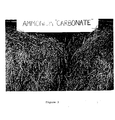
- Figures 1 to 3 show hay stacks which have been stored for a period of time.
- Figure 1 shows an untreated hay stack
- Figure 2 a stack which has been treated with urea (3% ammonia equivalent)
- Figure 3 a stack which has been treated with ammonium "carbonate” (3% ammonia equivalent). All the stacks have been left under aerobic conditions for the same length of time (Figure 4).
- Figure 4 shows that the stacks of Figures 1 and 2 have been subject to extensive microbial activity and there are large areas of mould and fungal growth.
- the stack of Figure 3 appears to have been substantially unaffected by moulds and fungi.
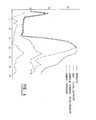
- FIG. 4 is a temperature chart showing the effectiveness of ammonium "carbonate” in the stacks as determined by the temperature measurements.
- Figures 5 and 6 present similar charts for 7 Kg packages of moist hay. In each case temperature measurements were taken in hay formed from perennial ryegrass on samples of untreated hay as well as hay treated with urea and with ammonium "carbonate". In all studies the amount of urea and ammonium "carbonate” used was such as to be equivalent to 3% ammonia.
Landscapes
- Life Sciences & Earth Sciences (AREA)
- Chemical & Material Sciences (AREA)
- Polymers & Plastics (AREA)
- Engineering & Computer Science (AREA)
- Food Science & Technology (AREA)
- Animal Husbandry (AREA)
- Zoology (AREA)
- Biotechnology (AREA)
- Physiology (AREA)
- Mycology (AREA)
- Botany (AREA)
- Molecular Biology (AREA)
- Health & Medical Sciences (AREA)
- Birds (AREA)
- Chemical Kinetics & Catalysis (AREA)
- General Chemical & Material Sciences (AREA)
- Microbiology (AREA)
- Fodder In General (AREA)
Claims (8)
Priority Applications (1)
| Application Number | Priority Date | Filing Date | Title |
|---|---|---|---|
| AT86306324T ATE58458T1 (de) | 1985-08-17 | 1986-08-15 | Behandlung von material aus lignocellulose. |
Applications Claiming Priority (4)
| Application Number | Priority Date | Filing Date | Title |
|---|---|---|---|
| GB858520670A GB8520670D0 (en) | 1985-08-17 | 1985-08-17 | Treatment of lignocellulosic material |
| GB8520670 | 1985-08-17 | ||
| GB868601941A GB8601941D0 (en) | 1985-05-21 | 1986-01-27 | Treatment of lignocellulosic materials |
| GB8601941 | 1986-01-27 |
Publications (2)
| Publication Number | Publication Date |
|---|---|
| EP0215578A1 EP0215578A1 (de) | 1987-03-25 |
| EP0215578B1 true EP0215578B1 (de) | 1990-11-22 |
Family
ID=26289675
Family Applications (1)
| Application Number | Title | Priority Date | Filing Date |
|---|---|---|---|
| EP86306324A Expired - Lifetime EP0215578B1 (de) | 1985-08-17 | 1986-08-15 | Behandlung von Material aus Lignocellulose |
Country Status (3)
| Country | Link |
|---|---|
| EP (1) | EP0215578B1 (de) |
| DE (1) | DE3675720D1 (de) |
| GB (1) | GB2181032B (de) |
Families Citing this family (4)
| Publication number | Priority date | Publication date | Assignee | Title |
|---|---|---|---|---|
| GB8907235D0 (en) * | 1989-03-30 | 1989-05-10 | Dugdale B & Son | Preservation of forage |
| EP0417377A1 (de) * | 1989-09-12 | 1991-03-20 | Biocomb Aktiebolag | Verfahren zur Konservierung von Erntegut und Vorrichtung zum Durchführen dieses Verfahrens |
| CN105309774B (zh) * | 2014-07-31 | 2019-03-12 | 张华琦 | 一种饲用酒糟的保存方法 |
| CN111316860A (zh) * | 2020-03-06 | 2020-06-23 | 辛小辉 | 一种用芦苇秸秆生产食用菌菌棒的方法 |
Family Cites Families (13)
| Publication number | Priority date | Publication date | Assignee | Title |
|---|---|---|---|---|
| GB541594A (en) * | 1940-06-08 | 1941-12-03 | Alfred Bacher | An improved animal food and process for manufacturing same |
| GB659709A (en) * | 1949-03-07 | 1951-10-24 | Basf Ag | Improvements in the preservation of green fodder |
| ES379848A1 (es) * | 1969-05-21 | 1973-02-01 | Univ Michigan State | Un procedimiento para introducir amoniaco en un alimento para animales rumiantes. |
| AT331629B (de) * | 1971-04-14 | 1976-08-25 | Agrobotanikai Intezet | Verfahren und mittel zur erhohung des eiweissgehaltes von grunfutter |
| US3988483A (en) * | 1975-09-04 | 1976-10-26 | The Kansas State University Research Foundation | Liquid starch-urea ruminant feed and method of producing same |
| FR2366801A1 (fr) * | 1976-10-05 | 1978-05-05 | Ugine Kuhlmann | Composition liquide d'enrichissement des vegetaux cellulosiques pour l'alimentation animale |
| EG12948A (en) * | 1976-12-20 | 1980-10-31 | Bruun Bjoern A Z | Method and means for the improvement of the feed value of especially plant stems |
| GB2082039B (en) * | 1980-07-28 | 1983-10-05 | Taarup As Maskinfab | Treating plant materials with ammonia |
| GB2103916B (en) * | 1981-08-13 | 1985-02-27 | Eltsac Feeds Limited | Treatment of straw |
| GB2124066B (en) * | 1982-07-16 | 1986-02-26 | Flemstofte Mads Amby Maskinfab | Treating cellulose - containing matter with ammonia |
| IE55201B1 (en) * | 1983-05-30 | 1990-07-04 | Martin Clancy Dr | Animal feedstuff |
| DK556083A (da) * | 1983-12-02 | 1985-06-03 | Flemstofte Mads Amby Maskinfab | Fremgangsmaade og apparat til behandling af celluloseholdigt materiale, f.eks. halm, med ammoniak i gasform |
| AU601364B2 (en) * | 1985-05-21 | 1990-09-13 | Animal And Grassland Research Institute, The | Treatment of lignocellulosic material |
-
1986
- 1986-08-15 DE DE8686306324T patent/DE3675720D1/de not_active Expired - Lifetime
- 1986-08-15 GB GB8619917A patent/GB2181032B/en not_active Expired - Lifetime
- 1986-08-15 EP EP86306324A patent/EP0215578B1/de not_active Expired - Lifetime
Also Published As
| Publication number | Publication date |
|---|---|
| EP0215578A1 (de) | 1987-03-25 |
| GB8619917D0 (en) | 1986-09-24 |
| GB2181032A (en) | 1987-04-15 |
| GB2181032B (en) | 1990-06-20 |
| DE3675720D1 (de) | 1991-01-03 |
Similar Documents
| Publication | Publication Date | Title |
|---|---|---|
| Pitt | Silage and hay preservation (NRAES 5) | |
| Alli et al. | The effects of ammonia on the fermentation of chopped sugarcane | |
| Muck et al. | Silage production | |
| JPH02265443A (ja) | かいばおよび穀物を貯蔵する方法 | |
| Nussio | Silage production from tropical forages | |
| US4863747A (en) | Bacterial treatment to preserve hay quality by addition of microorganisms of the genus Bacillus | |
| EP0215578B1 (de) | Behandlung von Material aus Lignocellulose | |
| US4426396A (en) | Preservation of harvested crops and animal feedstuffs | |
| US2940857A (en) | Preservation of silage | |
| Ghate et al. | Treating high-moisture alfalfa with urea | |
| US4515816A (en) | Processing of lignocellulose materials | |
| Alli et al. | The effects of sorbates on the ensilage of chopped whole‐plant maize and lucerne | |
| US3184314A (en) | Method for the preservation of silage | |
| US3033685A (en) | Malt-containing silage and method of making the same | |
| US4483877A (en) | Method of producing silage | |
| US4034117A (en) | Process for preparing forage crop animal feeds | |
| US4983406A (en) | Preservation of feed | |
| Ghate et al. | Urea as a forage preservative | |
| Getabalew et al. | Silage and enzyme additives as animal feed and animals response | |
| US4889732A (en) | Method for treating hays, grains & silages | |
| FI60637B (fi) | Foerfarande foer foervaring av fuktig cellmassa | |
| US4822624A (en) | Preservative for harvested crops | |
| Greenhalgh et al. | Alkali treatment of straw for ruminants. II. Nutritive value of straw ensiled after alkali treatment | |
| Sheaffer et al. | Hay preservation | |
| GB2087208A (en) | Silage additive composition |
Legal Events
| Date | Code | Title | Description |
|---|---|---|---|
| PUAI | Public reference made under article 153(3) epc to a published international application that has entered the european phase |
Free format text: ORIGINAL CODE: 0009012 |
|
| AK | Designated contracting states |
Kind code of ref document: A1 Designated state(s): AT BE DE FR IT NL SE |
|
| 17P | Request for examination filed |
Effective date: 19870526 |
|
| 17Q | First examination report despatched |
Effective date: 19880603 |
|
| GRAA | (expected) grant |
Free format text: ORIGINAL CODE: 0009210 |
|
| RAP3 | Party data changed (applicant data changed or rights of an application transferred) |
Owner name: BROTHERTON CHEMICALS LIMITED Owner name: THE AFRC INSTITUTE OF GRASSLAND AND ENVIRONMENTAL |
|
| AK | Designated contracting states |
Kind code of ref document: B1 Designated state(s): AT BE DE FR IT NL SE |
|
| PG25 | Lapsed in a contracting state [announced via postgrant information from national office to epo] |
Ref country code: IT Free format text: LAPSE BECAUSE OF FAILURE TO SUBMIT A TRANSLATION OF THE DESCRIPTION OR TO PAY THE FEE WITHIN THE PRE;WARNING: LAPSES OF ITALIAN PATENTS WITH EFFECTIVE DATE BEFORE 2007 MAY HAVE OCCURRED AT ANY TIME BEFORE 2007. THE CORRECT EFFECTIVE DATE MAY BE DIFFERENT FROM THE ONE RECORDED.SCRIBED TIME-LIMIT Effective date: 19901122 Ref country code: SE Effective date: 19901122 Ref country code: NL Effective date: 19901122 Ref country code: AT Effective date: 19901122 |
|
| REF | Corresponds to: |
Ref document number: 58458 Country of ref document: AT Date of ref document: 19901215 Kind code of ref document: T |
|
| REF | Corresponds to: |
Ref document number: 3675720 Country of ref document: DE Date of ref document: 19910103 |
|
| ET | Fr: translation filed | ||
| NLV1 | Nl: lapsed or annulled due to failure to fulfill the requirements of art. 29p and 29m of the patents act | ||
| PLBE | No opposition filed within time limit |
Free format text: ORIGINAL CODE: 0009261 |
|
| STAA | Information on the status of an ep patent application or granted ep patent |
Free format text: STATUS: NO OPPOSITION FILED WITHIN TIME LIMIT |
|
| 26N | No opposition filed | ||
| PGFP | Annual fee paid to national office [announced via postgrant information from national office to epo] |
Ref country code: DE Payment date: 19940823 Year of fee payment: 9 |
|
| PGFP | Annual fee paid to national office [announced via postgrant information from national office to epo] |
Ref country code: FR Payment date: 19940824 Year of fee payment: 9 |
|
| PGFP | Annual fee paid to national office [announced via postgrant information from national office to epo] |
Ref country code: BE Payment date: 19941012 Year of fee payment: 9 |
|
| PG25 | Lapsed in a contracting state [announced via postgrant information from national office to epo] |
Ref country code: BE Effective date: 19950831 |
|
| BERE | Be: lapsed |
Owner name: THE AFRC INSTITUTE OF GRASSLAND AND ENVIRONMENTAL Effective date: 19950831 Owner name: BROTHERTON CHEMICALS LTD Effective date: 19950831 |
|
| PG25 | Lapsed in a contracting state [announced via postgrant information from national office to epo] |
Ref country code: FR Effective date: 19960430 |
|
| PG25 | Lapsed in a contracting state [announced via postgrant information from national office to epo] |
Ref country code: DE Effective date: 19960501 |
|
| REG | Reference to a national code |
Ref country code: FR Ref legal event code: ST |