EP0212605A2 - Azolyl-cyclopropyl-ethanol-Derivate, Verfahren zu ihrer Herstellung und ihre Verwendung - Google Patents
Azolyl-cyclopropyl-ethanol-Derivate, Verfahren zu ihrer Herstellung und ihre Verwendung Download PDFInfo
- Publication number
- EP0212605A2 EP0212605A2 EP86111382A EP86111382A EP0212605A2 EP 0212605 A2 EP0212605 A2 EP 0212605A2 EP 86111382 A EP86111382 A EP 86111382A EP 86111382 A EP86111382 A EP 86111382A EP 0212605 A2 EP0212605 A2 EP 0212605A2
- Authority
- EP
- European Patent Office
- Prior art keywords
- formula
- compound
- iii
- substituents
- unsubstituted
- Prior art date
- Legal status (The legal status is an assumption and is not a legal conclusion. Google has not performed a legal analysis and makes no representation as to the accuracy of the status listed.)
- Withdrawn
Links
- 238000000034 method Methods 0.000 title claims description 24
- 238000002360 preparation method Methods 0.000 title claims description 16
- SAQWGKCTOOAOCH-UHFFFAOYSA-N 1-cyclopropyl-1-(1h-pyrrol-2-yl)ethanol Chemical class C=1C=CNC=1C(O)(C)C1CC1 SAQWGKCTOOAOCH-UHFFFAOYSA-N 0.000 title description 2
- 150000001875 compounds Chemical class 0.000 claims abstract description 136
- -1 phenoxyphenyl Chemical group 0.000 claims abstract description 23
- 150000003839 salts Chemical class 0.000 claims abstract description 23
- NINIDFKCEFEMDL-UHFFFAOYSA-N Sulfur Chemical compound [S] NINIDFKCEFEMDL-UHFFFAOYSA-N 0.000 claims abstract description 21
- 239000011593 sulfur Substances 0.000 claims abstract description 21
- 229910052717 sulfur Inorganic materials 0.000 claims abstract description 21
- ZUOUZKKEUPVFJK-UHFFFAOYSA-N diphenyl Chemical compound C1=CC=CC=C1C1=CC=CC=C1 ZUOUZKKEUPVFJK-UHFFFAOYSA-N 0.000 claims abstract description 14
- 125000001997 phenyl group Chemical group [H]C1=C([H])C([H])=C(*)C([H])=C1[H] 0.000 claims abstract description 8
- 239000004305 biphenyl Substances 0.000 claims abstract description 7
- 235000010290 biphenyl Nutrition 0.000 claims abstract description 7
- CZZYITDELCSZES-UHFFFAOYSA-N diphenylmethane Chemical group C=1C=CC=CC=1CC1=CC=CC=C1 CZZYITDELCSZES-UHFFFAOYSA-N 0.000 claims abstract description 7
- 125000002541 furyl group Chemical group 0.000 claims abstract description 7
- 125000004076 pyridyl group Chemical group 0.000 claims abstract description 7
- 125000001544 thienyl group Chemical group 0.000 claims abstract description 7
- 125000001624 naphthyl group Chemical group 0.000 claims abstract description 5
- 150000002148 esters Chemical class 0.000 claims abstract description 4
- 239000000203 mixture Substances 0.000 claims description 23
- 239000002253 acid Substances 0.000 claims description 22
- 125000001424 substituent group Chemical group 0.000 claims description 17
- 229910052731 fluorine Inorganic materials 0.000 claims description 16
- 239000011737 fluorine Substances 0.000 claims description 16
- PXGOKWXKJXAPGV-UHFFFAOYSA-N Fluorine Chemical compound FF PXGOKWXKJXAPGV-UHFFFAOYSA-N 0.000 claims description 15
- 239000012458 free base Substances 0.000 claims description 15
- ZAMOUSCENKQFHK-UHFFFAOYSA-N Chlorine atom Chemical compound [Cl] ZAMOUSCENKQFHK-UHFFFAOYSA-N 0.000 claims description 13
- 239000000460 chlorine Substances 0.000 claims description 13
- 229910052801 chlorine Inorganic materials 0.000 claims description 13
- 239000011541 reaction mixture Substances 0.000 claims description 12
- 239000000126 substance Substances 0.000 claims description 10
- WKBOTKDWSSQWDR-UHFFFAOYSA-N Bromine atom Chemical compound [Br] WKBOTKDWSSQWDR-UHFFFAOYSA-N 0.000 claims description 9
- GDTBXPJZTBHREO-UHFFFAOYSA-N bromine Substances BrBr GDTBXPJZTBHREO-UHFFFAOYSA-N 0.000 claims description 9
- 229910052794 bromium Inorganic materials 0.000 claims description 9
- 239000003814 drug Substances 0.000 claims description 9
- 239000000825 pharmaceutical preparation Substances 0.000 claims description 8
- 241000233866 Fungi Species 0.000 claims description 7
- 125000002023 trifluoromethyl group Chemical group FC(F)(F)* 0.000 claims description 7
- 208000031888 Mycoses Diseases 0.000 claims description 6
- 125000000449 nitro group Chemical group [O-][N+](*)=O 0.000 claims description 6
- 239000007787 solid Substances 0.000 claims description 6
- 125000004178 (C1-C4) alkyl group Chemical group 0.000 claims description 5
- 125000005913 (C3-C6) cycloalkyl group Chemical group 0.000 claims description 5
- 125000004414 alkyl thio group Chemical group 0.000 claims description 5
- 239000000969 carrier Substances 0.000 claims description 5
- 239000000417 fungicide Substances 0.000 claims description 5
- 238000002955 isolation Methods 0.000 claims description 5
- 239000007788 liquid Substances 0.000 claims description 5
- 238000004519 manufacturing process Methods 0.000 claims description 5
- 125000003545 alkoxy group Chemical group 0.000 claims description 4
- 229910052751 metal Inorganic materials 0.000 claims description 4
- 239000002184 metal Substances 0.000 claims description 4
- 125000001309 chloro group Chemical group Cl* 0.000 claims description 3
- 239000002552 dosage form Substances 0.000 claims description 3
- 230000000855 fungicidal effect Effects 0.000 claims description 3
- 239000001257 hydrogen Substances 0.000 claims description 3
- 229910052739 hydrogen Inorganic materials 0.000 claims description 3
- 125000004435 hydrogen atom Chemical group [H]* 0.000 claims description 3
- 230000003032 phytopathogenic effect Effects 0.000 claims description 3
- 125000000026 trimethylsilyl group Chemical group [H]C([H])([H])[Si]([*])(C([H])([H])[H])C([H])([H])[H] 0.000 claims description 3
- 125000000229 (C1-C4)alkoxy group Chemical group 0.000 claims description 2
- 241000894006 Bacteria Species 0.000 claims description 2
- 239000003937 drug carrier Substances 0.000 claims 2
- 229910052740 iodine Inorganic materials 0.000 claims 2
- 239000011630 iodine Substances 0.000 claims 2
- 239000004094 surface-active agent Substances 0.000 claims 2
- KAESVJOAVNADME-UHFFFAOYSA-N 1H-pyrrole Natural products C=1C=CNC=1 KAESVJOAVNADME-UHFFFAOYSA-N 0.000 claims 1
- 206010061217 Infestation Diseases 0.000 claims 1
- 244000038559 crop plants Species 0.000 claims 1
- 230000002538 fungal effect Effects 0.000 claims 1
- 239000000575 pesticide Substances 0.000 claims 1
- 230000000843 anti-fungal effect Effects 0.000 abstract description 3
- 229940121375 antifungal agent Drugs 0.000 abstract description 3
- 150000007980 azole derivatives Chemical class 0.000 abstract description 2
- HTSGKJQDMSTCGS-UHFFFAOYSA-N 1,4-bis(4-chlorophenyl)-2-(4-methylphenyl)sulfonylbutane-1,4-dione Chemical compound C1=CC(C)=CC=C1S(=O)(=O)C(C(=O)C=1C=CC(Cl)=CC=1)CC(=O)C1=CC=C(Cl)C=C1 HTSGKJQDMSTCGS-UHFFFAOYSA-N 0.000 abstract 1
- FKLJPTJMIBLJAV-UHFFFAOYSA-N Compound IV Chemical compound O1N=C(C)C=C1CCCCCCCOC1=CC=C(C=2OCCN=2)C=C1 FKLJPTJMIBLJAV-UHFFFAOYSA-N 0.000 abstract 1
- LGRLWUINFJPLSH-UHFFFAOYSA-N methanide Chemical compound [CH3-] LGRLWUINFJPLSH-UHFFFAOYSA-N 0.000 abstract 1
- IAZDPXIOMUYVGZ-UHFFFAOYSA-N Dimethylsulphoxide Chemical compound CS(C)=O IAZDPXIOMUYVGZ-UHFFFAOYSA-N 0.000 description 24
- 239000004480 active ingredient Substances 0.000 description 18
- 239000000243 solution Substances 0.000 description 13
- WYURNTSHIVDZCO-UHFFFAOYSA-N Tetrahydrofuran Chemical compound C1CCOC1 WYURNTSHIVDZCO-UHFFFAOYSA-N 0.000 description 12
- RTZKZFJDLAIYFH-UHFFFAOYSA-N Diethyl ether Chemical compound CCOCC RTZKZFJDLAIYFH-UHFFFAOYSA-N 0.000 description 10
- YMWUJEATGCHHMB-UHFFFAOYSA-N Dichloromethane Chemical compound ClCCl YMWUJEATGCHHMB-UHFFFAOYSA-N 0.000 description 9
- XEKOWRVHYACXOJ-UHFFFAOYSA-N Ethyl acetate Chemical compound CCOC(C)=O XEKOWRVHYACXOJ-UHFFFAOYSA-N 0.000 description 9
- 238000006243 chemical reaction Methods 0.000 description 9
- 241001465754 Metazoa Species 0.000 description 8
- VYPSYNLAJGMNEJ-UHFFFAOYSA-N Silicium dioxide Chemical compound O=[Si]=O VYPSYNLAJGMNEJ-UHFFFAOYSA-N 0.000 description 7
- 239000013543 active substance Substances 0.000 description 7
- 239000006185 dispersion Substances 0.000 description 7
- 239000012442 inert solvent Substances 0.000 description 7
- XLYOFNOQVPJJNP-UHFFFAOYSA-N water Substances O XLYOFNOQVPJJNP-UHFFFAOYSA-N 0.000 description 7
- ZMXDDKWLCZADIW-UHFFFAOYSA-N N,N-Dimethylformamide Chemical compound CN(C)C=O ZMXDDKWLCZADIW-UHFFFAOYSA-N 0.000 description 6
- RAXXELZNTBOGNW-UHFFFAOYSA-N imidazole Natural products C1=CNC=N1 RAXXELZNTBOGNW-UHFFFAOYSA-N 0.000 description 6
- YLQBMQCUIZJEEH-UHFFFAOYSA-N tetrahydrofuran Natural products C=1C=COC=1 YLQBMQCUIZJEEH-UHFFFAOYSA-N 0.000 description 6
- DGAQECJNVWCQMB-PUAWFVPOSA-M Ilexoside XXIX Chemical compound C[C@@H]1CC[C@@]2(CC[C@@]3(C(=CC[C@H]4[C@]3(CC[C@@H]5[C@@]4(CC[C@@H](C5(C)C)OS(=O)(=O)[O-])C)C)[C@@H]2[C@]1(C)O)C)C(=O)O[C@H]6[C@@H]([C@H]([C@@H]([C@H](O6)CO)O)O)O.[Na+] DGAQECJNVWCQMB-PUAWFVPOSA-M 0.000 description 5
- 239000002585 base Substances 0.000 description 5
- 230000000694 effects Effects 0.000 description 5
- 239000004495 emulsifiable concentrate Substances 0.000 description 5
- 239000003995 emulsifying agent Substances 0.000 description 5
- 238000009472 formulation Methods 0.000 description 5
- 238000002156 mixing Methods 0.000 description 5
- 239000003921 oil Substances 0.000 description 5
- 239000011734 sodium Substances 0.000 description 5
- 229910052708 sodium Inorganic materials 0.000 description 5
- 239000002904 solvent Substances 0.000 description 5
- 241000282414 Homo sapiens Species 0.000 description 4
- KEAYESYHFKHZAL-UHFFFAOYSA-N Sodium Chemical compound [Na] KEAYESYHFKHZAL-UHFFFAOYSA-N 0.000 description 4
- 241001045770 Trichophyton mentagrophytes Species 0.000 description 4
- 229910052784 alkaline earth metal Inorganic materials 0.000 description 4
- 238000001816 cooling Methods 0.000 description 4
- JHIVVAPYMSGYDF-UHFFFAOYSA-N cyclohexanone Chemical compound O=C1CCCCC1 JHIVVAPYMSGYDF-UHFFFAOYSA-N 0.000 description 4
- 239000008187 granular material Substances 0.000 description 4
- 229920000151 polyglycol Polymers 0.000 description 4
- 239000010695 polyglycol Substances 0.000 description 4
- 239000000843 powder Substances 0.000 description 4
- 239000000741 silica gel Substances 0.000 description 4
- 229910002027 silica gel Inorganic materials 0.000 description 4
- 229910000104 sodium hydride Inorganic materials 0.000 description 4
- 239000012312 sodium hydride Substances 0.000 description 4
- 239000000725 suspension Substances 0.000 description 4
- HBAQYPYDRFILMT-UHFFFAOYSA-N 8-[3-(1-cyclopropylpyrazol-4-yl)-1H-pyrazolo[4,3-d]pyrimidin-5-yl]-3-methyl-3,8-diazabicyclo[3.2.1]octan-2-one Chemical class C1(CC1)N1N=CC(=C1)C1=NNC2=C1N=C(N=C2)N1C2C(N(CC1CC2)C)=O HBAQYPYDRFILMT-UHFFFAOYSA-N 0.000 description 3
- QTBSBXVTEAMEQO-UHFFFAOYSA-N Acetic acid Chemical compound CC(O)=O QTBSBXVTEAMEQO-UHFFFAOYSA-N 0.000 description 3
- WEVYAHXRMPXWCK-UHFFFAOYSA-N Acetonitrile Chemical compound CC#N WEVYAHXRMPXWCK-UHFFFAOYSA-N 0.000 description 3
- 241000222122 Candida albicans Species 0.000 description 3
- 241001480036 Epidermophyton floccosum Species 0.000 description 3
- LFQSCWFLJHTTHZ-UHFFFAOYSA-N Ethanol Chemical compound CCO LFQSCWFLJHTTHZ-UHFFFAOYSA-N 0.000 description 3
- OKKJLVBELUTLKV-UHFFFAOYSA-N Methanol Chemical compound OC OKKJLVBELUTLKV-UHFFFAOYSA-N 0.000 description 3
- MUBZPKHOEPUJKR-UHFFFAOYSA-N Oxalic acid Chemical compound OC(=O)C(O)=O MUBZPKHOEPUJKR-UHFFFAOYSA-N 0.000 description 3
- JFDZBHWFFUWGJE-UHFFFAOYSA-N benzonitrile Chemical compound N#CC1=CC=CC=C1 JFDZBHWFFUWGJE-UHFFFAOYSA-N 0.000 description 3
- 230000037396 body weight Effects 0.000 description 3
- 229940095731 candida albicans Drugs 0.000 description 3
- 238000004587 chromatography analysis Methods 0.000 description 3
- 239000012141 concentrate Substances 0.000 description 3
- 239000002270 dispersing agent Substances 0.000 description 3
- 239000003337 fertilizer Substances 0.000 description 3
- 239000000945 filler Substances 0.000 description 3
- 239000007789 gas Substances 0.000 description 3
- 238000000227 grinding Methods 0.000 description 3
- 208000015181 infectious disease Diseases 0.000 description 3
- NLYAJNPCOHFWQQ-UHFFFAOYSA-N kaolin Chemical compound O.O.O=[Al]O[Si](=O)O[Si](=O)O[Al]=O NLYAJNPCOHFWQQ-UHFFFAOYSA-N 0.000 description 3
- 239000000155 melt Substances 0.000 description 3
- 239000012074 organic phase Substances 0.000 description 3
- 239000003755 preservative agent Substances 0.000 description 3
- 239000000047 product Substances 0.000 description 3
- BPLKQGGAXWRFOE-UHFFFAOYSA-M trimethylsulfoxonium iodide Chemical compound [I-].C[S+](C)(C)=O BPLKQGGAXWRFOE-UHFFFAOYSA-M 0.000 description 3
- 239000000080 wetting agent Substances 0.000 description 3
- XMAYWYJOQHXEEK-OZXSUGGESA-N (2R,4S)-ketoconazole Chemical compound C1CN(C(=O)C)CCN1C(C=C1)=CC=C1OC[C@@H]1O[C@@](CN2C=NC=C2)(C=2C(=CC(Cl)=CC=2)Cl)OC1 XMAYWYJOQHXEEK-OZXSUGGESA-N 0.000 description 2
- 125000003626 1,2,4-triazol-1-yl group Chemical group [*]N1N=C([H])N=C1[H] 0.000 description 2
- 125000004201 2,4-dichlorophenyl group Chemical group [H]C1=C([H])C(*)=C(Cl)C([H])=C1Cl 0.000 description 2
- 239000005995 Aluminium silicate Substances 0.000 description 2
- IJGRMHOSHXDMSA-UHFFFAOYSA-N Atomic nitrogen Chemical compound N#N IJGRMHOSHXDMSA-UHFFFAOYSA-N 0.000 description 2
- RGHNJXZEOKUKBD-SQOUGZDYSA-N D-gluconic acid Chemical compound OC[C@@H](O)[C@@H](O)[C@H](O)[C@@H](O)C(O)=O RGHNJXZEOKUKBD-SQOUGZDYSA-N 0.000 description 2
- 208000007163 Dermatomycoses Diseases 0.000 description 2
- 241000196324 Embryophyta Species 0.000 description 2
- 241000282412 Homo Species 0.000 description 2
- VEXZGXHMUGYJMC-UHFFFAOYSA-N Hydrochloric acid Chemical compound Cl VEXZGXHMUGYJMC-UHFFFAOYSA-N 0.000 description 2
- OFOBLEOULBTSOW-UHFFFAOYSA-N Malonic acid Chemical compound OC(=O)CC(O)=O OFOBLEOULBTSOW-UHFFFAOYSA-N 0.000 description 2
- LRHPLDYGYMQRHN-UHFFFAOYSA-N N-Butanol Chemical compound CCCCO LRHPLDYGYMQRHN-UHFFFAOYSA-N 0.000 description 2
- 0 NN1*=C*CC1 Chemical compound NN1*=C*CC1 0.000 description 2
- NBIIXXVUZAFLBC-UHFFFAOYSA-N Phosphoric acid Chemical compound OP(O)(O)=O NBIIXXVUZAFLBC-UHFFFAOYSA-N 0.000 description 2
- QAOWNCQODCNURD-UHFFFAOYSA-N Sulfuric acid Chemical compound OS(O)(=O)=O QAOWNCQODCNURD-UHFFFAOYSA-N 0.000 description 2
- 150000007513 acids Chemical class 0.000 description 2
- 238000005882 aldol condensation reaction Methods 0.000 description 2
- 239000003513 alkali Substances 0.000 description 2
- 150000001342 alkaline earth metals Chemical class 0.000 description 2
- 125000000217 alkyl group Chemical group 0.000 description 2
- 235000012211 aluminium silicate Nutrition 0.000 description 2
- 150000001408 amides Chemical class 0.000 description 2
- 230000000845 anti-microbial effect Effects 0.000 description 2
- 238000009835 boiling Methods 0.000 description 2
- 239000007795 chemical reaction product Substances 0.000 description 2
- 125000001559 cyclopropyl group Chemical group [H]C1([H])C([H])([H])C1([H])* 0.000 description 2
- 235000014113 dietary fatty acids Nutrition 0.000 description 2
- 239000003085 diluting agent Substances 0.000 description 2
- DKWOHBPRFZIUQL-UHFFFAOYSA-N dimethyl-methylidene-oxo-$l^{6}-sulfane Chemical compound C[S+](C)([CH2-])=O DKWOHBPRFZIUQL-UHFFFAOYSA-N 0.000 description 2
- XBDQKXXYIPTUBI-UHFFFAOYSA-N dimethylselenoniopropionate Natural products CCC(O)=O XBDQKXXYIPTUBI-UHFFFAOYSA-N 0.000 description 2
- 201000010099 disease Diseases 0.000 description 2
- 208000037265 diseases, disorders, signs and symptoms Diseases 0.000 description 2
- 229940079593 drug Drugs 0.000 description 2
- 239000000839 emulsion Substances 0.000 description 2
- 150000002170 ethers Chemical class 0.000 description 2
- 239000000194 fatty acid Substances 0.000 description 2
- 229930195729 fatty acid Natural products 0.000 description 2
- 150000002191 fatty alcohols Chemical class 0.000 description 2
- 239000003630 growth substance Substances 0.000 description 2
- 238000001727 in vivo Methods 0.000 description 2
- 229960004125 ketoconazole Drugs 0.000 description 2
- 239000000463 material Substances 0.000 description 2
- 239000002480 mineral oil Substances 0.000 description 2
- 231100000252 nontoxic Toxicity 0.000 description 2
- 230000003000 nontoxic effect Effects 0.000 description 2
- 244000052769 pathogen Species 0.000 description 2
- 239000011814 protection agent Substances 0.000 description 2
- 159000000000 sodium salts Chemical class 0.000 description 2
- 239000007921 spray Substances 0.000 description 2
- 239000000454 talc Substances 0.000 description 2
- 229910052623 talc Inorganic materials 0.000 description 2
- JOXIMZWYDAKGHI-UHFFFAOYSA-N toluene-4-sulfonic acid Chemical compound CC1=CC=C(S(O)(=O)=O)C=C1 JOXIMZWYDAKGHI-UHFFFAOYSA-N 0.000 description 2
- 150000003852 triazoles Chemical class 0.000 description 2
- 238000001665 trituration Methods 0.000 description 2
- RYOCYIVCDUMYAL-VFQQELCFSA-N (2r,3r,4r,5s)-hexane-1,2,3,4,5,6-hexol;oxirane Chemical compound C1CO1.OC[C@H](O)[C@@H](O)[C@H](O)[C@H](O)CO RYOCYIVCDUMYAL-VFQQELCFSA-N 0.000 description 1
- 125000004209 (C1-C8) alkyl group Chemical group 0.000 description 1
- MIOPJNTWMNEORI-GMSGAONNSA-N (S)-camphorsulfonic acid Chemical compound C1C[C@@]2(CS(O)(=O)=O)C(=O)C[C@@H]1C2(C)C MIOPJNTWMNEORI-GMSGAONNSA-N 0.000 description 1
- VPGSXIKVUASQIY-UHFFFAOYSA-N 1,2-dibutylnaphthalene Chemical compound C1=CC=CC2=C(CCCC)C(CCCC)=CC=C21 VPGSXIKVUASQIY-UHFFFAOYSA-N 0.000 description 1
- GLTVNVIHTHMZTN-UHFFFAOYSA-N 1,3-bis(2,4-dichlorophenyl)prop-2-en-1-one Chemical compound ClC1=CC(Cl)=CC=C1C=CC(=O)C1=CC=C(Cl)C=C1Cl GLTVNVIHTHMZTN-UHFFFAOYSA-N 0.000 description 1
- RYHBNJHYFVUHQT-UHFFFAOYSA-N 1,4-Dioxane Chemical compound C1COCCO1 RYHBNJHYFVUHQT-UHFFFAOYSA-N 0.000 description 1
- XMCRWEBERCXJCH-UHFFFAOYSA-N 1-(2,4-dichlorophenyl)ethanone Chemical compound CC(=O)C1=CC=C(Cl)C=C1Cl XMCRWEBERCXJCH-UHFFFAOYSA-N 0.000 description 1
- BUZYGTVTZYSBCU-UHFFFAOYSA-N 1-(4-chlorophenyl)ethanone Chemical compound CC(=O)C1=CC=C(Cl)C=C1 BUZYGTVTZYSBCU-UHFFFAOYSA-N 0.000 description 1
- SQAINHDHICKHLX-UHFFFAOYSA-N 1-naphthaldehyde Chemical compound C1=CC=C2C(C=O)=CC=CC2=C1 SQAINHDHICKHLX-UHFFFAOYSA-N 0.000 description 1
- XUJLWPFSUCHPQL-UHFFFAOYSA-N 11-methyldodecan-1-ol Chemical compound CC(C)CCCCCCCCCCO XUJLWPFSUCHPQL-UHFFFAOYSA-N 0.000 description 1
- YNCPXBIZAPNQIJ-UHFFFAOYSA-N 1h-imidazole;sodium Chemical compound [Na].C1=CNC=N1 YNCPXBIZAPNQIJ-UHFFFAOYSA-N 0.000 description 1
- YSFBEAASFUWWHU-UHFFFAOYSA-N 2,4-dichlorobenzaldehyde Chemical compound ClC1=CC=C(C=O)C(Cl)=C1 YSFBEAASFUWWHU-UHFFFAOYSA-N 0.000 description 1
- FOGYNLXERPKEGN-UHFFFAOYSA-N 3-(2-hydroxy-3-methoxyphenyl)-2-[2-methoxy-4-(3-sulfopropyl)phenoxy]propane-1-sulfonic acid Chemical compound COC1=CC=CC(CC(CS(O)(=O)=O)OC=2C(=CC(CCCS(O)(=O)=O)=CC=2)OC)=C1O FOGYNLXERPKEGN-UHFFFAOYSA-N 0.000 description 1
- BMYNFMYTOJXKLE-UHFFFAOYSA-N 3-azaniumyl-2-hydroxypropanoate Chemical compound NCC(O)C(O)=O BMYNFMYTOJXKLE-UHFFFAOYSA-N 0.000 description 1
- 241001136792 Alle Species 0.000 description 1
- 241000228245 Aspergillus niger Species 0.000 description 1
- LSNNMFCWUKXFEE-UHFFFAOYSA-M Bisulfite Chemical compound OS([O-])=O LSNNMFCWUKXFEE-UHFFFAOYSA-M 0.000 description 1
- WDGHKQIEWJULLQ-UHFFFAOYSA-N C[NH+](CC1CC1)[O-] Chemical compound C[NH+](CC1CC1)[O-] WDGHKQIEWJULLQ-UHFFFAOYSA-N 0.000 description 1
- 206010007134 Candida infections Diseases 0.000 description 1
- 241000222178 Candida tropicalis Species 0.000 description 1
- 241000700198 Cavia Species 0.000 description 1
- PFHKIBDAXGVOOP-UHFFFAOYSA-N Cc(ccc(Cl)c1)c1[ClH]C Chemical compound Cc(ccc(Cl)c1)c1[ClH]C PFHKIBDAXGVOOP-UHFFFAOYSA-N 0.000 description 1
- 241000530549 Cercospora beticola Species 0.000 description 1
- WDZPAHPAJPEBIS-UHFFFAOYSA-N Clc1cc(Cl)c(C2CC2)cc1 Chemical compound Clc1cc(Cl)c(C2CC2)cc1 WDZPAHPAJPEBIS-UHFFFAOYSA-N 0.000 description 1
- 241000223233 Cutaneotrichosporon cutaneum Species 0.000 description 1
- FBPFZTCFMRRESA-FSIIMWSLSA-N D-Glucitol Natural products OC[C@H](O)[C@H](O)[C@@H](O)[C@H](O)CO FBPFZTCFMRRESA-FSIIMWSLSA-N 0.000 description 1
- FBPFZTCFMRRESA-JGWLITMVSA-N D-glucitol Chemical compound OC[C@H](O)[C@@H](O)[C@H](O)[C@H](O)CO FBPFZTCFMRRESA-JGWLITMVSA-N 0.000 description 1
- RGHNJXZEOKUKBD-UHFFFAOYSA-N D-gluconic acid Natural products OCC(O)C(O)C(O)C(O)C(O)=O RGHNJXZEOKUKBD-UHFFFAOYSA-N 0.000 description 1
- 241000221785 Erysiphales Species 0.000 description 1
- IAYPIBMASNFSPL-UHFFFAOYSA-N Ethylene oxide Chemical compound C1CO1 IAYPIBMASNFSPL-UHFFFAOYSA-N 0.000 description 1
- 206010017533 Fungal infection Diseases 0.000 description 1
- 241000250507 Gigaspora candida Species 0.000 description 1
- 239000005909 Kieselgur Substances 0.000 description 1
- 241000124008 Mammalia Species 0.000 description 1
- 241000893980 Microsporum canis Species 0.000 description 1
- 241000699666 Mus <mouse, genus> Species 0.000 description 1
- 241000699670 Mus sp. Species 0.000 description 1
- FXHOOIRPVKKKFG-UHFFFAOYSA-N N,N-Dimethylacetamide Chemical compound CN(C)C(C)=O FXHOOIRPVKKKFG-UHFFFAOYSA-N 0.000 description 1
- SECXISVLQFMRJM-UHFFFAOYSA-N N-Methylpyrrolidone Chemical compound CN1CCCC1=O SECXISVLQFMRJM-UHFFFAOYSA-N 0.000 description 1
- GRYLNZFGIOXLOG-UHFFFAOYSA-N Nitric acid Chemical compound O[N+]([O-])=O GRYLNZFGIOXLOG-UHFFFAOYSA-N 0.000 description 1
- CTQNGGLPUBDAKN-UHFFFAOYSA-N O-Xylene Chemical compound CC1=CC=CC=C1C CTQNGGLPUBDAKN-UHFFFAOYSA-N 0.000 description 1
- QZKBKLDKAKGQBI-UHFFFAOYSA-N OCCN1N=CNC1 Chemical compound OCCN1N=CNC1 QZKBKLDKAKGQBI-UHFFFAOYSA-N 0.000 description 1
- 241001281803 Plasmopara viticola Species 0.000 description 1
- RVGRUAULSDPKGF-UHFFFAOYSA-N Poloxamer Chemical compound C1CO1.CC1CO1 RVGRUAULSDPKGF-UHFFFAOYSA-N 0.000 description 1
- 239000004372 Polyvinyl alcohol Substances 0.000 description 1
- ZLMJMSJWJFRBEC-UHFFFAOYSA-N Potassium Chemical compound [K] ZLMJMSJWJFRBEC-UHFFFAOYSA-N 0.000 description 1
- 240000004808 Saccharomyces cerevisiae Species 0.000 description 1
- 229920002125 Sokalan® Polymers 0.000 description 1
- 241000224527 Trichomonas vaginalis Species 0.000 description 1
- 241000223238 Trichophyton Species 0.000 description 1
- 241000228452 Venturia inaequalis Species 0.000 description 1
- 241000222126 [Candida] glabrata Species 0.000 description 1
- 230000000895 acaricidal effect Effects 0.000 description 1
- 239000000642 acaricide Substances 0.000 description 1
- 239000000853 adhesive Substances 0.000 description 1
- 230000001070 adhesive effect Effects 0.000 description 1
- 125000002877 alkyl aryl group Chemical group 0.000 description 1
- 229910000147 aluminium phosphate Inorganic materials 0.000 description 1
- 238000010171 animal model Methods 0.000 description 1
- 239000007864 aqueous solution Substances 0.000 description 1
- 239000007900 aqueous suspension Substances 0.000 description 1
- 150000003851 azoles Chemical class 0.000 description 1
- 244000052616 bacterial pathogen Species 0.000 description 1
- 239000000440 bentonite Substances 0.000 description 1
- 229910000278 bentonite Inorganic materials 0.000 description 1
- SVPXDRXYRYOSEX-UHFFFAOYSA-N bentoquatam Chemical compound O.O=[Si]=O.O=[Al]O[Al]=O SVPXDRXYRYOSEX-UHFFFAOYSA-N 0.000 description 1
- SRSXLGNVWSONIS-UHFFFAOYSA-N benzenesulfonic acid Chemical compound OS(=O)(=O)C1=CC=CC=C1 SRSXLGNVWSONIS-UHFFFAOYSA-N 0.000 description 1
- 229940092714 benzenesulfonic acid Drugs 0.000 description 1
- 239000011230 binding agent Substances 0.000 description 1
- 239000003139 biocide Substances 0.000 description 1
- 230000015572 biosynthetic process Effects 0.000 description 1
- 230000002051 biphasic effect Effects 0.000 description 1
- 125000000484 butyl group Chemical group [H]C([*])([H])C([H])([H])C([H])([H])C([H])([H])[H] 0.000 description 1
- 159000000007 calcium salts Chemical class 0.000 description 1
- 201000003984 candidiasis Diseases 0.000 description 1
- 239000002775 capsule Substances 0.000 description 1
- 125000004432 carbon atom Chemical group C* 0.000 description 1
- 235000013339 cereals Nutrition 0.000 description 1
- 239000003795 chemical substances by application Substances 0.000 description 1
- 238000004140 cleaning Methods 0.000 description 1
- 239000007859 condensation product Substances 0.000 description 1
- 239000005068 cooling lubricant Substances 0.000 description 1
- 239000006071 cream Substances 0.000 description 1
- 239000012043 crude product Substances 0.000 description 1
- 239000010730 cutting oil Substances 0.000 description 1
- 125000001995 cyclobutyl group Chemical group [H]C1([H])C([H])([H])C([H])(*)C1([H])[H] 0.000 description 1
- 125000000113 cyclohexyl group Chemical group [H]C1([H])C([H])([H])C([H])([H])C([H])(*)C([H])([H])C1([H])[H] 0.000 description 1
- 125000004210 cyclohexylmethyl group Chemical group [H]C([H])(*)C1([H])C([H])([H])C([H])([H])C([H])([H])C([H])([H])C1([H])[H] 0.000 description 1
- 125000001511 cyclopentyl group Chemical group [H]C1([H])C([H])([H])C([H])([H])C([H])(*)C1([H])[H] 0.000 description 1
- 125000004851 cyclopentylmethyl group Chemical group C1(CCCC1)C* 0.000 description 1
- 125000004186 cyclopropylmethyl group Chemical group [H]C([H])(*)C1([H])C([H])([H])C1([H])[H] 0.000 description 1
- BIPUHAHGLJKIPK-UHFFFAOYSA-N dicyclopropylmethanone Chemical class C1CC1C(=O)C1CC1 BIPUHAHGLJKIPK-UHFFFAOYSA-N 0.000 description 1
- GZRYBYIBLHMWCD-UHFFFAOYSA-N dimethyl(methylidene)-$l^{4}-sulfane Chemical compound CS(C)=C GZRYBYIBLHMWCD-UHFFFAOYSA-N 0.000 description 1
- 229940071161 dodecylbenzenesulfonate Drugs 0.000 description 1
- 239000008298 dragée Substances 0.000 description 1
- 238000005553 drilling Methods 0.000 description 1
- 238000010410 dusting Methods 0.000 description 1
- 235000013399 edible fruits Nutrition 0.000 description 1
- 125000001495 ethyl group Chemical group [H]C([H])([H])C([H])([H])* 0.000 description 1
- 150000004665 fatty acids Chemical class 0.000 description 1
- 210000003754 fetus Anatomy 0.000 description 1
- 125000001153 fluoro group Chemical group F* 0.000 description 1
- 244000053095 fungal pathogen Species 0.000 description 1
- 239000000174 gluconic acid Substances 0.000 description 1
- 235000012208 gluconic acid Nutrition 0.000 description 1
- 238000005469 granulation Methods 0.000 description 1
- 230000003179 granulation Effects 0.000 description 1
- 125000003187 heptyl group Chemical group [H]C([*])([H])C([H])([H])C([H])([H])C([H])([H])C([H])([H])C([H])([H])C([H])([H])[H] 0.000 description 1
- 239000004009 herbicide Substances 0.000 description 1
- 125000004051 hexyl group Chemical group [H]C([H])([H])C([H])([H])C([H])([H])C([H])([H])C([H])([H])C([H])([H])* 0.000 description 1
- 229930195733 hydrocarbon Natural products 0.000 description 1
- 150000002430 hydrocarbons Chemical class 0.000 description 1
- XMBWDFGMSWQBCA-UHFFFAOYSA-N hydrogen iodide Chemical compound I XMBWDFGMSWQBCA-UHFFFAOYSA-N 0.000 description 1
- 229940071870 hydroiodic acid Drugs 0.000 description 1
- 125000002887 hydroxy group Chemical group [H]O* 0.000 description 1
- 125000002962 imidazol-1-yl group Chemical group [*]N1C([H])=NC([H])=C1[H] 0.000 description 1
- 238000000338 in vitro Methods 0.000 description 1
- 239000002917 insecticide Substances 0.000 description 1
- 239000000543 intermediate Substances 0.000 description 1
- JEIPFZHSYJVQDO-UHFFFAOYSA-N iron(III) oxide Inorganic materials O=[Fe]O[Fe]=O JEIPFZHSYJVQDO-UHFFFAOYSA-N 0.000 description 1
- 125000000959 isobutyl group Chemical group [H]C([H])([H])C([H])(C([H])([H])[H])C([H])([H])* 0.000 description 1
- 125000001449 isopropyl group Chemical group [H]C([H])([H])C([H])(*)C([H])([H])[H] 0.000 description 1
- 229910052622 kaolinite Inorganic materials 0.000 description 1
- 150000002576 ketones Chemical class 0.000 description 1
- 210000003734 kidney Anatomy 0.000 description 1
- 239000006210 lotion Substances 0.000 description 1
- 239000002609 medium Substances 0.000 description 1
- 238000002844 melting Methods 0.000 description 1
- 230000008018 melting Effects 0.000 description 1
- 238000005555 metalworking Methods 0.000 description 1
- 125000002496 methyl group Chemical group [H]C([H])([H])* 0.000 description 1
- 235000010446 mineral oil Nutrition 0.000 description 1
- 150000007522 mineralic acids Chemical class 0.000 description 1
- 229910017604 nitric acid Inorganic materials 0.000 description 1
- 229910052757 nitrogen Inorganic materials 0.000 description 1
- 125000005246 nonafluorobutyl group Chemical group FC(F)(F)C(F)(F)C(F)(F)C(F)(F)* 0.000 description 1
- SNQQPOLDUKLAAF-UHFFFAOYSA-N nonylphenol Chemical class CCCCCCCCCC1=CC=CC=C1O SNQQPOLDUKLAAF-UHFFFAOYSA-N 0.000 description 1
- 229920002113 octoxynol Polymers 0.000 description 1
- 125000002347 octyl group Chemical group [H]C([*])([H])C([H])([H])C([H])([H])C([H])([H])C([H])([H])C([H])([H])C([H])([H])C([H])([H])[H] 0.000 description 1
- 239000002674 ointment Substances 0.000 description 1
- 238000005580 one pot reaction Methods 0.000 description 1
- 150000007524 organic acids Chemical class 0.000 description 1
- 235000005985 organic acids Nutrition 0.000 description 1
- 239000003960 organic solvent Substances 0.000 description 1
- 235000006408 oxalic acid Nutrition 0.000 description 1
- TWNQGVIAIRXVLR-UHFFFAOYSA-N oxo(oxoalumanyloxy)alumane Chemical compound O=[Al]O[Al]=O TWNQGVIAIRXVLR-UHFFFAOYSA-N 0.000 description 1
- 125000003854 p-chlorophenyl group Chemical group [H]C1=C([H])C(*)=C([H])C([H])=C1Cl 0.000 description 1
- 239000003973 paint Substances 0.000 description 1
- 239000006072 paste Substances 0.000 description 1
- 125000001147 pentyl group Chemical group C(CCCC)* 0.000 description 1
- 239000008194 pharmaceutical composition Substances 0.000 description 1
- 239000000546 pharmaceutical excipient Substances 0.000 description 1
- 230000004962 physiological condition Effects 0.000 description 1
- 235000021110 pickles Nutrition 0.000 description 1
- 239000006187 pill Substances 0.000 description 1
- 239000004584 polyacrylic acid Substances 0.000 description 1
- 229920001522 polyglycol ester Polymers 0.000 description 1
- 229920002451 polyvinyl alcohol Polymers 0.000 description 1
- 239000011591 potassium Substances 0.000 description 1
- 229910052700 potassium Inorganic materials 0.000 description 1
- 230000002265 prevention Effects 0.000 description 1
- 235000019260 propionic acid Nutrition 0.000 description 1
- 125000001436 propyl group Chemical group [H]C([*])([H])C([H])([H])C([H])([H])[H] 0.000 description 1
- 239000010453 quartz Substances 0.000 description 1
- IUVKMZGDUIUOCP-BTNSXGMBSA-N quinbolone Chemical compound O([C@H]1CC[C@H]2[C@H]3[C@@H]([C@]4(C=CC(=O)C=C4CC3)C)CC[C@@]21C)C1=CCCC1 IUVKMZGDUIUOCP-BTNSXGMBSA-N 0.000 description 1
- 239000013558 reference substance Substances 0.000 description 1
- 239000004576 sand Substances 0.000 description 1
- 238000010956 selective crystallization Methods 0.000 description 1
- 238000000926 separation method Methods 0.000 description 1
- 229920005552 sodium lignosulfonate Polymers 0.000 description 1
- MDUSUFIKBUMDTJ-UHFFFAOYSA-N sodium;1h-1,2,4-triazole Chemical compound [Na].C=1N=CNN=1 MDUSUFIKBUMDTJ-UHFFFAOYSA-N 0.000 description 1
- UYXAHRLPUPVSNJ-UHFFFAOYSA-N sodium;2h-triazole Chemical compound [Na].C=1C=NNN=1 UYXAHRLPUPVSNJ-UHFFFAOYSA-N 0.000 description 1
- 239000000600 sorbitol Substances 0.000 description 1
- 241000894007 species Species 0.000 description 1
- 238000001228 spectrum Methods 0.000 description 1
- 238000005507 spraying Methods 0.000 description 1
- 238000006467 substitution reaction Methods 0.000 description 1
- HXJUTPCZVOIRIF-UHFFFAOYSA-N sulfolane Chemical compound O=S1(=O)CCCC1 HXJUTPCZVOIRIF-UHFFFAOYSA-N 0.000 description 1
- 230000004083 survival effect Effects 0.000 description 1
- 230000002195 synergetic effect Effects 0.000 description 1
- 230000009885 systemic effect Effects 0.000 description 1
- 239000003826 tablet Substances 0.000 description 1
- 125000000999 tert-butyl group Chemical group [H]C([H])([H])C(*)(C([H])([H])[H])C([H])([H])[H] 0.000 description 1
- 231100000331 toxic Toxicity 0.000 description 1
- 230000002588 toxic effect Effects 0.000 description 1
- 125000003866 trichloromethyl group Chemical group ClC(Cl)(Cl)* 0.000 description 1
- 235000013311 vegetables Nutrition 0.000 description 1
- 239000004563 wettable powder Substances 0.000 description 1
- 238000009736 wetting Methods 0.000 description 1
- 239000002023 wood Substances 0.000 description 1
- 239000008096 xylene Substances 0.000 description 1
Classifications
-
- C—CHEMISTRY; METALLURGY
- C07—ORGANIC CHEMISTRY
- C07D—HETEROCYCLIC COMPOUNDS
- C07D233/00—Heterocyclic compounds containing 1,3-diazole or hydrogenated 1,3-diazole rings, not condensed with other rings
- C07D233/54—Heterocyclic compounds containing 1,3-diazole or hydrogenated 1,3-diazole rings, not condensed with other rings having two double bonds between ring members or between ring members and non-ring members
- C07D233/56—Heterocyclic compounds containing 1,3-diazole or hydrogenated 1,3-diazole rings, not condensed with other rings having two double bonds between ring members or between ring members and non-ring members with only hydrogen atoms or radicals containing only hydrogen and carbon atoms, attached to ring carbon atoms
- C07D233/60—Heterocyclic compounds containing 1,3-diazole or hydrogenated 1,3-diazole rings, not condensed with other rings having two double bonds between ring members or between ring members and non-ring members with only hydrogen atoms or radicals containing only hydrogen and carbon atoms, attached to ring carbon atoms with hydrocarbon radicals, substituted by oxygen or sulfur atoms, attached to ring nitrogen atoms
-
- C—CHEMISTRY; METALLURGY
- C07—ORGANIC CHEMISTRY
- C07D—HETEROCYCLIC COMPOUNDS
- C07D231/00—Heterocyclic compounds containing 1,2-diazole or hydrogenated 1,2-diazole rings
- C07D231/02—Heterocyclic compounds containing 1,2-diazole or hydrogenated 1,2-diazole rings not condensed with other rings
- C07D231/10—Heterocyclic compounds containing 1,2-diazole or hydrogenated 1,2-diazole rings not condensed with other rings having two or three double bonds between ring members or between ring members and non-ring members
- C07D231/12—Heterocyclic compounds containing 1,2-diazole or hydrogenated 1,2-diazole rings not condensed with other rings having two or three double bonds between ring members or between ring members and non-ring members with only hydrogen atoms, hydrocarbon or substituted hydrocarbon radicals, directly attached to ring carbon atoms
-
- A—HUMAN NECESSITIES
- A01—AGRICULTURE; FORESTRY; ANIMAL HUSBANDRY; HUNTING; TRAPPING; FISHING
- A01N—PRESERVATION OF BODIES OF HUMANS OR ANIMALS OR PLANTS OR PARTS THEREOF; BIOCIDES, e.g. AS DISINFECTANTS, AS PESTICIDES OR AS HERBICIDES; PEST REPELLANTS OR ATTRACTANTS; PLANT GROWTH REGULATORS
- A01N43/00—Biocides, pest repellants or attractants, or plant growth regulators containing heterocyclic compounds
- A01N43/48—Biocides, pest repellants or attractants, or plant growth regulators containing heterocyclic compounds having rings with two nitrogen atoms as the only ring hetero atoms
- A01N43/50—1,3-Diazoles; Hydrogenated 1,3-diazoles
-
- A—HUMAN NECESSITIES
- A01—AGRICULTURE; FORESTRY; ANIMAL HUSBANDRY; HUNTING; TRAPPING; FISHING
- A01N—PRESERVATION OF BODIES OF HUMANS OR ANIMALS OR PLANTS OR PARTS THEREOF; BIOCIDES, e.g. AS DISINFECTANTS, AS PESTICIDES OR AS HERBICIDES; PEST REPELLANTS OR ATTRACTANTS; PLANT GROWTH REGULATORS
- A01N43/00—Biocides, pest repellants or attractants, or plant growth regulators containing heterocyclic compounds
- A01N43/64—Biocides, pest repellants or attractants, or plant growth regulators containing heterocyclic compounds having rings with three nitrogen atoms as the only ring hetero atoms
- A01N43/647—Triazoles; Hydrogenated triazoles
- A01N43/653—1,2,4-Triazoles; Hydrogenated 1,2,4-triazoles
-
- A—HUMAN NECESSITIES
- A61—MEDICAL OR VETERINARY SCIENCE; HYGIENE
- A61P—SPECIFIC THERAPEUTIC ACTIVITY OF CHEMICAL COMPOUNDS OR MEDICINAL PREPARATIONS
- A61P31/00—Antiinfectives, i.e. antibiotics, antiseptics, chemotherapeutics
-
- A—HUMAN NECESSITIES
- A61—MEDICAL OR VETERINARY SCIENCE; HYGIENE
- A61P—SPECIFIC THERAPEUTIC ACTIVITY OF CHEMICAL COMPOUNDS OR MEDICINAL PREPARATIONS
- A61P31/00—Antiinfectives, i.e. antibiotics, antiseptics, chemotherapeutics
- A61P31/04—Antibacterial agents
-
- C—CHEMISTRY; METALLURGY
- C07—ORGANIC CHEMISTRY
- C07D—HETEROCYCLIC COMPOUNDS
- C07D233/00—Heterocyclic compounds containing 1,3-diazole or hydrogenated 1,3-diazole rings, not condensed with other rings
- C07D233/54—Heterocyclic compounds containing 1,3-diazole or hydrogenated 1,3-diazole rings, not condensed with other rings having two double bonds between ring members or between ring members and non-ring members
- C07D233/56—Heterocyclic compounds containing 1,3-diazole or hydrogenated 1,3-diazole rings, not condensed with other rings having two double bonds between ring members or between ring members and non-ring members with only hydrogen atoms or radicals containing only hydrogen and carbon atoms, attached to ring carbon atoms
-
- C—CHEMISTRY; METALLURGY
- C07—ORGANIC CHEMISTRY
- C07D—HETEROCYCLIC COMPOUNDS
- C07D249/00—Heterocyclic compounds containing five-membered rings having three nitrogen atoms as the only ring hetero atoms
- C07D249/02—Heterocyclic compounds containing five-membered rings having three nitrogen atoms as the only ring hetero atoms not condensed with other rings
- C07D249/08—1,2,4-Triazoles; Hydrogenated 1,2,4-triazoles
Definitions
- the invention relates to azolyl-cyclopropyl-ethanol derivatives, processes for their preparation, and pharmaceutical compositions containing such azoles and their use as pharmaceuticals, in particular as antifungals and crop protection agents, e.g. as fungicides and growth regulators.
- the compounds according to the invention which differ significantly from the compounds mentioned above by the type of substitution on the cyclopropane ring, have very good antimicrobial, in particular antifungal, properties. They are therefore suitable for combating fungi in humans and animals. Due to their fungicidal and growth-regulating properties, they are also suitable as crop protection agents.
- the invention therefore relates to azole derivatives of the formula (I) in which A is CH or N and R 1 and R 2 are identical or different and are each phenyl, biphenyl, phenoxyphenyl, benzylphenyl, benzyloxyphenyl, naphthyl, thienyl, furyl or pyridyl, the rings being unsubstituted or by one, two or three substituents, which are the same or different and each fluorine, chlorine, bromine, iodine, (C 1 -C 8 ) alkyl, unbranched or branched, unsubstituted or substituted by 1-9 fluorine or chlorine atoms, (C 3 -C 6 ) cycloalkyl , (C3-C6) -cycloalkyl- (C 1 -C 4 ) alkyl, (C 1 -C 8 ) alkoxy, (C 1 -C 8 ) alkylthio or nitro, are
- Preferred compounds of the formula I are those in which R 1 and R 2 are each the same or different and are unsubstituted biphenyl, phenoxyphenyl, benzylphenyl, benzyloxyphenyl, naphthyl, thienyl, furyl or pyridyl or an unsubstituted or provided with one or two substituents and these are substituents are each fluorine, chlorine, bromine, (C 1 -C 4 ) alkyl, trifluoromethyl, (C 1 -C 4 ) alkoxy, (C 1 -C 4 ) alkylthio or nitro.
- R 1 and R 2 are the phenyl group which is unsubstituted or substituted by one or two substituents which are fluorine, chlorine, bromine or the trifluoromethyl group are particularly preferred.
- the (C 1 -C 8 ) or (C 1 -C 4 ) alkyl groups which occur as substituents or in connection with other substituents can be unbranched or branched and for example the methyl, ethyl, propyl, 1-methyl-ethyl, butyl, 2-methylpropyl, 1,1-dimethyl-ethyl, pentyl, hexyl, heptyl or Mean octyl group;
- the alkyl groups substituted by fluorine or chlorine can mean, for example, the trifluoromethyl, trichloromethyl, 1,1,2,2-tetrafluoroethyl or the nonafluorobutyl group;
- the (C3-C6) cycloalkyl groups can mean the cyclopropyl, cyclobutyl, cyclopentyl or cyclohexyl group;
- the present invention relates to the compounds (I) in the form of the free base or an acid addition salt or a physiologically hydrolyzable and acceptable derivative.
- salt-forming acids examples include inorganic acids such as hydrochloric acid, hydrobromic acid, hydroiodic acid, sulfuric acid, phosphoric acid, or nitric acid or organic acids such as malonic acid, oxalic acid, gluconic acid, camphorsulfonic acid, benzenesulfonic acid, acetic acid, propionic acid or p-toluenesulfonic acid.
- inorganic acids such as hydrochloric acid, hydrobromic acid, hydroiodic acid, sulfuric acid, phosphoric acid, or nitric acid
- organic acids such as malonic acid, oxalic acid, gluconic acid, camphorsulfonic acid, benzenesulfonic acid, acetic acid, propionic acid or p-toluenesulfonic acid.
- Suitable physiologically hydrolyzable and acceptable derivatives are, for example, derivatives esterified on the hydroxyl group which can be hydrolyzed to the free acids under physiological conditions, which in turn are physiologically acceptable, i.e. are not toxic at the necessary doses.
- the compounds (I) have asymmetric carbon atoms and can therefore occur as enantiomers and diastereomers.
- the invention encompasses both the pure isomers and their mixtures.
- the mixtures of diastereomers can be separated into the components by customary methods, for example by selective crystallization from suitable solvents or by chromatography on silica gel or aluminum oxide. Racemates can be separated into the enantiomers by customary methods, for example by salt formation with an optically active acid, separation of the diastereomeric salts and release of the pure enantiomers using a base.
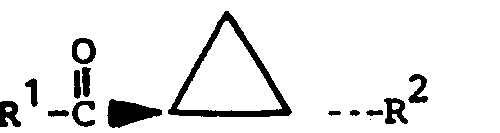
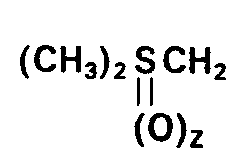
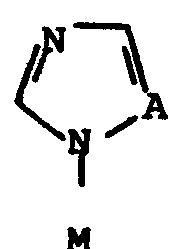
- the invention further relates to a process for the preparation of compounds of the formula (I), characterized in that a compound of the formula (II) wherein R 1 and R 2 have the meanings given in claim 1, with a sulfur ylide of the formula (III), in which z is 0 or 1, to give a compound of the formula (IV), in which R 1 and R 2 have the meanings given above, and this compound (IV) is then reacted with a compound of the general formula (V), wherein A has the meanings given in claim 1 and M represents hydrogen, a trimethylsilyl group or a metal equivalent, and isolates a compound of the formula (I) thus obtained in the form of the free base or an acid addition salt or a physiologically hydrolyzable and acceptable derivative.
- an inert solvent preferably dimethyl sulfoxide, or in mixtures of dimethyl sulfoxide with other inert solvents, for example tetrahydrofuran.
- the sulfur ylides (III) are prepared by processes described in the literature, and the cyclopropyl ketones (II) are likewise prepared analogously to processes described in the literature.
- the compound (V) can be reacted in the form of an alkali or alkaline earth metal salt, preferably as the sodium salt, or in the form of the free base in the presence of a strong base.
- Suitable bases are e.g. Alkali or alkaline earth metal hydrides, amides or alcoholates.
- the second reaction step can also be carried out in such a way that the compound of the formula (IV) is reacted with imidazole or triazole in equivalent amounts, or with excess imidazole or triazole, without solvent in a temperature range from 90 to 160 ° C.
- the invention further relates to a process (b) for the preparation of the compounds of the formula (I), according to which a compound of the formula (II) in which R 1 and R 2 are as defined above, with a sulfur ylide of the formula (III) in which z is as defined above, to a compound of the formula (IV) implemented and then this without working up the reaction mixture and without isolation of the compound of For mel (IV) by adding a compound of formula (V) in which A and M are as defined above, converted into the reaction mixture to give a compound of the formula (I) and isolated in the form of the free base or an acid addition salt or a physiologically hydrolyzable and acceptable derivative.
- reaction of the compounds of the formula (II) with the compounds of the formula (III) to the compounds of the formula (IV) and reaction of the latter with those of the formula (V) to give the end products is carried out in a one-pot process.
- a solution of a compound of the formula (IV) is first prepared in one of the inert solvents described above, and then a compound of the formula (V) and, if appropriate, a further equivalent of the bases mentioned are added to this solution and proceeds as described in the above procedure.
- the invention further relates to a process c) for the preparation of the compounds of the formula (I), according to which a compound of the formula (VI) wherein R 1 and R 2 have the meanings given above, with two equivalents of the sulfur ylide of the formula (IIIa) to a compound of formula (IV) and then the compound of the formula (IV) without isolation of the compounds of the formula (IV) obtained by adding a compound of the formula (V) converted into the reaction mixture to give the compound of the formula (I) and isolating it in the form of the free base or an acid addition salt or a physiologically hydrolyzable and acceptable derivative, or a process d) by which a compound of the formula (VI) in which R 1 and R 2 are as defined above, with one equivalent of sulfur ylide (III a) to a compound of formula (II) and this then without working up the reaction mixture and without isolating the compound of the formula (II) with an equivalent of a sulfur ylide of the formula (IIIb) converted to
- Tetrahydrofuran at a temperature between 20 ° and 80 ° C, preferably between 20 ° and 50 ° C, so the compound of formula (IV) is obtained and then to this solution a compound of formula (V), either in the form of the above mentioned metal salts, preferably the sodium salt, or in the form of the free base with the addition of an equivalent of the above-mentioned strong base, for example Sodium hydride or amide, and proceed as in the previous procedures.
- a compound of formula (V) either in the form of the above mentioned metal salts, preferably the sodium salt, or in the form of the free base with the addition of an equivalent of the above-mentioned strong base, for example Sodium hydride or amide, and proceed as in the previous procedures.
- the starting products of the formula (VI) are known or can be contained by known processes.
- Compounds (I) according to variant d) are prepared by reacting one equivalent of dimethylsulfoxonium methylide (III a) with one equivalent of compound (VI) to give a compound of formula (II) under the reaction conditions described under c), then to Reaction solution at a temperature between -10 ° C and 50 ° C, preferably 0 ° - 30 ° C, a solution of dimethyl sulfonium methylide (III b) in an inert solvent, preferably dimethyl sulfoxide, is added and to this solution, analogously to variant c) described, adding a compound of formula (V) and proceeding as described under variant d).
- the compounds of formula I, their acid addition salts and their physiologically hydrolyzable derivatives are valuable drugs. They have an especially antimicrobial effect and are suitable for the prevention and treatment of fungal infections in humans and in various types of mammals.
- the new compounds are very effective in vitro against skin fungi, e.g. Trichophyton mentagrophytes, Microsporum canis, Epidermophyton floccosum; against mold, e.g. Aspergillus niger or against yeasts, e.g. Candida albicans, C. tropicalis, Torulopsis glabrata and Trichosporon cutaneum or against protozoa like Trichomonas vaginalis or T. fetus, or against gram-positive and gram-negative bacteria.
- skin fungi e.g. Trichophyton mentagrophytes, Microsporum canis, Epidermophyton floccosum
- mold e.g. Aspergillus niger
- yeasts e.g. Candida albicans, C. tropicalis, Torulopsis glabrata and Trichosporon cutaneum or against protozoa like Trichomonas vaginalis or T. fetus, or against gram
- the compounds have a very good systemic effect after oral or parenteral use, for example against Candida albicans. There is also a very good effect against various pathogens of skin mycoses (e.g. Trichophyton mentagrophytes) on guinea pigs after oral, parenteral or local application.
- skin mycoses e.g. Trichophyton mentagrophytes
- the present invention includes pharmaceutical preparations which, in addition to non-toxic, inert pharmaceutically suitable excipients, contain one or more active compounds according to the invention or which consist of one or more active compounds according to the invention, and processes for the preparation of these preparations.
- Non-toxic, inert pharmaceutically suitable carriers are to be understood as solid, semi-solid or liquid diluents, fillers and formulation auxiliaries of all kinds.
- Dosage forms include, for example, tablets, dragees, capsules, pills, aqueous solutions, suspensions and emulsions, optionally sterile injectable solutions, non-aqueous emulsions, suspensions and solutions, ointments, creams, pastes, lotions, sprays, etc.
- the therapeutically active compounds are said to be preferred in the pharmaceutical preparations listed above be present in a concentration of about 0.1 to 99.5, preferably from about 0.5 to 95% by weight of the total mixture.
- the pharmaceutical preparations listed above can also contain further pharmaceutical active substances.
- the pharmaceutical preparations listed above are prepared in a conventional manner by known methods, e.g. by mixing the active substance or substances with the carrier substance or substances.
- the present invention also includes the use of the active compounds according to the invention and of pharmaceutical preparations which contain one or more active compounds according to the invention in human and veterinary medicine for preventing, ameliorating and / or curing the diseases mentioned above.
- the active ingredients or the pharmaceutical preparations can be applied locally, orally, parenterally, intraperitoneally and / or rectally.
- the active ingredient (s) according to the invention in a total amount of from about 0.05 to about 200, preferably 0.1 to 100, in particular 0.5 to 10 mg / kg body weight per 24 hours, if necessary in the form of several single doses to achieve the desired results.
- the total amount is administered in 1 to 8, preferably in 1 to 3 individual doses.
- the new compounds of the general formula (I) are also effective as biocides, preferably the triazole compounds in which A is nitrogen. They are particularly characterized by their fungicidal activity in phytopathogenic fungi. Even fungal pathogens that have already penetrated the plant tissue can be successfully combated. This is particularly important and advantageous in the case of those fungal diseases which can no longer be effectively combated with the usual fungicides after infection has occurred.
- the spectrum of activity of the new compounds covers a variety of different phytopathogenic fungi, e.g. Piricularia oryzae, Plasmopara viticola, various types of rust, but above all Venturia inaequalis, Cercospora beticola and powdery mildew in fruit, vegetable, cereal and ornamental plants.
- the new compounds of the general formula (I) are also suitable for use in technical fields, for example as wood preservatives, as preservatives in paints, in cooling lubricants for metalworking or as preservatives in drilling and cutting oils.
- the new compounds can be used as wettable powders, emulsifiable concentrates, sprayable solutions, dusts, pickles medium, dispersions, granules or microgranules are used in the usual preparations.
- Spray powders are understood as meaning dispersions which are uniformly dispersible in water and which, in addition to the active ingredient, in addition to a diluent or inert substance, if appropriate, also comprise wetting agents, e.g. polyoxethylated alkylphenols, polyoxethylated fatty alcohols, alkyl or alkylphenyl sulfonates and dispersants e.g. sodium lignosulfonate, 2,2'-dinapthylmethane-6,6'-disulfonic acid sodium, dibutylnaphthalene sulfonic acid sodium or oleoylmethyl tauric acid sodium. They are manufactured in the usual way, e.g. by grinding and mixing the components.
- wetting agents e.g. polyoxethylated alkylphenols, polyoxethylated fatty alcohols, alkyl or alkylphenyl sulfonates and dispersants e
- Emulsifiable concentrates can e.g. by dissolving the active ingredient in an inert organic solvent, e.g. Butanol, cyclohexanone, dimethylformamide, xylene or higher-boiling aromatics or hydrocarbons with the addition of one or more emulsifiers.
- an inert organic solvent e.g. Butanol, cyclohexanone, dimethylformamide, xylene or higher-boiling aromatics or hydrocarbons.
- the solvent content can also be omitted entirely or in part.
- alkylarylsulfonic acid calcium salts such as Ca-dodecylbenzenesulfonate
- nonionic emulsifiers such as fatty acid polyglycol esters, alkylaryl polyglycol ethers, fatty alcohol polyglycol ethers, propylene oxide-ethylene oxide condensation products, fatty alcohol propylene oxide, ethylene oxide polyorbityl ester fatty acid products, sorbitol ethylene oxide polyorbityl ether, sorbitol ethoxylate-sorboxy acid ethoxylate,
- Dusts are obtained by grinding the active ingredient with finely divided, solid substances, e.g. Talc, natural clays such as kaolin, bentonite, pyrophillite or diatomaceous earth are obtained.
- finely divided, solid substances e.g. Talc
- natural clays such as kaolin, bentonite, pyrophillite or diatomaceous earth are obtained.
- Granules can either be produced by spraying the active ingredient onto adsorbable, granulated inert material or by applying active ingredient concentrates by means of binders, e.g. Polyvinyl alcohol, sodium polyacrylic acid or mineral oils on the surface of carriers such as sand, kaolinite or granulated inert material. Suitable active ingredients can also be granulated in the manner customary for the production of fertilizer granules - if desired in a mixture with fertilizers.
- binders e.g. Polyvinyl alcohol, sodium polyacrylic acid or mineral oils
- the active substance concentration in wettable powders is e.g. about 10-90 wt .-%, the rest of 100 wt .-% consists of conventional formulation components.
- the active substance concentration can be approximately 10-80% by weight of active substance, and in the case of sprayable solutions approximately 1-20% by weight.
- the active ingredient content depends in part on whether the active compound is in liquid or solid form and which granulation aids, fillers, etc. are used.
- the active ingredient formulations mentioned optionally contain the customary adhesives, wetting agents, dispersants, emulsifiers, penetrants, solvents, fillers or carriers.
- the concentrates which are commercially available, are diluted in the customary manner, if necessary, e.g. for wettable powders, emulsifiable concentrates, dispersions and sometimes also for microgranules using water. Dust-like and granulated preparations as well as sprayable solutions are usually no longer diluted with other inert substances before use.
- a wettable powder that is easily disposable in water is obtained by mixing 25 parts by weight of active ingredient, 65 parts by weight of kaolin-containing quartz as an inert substance, 10 parts by weight of lignosulfonic acid potassium and 1 part by weight of oleoylmethyl tauric acid sodium as wetting and dispersing agent and grinding in a pin mill.
- a dispersion concentrate which is easily dispersible in water is prepared by mixing 20 parts by weight of active compound with 6 parts by weight of alkylphenol polyglycol ether (Triton X 207), 3 parts by weight of isotridecanol polyglycol ether (8 AeO) and 71 parts by weight of paraffinic mineral oil (boiling range, for example, about 255 to over 377 ° C) and ground to a fineness of less than 5 microns in a attritor.
- alkylphenol polyglycol ether Triton X 207
- isotridecanol polyglycol ether (8 AeO) 8 AeO
- paraffinic mineral oil ground to a fineness of less than 5 microns in a attritor.
- An emulsifiable concentrate can be prepared from 15 parts by weight of active ingredient, 75 parts by weight of cyclohexanone as solvent and 10 parts by weight of oxyethylated nonylphenol (10 AeO) as emulsifier.
- the compounds marked with a and b under a number are diastereomers.
- the isomer denoted by a is the diastereomer which has the greater R f value in the TLC.
- mice were given 5 18-20 g mice each (strain HOE: NMRKF; SPF 71) were given 2. 10 6 germs / animal infected.
- the animals were treated orally or subcutaneously in 8 equal single doses of 30 mg / kg or 10 mg / kg body weight (-24 / -18 / -2h / + 2/24/30/48 / 54h).
Landscapes
- Chemical & Material Sciences (AREA)
- Organic Chemistry (AREA)
- Health & Medical Sciences (AREA)
- Life Sciences & Earth Sciences (AREA)
- General Health & Medical Sciences (AREA)
- Medicinal Chemistry (AREA)
- Pest Control & Pesticides (AREA)
- Nuclear Medicine, Radiotherapy & Molecular Imaging (AREA)
- Chemical Kinetics & Catalysis (AREA)
- Pharmacology & Pharmacy (AREA)
- Oncology (AREA)
- Animal Behavior & Ethology (AREA)
- Communicable Diseases (AREA)
- Public Health (AREA)
- Veterinary Medicine (AREA)
- Agronomy & Crop Science (AREA)
- General Chemical & Material Sciences (AREA)
- Plant Pathology (AREA)
- Engineering & Computer Science (AREA)
- Dentistry (AREA)
- Wood Science & Technology (AREA)
- Zoology (AREA)
- Environmental Sciences (AREA)
- Plural Heterocyclic Compounds (AREA)
- Pharmaceuticals Containing Other Organic And Inorganic Compounds (AREA)
- Pyridine Compounds (AREA)
- Organic Low-Molecular-Weight Compounds And Preparation Thereof (AREA)
Abstract




Description
- Die Erfindung betrifft Azolyl-cyclopropyl-ethanol-Derivate, Verfahren zu ihrer Herstellung, sowie solche Azole enthaltende pharmazeutische Zusammensetzungen und ihre Verwendung als Pharmazeutika, insbesondere als Antimykotika und Pflanzenschutzmittel, z.B. als Fungizide und Wachstumsregulatoren.
- In der US-Patentschrift 4 432 989 werden 1-Aryl-l-cyclopropyl-2-azolyl-ethanole und 1-Aryl-1-alkylcyclopropyl-2- azolyl-ethanole als Fungizide im Pflanzenschutz beschrieben. Jedoch sind darin weder antimykotische Wirkungen beschrieben, noch die erfindungsgemäßen Verbindungen.
- Es wurde nun gefunden, daß die erfindungsgemäßen Verbindungen, die sich von den oben erwähnten Verbindungen wesentlich durch die Art der Substitution am Cyclopropanring unterscheiden, sehr gute antimikrobielle, insbesondere antimykotische Eigenschaften aufweisen. Sie sind deshalb zur Bekämpfung von Pilzen bei Mensch und Tier geeignet. Durch fungizide und wachstumsregulierende Eigenschaften sind sie auch als Pflanzenschutzmittel geeignet.
- Die Erfindung betrifft daher Azolderivate der Formel (I)

- Bevorzugt sind Verbindungen der Formel I, worin R 1 und R 2 jeweils gleich oder verschieden sind und unsubstituiertes Biphenyl, Phenoxyphenyl, Benzylphenyl, Benzyloxyphenyl, Naphthyl, Thienyl, Furyl oder Pyridyl oder eine unsubstituierte oder mit einem oder zwei Substituenten versehene Phenylgruppe bedeuten und diese Substituenten jeweils Fluor, Chlor, Brom, (Cl-C4)-Alkyl, Trifluormethyl, (Cl-C4)-Alkoxy, (C1-C4)-Alkylthio oder Nitro bedeuten.
- Besonders bevorzugt sind Verbindungen der Formel I, worin R 1 und R 2 die Phenylgruppe bedeutet, welche unsubstituiert oder durch einen oder zwei Substituenten substituiert ist, die Fluor, Chlor, Brom oder die Trifluormethylgruppe bedeuten.
- Insbesondere sind Verbindungen I bevorzugt, worin die Substituenten von R1 und R2 jeweils Fluor oder Chlor bedeuten.
- Die als Substituenten oder in Zusammenhang mit anderen Substituenten auftretenden (C1-C8)- bzw. (C1-C4)-Alkylgruppen können unverzweigt oder verzweigt sein und beispielsweise die Methyl-, Ethyl-, Propyl-, 1-Methyl-ethyl-, Butyl-, 2-Methylpropyl-, 1,1-Dimethyl-ethyl-, Pentyl-, Hexyl-, Heptyl- oder Octylgruppe bedeuten; die durch Fluor oder Chlor substituierten Alkylgruppen können beispielsweise die Trifluormethyl-, Trichlormethyl, 1,1,2,2-Tetrafluorethyl oder die Nonafluorbutylgruppe bedeuten; die (C3-C6)-Cycloalkylgruppen können die Cyclopropyl-, Cyclobutyl, Cyclopentyl- oder Cyclohexylgruppe bedeuten; die (C3-C6)-Cycloalkyl(Cl-C4)-alkylgruppen können beispielsweise die Cyclopropylmethyl-, Cyclopentylmethyl-, Cyclohexylmethyl- oder Cyclohexylethylgruppe bedeuten.
- Die vorliegende Erfindung betrifft die Verbindungen (I) in Form der freien Base oder eines Säureadditionssalzes oder eines physiologisch hydrolysierbaren und akzeptablen Derivates.
- Beispiele pharmazeutisch akzeptabler salzbildender Säuren sind anorganische Säuren wie Salzsäure, Bromwasserstoffsäure, Jodwasserstoffsäure, Schwefelsäure, Phosphorsäure, oder Salpetersäure oder organische Säuren wie Malonsäure, Oxalsäure, Gluconsäure, Camphersulfonsäure, Benzolsulfonsäure, Essigsäure, Propionsäure oder p-Toluolsulfonsäure.
- Als physiologisch hydrolysierbare und akzeptable Derivate sind beispielsweise an der Hydroxygruppe veresterte Derivate geeignet, die unter physiologischen Bedingungen zu den freien Säuren hydrolysierbar sind, die ihrerseits wieder physiologisch akzeptierbar sind, d.h. bei den notwendigen Dosen nicht toxisch sind.
- Die Verbindungen (I) weisen asymmetrische C-Atome auf und können daher als Enantiomere und Diastereomere auftreten. Die Erfindung umfaßt sowohl die reinen Isomeren als auch deren Gemische. Die Gemische von Diastereomeren können nach gebräuchlichen Methoden, zum Beispiel durch selektive Kristallisation aus geeigneten Lösungsmitteln oder durch Chromatographie an Kieselgel oder Aluminiumoxid in die Komponenten aufgetrennt werden. Racemate können nach üblichen Methoden in die Enantiomeren aufgetrennt werden, so zum Beispiel durch Salzbildung mit einer optisch aktiven Säure, Trennung der diastereomeren Salze und Freisetzung der reinen Enantiomeren mittels einer Base.
- Die Erfindung betrifft weiterhin ein Verfahren zur Herstellung von Verbindungen der Formel (I), dadurch gekennzeichnt, daß man eine Verbindung der Formel (II)


- Zur Herstellung der Verbindungen der Formel (I) wird in einem ersten Reaktionsschritt zur Herstellung der Verbindungen der Formel (IV) ein Keton der Formel (II), in der R 1 und R 2 die oben angegebenen Bedeutungen haben, mit einem Schwefelylid der Formel (III) in einem inerten Lösungsmittel, vorzugsweise Dimethylsulfoxid, oder in Gemischen von Dimethylsulfoxid mit anderen inerten Lösungsmitteln, z.B. Tetrahydrofuran, umgesetzt. Dabei ist bei Verwendung eines Schwefelylids der Formel (III), für das z = 0 ist, ein Temperaturbereich zwischen -10° und 50°C, vorzugsweise zwischen 0° und 30°C zweckmäßig; bei Verwendung eines Schwefelylids der Formel (III), für das z = 1 ist, ein Temperaturbereich zwischen 0° und 80°, vorzugsweise zwischen 20° und 50°.
- Die Herstellung der Schwefelylide (III) erfolgt nach in der Literatur beschriebenen Verfahren, die Herstellung der Cyclopropylketone (II) ebenfalls analog zu in der Literatur beschriebenen Verfahren.
- Die Umwandlung der Zwischenprodukte der Formel (IV) in die Endprodukte der Formel (I) erfolgt in einem zweiten Reaktionsschritt durch Umsetzung mit einer Verbindung der Formel (V), in der A und M die oben angegebenen Bedeutungen haben, in einem inerten Lösungsmittel, z.B. N,N-Dimethylformamid, N,N-Dimethylacetamid, Dimethylsulfoxid, Acetonitril, Benzonitril, Sulfolan, N-Methylpyrrolidon, Dioxan oder Tetrahydrofuran, in einem Temperaturbereich zwischen 20° und 150°C.
- Die Verbindung (V) kann dabei in Form eines Alkali- oder Erdalkalimetallsalzes, bevorzugt als Natriumsalz, oder in Form der freien Base in Gegenwart einer starken Base, umgesetzt werden. Geeignete Basen sind z.B. Alkali- oder Erdalkalimetallhydride, -amide oder alkoholate.
- Der zweite Reaktionsschritt kann auch so durchgeführt werden, daß man die Verbindung der Formel (IV) mit Imidazol oder Triazol in äquivalenten Mengen, oder auch mit Imidazol oder Triazol im Überschuß, ohne Lösungsmittel in einem Temperaturbereich von 90 - 160°C zur Reaktion bringt.
- Die Erfindung betrifft weiterhin ein Verfahren (b) zur Herstellung der Verbindungen der Formel (I), nach welchem man eine Verbindung der Formel (II)


- Die Umsetzung der Verbindungen der Formel (II) mit den Verbindungen der Formel (III) zu den Verbindungen der Formel (IV) und Umsetzung der letzteren mit solchen der Formel (V) zu den Endprodukten erfolgt dabei im Eintopfverfahren. Hierzu stellt man zunächst, wie im vorstehenden Verfahren beschrieben, eine Lösung einer Verbindung der Formel (IV) in einem der oben beschriebenen inerten Lösungsmittel her und gibt anschließend zu dieser Lösung eine Verbindung der Formel (V) und gegebenenfalls ein weiteres Äquivalent der oben genannten Basen zu und verfährt weiter wie im vorstehenden Verfahren beschrieben.
- Die Erfindung betrifft weiterhin ein Verfahren c) zur Herstellung der Verbindungen der Formel (I), nach welchem man eine Verbindung der Formel (VI),


- Die Herstellung der Verbindungen (I) nach Variante c) erfolgt so, daß man zwei Äquivalente Dimethylsulfoxoniummethylid (III a) mit einem Äquivalent der Verbindung der Formel (VI) in einem inerten Lösungsmittel, vorzugsweise Dimethylsulfoxid, oder in Gemischen von Dimethylsulfoxid mit anderen inerten Lösungsmitteln, z.B. Tetrahydrofuran, bei einer Temperatur zwischen 20° und 80°C, vorzugsweise zwischen 20° und 50°C umsetzt, so die Verbindung der Formel (IV) erhält und anschließend zu dieser Lösung eine Verbindung der Formel (V), entweder in Form der oben erwähnten Metallsalze, vorzugsweise des Natriumsalzes, oder in Form der freien Base unter Zugabe eines Äquivalents der oben erwähnten starken Base, z.B. Natriumhydrid oder -amid, zugibt und weiter wie in den vorstehenden Verfahren verfährt.
- Die Ausgangsprodukte der Formel (VI) sind bekannt oder können nach bekannten Verfahren enthalten werden.
- Die Herstellung der Verbindungen (I) nach Variante d) erfolgt so, daß man unter den unter c) beschriebenen Reaktionsbedingungen ein Äquivalent Dimethylsulfoxoniummethylid (III a) mit einem Äquivalent der Verbindung (VI) zu einer Verbindung der Formel (II) umsetzt, anschließend zur Reaktionslösung bei einer Temperatur zwischen -10°C und 50°C, vorzugsweise 0° - 30°C, eine Lösung von Dimethylsulfoniummethylid (III b) in einem inerten Lösungsmittel, vorzugsweise Dimethylsulfoxid, zugibt und zu dieser Lösung, analog wie unter Variante c) beschrieben, eine Verbindung der Formel (V) zugibt und weiter wie unter Variante d) beschrieben verfährt.
- Die Verbindungen der Formel I, ihre Säureadditionssalze und ihre physiologisch hydrolysierbaren Derivate sind wertvolle Arzneimittel. Sie wirken insbesondere antimikrobiell und eignen sich zur Vorbeugung und Behandlung von Pilzinfektionen beim Menschen und bei verschiedenen Säugetierarten.
- Die neuen Verbindungen sind in vitro sehr gut wirksam gegen Hautpilze, wie z.B. Trichophyton mentagrophytes, Microsporum canis, Epidermophyton floccosum; gegen Schimmelpilze, wie z.B. Aspergillus niger oder gegen Hefen, wie z.B. Candida albicans, C. tropicalis, Torulopsis glabrata und Trichosporon cutaneum oder gegen Protozoen wie Trichomonas vaginalis oder T. fetus, oder auch gegen grampositive und gramnegative Bakterien.
- Auch in vivo, z.B. bei der experimentellen Nierencandidose der Maus, besitzen die Verbindungen nach oraler oder parenteraler Anwendung einen sehr guten systemischen Effekt, z.B. gegen Candida albicans. Ebenso besteht ein sehr guter Effekt gegen verschiedene Erreger der Hautmykosen (z.B. Trichophyton mentagrophytes) am Meerschweinchen nach oraler, parenteraler oder lokaler Anwendung.
- Als Indikationsgebiete in der Humanmedizin können beispielsweise genannt werden:
- Dermatomykosen und Systemmykosen durch Trichophyton mentagrophytes und andere Trichophytonarten, Mikrosporonarten, Epidermophyton floccosum, Sproßpilze und biphasische Pilze sowie Schimmelpilze hervorgerufen.
- Als Indikationsgebiete in der Tiermedizin können beispielsweise aufgeführt werden:
- Alle Dermatomykosen und Systemmykosen, insbesondere solche, die durch die oben genannten Erreger hervorgerufen werden.
- Zur vorliegenden Erfindung gehören phamazeutische Zubereitungen, die neben nicht toxischen, inerten pharmazeutisch geeigneten Trägerstoffen einen oder mehrere erfindungsgemäße Wirkstoffe enthalten oder die aus einem oder mehreren erfindungsgemäßen Wirkstoffen bestehen sowie Verfahren zur Herstellung dieser Zubereitungen.
- Unter nicht toxischen, inerten pharmazeutisch geeigneten Trägerstoffen sind feste, halbfeste oder flüssige Verdünnungsmittel, Füllstoffe und Formulierungshilfsmittel jeder Art zu verstehen.
- Als Darreichungsformen kommen beispielsweise Tabletten, Dragees, Kapseln, Pillen, wäßrige Lösungen, Suspensionen und Emulsionen, gegebenenfalls sterile injizierbare Lösungen, nichtwäßrige Emulsionen, Suspensionen und Lösungen, Salben, Cremes, Pasten, Lotions, Sprays etc. in Betracht.
- Die therapeutisch wirksamen Verbindungen sollen in den oben aufgeführten pharmazeutischen Zubereitungen vorzugsweise in einer Konzentration von etwa 0,1 bis 99,5, vorzugsweise von etwa 0,5 bis 95 Gew.-% der Gesamtmischung vorhanden sein.
- Die oben aufgeführten pharmazeutischen Zubereitungen können außer den erfindungsgemäßen Wirkstoffen auch weitere pharmazeutische Wirkstoffe enthalten.
- Die Herstellung der oben aufgeführten pharmazeutischen Zubereitungen erfolgt in üblicher Weise nach bekannten Methoden, z.B. durch Mischen des oder der Wirkstoffe mit dem oder den Trägerstoffen.
- Zur vorliegenden Erfindung gehört auch die Verwendung der erfindungsgemäßen Wirkstoffe sowie von pharmazeutischen Zubereitungen, die einen oder mehrere erfindungsgemäße Wirkstoffe enthalten, in der Human- und Veterinärmedizin zur Verhütung, Besserung und/oder Heilung der oben angeführten Erkrankungen.
- Die Wirkstoffe oder die pharmazeutischen Zubereitungen können lokal, oral, parenteral, intraperitoneal und/oder rectal appliziert werden.
- Im allgemeinen hat es sich sowohl in der Human- als auch in der Veterinärmedizin als vorteilhaft erwiesen, den oder die erfindungsgemäßen Wirkstoffe in Gesamtmengen von etwa 0,05 bis etwa 200, vorzugsweise 0,1 bis 100, insbesondere 0,5 bis 10 mg/kg Körpergewicht je 24 Stunden, gegebenenfalls in Form mehrerer Einzelgaben zur Erzielung der gewünschten Ergebnisse zu verabreichen. Die Gesamtmenge wird in 1 bis 8,, vorzugsweise in 1 bis 3 Einzelsdosen verabreicht.
- Es kann jedoch erforderlich sein, von den genannten Dosierungen abzuweichen und zwar in Abhängigkeit von der Art und dem Körpergewicht des zu behandelnden Objekts, der Art und der Schwere der Erkrankung, der Art der Zubereitung und der Applikation des Arzneimittels sowie dem Zeitraum bzw. Intervall, innerhalb welchem die Verabreichung erfolgt. So kann es in einigen Fällen ausreichend sein, mit weniger als der oben genannten Menge Wirkstoff auszukommen, während in anderen Fällen die oben angeführte Wirkstoffmenge überschritten werden muß. Die Festlegung der jeweils erforderlichen optimalen Dosierung und Applikationsart der Wirkstoffe kann durch jeden Fachmann aufgrund seines Fachwissens leicht erfolgen.
- Die neuen Verbindungen der allgemeinen Formel (I) sind auch als Biozide wirksam, vorzugsweise die Triazolverbindungen, in denen A Stickstoff bedeutet. Sie zeichnen sich insbesondere durch ihre fungizide Wirksamkeit bei phytopathogenen Pilzen aus. Selbst bereits in das pflanzliche Gewebe eingedrungene pilzliche Krankheitserreger lassen sich erfolgreich bekämpfen. Dies ist besonders wichtig und vorteilhaft bei solchen Pilzkrankheiten, die nach eingetretener Infektion mit den sonst üblichen Fungiziden nicht mehr wirksam bekämpft werden können. Das Wirkungsspektrum der neuen Verbindungen erfaßt eine Vielzahl verschiedener phytopathogener Pilze, wie z.B. Piricularia oryzae, Plasmopara viticola, verschiedene Rostarten, vor allem aber Venturia inaequalis, Cercospora beticola und echte Mehltaupilze im Obst-, Gemüse-, Getreide- und Zierpflanzenbau.
- Die neuen Verbindungen der allgemeinen Formel (I) eignen sich ferner für den Einsatz in technischen Bereichen, beispielsweise als Holzschutzmittel, als Konservierungsmittel in Anstrichfarben, in Kühlschmiermitteln für die Metallbearbeitung oder als Konservierungsmittel in Bohr- und Schneidölen.
- Die neuen Verbindungen können als Spritzpulver, emulgierbare Konzentrate, versprühbare Lösungen, Stäubemittel, Beizmittel, Dispersionen, Granulate oder Mikrogranulate in den üblichen Zubereitungen angewendet werden.
- Unter Spritzpulvern werden in Wasser gleichmäßig dispergierbare Präparate verstanden, die neben dem Wirkstoff außer gegebenenfalls einem Verdünnungs- oder Inertstoff noch Netzmittel, z.B. polyoxethylierte Alkylphenole, polyoxethylierte Fettalkohole, Alkyl- oder Alkylphenylsulfonate und Dispergiermittel z.B. ligninsulfonsaures Natrium, 2,2'- dinapthylmethan-6,6'-di-sulfonsaures Natrium, dibutylnaphthalin-sulfonsaures Natrium oder auch oleoylmethyltaurinsaures Natrium enthalten. Ihre Herstellung erfolgt in üblicher Weise, z.B. durch Mahlen und Vermischen der Komponenten.
- Emulgierbare Konzentrate können z.B. durch Auflösen des Wirkstoffes in einem inerten organischen Lösungsmittel, z.B. Butanol, Cyclohexanon, Dimethylformamid, Xylol oder auch höhersiedenden Aromaten oder Kohlenwasserstoffen unter Zusatz von einem oder mehreren Emulgatoren hergestellt werden. Bei flüssigen Wirkstoffen kann der Lösungsmittelanteil auch ganz oder teilweise entfallen. Als Emulgatoren können beispielsweise verwendet werden: Alkylarylsulfonsaure Calciumsalze, wie Ca-dodecylbenzolsulfonat, oder nichtionische Emulgatoren wie Fettsäurepolyglykolester, Alkylarylpolyglykolether, Fettalkoholpolyglykolether, Propylenoxid-Ethylenoxid-Kondensationsprodukte, Fettalkohol-Propylenoxid-Ethylenoxid-Kondensationsprodukte, Alkylpolyglykolether, Sorbitanfettsäureester, Polyoxethylensorbitanfettsäureester oder Polyoxethylensorbitester.
- Stäubemittel werden durch Vermahlen des Wirkstoffes mit fein verteilten, festen Stoffen, z.B. Talkum, natürlichen Tonen wie Kaolin, Bentonit, Pyrophillit oder Diatomeenerde erhalten.
- Granulate können entweder durch Verdüsen des Wirkstoffes auf adsorptionsfähiges, granuliertes Inertmaterial hergestellt werden oder durch Aufbringen von Wirkstoffkonzentraten mittels Bindemitteln, z.B. Polyvinylalkohol, polyacrylsaurem Natrium oder auch Mineralölen auf die Oberfläche von Trägerstoffen wie Sand, Kaolinit oder von granuliertem Inertmaterial. Auch können geeignete Wirkstoffe in der für die Herstellung von Düngemittelgranulaten üblichen Weise - gewünschtenfalls in Mischung mit Düngemitteln, granuliert werden.
- In Spritzpulvern beträgt die Wirkstoffkonzentration z.B. etwa 10-90 Gew.-%, der Rest zu 100 Gew.-% besteht aus üblichen Formulierungsbestandteilen. Bei emulgierbaren Konzentraten kann die Wirkstoffkonzentration etwa 10-80 Gew.-% an Wirkstoff, bei versprühbaren Lösungen etwa 1-20 Gew.-% betragen. Bei Granulaten hängt der Wirkstoffgehalt zum Teil davon ab, ob die wirksame Verbindung flüssig oder fest vorliegt und welche Granulierhilfsmittel, Füllstoffe usw. verwendet werden.
- Daneben enthalten die genannten Wirkstofformulierungen gegebenenfalls die jeweils üblichen Haft-, Netz-, Dispergier-, Emulgier-, Penetrations-, Lösungsmittel, Füll- oder Trägerstoffe.
- Zur Anwendung werden die in handelsüblicher Form vorliegenden Konzentrate gegebenenfalls in üblicher Weise verdünnt, z.B. bei Spritzpulvern, emulgierbaren Konzentraten, Dispersionen und teilweise auch bei Mikrogranulaten mittels Wasser. Staubförmige und granulierte Zubereitungen sowie versprühbare Lösungen werden vor der Anwendung üblicherweise nicht mehr mit weiteren inerten Stoffen verdünnt.
- Auch Mischungen oder Mischformulierungen mit anderen Wirkstoffen, wie z.B. Insektiziden, Akariziden, Herbiziden, Düngemitteln, Wachstumsregulatoren oder weiteren Fungiziden sind gegebenenfalls möglich, wobei u.U. auch synergistische Wirkungssteigerungen erzielt werden können.
- Im folgenden seien einige Formulierungsbeispiele angeführt:
- Ein Stäubemittel wird erhalten, indem man 10 Gewichtsteile Wirkstoff und 90 Gewichtsteile Talkum als Inertstoff mischt und in einer Schlagmühle zerkleinert.
- Ein in Wasser leicht dispegierbares, benetzbares Pulver wird erhalten, indem man 25 Gewichtsteile Wirkstoff, 65 Gewichtsteile kaolinhaltigen Quarz als Inertstoff, 10 Gewichtsteile ligninsulfonsaures Kalium und 1 Gewichtsteil oleoylmethyltaurinsaures Natrium als Netz- und Dispergiermittel mischt und in einer Stiftmühle mahlt.
- Ein in Wasser leicht dispergierbares Dispersionskonzentrat stellt man her, indem man 20 Gewichtsteile Wirkstoff mit 6 Gewichtsteilen Alkylphenolpolyglykolether (Triton X 207), 3 Gewichtsteilen Isotridecanolpolyglykolether (8 AeO) und 71 Gewichtsteilen paraffinischem Mineralöl (Siedebereich z.B. ca. 255 bis über 377°C) mischt und in einer Reibkugelmühle auf eine Feinheit von unter 5 Mikron vermahlt.
- Ein emulgierbaren Konzentrat läßt sich herstellen aus 15 Gewichtsteilen Wirkstoff, 75 Gewichtsteilen Cyclohexanon als Lösungsmittel und 10 Gewichtsteilen oxethyliertem Nonylphenol (10 AeO) als Emulgator.
- Die nachfolgenden Beispiele dienen zur näheren Erläuterung der Erfindung, ohne dieselbe einzuschränken.
-

-

-

-

- Analog Beispiel 2) bzw. 3) können auch die in Tabelle 1 aufgeführten Verbindungen der Formel (I) erhalten werden.
- Die unter einer Ziffer jeweils mit a und b gekennzeichneten Verbindungen sind Diastereomere. Dabei ist das mit a bezeichnete Isomere dasjenige Diastereomere, das im DC jeweils den größeren Rf-Wert aufweist.


- Als Beispiel für die hohe orale und parenterale in-vivo-Wirksamkeit der erfindungsgemäßen Verbindungen werden Behandlungsergebnisse an experimentell mit Candida albicans infizierten Labortieren angeführt.
- Zur Feststellung der oralen und parenteralen Wirksamkeit wurden Gruppen von je 5 18-20 g schweren Mäusen (Stamm HOE: NMRKF; SPF 71) mit 2 . 106 Keimen/Tier infiziert.
- Die Behandlung der Tiere erfolgte oral bzw. subcutan in 8 gleichen Einzeldosen zu je 30 mg/kg bzw. 10 mg/kg Körpergewicht (-24/-18/-2h/+2/24/30/48/54h).
- Neben der mit den erfindungsgemäßen Substanzen I behandelten Gruppe von 5 Tieren wurde zum Vergleich eine Gruppe von ebenfalls 5 Tieren mit der Referenzsubstanz Ketoconazol behandelt. Eine kontrollgruppe von 10 Tieren blieb nach der Infektion unbehandelt.
- Wie aus Tabelle 2 hervorgeht, fand sich bei den erfindungsgemäßen Verbindungen eine bis um das Doppelte verlängerte Überlebenszeit der Tiere nach der Infektion, verglichen mit dem derzeitigen Standardpräparat Ketoconazol.

Claims (19)


dadurch gekennzeichnet, daß man eine Verbindung der Formel (I) gemäß Anspruch 1 mit festen oder flüssigen Trägerstoffen sowie gegebenenfalls mit einem oder mehreren oberflächenaktiven Mitteln mischt.
Applications Claiming Priority (2)
| Application Number | Priority Date | Filing Date | Title |
|---|---|---|---|
| DE19853530799 DE3530799A1 (de) | 1985-08-29 | 1985-08-29 | Azolyl-cyclopropyl-ethanol-derivate, verfahren zu ihrer herstellung und ihre verwendung |
| DE3530799 | 1985-08-29 |
Publications (2)
| Publication Number | Publication Date |
|---|---|
| EP0212605A2 true EP0212605A2 (de) | 1987-03-04 |
| EP0212605A3 EP0212605A3 (de) | 1987-08-26 |
Family
ID=6279608
Family Applications (1)
| Application Number | Title | Priority Date | Filing Date |
|---|---|---|---|
| EP86111382A Withdrawn EP0212605A3 (de) | 1985-08-29 | 1986-08-18 | Azolyl-cyclopropyl-ethanol-Derivate, Verfahren zu ihrer Herstellung und ihre Verwendung |
Country Status (13)
| Country | Link |
|---|---|
| EP (1) | EP0212605A3 (de) |
| JP (1) | JPS6251670A (de) |
| KR (1) | KR870002085A (de) |
| AU (1) | AU6203086A (de) |
| DE (1) | DE3530799A1 (de) |
| DK (1) | DK409886A (de) |
| ES (1) | ES2001270A6 (de) |
| FI (1) | FI863480A7 (de) |
| GR (1) | GR862211B (de) |
| HU (1) | HU197315B (de) |
| IL (1) | IL79853A0 (de) |
| PT (1) | PT83271B (de) |
| ZA (1) | ZA866529B (de) |
Cited By (5)
| Publication number | Priority date | Publication date | Assignee | Title |
|---|---|---|---|---|
| US5057532A (en) * | 1989-03-25 | 1991-10-15 | Basf Aktiengesellschaft | Azolylethylcyclopropanes and their use thereof as crop protection agents |
| EP0565463A1 (de) * | 1992-04-08 | 1993-10-13 | Rhone-Poulenc Agrochimie | Triazol- und Imidazol-Derivate als Fungizide |
| WO2011070742A1 (en) | 2009-12-08 | 2011-06-16 | Kureha Corporation | Azole derivatives and methods for producing the same, intermediate compounds for the derivatives and methods for producing the same, and agro-horticultural agents and industrial material protecting agents containing the derivatives |
| WO2012169523A1 (ja) | 2011-06-07 | 2012-12-13 | 株式会社クレハ | 農園芸用薬剤、植物病害防除組成物、植物病害防除方法および植物病害防除用製品 |
| US9253983B2 (en) | 2011-05-31 | 2016-02-09 | Kureha Corporation | Triazole compound and use thereof |
Families Citing this family (8)
| Publication number | Priority date | Publication date | Assignee | Title |
|---|---|---|---|---|
| DE3608792A1 (de) * | 1986-03-15 | 1987-09-24 | Hoechst Ag | 1,1-disubstituierte cyclopropanderivate, verfahren zu ihrer herstellung und ihre verwendung |
| DE3784787T2 (de) * | 1986-06-23 | 1994-01-20 | Du Pont Merck Pharma | Fungizide Karbinole. |
| DE3644616A1 (de) * | 1986-12-29 | 1988-07-07 | Lentia Gmbh | Imidazolderivate, verfahren zur herstellung und deren verwendung |
| DE3704359A1 (de) * | 1987-02-12 | 1988-08-25 | Basf Ag | Azolhalbaminal-derivate und ihre verwendung als nitrifikationsinhibitoren |
| NO171272C (no) * | 1988-03-04 | 1993-02-17 | Sankyo Co | Analogifremgangsmaate til fremstilling av terapeutisk aktive 1,2,4-triazolforbindelser |
| US5250383A (en) * | 1990-02-23 | 1993-10-05 | Fuji Photo Film Co., Ltd. | Process for forming multilayer coating |
| KR100546461B1 (ko) * | 1998-03-27 | 2006-05-25 | 주식회사 코오롱 | 신축성이 우수한 인공피혁. |
| KR100384362B1 (ko) * | 2001-04-26 | 2003-05-22 | 주식회사 코오롱 | 경편용 해도형 극세 가연 가공사 및 그의 제조방법 |
Family Cites Families (3)
| Publication number | Priority date | Publication date | Assignee | Title |
|---|---|---|---|---|
| DE3042303A1 (de) * | 1979-11-13 | 1981-08-27 | Sandoz-Patent-GmbH, 7850 Lörrach | Organische verbindungen, deren herstellung und verwendung |
| DE3337937A1 (de) * | 1982-10-28 | 1984-05-03 | Sandoz-Patent-GmbH, 7850 Lörrach | Neue azolderivate |
| DE3342693A1 (de) * | 1983-11-25 | 1985-06-05 | Bayer Ag, 5090 Leverkusen | Verfahren zur herstellung von ss-hydroxy-ethyl-(1,2,4-triazol)- derivaten |
-
1985
- 1985-08-29 DE DE19853530799 patent/DE3530799A1/de not_active Withdrawn
-
1986
- 1986-08-18 EP EP86111382A patent/EP0212605A3/de not_active Withdrawn
- 1986-08-27 HU HU863710A patent/HU197315B/hu not_active IP Right Cessation
- 1986-08-27 FI FI863480A patent/FI863480A7/fi not_active Application Discontinuation
- 1986-08-27 IL IL79853A patent/IL79853A0/xx unknown
- 1986-08-27 GR GR862211A patent/GR862211B/el unknown
- 1986-08-27 ES ES8601387A patent/ES2001270A6/es not_active Expired
- 1986-08-28 PT PT83271A patent/PT83271B/de unknown
- 1986-08-28 ZA ZA866529A patent/ZA866529B/xx unknown
- 1986-08-28 KR KR1019860007170A patent/KR870002085A/ko not_active Withdrawn
- 1986-08-28 AU AU62030/86A patent/AU6203086A/en not_active Abandoned
- 1986-08-28 DK DK409886A patent/DK409886A/da not_active Application Discontinuation
- 1986-08-28 JP JP61200265A patent/JPS6251670A/ja active Pending
Cited By (8)
| Publication number | Priority date | Publication date | Assignee | Title |
|---|---|---|---|---|
| US5057532A (en) * | 1989-03-25 | 1991-10-15 | Basf Aktiengesellschaft | Azolylethylcyclopropanes and their use thereof as crop protection agents |
| EP0390022A3 (de) * | 1989-03-25 | 1991-12-11 | BASF Aktiengesellschaft | Azolylethylcyclopropane, Verfahren zu ihrer Herstellung und ihre Verwendung als pflanzenschutzmittel |
| EP0565463A1 (de) * | 1992-04-08 | 1993-10-13 | Rhone-Poulenc Agrochimie | Triazol- und Imidazol-Derivate als Fungizide |
| FR2690441A1 (fr) * | 1992-04-08 | 1993-10-29 | Rhone Poulenc Agrochimie | Nouveaux dérivés triazole et imidazole fongicides. |
| US5380741A (en) * | 1992-04-08 | 1995-01-10 | Rhone-Poulenc Agrochimie | Fungicidal triazole and imidazole derivatives |
| WO2011070742A1 (en) | 2009-12-08 | 2011-06-16 | Kureha Corporation | Azole derivatives and methods for producing the same, intermediate compounds for the derivatives and methods for producing the same, and agro-horticultural agents and industrial material protecting agents containing the derivatives |
| US9253983B2 (en) | 2011-05-31 | 2016-02-09 | Kureha Corporation | Triazole compound and use thereof |
| WO2012169523A1 (ja) | 2011-06-07 | 2012-12-13 | 株式会社クレハ | 農園芸用薬剤、植物病害防除組成物、植物病害防除方法および植物病害防除用製品 |
Also Published As
| Publication number | Publication date |
|---|---|
| KR870002085A (ko) | 1987-03-30 |
| GR862211B (en) | 1986-12-23 |
| AU6203086A (en) | 1987-03-05 |
| PT83271B (de) | 1988-10-03 |
| FI863480A0 (fi) | 1986-08-27 |
| HU197315B (en) | 1989-03-28 |
| DE3530799A1 (de) | 1987-03-05 |
| FI863480L (fi) | 1987-03-01 |
| PT83271A (de) | 1986-09-01 |
| ZA866529B (en) | 1987-04-29 |
| IL79853A0 (en) | 1986-11-30 |
| DK409886A (da) | 1987-03-01 |
| DK409886D0 (da) | 1986-08-28 |
| EP0212605A3 (de) | 1987-08-26 |
| HUT43573A (en) | 1987-11-30 |
| FI863480A7 (fi) | 1987-03-01 |
| JPS6251670A (ja) | 1987-03-06 |
| ES2001270A6 (es) | 1988-05-01 |
Similar Documents
| Publication | Publication Date | Title |
|---|---|---|
| EP0237962A2 (de) | 2-Azolylmethyl-2-aryl-1,3-dioxolane und deren Salze, Verfahren zu ihrer Herstellung, sie enthaltende Mittel und ihre Verwendung | |
| EP0237917A2 (de) | 1,1-Disubstituierte Cyclopropanderivate, Verfahren zu ihrer Herstellung und ihreVerwendung | |
| EP0011769A1 (de) | Hydroxyethyl-azole, Verfahren zu ihrer Herstellung sowie ihre Verwendung als Arzneimittel | |
| DE3609596A1 (de) | 2-azolylmethyl-2-aryl-1,3-dioxolane und deren salze, verfahren zu ihrer herstellung, sie enthaltende mittel und ihre verwendung | |
| EP0218118B1 (de) | Arylmethylazole und deren Salze, Verfahren zu ihrer Herstellung, sie enthaltende Mittel und ihre Verwendung | |
| EP0137868B1 (de) | 1-Substituierte Imidazol-5-carbonsäurederivate, ihre Herstellung sowie ihre Verwendung als Biozide | |
| DE3530799A1 (de) | Azolyl-cyclopropyl-ethanol-derivate, verfahren zu ihrer herstellung und ihre verwendung | |
| EP0120276A1 (de) | Substituierte Di-bzw. Triazolylalkyl-carbinole, Verfahren zu ihrer Herstellung und ihre Verwendung als antimykotische Mittel | |
| EP0005250A2 (de) | Hydroxypropyl-imidazole, Verfahren zu ihrer Herstellung sowie diese enthaltende Arzneimittel | |
| EP0459298A2 (de) | Verwendung von substituierten beta-Hydroxyethylaminen als potente Hemmstoffe der Exoenzyme von Pilzen | |
| DE3902031A1 (de) | Substituierte azolylmethylcycloalkan-derivate, ihre herstellung und verwendung sowie diese enthaltende arzneimittel | |
| EP0150036A1 (de) | Azolyl-aryl-alkanol-Derivate, Verfahren zu ihrer Herstellung und ihre Verwendung | |
| EP0088874B1 (de) | Azolyl-phenoxy-tetrahydrofuran-2-yliden-methane, Verfahren zu ihrer Herstellung sowie antimikrobielle Mittel, die diese Stoffe enthalten | |
| EP0118070B1 (de) | Substituierte 1,3-Diazolyl-2-propanole, Verfahren zu ihrer Herstellung und ihre Verwendung als antimykotische Mittel | |
| DE3608727A1 (de) | 1,1-disubstituierte cyclopropanderivate, verfahren zu ihrer herstellung sowie ihre verwendung als antimykotika oder als zwischenprodukte | |
| EP0370300B1 (de) | Cyclopropyl-Substituierte Azolylmethylcarbinole, Verfarhren zu ihrer Herstellung und ihre Verwendung als Arzneimittel | |
| EP0236913A2 (de) | Aryl-azolylmethyl-benzocycloalken-Derivate, Verfahren zu ihrer Herstellung und ihre Verwendung | |
| EP0104300B1 (de) | Diazolyl-alkanole, Verfahren zu ihrer Herstellung und ihre Verwendung als antimykotische Mittel | |
| DE3609597A1 (de) | 2-azolylmethyl-2-aryl-1,3-dioxolane und deren salze, verfahren zu ihrer herstellung, sie enthaltende mittel und ihre verwendung | |
| EP0037049A1 (de) | Biphenylyl-imidazolylethan-Derivate, Verfahren zu ihrer Herstellung und diese Verbindingungen enthaltende Arzneimittel | |
| EP0011770A1 (de) | Fluorenyl-azolylmethyl-carbinole, Verfahren zu ihrer Herstellung, Arzneimittel, die diese Verbindungen enthalten und Verfahren zur Herstellung dieser Arzneimittel | |
| EP0028689B1 (de) | Acylierte Triazolyl-gamma-fluorpinakolyl-Derivate enthaltende antimykotische Mittel und ihre Herstellung | |
| EP0149814B1 (de) | Azolylmethylcycloacetale, Verfahren zu ihrer Herstellung und ihre Verwendung als Arzneimittel | |
| EP0313983A2 (de) | Verwendung neuer Triazolylalkanole zur Behandlung von Krankheiten | |
| EP0430194A2 (de) | Mit mehrfach ungesättigten Resten substituierte Aryl-alkyl-azole, Verfahren zu ihrer Herstellung und ihre Verwendung |
Legal Events
| Date | Code | Title | Description |
|---|---|---|---|
| PUAI | Public reference made under article 153(3) epc to a published international application that has entered the european phase |
Free format text: ORIGINAL CODE: 0009012 |
|
| AK | Designated contracting states |
Kind code of ref document: A2 Designated state(s): AT BE CH DE FR GB IT LI LU NL SE |
|
| PUAL | Search report despatched |
Free format text: ORIGINAL CODE: 0009013 |
|
| AK | Designated contracting states |
Kind code of ref document: A3 Designated state(s): AT BE CH DE FR GB IT LI LU NL SE |
|
| 17P | Request for examination filed |
Effective date: 19880212 |
|
| 17Q | First examination report despatched |
Effective date: 19880624 |
|
| STAA | Information on the status of an ep patent application or granted ep patent |
Free format text: STATUS: THE APPLICATION HAS BEEN WITHDRAWN |
|
| 18W | Application withdrawn |
Withdrawal date: 19891006 |
|
| RIN1 | Information on inventor provided before grant (corrected) |
Inventor name: RAETHER, WOLFGANG, DR. Inventor name: SACHSE, BURKHARD, DR. Inventor name: HARTZ, PETER, DR. Inventor name: DITTMAR, WALTER, DR. Inventor name: SCHAPER, WOLFGANG, DR. |