EP0195201A2 - Verfahren zur Herstellung von N-Acyl-2,3-dehydroaminocarbonsäureestern - Google Patents
Verfahren zur Herstellung von N-Acyl-2,3-dehydroaminocarbonsäureestern Download PDFInfo
- Publication number
- EP0195201A2 EP0195201A2 EP86101048A EP86101048A EP0195201A2 EP 0195201 A2 EP0195201 A2 EP 0195201A2 EP 86101048 A EP86101048 A EP 86101048A EP 86101048 A EP86101048 A EP 86101048A EP 0195201 A2 EP0195201 A2 EP 0195201A2
- Authority
- EP
- European Patent Office
- Prior art keywords
- mmol
- ppm
- cooch
- acid
- radical
- Prior art date
- Legal status (The legal status is an assumption and is not a legal conclusion. Google has not performed a legal analysis and makes no representation as to the accuracy of the status listed.)
- Granted
Links
- 238000000034 method Methods 0.000 title claims description 14
- 238000002360 preparation method Methods 0.000 title claims description 4
- 150000001733 carboxylic acid esters Chemical class 0.000 title 1
- -1 carboxylic acid halide Chemical class 0.000 claims abstract description 38
- 239000002253 acid Substances 0.000 claims abstract description 28
- 150000002148 esters Chemical class 0.000 claims abstract description 20
- 239000000460 chlorine Substances 0.000 claims description 58
- 238000006243 chemical reaction Methods 0.000 claims description 24
- 229910052736 halogen Inorganic materials 0.000 claims description 18
- 150000002367 halogens Chemical class 0.000 claims description 17
- 125000000956 methoxy group Chemical group [H]C([H])([H])O* 0.000 claims description 17
- 125000004178 (C1-C4) alkyl group Chemical group 0.000 claims description 5
- 150000001408 amides Chemical class 0.000 claims description 5
- 125000002023 trifluoromethyl group Chemical group FC(F)(F)* 0.000 claims description 5
- UFHFLCQGNIYNRP-UHFFFAOYSA-N Hydrogen Chemical compound [H][H] UFHFLCQGNIYNRP-UHFFFAOYSA-N 0.000 claims description 4
- 239000001257 hydrogen Substances 0.000 claims description 4
- 229910052739 hydrogen Inorganic materials 0.000 claims description 4
- 150000003951 lactams Chemical class 0.000 claims description 4
- 125000000449 nitro group Chemical group [O-][N+](*)=O 0.000 claims description 4
- 150000003672 ureas Chemical class 0.000 claims description 4
- WKBOTKDWSSQWDR-UHFFFAOYSA-N Bromine atom Chemical compound [Br] WKBOTKDWSSQWDR-UHFFFAOYSA-N 0.000 claims description 3
- CIUQDSCDWFSTQR-UHFFFAOYSA-N [C]1=CC=CC=C1 Chemical compound [C]1=CC=CC=C1 CIUQDSCDWFSTQR-UHFFFAOYSA-N 0.000 claims description 3
- GDTBXPJZTBHREO-UHFFFAOYSA-N bromine Substances BrBr GDTBXPJZTBHREO-UHFFFAOYSA-N 0.000 claims description 3
- 229910052794 bromium Inorganic materials 0.000 claims description 3
- SLRMQYXOBQWXCR-UHFFFAOYSA-N 2154-56-5 Chemical compound [CH2]C1=CC=CC=C1 SLRMQYXOBQWXCR-UHFFFAOYSA-N 0.000 claims description 2
- ZAMOUSCENKQFHK-UHFFFAOYSA-N Chlorine atom Chemical compound [Cl] ZAMOUSCENKQFHK-UHFFFAOYSA-N 0.000 claims description 2
- 239000004202 carbamide Substances 0.000 claims description 2
- 229910052801 chlorine Inorganic materials 0.000 claims description 2
- 150000002431 hydrogen Chemical class 0.000 claims description 2
- WCYWZMWISLQXQU-UHFFFAOYSA-N methyl Chemical compound [CH3] WCYWZMWISLQXQU-UHFFFAOYSA-N 0.000 claims description 2
- KHUXNRRPPZOJPT-UHFFFAOYSA-N phenoxy radical Chemical compound O=C1C=C[CH]C=C1 KHUXNRRPPZOJPT-UHFFFAOYSA-N 0.000 claims description 2
- 125000000229 (C1-C4)alkoxy group Chemical group 0.000 claims 2
- 125000000286 phenylethyl group Chemical group [H]C1=C([H])C([H])=C(C([H])=C1[H])C([H])([H])C([H])([H])* 0.000 claims 1
- 239000003112 inhibitor Substances 0.000 abstract description 5
- 102000004860 Dipeptidases Human genes 0.000 abstract description 2
- 108090001081 Dipeptidases Proteins 0.000 abstract description 2
- 150000001875 compounds Chemical class 0.000 abstract 1
- WEVYAHXRMPXWCK-UHFFFAOYSA-N Acetonitrile Chemical compound CC#N WEVYAHXRMPXWCK-UHFFFAOYSA-N 0.000 description 165
- ZMXDDKWLCZADIW-UHFFFAOYSA-N N,N-Dimethylformamide Chemical compound CN(C)C=O ZMXDDKWLCZADIW-UHFFFAOYSA-N 0.000 description 153
- XEKOWRVHYACXOJ-UHFFFAOYSA-N Ethyl acetate Chemical compound CCOC(C)=O XEKOWRVHYACXOJ-UHFFFAOYSA-N 0.000 description 135
- QIGBRXMKCJKVMJ-UHFFFAOYSA-N Hydroquinone Chemical compound OC1=CC=C(O)C=C1 QIGBRXMKCJKVMJ-UHFFFAOYSA-N 0.000 description 120
- 238000003756 stirring Methods 0.000 description 87
- 238000005160 1H NMR spectroscopy Methods 0.000 description 75
- 238000002844 melting Methods 0.000 description 75
- 230000008018 melting Effects 0.000 description 75
- 239000011541 reaction mixture Substances 0.000 description 55
- QGZKDVFQNNGYKY-UHFFFAOYSA-O Ammonium Chemical compound [NH4+] QGZKDVFQNNGYKY-UHFFFAOYSA-O 0.000 description 46
- 0 *C(C(NC(*)=O)=*)=O Chemical compound *C(C(NC(*)=O)=*)=O 0.000 description 28
- 239000000203 mixture Substances 0.000 description 22
- DGAQECJNVWCQMB-PUAWFVPOSA-M Ilexoside XXIX Chemical compound C[C@@H]1CC[C@@]2(CC[C@@]3(C(=CC[C@H]4[C@]3(CC[C@@H]5[C@@]4(CC[C@@H](C5(C)C)OS(=O)(=O)[O-])C)C)[C@@H]2[C@]1(C)O)C)C(=O)O[C@H]6[C@@H]([C@H]([C@@H]([C@H](O6)CO)O)O)O.[Na+] DGAQECJNVWCQMB-PUAWFVPOSA-M 0.000 description 20
- 125000006297 carbonyl amino group Chemical group [H]N([*:2])C([*:1])=O 0.000 description 20
- 239000011734 sodium Substances 0.000 description 20
- 229910052708 sodium Inorganic materials 0.000 description 20
- 125000002496 methyl group Chemical group [H]C([H])([H])* 0.000 description 19
- VGCXGMAHQTYDJK-UHFFFAOYSA-N Chloroacetyl chloride Chemical compound ClCC(Cl)=O VGCXGMAHQTYDJK-UHFFFAOYSA-N 0.000 description 18
- GCXQYMXTWCIWBZ-UHFFFAOYSA-N ethyl 2-azido-3-methylbutanoate Chemical compound CCOC(=O)C(C(C)C)N=[N+]=[N-] GCXQYMXTWCIWBZ-UHFFFAOYSA-N 0.000 description 15
- DZLFLBLQUQXARW-UHFFFAOYSA-N tetrabutylammonium Chemical compound CCCC[N+](CCCC)(CCCC)CCCC DZLFLBLQUQXARW-UHFFFAOYSA-N 0.000 description 15
- FBCCMZVIWNDFMO-UHFFFAOYSA-N dichloroacetyl chloride Chemical compound ClC(Cl)C(Cl)=O FBCCMZVIWNDFMO-UHFFFAOYSA-N 0.000 description 13
- 239000012043 crude product Substances 0.000 description 11
- WMTCNESCVXRQFL-UHFFFAOYSA-N methyl 2-azido-3-methylbutanoate Chemical compound COC(=O)C(C(C)C)N=[N+]=[N-] WMTCNESCVXRQFL-UHFFFAOYSA-N 0.000 description 11
- XLYOFNOQVPJJNP-UHFFFAOYSA-N water Substances O XLYOFNOQVPJJNP-UHFFFAOYSA-N 0.000 description 11
- SECXISVLQFMRJM-UHFFFAOYSA-N N-Methylpyrrolidone Chemical compound CN1CCCC1=O SECXISVLQFMRJM-UHFFFAOYSA-N 0.000 description 10
- HEDRZPFGACZZDS-MICDWDOJSA-N Trichloro(2H)methane Chemical compound [2H]C(Cl)(Cl)Cl HEDRZPFGACZZDS-MICDWDOJSA-N 0.000 description 9
- 125000001160 methoxycarbonyl group Chemical group [H]C([H])([H])OC(*)=O 0.000 description 9
- OFBQJSOFQDEBGM-UHFFFAOYSA-N Pentane Chemical compound CCCCC OFBQJSOFQDEBGM-UHFFFAOYSA-N 0.000 description 8
- UIIMBOGNXHQVGW-UHFFFAOYSA-M Sodium bicarbonate Chemical compound [Na+].OC([O-])=O UIIMBOGNXHQVGW-UHFFFAOYSA-M 0.000 description 8
- KNOPNOKOKNQXKT-UHFFFAOYSA-N methyl 2-azidopentanoate Chemical compound CCCC(N=[N+]=[N-])C(=O)OC KNOPNOKOKNQXKT-UHFFFAOYSA-N 0.000 description 8
- RTZKZFJDLAIYFH-UHFFFAOYSA-N Diethyl ether Chemical compound CCOCC RTZKZFJDLAIYFH-UHFFFAOYSA-N 0.000 description 7
- 239000012074 organic phase Substances 0.000 description 7
- VEXZGXHMUGYJMC-UHFFFAOYSA-M Chloride anion Chemical compound [Cl-] VEXZGXHMUGYJMC-UHFFFAOYSA-M 0.000 description 6
- HASXFIRZKANKSR-UHFFFAOYSA-N butyl 2-azidobutanoate Chemical compound CCCCOC(=O)C(CC)N=[N+]=[N-] HASXFIRZKANKSR-UHFFFAOYSA-N 0.000 description 6
- WBLIXGSTEMXDSM-UHFFFAOYSA-N chloromethane Chemical compound Cl[CH2] WBLIXGSTEMXDSM-UHFFFAOYSA-N 0.000 description 6
- 101150041968 CDC13 gene Proteins 0.000 description 5
- 125000006364 carbonyl oxy methylene group Chemical group [H]C([H])([*:2])OC([*:1])=O 0.000 description 5
- 239000007789 gas Substances 0.000 description 5
- UJUSHMVWROSPBO-UHFFFAOYSA-N propan-2-yl 2-azidopentanoate Chemical compound CCCC(N=[N+]=[N-])C(=O)OC(C)C UJUSHMVWROSPBO-UHFFFAOYSA-N 0.000 description 5
- 239000002904 solvent Substances 0.000 description 5
- CHLAOFANYRDCPD-UHFFFAOYSA-N 3-(2,2-dichloroethenyl)-2,2-dimethylcyclopropane-1-carbonyl chloride Chemical compound CC1(C)C(C=C(Cl)Cl)C1C(Cl)=O CHLAOFANYRDCPD-UHFFFAOYSA-N 0.000 description 4
- IJGRMHOSHXDMSA-UHFFFAOYSA-N Atomic nitrogen Chemical compound N#N IJGRMHOSHXDMSA-UHFFFAOYSA-N 0.000 description 4
- CSNNHWWHGAXBCP-UHFFFAOYSA-L Magnesium sulfate Chemical compound [Mg+2].[O-][S+2]([O-])([O-])[O-] CSNNHWWHGAXBCP-UHFFFAOYSA-L 0.000 description 4
- ZLMJMSJWJFRBEC-UHFFFAOYSA-N Potassium Chemical compound [K] ZLMJMSJWJFRBEC-UHFFFAOYSA-N 0.000 description 4
- 125000003118 aryl group Chemical group 0.000 description 4
- ZNDNEMFALYXEQQ-UHFFFAOYSA-N ethyl 2-azidohexanoate Chemical compound CCCCC(N=[N+]=[N-])C(=O)OCC ZNDNEMFALYXEQQ-UHFFFAOYSA-N 0.000 description 4
- 239000012442 inert solvent Substances 0.000 description 4
- 239000011591 potassium Substances 0.000 description 4
- 229910052700 potassium Inorganic materials 0.000 description 4
- YHAJXHZEAXSUHT-UHFFFAOYSA-N propan-2-yl 2-azido-3-cyclopentylpropanoate Chemical compound CC(C)OC(=O)C(N=[N+]=[N-])CC1CCCC1 YHAJXHZEAXSUHT-UHFFFAOYSA-N 0.000 description 4
- 235000017557 sodium bicarbonate Nutrition 0.000 description 4
- 229910000030 sodium bicarbonate Inorganic materials 0.000 description 4
- QTBSBXVTEAMEQO-UHFFFAOYSA-N Acetic acid Chemical compound CC(O)=O QTBSBXVTEAMEQO-UHFFFAOYSA-N 0.000 description 3
- WFDIJRYMOXRFFG-UHFFFAOYSA-N Acetic anhydride Chemical compound CC(=O)OC(C)=O WFDIJRYMOXRFFG-UHFFFAOYSA-N 0.000 description 3
- IAZDPXIOMUYVGZ-UHFFFAOYSA-N Dimethylsulphoxide Chemical compound CS(C)=O IAZDPXIOMUYVGZ-UHFFFAOYSA-N 0.000 description 3
- 238000005481 NMR spectroscopy Methods 0.000 description 3
- PMZURENOXWZQFD-UHFFFAOYSA-L Sodium Sulfate Chemical compound [Na+].[Na+].[O-]S([O-])(=O)=O PMZURENOXWZQFD-UHFFFAOYSA-L 0.000 description 3
- 239000012190 activator Substances 0.000 description 3
- 238000009835 boiling Methods 0.000 description 3
- 235000013877 carbamide Nutrition 0.000 description 3
- 238000001816 cooling Methods 0.000 description 3
- 239000002274 desiccant Substances 0.000 description 3
- ZJULYDCRWUEPTK-UHFFFAOYSA-N dichloromethyl Chemical compound Cl[CH]Cl ZJULYDCRWUEPTK-UHFFFAOYSA-N 0.000 description 3
- 125000001495 ethyl group Chemical group [H]C([H])([H])C([H])([H])* 0.000 description 3
- JMMWKPVZQRWMSS-UHFFFAOYSA-N isopropanol acetate Natural products CC(C)OC(C)=O JMMWKPVZQRWMSS-UHFFFAOYSA-N 0.000 description 3
- VHQGNNRTRLTMRA-UHFFFAOYSA-N methyl 2-azido-3-phenylpropanoate Chemical compound COC(=O)C(N=[N+]=[N-])CC1=CC=CC=C1 VHQGNNRTRLTMRA-UHFFFAOYSA-N 0.000 description 3
- YKYONYBAUNKHLG-UHFFFAOYSA-N n-Propyl acetate Natural products CCCOC(C)=O YKYONYBAUNKHLG-UHFFFAOYSA-N 0.000 description 3
- 229910052938 sodium sulfate Inorganic materials 0.000 description 3
- 235000011152 sodium sulphate Nutrition 0.000 description 3
- NQPDZGIKBAWPEJ-UHFFFAOYSA-N valeric acid Chemical compound CCCCC(O)=O NQPDZGIKBAWPEJ-UHFFFAOYSA-N 0.000 description 3
- AVQQQNCBBIEMEU-UHFFFAOYSA-N 1,1,3,3-tetramethylurea Chemical compound CN(C)C(=O)N(C)C AVQQQNCBBIEMEU-UHFFFAOYSA-N 0.000 description 2
- QLRUROKTVFUQIV-UHFFFAOYSA-N 2,6-dichloropyridine-4-carbonyl chloride Chemical compound ClC(=O)C1=CC(Cl)=NC(Cl)=C1 QLRUROKTVFUQIV-UHFFFAOYSA-N 0.000 description 2
- QRHUZEVERIHEPT-UHFFFAOYSA-N 2,6-difluorobenzoyl chloride Chemical compound FC1=CC=CC(F)=C1C(Cl)=O QRHUZEVERIHEPT-UHFFFAOYSA-N 0.000 description 2
- ISULZYQDGYXDFW-UHFFFAOYSA-N 3-methylbutanoyl chloride Chemical compound CC(C)CC(Cl)=O ISULZYQDGYXDFW-UHFFFAOYSA-N 0.000 description 2
- VYPSYNLAJGMNEJ-UHFFFAOYSA-N Silicium dioxide Chemical compound O=[Si]=O VYPSYNLAJGMNEJ-UHFFFAOYSA-N 0.000 description 2
- PXIPVTKHYLBLMZ-UHFFFAOYSA-N Sodium azide Chemical compound [Na+].[N-]=[N+]=[N-] PXIPVTKHYLBLMZ-UHFFFAOYSA-N 0.000 description 2
- WYURNTSHIVDZCO-UHFFFAOYSA-N Tetrahydrofuran Chemical compound C1CCOC1 WYURNTSHIVDZCO-UHFFFAOYSA-N 0.000 description 2
- 239000000370 acceptor Substances 0.000 description 2
- 150000007513 acids Chemical class 0.000 description 2
- 125000003545 alkoxy group Chemical group 0.000 description 2
- 125000000217 alkyl group Chemical group 0.000 description 2
- 125000001309 chloro group Chemical group Cl* 0.000 description 2
- 238000001704 evaporation Methods 0.000 description 2
- 230000008020 evaporation Effects 0.000 description 2
- GNOIPBMMFNIUFM-UHFFFAOYSA-N hexamethylphosphoric triamide Chemical compound CN(C)P(=O)(N(C)C)N(C)C GNOIPBMMFNIUFM-UHFFFAOYSA-N 0.000 description 2
- 229940011051 isopropyl acetate Drugs 0.000 description 2
- 125000001449 isopropyl group Chemical group [H]C([H])([H])C([H])(*)C([H])([H])[H] 0.000 description 2
- GWYFCOCPABKNJV-UHFFFAOYSA-N isovaleric acid Chemical compound CC(C)CC(O)=O GWYFCOCPABKNJV-UHFFFAOYSA-N 0.000 description 2
- 229910052943 magnesium sulfate Inorganic materials 0.000 description 2
- 235000019341 magnesium sulphate Nutrition 0.000 description 2
- KTPFTIYWNWMUED-UHFFFAOYSA-N methyl 2-azido-3-cyclohexylpropanoate Chemical compound COC(=O)C(N=[N+]=[N-])CC1CCCCC1 KTPFTIYWNWMUED-UHFFFAOYSA-N 0.000 description 2
- WSANAWGZIROJSS-UHFFFAOYSA-N methyl 2-azido-3-cyclopentylpropanoate Chemical compound COC(=O)C(N=[N+]=[N-])CC1CCCC1 WSANAWGZIROJSS-UHFFFAOYSA-N 0.000 description 2
- KVIAHCNIXCSGEJ-UHFFFAOYSA-N methyl 2-azidohexanoate Chemical compound CCCCC(N=[N+]=[N-])C(=O)OC KVIAHCNIXCSGEJ-UHFFFAOYSA-N 0.000 description 2
- FIXYBXLJWADUEW-UHFFFAOYSA-N methyl 2-azidooctanoate Chemical compound CCCCCCC(N=[N+]=[N-])C(=O)OC FIXYBXLJWADUEW-UHFFFAOYSA-N 0.000 description 2
- 125000004123 n-propyl group Chemical group [H]C([H])([H])C([H])([H])C([H])([H])* 0.000 description 2
- 229910052757 nitrogen Inorganic materials 0.000 description 2
- 239000003208 petroleum Substances 0.000 description 2
- 125000002924 primary amino group Chemical group [H]N([H])* 0.000 description 2
- AOYRVUSJXGFEBT-UHFFFAOYSA-N propan-2-yl 2-azidooctanoate Chemical compound CCCCCCC(N=[N+]=[N-])C(=O)OC(C)C AOYRVUSJXGFEBT-UHFFFAOYSA-N 0.000 description 2
- LUDPWTHDXSOXDX-UHFFFAOYSA-N s-(3-chloro-2-methyl-3-oxopropyl) ethanethioate Chemical compound ClC(=O)C(C)CSC(C)=O LUDPWTHDXSOXDX-UHFFFAOYSA-N 0.000 description 2
- 239000000741 silica gel Substances 0.000 description 2
- 229910002027 silica gel Inorganic materials 0.000 description 2
- 239000000126 substance Substances 0.000 description 2
- FYSNRJHAOHDILO-UHFFFAOYSA-N thionyl chloride Chemical compound ClS(Cl)=O FYSNRJHAOHDILO-UHFFFAOYSA-N 0.000 description 2
- PVFOMCVHYWHZJE-UHFFFAOYSA-N trichloroacetyl chloride Chemical compound ClC(=O)C(Cl)(Cl)Cl PVFOMCVHYWHZJE-UHFFFAOYSA-N 0.000 description 2
- WOGITNXCNOTRLK-VOTSOKGWSA-N (e)-3-phenylprop-2-enoyl chloride Chemical compound ClC(=O)\C=C\C1=CC=CC=C1 WOGITNXCNOTRLK-VOTSOKGWSA-N 0.000 description 1
- RYHBNJHYFVUHQT-UHFFFAOYSA-N 1,4-Dioxane Chemical compound C1COCCO1 RYHBNJHYFVUHQT-UHFFFAOYSA-N 0.000 description 1
- 125000006432 1-methyl cyclopropyl group Chemical group [H]C([H])([H])C1(*)C([H])([H])C1([H])[H] 0.000 description 1
- GTDXPJJHRWOFDI-UHFFFAOYSA-N 1-methylcyclopropane-1-carbonyl chloride Chemical compound ClC(=O)C1(C)CC1 GTDXPJJHRWOFDI-UHFFFAOYSA-N 0.000 description 1
- UUFQTNFCRMXOAE-UHFFFAOYSA-N 1-methylmethylene Chemical compound C[CH] UUFQTNFCRMXOAE-UHFFFAOYSA-N 0.000 description 1
- AVFZOVWCLRSYKC-UHFFFAOYSA-N 1-methylpyrrolidine Chemical compound CN1CCCC1 AVFZOVWCLRSYKC-UHFFFAOYSA-N 0.000 description 1
- AUVFGQDYJGWIJS-UHFFFAOYSA-N 2,2-dichloro-1-methylcyclopropane-1-carbonyl chloride Chemical compound ClC(=O)C1(C)CC1(Cl)Cl AUVFGQDYJGWIJS-UHFFFAOYSA-N 0.000 description 1
- LDJUYMIFFNTKOI-UHFFFAOYSA-N 2,2-dimethylbutanoyl chloride Chemical compound CCC(C)(C)C(Cl)=O LDJUYMIFFNTKOI-UHFFFAOYSA-N 0.000 description 1
- CEOCVKWBUWKBKA-UHFFFAOYSA-N 2,4-dichlorobenzoyl chloride Chemical compound ClC(=O)C1=CC=C(Cl)C=C1Cl CEOCVKWBUWKBKA-UHFFFAOYSA-N 0.000 description 1
- RPNBBIYJWHBRED-UHFFFAOYSA-N 2-(2,6-dichlorophenoxy)acetyl chloride Chemical compound ClC(=O)COC1=C(Cl)C=CC=C1Cl RPNBBIYJWHBRED-UHFFFAOYSA-N 0.000 description 1
- NGNBDVOYPDDBFK-UHFFFAOYSA-N 2-[2,4-di(pentan-2-yl)phenoxy]acetyl chloride Chemical compound CCCC(C)C1=CC=C(OCC(Cl)=O)C(C(C)CCC)=C1 NGNBDVOYPDDBFK-UHFFFAOYSA-N 0.000 description 1
- PEEUITQAXNZZPU-UHFFFAOYSA-N 2-azido-3-methylbutanoic acid Chemical compound CC(C)C(C(O)=O)N=[N+]=[N-] PEEUITQAXNZZPU-UHFFFAOYSA-N 0.000 description 1
- XVNBLPHVIQXLMS-UHFFFAOYSA-N 2-azidopropanoic acid Chemical compound OC(=O)C(C)N=[N+]=[N-] XVNBLPHVIQXLMS-UHFFFAOYSA-N 0.000 description 1
- DROZQELYZZXYSX-UHFFFAOYSA-N 2-bromobutanoyl chloride Chemical compound CCC(Br)C(Cl)=O DROZQELYZZXYSX-UHFFFAOYSA-N 0.000 description 1
- ONIKNECPXCLUHT-UHFFFAOYSA-N 2-chlorobenzoyl chloride Chemical compound ClC(=O)C1=CC=CC=C1Cl ONIKNECPXCLUHT-UHFFFAOYSA-N 0.000 description 1
- XNAQEDQKXCHDIW-UHFFFAOYSA-N 2-ethyl-2-methylbutanoyl chloride Chemical compound CCC(C)(CC)C(Cl)=O XNAQEDQKXCHDIW-UHFFFAOYSA-N 0.000 description 1
- WFSGQBNCVASPMW-UHFFFAOYSA-N 2-ethylhexanoyl chloride Chemical compound CCCCC(CC)C(Cl)=O WFSGQBNCVASPMW-UHFFFAOYSA-N 0.000 description 1
- RAAGZOYMEQDCTD-UHFFFAOYSA-N 2-fluorobenzoyl chloride Chemical compound FC1=CC=CC=C1C(Cl)=O RAAGZOYMEQDCTD-UHFFFAOYSA-N 0.000 description 1
- OFTKFKYVSBNYEC-UHFFFAOYSA-N 2-furoyl chloride Chemical compound ClC(=O)C1=CC=CO1 OFTKFKYVSBNYEC-UHFFFAOYSA-N 0.000 description 1
- JJKWHOSQTYYFAE-UHFFFAOYSA-N 2-methoxyacetyl chloride Chemical compound COCC(Cl)=O JJKWHOSQTYYFAE-UHFFFAOYSA-N 0.000 description 1
- DSVAZLXLRDXHKO-UHFFFAOYSA-N 2-naphthalen-1-ylacetyl chloride Chemical compound C1=CC=C2C(CC(=O)Cl)=CC=CC2=C1 DSVAZLXLRDXHKO-UHFFFAOYSA-N 0.000 description 1
- PKUPAJQAJXVUEK-UHFFFAOYSA-N 2-phenoxyacetyl chloride Chemical compound ClC(=O)COC1=CC=CC=C1 PKUPAJQAJXVUEK-UHFFFAOYSA-N 0.000 description 1
- 125000003903 2-propenyl group Chemical group [H]C([*])([H])C([H])=C([H])[H] 0.000 description 1
- PITHYUDHKJKJNQ-UHFFFAOYSA-N 2-propylpentanoyl chloride Chemical compound CCCC(C(Cl)=O)CCC PITHYUDHKJKJNQ-UHFFFAOYSA-N 0.000 description 1
- AJYXPNIENRLELY-UHFFFAOYSA-N 2-thiophen-2-ylacetyl chloride Chemical compound ClC(=O)CC1=CC=CS1 AJYXPNIENRLELY-UHFFFAOYSA-N 0.000 description 1
- BUHYMJLFRZAFBF-UHFFFAOYSA-N 3,4,5-trimethoxybenzoyl chloride Chemical compound COC1=CC(C(Cl)=O)=CC(OC)=C1OC BUHYMJLFRZAFBF-UHFFFAOYSA-N 0.000 description 1
- VTXNOVCTHUBABW-UHFFFAOYSA-N 3,4-dichlorobenzoyl chloride Chemical compound ClC(=O)C1=CC=C(Cl)C(Cl)=C1 VTXNOVCTHUBABW-UHFFFAOYSA-N 0.000 description 1
- GGHLXLVPNZMBQR-UHFFFAOYSA-N 3,5-dichlorobenzoyl chloride Chemical compound ClC(=O)C1=CC(Cl)=CC(Cl)=C1 GGHLXLVPNZMBQR-UHFFFAOYSA-N 0.000 description 1
- RTQDVNBXNNTDDK-UHFFFAOYSA-N 3-(2,6-dichlorophenyl)prop-2-enoyl chloride Chemical compound ClC(=O)C=CC1=C(Cl)C=CC=C1Cl RTQDVNBXNNTDDK-UHFFFAOYSA-N 0.000 description 1
- BUSOTUQRURCMCM-UHFFFAOYSA-N 3-Phenoxypropionic acid Chemical compound OC(=O)CCOC1=CC=CC=C1 BUSOTUQRURCMCM-UHFFFAOYSA-N 0.000 description 1
- WHIHIKVIWVIIER-UHFFFAOYSA-N 3-chlorobenzoyl chloride Chemical compound ClC(=O)C1=CC=CC(Cl)=C1 WHIHIKVIWVIIER-UHFFFAOYSA-N 0.000 description 1
- SXMQLCWQBKSQSK-UHFFFAOYSA-N 4,5-dichlorothiophene-2-carbonyl chloride Chemical compound ClC(=O)C1=CC(Cl)=C(Cl)S1 SXMQLCWQBKSQSK-UHFFFAOYSA-N 0.000 description 1
- RKIDDEGICSMIJA-UHFFFAOYSA-N 4-chlorobenzoyl chloride Chemical compound ClC(=O)C1=CC=C(Cl)C=C1 RKIDDEGICSMIJA-UHFFFAOYSA-N 0.000 description 1
- CDIIZULDSLKBKV-UHFFFAOYSA-N 4-chlorobutanoyl chloride Chemical compound ClCCCC(Cl)=O CDIIZULDSLKBKV-UHFFFAOYSA-N 0.000 description 1
- CZKLEJHVLCMVQR-UHFFFAOYSA-N 4-fluorobenzoyl chloride Chemical compound FC1=CC=C(C(Cl)=O)C=C1 CZKLEJHVLCMVQR-UHFFFAOYSA-N 0.000 description 1
- SKDHHIUENRGTHK-UHFFFAOYSA-N 4-nitrobenzoyl chloride Chemical compound [O-][N+](=O)C1=CC=C(C(Cl)=O)C=C1 SKDHHIUENRGTHK-UHFFFAOYSA-N 0.000 description 1
- DKPFZGUDAPQIHT-UHFFFAOYSA-N Butyl acetate Natural products CCCCOC(C)=O DKPFZGUDAPQIHT-UHFFFAOYSA-N 0.000 description 1
- FERIUCNNQQJTOY-UHFFFAOYSA-N Butyric acid Natural products CCCC(O)=O FERIUCNNQQJTOY-UHFFFAOYSA-N 0.000 description 1
- FIOMXYGCMNDRNC-UHFFFAOYSA-N CCC(NC(C(OCC)=O)=C)=O Chemical compound CCC(NC(C(OCC)=O)=C)=O FIOMXYGCMNDRNC-UHFFFAOYSA-N 0.000 description 1
- WNFIGGQWYUDHSP-UHFFFAOYSA-N C[N-](C)[NH+](CC[NH+](C)[O-])[NH+]([O-])O Chemical compound C[N-](C)[NH+](CC[NH+](C)[O-])[NH+]([O-])O WNFIGGQWYUDHSP-UHFFFAOYSA-N 0.000 description 1
- XTHFKEDIFFGKHM-UHFFFAOYSA-N Dimethoxyethane Chemical compound COCCOC XTHFKEDIFFGKHM-UHFFFAOYSA-N 0.000 description 1
- VEXZGXHMUGYJMC-UHFFFAOYSA-N Hydrochloric acid Chemical compound Cl VEXZGXHMUGYJMC-UHFFFAOYSA-N 0.000 description 1
- 238000004566 IR spectroscopy Methods 0.000 description 1
- FXHOOIRPVKKKFG-UHFFFAOYSA-N N,N-Dimethylacetamide Chemical compound CN(C)C(C)=O FXHOOIRPVKKKFG-UHFFFAOYSA-N 0.000 description 1
- 125000003047 N-acetyl group Chemical group 0.000 description 1
- PHSPJQZRQAJPPF-UHFFFAOYSA-N N-alpha-Methylhistamine Chemical compound CNCCC1=CN=CN1 PHSPJQZRQAJPPF-UHFFFAOYSA-N 0.000 description 1
- AHVYPIQETPWLSZ-UHFFFAOYSA-N N-methyl-pyrrolidine Natural products CN1CC=CC1 AHVYPIQETPWLSZ-UHFFFAOYSA-N 0.000 description 1
- YGYAWVDWMABLBF-UHFFFAOYSA-N Phosgene Chemical compound ClC(Cl)=O YGYAWVDWMABLBF-UHFFFAOYSA-N 0.000 description 1
- OAICVXFJPJFONN-UHFFFAOYSA-N Phosphorus Chemical compound [P] OAICVXFJPJFONN-UHFFFAOYSA-N 0.000 description 1
- WKDDRNSBRWANNC-ATRFCDNQSA-N Thienamycin Chemical group C1C(SCCN)=C(C(O)=O)N2C(=O)[C@H]([C@H](O)C)[C@H]21 WKDDRNSBRWANNC-ATRFCDNQSA-N 0.000 description 1
- 125000000738 acetamido group Chemical group [H]C([H])([H])C(=O)N([H])[*] 0.000 description 1
- 150000001242 acetic acid derivatives Chemical class 0.000 description 1
- FXXACINHVKSMDR-UHFFFAOYSA-N acetyl bromide Chemical compound CC(Br)=O FXXACINHVKSMDR-UHFFFAOYSA-N 0.000 description 1
- 125000003342 alkenyl group Chemical group 0.000 description 1
- 150000003863 ammonium salts Chemical class 0.000 description 1
- 238000004458 analytical method Methods 0.000 description 1
- 150000001540 azides Chemical class 0.000 description 1
- PASDCCFISLVPSO-UHFFFAOYSA-N benzoyl chloride Chemical compound ClC(=O)C1=CC=CC=C1 PASDCCFISLVPSO-UHFFFAOYSA-N 0.000 description 1
- VBFFHYJBMVEZKI-UHFFFAOYSA-N benzyl 2-azido-3-methylbutanoate Chemical compound [N-]=[N+]=NC(C(C)C)C(=O)OCC1=CC=CC=C1 VBFFHYJBMVEZKI-UHFFFAOYSA-N 0.000 description 1
- 239000003782 beta lactam antibiotic agent Substances 0.000 description 1
- JPZJVJOEYVNXDT-UHFFFAOYSA-N butyl 2-(hexadecanoylamino)but-2-enoate Chemical compound CCCCCCCCCCCCCCCC(=O)NC(=CC)C(=O)OCCCC JPZJVJOEYVNXDT-UHFFFAOYSA-N 0.000 description 1
- 229940043232 butyl acetate Drugs 0.000 description 1
- 125000006355 carbonyl methylene group Chemical group [H]C([H])([*:2])C([*:1])=O 0.000 description 1
- 125000005518 carboxamido group Chemical group 0.000 description 1
- 150000001735 carboxylic acids Chemical class 0.000 description 1
- 238000009903 catalytic hydrogenation reaction Methods 0.000 description 1
- 239000003795 chemical substances by application Substances 0.000 description 1
- 239000012320 chlorinating reagent Substances 0.000 description 1
- 150000001805 chlorine compounds Chemical class 0.000 description 1
- 238000004587 chromatography analysis Methods 0.000 description 1
- 238000004140 cleaning Methods 0.000 description 1
- 239000013078 crystal Substances 0.000 description 1
- 230000008034 disappearance Effects 0.000 description 1
- 238000004821 distillation Methods 0.000 description 1
- GUVUOGQBMYCBQP-UHFFFAOYSA-N dmpu Chemical compound CN1CCCN(C)C1=O GUVUOGQBMYCBQP-UHFFFAOYSA-N 0.000 description 1
- 230000000694 effects Effects 0.000 description 1
- 239000003480 eluent Substances 0.000 description 1
- LSSJUKDVBOYWHG-UHFFFAOYSA-N ethyl 2-azidopropanoate Chemical compound CCOC(=O)C(C)N=[N+]=[N-] LSSJUKDVBOYWHG-UHFFFAOYSA-N 0.000 description 1
- 229940093499 ethyl acetate Drugs 0.000 description 1
- 125000001207 fluorophenyl group Chemical group 0.000 description 1
- 125000001072 heteroaryl group Chemical group 0.000 description 1
- ARBOVOVUTSQWSS-UHFFFAOYSA-N hexadecanoyl chloride Chemical compound CCCCCCCCCCCCCCCC(Cl)=O ARBOVOVUTSQWSS-UHFFFAOYSA-N 0.000 description 1
- FUZZWVXGSFPDMH-UHFFFAOYSA-N hexanoic acid Chemical compound CCCCCC(O)=O FUZZWVXGSFPDMH-UHFFFAOYSA-N 0.000 description 1
- IXCSERBJSXMMFS-UHFFFAOYSA-N hydrogen chloride Substances Cl.Cl IXCSERBJSXMMFS-UHFFFAOYSA-N 0.000 description 1
- 229910000041 hydrogen chloride Inorganic materials 0.000 description 1
- 239000000543 intermediate Substances 0.000 description 1
- 238000004519 manufacturing process Methods 0.000 description 1
- HRDXJKGNWSUIBT-UHFFFAOYSA-N methoxybenzene Chemical class [CH2]OC1=CC=CC=C1 HRDXJKGNWSUIBT-UHFFFAOYSA-N 0.000 description 1
- YWDFEWWHAXOSGC-UHFFFAOYSA-N methyl 2-[(2-thiophen-2-ylacetyl)amino]pent-2-enoate Chemical compound CCC=C(C(=O)OC)NC(=O)CC1=CC=CS1 YWDFEWWHAXOSGC-UHFFFAOYSA-N 0.000 description 1
- SQWIJYPVZKHUOF-UHFFFAOYSA-N methyl 2-azido-3-methylbut-2-enoate Chemical compound COC(C(=C(C)C)N=[N+]=[N-])=O SQWIJYPVZKHUOF-UHFFFAOYSA-N 0.000 description 1
- CNOFNGFUKFZGQZ-UHFFFAOYSA-N methyl 2-azidobutanoate Chemical compound [N-]=[N+]=NC(CC)C(=O)OC CNOFNGFUKFZGQZ-UHFFFAOYSA-N 0.000 description 1
- NVBCNDJAJHTDFR-UHFFFAOYSA-N methyl 2-azidohexadecanoate Chemical compound CCCCCCCCCCCCCCC(N=[N+]=[N-])C(=O)OC NVBCNDJAJHTDFR-UHFFFAOYSA-N 0.000 description 1
- PFHJDGIERFDZPH-UHFFFAOYSA-N methyl 3-methyl-2-[(2-phenoxyacetyl)amino]but-2-enoate Chemical compound COC(=O)C(=C(C)C)NC(=O)COC1=CC=CC=C1 PFHJDGIERFDZPH-UHFFFAOYSA-N 0.000 description 1
- LYGJENNIWJXYER-UHFFFAOYSA-N nitromethane Chemical compound C[N+]([O-])=O LYGJENNIWJXYER-UHFFFAOYSA-N 0.000 description 1
- 229960002446 octanoic acid Drugs 0.000 description 1
- REEZZSHJLXOIHL-UHFFFAOYSA-N octanoyl chloride Chemical compound CCCCCCCC(Cl)=O REEZZSHJLXOIHL-UHFFFAOYSA-N 0.000 description 1
- 150000003901 oxalic acid esters Chemical class 0.000 description 1
- 125000003854 p-chlorophenyl group Chemical group [H]C1=C([H])C(*)=C([H])C([H])=C1Cl 0.000 description 1
- NWVVVBRKAWDGAB-UHFFFAOYSA-N p-methoxyphenol Chemical compound COC1=CC=C(O)C=C1 NWVVVBRKAWDGAB-UHFFFAOYSA-N 0.000 description 1
- 239000012071 phase Substances 0.000 description 1
- 239000003444 phase transfer catalyst Substances 0.000 description 1
- GFKULNUZQNVSEB-UHFFFAOYSA-N phenyl 2-azido-3-methylbutanoate Chemical compound [N-]=[N+]=NC(C(C)C)C(=O)OC1=CC=CC=C1 GFKULNUZQNVSEB-UHFFFAOYSA-N 0.000 description 1
- 125000001997 phenyl group Chemical group [H]C1=C([H])C([H])=C(*)C([H])=C1[H] 0.000 description 1
- FAIAAWCVCHQXDN-UHFFFAOYSA-N phosphorus trichloride Chemical compound ClP(Cl)Cl FAIAAWCVCHQXDN-UHFFFAOYSA-N 0.000 description 1
- 238000006116 polymerization reaction Methods 0.000 description 1
- 239000000047 product Substances 0.000 description 1
- NARFJZMNRZDJCY-UHFFFAOYSA-N propan-2-yl 2-azido-3-methylbutanoate Chemical compound CC(C)OC(=O)C(C(C)C)N=[N+]=[N-] NARFJZMNRZDJCY-UHFFFAOYSA-N 0.000 description 1
- RZWZRACFZGVKFM-UHFFFAOYSA-N propanoyl chloride Chemical compound CCC(Cl)=O RZWZRACFZGVKFM-UHFFFAOYSA-N 0.000 description 1
- 229940090181 propyl acetate Drugs 0.000 description 1
- OSFBJERFMQCEQY-UHFFFAOYSA-N propylidene Chemical compound [CH]CC OSFBJERFMQCEQY-UHFFFAOYSA-N 0.000 description 1
- 238000000746 purification Methods 0.000 description 1
- 238000010526 radical polymerization reaction Methods 0.000 description 1
- 238000007127 saponification reaction Methods 0.000 description 1
- 229920006395 saturated elastomer Polymers 0.000 description 1
- 239000007858 starting material Substances 0.000 description 1
- AQXYDBKYCQZMNH-UHFFFAOYSA-M sulfanide;tris(sulfanylidene)rhenium Chemical compound [SH-].S=[Re](=S)=S.S=[Re](=S)=S AQXYDBKYCQZMNH-UHFFFAOYSA-M 0.000 description 1
- YLQBMQCUIZJEEH-UHFFFAOYSA-N tetrahydrofuran Natural products C=1C=COC=1 YLQBMQCUIZJEEH-UHFFFAOYSA-N 0.000 description 1
- MZFGYVZYLMNXGL-UHFFFAOYSA-N undec-10-enoyl chloride Chemical compound ClC(=O)CCCCCCCCC=C MZFGYVZYLMNXGL-UHFFFAOYSA-N 0.000 description 1
- 125000000391 vinyl group Chemical group [H]C([*])=C([H])[H] 0.000 description 1
- 229920002554 vinyl polymer Polymers 0.000 description 1
- 239000002132 β-lactam antibiotic Substances 0.000 description 1
- 229940124586 β-lactam antibiotics Drugs 0.000 description 1
Classifications
-
- C—CHEMISTRY; METALLURGY
- C07—ORGANIC CHEMISTRY
- C07D—HETEROCYCLIC COMPOUNDS
- C07D213/00—Heterocyclic compounds containing six-membered rings, not condensed with other rings, with one nitrogen atom as the only ring hetero atom and three or more double bonds between ring members or between ring members and non-ring members
- C07D213/02—Heterocyclic compounds containing six-membered rings, not condensed with other rings, with one nitrogen atom as the only ring hetero atom and three or more double bonds between ring members or between ring members and non-ring members having three double bonds between ring members or between ring members and non-ring members
- C07D213/04—Heterocyclic compounds containing six-membered rings, not condensed with other rings, with one nitrogen atom as the only ring hetero atom and three or more double bonds between ring members or between ring members and non-ring members having three double bonds between ring members or between ring members and non-ring members having no bond between the ring nitrogen atom and a non-ring member or having only hydrogen or carbon atoms directly attached to the ring nitrogen atom
- C07D213/60—Heterocyclic compounds containing six-membered rings, not condensed with other rings, with one nitrogen atom as the only ring hetero atom and three or more double bonds between ring members or between ring members and non-ring members having three double bonds between ring members or between ring members and non-ring members having no bond between the ring nitrogen atom and a non-ring member or having only hydrogen or carbon atoms directly attached to the ring nitrogen atom with hetero atoms or with carbon atoms having three bonds to hetero atoms with at the most one bond to halogen, e.g. ester or nitrile radicals, directly attached to ring carbon atoms
- C07D213/78—Carbon atoms having three bonds to hetero atoms, with at the most one bond to halogen, e.g. ester or nitrile radicals
- C07D213/81—Amides; Imides
-
- A—HUMAN NECESSITIES
- A61—MEDICAL OR VETERINARY SCIENCE; HYGIENE
- A61P—SPECIFIC THERAPEUTIC ACTIVITY OF CHEMICAL COMPOUNDS OR MEDICINAL PREPARATIONS
- A61P31/00—Antiinfectives, i.e. antibiotics, antiseptics, chemotherapeutics
- A61P31/04—Antibacterial agents
-
- C—CHEMISTRY; METALLURGY
- C07—ORGANIC CHEMISTRY
- C07D—HETEROCYCLIC COMPOUNDS
- C07D307/00—Heterocyclic compounds containing five-membered rings having one oxygen atom as the only ring hetero atom
- C07D307/02—Heterocyclic compounds containing five-membered rings having one oxygen atom as the only ring hetero atom not condensed with other rings
- C07D307/34—Heterocyclic compounds containing five-membered rings having one oxygen atom as the only ring hetero atom not condensed with other rings having two or three double bonds between ring members or between ring members and non-ring members
- C07D307/56—Heterocyclic compounds containing five-membered rings having one oxygen atom as the only ring hetero atom not condensed with other rings having two or three double bonds between ring members or between ring members and non-ring members with hetero atoms or with carbon atoms having three bonds to hetero atoms with at the most one bond to halogen, e.g. ester or nitrile radicals, directly attached to ring carbon atoms
- C07D307/68—Carbon atoms having three bonds to hetero atoms with at the most one bond to halogen
-
- C—CHEMISTRY; METALLURGY
- C07—ORGANIC CHEMISTRY
- C07D—HETEROCYCLIC COMPOUNDS
- C07D333/00—Heterocyclic compounds containing five-membered rings having one sulfur atom as the only ring hetero atom
- C07D333/02—Heterocyclic compounds containing five-membered rings having one sulfur atom as the only ring hetero atom not condensed with other rings
- C07D333/04—Heterocyclic compounds containing five-membered rings having one sulfur atom as the only ring hetero atom not condensed with other rings not substituted on the ring sulphur atom
- C07D333/06—Heterocyclic compounds containing five-membered rings having one sulfur atom as the only ring hetero atom not condensed with other rings not substituted on the ring sulphur atom with only hydrogen atoms, hydrocarbon or substituted hydrocarbon radicals, directly attached to the ring carbon atoms
- C07D333/24—Radicals substituted by carbon atoms having three bonds to hetero atoms with at the most one bond to halogen, e.g. ester or nitrile radicals
-
- C—CHEMISTRY; METALLURGY
- C07—ORGANIC CHEMISTRY
- C07D—HETEROCYCLIC COMPOUNDS
- C07D333/00—Heterocyclic compounds containing five-membered rings having one sulfur atom as the only ring hetero atom
- C07D333/02—Heterocyclic compounds containing five-membered rings having one sulfur atom as the only ring hetero atom not condensed with other rings
- C07D333/04—Heterocyclic compounds containing five-membered rings having one sulfur atom as the only ring hetero atom not condensed with other rings not substituted on the ring sulphur atom
- C07D333/26—Heterocyclic compounds containing five-membered rings having one sulfur atom as the only ring hetero atom not condensed with other rings not substituted on the ring sulphur atom with hetero atoms or with carbon atoms having three bonds to hetero atoms with at the most one bond to halogen, e.g. ester or nitrile radicals, directly attached to ring carbon atoms
- C07D333/28—Halogen atoms
Definitions
- N-acetyl-2,3-dehydroaminocarboxylic acid esters by reacting the corresponding 2-azidocarboxylic acid esters with a mixture of acetic anhydride and acetic acid in the presence of rhenium (VII) sulfide.
- VI rhenium
- N-acyl-2,3-dehydroaminocarboxylic acid esters of the general formula (I) can be prepared easily and in good yield in a one-step process.
- the perrhenate is preferably used in an amount between 0.005 and 10 mol percent, in particular between 0.1 and 3 mol percent, based on the amount of 2-azidocarboxylic acid ester of the general formula (II) used.
- Suitable perrhenates are, for example, sodium, potassium or A mmoniumperrhenat or substituted ammonium perrhenate, such as tetraethyl, tetrabutyl, Triethylbenzyl- or Tricaprylmethylammoniumperrhenat.
- the 2-azidocarboxylic acid esters of the general formula (II) serving as starting materials can be prepared according to the method described in Chem. Ber. 117, pages 1497 to 1512 (1984) process by reaction of the corresponding 2-chloro or 2-bromo-carboxylic acid esters with an aqueous sodium azide solution in the presence of a phase transfer catalyst.
- Examples of actionable by the inventive process 2-Azidocarbonklareester the general formula (II) are the esters of the 2-azido-propionic acid, - butyric acid, -3-methyl-butyric acid, -3-phenyl p ropionsäure, pentanoic acid, -4-methyl pentanoic acid, - 3-cyclopentylpropionic acid, -3-cyclohexylpropionic acid, -hexanoic acid, -heptanoic acid, -octanoic acid, -nonanoic acid, -decanoic acid, -undecanoic acid, -dodecanoic acid, -tridecanoic acid, -tetradecanoic acid, -pentadecanoic acid, -hexadecanoic acid, -heecadanoic acid, -heptadonic acid, -heptadanoic acid , -3
- the acid chlorides are preferably used as carboxylic acid halides of the general formula (III).
- the carboxylic acid halides are advantageously used in an amount of 1.0 to 1.5 mol, preferably 1.0 to 1.1 mol, per mol of 2-azidocarboxylic acid ester of the general formula (II) used.
- the inventive method is preferably carried out at a temperature between 20 and 80 ° C.
- Suitable solvents are, for example, carboxylic acid alkyl esters, such as ethyl acetate, propyl acetate, isopropyl acetate, butyl acetate, p ionsäureethylester Pro; Acetonitrile, nitromethane, tetrahydrofuran, dioxane or dimethoxyethane.
- carboxylic acid alkyl esters such as ethyl acetate, propyl acetate, isopropyl acetate, butyl acetate, p ionsäureethylester Pro
- Acetonitrile, nitromethane, tetrahydrofuran, dioxane or dimethoxyethane instead of an additional solvent, an excess of the acid amides, lactams or substituted ureas already mentioned above can also be used.
- an inhibitor for radical polymerizations for.
- hydroquinone or hydroquinone monomethyl ether As hydroquinone or hydroquinone monomethyl ether. Appropriate amounts for such inhibitors are between 0.001 and 10 percent by weight, in particular between 0.1 and 3 percent by weight, based on the 2-azidocarboxylic acid ester of the general formula (II) used.
- the process according to the invention can be carried out, for example, by initially introducing the 2-azidocarboxylic acid ester of the general formula (II) into an inert solvent, adding the perrhenate and optionally the activator and / or polymerization inhibitor to the solution and finally the carboxylic acid halide of the general formula (III ) adds.
- the carboxylic acid halide can be added all at once, with larger batches it is more advisable if it is slow, e.g. is metered in over the course of 1 to 3 hours.
- the carboxylic acid halide can be added in pure form or as a solution in the inert solvent used. The rate of addition is expediently chosen so that the nitrogen evolution can be kept well under control.
- the reaction temperature can be kept below about 25 ° C. by water cooling. If you work without external cooling, a reaction exotherm occurs after a shorter or longer time. The reaction temperature can briefly reach the boiling point of the inert solvent. In any case, the reaction mixture is stirred until the evolution of gas has ended. If necessary, the end of the reaction can also be determined by IR spectroscopy by the disappearance of the azide band.
- the solvent and, if appropriate, the activator are removed, advantageously under reduced pressure, for example using a rotary evaporator.
- the residue is dissolved in a volatile solvent, e.g. Ethyl acetate, isopropyl acetate or diethyl ether taken up, shaken with an aqueous sodium hydrogen carbonate solution and then washed with water.
- the organic phase dried over sodium sulfate or magnesium sulfate is then again evaporated under reduced pressure, for example again in a rotary evaporator.
- the residue that now remains can be crystallized by adding n-pentane. Then the crystals are filtered off and dried under reduced pressure at a maximum of 50 ° C.
- the residue is a non-crystallizing oil
- further purification can be attempted by distillation in a high vacuum, for example in a Kugelrohr.
- a mixture of ethyl acetate and low-boiling petroleum ether in a volume ratio between 1: 1 and 1: 9 can be used as the eluent.
- reaction mixture was diluted with 50 ml of ethyl acetate, shaken out with 100 ml of 0.5 molar sodium hydrogen carbonate solution, the separated organic phase was washed again with water and dried over sodium sulfate. After removing the drying agent, the concentrated organic phase was crystallized with n-pentane.
Landscapes
- Chemical & Material Sciences (AREA)
- Organic Chemistry (AREA)
- Health & Medical Sciences (AREA)
- Life Sciences & Earth Sciences (AREA)
- General Health & Medical Sciences (AREA)
- General Chemical & Material Sciences (AREA)
- Medicinal Chemistry (AREA)
- Nuclear Medicine, Radiotherapy & Molecular Imaging (AREA)
- Oncology (AREA)
- Pharmacology & Pharmacy (AREA)
- Communicable Diseases (AREA)
- Animal Behavior & Ethology (AREA)
- Chemical Kinetics & Catalysis (AREA)
- Public Health (AREA)
- Veterinary Medicine (AREA)
- Organic Low-Molecular-Weight Compounds And Preparation Thereof (AREA)
- Pharmaceuticals Containing Other Organic And Inorganic Compounds (AREA)
- Cephalosporin Compounds (AREA)
- Furan Compounds (AREA)
- Pyridine Compounds (AREA)
- Heterocyclic Compounds Containing Sulfur Atoms (AREA)
- Medicines Containing Antibodies Or Antigens For Use As Internal Diagnostic Agents (AREA)
Abstract

Description
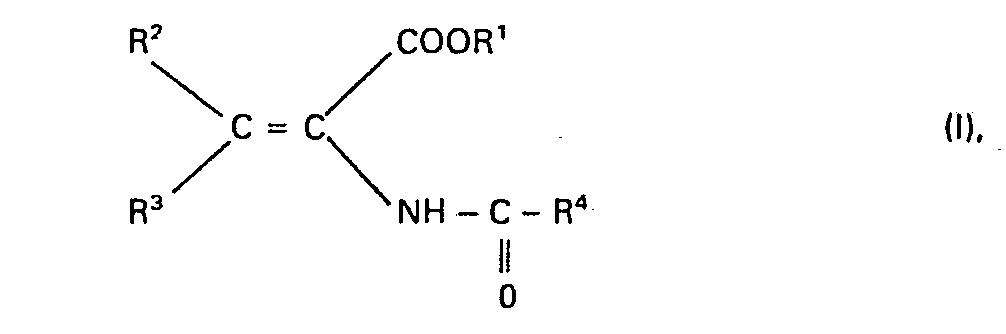
- Gegenstand der Erfindung ist ein Verfahren zur Herstellung von N-Acyl-2,3-dehydroaminocarbonsäureestern der allgemeinen Formel

- R 1 einen geradkettigen oder verzweigten (Cl-C4)-Alkylrest, einen Phenylrest oder einen Benzylrest,
- R2 Wasserstoff oder einen Methylrest,
- R 3 Wasserstoff, einen geradkettigen oder verzweigten (C1-C16)-Alkylrest, einen (C3-C8)-Cycloalkylrest, einen (Cl-C6)-Alkoxyrest, einen Phenoxyrest, einen (Cl-C6)-Alkylmercaptorest, einen Phenylmercaptorest oder einen Methoxycarbonylmethylmercaptorest und
- R4 einen geradkettigen oder verzweigten unsubstituierten oder ein- oder mehrfach durch Halogen, eine Methoxygruppe oder eine Acetylthiogruppe substituierten (C1- C 16)-Alkylrest oder (C 2-C16)-Alkenylrest, einen unsubstituierten oder ein- oder mehrfach durch Halogen oder eine Methylgruppe substituierten (C3-C8)-Cycloalkylrest, einen unsubstituierten oder ein- oder mehrfach durch Halogen, eine Nitrogruppe, eine (CI-C4)-Alkyl- oder -Alkoxygruppe oder eine Trifluormethylgruppe substituierten Phenylrest, einen unsubstituierten oder ein-oder mehrfach durch Halogen substituierten Cinnamylrest, einen unsubstituierten oder ein- oder mehrfach durch Halogen, eine (C1-C4)-Alkyl- oder -Alkoxygruppe oder eine Trifluormethylgruppe substituierten Heteroarylrest, einen Aryl- oder Heteroarylmethylrest, einen unsubstituierten oder ein- oder mehrfach durch Halogen, eine Nitrogruppe, eine (C1-C4)-Alkylgruppe oder eine Trifluormethylgruppe substituierten Phenoxymethylrest oder Phenylethylrest oder einen 2-(2',2'-Dichlorethe- nyl)-3,3-dimethylcyclopropylrest
bedeuten. - Die N-Acyl-2,3-dehydroaminocarbonsäureester der allgemeinen Formel (I) sind als solche oder nach Verseifung der Esterfunktion wirksame Inhibitoren für die Dipeptidase [E.C.3.4. 13.11.] und somit wertvolle Substanzen zur Erhaltung der Aktivität von ß-Lactamantibiotika, insbesondere aus der Thienamycingruppe. Sie können ferner auch als Zwischenprodukte für die Herstellung der entsprechenden optisch aktiven 2-Acylamino-carbonsäureester durch asymmetrische katalytische Hydrierung der prochiralen C=C-Doppelbindung dienen. Gegebenenfalls können die 2-Acylamino-carbonsäureester dann zu den entsprechenden optisch aktiven 2-Acylaminocarbonsäuren verseift werden.
- Aus der DE-PS 31 40 227 ist es bereits bekannt, N-Acetyl-2,3-dehydroaminocarbonsäureester durch Umsetzung der entsprechenden 2-Azidocarbonsäureester mit einer Mischung aus Essigsäureanhydrid und Essigsäure in Gegenwart von Rhenium-(VII)-sulfid herzustellen. Dieses Verfahren erlaubt aber nur die Herstellung der N-Acetylverbindungen.
- Das erfindungsgemäße Verfahren ist nun dadurch gekennzeich- net, daß man einen 2-Azidocarbonsäureester der allgemeinen Formel


- Auf diese Weise lassen sich alle N-Acyl-2,3-dehydroaminocar- bonsäureester der allgemeinen Formel (I) in einem einstufigen Verfahren leicht und mit guter Ausbeute herstellen.
- Das Perrhenat wird vorzugsweise in einer Menge zwischen 0,005 und 10 Molprozent, insbesondere zwischen 0,1 und 3 Molprozent, bezogen auf die eingesetzte Menge an 2-Azidocarbonsäureester der allgemeinen Formel (II), angewandt. Geeignete Perrhenate sind beispielsweise Natrium-, Kalium-oder Ammoniumperrhenat oder substituierte Ammoniumperrhenate, wie Tetraethyl-, Tetrabutyl-, Triethylbenzyl- oder Tricaprylmethylammoniumperrhenat.
- Unter Umständen ist es vorteilhaft, wenn man die Umsetzung des 2-Azidocarbonsäureesters der allgemeinen Formel (II) mit dem Carbonsäurehalogenid der allgemeinen Formel (III) in zusätzlicher Gegenwart eines Säureamids, eines Lactams oder eines substituierten Harnstoffs vornimmt. Diese als Aktivatoren dienenden Substanzen werden zweckmäßigerweise in mindestens etwa äquimolarer Menge zu dem eingesetzten Carbonsäurehalogenid der allgemeinen Formel (III) angewandt. Geeignete Säureamide sind beispielsweise Dimethylformamid, Dimethylacetamid oder Hexamethylphosphorsäuretriamid. Als Lactam wird das N-Methylpyrrolidon bevorzugt. Als substituierte Harnstoffe sind Tetramethylharnstoff und N,N'-Dimethyl-propylenharnstoff besonders gut verwendbar.
- Die als Ausgangsmaterialien dienenden 2-Azidocarbonsäureester der allgemeinen Formel (II) können nach dem in Chem. Ber. 117, Seiten 1497 bis 1512 (1984) beschriebenen Verfahren durch Umsetzung der entsprechenden 2-Chlor- oder 2-Brom-carbonsäureester mit einer wäßrigen Natriumazidlösung in Gegenwart eines Phasentransferkatalysators hergestellt werden. Beispiele für nach dem erfindungsgemäßen Verfahren umsetzbare 2-Azidocarbonsäureester der allgemeinen Formel (II) sind die Ester der 2-Azido-propionsäure, - buttersäure, -3-methylbuttersäure, -3-phenylpropionsäure, -pentansäure, -4-methylpentansäure, -3-cyclopentylpropionsäure, -3-cyclohexylpropionsäure, -hexansäure, -heptansäure, -octansäure, -nonansäure, -decansäure, -undecansäure, -dodecansäure, -tridecansäure, -tetradecansäure, -pentadecansäure, -hexadecansäure, -heptadecansäure, -octadecansäure, -nonadecansäure, -3-methylmercaptopropionsäure, -3-methoxy- carbonylmethylmercaptopropionsäure, -3-phenylmercaptopro- pionsäure oder 3-Phenoxypropionsäure.
- Die Carbonsäurehalogenide der allgemeinen Formel (III) kön- nen nach allgemein bekannten Verfahren aus den zugrundeliegenden Carbonsäuren mit Chlorierungsmitteln, wie Thionylchlorid, Phosphortrichlorid oder Phosgen bzw. Bromierungsmitteln, wie einem Gemisch aus rotem Phosphor und Brom oder Phosphortribromid, hergestellt werden. Als Carbonsäurehalogenide der allgemeinen Formel (III) werden vorzugsweise die Säurechloride eingesetzt. Die Carbonsäurehalogenide werden zweckmäßigerweise in einer Menge von 1,0 bis 1,5 Mol, vorzugsweise von 1,0 bis 1,1 Mol, pro Mol eingesetztem 2-Azidocarbonsäureester der allgemeinen Formel (II) angewandt.
- Das erfindungsgemäße Verfahren wird vorzugsweise bei einer Temperatur zwischen 20 und 80 °C durchgeführt.
- Vorteilhafterweise wird die Umsetzung in einem inerten Lösungsmittel vorgenommen. Geeignete Lösungsmittel sind beispielsweise Carbonsäurealkylester, wie Essigsäureethylester, Essigsäurepropylester, Essigsäureisopropylester, Essigsäurebutylester, Propionsäureethylester; Acetonitril, Nitromethan, Tetrahydrofuran, Dioxan oder Dimethoxyethan. Anstelle eines zusätzlichen Lösungsmittels kann aber auch ein Überschuß der oben bereits genannten Säureamide, Lactame oder substituierten Harnstoffe eingesetzt werden.
- Zur Vermeidung von Ausbeuteverlusten kann es zweckmäßig sein, die Umsetzung in Gegenwart einer geringen Menge eines Inhibitors für radikalische Polymerisationen, z. B. Hydrochinon oder Hydrochinonmonomethylether, vorzunehmen. Zweckmäßige Einsatzmengen für solche Inhibitoren liegen zwischen 0,001 und 10 Gewichtsprozent, insbesondere zwischen 0,1 und 3 Gewichtsprozent, bezogen auf den eingesetzten 2-Azidocarbonsäureester der allgemeinen Formel (II).
- Bei gegen Säuren besonders empfindlichen 2-Azidocarbonsäureestern kann es vorteilhaft sein, die Umsetzung mit dem Carbonsäurehalogenid der allgemeinen Formel (III) in zusätzlicher Gegenwart eines Säureacceptors vorzunehmen, der zweckmäßigerweise in einer dem Carbonsäurehalogenid äquivalenten Menge eingesetzt wird. Geeignete Säureacceptoren sind insbesondere die Acetate oder Oxalate des Natriums oder Kaliums.
- Das erfindungsgemäße Verfahren kann beispielsweise so durchgeführt werden, daß man den 2-Azidocarbonsäureester der allgemeinen Formel (II) in einem inerten Lösungsmittel vorlegt, das Perrhenat und gegebenenfalls den Aktivator und/oder Polymerisationsinhibitor zu der Lösung zugibt und schließlich das Carbonsäurehalogenid der allgemeinen Formel (III) zusetzt. Bei kleinen Ansätzen kann das Carbonsäurehalogenid auf einmal zugesetzt werden, bei größeren Ansätzen ist es empfehlenswerter, wenn es langsam, z.B. im Verlauf von 1 bis 3 Stunden zudosiert wird. Das Carbonsäurehalogenid kann in reiner Form oder als Lösung in dem verwendeten inerten Lösungsmittel zugegeben werden. Zweckmäßigerweise wird die Zugabegeschwindigkeit so gewählt, daß die Stickstoffentwicklung gut unter Kontrolle gehalten werden kann.
- Wenn man das Carbonsäurehalogenid bei Raumtemperatur zugibt, kann die Reaktionstemperatur durch Wasserkühlung unter etwa 25 C gehalten werden. Arbeitet man ohne Außenkühlung, tritt nach kürzerer oder längerer Zeit eine Reaktionsexotherme auf. Dabei kann die Reaktionstemperatur kurzzeitig die Siedetemperatur des inerten Lösungsmittels erreichen. In jedem Fall wird das Reaktionsgemisch bis zur Beendigung der Gasentwicklung gerührt. Gegebenenfalls kann auch das Ende der Umsetzung IR-spektroskopisch durch das Verschwinden der Azid - Bande festgestellt werden.
- Nach beendeter Umsetzung wird das Lösungsmittel und gegebenenfalls der Aktivator, zweckmäßigerweise unter vermindertem Druck, beispielsweise mit einem Rotationsverdampfer, entfernt. Der Rückstand wird in einem leichtflüchtigen Lösungsmittel, z.B. Essigsäureethylester, Essigsäureisopropylester oder Diethylether aufgenommen, mit einer wäßrigen Natriumhydrogencarbonatlösung ausgeschüttelt und anschließend mit Wasser nachgewaschen. Die über Natriumsulfat oder Magnesiumsulfat getrocknete organische Phase wird dann erneut unter vermindertem Druck, beispielsweise wieder in einem Rotationsverdampfer eingedampft. In vielen Fällen kann der nun verbleibende Rückstand durch Zugabe von n-Pentan zur Kristallisation gebracht werden. Dann werden die Kristalle abgesaugt und unter vermindertem Druck bei maximal 50 °c getrocknet.
- Handelt es sich bei dem Rückstand um ein nicht kristallisierendes Öl, kann eine weitere Reinigung durch eine Destillation im Hochvakuum, beispielsweise in einem Kugelrohr, versucht werden. In manchen Fällen kann es auch vorteilhaft sein, den Rückstand auf einer Kieselgelsäule durch Chromatographie zu reinigen. Dazu kann als Laufmittel ein Gemisch aus Essisgäureethylester und niedrigsiedendem Petrolether im Volumenverhältnis zwischen 1 : 1 und l : 9 verwendet werden. Nach Eindampfen des Eluats und Entfernung der letzten Lösungsmittelreste im Hochvakuum erhält man dann die analysenreinen N-Acyl-2,3-dehydroaminocarbonsäureester.
- Die Erfindung wird durch die nachfolgenden Beispiele näher erläutert:
- 13,7 mg (0,05 mMol) Natriumperrhenat, 715,7 mg (5 mMol) 2-Azido-propansäureethylester und 383,8 mg (5,25 mMol) Dimethylformamid wurden in 5 ml Acetonitril gelöst. Dann wurden bei Raumtemperatur unter kräftigem Rühren 592,9 mg (5,25 mMol) Chloracetylchlorid zugegeben. Die Umsetzung verlief unter gleichmäßiger Stickstoffentwicklung innerhalb von 5 bis 6 Stunden. Nach beendeter Gasentwicklung wurde das Acetonitril unter vermindertem Druck entfernt. Der Rückstand wurde in Essigsäureethylester aufgenommen, mit 10,5 ml 0,5 molarer Natriumhydrogencarbonat-Lösung ausgeschüttelt, die abgetrennte organische Phase nochmals mit Wasser gewaschen und über Magnesiumsulfat getrocknet. Nach Entfernung des Trockenmittels wurde die eingeengte organische Phase mit einem Gemisch aus niedrig siedendem Petrolether und Essigsäureethylester im Volumenverhältnis 9 : 1 als Laufmittel über Kieselgel chromatographiert.
- Nach dem Eindampfen des Eluats hinterblieben 581,5 mg (60,7 % der Theorie) analysenreiner 2-Chlormethylcarboxamido-propensäureethylester.


- Schmelzpunkt: 63 °C 1H-NMR (CDCl3):
- δ= 8,9 (s, 1H) NH; 6,64 (s, 1H) H-CH=; 6,0 (d, 1H) H-CH=; 4,37 (q, 2H) OCH2-; 4,18 (s, 2H)-CH2-Cl; 1,38 ppm (t, 3H)-CH3. cm-1, IR (KBr)NH = 3282 cm-1, CO =1716 cm-1, 1679 cm
- 13,4 mg (0,05 mMol) Ammoniumperrhenat, 715,7 mg (5 mMol) 2-Azido-butansäuremethylester und 383,8 mg (5,25 mMol) Dimethylformamid wurden in 5 ml Acetonitril gelöst. Dann wurden bei Raumtemperatur unter kräftigem Rühren 592,9 mg (5,25 mMol) Chloracetylchlorid zugegeben. Das Reaktionsgemisch wurde 9 Stunden bei Raumtemperatur gerührt und anschließend analog Beispiel 1 aufgearbeitet.. Es ergaben sich 845,6 mg (88,3 % der Theorie) analysenreiner 2-Chlormethyl- carboxamido-2-butensäuremethylester.


- Schmelzpunkt: 58,5 bis 59 °C 1H-NMR (CDCl3):
- δ= 8,05 (s, 1H) NH; 6,95 (q, 1H) H-C(CH3)=; 4,19 (s, 2H) CH2Cl; 3,80 (s, 3H) OCH3; 1,8 ppm (d, 3H) CH3-CH=. IR (KBr) wNH = 3260 cm-1, CO = 1727 cm-1, 1676 cm-1.
- 134 mg (0,5 mMol) Ammoniumperrhenat, 9,25 g (50 mMol) 2-Azido-butansäure-n-butylester und 3,85 g (52,6 mMol) Dimethylformamid wurden in 50 ml Acetonitril gelöst. Dann wurden bei Raumtemperatur unter kräftigem Rühren 5,93 g (52,5 mMol) Chloracetylchlorid zugegeben. Der Ansatz reagierte innerhalb 30 Minuten exotherm ab.
- Nach beendeter Gasentwicklung wurde das Acetonitril unter vermindertem Druck entfernt. Der Rückstand wurde in Essigsäureethylester aufgenommen, mit 100 ml 0,5 molarer Natriumhydrogencarbonat-Lösung ausgeschüttelt, die abgetrennte organische Phase nochmals mit Wasser gewaschen und über Natriumsulfat getrocknet. Nach Entfernung des Trockenmittels wurde die eingeengte organische Phase mit n-Pentan zur Kristallisation gebracht, abgesaugt und getrocknet.
- Es ergaben sich 9,8 g (83,9 % der Theorie) analysenreiner 2-Chlormethylcarboxamido-2-butensäure-n-butylester.


- Schmelzpunkt: 53,5 °C 1H-NMR (CDC13/TMS):
- δ=7.85 (s breit, 1H) NH; 6,8 (q, 1H) -CH=; 4,15 (t, 2H) -COOCH2-; 4,1 (s, 2H) -CH2Cl; 1,8 (d, 3H) CH3-CH=; 0,6 - 2,0 ppm (m, 7H) -CH2-CH 2-CH 3.
- 134 mg (0,5 mMol) Ammoniumperrhenat, 9,25 g (50 mMol) 2-Azido-butansäure-n-butylester und 3,85 g (52,6 mMol) Dimethylformamid wurden in 50 ml Acetonitril gelöst. Dann wurden bei Raumtemperatur unter kräftigem Rühren 7,75 g (52,5 mMol) Dichloracetylchlorid zugegeben. Die Exotherme setzte sofort ein und die Umsetzung war innerhalb 20 Minuten beendet.
- Die Aufarbeitung erfolgte analog Beispiel 3. Es ergaben sich 11,2 g (83,5 % der Theorie) analysenreiner 2-Dichlormethylcarboxamido-2-butensäure-n-butylester.


- Schmelzpunkt: 56 bis 58,5 °C 1H-NMR (CDCl3/TMS):
- δ=7.85 (s breit, 1H) NH; 6,85 (q, 1H) -CH=; 5,95 (s, 1H) -CHCl2; 4,1 (t, 2H) -COOCH2-; 1,75 (d, 3H) CH3-CH=; 0,6 - 1,85 ppm
( m, 7H) -CH2-CH2-CH3 - 134 mg (0,5 mMol) Ammoniumperrhenat, 9,25 g (50 mMol ) 2-Azido-butansäure-n-butylester, 50 mg (0,45 mMsol) Hydrochinon und 3,85 g (52,6 mMol) Dimethylformamid wurden in 50 ml Acetonitril gelöst. Dann wurden bei Raumtemperatur unter kräftigem Rühren 14,4 g (52,3 mMol) Hexadecansäurechlorid zugegeben. Der Ansatz reagierte innerhalb 1,5 Stunden exotherm ab. Nach dem Abkühlen fiel das Rohprodukt aus, wurde abgesaugt und mit Wasser Chlorid-frei gewaschen.
- Es ergaben sich 19,5 g (98,5 % der Theorie) analysenreiner 2-(Pentadecylcarbonylamino)-2-butensäure-n-butylester.


- Schmelzpunkt: 66 bis 69 °C 1H-NMR (CDC13/TMS):
- δ= 6,9 (s breit, 1H) NH; 6,75 (q, 1H) -CH=; 4,1 (t, 2H) -COOCH2; 2,25 (t, 2H) -COCH2-; 1,75 (d, 3H) CH3-CH=; 0,55 - 1,65 ppm (m, 36H) -(CH2)13CH3; -(CH 2)3-CH 3.
- 134 mg (0,5 mMol) Ammoniumperrhenat, 7,85 g (50 mMol) 2- Azido-pentansäuremethylester, 50 mg (0,45 mMol) Hydrochinon und 3,85 g (52,6 mMol) Dimethylformamid wurden in 50 ml Acetonitril gelöst. Dann wurden bei Raumtemperatur unter kräftigem Rühren 10,6 g (52,3 mMol) 10-Undecensäurechlorid zugegeben. Der Ansatz reagierte innerhalb 30 Minuten exotherm ab, er wurde anschließend analog Beispiel 3 aufgear- beitet.
- Das so erhaltene Rohprodukt wurde im Hochvakuum (0,06 mbar) bei 200 bis 250 °C Gerätetemperatur in einem Kugelrohr destilliert. Es ergaben sich 11,5 g (77,8 % der Theorie) analysenreiner 2-(Decen-9-yl-carbonylamino)-2-pentensäureme- thylester.


- Schmelzpunkt: 34 bis 35 °C H-NMR (DMSO/TMS):
- δ=9,1 (s, 1H) NH; 6,3 (t, 1H) -CH=CO; 5,4 - 6,05 (m, 1H) -CH2-CH=CH2; 4,6 - 5,2 (m, 2H) -CH=CH2; 3,6 (s, 3H) -COOCH3; 1,65 - 2,5 (m, 6H) CH3CH2; -COCH2; -CH 2 =CH; 0,7 - 1,75 ppm (m, 15H) CH3; -(CH2)6
- 146,6 mg (0,5 mMol) Kaliumperrhenat, 7,85 g (50 mMol) 2-Azido-pentansäuremethylester und 50 mg (0,45 mMol) Hydrochinon wurden bei 80 C in 25 ml Essigsäureethylester vorgelegt. Dann wurden innerhalb von 30 Minuten unter kräftigem Rühren 5,93 g (52,5 mMol) Chloracetylchlorid, gelöst in 25 ml Essigsäureethylester, zugetropft. Das Reaktionsgemisch wurde unter kräftigem Rühren insgesamt 2,5 Stunden auf 80 °C gehalten und anschließend analog Beispiel 3 aufgearbeitet. Es ergaben sich 7,0 g (68,1 % der Theorie) analysenreiner 2-Chlormethylcarboxamido-2-pentensäuremethylester.


- Schmelzpunkt: 62 °C 1H-NMR (CDC13/TMS):
- δ= 7,85 (s breit, 1H) NH; 6,75 (t, 1H) -CH=; 4,15 (s, 2H) -CH2Cl; 3,8 (s, 3H) COOCH3; 1,7 - 2,65 (m, 2H) -CH2-; 1,05 ppm (t, 3H) CH3-.
- 138,5 mg (0,5 mMol) Natriumperrhenat, 7,85 g (50 mMol) 2-Azido-pentansäuremethylester und 50 mg (0,45 mMol) Hydrochinon wurden bei 80 oC in 25 ml Essigsäureethylester vorgelegt. Dann wurden innerhalb von 30 Minuten unter kräftigem Rühren 7,75 g (52,5 mMol) Dichloracetylchlorid, gelöst in 25 ml Essigsäureethylester, zugetropft. Das Reaktionsge- misch wurde unter kräftigem Rühren insgesamt 3 Stunden auf 80 °C gehalten und anschließend analog Beispiel 3 aufgearbeitet.
- Es ergaben sich 7,5 g (62,5 % der Theorie) analysenreiner 2-Dichlormethylcarboxamido-2-pentensäuremethy-lester.


- Schmelzpunkt: 85 °C 1H-NMR (CDCl3-/TMS):
- δ= 7,8 (s breit, 1H) NH; 68 (t, 1H) -CH=; 6,05 (s, 1H) CHC12; 3,85 (s, 3H) COOCH3; 1,75 - 2,6 (m, 2H) -CH2-; 1,1 ppm (t, 3H) CH3-.
- 134 mg (0,5 mMol) Ammoniumperrhenat, 9,26 g (50 mMol) 2-Azido-pentansäure-isopropylester und 50 mg (0,45 mMol) Hydrochinon wurden bei 80 °C in 25 ml Essigsäureethylester vorgelegt. Dann wurden innerhalb von 45 Minuten unter kräftigem Rühren 5,93 g (52,5 mMol) Chloracetylchlorid, gelöst in 25 ml Essigsäureethylester, zugetropft. Das Reaktionsgemisch wurde unter kräftigem Rühren insgesamt 4 Stunden auf 80 °C gehalten und anschließend analog Beispiel 3 aufgearbeitet.
- Es ergaben sich 7,3 g (62,5 % der Theorie) analysenreiner 2-Chlormethylcarboxamido-2-pentensäureisopropylester.


- Schmelzpunkt: 96 °C 1H-NMR (CDCl3/TMS):
- δ=7,85 (s breit, 1H) NH; 6,65 (t, 1H) -CH=; 4,7 - 5,65 (m, 1H) - COOCH; 4,15 (s, 1H) -CHCl2; 1,65 - 2,65 (m, 2H) -CH2-; 1,3 (d, 6H) C-(CH 3)2 ; 1,05 ppm (t, 3H) CH -.
- 134 mg (0,5 mMol) Ammoniumperrhenat, 9,26 g (50 mMol) 2-Azido-pentansäureisopropylester und 50 mg (0,45 mMol) Hydrochinon wurden bei 80 °C in 25 ml Essigsäureethylester vorgelegt. Dann wurden innerhalb von 70 Minuten unter kräftigem Rühren 7;75 g (52,5 mMol) Dichloracetylchlorid, gelöst ind 25 ml Essigsäureethylester, zugetropft. Das Reaktionsgemisch wurde unter kräftigem Rühren insgesamt 5 Stunden auf 80 °C gehalten und anschließend analog Beispiel 3 aufgearbeitet.
- Es ergaben sich 10,6 g (79 % der Theorie) analysenreiner 2-Dichlormethylcarboxamido-2-pentensäureisopropylester.
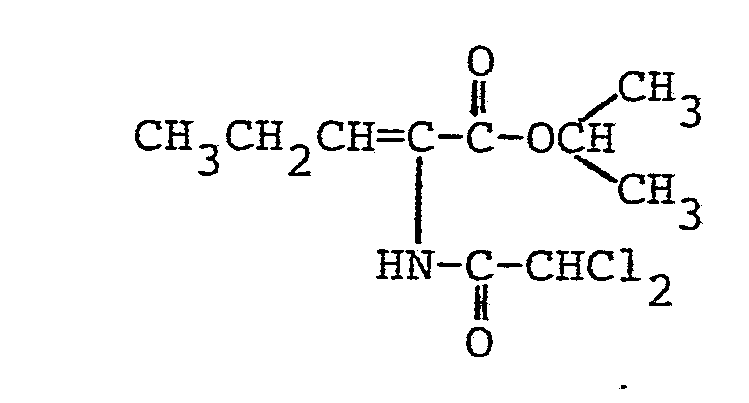

- Schmelzpunkt:110 °C 1H-NMR (CDC13/TMS):
- δ= 7,85 (s breit, 1H) NH; 6,7 (t, 1H) -CH=; 6,0 (s, 1H) CHCl2; 4,75 - 5,4 (m, 1H) COOCH; 1,8 - 2,5 (m, 2H) -CH2-; 1,3 (d, 6H) -C-(CH3)2; 1,05 (t, 3H) CH 3-.
- 134 mg (0,5 mMol) Ammoniumperrhenat, 7,85 g (50 mMol) 2-Azido-pentansäuremethylester und 50 mg (0,45 mMol) Hydrochinon wurden bei 80 °C in 25 ml Essigsäureethylester vorgelegt. Dann wurden innerhalb von 30 Minuten 9,3 g (52,6 mMol) 2,6-Difluorbenzoylchlorid, gelöst in 25 ml Essigsäureethylester, zugetropft. Das Reaktionsgemisch wurde unter kräftigem Rühren insgesamt 10 Stunden auf 80 °C gehalten und anschließend analog Beispiel 3 aufgearbeitet. Es ergaben sich 9,75 g (72,4 % der Theorie) analysenreiner 2-[(2',6'-Difluorphenyl)-carbonylamino]-2-pentensäureme- thylester.
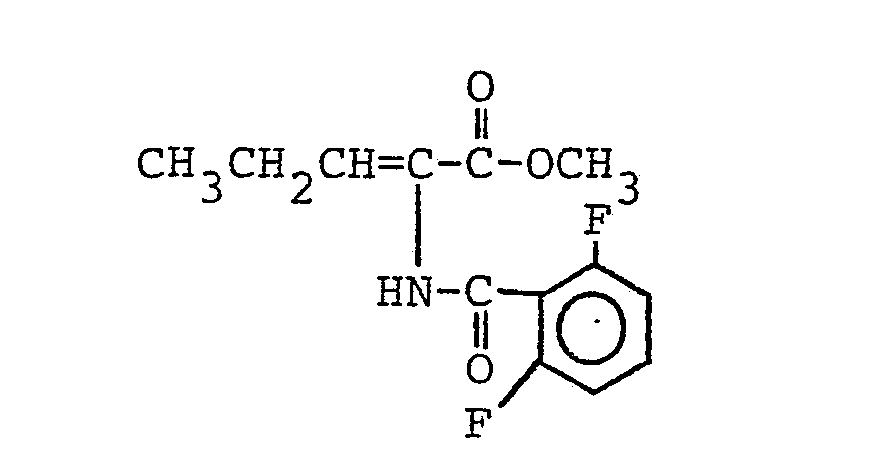

- Schmelzpunkt: 138,5 °C 1H-NMR (CDCl3/TMS):
- δ= 6,4 - 7,85 (m, 5H) aromat.-CH; -CH=; NH; 3,8 (s, 3H) COOCH3; 1,85 - 2,65 (m, 2H) -CH2-; 1,1 ppm (t, 3H) CH3-.
- 146,6 mg (0,5 mMol) Kaliumperrhenat, 9,26 g (50 mMol) 2-Azido-pentansäureisopropylester und 50 mg (0,45 mMol) Hydrochinon wurden bei 80 °C in 25 ml Essigsäureethylester vorgelegt. Dann wurden innerhalb von 30 Minuten 9,3 g (52,6 mMol) 2,6-Difluorbenzoylchlorid, gelöst in 25 ml Essigsäureethylester, zugetropft. Das Reaktionsgemisch wurde unter kräftigem Rühren insgesamt 10 Stunden auf 80 °C gehalten und anschließend analog Beispiel 3 aufgearbeitet. Es ergaben sich 10,9 g (73,3 % der Theorie) analysenreiner 2- [(2',6'-Difluorphenyl)-carbonylamino] -2-pentensäureiso- propylester.


- Schmelzpunkt: 91 °C 1H-NMR (CDCl3/TMS):
- δ = 6,45 - 7,9 (m, 5H) aromat.-CH; -CH=; NH; 4,7 - 5,4 (m, 1H) COOCH; 1,75 - 2,65 (m, 2H) -CH2-; 1,3 (d, 6H) C-(CH3)2, 1,1 ppm (t, 3H) CH3.
- 536 mg (19,9 mMol) Ammoniumperrhenat, 31,4 g (0,2 mMol) 2-Azido-pentansäuremethylester und 15,4 g (0,21 mMol) Dimethylformamid wurden in 150 ml Acetonitril gelöst. Dann wurden bei Raumtemperatur unter kräftigem Rühren 25,3 g (0,21 mMol) 3-Methyl-butansäurechlorid zugegeben. Der Ansatz reagierte innerhalb 45 Minuten exotherm ab. Die Aufarbeitung erfolgte analog Beispiel 3. Es ergaben sich 30,2 g (70,8 % der Theorie) analysenreiner 2-[(2'-Methylpropyl)-carbonylamino]-2-pentensäuremethylester.


- Schmelzpunkt: 45 bis 47 °C 1H-NMR (CDCl3-/TMS):
- δ= 7,05 (s breit, 1H) NH; 6,65 (t, 1H) -CH=; 3,75 (s, 3H) -COOCH3; 1,7 - 2,6 (m, 5H) -CH2-C=; C-CH2-CH-; 1,15 (s, 3H) CH3-CH2; 1,0 ppm (d, 6H)

- 134 mg (0,5 mMol) Ammoniumperrhenat, 7,85 g (50 mMol) 2-Azido-pentansäuremethylester, 3,85 g (52,6 mMol) Dimethylformamid und 50 mg (0,45 mMol) Hydrochinon wurden in 50 ml Acetonitrilgelöst. Dann wurden bei Raumtemperatur unter kräftigem Rühren 8,5 g (52,3 mMol) 2-Ethyl-hexanoylchlorid zugegeben. Das Reaktionsgemisch wurde 120 Stunden gerührt, wobei die Reaktionsexotherme eine maximale Temperatur von 80 °C erreichte.
- Die Aufarbeitung erfolgte analog Beispiel 3. Das so erhaltene Rohprodukt wurde im Hochvakuum (0,06 mbar) bei 180 bis 210 °C Gerätetemperatur im Kügelrohr destilliert. Es ergaben sich 7,0 g (54,8 % der Theorie) 2-[(1'-Ethylpen- tyl)-carbonylamino]-2-pentensäuremethylester.


- 1H-NMR (CDCl3/TMS):
- δ=6.85 (s breit, 1H) NH; 6,55 (t, 1H) -CH=; 3,7 (s, 3H) -COOCH3; 0,6 - 2,45 ppm (m, 20H)

- 134 mg (0,5 mMol) Ammoniumperrhenat, 7,85 g (50 mMol) 2-Azido-pentansäuremethylester, 3,85 g (52,6 mMol) Dimethylformamid und 50 mg (0,45 mMol) Hydrochinon wurden in 50 ml Acetonitril gelöst. Dann wurden bei Raumtemperatur unter kräftigem Rühren 7,8 g (52,5 mMol) 2-Methyl-2-Ethyl-butansäurechlorid zugegeben. Das Reaktionsgemisch wurde 120 Stun den gerührt, wobei die Reaktionsexotherme eine maximale Temperatur von 80 °C erreichte.
- Die Aufarbeitung erfolgte analog Beispiel 3. Das so erhaltene ölige Rohprodukt wurde im Hochvakuum (0,06 mbar) bei 100 bis 150 °C Gerätetemperatur im Kugelrohr destilliert. Es ergaben sich 6,4 g (53 % der Theorie) 2-[(1'-Methyl-1'-ethyl-propyl)-carbonylamino]-2-pentensäuremethylester.


- 1H-NMR (CDC13/TMS):
- δ= 7,15 (s breit, 1H) NH; 6,65 (t, 1H) -CH=; 3,75 (s, 3H) -COOCH3; 0,65 - 2,35 ppm (m, 18H)

- 134 mg (0,5 mMol) Ammoniumperrhenat, 7,85 g (50 mMol) 2-Azido-pentansäuremethylester, 50 mg (0,45 mMol) Hydrochinon und 3,85 g (52,6 mMol) Dimethylformamid wurden in 50 ml Essigsäureethylester gelöst. Dann wurden bei Raumtemperatur unter kräftigem Rühren 8,5 g (52,9 mMol) Thiophen-2-essig- säurechlorid zugetropft. Der Ansatz reagierte innerhalb 30 Minuten exotherm ab.
- Nach beendeter Gasentwicklung wurde das Reaktionsgemisch mit 50 ml Essigsäureethylester verdünnt, mit 100 ml 0,5 molarer Natriumhydrogencarbonat-Lösung ausgeschüttelt, die abgetrennte organische Phase nochmals mit Wasser gewaschen und über Natriumsulfat getrocknet. Nach Entfernung des Trockenmittels wurde die eingeengte organische Phase mit n-Pentan zur Kristallisation gebracht.
- Es ergaben sich 12,1 g (95,5 % der Theorie) analysenreiner 2-(Thenyl-carbonylamino)-2-pentensäuremethylester.


- Schmelzpunkt: 67 bis 70 °C 1H-NMR (CDCl3/TMS):
- δ= 6,85 - 7,5 (m, 4H) NH;

- 134 mg (0,5 mMol) Ammoniumperrhenat, 7,85g(50 mMol) 2-Azido-pentansäuremethylester, 50 mg (0,45 mMol) Hydrochinon und 3,85 g (52,6 mMol) Dimethylformamid wurden analog Beispiel 16 mit 9,5 g (52,6 mMol) 3-Acetylthio-2-methyl- propionsäurechlorid umgesetzt.
- Nach Aufarbeitung analog Beispiel 16 ergaben sich 10,9 g (79,8 % der Theorie) analysenreiner 2-[1'-Methyl-2'-acetyl- thio-ethyl)-carboxamido] -2-pentensäuremethylester.
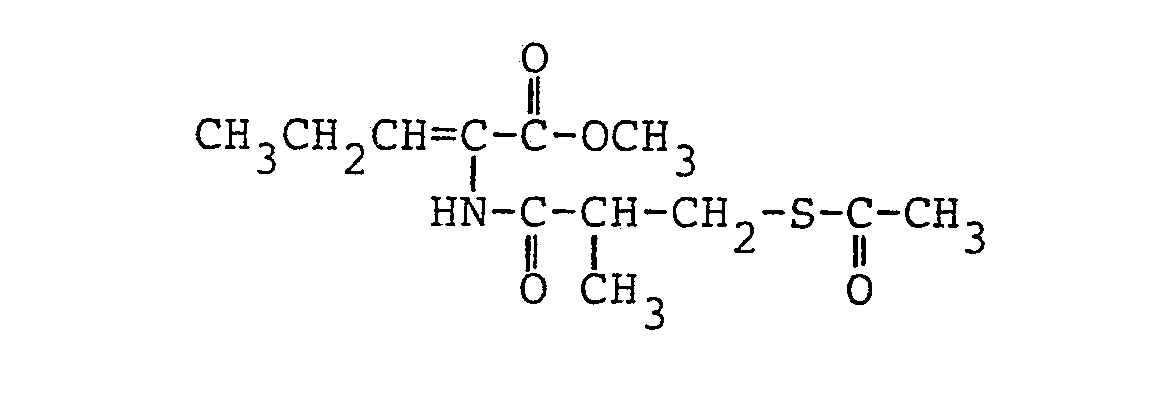

- Schmelzpunkt: 56 bis 58 °C 1H-NMR (CDC13/TMS):
- δ= 7,55 (s breit, 1H) NH; 6,65 (t, 1H) CH=; 3,8 (s, 3H) COOCH3; 3,1 (t, 2H) S-CH 2-; 2,4 - 2,9 (m, 1H) CCCH; 2,35 (s, 3H) COCH3; 1,8 - 2,4 (m, 2H) -CH2-; 1,25 (d, 3H) CH-CH3; 1,05 ppm (t, 3H) CH3-CH 2.
- 134 mg (0,5 mMol) Ammoniumperrhenat, 9,25 g (50 mMol) 2-Azido-pentansäureisopropylester, 3,85 g (52,6 mMol) Dimethylformamid und 50 mg (0,45 mMol) Hydrochinon wurden in 50 ml Acetonitril gelöst. Dann wurden bei Raumtemperatur unter kräftigem Rühren 12,35 g (52,5 mMol) 2,6-Dichlorzimtsäurechlorid zugegeben. Das Reaktionsgemisch wurde 16 Stunden bei Raumtemperatur gerührt, wobei das Produkt ausfiel. Der Rückstand wurde abgetrennt, mit Wasser Chlorid-frei gewaschen und getrocknet.
- Es ergaben sich 12,5 g (70,2 % der Theorie) analysenreiner 2-[2'-(2,6-Dichlorphenyl)-vinyl-carbonylamino]-2-penten- säureisopropylester.


- Schmelzpunkt: 166 °C 1H-NMR (CDC13/TMS):
- δ= 7,75 (d, 1H) -COCH=; 6,85 - 7,5 (m, 4H) NH; aromat. CH; 6,65 (d, 1H) -C=CH-; 6,55 (t, 1H) CH2-CH=; 4,65 - 5,3 (m, 1H) COOCH-; 1,85 - 2,5 (m, 2H) -CH2-; 1,25 (d, 6H) C-(CH3)2; 1,05 ppm (t, 3H) CH3-.
- 27,3 mg (0,1 mMol) Natriumperrhenat, 1,71 g (10 mMol) 2-Azido-hexansäuremethylester und 767,6 mg (10,5 mMol) Dimethylformamid wurden in 1 ml Acetonitril gelöst. Dann wurden bei Raumtemperatur unter kräftigem Rühren 1,19 g (10,5 mMol) Chloracetylchlorid zugegeben. Der Ansatz reagierte innerhalb 30 Minuten exotherm ab, er wurde anschließend analog Beispiel 1 aufgearbeitet.
- Es ergaben sich 1,8109 g (82,4 % der Theorie) analysenreiner 2-Chlormethylcarboxamido-2-hexensäuremethylester.
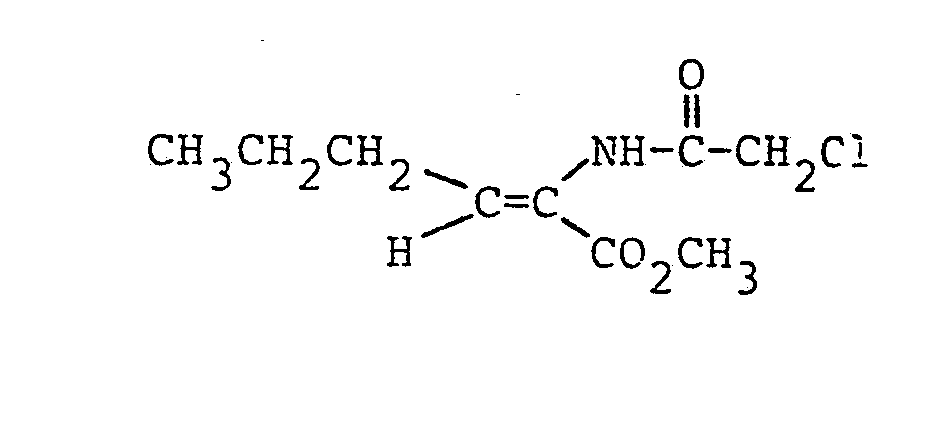

- Schmelzpunkt: 63,5 bis 64 °C 1H-NMR (CDCl3):
- δ= 8,0 (s, 1H) NH; 6,86 (t, 1H)-CH2-CH=; 4,19 (s, 2H) CH2Cl; 3,81 (s, 3H) OCH3: 2,18 (q, 2H)-CH2-CH=; 1,8 - 1,28 (m, 2H) CH3-CH2-; 0,95 ppm (t, 3H) CH3-CH 2. cm-1, IR(KBr) NH = 3255 cm-1, CO = 1722 cm-1, 1664 cm-1.
- 134 mg (0,5 mMol) Ammoniumperrhenat, 9,25 g (50 mMol) 2-Azido-hexansäureethylester, 3,85 g (52,6 mMcl) Dimethylformamid und 50 mg (0,45 mMol) Hydrochinon wurden in 50 ml Essigsäure-isopropylester gelöst. Dann wurden bei Raumtemperatur unter kräftigem Rühren 5,95 g (52,6 mMol) Chloracetylchlorid zugegeben. Der Ansatz reagierte innerhalb 40 Minuten exotherm ab.
- Die Aufarbeitung erfolgte analog Beispiel 16. Es ergaben sich 8,7 g (74,4 % der Theorie) analysenreiner 2-Chlorme- thylcarboxamido-2-hexensäureethylester.


- Schmelzpunkt: 49 bis 49,5 °C 1H-NMR (CDC13/TMS):
- δ= 7,9 (s breit, 1H) NH; 6,75 (t, 1H) -CH=; 4,2 (q, 2H) -CH2Cl; 1,8 - 2,4 (m, 2H) -CH2-CH=; 1,2 - 1,8 (m, 2H) CH3-CH2-; 1,3 (t, 3H) COOCH2CH3; 0,9 ppm (t, 3H) CH3-CH 2.
-
- a) 134 mg (0,5 mMol) Ammoniumperrhenat, 9,25 g (50 mMol) 2-Azido-hexansäureethylester, 5,2 g (52,5 mMol) N-Methylpyrrolidon und 50 mg (0,45 mMol) Hydrochinon wurden in 50 ml Acetonitril vorgelegt. Dann wurden bei Raumtemperatur unter kräftigem Rühren 7,75 g (52,5 mMol) Dichloracetylchlorid zugegeben. Der Ansatz reagierte innerhalb 20 Minuten exotherm ab. Die Aufarbeitung erfolgte analog Beispiel 3. Es ergaben sich 10,1 g (75,3 %) analysenreiner 2-Di- chlormethylcarboxamido-2-hexensäureethylester.
- b) 134 mg (0,5 mMol) Ammoniumperrhenat, 9,25 g (50 mMol) 2-Azido-hexansäureethylester, 6,1 g (52,5 mMol) Tetramethylharnstoff und 50 mg Hydrochinon wurden analog a) mit 7,75 g(52,5 mMol) Dichloracetylchlorid umgesetzt. Es ergaben sich 9,4 g (70,1 % der Theorie) analysenreiner 2-Dichlormethylcarboxamido-2-hexensäureethylester.
- c) 134 mg (0,5 mMol) Ammoniumperrhenat, 9,25 g (50 mMol) 2-Azido-hexansäureethylester, 9,4 g (52,5 mMol) N,N,N' ,N',N",N"-Hexamethylphosporsäuretriamid und 50 mg (0,45 mMol) Hydrochinon wurden analog a) mit 7,75 g (52,5 mMol) Dichloracetylchlorid umgesetzt. Es ergaben sich 7,3 g (54,4 % der Theorie) analysenreiner 2-Dichlormethylcarboxamido-2-hexensäureethylester.


- Schmelzpunkt: 75 °C 1H-NMR (CDC13/TMS):
- = 7,9 (s breit, 1H) NH;
- 6,8 (t, 1H) -CH=;
- 6,05 (s, 1H) -CHCl2;
- 4,25 (q, 2H) COOCH2-;
- 1,9 - 2,4 (m, 2H) -CH2-CH=;
- 1,2 - 1,85 (m, 2H) CH3-CH2-;
- 1,35 (t, 3H) -COOCH2CH3;
- 0,95 ppm (t, 3H) CH3-CH2.
- 134 mg (0,5 mMol) Ammoniumperrhenat, 9,95 g (49,9 mMol) 2-Azido-octansäuremethylester, 3,85 g (52,5 mMol) Dimethylformamid und 50 mg (0,45 mMol) Hydrochinon wurden in 50 ml Acetonitril gelöst. Dann wurden bei Raumtemperatur unter kräftigem Rühren 5,95 g (52,6 mMol) Chloracetylchlorid zugegeben. Der Ansatz reagierte innerhalb 25 Minuten exotherm ab.
- Die Aufarbeitung erfolgte analog Beispiel 3.
- Es ergaben sich 10,8 g (87,3 % der Theorie) analysenreiner 2-Chlormethylcarboxamido-2-octensäuremethylester.


- Schmelzpunkt: 52,5 °C 1H-NMR (CDC13/TMS):
- δ= 7,85 (s breit, 1H) NH;
- 6,8 (t, 1H) -CH=;
- 4,2 (s, 2H) -CH2Cl;
- 3,85 (s, 3H) -COOCH3;
- 2,2 (dt, 2H) -CH2CH=;
- 0,65 - 1,85 ppm (m, 9H) CH3 CH 2 CH 2 CH 2-.
- 246 mg (0,5 mMol) Tetra-n-butyl-ammoniumperrhenat, 9,95 g (49,9 mMol) 2-Azidooctansäuremethylester, 3,85 g (52,6 mMol) Dimethylformamid und 50 mg (0,45 mMol) Hydrochinon wurden in 50 ml Acetonitril gelöst. Dann wurden bei Raumtemperatur unter kräftigem Rühren 7,75 g (52,5 mMol) Dichloracetylchlorid zugegeben. Der Ansatz reagierte sofort exotherm ab.
- Die Aufarbeitung erfolgte analog Beispiel 3. Es ergaben sich 10,4 g (73,85 % der Theorie) analysenreiner 2-Dichlor methylcarboxamido-2-octensäuremethylester.


- Schmelzpunkt: 57 °C 1H-NMR (CDCl3/TMS):
- δ= 7,8 (s breit, 1H) NH;
- 6,75 (t, 1H) -CH=;
- 5,95 (s, 1H) -CHCl2;
- 3,8 (s, 3H) -COOCH3;
- 2,15 (dt, 2H) -CH -CH;
- 0,55 - 1,75 ppm (m, 9H) CH3CH2CH2CH2-.
- 246 mg (0,5 mMol) Tetra-n-butyl-ammoniumperrhenat, 11,35 g (49,9 mMol) 2-Azido-octansäureisopropylester, 3,85 g (52,6 mMol) Dimethylformamid und 50 mg (0,45 mMol) Hydrochinon wurden in 50 ml Essigsäureethylester gelöst. Dann wurden bei Raumtemperatur unter kräftigem Rühren 5,95 g (52,6 mMol) Chloracetylchlorid zugegeben. Der Ansatz reagierte innerhalb 1 Stunde exotherm ab.
- Die Aufarbeitung erfolgte analog Beispiel 16. Es ergaben sich 10,5 g (76,3 % der Theorie) analysenreiner 2-Chlorme- thylcarboxamido-2-octensäureisopropylester.


- Schmelzpunkt: 55 °C 1H-NMR (CDCl3/TMS ):
- δ= 7,85 (s breit, 1H) NH;
- 6,7 (t, 1H) -CH=;
- 5,35 - 4,7 (m, 1H) -COOCH-;
- 4,1 (s, 2H) -CH2Cl;
- 2,15 (dt, 2H) -CH2-CH=;
- 1,35 (d, 6H) -CH-(CH3)2;
- 0,5 - 1,8 ppm (m, 9H) CH3CH2CH 2 CH 2-.
- 246 mg (0,5 mMol) Tetra-n-butyl-ammoniumperrhenat, 11,35 g (49,9 mMol) 2-Azido-octansäure-isopropylester, 3,85 g (52, mMol) Dimethylformamid und 50 mg (0,45 mMol) Hydrochinon wurden in 50 ml Acetonitril gelöst. Dann wurden bei Raumtemperatur unter kräftigem Rühren 7,75 g (52,5 mMol) Dichloracetylchlorid zugegeben. Das Reaktionsgemisch wurde 18 Stunden bei Raumtemperatur gerührt und anschließend ana log Beispiel 3 aufgearbeitet.
- Es ergaben sich 12,3 g (79,3 % der Theorie) analysenreiner 2-Dichlormethylcarboxamido-2-octensäureisopropylester.


- Schmelzpunkt: 88 °C 1H-NMR (CDCl3/TMS):
- δ= 7,95 (s breit, 1H) NH;
- 6,8 (t, 1H) -CH=;
- 6,05 (s, 1H) -CHCl2;
- 5,4 - 4,7 (m, 1H) -COOCH-;
- 2,15 (dt, 2H) -CH2-CH=;
- 1,35 (d, 6H) -CH-(CH3)2;
- 0,6 - 1,8 ppm (m, 9H) CH3CH2CH2CH2-.
- 134 mg (0,5 mMol) Ammoniumperrhenat, 9,85 g (49,9 mMol) 2-Azido-3-cyclopentylpropionsäuremethylester, 3,85 g (52,6 mMol) Dimethylformamid und 50 mg (0,45 mMol) Hydrochinon wurden in 50 ml Acetonitril gelöst. Dann wurden bei Raumtemperatur unter kräftigem Rühren 5,93 g (52,5 mMol) Chloracetylchlorid zugegeben. Das Reaktionsgemisch wurde 13 Stunden bei Raumtemperatur gerührt und anschließend analog Beispiel 3 aufgearbeitet.
- Es ergaben sich 6,9 g (56,3 % der Theorie) analysenreiner 2-Chlormethylcarboxamido-3-cyclopentyl-propensäuremethyl- ester.
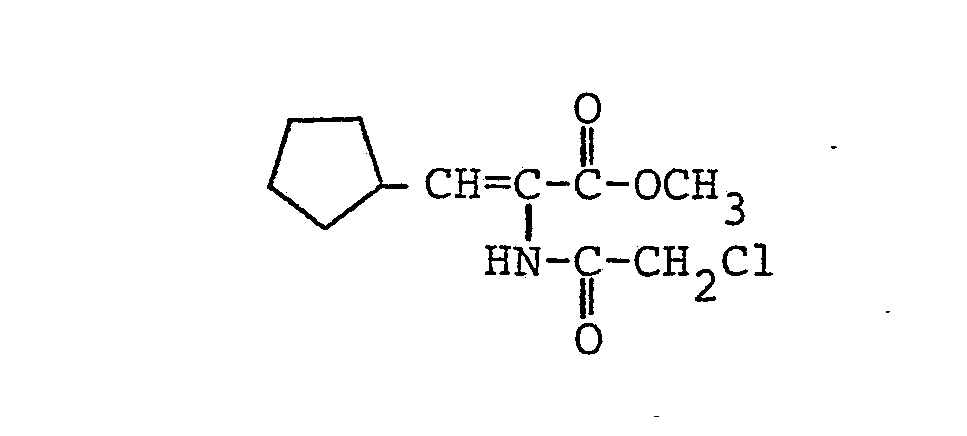

- Schmelzpunkt: 65,5 °C 1H-NMR (CDC13/TMS):
- δ= 7,8 (s breit, 1H) NH;
- 6,7 (d, 1H) -CH=;
- 4,15 (s, 2H) -CH2Cl;
- 3,8 (s, 3H) COOCH3;
- 2,15 - 3,1 (s breit, 1H)
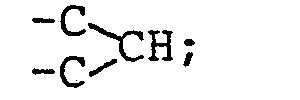
- 1,0 - 2,2 ppm (m, 8H)

- 134 mg (0,5 mMol) Ammoniumperrhenat, 9,85 g (49,9 mMol) 2-Azido-3-cyclopentyl-propionsäuremethylester, 3,85 g (52,6 mMol) Dimethylformamid und 50 mg (0,45 mMol) Hydrochinon wurden in 50 ml Acetonitril gelöst. Dann wurden bei Raumtemperatur unter kräftigem Rühren 7,75 g (52,5 mMol) Dichloracetylchlorid zugegeben. Das Reaktionsgemisch wurde 15 Stunden bei Raumtemperatur gerührt und anschließend analog Beispiel 3 aufgearbeitet.
- Es ergaben sich 10,9 g (77,9 % der Theorie) analysenreiner 2-Dichlormethylcarboxamido-3-cyclopentyl-propensäuremethyl- ester.


- Schmelzpunkt: 85 bis 86 °C 1H-NMR (CDC13/TMS):
- δ= 7,75 (s breit, 1H) NH;
- 6,75 (d, 1H) -CH=;
- 6,0 (s, 1H) -CHCl2;
- 3,8 (s, 3H) COOCH3;
- 2,25 - 3,0 (s breit, 1H)
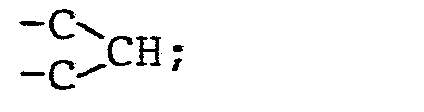
- 0,9 - 2,2 ppm (m, 8H)

- 134 mg (0,5 mMol) Ammoniumperrhenat, 11,25 g (49,9 mMol) 2-Azido-3-cyclopentyl-propionsäureisopropylester, 3,85 g (52,6 mMol) Dimethylformamid und 50 mg (0,45 mMol) Hydrochinon wurden in 50 ml Acetonitril gelöst. Dann wurden bei Raumtemperatur unter.kräftigem Rühren 5,93 g (52,5 mMol) Chloracetylchlorid zugegeben. Der Ansatz reagierte innerhalb 30 Minuten exotherm ab.
- Die Aufarbeitung erfolgte analog Beispiel 3. Es ergaben sich 11,2 g (81,8 % der Theorie) analysenreiner 2-Chlormethyl- carboxamido-3-cyclopentyl-propensäureisopropylester.


- Schmelzpunkt: 72 °C 1H-NMR (CDCl3/TMS):
- δ= 7,75 (s breit, 1H) NH;
- 6,65 (d, 1H) -CH=;
- 4,7 - 5,35 (m, 1H) COOCH;
- 4,15 (s, 2H) -CH2Cl;
- 2,25 - 3,0 (s breit, 1H;


- 1,30 ppm (d, 6H)

- 134 mg (0,5 mMol) Ammoniumperrhenat, 11,25 g (49,9 mMol) 2-Azido-3-cyclopentyl-propionsäureisopropylester, 3,85 g (52,6 mMol) Dimethylformamid und 50 mg (0,45 mMol) Hydrochinon wurden in 50 ml Acetonitril gelöst. Dann wurden bei Raumtemperatur unter kräftigem Rühren 7,75 g (52,5 mMol) Dichloracetylchlorid zugegeben. Der Ansatz reagierte innerhalb 45 Minuten exotherm ab.
- Die Aufarbeitung erfolgte analog Beispiel 3. Es ergaben sich 8,7 g (56,6 % der Theorie) analysenreiner 2-Dichlorme- thylcarboxamido-3-cyclopentyl-propensäureisopropylester.


- Schmelzpunkt: 99 °C 1H-NMR (CDCl/TMS):
- δ= 7,85 (s breit, 1H) NH;
- 6,75 (d, lH) -CH=;
- 6,05 (s, 1H) CHC12;
- 4,7 - 5,4 (m, 1H) COOCH;
- 2,25 - 2,95 (s breit, 1H)


- 1,35 ppm (d, 6H)

- 134 mg (0,5 mMol) Ammoniumperrhenat, 10,55 g (50 mMol) 2-Azido-3-cyclohexyl-propionsäuremethylester, 3,85 g (52,6 mMol) Dimethylformamid und 50 mg (0,45 mMol) Hydrochinon wurden in 50 ml Essigsäure-n-propylester gelöst. Dann wurden bei Raumtemperatur unter kräftigem Rühren 5,93 g (52,5 mMol) Chloracetylchlorid, zugegeben. Das Reaktionsgemisch erreichte nach 1 Stunde eine maximale Reaktionsexotherme von 45 °C. Die Aufarbeitung erfolgte analog Beispiel 16. Es ergaben sich 10,3 g (79,3 % der Theorie) analysenreiner 2-Chlormethylcarboxamido-3-cyclohexyl-propensäuremethylester.


- Schmelzpunkt: 117 bis 118 °C 1H-NMR (CDC13/TMS):
- δ= 7,7 (s breit, 1 H) NH;
- 6,6 (d, 1H) -CH=;
- 4,15 (s, 2H) -CH2Cl;
- 3,85 (s, 3H) COOCH3;
- 0,75 - 2,6 ppm (m, 1]

- 134 mg (0,5 mMol) Ammoniumperrhenat, 10,55 g (50 mMol) 2-Azido-3-cyclohexyl-propionsäuremethylester, 3,85 g (52,6 mMol) Dimethylformamid und 50 mg (0,45 mMol) Hydrochinon wurden in 50 ml Acetonitril gelöst. Dann wurden bei Raumtemperatur 7,75 g (52,5 mMol) Dichloracetylchlorid unter kräftigem Rühren zugegeben. Das Reaktionsgemisch wurde 16 Stunden bei Raumtemperatur gerührt und anschließend analog Beispiel 3 aufgearbeitet.
- Es ergaben sich 11,7 g (79,5 % der Theorie) analysenreiner 2-Dichlormethylcarboxamido-3-cyclohexyl-propensäuremethyl- ester.


- Schmelzpunkt: 98 °C 1H-NMR (CDCl3/TMS):
- δ= 7,65 (s breit, 1H) NH;
- 6,65 (d, 1H) -CH=;
- 5,95 (s, 1H) -CH2Cl;
- 3,8 (s, 3H) COOCH3;
- 1,9 - 2,65 (s breit, 1H)

- 0,7 - 2,0 ppm (m, 10H)

- 13,7 mg (0,05 mMol) Natriumperrhenat, 715,7 mg (5 mMol) 2- Azido-butansäuremethylester und 383,8 mg (5,25 mMol) Dimethylformamid wurden in 5 ml Acetonitril gelöst. Dann wurden bei Raumtemperatur unter kräftigem Rühren 1,195 g (5,25 mMol) 2-(2',2'-Dichlorethenyl)-3,3-dimethyl-cyclopropancar- bonsäurechlorid zugegeben. Das Reaktionsgemisch wurde 30 Stunden bei Raumtemperatur gerührt und anschließend analog Beispiel 1 aufgearbeitet.
- Es ergaben sich 1,31 g (85,6 % der Theorie) analysenreiner 2-[2'-(2,2-Dichlorethenyl)-3',3'-dimethyl]-cyclopropancarb- oxamido-2-hexensäuremethylester.


- Schmelzpunkt: 109 bis 109,5 °C 1H-NMR (CDCl3):
- δ= 7,32 (s, 1H) NH; IR rNH = 3320 cm-1,
- 6,8 (q, 1H) H-C(CH3)=; uCO= 1720 cm-1,
- 6,42 (d, 1H) H-C=CCL2; 1658 cm-1.
- 3,77 (s, 3H) OCH3;
- 1,76 (d, 3H) H3C-CH=;
- 1,28 (s, 3H)
- 5 ppm (s, 3H)JH
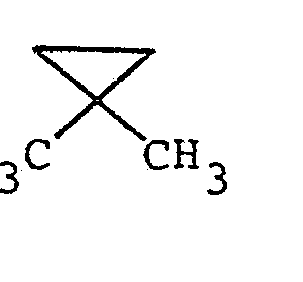
- 13,7 mg (0,05 mMol) Natriumperrhenat, 856 mg (5 mMol) 2-Azido-hexansäuremethylester und 383,8 mg (5,25 mMol) Dimethylformamid wurden in 0,5 ml Acetonitril gelöst. Dann wurden bei Raumtemperatur unter kräftigem Rühren 1,1945 g (5,25 mMol) 2-(2',2'-Dichlorethenyl)-3,3-dimethyl-cyclopro- pancarbonsäurechlorid zugegeben. Das Reaktionsgemisch wurde 15 Stunden bei Raumtemperatur gerührt und anschließend analog Beispiel 1 aufgearbeitet.
- Es ergaben sich 1,40 g (83,8 % der Theorie) analysenreiner 2-[2'-(2,2-Dichlorethenyl)-3',3'-dimethyl]-cyclopropancarb- oxamido-2-hexensäuremethylester.
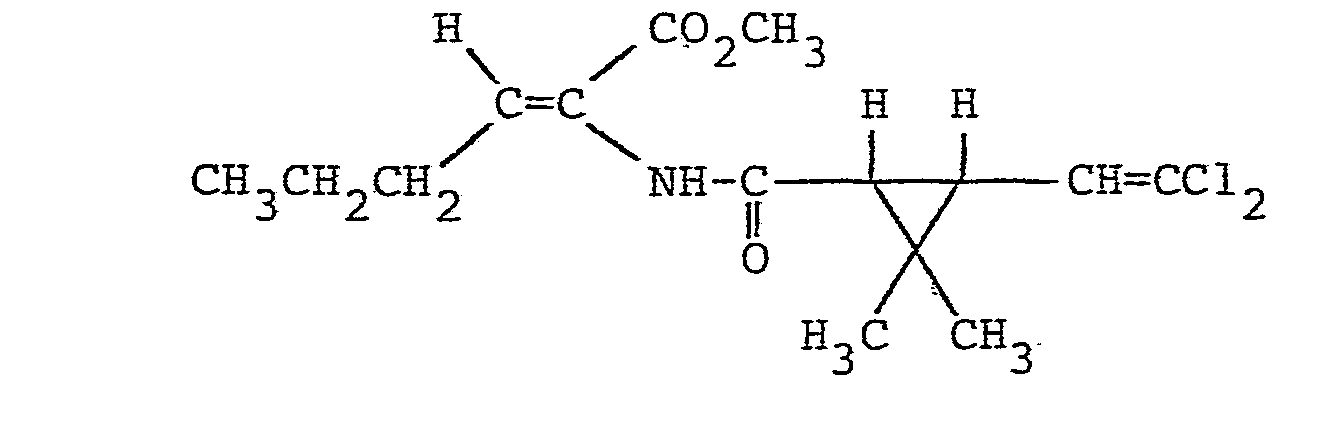

- Schmelzpunkt: 105 bis 106 °C 1H-NMR (CDCl3):
- δ= 6,97 (s, 1H) NH; IR υNH = 3300 cm-1,
- 6,73 (t, 1H) -CH2-CH=; vCO= 1715 cm-1,
- 6,43 (d, 1H) H-C=CC12; 1655 cm-1.
- 3,8 (s, 3H) OCH3;
- 2,38 - 0,77 (m, 9H) CH3CH 2 CH2

- 1,3 (s, 3H)
- 1,27 ppm (s, 3H)J

- 13,7 mg (0,05 mMol) Natriumperrhenat, 1,0261 g (5 mMol) 2-Azido-3-phenyl-propansäuremethylester und 383,8 mg (5,25 mMol) Dimethylformamid wurden in 5 ml Acetonitril gelöst. Dann wurden bei Raumtemperatur unter kräftigem Rühren 592,9 mg (5,25 mMol) Chloracetylchlorid zugegeben. Das Reaktionsgemisch wurde 7 Stunden, bei Raumtemperatur gerührt und anschließend analog Beispiel 1 aufgearbeitet.
- Es ergaben sich 1,1657 g (91,9 % der Theorie) analysenreiner 2-Chlormethylcarboxamido-3-phenyl-propensäuremethyl- ester.


- Schmelzpunkt: 113,5 bis 114 °C 1H-NMR (CDC13):
- δ= 8,12 (s, 1H) NH; IR vNH = 3235 cm-1,
- 7,7 - 7,17 (m, 5H) aromat. -CH=; v CO = 1720 cm-1,
- 4,09 (s, 2H) CH2Cl; 1617 cm .
- 3,82 ppm (s, 3H) CH3.
- 13,7 mg (0,05 mMol) Natriumperrhenat, 1,0261 g (5 mMol) 2-Azido-3-phenyl-propansäuremethylester und 383,8 mg (5,25 mMol) Dimethylformamid wurden in 5 ml Acetonitril gelöst. Dann wurden bei Raumtemperatur unter kräftigem Rühren 1,1945 g (5,25 mMol) 2-(2',2'-Dichlorethenyl)-3,3-dimethyl- cyclopropancarbonsäurechlorid zugegeben. Das Reaktionsge- misch wurde 15 Stunden bei Raumtemperatur gerührt und anschließend analog Beispiel 1 aufgearbeitet. Es ergaben sich 1,7136 g (93,1 % der Theorie) analysenreiner 2-[2'-(2,2-Dichlorethenyl)-3',3'-dimethyl) -cyclopropan- carboxamido-3-phenyl-propensäuremethylester.


- Schmelzpunkt: 127 bis 128 °C 1H-NMR (CDCl3):
- δ= 7,65 - 7,15 (m, 5H) aromat.-CH=; IR vNH = 3270 cm-1,
- 6,35 (d, 1H) -CH=CCl2; vCO =1720 cm-1,
- 3,85 (s, 3H) OCH3; 1635 cm-1.
- 1,25 (s, 3H)
- 1,23 ppm (s, 3H)

- 27,3 mg (0,1 mMol) Natriumperrhenat und 1,57 g (10 mMol) 2-Azido-3-methyl-butansäuremethylester wurden bei 80 °C in 5 ml Essigsäureethylester vorgelegt. Dann wurden innerhalb von 20 Minuten unter kräftigem Rühren 1,19 g (10,5 mMol) Chloracetylchlorid, gelöst in 5 ml Essigsäureethylester, zugetropft. Das Reaktionsgemisch wurde unter kräftigem Rühren insgesamt 3 Stunden auf 80 °C gehalten und anschließend analog Beispiel 1 aufgearbeitet.
- Es ergaben sich 1,97 g (95,8 % der Theorie) analysenreiner 2-Chlormethylcarboxamido-3-methyl-2-butensäuremethylester.


- Schmelzpunkt: 106 °C 1H-NMR (CDCl3):
- δ= 7,83 (s, 1H) NH; IR vNH= 3275 cm-1,
- 4,17 (s, 2H) CH2Cl; vCO = 1719 cm-1,
- 3,8 (s, 3H) OCH3; 1660 cm .
- 2,22 (d, 3H)

- 1,89 ppm (s, 3H)

- 134 mg (0,5 mMol) Ammoniumperrhenat, 8,55 g (49,9 mMol) 2-Azido-3-methyl-butansäureethylester, 4,6 g (52,8 mMol) Di-methylacetamid und 50 mg (0,45 mMol) Hydrochinon wurden in 50 ml Acetonitril vorgelegt. Dann wurden bei Raumtemperatur unter kräftigem Rühren 5,95 g (52,6 mMol) Chloracetylchlorid zugegeben. Der Ansatz reagierte innerhalb 15 Minuten exotherm ab.
- Die Aufarbeitung erfolgte analog Beispiel 3. Es ergaben sich 9,35 g (85,3 % der Theorie) analysenreiner 2-Chlormethyl- carboxamido-3-methyl-2-butensäureethylester.


- Schmelzpunkt: 117 °C 1H-NMR(CDCl3/TMS):
- δ= 7,7 (s breit, lH) NH;
- 4,15 (q, 2H) COOCH2-;
- 4,1 (s, 2H) -CH2Cl;
- 2,2 (s, 3H) CH3-C=;
- 1,85 (s, 3H) CH3-C=;
- 1,25 ppm (t, 3H) COOCH2CH 3.
- 134 mg (0,5 mMol) Ammoniumperrhenat, 8,55 g (49,9 mMol) 2-Azido-3-methyl-butansäureethylester, 3,85 g (52,6 mMol) Di-methylformamid und 50 mg (0,45 mMol) Hydrochinon wurden in 50 ml Acetonitril vorgelegt. Dann wurden bei Raumtemperatur 7,75 g (52,5 mMol) Dichloracetylchlorid zugegeben. Der Ansatz reagierte innerhalb 40 Minuten exotherm ab. Die Aufarbeitung erfolgte analog Beispiel 3. Es ergaben sich 9,8 g (77,3 % der Theorie) analysenreiner 2-Dichlorme- thylcarboxamido-3-methyl-2-butensäureethylester.


- Schmelzpunkt: 145 °C 1H-NMR (CDCl3/TMS):
- d= 7,8 (s breit, 1H) NH;
- 5,95 (s, 1H) CHCl2;
- 4,2 (q, 2H) COOCH2;
- 2,25 (s, 3H) CH3-C=;
- 1,9 (s, 3H) CH3-C=;
- 1,25 ppm (t, 3H) COOCH2CH3.
- 134 mg (0,5 mMol) Ammoniumperrhenat, 8,55 g (49,9 mMol) 2-Azido-3-methyl-butansäureethylester, 3,85 g (52,6 mMol) Dimethylformamid und 50 mg (0,45 mMol) Hydrochinon wurden in 50 ml Acetonitril vorgelegt. Dann wurden bei Raumtemperatur unter kräftigem Rühren 6,45 g (52,4 mMol) Acetylbromid zugegeben. Das Reaktionsgemisch wurde 3 Stunden gerührt, wobei eine maximale Reaktionstemperatur von 35 C erreicht wurde.
- Die Aufarbeitung erfolgte analog Beispiel 3. Es ergaben sich 4,8 g (51,9 % der Theorie) analysenreiner N-Acetyl-2,3- dehydro-valinethylester.


- Schmelzpunkt: 77 °C 1H-NMR (CDCl3,/TMS):
- δ= 7,9 (s breit, 1H) NH;
- 4,15 (q, 2H) -COOCH2-;
- 2,1 (s, 3H) COCH3;
- 2,05 (s, 3H) CH3-C=;
- 1,8 (s, 3H) CH3-C=;
- 1,2 ppm (t, 3H) -COOCH2-CH3.
- 134 mg (0,5 mMol) Ammoniumperrhenat, 8,55 g (49,9 mMol) 2- Azido-3-methyl-butansäureethylester, 3,85 g (52,6 mMol) Dimethylformamid und 50 mg (0,45 mMol) Hydrochinon wurden in 50 ml Acetonitril vorgelegt. Dann wurden bei Raumtemperatur unter kräftigem Rühren 5,7 g (52,5 mMol) Methoxyessigsäurechlorid zugegeben. Das Reaktionsgemisch wurde 70 Stunden bei Raumtemperatur gerührt und anschließend analog Beispiel 3 aufgearbeitet. Das so erhaltene Rohprodukt wurde im Vakuum (0,4 mbar) destilliert.
- Es ergaben sich 6,0 g (55,8 % der Theorie) analysenreiner N-Methoxyacetyl-2,3-dehydro-valinethylester.


- Schmelzpunkt: 112 bis 114 °C 1H-NMR (CDCl3/TMS):
- δ= 7,65 (s breit, lH) NH;
- 4,2 (q, 2H) -COOCH2-;
- 3,95 (s, 2H) CO-CH2-0;
- 3,45 (s, 3H) -OCH3;
- 2,15 (s, 3H) CH3-C=;
- 1,85 (s, 3H) CH3-C=;
- 1,25 ppm (t, 3H) -COOCH2-CH3.
- 134 mg (0,5 mMol) Ammoniumperrhenat, 8,55 g (49,9 mMol) 2-Azido-3-methyl-butansäuremethylester, 3,85 g (52,6 mMol) Dimethylformamid und 50 mg (0,45 mMol) Hydrochinon wurden in 50 ml Acetonitril vorgelegt. Dann wurden bei Raumtemperatur unter kräftigem Rühren 6,35 g (52,6 mMol) 3-Methyl-butansäurechlorid zugegeben. Das Reaktionsgemisch wurde 9 Stunden bei Raumtemperatur gerührt und anschließend analog Beispiel 3 aufgearbeitet.
- Es ergaben sich 6,5 g (57,3 % der Theorie) analysenreiner 2- [2'-Methylpropyl)-carbonyl-amino] -3-methyl-2-butensäure- ethylester.
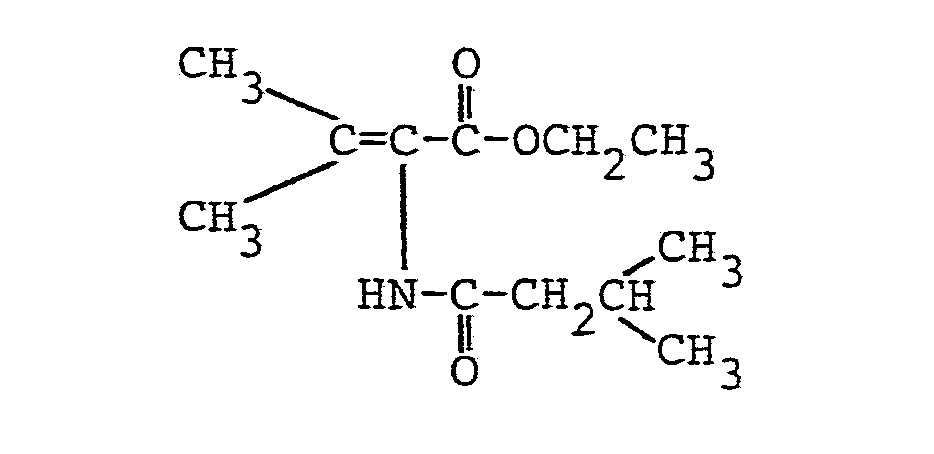

- Schmelzpunkt: 123 bis 125 °C 1H-NMR (CDCl3/TMS):
- δ= 6,8 (s breit, 1H) NH;
- 4,2 (q, 2H) -COOCH2-;
- 1,7 - 2,4 (m, 3H) COCH3-CH;
- 2,2 (s, 3H) CH3-C=;
- 1,9 (s, 3H) CH3-C=;
- 1,3 (t, 3H) CH3-CH2;
- 1,05 ppm (d, 6H)

- 134 mg (0,5 mMol) Ammoniumperrhenat, 8,55 g (49,9 mMol) 2-Azido-3-methyl-butansäureethylester, 3,85 g (52,6 mMol) Di- methylformamid und 50 mg (0,45 mMol) Hydrochinon wurden in 50 ml Acetonitril vorgelegt. Dann wurden bei Raumtemperatur unter kräftigem Rühren 7,4 g (52,5 mMol) 4-Chlor-butansäurechlorid zugegeben. Das Reaktionsgemisch wurde 10 Stunden bei Raumtemperatur gerührt und anschließend analog Beispiel 3 aufgearbeitet.
- Es ergaben sich 8,4 g (67,9 % der Theorie) analysenreiner 2-[(3'-Chlorpropyl)-carbonylamino]-3-methyl-2-butensäure- ethylester.


- Schmelzpunkt: 80 °C 1H-NMR (CDCl3/TMS):
- δ= 7,1 (s breit, 1H) NH;
- 4,15 (q, 2H) -COOCH2-;
- 3,6 (t, 2H) -CH2Cl;
- 1,75 - 2,7 (m, 4H) -COCH2CH2-;
- 2,15 (s, 3H) CH3-C=;
- 1,85 (s, 3H) CH3-C=;
- 1,25 ppm (t, 3H) -COCCH2-CH3.
- 134 mg (0,5 mMol) Ammoniumperrhenat, 8,55 g (49,9 mMol) 2- Azido-3-methyl-butansäureethylester und 3,85 g (52,6 mMol) Dimethylformamid wurden in 50 ml Essigsäureethylester gelöst. Dann wurden bei Raumtemperatur unter kräftigem Rühren 9,2 g (52,5 mMol) 2-Chlor-benzoylchlorid zugegeben. Das Re- aktionsgemisch wurde 14 Stunden bei Raumtemperatur gerührt und anschließend analog Beispiel 16 aufgearbeitet.
- Es ergaben sich 7,1 g (50,5 % der Theorie) analysenreiner 2-[(2 '-Chlorphenyl )-carbony2-amino]-3-methyl-2-butensäure- ethylester.


- Schmelzpunkt: 86 bis 89°C 1H-NMR (CDCl3/TMS):
- δ= 7,0 - 7.9 (m. 5H NH; aromat, -CH;
- 4,2 (q, 2H) COOCH2;
- 2,2 (s, 3H) CH3-C=;
- 1,95 (s, 3H) CH3-C=;
- 1,25 ppm (t, 3H) COOCH2CH3.
- 134 mg (0,5 mMol) Ammoniumperrhenat, 8,55 g (49,9 mMol) 2- Azido-3-methyl-butansäureethylester, 3,85 g (52,6 mMol) Dimethylformamid und 50 mg (0,45 mMol) Hydrochinon wurden in 50 ml Essigsäureethylester gelöst. Dann wurden bei Raumtemperatur unter kräftigem Rühren 9,2 g (52,5 mMol) 3-Chlor-benzoylchlorid zugegeben. Das Reaktionsgemisch wurde 14 Stunden bei Raumtemperatur gerührt und anschließend analog Beispiel 16 aufgearbeitet.
- Es ergaben sich 10,2 g (72,5 % der Theorie) analysenreiner 2- C(3'-Chlorphenyl)-carbonyl-amino]-3-methyl-2-butensäure- ethylester.


- Schmelzpunkt: 120 bis 122 °C 1H-NMR (CDC13/TMS):
- δ= 7,0 - 8,1 (m, 5H) NH; aromat.-CH;
- 4,15 (q, 2H) COOCH2;
- 2,15 (s, 3H) CH3-C=;
- 1,85 (s, 3H) CH3-C=;
- 1,25 ppm (t, 3H) COOCH2CH3.
- 134 mg (0,5 mMol) Ammoniumperrhenat, 8,55 g (49,9 mMol) 2-Azido-3-methyl-butansäureethylester, 3,85 g (52,6 mMol) Dimethylformamid und 50 mg (0,45 mMol) Hydrochinon wurden in 50 ml Essigsäureethylester gelöst. Dann wurden bei Raumtemperatur unter kräftigem Rühren 9,2 g (52,5 mMol) 4-Chlor-benzoylchlorid zugegeben. Das Reaktionsgemisch wurde 14 Stunden bei Raumtemperatur gerührt. Das ausgefallene Rohprodukt wurde abgesaugt und mit Wasser Chlorid-frei gewaschen.
- Es ergaben sich 11,1 g (78,9 % der Theorie) analysenreiner 2- [(4'-Chlorphenyl)-carbonyl-amino]-3-methyl-2-butensäure- ethylester.
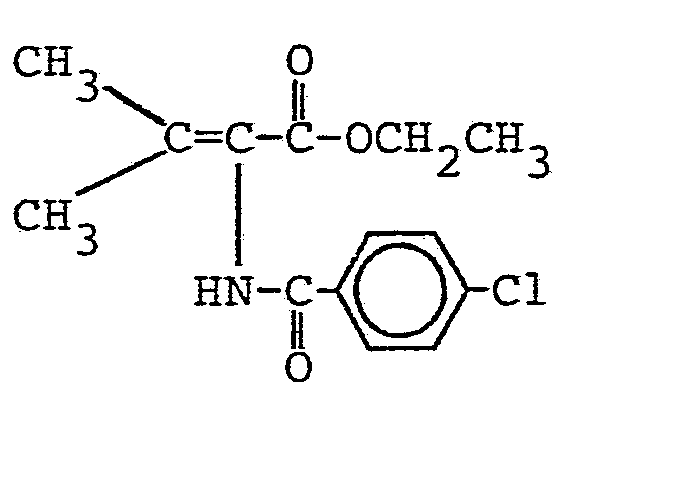

- Schmelzpunkt: 124 bis 124,5 °C 1H-NMR (CDCl3/TMS):
- δ= 7,1 - 8,25 (m, 5H) NH; aromat.-CH;
- 4,2 (q, 2H) COOCH2;
- 2,2 (s, 3H) CH3-C=;
- 1,9 (s, 3H) CH3-C=;
- 1,25 ppm (t, 3H) COOCH2CH3.
- 134 mg (0,5 mMol) Ammoniumperrhenat, 8,55 g (49,9 mMol) 2- Azido-3-methyl-butansäureethylester, 3,85 g (52,6 mMol) Dimethylformamid und 50 mg (0,45 mMol) Hydrochinon wurden in 50 ml Essigsäureethylester gelöst. Dann wurden bei Raumtemperatur unter kräftigem Rühren 8,35 g (52,6 mMol) 2-Fluorbenzoylchlorid zugegeben.. Das Reaktionsgemisch wurde 14 Stunden bei Raumtemperatur gerührt und anschließend analog Beispiel 16 aufgearbeitet.
- Es ergaben sich 9,0 g (68 der Theorie)analysenreiner 2-[(2'-Fluorphenyl)-carbonyl-amino]-3-methyl-2-butensäure- ethylester.


- Schmelzpunkt: 82,5 °C 1H-NMR (CDC13/TMS):
- δ = 6,85 - 7,65 (m, 5H) NH; aromat.-CH;
- 4,2 (q, 2H) -COOCH2-;
- 2,25 (s, 3H) CH3-C=;
- 1,9 (s, 3H) CH3-C=;
- 1,35 ppm (t, 3H) -COOCH2CH3.
- 134 mg (0,5 mMol) Ammoniumperrhenat, 8,55 g (49,9 mMol) 2-Azido-3-methyl-butansäureethylester, 3,85g(52,6 mMol) Dimethylformamid und 50 mg (0,45 mMol) Hydrochinon wurden in 50 ml Acetonitril gelöst. Dann wurden bei Raumtemperatur unter kräftigem Rühren 8,35 g (52,6 mMol) 4-Fluorbenzoylchlorid zugegeben. Das Reaktionsgemisch wurde 14 Stunden bei Raumtemperatur gerührt und anschließend analog Beispiel 3 aufgearbeitet.
- Es ergaben sich 9,3 g (70,2 % der Theorie) analysenreiner 2- [(4'Fluorphenyl)-carbonylamino]-3-methyl-2-butensäure- ethylester.


- Schmelzpunkt: 130 bis 132 °C 1H-NMR (CDCl3/TMS):
- δ= 7,6 - 8,2 (m, 3H)
- 6,7 - 7,3 (m, 2H)

- 4,2 (q, 2H) -COOCH2-; 2,15 (s, 3H) CH3-C=;
- 1,85 (s, 3H) -CH3-C=;
- 1,25 ppm (t, 3H) -COOCH2-CH3.
- 134 mg (0,5 mMol) Ammoniumperrhenat, 8,55 g (49,9 mMol) 2-Azido-3-methyl-butansäureethylester, 3,85 g (52,6 mMol) Dimethylformamid und 50 mg (0,45 mMol) Hydrochinon wurden in 50 ml Acetonitril gelöst. Dann wurden bei Raumtemperatur unter kräftigem Rühren 11,0 g (52,5 mMol) 2,4-Dichlorbenzoylchlorid zugegeben. Das Reaktionsgemisch wurde bei Raumtemperatur 14 Stunden gerührt und anschließend analog Beispiel 3 aufgearbeitet.
- Es ergaben sich 9,3 g (58,9 % der Theorie) analysenreiner 2-(2',4'-Dichlorphenyl)-carbonylamino]-3-methyl-2-buten- säureethylester.
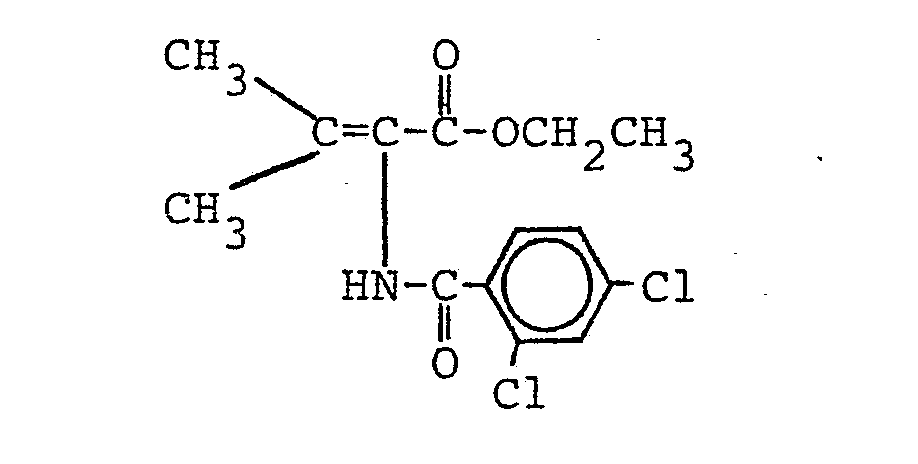

- Schmelzpunkt: 128,5 bis 130 °C 1H-NMR (CDC13/TMS):
- δ = 7,7 (m, 4H) NH; aromat.-CH;
- 4,2 (q, 2H) -COOCH2-;
- 2,2 (s, 3H) CH3-C=;
- 1,95 (s, 3H) CH3-C=;
- 1,3 ppm (t, 3H) COOCH2-CH 3.
- 134 mg (0,5 mMol) Ammoniumperrhenat, 8,55 g (49,9 mMol) 2-Azido-3-methyl-butansäureethylester, 3,85 g (52,6 mMol) Dimethylformamid und 50 mg (0,45 mMol) Hydrochinon wurden in 50 ml Acetonitril vorgelegt. Dann wurden bei Raumtemperatur unter kräftigem Rühren 11,0 g (52,5 mMol) 3,4-Dichlorbenzoylchlorid zugegeben. Das Reaktionsgemisch wurde bei Raumtemperatur 15 Stunden gerührt und anschließend analog Beispiel 3 aufgearbeitet.
- Es ergaben sich 10,5 g (66,5 % der Theorie) analysenreiner 2-[(3',4'-Dichlorphenyl)-carbonylamino]-3-methyl-2-butensäu- reethylester.


- Schmelzpunkt: 115 bis 120 °C 1H-NMR (CDCl3/mTMS):
- δ = 7,2 - 8,2 (m, 4H) NH; aromat.-CH;
- 4,2 (q, 2H) - COOCH2-;
- 2,15 (s, 3H) CH3-C=;
- 1,9 (s, 3H) CH3-C=;
- 1,25 ppm (t, 3H) -COOCH2CH 3.
- 134 mg (0,5 mMol) Ammoniumperrhenat, 8,55 g (49,9 mMol) 2-Azido-3-methyl-butansäureethylester, 3,85 g (52,6 mMol) Di-methylformamid und 50 mg (0,45 mMol) Hydrochinon wurden in 50 ml Acetonitril vorgelegt. Dann wurden bei Raumtemperatur unter kräftigem Rühren 11,0 g (52,5 mMol) 3,5-Dichlorbenzoylchlorid zugegeben. Das Reaktionsgemisch wurde 15 Stunden bei Raumtemperatur gerührt. Das ausgefallene Rohprodukt wurde abgesaugt und mit Wasser Chlorid-frei gewaschen. Es ergaben sich 12,3 g (77,9 % der Theorie) 2-[(3',5'-Dichlorphenyl)-carbonylamino] -3-methyl-2-butensäureethylester.


- Schmelzpunkt: 171 °C 1H-NMR (CDCl3/TMS):
- δ = 7,15 - 7,85 (m, 4H) NH; aromat.-CH;
- 4,2 (q, 2H) - COOCH2-;
- 2,2 (s, 3H) CH3-C=;
- 1,9 (s, 3H) CH3-C=;
- 1,25 ppm (t, 3H) -COOCH2-CH3.
- 134 mg (0,5 mMol) Ammoniumperrhenat, 8,55 g (49,9 mMol) 2-Azido-3-methyl-butansäureethylester, 3,85 g (52,6 mMol) Dimethylformamid und 50 mg (0,45 mMol) Hydrochinon wurden in 50 ml Acetonitril vorgelegt. Dann wurden bei Raumtemperatur unter kräftigem Rühren 12,6 g (52,6 mMol) 2,6-Dichlorphenoxy-acetylchlorid zugegeben. Das Reaktionsgemisch wurde 14 Stunden bei Raumtemperatur gerührt. Das ausgefallene Rohprodukt wurde abgesaugt und mit Wasser Chlorid-frei gewaschen. Es ergaben sich 14,4 g (87,4 % der Theorie) analysenreiner 2-[C(2',6'-Dichlorphenoxy)-acetylamino]-3-methyl-2-butensäu- reethylester.


- Schmelzpunkt: 124 bis 125 °C 1H-NMR (CDC13/TMS):
- δ = 7,95 (s breit, 1H) NH;
- 6,65 - 7,5 (m, 2H) aromat.-CH;
- 4,6 (s, 2H) COCH2-O-;
- 4,2 (q, 2H9 COOCH2;
- 2,2 (s, 3H) CH2-C=;
- 1,9 (s, 3H) CH3-C=;
- 1,25 ppm (t, 3H) COOCH2CH3.
- 134 mg (0,5 mMol) Ammoniumperrhenat, 8,55 g (49,9 mMol) 2- Azido-3-methyl-butansäureethylester, 3,85 g (52,6 mMol) Dimethylformamid und 50 mg (0,45 mMol) Hydrochinon wurden in 50 ml Acetonitril vorgelegt. Dann wurden bei Raumtemperatur 11,3 g (52,5 mMol) 4,5-Dichlorthiophen-2-carbonsäurechlorid zugegeben. Das Reaktionsgemisch würde 15 Stunden bei Raumtemperatur gerührt, wobei eine maximale Reaktionsexotherme von 45°C erreicht wurde. Die Aufarbeitung erfolgte analog Beispiel 3.
- Es ergaben sich 11,6 g (72,1 % der Theorie) analysenreiner 2-[2'-(4,5-Dichlorthienyl)-carbonylamino]-3-methyl-2-buten- säureethylester.


- Schmelzpunkt: 95 bis 98 °C 1H-NMR (CDCl3/TTIS):
- δ= 8,45 (s, 1H) NH;
- 7,55 (s, 1H)
- 4,2 (q, 2H) -COOCH2-;
- 2,15 (s, 3H) CH3-C=;
- 1,9 (s, 3H) CH3-C=;
- 1,3 ppm (t, 3H) -COOCH2-CH3.
- 134 mg (0,5 mNol) Ammoniumperrhenat, 8,55 g (49,9 mMol) 2-Azido-3-methyl-butansäureethylester, 3,85 g (52,6 mMol) Dimethylformamid und 50 mg (0,45 mMol) Hydrochinon wurden in 50 ml Acetonitril vorgelegt. Dann wurden bei Raumtemperatur unter kräftigem Rühren 7,1 g (52,7 mMol) 2,2-Dimethyl-butansäurechlorid zugegeben. Das Reaktionsgemisch wurde 35 Stunden bei Raumtemperatur gerührt und anschließend analog Beispiel 3 aufgearbeitet. Das Rohprodukt wurde zur Reinigung im Vakuum (0,53 mbar) bei 110 bis 150 °C im Kugelrohr destilliert. Das so erhaltene Öl wurde mit n-Pentan zur Kristallisation gebracht.
- Es ergaben sich 8,8 g (73,1 % der Theorie) analysenreiner 2-[Cl',l'-Dimethylpropyl)-carbonylamino]-3-methyl-2-buten- säureethylester.
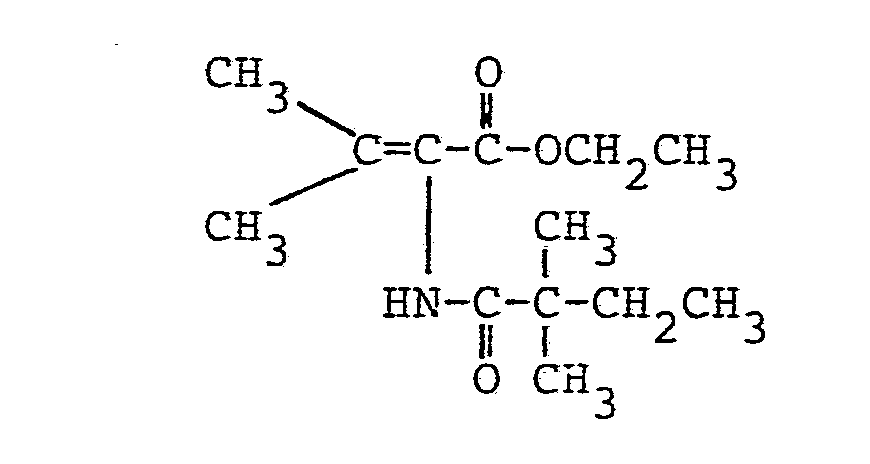

- Schmelzpunkt: 100 bis 105 °C 1H-NMR (CDCl3/TMS):
- δ= 6,85 (s breit, 1H) NH;
- 4,15 (q, 1H) -COOCH2;
- 2,15 (s, 3H) CH3-C=;
- 1,8 (s, 3H) CH3-C=;
- 0,65 - 1,85 ppm (m, 14H) C-(CH3-CH2CH3; O-CH2CH3.
- 13,7 mg (0,05 mMol) Natriumperrhenat, 926 mg (5 mMol) 2-Azido-3-methyl-butansäureisopropylester und 383,8 mg (5,25 mMol) Dimethylformamid wurden in 2,5 ml Acetonitril gelöst. Dann wurden bei Raumtemperatur unter kräftigem Rühren 592,9 mg (5,25 mMol) Chloracetylchlorid zugegeben. Das Reaktionsgemisch wurde 7 Stunden bei Raumtemperatur gerührt und anschließend analog Beispiel 1 aufgearbeitet.
- Es ergaben sich 1,0657 g (91,2 % der Theorie) analysenreiner 2-Chlormethylcarboxamido-3-methyl-2-butensäureisopropylester.


- Schmelzpunkt: 126 °C 1H-NMR (CDCl3) :
- δ = 7,9 (s, 1H) NH; IR NH = 3265 cm-1,
- 5,13 (septett, 1H) O-CH(CH3)2; CO =1712 cm-1, 4,15 (s, 2H) CH2Cl; 1663 cm-1.
- 2,2 (s, 3H)

- 1,88 (s,3H)

- 1,29 ppm (d, 6H)-CH(CH3)2.
- 13,7 mg (0,05 mMol) Natriumperrhenat, 1,17 g (5 mMol) 2-Azido-3-methyl-butansäurebenzylester und 383,8 mg (5,25 mMol) Dimethylformamid wurden in 1,5 ml Acetonitril gelöst. Dann wurden bei Raumtemperatur unter kräftigem Rühren 592,9 mg (5,25 mMol) Chloracetylchlorid zugegeben. Das Reaktionsgemisch wurde 15 Stunden bei Raumtemperatur gerührt und anschließend analog Beispiel 1aufgearbeitet. Es ergaben sich 1,32 g (93,7 % der Theorie) analysenreiner 2-Chlormethylcarboxamido-3-methyl-2-butensäurebenzylester.
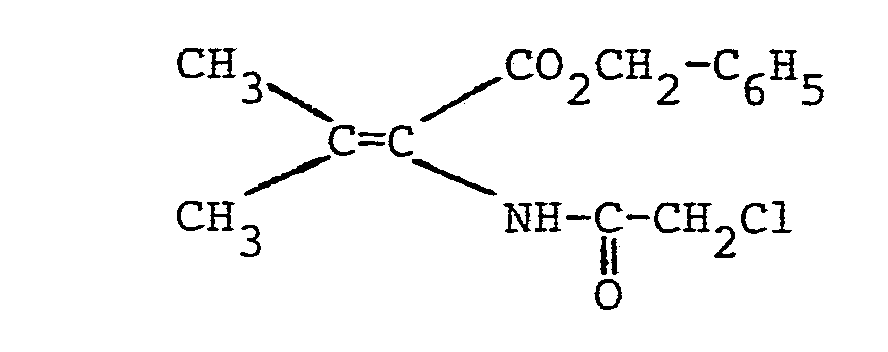

- Schmelzpunkt: 122 bis 122,5 °C 1H-NMR (CDC1 3):
- δ= 7,76 (s, 1H) NH; IR NH = 3255 cm-1,
- 7,4 (s, 5H) aromat.-CH=; CO = 1705 cm-1,
- 5,25 (s, 2H) -O-CH2-; 1660 cm-1.
- 4,13 (s, 2H) -CH2Cl;
- 2,24 (d, 3H)

- 1,9 ppm (s, 3H)

- 13,7 mg (0,05 mMol) Natriumperrhenat, 1,0961 g (5 mMol) 2-Azido-3-methyl-butansäurephenylester und 383,8 mg (5,25 mMol) Dimethylformamid wurden in 1,5 ml Acetonitril gelöst. Dann wurden bei Raumtemperatur unter kräftigem Rühren 592,9 mg (5,25 mMol) Chloracetylchlorid zügegeben. Das Reaktionsgemisch wurde 15 Stunden bei Raumtemperatur gerührt und anschließend analog Beispiel 1 aufgearbeitet.
- Es ergaben sich 1,24 g (92,6 % der Theorie) analysenreiner 2-Chlormethylcarboxamido-3-methyl-2-butensäurephenylester.


- Schmelzpunkt: 126 °C 1H-NMR (CDC1 3):
- δ= 7,91 (s, 1H) NH; IR NH = 3280 cm-1,
- 7,63 - 7,1 (m, 5H) aromat.-CH=; CO = 1724 cm-1,
- 4,2 (s, 2H) CH2Cl; 1653 cm-1.
- 2,29 (d, 3H)

- 1,98 ppm (s, 3H)
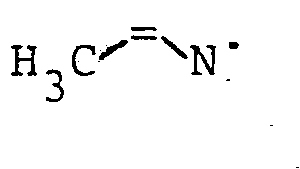
- 27,3 mg (0,1 mMol) Natriumperrhenat und 1,57 g (10 mMol) 2-Azido-3-methyl-butansäuremethylester wurden bei 80 °C in 5 ml Essigsäureethylester vorgelegt. Dann wurden innerhalb von 45 Minuten unter kräftigem Rühren 1,55 g (10,5 mMol) Dichloracetylchlorid zugetropft. Das Reaktionsgemisch wurde unter kräftigem Rühren insgesamt 3 Stunden auf 80 °C gehalten und anschließend analog Beispiel 1 aufgearbeitet. Es ergaben sich 2,27 g (94,7 % der Theorie) analysenreiner 2-Dichlormethylcarboxamido-3-methyl-2-butensäuremethylester.
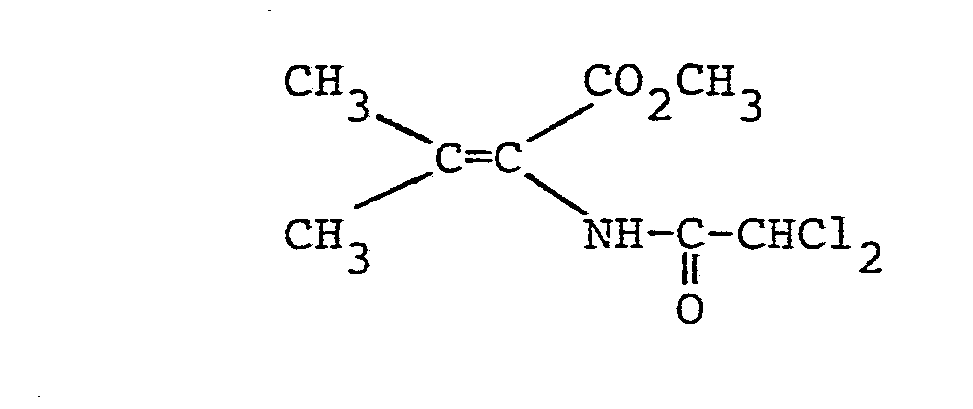

- Schmelzpunkt: 118 °C 1H-NMR (CDCI3):
- δ = 7,75 (s, 1H) NH; IR NH = 3265 cm-1,
- 6,05 (s, 1H) CHCl2; CO = 1722 cm-1,
- 3,79 (s, 3H) OCH3; 1670 cm-1.
- 2,26 (d, 3H)

- 1,9 ppm (s, 3H)

- 27,3 mg (0,1 mMol) Natriumperrhenat und 1,57 g (10 mMol) 2- Azido-3-methyl-butansäuremethylester wurden bei 80 °C in 5 ml Essigsäureethylester vorgelegt. Dann wurden innerhalb von 15 Minuten unter kräftigem Rühren 1,48 g (10,5 mMol) Benzoylchlorid zugetropft. Das Reaktionsgemisch wurde unter kräftigem Rühren ingesamt 5 Stunden auf 80 °C gehalten und anschließend analog Beispiel 1 aufgearbeitet.
- Es ergaben sich 2,0877 g (89,5 % der Theorie) analysenreiner 2-Phenylcarboxamido-3-methyl-2-butensäuremethylester.


- Schmelzpunkt: 132 °C 1H-NMR (CDCl3):
- δ = 7,91 - 7,29 (m, 5H) aromat.-CH=; IR NH = 3280 cm-1,
- 3,72 (s, 3H) OCH3; CO = 1725 cm-1,
-
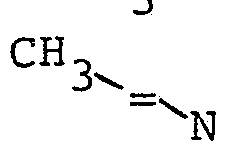
- 1,89 ppm (s, 3H)
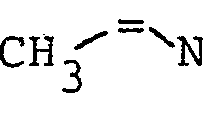
- 27,3 mg (0,1 mMol) Natriumperrhenat und 1,57 g (10 mMol) 2-Azido-3-methyl-butensäuremethylester wurden bei 80 °C in 5 ml Essigsäureethylester vorgelegt. Dann wurden innerhalb von 30 Minuten unter kräftigem Rühren 1,10 g (10,5 mMol) Cyclopropancarbonsäurechlorid, gelöst in 5 ml Essigsäureethylester, zugetropft. Das Reaktionsgemisch wurde unter kräftigem Rühren insgesamt 4 Stunden auf 80 °C gehalten und anschließend analog Beispiel 1 aufgearbeitet. Es ergaben sich 1,74 g (88,3 % der Theorie) analysenreiner 2-Cyclopropylcarboxamido-3-methyl-2-butensäuremethylester.

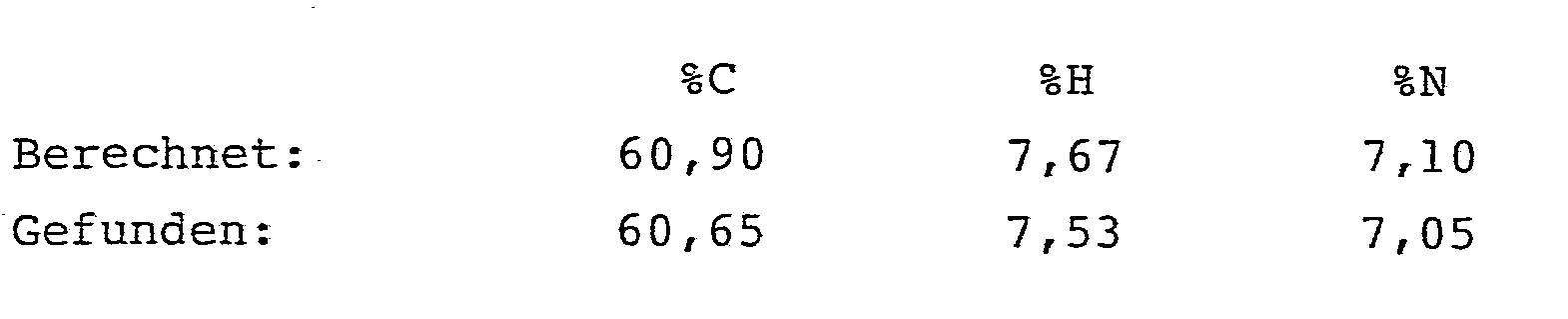
- Schmelzpunkt: 150 °C 1H-NMR (CDCl3):
- δ= 7,13 (s, 1H) NH; IR NH = 3270 cm-1,
- 3,74 (s, 3H) OCH3; CO = 1719 cm-1,
-

-
- 1,68 - 0,6 ppm (m, 5H
- 27,3 mg (0,1 mMol) Natriumperrhenat und 1,57 g (10 mMol) 2- Azido-3-methyl-butansäuremethylester wurden bei 80 °C in 5 ml Essigsäureethylester vorgelegt. Dann wurden innerhalb von 30 Minuten unter kräftigem Rühren 1,25 g (10,5 mMol) 1-Methyl-cyclopropancarbonsäurechlorid, gelöst in 5 ml Essigsäureethylester, zugetropft. Das Reaktionsgemisch wurde unter kräftigem Rühren insgesamt 4 Stunden auf 80 °C gehalten und anschließend analog Beispiel 1 aufgearbeitet. Es ergaben sich 1,95 (92,4 % der Theorie) analysenreiner 2-[(1-Methylcyclopropyl)-carboxamido]-3-methyl-2-butensäu- remethylester.


- Schmelzpunkt: 73,5 °C 1H-NMR (CDCl3);
- δ=6,97 (s, 1H) NH; IR NH = 3325 cm-1,
- 3,77 (s, 3H) OCH3; CO = 1717 cm-1.
- 2,16 (s, 3H)

- 1,84 (s, 3H)
- 1,43 (s, 3H) CH3;
- 2,0 - 0,5 ppm (m, 4H)

- 27,3 mg (0,1 mMol) Natriumperrhenat und 1,57 g (10 mMol) 2-Azido-3-methylbutansäuremethylester wurden bei 80°C in 5 ml Essigsäureethylester vorgelegt. Dann wurden innerhalb von 30 Minuten unter kräftigem Rühren 1,97 g (10,5 mMol) 2,2-Dichlor-l-methyl-cyclopropan-carbonsäurechlorid, gelöst in 5 ml Essigsäureethylester, zugetropft. Das Reakti- onsgemisch wurde unter kräftigem Rühren insgesamt 4 Stunden auf 80 °C gehalten und anschließend analog Beispiel 1 aufgearbeitet. Es ergaben sich 2,61 g (93,1 % der Theorie) analysenreiner 2- [(2',2'-Dichlor-1'-methyl)-cyclopropylcarbox- amido],-3-methyl-2-butensäuremethylester.


- Schmelzpunkt: 104 °C 1H-NMR (CDCl3):
- δ=7,31 (s, 1H) NH; IR NH = 3280 cm-1,
- 3,71 (s, 3H) OCH3; CO = 1721 cm-1,
-

- 2,18 (s, 3H)

-
- 1,66 (s, 3H) ;
- 1,39 ppm (d,

- 27,3 mg (0,1 mMol) Natriumperrhenat und 1,57 g (10 mMol) 2- Azido-3-methylbutansäuremethylester wurden bei 80 °C in 5 ml Essigsäureethylester vorgelegt. Dann wurden innerhalb von 30 Minuten unter kräftigem Rühren 2,39 g (10,5 mMol) 2-(2',2'-Dichlorethenyl)-3,3-dimethyl-cyclopropancarbonsäure- chlorid, gelöst in 5 ml Essigsäureethylester, zugetropft. Das Reaktionsgemisch wurde unter kräftigem Rühren insgesamt 4 Stunden auf 80 °C gehalten und anschließend analog Beispiel 1 aufgearbeitet.
- Es ergaben sich 3,08 g (96,3 % der Theorie) analysenreiner 2-[2'-(2,2-Dichlorethenyl)-3',3'-dimethyl]-cyclopropylcarb- oxamido-3-methyl-2-butensäuremethylester.


- Schmelzpunkt: 151,5 bis 152,5 °C 1H-NMR (CDCl3):
- δ= 6,69 (s, 1H) NH; IR NH = 3345 cm-1,
- 6,46 (d, 1H) -CH=CC12; CO = 1700 cm-1, 3,-6 (s, 3H) OCH3; 1665 cm-1.
- 2,16 (s, 3H)

- 1,85 (s, 3H)

- 1,29 (s, 3H)
- 1,27 ppm (s, 3H)

- 246 mg (0,5 mMol) Tetra-n-butyl-ammoniumperrhenat, 7,85 g (50 mMol) 2-Azido-3-methylbutansäuremethylester, 5,2 g (52,5 mMol) N-Methylpyrrolidin und 50 mg (0,45 mMol) Hydrochinon wurden in 50 ml Acetonitril gelöst. Dann wurden bei Raumtemperatur unter kräftigem Rühren 9,75 g (52,5 mMol) 4-Nitrobenzoylchlorid zugegeben. Das Reaktionsgemisch wurde 14 Stunden bei Raumtemperatur gerührt und anschließend analog Beispiel 3 aufgearbeitet.
- Es ergaben sich 8,9 g (64,0 % der Theorie) analysenreiner 2- [(4'-Nitrophenyl)-carbonylamino]-3-methyl-2-butensäureme- thylester.
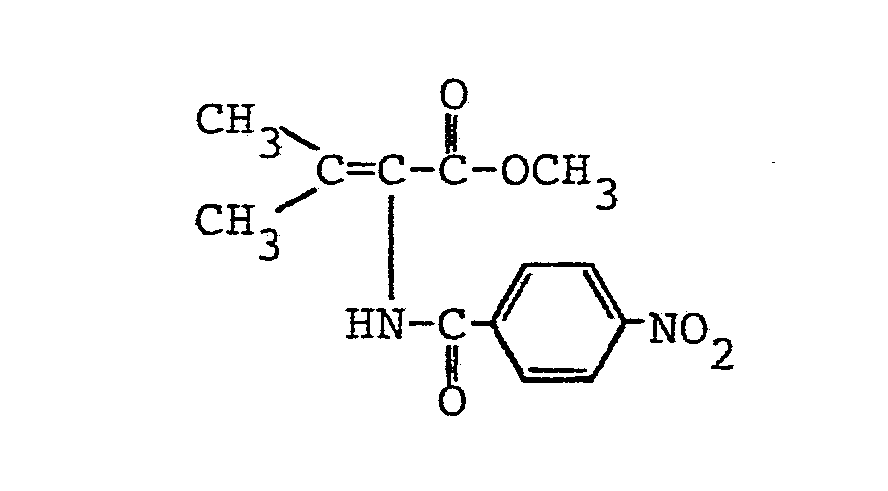

- Schmelzpunkt: 122 °C 1H-NMR (CDCl3/TMS):
- δ= 8,4 - 7,6 (m, 5H) NH; aromat. CH=;
- 3,75 (s, 3H) COOCH3;
- 2,15 (s, 3H) CH 3-;
- 1,9 ppm (s, 3H) CH3-.
- 246 mg (0,5 mMol) Tetra-n-butyl-ammoniumperrhenat, 7,85 g (50 mMol) 2-Azido-3-methylbutansäuremethylester, 5,2 g (52,5 mMol) N-Methylpyrrolidon und 50 mg (0,45 mMol) Hydrochinon wurden in 50 ml Acetonitril gelöst. Dann wurden bei Raumtemperatur unter kräftigem Rühren 11,05 g (52,5 mMol) 2,6-Dichlorisonicotinsäurechlorid zugegeben. Der Ansatz reagierte innerhalb 15 Minuten exotherm ab, wobei das Rohprodukt ausfiel. Dieses wurde abgesaugt und mit Wasser Chlorid-frei gewaschen.
- Es ergaben sich 8,9 g (58,7 % der Theorie) analysenreiner 2- [(2'-,6'-Dichlorisonicotinoyl)-amino] -3-methyl-2-butensäu- remethylester.
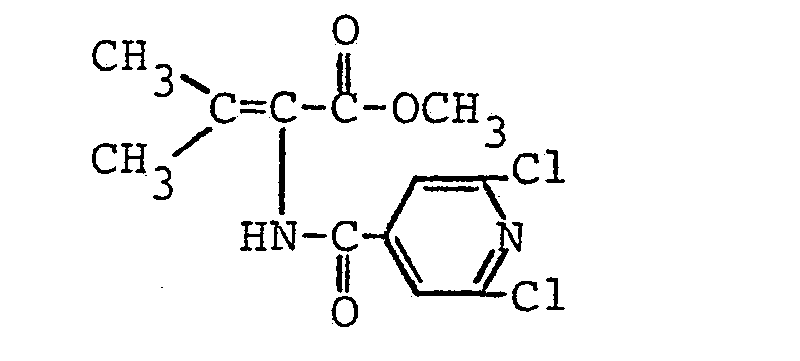

- Schmelzpunkt: 186 bis 187 °C 1H-NMR (DMSO-δ6/TMS):
- δ= 10,1 (s breit, lH) NH;
- 7,95 (s, 2H) aromat. CH;
- 3,6 (s, 3H) -COOCH3;
- 2,1 (s, 3H) CH3-;
- 1,85 ppm (s, 3H) CH3-.
- 246 mg (0,5 mMol) Tetra-n-butyl-ammoniumperrhenat, 9,25 g (50 mMol) 2-Azido-butansäure-n-butylester, 3,85 g (52,6 mMol) Dimethylformamid und 50 mg (0,45 mMol) Hydrochinon wurden in 50 ml Acetonitril gelöst. Dann wurden bei Raumtemperatur unter kräftigem Rühren 11,05 g (52,5 mMol) 2,6-Dichlorisonicotinsäurechlorid zugegeben. Der Ansatz reagierte innerhalb 15 Minuten exotherm ab. Die Aufarbeitung erfolgte analog Beispiel 3.
- Es ergaben sich 11,8 g (71,25 % der Theorie) analysenreiner 2- C(2',6'-Dichlorisonicotinoyl)-amino] -2-butensäure-n-butylester.


- Schmelzpunkt: 123 bis 124 °C 1H-NMR (CDCl3/TMS) :
- δ = 8,05 (s breit, lH) NH;
- 7,65 (s, 2H) aromat. CH;
- 6,9 (q, 1H) -CH=;
- 4,15 (t, 2H) -COOCH2-;
- 1,75 (d, 3H) CH 3-;
- 0,55 - 2,0 ppm (m, 7H) -CH2CH 2-CH 3.
- 27,3 mg (0,1 mMol) Natriumperrhenat und 2,05 g (10 mMol) 2-Azido-3-phenyl-propansäuremethylester wurden bei 80 °C in 5 ml Essigsäureethylester vorgelegt. Dann wurden innerhalb von 40 Minuten unter kräftigem Rühren 1,95 g (10,5 mMol) 2-Brom-butansäurechlorid, gelöst in 5 ml Essigsäureethylester zugetropft. Das Reaktionsgemisch wurde unter kräftigem Rühren insgesamt 3 Stunden auf 80 C gehalten und anschließend analog Beispiel 1 aufgearbeitet.
- Es ergaben sich 2,23 g (68,2 % der Theorie) analysenreiner 2-(2'-Brompropyl)-carboxamido-3-phenyl-propensäuremethyl- ester.


- Schmelzpunkt: 115 °C 1H-NrlR (CDCl3) :
- δ= 7,80 (s, 1H) NH; NH = 3210 cm-1,
- 7,63 - 7,25 (m, 5H) aromat. -CH=; CO = 1715 cm-1,
- 4,38 (t, 1H) -CHBr-; 1661 cm-1.
- 3,86 (s, 3H) OCH3;
- 2,4 - 1,95 (m, 2H) -CH2-CH3;
- 1,11 ppm (t, 3H) -CH2-CH3.
- 2,46 mg (0,5 mMol) Tetra-n-butyl-ammoniumperrhenat, 9,25 g (50 mMol) 2-Azido-butansäure-n-butylester, 5,2 g (52,5 mMol) N-Methylpyrrolidon und 50 mg (0,45 mMol) Hydrochinon wurden in 50 ml Acetonitril gelöst. Dann wurden bei Raumtemperatur unter kräftigem Rühren 10,7 g (52,3 mMol) 1-Naphtylacetylchlorid zugegeben. Das Reaktionsgemisch wurde 20 Stunden bei Raumtemperatur gerührt und anschließend analog Beispiel 3 aufgearbeitet.
- Es ergaben sich 10,3 g (62,8 % der Theorie) analysenreiner 2-(1'-Naphtylacetylamino)-2-butensäure-n-butylester.


- Schmelzpunkt: 101 bis 102 °C 1H-NMR (CDCl3/TMS) :
- δ = 7,1 - 8,2 (m, 7H) aromat. -CH;
- 6,8 (s breit, 1H) NH;
- 6,6 (q, 1H) CH3-CH=;
- 4,05 (s, 2H) COCH2-;
- 3,95 (t, 2H) COOCH3-;
- 1,65 (d, 3H) CH3-C=;
- 0,5 - 1,7 ppm (m, -H) -CH2CH2CH3.
- 2,46 mg (0,5 mMol) Tetra-n-butyl-ammoniumperrhenat, 50 mg Hydrochinon und 6,85 g (52,5 mMol) Furan-2-carbonsäurechlorid wurden bei 80 °C in 25 ml mit Chlorwasserstoff gesättigtem Essigsäureethylester vorgelegt. Dann wurden unter kräftigem Rühren 7,85 g (50 mMol) 2-Azido-3-methyl-butansäuremethylester, gelöst in 25 ml Essigsäureethylester, zuge- tropft. Nach 4 Stunden Reaktionszeit war die Gasentwicklung beendet. Die Aufarbeitung erfolgte analog Beispiel 16. Es ergaben sich 7,4 g (66,3 % der Theorie) analysenreiner 2-Furyl-carbonyl-amino-3-methyl-2-butensäuremethylester.


- Schmelzpunkt: 95 bis 98 °C 1H-NMR (CDC13/TMS):
- δ = 7,55 (s breit, 1H) NH;
- 7,35 - 7,5 (m, 1H)
- 7,0 - 7,15 (m, 1H)
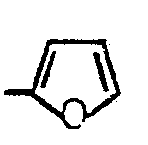
- 6,2 - 6,6 (m, 1H)
- 3,65 (s, 3H) COOCH3;
- 2,2 (s, 3H) CH3-C=;
- 1,9 ppm (s, 3H) CH3-C=.
- 2,46 mg (0,5 mMol) Tetra-n-butyl-ammoniumperrhenat, 7,85 g (50 mMol) 2-Azido-3-methyl-butansäuremethylester, 5,2 g (52,5 mMol) N-Methylpyrrolidon und 50 mg (0,45 mMol) Hydrochinon wurden in 50 ml Acetonitril gelöst. Dann wurden bei Raumtemperatur unter kräftigem Rühren 9,55 g (52,5 mMol) Trichloracetylchlorid zugegeben. Das Reaktionsgemisch reagierte innerhalb 20 Minuten exotherm ab. Die Aufarbeitung erfolgte analog Beispiel 3. Es ergaben sich 7,9 g (57,6 % der Theorie) analysenreiner 2-Trichlormethylcarboxamido-3-methyl-2-butensäuremethyl- ester.
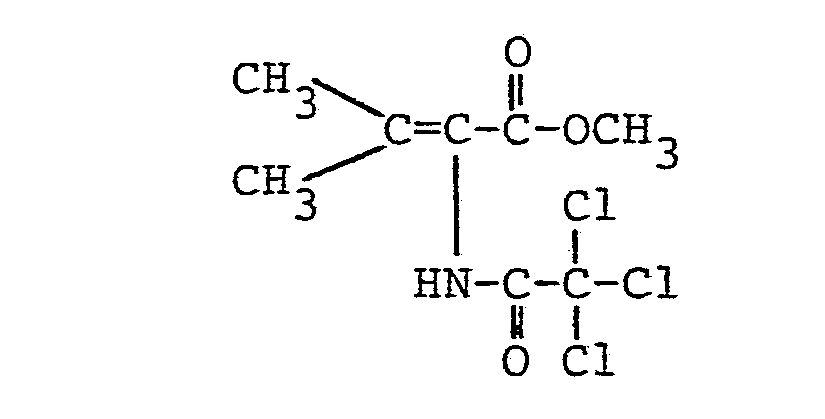

- 1H-NMR (COCl3/TMS):
- δ = 7,85 (s breit, lH) NH;
- 3,7 (s, 3H) COOCH3;
- 2,25 (s, 3H) CH3-;
- 1,85 ppm (s, 3H) CH 3.
- 2,46 mg (0,5 mMol) Tetra-n-butyl-ammoniumperrhenat, 9,25 g (50 mMol) 2-Azido-butansäure-n-butylester, 5,2 g (52,5 mMol) N-Methylpyrrolidon und 50 mg (0,45 mMol) Hydrochinon wurden in 50 ml Acetonitril gelöst. Dann wurden bei Raumtemperatur unter kräftigem Rühren 9,55 g (52,5 mMol) Trichloracetylchlorid zugegeben. Das Reaktionsgemisch wurde 16 Stunden bei Raumtemperatur gerührt und anschließend analog Beispiel 3 aufgearbeitet. Das so erhaltene Rohprodukt wurde im Hochvakuum (0,013 mbar) bei 150 bis 190 °C Gerätetemperatur im Kugelrohr destilliert.
- Es ergaben sich 9,5 g (62,7 % der Theorie) analysenreiner 2-Trichlormethylcarboxamido-2-butensäure-n-butylester.


- 1H-NMR (CDCl3/TMS):
- δ = 8,05 (s breit, 1H) NH;
- 6,9 (q, 1H) -CH=;
- 4,15 (t, 2H) COOCH2-;
- 1,75 (d, 3H) CH3-C=;
- 0,65 - 1,75 ppm (m, 7H) -CH2CH2CH3.
- 134 mg (0,5 mMol) Ammoniumperrhenat, 7,85 g (50 mMol) 2-Azido-3-methyl-butansäuremethylester, 5,2 g (52,5 mMol) N-Methylpyrrolidon und 50 mg (0,45 mMol) Hydrochinon wurden in 50 ml Essigsäureethylester gelöst. Dann wurden bei Raumtemperatur unter kräftigem Rühren 8,5 g (52,2 mMol) Caprylsäurechlorid zugegeben.Der Ansatz reagierte innerhalb 10 Minuten exotherm ab. Die Aufarbeitung erfolgte analog Beispiel 16.
- Es ergaben sich 9,5 g (74,4 % der Theorie) analysenreiner 2-Heptylcarboxamido-3-methyl-2-butensäuremethylester.


- Schmelzpunkt: 71 °C 1H-NMR /CDCl3/TMS) :
- δ= 6,6 (s breit, 1H) NH;
- 3,65 (s, 3H) -COOCH3;
- 1,9 - 2,45 (m, 2H) -COCH2-;
- 2,1 (s, 3H) CH3-C=;
- 1,75 (s, 3H) CH3-C=;
- 1,25 (s, 10H) -(CH2)5=;
- 0,8 ppm (t, 3H) CH2-CH 3.
- 134 mg (0,5 mMol) Ammoniumperrhenat, 7,85 g (50 mMol) 2-Azido-3-methyl-butansäuremethylester, 5,2 g (52,5 mMol) N-Methylpyrrolidon und 50 mg (0,45 mMol) Hydrochinon wurden in 50 ml Essigsäureethylester vorgelegt. Dann wurden bei Raumtemperatur unter kräftigem Rühren 9,0 g (52,7 mMol) . Phenoxyessigsäurechlorid zugegeben. Der Ansatz reagierte innerhalb 30 Minuten exotherm ab. Die Aufarbeitung erfolgte analog Beispiel 16.
- Es ergaben sich 9,0 g (68,4 % der Theorie) analysenreiner 2-Phenoxyacetylamino-3-methyl-2-butensäuremethylester..


- Schmelzpunkt: 79 °C 1H-NMR (CDCl3/TMS) :
- δ= 7,65 (s breit, 1H) NH;
- 6,65 - 7,55 (m, 5H) aromat. CH;
- 4,6 (s, 2H) -COCH2-;
- 3,7 (s, 3H) COOCH3;
- 2,25 (s, 3H) CH 3-;
- 1,85 ppm (s, 3H) CH3-.
- 246 mg (0,5 mMol) Tetra-n-butylammoniumperrhenat, 15,5 g (49,7 mMol) 2-Azido-hexadecansäuremethylester, 5,2 g (52,5 mMol) N-Methylpyrrolidon und 50 mg (0,45 mMol) Hydrochinon wurden in 25 ml Essigsäureethylester und 25 ml Acetonitril gelöst. Dann wurden bei Raumtemperatur unter kräftigem Rühren 5,9 g (52,3 mMol) Chloracetylchlorid zugegeben. Der Ansatz reagierte innerhalb 30 Minuten exotherm ab. Die Aufarbeitung erfolgte analog Beispiel 3.
- Es ergaben sich 11,5 g (64,3 % der Theorie) analysenreiner 2-Chlormethylcarboxamido-2-hexadecensäuremethylester.


- Schmelzpunkt: 74 bis 75 °C 1H-NMR (CDCl3/TMS) :
- δ = 7,75 (s brsit, 1H) NH;
- 6,75 (t, 1H) -CH=;
- 4,1 (s, 2H) -CH2Cl;
- 3,75 (s, 3H) -COOCH3;
- 1,7 - 2,5 (m, 2H) -CH2-CH=;
- 1,25 (s, 22H) -(CH2)11-;
- 0,85 ppm (t, 3H) CH3-.
- 246 mg (0,5 mMol) Tetra-n-butyl-ammoniumperrhenat, 9,25 g (49,9 mMol) 2-Azido-pentansäureisopropylester, 3,85 g (52,6 mMol) Dimethylformamid und 50 mg (0,45 mMol) Hydrochinon wurden in 50 ml Acetonitril gelöst. Dann wurden bei Raumtemperatur unter kräftigem Rühren 11,8 g (52,5 mMol) 2-[4'-(2-Methylpropyl)-phenyl)-propionsäurechlorid zugegeben. Das Reaktionsgemisch wurde 15 Stunden bei Raumtemperatur gerührt und anschließend analog Beispiel 3 aufgearbeitet. Es ergaben sich 10,0 g (58,0 % der Theorie) analysenreiner 2-{2'-C[4-(2'-Methylpropyl)-phenyl)-propionylamido}-2-pen- tensäureisopropylester.


- Schmelzpunkt: 80 bis 83 °C 1H-NMR (CDCl3/TMS) :
- δ = 6,9 - 7,3 (m, 4H) -CH= aromat.;
- 6,65 (s breit, 1H) NH;
- 6,45 (t, 1H) -CH2-CH=;
- 4,6 - 5,25 (m, 1H) COOCH-;
- 3,65 (q, 1H) COCH-;
- 2,4 (d, 2H)

- 1,65 - 2,2 (m, 3H) -CH2-CH=; -CH;
- 1,45 (d, 3H) CH-CH3;
- 1,15 (d, 6H)

- 0,95 (t, 3H)

- 0,85 ppm (d,

- 246 mg (0,5 mMol) Tetra-n-butyl-ammoniumperrhenat, 11,25 g (50 mMol) 2-Azido-3-cyclopentyl-propionsäureisopropylester, 3,85 g (52,6 mMol) Dimethylformamid und 50 mg (0,45 mMol) Hydrochinon wurden in 50 ml Acetonitril gelöst. Dann wurden bei Raumtemperatur 9,5 g (52,6 mMol) 3-Acetylthio-2-methyl- propionsäurechlorid zugegeben. Der Ansatz reagierte innerhalb 30 Minuten exotherm ab. Die Aufarbeitung erfolgte analog zu Beispiel 3.
- Es ergaben sich 9,6 g (56,2 % der Theorie) analysenreiner 2-[(1'-Methyl-2'-acetylthio)-ethylcarboxamido]-3-cyclopentyl-propensäureisopropylester.


- Schmelzpunkt: 63 bis 65 °C 1H-NMR (CDC13/TMS):
- δ = 6,95 (s breit, 1H) NH;
- 6,6 (d, 1H) -CH=;
- 4,7 - 5,4 (m, 1H) -COOCH-;
- 2,15 - 3,5 (m, 4H) COCH-;
- CH3 2,3 (s, 3H) COCH 3;
- 1,3 - 2,25 (m, 9H)
- 1,25 ppm (d, 6H) -

- 246 mg (0,5 mMol) Tetra-n-butyl-ammoniumperrhenat, 11,25 g (50 mMol) 2-Azido-3-cyclopentyl-propionsäureisopropylester, 3,85g(52,6 mMol) Dimethylformamid und 50 mg (0,45 mMol) Hydrochinon wurden in 50 ml Acetonitril gelöst. Dann wurden bei Raumtemperatur unter kräftigem Rühren 8,5 g (52,3 mMol) Diprogylessigsäurechlorid zugegeben. Das Reaktionsgemisch wurde 16 Stunden bei Raumtemperatur gerührt und anschließend analog Beispiel 3 aufgearbeitet.
- Es ergaben sich 9,2 g (56,9 % der Theorie) analysenreiner 2- C(1'Propyl-butyl)-carbonylamino]-3-cyclopentyl-propensäu- reisopropylester.


- Schmelzpunkt: 148,2 °C 1H-NMR (CDCl3/TMS) :
- δ=6.8 (s breit, 1H) NH;
- 6,55 (d, 1H) -CH=;
- 4,8 - 5,3 (m, 1H) COOCH-;
- 0,65 - 2,8 (m, 28H) -CH(CH2CH2CH3)2;

- 1,25 ppm (d, 6H) -C(CH3)2.
- 134 mg (0,5 mMol) Ammoniumperrhenat, 7,85 g (50 mMol) 2- Azido-pentansäuremethylester, 3,85 g (52,6 mMol) Dimethylformamid und 50 mg (0,45 mMol) Hydrochinon wurden in 50 ml Acetonitril gelöst. Dann wurden bei Raumtemperatur unter kräftigem Rühren 8,5 g (52,3 mMol) Dipropylessigsäurechlorid zugegeben. Das Reaktionsgemisch wurde 120 Stunden gerührt, wobei eine maximale Reaktionstemperatur von 80 °C erreicht wurde. Nach Aufarbeitung analog Beispiel 3 ergaben sich 7,0 g (54,8 % der Theorie) analysenreiner 2-[(1'-Pro- pylbutyl)-carbonylamino]-2-pentensäuremethylester.


- Schmelzpunkt: 132 °C 1H-NMR (CDCl3/TMS):
- δ = 6,9 (s breit, 1H) NH;
- 6,65 (t, 1H) -CH=;
- 3,75 (s, 3H) COOCH3;
- 1,85 - 2,5 (m, 2H) -CH2-CH=;
- 0,6 - 1,8 ppm (m, 18H) CH3-CH2; -CH-(CH2CH2CH3)2.
- 246 mg (0,5 mMol) Tetra-n-butyl-ammoniumperrhenat, 7,85 g (50 mMol) 2-Azido-3-methyl-butansäuremethylester, 5,2 g (52,5 mMol) N-Methylpyrrolidon und 50 mg (0,45 mMol) Hydrochinon wurden in 50 ml Acetonitrilgelöst. Dann wurden bei Raumtemperatur unter kräftigem Rühren 8,75 g (52,5 mMol) Zimtsäurechlorid zugegeben. Das Reaktionsgemisch wurde dann 14 Stunden gerührt, wobei die maximale Reaktionsexotherme 40 °C betrug. Nach Aufarbeitung analog Beispiel 3 ergaben sich 9,3 g (71,7 % der Theorie) analysenreiner 2-[(2'-Phe- nylvinyl)-carbonylamino]-3-methyl-2-butensäuremethylester.


- Schmelzpunkt: 138 bis 141 °C 1H-NMR (CDCl3/TMS) :
- δ = 7,1 - 7,6 (m, 6H) aromat. CH; NH;
- 7,6 (d, 1H) -CO-CH=;
- 6,5 (d, 1H) -C=CH-;
- 3,7 (s, 3H) COOCH3;
- 2,15 (s, 3H) CH3-C=;
- 1,85 ppm (s, 3H) CH3-C=.
- 134 mg (0,5 mMol) Ammoniumperrhenat, 7,85 g (50 mMol) 2-Azido-pentansäuremethylester, 50 mg (0,45 mMol) Hydrochinon und 3,85 g (52,6 mMol) Dimethylformamid wurden in 50 ml Essigsäureethylester gelöst. Dann wurden bei Raumtemperatur unter kräftigem Rühren 12,0 g (52,02 mMol) 3,4,5-Trimethoxybenzoylchlorid zugetropft. Das Reaktionsgemisch wurde 240 Stunden bei Raumtemperatur gerührt. Nach Aufarbeitung analog Beispiel 16 ergaben sich 8,75 g (54,1 % der Theorie) 2-[(3',4',5'-Trimethoxyphenyl)-carbonyl-amino]-2-pentensäuremethylester.
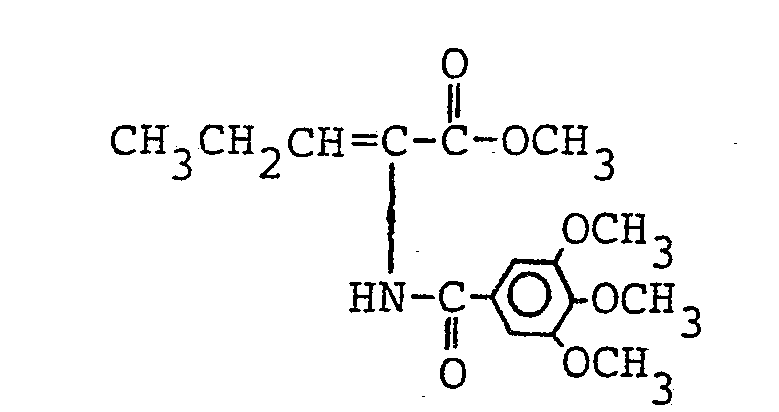

- Schmelzpunkt: 137 bis 140 °C 1H-NMR(CDCl3/TMS):
- δ = 7,65 (s breit, 1H) NH;
- 7,05 (s, 2H) aromat.CH=;
- 6,7 (t, 1H) CH=C;
- 3,85 (s, 3H) COOCH3;
- 1,8 - 2,55 (m, 2H) -CH2-;
- 1,05 ppm (t, 3H) CH3-.
Claims (3)
- l. Verfahren zur Herstellung von N-Acyl-2,3-dehydroamino- carbonsäureestern der allgemeinen Formel
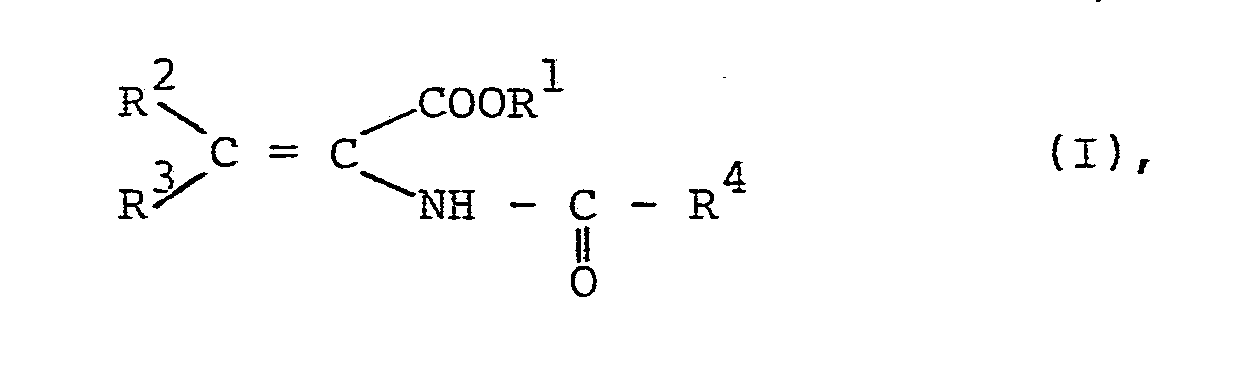 R 1 einen geradkettigen oder verzweigten (Cl-C4)-Alkylrest, einen Phenylrest oder einen Benzylrest,R 2 Wasserstoff oder einen Methylrest,R 3 Wasserstoff, einen geradkettigen oder verzweigten (C1-C16)-Alkylrest, einen (C3-C8)-Cycloalkylrest, einen (C1-C6)-Alkoxyrest, einen Phenoxyrest, einen (C1-C6)-Alkylmercaptorest, einen Phenylmercaptorest oder einen Methoxycarbonylmethylmercaptorest undR 4 einen geradkettigen oder verzweigten unsubstituierten oder ein- oder mehrfach durch Halogen, eine Methoxygruppe oder eine Acetylthiogruppe substituierten (C1-C16)-Alkylrest oder (C2-C16)-Alkenylrest, einen unsubstituierten oder ein- oder mehrfach durch Halogen oder eine Methylgruppe substituierten (C3-C8)-Cycloalkylrest, einen unsubstituierten oder ein- oder mehrfach durch Halogen, eine Nitrogruppe, eine (Cl-C4)-Alkyl- oder -Alkoxygruppe oder eine Trifluormethylgruppe substituierten Phenylrest, einen unsubstituierten oder ein- oder mehrfach durch Halogen substituierten Cinnamylrest, einen unsubstituierten oder ein- oder mehrfach durch Halogen, eine (C1-C4)-Alkyl-oder -Alkoxygruppe oder eine Trifluormethylgruppe substituierten Heteroarylrest, einen Aryl- oder Heteroarylmethylrest, einen unsubstituierten oder ein-oder mehrfach durch Halogen, eine Nitrogruppe, eine (C1-C4)-Alkylgruppe oder eine Trifluormethylgruppe substituierten Phenoxymethylrest oder Phenylethylrest oder einen 2-(2',2'-Dichlorethenyl)-3,3-dimethylcyclo- propylrest
bedeuten, dadurch gekennzeichnet, daß man einen 2-Azidocarbonsäureester der allgemeinen Formel
in der R 1, R 2 und R die bereits angegebene Bedeutung haben, bei einer Temperatur zwischen 0 und 150 °C in Gegenwart eines Perrhenats mit einem Carbonsäurehalogenid der allgemeinen Formel
in der R4 die bereits angegebene Bedeutung hat und Hal Chlor oder Brom bedeutet, zur Umsetzung bringt. - 2. Verfahren nach Anspruch 1, dadurch gekennzeichnet, daß man das Perrhenat in einer Menge zwischen 0,005 und 10 Molprozent, bezogen auf die eingesetzte Menge an 2-Azidocarbonsäureester der allgemeinen Formel (II), anwendet.
- 3. Verfahren nach Anspruch 1 oder 2, dadurch gekennzeichnet, daß man die Umsetzung in zusätzlicher Gegenwart eines Säureamids, eines Lactams oder eines substituierten Harnstoffs vornimmt.
Priority Applications (1)
| Application Number | Priority Date | Filing Date | Title |
|---|---|---|---|
| AT86101048T ATE53008T1 (de) | 1985-03-11 | 1986-01-27 | Verfahren zur herstellung von n-acyl-2,3dehydroaminocarbons|ureestern. |
Applications Claiming Priority (2)
| Application Number | Priority Date | Filing Date | Title |
|---|---|---|---|
| DE19853508564 DE3508564A1 (de) | 1985-03-11 | 1985-03-11 | Verfahren zur herstellung von n-acyl-2, 3-dehydroaminocarbonsaeureestern |
| DE3508564 | 1985-03-11 |
Publications (3)
| Publication Number | Publication Date |
|---|---|
| EP0195201A2 true EP0195201A2 (de) | 1986-09-24 |
| EP0195201A3 EP0195201A3 (en) | 1988-01-13 |
| EP0195201B1 EP0195201B1 (de) | 1990-05-23 |
Family
ID=6264801
Family Applications (1)
| Application Number | Title | Priority Date | Filing Date |
|---|---|---|---|
| EP86101048A Expired - Lifetime EP0195201B1 (de) | 1985-03-11 | 1986-01-27 | Verfahren zur Herstellung von N-Acyl-2,3-dehydroaminocarbonsäureestern |
Country Status (6)
| Country | Link |
|---|---|
| EP (1) | EP0195201B1 (de) |
| JP (1) | JPS61212546A (de) |
| AT (1) | ATE53008T1 (de) |
| CA (1) | CA1277988C (de) |
| DE (2) | DE3508564A1 (de) |
| ES (1) | ES8706107A1 (de) |
Cited By (1)
| Publication number | Priority date | Publication date | Assignee | Title |
|---|---|---|---|---|
| WO1996016021A1 (en) * | 1994-11-17 | 1996-05-30 | E.I. Du Pont De Nemours And Company | Process for the efficient preparation of n-substituted dehydroamino acid esters |
Family Cites Families (2)
| Publication number | Priority date | Publication date | Assignee | Title |
|---|---|---|---|---|
| PH16708A (en) * | 1978-07-24 | 1984-01-20 | Merck & Co Inc | Z-2-acylamino-3-monosubstituted propenoates |
| DE3140227C1 (de) * | 1981-10-09 | 1982-12-16 | Degussa Ag, 6000 Frankfurt | Verfahren zur Herstellung von N-Acetyl-2,3-dehydro-aminocarbonsaeureestern |
-
1985
- 1985-03-11 DE DE19853508564 patent/DE3508564A1/de active Granted
-
1986
- 1986-01-27 DE DE8686101048T patent/DE3671431D1/de not_active Expired - Lifetime
- 1986-01-27 AT AT86101048T patent/ATE53008T1/de not_active IP Right Cessation
- 1986-01-27 EP EP86101048A patent/EP0195201B1/de not_active Expired - Lifetime
- 1986-03-10 CA CA000503677A patent/CA1277988C/en not_active Expired - Lifetime
- 1986-03-10 ES ES552839A patent/ES8706107A1/es not_active Expired
- 1986-03-11 JP JP61051616A patent/JPS61212546A/ja active Pending
Cited By (1)
| Publication number | Priority date | Publication date | Assignee | Title |
|---|---|---|---|---|
| WO1996016021A1 (en) * | 1994-11-17 | 1996-05-30 | E.I. Du Pont De Nemours And Company | Process for the efficient preparation of n-substituted dehydroamino acid esters |
Also Published As
| Publication number | Publication date |
|---|---|
| DE3671431D1 (de) | 1990-06-28 |
| EP0195201B1 (de) | 1990-05-23 |
| ATE53008T1 (de) | 1990-06-15 |
| EP0195201A3 (en) | 1988-01-13 |
| CA1277988C (en) | 1990-12-18 |
| DE3508564A1 (de) | 1986-09-11 |
| ES8706107A1 (es) | 1987-06-01 |
| JPS61212546A (ja) | 1986-09-20 |
| DE3508564C2 (de) | 1988-02-18 |
| ES552839A0 (es) | 1987-06-01 |
Similar Documents
| Publication | Publication Date | Title |
|---|---|---|
| EP0432504A1 (de) | Verfahren zur Herstellung von 1-(Aminomethyl)cyclohexanessigsäure | |
| CH633250A5 (de) | Verfahren zur herstellung von neuen polyprenylderivaten. | |
| EP0195201B1 (de) | Verfahren zur Herstellung von N-Acyl-2,3-dehydroaminocarbonsäureestern | |
| Beebe et al. | N-bromination of amides, imides, and sulfonamides with acetyl hypobromite | |
| Eberson | Studies on the Kolbe Electrolytic Synthesis. I. Electrolysis of Some α-Cyanocarboxylic Acids | |
| DE2253555A1 (de) | Oxazolo-pyrimidine und verfahren zu ihrer herstellung | |
| EP0160379A1 (de) | 2,3,5,6-tetrafluorophenyl-(meth)acrylate und ihre Herstellung | |
| CH617205A5 (de) | ||
| EP0021382B1 (de) | Verfahren zur Herstellung von Cyclopropan-carbonsäure-derivaten sowie neue Zwischenprodukte hierfür und Verfahren zu deren Herstellung | |
| US4788315A (en) | 2,5-substituted-cyclohexane-1,4-diones and a process for production thereof | |
| EP0333658A2 (de) | Verfahren zur Herstellung von substituierten Difuorbenzo-1,3-dioxolen | |
| EP0025935B1 (de) | Verfahren zur Herstellung von 5-(2,2,2-Trihalogenethyl)-dialkyl-tetrahydrofuran-2-onen | |
| EP0202529A2 (de) | Neue Phenolderivate, diese enthaltende Arzneimittel und Verfahren zur Herstellung dieser Verbindungen und Arzneimittel | |
| DD209443A5 (de) | Verfahren zur herstellung von acylaminoderivaten von 1-(aryl- oder subst.-aryl)amino-1-thioalkancarboxysaeuren | |
| DE3142114A1 (de) | Verfahren zur herstellung von dodec-11-en-1-ylderivaten | |
| US6197811B1 (en) | Cytokine production inhibitors | |
| DE3140227C1 (de) | Verfahren zur Herstellung von N-Acetyl-2,3-dehydro-aminocarbonsaeureestern | |
| EP0126225B1 (de) | Verfahren zur Herstellung von substituierten Trialkylsilyloxymalonsäuredinitrilen | |
| EP0102520B1 (de) | Verfahren zur Umkehrung der Konfiguration optisch aktiver Verbindungen und optisch aktive Zwischenprodukte dieses Verfahrens | |
| JP2628909B2 (ja) | ジアゾ誘導体 | |
| CH659472A5 (de) | Epoxycarbacyclinderivate, ihre herstellung und verwendung. | |
| AT392071B (de) | Neue prostacycline | |
| EP0639175A4 (de) | Verfahren zur herstellung von 2-(dialkoxymethyl)-carbonsäureestern. | |
| EP0087654B1 (de) | Verfahren zur Herstellung von 1-(4-Chlorbenzoyl)-5-methoxy-2-methyl-3-indolacetoxyessigsäure | |
| EP0131130A1 (de) | Verfahren zur Herstellung von Cycloalkenylalkinen |
Legal Events
| Date | Code | Title | Description |
|---|---|---|---|
| PUAI | Public reference made under article 153(3) epc to a published international application that has entered the european phase |
Free format text: ORIGINAL CODE: 0009012 |
|
| 17P | Request for examination filed |
Effective date: 19860127 |
|
| AK | Designated contracting states |
Kind code of ref document: A2 Designated state(s): AT BE CH DE FR GB IT LI LU NL SE |
|
| PUAL | Search report despatched |
Free format text: ORIGINAL CODE: 0009013 |
|
| AK | Designated contracting states |
Kind code of ref document: A3 Designated state(s): AT BE CH DE FR GB IT LI LU NL SE |
|
| 17Q | First examination report despatched |
Effective date: 19890131 |
|
| GRAA | (expected) grant |
Free format text: ORIGINAL CODE: 0009210 |
|
| AK | Designated contracting states |
Kind code of ref document: B1 Designated state(s): AT BE CH DE FR GB IT LI LU NL SE |
|
| REF | Corresponds to: |
Ref document number: 53008 Country of ref document: AT Date of ref document: 19900615 Kind code of ref document: T |
|
| REF | Corresponds to: |
Ref document number: 3671431 Country of ref document: DE Date of ref document: 19900628 |
|
| ET | Fr: translation filed | ||
| ITF | It: translation for a ep patent filed | ||
| GBT | Gb: translation of ep patent filed (gb section 77(6)(a)/1977) | ||
| PGFP | Annual fee paid to national office [announced via postgrant information from national office to epo] |
Ref country code: LU Payment date: 19901214 Year of fee payment: 6 |
|
| PGFP | Annual fee paid to national office [announced via postgrant information from national office to epo] |
Ref country code: SE Payment date: 19901218 Year of fee payment: 6 |
|
| PGFP | Annual fee paid to national office [announced via postgrant information from national office to epo] |
Ref country code: BE Payment date: 19901220 Year of fee payment: 6 |
|
| PGFP | Annual fee paid to national office [announced via postgrant information from national office to epo] |
Ref country code: AT Payment date: 19910102 Year of fee payment: 6 |
|
| PGFP | Annual fee paid to national office [announced via postgrant information from national office to epo] |
Ref country code: CH Payment date: 19910111 Year of fee payment: 6 |
|
| PGFP | Annual fee paid to national office [announced via postgrant information from national office to epo] |
Ref country code: GB Payment date: 19910115 Year of fee payment: 6 |
|
| PGFP | Annual fee paid to national office [announced via postgrant information from national office to epo] |
Ref country code: FR Payment date: 19910123 Year of fee payment: 6 |
|
| ITTA | It: last paid annual fee | ||
| PG25 | Lapsed in a contracting state [announced via postgrant information from national office to epo] |
Ref country code: LU Free format text: LAPSE BECAUSE OF NON-PAYMENT OF DUE FEES Effective date: 19910131 |
|
| PGFP | Annual fee paid to national office [announced via postgrant information from national office to epo] |
Ref country code: NL Payment date: 19910131 Year of fee payment: 6 |
|
| PLBE | No opposition filed within time limit |
Free format text: ORIGINAL CODE: 0009261 |
|
| STAA | Information on the status of an ep patent application or granted ep patent |
Free format text: STATUS: NO OPPOSITION FILED WITHIN TIME LIMIT |
|
| EPTA | Lu: last paid annual fee | ||
| 26N | No opposition filed | ||
| PGFP | Annual fee paid to national office [announced via postgrant information from national office to epo] |
Ref country code: DE Payment date: 19911214 Year of fee payment: 7 |
|
| PG25 | Lapsed in a contracting state [announced via postgrant information from national office to epo] |
Ref country code: GB Effective date: 19920127 Ref country code: AT Effective date: 19920127 |
|
| PG25 | Lapsed in a contracting state [announced via postgrant information from national office to epo] |
Ref country code: SE Effective date: 19920128 |
|
| PG25 | Lapsed in a contracting state [announced via postgrant information from national office to epo] |
Ref country code: LI Effective date: 19920131 Ref country code: CH Effective date: 19920131 Ref country code: BE Effective date: 19920131 |
|
| BERE | Be: lapsed |
Owner name: DEGUSSA A.G. Effective date: 19920131 |
|
| PG25 | Lapsed in a contracting state [announced via postgrant information from national office to epo] |
Ref country code: NL Effective date: 19920801 |
|
| NLV4 | Nl: lapsed or anulled due to non-payment of the annual fee | ||
| GBPC | Gb: european patent ceased through non-payment of renewal fee | ||
| PG25 | Lapsed in a contracting state [announced via postgrant information from national office to epo] |
Ref country code: FR Effective date: 19920930 |
|
| REG | Reference to a national code |
Ref country code: CH Ref legal event code: PL |
|
| REG | Reference to a national code |
Ref country code: FR Ref legal event code: ST |
|
| PG25 | Lapsed in a contracting state [announced via postgrant information from national office to epo] |
Ref country code: DE Effective date: 19931001 |
|
| EUG | Se: european patent has lapsed |
Ref document number: 86101048.6 Effective date: 19920806 |
|
| PG25 | Lapsed in a contracting state [announced via postgrant information from national office to epo] |
Ref country code: IT Free format text: LAPSE BECAUSE OF NON-PAYMENT OF DUE FEES Effective date: 20050127 |