EP0194925B1 - Alliage monocristallin à matrice à base de nickel - Google Patents
Alliage monocristallin à matrice à base de nickel Download PDFInfo
- Publication number
- EP0194925B1 EP0194925B1 EP86400454A EP86400454A EP0194925B1 EP 0194925 B1 EP0194925 B1 EP 0194925B1 EP 86400454 A EP86400454 A EP 86400454A EP 86400454 A EP86400454 A EP 86400454A EP 0194925 B1 EP0194925 B1 EP 0194925B1
- Authority
- EP
- European Patent Office
- Prior art keywords
- alloy
- gamma
- alloys
- weight
- hours
- Prior art date
- Legal status (The legal status is an assumption and is not a legal conclusion. Google has not performed a legal analysis and makes no representation as to the accuracy of the status listed.)
- Expired
Links
Images


Classifications
-
- C—CHEMISTRY; METALLURGY
- C30—CRYSTAL GROWTH
- C30B—SINGLE-CRYSTAL GROWTH; UNIDIRECTIONAL SOLIDIFICATION OF EUTECTIC MATERIAL OR UNIDIRECTIONAL DEMIXING OF EUTECTOID MATERIAL; REFINING BY ZONE-MELTING OF MATERIAL; PRODUCTION OF A HOMOGENEOUS POLYCRYSTALLINE MATERIAL WITH DEFINED STRUCTURE; SINGLE CRYSTALS OR HOMOGENEOUS POLYCRYSTALLINE MATERIAL WITH DEFINED STRUCTURE; AFTER-TREATMENT OF SINGLE CRYSTALS OR A HOMOGENEOUS POLYCRYSTALLINE MATERIAL WITH DEFINED STRUCTURE; APPARATUS THEREFOR
- C30B11/00—Single-crystal growth by normal freezing or freezing under temperature gradient, e.g. Bridgman-Stockbarger method
-
- C—CHEMISTRY; METALLURGY
- C30—CRYSTAL GROWTH
- C30B—SINGLE-CRYSTAL GROWTH; UNIDIRECTIONAL SOLIDIFICATION OF EUTECTIC MATERIAL OR UNIDIRECTIONAL DEMIXING OF EUTECTOID MATERIAL; REFINING BY ZONE-MELTING OF MATERIAL; PRODUCTION OF A HOMOGENEOUS POLYCRYSTALLINE MATERIAL WITH DEFINED STRUCTURE; SINGLE CRYSTALS OR HOMOGENEOUS POLYCRYSTALLINE MATERIAL WITH DEFINED STRUCTURE; AFTER-TREATMENT OF SINGLE CRYSTALS OR A HOMOGENEOUS POLYCRYSTALLINE MATERIAL WITH DEFINED STRUCTURE; APPARATUS THEREFOR
- C30B29/00—Single crystals or homogeneous polycrystalline material with defined structure characterised by the material or by their shape
- C30B29/10—Inorganic compounds or compositions
- C30B29/52—Alloys
Definitions
- the invention relates to monocrystalline alloys with a nickel-based matrix, without intentional addition of carbon, boron or zirconium.
- Such alloys are known, for example, from FR-A-2,557,598 or from document EP-A-0 063 511.
- the object of the invention is to provide a new family of alloys of the aforementioned type, suitable for monocrystalline casting, having a high solidus temperature (ie greater than 1325 ° C.) while maintaining a possible heat treatment interval between the solidus and gamma-prime phase solvus temperatures, these alloys also having advantageous mechanical properties relating to fatigue which make them particularly suitable for their use in the aeronautical field for the manufacture of turbine distributor blades.
- alloys having the following weight composition: with the sum of the atomic percentages:
- tungsten contributes to the stability of the gamma-prime phase. It is preferable to keep the atomic sum Ta + W + Mo + Nb between 5.9 and 6.3 to avoid a massive primary phase precipitation.
- cobalt does not change the liquidus and solidus temperatures but decreases the gamma-prime solvus temperature: cobalt increases the window for re-solution of the gamma-prime phase, which facilitates the performance of heat treatments .
- Increasing the chromium content up to 8% by weight lowers the temperatures of liquidus, solidus and gamma-prime solvus (see fig. 1) and can lead to the appearance of a primary phase.
- the addition of aluminum is preferred to that of titanium to take into account the effect on the lowering of the solidus temperature of the alloy because the effect of aluminum is significantly less than that of titanium.
- the coefficient of titanium representative of this influence is of the order of three times that of aluminum.
- the alloys of the invention are free of titanium.
- FIG. 2 has been established for a tungsten content by weight of 11%.
- niobium also y'-gene
- tantalum weight content less than or equal to 6.5 to avoid a significant drop in the solidus temperature.
- This critical tantalum content is a function of the tungsten content and thus for a content weight by tungsten of 11, this critical content must be lowered to 5.5 (see Figure 2).
- the content of molybdenum, a hardening element, is intended to give better resistance to the nickel matrix where it gives rise to preferential segregation.
- the alloys according to the invention produced in the form of single crystals, are subject to a sequence of appropriate heat treatments in order to optimize their properties.
- the heat treatment begins by dissolving the precipitates y '. It is carried out at a temperature below the solidus temperature between 1300 ° C and 1320 ° C for 1 hour to 3 hours and for example, 1300 ° C for 1 hour for the NI alloy). The cooling is done by quenching in air, the size of the precipitates y 'is 0.3 ⁇ m.
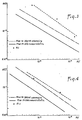
- FIG. 3a also shows the comparative results in oligocyclic fatigue at 900 ° C. with an imposed total deformation of 1.2% showing the superiority of the alloy according to the invention NI compared to another known alloy of commercial designation PD21 corresponding to Example 3 of US Pat. No. 4,174,964.
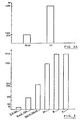
- FIG. 5 brings together the results obtained for the alloys NI, B and F of the invention and other alloys with columnar structure (MAR M 200 Hf, René 125) or equiaxial (IN 100) and shows the superiority of the alloys of the invention for which cracks and faults appear beyond 1000 cycles.
- FIGS. 6 and 7 relate to oligocyclic fatigue tests with imposed deformation carried out at 900 and 1000 ° C.
- the MarM200 with monocrystalline structure serves as a reference.
- the curves give the number of cycles at break as a function of the total strain imposed.
- an N5 alloy similar to the family of the invention but not included in its ranges was also tested:
- the characteristics obtained are lower than those of the NI grade belonging to the family of alloys of the invention.
Landscapes
- Chemical & Material Sciences (AREA)
- Engineering & Computer Science (AREA)
- Crystallography & Structural Chemistry (AREA)
- Materials Engineering (AREA)
- Metallurgy (AREA)
- Organic Chemistry (AREA)
- Inorganic Chemistry (AREA)
- Turbine Rotor Nozzle Sealing (AREA)
- Crystals, And After-Treatments Of Crystals (AREA)
- Physical Vapour Deposition (AREA)
Description
- L'invention concerne des alliages monocristallins à matrice à base nickel, sans addition intentionnelle de carbone, de bore ou de zirconium.
- De tels alliages sont connus par exemple par FR-A-2 557 598 ou par le document EP-A-0 063 511.
- Le but de l'invention est de proposer une nouvelle famille d'alliages du type précité, adaptés à la coulée monocristalline, ayant une température de solidus élevée (i.e. supérieure à 1325° C) tout en conservant un intervalle de traitement thermique possible entre les températures de solidus et de solvus de phase gamma-prime, ces alliages présentant par ailleurs des propriétés mécaniques intéressantes relatives à la fatigue qui les rendent particulièrement aptes à leur utilisation dans le domaine aéronautique pour la fabrication d'aubes de distributeur de turbine.
- Ce but est atteint conformément à l'invention par des alliages présentant la composition pondérale suivante :

- 0.005Co+0.036Cr+0.052Mo+0,066W+0.026AI+0.116Nb+0.049Ta inférieure ou égale à 1, ces alliages étant exempts de titane. Pour permettre la comparaison avec d'autres familles d'alliages contenant notamment du titane, la relation précédente devrait être appliquée en affectant au pourcentage atomique de titane un coefficient multiplicatif de 0,078.
- On donne ci-après la justification des choix principaux des fourchettes de composition retenues et des exemples de réalisation, en référence aux dessins annexés sur lesquels :
- - la figure 1 est un graphique montrant l'effet de la teneur en chrome (pourcentage pondéral porté en abscisse) sur les températures (portées en ordonnées) de liquidus, de solidus et de solvus gamma-prime.
- - la figure 2 est un graphique similaire à celui de la figure 1, mais concernant l'effet de la teneur en tantale.
- - La figure 3 représente la courbe d'endurance de Manson Coffin à 900°C pour un alliage de l'invention et deux alliages commerciaux MarM200 Hf à structure colonnaire et MarM200 à structure monocristalline. L'amplitude de la déformation totale Δετ est portée en ordonnée en fonction du nombre de cycles à la rupture Nf porté en abscisse.
- - La figure 3a représente les résultats d'un test similaire à ceux de la figure 3 pour un alliage de l'invention et un autre alliage commercial PD21 avec une déformation totale imposée Δετ de 1,2 %. Le nombre de cycles à la rupture Nf est porté en ordonnées
- - la figure 4 représente une courbe similaire à celle de la figure 3 mais établie à 1000°C.
- - La figure 5 compare des alliages de l'invention et trois alliages commerciaux IN100 à structure équiaxe, René 125 à structure colonnaire et Mar M200 à structure colonnaire, vis à vis de la fatigue thermique, le nombre de cycles avant fissuration étant porté en ordonnées.
- - Les figures 6 et 7 comparent respectivement à 900 et 1000°C, un alliage de l'invention, un alliage proche de l'invention et un alliage commercial Mar M 200 à structure monocristalline, vis à vis de la fatigue oligocyclique à déformation imposée. La durée de vie Nf est portée en abscisse en fonction de la déformation totale imposée Δετ portée en ordonnée.
- L'introduction de tungstène contribue à la stabilité de la phase gamma-prime. Il est préférable de maintenir la somme atomique Ta+W+Mo+Nb entre 5,9 et 6,3 pour éviter une précipitation de phase primaire massive.
- L'addition de cobalt ne change pas les températures de liquidus et de solidus mais diminue la température de solvus de gamma-prime: le cobalt augmente la fenêtre de remise en solution de la phase gamma-prime, ce qui facilite la réalisation des traitements thermiques.
- L'augmentation de la teneur en chrome jusqu'à 8 % en poids diminue les températures de liquidus, de solidus et de solvus gamma-prime (cf. fig. 1) et peut entraîner l'apparition d'une phase primaire.
- Dans la répartition des éléments gamma-prime-gènes, l'addition d'aluminium est préférée à celle de titane pour tenir compte de l'effet sur l'abaissement de la température de solidus de l'alliage car l'effet de l'aluminium est nettement moindre que celui du titane. Dans la relation définie auparavant entre les compositions atomiques par exemple, le coefficient du titane représentatif de cette influence est de l'ordre de trois fois supérieur à celui de l'aluminium. Pour cette raison, les alliages de l'invention sont exempts de titane. L'addition de tantale, les autres éléments restant constants par ailleurs, diminue les températures de liquidus et de solidus, sans modifier de façon sensible la température de solvus gamma-prime. La figure 2 a été établie pour une teneur pondérale de tungstène de 11 %. La substitution du niobium (également y'-gène) par le tantale est intéressante dans la mesure où le solidus augmente de 15 à 20°C. Mais il est préférable de maintenir la teneur pondérale en tantale inférieure ou égale à 6,5 pour éviter une chute importante de la température de solidus. Cette teneur critique en tantale est fonction de la teneur en tungstène et ainsi pour une teneur pondérale en tungstène de 11, cette teneur critique doit être abaissée à 5,5 (cf figure 2). La teneur en molybdène, élément durcissant, est destinée à conférer une meilleure résistance à la matrice de nickel où il donne lieu à une ségrégation préférentielle.
- A titre d'exemple, il a été étudié plus particulièrement trois alliages NI, B et F conformes à l'invention. Leur composition est donnée dans le tableau 1 ci-après où les teneurs sont exprimées en pourcentage pondéral et en pourcentage atomique (entre parenthèses).
- Les températures de liquidus, solidus, et solvus gamma- prime pour les alliages de l'invention sont reportées sur le tableau 2 ci-après, où elles sont comparées à celles qui concernent des alliages commerciaux pour monocristaux MarM200, CMSX2, SRR99.
- Les alliages conformes à l'invention, élaborés sous forme de monocristaux, font l'objet d'une séquence de traitements thermiques appropriés afin d'optimiser leurs propriétés.
- Le traitement thermique débute par une mise en solution des précipités y'. Elle s'effectue à une température inférieure à la température de solidus entre 1300°C et 1320°C pendant 1 heure à 3 heures et par exemple, 1300°C pendant 1 h pour l'alliage NI). Le refroidissement se fait par trempe à l'air, la taille des précipités y' est de 0,3 µm.
- Deux revenus vers 1100°C pendant 3 heures à 10 heures et vers 850°C pendant 15 heures à 25 heures permettent la précipitation de la phase y' (la taille des précipités y' obtenus après un traitement complet de l'alliage NI est 0,4 um).
- L'alliage NI a été testé en fatigue oligocyclique (déformation totale imposée) à 900° C et à 1000° C. (fig 3 et 4). Il apparaît qu'à 900°C cet alliage présente une durée de vie 5 fois plus grande que celle du MARM 200Hf à structure colonnaire connu pour avoir un bon comportement en fatigue oligocyclique à haute température et en fatigue thermique. La figure 3a montre également les résultats comparatifs en fatigue oligocyclique à 900° C avec une déformation totale imposée de 1,2 % montrant la supériorité de l'alliage selon l'invention NI par rapport à un autre alliage connu de désignation commerciale PD21 correspondant à l'exemple 3 du brevet US-4 174 964.
- Ces essais ont été menés sur des éprouvettes traitées mais à l'état nu.
- Les essais de fatigue thermique ont été effectués au banc à flamme avec une température maximale de 1100°C. La figure 5 rassemble les résultats obtenus pour les alliages NI, B et F, de l'invention et d'autres alliages à structure colonnaire (MAR M 200 Hf, René 125) ou équiaxe (IN 100) et montre la supériorité des alliages de l'invention pour lesquels les criques et défauts apparaissent au delà de 1000 cycles.
- Les figures 6 et 7 concernent des essais de fatigue oligocyclique à déformation imposée réalisés à 900 et 1000° C. Aux deux températures, le MarM200 à structure monocristalline sert de référence. Les courbes donnent le nombre de cycles à rupture en fonction de la déformation totale imposée. A 900°C on a également testé un alliage N5 proche de la famille de l'invention mais non inclus dans ses fourchettes :

- Les caractéristiques obtenues sont inférieures à celles de la nuance NI appartenant à la famille d'alliages de l'invention.
- L'ensemble des essais réalisés par la Demanderesse montre que les alliages de la famille conformes à l'invention présentent des propriétés améliorées de façon significative en ce qui concerne la fatigue thermique et la tenue en fatigue oligocyclique, tout en ayant, comme recherché, un solidus élevé.


Claims (7)


Applications Claiming Priority (2)
| Application Number | Priority Date | Filing Date | Title |
|---|---|---|---|
| FR8503267A FR2578554B1 (fr) | 1985-03-06 | 1985-03-06 | Alliage monocristallin a matrice a base de nickel |
| FR8503267 | 1985-03-06 |
Publications (2)
| Publication Number | Publication Date |
|---|---|
| EP0194925A1 EP0194925A1 (fr) | 1986-09-17 |
| EP0194925B1 true EP0194925B1 (fr) | 1988-12-14 |
Family
ID=9316905
Family Applications (1)
| Application Number | Title | Priority Date | Filing Date |
|---|---|---|---|
| EP86400454A Expired EP0194925B1 (fr) | 1985-03-06 | 1986-03-05 | Alliage monocristallin à matrice à base de nickel |
Country Status (5)
| Country | Link |
|---|---|
| US (1) | US4818306A (fr) |
| EP (1) | EP0194925B1 (fr) |
| JP (1) | JPS61217545A (fr) |
| DE (1) | DE3661426D1 (fr) |
| FR (1) | FR2578554B1 (fr) |
Families Citing this family (5)
| Publication number | Priority date | Publication date | Assignee | Title |
|---|---|---|---|---|
| GB2235697B (en) * | 1986-12-30 | 1991-08-14 | Gen Electric | Improved and property-balanced nickel-base superalloys for producing single crystal articles. |
| AU630623B2 (en) * | 1988-10-03 | 1992-11-05 | General Electric Company | An improved article and alloy therefor |
| US5173255A (en) * | 1988-10-03 | 1992-12-22 | General Electric Company | Cast columnar grain hollow nickel base alloy articles and alloy and heat treatment for making |
| JP2905473B1 (ja) | 1998-03-02 | 1999-06-14 | 科学技術庁金属材料技術研究所長 | Ni基一方向凝固合金の製造方法 |
| FR3117507B1 (fr) * | 2020-12-16 | 2024-02-16 | Safran Aircraft Engines | Procede de fabrication d'une piece en superalliage monocristallin |
Family Cites Families (8)
| Publication number | Priority date | Publication date | Assignee | Title |
|---|---|---|---|---|
| GB1087051A (en) * | 1963-04-26 | 1967-10-11 | Int Nickel Ltd | Nickel-chromium alloys |
| BE668503A (fr) * | 1964-08-19 | |||
| US3567526A (en) * | 1968-05-01 | 1971-03-02 | United Aircraft Corp | Limitation of carbon in single crystal or columnar-grained nickel base superalloys |
| US4116723A (en) * | 1976-11-17 | 1978-09-26 | United Technologies Corporation | Heat treated superalloy single crystal article and process |
| GB2071695A (en) * | 1980-03-13 | 1981-09-23 | Rolls Royce | An alloy suitable for making single-crystal castings and a casting made thereof |
| FR2503188A1 (fr) * | 1981-04-03 | 1982-10-08 | Onera (Off Nat Aerospatiale) | Superalliage monocristallin a matrice a matuice a base de nickel, procede d'amelioration de pieces en ce superalliage et pieces obtenues par ce procede |
| IL65897A0 (en) * | 1981-10-02 | 1982-08-31 | Gen Electric | Single crystal nickel-base superalloy,article and method for making |
| FR2557598B1 (fr) * | 1983-12-29 | 1986-11-28 | Armines | Alliage monocristallin a matrice a base de nickel |
-
1985
- 1985-03-06 FR FR8503267A patent/FR2578554B1/fr not_active Expired
-
1986
- 1986-02-24 US US06/832,351 patent/US4818306A/en not_active Expired - Fee Related
- 1986-03-05 JP JP61048174A patent/JPS61217545A/ja active Granted
- 1986-03-05 EP EP86400454A patent/EP0194925B1/fr not_active Expired
- 1986-03-05 DE DE8686400454T patent/DE3661426D1/de not_active Expired
Also Published As
| Publication number | Publication date |
|---|---|
| FR2578554A1 (fr) | 1986-09-12 |
| FR2578554B1 (fr) | 1987-05-22 |
| JPS61217545A (ja) | 1986-09-27 |
| JPH0573815B2 (fr) | 1993-10-15 |
| DE3661426D1 (en) | 1989-01-19 |
| US4818306A (en) | 1989-04-04 |
| EP0194925A1 (fr) | 1986-09-17 |
Similar Documents
| Publication | Publication Date | Title |
|---|---|---|
| JP2753148B2 (ja) | ニッケル基単結晶超合金 | |
| JP2782340B2 (ja) | 単結晶合金およびその製造方法 | |
| CA1260293A (fr) | Alliage monocristallin a matrice a base de nickel | |
| US5328659A (en) | Superalloy heat treatment for promoting crack growth resistance | |
| US5482789A (en) | Nickel base superalloy and article | |
| EP0063511B1 (fr) | Superalliage monocristallin à matrice à base de nickel, procédé d'amélioration de pièces en ce superalliage et pièces obtenues par ce procédé | |
| JP3902714B2 (ja) | γ′ソルバスの高い、ニッケル系単結晶超合金 | |
| JP5299899B2 (ja) | Ni基超合金及びその製造方法 | |
| KR101687320B1 (ko) | Ni기 단결정 초합금 | |
| JP2005525470A (ja) | ニッケル基合金 | |
| CN101948969A (zh) | 耐热超级合金 | |
| JP2004332061A (ja) | 高耐酸化性Ni基超合金及びガスタービン部品 | |
| US6913655B2 (en) | Niobium-silicide based composities resistant to high temperature oxidation | |
| EP1342803A2 (fr) | Matériau en superalliage a soudabilité améliorée | |
| US6419765B1 (en) | Niobium-silicide based composites resistant to low temperature pesting | |
| CA2864507C (fr) | Superalliage de cristal simple haute resistance | |
| EP0194925B1 (fr) | Alliage monocristallin à matrice à base de nickel | |
| EP0252775B1 (fr) | Superalliage monocristallin à base de nickel, notamment pour aubes de turbomachine | |
| JP2002235135A (ja) | 産業用タービンの単結晶ブレードのための非常に高い耐高温腐食性をもつニッケル系超合金 | |
| JPS6125773B2 (fr) | ||
| JP5427642B2 (ja) | ニッケル基合金及びそれを用いたランド用ガスタービン部品 | |
| JPH02138431A (ja) | 単結晶Ni基超耐熱合金 | |
| EP0187573B1 (fr) | Alliage à base de nickel | |
| JPH10317080A (ja) | Ni基耐熱超合金、Ni基耐熱超合金の製造方法及びNi基耐熱超合金部品 | |
| FR2686902A1 (fr) | Superalliage monocristallin a base de nickel a tenue a l'oxydation amelioree et procede de preparation. |
Legal Events
| Date | Code | Title | Description |
|---|---|---|---|
| PUAI | Public reference made under article 153(3) epc to a published international application that has entered the european phase |
Free format text: ORIGINAL CODE: 0009012 |
|
| 17P | Request for examination filed |
Effective date: 19860320 |
|
| AK | Designated contracting states |
Kind code of ref document: A1 Designated state(s): DE FR GB IT |
|
| 17Q | First examination report despatched |
Effective date: 19880519 |
|
| ITF | It: translation for a ep patent filed | ||
| GRAA | (expected) grant |
Free format text: ORIGINAL CODE: 0009210 |
|
| AK | Designated contracting states |
Kind code of ref document: B1 Designated state(s): DE FR GB IT |
|
| GBT | Gb: translation of ep patent filed (gb section 77(6)(a)/1977) | ||
| REF | Corresponds to: |
Ref document number: 3661426 Country of ref document: DE Date of ref document: 19890119 |
|
| PLBE | No opposition filed within time limit |
Free format text: ORIGINAL CODE: 0009261 |
|
| STAA | Information on the status of an ep patent application or granted ep patent |
Free format text: STATUS: NO OPPOSITION FILED WITHIN TIME LIMIT |
|
| 26N | No opposition filed | ||
| REG | Reference to a national code |
Ref country code: FR Ref legal event code: CL |
|
| ITTA | It: last paid annual fee | ||
| PGFP | Annual fee paid to national office [announced via postgrant information from national office to epo] |
Ref country code: FR Payment date: 19960126 Year of fee payment: 11 |
|
| PGFP | Annual fee paid to national office [announced via postgrant information from national office to epo] |
Ref country code: GB Payment date: 19960226 Year of fee payment: 11 |
|
| PGFP | Annual fee paid to national office [announced via postgrant information from national office to epo] |
Ref country code: DE Payment date: 19960531 Year of fee payment: 11 |
|
| PG25 | Lapsed in a contracting state [announced via postgrant information from national office to epo] |
Ref country code: GB Effective date: 19970305 |
|
| GBPC | Gb: european patent ceased through non-payment of renewal fee |
Effective date: 19970305 |
|
| PG25 | Lapsed in a contracting state [announced via postgrant information from national office to epo] |
Ref country code: FR Free format text: LAPSE BECAUSE OF NON-PAYMENT OF DUE FEES Effective date: 19971128 |
|
| PG25 | Lapsed in a contracting state [announced via postgrant information from national office to epo] |
Ref country code: DE Effective date: 19971202 |
|
| REG | Reference to a national code |
Ref country code: FR Ref legal event code: ST |
|
| PG25 | Lapsed in a contracting state [announced via postgrant information from national office to epo] |
Ref country code: IT Free format text: LAPSE BECAUSE OF NON-PAYMENT OF DUE FEES;WARNING: LAPSES OF ITALIAN PATENTS WITH EFFECTIVE DATE BEFORE 2007 MAY HAVE OCCURRED AT ANY TIME BEFORE 2007. THE CORRECT EFFECTIVE DATE MAY BE DIFFERENT FROM THE ONE RECORDED. Effective date: 20050305 |