EP0189903B2 - Nichttoxische organische Mittel und deren Kalziumhydroxid-Derivate - Google Patents
Nichttoxische organische Mittel und deren Kalziumhydroxid-Derivate Download PDFInfo
- Publication number
- EP0189903B2 EP0189903B2 EP86101117A EP86101117A EP0189903B2 EP 0189903 B2 EP0189903 B2 EP 0189903B2 EP 86101117 A EP86101117 A EP 86101117A EP 86101117 A EP86101117 A EP 86101117A EP 0189903 B2 EP0189903 B2 EP 0189903B2
- Authority
- EP
- European Patent Office
- Prior art keywords
- composition
- prepolymer
- polymerizable
- calcium hydroxide
- compositions
- Prior art date
- Legal status (The legal status is an assumption and is not a legal conclusion. Google has not performed a legal analysis and makes no representation as to the accuracy of the status listed.)
- Expired - Lifetime
Links
- 239000000203 mixture Substances 0.000 title claims abstract description 149
- AXCZMVOFGPJBDE-UHFFFAOYSA-L calcium dihydroxide Chemical compound [OH-].[OH-].[Ca+2] AXCZMVOFGPJBDE-UHFFFAOYSA-L 0.000 title claims abstract description 58
- 239000000920 calcium hydroxide Substances 0.000 title claims abstract description 58
- 229910001861 calcium hydroxide Inorganic materials 0.000 title claims abstract description 58
- 231100000252 nontoxic Toxicity 0.000 title claims abstract description 35
- 230000003000 nontoxic effect Effects 0.000 title claims abstract description 35
- 239000000178 monomer Substances 0.000 claims abstract description 39
- BRPQOXSCLDDYGP-UHFFFAOYSA-N calcium oxide Chemical compound [O-2].[Ca+2] BRPQOXSCLDDYGP-UHFFFAOYSA-N 0.000 claims abstract description 9
- 239000000292 calcium oxide Substances 0.000 claims abstract description 9
- ODINCKMPIJJUCX-UHFFFAOYSA-N calcium oxide Inorganic materials [Ca]=O ODINCKMPIJJUCX-UHFFFAOYSA-N 0.000 claims abstract description 9
- 239000000463 material Substances 0.000 claims description 70
- 238000012360 testing method Methods 0.000 claims description 50
- 239000000945 filler Substances 0.000 claims description 36
- 239000002609 medium Substances 0.000 claims description 22
- 230000004044 response Effects 0.000 claims description 17
- UKLDJPRMSDWDSL-UHFFFAOYSA-L [dibutyl(dodecanoyloxy)stannyl] dodecanoate Chemical compound CCCCCCCCCCCC(=O)O[Sn](CCCC)(CCCC)OC(=O)CCCCCCCCCCC UKLDJPRMSDWDSL-UHFFFAOYSA-L 0.000 claims description 14
- 239000012975 dibutyltin dilaurate Substances 0.000 claims description 14
- HNPDNOZNULJJDL-UHFFFAOYSA-N ethyl n-ethenylcarbamate Chemical compound CCOC(=O)NC=C HNPDNOZNULJJDL-UHFFFAOYSA-N 0.000 claims description 13
- -1 hydroxypropyl Chemical group 0.000 claims description 12
- 239000012888 bovine serum Substances 0.000 claims description 11
- 125000002887 hydroxy group Chemical group [H]O* 0.000 claims description 11
- NIXOWILDQLNWCW-UHFFFAOYSA-M Acrylate Chemical compound [O-]C(=O)C=C NIXOWILDQLNWCW-UHFFFAOYSA-M 0.000 claims description 10
- VYPSYNLAJGMNEJ-UHFFFAOYSA-N Silicium dioxide Chemical compound O=[Si]=O VYPSYNLAJGMNEJ-UHFFFAOYSA-N 0.000 claims description 10
- 125000002947 alkylene group Chemical group 0.000 claims description 10
- 239000007795 chemical reaction product Substances 0.000 claims description 10
- 150000001875 compounds Chemical class 0.000 claims description 10
- 125000005442 diisocyanate group Chemical group 0.000 claims description 10
- VZXPHDGHQXLXJC-UHFFFAOYSA-N 1,6-diisocyanato-5,6-dimethylheptane Chemical compound O=C=NC(C)(C)C(C)CCCCN=C=O VZXPHDGHQXLXJC-UHFFFAOYSA-N 0.000 claims description 9
- 150000001412 amines Chemical group 0.000 claims description 9
- TZCXTZWJZNENPQ-UHFFFAOYSA-L barium sulfate Chemical compound [Ba+2].[O-]S([O-])(=O)=O TZCXTZWJZNENPQ-UHFFFAOYSA-L 0.000 claims description 9
- JOYRKODLDBILNP-UHFFFAOYSA-N Ethyl urethane Chemical compound CCOC(N)=O JOYRKODLDBILNP-UHFFFAOYSA-N 0.000 claims description 8
- 241000288906 Primates Species 0.000 claims description 8
- 125000000732 arylene group Chemical group 0.000 claims description 8
- 150000002148 esters Chemical class 0.000 claims description 8
- 210000002950 fibroblast Anatomy 0.000 claims description 8
- HWSSEYVMGDIFMH-UHFFFAOYSA-N 2-[2-[2-(2-methylprop-2-enoyloxy)ethoxy]ethoxy]ethyl 2-methylprop-2-enoate Chemical compound CC(=C)C(=O)OCCOCCOCCOC(=O)C(C)=C HWSSEYVMGDIFMH-UHFFFAOYSA-N 0.000 claims description 7
- 125000001261 isocyanato group Chemical group *N=C=O 0.000 claims description 7
- 238000012606 in vitro cell culture Methods 0.000 claims description 6
- CERQOIWHTDAKMF-UHFFFAOYSA-N Methacrylic acid Chemical compound CC(=C)C(O)=O CERQOIWHTDAKMF-UHFFFAOYSA-N 0.000 claims description 5
- 239000011324 bead Substances 0.000 claims description 5
- 239000003638 chemical reducing agent Substances 0.000 claims description 5
- KORSJDCBLAPZEQ-UHFFFAOYSA-N dicyclohexylmethane-4,4'-diisocyanate Chemical compound C1CC(N=C=O)CCC1CC1CCC(N=C=O)CC1 KORSJDCBLAPZEQ-UHFFFAOYSA-N 0.000 claims description 5
- 125000000623 heterocyclic group Chemical group 0.000 claims description 5
- 238000001727 in vivo Methods 0.000 claims description 5
- 239000012948 isocyanate Substances 0.000 claims description 5
- 125000002496 methyl group Chemical group [H]C([H])([H])* 0.000 claims description 5
- 125000003161 (C1-C6) alkylene group Chemical group 0.000 claims description 4
- SMZOUWXMTYCWNB-UHFFFAOYSA-N 2-(2-methoxy-5-methylphenyl)ethanamine Chemical compound COC1=CC=C(C)C=C1CCN SMZOUWXMTYCWNB-UHFFFAOYSA-N 0.000 claims description 4
- 239000005057 Hexamethylene diisocyanate Substances 0.000 claims description 4
- 125000002993 cycloalkylene group Chemical group 0.000 claims description 4
- 239000005350 fused silica glass Substances 0.000 claims description 4
- 239000011521 glass Substances 0.000 claims description 4
- 239000001963 growth medium Substances 0.000 claims description 4
- RRAMGCGOFNQTLD-UHFFFAOYSA-N hexamethylene diisocyanate Chemical compound O=C=NCCCCCCN=C=O RRAMGCGOFNQTLD-UHFFFAOYSA-N 0.000 claims description 4
- 150000002513 isocyanates Chemical class 0.000 claims description 4
- 239000007758 minimum essential medium Substances 0.000 claims description 4
- 239000002245 particle Substances 0.000 claims description 4
- 229920005862 polyol Polymers 0.000 claims description 4
- 150000003077 polyols Chemical class 0.000 claims description 4
- IATRAKWUXMZMIY-UHFFFAOYSA-N strontium oxide Chemical compound [O-2].[Sr+2] IATRAKWUXMZMIY-UHFFFAOYSA-N 0.000 claims description 4
- 125000005717 substituted cycloalkylene group Chemical group 0.000 claims description 4
- 229910000323 aluminium silicate Inorganic materials 0.000 claims description 3
- DSAJWYNOEDNPEQ-UHFFFAOYSA-N barium atom Chemical compound [Ba] DSAJWYNOEDNPEQ-UHFFFAOYSA-N 0.000 claims description 3
- 229930006711 bornane-2,3-dione Natural products 0.000 claims description 3
- 239000001506 calcium phosphate Substances 0.000 claims description 3
- 235000011010 calcium phosphates Nutrition 0.000 claims description 3
- 239000000919 ceramic Substances 0.000 claims description 3
- 239000008119 colloidal silica Substances 0.000 claims description 3
- 239000011256 inorganic filler Substances 0.000 claims description 3
- 229910003475 inorganic filler Inorganic materials 0.000 claims description 3
- 229910052914 metal silicate Inorganic materials 0.000 claims description 3
- 231100000956 nontoxicity Toxicity 0.000 claims description 3
- TWNQGVIAIRXVLR-UHFFFAOYSA-N oxo(oxoalumanyloxy)alumane Chemical compound O=[Al]O[Al]=O TWNQGVIAIRXVLR-UHFFFAOYSA-N 0.000 claims description 3
- QORWJWZARLRLPR-UHFFFAOYSA-H tricalcium bis(phosphate) Chemical class [Ca+2].[Ca+2].[Ca+2].[O-]P([O-])([O-])=O.[O-]P([O-])([O-])=O QORWJWZARLRLPR-UHFFFAOYSA-H 0.000 claims description 3
- 125000004178 (C1-C4) alkyl group Chemical group 0.000 claims description 2
- VNQXSTWCDUXYEZ-UHFFFAOYSA-N 1,7,7-trimethylbicyclo[2.2.1]heptane-2,3-dione Chemical compound C1CC2(C)C(=O)C(=O)C1C2(C)C VNQXSTWCDUXYEZ-UHFFFAOYSA-N 0.000 claims description 2
- NIXOWILDQLNWCW-UHFFFAOYSA-N 2-Propenoic acid Natural products OC(=O)C=C NIXOWILDQLNWCW-UHFFFAOYSA-N 0.000 claims description 2
- 125000000217 alkyl group Chemical group 0.000 claims description 2
- QVQLCTNNEUAWMS-UHFFFAOYSA-N barium oxide Inorganic materials [Ba]=O QVQLCTNNEUAWMS-UHFFFAOYSA-N 0.000 claims description 2
- 125000004432 carbon atom Chemical group C* 0.000 claims description 2
- 230000005281 excited state Effects 0.000 claims description 2
- 239000000075 oxide glass Substances 0.000 claims description 2
- 239000005056 polyisocyanate Substances 0.000 claims description 2
- 229920001228 polyisocyanate Polymers 0.000 claims description 2
- 229920000909 polytetrahydrofuran Polymers 0.000 claims description 2
- 125000000547 substituted alkyl group Chemical group 0.000 claims description 2
- 125000004386 diacrylate group Chemical group 0.000 claims 1
- 229920000058 polyacrylate Polymers 0.000 claims 1
- 229920000193 polymethacrylate Polymers 0.000 claims 1
- 238000000034 method Methods 0.000 abstract description 24
- 210000004268 dentin Anatomy 0.000 abstract description 16
- 239000003999 initiator Substances 0.000 abstract description 16
- 210000000988 bone and bone Anatomy 0.000 abstract description 11
- 238000011065 in-situ storage Methods 0.000 abstract description 9
- 150000003254 radicals Chemical class 0.000 abstract description 7
- 230000007246 mechanism Effects 0.000 abstract description 3
- 238000006116 polymerization reaction Methods 0.000 abstract description 3
- 230000009920 chelation Effects 0.000 abstract description 2
- 238000007127 saponification reaction Methods 0.000 abstract description 2
- 210000001519 tissue Anatomy 0.000 description 43
- 239000002131 composite material Substances 0.000 description 23
- 238000002156 mixing Methods 0.000 description 22
- 239000003054 catalyst Substances 0.000 description 20
- 210000004027 cell Anatomy 0.000 description 19
- 239000000047 product Substances 0.000 description 17
- 231100000331 toxic Toxicity 0.000 description 17
- 230000002588 toxic effect Effects 0.000 description 17
- 230000015572 biosynthetic process Effects 0.000 description 15
- 238000011049 filling Methods 0.000 description 13
- 230000001988 toxicity Effects 0.000 description 11
- 231100000419 toxicity Toxicity 0.000 description 11
- 239000000843 powder Substances 0.000 description 10
- GNSFRPWPOGYVLO-UHFFFAOYSA-N 3-hydroxypropyl 2-methylprop-2-enoate Chemical compound CC(=C)C(=O)OCCCO GNSFRPWPOGYVLO-UHFFFAOYSA-N 0.000 description 9
- XLYOFNOQVPJJNP-UHFFFAOYSA-N water Substances O XLYOFNOQVPJJNP-UHFFFAOYSA-N 0.000 description 9
- AMFGWXWBFGVCKG-UHFFFAOYSA-N Panavia opaque Chemical compound C1=CC(OCC(O)COC(=O)C(=C)C)=CC=C1C(C)(C)C1=CC=C(OCC(O)COC(=O)C(C)=C)C=C1 AMFGWXWBFGVCKG-UHFFFAOYSA-N 0.000 description 8
- 239000000126 substance Substances 0.000 description 8
- KSBAEPSJVUENNK-UHFFFAOYSA-L tin(ii) 2-ethylhexanoate Chemical compound [Sn+2].CCCCC(CC)C([O-])=O.CCCCC(CC)C([O-])=O KSBAEPSJVUENNK-UHFFFAOYSA-L 0.000 description 8
- LYCAIKOWRPUZTN-UHFFFAOYSA-N Ethylene glycol Chemical compound OCCO LYCAIKOWRPUZTN-UHFFFAOYSA-N 0.000 description 7
- 239000007788 liquid Substances 0.000 description 7
- 238000010926 purge Methods 0.000 description 7
- 210000004499 secondary dentin Anatomy 0.000 description 7
- 239000002253 acid Substances 0.000 description 6
- 230000006037 cell lysis Effects 0.000 description 6
- 239000004568 cement Substances 0.000 description 6
- 231100000135 cytotoxicity Toxicity 0.000 description 6
- 230000003013 cytotoxicity Effects 0.000 description 6
- 239000003504 photosensitizing agent Substances 0.000 description 6
- 238000002360 preparation method Methods 0.000 description 6
- YGSDEFSMJLZEOE-UHFFFAOYSA-N salicylic acid Chemical compound OC(=O)C1=CC=CC=C1O YGSDEFSMJLZEOE-UHFFFAOYSA-N 0.000 description 6
- WSFSSNUMVMOOMR-UHFFFAOYSA-N Formaldehyde Chemical compound O=C WSFSSNUMVMOOMR-UHFFFAOYSA-N 0.000 description 5
- 241001465754 Metazoa Species 0.000 description 5
- 239000003960 organic solvent Substances 0.000 description 5
- 125000002924 primary amino group Chemical group [H]N([H])* 0.000 description 5
- 206010061218 Inflammation Diseases 0.000 description 4
- 238000006243 chemical reaction Methods 0.000 description 4
- 231100000433 cytotoxic Toxicity 0.000 description 4
- 230000001472 cytotoxic effect Effects 0.000 description 4
- 208000002925 dental caries Diseases 0.000 description 4
- 230000004054 inflammatory process Effects 0.000 description 4
- 239000004322 Butylated hydroxytoluene Substances 0.000 description 3
- NLZUEZXRPGMBCV-UHFFFAOYSA-N Butylhydroxytoluene Chemical compound CC1=CC(C(C)(C)C)=C(O)C(C(C)(C)C)=C1 NLZUEZXRPGMBCV-UHFFFAOYSA-N 0.000 description 3
- DNIAPMSPPWPWGF-UHFFFAOYSA-N Propylene glycol Chemical compound CC(O)CO DNIAPMSPPWPWGF-UHFFFAOYSA-N 0.000 description 3
- 150000001252 acrylic acid derivatives Chemical class 0.000 description 3
- 239000012965 benzophenone Substances 0.000 description 3
- 229940095259 butylated hydroxytoluene Drugs 0.000 description 3
- 235000010354 butylated hydroxytoluene Nutrition 0.000 description 3
- 239000003795 chemical substances by application Substances 0.000 description 3
- 231100000263 cytotoxicity test Toxicity 0.000 description 3
- 239000003085 diluting agent Substances 0.000 description 3
- UHESRSKEBRADOO-UHFFFAOYSA-N ethyl carbamate;prop-2-enoic acid Chemical compound OC(=O)C=C.CCOC(N)=O UHESRSKEBRADOO-UHFFFAOYSA-N 0.000 description 3
- 238000009472 formulation Methods 0.000 description 3
- 230000007062 hydrolysis Effects 0.000 description 3
- 238000006460 hydrolysis reaction Methods 0.000 description 3
- 239000004615 ingredient Substances 0.000 description 3
- 230000018984 mastication Effects 0.000 description 3
- 238000010077 mastication Methods 0.000 description 3
- CRVGTESFCCXCTH-UHFFFAOYSA-N methyl diethanolamine Chemical compound OCCN(C)CCO CRVGTESFCCXCTH-UHFFFAOYSA-N 0.000 description 3
- FJKROLUGYXJWQN-UHFFFAOYSA-N papa-hydroxy-benzoic acid Natural products OC(=O)C1=CC=C(O)C=C1 FJKROLUGYXJWQN-UHFFFAOYSA-N 0.000 description 3
- 239000010453 quartz Substances 0.000 description 3
- 229960004889 salicylic acid Drugs 0.000 description 3
- 239000007787 solid Substances 0.000 description 3
- 239000003381 stabilizer Substances 0.000 description 3
- 230000000638 stimulation Effects 0.000 description 3
- XDLMVUHYZWKMMD-UHFFFAOYSA-N 3-trimethoxysilylpropyl 2-methylprop-2-enoate Chemical compound CO[Si](OC)(OC)CCCOC(=O)C(C)=C XDLMVUHYZWKMMD-UHFFFAOYSA-N 0.000 description 2
- VVBLNCFGVYUYGU-UHFFFAOYSA-N 4,4'-Bis(dimethylamino)benzophenone Chemical compound C1=CC(N(C)C)=CC=C1C(=O)C1=CC=C(N(C)C)C=C1 VVBLNCFGVYUYGU-UHFFFAOYSA-N 0.000 description 2
- KWOLFJPFCHCOCG-UHFFFAOYSA-N Acetophenone Chemical compound CC(=O)C1=CC=CC=C1 KWOLFJPFCHCOCG-UHFFFAOYSA-N 0.000 description 2
- HEDRZPFGACZZDS-UHFFFAOYSA-N Chloroform Chemical compound ClC(Cl)Cl HEDRZPFGACZZDS-UHFFFAOYSA-N 0.000 description 2
- QIGBRXMKCJKVMJ-UHFFFAOYSA-N Hydroquinone Chemical compound OC1=CC=C(O)C=C1 QIGBRXMKCJKVMJ-UHFFFAOYSA-N 0.000 description 2
- NBIIXXVUZAFLBC-UHFFFAOYSA-N Phosphoric acid Chemical compound OP(O)(O)=O NBIIXXVUZAFLBC-UHFFFAOYSA-N 0.000 description 2
- 239000006087 Silane Coupling Agent Substances 0.000 description 2
- 125000001931 aliphatic group Chemical group 0.000 description 2
- 238000004458 analytical method Methods 0.000 description 2
- 239000003963 antioxidant agent Substances 0.000 description 2
- 235000006708 antioxidants Nutrition 0.000 description 2
- ISAOCJYIOMOJEB-UHFFFAOYSA-N benzoin Chemical compound C=1C=CC=CC=1C(O)C(=O)C1=CC=CC=C1 ISAOCJYIOMOJEB-UHFFFAOYSA-N 0.000 description 2
- 150000008366 benzophenones Chemical class 0.000 description 2
- WERYXYBDKMZEQL-UHFFFAOYSA-N butane-1,4-diol Chemical compound OCCCCO WERYXYBDKMZEQL-UHFFFAOYSA-N 0.000 description 2
- 238000004113 cell culture Methods 0.000 description 2
- 239000000498 cooling water Substances 0.000 description 2
- 230000009089 cytolysis Effects 0.000 description 2
- 230000002950 deficient Effects 0.000 description 2
- 239000003479 dental cement Substances 0.000 description 2
- 239000011350 dental composite resin Substances 0.000 description 2
- 239000005548 dental material Substances 0.000 description 2
- 239000000539 dimer Substances 0.000 description 2
- 238000001035 drying Methods 0.000 description 2
- MHCLJIVVJQQNKQ-UHFFFAOYSA-N ethyl carbamate;2-methylprop-2-enoic acid Chemical compound CCOC(N)=O.CC(=C)C(O)=O MHCLJIVVJQQNKQ-UHFFFAOYSA-N 0.000 description 2
- 238000011156 evaluation Methods 0.000 description 2
- 230000009969 flowable effect Effects 0.000 description 2
- WGCNASOHLSPBMP-UHFFFAOYSA-N hydroxyacetaldehyde Natural products OCC=O WGCNASOHLSPBMP-UHFFFAOYSA-N 0.000 description 2
- 238000011534 incubation Methods 0.000 description 2
- 230000007794 irritation Effects 0.000 description 2
- 239000010410 layer Substances 0.000 description 2
- 239000013642 negative control Substances 0.000 description 2
- 150000002978 peroxides Chemical class 0.000 description 2
- 230000000704 physical effect Effects 0.000 description 2
- 239000013641 positive control Substances 0.000 description 2
- 230000008569 process Effects 0.000 description 2
- 150000004053 quinones Chemical class 0.000 description 2
- 230000005855 radiation Effects 0.000 description 2
- 238000007348 radical reaction Methods 0.000 description 2
- 239000002904 solvent Substances 0.000 description 2
- 150000005846 sugar alcohols Polymers 0.000 description 2
- 238000010998 test method Methods 0.000 description 2
- 239000013638 trimer Substances 0.000 description 2
- WYTZZXDRDKSJID-UHFFFAOYSA-N (3-aminopropyl)triethoxysilane Chemical compound CCO[Si](OCC)(OCC)CCCN WYTZZXDRDKSJID-UHFFFAOYSA-N 0.000 description 1
- FKTHNVSLHLHISI-UHFFFAOYSA-N 1,2-bis(isocyanatomethyl)benzene Chemical compound O=C=NCC1=CC=CC=C1CN=C=O FKTHNVSLHLHISI-UHFFFAOYSA-N 0.000 description 1
- ZTNJGMFHJYGMDR-UHFFFAOYSA-N 1,2-diisocyanatoethane Chemical compound O=C=NCCN=C=O ZTNJGMFHJYGMDR-UHFFFAOYSA-N 0.000 description 1
- IKYNWXNXXHWHLL-UHFFFAOYSA-N 1,3-diisocyanatopropane Chemical compound O=C=NCCCN=C=O IKYNWXNXXHWHLL-UHFFFAOYSA-N 0.000 description 1
- AZQWKYJCGOJGHM-UHFFFAOYSA-N 1,4-benzoquinone Chemical compound O=C1C=CC(=O)C=C1 AZQWKYJCGOJGHM-UHFFFAOYSA-N 0.000 description 1
- ALQLPWJFHRMHIU-UHFFFAOYSA-N 1,4-diisocyanatobenzene Chemical compound O=C=NC1=CC=C(N=C=O)C=C1 ALQLPWJFHRMHIU-UHFFFAOYSA-N 0.000 description 1
- CDMDQYCEEKCBGR-UHFFFAOYSA-N 1,4-diisocyanatocyclohexane Chemical compound O=C=NC1CCC(N=C=O)CC1 CDMDQYCEEKCBGR-UHFFFAOYSA-N 0.000 description 1
- BOCJQSFSGAZAPQ-UHFFFAOYSA-N 1-chloroanthracene-9,10-dione Chemical compound O=C1C2=CC=CC=C2C(=O)C2=C1C=CC=C2Cl BOCJQSFSGAZAPQ-UHFFFAOYSA-N 0.000 description 1
- ZMARGGQEAJXRFP-UHFFFAOYSA-N 1-hydroxypropan-2-yl 2-methylprop-2-enoate Chemical compound OCC(C)OC(=O)C(C)=C ZMARGGQEAJXRFP-UHFFFAOYSA-N 0.000 description 1
- SVPKNMBRVBMTLB-UHFFFAOYSA-N 2,3-dichloronaphthalene-1,4-dione Chemical compound C1=CC=C2C(=O)C(Cl)=C(Cl)C(=O)C2=C1 SVPKNMBRVBMTLB-UHFFFAOYSA-N 0.000 description 1
- JAHNSTQSQJOJLO-UHFFFAOYSA-N 2-(3-fluorophenyl)-1h-imidazole Chemical compound FC1=CC=CC(C=2NC=CN=2)=C1 JAHNSTQSQJOJLO-UHFFFAOYSA-N 0.000 description 1
- TXBCBTDQIULDIA-UHFFFAOYSA-N 2-[[3-hydroxy-2,2-bis(hydroxymethyl)propoxy]methyl]-2-(hydroxymethyl)propane-1,3-diol Chemical compound OCC(CO)(CO)COCC(CO)(CO)CO TXBCBTDQIULDIA-UHFFFAOYSA-N 0.000 description 1
- LKPGGRAYFGWREN-UHFFFAOYSA-N 2-amino-1,2-diphenylethanone Chemical compound C=1C=CC=CC=1C(N)C(=O)C1=CC=CC=C1 LKPGGRAYFGWREN-UHFFFAOYSA-N 0.000 description 1
- ZFFBIQMNKOJDJE-UHFFFAOYSA-N 2-bromo-1,2-diphenylethanone Chemical compound C=1C=CC=CC=1C(Br)C(=O)C1=CC=CC=C1 ZFFBIQMNKOJDJE-UHFFFAOYSA-N 0.000 description 1
- RXDYOLRABMJTEF-UHFFFAOYSA-N 2-chloro-1,2-diphenylethanone Chemical compound C=1C=CC=CC=1C(Cl)C(=O)C1=CC=CC=C1 RXDYOLRABMJTEF-UHFFFAOYSA-N 0.000 description 1
- CCTJHVLTAJTPBV-UHFFFAOYSA-N 2-chloro-1,4-naphthoquinone Chemical compound C1=CC=C2C(=O)C(Cl)=CC(=O)C2=C1 CCTJHVLTAJTPBV-UHFFFAOYSA-N 0.000 description 1
- KMNCBSZOIQAUFX-UHFFFAOYSA-N 2-ethoxy-1,2-diphenylethanone Chemical compound C=1C=CC=CC=1C(OCC)C(=O)C1=CC=CC=C1 KMNCBSZOIQAUFX-UHFFFAOYSA-N 0.000 description 1
- BQZJOQXSCSZQPS-UHFFFAOYSA-N 2-methoxy-1,2-diphenylethanone Chemical compound C=1C=CC=CC=1C(OC)C(=O)C1=CC=CC=C1 BQZJOQXSCSZQPS-UHFFFAOYSA-N 0.000 description 1
- MWKAGZWJHCTVJY-UHFFFAOYSA-N 3-hydroxyoctadecan-2-one Chemical class CCCCCCCCCCCCCCCC(O)C(C)=O MWKAGZWJHCTVJY-UHFFFAOYSA-N 0.000 description 1
- UPMLOUAZCHDJJD-UHFFFAOYSA-N 4,4'-Diphenylmethane Diisocyanate Chemical compound C1=CC(N=C=O)=CC=C1CC1=CC=C(N=C=O)C=C1 UPMLOUAZCHDJJD-UHFFFAOYSA-N 0.000 description 1
- RINWGRJHXCCLOV-UHFFFAOYSA-N BPO Chemical compound BPO RINWGRJHXCCLOV-UHFFFAOYSA-N 0.000 description 1
- OYPRJOBELJOOCE-UHFFFAOYSA-N Calcium Chemical compound [Ca] OYPRJOBELJOOCE-UHFFFAOYSA-N 0.000 description 1
- 239000006095 Cer-Vit Substances 0.000 description 1
- RWSOTUBLDIXVET-UHFFFAOYSA-N Dihydrogen sulfide Chemical class S RWSOTUBLDIXVET-UHFFFAOYSA-N 0.000 description 1
- LCGLNKUTAGEVQW-UHFFFAOYSA-N Dimethyl ether Chemical compound COC LCGLNKUTAGEVQW-UHFFFAOYSA-N 0.000 description 1
- DGAQECJNVWCQMB-PUAWFVPOSA-M Ilexoside XXIX Chemical compound C[C@@H]1CC[C@@]2(CC[C@@]3(C(=CC[C@H]4[C@]3(CC[C@@H]5[C@@]4(CC[C@@H](C5(C)C)OS(=O)(=O)[O-])C)C)[C@@H]2[C@]1(C)O)C)C(=O)O[C@H]6[C@@H]([C@H]([C@@H]([C@H](O6)CO)O)O)O.[Na+] DGAQECJNVWCQMB-PUAWFVPOSA-M 0.000 description 1
- 239000006018 Li-aluminosilicate Substances 0.000 description 1
- CSNNHWWHGAXBCP-UHFFFAOYSA-L Magnesium sulfate Chemical compound [Mg+2].[O-][S+2]([O-])([O-])[O-] CSNNHWWHGAXBCP-UHFFFAOYSA-L 0.000 description 1
- CERQOIWHTDAKMF-UHFFFAOYSA-M Methacrylate Chemical compound CC(=C)C([O-])=O CERQOIWHTDAKMF-UHFFFAOYSA-M 0.000 description 1
- 239000002202 Polyethylene glycol Substances 0.000 description 1
- 241000183024 Populus tremula Species 0.000 description 1
- BLRPTPMANUNPDV-UHFFFAOYSA-N Silane Chemical compound [SiH4] BLRPTPMANUNPDV-UHFFFAOYSA-N 0.000 description 1
- 244000028419 Styrax benzoin Species 0.000 description 1
- 235000000126 Styrax benzoin Nutrition 0.000 description 1
- 235000008411 Sumatra benzointree Nutrition 0.000 description 1
- ZJCCRDAZUWHFQH-UHFFFAOYSA-N Trimethylolpropane Chemical compound CCC(CO)(CO)CO ZJCCRDAZUWHFQH-UHFFFAOYSA-N 0.000 description 1
- 206010000269 abscess Diseases 0.000 description 1
- 150000008062 acetophenones Chemical class 0.000 description 1
- 150000007513 acids Chemical class 0.000 description 1
- 230000001154 acute effect Effects 0.000 description 1
- 230000032683 aging Effects 0.000 description 1
- 150000001299 aldehydes Chemical class 0.000 description 1
- 229910000147 aluminium phosphate Inorganic materials 0.000 description 1
- 239000005354 aluminosilicate glass Substances 0.000 description 1
- 210000004102 animal cell Anatomy 0.000 description 1
- PYKYMHQGRFAEBM-UHFFFAOYSA-N anthraquinone Natural products CCC(=O)c1c(O)c2C(=O)C3C(C=CC=C3O)C(=O)c2cc1CC(=O)OC PYKYMHQGRFAEBM-UHFFFAOYSA-N 0.000 description 1
- 150000004056 anthraquinones Chemical class 0.000 description 1
- 230000003466 anti-cipated effect Effects 0.000 description 1
- 229910052586 apatite Inorganic materials 0.000 description 1
- 239000003125 aqueous solvent Substances 0.000 description 1
- 230000008952 bacterial invasion Effects 0.000 description 1
- 229910052788 barium Inorganic materials 0.000 description 1
- 230000004888 barrier function Effects 0.000 description 1
- WURBFLDFSFBTLW-UHFFFAOYSA-N benzil Chemical compound C=1C=CC=CC=1C(=O)C(=O)C1=CC=CC=C1 WURBFLDFSFBTLW-UHFFFAOYSA-N 0.000 description 1
- 229960002130 benzoin Drugs 0.000 description 1
- RWCCWEUUXYIKHB-UHFFFAOYSA-N benzophenone Chemical compound C=1C=CC=CC=1C(=O)C1=CC=CC=C1 RWCCWEUUXYIKHB-UHFFFAOYSA-N 0.000 description 1
- 210000004763 bicuspid Anatomy 0.000 description 1
- 239000011230 binding agent Substances 0.000 description 1
- 239000004305 biphenyl Substances 0.000 description 1
- IISBACLAFKSPIT-UHFFFAOYSA-N bisphenol A Chemical class C=1C=C(O)C=CC=1C(C)(C)C1=CC=C(O)C=C1 IISBACLAFKSPIT-UHFFFAOYSA-N 0.000 description 1
- 210000004369 blood Anatomy 0.000 description 1
- 239000008280 blood Substances 0.000 description 1
- 239000007767 bonding agent Substances 0.000 description 1
- 125000002362 bornane-2,3-dione group Chemical group 0.000 description 1
- 239000011575 calcium Substances 0.000 description 1
- 229910052791 calcium Inorganic materials 0.000 description 1
- ZMRQTIAUOLVKOX-UHFFFAOYSA-L calcium;diphenoxide Chemical compound [Ca+2].[O-]C1=CC=CC=C1.[O-]C1=CC=CC=C1 ZMRQTIAUOLVKOX-UHFFFAOYSA-L 0.000 description 1
- 229910052799 carbon Inorganic materials 0.000 description 1
- 210000002421 cell wall Anatomy 0.000 description 1
- 238000012136 culture method Methods 0.000 description 1
- 230000007812 deficiency Effects 0.000 description 1
- 239000003564 dental alloy Substances 0.000 description 1
- 210000003298 dental enamel Anatomy 0.000 description 1
- 210000003074 dental pulp Anatomy 0.000 description 1
- 208000007147 dental pulp necrosis Diseases 0.000 description 1
- 150000002009 diols Chemical class 0.000 description 1
- 239000006185 dispersion Substances 0.000 description 1
- 238000002224 dissection Methods 0.000 description 1
- 230000000694 effects Effects 0.000 description 1
- 229920001971 elastomer Polymers 0.000 description 1
- 238000001704 evaporation Methods 0.000 description 1
- 230000008020 evaporation Effects 0.000 description 1
- 239000000284 extract Substances 0.000 description 1
- 239000000835 fiber Substances 0.000 description 1
- 239000003955 fissure sealant Substances 0.000 description 1
- 239000012530 fluid Substances 0.000 description 1
- 235000019382 gum benzoic Nutrition 0.000 description 1
- 229910052736 halogen Inorganic materials 0.000 description 1
- 150000002367 halogens Chemical class 0.000 description 1
- GNOIPBMMFNIUFM-UHFFFAOYSA-N hexamethylphosphoric triamide Chemical compound CN(C)P(=O)(N(C)C)N(C)C GNOIPBMMFNIUFM-UHFFFAOYSA-N 0.000 description 1
- 238000002513 implantation Methods 0.000 description 1
- 238000000338 in vitro Methods 0.000 description 1
- 210000004283 incisor Anatomy 0.000 description 1
- 208000015181 infectious disease Diseases 0.000 description 1
- 238000013101 initial test Methods 0.000 description 1
- 230000000977 initiatory effect Effects 0.000 description 1
- IQPQWNKOIGAROB-UHFFFAOYSA-N isocyanate group Chemical group [N-]=C=O IQPQWNKOIGAROB-UHFFFAOYSA-N 0.000 description 1
- 150000002576 ketones Chemical class 0.000 description 1
- 230000014759 maintenance of location Effects 0.000 description 1
- 238000004519 manufacturing process Methods 0.000 description 1
- 150000002734 metacrylic acid derivatives Chemical class 0.000 description 1
- 229910052751 metal Chemical class 0.000 description 1
- 239000002184 metal Chemical class 0.000 description 1
- LVHBHZANLOWSRM-UHFFFAOYSA-N methylenebutanedioic acid Natural products OC(=O)CC(=C)C(O)=O LVHBHZANLOWSRM-UHFFFAOYSA-N 0.000 description 1
- 150000007522 mineralic acids Chemical class 0.000 description 1
- 239000002808 molecular sieve Substances 0.000 description 1
- 210000003205 muscle Anatomy 0.000 description 1
- 230000007935 neutral effect Effects 0.000 description 1
- 230000003472 neutralizing effect Effects 0.000 description 1
- 229910052757 nitrogen Inorganic materials 0.000 description 1
- SBOJXQVPLKSXOG-UHFFFAOYSA-N o-amino-hydroxylamine Chemical class NON SBOJXQVPLKSXOG-UHFFFAOYSA-N 0.000 description 1
- RCPRQLSJGVLWRZ-UHFFFAOYSA-N o-aminooxyhydroxylamine Chemical compound NOON RCPRQLSJGVLWRZ-UHFFFAOYSA-N 0.000 description 1
- 150000002897 organic nitrogen compounds Chemical class 0.000 description 1
- 150000001451 organic peroxides Chemical class 0.000 description 1
- VSIIXMUUUJUKCM-UHFFFAOYSA-D pentacalcium;fluoride;triphosphate Chemical compound [F-].[Ca+2].[Ca+2].[Ca+2].[Ca+2].[Ca+2].[O-]P([O-])([O-])=O.[O-]P([O-])([O-])=O.[O-]P([O-])([O-])=O VSIIXMUUUJUKCM-UHFFFAOYSA-D 0.000 description 1
- 239000000068 pit and fissure sealant Substances 0.000 description 1
- 229920001223 polyethylene glycol Polymers 0.000 description 1
- 239000002685 polymerization catalyst Substances 0.000 description 1
- 239000004814 polyurethane Substances 0.000 description 1
- 229920002635 polyurethane Polymers 0.000 description 1
- 230000002035 prolonged effect Effects 0.000 description 1
- AZIQALWHRUQPHV-UHFFFAOYSA-N prop-2-eneperoxoic acid Chemical compound OOC(=O)C=C AZIQALWHRUQPHV-UHFFFAOYSA-N 0.000 description 1
- 230000001681 protective effect Effects 0.000 description 1
- 230000035484 reaction time Effects 0.000 description 1
- 238000010992 reflux Methods 0.000 description 1
- 239000011347 resin Substances 0.000 description 1
- 229920005989 resin Polymers 0.000 description 1
- 150000003839 salts Chemical class 0.000 description 1
- 238000007873 sieving Methods 0.000 description 1
- 229910000077 silane Inorganic materials 0.000 description 1
- 239000002356 single layer Substances 0.000 description 1
- 229910052708 sodium Inorganic materials 0.000 description 1
- 239000011734 sodium Substances 0.000 description 1
- URGAHOPLAPQHLN-UHFFFAOYSA-N sodium aluminosilicate Chemical compound [Na+].[Al+3].[O-][Si]([O-])=O.[O-][Si]([O-])=O URGAHOPLAPQHLN-UHFFFAOYSA-N 0.000 description 1
- 238000000935 solvent evaporation Methods 0.000 description 1
- 230000004936 stimulating effect Effects 0.000 description 1
- 230000035882 stress Effects 0.000 description 1
- 230000008961 swelling Effects 0.000 description 1
- 230000001225 therapeutic effect Effects 0.000 description 1
- DVKJHBMWWAPEIU-UHFFFAOYSA-N toluene 2,4-diisocyanate Chemical compound CC1=CC=C(N=C=O)C=C1N=C=O DVKJHBMWWAPEIU-UHFFFAOYSA-N 0.000 description 1
- RUELTTOHQODFPA-UHFFFAOYSA-N toluene 2,6-diisocyanate Chemical compound CC1=C(N=C=O)C=CC=C1N=C=O RUELTTOHQODFPA-UHFFFAOYSA-N 0.000 description 1
- 231100000701 toxic element Toxicity 0.000 description 1
- 230000008791 toxic response Effects 0.000 description 1
- 231100000820 toxicity test Toxicity 0.000 description 1
- 239000003053 toxin Substances 0.000 description 1
- 231100000765 toxin Toxicity 0.000 description 1
- 108700012359 toxins Proteins 0.000 description 1
- ZIBGPFATKBEMQZ-UHFFFAOYSA-N triethylene glycol Chemical compound OCCOCCOCCO ZIBGPFATKBEMQZ-UHFFFAOYSA-N 0.000 description 1
- BPSIOYPQMFLKFR-UHFFFAOYSA-N trimethoxy-[3-(oxiran-2-ylmethoxy)propyl]silane Chemical compound CO[Si](OC)(OC)CCCOCC1CO1 BPSIOYPQMFLKFR-UHFFFAOYSA-N 0.000 description 1
Classifications
-
- A—HUMAN NECESSITIES
- A61—MEDICAL OR VETERINARY SCIENCE; HYGIENE
- A61K—PREPARATIONS FOR MEDICAL, DENTAL OR TOILETRY PURPOSES
- A61K6/00—Preparations for dentistry
- A61K6/50—Preparations specially adapted for dental root treatment
- A61K6/54—Filling; Sealing
-
- A—HUMAN NECESSITIES
- A61—MEDICAL OR VETERINARY SCIENCE; HYGIENE
- A61K—PREPARATIONS FOR MEDICAL, DENTAL OR TOILETRY PURPOSES
- A61K6/00—Preparations for dentistry
- A61K6/20—Protective coatings for natural or artificial teeth, e.g. sealings, dye coatings or varnish
-
- A—HUMAN NECESSITIES
- A61—MEDICAL OR VETERINARY SCIENCE; HYGIENE
- A61K—PREPARATIONS FOR MEDICAL, DENTAL OR TOILETRY PURPOSES
- A61K6/00—Preparations for dentistry
- A61K6/80—Preparations for artificial teeth, for filling teeth or for capping teeth
- A61K6/849—Preparations for artificial teeth, for filling teeth or for capping teeth comprising inorganic cements
- A61K6/876—Calcium oxide
-
- A—HUMAN NECESSITIES
- A61—MEDICAL OR VETERINARY SCIENCE; HYGIENE
- A61K—PREPARATIONS FOR MEDICAL, DENTAL OR TOILETRY PURPOSES
- A61K6/00—Preparations for dentistry
- A61K6/80—Preparations for artificial teeth, for filling teeth or for capping teeth
- A61K6/884—Preparations for artificial teeth, for filling teeth or for capping teeth comprising natural or synthetic resins
- A61K6/887—Compounds obtained by reactions only involving carbon-to-carbon unsaturated bonds
-
- A—HUMAN NECESSITIES
- A61—MEDICAL OR VETERINARY SCIENCE; HYGIENE
- A61K—PREPARATIONS FOR MEDICAL, DENTAL OR TOILETRY PURPOSES
- A61K6/00—Preparations for dentistry
- A61K6/80—Preparations for artificial teeth, for filling teeth or for capping teeth
- A61K6/884—Preparations for artificial teeth, for filling teeth or for capping teeth comprising natural or synthetic resins
- A61K6/891—Compounds obtained otherwise than by reactions only involving carbon-to-carbon unsaturated bonds
- A61K6/893—Polyurethanes
-
- Y—GENERAL TAGGING OF NEW TECHNOLOGICAL DEVELOPMENTS; GENERAL TAGGING OF CROSS-SECTIONAL TECHNOLOGIES SPANNING OVER SEVERAL SECTIONS OF THE IPC; TECHNICAL SUBJECTS COVERED BY FORMER USPC CROSS-REFERENCE ART COLLECTIONS [XRACs] AND DIGESTS
- Y10—TECHNICAL SUBJECTS COVERED BY FORMER USPC
- Y10S—TECHNICAL SUBJECTS COVERED BY FORMER USPC CROSS-REFERENCE ART COLLECTIONS [XRACs] AND DIGESTS
- Y10S623/00—Prosthesis, i.e. artificial body members, parts thereof, or aids and accessories therefor
- Y10S623/92—Method or apparatus for preparing or treating prosthetic
- Y10S623/923—Bone
Definitions
- This invention relates to biocompatible compositions and, more particularly, to compositions which are polymerizable or curable to form products which may be polymerized in situ in contact with living animal tissue, especially dentin, bone and living pulpal tissue, and which are particularly well suited for use as dental cavity liners, in pulp capping and pulpotomy, as endodontic and other dental filling materials, and as cements.
- calcium hydroxide may serve as a protective barrier for pulpal tissue against the attack of acid from certain filling materials by acting as a neutralizing agent for the acids in cements and toxic elements eluted from filling materials. It also has been known for some time that calcium hydroxide has a stimulating effect on the formation of secondary dentin when the calcium hydroxide is applied near or on actual exposures of living pulp. This stimulation often is important as an adjunct to successful therapeutic treatment.
- organic solvent systems such as those systems comprised of calcium hydroxide, a film former and chloroform
- the use of such organic solvent systems posed problems because of the toxic effects of the solvents on pulpal tissue.
- film formation was rapid, the use of organic solvents limited the application of organic solvent systems to instances where no involvement between the solvent and pulpal tissue was anticipated.
- hardenable systems of the type disclosed in the Dougherty and Jandourek patents offer advantages over the earlier calcium hydroxide containing systems, and have been useful as dental cavity liners and pulp capping materials.
- the hardenable systems based on esters of salicylic acid tend to undergo hydrolysis which eventually may allow bacterial invasion, infection and secondary caries.
- These systems also exhibit relatively low compressive strengths, e.g., on the order of 10,33 N/mm 2 (1500 psi) to 27,56 N/mm 2 (4000 psi), and relatively high water and acid solubility. Accordingly, when used as a cavity liner, a relatively thick layer of the material must be used so as not to crack under the pressures associated with the plugging of a dental filling material, for example, a dental alloy, onto the liner.
- GB-A-2094326 It also has been disclosed in GB-A-2094326 to provide a restorative dental material including calcium hydroxide, a bisphenol-A glycidyl methacrylate prepolymer and a polymerization catalyst such as an organic peroxide and an amino.
- the materials disclosed in this UK application are self-hardenable compositions which must be stored in multiple packages until they are mixed and placed in a tooth preparation by a dentist.
- EP-A-0 012 535 discloses dental compositions which are suitable as a fissure sealant, dental glaze, bonding agent or orthodontic adhesive and which are a mixture of a vinyl urethane prepolymer, an ethylenically unsaturated monomer and a visible light cure catalyst comprising an organic amine and a a-diketone, and processes for their manufacture.
- DE-A-2 411 760 discloses a dental filling material comprising a mixture of an inorganic filler and a polymerizable unsaturated organic composition consisting of a product of the reaction between an organic diisocyanate and a hydroxy acrylate or methacrylate together with a derivative of bisphenol-A.
- US-A-4 243 578 discloses a dental filling material prepared from polymerizable urethane-acrylate resins which cure by a free-radical mechanism to form hard and durable filling compositions which bond strongly and adhesively to tooth enamel, to dentin, to dental protheses, and to preexisting dental filling materials.
- Yet another object is to provide a biocompatible dental composition which can be used in direct contact with living pulpal tissue.
- Still another object is to provide a hardenable, calcium hydroxide containing polymerizable monomer or prepolymer composition which is non-toxic to living pulpal tissue, which can be cured in situ by free radical reaction, and which, when cured, will not fail when subjected to the pressures of mastication or dental plugging, even when applied as a relatively thin layer.
- Another object is to provide a non-toxic composition which is curable by free radical reaction, rigid after cure, flowable before cure, biologically acceptable to dentin, bone and pulpal tissue, highly resistant to inorganic acids, such as phosphoric acid, and substantially insoluble in water when cured.
- Yet another object is to provide a free radical curable, calcium hydroxide containing dental composition which is radiopaque and suitable for use in direct contact with dental pulp and/or dentin.
- Another object is to provide a visible light curable, calcium hydroxide containing dental composition, which is non-toxic to dentin and living pulpal tissue and which can be stored as a shelf-stable one paste system prior to cure.
- Yet another object is to provide an improved dental composition which is suitable for use as a functional composite or as a pit and fissure sealant.
- Still another object is to provide a biocompatible composition which is polymerizable in situ in contact with living animal tissue, especially mammalian tissue.
- a shelf stable, visible light curable dental composition which, both before and after being cured, is essentially non-toxic to living pulpal or bone tissue or dentin, and which comprises:
- a polymerizable mixture comprising a monomer or prepolymer material having terminal carbon-to-carbon unsaturation, e.g., an ethylenically unsaturated monomer, dimer, trimer, oligomer, or adduct, and a free radical initiator system for effecting in situ polymerization of the mixture.
- the polymerizable mixture also comprises calcium hydroxide or a calcium hydroxide forming material such as calcium oxide, and optionally another filler.
- Essential features of the polymerizable composition of the invention are that the monomer or prepolymer components thereof are substantially non-toxic to living pulpal tissue, dentin or bone, that the overall composition is substantially non-toxic to living pulpal tissue, dentin or bone prior to polymerization or cure, and that the composition can be polymerized in situ to a hardened mass that is substantially non-toxic to living pulpal tissue, dentin or bone.
- the polymerizable composition also contains a radiopaque filler such as barium sulfate, and the initiator system is one which is operable upon exposure to visible light.
- a radiopaque filler such as barium sulfate
- polymerizable monomer or prepolymer materials which may be used in preparing the polymerizable mixtures of the present invention may not be novel in and of themselves.
- the use of such monomer or prepolymer materials to form in situ polymerizable compositions which are non-toxic toward living pulpal tissue or bone, and therefore usable in direct contact with living pulpal tissue or bone, has not been disclosed in the prior art.
- the polymerizable monomer or prepolymer materials which are contemplated for use in the present invention are those monomer or prepolymer materials which polymerize by a mechanism other than by chelation or saponification, and which result in the formation of preferred polymerized or cured compositions which are substantially resistant to hydrolysis, which exhibit high acid resistance and low water solubility, and which are characterized by sufficient compressive strength so as not to fail when subjected to the stresses associated with the plugging of a dental filling material thereon or with mastication.
- Another feature of the suitable monomer or prepolymer materials is that they are biocompatible, i.e.
- One accepted method for determining the necessary biocompatibility of various compositions toward living tissue is an in vitro cell culture biocompatibility method wherein samples of the compositions to be tested are extracted in a bovine serum solution in a Minimum Essential Medium (MEM), whereafter the bovine serum solution and specified animal cells, such as human (WI-38), L929 mouse fibroblast cells or their equivalent, are incubated in a MEM for a predetermined period of time, and the incubated cells are visually observed and graded for cytotoxic manifestations.
- MEM Minimum Essential Medium
- the in vitro cell culture method preferably is performed using L929 mouse fibroblast cells which have been cultured in a growth medium consisting of 5% bovine serum solution in MEM, wherein the bovine serum solution initially was used to extract a specified mass of cured or uncured material, as the case may be, and wherein the cells were incubated at 37 ⁇ 2 C for a specified period of time, e.g., 24, 48 or 72 hours.
- the degree of toxicity may be stated as a function of the percentage of the cells which have been lysed or fixed over the test period.
- the observable cytotoxic manifestations may be graded qualitatively as follows: non-toxic, no cell lysis or fixation; slight intermediate response, up to 10% cell lysis; intermediate response, between 10% and 50% cell lysis or fixation; and, toxic response, greater than 50% cell lysis or fixation.
- lysed cells are dead cells that have ruptured cell walls.
- Fixed cells are cells that are dead and are attached to the walls of the flask and may be lysed. Fixation normally occurs at a high percentage of cells lysed and is considered a severe response.
- a polymerizable monomer or prepolymer material or a polymerizable composition containing such monomer or prepolymer material and, for example, a filler is suitable for use only if there is observed less than 10% cell lysis, and preferably no lysis or fixation after an incubation period of 72 ⁇ 4 hours when tested in accordance with the above in vitro cell culture biocompatibility method, or if it receives a grade of 1 or less, and preferably zero in the above in vivo primate test.
- the preferred primate to be used for this latter test is Cynomolgus Fascicularis.
- the monomer or prepolymer material comprises at least one polymerizable ethylenically unsaturated material
- the polymerizable composition containing the monomer or propolymer material also contains a free radical initiator system.
- suitable monomer or prepolymer materials which contain ethylenic unsaturation there may be mentioned the vinyl urethane or urethane acrylate or urethane methacrylate materials which are well known in the art.
- These materials are polymerizable by free radical initiation and may comprise the reaction product of an organic diisocyanate or an isocyanate-terminated urethane prepolymer and an ethylenically unsaturated monomer containing groups reactive with the diisocyanate or diisocyanate prepolymer.
- the urethane propolymers which may be linear or branched, carry isocyanate groups and generally are prepared by reacting a compound having hydroxyl functionality with a molar excess of diisocyanate.
- the vinyl urethane or urethane acrylate or urethane methacrylate materials may be prepared by reacting suitable hydroxyl-containing prepolymers with isocyanate-containing acrylates and methacrylates.
- isocyanates may be used to prepare the isocyanate-terminated urethane prepolymer including aliphatic, cycloaliphatic, heterocyclic, and aromatic isocyanates, and combinations of these.
- examples include, but are not limited to 2,4-tolylene diisocyanate, 2,6-tolylene diisocyanate, 1,4-phenylene diisocyanate, hexamethylene diisocyanate, 1,4-naphthalene diisocyanate, 4,4'-diphenyl diisocyanate, butylene-1,4-diisocyanate, ethylene diisocyanate, trimethylene diisocyanate, tetramethylene-1,4-diisocyanate, butylene-2,3-diisocyanate, cyclohexylene-1,2-diisocyanate, methylene-bis-(4-phenyl isocyanate), methylene-bis-(4-cyclohexyl isocyanate),
- hydroxyl containing compounds include diols and polyols such as ethylene glycol, propylene glycol, triethylene glycol, tetramethylene glycol, polyethylene glycol, trimethylolpropane, pentaerylthritol, dipentaerythritol or esters of acrylic acid, methacrylic acid or itaconic acid or the like with aliphatic polyhydric alcohols.
- Suitable ethylenically unsaturated hydroxyl containing compounds are the esters of acrylic or methacrylic acid, hereinafter referred to as (meth)acrylic acid or (meth)acrylate esters, and a hydroxyalkanol of at least two carbon atoms such as hydroxyethyl-(meth)acrylate, hydroxypropyl (meth)acrylate and hydroxyisopropyl (meth)acrylate.
- Formation of the isocyanate-terminated urethane prepolymers and vinyl urethanes may be assisted by the use of catalysts known in the art to assist polyurethane formation, for example, tetiary amines and metal salts, e.g., stannous octoate. It is important however, to utilize a catalyst which results in the ultimate composition, both cured and uncured, having no more than 10% observable cell lysis toward the selected cells, e.g., L929 mouse fibroblast cells, which have been cultured in 5% bovine serum solution in a MEM as outlined above and as illustrated more fully in the examples hereinafter.
- One catalyst that generally is to be avoided is dibutyl tin dilaurate.
- Vinyl urethanes are well known in the art and are described for example, in U.S.-A-3,629,187 to Waller, U.S.-A-3,759,809 to Carlick et a, U.S.-A-3,709,866 to Waller and U.S.-A-4,459,193 to Ratcliffe et al, all of these patents being incorporated herein by reference. Not all of these known vinyl urethanes are suitable for use in the present invention, however, at least in part because the catalyst systems used in their preparation have rendered them toxic to living mammalion tissue.
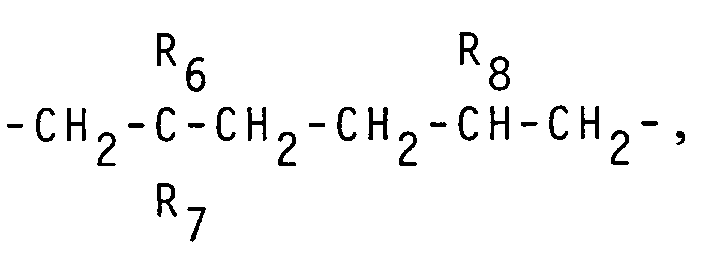
- the vinyl urethane or urethane-(meth)acrylate monomer or prepolymer materials are characterized by the structural formula wherein R 1 and R s , independently, are H, alkyl or substituted alkyl; R 2 and R 4 , independently, are alkylene, substituted alkylene, cycloalkylene, substituted cycloalkylene, arylene or substituted arylene; and, R 3 is alkylene, substituted alkylene, cycloalkylene, substituted cycloalkylene, arylene, substituted arylene, heterocyclic, substituted heterocyclic, the reaction product of an organic diisocyanate or an isocyanate terminated prepolymer and a compound having hydroxyl functionality, or the reaction product of a polyol or a hydroxyl terminated prepolymer and a compound having isocyanato functionality.
- R 1 and R s are H or C1-C4 alkyl
- R 2 and R 4 independently, are C 1 -C 6 alkylene
- R 3 is C 1 -C 6 alkylene, C 2 -C 12 substituted alkylene, the reaction product of an organic diisocyanate or polyisocyanate with an alkanol or polyalkanol.
- R 1 and Rs are H or -CH 3
- R 2 and R 4 are -CH 2 -CH 2 -CH 2 -, or -CH 2 -CH 2 -
- R 3 is where R 6 , R 7 and R 8 , independently, are H or -CH 3 .
- polymerizable materials exemplified above can be employed alone or in any mixture thereof.
- mixtures of the urethane-(meth)acrylate and polyfunctional (meth)acrylates generally are preferred.
- initiator systems that may be employed in the present invention there may be mentioned those systems of the room temperature cure type. Among such systems, there may be mentioned the known amino-peroxide and amine-peroxide-sulfinic acid salt types. Photoinitiator systems also may be used and these are used in preferred embodiments since they may be used to formulate curable compositions in a one package system.
- Suitable photoinitiators for the compositions of this invention include, but are not limited to the following: acyloins, acyloin derivatives, such as benzoin methyl ether, benzoin ethyl ether, desyl bromide, desyl chloride, desyl amine, ketones, such as benzophenone, acetophenone, cyclopentadione, benzil, caprone, benzoin cyclobutadione, and the like, substituted benzophenones, such as N,N'-dimethylamino benzophenone, Michler's Ketone, and halogenated aceto- and benzophenones; polynuclear quinones, such as benzoquinone and anthraquinone; substituted polynuclear quinones, such as chloranthraquinone, chloronaphthoquinone, dichloronaphthoquinone, and so forth. These systems generally also
- the initiator system that is employed is one that is operative upon exposure to visible light, or near visible light, particularly that having a wavelength in the range of from about 360 to 550 nm.
- the radiation may be generated by conventional lamps, e.g., quartz halogen, and may conveniently be directed onto the composition using fibre optics.
- One such system would comprise an a-diketone photosensitizer and an organic nitrogen compound, such as an amino, which is capable of reducing the photosensitizer when the photosensitizer is in the excited state.
- a suitable a-diketone photosensitizer which is readily available is camphoroquinone, and a suitable amino reducing agent is methyl diethanol amino.
- Suitable a-diketone photosensitizers and other suitable amine reducing agents for the photosensitizers are disclosed, for example, in U.S.-A-4,457,818 to Denyer et al, U.S.-A-4,089,763 to Dart et al and U.S.-A-4,071,424 to Dart et al, these patents being incorporated herein by reference.
- the amount of initiator system to be used depends largely upon its identity.
- the amount of a-diketone to be used generally is from 0.001 to 10%, preferably from 0.01 to 5%, based on the polymerizable monomer or prepolymer in the composition, and the amount of amine reducing agent is from 0.1 to 5%, by weight based on the polymerizable monomer or prepolymer in the composition.
- Using amounts of a-diketone and amino in these ranges enables the compositions to be cured into hard, strong solids in from 5 to 40 seconds.
- the polymerizable compositions also include calcium hydroxide or a calcium hydroxide former, such as calcium oxide.
- the compositions of the present invention are particularly well suited for dental applications since they stimulate the formation of secondary dentin when they are polymerized in situ near or on actual exposures of living pulpal tissue.
- the calcium hydroxide or calcium hydroxide former should be added to the compositions in the form of a fine powder, and should be present in an amount of from 1 to 99, preferably from 3 to 70%, and more preferably from 5 to 30% based on the weight of the composition.
- the compositions also may include a powdered substance which is opaque to X-rays and which is inert to the calcium hydroxide and other components of the compositions so as to render the cured compositions radiopaque.
- a powdered substance which is opaque to X-rays and which is inert to the calcium hydroxide and other components of the compositions so as to render the cured compositions radiopaque.
- One suitable X-ray opaque substance is barium sulfate, but any other compatible radiopaque substance such as barium or strontium oxide glasses may be used.
- the radiopaque filler may be added in amounts up to 99% by weight of the composition, with amounts ranging from 3 to 70% weight being preferred, and amounts ranging from 5 to 30% by weight being more preferred.
- the percentage by weight of calcium hydroxide to the percentage by weight of radiopaque filler be in the range of from 30-70% to 70-30%.
- a silane coupling agent such as gamma-methacryloxypropyltrimethoxy silane, gamma-aminopropyltriethoxysilane and gamma-glycidoxypropyltrimethoxysilane.
- compositions also may include other fillers, such as colloidal silica, fused quartz, aluminum oxide, ceramic and/or glass beads, calcium phosphates, especially calcium apatite, metal silicates and aluminosilicates and the like, either singly or in admixture, in place of or in addition to the radiopaque filler, and further may include small quantities of other materials such as anti-oxidants and stabilizers provided that they do not substantially effect cure and, more importantly, toxicity.
- the total amount of filler in the compositions may be as high as 99% by weight, preferably as high as 85% by weight, and more preferably as high as 60% by weight. In one aspect, the above fillers may be used in amounts ranging from 45 to 90% by weight. It is preferred that the filler, including the calcium hydroxide or calcium hydroxide former, be in the form of particles having an average diameter on the order of from 0.02 to 20ti.
- the amount of polymerizable monomer or prepolymer material used in the compositions of the invention may vary over relatively wide limits depending, at least in part, upon the intended use. Generally speaking, however, the polymerizable monomer or prepolymer is present in amount ranging from 1 to 99.8%, and preferably from 15 to 95% by weight of the composition. Most preferably the polymerizable monomer or prepolymer is present in amounts ranging from 40 to 70% by weight. In many preferred aspects of the invention, the polymerizable monomer or prepolymer is present in an amount of at least 30% by weight.
- the powder components of the composition may be blended separately from the liquid components and the separate powder and liquid blends may be mixed at the time of use.
- Such separate blends may be provided in the form of a kit composed of one or more powder components and one or more liquid components which may be mixed by a dentist when needed.
- the components, both powder and liquid may be blended prior to shipment and, depending upon the nature of the initiator system, may be packaged as single package or multiple package systems.
- the compositions may be prepared by first mixing the calcium hydroxide and radiopaque or other filler components, preferably together with a silane coupling agent, and then mixing the blended calcium hydroxide and radiopaque fillers together with the polymerizable components.
- a room temperature active initiator system of the peroxide-amine type for example, is used, the peroxide and amine portions thereof must be kept separate until immediately prior to use. Accordingly, the compositions of this invention which use this type of initiator system must be kept separate until immediately prior to use.
- compositions of this invention which use this type of initiator system must be prepared as multiple package systems wherein the amine may be mixed with a first portion of the polymerizable components and filler in a first package, and the peroxide may be mixed with a second portion of the filler and polymerizable components in a second package.
- two package systems have been used with success in dentistry, it is preferable to use single package systems to avoid the need for accurately measuring the various components required to be dispensed from more than one package at the time of use.
- the use of a one package system also eliminates the need for mixing the various components at the time of use, thus avoiding the possibility of including air bubbles in the compositions, which air bubbles tend to inhibit the rate of cure and weaken the cured structure.
- a photosensitive initiator system which permits all of the components of the composition to be blended into a shelf stable
- one package system such as when an a-diketone and an amine are used
- the silanated, blended calcium hydroxide and radiopaque or other filler is mixed together with the polymerizable components including the initiator system and stabilizers.
- This mixing may be accomplished, for example, in a three-roll mill, ball mill or high shear disperser, in accordance with known dispersion techniques.
- the polymerizable monomer or prepolymer, optionally together with copolymerizable monomers conveniently may be diluted with a suitable non-reactive or reactive diluent so as to reduce the viscosity, thus enabling adequate mixing of the fillers to be achieved more readily and to make the composition a more flowable material for desired clinical handling characteristics.
- a suitable non-reactive or reactive diluent so as to reduce the viscosity, thus enabling adequate mixing of the fillers to be achieved more readily and to make the composition a more flowable material for desired clinical handling characteristics.
- the diluent should be removed e.g., by evaporation.
- compositions can be dispensed from containers which are opaque to actinic light.
- compositions of the present invention are gel-free fluid systems at ambient temperatures, and the viscosity and consistency of the compositions may be controlled by adjusting the mixture of the polymerizable components, calcium hydroxide and/or fillers.
- Light free ambient self stability is an important atribute of the preferred embodiment of the present invention. It is particularly a problem to attain shelf stability with single package calcium hydroxide containing composition of the type of the present invention. This usefulness of the preferred composition of the present invention is not destroyed under accelerated aging test when the composition is heated at 50 C for 7 days.
- compositions of the present invention may be applied to a prepared bone or tooth surface, including living pulpal tissue, by any suitable means generally known in the art, and then cured by exposure to appropriate radiation.
- the term "monomer or prepolymer” is meant to define any monomer, dimer, trimer, oligomer or adduct or prepolymer which can be polymerized into a hardened mass.
- a silanated filler was prepared in a tumble mixer by charging the following ingredients to the mixer while the mixing operation continued. 50 parts by weight of Ca(OH) 2 , 50 parts by weight BaS0 4 , and 1 part by weight of silane (-methacryloxypropyltrimethoxy silane, Silane A-174, a product of Union Carbide Corp.) with 100 parts by weight of 1.3 cm Borundum cubes. The tumbling was continued for 2 hours, whereafter the Borundum cubes were separated from the silanated filler by sieving through a number 10 screen. Approximately 37.72 g. of the silanated filler was yielded.
- the HPMA was prepared for reaction with the TMDI by drying the HPMA with molecular sieves to less than 300 ppm water and charged into a dry, clean reactor. 300 ppm of the methyl ether of hydroquinone (MEHQ) based on the weight of the HPMA was then charged into the reactor. Then 0.05 g. of stannous octoate was charged into the reactor. The reactor was then equipped with a mixing shaft, thermometer, separatory funnel for the TMDI addition, and an adapter with an air inlet tube extending down under the HPMA surface with a reflux condenser on top of the adapter. The top outlet of the condenser was connected with a drying tube containing anhydrous magnesium sulfate. The reactor was purged with dry air and purging was maintained constantly through all the reaction time. The HPMA was heated in the reactor to about 50 ° C ⁇ 3 ° C under constant mixing and dry air purging.
- MEHQ methyl ether of hydroquinone
- the TMDI was charged into the reactor at a rate that maintained the temperature of the reaction at 50 ° C ⁇ 3 ° C. When the temperature increased, heat was removed and a cooling water bath was used to adjust the temperature. After completion of the TMDI addition, the mixture was maintained at 50 ° C ⁇ 5 ° C for 16 hours with constant mixing and dry air purging. Then the heat was turned up and the temperature raised to 70 ° C ⁇ 2 ° C, with constant mixing and dry air purging. Mixing was continued for 8 more hours.
- HMPA-TMDI adduct prepared above 56.57 g. of the HMPA-TMDI adduct prepared above was charged to a Ross mixer pot and the following materials were then added in the order given while the mixer was in operation and mixing was continued for 30 minutes. 5 g. of triethylene glycol dimethacrylate (TEGDMA), 0.311 g. of butylated hydroxy toluene (BHT), 0.311 g. of methyldiethanol amine (MDEA) and 0.092 g. of camphoroquinone (CQ.).
- TEGDMA triethylene glycol dimethacrylate
- BHT butylated hydroxy toluene
- MDEA methyldiethanol amine
- CQ. camphoroquinone
- Example 1 was repeated except that 0.05g. of dibutyl tin dilaurate was substituted for the stannous octoate.
- Example 1 was repeated except the 1 .Og. of dibutyl tin dilaurate (DBTDL) was substituted for the stannous octoate.
- DBTDL dibutyl tin dilaurate
- Example 1 was repeated except that the HMPA-TMDI adduct was replaced by 56.57 g. of a 50:50 mixture of triethylene glycol dimethacrylate (TEGDMA) and the reaction product of 1.08 equivalents of bisphenol-A glycidyl methacrylate (Bis-GMA) and 1.00 equivalents of hexamethylene diisocyanate (HMDI).
- TEGDMA triethylene glycol dimethacrylate
- Bis-GMA bisphenol-A glycidyl methacrylate
- HMDI hexamethylene diisocyanate
- Example 1 was repeated except that the HMPA-TMDI adduct was replaced by an equal amount of Bis-GMA.
- the composition of this example was tested as set forth in Example 6, and the test results are shown in Table 1.
- Samples of the curable calcium hydroxide containing compositions of Examples 1-5 were tested for cytotoxicity both in the cured and uncured state.
- a sample of calcium hydroxide powder also was tested. The tests were made by a tissue culture method utilizing monolayers of strain L929 mouse fibroblast cells in a growth medium consisting of 5% bovine serum solution in a Minimum Essential Medium (MEM).
- MEM Minimum Essential Medium
- a specified mass of cured or uncured calcium hydroxide containing composition (sample) was extracted with 10 ml of a 5% bovine serum solution in MEM for 24 hrs. at 37 ⁇ 2 ° C.
- a negative control for each sample tested was made by using a similar 10 ml. 5% bovine serum that was heated for 24 hrs.
- a positive control also was made in which 10 ml. of a 5% bovine serum solution in MEM was used to extract 0.47 g. of black rubber for 24 hrs. at 37 ⁇ 2 ° C.
- the actual test procedure involved adding a 5 ml. volume of the sample MEM extract to a monolayer of L929 mouse fibroblast cells, while adding 5 ml. volumes of the negative control solution and the positive control solution to separate monolayers of L929 mouse fibroblast cells. The cells were then incubated at 37 ⁇ 2 ° C for 72 ⁇ 4 hours. Cells were observed at 24,48 and 72 hours for cytotoxic manifestations.
- compositions in which dibutyl tin dilaurate was used as the catalyst were generally toxic after 24 hours, when cured, when samples over 5 mg. were tested. Uncured adduct, prepared using (DBTDL) was toxic after 24 hours, when samples as small as 2 mg. were tested. Accordingly, these compositions do not fall within the scope of the present invention.
- a filler-free polymerizable composition was prepared by charging 33.11 parts of methylene-bis-(4-cyclohexyl isocyanate) (MBCI) into a reactor which has been dried and purged with dry air. Then 0.05 parts by weight of stannous octoate (S.O.) and 41.07 parts of polytetramethylene ether glycol (Teracol 650, a product of E. I. du Pont Company), were added to the reactor. The Teracol 650, which was dried to a water content of less than 200 PPM, was charged to the reactor by means of a separatory funnel under thorough mixing and constant dry air purging.
- MBCI methylene-bis-(4-cyclohexyl isocyanate)
- the temperature in the reactor tended to rise gradually due to the exothermic reaction between the MBCI and Teracol 650, and was maintained at 50 ° C ⁇ 3 C during the addition of the glycol (Teracol 650) by means of a cooling water bath. After completion of the addition of the glycol, the mixture was heated and the temperature raised to 75 ° C ⁇ 5 ° C. The mixture was maintained at this temperature with constant mixing and dry air purging for 3 hours.
- the polymerizable adduct prepared above was subjected to the tissue culture MEM test in accordance with the procedure outlined in Example 6 and the results of the test are shown in Table II. Due to a procedural error, initial test results (Run 1) were defective and the test was repeated (Run 2).
- Example 7 The procedure of Example 7 was repeated, except that the reaction product, before being subjected to the tissue culture MEM test, was charged to a Ross mixer pot and 0.311 parts of BHT, 0.311 parts of MDEA and 0.092 parts of C.Q. were added in the order given while the mixer was in operation and mixing was continued for 30 minutes.
- the composition of this example was cured when exposed to visible light for 1-30 seconds and on testing for toxicity in accordance with the procedure with the procedure of Example 6 was found to be non-toxic. The results of the testing is shown in Table II.
- Example 7 The procedure of Example 7 was repeated, except that 1 part of dibutyl tin dilaurate (DBTDL) was used in place of the S.O.
- DBTDL dibutyl tin dilaurate
- Example 8 The procedure of Example 8 was repeated, except that 1 part of dibutyl tin dilaurate (DBTDL) was used in place of the S.O.
- DBTDL dibutyl tin dilaurate
- a polymerizable dental composite was prepared by mixing 20 parts of the polymerizable HMPA-TMDI adduct of Example 1 with 80 parts of Raysorb T3000 (barium alumino silicate glass).
- the resulting composite materials both cured (Example 11) and uncured (Example 10), were found to be non-toxic when tested in accordance with the tissue culture MEM test set forth in Example 6. The results of the tests are shown in Table II.
- a two part dental cement was prepared using the polymerizable HMPA-TMDI adduct of Example 1 as the resin-forming binder portion.
- the "catalyst" portion of the cement (Example 16) comprised the following formulation:
- the "base” portion of the cement (Example 17) had the following formulation:
- a commercially available dental composite material sold under the name Adaptic (a product of Johnson & Johnson Dental Products Company) was prepared in accordance with the manufacturer's instructions.
- the "base” portion of the composite (Example 19) is believed to comprise BIS-GMA, TEGDMA, DHEPT and milled quartz, whereas the "catalyst” portion (Example 20) is believed to comprise BIS-GMA, TEGDMA, BPO and milled quartz.
- Examples 19-21 were repeated using another commercially available composite material, sold under the name Silar (a product of Dental Products/3M).
- Silar a product of Dental Products/3M.
- the results of the tissue culture MEM tests are shown in Table II.
- Example 26 A commercially available one part light cure composite material, sold under the name Silux (a product of Dental Products/3M), was prepared in accordance with the manufacturer's instructions and tested for toxicity in accordance with the procedure outlined in Example 6. Both the uncured material (Example 25) and the cured material (Example 26) were found to be toxic. The toxicity results are shown in Table II.
- a commercially available composite material sold under the name Visio-Dispers (a product of Espe Fabrik Pharmazeutischer Praparate GmbH), was prepared according to the manufacturer's instructions and was tested for toxicity in accordance with the procedure of Example 6.
- the uncured material (Example 27) was found to exhibit a intermediate toxicity response (20% cells lysed) after 72 hours, whereas the cured material (Example 28) was found to be non-toxic after 72 hours.
- the test results are shown in Table II. The toxicity of the uncured material renders this composite material generally unsuitable for the purposes of this invention.
- silanated fillers used in the composites of Examples 5, 12, and 14 respectively were tested for cytotoxicity in accordance with the procedure of Example 6.
- a polymerizable composite material was prepared by mixing 20 parts of the polymerizable composition of Example 9 (using DBTDL as the catalyst) and 80 parts of Raysorb T3000.
- the composite material which was tested for cytotoxicity in accordance with the procedure of Example 6, was found to be toxic both in the cured (Example 32) and uncured (Example 33) state.
- the results of the toxicity tests are shown in Table II.
- a three part dental restorative material was prepared according to GB-A-2,094,326.
- the composition of each part is as follows:
- Part I powder blend and Part II powder blend were mixed with 5 drops of Part III liquid, and the mixture cured to a solid mass.
- the approximate weight ratio of the above three components was 19:19:62.
- the cured solid mass (Example 36), the Part I powder blend (Example 34), and the Part III liquid (Example 35) were tested for cytotoxicity in accordance with procedure of Example 6 and, as indicated in Table II, the liquid was found to be toxic after 24 hours, while the Part I powder blend was found to be non-toxic.
- the cured composition also was found to be non-toxic, although some cell swelling was noted.
- Example 7 made using stannous octoate as the catalyst
- Example 8 when cured (Example 8) the composition is non-toxic using a 35 mg. test sample.
- the compositions of Examples 9 and 9A are toxic within 24 hours.
- the in vitro cell culture MEM test for cytotoxicity involves the incubation of cells in contact with toxins extracted from a test sample, it is quite possible to test a very small sample of a highly toxic material and observe only minimal cytotoxic effects (lysis). As a corollary, it is quite possible to test a very large sample of a relatively non-toxic material and observe a fairly high degree of cytotoxicity. Accordingly, for purposes of determining whether or not a polymerizable system is non-toxic and therefore within the scope of the present invention, the cell culture MEM test is to be performed using a sample size of 15 mg., 35 mg.
- test sample includes all of the monomeric and prepolymeric materials, together with the initiator system. stabilizers, anti-oxidants, etc., and up to 1% by weight of calcium hydroxide, calcium hydroxide former and fillers, combined.
- calcium hydroxide plus filler includes the combined amount of calcium hydroxide, calcium hydroxide former and filler.
- sample sizes are used which are larger than those indicated in Table III, and non-toxic results are observed, the sample still can be deemed to be within the scope of the invention. If, however, larger size samples are observed to be toxic, the test is not conclusive and should be run again using a sample of the size indicated in Table III. If sample sizes are used which are smaller than those stated above and toxic results are observed, the sample is outside the scope of the invention.
- the % cell lysed or fixation after 72 hours must be less than 10%, and preferably should be zero.
- a 15 mg. sample of uncured, unfilled monomer or prepolymer would show no cell lyses after 72 hours, and in an even more preferred aspect, a 35 mg. sample of uncured, unfilled monomer or prepolymer would show less than 10% cell lyses after 72 hours. Cured samples always should show no observable lyses after 72 hours.
- the histological response of pulpal tissue toward the visible light cure composition of Example 1 was determined by means of tests performed on eighty four Class V cavity preparations cut in incisors, premolars and molars of three Cynomolgus Fascicularis. The majority of the cavity preparations were such as to require pulp protection against chemical insult, or stimulation to form secondary dentin. Half of the teeth were prepared such that the remaining dentin thickness was + 1 mm. The other half of the teeth were prepared until an exposure, as evidenced by the presence of blood, was accomplished. The prepared teeth were filled with the calcium hydroxide containing composition and cured by exposure from a Prisma-Lite@ light curing unit for 20 seconds. One animal was sacrificed after 4 days, the other two after 67 days.
- the visible light curable dental materials of the present invention in a preferred form are comprised of calcium hydroxide and barium sulfate fillers dispersed in a non-toxic polymerizable monomer or prepolymer along with a small quantity of initiator and accelerator.
- a Prisma-Lite@ a product of Dentsply International Inc., for 10-20 seconds
- the preferred products of this example cure to a depth of 1 mm thick to show a desirable basicity of about pH 10.
- the physical properties of the cured materials are superior to any calcium hydroxide containing cavity liners known until this time, and both the uncured and cured materials are biologically compatible.
- the present invention is intended to provide tissue compatible materials especially useful in dentistry that are not only non-toxic in their cured state but also in their uncured and curing states.
- the uncured material may be in prolonged contact with tissue as uncured material either because of spillage or because of failure of completion of the curing process.
- the curing procedure itself can cause toxicity, for example, by creation of intermediate highly toxic materials. It is a preliminary belief that the polymeric system of the present invention without calcium hydroxide may stimulate the formation of secondary dentin or provide permanent non-toxic, friendly protection to the dentin regardless of secondary dentin formation.
Landscapes
- Health & Medical Sciences (AREA)
- Oral & Maxillofacial Surgery (AREA)
- Veterinary Medicine (AREA)
- Epidemiology (AREA)
- Life Sciences & Earth Sciences (AREA)
- Animal Behavior & Ethology (AREA)
- General Health & Medical Sciences (AREA)
- Public Health (AREA)
- Plastic & Reconstructive Surgery (AREA)
- Chemical & Material Sciences (AREA)
- Inorganic Chemistry (AREA)
- Dental Preparations (AREA)
- Compounds Of Alkaline-Earth Elements, Aluminum Or Rare-Earth Metals (AREA)
- Materials For Medical Uses (AREA)
- Addition Polymer Or Copolymer, Post-Treatments, Or Chemical Modifications (AREA)
- Organic Low-Molecular-Weight Compounds And Preparation Thereof (AREA)
- Compounds Of Unknown Constitution (AREA)
Claims (10)


Priority Applications (1)
| Application Number | Priority Date | Filing Date | Title |
|---|---|---|---|
| AT86101117T ATE71277T1 (de) | 1985-01-29 | 1986-01-28 | Nichttoxische organische mittel und deren kalziumhydroxid-derivate. |
Applications Claiming Priority (2)
| Application Number | Priority Date | Filing Date | Title |
|---|---|---|---|
| US69619385A | 1985-01-29 | 1985-01-29 | |
| US696193 | 1985-01-29 |
Publications (4)
| Publication Number | Publication Date |
|---|---|
| EP0189903A2 EP0189903A2 (de) | 1986-08-06 |
| EP0189903A3 EP0189903A3 (en) | 1987-07-22 |
| EP0189903B1 EP0189903B1 (de) | 1992-01-08 |
| EP0189903B2 true EP0189903B2 (de) | 1994-12-07 |
Family
ID=24796081
Family Applications (1)
| Application Number | Title | Priority Date | Filing Date |
|---|---|---|---|
| EP86101117A Expired - Lifetime EP0189903B2 (de) | 1985-01-29 | 1986-01-28 | Nichttoxische organische Mittel und deren Kalziumhydroxid-Derivate |
Country Status (8)
| Country | Link |
|---|---|
| US (1) | US4813876A (de) |
| EP (1) | EP0189903B2 (de) |
| JP (1) | JPH0794363B2 (de) |
| AT (1) | ATE71277T1 (de) |
| AU (1) | AU586656B2 (de) |
| BR (1) | BR8600111A (de) |
| CA (1) | CA1292338C (de) |
| DE (1) | DE3683302D1 (de) |
Families Citing this family (50)
| Publication number | Priority date | Publication date | Assignee | Title |
|---|---|---|---|---|
| GB8702716D0 (en) * | 1987-02-06 | 1987-03-11 | Ici Plc | Dual-cure cement |
| US4746686A (en) * | 1987-04-17 | 1988-05-24 | Kerr Manufacturing Company | Visible light activated cavity liner |
| AU618772B2 (en) * | 1987-12-30 | 1992-01-09 | Minnesota Mining And Manufacturing Company | Photocurable ionomer cement systems |
| US4978640A (en) * | 1988-02-24 | 1990-12-18 | Massachusetts Institute Of Technology | Dispersion strengthened composite |
| US5154613A (en) * | 1989-09-22 | 1992-10-13 | Essential Dental Systems, Inc. | Dental cement for a temporary dental prosthesis or appliance and method for removing same |
| DE4009602A1 (de) * | 1990-03-26 | 1991-10-02 | Ivoclar Ag | Polymerisierbare dentalmasse |
| US5133957A (en) * | 1991-09-18 | 1992-07-28 | Bisco, Inc. | Composition and method for desensitizing dentin |
| US5227413A (en) * | 1992-02-27 | 1993-07-13 | Minnesota Mining And Manufacturing Company | Cements from β-dicarbonyl polymers |
| US5366756A (en) * | 1992-06-15 | 1994-11-22 | United States Surgical Corporation | Method for treating bioabsorbable implant material |
| CA2103398C (en) * | 1992-11-19 | 2003-10-14 | Andrew T. C. Liu | Self-lubricating abrasion resistant material and products |
| US6391940B1 (en) | 1993-04-19 | 2002-05-21 | Dentsply Research & Development Corp. | Method and composition for adhering to metal dental structure |
| US6500879B1 (en) * | 1993-04-19 | 2002-12-31 | Dentsply Research & Development Corp. | Dental composition and method |
| DE4339009C2 (de) * | 1993-11-10 | 1996-02-22 | Ivoclar Ag | Mehrkomponentendentalzement auf Calciumhydroxid-Basis |
| US5538514A (en) * | 1994-04-07 | 1996-07-23 | Zimmer, Inc. | Method for forming bone cement to an implant |
| US6500004B2 (en) | 2000-12-14 | 2002-12-31 | Ultradent Products, Inc. | Endodontic sealing compositions and methods for using such compositions |
| DK0882085T3 (da) * | 1996-02-20 | 2002-10-28 | Massachusetts Inst Technology | Bionedbrydelige polymernetværk til anvendelse i ortopædiske og dentale applikationer |
| US6071528A (en) * | 1997-02-19 | 2000-06-06 | Ultradent Products, Inc. | Adhesive antimicrobial and/or reparative dentin stimulating dental compositions and methods for forming and using such compositions |
| US5922785A (en) * | 1997-08-11 | 1999-07-13 | The Kerr Corporation | Dental resins |
| US6024569A (en) * | 1998-11-06 | 2000-02-15 | Aytec Japan Corporation | Root canal filling point |
| US7168952B2 (en) * | 1999-05-12 | 2007-01-30 | Pentron Clinical Technologies, Llc | Endodontic post and obturating system |
| US7163401B2 (en) * | 1999-05-12 | 2007-01-16 | Pentron Clinical Technologies, Llc | Endodontic post and obturating system |
| US7086864B2 (en) | 1999-05-12 | 2006-08-08 | Pentron Clinical Technologies, Llc | Endodontic post system |
| MXPA01011509A (es) | 1999-05-12 | 2003-09-10 | Jeneric Pentron Inc | Sistema de poste endodontico. |
| JP2003525072A (ja) * | 1999-06-04 | 2003-08-26 | デンフォテックス・リミテッド | 歯根管を充填する方法及び装置 |
| JP4761609B2 (ja) * | 1999-06-30 | 2011-08-31 | 株式会社メニコン | 医療用具用ウレタン結合含有化合物の製法 |
| JP3072373B1 (ja) * | 1999-07-05 | 2000-07-31 | 工業技術院長 | 汚濁物質、雑菌付着抑制機能および耐酸性を有する人工歯根ならびに製造方法 |
| US6472454B1 (en) | 1999-10-22 | 2002-10-29 | Kerr Corporation | Endodontic dental compositions |
| US6353041B1 (en) | 1999-10-22 | 2002-03-05 | Kerr Corporation | Dental compositions |
| US6319007B1 (en) * | 2000-07-24 | 2001-11-20 | Gus J. Livaditis | Vital pulp therapy |
| EP1413283B1 (de) * | 2000-08-11 | 2017-09-20 | DENTSPLY International Inc. | Bisacylamid enthaltende Dentalmassen und deren Verwendung |
| US7709029B2 (en) * | 2001-01-24 | 2010-05-04 | Ada Foundation | Calcium-containing restoration materials |
| US7204874B2 (en) * | 2001-10-24 | 2007-04-17 | Pentron Clinical Technologies, Llc | Root canal filling material |
| US7211136B2 (en) * | 2001-10-24 | 2007-05-01 | Pentron Clinical Technologies, Llc | Dental filling material |
| US7303817B2 (en) * | 2001-10-24 | 2007-12-04 | Weitao Jia | Dental filling material |
| US7750063B2 (en) | 2001-10-24 | 2010-07-06 | Pentron Clinical Technologies, Llc | Dental filling material |
| US7204875B2 (en) * | 2001-10-24 | 2007-04-17 | Pentron Clinical Technologies, Llc | Dental filling material |
| US6649669B2 (en) | 2001-12-28 | 2003-11-18 | American Dental Association Health Foundation | Single solution bonding formulation |
| US20030199605A1 (en) * | 2002-04-23 | 2003-10-23 | Fischer Dan E. | Hydrophilic endodontic sealing compositions and methods for using such compositions |
| US7252508B2 (en) * | 2002-12-13 | 2007-08-07 | Pentron Clinical Technologies, Llc | Endodontic obturator |
| WO2005002531A1 (en) * | 2003-07-02 | 2005-01-13 | Ada Foundation | Remineralizing dental cements |
| US7309232B2 (en) * | 2003-10-10 | 2007-12-18 | Dentigenix Inc. | Methods for treating dental conditions using tissue scaffolds |
| DE602005017869D1 (de) * | 2005-02-14 | 2010-01-07 | Dentsply Detrey Gmbh | Carbonsäuregruppen enthaltende Dispergiermittel für Verbundwerkstoffe |
| US20070123604A1 (en) * | 2005-05-26 | 2007-05-31 | Ada Foundation | Dental releasing materials |
| US20060270752A1 (en) * | 2005-05-26 | 2006-11-30 | Ada Foundation | Dental releasing materials |
| US7828550B2 (en) | 2005-09-21 | 2010-11-09 | Ultradent Products, Inc. | Activating endodontic points and dental tools for initiating polymerization of dental compositions |
| US20070184413A1 (en) * | 2005-09-28 | 2007-08-09 | Essential Dental Systems, Inc. | Pre-coated root canal filling point |
| WO2008103712A2 (en) * | 2007-02-20 | 2008-08-28 | Bisco, Inc. | Polymerizable dental pulp healing, capping, and lining material and method for use |
| EP3634360A1 (de) * | 2017-06-06 | 2020-04-15 | Dentsply Sirona Inc. | Fliessfähige zusammensetzung |
| US11752072B2 (en) | 2019-03-11 | 2023-09-12 | University Of Utah Research Foundation | Quick set cements for dental pulp capping and related methods of use |
| US20240417572A1 (en) * | 2021-10-26 | 2024-12-19 | Joanneum Research Forschungsgesellschaft Mbh | Embossing varnishes with aliphatic photoinitiators and bio-based microstructure systems |
Family Cites Families (15)
| Publication number | Priority date | Publication date | Assignee | Title |
|---|---|---|---|---|
| US2877199A (en) * | 1956-08-01 | 1959-03-10 | Taub George | Dental composition comprising synthetic polymer, solvent therefor, and inorganic filler |
| US3709866A (en) * | 1970-06-01 | 1973-01-09 | Dentsply Int Inc | Photopolymerizable dental products |
| IE37702B1 (en) * | 1972-11-16 | 1977-09-28 | Loctite Ltd | Dental filling composition and process for use thereof |
| US3872759A (en) * | 1973-03-12 | 1975-03-25 | Kent Cambridge Medical Ltd | Microtomes |
| GB1430303A (en) * | 1973-03-15 | 1976-03-31 | Amalgamated Dental Co Ltd | Dental filling materials |
| US4089763A (en) * | 1973-04-24 | 1978-05-16 | Imperial Chemical Industries Limited | Method of repairing teeth using a composition which is curable by irradiation with visible light |
| JPS50116539A (de) * | 1974-02-13 | 1975-09-11 | ||
| JPS50161090A (de) * | 1974-06-14 | 1975-12-26 | ||
| CA1117685A (en) * | 1976-11-15 | 1982-02-02 | Narayanan Madhavan | One paste polymeric dental restorative composition |
| DE2964564D1 (en) * | 1978-12-18 | 1983-02-24 | Ici Plc | Dental compositions comprising a selected vinyl urethane prepolymer and processes for their manufacture |
| US4240832A (en) * | 1979-02-12 | 1980-12-23 | Sybron Corporation | Dental pulp capping and cavity lining composition and preparative method |
| JPS56120610A (en) * | 1980-02-27 | 1981-09-22 | Kuraray Co Ltd | Photopolymerizable dental material |
| IL65159A0 (en) * | 1981-03-04 | 1982-05-31 | Ici Plc | Polymerisable dental compositions |
| FR2501041B1 (fr) * | 1981-03-09 | 1985-11-29 | Pennwalt Corp | Materiau de restauration dentaire et ses applications en dentisterie |
| US4551486A (en) * | 1983-11-16 | 1985-11-05 | Dentsply Research & Development Corp. | Interpenetrating polymer network compositions |
-
1985
- 1985-11-27 CA CA000496279A patent/CA1292338C/en not_active Expired - Lifetime
- 1985-12-12 AU AU51152/85A patent/AU586656B2/en not_active Ceased
-
1986
- 1986-01-14 BR BR8600111A patent/BR8600111A/pt unknown
- 1986-01-28 AT AT86101117T patent/ATE71277T1/de active
- 1986-01-28 DE DE8686101117T patent/DE3683302D1/de not_active Expired - Lifetime
- 1986-01-28 EP EP86101117A patent/EP0189903B2/de not_active Expired - Lifetime
- 1986-01-29 JP JP61015977A patent/JPH0794363B2/ja not_active Expired - Lifetime
-
1987
- 1987-05-08 US US07/047,135 patent/US4813876A/en not_active Expired - Lifetime
Also Published As
| Publication number | Publication date |
|---|---|
| AU5115285A (en) | 1986-08-07 |
| DE3683302D1 (de) | 1992-02-20 |
| CA1292338C (en) | 1991-11-19 |
| ATE71277T1 (de) | 1992-01-15 |
| AU586656B2 (en) | 1989-07-20 |
| BR8600111A (pt) | 1986-09-23 |
| JPH0794363B2 (ja) | 1995-10-11 |
| EP0189903A2 (de) | 1986-08-06 |
| US4813876A (en) | 1989-03-21 |
| EP0189903B1 (de) | 1992-01-08 |
| JPS61176509A (ja) | 1986-08-08 |
| EP0189903A3 (en) | 1987-07-22 |
Similar Documents
| Publication | Publication Date | Title |
|---|---|---|
| EP0189903B1 (de) | Nichttoxische organische Mittel und deren Kalziumhydroxid-Derivate | |
| EP0323120B1 (de) | Lichthärtende Ionomerzemente | |
| US4968725A (en) | Dental adhesive composition | |
| EP0244959B1 (de) | Glas/poly(karbonsäure)-Zement | |
| US7619016B2 (en) | Remineralizing dental cements | |
| US7275933B2 (en) | Method of manufacturing dental restorations | |
| EP0588878B1 (de) | Universeller medizinischer und dental-zement auf wasserbasis | |
| US5525648A (en) | Method for adhering to hard tissue | |
| US6730715B2 (en) | Dental restorative composition, dental restoration, and a method of use thereof | |
| US5354785A (en) | Polymerizable dental materials | |
| EP0347711B1 (de) | Dentalklebstoffmischung | |
| HK1007688B (en) | Photocurable ionomer cement systems | |
| JPS63147470A (ja) | 創傷包帯膜 | |
| WO1999001104A2 (en) | Dental restorative compositions | |
| JP2003517066A (ja) | ラジカル的に硬化可能なウレタンプレポリマー類及びそれらの使用 | |
| US5179186A (en) | Photosetting impression materials | |
| CA2130079A1 (en) | Cements from beta-dicarbonyl polymers | |
| US6191190B1 (en) | Method and composition for adhering to tooth structure | |
| NZ204975A (en) | Polymerisable dental restorative compositions having improved mechanical properties and hydrolytic stability | |
| JP2505894B2 (ja) | 接着剤を含有する小窩および亀裂シ―ラント | |
| US6391940B1 (en) | Method and composition for adhering to metal dental structure | |
| WO2002015848A2 (en) | Dental restorative compositions and method of use thereof | |
| US20070259988A1 (en) | Biomedical bond enhancer | |
| JPH0555559B2 (de) | ||
| JP3527400B2 (ja) | 歯科用接着材組成物 |
Legal Events
| Date | Code | Title | Description |
|---|---|---|---|
| PUAI | Public reference made under article 153(3) epc to a published international application that has entered the european phase |
Free format text: ORIGINAL CODE: 0009012 |
|
| AK | Designated contracting states |
Kind code of ref document: A2 Designated state(s): AT CH DE FR GB IT LI NL SE |
|
| PUAL | Search report despatched |
Free format text: ORIGINAL CODE: 0009013 |
|
| RHK1 | Main classification (correction) |
Ipc: A61K 6/08 |
|
| AK | Designated contracting states |
Kind code of ref document: A3 Designated state(s): AT CH DE FR GB IT LI NL SE |
|
| 17P | Request for examination filed |
Effective date: 19870917 |
|
| 17Q | First examination report despatched |
Effective date: 19890508 |
|
| GRAA | (expected) grant |
Free format text: ORIGINAL CODE: 0009210 |
|
| AK | Designated contracting states |
Kind code of ref document: B1 Designated state(s): AT CH DE FR GB IT LI NL SE |
|
| PG25 | Lapsed in a contracting state [announced via postgrant information from national office to epo] |
Ref country code: IT Free format text: LAPSE BECAUSE OF FAILURE TO SUBMIT A TRANSLATION OF THE DESCRIPTION OR TO PAY THE FEE WITHIN THE PRE;WARNING: LAPSES OF ITALIAN PATENTS WITH EFFECTIVE DATE BEFORE 2007 MAY HAVE OCCURRED AT ANY TIME BEFORE 2007. THE CORRECT EFFECTIVE DATE MAY BE DIFFERENT FROM THE ONE RECORDED.SCRIBED TIME-LIMIT Effective date: 19920108 Ref country code: NL Effective date: 19920108 Ref country code: AT Effective date: 19920108 |
|
| REF | Corresponds to: |
Ref document number: 71277 Country of ref document: AT Date of ref document: 19920115 Kind code of ref document: T |
|
| ET | Fr: translation filed | ||
| REF | Corresponds to: |
Ref document number: 3683302 Country of ref document: DE Date of ref document: 19920220 |
|
| NLV1 | Nl: lapsed or annulled due to failure to fulfill the requirements of art. 29p and 29m of the patents act | ||
| PLBI | Opposition filed |
Free format text: ORIGINAL CODE: 0009260 |
|
| 26 | Opposition filed |
Opponent name: IVOCLAR AG Effective date: 19921005 |
|
| PUAH | Patent maintained in amended form |
Free format text: ORIGINAL CODE: 0009272 |
|
| STAA | Information on the status of an ep patent application or granted ep patent |
Free format text: STATUS: PATENT MAINTAINED AS AMENDED |
|
| 27A | Patent maintained in amended form |
Effective date: 19941207 |
|
| AK | Designated contracting states |
Kind code of ref document: B2 Designated state(s): AT CH DE FR GB IT LI NL SE |
|
| REG | Reference to a national code |
Ref country code: CH Ref legal event code: AEN |
|
| EAL | Se: european patent in force in sweden |
Ref document number: 86101117.9 |
|
| ET3 | Fr: translation filed ** decision concerning opposition | ||
| PGFP | Annual fee paid to national office [announced via postgrant information from national office to epo] |
Ref country code: SE Payment date: 19960129 Year of fee payment: 11 |
|
| PGFP | Annual fee paid to national office [announced via postgrant information from national office to epo] |
Ref country code: FR Payment date: 19960131 Year of fee payment: 11 Ref country code: DE Payment date: 19960131 Year of fee payment: 11 |
|
| PGFP | Annual fee paid to national office [announced via postgrant information from national office to epo] |
Ref country code: CH Payment date: 19960206 Year of fee payment: 11 |
|
| PGFP | Annual fee paid to national office [announced via postgrant information from national office to epo] |
Ref country code: GB Payment date: 19961216 Year of fee payment: 12 |
|
| PG25 | Lapsed in a contracting state [announced via postgrant information from national office to epo] |
Ref country code: SE Effective date: 19970129 |
|
| PG25 | Lapsed in a contracting state [announced via postgrant information from national office to epo] |
Ref country code: CH Effective date: 19970131 Ref country code: LI Effective date: 19970131 |
|
| REG | Reference to a national code |
Ref country code: CH Ref legal event code: PL |
|
| PG25 | Lapsed in a contracting state [announced via postgrant information from national office to epo] |
Ref country code: FR Effective date: 19970930 |
|
| PG25 | Lapsed in a contracting state [announced via postgrant information from national office to epo] |
Ref country code: DE Effective date: 19971001 |
|
| EUG | Se: european patent has lapsed |
Ref document number: 86101117.9 |
|
| REG | Reference to a national code |
Ref country code: FR Ref legal event code: ST |
|
| PG25 | Lapsed in a contracting state [announced via postgrant information from national office to epo] |
Ref country code: GB Free format text: LAPSE BECAUSE OF NON-PAYMENT OF DUE FEES Effective date: 19980128 |
|
| GBPC | Gb: european patent ceased through non-payment of renewal fee |
Effective date: 19980128 |