EP0188945A1 - Procédé de préparation d'acide monochloracétique à partir d'acide glycolique - Google Patents
Procédé de préparation d'acide monochloracétique à partir d'acide glycolique Download PDFInfo
- Publication number
- EP0188945A1 EP0188945A1 EP85402510A EP85402510A EP0188945A1 EP 0188945 A1 EP0188945 A1 EP 0188945A1 EP 85402510 A EP85402510 A EP 85402510A EP 85402510 A EP85402510 A EP 85402510A EP 0188945 A1 EP0188945 A1 EP 0188945A1
- Authority
- EP
- European Patent Office
- Prior art keywords
- acid
- glycolic acid
- monochloroacetic
- reaction
- glycolic
- Prior art date
- Legal status (The legal status is an assumption and is not a legal conclusion. Google has not performed a legal analysis and makes no representation as to the accuracy of the status listed.)
- Granted
Links
- AEMRFAOFKBGASW-UHFFFAOYSA-N Glycolic acid Chemical compound OCC(O)=O AEMRFAOFKBGASW-UHFFFAOYSA-N 0.000 title claims abstract description 42
- 238000000034 method Methods 0.000 title claims abstract description 20
- FOCAUTSVDIKZOP-UHFFFAOYSA-N chloroacetic acid Chemical compound OC(=O)CCl FOCAUTSVDIKZOP-UHFFFAOYSA-N 0.000 title claims abstract description 17
- 238000002360 preparation method Methods 0.000 title claims abstract description 6
- 238000006243 chemical reaction Methods 0.000 claims abstract description 14
- 239000003054 catalyst Substances 0.000 claims abstract description 7
- 238000007038 hydrochlorination reaction Methods 0.000 claims abstract description 7
- 239000002841 Lewis acid Substances 0.000 claims abstract description 4
- 150000007517 lewis acids Chemical class 0.000 claims abstract description 4
- VEXZGXHMUGYJMC-UHFFFAOYSA-N Hydrochloric acid Chemical compound Cl VEXZGXHMUGYJMC-UHFFFAOYSA-N 0.000 claims description 15
- 239000002253 acid Substances 0.000 claims description 7
- 150000007513 acids Chemical class 0.000 claims description 6
- -1 metalloid halides Chemical class 0.000 claims description 4
- 229910052500 inorganic mineral Inorganic materials 0.000 claims description 3
- 239000002184 metal Substances 0.000 claims description 3
- 229910052752 metalloid Inorganic materials 0.000 claims description 3
- 239000011707 mineral Substances 0.000 claims description 3
- 239000007864 aqueous solution Substances 0.000 claims description 2
- 150000001735 carboxylic acids Chemical class 0.000 claims description 2
- 150000003460 sulfonic acids Chemical class 0.000 claims description 2
- XLYOFNOQVPJJNP-UHFFFAOYSA-N water Substances O XLYOFNOQVPJJNP-UHFFFAOYSA-N 0.000 claims description 2
- 239000000243 solution Substances 0.000 description 7
- DTQVDTLACAAQTR-UHFFFAOYSA-N Trifluoroacetic acid Chemical compound OC(=O)C(F)(F)F DTQVDTLACAAQTR-UHFFFAOYSA-N 0.000 description 4
- QTBSBXVTEAMEQO-UHFFFAOYSA-N Acetic acid Chemical compound CC(O)=O QTBSBXVTEAMEQO-UHFFFAOYSA-N 0.000 description 3
- QAOWNCQODCNURD-UHFFFAOYSA-N Sulfuric acid Chemical compound OS(O)(=O)=O QAOWNCQODCNURD-UHFFFAOYSA-N 0.000 description 2
- 125000004432 carbon atom Chemical group C* 0.000 description 2
- JXTHNDFMNIQAHM-UHFFFAOYSA-N dichloroacetic acid Chemical compound OC(=O)C(Cl)Cl JXTHNDFMNIQAHM-UHFFFAOYSA-N 0.000 description 2
- 238000004821 distillation Methods 0.000 description 2
- XMBWDFGMSWQBCA-UHFFFAOYSA-N hydrogen iodide Chemical compound I XMBWDFGMSWQBCA-UHFFFAOYSA-N 0.000 description 2
- 229940071870 hydroiodic acid Drugs 0.000 description 2
- 125000000896 monocarboxylic acid group Chemical group 0.000 description 2
- RZVAJINKPMORJF-UHFFFAOYSA-N Acetaminophen Chemical compound CC(=O)NC1=CC=C(O)C=C1 RZVAJINKPMORJF-UHFFFAOYSA-N 0.000 description 1
- VEXZGXHMUGYJMC-UHFFFAOYSA-M Chloride anion Chemical compound [Cl-] VEXZGXHMUGYJMC-UHFFFAOYSA-M 0.000 description 1
- PXGOKWXKJXAPGV-UHFFFAOYSA-N Fluorine Chemical compound FF PXGOKWXKJXAPGV-UHFFFAOYSA-N 0.000 description 1
- 125000003118 aryl group Chemical group 0.000 description 1
- SOMSXRFNBORXAU-UHFFFAOYSA-N benzene toluene Chemical class C1=CC=CC=C1.CC1=CC=CC=C1.CC1=CC=CC=C1 SOMSXRFNBORXAU-UHFFFAOYSA-N 0.000 description 1
- SRSXLGNVWSONIS-UHFFFAOYSA-N benzenesulfonic acid Chemical compound OS(=O)(=O)C1=CC=CC=C1 SRSXLGNVWSONIS-UHFFFAOYSA-N 0.000 description 1
- 229940092714 benzenesulfonic acid Drugs 0.000 description 1
- 230000015572 biosynthetic process Effects 0.000 description 1
- 229910052799 carbon Inorganic materials 0.000 description 1
- 230000006315 carbonylation Effects 0.000 description 1
- 238000005810 carbonylation reaction Methods 0.000 description 1
- 238000006555 catalytic reaction Methods 0.000 description 1
- 230000001419 dependent effect Effects 0.000 description 1
- 238000011161 development Methods 0.000 description 1
- 230000018109 developmental process Effects 0.000 description 1
- 229960005215 dichloroacetic acid Drugs 0.000 description 1
- 229910052731 fluorine Inorganic materials 0.000 description 1
- 239000011737 fluorine Substances 0.000 description 1
- 229910052736 halogen Inorganic materials 0.000 description 1
- 238000004519 manufacturing process Methods 0.000 description 1
- WSFSSNUMVMOOMR-NJFSPNSNSA-N methanone Chemical compound O=[14CH2] WSFSSNUMVMOOMR-NJFSPNSNSA-N 0.000 description 1
- 239000005297 pyrex Substances 0.000 description 1
- 230000035484 reaction time Effects 0.000 description 1
- 239000007787 solid Substances 0.000 description 1
- 230000009466 transformation Effects 0.000 description 1
- ITMCEJHCFYSIIV-UHFFFAOYSA-N triflic acid Chemical compound OS(=O)(=O)C(F)(F)F ITMCEJHCFYSIIV-UHFFFAOYSA-N 0.000 description 1
Classifications
-
- C—CHEMISTRY; METALLURGY
- C07—ORGANIC CHEMISTRY
- C07C—ACYCLIC OR CARBOCYCLIC COMPOUNDS
- C07C51/00—Preparation of carboxylic acids or their salts, halides or anhydrides
- C07C51/347—Preparation of carboxylic acids or their salts, halides or anhydrides by reactions not involving formation of carboxyl groups
- C07C51/363—Preparation of carboxylic acids or their salts, halides or anhydrides by reactions not involving formation of carboxyl groups by introduction of halogen; by substitution of halogen atoms by other halogen atoms
Definitions
- the present invention relates to a process for the preparation of monochloroacetic acid from glycolic acid.
- Monochloroacetic acid is increasingly prepared on an industrial scale from acetic acid even if such a method leads to the formation of dichloroacetic acid, which is difficult to separate from monochloroacetic acid by the usual distillation techniques. It is in particular with the aim of solving this problem that American patent 4221921 proposes to prepare monochloroacetic acid from glycolic acid. According to this patent, the reaction is carried out between 100 and 250 ° C, in the presence of hydroiodic acid.
- the access route to monochloroacetic acid from glycolic acid appears promising insofar as new developments in the preparation of this glycolic acid, in particular by carbonylation of formaldehyde, allow us to hope for a significant drop in the cost price of said acid. glycolic.
- the present invention therefore relates to a process for the preparation of monochloroacetic acid by hydrochlorination of glycolic acid, this process being characterized in that the reaction is carried out in the presence of a catalyst consisting of a Lewis acid other than a hydracid.
- the invention relates very particularly to a process in which Lewis acid is used in free form or fixed on a solid support.
- BF 3 used as such or in the form of an HF / BF 3 complex, BC1 3 , Zn C1 2 , Fe Cl 3 , Al C1 3 , Sb C 1 3 .
- oxygenated mineral acids By way of illustration of the oxygenated mineral acids, mention will in particular be made of H 2 SO 4 and H PO 4 .
- the acids of formulas R COOH and R S0 3 H in which R denotes an aliphatic radical containing from 1 to 6 carbon atoms, unsubstituted or substituted by one or more atoms halogen and in particular fluorine, or a radical comprising an aromatic nucleus and 6 to 12 carbon atoms.
- R denotes an aliphatic radical containing from 1 to 6 carbon atoms, unsubstituted or substituted by one or more atoms halogen and in particular fluorine, or a radical comprising an aromatic nucleus and 6 to 12 carbon atoms.
- R denotes an aliphatic radical containing from 1 to 6 carbon atoms, unsubstituted or substituted by one or more atoms halogen and in particular fluorine, or a radical comprising an aromatic nucleus and 6 to 12 carbon atoms.
- trifluoroacetic acid trifluoromethane sulfonic acid
- benzene sulfonic acid
- the hydrochloric acid used for the hydrochlorination reaction of glycolic acid to monochloroacetic acid can be in anhydrous form or in the form of an aqueous solution which can contain up to 90X in weight of water.
- aqueous hydrochloric acid at concentrations which may be between 20 and 70% by weight of HCl relative to the weight of the solution.
- Hydrochloric acid is commonly used in a molar ratio between 20/1 and 1/20, and preferably between 10/1 and 1/5. However, it is preferred to operate with a molar excess of HCl and more precisely a molar ratio between 1.1 / 1 and 5/1.
- the hydrochlorination reaction can be carried out between 80 and 200 ° C. Preferably the temperature is between 100 and 150 ° C.
- the reaction can be carried out at atmospheric pressure or under an absolute pressure of up to 30 bar. Preferably, the operation is carried out under an absolute pressure of between 2 and 10 bars.
- the duration of the reaction is dependent on the degree of conversion of glycolic acid to monochloroacetic acid desired. Therefore the reaction time can range from a few hours, 3 for example to 1 day, or even more.
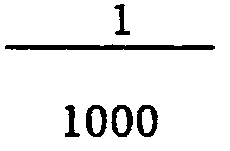
- the molar ratio of catalyst / glycolic acid is generally between 1/1000 and 10/1 and, preferably, between 2/100 and 1/10.
- the process according to the invention allows easy access to monochloroacetic acid from glycolic acid with excellent conversion rates, the monochloroacetic acid can easily be separated from the glycolic acid by distillation.
- the rate of conversion of glycolic acid to monochloroacetic acid is determined by measuring the consumption of chloride ions in the solution.
Landscapes
- Chemical & Material Sciences (AREA)
- Organic Chemistry (AREA)
- Chemical Kinetics & Catalysis (AREA)
- Engineering & Computer Science (AREA)
- Oil, Petroleum & Natural Gas (AREA)
- Organic Low-Molecular-Weight Compounds And Preparation Thereof (AREA)
- Low-Molecular Organic Synthesis Reactions Using Catalysts (AREA)
Abstract
Description
- La présente invention concerne un procédé de préparation d'acide monochloracétique à partir d'acide glycolique.
- L'acide monochloracétique est de plus en plus préparé à l'échelle industrielle à partir d'acide acétique même si une telle méthode conduit à la formation d'acide dichloracétique, difficilement séparable de l'acide monochloracétique par les techniques habituelles de distillation. C'est notamment dans le but de résoudre ce problème que le brevet américain 4221921 propose de préparer l'acide monochloracétique à partir d'acide glycolique. Selon ce brevet, la réaction est effectuée entre 100 et 250°C, en présence d'acide iodhydrique. La voie d'accès à l'acide monochloracétique à partir d'acide glycolique apparaît prometteuse dans la mesure où les nouveaux développements de la préparation de cet acide glycolique, notamment par carbonylation du formaldéhyde laissent espérer une baisse sensible du prix de revient du dit acide glycolique.
- La présente invention a donc pour objet un procédé de préparation d'acide monochloracétique par hydrochloration de l'acide glycolique, ce procédé étant caractérisé en ce que la réaction est effectuée en présence d'un catalyseur constitué par un acide de Lewis autre qu'un hydracide.
- L'invention concerne tout particulièrement un procédé dans lequel l'acide de Lewis est mis en oeuvre sous forme libre ou fixé sur un support solide.
- Elle vise plus précisément un procédé de fabrication d'acide monochloracétique par hydrochloration d'acide glycolique, le dit procédé étant caractérisé en ce que la réaction est effectuée en présence d'un ou plusieurs catalyseurs choisis dans le groupe constitué par les halogénures métalliques ou métalloïdiques, les acides minéraux oxygénés et les acides carboxyliques ou sulfoniques.
- A titre d'illustration des halogénures métalliques ou métalloïdiques, on citera tout particulièrement BF3, mis en oeuvre tel quel ou sous forme de complexe HF/BF3, BC13, Zn C12, Fe Cl3, Al C13, Sb C1 3.
- A titre d'illustration des acides minéraux oxygénés, on citera notamment H2 SO4 et H PO4.
- A titre d'illustration des acides carboxyliques ou sulfoniques, on citera notamment les acides de formules R COOH et R S03H dans lesquelles R désigne un radical aliphatique renfermant de 1 à 6 atomes de carbone, non substitué ou substitué par un ou plusieurs atomes d'halogène et notamment de fluor, ou un radical comportant un noyau aromatique et 6 à 12 atomes de carbone. Parmi de tels acides on citera notamment l'acide trifluoroacétique, l'acide trifluorométhane sulfonique, l'acide benzène sulfonique et les acides toluène-sulfoniques.
- Dans la mise en oeuvre du procédé conforme à l'invention, l'acide chlorhydrique utilisé pour la réaction d'hydrochloration de l'acide glycolique en acide monochloracétique peut être sous forme anhydre ou sous forme de solution aqueuse pouvant renfermer jusqu'à 90X en poids d'eau. D'une manière générale, on préfère utiliser de l'acide chlorhydrique aqueux, à des concentrations pouvant être comprises entre 20 et 70X en poids d'HCl par rapport au poids de la solution.
- L'acide chlorhydrique est utilisé généralement dans un rapport molaire


- La réaction d'hydrochloration peut être effectuée entre 80 et 200°C. De préférence la température est comprise entre 100 et 150°C.
- La réaction peut s'effectuer à pression atmosphérique ou sous une pression absolue pouvant atteindre 30 bars. De préférence on opère sous une pression absolue comprise entre 2 et 10 bars. La durée de la réaction est dépendante du taux de conversion d'acide glycolique en acide monochloracétique désiré. De ce fait la durée de réaction peut aller de quelques heures, 3 par exemple à 1 jour, voire davantage.
- Le rapport molaire catalyseur/acide glycolique est généralement compris entre 1/1000 et 10/1 et, de préférence, entre 2/100 et 1/10.
- Le procédé conforme à l'invention permet un accès facile à l'acide monochloracétique à partir d'acide glycolique avec d'excellents taux de conversion, l'acide monochloracétique pouvant facilement être séparé de l'acide glycolique par distillation.
- Les exemples suivants illustrent l'invention.
- On chauffe à 130°C une ampoule en pyrex scellée contenant :
-
- - 15,6 g d'acide glycolique (0,205 mole)
- - 50 cm3 de solution aqueuse d'HCl à 37,9% (0,615 mole)
- - 0,873 g de Zn Cl2 (0,0064 mole)
-
- - 15,6 d'acide glycolique
- - 50 cm3 de la solution d'HCl de l'exemple 1
- - 0,628 g d'acide sulfurique (0,0064 mole)
-
- - 15,6 g d'acide glycolique
- - 50 cm3 de la solution d'HCl de l'exemple 1
- - 0,73 g d'acide trifluoroacétique (0,0064 mole)
-
- - 15,6 g d'acide glycolique
- - 50 cm3 de la solution d'HCl de l'exemple 1
- - pas de catalyseur
-
- - 15,6 g d'acide glycolique
- - 50 cm3 de la solution d'HCl de l'exemple 1
- - 0,818 g d'acide iodhydrique (0,0064 mole)
- Au bout de 4, 8 ou 16 heures, on détermine par mesure de la consommation d'ions chlorure de la solution, un taux de transformation d'acide glycolique en acide monochloracétique.
- Ces résultats sont rassemblés dans le tableau qui suit :

- Dans tous les cas la sélectivité en acide monochloracétique est de 100%. Il ressort de ce tableau :
- - que Zn Cl2 est tout à fait comparable à la catalyse par HI au bout de 16 heures tout en ayant au départ (4 heures) une cinétique initiale plus rapide.
- - que H2 S04 et CF3 COOH permettent d'obtenir, dès 130°C des taux de transformation très élevés après 16 heures de réaction.
Claims (6)



Priority Applications (1)
| Application Number | Priority Date | Filing Date | Title |
|---|---|---|---|
| AT85402510T ATE37865T1 (de) | 1984-12-20 | 1985-12-16 | Verfahren zur herstellung von monochloressigsaeure aus glykolsaeure. |
Applications Claiming Priority (2)
| Application Number | Priority Date | Filing Date | Title |
|---|---|---|---|
| FR8419554 | 1984-12-20 | ||
| FR8419554A FR2575155A1 (fr) | 1984-12-20 | 1984-12-20 | Procede de preparation d'acide monochloracetique a partir d'acide glycolique |
Publications (2)
| Publication Number | Publication Date |
|---|---|
| EP0188945A1 true EP0188945A1 (fr) | 1986-07-30 |
| EP0188945B1 EP0188945B1 (fr) | 1988-10-12 |
Family
ID=9310833
Family Applications (1)
| Application Number | Title | Priority Date | Filing Date |
|---|---|---|---|
| EP85402510A Expired EP0188945B1 (fr) | 1984-12-20 | 1985-12-16 | Procédé de préparation d'acide monochloracétique à partir d'acide glycolique |
Country Status (10)
| Country | Link |
|---|---|
| EP (1) | EP0188945B1 (fr) |
| JP (1) | JPH0613457B2 (fr) |
| AT (1) | ATE37865T1 (fr) |
| AU (1) | AU585560B2 (fr) |
| CA (1) | CA1253879A (fr) |
| DE (1) | DE3565525D1 (fr) |
| ES (1) | ES8702876A1 (fr) |
| FR (1) | FR2575155A1 (fr) |
| PT (1) | PT81726B (fr) |
| SE (1) | SE8505953L (fr) |
Cited By (1)
| Publication number | Priority date | Publication date | Assignee | Title |
|---|---|---|---|---|
| CN115448833A (zh) * | 2022-08-25 | 2022-12-09 | 湖北泰盛化工有限公司 | 一种多官能团脂肪族伯醇衍生物的羟基直接氯代方法 |
Families Citing this family (1)
| Publication number | Priority date | Publication date | Assignee | Title |
|---|---|---|---|---|
| EP4049992B1 (fr) | 2021-02-24 | 2025-04-09 | Nouryon Chemicals BV | Procédé de production d'acide monochloroacétique à partir d'acide glycolique |
Citations (2)
| Publication number | Priority date | Publication date | Assignee | Title |
|---|---|---|---|---|
| GB727074A (en) * | 1952-10-29 | 1955-03-30 | Harshaw Chem Corp | Manufacture of monochloroacetic acid |
| US2876255A (en) * | 1956-04-26 | 1959-03-03 | Ethyl Corp | Preparation of bromo acids and esters |
Family Cites Families (1)
| Publication number | Priority date | Publication date | Assignee | Title |
|---|---|---|---|---|
| US4221921A (en) * | 1978-05-10 | 1980-09-09 | Chevron Research Company | Monochloroacetic acid from hydroxyacetic acid |
-
1984
- 1984-12-20 FR FR8419554A patent/FR2575155A1/fr active Pending
-
1985
- 1985-12-16 EP EP85402510A patent/EP0188945B1/fr not_active Expired
- 1985-12-16 SE SE8505953A patent/SE8505953L/xx not_active Application Discontinuation
- 1985-12-16 DE DE8585402510T patent/DE3565525D1/de not_active Expired
- 1985-12-16 AT AT85402510T patent/ATE37865T1/de not_active IP Right Cessation
- 1985-12-19 CA CA000498091A patent/CA1253879A/fr not_active Expired
- 1985-12-19 AU AU51488/85A patent/AU585560B2/en not_active Ceased
- 1985-12-19 PT PT81726A patent/PT81726B/pt not_active IP Right Cessation
- 1985-12-20 JP JP60287646A patent/JPH0613457B2/ja not_active Expired - Lifetime
- 1985-12-20 ES ES550227A patent/ES8702876A1/es not_active Expired
Patent Citations (2)
| Publication number | Priority date | Publication date | Assignee | Title |
|---|---|---|---|---|
| GB727074A (en) * | 1952-10-29 | 1955-03-30 | Harshaw Chem Corp | Manufacture of monochloroacetic acid |
| US2876255A (en) * | 1956-04-26 | 1959-03-03 | Ethyl Corp | Preparation of bromo acids and esters |
Cited By (2)
| Publication number | Priority date | Publication date | Assignee | Title |
|---|---|---|---|---|
| CN115448833A (zh) * | 2022-08-25 | 2022-12-09 | 湖北泰盛化工有限公司 | 一种多官能团脂肪族伯醇衍生物的羟基直接氯代方法 |
| CN115448833B (zh) * | 2022-08-25 | 2024-07-05 | 湖北泰盛化工有限公司 | 一种多官能团脂肪族伯醇衍生物的羟基直接氯代方法 |
Also Published As
| Publication number | Publication date |
|---|---|
| ES8702876A1 (es) | 1987-01-16 |
| JPS61197540A (ja) | 1986-09-01 |
| DE3565525D1 (en) | 1988-11-17 |
| AU585560B2 (en) | 1989-06-22 |
| JPH0613457B2 (ja) | 1994-02-23 |
| AU5148885A (en) | 1986-06-26 |
| EP0188945B1 (fr) | 1988-10-12 |
| ES550227A0 (es) | 1987-01-16 |
| PT81726B (pt) | 1988-04-21 |
| PT81726A (fr) | 1986-01-01 |
| ATE37865T1 (de) | 1988-10-15 |
| SE8505953D0 (sv) | 1985-12-16 |
| FR2575155A1 (fr) | 1986-06-27 |
| SE8505953L (sv) | 1986-06-21 |
| CA1253879A (fr) | 1989-05-09 |
Similar Documents
| Publication | Publication Date | Title |
|---|---|---|
| EP0147299B1 (fr) | Procédé de préparation de benzophénones | |
| EP0300861B1 (fr) | Procédé de préparation d'aldéhydes aromatiques | |
| EP0188945A1 (fr) | Procédé de préparation d'acide monochloracétique à partir d'acide glycolique | |
| JP3832599B2 (ja) | 4−フルオロ−チオフエノールの製造法 | |
| EP0202838B1 (fr) | Procédé pour la production d'alcool m-phénoxybenzyl | |
| FR2842194A1 (fr) | Procede de preparation d'un nitrophenol | |
| EP1027326B1 (fr) | Procede de fonctionnalisation d'un compose phenolique porteur d'un groupe electro-donneur | |
| EP1451136B1 (fr) | Procede de preparation d'acide monochloroacetique | |
| EP0558369B1 (fr) | Procédé de préparation de p-aminophénols | |
| EP0230478B1 (fr) | Méthode pour la préparation de l'acide alpha-(p-isobutylphényl)propionique | |
| EP0152310A1 (fr) | Procédé de préparation de trifluorométhyl anilines | |
| JP3063061B2 (ja) | 光学活性2−(4−ヒドロキシフェノキシ)プロピオン酸の製造法 | |
| EP0140783B1 (fr) | Procédé de préparation d'anilines méta substituées | |
| EP0130875A1 (fr) | Procédé d'halogénation-nitration-fluoration de dérivés aromatiques | |
| FR2731218A1 (fr) | Procede de preparation de l'acide 3-chloropropionique | |
| EP0084744A1 (fr) | Procédé de sulfonylation d'halogénobenzènes | |
| KR950006799B1 (ko) | 페날하이드로퀴논의 제조 | |
| FR2519979A1 (fr) | Procede de preparation de trifluoromethoxy ou trifluoromethylthiophenylsulfones | |
| EP0318591B1 (fr) | Procede de preparation de dihydroxynaphtalene | |
| FR2519975A1 (fr) | Procede de preparation de trifluoromethoxy ou trifluoromethylthiophenylcetones | |
| WO2010127991A1 (fr) | Procede de preparation des esters d'acides fluoroalcanesulfiniques | |
| CA1259330A (fr) | METHODE DE PRODUCTION DE L'ACIDE .alpha.-(P- ISOBUTYLPHENYL) PROPIONIQUE | |
| JPS63159333A (ja) | 2,4−ジ−t−ブチルフエノ−ルの製造方法 | |
| EP0679629A1 (fr) | Procédé de préparation d'un acide alpha-(hydroxyphenoxy)-alcanecarboxylique optiquement actif et de ses dérivés | |
| KR920009975B1 (ko) | α-(p-이소부틸페닐)프로피온산의 제조방법 |
Legal Events
| Date | Code | Title | Description |
|---|---|---|---|
| PUAI | Public reference made under article 153(3) epc to a published international application that has entered the european phase |
Free format text: ORIGINAL CODE: 0009012 |
|
| 17P | Request for examination filed |
Effective date: 19851219 |
|
| AK | Designated contracting states |
Kind code of ref document: A1 Designated state(s): AT BE CH DE FR GB IT LI LU NL SE |
|
| 17Q | First examination report despatched |
Effective date: 19871005 |
|
| GRAA | (expected) grant |
Free format text: ORIGINAL CODE: 0009210 |
|
| AK | Designated contracting states |
Kind code of ref document: B1 Designated state(s): AT BE CH DE FR GB IT LI LU NL SE |
|
| REF | Corresponds to: |
Ref document number: 37865 Country of ref document: AT Date of ref document: 19881015 Kind code of ref document: T |
|
| REF | Corresponds to: |
Ref document number: 3565525 Country of ref document: DE Date of ref document: 19881117 |
|
| GBT | Gb: translation of ep patent filed (gb section 77(6)(a)/1977) | ||
| ITF | It: translation for a ep patent filed | ||
| PLBE | No opposition filed within time limit |
Free format text: ORIGINAL CODE: 0009261 |
|
| STAA | Information on the status of an ep patent application or granted ep patent |
Free format text: STATUS: NO OPPOSITION FILED WITHIN TIME LIMIT |
|
| 26N | No opposition filed | ||
| ITTA | It: last paid annual fee | ||
| EPTA | Lu: last paid annual fee | ||
| EAL | Se: european patent in force in sweden |
Ref document number: 85402510.3 |
|
| PGFP | Annual fee paid to national office [announced via postgrant information from national office to epo] |
Ref country code: SE Payment date: 20011206 Year of fee payment: 17 |
|
| PGFP | Annual fee paid to national office [announced via postgrant information from national office to epo] |
Ref country code: LU Payment date: 20011207 Year of fee payment: 17 |
|
| PGFP | Annual fee paid to national office [announced via postgrant information from national office to epo] |
Ref country code: FR Payment date: 20011212 Year of fee payment: 17 Ref country code: AT Payment date: 20011212 Year of fee payment: 17 |
|
| PGFP | Annual fee paid to national office [announced via postgrant information from national office to epo] |
Ref country code: GB Payment date: 20011219 Year of fee payment: 17 |
|
| PGFP | Annual fee paid to national office [announced via postgrant information from national office to epo] |
Ref country code: NL Payment date: 20011228 Year of fee payment: 17 |
|
| REG | Reference to a national code |
Ref country code: GB Ref legal event code: IF02 |
|
| PGFP | Annual fee paid to national office [announced via postgrant information from national office to epo] |
Ref country code: CH Payment date: 20020104 Year of fee payment: 17 |
|
| PGFP | Annual fee paid to national office [announced via postgrant information from national office to epo] |
Ref country code: DE Payment date: 20020109 Year of fee payment: 17 |
|
| PG25 | Lapsed in a contracting state [announced via postgrant information from national office to epo] |
Ref country code: LU Free format text: LAPSE BECAUSE OF NON-PAYMENT OF DUE FEES Effective date: 20021216 Ref country code: GB Free format text: LAPSE BECAUSE OF NON-PAYMENT OF DUE FEES Effective date: 20021216 Ref country code: AT Free format text: LAPSE BECAUSE OF NON-PAYMENT OF DUE FEES Effective date: 20021216 |
|
| PG25 | Lapsed in a contracting state [announced via postgrant information from national office to epo] |
Ref country code: SE Free format text: LAPSE BECAUSE OF NON-PAYMENT OF DUE FEES Effective date: 20021217 |
|
| PG25 | Lapsed in a contracting state [announced via postgrant information from national office to epo] |
Ref country code: LI Free format text: LAPSE BECAUSE OF NON-PAYMENT OF DUE FEES Effective date: 20021231 Ref country code: CH Free format text: LAPSE BECAUSE OF NON-PAYMENT OF DUE FEES Effective date: 20021231 |
|
| PGFP | Annual fee paid to national office [announced via postgrant information from national office to epo] |
Ref country code: BE Payment date: 20030218 Year of fee payment: 18 |
|
| PG25 | Lapsed in a contracting state [announced via postgrant information from national office to epo] |
Ref country code: NL Free format text: LAPSE BECAUSE OF NON-PAYMENT OF DUE FEES Effective date: 20030701 Ref country code: DE Free format text: LAPSE BECAUSE OF NON-PAYMENT OF DUE FEES Effective date: 20030701 |
|
| EUG | Se: european patent has lapsed | ||
| GBPC | Gb: european patent ceased through non-payment of renewal fee |
Effective date: 20021216 |
|
| REG | Reference to a national code |
Ref country code: CH Ref legal event code: PL |
|
| NLV4 | Nl: lapsed or anulled due to non-payment of the annual fee |
Effective date: 20030701 |
|
| PG25 | Lapsed in a contracting state [announced via postgrant information from national office to epo] |
Ref country code: FR Free format text: LAPSE BECAUSE OF NON-PAYMENT OF DUE FEES Effective date: 20030901 |
|
| REG | Reference to a national code |
Ref country code: FR Ref legal event code: ST |
|
| PG25 | Lapsed in a contracting state [announced via postgrant information from national office to epo] |
Ref country code: BE Free format text: LAPSE BECAUSE OF NON-PAYMENT OF DUE FEES Effective date: 20031231 |
|
| BERE | Be: lapsed |
Owner name: *ATOCHEM Effective date: 20031231 |