EP0183447B1 - Polyesters as flow improvers for hydrocarbons - Google Patents
Polyesters as flow improvers for hydrocarbons Download PDFInfo
- Publication number
- EP0183447B1 EP0183447B1 EP85308322A EP85308322A EP0183447B1 EP 0183447 B1 EP0183447 B1 EP 0183447B1 EP 85308322 A EP85308322 A EP 85308322A EP 85308322 A EP85308322 A EP 85308322A EP 0183447 B1 EP0183447 B1 EP 0183447B1
- Authority
- EP
- European Patent Office
- Prior art keywords
- ester
- ethylenically unsaturated
- polyoxyalkylene
- use according
- copolymer
- Prior art date
- Legal status (The legal status is an assumption and is not a legal conclusion. Google has not performed a legal analysis and makes no representation as to the accuracy of the status listed.)
- Expired - Lifetime
Links
Images


Classifications
-
- C—CHEMISTRY; METALLURGY
- C10—PETROLEUM, GAS OR COKE INDUSTRIES; TECHNICAL GASES CONTAINING CARBON MONOXIDE; FUELS; LUBRICANTS; PEAT
- C10L—FUELS NOT OTHERWISE PROVIDED FOR; NATURAL GAS; SYNTHETIC NATURAL GAS OBTAINED BY PROCESSES NOT COVERED BY SUBCLASSES C10G OR C10K; LIQUIFIED PETROLEUM GAS; USE OF ADDITIVES TO FUELS OR FIRES; FIRE-LIGHTERS
- C10L1/00—Liquid carbonaceous fuels
- C10L1/10—Liquid carbonaceous fuels containing additives
- C10L1/14—Organic compounds
- C10L1/18—Organic compounds containing oxygen
- C10L1/192—Macromolecular compounds
-
- C—CHEMISTRY; METALLURGY
- C10—PETROLEUM, GAS OR COKE INDUSTRIES; TECHNICAL GASES CONTAINING CARBON MONOXIDE; FUELS; LUBRICANTS; PEAT
- C10L—FUELS NOT OTHERWISE PROVIDED FOR; NATURAL GAS; SYNTHETIC NATURAL GAS OBTAINED BY PROCESSES NOT COVERED BY SUBCLASSES C10G OR C10K; LIQUIFIED PETROLEUM GAS; USE OF ADDITIVES TO FUELS OR FIRES; FIRE-LIGHTERS
- C10L1/00—Liquid carbonaceous fuels
- C10L1/10—Liquid carbonaceous fuels containing additives
- C10L1/14—Organic compounds
- C10L1/143—Organic compounds mixtures of organic macromolecular compounds with organic non-macromolecular compounds
-
- C—CHEMISTRY; METALLURGY
- C10—PETROLEUM, GAS OR COKE INDUSTRIES; TECHNICAL GASES CONTAINING CARBON MONOXIDE; FUELS; LUBRICANTS; PEAT
- C10L—FUELS NOT OTHERWISE PROVIDED FOR; NATURAL GAS; SYNTHETIC NATURAL GAS OBTAINED BY PROCESSES NOT COVERED BY SUBCLASSES C10G OR C10K; LIQUIFIED PETROLEUM GAS; USE OF ADDITIVES TO FUELS OR FIRES; FIRE-LIGHTERS
- C10L1/00—Liquid carbonaceous fuels
- C10L1/10—Liquid carbonaceous fuels containing additives
- C10L1/14—Organic compounds
- C10L1/18—Organic compounds containing oxygen
- C10L1/192—Macromolecular compounds
- C10L1/198—Macromolecular compounds obtained otherwise than by reactions involving only carbon-to-carbon unsaturated bonds homo- or copolymers of compounds having one or more unsaturated aliphatic radicals, each having only one carbon to carbon double bond, and at least one being terminated by an acyloxy radical of a saturated carboxylic acid, of carbonic acid
- C10L1/1985—Macromolecular compounds obtained otherwise than by reactions involving only carbon-to-carbon unsaturated bonds homo- or copolymers of compounds having one or more unsaturated aliphatic radicals, each having only one carbon to carbon double bond, and at least one being terminated by an acyloxy radical of a saturated carboxylic acid, of carbonic acid polyethers, e.g. di- polygylcols and derivatives; ethers - esters
-
- C—CHEMISTRY; METALLURGY
- C10—PETROLEUM, GAS OR COKE INDUSTRIES; TECHNICAL GASES CONTAINING CARBON MONOXIDE; FUELS; LUBRICANTS; PEAT
- C10L—FUELS NOT OTHERWISE PROVIDED FOR; NATURAL GAS; SYNTHETIC NATURAL GAS OBTAINED BY PROCESSES NOT COVERED BY SUBCLASSES C10G OR C10K; LIQUIFIED PETROLEUM GAS; USE OF ADDITIVES TO FUELS OR FIRES; FIRE-LIGHTERS
- C10L1/00—Liquid carbonaceous fuels
- C10L1/10—Liquid carbonaceous fuels containing additives
- C10L1/14—Organic compounds
- C10L1/18—Organic compounds containing oxygen
- C10L1/192—Macromolecular compounds
- C10L1/195—Macromolecular compounds obtained by reactions involving only carbon-to-carbon unsaturated bonds
- C10L1/196—Macromolecular compounds obtained by reactions involving only carbon-to-carbon unsaturated bonds derived from monomers containing a carbon-to-carbon unsaturated bond and a carboxyl group or salts, anhydrides or esters thereof homo- or copolymers of compounds having one or more unsaturated aliphatic radicals each having one carbon bond to carbon double bond, and at least one being terminated by a carboxyl radical or of salts, anhydrides or esters thereof
- C10L1/1963—Macromolecular compounds obtained by reactions involving only carbon-to-carbon unsaturated bonds derived from monomers containing a carbon-to-carbon unsaturated bond and a carboxyl group or salts, anhydrides or esters thereof homo- or copolymers of compounds having one or more unsaturated aliphatic radicals each having one carbon bond to carbon double bond, and at least one being terminated by a carboxyl radical or of salts, anhydrides or esters thereof mono-carboxylic
-
- C—CHEMISTRY; METALLURGY
- C10—PETROLEUM, GAS OR COKE INDUSTRIES; TECHNICAL GASES CONTAINING CARBON MONOXIDE; FUELS; LUBRICANTS; PEAT
- C10L—FUELS NOT OTHERWISE PROVIDED FOR; NATURAL GAS; SYNTHETIC NATURAL GAS OBTAINED BY PROCESSES NOT COVERED BY SUBCLASSES C10G OR C10K; LIQUIFIED PETROLEUM GAS; USE OF ADDITIVES TO FUELS OR FIRES; FIRE-LIGHTERS
- C10L1/00—Liquid carbonaceous fuels
- C10L1/10—Liquid carbonaceous fuels containing additives
- C10L1/14—Organic compounds
- C10L1/18—Organic compounds containing oxygen
- C10L1/192—Macromolecular compounds
- C10L1/195—Macromolecular compounds obtained by reactions involving only carbon-to-carbon unsaturated bonds
- C10L1/196—Macromolecular compounds obtained by reactions involving only carbon-to-carbon unsaturated bonds derived from monomers containing a carbon-to-carbon unsaturated bond and a carboxyl group or salts, anhydrides or esters thereof homo- or copolymers of compounds having one or more unsaturated aliphatic radicals each having one carbon bond to carbon double bond, and at least one being terminated by a carboxyl radical or of salts, anhydrides or esters thereof
- C10L1/1966—Macromolecular compounds obtained by reactions involving only carbon-to-carbon unsaturated bonds derived from monomers containing a carbon-to-carbon unsaturated bond and a carboxyl group or salts, anhydrides or esters thereof homo- or copolymers of compounds having one or more unsaturated aliphatic radicals each having one carbon bond to carbon double bond, and at least one being terminated by a carboxyl radical or of salts, anhydrides or esters thereof poly-carboxylic
-
- C—CHEMISTRY; METALLURGY
- C10—PETROLEUM, GAS OR COKE INDUSTRIES; TECHNICAL GASES CONTAINING CARBON MONOXIDE; FUELS; LUBRICANTS; PEAT
- C10L—FUELS NOT OTHERWISE PROVIDED FOR; NATURAL GAS; SYNTHETIC NATURAL GAS OBTAINED BY PROCESSES NOT COVERED BY SUBCLASSES C10G OR C10K; LIQUIFIED PETROLEUM GAS; USE OF ADDITIVES TO FUELS OR FIRES; FIRE-LIGHTERS
- C10L1/00—Liquid carbonaceous fuels
- C10L1/10—Liquid carbonaceous fuels containing additives
- C10L1/14—Organic compounds
- C10L1/18—Organic compounds containing oxygen
- C10L1/192—Macromolecular compounds
- C10L1/195—Macromolecular compounds obtained by reactions involving only carbon-to-carbon unsaturated bonds
- C10L1/197—Macromolecular compounds obtained by reactions involving only carbon-to-carbon unsaturated bonds derived from monomers containing a carbon-to-carbon unsaturated bond and an acyloxy group of a saturated carboxylic or carbonic acid
- C10L1/1973—Macromolecular compounds obtained by reactions involving only carbon-to-carbon unsaturated bonds derived from monomers containing a carbon-to-carbon unsaturated bond and an acyloxy group of a saturated carboxylic or carbonic acid mono-carboxylic
-
- C—CHEMISTRY; METALLURGY
- C10—PETROLEUM, GAS OR COKE INDUSTRIES; TECHNICAL GASES CONTAINING CARBON MONOXIDE; FUELS; LUBRICANTS; PEAT
- C10L—FUELS NOT OTHERWISE PROVIDED FOR; NATURAL GAS; SYNTHETIC NATURAL GAS OBTAINED BY PROCESSES NOT COVERED BY SUBCLASSES C10G OR C10K; LIQUIFIED PETROLEUM GAS; USE OF ADDITIVES TO FUELS OR FIRES; FIRE-LIGHTERS
- C10L1/00—Liquid carbonaceous fuels
- C10L1/10—Liquid carbonaceous fuels containing additives
- C10L1/14—Organic compounds
- C10L1/22—Organic compounds containing nitrogen
- C10L1/222—Organic compounds containing nitrogen containing at least one carbon-to-nitrogen single bond
Definitions
- Mineral oils containing wax therein have the characteristic of becoming less fluid as the temperature of the oil decreases. This loss of fluidity is generally due to increase in viscosity and/or the crystallisation of the wax into plate-like crystals which eventually form a spongy mass entrapping the oil therein.
- compositions act as wax crystal modifiers and pour depressants when blended with waxy mineral oils. These compositions modify the size and shape of wax crystals and reduce the adhesive forces between the wax and oil in such a manner as to permit the oil to remain fluid at a lower temperature.
- United Kingdom Patent 1263152 suggests that the size of the wax crystals may be controlled by using a copolymer having a lower degree of side chain branching.
- polymers in which the average number of carbon atoms in the alkyl groups in the copolymer must be from 12 to 14 and that it must contain no more than 10 wt.% of copolymers in which the alkyl groups contains more than 14 carbon atoms and preferably no more than 20 wt.% of copolymer in which the alkyl group contains fewer than 12 carbon atoms have been found to be particularly effective in certain fuels and polymers with specific longer alkyl groups particularly effective in other fuels.
- Copolymers of esters containing polyoxyethylene and polyoxypropylene are described in United States Patent 3277157 and German Patent 1198561 and United States Patent 4160459 describes terpolymers for use as crude oil flow improvers which may contain polyoxyethylene or polyoxypropylene groups.
- polyoxyalkylene glycol groups may be incorporated into an unsaturated ester copolymer to provide an effective low temperature flow improver for distillate fuels.
- the unsaturated ester copolymer into which the polyoxyalkylene group is incorporated may be the types previously proposed as flow improvers for middle distillate fuels.
- the present invention therefore provides the use for improving the flow properties of distillate fuels boiling in the range 120°C to 400°C of an additive comprising a polymer or copolymer of an ethylenically unsaturated ester of weight average molecular weight from 1000 to 200,000 containing from 0.1 % to 50% by weight of polyoxyalkylene groups of molecular weight from 100 to 5000.
- the polymers of the present invention are preferably used in an amount from 0.0001 to 5 wt.% based on the weight of the distillate petroleum fuel oil and the present invention also includes distillate fuel containing such an additive.
- the polymers used in the present invention preferably have a weight average molecular weight in the range of 1000 to 100,000, preferably 20,000 to 70,000 as measured, for example, by Gel Permeation Chromatography, calibrated against polystyrene molecular weight standards.
- the unsaturated esters of the present invention may be derived from ethylenically unsaturated mono, di or polycarboxylic acids or mixtures thereof with other ethylenically unsaturated monomers such as ethylene, propylene or butene.
- dicarboxylic acid esters useful for preparing the polymer can be represented by the general formula: wherein R 1 and R 2 are hydrogen or a C 1 to C 4 alkyl group, e.g., methyl, R 3 is a C s to C 18 average, the average preferred depending upon the use to which the polymer is to be put.
- R 3 may be a mixture of a broad range of alkyl groups such as those used in U.K.
- patent 1469016 for use as a lubricating oil pour depressant or the specific monomer range of our European Patent Applications EP-A-153176 and 153177, EP-A-155807 and EP-A-156577 for use as distillate additives where they can not only improve low temperature flow and filterability but also lower the cloud point of the fuel and R 4 is COOR 3 , hydrogen or a C 1 to C 4 alkyl group.
- the polyoxyalkylene group may be incorporated into the molecule during the esterification of the carboxylic acid to produce the ester described above.
- the polyethylene glycol may be mixed with the alcohol R 3 0H in the appropriate ratio and used to esterify for example Fumaric acid.
- the esters of the above formula may be homopolymerised or copolymerised with other ethylenically unsaturated monomers such as short chain unsaturated esters for example vinyl esters such as vinyl acetate, vinyl propionate and vinyl butyrate and alkyl acrylates and alkyl methacrylates.
- Typical copolymers of the type described above may be obtained by the copolymerisation of a dicarboxylic acid mono or di-ester monomers such as dialkyl fumarates with various amounts, e.g., 5 to 70 mole %, of other unsaturated esters or olefins.
- Such other esters include short chain alkyl esters having the formula: where R 1 is hydrogen or a C 1 to C 4 alkyl group, R"' is-COOR"" or-OOCR”" where R"" is a C 1 to C 5 alkyl group branched or unbranched, and R'" is R" or hydrogen.
- Examples of these short chain esters are methacrylates, acrylates, fumarates and maleates the vinyl esters such as vinyl acetate and vinyl propionate being preferred. More specific examples include methyl methacrylate, isopropenyl acetate and isobutyl acrylate.
- Our preferred copolymers of this type contain from 40 to 60 mole % containing the polyoxyalkylene moiety fumarate and 60 to 40 mole % of vinyl acetate.
- ester polymers are generally prepared by polymerising the ester monomers in a solution of hydrocarbon solvent such as heptane, benzene, cyclohexane, or white oil, at a temperature generally in the range of from 20°C to 150°C. and usually promoted with a peroxide or azo type catalyst such as benzoyl peroxide azodiisobutyonitrile under a blanket of an inert gas such as nitrogen or carbon dioxide in order to exclude oxygen.
- hydrocarbon solvent such as heptane, benzene, cyclohexane, or white oil
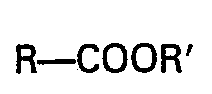
- An alternative method for incorporating the polyoxyalkylene group into the ester copolymers of the present invention is to copolymerise the above described ethylenically unsaturated esters with an ethylenically unsaturated ester for the formula Where R is an ethylenically unsaturated hydrocarbyl group and R' is a polyoxyalkylene group.
- esters include polyethylene glycol mono or di-oleate, polyethylene glycol mono or di-cinamate, polyethylene glycol acrylates etc.
- di-hexadecyl fumarate, vinyl acetate and the di-ester of oleic acid and polyoxyethylene glycol of molecular weight 600 may be copolymerised to give a copolymer of the invention.
- the polyoxyalkylene group may be incorporated into the ester polymer by producing polymers containing free acid groups and then esterifying with the polyoxyalkylene alcohol or glycol.
- copolymers of maleic anhydride with other unsaturated materials such as vinyl esters, dialkyl fumarates styrene or olefines may be esterified with the polyoxyalkylene alcohol or glycol.
- the polyoxyalkylene alcohol used may itself be a mono-alcohol the other end of the group being etherified or esterified so as to introduce a further desirable group in the polymer chain.
- the polyoxyalkylene alcohol or glycol may be mixed with other alcohols especially the straight chain alkyl alcohols when the products are to be used as additives for distillate fuels.
- polyoxyalkylene alcohols examples include esters, ethers or ester/ethers of the general formula Where R is Hydrogen, -Alkyl, A is the polyoxyalkylene segment in which the alkylene group has 1 to 4 carbon atoms such as polyoxymethylene, polyoxyethylene or polyoxytrimethylene. It is preferred that the polyoxyalkylene segment itself has a molecular weight of about 100 to 5000.
- suitable alcohols and glycols especially when the materials are to be used as additives for distillate fuels are the substantially linear polyethylene glycols (PEG) and polypropylene glycols (PPG) having a molecular weight of about 100 to 5,000 preferably about 200 to 2,000.
- PEG polyethylene glycols
- PPG polypropylene glycols
- the monoesters of these glycols may be used and esters of fatty acids containing about 1-30 preferably 2 to 30 carbon atoms are preferred and it is preferred to use a C 18 -C 24 fatty acid, especially behenic acid or mixtures of stearic and behenic acids.
- esters may also be prepared by esterifying polyethoxylated fatty acids or polyethoxylated alcohols, for example the mono methyl ether of a PEG may be used or a polyethoxylated fatty alcohol such as the commercially available "Brij" materials.
- a particularly preferred compound for use as a distillate fuel flow improver especially in narrow boiling distillates is a copolymer of vinyl acetate with an equimolar amount of a fumarate ester prepared by esterifying fumaric acid with a mixture of from at least 95 mole % of a mixture of C 12 /C 14 straight chain alcohols and up to 5 mole % of polyethylene glycol of molecular weight 600.
- ester polymer or copolymer containing free carboxylic acid or hydroxy groups may be reacted with ethylene or propylene oxide to produce the materials of this invention.
- the compounds may be used as additives to control wax crystal size to improve low temperature filterability and can in some instances lower the cloud point of the fuel.
- distillate fuels we mean those fuels generally used for diesel vehicles and heating oils especially domestic heating oils generally boiling in the range 120°C to 400°C.
- the additives of the invention have less of a tendency for adverse interaction with other distillate additives than with similar additives which do not contain the polyoxyalkylene group.
- the compounds may be used on their own but we have found that in distillate fuels they are particularly effective when used in combination with other additives previously proposed for improving the cold flow properties of distillate fuels generally.
- the additives of the present invention may be used with the polyoxyalkylene esters, ethers, ester/ ethers and mixtures thereof, containing at least two C 10 to C 30 linear saturated alkyl groups and a polyoxyalkylene glycol of molecular weight 100 to 5,000 preferably 200 to 5,000, the alkyl group in said polyoxyalkylene glycol containing from 1 to 4 carbon atoms.
- These materials form the subject of European Patent Publication EP-A-0061895.
- suitable coadditives of this type are the reaction product of glycols generally the substantially linear polyethylene glycols (PEG) and polypropylene glycols (PPG) with fatty acids containing about 10-30 preferably 18 to 24 carbon atoms, especially behenic acid or mixtures of stearic and behenic acids, the esters may also be prepared by esterifying polyethoxylated fatty acids or polyethoxylated alcohols. Esters obtained by reacting fatty acids with polyalkoxylated amines or ammonia may also be used.
- PEG polyethylene glycols
- PPG polypropylene glycols
- the additives of this invention may also be used with the ethylene unsaturated ester copolymer flow improvers.
- the unsaturated monomers which may be copolymerized with ethylene include unsaturated mono and diesters of the general formula: wherein R 3 is hydrogen or methyl; R 2 is a -OOCR S group wherein R 5 is hydrogen or a C 1 to C 28 , more usually C 1 to C 17 and preferably a C 1 to C s , straight or branched chain alkyl group; or R 2 is a -COOR S group wherein R 5 is as previously described but is not hydrogen and R 4 is hydrogen or -COOR S as previously defined.
- the monomer when R 2 and R 4 are hydrogen and R 2 is-OOCR 5, includes vinyl alcohol esters of C 1 to C 29 , more usually C 1 to C 18, monocarboxylic acid, and preferably C 2 to C 5 monocarboxylic acid.
- vinyl esters which may be copolymerised with ethylene include vinyl acetate, vinyl propionate and vinyl isobutyrate, vinyl acetate being the preferred vinyl ester.
- the copolymers contain from 20 to 40 wt.% of the vinyl ester more preferably from 25 to 35 wt.% vinyl ester. They may also be mixtures of two copolymers such as those described in United States Patent 3961916.
- these copolymers have a number average molecular weight as measured by vapor phase osmometry (VPO) of 1000 to 6000 preferably 1000 to 4000.
- VPO vapor phase osmometry
- polar compounds either ionic or nonionic, which have the capability in fuels of acting as wax crystal growth inhibitors.
- Polar nitrogen containing compounds have been found to be especially effective when used in combination with the glycol esters, ethers or ester/ethers and such three component mixtures are within the present invention.
- These polar compounds are generally the C20-C300 preferably C 20- C loo amine salts and/or amides formed by reaction of at least one molar proportion of hydrocarbyl substituted amines with a molar proportion of hydrocarbyl acid having 1-4 carboxylic acid groups or their anhydrides; ester/ amides may also be used. These nitrogen compounds are described in U.S.
- Suitable amines are usually long chain C 12 -C 40 primary, secondary, tertiary or quaternary amines of mixtures thereof but shorter chain amines may be used provided the resulting nitrogen compound is oil soluble and therefore normally containing about 20 to 300 total carbon atoms.
- the nitrogen compound should also have at least one straight chain C S -C 4o alkyl segment.
- Suitable amines include primary, secondary, tertiary or quaternary, but preferably are secondary. Tertiary and quaternary amines can only form amine salts. Examples of amines include tetradecyl amine, cocoamine, hydrogenated tallow amine and the like. Examples of secondary amines include dioctadecyl amine, methyl-behenyl amine and the like. Amine mixtures are also suitable and many amines derived from natural materials are mixtures.
- the preferred amine is a secondary hydrogenated tallow amine of the formula HNR l R 2 wherein R 1 and R 2 are alkyl groups derived from hydrogenated tallow fat composed of approximately 4% C 14 , 31 % C i6 , 59% C 1 s,
- carboxylic acids for preparing these nitrogen compounds (and their anhydrides) include cyclohexane dicarboxylic acid, cyclohexene dicarboxylic acid, cyclopentane dicarboxylic acid, dialpha-naphthyl acetic acid, naphthalene dicarboxylic acid and the like. Generally these acids will have about 5-13 carbon atoms in the cyclic moiety.
- Preferred acids useful in the present invention are benzene dicarboxylic acids such as phthalic acid, terephthalic acid, and ortho-phthalic acid. Ortho-phthalicacid or its anhydride is the particularly preferred embodiment.
- the nitrogen containing compound have at least one straight chain alkyl segment extending from the compound containing 8-40, preferably 8-24 carbon atoms. Also at least one ammonium salt, amine salt or amide linkage is required to be present in the molecule.
- the particularly preferred amine compound is that amide-amine salt formed by reacting 1 molar portion of phthalic anhydride with 2 molar portions of di-hydrogenated tallow amine. Another preferred embodiment is the diamide formed by dehydrating this amide-amine salt.
- amine derivatives which may be used as co-additives are oil soluble amine carboxylic acid salts and/or amides e.g. trioctylamine myristate or behenate. Reaction products of polyamines with fatty carboxylic acids such as the product of reacting tetraethylene pentamine with stearic or behenic acid may be used as may fatty amides themselves.
- copolymers may be used in combination with one or more additives of the type described above.
- the relative proportions of additives used in the preferred mixtures of the invention are from 0.5 to 20 parts by weight of the ester polymer containing the polyoxyalkylene group to 1 part of the other additives.
- the total amount of additive used will depend upon the particular fuel but generally we use from 0.0001 % to 5% by weight of the fuel.
- the additive systems of the present invention may conveniently be supplied as concentrates in oil for incorporation into the bulk fuel. These concentrates may also contain other additives as required. These concentrates preferably contain from 3 to 75 wt.%, more preferably 3 to 60 wt.%, most preferably 10 to 50 wt.% of additive preferably. Such concentrates are also within the scope of the present invention.
- the present invention is illustrated by the following Examples in which the effectiveness of the additives as pour point depressants and filterability improvers in distillate fuels were compared with other similar additives in the Cold Filter Plugging Point Test (CFPPT) which is carried out by the procedure described in detail in "Journal of the Institute of Petroleum", Volume 52, Number 510, June 1966, pp. 173-185. This test is designed to correlated with the cold flow of a middle distillate fuel in automatic diesels.
- CFPPT Cold Filter Plugging Point Test
- a 40 ml sample of the oil to be tested is cooled in a bath which is maintained at about -34°C to give non-linear cooling at about 1°C/min.
- Periodically at each one degree Centigrade drop in temperature starting from at least 2°C above the cloud point, the cooled oil is tested for its ability to flow through a fine screen in a prescribed time period using a test device which is a pipette to whose lower end is attached an inverted funnel which is positioned below the surface of the oil to be tested. Stretched across the mouth of the funnel is a 350 mesh screen having an area defined by a 12 millimetre diameter.
- the periodic tests are each initiated by applying a vacuum to the upper end of the pipette whereby oil is drawn through the screen up into the pipette to a mark indicating 20 ml of oil. After each successful passage the oil is returned immediately to the CFPP tube. The test is repeated with each one degree drop in temperature until the oil fails to fill the pipette within 60 seconds. This temperature is reported as the CFPP temperature. The difference between the CFPP of an additive free fuel and of the same fuel containing additive is reported as the CFPP depression by the additive. A more effective additive flow improver gives a greater CFPP depression at the same concentration of additive.
- the fuels used in this Example were:
- Additive 1 a copolymer of a mixed C 12 /C 14 fumarate ester obtained by reaction of 50:50 molar mixture of normal C 12 and C 14 alcohols with fumaric acid and solution copolymerisation with vinyl acetate in 1 to 1 mole ratio at 60°C using azo diisobutyonitrile as catalyst.
- Additive 2 the dibehenate ester of polyethylene glycol of molecular weight 600.
- Additive 3 the dibehenate ester of polyethylene glycol of molecular weight 400.
- Additive 4 is an Additive in accordance with the invention being similar to Additive 1 except that 2.5 mole % of a polyethylene glycol of 600 average molecular weight was included in the C 12 /C 14 alcohol mixture used to esterify the fumaric acid and the polymerisation was carried out at 80°C.
- Additive 5 also in accordance with the invention being similar to Additive 4 except 2.5 mole % of the monomethyl ether of polyethylene glycol of 750 molecular weight was used in place of the polyethylene glycol of 600 molecular weight.
- Example 1 The Additives of Example 1 were tested in the following fuels.
- Additives of the present invention were used in fuel G together with an ethylene vinyl acetate (EVA) copolymer according to United Kingdom Patent 1263152 containing 36 wt % vinyl acetate and having a number average molecular weight of 2000 as measured by Vapor Phase Osmometry.
- EVA ethylene vinyl acetate
- Additive 9 was in accordance with the invention being similar to Additive 1 except that a commercial
- Additive 11 is in accordance with the invention being similar to Additive 1 except that 10 mole % of the C 12 /C l4 alcohol was replaced by the monomethyl ether of polyethylene glycol of molecular weight 750.
- the Additives were tested in a blend of 50 wt.% of Fuel L have an untreated CFPP of -2°C and ASTM-D-96 distillation of and 50 wt.% of a Fuel D containing 200 ppm of an ethylene vinyl acetate copolymer of 32 wt.% vinyl acetate.
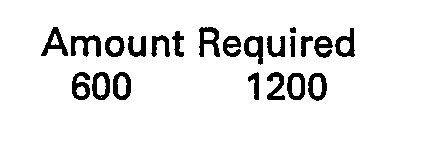
- the amount of additive required to give the blend a CFPP of -9°C was determined and compared with a similar mixture of Additive 1 and 3 and found to be as follows
- Fuel M had an untreated CFPP of -4°C and an ASTM D-96 distillation of
Landscapes
- Chemical & Material Sciences (AREA)
- Oil, Petroleum & Natural Gas (AREA)
- Engineering & Computer Science (AREA)
- Chemical Kinetics & Catalysis (AREA)
- General Chemical & Material Sciences (AREA)
- Organic Chemistry (AREA)
- Emergency Medicine (AREA)
- Health & Medical Sciences (AREA)
- Liquid Carbonaceous Fuels (AREA)
- Polyesters Or Polycarbonates (AREA)
- Addition Polymer Or Copolymer, Post-Treatments, Or Chemical Modifications (AREA)
- Compositions Of Macromolecular Compounds (AREA)
- Macromonomer-Based Addition Polymer (AREA)
- Production Of Liquid Hydrocarbon Mixture For Refining Petroleum (AREA)
- Solid Fuels And Fuel-Associated Substances (AREA)
- Physical Or Chemical Processes And Apparatus (AREA)
- Organic Low-Molecular-Weight Compounds And Preparation Thereof (AREA)
Abstract
Description
- Mineral oils containing wax therein have the characteristic of becoming less fluid as the temperature of the oil decreases. This loss of fluidity is generally due to increase in viscosity and/or the crystallisation of the wax into plate-like crystals which eventually form a spongy mass entrapping the oil therein.
- It has long been known that various compositions act as wax crystal modifiers and pour depressants when blended with waxy mineral oils. These compositions modify the size and shape of wax crystals and reduce the adhesive forces between the wax and oil in such a manner as to permit the oil to remain fluid at a lower temperature.
- Various pour point depressants have been described in the literature and several of these are in commercial use. For example, U.S. Pat. No. 3,048,479 teaches the use of copolymers of ethylene and C3-CS vinyl esters, e.g. vinyl acetate as pour depressants for fuels, specifically heating oils, diesel and jet fuels. Hydrocarbon polymeric pour depressants based on ethylene and higher alpha-olefins, e.g. propylene, are also known. U.S. Patent 3,961,916 teaches the use of a mixture of copolymers, one of which is a wax crystal nucleator and the other a growth arrestor to control the size of the wax crystals.
- Similarly United Kingdom Patent 1263152 suggests that the size of the wax crystals may be controlled by using a copolymer having a lower degree of side chain branching.
- It has also been proposed in for example United States Patent 1469016 that the copolymers of di-n-alkyl fumarates and vinyl acetate which have previously been used as pour point depressants for lubricating oils may be used as co-additives with ethylene/vinyl acetate copolymers in the treatment of distillate fuels with high final boiling points to improve their low temperature flow properties. According to United Kingdom Patent 1469016 these polymers may be C6 to Cl,3 alkyl esters of unsaturated C4 to Cs dicarboxylic acids particularly lauryl fumarate; lauryl-hexadecyl fumarate. Typically the materials used are mixed esters with an average of about 12 carbon atoms (Polymer A).
- Our European Patent Applications EP-A-153176, EP-A-153177, EP-A-155807 and EP-A-156577 suggest that the effectivness of these type of materials may be improved if the copolymers containing very specific alkyl groups such as specific di-n-alkyl fumarate/vinyl acetate copolymers. For example, polymers in which the average number of carbon atoms in the alkyl groups in the copolymer must be from 12 to 14 and that it must contain no more than 10 wt.% of copolymers in which the alkyl groups contains more than 14 carbon atoms and preferably no more than 20 wt.% of copolymer in which the alkyl group contains fewer than 12 carbon atoms have been found to be particularly effective in certain fuels and polymers with specific longer alkyl groups particularly effective in other fuels.
- Our European Patent Application EP-A-0061895 describes the use of polyoxyalkylene esters, ethers, ester/ethers and mixtures thereof containing at least two C10 to C30 linear saturated alkyl groups and a polyoxyalkylene glycol group of molecular weight 100 to 5000 the alkyl group in the polyoxyalkylene glycol containing from 1 to 4 carbon atoms as additives for distillate fuels.
- It has also been shown that in many instances using mixtures of two types of additive will give a synergistic improvement in cold temperature flow properties especially in distillate fuels. Mixing can however lead to problems of additive interaction sometimes leading to a reduction in their effectiveness which can cause serious problems for the refiner who may frequently wish to mix large quantities of fuels from different sources and containing different additives for storage purposes an aim of the present invention is to reduce this problem.
- Copolymers of esters containing polyoxyethylene and polyoxypropylene are described in United States Patent 3277157 and German Patent 1198561 and United States Patent 4160459 describes terpolymers for use as crude oil flow improvers which may contain polyoxyethylene or polyoxypropylene groups.
- We have now found that certain polyoxyalkylene glycol groups may be incorporated into an unsaturated ester copolymer to provide an effective low temperature flow improver for distillate fuels. The unsaturated ester copolymer into which the polyoxyalkylene group is incorporated may be the types previously proposed as flow improvers for middle distillate fuels. We have also found that when these copolymers are used in distillate fuels the problem of adverse interaction with other additives such as ethylene vinyl acetate copolymers may be reduced.
- The present invention therefore provides the use for improving the flow properties of distillate fuels boiling in the range 120°C to 400°C of an additive comprising a polymer or copolymer of an ethylenically unsaturated ester of weight average molecular weight from 1000 to 200,000 containing from 0.1 % to 50% by weight of polyoxyalkylene groups of molecular weight from 100 to 5000.
- The polymers of the present invention are preferably used in an amount from 0.0001 to 5 wt.% based on the weight of the distillate petroleum fuel oil and the present invention also includes distillate fuel containing such an additive.
- The polymers used in the present invention preferably have a weight average molecular weight in the range of 1000 to 100,000, preferably 20,000 to 70,000 as measured, for example, by Gel Permeation Chromatography, calibrated against polystyrene molecular weight standards.
- The unsaturated esters of the present invention may be derived from ethylenically unsaturated mono, di or polycarboxylic acids or mixtures thereof with other ethylenically unsaturated monomers such as ethylene, propylene or butene. Examples of dicarboxylic acid esters useful for preparing the polymer can be represented by the general formula:

- Typical copolymers of the type described above may be obtained by the copolymerisation of a dicarboxylic acid mono or di-ester monomers such as dialkyl fumarates with various amounts, e.g., 5 to 70 mole %, of other unsaturated esters or olefins. Such other esters include short chain alkyl esters having the formula:

- Our preferred copolymers of this type contain from 40 to 60 mole % containing the polyoxyalkylene moiety fumarate and 60 to 40 mole % of vinyl acetate.
- These ester polymers are generally prepared by polymerising the ester monomers in a solution of hydrocarbon solvent such as heptane, benzene, cyclohexane, or white oil, at a temperature generally in the range of from 20°C to 150°C. and usually promoted with a peroxide or azo type catalyst such as benzoyl peroxide azodiisobutyonitrile under a blanket of an inert gas such as nitrogen or carbon dioxide in order to exclude oxygen.
- An alternative method for incorporating the polyoxyalkylene group into the ester copolymers of the present invention is to copolymerise the above described ethylenically unsaturated esters with an ethylenically unsaturated ester for the formula
molecular weight 600 may be copolymerised to give a copolymer of the invention. - Alternatively the polyoxyalkylene group may be incorporated into the ester polymer by producing polymers containing free acid groups and then esterifying with the polyoxyalkylene alcohol or glycol. For example copolymers of maleic anhydride with other unsaturated materials such as vinyl esters, dialkyl fumarates styrene or olefines may be esterified with the polyoxyalkylene alcohol or glycol. The polyoxyalkylene alcohol used may itself be a mono-alcohol the other end of the group being etherified or esterified so as to introduce a further desirable group in the polymer chain. The polyoxyalkylene alcohol or glycol may be mixed with other alcohols especially the straight chain alkyl alcohols when the products are to be used as additives for distillate fuels.
- Examples of the polyoxyalkylene alcohols that may be used include esters, ethers or ester/ethers of the general formula


- Examples of suitable alcohols and glycols especially when the materials are to be used as additives for distillate fuels are the substantially linear polyethylene glycols (PEG) and polypropylene glycols (PPG) having a molecular weight of about 100 to 5,000 preferably about 200 to 2,000. The monoesters of these glycols may be used and esters of fatty acids containing about 1-30 preferably 2 to 30 carbon atoms are preferred and it is preferred to use a C18-C24 fatty acid, especially behenic acid or mixtures of stearic and behenic acids. These esters may also be prepared by esterifying polyethoxylated fatty acids or polyethoxylated alcohols, for example the mono methyl ether of a PEG may be used or a polyethoxylated fatty alcohol such as the commercially available "Brij" materials.
- A particularly preferred compound for use as a distillate fuel flow improver especially in narrow boiling distillates is a copolymer of vinyl acetate with an equimolar amount of a fumarate ester prepared by esterifying fumaric acid with a mixture of from at least 95 mole % of a mixture of C12/C14 straight chain alcohols and up to 5 mole % of polyethylene glycol of
molecular weight 600. - Alternatively an ester polymer or copolymer containing free carboxylic acid or hydroxy groups may be reacted with ethylene or propylene oxide to produce the materials of this invention.
- The compounds may be used as additives to control wax crystal size to improve low temperature filterability and can in some instances lower the cloud point of the fuel. By distillate fuels we mean those fuels generally used for diesel vehicles and heating oils especially domestic heating oils generally boiling in the range 120°C to 400°C. In addition when used in some distillate fuels the additives of the invention have less of a tendency for adverse interaction with other distillate additives than with similar additives which do not contain the polyoxyalkylene group. The compounds may be used on their own but we have found that in distillate fuels they are particularly effective when used in combination with other additives previously proposed for improving the cold flow properties of distillate fuels generally.
- The additives of the present invention may be used with the polyoxyalkylene esters, ethers, ester/ ethers and mixtures thereof, containing at least two C10 to C30 linear saturated alkyl groups and a polyoxyalkylene glycol of molecular weight 100 to 5,000 preferably 200 to 5,000, the alkyl group in said polyoxyalkylene glycol containing from 1 to 4 carbon atoms. These materials form the subject of European Patent Publication EP-A-0061895. Examples of suitable coadditives of this type are the reaction product of glycols generally the substantially linear polyethylene glycols (PEG) and polypropylene glycols (PPG) with fatty acids containing about 10-30 preferably 18 to 24 carbon atoms, especially behenic acid or mixtures of stearic and behenic acids, the esters may also be prepared by esterifying polyethoxylated fatty acids or polyethoxylated alcohols. Esters obtained by reacting fatty acids with polyalkoxylated amines or ammonia may also be used.
- The additives of this invention may also be used with the ethylene unsaturated ester copolymer flow improvers. The unsaturated monomers which may be copolymerized with ethylene, include unsaturated mono and diesters of the general formula:

- It is preferred that these copolymers have a number average molecular weight as measured by vapor phase osmometry (VPO) of 1000 to 6000 preferably 1000 to 4000.
- Our polymers and copolymers may also be used in distillate fuels in combination with polar compounds, either ionic or nonionic, which have the capability in fuels of acting as wax crystal growth inhibitors. Polar nitrogen containing compounds have been found to be especially effective when used in combination with the glycol esters, ethers or ester/ethers and such three component mixtures are within the present invention. These polar compounds are generally the C20-C300 preferably C20-Cloo amine salts and/or amides formed by reaction of at least one molar proportion of hydrocarbyl substituted amines with a molar proportion of hydrocarbyl acid having 1-4 carboxylic acid groups or their anhydrides; ester/ amides may also be used. These nitrogen compounds are described in U.S. Patent 4,211,534. Suitable amines are usually long chain C12-C40 primary, secondary, tertiary or quaternary amines of mixtures thereof but shorter chain amines may be used provided the resulting nitrogen compound is oil soluble and therefore normally containing about 20 to 300 total carbon atoms. The nitrogen compound should also have at least one straight chain CS-C4o alkyl segment.
- Suitable amines include primary, secondary, tertiary or quaternary, but preferably are secondary. Tertiary and quaternary amines can only form amine salts. Examples of amines include tetradecyl amine, cocoamine, hydrogenated tallow amine and the like. Examples of secondary amines include dioctadecyl amine, methyl-behenyl amine and the like. Amine mixtures are also suitable and many amines derived from natural materials are mixtures. The preferred amine is a secondary hydrogenated tallow amine of the formula HNRlR2 wherein R1 and R2 are alkyl groups derived from hydrogenated tallow fat composed of approximately 4% C14, 31 % Ci6, 59% C1s,
- Examples of suitable carboxylic acids for preparing these nitrogen compounds (and their anhydrides) include cyclohexane dicarboxylic acid, cyclohexene dicarboxylic acid, cyclopentane dicarboxylic acid, dialpha-naphthyl acetic acid, naphthalene dicarboxylic acid and the like. Generally these acids will have about 5-13 carbon atoms in the cyclic moiety. Preferred acids useful in the present invention are benzene dicarboxylic acids such as phthalic acid, terephthalic acid, and ortho-phthalic acid. Ortho-phthalicacid or its anhydride is the particularly preferred embodiment.
- It is preferred that the nitrogen containing compound have at least one straight chain alkyl segment extending from the compound containing 8-40, preferably 8-24 carbon atoms. Also at least one ammonium salt, amine salt or amide linkage is required to be present in the molecule. The particularly preferred amine compound is that amide-amine salt formed by reacting 1 molar portion of phthalic anhydride with 2 molar portions of di-hydrogenated tallow amine. Another preferred embodiment is the diamide formed by dehydrating this amide-amine salt.
- Other amine derivatives which may be used as co-additives are oil soluble amine carboxylic acid salts and/or amides e.g. trioctylamine myristate or behenate. Reaction products of polyamines with fatty carboxylic acids such as the product of reacting tetraethylene pentamine with stearic or behenic acid may be used as may fatty amides themselves.
- The copolymers may be used in combination with one or more additives of the type described above.
- The relative proportions of additives used in the preferred mixtures of the invention are from 0.5 to 20 parts by weight of the ester polymer containing the polyoxyalkylene group to 1 part of the other additives. The total amount of additive used will depend upon the particular fuel but generally we use from 0.0001 % to 5% by weight of the fuel.
- The additive systems of the present invention may conveniently be supplied as concentrates in oil for incorporation into the bulk fuel. These concentrates may also contain other additives as required. These concentrates preferably contain from 3 to 75 wt.%, more preferably 3 to 60 wt.%, most preferably 10 to 50 wt.% of additive preferably. Such concentrates are also within the scope of the present invention.
- The present invention is illustrated by the following Examples in which the effectiveness of the additives as pour point depressants and filterability improvers in distillate fuels were compared with other similar additives in the Cold Filter Plugging Point Test (CFPPT) which is carried out by the procedure described in detail in "Journal of the Institute of Petroleum", Volume 52, Number 510, June 1966, pp. 173-185. This test is designed to correlated with the cold flow of a middle distillate fuel in automatic diesels.
- In brief, a 40 ml sample of the oil to be tested is cooled in a bath which is maintained at about -34°C to give non-linear cooling at about 1°C/min. Periodically (at each one degree Centigrade drop in temperature starting from at least 2°C above the cloud point) the cooled oil is tested for its ability to flow through a fine screen in a prescribed time period using a test device which is a pipette to whose lower end is attached an inverted funnel which is positioned below the surface of the oil to be tested. Stretched across the mouth of the funnel is a 350 mesh screen having an area defined by a 12 millimetre diameter. The periodic tests are each initiated by applying a vacuum to the upper end of the pipette whereby oil is drawn through the screen up into the pipette to a mark indicating 20 ml of oil. After each successful passage the oil is returned immediately to the CFPP tube. The test is repeated with each one degree drop in temperature until the oil fails to fill the pipette within 60 seconds. This temperature is reported as the CFPP temperature. The difference between the CFPP of an additive free fuel and of the same fuel containing additive is reported as the CFPP depression by the additive. A more effective additive flow improver gives a greater CFPP depression at the same concentration of additive.
- The fuels used in this Example were:

- The additives used were
- Additive 1 a copolymer of a mixed C12/C14 fumarate ester obtained by reaction of 50:50 molar mixture of normal C12 and C14 alcohols with fumaric acid and solution copolymerisation with vinyl acetate in 1 to 1 mole ratio at 60°C using azo diisobutyonitrile as catalyst.
- Additive 2 the dibehenate ester of polyethylene glycol of
molecular weight 600. - Additive 3 the dibehenate ester of polyethylene glycol of
molecular weight 400. -
Additive 4 is an Additive in accordance with the invention being similar to Additive 1 except that 2.5 mole % of a polyethylene glycol of 600 average molecular weight was included in the C12/C14 alcohol mixture used to esterify the fumaric acid and the polymerisation was carried out at 80°C. - Additive 5 also in accordance with the invention being similar to
Additive 4 except 2.5 mole % of the monomethyl ether of polyethylene glycol of 750 molecular weight was used in place of the polyethylene glycol of 600 molecular weight. - The CFPP depressions obtained in the fuels when treated with these additives and mixtures thereof were as follows:

- In each instance showing a greater reduction in the CFPP temperature when the additive contains a polyoxyalkylene segment in the molecule (Additive 4) than with the Comparative tests using Additive 1.
- The Additives of Example 1 were tested in the following fuels.

- And the amount of additive (a 2:1 by weight mixture of Additives 1 or 5 with Additive 3) required to reach the target CFPP was measured with the following results.

- The CFPP depressions obtained using 2:1 mixtures of
Additives 1, 4 or 5 with 3 were found to be as follows.
- The mixture of Additives 1 and 3 being for purposes of comparison.
- Additives of the present invention were used in fuel G together with an ethylene vinyl acetate (EVA) copolymer according to United Kingdom Patent 1263152 containing 36 wt % vinyl acetate and having a number average molecular weight of 2000 as measured by Vapor Phase Osmometry.
- The other additives used were
- Additive 1 of Example 1.
-
Additive 6 was in accordance with the invention being similar to Additive 1 except that 5 mole % of a polyethylene glycol of 600 molecular weight dioleate was added to the C12/C14 alcohol mixture used to esterify the fumaric acid. - Additive 7 was also in accordance with the invention being similar to Additive 1 except that the dialkyl fumarate was obtained from the following mixture of alcohols 45 moles n-C12 alcohol 45 moles n-C,4
alcohol 10 moles n-C16 (CH2-CH20)22o-OH -
Additive 8 was in accordance with the invention being similar toAdditive 6 except that 2 mole % of the polyethylene glycol of 600 molecular weight was used. - The CFPP values obtained were as follows:

- The tests using Additive are comparative.
- The effect of the amount of additive used on the CFPP values for Fuels E, F, G and I was determined using the following Additive Mixtures

- The results are shown in the graphs Figures 1 to 4, Figures 3 and 4 also including results obtained using the same treat rate of the EVA copolymer used in Example 4 alone.
- Additive 9 was in accordance with the invention being similar to Additive 1 except that a commercial
- alcohol mixture sold as Dobanol 25 was used instead of the mixture of C12 and C14 alcohols.
- Dobanol 25 is a mixture of
- 20 wt.% C12 alcohols
- 30 wt.% C13 alcohols
- 30 wt.% C14 alcohols
- 20 wt.% C15 alcohols
- 80 wt.% of which are normal alcohols and 20 wt.% with a methyl branch at the 1 position.
Additive 10 was in accordance with the invention being similar to Additive 9 except that a mixture of 1.975 - moles of Dobanol 25 and 0.025 moles of polyethylene glycol of molecular weight 750 were used.
- These Additives were tested as 4:1 ratio mixtures of Additive with Additive 3 in Fuel D and Fuel J which has an untreated CFPP of -5°C and the following ASTM D-96 distillation.


- Additives were tested in Fuel K which had a cloud point of +5°C and the following ASTM D-96 distillation

- 1000 ppm of the additives were used as 4:1 mixtures and the results were as follows:

- Tests with Additive 1 are comparative.
- Additive 11 is in accordance with the invention being similar to Additive 1 except that 10 mole % of the C12/Cl4 alcohol was replaced by the monomethyl ether of polyethylene glycol of molecular weight 750.
- The Additives were tested in a blend of 50 wt.% of Fuel L have an untreated CFPP of -2°C and ASTM-D-96 distillation of


- The tests were repeated using as the fuel a mixture of 50 wt.% of Fuel J and 50 wt.% of Fuel M containing 200 ppm of the ethylene vinyl acetate copolymer.
- Fuel M had an untreated CFPP of -4°C and an ASTM D-96 distillation of
-


Claims (15)

Priority Applications (1)
| Application Number | Priority Date | Filing Date | Title |
|---|---|---|---|
| AT85308322T ATE51013T1 (en) | 1984-11-15 | 1985-11-14 | POLYESTER AS A FLOW IMPROVER FOR HYDROCARBONS. |
Applications Claiming Priority (2)
| Application Number | Priority Date | Filing Date | Title |
|---|---|---|---|
| GB8428880 | 1984-11-15 | ||
| GB848428880A GB8428880D0 (en) | 1984-11-15 | 1984-11-15 | Polyesters |
Publications (2)
| Publication Number | Publication Date |
|---|---|
| EP0183447A1 EP0183447A1 (en) | 1986-06-04 |
| EP0183447B1 true EP0183447B1 (en) | 1990-03-14 |
Family
ID=10569777
Family Applications (1)
| Application Number | Title | Priority Date | Filing Date |
|---|---|---|---|
| EP85308322A Expired - Lifetime EP0183447B1 (en) | 1984-11-15 | 1985-11-14 | Polyesters as flow improvers for hydrocarbons |
Country Status (10)
| Country | Link |
|---|---|
| EP (1) | EP0183447B1 (en) |
| JP (1) | JPH0689346B2 (en) |
| CN (1) | CN1006399B (en) |
| AT (1) | ATE51013T1 (en) |
| AU (1) | AU578502B2 (en) |
| DE (1) | DE3576518D1 (en) |
| ES (1) | ES8705479A1 (en) |
| GB (1) | GB8428880D0 (en) |
| NO (1) | NO167757C (en) |
| PT (1) | PT81508B (en) |
Families Citing this family (5)
| Publication number | Priority date | Publication date | Assignee | Title |
|---|---|---|---|---|
| SE463028B (en) * | 1988-02-22 | 1990-10-01 | Berol Kemi Ab | ETHANOL BRAZLE AND ITS APPLICATION AS DIESEL BRAZEN |
| JPH03139192A (en) * | 1989-10-23 | 1991-06-13 | Mitsubishi Electric Corp | Motor controller |
| EP0523672B1 (en) * | 1991-07-18 | 1996-10-09 | Hoechst Aktiengesellschaft | Esters of copolymers of ethylenic unsaturated carboxylic acid and polyoxyalkylenether of lower, unsaturated alcohols as flow improvers of paraffin-containing oils |
| GB9315205D0 (en) † | 1993-07-22 | 1993-09-08 | Exxon Chemical Patents Inc | Additives and fuel compositions |
| ATE542842T1 (en) * | 2009-12-21 | 2012-02-15 | Infineum Int Ltd | POLYMER AND POLYMER COMPOSITIONS |
Family Cites Families (8)
| Publication number | Priority date | Publication date | Assignee | Title |
|---|---|---|---|---|
| US3277157A (en) * | 1956-03-29 | 1966-10-04 | Chevron Res | Polyoxyalkylene acrylates and methacrylates |
| FR1146459A (en) * | 1956-04-05 | 1957-11-12 | Exxon Standard Sa | Fuel oil stabilization process |
| GB798457A (en) * | 1956-05-23 | 1958-07-23 | California Research Corp | Copolymer composition |
| US3347645A (en) * | 1963-12-20 | 1967-10-17 | Exxon Research Engineering Co | Multipurpose gasoline additive |
| US4160459A (en) * | 1977-11-23 | 1979-07-10 | Texaco Inc. | Low pour crude oil compositions |
| RU2014347C1 (en) * | 1981-03-31 | 1994-06-15 | Эксон Рисерч энд Энджиниринг Компани | Fuel composition |
| US4464182A (en) * | 1981-03-31 | 1984-08-07 | Exxon Research & Engineering Co. | Glycol ester flow improver additive for distillate fuels |
| CA1275403C (en) * | 1985-06-07 | 1990-10-23 | Albert Rossi | Lubricating oil composition containing dual additive combination for lowtemperature viscosity improvement |
-
1984
- 1984-11-15 GB GB848428880A patent/GB8428880D0/en active Pending
-
1985
- 1985-11-13 NO NO854527A patent/NO167757C/en unknown
- 1985-11-14 AU AU49927/85A patent/AU578502B2/en not_active Ceased
- 1985-11-14 EP EP85308322A patent/EP0183447B1/en not_active Expired - Lifetime
- 1985-11-14 AT AT85308322T patent/ATE51013T1/en not_active IP Right Cessation
- 1985-11-14 ES ES548867A patent/ES8705479A1/en not_active Expired
- 1985-11-14 DE DE8585308322T patent/DE3576518D1/en not_active Expired - Lifetime
- 1985-11-14 CN CN85108892A patent/CN1006399B/en not_active Expired
- 1985-11-15 PT PT81508A patent/PT81508B/en not_active IP Right Cessation
- 1985-11-15 JP JP60256479A patent/JPH0689346B2/en not_active Expired - Lifetime
Also Published As
| Publication number | Publication date |
|---|---|
| NO167757C (en) | 1991-12-04 |
| ES548867A0 (en) | 1987-05-01 |
| AU578502B2 (en) | 1988-10-27 |
| JPS61123698A (en) | 1986-06-11 |
| PT81508A (en) | 1985-12-01 |
| CN1006399B (en) | 1990-01-10 |
| CN85108892A (en) | 1986-07-02 |
| ATE51013T1 (en) | 1990-03-15 |
| ES8705479A1 (en) | 1987-05-01 |
| NO167757B (en) | 1991-08-26 |
| NO854527L (en) | 1986-05-16 |
| JPH0689346B2 (en) | 1994-11-09 |
| GB8428880D0 (en) | 1984-12-27 |
| DE3576518D1 (en) | 1990-04-19 |
| PT81508B (en) | 1987-11-11 |
| AU4992785A (en) | 1986-05-22 |
| EP0183447A1 (en) | 1986-06-04 |
Similar Documents
| Publication | Publication Date | Title |
|---|---|---|
| EP0153177B1 (en) | Middle distillate compositions with improved low temperature properties | |
| US5441545A (en) | Middle distillate compositions with improved low temperature properties | |
| EP0061895B2 (en) | Flow improver additive for distillate fuels, and concentrate thereof | |
| EP0156577B2 (en) | Middle distillate compositions with improved cold flow properties | |
| EP0356256B1 (en) | Chemical compositions and use as fuel additives | |
| US5011505A (en) | Flow improvers and cloud point depressants | |
| US4882034A (en) | Crude oil or fuel oil compositions | |
| EP0282342B1 (en) | Fuel compositions | |
| EP0525079B1 (en) | Chemical compositions and their use as fuel additives | |
| JP2839291B2 (en) | Fuel composition | |
| EP0343981B1 (en) | Use of an additive in a fuel oil composition as a flow improver | |
| EP0183447A1 (en) | Polyesters as flow improvers for hydrocarbons | |
| US5330545A (en) | Middle distillate composition with improved cold flow properties | |
| EP0213879B1 (en) | Middle distillate composition with improved cold flow properties | |
| JPS60195193A (en) | Low temperature characteristics improving additive and distillatory fuel oil containing same |
Legal Events
| Date | Code | Title | Description |
|---|---|---|---|
| PUAI | Public reference made under article 153(3) epc to a published international application that has entered the european phase |
Free format text: ORIGINAL CODE: 0009012 |
|
| 17P | Request for examination filed |
Effective date: 19851128 |
|
| AK | Designated contracting states |
Kind code of ref document: A1 Designated state(s): AT BE CH DE FR GB IT LI LU NL SE |
|
| 17Q | First examination report despatched |
Effective date: 19871002 |
|
| GRAA | (expected) grant |
Free format text: ORIGINAL CODE: 0009210 |
|
| AK | Designated contracting states |
Kind code of ref document: B1 Designated state(s): AT BE CH DE FR GB IT LI LU NL SE |
|
| REF | Corresponds to: |
Ref document number: 51013 Country of ref document: AT Date of ref document: 19900315 Kind code of ref document: T |
|
| ITF | It: translation for a ep patent filed | ||
| REF | Corresponds to: |
Ref document number: 3576518 Country of ref document: DE Date of ref document: 19900419 |
|
| ET | Fr: translation filed | ||
| PGFP | Annual fee paid to national office [announced via postgrant information from national office to epo] |
Ref country code: LU Payment date: 19901115 Year of fee payment: 6 |
|
| PG25 | Lapsed in a contracting state [announced via postgrant information from national office to epo] |
Ref country code: LU Free format text: LAPSE BECAUSE OF NON-PAYMENT OF DUE FEES Effective date: 19901130 |
|
| PLBE | No opposition filed within time limit |
Free format text: ORIGINAL CODE: 0009261 |
|
| STAA | Information on the status of an ep patent application or granted ep patent |
Free format text: STATUS: NO OPPOSITION FILED WITHIN TIME LIMIT |
|
| 26N | No opposition filed | ||
| EPTA | Lu: last paid annual fee | ||
| ITTA | It: last paid annual fee | ||
| EAL | Se: european patent in force in sweden |
Ref document number: 85308322.8 |
|
| PGFP | Annual fee paid to national office [announced via postgrant information from national office to epo] |
Ref country code: NL Payment date: 19951003 Year of fee payment: 11 |
|
| PGFP | Annual fee paid to national office [announced via postgrant information from national office to epo] |
Ref country code: AT Payment date: 19951010 Year of fee payment: 11 |
|
| PGFP | Annual fee paid to national office [announced via postgrant information from national office to epo] |
Ref country code: BE Payment date: 19951023 Year of fee payment: 11 |
|
| PGFP | Annual fee paid to national office [announced via postgrant information from national office to epo] |
Ref country code: CH Payment date: 19951129 Year of fee payment: 11 |
|
| PG25 | Lapsed in a contracting state [announced via postgrant information from national office to epo] |
Ref country code: AT Effective date: 19961114 |
|
| PG25 | Lapsed in a contracting state [announced via postgrant information from national office to epo] |
Ref country code: LI Effective date: 19961130 Ref country code: CH Effective date: 19961130 Ref country code: BE Effective date: 19961130 |
|
| BERE | Be: lapsed |
Owner name: EXXON RESEARCH AND ENGINEERING CY Effective date: 19961130 |
|
| PG25 | Lapsed in a contracting state [announced via postgrant information from national office to epo] |
Ref country code: NL Effective date: 19970601 |
|
| REG | Reference to a national code |
Ref country code: CH Ref legal event code: PL |
|
| NLV4 | Nl: lapsed or anulled due to non-payment of the annual fee |
Effective date: 19970601 |
|
| PGFP | Annual fee paid to national office [announced via postgrant information from national office to epo] |
Ref country code: SE Payment date: 19970911 Year of fee payment: 13 |
|
| PGFP | Annual fee paid to national office [announced via postgrant information from national office to epo] |
Ref country code: DE Payment date: 19971016 Year of fee payment: 13 |
|
| PG25 | Lapsed in a contracting state [announced via postgrant information from national office to epo] |
Ref country code: SE Free format text: LAPSE BECAUSE OF NON-PAYMENT OF DUE FEES Effective date: 19981115 |
|
| EUG | Se: european patent has lapsed |
Ref document number: 85308322.8 |
|
| PG25 | Lapsed in a contracting state [announced via postgrant information from national office to epo] |
Ref country code: DE Free format text: LAPSE BECAUSE OF NON-PAYMENT OF DUE FEES Effective date: 19990901 |
|
| PGFP | Annual fee paid to national office [announced via postgrant information from national office to epo] |
Ref country code: FR Payment date: 19991011 Year of fee payment: 15 |
|
| PGFP | Annual fee paid to national office [announced via postgrant information from national office to epo] |
Ref country code: GB Payment date: 19991020 Year of fee payment: 15 |
|
| PG25 | Lapsed in a contracting state [announced via postgrant information from national office to epo] |
Ref country code: GB Free format text: LAPSE BECAUSE OF NON-PAYMENT OF DUE FEES Effective date: 20001114 |
|
| GBPC | Gb: european patent ceased through non-payment of renewal fee |
Effective date: 20001114 |
|
| PG25 | Lapsed in a contracting state [announced via postgrant information from national office to epo] |
Ref country code: FR Free format text: LAPSE BECAUSE OF NON-PAYMENT OF DUE FEES Effective date: 20010731 |
|
| REG | Reference to a national code |
Ref country code: FR Ref legal event code: ST |