EP0160141A2 - Membrantrennung des Lösungs- und/oder Fallungsmittel von den unveränderten Vorstufen von Kohlenstoffasern - Google Patents
Membrantrennung des Lösungs- und/oder Fallungsmittel von den unveränderten Vorstufen von Kohlenstoffasern Download PDFInfo
- Publication number
- EP0160141A2 EP0160141A2 EP84303218A EP84303218A EP0160141A2 EP 0160141 A2 EP0160141 A2 EP 0160141A2 EP 84303218 A EP84303218 A EP 84303218A EP 84303218 A EP84303218 A EP 84303218A EP 0160141 A2 EP0160141 A2 EP 0160141A2
- Authority
- EP
- European Patent Office
- Prior art keywords
- solvent
- membrane
- membranes
- pitch
- carbon fiber
- Prior art date
- Legal status (The legal status is an assumption and is not a legal conclusion. Google has not performed a legal analysis and makes no representation as to the accuracy of the status listed.)
- Withdrawn
Links
Images
Classifications
-
- D—TEXTILES; PAPER
- D01—NATURAL OR MAN-MADE THREADS OR FIBRES; SPINNING
- D01F—CHEMICAL FEATURES IN THE MANUFACTURE OF ARTIFICIAL FILAMENTS, THREADS, FIBRES, BRISTLES OR RIBBONS; APPARATUS SPECIALLY ADAPTED FOR THE MANUFACTURE OF CARBON FILAMENTS
- D01F9/00—Artificial filaments or the like of other substances; Manufacture thereof; Apparatus specially adapted for the manufacture of carbon filaments
- D01F9/08—Artificial filaments or the like of other substances; Manufacture thereof; Apparatus specially adapted for the manufacture of carbon filaments of inorganic material
- D01F9/12—Carbon filaments; Apparatus specially adapted for the manufacture thereof
- D01F9/14—Carbon filaments; Apparatus specially adapted for the manufacture thereof by decomposition of organic filaments
- D01F9/32—Apparatus therefor
- D01F9/322—Apparatus therefor for manufacturing filaments from pitch
-
- B—PERFORMING OPERATIONS; TRANSPORTING
- B01—PHYSICAL OR CHEMICAL PROCESSES OR APPARATUS IN GENERAL
- B01D—SEPARATION
- B01D61/00—Processes of separation using semi-permeable membranes, e.g. dialysis, osmosis or ultrafiltration; Apparatus, accessories or auxiliary operations specially adapted therefor
- B01D61/02—Reverse osmosis; Hyperfiltration ; Nanofiltration
- B01D61/025—Reverse osmosis; Hyperfiltration
-
- B—PERFORMING OPERATIONS; TRANSPORTING
- B01—PHYSICAL OR CHEMICAL PROCESSES OR APPARATUS IN GENERAL
- B01D—SEPARATION
- B01D71/00—Semi-permeable membranes for separation processes or apparatus characterised by the material; Manufacturing processes specially adapted therefor
- B01D71/06—Organic material
- B01D71/58—Other polymers having nitrogen in the main chain, with or without oxygen or carbon only
- B01D71/62—Polycondensates having nitrogen-containing heterocyclic rings in the main chain
- B01D71/64—Polyimides; Polyamide-imides; Polyester-imides; Polyamide acids or similar polyimide precursors
-
- C—CHEMISTRY; METALLURGY
- C10—PETROLEUM, GAS OR COKE INDUSTRIES; TECHNICAL GASES CONTAINING CARBON MONOXIDE; FUELS; LUBRICANTS; PEAT
- C10C—WORKING-UP PITCH, ASPHALT, BITUMEN, TAR; PYROLIGNEOUS ACID
- C10C3/00—Working-up pitch, asphalt, bitumen
-
- D—TEXTILES; PAPER
- D01—NATURAL OR MAN-MADE THREADS OR FIBRES; SPINNING
- D01F—CHEMICAL FEATURES IN THE MANUFACTURE OF ARTIFICIAL FILAMENTS, THREADS, FIBRES, BRISTLES OR RIBBONS; APPARATUS SPECIALLY ADAPTED FOR THE MANUFACTURE OF CARBON FILAMENTS
- D01F9/00—Artificial filaments or the like of other substances; Manufacture thereof; Apparatus specially adapted for the manufacture of carbon filaments
- D01F9/08—Artificial filaments or the like of other substances; Manufacture thereof; Apparatus specially adapted for the manufacture of carbon filaments of inorganic material
- D01F9/12—Carbon filaments; Apparatus specially adapted for the manufacture thereof
- D01F9/14—Carbon filaments; Apparatus specially adapted for the manufacture thereof by decomposition of organic filaments
- D01F9/145—Carbon filaments; Apparatus specially adapted for the manufacture thereof by decomposition of organic filaments from pitch or distillation residues
Definitions
- the present invention is directed to a method for separating flux solvent and/or pitch neomesophase anti-solvent used in the production of carbon fiber precursors from pitch from mixtures of said solvent(s) and unconverted carbon fiber precursors, using asymmetric hydrophobic membranes under conditions of reverse osmosis.
- the membranes of choice are asymmetric polyimide membranes and asymmetric polyvinylidene fluoride (PVF) membranes.
- the separation is conducted under reverse osmosis conditions, that is, the separation is pressure driven.
- the mixture to be separated comprising flux solvent and/or pitch neomesophase anti-solvent and unconverted carbon fiber precursors is contacted with one side of the asymmetric membrane under a pressure at least sufficient to overcome the osmotic pressure of the system. To insure an adequate driving force a pressure somewhat higher than the osmotic pressure is employed.
- the pressure applied typically ranges from about 300 to 1000 psi, the upper limit being effectively set by the mechanical limitations of the membrane (e.g., compaction, rupture, etc.) Preferably, the pressure is in the range of about 400 to 600 psi'.
- This separation can be performed at a temperature of between 0 to 100 o C, preferably 20 to 80°C, most preferably 40 to 70°C.
- the membranes of choice are selected from the group consisting of asymmetric polyimide membranes and asymmetric polyvinylidene fluoride (PVF) membranes.
- Membranes are considered asymmetric if they are inhomogeneous in their cross-sectional profile.
- Asymmetric membranes typically are viewed as comprising a relatively dense thin skin layer of the polymer making up the membrane on a relatively less dense or porous, thick support layer of the same polymeric material. In this way a thin, selective film, which would be extremely fragileand difficult to handle, can be. produced in a form which can be handled thanks to the integral presence of the less dense/ porous thick support layer.
- Asymmetric membranes produced employing a water gelation bath, or some other highly polar gelation non-solvent for the polymer, or containing, e.g. glycerol or glycerin, are preconditioned for use in the present separation process. This preconditioning takes the form of exposing the membrane to a solvent or series of solvents of lower polarity than the gelation solvent. For example, the water gelled membrane can be exposed to a ketone, such as methyl _ethyl ketone followed by toluene. If the membrane contains glycerine or glyceride the solvent sequence can be e.g.
- This membrane separation process by which flux solvent and/or pitch neomesophase anti-solvent are separated from unconverted carbon fiber precursors is suitable as a complete replacement for the distillation separation process presently employed in the overall carbon fiber precursor/carbon fiber production process.
- the neomesophase former fraction of pitch is used to produce carbon artifact (carbon fiber).
- the process employs as a feedstock the carbonaceous residues of petroleum origin, including distilled or cracked residuums of crude oil and hydrodesulfurized residues of distilled or cracked crude oil. These feedstocks are particularly the carbonaceous graphitizable petroleum pitches.
- pitches typically include insoluble and infusable materials which are insoluble in organic solvents such as quinoline or pyridine.
- insoluble materials commonly referred to as quinoline insolubles, normally consist of coke, carbon black, catalyst fines and the like.
- quinoline insolubles normally consist of coke, carbon black, catalyst fines and the like.
- carbon fiber production it is necessary, of course, to extrude the pitch through a spinnerette having very fine orifices. Consequently, the presence of any quinoline insoluble material is highly undesirable since it can plug or otherwise foul the spinnerette during fiber formation.
- pitch as used herein means petroleum pitches, natural asphalt and pitches obtained as by-products in the - naphtha cracking industry, pitches of high carbon content obtained from petroleum, asphalt and other substances having properties of pitches produced as by-products in various industrial production processes.
- petroleum pitch refers to the residuum carbonaceous material obtained from the thermal and catalytic cracking of petroleum distillates including a hydrodesulfurized residuum of distilled and cracked crude oils.
- pitches having a high degree of aromaticity are suitable for use in the process. Indeed, aromatic carbonaceous pitches having high aromatic carbon contents of from about 75% to about 90% as determined by nuclearmagnetic resonance spectroscopy are generally useful in the process. So, too, are high boiling, highly aromatic streams containing such pitches or that are capable of being converted into such pitches.
- the useful.pitches will have from about 88% to about 93% carbon and from about 7% to about 5% hydrogen. While elements other than carbon and hydrogen, such as sulfur and nitrogen, to mention a few, are normally present in such pitches, it is important that these other elements do not exceed 4% by weight of the pitch, and this is particularly true when forming carbon fibers from these pitches. Also, the useful pitches typically will have a number average molecular weight of the order of about 300 to 4,000.
- the quinoline insoluble substances and other undesirable high softening point components present in the isotropic carbonaceous feedstocks, and particularly isotropic carbonaceous graphitizable pitches can be readily removed by fluxing the feedstock with an organic solvent thereby providing a fluid pitch having substantially all of the quinoline insoluble material of the pitch suspended in the fluid in the form of a readily separable solid.
- the present inven-. tion dontemplates an integrated process for treating an isotropic carbonaceous graphitizable pitch with an organic fluxing liquid to provide a fluid pitch which has suspended therein substantially all of the quinoline insoluble material in the pitch and which solid material is readily separable by filtering, centrifugation and the like. Thereafter, the fluid pitch is treated with an antisolvent compound (preferably at ambient temperature) so as to precipitate at least a substantial portion of the pitch free of quinoline insoluble solids.
- an antisolvent compound preferably at ambient temperature
- the precipitated material is separated from the anti-solvent by means of typical solid/liquid separation devices (e.g., filters, centrifuge).
- typical solid/liquid separation devices e.g., filters, centrifuge.
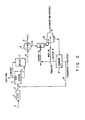
- the anti-solvent/unconverted carbon fiber precursor mixture remaining is then separated into an anti-solvent rich permeate phase and an unconverted carbon fiber precursor rich (anti-solvent lean) retentate phase by means of the membrane separation procedure detailed herein.
- the fluxing compounds suitable in the practice of the present invention include tetrahydrofuran, toluene, light aromatic gas oil, heavy aromatic gas oil, tetralin and the like when used in the ratio, for example, of from about 0.5 parts by weight of fluxing compound per weight of pitch to about 3 parts by weight of fluxing compound per weight of pitch.
- the weight ratio of fluxing compound to pitch is in the range of about 1:1 to about 2:1.
- anti-solvents suitable in the practice of the present invention are those solvents in which isotrbpic carbonaceous pitches are relatively insoluble: such anti-solvent substanstances include aliphatic and aromatic hydrocarbons such as heptane and the like.
- anti-solvent employed in the practice of the present invention have a solubility parameter of between about 8.0 and 9.5 at 25°C.
- a mixture of toluene and heptane is preferred, having greater than about 60 volume percent toluene, such as 60% toluene/40% heptane, and 85% toluene/15% heptane.
- the amount of anti-solvent employed will be sufficient to provide a solvent insoluble fraction which is capable of being thermally converted to greater than 75% of an optically anisotropic material in less than ten minutes.
- the ratio of organic solvent to pitch will be in the range of about 5 ml to about 150 ml of solvent per gram of pitch.
- the carbon fiber precursor production process heat soaks the pitch feedstock at from 350 to 450 0 C for a time sufficient to produce spherules visible under polarized light at from 10 x to 1,000 x magnification in the pitch, prior to the addition of the flux solvent.
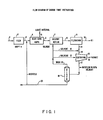
- a petroleum pitch is introduced via line 1 into a heat soaker furnace 2 where it is heated at temperatures in the range of 350°C to 450 0 C. Additional heating of the pitch is provided in heat soaking vessel 4.
- the pitch is introduced into vessel 4 via line 3. Volatile material is removed from the heat soaking vessel via line 5.
- the heat soaked product is introduced into the fluxing zone 7 via line 6 where it is mixed with the appropriate fluxing liquid such as toluene.
- the fluxed pitch is passed via line 8 to a separation zone 9 and the materials which are insoluble in the fluxed pitch are removed via line 10.
- the fluid pitch after removal of solids, is sent into the precipitation zone 11 wherein an anti-solvent, such as toluene/heptane, is introduced via line 12 and 13.
- an anti-solvent such as toluene/heptane
- the so-precipitated material can be sent via line 14 into a solid product separation zone 15.
- the neomesophase solid can be removed via line 16 and the solvent with unconverted material can be sent via line 17 to a solvent recovery zone 18 (distillation tower).
- the molecular weight of the unconverted material is between 300 and 4,000 number average molecular weight and preferably between 500 to 1,000.
- the solvent recovered in line 18 can be recycled to the fluxing zone 7 and the precipitation zone 11.
- the soluble oils are removed via line 20 and can be recycled to the heat soaking step or used as a feedstock for carbon black and the like.
- the solvent recovery step by distillation in zone 18 which is energy intensive and costly is replaced by a membrane separation process for the separation of the solvents from the unconverted carbon fiber precursor.
- a membrane of a thin semi-permeable barrier that selectively permeates a portion of the stream is used.
- a membrane integrated process for the treatment of pitches in carbon artifact manufacture is shown in ' Figure 2.
- Membrane separation modules replace the distillation tower in solvent recovery zone 18.
- the nembrane may be in the form of a simple disc or sheet of membrane or may be in the form of hollow fibers or tubes.
- Various configurations are well known for use in commercial installations, e.g. hollow fiber bundles, plate and frame elements and spiral wound elements.
- a membrane that is hydrophobic in nature to allow ready permeation of the solvents, e.g. toluene/heptane.
- Very hydrophilic membranes such as regenerated cellulose, can be pretreated such that they will permeate toluene/heptane, but the permeation rate rapidly drops to zero due to the collapse of the pores of the membrane in presence of heptane.
- desirable membranes for this process are those that are less hydrophilic than regenerated cellulose.
- the structure of the membrane is very important in achieving high flux.
- Asymmetric membranes are preferred.
- An example of such membranes are polyvinylidene fluoride (PVF) and polyimide membranes.
- the preferred membrane for this separation is the polyimide as it yields a better separation between the toluene/heptane solvents and the UCFP.
- Both polyimide membranes and PVF membranes can concentrate the feed solution up to 50% unconverted carbon fiber precursor but the polyimide does so at a higher selectivity which yields a cleaner permeate stream.
- This membrane separation process can be operated within the temperature range where the feed exists as a liquid under the applied pressure.
- the temperature boundaries are limited further by the thermal stability of the membrane.
- the boundaries are still further limited by the effect of temperature on the performance of the membrane.
- the desired range of temperature for this process is between about 0 to 100°C, preferably between about 20 to 80 0 C most .preferably between about 40 to 70°C.
- the polyimide membrane is again superior over the PVF membrane in its response to an increase in temperature.
- the selectivity of the polyimide only drops slightly between 20 and 50°C while the selectivity of the PVF membrane drops significantly.
- the present invention is practiced with conventional procedures and apparatus.
- the best type of membrane for the separation of toluene/heptane solvents from UCFP has been found to be asymmetric membranes that are more hydrophobic than regenerated cellulose, in particular asymmetric polyimide and polyvinylidene fluoride membranes.
- Polyvinylidine fluoride membranes are known and have been described for various separations in numerous patent and articles, see, e.g. GB 2065706A, EP 40670A2, USP 4,238,571, EP 12557, GB 1566253, DE 2,900764.
- polymer which was not in contact with water for too long a time after precipitation and production and prior to drying and granulation) and is preferably recovered using a nonaqueous solvent from commercially available solutions of the polymer in solvent.
- Upjohn 2080 DHV which contains about 25% polymer in DMF solvent, is a suitable source.
- the polymer itself is the subject of U.S. Patent No.
- 3,708,458 is the cocondensation product of benzophenone 3,3',4,4'-tetracarboxylic acid dianhydride (BTDA) and a mixture of di(4-amino phenyl) methane and toluene diamine, or their corresponding diisocyanates, 4,4 1- methylenebis(-phenyl isocyanate) and toluene diisocyanate.
- BTDA benzophenone 3,3',4,4'-tetracarboxylic acid dianhydride
- BTDA benzophenone 3,3',4,4'-tetracarboxylic acid dianhydride
- di(4-amino phenyl) methane and toluene diamine, or their corresponding diisocyanates 4,4 1- methylenebis(-phenyl isocyanate) and toluene diisocyanate.
- Upjohn 2080 DHV is transferred to a blender and three successive 300 ml
- the blender contents are emptied into a container and permitted to settle.
- the liquid is decanted and 1.5 liters of acetone added and the mixture stirred thoroughly.
- the mixture is filtered through a course filter (Whatman #4).
- the polymer is washed by remixing with another 2 liters of acetone. After filtering, the polymer is dried in vacuum (15 inches Hg) at 45-60 0 C for 3 hours. The polymer powder is ready for use.
- a suitable membrane can be cast from the undeteriorated, undegraded polymer (preferably from the polymer recovered as described above) using a casting solution comprising about 14-30 weight percent polymer preferably about 16-25 weight percent polymer more preferably about 18-22 weight percent polymer preferably in dioxane:DMF solvent (about 10:1 to 1:1 D/DMF more preferably about 7:1 to 3:1 D/DMF).
- This solution is spread on a moving casting belt at a casting speed of about 3-5 ft/min and the film allowed to partially evaporate in dry air, preferably for about 2 to 120 seconds more preferably, about 2-30 seconds before gelation in a gelation bath, which is preferably water (neutral pH).
- the gellation water is preferably replaced with glycerin to retard membrane deterioration (hydrolysis).
- the membrane can be fabricated into element.
- Membranes in the form of tubes or fibers can be bundled, potted and manifolded, much in the manner described in U.S. Patent 3,228,877.
- Membranes in the form of sheets can be employed in plate and frame configuration or in the spiral wound element configuration.
- Spiral wound membrane element configurations are generally described in U.S. Patent No. 3,417,870, U.S. Patent No. 3,173,867, U.S. Patent No. 3,367,574, U.S. Patent No. 3,386,583 and U.S Patent No. 3,397,790, to list just a few.
- the spiral wound element will typically comprise layers of membrane wound around a central tube (metal or solvent resistant plastic) containing holes for the permeate, the membrane layers being separated by alternate layers of a permeate carrier, such as knitted Simplex (Dacron, with melamine formaldehyde stiffener), and a feed spacer made of Vexar (a polypropylene mesh).
- a permeate carrier such as knitted Simplex (Dacron, with melamine formaldehyde stiffener), and a feed spacer made of Vexar (a polypropylene mesh).
- Membrane layers are typically sealed using an epoxy adhesive to sandwich the permeate cloth into a closed envelope in fluid communication with the perforated central tube leaving the perforations in the central tnbe as the only permeate outlet.
- the preferred epoxy adhesive will generally comprise resin formulation such as one comprising (1) Epon 8 ⁇ 28, which is a reaction product of bisphenol-A and epichlorohydrin; (2) Cabosil M5; (3) Versamid 140 (a polyamide curing agent); and (5) DMF solvent wherein the components 1/2/3/4/5 are present in typical relationship based on parts by weight-of about 100/10/60/4/12, which cures at about 25 0 C over a 21 day period.
- resin formulation such as one comprising (1) Epon 8 ⁇ 28, which is a reaction product of bisphenol-A and epichlorohydrin; (2) Cabosil M5; (3) Versamid 140 (a polyamide curing agent); and (5) DMF solvent wherein the components 1/2/3/4/5 are present in typical relationship based on parts by weight-of about 100/10/60/4/12, which cures at about 25 0 C over a 21 day period.
- This adhesive system is described and claimed in copending application U.S. Serial No. 494,409, filed May 13, 1983 now, U.S
- the element is then covered on the outside with an epoxy reinforced fiberglass outer wrap.
- Elements of any size can be prepared, but typical elements are about 8 inches in diameter and about 40 inches long, and have about 225 square feet of membrane area and can be used at feed flow rates of about 30-50 gallons per minute at a 5-15 psi pressure drop.
- the membranes employed were in the form of film discs and were mounted in a membrane holder.
- polyimide polymer membrane were prepared in the following manner.
- Polyimide polymer membrane #1 was produced using 19% of undegraded granular Upjohn polyimide 2080 polymer in a solvent composed of 2/1 dioxane:dimethyl formamide.
- the resulting casting dope was cast into a thin film on a nylon backing, allowed to evaporate for about 15 to 20 seconds (in dry air) and gelled in a room temperature bath of tap water.
- Polyimide polymer membrane #2 was produced using 20% of the same polymer used to produce membrane #l in a solvent composed of 5/1 dioxane:dimethyl formamide. The resulting casting dope was cast into a thin film on a glass plate, allowed to evaporate for 2 seconds (in room air) and gelled in a room temperature bath of tap water.
- the regenerated cellulose membranes were pretreated by successively permeating with the series water, methanol, methyl ethyl ketone, and toluene before the toluene/heptane feed.
- the polyimide membrane was pretreated with the series water, methyl ethyl ketone and toluene. Pretreatment was for one hour with each member of the series at 400 psig at ⁇ 23°C.
- the other membranes required no pretreatment before exposure to the toluene/heptane solvent.
- a mixture of 80/20 toluene/ heptane was then permeated through these membranes at 23 0 C and 400 PSI. The initial permeation rates and the steady state rates are shown in the table.
- Tests were conducted for the purpose of determining the performance of the membranes mentioned in Example 1 with a feed composed of 8 to 10 weight percent UCFP in a 80/20 toluene/heptane solvent.
- the number average molecular weight of the UCFP was approximately 700.
- the membranes were pretreated as in Example 1.
- the experimental conditions were the same as in Example 1.
- the performance of the membranes with time is shown in the table.
Landscapes
- Chemical & Material Sciences (AREA)
- Engineering & Computer Science (AREA)
- Chemical Kinetics & Catalysis (AREA)
- General Chemical & Material Sciences (AREA)
- Water Supply & Treatment (AREA)
- Textile Engineering (AREA)
- Materials Engineering (AREA)
- Oil, Petroleum & Natural Gas (AREA)
- Organic Chemistry (AREA)
- Manufacturing & Machinery (AREA)
- Structural Engineering (AREA)
- Nanotechnology (AREA)
- Civil Engineering (AREA)
- Separation Using Semi-Permeable Membranes (AREA)
Applications Claiming Priority (2)
| Application Number | Priority Date | Filing Date | Title |
|---|---|---|---|
| US603029 | 1984-04-27 | ||
| US06/603,029 US4606903A (en) | 1984-04-27 | 1984-04-27 | Membrane separation of uncoverted carbon fiber precursors from flux solvent and/or anti-solvent |
Publications (2)
| Publication Number | Publication Date |
|---|---|
| EP0160141A2 true EP0160141A2 (de) | 1985-11-06 |
| EP0160141A3 EP0160141A3 (de) | 1987-02-04 |
Family
ID=24413782
Family Applications (1)
| Application Number | Title | Priority Date | Filing Date |
|---|---|---|---|
| EP84303218A Withdrawn EP0160141A3 (de) | 1984-04-27 | 1984-05-11 | Membrantrennung des Lösungs- und/oder Fallungsmittel von den unveränderten Vorstufen von Kohlenstoffasern |
Country Status (5)
| Country | Link |
|---|---|
| US (1) | US4606903A (de) |
| EP (1) | EP0160141A3 (de) |
| JP (1) | JPS60235606A (de) |
| AU (1) | AU573218B2 (de) |
| CA (1) | CA1240944A (de) |
Families Citing this family (8)
| Publication number | Priority date | Publication date | Assignee | Title |
|---|---|---|---|---|
| US4692251A (en) * | 1986-07-07 | 1987-09-08 | Hilgren Wallace L | Solvent cleansing apparatus |
| US4836927A (en) * | 1988-03-28 | 1989-06-06 | Exxon Research And Engineering Company | Recovery of dewaxing aid using asymmetric polyimide ultrafiltration membrane and method for producing said membrane |
| US7250545B2 (en) * | 2003-01-27 | 2007-07-31 | L'air Societe Anonyme A Directoire Et Conseil De Surveillance Pour L'etude At L'exploration Des Procedes Georges Claude | Method of separating olefins from mixtures with paraffins |
| US7025804B2 (en) * | 2002-12-02 | 2006-04-11 | L'air Liquide, Societe Anonyme A Directoire Et Conseil De Surveillance Pour L'etude Et L'exploitation Des Procedes Georges Claude | Method for separating hydrocarbon-containing gas mixtures using hydrocarbon-resistant membranes |
| US7393383B2 (en) * | 2005-01-14 | 2008-07-01 | L'air Liquide, Societe Anonyme A Directoire Et Conseil De Surveillance Pour L'etude Et L'exploitation Des Procedes Georges Claude | Separation membrane made from blends of polyimide with polyamide or polyimide-amide polymers |
| US8101009B2 (en) * | 2005-03-02 | 2012-01-24 | L'air Liquide Societe Anonyme Pour L'etude Et L'exploitation Des Procedes Georges Claude | Separation membrane by controlled annealing of polyimide polymers |
| US7422623B2 (en) * | 2005-03-02 | 2008-09-09 | L'air Liquide, Societe Anonyme A Directoire Et Conseil De Surveillance Pour L'etude Et L'exploitation Des Procedes Georges Claude | Separation membrane by controlled annealing of polyimide polymers |
| US20240217823A1 (en) * | 2022-12-29 | 2024-07-04 | Uop Llc | High performance (mesophase) carbon fiber feedstock production |
Family Cites Families (38)
| Publication number | Priority date | Publication date | Assignee | Title |
|---|---|---|---|---|
| US2930754A (en) * | 1954-07-16 | 1960-03-29 | Pan American Refining Corp | Method of separating hydrocarbons |
| US2958657A (en) * | 1954-07-16 | 1960-11-01 | American Oil Co | Method of separating hydrocarbons using ethyl cellulose permselective membrane |
| US3043891A (en) * | 1954-10-29 | 1962-07-10 | Standard Oil Co | Separation of hydrocarbons |
| US2947687A (en) * | 1954-10-29 | 1960-08-02 | American Oil Co | Separation of hydrocarbons by permeation membrane |
| US2923749A (en) * | 1955-05-27 | 1960-02-02 | American Oil Co | Prevention of membrane rupture in a separatory process for oil soluble organic compounds using a non-porous plastic permeation membrane |
| US2981680A (en) * | 1957-03-28 | 1961-04-25 | Standard Oil Co | Separation of mixtures |
| US2985588A (en) * | 1957-03-28 | 1961-05-23 | Standard Oil Co | Separation technique through a permeation membrane |
| US3140256A (en) * | 1957-09-30 | 1964-07-07 | Standard Oil Co | Separation process |
| US2970106A (en) * | 1958-01-31 | 1961-01-31 | American Oil Co | Aromatic separation process |
| US3225107A (en) * | 1960-08-24 | 1965-12-21 | Standard Oil Co | Separation process |
| BE608328A (de) * | 1960-09-19 | |||
| US3305595A (en) * | 1963-06-18 | 1967-02-21 | Sun Oil Co | Aromatics separation and purification by dialysis |
| US3370102A (en) * | 1967-05-05 | 1968-02-20 | Abcor Inc | Isothermal-liquid-liquid permeation separation systems |
| US3504048A (en) * | 1968-04-05 | 1970-03-31 | Universal Oil Prod Co | Hydrocarbon separation process |
| US3556991A (en) * | 1968-12-06 | 1971-01-19 | Universal Oil Prod Co | Method for the solvent extraction of aromatic hydrocarbons |
| US3720321A (en) * | 1970-03-11 | 1973-03-13 | Research Corp | Radiation crosslinked, swelled semipermeable membranes |
| FR2112632A5 (de) * | 1970-11-03 | 1972-06-23 | Anvar | |
| US3853754A (en) * | 1972-07-20 | 1974-12-10 | Du Pont | Membrane separation of homogeneous catalysts from nitrile solutions |
| JPS5825690B2 (ja) * | 1972-07-20 | 1983-05-28 | イ− アイ デユポン デ ニモアス アンド カンパニ− | ヒタイシヨウセイポリイミドマクトソノセイホウ |
| US3789079A (en) * | 1972-09-22 | 1974-01-29 | Monsanto Co | Process for the separation of diene from organic mixtures |
| FR2225509B1 (de) * | 1973-04-12 | 1976-05-21 | Inst Francais Du Petrole | |
| DK143986C (da) * | 1973-04-12 | 1982-04-26 | Berghof Forschungsinst | Fremgangsmaade til fremstilling af uoploeselige asymmetriske polyimidmembraner |
| AU484156B2 (en) * | 1973-11-27 | 1975-05-29 | Monsanto Company | Process forthe separation of diene from organic mixtures |
| GB1509543A (en) * | 1974-05-16 | 1978-05-04 | Unilever Ltd | Purification process |
| US4113628A (en) * | 1974-06-05 | 1978-09-12 | E. I. Du Pont De Nemours And Company | Asymmetric polyimide membranes |
| DE2627629C3 (de) * | 1976-06-19 | 1979-12-20 | Bayer Ag, 5090 Leverkusen | Verfahren zur Abtrennung von aromatischen* Kohlenwasserstoffen aus Gemischen mit anderen organischen Verbindungen mit Hilfe von Kunststoffmembranen |
| US4154770A (en) * | 1978-06-28 | 1979-05-15 | Standard Oil Company (Indiana) | Isoparaffin-olefin alkylation utilizing a membrane to separate olefins from a feed stream |
| IN153421B (de) * | 1978-12-28 | 1984-07-14 | Exxon Research Engineering Co | |
| US4277325A (en) * | 1979-04-13 | 1981-07-07 | Exxon Research & Engineering Co. | Treatment of pitches in carbon artifact manufacture |
| US4283269A (en) * | 1979-04-13 | 1981-08-11 | Exxon Research & Engineering Co. | Process for the production of a feedstock for carbon artifact manufacture |
| US4277324A (en) * | 1979-04-13 | 1981-07-07 | Exxon Research & Engineering Co. | Treatment of pitches in carbon artifact manufacture |
| JPS5827963B2 (ja) * | 1979-05-17 | 1983-06-13 | 日東電工株式会社 | 選択性透過膜の製造方法 |
| CA1170010A (en) * | 1980-03-28 | 1984-07-03 | Donald N. Robinson | Porous vinylidene fluoride polymer membrane and process for its preparation |
| JPS5854841B2 (ja) * | 1980-03-31 | 1983-12-07 | 日東電工株式会社 | 選択性透過膜の製造方法 |
| JPS5842605A (ja) * | 1981-09-08 | 1983-03-12 | Chisso Corp | 低分子量ポリオレフインを含む廃溶媒から有機溶媒を分離する方法 |
| NL193983C (nl) * | 1982-03-04 | 2001-04-03 | Shell Int Research | Werkwijze voor het scheiden van een vloeibaar mengsel. |
| JPS58170805A (ja) * | 1982-03-31 | 1983-10-07 | Mitsubishi Heavy Ind Ltd | ボイラ.タ−ビンプラントの起動方法 |
| CA1262880A (en) * | 1983-05-13 | 1989-11-14 | William W. Wight | Separation of dewaxing solvent from dewaxed oil in a lube oil dewaxing process using asymmetric polyimide membranes |
-
1984
- 1984-04-27 US US06/603,029 patent/US4606903A/en not_active Expired - Fee Related
- 1984-05-11 JP JP59093105A patent/JPS60235606A/ja active Pending
- 1984-05-11 CA CA000454131A patent/CA1240944A/en not_active Expired
- 1984-05-11 EP EP84303218A patent/EP0160141A3/de not_active Withdrawn
- 1984-05-11 AU AU27961/84A patent/AU573218B2/en not_active Ceased
Also Published As
| Publication number | Publication date |
|---|---|
| AU2796184A (en) | 1985-10-31 |
| CA1240944A (en) | 1988-08-23 |
| AU573218B2 (en) | 1988-06-02 |
| JPS60235606A (ja) | 1985-11-22 |
| EP0160141A3 (de) | 1987-02-04 |
| US4606903A (en) | 1986-08-19 |
Similar Documents
| Publication | Publication Date | Title |
|---|---|---|
| US4532029A (en) | Aromatic solvent upgrading using membranes | |
| CA1262807A (en) | Polyimide reverse osmosis membrane produced using dioxane antisolvent and dimethyl formamide for liquid separations | |
| KR101452081B1 (ko) | 기체 분리를 위한 고 투과성 폴리이미드 막 | |
| EP1102734B1 (de) | Wiedergewinnung von aromatischen kohlenwasserstoffen mit durch schmieröl konditionierten membranen | |
| US4929357A (en) | Isocyanurate crosslinked polyurethane membranes and their use for the separation of aromatics from non-aromatics | |
| EP0459623B1 (de) | Asymmetrische Hohlfadenmembran aus Kohlenstoff und Verfahren zu deren Herstellung | |
| US4988371A (en) | Novel alicyclic polyimide gas separation membranes | |
| JP2004528417A (ja) | 硫黄含量低下のための膜分離 | |
| EP0312377B1 (de) | Verfahren zur Herstellung einer Dünnschicht-Verbundmembran durch Absetzen aus einer Suspension und Verwendung solcher Membranen | |
| US4510047A (en) | Selective extraction solvent recovery using regenerated cellulose membrane under reverse osmosis conditions | |
| Fattah et al. | RETRACTED ARTICLE: Hollow fiber membrane contactor based carbon dioxide absorption− stripping: a review | |
| EP0125907B1 (de) | Trennung eines Entwachsungs-Lösungsmittels von entwachstem Öl in einem Schmiermittel-Entwachsungsprozess unter Verwendung asymmetrischer Polyimidmembranen | |
| US4982051A (en) | Separation of furfural/middle distillate streams | |
| JPH01164402A (ja) | ポリ尿素膜及び芳香族化合物と非芳香族化合物との分離のためのその用途 | |
| US4606903A (en) | Membrane separation of uncoverted carbon fiber precursors from flux solvent and/or anti-solvent | |
| US4985138A (en) | Process for treating a charge containing dewaxing solvent and dewaxed oil | |
| US5075006A (en) | Isocyanurate crosslinked polyurethane membranes and their use for the separation of aromatics from non-aromatics | |
| US4496456A (en) | Method for preparing thin regenerated cellulose membranes of high flux and selectivity for organic liquids separations | |
| EP2621610A1 (de) | Verfahren zur herstellung von kohlenstoffmembranen | |
| US5430224A (en) | Supercritical perstraction process | |
| EP0160142A1 (de) | Kombination einer Membranextraktion und Entwachsung von Schmierölen | |
| US5049281A (en) | Multi-block polymer comprising a first prepolymer, made by combining epoxy with diamine, chain extended with a compatible second prepolymer, the membrane made therefrom and its use in separations | |
| CN118103427A (zh) | 用于气体分离的高选择性和高耐co2塑化聚合物膜 | |
| US5037556A (en) | Membrane separation of N-methyl pyrrolidone/middle distillate streams | |
| US5234579A (en) | Membrane process for treating a charge containing dewaxing solvent and dewaxed oil |
Legal Events
| Date | Code | Title | Description |
|---|---|---|---|
| PUAI | Public reference made under article 153(3) epc to a published international application that has entered the european phase |
Free format text: ORIGINAL CODE: 0009012 |
|
| AK | Designated contracting states |
Designated state(s): BE DE FR GB IT |
|
| PUAL | Search report despatched |
Free format text: ORIGINAL CODE: 0009013 |
|
| AK | Designated contracting states |
Kind code of ref document: A3 Designated state(s): BE DE FR GB IT |
|
| 17P | Request for examination filed |
Effective date: 19870909 |
|
| 17Q | First examination report despatched |
Effective date: 19890516 |
|
| STAA | Information on the status of an ep patent application or granted ep patent |
Free format text: STATUS: THE APPLICATION IS DEEMED TO BE WITHDRAWN |
|
| 18D | Application deemed to be withdrawn |
Effective date: 19890927 |
|
| RIN1 | Information on inventor provided before grant (corrected) |
Inventor name: BLACK, LAURA ELIZABETH Inventor name: HAFEZ, MAHMOUD MOSTAFA |