EP0157360A2 - Chromogene Aminosäure-und Peptidester, Verfahren zu deren Herstellung, Verwendung dieser Verbindungen in Analysenverfahren sowie Mittel zum Nachweis esterolytischer und/oder proteolytischer Enzyme - Google Patents
Chromogene Aminosäure-und Peptidester, Verfahren zu deren Herstellung, Verwendung dieser Verbindungen in Analysenverfahren sowie Mittel zum Nachweis esterolytischer und/oder proteolytischer Enzyme Download PDFInfo
- Publication number
- EP0157360A2 EP0157360A2 EP85103667A EP85103667A EP0157360A2 EP 0157360 A2 EP0157360 A2 EP 0157360A2 EP 85103667 A EP85103667 A EP 85103667A EP 85103667 A EP85103667 A EP 85103667A EP 0157360 A2 EP0157360 A2 EP 0157360A2
- Authority
- EP
- European Patent Office
- Prior art keywords
- groups
- halogen
- alkyl
- hydrogen
- substituted
- Prior art date
- Legal status (The legal status is an assumption and is not a legal conclusion. Google has not performed a legal analysis and makes no representation as to the accuracy of the status listed.)
- Granted
Links
- 238000001514 detection method Methods 0.000 title claims abstract description 26
- 150000001413 amino acids Chemical class 0.000 title claims abstract description 22
- 150000002148 esters Chemical class 0.000 title claims abstract description 22
- 238000000034 method Methods 0.000 title claims abstract description 19
- 108090000765 processed proteins & peptides Proteins 0.000 title claims abstract description 19
- 239000003795 chemical substances by application Substances 0.000 title claims abstract description 14
- 108091005804 Peptidases Proteins 0.000 title claims abstract description 13
- 102000035195 Peptidases Human genes 0.000 title claims abstract description 13
- 230000000058 esterolytic effect Effects 0.000 title claims abstract description 11
- 229940024999 proteolytic enzymes for treatment of wounds and ulcers Drugs 0.000 title claims abstract description 11
- 238000002360 preparation method Methods 0.000 title claims abstract description 6
- 102000004196 processed proteins & peptides Human genes 0.000 title claims description 4
- 238000004458 analytical method Methods 0.000 title claims 2
- 239000000758 substrate Substances 0.000 claims abstract description 13
- 210000001124 body fluid Anatomy 0.000 claims abstract description 10
- 239000010839 body fluid Substances 0.000 claims abstract description 10
- UFHFLCQGNIYNRP-UHFFFAOYSA-N Hydrogen Chemical compound [H][H] UFHFLCQGNIYNRP-UHFFFAOYSA-N 0.000 claims description 31
- 229910052736 halogen Inorganic materials 0.000 claims description 31
- 150000002367 halogens Chemical group 0.000 claims description 31
- 229910052739 hydrogen Inorganic materials 0.000 claims description 26
- 239000001257 hydrogen Substances 0.000 claims description 23
- 150000001875 compounds Chemical class 0.000 claims description 19
- IJGRMHOSHXDMSA-UHFFFAOYSA-N Atomic nitrogen Chemical compound N#N IJGRMHOSHXDMSA-UHFFFAOYSA-N 0.000 claims description 17
- 102000004190 Enzymes Human genes 0.000 claims description 17
- 108090000790 Enzymes Proteins 0.000 claims description 17
- 229940088598 enzyme Drugs 0.000 claims description 17
- 125000000217 alkyl group Chemical group 0.000 claims description 16
- 125000000449 nitro group Chemical group [O-][N+](*)=O 0.000 claims description 14
- 125000004432 carbon atom Chemical group C* 0.000 claims description 13
- ISWSIDIOOBJBQZ-UHFFFAOYSA-N Phenol Chemical compound OC1=CC=CC=C1 ISWSIDIOOBJBQZ-UHFFFAOYSA-N 0.000 claims description 11
- NINIDFKCEFEMDL-UHFFFAOYSA-N Sulfur Chemical compound [S] NINIDFKCEFEMDL-UHFFFAOYSA-N 0.000 claims description 11
- 125000004093 cyano group Chemical group *C#N 0.000 claims description 10
- 239000012954 diazonium Substances 0.000 claims description 10
- 150000001989 diazonium salts Chemical class 0.000 claims description 10
- 125000002887 hydroxy group Chemical group [H]O* 0.000 claims description 10
- 125000002023 trifluoromethyl group Chemical group FC(F)(F)* 0.000 claims description 10
- 229910052757 nitrogen Inorganic materials 0.000 claims description 9
- 150000003254 radicals Chemical class 0.000 claims description 9
- 229910052717 sulfur Inorganic materials 0.000 claims description 9
- 239000011593 sulfur Substances 0.000 claims description 9
- 125000003545 alkoxy group Chemical group 0.000 claims description 8
- 125000001997 phenyl group Chemical group [H]C1=C([H])C([H])=C(*)C([H])=C1[H] 0.000 claims description 7
- 125000006823 (C1-C6) acyl group Chemical group 0.000 claims description 6
- 125000004169 (C1-C6) alkyl group Chemical group 0.000 claims description 6
- 125000006619 (C1-C6) dialkylamino group Chemical group 0.000 claims description 6
- 239000000872 buffer Substances 0.000 claims description 6
- 125000004191 (C1-C6) alkoxy group Chemical group 0.000 claims description 5
- 239000000654 additive Substances 0.000 claims description 5
- 150000002431 hydrogen Chemical class 0.000 claims description 5
- 125000003118 aryl group Chemical group 0.000 claims description 4
- 239000012876 carrier material Substances 0.000 claims description 4
- QJGQUHMNIGDVPM-UHFFFAOYSA-N nitrogen group Chemical group [N] QJGQUHMNIGDVPM-UHFFFAOYSA-N 0.000 claims description 4
- 125000000041 C6-C10 aryl group Chemical group 0.000 claims description 3
- 239000007788 liquid Substances 0.000 claims description 3
- 125000004442 acylamino group Chemical group 0.000 claims description 2
- JCXJVPUVTGWSNB-UHFFFAOYSA-N Nitrogen dioxide Chemical class O=[N]=O JCXJVPUVTGWSNB-UHFFFAOYSA-N 0.000 claims 1
- 210000000265 leukocyte Anatomy 0.000 abstract description 36
- 210000002700 urine Anatomy 0.000 abstract description 15
- SWEICGMKXPNXNU-UHFFFAOYSA-N 1,2-dihydroindazol-3-one Chemical class C1=CC=C2C(O)=NNC2=C1 SWEICGMKXPNXNU-UHFFFAOYSA-N 0.000 abstract description 4
- -1 azo compound Chemical class 0.000 description 34
- 239000000243 solution Substances 0.000 description 22
- 229940024606 amino acid Drugs 0.000 description 16
- 235000001014 amino acid Nutrition 0.000 description 16
- CSCPPACGZOOCGX-UHFFFAOYSA-N Acetone Chemical compound CC(C)=O CSCPPACGZOOCGX-UHFFFAOYSA-N 0.000 description 15
- YMWUJEATGCHHMB-UHFFFAOYSA-N Dichloromethane Chemical compound ClCCl YMWUJEATGCHHMB-UHFFFAOYSA-N 0.000 description 15
- 125000005421 aryl sulfonamido group Chemical group 0.000 description 10
- HEMHJVSKTPXQMS-UHFFFAOYSA-M Sodium hydroxide Chemical compound [OH-].[Na+] HEMHJVSKTPXQMS-UHFFFAOYSA-M 0.000 description 9
- 239000003153 chemical reaction reagent Substances 0.000 description 8
- 239000000203 mixture Substances 0.000 description 8
- LFQSCWFLJHTTHZ-UHFFFAOYSA-N Ethanol Chemical compound CCO LFQSCWFLJHTTHZ-UHFFFAOYSA-N 0.000 description 7
- 239000002904 solvent Substances 0.000 description 7
- BAXOFTOLAUCFNW-UHFFFAOYSA-N 1H-indazole Chemical compound C1=CC=C2C=NNC2=C1 BAXOFTOLAUCFNW-UHFFFAOYSA-N 0.000 description 6
- ZWEHNKRNPOVVGH-UHFFFAOYSA-N 2-Butanone Chemical compound CCC(C)=O ZWEHNKRNPOVVGH-UHFFFAOYSA-N 0.000 description 6
- OKKJLVBELUTLKV-UHFFFAOYSA-N Methanol Chemical compound OC OKKJLVBELUTLKV-UHFFFAOYSA-N 0.000 description 6
- YXFVVABEGXRONW-UHFFFAOYSA-N Toluene Chemical compound CC1=CC=CC=C1 YXFVVABEGXRONW-UHFFFAOYSA-N 0.000 description 6
- PCKPVGOLPKLUHR-UHFFFAOYSA-N indoxyl Chemical group C1=CC=C2C(O)=CNC2=C1 PCKPVGOLPKLUHR-UHFFFAOYSA-N 0.000 description 6
- 125000000472 sulfonyl group Chemical group *S(*)(=O)=O 0.000 description 6
- XLYOFNOQVPJJNP-UHFFFAOYSA-N water Substances O XLYOFNOQVPJJNP-UHFFFAOYSA-N 0.000 description 6
- 239000002253 acid Substances 0.000 description 5
- 125000004414 alkyl thio group Chemical group 0.000 description 5
- 239000013049 sediment Substances 0.000 description 5
- FBPFZTCFMRRESA-KVTDHHQDSA-N D-Mannitol Chemical compound OC[C@@H](O)[C@@H](O)[C@H](O)[C@H](O)CO FBPFZTCFMRRESA-KVTDHHQDSA-N 0.000 description 4
- RTZKZFJDLAIYFH-UHFFFAOYSA-N Diethyl ether Chemical compound CCOCC RTZKZFJDLAIYFH-UHFFFAOYSA-N 0.000 description 4
- VYPSYNLAJGMNEJ-UHFFFAOYSA-N Silicium dioxide Chemical compound O=[Si]=O VYPSYNLAJGMNEJ-UHFFFAOYSA-N 0.000 description 4
- 229960003767 alanine Drugs 0.000 description 4
- 125000004104 aryloxy group Chemical group 0.000 description 4
- 238000006243 chemical reaction Methods 0.000 description 4
- 239000003593 chromogenic compound Substances 0.000 description 4
- 238000003776 cleavage reaction Methods 0.000 description 4
- 229940039227 diagnostic agent Drugs 0.000 description 4
- 239000000032 diagnostic agent Substances 0.000 description 4
- 238000005470 impregnation Methods 0.000 description 4
- 150000002989 phenols Chemical class 0.000 description 4
- 229920003023 plastic Polymers 0.000 description 4
- 239000004033 plastic Substances 0.000 description 4
- 239000001267 polyvinylpyrrolidone Substances 0.000 description 4
- 229920000036 polyvinylpyrrolidone Polymers 0.000 description 4
- 235000013855 polyvinylpyrrolidone Nutrition 0.000 description 4
- BWHMMNNQKKPAPP-UHFFFAOYSA-L potassium carbonate Chemical compound [K+].[K+].[O-]C([O-])=O BWHMMNNQKKPAPP-UHFFFAOYSA-L 0.000 description 4
- 239000000047 product Substances 0.000 description 4
- 239000000741 silica gel Substances 0.000 description 4
- 229910002027 silica gel Inorganic materials 0.000 description 4
- 238000003756 stirring Methods 0.000 description 4
- 125000000542 sulfonic acid group Chemical group 0.000 description 4
- FYSNRJHAOHDILO-UHFFFAOYSA-N thionyl chloride Chemical compound ClS(Cl)=O FYSNRJHAOHDILO-UHFFFAOYSA-N 0.000 description 4
- PDKDEPUBRLYRGJ-QMMMGPOBSA-N (2s)-2-[(4-methylphenyl)sulfonylamino]propanoyl chloride Chemical compound ClC(=O)[C@H](C)NS(=O)(=O)C1=CC=C(C)C=C1 PDKDEPUBRLYRGJ-QMMMGPOBSA-N 0.000 description 3
- 125000000229 (C1-C4)alkoxy group Chemical group 0.000 description 3
- IAZDPXIOMUYVGZ-UHFFFAOYSA-N Dimethylsulphoxide Chemical compound CS(C)=O IAZDPXIOMUYVGZ-UHFFFAOYSA-N 0.000 description 3
- KDXKERNSBIXSRK-YFKPBYRVSA-N L-lysine Chemical compound NCCCC[C@H](N)C(O)=O KDXKERNSBIXSRK-YFKPBYRVSA-N 0.000 description 3
- 229930195725 Mannitol Natural products 0.000 description 3
- ZMXDDKWLCZADIW-UHFFFAOYSA-N N,N-Dimethylformamide Chemical compound CN(C)C=O ZMXDDKWLCZADIW-UHFFFAOYSA-N 0.000 description 3
- KWYUFKZDYYNOTN-UHFFFAOYSA-M Potassium hydroxide Chemical compound [OH-].[K+] KWYUFKZDYYNOTN-UHFFFAOYSA-M 0.000 description 3
- 125000005422 alkyl sulfonamido group Chemical group 0.000 description 3
- KRKNYBCHXYNGOX-UHFFFAOYSA-N citric acid Chemical compound OC(=O)CC(O)(C(O)=O)CC(O)=O KRKNYBCHXYNGOX-UHFFFAOYSA-N 0.000 description 3
- 230000009089 cytolysis Effects 0.000 description 3
- 239000003599 detergent Substances 0.000 description 3
- 239000000594 mannitol Substances 0.000 description 3
- 235000010355 mannitol Nutrition 0.000 description 3
- 238000004519 manufacturing process Methods 0.000 description 3
- UHOVQNZJYSORNB-UHFFFAOYSA-N monobenzene Natural products C1=CC=CC=C1 UHOVQNZJYSORNB-UHFFFAOYSA-N 0.000 description 3
- VLKZOEOYAKHREP-UHFFFAOYSA-N n-Hexane Chemical compound CCCCCC VLKZOEOYAKHREP-UHFFFAOYSA-N 0.000 description 3
- 229920001308 poly(aminoacid) Polymers 0.000 description 3
- 230000007017 scission Effects 0.000 description 3
- 230000035945 sensitivity Effects 0.000 description 3
- NGNBDVOYPDDBFK-UHFFFAOYSA-N 2-[2,4-di(pentan-2-yl)phenoxy]acetyl chloride Chemical compound CCCC(C)C1=CC=C(OCC(Cl)=O)C(C(C)CCC)=C1 NGNBDVOYPDDBFK-UHFFFAOYSA-N 0.000 description 2
- LSNNMFCWUKXFEE-UHFFFAOYSA-M Bisulfite Chemical compound OS([O-])=O LSNNMFCWUKXFEE-UHFFFAOYSA-M 0.000 description 2
- BVKZGUZCCUSVTD-UHFFFAOYSA-L Carbonate Chemical compound [O-]C([O-])=O BVKZGUZCCUSVTD-UHFFFAOYSA-L 0.000 description 2
- FBPFZTCFMRRESA-FSIIMWSLSA-N D-Glucitol Natural products OC[C@H](O)[C@H](O)[C@@H](O)[C@H](O)CO FBPFZTCFMRRESA-FSIIMWSLSA-N 0.000 description 2
- FBPFZTCFMRRESA-JGWLITMVSA-N D-glucitol Chemical compound OC[C@H](O)[C@@H](O)[C@H](O)[C@H](O)CO FBPFZTCFMRRESA-JGWLITMVSA-N 0.000 description 2
- DHMQDGOQFOQNFH-UHFFFAOYSA-N Glycine Chemical compound NCC(O)=O DHMQDGOQFOQNFH-UHFFFAOYSA-N 0.000 description 2
- VEXZGXHMUGYJMC-UHFFFAOYSA-N Hydrochloric acid Chemical compound Cl VEXZGXHMUGYJMC-UHFFFAOYSA-N 0.000 description 2
- QNAYBMKLOCPYGJ-REOHCLBHSA-N L-alanine Chemical compound C[C@H](N)C(O)=O QNAYBMKLOCPYGJ-REOHCLBHSA-N 0.000 description 2
- LRHPLDYGYMQRHN-UHFFFAOYSA-N N-Butanol Chemical compound CCCCO LRHPLDYGYMQRHN-UHFFFAOYSA-N 0.000 description 2
- 239000004365 Protease Substances 0.000 description 2
- JUJWROOIHBZHMG-UHFFFAOYSA-N Pyridine Chemical compound C1=CC=NC=C1 JUJWROOIHBZHMG-UHFFFAOYSA-N 0.000 description 2
- TVXBFESIOXBWNM-UHFFFAOYSA-N Xylitol Natural products OCCC(O)C(O)C(O)CCO TVXBFESIOXBWNM-UHFFFAOYSA-N 0.000 description 2
- 150000007513 acids Chemical class 0.000 description 2
- 239000012190 activator Substances 0.000 description 2
- 125000003282 alkyl amino group Chemical group 0.000 description 2
- 150000001450 anions Chemical class 0.000 description 2
- 125000005362 aryl sulfone group Chemical group 0.000 description 2
- 230000015572 biosynthetic process Effects 0.000 description 2
- 150000001732 carboxylic acid derivatives Chemical class 0.000 description 2
- 125000002843 carboxylic acid group Chemical group 0.000 description 2
- 238000004440 column chromatography Methods 0.000 description 2
- 238000001816 cooling Methods 0.000 description 2
- 230000008878 coupling Effects 0.000 description 2
- 238000010168 coupling process Methods 0.000 description 2
- 238000005859 coupling reaction Methods 0.000 description 2
- 230000000093 cytochemical effect Effects 0.000 description 2
- MWKFXSUHUHTGQN-UHFFFAOYSA-N decan-1-ol Chemical compound CCCCCCCCCCO MWKFXSUHUHTGQN-UHFFFAOYSA-N 0.000 description 2
- 125000004663 dialkyl amino group Chemical group 0.000 description 2
- LQZZUXJYWNFBMV-UHFFFAOYSA-N dodecan-1-ol Chemical compound CCCCCCCCCCCCO LQZZUXJYWNFBMV-UHFFFAOYSA-N 0.000 description 2
- 230000000694 effects Effects 0.000 description 2
- 230000002255 enzymatic effect Effects 0.000 description 2
- 238000006911 enzymatic reaction Methods 0.000 description 2
- 125000002795 guanidino group Chemical group C(N)(=N)N* 0.000 description 2
- 239000011159 matrix material Substances 0.000 description 2
- HEBKCHPVOIAQTA-UHFFFAOYSA-N meso ribitol Natural products OCC(O)C(O)C(O)CO HEBKCHPVOIAQTA-UHFFFAOYSA-N 0.000 description 2
- 230000003647 oxidation Effects 0.000 description 2
- 238000007254 oxidation reaction Methods 0.000 description 2
- 239000003208 petroleum Substances 0.000 description 2
- 229910000027 potassium carbonate Inorganic materials 0.000 description 2
- 239000000843 powder Substances 0.000 description 2
- 125000002924 primary amino group Chemical group [H]N([H])* 0.000 description 2
- 239000011541 reaction mixture Substances 0.000 description 2
- 230000035484 reaction time Effects 0.000 description 2
- 239000000600 sorbitol Substances 0.000 description 2
- 235000010356 sorbitol Nutrition 0.000 description 2
- 239000000126 substance Substances 0.000 description 2
- LENZDBCJOHFCAS-UHFFFAOYSA-N tris Chemical compound OCC(N)(CO)CO LENZDBCJOHFCAS-UHFFFAOYSA-N 0.000 description 2
- KJIOQYGWTQBHNH-UHFFFAOYSA-N undecanol Chemical compound CCCCCCCCCCCO KJIOQYGWTQBHNH-UHFFFAOYSA-N 0.000 description 2
- 230000000007 visual effect Effects 0.000 description 2
- 239000000811 xylitol Substances 0.000 description 2
- 235000010447 xylitol Nutrition 0.000 description 2
- HEBKCHPVOIAQTA-SCDXWVJYSA-N xylitol Chemical compound OC[C@H](O)[C@@H](O)[C@H](O)CO HEBKCHPVOIAQTA-SCDXWVJYSA-N 0.000 description 2
- 229960002675 xylitol Drugs 0.000 description 2
- GMKMEZVLHJARHF-UHFFFAOYSA-N (2R,6R)-form-2.6-Diaminoheptanedioic acid Natural products OC(=O)C(N)CCCC(N)C(O)=O GMKMEZVLHJARHF-UHFFFAOYSA-N 0.000 description 1
- LQXKHFZRJYXXFA-QMMMGPOBSA-N (2s)-2-[(4-methylphenyl)sulfonylamino]propanoic acid Chemical compound OC(=O)[C@H](C)NS(=O)(=O)C1=CC=C(C)C=C1 LQXKHFZRJYXXFA-QMMMGPOBSA-N 0.000 description 1
- RNSIPMSFQFTSTD-UHFFFAOYSA-N 1,2-benzothiazol-5-ol Chemical compound OC1=CC=C2SN=CC2=C1 RNSIPMSFQFTSTD-UHFFFAOYSA-N 0.000 description 1
- KJCVRFUGPWSIIH-UHFFFAOYSA-N 1-naphthol Chemical compound C1=CC=C2C(O)=CC=CC2=C1 KJCVRFUGPWSIIH-UHFFFAOYSA-N 0.000 description 1
- ZHDXWEPRYNHNDC-UHFFFAOYSA-N 1h-indazol-5-ol Chemical compound OC1=CC=C2NN=CC2=C1 ZHDXWEPRYNHNDC-UHFFFAOYSA-N 0.000 description 1
- JGQPSDIWMGNAPE-UHFFFAOYSA-N 2,1-benzothiazole Chemical compound C1=CC=CC2=CSN=C21 JGQPSDIWMGNAPE-UHFFFAOYSA-N 0.000 description 1
- BLCJBICVQSYOIF-UHFFFAOYSA-N 2,2-diaminobutanoic acid Chemical compound CCC(N)(N)C(O)=O BLCJBICVQSYOIF-UHFFFAOYSA-N 0.000 description 1
- SKWCZPYWFRTSDD-UHFFFAOYSA-N 2,3-bis(azaniumyl)propanoate;chloride Chemical compound Cl.NCC(N)C(O)=O SKWCZPYWFRTSDD-UHFFFAOYSA-N 0.000 description 1
- UXFQFBNBSPQBJW-UHFFFAOYSA-N 2-amino-2-methylpropane-1,3-diol Chemical compound OCC(N)(C)CO UXFQFBNBSPQBJW-UHFFFAOYSA-N 0.000 description 1
- YYROPELSRYBVMQ-UHFFFAOYSA-N 4-toluenesulfonyl chloride Chemical compound CC1=CC=C(S(Cl)(=O)=O)C=C1 YYROPELSRYBVMQ-UHFFFAOYSA-N 0.000 description 1
- 239000004475 Arginine Substances 0.000 description 1
- BVKZGUZCCUSVTD-UHFFFAOYSA-M Bicarbonate Chemical compound OC([O-])=O BVKZGUZCCUSVTD-UHFFFAOYSA-M 0.000 description 1
- BTBUEUYNUDRHOZ-UHFFFAOYSA-N Borate Chemical compound [O-]B([O-])[O-] BTBUEUYNUDRHOZ-UHFFFAOYSA-N 0.000 description 1
- UXVMQQNJUSDDNG-UHFFFAOYSA-L Calcium chloride Chemical compound [Cl-].[Cl-].[Ca+2] UXVMQQNJUSDDNG-UHFFFAOYSA-L 0.000 description 1
- PTHCMJGKKRQCBF-UHFFFAOYSA-N Cellulose, microcrystalline Chemical compound OC1C(O)C(OC)OC(CO)C1OC1C(O)C(O)C(OC)C(CO)O1 PTHCMJGKKRQCBF-UHFFFAOYSA-N 0.000 description 1
- QNAYBMKLOCPYGJ-UHFFFAOYSA-N D-alpha-Ala Natural products CC([NH3+])C([O-])=O QNAYBMKLOCPYGJ-UHFFFAOYSA-N 0.000 description 1
- 108090000371 Esterases Proteins 0.000 description 1
- 239000004471 Glycine Substances 0.000 description 1
- 229920001499 Heparinoid Polymers 0.000 description 1
- 235000000177 Indigofera tinctoria Nutrition 0.000 description 1
- QNAYBMKLOCPYGJ-UWTATZPHSA-N L-Alanine Natural products C[C@@H](N)C(O)=O QNAYBMKLOCPYGJ-UWTATZPHSA-N 0.000 description 1
- AHLPHDHHMVZTML-BYPYZUCNSA-N L-Ornithine Chemical compound NCCC[C@H](N)C(O)=O AHLPHDHHMVZTML-BYPYZUCNSA-N 0.000 description 1
- ODKSFYDXXFIFQN-BYPYZUCNSA-N L-arginine Chemical compound OC(=O)[C@@H](N)CCCN=C(N)N ODKSFYDXXFIFQN-BYPYZUCNSA-N 0.000 description 1
- ODKSFYDXXFIFQN-BYPYZUCNSA-P L-argininium(2+) Chemical compound NC(=[NH2+])NCCC[C@H]([NH3+])C(O)=O ODKSFYDXXFIFQN-BYPYZUCNSA-P 0.000 description 1
- AGPKZVBTJJNPAG-WHFBIAKZSA-N L-isoleucine Chemical compound CC[C@H](C)[C@H](N)C(O)=O AGPKZVBTJJNPAG-WHFBIAKZSA-N 0.000 description 1
- ROHFNLRQFUQHCH-YFKPBYRVSA-N L-leucine Chemical compound CC(C)C[C@H](N)C(O)=O ROHFNLRQFUQHCH-YFKPBYRVSA-N 0.000 description 1
- COLNVLDHVKWLRT-QMMMGPOBSA-N L-phenylalanine Chemical compound OC(=O)[C@@H](N)CC1=CC=CC=C1 COLNVLDHVKWLRT-QMMMGPOBSA-N 0.000 description 1
- OUYCCCASQSFEME-QMMMGPOBSA-N L-tyrosine Chemical compound OC(=O)[C@@H](N)CC1=CC=C(O)C=C1 OUYCCCASQSFEME-QMMMGPOBSA-N 0.000 description 1
- KZSNJWFQEVHDMF-BYPYZUCNSA-N L-valine Chemical compound CC(C)[C@H](N)C(O)=O KZSNJWFQEVHDMF-BYPYZUCNSA-N 0.000 description 1
- KDXKERNSBIXSRK-UHFFFAOYSA-N Lysine Natural products NCCCCC(N)C(O)=O KDXKERNSBIXSRK-UHFFFAOYSA-N 0.000 description 1
- 239000004472 Lysine Substances 0.000 description 1
- AHLPHDHHMVZTML-UHFFFAOYSA-N Orn-delta-NH2 Natural products NCCCC(N)C(O)=O AHLPHDHHMVZTML-UHFFFAOYSA-N 0.000 description 1
- UTJLXEIPEHZYQJ-UHFFFAOYSA-N Ornithine Natural products OC(=O)C(C)CCCN UTJLXEIPEHZYQJ-UHFFFAOYSA-N 0.000 description 1
- 229910019142 PO4 Inorganic materials 0.000 description 1
- 239000004952 Polyamide Substances 0.000 description 1
- 229910006069 SO3H Inorganic materials 0.000 description 1
- PMZURENOXWZQFD-UHFFFAOYSA-L Sodium Sulfate Chemical compound [Na+].[Na+].[O-]S([O-])(=O)=O PMZURENOXWZQFD-UHFFFAOYSA-L 0.000 description 1
- DBMJMQXJHONAFJ-UHFFFAOYSA-M Sodium laurylsulphate Chemical compound [Na+].CCCCCCCCCCCCOS([O-])(=O)=O DBMJMQXJHONAFJ-UHFFFAOYSA-M 0.000 description 1
- 239000007983 Tris buffer Substances 0.000 description 1
- KZSNJWFQEVHDMF-UHFFFAOYSA-N Valine Natural products CC(C)C(N)C(O)=O KZSNJWFQEVHDMF-UHFFFAOYSA-N 0.000 description 1
- FMVKYSCWHDVMGO-UHFFFAOYSA-N [3-[(2-methylphenyl)carbamoyl]naphthalen-2-yl] 2-chloroacetate Chemical compound CC1=CC=CC=C1NC(=O)C1=CC2=CC=CC=C2C=C1OC(=O)CCl FMVKYSCWHDVMGO-UHFFFAOYSA-N 0.000 description 1
- 235000004279 alanine Nutrition 0.000 description 1
- 150000001298 alcohols Chemical class 0.000 description 1
- 150000003862 amino acid derivatives Chemical class 0.000 description 1
- 125000000539 amino acid group Chemical group 0.000 description 1
- 150000008064 anhydrides Chemical class 0.000 description 1
- 125000002490 anilino group Chemical group [H]N(*)C1=C([H])C([H])=C([H])C([H])=C1[H] 0.000 description 1
- 239000007864 aqueous solution Substances 0.000 description 1
- ODKSFYDXXFIFQN-UHFFFAOYSA-N arginine Natural products OC(=O)C(N)CCCNC(N)=N ODKSFYDXXFIFQN-UHFFFAOYSA-N 0.000 description 1
- 229960003121 arginine Drugs 0.000 description 1
- 125000005098 aryl alkoxy carbonyl group Chemical group 0.000 description 1
- 150000005840 aryl radicals Chemical class 0.000 description 1
- 239000000987 azo dye Chemical class 0.000 description 1
- 229940125717 barbiturate Drugs 0.000 description 1
- HNYOPLTXPVRDBG-UHFFFAOYSA-N barbituric acid Chemical compound O=C1CC(=O)NC(=O)N1 HNYOPLTXPVRDBG-UHFFFAOYSA-N 0.000 description 1
- DMSMPAJRVJJAGA-UHFFFAOYSA-N benzo[d]isothiazol-3-one Chemical class C1=CC=C2C(=O)NSC2=C1 DMSMPAJRVJJAGA-UHFFFAOYSA-N 0.000 description 1
- OCBHHZMJRVXXQK-UHFFFAOYSA-M benzyl-dimethyl-tetradecylazanium;chloride Chemical compound [Cl-].CCCCCCCCCCCCCC[N+](C)(C)CC1=CC=CC=C1 OCBHHZMJRVXXQK-UHFFFAOYSA-M 0.000 description 1
- 239000001045 blue dye Substances 0.000 description 1
- 239000007853 buffer solution Substances 0.000 description 1
- 239000001110 calcium chloride Substances 0.000 description 1
- 229910001628 calcium chloride Inorganic materials 0.000 description 1
- 125000003917 carbamoyl group Chemical group [H]N([H])C(*)=O 0.000 description 1
- 150000001720 carbohydrates Chemical class 0.000 description 1
- 235000014633 carbohydrates Nutrition 0.000 description 1
- 125000003178 carboxy group Chemical group [H]OC(*)=O 0.000 description 1
- 125000002091 cationic group Chemical group 0.000 description 1
- 210000004027 cell Anatomy 0.000 description 1
- 239000001913 cellulose Substances 0.000 description 1
- 229920002678 cellulose Polymers 0.000 description 1
- 238000005119 centrifugation Methods 0.000 description 1
- 239000000919 ceramic Substances 0.000 description 1
- 150000001805 chlorine compounds Chemical class 0.000 description 1
- 238000004040 coloring Methods 0.000 description 1
- 239000000470 constituent Substances 0.000 description 1
- 239000012043 crude product Substances 0.000 description 1
- 239000013078 crystal Substances 0.000 description 1
- 150000001923 cyclic compounds Chemical class 0.000 description 1
- 125000000753 cycloalkyl group Chemical group 0.000 description 1
- 239000002274 desiccant Substances 0.000 description 1
- 238000003745 diagnosis Methods 0.000 description 1
- 201000010099 disease Diseases 0.000 description 1
- 208000037265 diseases, disorders, signs and symptoms Diseases 0.000 description 1
- KDQPSPMLNJTZAL-UHFFFAOYSA-L disodium hydrogenphosphate dihydrate Chemical compound O.O.[Na+].[Na+].OP([O-])([O-])=O KDQPSPMLNJTZAL-UHFFFAOYSA-L 0.000 description 1
- 239000006185 dispersion Substances 0.000 description 1
- 238000009826 distribution Methods 0.000 description 1
- 239000000975 dye Substances 0.000 description 1
- 210000002919 epithelial cell Anatomy 0.000 description 1
- RIFGWPKJUGCATF-UHFFFAOYSA-N ethyl chloroformate Chemical compound CCOC(Cl)=O RIFGWPKJUGCATF-UHFFFAOYSA-N 0.000 description 1
- 238000001704 evaporation Methods 0.000 description 1
- 230000008020 evaporation Effects 0.000 description 1
- 239000000945 filler Substances 0.000 description 1
- 239000012065 filter cake Substances 0.000 description 1
- 239000003365 glass fiber Substances 0.000 description 1
- 150000004676 glycans Chemical class 0.000 description 1
- 150000004820 halides Chemical class 0.000 description 1
- 239000002554 heparinoid Substances 0.000 description 1
- 238000004128 high performance liquid chromatography Methods 0.000 description 1
- 230000001744 histochemical effect Effects 0.000 description 1
- 230000003301 hydrolyzing effect Effects 0.000 description 1
- NPZTUJOABDZTLV-UHFFFAOYSA-N hydroxybenzotriazole Substances O=C1C=CC=C2NNN=C12 NPZTUJOABDZTLV-UHFFFAOYSA-N 0.000 description 1
- 150000002460 imidazoles Chemical class 0.000 description 1
- 229940097275 indigo Drugs 0.000 description 1
- COHYTHOBJLSHDF-UHFFFAOYSA-N indigo powder Natural products N1C2=CC=CC=C2C(=O)C1=C1C(=O)C2=CC=CC=C2N1 COHYTHOBJLSHDF-UHFFFAOYSA-N 0.000 description 1
- 229940079865 intestinal antiinfectives imidazole derivative Drugs 0.000 description 1
- 229960000310 isoleucine Drugs 0.000 description 1
- AGPKZVBTJJNPAG-UHFFFAOYSA-N isoleucine Natural products CCC(C)C(N)C(O)=O AGPKZVBTJJNPAG-UHFFFAOYSA-N 0.000 description 1
- 150000003854 isothiazoles Chemical class 0.000 description 1
- 210000003734 kidney Anatomy 0.000 description 1
- 229940124280 l-arginine Drugs 0.000 description 1
- 108010000849 leukocyte esterase Proteins 0.000 description 1
- 229960003646 lysine Drugs 0.000 description 1
- 239000000463 material Substances 0.000 description 1
- 238000005259 measurement Methods 0.000 description 1
- 239000012528 membrane Substances 0.000 description 1
- GMKMEZVLHJARHF-SYDPRGILSA-N meso-2,6-diaminopimelic acid Chemical compound [O-]C(=O)[C@@H]([NH3+])CCC[C@@H]([NH3+])C([O-])=O GMKMEZVLHJARHF-SYDPRGILSA-N 0.000 description 1
- 229910052751 metal Inorganic materials 0.000 description 1
- 239000002184 metal Chemical class 0.000 description 1
- 229910000402 monopotassium phosphate Inorganic materials 0.000 description 1
- 235000019796 monopotassium phosphate Nutrition 0.000 description 1
- 150000002772 monosaccharides Chemical class 0.000 description 1
- 150000002790 naphthalenes Chemical class 0.000 description 1
- IQZPDFORWZTSKT-UHFFFAOYSA-N nitrosulphonic acid Chemical compound OS(=O)(=O)[N+]([O-])=O IQZPDFORWZTSKT-UHFFFAOYSA-N 0.000 description 1
- 239000004745 nonwoven fabric Substances 0.000 description 1
- 150000002482 oligosaccharides Polymers 0.000 description 1
- 230000003287 optical effect Effects 0.000 description 1
- 239000003960 organic solvent Substances 0.000 description 1
- 229960003104 ornithine Drugs 0.000 description 1
- 238000010647 peptide synthesis reaction Methods 0.000 description 1
- COLNVLDHVKWLRT-UHFFFAOYSA-N phenylalanine Natural products OC(=O)C(N)CC1=CC=CC=C1 COLNVLDHVKWLRT-UHFFFAOYSA-N 0.000 description 1
- NBIIXXVUZAFLBC-UHFFFAOYSA-K phosphate Chemical compound [O-]P([O-])([O-])=O NBIIXXVUZAFLBC-UHFFFAOYSA-K 0.000 description 1
- 239000010452 phosphate Substances 0.000 description 1
- PJNZPQUBCPKICU-UHFFFAOYSA-N phosphoric acid;potassium Chemical compound [K].OP(O)(O)=O PJNZPQUBCPKICU-UHFFFAOYSA-N 0.000 description 1
- LFGREXWGYUGZLY-UHFFFAOYSA-N phosphoryl Chemical group [P]=O LFGREXWGYUGZLY-UHFFFAOYSA-N 0.000 description 1
- 229920002647 polyamide Polymers 0.000 description 1
- 229920000768 polyamine Polymers 0.000 description 1
- 229920001223 polyethylene glycol Polymers 0.000 description 1
- 229920001282 polysaccharide Polymers 0.000 description 1
- 239000005017 polysaccharide Substances 0.000 description 1
- 229920001290 polyvinyl ester Polymers 0.000 description 1
- 239000011148 porous material Substances 0.000 description 1
- 239000002244 precipitate Substances 0.000 description 1
- 235000018102 proteins Nutrition 0.000 description 1
- 102000004169 proteins and genes Human genes 0.000 description 1
- 108090000623 proteins and genes Proteins 0.000 description 1
- 230000002797 proteolythic effect Effects 0.000 description 1
- 238000000746 purification Methods 0.000 description 1
- UMJSCPRVCHMLSP-UHFFFAOYSA-N pyridine Natural products COC1=CC=CN=C1 UMJSCPRVCHMLSP-UHFFFAOYSA-N 0.000 description 1
- 150000003222 pyridines Chemical class 0.000 description 1
- 238000001953 recrystallisation Methods 0.000 description 1
- 230000000717 retained effect Effects 0.000 description 1
- 150000003839 salts Chemical class 0.000 description 1
- 229910052938 sodium sulfate Inorganic materials 0.000 description 1
- 235000011152 sodium sulphate Nutrition 0.000 description 1
- 230000000087 stabilizing effect Effects 0.000 description 1
- 150000005846 sugar alcohols Chemical class 0.000 description 1
- 125000004646 sulfenyl group Chemical group S(*)* 0.000 description 1
- 125000000020 sulfo group Chemical group O=S(=O)([*])O[H] 0.000 description 1
- XTHPWXDJESJLNJ-UHFFFAOYSA-N sulfurochloridic acid Chemical compound OS(Cl)(=O)=O XTHPWXDJESJLNJ-UHFFFAOYSA-N 0.000 description 1
- 239000012209 synthetic fiber Substances 0.000 description 1
- 229920002994 synthetic fiber Polymers 0.000 description 1
- 238000010189 synthetic method Methods 0.000 description 1
- 239000004753 textile Substances 0.000 description 1
- 150000003557 thiazoles Chemical class 0.000 description 1
- OUYCCCASQSFEME-UHFFFAOYSA-N tyrosine Natural products OC(=O)C(N)CC1=CC=C(O)C=C1 OUYCCCASQSFEME-UHFFFAOYSA-N 0.000 description 1
- 230000002485 urinary effect Effects 0.000 description 1
- 239000004474 valine Substances 0.000 description 1
- 239000002023 wood Substances 0.000 description 1
Classifications
-
- C—CHEMISTRY; METALLURGY
- C12—BIOCHEMISTRY; BEER; SPIRITS; WINE; VINEGAR; MICROBIOLOGY; ENZYMOLOGY; MUTATION OR GENETIC ENGINEERING
- C12Q—MEASURING OR TESTING PROCESSES INVOLVING ENZYMES, NUCLEIC ACIDS OR MICROORGANISMS; COMPOSITIONS OR TEST PAPERS THEREFOR; PROCESSES OF PREPARING SUCH COMPOSITIONS; CONDITION-RESPONSIVE CONTROL IN MICROBIOLOGICAL OR ENZYMOLOGICAL PROCESSES
- C12Q1/00—Measuring or testing processes involving enzymes, nucleic acids or microorganisms; Compositions therefor; Processes of preparing such compositions
- C12Q1/34—Measuring or testing processes involving enzymes, nucleic acids or microorganisms; Compositions therefor; Processes of preparing such compositions involving hydrolase
- C12Q1/44—Measuring or testing processes involving enzymes, nucleic acids or microorganisms; Compositions therefor; Processes of preparing such compositions involving hydrolase involving esterase
-
- C—CHEMISTRY; METALLURGY
- C07—ORGANIC CHEMISTRY
- C07D—HETEROCYCLIC COMPOUNDS
- C07D231/00—Heterocyclic compounds containing 1,2-diazole or hydrogenated 1,2-diazole rings
- C07D231/54—Heterocyclic compounds containing 1,2-diazole or hydrogenated 1,2-diazole rings condensed with carbocyclic rings or ring systems
- C07D231/56—Benzopyrazoles; Hydrogenated benzopyrazoles
-
- C—CHEMISTRY; METALLURGY
- C07—ORGANIC CHEMISTRY
- C07D—HETEROCYCLIC COMPOUNDS
- C07D275/00—Heterocyclic compounds containing 1,2-thiazole or hydrogenated 1,2-thiazole rings
- C07D275/04—Heterocyclic compounds containing 1,2-thiazole or hydrogenated 1,2-thiazole rings condensed with carbocyclic rings or ring systems
-
- C—CHEMISTRY; METALLURGY
- C12—BIOCHEMISTRY; BEER; SPIRITS; WINE; VINEGAR; MICROBIOLOGY; ENZYMOLOGY; MUTATION OR GENETIC ENGINEERING
- C12Q—MEASURING OR TESTING PROCESSES INVOLVING ENZYMES, NUCLEIC ACIDS OR MICROORGANISMS; COMPOSITIONS OR TEST PAPERS THEREFOR; PROCESSES OF PREPARING SUCH COMPOSITIONS; CONDITION-RESPONSIVE CONTROL IN MICROBIOLOGICAL OR ENZYMOLOGICAL PROCESSES
- C12Q1/00—Measuring or testing processes involving enzymes, nucleic acids or microorganisms; Compositions therefor; Processes of preparing such compositions
- C12Q1/34—Measuring or testing processes involving enzymes, nucleic acids or microorganisms; Compositions therefor; Processes of preparing such compositions involving hydrolase
- C12Q1/37—Measuring or testing processes involving enzymes, nucleic acids or microorganisms; Compositions therefor; Processes of preparing such compositions involving hydrolase involving peptidase or proteinase
-
- C—CHEMISTRY; METALLURGY
- C12—BIOCHEMISTRY; BEER; SPIRITS; WINE; VINEGAR; MICROBIOLOGY; ENZYMOLOGY; MUTATION OR GENETIC ENGINEERING
- C12Q—MEASURING OR TESTING PROCESSES INVOLVING ENZYMES, NUCLEIC ACIDS OR MICROORGANISMS; COMPOSITIONS OR TEST PAPERS THEREFOR; PROCESSES OF PREPARING SUCH COMPOSITIONS; CONDITION-RESPONSIVE CONTROL IN MICROBIOLOGICAL OR ENZYMOLOGICAL PROCESSES
- C12Q2334/00—O-linked chromogens for determinations of hydrolase enzymes, e.g. glycosidases, phosphatases, esterases
- C12Q2334/70—O-linked chromogens for determinations of hydrolase enzymes, e.g. glycosidases, phosphatases, esterases the product, e.g. phenol, naphthol being diazotised in situ, e.g. with Fast Red
-
- C—CHEMISTRY; METALLURGY
- C12—BIOCHEMISTRY; BEER; SPIRITS; WINE; VINEGAR; MICROBIOLOGY; ENZYMOLOGY; MUTATION OR GENETIC ENGINEERING
- C12Q—MEASURING OR TESTING PROCESSES INVOLVING ENZYMES, NUCLEIC ACIDS OR MICROORGANISMS; COMPOSITIONS OR TEST PAPERS THEREFOR; PROCESSES OF PREPARING SUCH COMPOSITIONS; CONDITION-RESPONSIVE CONTROL IN MICROBIOLOGICAL OR ENZYMOLOGICAL PROCESSES
- C12Q2337/00—N-linked chromogens for determinations of peptidases and proteinases
-
- Y—GENERAL TAGGING OF NEW TECHNOLOGICAL DEVELOPMENTS; GENERAL TAGGING OF CROSS-SECTIONAL TECHNOLOGIES SPANNING OVER SEVERAL SECTIONS OF THE IPC; TECHNICAL SUBJECTS COVERED BY FORMER USPC CROSS-REFERENCE ART COLLECTIONS [XRACs] AND DIGESTS
- Y10—TECHNICAL SUBJECTS COVERED BY FORMER USPC
- Y10S—TECHNICAL SUBJECTS COVERED BY FORMER USPC CROSS-REFERENCE ART COLLECTIONS [XRACs] AND DIGESTS
- Y10S435/00—Chemistry: molecular biology and microbiology
- Y10S435/81—Packaged device or kit
Definitions
- the present invention relates to new chromogenic amino acid and peptide esters of hydroxybenz (iso) thiazoles and hydroxybenzpyrazoles, processes for their preparation and the use of the new esters as substrates for the analytical detection of esterolytic and / or proteolytic enzymes e.g. in body fluids, the esters being incorporated in a suitable manner in test agents, in particular test strips.
- the new esters are preferably used for the detection of leukocytes, especially in the urine.
- the preferred method in medical practice for the determination of leukocytes in urine was therefore the so-called visual field method in urine sediment.
- the sample (sediment) had to be obtained by centrifugation.
- other components of the urine were also enriched which - such as Salts and epithelial cells - considerably complicate the microscopic counting of leukocytes. Fluctuating sediment content, inhomogeneity of the sediment and different optical equipment of the microscopes led to relatively large errors (up to several hundred percent) when specifying the number of leukocytes.
- German Offenlegungsschriften 2,826,965 and 2,836,644 means for the detection of leukocytes in body fluids, in which the esterolytic and / or proteolytic activity present in leukocytes is used for analytical purposes.
- Sulfonphthalein esters or azo dye esters are used as substrates for the leukocyte esterases and / or proteases.
- the dyes released in the enzymatic reaction are then determined by known methods.
- the agents described in these publications are still too insensitive for practical purposes, since they have too long reaction times at low leukocyte concentrations.
- GB-A 1 128 371 and EP-A 12 957 describe the use of indoxyl and thioindoxy esters as chromogenic substrates for the detection of hydrolytic enzymes in body fluids.
- the enzymatic cleavage of the substrate produces free indoxyl, which is then oxidized to the easily detectable blue dye indigo.
- a commercially available test based on EP-A 12 957 consists of a strip of filter paper which is impregnated with the N-tosyl-L-alanine indoxy ester. When immersed in a urine sample containing leukocytes, the test strip turns blue.
- a major disadvantage of this product is the long waiting time (approx. 15 minutes) until the final color is reached and the test can be evaluated.
- EP-A 39 880 represents a combination of the substrates according to EP-A 12 957 or 14 929 with the detection principle of coupling with diazonium salts discussed above.
- the invention also relates to a process for the preparation of the esters according to the invention, which is characterized in that a phenol of the general formula (II): in which X 1 , X 2 , R 1 , R 2 and R 3 have the meaning given above, with amino acids or peptides of the general formula (III): in which G and A have the meaning given above, or suitable reactive derivatives thereof according to methods customary in peptide chemistry.
- Suitable reactive derivatives are e.g. the acid chlorides and the mixed anhydrides commonly used in peptide synthesis, e.g. with ethyl chloroformate, or active esters such.
- the invention finally also relates to a method for the detection of esterolytic and / or proteolytic enzymes in liquid samples, in particular body fluids, which is characterized in that the sample is brought into contact with the agent according to the invention and the color reaction that occurs is determined.
- Compounds of the general formula (I) which are preferred according to the invention are those in which X 1 is sulfur or nitrogen and X 2 is nitrogen. X 1 particularly preferably represents sulfur and X 2 represents nitrogen.
- R 2 and R 3 are particularly preferably hydrogen.
- the radical G-A-O- is preferably in the 5-position in the compounds of the general formula (I).
- G-A- particularly preferably represents a residue of a natural amino acid or a peptide from 2 to 8 such amino acids provided with a customary nitrogen protecting group.
- the amino acid residues can be in their L or D form or also in their racemic form.
- the residues of glycine, alanine, valine, Leu are particularly preferred cin, isoleucine, phenylalanine and tyrosine, the L form being particularly preferred in each case.
- Any free hydroxyl groups present can be acylated, preferably acetylated.
- peptide residue in the definition of A are e.g. To understand di-, tri-, tetra- and pentapeptides, preferably di- and tripeptides, the amino acid components mentioned preferably being the amino acids mentioned above.
- G As a nitrogen protecting group in the definition of G that is common in peptide chemistry, e.g. the alkyl and aralkyloxycarbonyl, alkyl and aralkyloxythiocarbonyl, sulfonyl, sulfenyl, vinyloxycarbonyl, cyclohexenyloxycarbonyl, phosphoryl or carbamoyl groups known per se.
- the phenols of the general formula (II) are known per se or can be prepared by known processes.
- the compounds according to the invention can be prepared by synthetic methods known per se from peptide chemistry. Methods of this type are described, for example, in the following publications (and the references cited therein): Janoff et al., Proc. Soc. Exper. Biol. Med. 136: 1045-1049 (1971); Sweetman et al., J. Hist. Soc., 22, 327-339; Jakubke et.al., Chem. Ber. 100, 2267-2372 (1967) and in particular Houben-Weyl, Methods of Organic Chemistry, Vol. XV / 1 and XV / 2.
- two adjacent radicals R ' 1 to R' 5 can be ring-closed to form a benzene ring which is optionally substituted by halogen, a C 1 - to C 4 -A1-alkyl, C 1 - to C 4 -alkoxy, nitro or sulfonic acid group .
- aryl in each case represents an optionally substituted by halogen, a C 1 - C 4 alkyl or C 1 -C 4 alkoxy substituted aromatic radical having 6 to 12 carbon atoms, preferably 6 carbon atoms.
- the diazonium salts of the general formula (V) are also known per se or can be prepared by known processes (see Houben-Weyl, Methods of Organic Chemistry, Vol. X / 3).
- the agents according to the invention preferably contain substances which accelerate the cleavage of the chromogenic substrate (I) by the enzymes to be detected.
- a sol Che accelerators are, for example, the compounds described in EP-A 14 929, aliphatic alcohols having 8 to 25 carbon atoms, preferably 10 to 20 carbon atoms, which may optionally be unsaturated, being preferred.
- Examples of such preferred accelerators are n-decanol, n-dodecanol, and in particular n-undecanol.
- Particularly preferred accelerators are homo- or copolyamino acids containing basic amino acids [E.
- Suitable basic amino acids are those amino acids which carry amino or guanidino groups in the side chains. These are in particular lysine and ornithine and arginine, but also unnatural basic amino acids such as, for example, diaminobutyric acid, diaminopropionic acid or diaminopimelic acid.
- the constituent amino acids in the polyamino acids can be racemically or optically active in the D or L form.
- the molecular weights (number average) of the polyamino acids are 1000-2000000 and are preferably between 5000 and 500,000.
- the contents of basic amino acids can be between 5 and 100 mol percent, preferably between 20 and 100 mol percent.
- the accelerators are preferably used in the production of the test devices described below in amounts of 0.5 to 10% by weight, preferably 1-5% by weight, of the impregnation solution.
- the agents according to the invention preferably contain a suitable buffer system for the detection of proteolytic enzymes and in particular the leukocyte enzymes.
- a suitable buffer system for the detection of proteolytic enzymes and in particular the leukocyte enzymes.
- Amino acid buffers in question the pH and capacity usually being selected so that a pH of 6-10, preferably 7-9, is established in the measurement solution or on the test strip.
- the agents according to the invention can also contain detergents known per se, as a result of which a more homogeneous color distribution and more intensive coloring can be achieved.
- Both cationic and anionic detergents but also amphoteric and nonionic detergents are suitable. Examples include benzyldimethyl-tetradecylammonium chloride, sodium dodecyl sulfate, zephirol, polyvinylpyrrolidone, the polyamino acids mentioned above as activators, and heparinoid and mixtures of these compounds.
- the various reagents described above are preferably incorporated in an inert carrier material of the type known per se, porous materials such as filter paper in particular, but also plastic membranes, glass fiber mats (US Pat. No. 3,846,247), porous ceramic strips being particularly preferred as carrier matrix, Synthetic fiber nonwovens, sponge-like materials (US Pat. No. 3,552,928), felt, textiles, wood, cellulose or silica gel come into question.
- porous materials such as filter paper in particular, but also plastic membranes, glass fiber mats (US Pat. No. 3,846,247), porous ceramic strips being particularly preferred as carrier matrix, Synthetic fiber nonwovens, sponge-like materials (US Pat. No. 3,552,928), felt, textiles, wood, cellulose or silica gel come into question.
- the carrier materials mentioned are impregnated with a solution of the reagents described above in a suitable, easily removable solvent, for example water, methanol, ethanol, acetone, DtiF or DMSO.
- a suitable, easily removable solvent for example water, methanol, ethanol, acetone, DtiF or DMSO.
- the solution is impregnated with an aqueous solution which contains the buffer and other water-soluble additives. It is then impregnated with a solution of the chromogenic enzyme substrates of the general formula (V) and activators.
- the impregnation can also be carried out in a different order or with a different composition of the two impregnation solutions.
- the impregnation solution or the liquid to be examined preferably contains the compounds according to the invention and the diazonium salt in a concentration of 10 -4 mol / 1 to 10 -1 mol / 1, in particular 10 -3 mol / 1 to 10 -2 mol / 1.
- the finished test papers can be used as such or glued to handles in a manner known per se or preferably between plastics and fine-meshed networks e.g. be sealed in according to DE-OS 2 118 455.
- all reagents are preferably introduced into the solution or dispersion of a film-forming substance, such as polyvinyl ester or polyamide, and mixed homogeneously.
- a film-forming substance such as polyvinyl ester or polyamide
- the mixture is spread in a thin layer on a plastic carrier and dried.
- the film-coated test strips thus produced are after the Dried cut and can be used as such or glued to handles in a manner known per se or, for example, sealed between plastics and fine-meshed networks according to DE-OS 2 118 455.
- a diagnostic agent according to the invention for the detection of esterolytic and / or proteolytic enzymes, in particular the leukocyte enzymes, in the form of powder mixtures or reagent tablets can be produced by adding the usual galenical additives to the components of the test agent and granulating them.
- Additives of this type are e.g. Carbohydrates, e.g. Mono-, oligo- or polysaccharides, or sugar alcohols, e.g. Mannitol, sorbitol or xylitol, or other soluble inert compounds such as polyethylene glycols or polyvinylpyrrolidone.
- the powder mixtures or reagent tablets have e.g. a final weight of approximately 50-200 mg, preferably 50-80 mg.
- a solution is freeze-dried which, in addition to all the reagents required for the test, contains the usual scaffolders, e.g. Polyvinyl pyrrolidone, and possibly other fillers, such as Mannitol, sorbitol or xylitol.
- scaffolders e.g. Polyvinyl pyrrolidone
- other fillers such as Mannitol, sorbitol or xylitol.
- a diagnostic agent according to the invention in the form of a solution preferably contains all the reagents required for the test.
- Water or mixtures of water with a water-soluble organic solvent, such as, for example, methanol, ethanol, acetone or dimethylformamide, are suitable as solvents.
- a water-soluble organic solvent such as, for example, methanol, ethanol, acetone or dimethylformamide.
- the diagnostic agents thus produced make it possible to quickly and easily detect the presence of esterolytic and / or proteolytic enzymes, in particular the leukocyte enzymes, by means of a color formation that is visual or photometric, e.g. remission-photometric or in the cuvette. Since the activity of the leukocyte enzymes per cell can be regarded as an essentially constant variable, the leukocyte concentration of the examined body fluid can be determined from the intensity of the color formation. Both intact and lysed leukocytes are detected with the diagnostic agent according to the invention, since the activity of the leukocyte enzymes is fully retained even after the leukocytes have been lysed. As a result, a lysis error does not occur.
- Filter paper e.g. Eaton and Dikeman 205
- Filter paper e.g. Eaton and Dikeman 205
- a pale yellow-colored test paper is obtained which turns red-brown when immersed in urine containing leukocytes.
Landscapes
- Chemical & Material Sciences (AREA)
- Organic Chemistry (AREA)
- Life Sciences & Earth Sciences (AREA)
- Health & Medical Sciences (AREA)
- Wood Science & Technology (AREA)
- Proteomics, Peptides & Aminoacids (AREA)
- Zoology (AREA)
- Engineering & Computer Science (AREA)
- Immunology (AREA)
- General Engineering & Computer Science (AREA)
- Microbiology (AREA)
- Molecular Biology (AREA)
- Analytical Chemistry (AREA)
- Biotechnology (AREA)
- Physics & Mathematics (AREA)
- Biochemistry (AREA)
- Bioinformatics & Cheminformatics (AREA)
- Biophysics (AREA)
- General Health & Medical Sciences (AREA)
- Genetics & Genomics (AREA)
- Measuring Or Testing Involving Enzymes Or Micro-Organisms (AREA)
- Investigating Or Analysing Biological Materials (AREA)
- Thiazole And Isothizaole Compounds (AREA)
- Peptides Or Proteins (AREA)
- Organic Low-Molecular-Weight Compounds And Preparation Thereof (AREA)
Abstract
Description
- Die vorliegende Erfindung betrifft neue chromogene Aminosäure- und Peptidester von Hydroxybenz(iso)thiazolen und Hydroxybenzpyrazolen, Verfahren zu deren Herstellung sowie die Verwendung der neuen Ester als Substrate für den analytischen Nachweis von esterolytischen und/oder proteolytischen Enzymen z.B. in Körperflüssigkeiten, wobei die Ester in geeigneter Weise in Testmitteln, insbesondere Teststreifen, inkorporiert sind. Bevorzugt werden die neuen Ester für den Nachweis von Leukozyten, insbesondere im Urin, eingesetzt.
- In der Diagnostik der Erkrankungen der Nieren und des Urogenitaltraktes hat der Nachweis von Leukozyten in Körperflüssigkeiten, insbesondere im Urin, große Bedeutung. Ursprünglich erfolgte dieser Nachweis durch Auszählen der Leukozyten im nicht zentrifugierten Harn oder im Harnsediment. Mit beiden Methoden können nur intakte Leukozyten erfaßt werden. Es ist jedoch bekannt, daß die Geschwindigkeit der Leukozyten-Lyse je nach Harnmilieu starken Schwankungen unterworfen ist; so beträgt z.B. in stark alkalischen Harnen die Leukozyten-Halbwertszeit nur 60 Minuten. Dies führt dazu, daß zu niedrige Leukozytenzahlen festgestellt werden. Von diesem Lyse-Fehler abgesehen, liefert die quantitative mikroskopische Bestimmung der Leukozyten im nicht zentrifugierten, homogenisierten Harn in der Zählkammer sehr genaue Werte. Trotzdem wird diese Methode in der Praxis nur selten angewandt, da sie mühevoll und zeitraubend ist und geschultes Personal voraussetzt.
- Das in der medizinischen Praxis bevorzugte Verfahren für die Leukozytenbestimmungen im Harn war daher die sogenannte Gesichtsfeldmethode im Harnsediment. Hierzu mußte zunächst die Probe (Sediment) durch Zentrifugieren gewonnen werden. Dabei wurden jedoch auch andere Bestandteile des Harnes angereichert, die - wie z.B. Salze und Epithelzellen - die mikroskopische Auszählung der Leukozyten beträchtlich erschweren. Schwankender Sedimentgehalt, Inhomogenitäten des Sediments sowie unterschiedliche optische Ausstattung der Mikroskope führten zu relativ großen Fehlern (bis zu mehreren hundert Prozent) bei der Angabe der Leukozytenzahl.
- Um diese Schwierigkeiten zu vermeiden, wurde bereits vielfach versucht, als Nachweisprinzip für Leukozyten in verschiedenen Körperflüssigkeiten enzymatische Reaktionen heranzuziehen, da die Leukozyten ein breitgefächertes Enzyrospektrum besitzen.
- So sind z.B. aus den deutschen Offenlegungsschriften 2 826 965 und 2 836 644 Mittel zum Nachweis von Leukozyten in Körperflüssigkeiten bekannt, bei denen die in Leukozyten vorhandene esterolytische und/oder proteolytische Aktivität für analytische Zwecke ausgenutzt wird. Als Substrate für die Leukozyten-Esterasen und/ oder -Proteasen werden dabei Sulfonphthaleinester bzw. Azo-Farbstoffester verwendet. Die bei der enzymatischen Umsetzung freigesetzten Farbstoffe werden dann nach bekannten Methoden bestimmt. Die in diesen Publikationen beschriebenen Mittel sind jedoch für praktische Zwecke noch zu unempfindlich, da sie bei niedrigen Leukozyten-Konzentrationen zu lange Reaktionszeiten aufweisen.
- Verschiedene Methoden für den Nachweis von Proteasen und Esterasen sind auch aus der histo- und cytochemischen Enzymologie bekannt (vgl. beispielsweise A.G.E. Pearse, Histochemistry, Theoretical and Applied, 3. Ed., Churchill Livingstone, Edinburgh-London-New York 1968). Als Nachweis werden dabei im allgemeinen farblose oder schwach gefärbte Ester eingesetzt, die durch die Enzyme in eine farblose Säure und eine ebenfalls farblose Alkohol-(Phenol)-Komponente gespalten werden. Die Phenolkomponente wird dann in einer Folgereaktion zu farbigen Produkten umgesetzt, z.B. durch Kupplung mit Diazoniumsalzen oder durch Oxidation. F. Schmalzl und H. Braunsteiner beschreiben zum Beispiel in Klin. Wschr. 46, 642 (1968) einen spezifischen cytochemischen Leukozytenesterasenachweis mit Naphthol-AS-D-Chloracetat als Substrat und einem Diazoniumsalz, das mit dem freiwerdenden Naphthol eine farbige Azo-Verbindung bildet.
- Für den schnellen und einfachen Nachweis von Leukozyten in Körperflüssigkeiten, wie z.B. im Harn, erwiesen sich Zweikomponenten-Systeme dieser Art jedoch als nicht geeignet, da sie viel zu unempfindlich sind: Proben mit 5000 Leukozyten/pl zeigen noch keine Reaktion.
- In GB-A 1 128 371 und EP-A 12 957 wird die Verwendung von Indoxyl- und Thioindoxylestern als chromogenen Substratetfür den Nachweis von hydrolytischen Enzymen in Körperflüssigkeiten beschrieben. Bei der enzymatischen Spaltung des Substrats entsteht freies Indoxyl, welches anschließend zum leicht nachweisbaren blauen Farbstoff Indigo oxidiert wird. Ein handelsüblicher Test auf Basis von EP-A 12 957 besteht aus einem Streifen Filterpapier, welches mit dem N-Tosyl-L-alanin-indoxylester imprägniert ist. Beim Eintauchen in eine Leukozyten enthaltende Urinprobe färbt sich der Teststreifen blau. Ein wesentlicher Nachteil dieses Produkts ist jedoch die lange Wartezeit (ca. 15 Minuten), bis die Endfärbung erreicht ist und der Test ausgewertet werden kann.
- In EP-A 14 929 werden verschiedenartige Beschleuniger (Pyridinderivate; Imidazolderivate; Alkohole; Metallkomplexe) für die enzymatische Spaltungsreaktion beschrieben. Nachteilig bleiben jedoch die relativ lange Zeit bis zur vollständigen Oxidation des Indoxyls und die geringe Empfindlichkeit des Tests (Nachweisgrenze: einige Tausend Leukozyten/pl). Gleiches trifft auch für die Verwendung der Ester von Leuko-Indoanilinen als Substrate für Leukozyten-Enzyme gemäß EP-A 34 323 zu.
- EP-A 39 880 stellt eine Kombination der Substrate gemäß EP-A 12 957 bzw. 14 929 mit dem weiter oben diskutierten Nachweisprinzip der Kupplung mit Diazoniumsalzen dar.
- Es gelingt auf diese Weise zwar, die Erfassungsgrenzen für Leukozyten deutlich zu senken, jedoch wird die für die Praxisanwendung gewünschte Nachweisempfindlichkeit von 15 - 20 Leukozyten/µl noch nicht erreicht.
- Aufgabe der vorliegenden Erfindung war es daher, neue chromogene Substrate für esterspaltende Enzyme aufzufinden, die eine hohe Nachweisempfindlichkeit mit rascher Spaltung durch Leukozyten-Enzyme und rascher und intensiver Farbreaktion mit Diazoniumsalzen verbinden. Diese Aufgabe wird mit den erfindungsgemäßen Estern gelöst.
- Gegenstand der Erfindung sind Verbindungen der allgemeinen Formel (I):

- X1 und X2 gleich oder verschieden sind und Stickstoff oder Schwefel bedeuten, mit der Maßgabe, daß X und X2 nicht gleichzeitig für Schwefel stehen;
- R1 für Wasserstoff oder eine gegebenenfalls verzweigte Alkylgruppe mit 1 bis 6 C-Atomen steht, die gegebenenfalls durch Halogen oder Hydroxy substituiert sein kann;
- R2 und R3 gleich oder verschieden sind und für Wasserstoff, C1-C6-Alkylgruppen, C1-C6-Alkoxygruppen, C1-C6-Acylgruppen, Halogen, Trifluormethyl, Nitro, SO3H, Cyano, C1-C8-Acylaminogruppen, C1-C6-Dialkylamino- gruppen oder C6-C10-Arylgruppen stehen, die ihrerseits wieder durch C1-C6-Alkylgruppen, CI-C6-Alkoxy- gruppen, Halogen, Cyano, Nitro, Trifluormethyl, S03H, C1-C6-Acylgruppen oder C1-C6-Dialkylaminogruppen substituiert sein können, oder R2 und R3 gemeinsam einen annellierten aromatischen Ring, vorzugsweise einen Benzolring, bilden, welcher seinerseits mit einem oder zwei Resten R2 substituiert sein kann;
- A einen Aminosäure- oder Peptidrest bedeutet und
- G Wasserstoff oder vorzugsweise eine in der Peptidchemie übliche oder davon abgeleitete Stickstoffschutzgruppe darstellt.
- Gegenstand der Erfindung ist auch ein Verfahren zur Herstellung der erfindungsgemäßen Ester, welches dadurch gekennzeichnet ist, daß man ein Phenol der allgemeinen Formel (II):
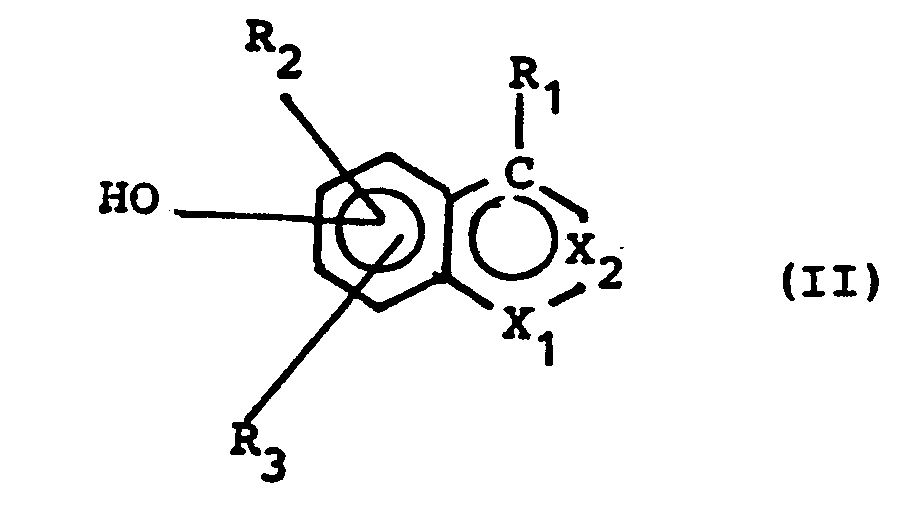
mit Aminosäuren bzw. Peptiden der allgemeinen Formel (III):
- Geeignete reaktive Derivate sind z.B. die Säurechloride und die bei der Peptidsynthese üblicherweise verwendeten Mischanhydride, z.B. mit Chlorameisensäureethylester, oder Aktivester wie z. B. Pentachlorphenylester oder N-Hydroxybenztriazolester.
- Gegenstand der Erfindung ist weiterhin ein Mittel zum Nachweis esterolytischer und/oder proteolytischer Enzyme, enthaltend
- (a) ein chromogenes Enzymsubstrat,
- (b) ein Diazoniumsalz, gegebenenfalls
- (c) einen Puffer sowie gegebenenfalls
- (d) ein Trägermaterial und/oder übliche Zusatzstoffe,
- Gegenstand der Erfindung ist schließlich auch ein Verfahren zum Nachweis von esterolytischen und/oder proteolytischen Enzymen in flüssigen Proben, insbesondere Körperflüssigkeiten, welches dadurch gekennzeichnet ist, daß man die Probe mit dem erfindungsgemäßen Mittel in Kontakt bringt und die auftretende Farbreaktion bestimmt.
- Erfindungsgemäß bevorzugte Verbindungen der allgemeinen Formel (I) sind solche, bei denen X1 für Schwefel oder Stickstoff und X2 für Stickstoff stehen. Besonders bevorzugt stehen X1 für Schwefel und X2 für Stickstoff.
- Bevorzugt sind weiterhin solche Verbindungen in welchen
- R 1 für Wasserstoff
- R2 und R3, die gleich oder verschieden sind, für Wasserstoff, C1-C2-Alkyl, Cl-C2-Alkoxy, Halogen, C1-C4-Dialkylaminogruppen oder Benzolreste stehen.
- Besonders bevorzugt stehen R2 und R3 für Wasserstoff.
- Bevorzugt steht bei den Verbindungen der allgemeinen Formel (I) der Rest G-A-O- in 5-Position.
- Bevorzugt stellt schließlich G-A- einen Rest der allgemeinen Formel (IV)

- R4 für Wasserstoff oder einen gegebenenfalls verzweigten Alkyl-, Cycloalkyl-oder Aralkylrest mit 1 bis 15 C-Atomen, bevorzugt 1 bis 9 C-Atomen, steht, welcher gegebenenfalls durch eine oder zwei, insbesondere eine, Hydroxy-, Mercapto-, Carboxyl, Amino-oder Guanidinogruppe substituiert ist, und
- R5 Wasserstoff oder vorzugsweise -CO-Alkyl, -CO-Aralkyl, -CO-Aryl, -S02-Alkyl oder -SO2-Aryl darstellt, wobei Alkylreste geradkettige oder verzweigte Reste mit 1 bis 9 C-Atomen, bevorzugt 1 bis 6 C-Atomen, sind und die Arylreste 6 bis 12 C-Atome, vorzugsweise 6 C-Atome, aufweisen und gegebenenfalls durch C1- bis C4-Alkoxygruppen oder Halogen substituiert sind.
- Besonders bevorzugt steht G-A- für einen mit einer üblichen Stickstoffschutzgruppe versehenen Rest einer natürlichen Aminosäure oder eines Peptids aus 2 bis 8 solcher Aminosäuren.
- Die Aminosäurereste können dabei in ihrer L- oder D-Form oder auch in ihrer racemischen Form vorliegen. Besonders bevorzugt sind die Reste von Glycin, Alanin, Valin, Leucin, Isoleucin, Phenylalanin und Tyrosin, wobei jeweils die L-Form besonders bevorzugt ist. Gegebenenfalls vorhandene freie Hydroxygruppen können acyliert, vorzugsweise acetyliert, sein.
- Unter einem Peptidrest in der Definition von A sind z.B. Di-, Tri-, Tetra- und Pentapeptide, vorzugsweise Di-und Tripeptide, zu verstehen, wobei als Aminosäure-Komponenten vorzugsweise die oben erwähnten Aminosäuren in Betracht kommen.
- Als in der Peptidchemie übliche Stickstoffschutzgruppe in der Definition von G seien z.B. die an sich bekannten Alkyl- und Aralkyloxycarbonyl-, Alkyl- und Aralkyloxythiocarbonyl-, Sulfonyl-, Sulfenyl-, Vinyloxycarbonyl-, Cyclohexenyloxycarbonyl-, Phosphoryl- oder CarbamoylGruppen genannt.
- Die Phenole der allgemeinen Formel (II) sind an sich bekannt oder können nach bekannten Verfahren hergestellt werden.
- Herstellungsverfahren für die Phenole der Formel(II) werden beispielsweise in folgenden Literaturstellen angegeber Franke et.al., Arzneimittel-Forschung, 30 (11), 1831-1838; DE-A 2704 793; Davies, Soc. 1955, 2412; Clarke et.al.
- Condensed Isothiazoles, Part 7, J. Chem. Res., Synop., (6) 197 (1980), Hydroxyindazole in The Chemistry of Heterc cyclic Compounds, Bd. 22, S. 336-340, Edited by R.H. Wile>
- Aus den Phenolen (II) und den Aminosäuren bzw. Peptiden der allgemeinen Formel (III) bzw. reaktiven Derivaten hiervon (insbesondere den Säurehalogeniden oder aktivierten Estern) lassen sich nach aus der Peptidchemie an sich bekannten Synthesemethoden die erfindungsgemäßen Verbindungen herstellen. Verfahren dieser Art werden beispielsweise in folgenden Publikationen (und den dort zitierten Literaturstellen) beschrieben: Janoff et al., Proc. Soc. Exper. Biol. Med. 136, 1045-1049 (1971); Sweetman et al., J. Hist. Soc., 22, 327-339; Jakubke et.al., Chem. Ber. 100, 2267-2372 (1967) sowie insbesondere Houben-Weyl, Methoden der organischen Chemie, Bd. XV/1 und XV/2.
- Die erfindungsgemäßen Mittel zum Nachweis esterolytischer und/oder proteolytischer Enzyme enthalten neben den erfindungsgemäßen chromogenen Substraten ein Diazoniumsalz der allgemeinen Formel (V)

- Ri 1 eine niedere Alkyl-, eine niedere Alkoxy-, eine niedere Alkylmercapto-, eine Hydroxy-, Nitro-, Cyano-, Trifluormethyl-, C1-C8-Alkylsulfonamido-, Arylsulfonamido-, C1-C8-Alkylsulfon-, Arylsulfon-, Sulfonsäure-, Carbonsäure-, eine N-Morpholino-, eine N-Thio-morpholino-, eine N-Pyrrolidino-, eine gegebenenfalls N'-alkylierte N-Piperazino-, eine N-Piperidino-Gruppe, Halogen oder Wasserstoff,
- R'3 eine niedere Alkyl-, eine niedere Alkoxy-, eine Aryloxy-, eine niedere Alkylmercapto-, Alkylamino-, Dialkylamino-, eine Hydroxy-, Nitro-, Cyano-, C1-C8-Alkylsulfonamido-, Arylsulfonamido; C1-C8-Alkylsulfon-Arylsulfon-, Sulfonsäure-, Carbonsäure-, eine N-Mor- pholino-, N-Thio-morpholino-, N-Pyrrolidino-, eine gegebenenfalls N'-alkylierte N-Piperazino-, N-Piperidino-, Phenylamino-, eine gegebenenfalls mit einem niederen Alkyl- oder niederen Alkoxy-Rest substituierte Phenyl-Gruppe, Halogen oder Wasserstoff,
- R'2, R'4, R'5, die gleich oder verschieden sein können, jeweils eine niedere Alkyl-, eine niedere Alkoxy-, Nitro-, C1-C8-Alkylsulfonamido-, Arylsulfonamido, C1-C8-Alkylsulfon-, Arylsulfon-, Sulfonsäure-, Carbonsäure-, eine niedere Alkylmercapto-Gruppe, Halogen oder Wasserstoff und
- X ein stabilisierendes Anion
- Vorzugsweise stehen in der allgemeinen Formel (V) die Reste
- R'1 für C1- bis C4-Alkyl, C1-C4-Alkoxy, Hydroxy, Nitro, Halogen oder Wasserstoff;
- R'3 für eine C1- bis C4-Alkyl-, Cl-C4-Alkoxy-, Aryloxy-, C1-C4-Alkylamino-, C1-C4-Dialkylamino-, Nitro-, C1-C4- Alkylsulfonamido-, Arylsulfonamido-, C1-C4-Alkyl- sulfon-, Arylsulfon-, N-Morpholino-, N-Pyrrolidino; Phenylamino-, oder Sulfonsäuregruppe oder Wasserstoff; und
- R'2, R'4, R'5, die gleich oder verschieden sein können, für C1- bis C4-Alkyl-, C1- bis C4-Alkoxy-, C1- bis C4-Alkylamino-, C1-bis C4-Dialkylamino-, Nitro-, C1- bis C4-Alkylsulfonamido-, Arylsulfonamido-, oder Sulfonsäuregruppen, Halogen oder Wasserstoff.
- Jeweils zwei benachbare Reste R'1 bis R'5 können dabei zu einem gegebenenfalls durch Halogen,eine C1- bis C4-A1- kyl-, C1- bis C4-Alkoxy-, Nitro- oder Sulfonsäuregruppe substituierten Benzolring ringgeschlossen sein.
- Im Rahmen der Formel (V) steht Aryl jeweils für einen gegebenenfalls durch Halogen, eine C1- C4-Alkyl- oder C1-C4-Alkoxygruppe substituierten aromatischen Rest mit 6 bis 12 C-Atomen, vorzugsweise 6 C-Atomen.
- Die Diazoniumsalze der allgemeinen Formel (V) sind ebenfalls an sich bekannt oder können nach bekannten Verfahren hergestellt werden (siehe Houben-Weyl, Methoden der organischen Chemie, Bd. X/3).
- Vorzugsweise enthalten die erfindungsgemäßen Mittel Substanzen, welche die Spaltung des chromogenen Substrats (I) durch die nachzuweisenden Enzyme beschleunigen. Als solche Beschleuniger kommen z.B. die in EP-A 14 929 beschrii benen Verbindungen in Betracht, wobei aliphatische Alkohole mit 8 bis 25 C-Atomen, bevorzugt 10 - 20 C-Atomen, die gegebenenfalls ungesättigt sein können, bevorzugt sind. Beispiele solcher bevorzugten Beschleuniger sind n-Decanol, n-Dodecanol, und insbesondere n-Undecanol. Besonders bevorzugte Beschleuniger sind basische Aminosäuren enthaltende Homo- oder Copolyaminosäuren [E. Katchalski in: Advances of Protein Chemistry 13, 243-493 (1958); C.B. Anfinsen, M.L. Anson J.T. Edsall und K. Bailey (Hrsg.); Academic Press. Inc. Publishers, New York, N.Y.7sowie sequentielle Polyaminsäuren. Als basische Aminosäuren kommen solche Aminosäuren in Frage, die in den Seitenketten Amino- oder Guanidinogruppen tragen. Es sind dies insbesondere Lysin und Ornithin sowie Arginin, aber auch unnatürliche basische Aminosäuren wie beispielsweise Diaminobuttersäure, Diaminopropionsäure oder Diaminopimelinsäure. In den Polyaminosäuren können die konstituierenden Aminosäuren racemisch oder optisch aktiv in der D- oder L-Form vorliegen. Die Molekulargewichte (Zahlenmittel) der Polyaminosäuren betragen 1000 - 2000000 und liegen vorzugsweise zwischen 5000 und 500 000. Die Gehalte an basischen Aminosäuren können zwischen 5 und 100 Molprozent betragen, vorzugsweise zwischen 20 und 100 Molprozent.
- Die Beschleuniger werden bei der Herstellung der unten beschriebenen Testvorrichtungen vorzugsweise in Mengen von 0,5 bis 10 Gew.-%, vorzugsweise 1 - 5 Gew.-% der Imprägnierlösung eingesetzt.
- Vorzugsweise enthalten die erfindungsgemäßen Mittel zum Nachweis proteolytischer Enzyme und insbesondere der Leukozyten-Enzyme ein geeignetes Puffersystem. Hierfür kommen z.B. Phosphat-, Borat-, Carbonat/Hydrogencarbonat-, Carbonat-, Barbiturat-, Tris-(hydroxymethyl)-aminomethan-(=Tris), 2-Amino-2-methy1-propandio1-1,3- (=Amediol)-oder Aminosäure-Puffer in Frage, wobei in der Regel pH-Wert und Kapazität so gewählt werden, daß sich in der Meßlösung bzw. auf dem Teststreifen ein pH-Wert von 6 - 10, vorzugsweise von 7 - 9, einstellt.
- Die erfindungsgemäßen Mittel können auch an sich bekannte Detergentien enthalten, da hierdurch eine homogenere Farbverteilung und eine intensivere Färbung erzielt werden können. In Frage kommen sowohl kationaktive als auch anionaktive Detergentien aber auch amphotere und nichtionogene Detergentien. Als Beispiele hierfür seien Benzyl-dimethyl-tetradecylammoniumchlorid, Na-Dodecylsulfat, Zephirol, Polyvinylpyrrolidon, die oben als Aktivatoren genannten Polyaminosäuren sowie Heparinoid und Gemische dieser Verbindungen genannt.
- Vorzugsweise sind bei den erfindungsgemäßen Mitteln die verschiedenen oben beschriebenen Reagenzien in einem inerten Trägermaterial der an sich bekannten Art inkorporiert, wobei als Trägermatrix besonders bevorzugt poröse Materialien wie insbesondere Filterpapier, aber auch Kunststoffmembranen, Glasfasermatten (US-PS 3 846 247), poröse Keramikstreifen, Kunstfaservliese, schwammartige Materialien (US-PS 3 552 928), Filz, Textilien, Holz, Cellulose oder auch Silicagel in Frage kommen.
- Die genannten Trägermaterialien werden zu diesem Zweck mit einer Lösung der oben beschriebenen Reagentien in einem geeigneten leicht entfernbaren Lösungsmittel, z.B. Wasser, Methanol, Ethanol, Aceton, DtiF oder DMSO imprägniert. Vorzugsweise geschieht dies in zwei getrennten Schritten: Zunächst wird mit einer wäßrigen Lösung imprägniert, die den Puffer und andere wasserlösliche Zusatzstoffe enthält. Danach wird mit einer Lösung der chromogenen Enzym-Substrate der allgemeinen Formel (V) und Aktivatoren imprägniert. Die Imprägnierung kann jedoch auch in einer anderen Reihenfolge bzw. mit einer anderen Zusammensetzung der beiden Imprägnierlösungen durchgeführt werden. Vorzugsweise enthält die Imprägnierlösung oder die zu untersuchende Flüssigkeit die erfindungsgemäßen Verbindungen sowie das Diazoniumsalz in einer Konzentration von 10-4mol/1 bis 10-1 mol/1, insbesondere von 10-3 mol/1 bis 10-2 mol/1.
- Bei Verwendung von Filterpapier als Matrix können die fertigen Testpapiere als solche verwendet werden oder in an sich bekannter Weise an Griffen angeklebt oder vorzugsweise zwischen Kunststoffen und feinmaschigen Netzwerken z.B. gemäß DE-OS 2 118 455 eingesiegelt werden.
- Zur Herstellung filmbeschichteter Teststreifen werden vorzugsweise sämtliche Reagenzien in die Lösung oder Dispersion einer filmbildenden Substanz, wie z.B. Polyvinylester oder Polyamid, eingetragen und homogen vermischt. Das Gemisch wird in dünner Schicht auf einen Kunststoffträger gestrichen und getrocknet. Die so hergestellten filmbeschichteten Teststreifen werden nach dem Trocknen geschnitten und können als solche verwendet oder in an sich bekannter Weise an Griffen angeklebt werden oder z.B. zwischen Kunststoffen und feinmaschigen Netzwerken gemäß DE-OS 2 118 455 eingesiegelt werden.
- Ein erfindungsgemäßes diagnostisches Mittel zum Nachweis esterolytischer und/oder proteolytischer Enzyme, insbesondere der Leukozyten-Enzyme, in Form von Pulvermischungen oder Reagenztabletten läßt sich herstellen, indem die oben angeführten Bestandteile des Testmittels mit üblichen galenischen Zusatzstoffen versetzt und granuliert werden. Zusatzstoffe dieser Art sind z.B. Kohlenhydrate, wie z.B. Mono-, Oligo- oder Polysaccharide, oder Zuckeralkohole, wie z.B. Mannit, Sorbit oder Xylit, oder andere lösliche inerte Verbindungen, wie Polyethylenglykole oder Polyvinylpyrrolidon. Die Pulvermischungen oder Reagenztabletten weisen z.B. ein Endgewicht von ungefähr 50 - 200 mg, vorzugsweise 50 - 80 mg, auf.
- Zur Herstellung von Lyophilisaten im Gesamtgewicht von jeweils etwa 5 - 20 mg, vorzugsweise etwa 10 mg, wird eine Lösung gefriergetrocknet, die neben sämtlichen für den Test benötigten Reagenzien übliche Gerüstbildner, wie z.B. Polyvinylpyrrolidon, und evtl. weitere Füllstoffe, wie z.B. Mannit, Sorbit oder Xylit, enthält.
- Ein erfindungsgemäßes diagnostisches Mittel in Form einer Lösung enthält vorzugsweise sämtliche für den Test benötigten Reagenzien. Als Lösungsmittel kommen Wasser oder Gemische von Wasser mit einem wasserlöslichen organischen Lösungsmittel, wie z.B. Methanol, Ethanol, Aceton oder Dimethylformamid, in Frage. Aus Haltbarkeitsgründen kann es vorteilhaft sein, die für den Test benötigten Reagenzien auf zwei oder mehr Lösungen zu verteilen, die erst bei der eigentlichen Untersuchung zusammengegeben werden.
- Die so hergestellten diagnostischen Mittel ermöglichen es, nach Eintauchen in die zu untersuchende oder nach Zugabe zur betreffenden Körperflüssigkeit die Anwesenheit esterolytischer und/oder proteolytischer Enzyme, insbesondere der Leukozyten-Enzyme, rasch und einfach über eine Farbbildung nachzuweisen, die visuell oder photometrisch, z.B. remissions-photometrisch oder in der Küvette, gemessen werden kann. Da die Aktivität der Leukozyten-Enzyme, pro Zelle als eine im wesentlichen konstante Größe angesehen werden kann, läßt sich aus der Intensität der Farbbildung die Leukozytenkonzentration der untersuchten Körperflüssigkeit ermitteln. Dabei werden mit dem erfindungsgemäßen diagnostischen Mittel sowohl intakte als auch lysierte Leukozyten erfaßt, da die Aktivität der Leukozyten-Enzyme auch nach der Lyse der Leukozyten voll erhalten bleibt. Ein Lysefehler tritt folglich nicht auf.
- Die nachfolgenden Beispiele dienen zur Erläuterung der vorliegenden Erfindung. Wenn nicht anders vermerkt, sind Mengenangaben als Gewichtsteile oder Gewichtsprozente zu verstehen.
- Die Ester wurden jeweils z. B. durch Umsetzung von N-Tosyl-L-alanylchlorid mit den Phenolen in absolutem Methylethylketon oder absolutem Toluol in Gegenwart von gepulvertem Kaliumcarbonat hergestellt. Nach 6 bis 12-stündigem Rühren bei ca. 55°C waren zwischen 40 und 70 % des Phenols umgesetzt. Das Molverhältnis Phenol: K2C03: Säurechlorid betrug zumeist 1:1,5:1,5. Der pH-Wert lag während der gesamten Reaktionszeit um 7. Zur Aufarbeitung wurde das Kaliumcarbonat bei 50°C abfiltriert und danach das Lösungsmittel im Vakuum abdestilliert. Die Reinigung erfolgte über Säulenchromatographie mit Kieselgel (Laufmittel z. B. Petrolether: Aceton = ca. 9:1) und anschließendes Umkristallisieren.
- Literatur: E. Fischer u. W. Lipschitz, B. 48, 362 (1915).
- 83,7 g (0,93 Mol) L-Alanin werden in 465 ml ca. 2N-Natronlauge gelöst. Die Lösung wird bei 70-72°C portionsweise mit 186 g (0,976 Mol) p-Toluolsulfochlorid in 20 Minuten versetzt. Während der Zugabe des Sulfochlorids wird die Reaktionsmischung durch einen automatischen Titrator mit ca. 2N-Natronlauge bei pH 10 gehalten; dabei werden 560 ml 2N-Natronlauge verbraucht. Wenn sich der pH der Reaktionsmischung nicht mehr ändert, kühlt man diese auf 15-5°C ab und stellt mit 37 %iger Salzsäure auf pH 3 ein. Das abgeschiedene Produkt wird abgesaugt, den feuchten Filterkuchen löst man aus 2350 ml Wasser um.
- Ausbeute: 185,5 g (82 % der Theorie) L-p-Tosylalanin vom m.p. 132-135°C.
- 158,1 g (0,65 Mol) p-Tosyl-L-alanin werden in 350 ml Thionylchlorid bei 40°C gerührt, bis eine klare Lösung entstanden ist. Dann destilliert man das überschüssige Thionylchlorid im Wasserstrahlvakuum ab. Den Kolbenrückstand nimmt man in 300 ml destilliertem Toluol auf. Man erhält eine klare, schwach gelbliche Lösung, die in 900 ml gerührtes Waschbenzin eingegossen wird. Das Säurechlorid fällt aus. Es wird am nächsten Tage abgesaugt, mit Leichtbenzin gewaschen und in einem Vakuumexsiccator über Calciumchlorid/Kaliumhydroxyd getrocknet.
- Ausbeute: 155 g (91 % der Theorie) an fast farblosen Kristallen vom m.p. 81-83°C.
- 3,02 g 5-Hydroxy-1,2-benzisothiazol werden in 150 ml absolutem Methylethylketon zusammen mit 3 g wasserfreiem K2C03 unter Rühren auf 55°C erwärmt. Im Laufe von 6 Stunden gibt man portionsweise unter gutem Rühren bei 55°C insgesamt 6 g N-Tosyl-L-alanylchlorid zu. Man rührt danach noch 2 Stunden bei 55°C nach. Nach dem Erkalten wird das K2CO3 abfiltriert, danach das Lösungsmittel abrotiert. Das Rohprodukt wird durch Hochdruckflüssigchromatographie an einer Kieselgelsäule gereinigt. Laufmittel : Hexan : Methylenchlorid : n-Butanol = 40 : 8 : 1. Detektion des gewünschten Produktes: UV bei 254 nm. Bei einer Aufgabenmenge von 3 mal 100 mg werden insgesamt 100 mg 5-/ N-(Toluol-4"-sulfonyl)-L-alanyloxy7-1,2-benzisothiazol isoliert.
- 0,6 g 5-Hydroxy-indazol werden in 50 ml absolutem Methylenchlorid zusammen mit 1,2 g absolutem Pyridin bei 40°C vorgelegt. Im Laufe von 3 Stunden tropft man 1,5 g N-Tosyl-L-alanylchlorid, gelöst in 25 ml absolutem Methylenchlorid bei 40°C zu. Danach läßt man noch 2 Stunden bei 40°C nachrühren. Nach dem Erkalten wäscht man die Methylenchloridlösung 3mal mit je 100 ml 2%iger Citronensäurelösung. Danach wird die Methylenchloridphase über Natriumsulfat getrocknet und nach Abfiltrieren des Trockenmittels im Vakuum bei Raumtemperatur eingedampft. Der so erhaltene Rückstand wird säulenchromatographisch an Kieselgel, Laufmittel Petrolether : Aceton 6 : 4, gereinigt. Man erhält nach Abdampfen des Lösungsmittels der gewünschten Fraktion 0,4 g 5-[N-(Toluol-4"-sulfonyl)-L-alanylox]-indazol.
- In analoger Weise erhält man durch Umsetzung der entsprechenden Hydroxybenzisothiazole und Hydroxyindazole der Formel (II) mit den jeweiligen N-geschützten Aminosäuren bzw. reaktiven Aminosäurederivaten die folgenden Substrate:
- 4-[N-(Toluol-4"-sulfonyl)-L-alanyloxy]-1,2-benzisothiazol
- 4-[N-(Toluol-4"-sulfonyl)-L-valyloxy]-1,2-benzisothiazol
- 5-LN-(t-Butyloxycarbonyl)-L-alanyloxy7-1,2-benzisothiazol .
- 6-[N-Benzyloxycarbonyl-L-alanyloxy]-indazol
- 5-[N-Methylsulfonyl-L-lysyloxy]-indazol
- 4-[N-(4''-Methoxybenzolsulfonyl)-L-alanyloxy]-indazol
- 5-[N-Benzyloxycarbonyl-O-acetyl-L-tyrosyloxy]2,1-benzisothiazol
- 5-[N-Benzolsulfonyl-L-phenylalanyloxy]-1,2-benzisothiazol
- 6-/N-Benzyloxycarbonyl-L-valyloxy/-indazol
- Filterpapier (z. B. Eaton and Dikeman 205) wird nacheinander mit den folgenden Lösungen imprägniert und dann bei 60°C getrocknet.
- 0,1 molarer Tris-(hydroxymethyl)-aminomethan-Puffer (pH8,4) 3 % Polyvinylpyrrolidon 2,5 % Poly-L-Arg Lösungsmittel: Wasser
- 7,5 x 10⁻³ mol/1 5-[N-(moluol-4"-sulfonyl)-L-alanylox] -1,2-benzisothiazol 1 x 10⁻² mol/1 2,4-Dimethoxy-benzoldiazoniumtetrafluoroborat Lösungsmittel: wasserfreies Aceton
- Man erhält ein schwach gelb gefärbtes Testpapier, das sich beim Eintauchen in leukozytenhaltige Urine rotbraun verfärbt.
- Eine Tablette enthaltend
- 5 mg 5-[N-(Toluol-4"-sulfonyl)-L-alanyloxy]-1,2-ben- zisothiazol
- 5 mg 2,4-Dimethoxy-benzoldiazoniumtetrafluoroborat
- 4 mg Kaliumdihydrogenphosphat
- 80 mg Dinatriumhydrogenphosphat-dihydrat
- 6 mg Poly-L-Lys
- 110 mg Mannit
dadurch gekennzeichnet, daß das chromogene Enzymsubstrat eine erfindungsgemäße Verbindung ist.
bedeuten, wobei jeweils 2 benachbarte Reste R'1 bis R'5 zu einem gegebenenfalls durch Halogen, eine C1-C6-Alkyl-, eine Cl-C6-Alkoxy-, eine Nitro-, Sulfonsäure- oder Carbonsäuregruppe substituierten Benzolring ringgeschlossen sein können, so daß ein Diazoniumnsalz der Naphthalinreihe entsteht.
vermischt man mit 5 ml eines Leukozyten enthaltenden Urins. Die Urinprobe färbt sich rotbraun.
Claims (10)


dadurch gekennzeichnet, daß man ein Phenol der allgemeinen Formel

mit Aminosäuren bzw. Peptiden der allgemeinen Formel

dadurch gekennzeichnet, daß das chromogene Enzymsubstrat eine Verbindung gemäß Anspruch 1 bis 7 ist.
Applications Claiming Priority (2)
| Application Number | Priority Date | Filing Date | Title |
|---|---|---|---|
| DE19843413077 DE3413077A1 (de) | 1984-04-06 | 1984-04-06 | Chromogene aminosaeure- und peptidester, verfahren zu deren herstellung, verwendung dieser verbindungen in analysenverfahren sowie mittel zum nachweis esterolytischer und/oder proteolytischer enzyme |
| DE3413077 | 1984-04-06 |
Publications (3)
| Publication Number | Publication Date |
|---|---|
| EP0157360A2 true EP0157360A2 (de) | 1985-10-09 |
| EP0157360A3 EP0157360A3 (en) | 1988-05-04 |
| EP0157360B1 EP0157360B1 (de) | 1991-08-14 |
Family
ID=6232916
Family Applications (1)
| Application Number | Title | Priority Date | Filing Date |
|---|---|---|---|
| EP85103667A Expired - Lifetime EP0157360B1 (de) | 1984-04-06 | 1985-03-27 | Chromogene Aminosäure-und Peptidester, Verfahren zu deren Herstellung, Verwendung dieser Verbindungen in Analysenverfahren sowie Mittel zum Nachweis esterolytischer und/oder proteolytischer Enzyme |
Country Status (6)
| Country | Link |
|---|---|
| US (2) | US4723020A (de) |
| EP (1) | EP0157360B1 (de) |
| JP (2) | JPS60231658A (de) |
| AU (1) | AU556832B2 (de) |
| DE (2) | DE3413077A1 (de) |
| ES (1) | ES8607262A1 (de) |
Cited By (1)
| Publication number | Priority date | Publication date | Assignee | Title |
|---|---|---|---|---|
| EP0661280A1 (de) * | 1993-12-29 | 1995-07-05 | Kyoto Daiichi Kagaku Co., Ltd. | Aminosäureester und Reagenz zum Nachweis von Leukocyten oder Elastase in Körperflüssigkeit |
Families Citing this family (19)
| Publication number | Priority date | Publication date | Assignee | Title |
|---|---|---|---|---|
| DE3629175A1 (de) * | 1986-08-28 | 1988-03-17 | Behringwerke Ag | Chromogene verbindungen, verfahren zu deren herstellung und ihre verwendung |
| US5464739A (en) | 1994-08-22 | 1995-11-07 | Bayer Corporation | Composition method for determining the presence of leukocyte cells, esterase or protease in a test sample |
| CA2161574A1 (en) * | 1994-11-15 | 1996-05-16 | James Noffsinger | Methodology for colorimetrically determining the concentration of white blood cells in a biological fluid |
| US6348324B1 (en) | 1999-01-21 | 2002-02-19 | Hypoguard America Limited | Composition and device for detecting leukocytes in urine |
| US6528652B1 (en) * | 1999-01-21 | 2003-03-04 | Chronimed | Composition and device for detecting leukocytes in urine |
| US6709868B2 (en) * | 2002-05-20 | 2004-03-23 | Portascience Inc. | Method and apparatus for measuring white blood cell count |
| US7611863B2 (en) * | 2004-01-08 | 2009-11-03 | Max-Planck-Gesellschaft Zur Foerderung Der Wissenschaften E.V. | Selective staining of biomembranes using voltage-sensitive dyes |
| EP1553396A3 (de) * | 2004-01-08 | 2005-09-21 | Max-Planck-Gesellschaft zur Förderung der Wissenschaften e.V. | Selektives Färben von Biomembranen mit Spannungs-sensitive Farbstoffen |
| US7504235B2 (en) | 2005-08-31 | 2009-03-17 | Kimberly-Clark Worldwide, Inc. | Enzyme detection technique |
| WO2007027353A2 (en) * | 2005-08-31 | 2007-03-08 | Kimberly-Clark Worldwide, Inc. | Detection of proteases secreted from pathogenic microorganisms |
| US8003399B2 (en) * | 2005-08-31 | 2011-08-23 | Kimberly-Clark Worldwide, Inc. | Nitrite detection technique |
| US8758989B2 (en) * | 2006-04-06 | 2014-06-24 | Kimberly-Clark Worldwide, Inc. | Enzymatic detection techniques |
| US8044257B2 (en) * | 2006-10-30 | 2011-10-25 | Kimberly-Clark Worldwide, Inc. | Absorbent article containing lateral flow assay device |
| US7897360B2 (en) | 2006-12-15 | 2011-03-01 | Kimberly-Clark Worldwide, Inc. | Enzyme detection techniques |
| US7935538B2 (en) * | 2006-12-15 | 2011-05-03 | Kimberly-Clark Worldwide, Inc. | Indicator immobilization on assay devices |
| US20080269707A1 (en) | 2007-04-30 | 2008-10-30 | Kimberly-Clark Worldwide, Inc. | Lateral Flow Device for Attachment to an Absorbent Article |
| US8043272B2 (en) * | 2007-04-30 | 2011-10-25 | Kimberly-Clark Worldwide, Inc. | Collection and testing of infant urine using an absorbent article |
| US9103796B2 (en) * | 2007-12-14 | 2015-08-11 | Kimberly-Clark Worldwide, Inc. | Multi-layered devices for analyte detection |
| US20100290948A1 (en) * | 2009-05-15 | 2010-11-18 | Xuedong Song | Absorbent articles capable of indicating the presence of urinary tract infections |
Family Cites Families (5)
| Publication number | Priority date | Publication date | Assignee | Title |
|---|---|---|---|---|
| GB1128371A (en) * | 1965-10-04 | 1968-09-25 | Miles Lab | Diagnostic composition |
| US3929815A (en) * | 1973-12-19 | 1975-12-30 | Gulf Research Development Co | Hydroxy-, alkoxy-, and alkylcarbamoyloxy-2,1-benzisothiazoles |
| DE2854987A1 (de) * | 1978-12-20 | 1980-06-26 | Boehringer Mannheim Gmbh | Diagnostische mittel zum nachweis proteolytischer enzyme und dafuer geeignete chromogene |
| DE3017721A1 (de) * | 1980-05-09 | 1981-11-26 | Boehringer Mannheim Gmbh, 6800 Mannheim | Mittel zum nachweis esterolytischer und/oder proteolytischer enzyme und dafuer geeignete substrate |
| US4704460A (en) * | 1984-04-06 | 1987-11-03 | Miles Laboratories, Inc. | Novel compounds for detecting the presence of hydrolytic analytes in a test sample |
-
1984
- 1984-04-06 DE DE19843413077 patent/DE3413077A1/de not_active Withdrawn
-
1985
- 1985-03-11 US US06/710,623 patent/US4723020A/en not_active Expired - Lifetime
- 1985-03-20 AU AU40142/85A patent/AU556832B2/en not_active Ceased
- 1985-03-27 EP EP85103667A patent/EP0157360B1/de not_active Expired - Lifetime
- 1985-03-27 DE DE8585103667T patent/DE3583761D1/de not_active Expired - Fee Related
- 1985-03-29 ES ES541774A patent/ES8607262A1/es not_active Expired
- 1985-04-04 JP JP60070161A patent/JPS60231658A/ja active Granted
-
1987
- 1987-03-05 JP JP62048995A patent/JPS62215400A/ja active Granted
- 1987-08-27 US US07/090,009 patent/US4806423A/en not_active Expired - Lifetime
Cited By (1)
| Publication number | Priority date | Publication date | Assignee | Title |
|---|---|---|---|---|
| EP0661280A1 (de) * | 1993-12-29 | 1995-07-05 | Kyoto Daiichi Kagaku Co., Ltd. | Aminosäureester und Reagenz zum Nachweis von Leukocyten oder Elastase in Körperflüssigkeit |
Also Published As
| Publication number | Publication date |
|---|---|
| JPS60231658A (ja) | 1985-11-18 |
| ES541774A0 (es) | 1986-06-01 |
| JPS6245227B2 (de) | 1987-09-25 |
| DE3413077A1 (de) | 1985-10-17 |
| JPS62215400A (ja) | 1987-09-22 |
| AU556832B2 (en) | 1986-11-20 |
| AU4014285A (en) | 1985-10-10 |
| DE3583761D1 (de) | 1991-09-19 |
| JPH0244517B2 (de) | 1990-10-04 |
| EP0157360A3 (en) | 1988-05-04 |
| ES8607262A1 (es) | 1986-06-01 |
| EP0157360B1 (de) | 1991-08-14 |
| US4723020A (en) | 1988-02-02 |
| US4806423A (en) | 1989-02-21 |
Similar Documents
| Publication | Publication Date | Title |
|---|---|---|
| EP0157360B1 (de) | Chromogene Aminosäure-und Peptidester, Verfahren zu deren Herstellung, Verwendung dieser Verbindungen in Analysenverfahren sowie Mittel zum Nachweis esterolytischer und/oder proteolytischer Enzyme | |
| EP0039880B2 (de) | Mittel zum Nachweis esterolytischer und/oder proteolytischer Enzyme und dafür als Substrate geeignete Phenoxy-Aminosäure- und Phenoxy-Peptidester, Verfahren zu deren Herstellung sowie deren Verwendung zur Herstellung der erfindungsgemässen Mittel | |
| EP0012957B1 (de) | Diagnostisches Mittel zum Nachweis proteolytischer Enzyme sowie als Chromogene hierfür geeignete Indoxyl- bzw. Thioindoxylester, Verfahren zu deren Herstellung sowie deren Verwendung zur Herstellung diagnostischer Mittel | |
| EP0157362A2 (de) | Chromogene Aminosäure- und Peptidester, Verfahren zu deren Herstellung, Verwendung dieser Verbindungen in Analysenverfahren sowie Mittel zum Nachweis esterolytischer und/oder proteolytischer Enzyme | |
| EP0158225B1 (de) | Analysenverfahren und Mittel zum Nachweis esterolytischer und/oder proteolytischer Enzyme | |
| EP0157384B1 (de) | Substrate für Hydrolasen, Verfahren zu ihrer Herstellung und ihre Verwendung | |
| DE69828035T2 (de) | Nachweis von mikrobiellen metaboliten | |
| EP0007407B1 (de) | Diagnostisches Mittel zum Nachweis von Leukozyten in Körperflüssigkeiten sowie als Chromogene hierfür geeignete Sulfonphthalein-Ester, Verfahren zu deren Herstellung sowie deren Verwendung zur Herstellung diagnostischer Mittel zum Nachweis von Leukozyten in Körperflüssigkeiten | |
| EP0034323B1 (de) | Aminosäure- und Peptidester von Leuko-Indoanilinen, Verfahren zu deren Herstellung sowie diese Verbindungen enthaltende Mittel zum Nachweis proteolytischer Enzyme | |
| EP0285000B1 (de) | Chromogene Verbindungen, ihre Herstellung und Verwendung als Enzymsubstrate | |
| EP0433855A2 (de) | N- und O-substituierte Aminophenolderivate, Zwischenprodukte zu deren Herstellung, deren Verwendung als Hydrolasesubstrate, ein entsprechendes Bestimmungsverfahren und hierfür geeignetes diagnostisches Mittel | |
| EP0158224B1 (de) | Analysenverfahren und Mittel zum Nachweis esterolytischer und/oder proteolytischer Enzyme | |
| EP0137177B1 (de) | Chromogene und fluorogene Carbonsäureester, Verfahren zu deren Herstellung sowie Verfahren und Mittel zum Nachweis und zur Bestimmung von Hydrolasen | |
| EP0157361B1 (de) | Analysenverfahren und Mittel zum Nachweis esterolytischer und/oder proteolytischer Enzyme | |
| EP0210559B1 (de) | N-Acyl-dihydroresorufin-Derivate, Verfahren zu deren Herstellung sowie deren Verwendung zur Bestimmung von Wasserstoffperoxid, peroxidatisch wirkenden Verbindungen oder Peroxidase | |
| EP0190299A1 (de) | NEUE p-PHENYLENDIAMIN-PEPTIDE UND DIESE ENTHALTENDE REAGENZIEN ZUR BESTIMMUNG VON PROTEASEN DES BLUTGERINNUNGSSYSTEMS | |
| EP0258784B1 (de) | Chromogene Verbindungen, Verfahren zu deren Herstellung und ihre Verwendung | |
| EP0004589A2 (de) | Alpha-N-acetyl-L-phenylalanyl-L-arginin-äthylester, Verfahren zu seiner Herstellung und seine Verwendung als Kallikrein-Diagnostikum | |
| DE69017446T2 (de) | Neue peptidverbindungen, verfahren zur herstellung und ihre verwendung zum nachweis von protein c. | |
| DD236114A1 (de) | Verfahren zur bestimmung von bakterieninfektion in liquores |
Legal Events
| Date | Code | Title | Description |
|---|---|---|---|
| PUAI | Public reference made under article 153(3) epc to a published international application that has entered the european phase |
Free format text: ORIGINAL CODE: 0009012 |
|
| 17P | Request for examination filed |
Effective date: 19850327 |
|
| AK | Designated contracting states |
Designated state(s): DE FR GB IT NL SE |
|
| PUAL | Search report despatched |
Free format text: ORIGINAL CODE: 0009013 |
|
| AK | Designated contracting states |
Kind code of ref document: A3 Designated state(s): DE FR GB IT NL SE |
|
| RAP1 | Party data changed (applicant data changed or rights of an application transferred) |
Owner name: MILES INC. |
|
| 17Q | First examination report despatched |
Effective date: 19890913 |
|
| GRAA | (expected) grant |
Free format text: ORIGINAL CODE: 0009210 |
|
| AK | Designated contracting states |
Kind code of ref document: B1 Designated state(s): DE FR GB IT NL SE |
|
| ITF | It: translation for a ep patent filed | ||
| REF | Corresponds to: |
Ref document number: 3583761 Country of ref document: DE Date of ref document: 19910919 |
|
| GBT | Gb: translation of ep patent filed (gb section 77(6)(a)/1977) | ||
| ET | Fr: translation filed | ||
| PLBE | No opposition filed within time limit |
Free format text: ORIGINAL CODE: 0009261 |
|
| STAA | Information on the status of an ep patent application or granted ep patent |
Free format text: STATUS: NO OPPOSITION FILED WITHIN TIME LIMIT |
|
| 26N | No opposition filed | ||
| PGFP | Annual fee paid to national office [announced via postgrant information from national office to epo] |
Ref country code: SE Payment date: 19930215 Year of fee payment: 9 |
|
| PGFP | Annual fee paid to national office [announced via postgrant information from national office to epo] |
Ref country code: NL Payment date: 19930331 Year of fee payment: 9 |
|
| PG25 | Lapsed in a contracting state [announced via postgrant information from national office to epo] |
Ref country code: SE Free format text: LAPSE BECAUSE OF NON-PAYMENT OF DUE FEES Effective date: 19940328 |
|
| PG25 | Lapsed in a contracting state [announced via postgrant information from national office to epo] |
Ref country code: NL Effective date: 19941001 |
|
| NLV4 | Nl: lapsed or anulled due to non-payment of the annual fee | ||
| EUG | Se: european patent has lapsed |
Ref document number: 85103667.3 Effective date: 19941010 |
|
| PGFP | Annual fee paid to national office [announced via postgrant information from national office to epo] |
Ref country code: DE Payment date: 19960214 Year of fee payment: 12 |
|
| PGFP | Annual fee paid to national office [announced via postgrant information from national office to epo] |
Ref country code: FR Payment date: 19960228 Year of fee payment: 12 |
|
| PG25 | Lapsed in a contracting state [announced via postgrant information from national office to epo] |
Ref country code: FR Free format text: LAPSE BECAUSE OF NON-PAYMENT OF DUE FEES Effective date: 19971128 |
|
| PG25 | Lapsed in a contracting state [announced via postgrant information from national office to epo] |
Ref country code: DE Effective date: 19971202 |
|
| REG | Reference to a national code |
Ref country code: FR Ref legal event code: ST |
|
| REG | Reference to a national code |
Ref country code: GB Ref legal event code: IF02 |
|
| PGFP | Annual fee paid to national office [announced via postgrant information from national office to epo] |
Ref country code: GB Payment date: 20040324 Year of fee payment: 20 |
|
| PG25 | Lapsed in a contracting state [announced via postgrant information from national office to epo] |
Ref country code: GB Free format text: LAPSE BECAUSE OF EXPIRATION OF PROTECTION Effective date: 20050326 |
|
| REG | Reference to a national code |
Ref country code: GB Ref legal event code: PE20 |