EP0145386B1 - Derivate von Polystyrol und anderen Polymeren als Untergrund für spektroskopische Studien - Google Patents
Derivate von Polystyrol und anderen Polymeren als Untergrund für spektroskopische Studien Download PDFInfo
- Publication number
- EP0145386B1 EP0145386B1 EP19840308143 EP84308143A EP0145386B1 EP 0145386 B1 EP0145386 B1 EP 0145386B1 EP 19840308143 EP19840308143 EP 19840308143 EP 84308143 A EP84308143 A EP 84308143A EP 0145386 B1 EP0145386 B1 EP 0145386B1
- Authority
- EP
- European Patent Office
- Prior art keywords
- article
- substituent
- process according
- reaction mixture
- polystyrene
- Prior art date
- Legal status (The legal status is an assumption and is not a legal conclusion. Google has not performed a legal analysis and makes no representation as to the accuracy of the status listed.)
- Expired
Links
- 229920000642 polymer Polymers 0.000 title claims description 39
- 239000004793 Polystyrene Substances 0.000 title description 87
- 229920002223 polystyrene Polymers 0.000 title description 87
- 125000003118 aryl group Chemical group 0.000 claims description 38
- 239000002904 solvent Substances 0.000 claims description 37
- 125000001424 substituent group Chemical group 0.000 claims description 37
- 238000000034 method Methods 0.000 claims description 27
- 239000011541 reaction mixture Substances 0.000 claims description 27
- 230000008569 process Effects 0.000 claims description 22
- HXJUTPCZVOIRIF-UHFFFAOYSA-N sulfolane Chemical compound O=S1(=O)CCCC1 HXJUTPCZVOIRIF-UHFFFAOYSA-N 0.000 claims description 18
- -1 nitro, sulphonyl Chemical group 0.000 claims description 17
- IAZDPXIOMUYVGZ-UHFFFAOYSA-N Dimethylsulphoxide Chemical compound CS(C)=O IAZDPXIOMUYVGZ-UHFFFAOYSA-N 0.000 claims description 11
- 102000004190 Enzymes Human genes 0.000 claims description 11
- 108090000790 Enzymes Proteins 0.000 claims description 11
- 239000003153 chemical reaction reagent Substances 0.000 claims description 11
- 125000001188 haloalkyl group Chemical group 0.000 claims description 11
- 239000000376 reactant Substances 0.000 claims description 11
- 125000002485 formyl group Chemical group [H]C(*)=O 0.000 claims description 9
- 125000005843 halogen group Chemical group 0.000 claims description 9
- 108090000765 processed proteins & peptides Proteins 0.000 claims description 9
- OAKJQQAXSVQMHS-UHFFFAOYSA-N Hydrazine Chemical compound NN OAKJQQAXSVQMHS-UHFFFAOYSA-N 0.000 claims description 8
- 125000002777 acetyl group Chemical group [H]C([H])([H])C(*)=O 0.000 claims description 8
- 229910021623 Tin(IV) bromide Inorganic materials 0.000 claims description 7
- 238000007336 electrophilic substitution reaction Methods 0.000 claims description 7
- 102000004169 proteins and genes Human genes 0.000 claims description 7
- 108090000623 proteins and genes Proteins 0.000 claims description 7
- LTSUHJWLSNQKIP-UHFFFAOYSA-J tin(iv) bromide Chemical group Br[Sn](Br)(Br)Br LTSUHJWLSNQKIP-UHFFFAOYSA-J 0.000 claims description 7
- QGZKDVFQNNGYKY-UHFFFAOYSA-N Ammonia Chemical compound N QGZKDVFQNNGYKY-UHFFFAOYSA-N 0.000 claims description 6
- 125000002252 acyl group Chemical group 0.000 claims description 6
- 239000012736 aqueous medium Substances 0.000 claims description 6
- 150000002632 lipids Chemical class 0.000 claims description 6
- 235000000346 sugar Nutrition 0.000 claims description 6
- 238000005727 Friedel-Crafts reaction Methods 0.000 claims description 5
- 229920002472 Starch Polymers 0.000 claims description 5
- 239000003242 anti bacterial agent Substances 0.000 claims description 5
- 229920001577 copolymer Polymers 0.000 claims description 5
- 125000000468 ketone group Chemical group 0.000 claims description 5
- 102000039446 nucleic acids Human genes 0.000 claims description 5
- 108020004707 nucleic acids Proteins 0.000 claims description 5
- 150000007523 nucleic acids Chemical class 0.000 claims description 5
- 239000002777 nucleoside Substances 0.000 claims description 5
- 239000004033 plastic Substances 0.000 claims description 5
- 229920003023 plastic Polymers 0.000 claims description 5
- 235000019698 starch Nutrition 0.000 claims description 5
- 239000002841 Lewis acid Substances 0.000 claims description 4
- 108010067390 Viral Proteins Proteins 0.000 claims description 4
- 210000004027 cell Anatomy 0.000 claims description 4
- 210000000170 cell membrane Anatomy 0.000 claims description 4
- 150000007517 lewis acids Chemical class 0.000 claims description 4
- XLYOFNOQVPJJNP-UHFFFAOYSA-N water Substances O XLYOFNOQVPJJNP-UHFFFAOYSA-N 0.000 claims description 4
- 229910001868 water Inorganic materials 0.000 claims description 4
- RWSOTUBLDIXVET-UHFFFAOYSA-N Dihydrogen sulfide Chemical compound S RWSOTUBLDIXVET-UHFFFAOYSA-N 0.000 claims description 3
- 150000001412 amines Chemical class 0.000 claims description 3
- 229910021529 ammonia Inorganic materials 0.000 claims description 3
- 150000003573 thiols Chemical class 0.000 claims description 3
- 229930186217 Glycolipid Natural products 0.000 claims description 2
- 229910019142 PO4 Inorganic materials 0.000 claims description 2
- ISWSIDIOOBJBQZ-UHFFFAOYSA-N Phenol Chemical compound OC1=CC=CC=C1 ISWSIDIOOBJBQZ-UHFFFAOYSA-N 0.000 claims description 2
- 238000007013 Reimer-Tiemann formylation reaction Methods 0.000 claims description 2
- 229910021627 Tin(IV) chloride Inorganic materials 0.000 claims description 2
- 125000000664 diazo group Chemical group [N-]=[N+]=[*] 0.000 claims description 2
- 235000014113 dietary fatty acids Nutrition 0.000 claims description 2
- 229930195729 fatty acid Natural products 0.000 claims description 2
- 239000000194 fatty acid Substances 0.000 claims description 2
- 150000004665 fatty acids Chemical class 0.000 claims description 2
- 229910052736 halogen Inorganic materials 0.000 claims description 2
- 150000003431 steroids Chemical class 0.000 claims description 2
- 230000003115 biocidal effect Effects 0.000 claims 3
- 125000001475 halogen functional group Chemical group 0.000 claims 3
- 230000000269 nucleophilic effect Effects 0.000 claims 3
- 239000012434 nucleophilic reagent Substances 0.000 claims 3
- 150000003833 nucleoside derivatives Chemical class 0.000 claims 3
- 239000002773 nucleotide Substances 0.000 claims 3
- 125000003729 nucleotide group Chemical group 0.000 claims 3
- 239000008107 starch Substances 0.000 claims 3
- 150000003505 terpenes Chemical class 0.000 claims 3
- 235000007586 terpenes Nutrition 0.000 claims 3
- PAYRUJLWNCNPSJ-UHFFFAOYSA-N Aniline Chemical compound NC1=CC=CC=C1 PAYRUJLWNCNPSJ-UHFFFAOYSA-N 0.000 claims 2
- PPBRXRYQALVLMV-UHFFFAOYSA-N Styrene Chemical compound C=CC1=CC=CC=C1 PPBRXRYQALVLMV-UHFFFAOYSA-N 0.000 claims 2
- 125000000217 alkyl group Chemical group 0.000 claims 2
- 229960001760 dimethyl sulfoxide Drugs 0.000 claims 2
- 125000004001 thioalkyl group Chemical group 0.000 claims 2
- DNIAPMSPPWPWGF-GSVOUGTGSA-N (R)-(-)-Propylene glycol Chemical compound C[C@@H](O)CO DNIAPMSPPWPWGF-GSVOUGTGSA-N 0.000 claims 1
- HVCOBJNICQPDBP-UHFFFAOYSA-N 3-[3-[3,5-dihydroxy-6-methyl-4-(3,4,5-trihydroxy-6-methyloxan-2-yl)oxyoxan-2-yl]oxydecanoyloxy]decanoic acid;hydrate Chemical compound O.OC1C(OC(CC(=O)OC(CCCCCCC)CC(O)=O)CCCCCCC)OC(C)C(O)C1OC1C(O)C(O)C(O)C(C)O1 HVCOBJNICQPDBP-UHFFFAOYSA-N 0.000 claims 1
- LFQSCWFLJHTTHZ-UHFFFAOYSA-N Ethanol Chemical compound CCO LFQSCWFLJHTTHZ-UHFFFAOYSA-N 0.000 claims 1
- 229930194542 Keto Natural products 0.000 claims 1
- BVKZGUZCCUSVTD-UHFFFAOYSA-N carbonic acid Chemical compound OC(O)=O BVKZGUZCCUSVTD-UHFFFAOYSA-N 0.000 claims 1
- HDFRDWFLWVCOGP-UHFFFAOYSA-N carbonothioic O,S-acid Chemical compound OC(S)=O HDFRDWFLWVCOGP-UHFFFAOYSA-N 0.000 claims 1
- 125000003178 carboxy group Chemical group [H]OC(*)=O 0.000 claims 1
- 150000004662 dithiols Chemical class 0.000 claims 1
- 125000004185 ester group Chemical group 0.000 claims 1
- 125000004970 halomethyl group Chemical group 0.000 claims 1
- 229920001519 homopolymer Polymers 0.000 claims 1
- 238000002372 labelling Methods 0.000 claims 1
- NBIIXXVUZAFLBC-UHFFFAOYSA-K phosphate Chemical compound [O-]P([O-])([O-])=O NBIIXXVUZAFLBC-UHFFFAOYSA-K 0.000 claims 1
- 239000010452 phosphate Substances 0.000 claims 1
- RVEZZJVBDQCTEF-UHFFFAOYSA-N sulfenic acid Chemical compound SO RVEZZJVBDQCTEF-UHFFFAOYSA-N 0.000 claims 1
- RSPCKAHMRANGJZ-UHFFFAOYSA-N thiohydroxylamine Chemical compound SN RSPCKAHMRANGJZ-UHFFFAOYSA-N 0.000 claims 1
- HPGGPRDJHPYFRM-UHFFFAOYSA-J tin(iv) chloride Chemical compound Cl[Sn](Cl)(Cl)Cl HPGGPRDJHPYFRM-UHFFFAOYSA-J 0.000 claims 1
- 238000006243 chemical reaction Methods 0.000 description 40
- OKKJLVBELUTLKV-UHFFFAOYSA-N Methanol Chemical compound OC OKKJLVBELUTLKV-UHFFFAOYSA-N 0.000 description 18
- 238000003556 assay Methods 0.000 description 11
- 150000001875 compounds Chemical class 0.000 description 10
- 102000005936 beta-Galactosidase Human genes 0.000 description 9
- 108010005774 beta-Galactosidase Proteins 0.000 description 9
- 239000011159 matrix material Substances 0.000 description 9
- 241000894007 species Species 0.000 description 9
- 230000003287 optical effect Effects 0.000 description 8
- QTBSBXVTEAMEQO-UHFFFAOYSA-N Acetic acid Chemical compound CC(O)=O QTBSBXVTEAMEQO-UHFFFAOYSA-N 0.000 description 6
- QGJOPFRUJISHPQ-UHFFFAOYSA-N Carbon disulfide Chemical compound S=C=S QGJOPFRUJISHPQ-UHFFFAOYSA-N 0.000 description 6
- 238000010521 absorption reaction Methods 0.000 description 6
- KPQYDVAFRDWIBW-UHFFFAOYSA-N 5-(dimethylamino)naphthalene-1-sulfonohydrazide Chemical compound C1=CC=C2C(N(C)C)=CC=CC2=C1S(=O)(=O)NN KPQYDVAFRDWIBW-UHFFFAOYSA-N 0.000 description 5
- 150000001298 alcohols Chemical class 0.000 description 5
- 239000000243 solution Substances 0.000 description 5
- 238000006467 substitution reaction Methods 0.000 description 5
- 230000008961 swelling Effects 0.000 description 5
- OBTZDIRUQWFRFZ-UHFFFAOYSA-N 2-(5-methylfuran-2-yl)-n-(4-methylphenyl)quinoline-4-carboxamide Chemical compound O1C(C)=CC=C1C1=CC(C(=O)NC=2C=CC(C)=CC=2)=C(C=CC=C2)C2=N1 OBTZDIRUQWFRFZ-UHFFFAOYSA-N 0.000 description 4
- 229920001213 Polysorbate 20 Polymers 0.000 description 4
- UIIMBOGNXHQVGW-UHFFFAOYSA-M Sodium bicarbonate Chemical compound [Na+].OC([O-])=O UIIMBOGNXHQVGW-UHFFFAOYSA-M 0.000 description 4
- 125000000524 functional group Chemical group 0.000 description 4
- 239000012038 nucleophile Substances 0.000 description 4
- 239000000256 polyoxyethylene sorbitan monolaurate Substances 0.000 description 4
- 235000010486 polyoxyethylene sorbitan monolaurate Nutrition 0.000 description 4
- VZGDMQKNWNREIO-UHFFFAOYSA-N tetrachloromethane Chemical compound ClC(Cl)(Cl)Cl VZGDMQKNWNREIO-UHFFFAOYSA-N 0.000 description 4
- UHOVQNZJYSORNB-UHFFFAOYSA-N Benzene Chemical compound C1=CC=CC=C1 UHOVQNZJYSORNB-UHFFFAOYSA-N 0.000 description 3
- YMWUJEATGCHHMB-UHFFFAOYSA-N Dichloromethane Chemical compound ClCCl YMWUJEATGCHHMB-UHFFFAOYSA-N 0.000 description 3
- YXFVVABEGXRONW-UHFFFAOYSA-N Toluene Chemical compound CC1=CC=CC=C1 YXFVVABEGXRONW-UHFFFAOYSA-N 0.000 description 3
- HSHNITRMYYLLCV-UHFFFAOYSA-N beta-methyl umbelliferone Natural products C1=C(O)C=CC2=C1OC(=O)C=C2C HSHNITRMYYLLCV-UHFFFAOYSA-N 0.000 description 3
- 239000003795 chemical substances by application Substances 0.000 description 3
- VHJLVAABSRFDPM-QWWZWVQMSA-N dithiothreitol Chemical compound SC[C@@H](O)[C@H](O)CS VHJLVAABSRFDPM-QWWZWVQMSA-N 0.000 description 3
- 238000006170 formylation reaction Methods 0.000 description 3
- 230000009257 reactivity Effects 0.000 description 3
- 239000000126 substance Substances 0.000 description 3
- FMCAFXHLMUOIGG-JTJHWIPRSA-N (2s)-2-[[(2r)-2-[[(2s)-2-[[(2r)-2-formamido-3-sulfanylpropanoyl]amino]-3-methylbutanoyl]amino]-3-(4-hydroxy-2,5-dimethylphenyl)propanoyl]amino]-4-methylsulfanylbutanoic acid Chemical compound O=CN[C@@H](CS)C(=O)N[C@@H](C(C)C)C(=O)N[C@@H](C(=O)N[C@@H](CCSC)C(O)=O)CC1=CC(C)=C(O)C=C1C FMCAFXHLMUOIGG-JTJHWIPRSA-N 0.000 description 2
- WGLYLHNRGWWZMW-UHFFFAOYSA-N 1-(2-hydroxypropylsulfanyl)propan-2-ol Chemical compound CC(O)CSCC(C)O WGLYLHNRGWWZMW-UHFFFAOYSA-N 0.000 description 2
- YEJRWHAVMIAJKC-UHFFFAOYSA-N 4-Butyrolactone Chemical compound O=C1CCCO1 YEJRWHAVMIAJKC-UHFFFAOYSA-N 0.000 description 2
- YUDPTGPSBJVHCN-DZQJYWQESA-N 4-methylumbelliferyl beta-D-galactoside Chemical compound C1=CC=2C(C)=CC(=O)OC=2C=C1O[C@@H]1O[C@H](CO)[C@H](O)[C@H](O)[C@H]1O YUDPTGPSBJVHCN-DZQJYWQESA-N 0.000 description 2
- LCZSHFNQEMZVFG-YZNZAMEGSA-N CC(S)[C@@H](O)[C@H](O)CS Chemical compound CC(S)[C@@H](O)[C@H](O)CS LCZSHFNQEMZVFG-YZNZAMEGSA-N 0.000 description 2
- HEDRZPFGACZZDS-UHFFFAOYSA-N Chloroform Chemical compound ClC(Cl)Cl HEDRZPFGACZZDS-UHFFFAOYSA-N 0.000 description 2
- 238000005863 Friedel-Crafts acylation reaction Methods 0.000 description 2
- 238000003547 Friedel-Crafts alkylation reaction Methods 0.000 description 2
- SECXISVLQFMRJM-UHFFFAOYSA-N N-Methylpyrrolidone Chemical compound CN1CCCC1=O SECXISVLQFMRJM-UHFFFAOYSA-N 0.000 description 2
- CTQNGGLPUBDAKN-UHFFFAOYSA-N O-Xylene Chemical compound CC1=CC=CC=C1C CTQNGGLPUBDAKN-UHFFFAOYSA-N 0.000 description 2
- WJKJJGXZRHDNTN-UHFFFAOYSA-N Tyrosyl-Cysteine Chemical compound SCC(C(O)=O)NC(=O)C(N)CC1=CC=C(O)C=C1 WJKJJGXZRHDNTN-UHFFFAOYSA-N 0.000 description 2
- FXXACINHVKSMDR-UHFFFAOYSA-N acetyl bromide Chemical compound CC(Br)=O FXXACINHVKSMDR-UHFFFAOYSA-N 0.000 description 2
- 239000002253 acid Substances 0.000 description 2
- 238000007792 addition Methods 0.000 description 2
- 230000029936 alkylation Effects 0.000 description 2
- VSCWAEJMTAWNJL-UHFFFAOYSA-K aluminium trichloride Chemical compound Cl[Al](Cl)Cl VSCWAEJMTAWNJL-UHFFFAOYSA-K 0.000 description 2
- MWPLVEDNUUSJAV-UHFFFAOYSA-N anthracene Chemical compound C1=CC=CC2=CC3=CC=CC=C3C=C21 MWPLVEDNUUSJAV-UHFFFAOYSA-N 0.000 description 2
- 229940088710 antibiotic agent Drugs 0.000 description 2
- WTEOIRVLGSZEPR-UHFFFAOYSA-N boron trifluoride Chemical compound FB(F)F WTEOIRVLGSZEPR-UHFFFAOYSA-N 0.000 description 2
- 230000031709 bromination Effects 0.000 description 2
- 238000005893 bromination reaction Methods 0.000 description 2
- JAMFGQBENKSWOF-UHFFFAOYSA-N bromo(methoxy)methane Chemical compound COCBr JAMFGQBENKSWOF-UHFFFAOYSA-N 0.000 description 2
- 125000005997 bromomethyl group Chemical group 0.000 description 2
- HCOMFAYPHBFMKU-UHFFFAOYSA-N butanedihydrazide Chemical compound NNC(=O)CCC(=O)NN HCOMFAYPHBFMKU-UHFFFAOYSA-N 0.000 description 2
- 125000004218 chloromethyl group Chemical group [H]C([H])(Cl)* 0.000 description 2
- 239000003599 detergent Substances 0.000 description 2
- 150000002019 disulfides Chemical class 0.000 description 2
- 230000000694 effects Effects 0.000 description 2
- 150000002429 hydrazines Chemical class 0.000 description 2
- 150000007857 hydrazones Chemical class 0.000 description 2
- 229910000037 hydrogen sulfide Inorganic materials 0.000 description 2
- 125000002887 hydroxy group Chemical group [H]O* 0.000 description 2
- 150000002605 large molecules Chemical class 0.000 description 2
- 229920002521 macromolecule Polymers 0.000 description 2
- 238000005259 measurement Methods 0.000 description 2
- AGJSNMGHAVDLRQ-IWFBPKFRSA-N methyl (2s)-2-[[(2s)-2-[[(2s)-2-[[(2r)-2-amino-3-sulfanylpropanoyl]amino]-3-methylbutanoyl]amino]-3-(4-hydroxy-2,3-dimethylphenyl)propanoyl]amino]-4-methylsulfanylbutanoate Chemical compound SC[C@H](N)C(=O)N[C@@H](C(C)C)C(=O)N[C@H](C(=O)N[C@@H](CCSC)C(=O)OC)CC1=CC=C(O)C(C)=C1C AGJSNMGHAVDLRQ-IWFBPKFRSA-N 0.000 description 2
- 238000002156 mixing Methods 0.000 description 2
- 239000000178 monomer Substances 0.000 description 2
- 238000010534 nucleophilic substitution reaction Methods 0.000 description 2
- 239000003960 organic solvent Substances 0.000 description 2
- 230000000704 physical effect Effects 0.000 description 2
- 238000006116 polymerization reaction Methods 0.000 description 2
- 102000004196 processed proteins & peptides Human genes 0.000 description 2
- 235000017557 sodium bicarbonate Nutrition 0.000 description 2
- 229910000030 sodium bicarbonate Inorganic materials 0.000 description 2
- 239000012453 solvate Substances 0.000 description 2
- 238000007614 solvation Methods 0.000 description 2
- 150000008163 sugars Chemical class 0.000 description 2
- 239000008096 xylene Substances 0.000 description 2
- JIAARYAFYJHUJI-UHFFFAOYSA-L zinc dichloride Chemical compound [Cl-].[Cl-].[Zn+2] JIAARYAFYJHUJI-UHFFFAOYSA-L 0.000 description 2
- DGVVWUTYPXICAM-UHFFFAOYSA-N β‐Mercaptoethanol Chemical compound OCCS DGVVWUTYPXICAM-UHFFFAOYSA-N 0.000 description 2
- HIXDQWDOVZUNNA-UHFFFAOYSA-N 2-(3,4-dimethoxyphenyl)-5-hydroxy-7-methoxychromen-4-one Chemical compound C=1C(OC)=CC(O)=C(C(C=2)=O)C=1OC=2C1=CC=C(OC)C(OC)=C1 HIXDQWDOVZUNNA-UHFFFAOYSA-N 0.000 description 1
- MOMFXATYAINJML-UHFFFAOYSA-N 2-Acetylthiazole Chemical group CC(=O)C1=NC=CS1 MOMFXATYAINJML-UHFFFAOYSA-N 0.000 description 1
- TXFPEBPIARQUIG-UHFFFAOYSA-N 4'-hydroxyacetophenone Chemical compound CC(=O)C1=CC=C(O)C=C1 TXFPEBPIARQUIG-UHFFFAOYSA-N 0.000 description 1
- 229910015900 BF3 Inorganic materials 0.000 description 1
- WKBOTKDWSSQWDR-UHFFFAOYSA-N Bromine atom Chemical compound [Br] WKBOTKDWSSQWDR-UHFFFAOYSA-N 0.000 description 1
- DRSHXJFUUPIBHX-UHFFFAOYSA-N COc1ccc(cc1)N1N=CC2C=NC(Nc3cc(OC)c(OC)c(OCCCN4CCN(C)CC4)c3)=NC12 Chemical compound COc1ccc(cc1)N1N=CC2C=NC(Nc3cc(OC)c(OC)c(OCCCN4CCN(C)CC4)c3)=NC12 DRSHXJFUUPIBHX-UHFFFAOYSA-N 0.000 description 1
- VEXZGXHMUGYJMC-UHFFFAOYSA-M Chloride anion Chemical compound [Cl-] VEXZGXHMUGYJMC-UHFFFAOYSA-M 0.000 description 1
- UYUXSRADSPPKRZ-SKNVOMKLSA-N D-glucurono-6,3-lactone Chemical compound O=C[C@H](O)[C@H]1OC(=O)[C@@H](O)[C@H]1O UYUXSRADSPPKRZ-SKNVOMKLSA-N 0.000 description 1
- 108010016626 Dipeptides Proteins 0.000 description 1
- 241000588724 Escherichia coli Species 0.000 description 1
- DGAQECJNVWCQMB-PUAWFVPOSA-M Ilexoside XXIX Chemical compound C[C@@H]1CC[C@@]2(CC[C@@]3(C(=CC[C@H]4[C@]3(CC[C@@H]5[C@@]4(CC[C@@H](C5(C)C)OS(=O)(=O)[O-])C)C)[C@@H]2[C@]1(C)O)C)C(=O)O[C@H]6[C@@H]([C@H]([C@@H]([C@H](O6)CO)O)O)O.[Na+] DGAQECJNVWCQMB-PUAWFVPOSA-M 0.000 description 1
- 229910021578 Iron(III) chloride Inorganic materials 0.000 description 1
- 239000002879 Lewis base Substances 0.000 description 1
- FIWILGQIZHDAQG-UHFFFAOYSA-N NC1=C(C(=O)NCC2=CC=C(C=C2)OCC(F)(F)F)C=C(C(=N1)N)N1N=C(N=C1)C1(CC1)C(F)(F)F Chemical compound NC1=C(C(=O)NCC2=CC=C(C=C2)OCC(F)(F)F)C=C(C(=N1)N)N1N=C(N=C1)C1(CC1)C(F)(F)F FIWILGQIZHDAQG-UHFFFAOYSA-N 0.000 description 1
- UFWIBTONFRDIAS-UHFFFAOYSA-N Naphthalene Chemical compound C1=CC=CC2=CC=CC=C21 UFWIBTONFRDIAS-UHFFFAOYSA-N 0.000 description 1
- FAPWRFPIFSIZLT-UHFFFAOYSA-M Sodium chloride Chemical compound [Na+].[Cl-] FAPWRFPIFSIZLT-UHFFFAOYSA-M 0.000 description 1
- 239000004809 Teflon Substances 0.000 description 1
- 229920006362 Teflon® Polymers 0.000 description 1
- 230000003213 activating effect Effects 0.000 description 1
- 230000010933 acylation Effects 0.000 description 1
- 238000005917 acylation reaction Methods 0.000 description 1
- 230000001476 alcoholic effect Effects 0.000 description 1
- 150000001350 alkyl halides Chemical class 0.000 description 1
- 238000005804 alkylation reaction Methods 0.000 description 1
- 125000003275 alpha amino acid group Chemical group 0.000 description 1
- 125000003277 amino group Chemical group 0.000 description 1
- 125000004202 aminomethyl group Chemical group [H]N([H])C([H])([H])* 0.000 description 1
- 150000001448 anilines Chemical class 0.000 description 1
- 239000003125 aqueous solvent Substances 0.000 description 1
- 150000001491 aromatic compounds Chemical class 0.000 description 1
- 229910052785 arsenic Inorganic materials 0.000 description 1
- 239000011324 bead Substances 0.000 description 1
- 230000008901 benefit Effects 0.000 description 1
- 230000001588 bifunctional effect Effects 0.000 description 1
- 239000000090 biomarker Substances 0.000 description 1
- 230000015572 biosynthetic process Effects 0.000 description 1
- GDTBXPJZTBHREO-UHFFFAOYSA-N bromine Substances BrBr GDTBXPJZTBHREO-UHFFFAOYSA-N 0.000 description 1
- 229910052794 bromium Inorganic materials 0.000 description 1
- 239000003054 catalyst Substances 0.000 description 1
- 230000003197 catalytic effect Effects 0.000 description 1
- 230000008859 change Effects 0.000 description 1
- 230000002925 chemical effect Effects 0.000 description 1
- 238000003776 cleavage reaction Methods 0.000 description 1
- 230000008878 coupling Effects 0.000 description 1
- 238000010168 coupling process Methods 0.000 description 1
- 238000005859 coupling reaction Methods 0.000 description 1
- 125000001295 dansyl group Chemical group [H]C1=C([H])C(N(C([H])([H])[H])C([H])([H])[H])=C2C([H])=C([H])C([H])=C(C2=C1[H])S(*)(=O)=O 0.000 description 1
- 230000007423 decrease Effects 0.000 description 1
- 238000009795 derivation Methods 0.000 description 1
- 238000010790 dilution Methods 0.000 description 1
- 239000012895 dilution Substances 0.000 description 1
- 150000002009 diols Chemical class 0.000 description 1
- 125000002228 disulfide group Chemical group 0.000 description 1
- 238000001035 drying Methods 0.000 description 1
- 239000000975 dye Substances 0.000 description 1
- 238000007350 electrophilic reaction Methods 0.000 description 1
- 238000005530 etching Methods 0.000 description 1
- RTZKZFJDLAIYFH-UHFFFAOYSA-N ether Substances CCOCC RTZKZFJDLAIYFH-UHFFFAOYSA-N 0.000 description 1
- 150000002170 ethers Chemical class 0.000 description 1
- NLFBCYMMUAKCPC-KQQUZDAGSA-N ethyl (e)-3-[3-amino-2-cyano-1-[(e)-3-ethoxy-3-oxoprop-1-enyl]sulfanyl-3-oxoprop-1-enyl]sulfanylprop-2-enoate Chemical compound CCOC(=O)\C=C\SC(=C(C#N)C(N)=O)S\C=C\C(=O)OCC NLFBCYMMUAKCPC-KQQUZDAGSA-N 0.000 description 1
- 230000001747 exhibiting effect Effects 0.000 description 1
- 230000022244 formylation Effects 0.000 description 1
- 150000002367 halogens Chemical class 0.000 description 1
- 239000000543 intermediate Substances 0.000 description 1
- 238000005342 ion exchange Methods 0.000 description 1
- RBTARNINKXHZNM-UHFFFAOYSA-K iron trichloride Chemical compound Cl[Fe](Cl)Cl RBTARNINKXHZNM-UHFFFAOYSA-K 0.000 description 1
- 150000002596 lactones Chemical group 0.000 description 1
- 239000011968 lewis acid catalyst Substances 0.000 description 1
- 150000007527 lewis bases Chemical class 0.000 description 1
- 238000004519 manufacturing process Methods 0.000 description 1
- 238000010339 medical test Methods 0.000 description 1
- 239000002609 medium Substances 0.000 description 1
- HZVOZRGWRWCICA-UHFFFAOYSA-N methanediyl Chemical compound [CH2] HZVOZRGWRWCICA-UHFFFAOYSA-N 0.000 description 1
- AGJSNMGHAVDLRQ-HUUJSLGLSA-N methyl (2s)-2-[[(2r)-2-[[(2s)-2-[[(2r)-2-amino-3-sulfanylpropanoyl]amino]-3-methylbutanoyl]amino]-3-(4-hydroxy-2,3-dimethylphenyl)propanoyl]amino]-4-methylsulfanylbutanoate Chemical compound SC[C@H](N)C(=O)N[C@@H](C(C)C)C(=O)N[C@@H](C(=O)N[C@@H](CCSC)C(=O)OC)CC1=CC=C(O)C(C)=C1C AGJSNMGHAVDLRQ-HUUJSLGLSA-N 0.000 description 1
- 125000002496 methyl group Chemical group [H]C([H])([H])* 0.000 description 1
- CRUCMBRORARQSI-UHFFFAOYSA-N methylsulfinylsulfinylmethane Chemical compound CS(=O)S(C)=O CRUCMBRORARQSI-UHFFFAOYSA-N 0.000 description 1
- 239000000203 mixture Substances 0.000 description 1
- 230000004048 modification Effects 0.000 description 1
- 238000012986 modification Methods 0.000 description 1
- 125000004971 nitroalkyl group Chemical group 0.000 description 1
- 238000007344 nucleophilic reaction Methods 0.000 description 1
- 125000003835 nucleoside group Chemical group 0.000 description 1
- 125000000160 oxazolidinyl group Chemical group 0.000 description 1
- 150000002989 phenols Chemical class 0.000 description 1
- 235000021317 phosphate Nutrition 0.000 description 1
- 239000008363 phosphate buffer Substances 0.000 description 1
- 150000003013 phosphoric acid derivatives Chemical class 0.000 description 1
- 239000002574 poison Substances 0.000 description 1
- 231100000614 poison Toxicity 0.000 description 1
- 229920003053 polystyrene-divinylbenzene Polymers 0.000 description 1
- 239000011148 porous material Substances 0.000 description 1
- 210000004777 protein coat Anatomy 0.000 description 1
- RYVMUASDIZQXAA-UHFFFAOYSA-N pyranoside Natural products O1C2(OCC(C)C(OC3C(C(O)C(O)C(CO)O3)O)C2)C(C)C(C2(CCC3C4(C)CC5O)C)C1CC2C3CC=C4CC5OC(C(C1O)O)OC(CO)C1OC(C1OC2C(C(OC3C(C(O)C(O)C(CO)O3)O)C(O)C(CO)O2)O)OC(CO)C(O)C1OC1OCC(O)C(O)C1O RYVMUASDIZQXAA-UHFFFAOYSA-N 0.000 description 1
- 239000012429 reaction media Substances 0.000 description 1
- 229920005989 resin Polymers 0.000 description 1
- 239000011347 resin Substances 0.000 description 1
- 239000012047 saturated solution Substances 0.000 description 1
- 230000007017 scission Effects 0.000 description 1
- 229910052708 sodium Inorganic materials 0.000 description 1
- 239000011734 sodium Substances 0.000 description 1
- 239000011780 sodium chloride Substances 0.000 description 1
- 239000007787 solid Substances 0.000 description 1
- 239000010902 straw Substances 0.000 description 1
- 150000003440 styrenes Polymers 0.000 description 1
- 125000003011 styrenyl group Polymers [H]\C(*)=C(/[H])C1=C([H])C([H])=C([H])C([H])=C1[H] 0.000 description 1
- 230000002522 swelling effect Effects 0.000 description 1
- 150000003568 thioethers Chemical group 0.000 description 1
- 239000001993 wax Substances 0.000 description 1
- 235000005074 zinc chloride Nutrition 0.000 description 1
- 239000011592 zinc chloride Substances 0.000 description 1
Images


Classifications
-
- C—CHEMISTRY; METALLURGY
- C08—ORGANIC MACROMOLECULAR COMPOUNDS; THEIR PREPARATION OR CHEMICAL WORKING-UP; COMPOSITIONS BASED THEREON
- C08J—WORKING-UP; GENERAL PROCESSES OF COMPOUNDING; AFTER-TREATMENT NOT COVERED BY SUBCLASSES C08B, C08C, C08F, C08G or C08H
- C08J7/00—Chemical treatment or coating of shaped articles made of macromolecular substances
- C08J7/02—Chemical treatment or coating of shaped articles made of macromolecular substances with solvents, e.g. swelling agents
-
- C—CHEMISTRY; METALLURGY
- C08—ORGANIC MACROMOLECULAR COMPOUNDS; THEIR PREPARATION OR CHEMICAL WORKING-UP; COMPOSITIONS BASED THEREON
- C08J—WORKING-UP; GENERAL PROCESSES OF COMPOUNDING; AFTER-TREATMENT NOT COVERED BY SUBCLASSES C08B, C08C, C08F, C08G or C08H
- C08J7/00—Chemical treatment or coating of shaped articles made of macromolecular substances
- C08J7/12—Chemical modification
-
- G—PHYSICS
- G01—MEASURING; TESTING
- G01N—INVESTIGATING OR ANALYSING MATERIALS BY DETERMINING THEIR CHEMICAL OR PHYSICAL PROPERTIES
- G01N33/00—Investigating or analysing materials by specific methods not covered by groups G01N1/00 - G01N31/00
- G01N33/48—Biological material, e.g. blood, urine; Haemocytometers
- G01N33/50—Chemical analysis of biological material, e.g. blood, urine; Testing involving biospecific ligand binding methods; Immunological testing
- G01N33/53—Immunoassay; Biospecific binding assay; Materials therefor
- G01N33/543—Immunoassay; Biospecific binding assay; Materials therefor with an insoluble carrier for immobilising immunochemicals
- G01N33/544—Immunoassay; Biospecific binding assay; Materials therefor with an insoluble carrier for immobilising immunochemicals the carrier being organic
- G01N33/545—Synthetic resin
-
- C—CHEMISTRY; METALLURGY
- C08—ORGANIC MACROMOLECULAR COMPOUNDS; THEIR PREPARATION OR CHEMICAL WORKING-UP; COMPOSITIONS BASED THEREON
- C08J—WORKING-UP; GENERAL PROCESSES OF COMPOUNDING; AFTER-TREATMENT NOT COVERED BY SUBCLASSES C08B, C08C, C08F, C08G or C08H
- C08J2325/00—Characterised by the use of homopolymers or copolymers of compounds having one or more unsaturated aliphatic radicals, each having only one carbon-to-carbon double bond, and at least one being terminated by an aromatic carbocyclic ring; Derivatives of such polymers
- C08J2325/02—Homopolymers or copolymers of hydrocarbons
- C08J2325/04—Homopolymers or copolymers of styrene
- C08J2325/06—Polystyrene
Definitions
- This invention is directed to supports utilized for making spectroscopic measurements and other studies which utilizes polystyrene or other aromatic containing polymers which are derivatized in such a manner so as to maintain the spectroscopic clarity of the support.
- Polystyrene is one of the most used of all polymers. It is utilized either as pure polystyrene or in conjunction with a copolymer. Further, derivatives of polystyrene are known, such as chloromethylated polystyrene.
- Polystyrene and its copolymers are soluble in most of the normal organic solvents with the exception of the lower alcohols. Other solvents swell or gel polystyrene and copolymers of polystyrene. The swelling action of many solvents on polystyrene allows for the use of polystyrene as the support matrix for resins utilized for chromotography, ion exchange and the like.
- Appropriate functional groups can be introduced into the aromatic rings of the polystyrene by one of two methods. The first is the actual polymerization of monomers which incorporate these functional groups.
- U.S. 3,872,067 describes a process for preparing a chloromethylated polystyrene divinyl benzene copolymer utilizing appropriate polymerization of the preformed chloromethylated polystyrene monomer.
- U.S. 3,860,486 describes the use of polymethylated styrene as a matrix for insolubilizing certain enzymes by reacting the chloromethyl groups with 2,5-dioxo-4-oxazolidine.
- the water soluble enzymes react with the oxazolidine group to insolubilize the same.
- This patent is characteristic of certain procedures wherein biological molecules can be manipulated by the absorption, attachment or reaction of the same with a suitable insoluble matrix such as a derivatized polymer or the like.
- U.S. 4,226,958 converts polystyrene to bromopolystyrene by bromination with bromine in carbon tetrachloride. The brominated polystyrene is then further reacted in other solvents to form certain organo-arsenic derivatives of the polystyrene. Again, as with the reactions discussed above, during the bromination step utilizing carbon tetrachloride little consideration is given to maintaining certain physical properties of the polystyrene such as optical clarity, optical surfaces and the like during the reaction thereon.
- polystyrene can be derivatized such as by the formation of chloromethylated polystyrene, and because it is a transparent solid, it has been determined that polystyrene, polystyrene plus other copolymers, or other aromatic moiety containing polymers which also are optically clear, could be useful for support mediums for certain spectroscopic studies. However, in order to so utilize these polymers for this purpose, consideration must be given to maintaining the optical clarity of these supports and preventing solvation, gelling, swelling, etching, or other physical changes to the support medium during any reaction on the polystyrene itself or on subsequent derivatives of polystyrene. It is to this end that this invention is directed.
- a process for derivatizing the surface only of a clear plastics article formed of a polymer containing an aromatic moiety so as to introduce a substituent into aromatic moeties located on the surface of the article, while substantially maintaining the clarity of the plastics article characterised in that the process comprises contacting the surface of the article with an electrolitic substitution reaction mixture comprising tetramethylene sulphone as a solvent of the reaction mixture and a reagent capable of providing the desired substituent, maintaining the surface of the article in contact with the reaction mixture so as to introduce the substituent into at least some of the aromatic moieties of the polymer located on the surface of the article, and separating the article from the reaction mixture.
- the article of the preceding paragraph can be additionally reacted on wherein said substituent group is chosen from the group consisting of halo, haloalkyl, acyl and formyl and further including; contacting said isolated article with a further reaction mixture wherein said further reaction mixture contains one of the group consisting of tetramethylene sulfone, dimethyl disulfoxide or aqueous media as the solvent in said further reaction mixture and said further reaction mixture includes a reagent containing a nucleophile; maintaining said further reaction mixture in contact with said surface of said article to substitute the halo function of said halo and haloalkyl substituent groups and the keto function of said formyl and said acyl substituted groups with said nucleophile; isolating said article from said further reaction mixture.
- the objects of the invention can be achieved in an article formed of polystyrene wherein the surface of the article includes haloalkyl or acyl substitution groups, a process of derivatizing the halo alkyl or acetyl groups without destroying the spectroscopic clarity of the article which comprises: contacting said article with a reaction mixture wherein said reaction mixture contains one of the group consisting of tetramethylene sulfone, dimethyl sulfoxide or aqueous media as the solvent of the reaction mixture and further includes a reagent containing a nucleophile; maintaining said further reaction mixture in contact with said surface of said article to substitute the halo function of said halo and said haloalkyl substitutent groups and the keto function of said formyl and said acetyl substituent groups with said nucleophile, isolating said article from said reaction mixture.
- the aromatic moiety of the polystyrene or other aromatic containing polymer is derivatized with a functional group on the surface of an article, while still maintaining the integrity of the article with respect to certain properties such as optical or spectroscopic clarity. Further, by not swelling, gelling or otherwise expanding the polymetric matrix, the dimensions of the article can be maintained within an acceptable tolerance.
- the group which is electrophilically substituted onto the aromatic moiety of the polystyrene or other aromatic containing polymers can be further reacted on if it is chosen so as to include a site of reactivity.
- keto function of the formyl or acetyl groups is susceptible to further reaction utilizing known standard reaction sequences.
- the halo groups on a halopolystyrene or similar aromatic moiety containing polymer or a haloalkyl polystyrene or other aromatic moeity containing polymer is susceptible to substitution reactions also in a known manner.
- consideration must again be given to maintaining the optical or spectroscopic integrity of the basic article.
- tetramethylene sulfone is the solvent chosen.
- tetramethylene sulfone can be utilized, or further solvents, which include dimethyl sulfoxide and aqueous based reaction media, may be used instead.
- the second substituent group then reacted with the first substituent group would be a difunctional substituent group such that the first functionality of this second group would react with the first, or primary substituent attached to the polystyrene or other aromatic moiety of the polymer with the further substituent then available as an additional reaction site to attach other groups to the article.
- These other groups would generally be selected from biologically interesting molecules, such as peptides, proteins, enzymes, antibiotics, sugars, nucleic acids and the components thereof, starches and lipids, and further cells, cell membranes, viral proteins and the like might also be attached by utilizing binding sites on the surface of the cell, cell membranes, viral proteins and the like to react with the further functionality of the difunctional subsequent group which is attached to the primary substituent group on the polystyrene or aromatic moiety of a similar polymer.
- biologically interesting molecules such as peptides, proteins, enzymes, antibiotics, sugars, nucleic acids and the components thereof, starches and lipids, and further cells, cell membranes, viral proteins and the like might also be attached by utilizing binding sites on the surface of the cell, cell membranes, viral proteins and the like to react with the further functionality of the difunctional subsequent group which is attached to the primary substituent group on the polystyrene or aromatic moiety of a similar polymer.
- Agents which are capable of interacting with biologically interesting molecules can additionally be reacted with the biologically interesting molecule attached to the article in the same solvent systems as were noted for attaching the biologically interesting molecule itself.
- TMS tetramethylene sulfone
- stannic bromide an excellent solvent for Lewis acid catalysts such as stannic bromide and the like
- Friedel-Crafts acylations and alkylations can be utilized to derivatize polystyrene or other polymer containing an aromatic moeity.
- typical Friedel-Crafts alkylation reactions can be run such as attaching a bromomethyl group to polystyrene utilizing stannic bromide and bromomethylmethyl ether and typical Friedel-Crafts acylations can be run utilizing the same Lewis acid, stannic bromide, and acetyl bromide to acetylate the aromatic ring of polystyrene.
- higher haloalkyls and higher acetyls can be introduced.
- polymers which incorporate these as aromatic moieties would also be susceptible to these electrophilic substitutions in order to derivatize the same only on the surface of an article formed of these polymers without distortion of the article by polymetric swelling, gelling, solvation or the like.
- halogen of a halo or haloalkyl primary substituent group can be easily displaced by nucleophilic substitution utilizing amines, alcohols, thiols, hydrazines, phenols, anilines and the like. Additionally, water, ammonia, hydrogen sulfide, disulfides, phosphates and other typical reactants could be utilized.
- biologically important molecules such as peptides, proteins, enzymes, antibiotics, sugars, nucleosides, nucelotides, nucleic acids, starches and lipids including steroids, terpines, fatty acids, phosphotides, glycolipids, aliphatic alcohols and waxes could also be utilized by taking advantage of a reactant group on these molecules to interact with the reactant group on the primary substituent attaching to the aromatic moiety of the polymer on the surface of the article.
- a difunctional group would be attached to the primary substituent utilizing a first functionality of the difunctional group to attach to the primary substituent and leaving a second functionality of the difunctional group open so as to provide a further reactant site for attachment of the above biologically important molecules.
- Any typical difunctional group containing amines, alcohols, thiols, hydrazines, disulfides and the like could be utilized.
- molecules which can serve as a biological indicator either by a particular biological reactivity or by exhibiting a chemical or physical effect such as fluorescence or color change could further be attached.
- solvents are any solvents which swell, gel, solvate or otherwise interact with the polymer and which further interfere with the chemical reaction being performed on the polymer.
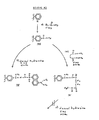
- the reaction was allowed to run at room temperature for 18 hours, at which time the content of each of the wells was aspirated and the plate was rinsed thoroughly with anhydrous methanol and allowed to dry at room temperature to yield the polystyrene microtiter plate being derivatized with bromomethyl groups (II) at its surface within each of the wells.
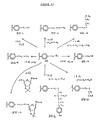
- 1.5 gm of dithiothreitol was dissolved in 10 ml of TMS and 100 microliters of this was added to each of the wells of the bromomethylated microtiter plate (II). The reaction was allowed to proceed for 3 hours at room temperature at which time each of the wells was aspirated to remove the contents therein and thoroughly washed with methanol to yield each of the wells derivatized with 1-methyldithiothreitol (IV).
- a microtiter plate derivatized with Compound IV as per Examples 3 or 4 was further treated by the addition of the enzyme beta-galactosidase.
- a 1 mg/ml solution of E. Coli beta-galactosidase was diluted 1:200 with 0.1 Molar sodium bicarbonate containing 0.5% Tween 20 added to percent nonspecific attachment of the enzyme. 75 microliters of this solution was added to each of the wells of the microtiter plate derivatized with Compound IV.
- microtiter plates having the beta-galactosidase V attach via a disulfide bond to the dithiothreitol which in turn was attached by a thioether bond to the methyl polystyrene.
- beta-galactosidase (V) of Example 5 was demonstrated by adding 150 microliters of a filtered saturated solution of 4-methylumbelliferone beta-D-galactopyranoside (VI) in phosphate buffer saline (PBS) to each of the wells.
- PBS phosphate buffer saline
- the polystyrene microtiter plate was irradiated with UV light and photographed to demonstrate presence of the Beta-D-galactosidase attached to the wells.
- a microtiter plate derivatized with methyl-2-hydroxyethylthioether Compound VIII was reacted with conditions identical to Example 5 above, followed by conditions identical to Example 6 above.
- the acetylated polystyrene plates, Compound III above, were treated with dansyl hydrazine in TMS in the presence of acetic acid at room temperature for 3 hours. Following aspiration, the wells of the plates were rinsed with methanol to yield Compound IX the dansyl hydrazine of the acetylated polystyrene (III). When the microtiter plates derivatized with Compound IX were exposed to UV light, fluorescence was noted indicating attachment of the dansyl group through a hydrazone linkage to the polystyrene.
- the hydrazone derivative Compound XIV could then be further treated with glucuronic acid lactone to yield the 1,4 lactone Compound XV.
- the 1,4 lactone derivative XV could be treated in appropriate aqueous media with various biologically interesting species capable of opening the 1,4,lactone ring, such as proteins and the like to yield the attached protein Compound XVI.
- biologically important molecules can ultimately be attached to the polystyrene utilizing reactive functionalities present on these biologically important molecules, such as hydroxyl groups, amine groups, sulfhydro groups, disulfide groups, acid functionalities, amino acid functionalities and the like.
- cell membranes, viral protein coats or even whole cells could likewise be attached to the polystyrene support structure by appropriate chemical bridges formed between them and the polystyrene.
- Assay techniques are useful in studying reactions, reaction rates and the like of biologically important molecules.
- Prior assay techniques relied on physical absorption between the biologically important species and the assay plate or support surface. This oftentimes led to erroneous data generation because of dilution of the biologically important molecule off of the the assay plate due to the transitory nature of the physical absorption of the biologically important molecule or specie on to the assay plate.
Landscapes
- Health & Medical Sciences (AREA)
- Chemical & Material Sciences (AREA)
- Immunology (AREA)
- Life Sciences & Earth Sciences (AREA)
- Medicinal Chemistry (AREA)
- Engineering & Computer Science (AREA)
- Polymers & Plastics (AREA)
- Hematology (AREA)
- Chemical Kinetics & Catalysis (AREA)
- Molecular Biology (AREA)
- Urology & Nephrology (AREA)
- Organic Chemistry (AREA)
- Biomedical Technology (AREA)
- Food Science & Technology (AREA)
- General Chemical & Material Sciences (AREA)
- Analytical Chemistry (AREA)
- Biochemistry (AREA)
- General Health & Medical Sciences (AREA)
- General Physics & Mathematics (AREA)
- Pathology (AREA)
- Physics & Mathematics (AREA)
- Microbiology (AREA)
- Cell Biology (AREA)
- Biotechnology (AREA)
- Addition Polymer Or Copolymer, Post-Treatments, Or Chemical Modifications (AREA)
- Investigating Or Analysing Materials By The Use Of Chemical Reactions (AREA)
- Investigating Or Analysing Biological Materials (AREA)
Claims (16)
- Verfahren zum Derivatisieren nur der Oberfläche eines klaren Kunststoffgegenstandes, gebildet aus einem Polymer, enthaltend einen aromatischen Rest, um einen Substituenten in den aromatischen Rest einzuführen, angeordnet auf der Oberfläche des Gegenstands, während im wesentlichen die Klarheit des Kunststoffgegenstands beibehalten wird, dadurch gekennzeichnet, daß das Verfahren das In-Berührung-Bringen der Oberfläche des Gegenstands mit einer elektrophilen Substitutionsreaktionsmischung, umfassend Tetramethylensulfon als Lösungsmittel der Reaktionsmischung und ein Reagenz, das den gewünschten Substituenten zur Verfügung stellen kann, das Halten der Oberfläche des Gegenstands in Kontakt mit der Reaktionsmischung, um den Substituenten in wenigstens einige aromatische Reste des Polymers, angeordnet auf der Oberfläche des Gegenstands, einzuführen und das Trennen des Gegenstands von der Reaktionsmischung umfaßt.
- Verfahren nach Anspruch 1, worin das Polymer ein Homopolymer oder Copolymer von Styrol ist.
- Verfahren nach Anspruch 1 oder 2, worin der Substituent eine Nitro-, Sulfonyl-, Diazo-, Halogen-, Halogenalkyl-, Alkyl-, Acyl- oder Formylgruppe ist.
- Verfahren nach Anspruch 3, worin der Substituent eine Halogen-, Halogenalkyl-, Alkyl- oder Acylgruppe ist und das Reagenz ein Friedel-Crafts-Reagenz ist.
- Verfahren nach Anspruch 4, worin der Halogenalkylsubstituent Halogenmethyl ist und der Acylsubstituent Acetyl ist.
- Verfahren nach Anspruch 4, worin die Lewis-Säure des Friedel-Crafts-Reagenz Zinn(IV)-bromid oder Zinn(IV)-chlorid ist.
- Verfahren nach Anspruch 3, worin der Substituent eine Formylgruppe ist und das Reagenz ein Reimer-Tiemann-, Gattermann-Koch- oder Vilsmeyer-Reagenz ist.
- Verfahren nach einem der Ansprüche 4 bis 7, worin der Substituent eine Halogen-, Halogenalkyl-, Acyl- der Formylgruppe ist und das weiterhin das In-Berührung-Bringen der Oberfläche des getrennten Gegenstands mit einer zweiten Reaktionsmischung, umfassend Tetramethylensulfon, Dimethylsulfoxid oder ein wäßriges Medium als Lösungsmittel der Reaktionsmischung und ein nucleophiles Reagenz, das Halten der Oberfläche des Gegenstands in Kontakt mit der zweiten Reaktionsmischung, um das Halogen eines Halogen- oder Halogenalkylsubstituenten zu ersetzen oder der Keto-Funktion eines Formyl- oder Acylsubstituenten einen nucleophilen Substituenten zuzufügen, und das Trennen des Gegenstands von der zweiten Reaktionsmischung umfaßt.
- Verfahren nach Anspruch 8, worin das nukleophile Reagenz Wasser, Ammoniak, Schwefelwasserstoff, ein Disulfid, ein Phosphat, ein Amin, ein Alkohol, ein Thiol, ein Hydrazin, ein Phenol, ein Anilin, ein Peptid, ein Protein, ein Enzym, ein Antibiotikum, ein Zucker, ein Nukleosid, ein Nukleotid, eine Nukleinsäure, eine Stärke, ein Terpen oder ein Lipid ist.
- Verfahren nach Anspruch 8, worin das nukleophile Reagenz ein difunktionelles Molekül ist, wobei wenigstens eine Funktionalität nukleophil ist. ist.
- Verfahren nach Anspruch 10, worin die erste Funktionalität eine Amino-, Hydroxy-, Thio-, Hydrazino- oder Thioalkylgruppe ist.
- Verfahren nach Anspruch 10, worin die zweite Funktionalität eine Amino-, Hydroxy-, Thio-, Hydrazino-, Thioalkyl-, Keto-, Carboxyl- oder Estergruppe ist.
- Verfahren nach Anspruch 10, worin das difunktionelle Molekül ein Dithiol, ein Dihydrazid, eine Hydrazin, ein Mercaptoalkohol, ein Mercaptoamin, eine Mercaptocarbonsäure, ein Hydroxyketon, ein Peptid, ein Protein, ein Enzym, ein Antibiotikum, ein Zucker, ein Nukleosid, ein Nukleotid, eine Nukleinsäure, eine Stärke, ein Terpen oder ein Lipid ist.
- Verfahren nach sind der Ansprüche 8 bis 10, das weiterhin dar In-Berührung-Bringen der Oberfläche des getrennten Gegenstands mit einer dritten Reaktionsmischung, umfassend Tetramethylensulfon, Dimethylsulfoxid oder ein wäßriges Medium als Lösungsmittel der Reaktionsmischung und ein Reaktionsmittel, das ein Peptid, ein Protein, ein Enzym, ein Antibiotikum, ein Zucker, ein Nukleosid, ein Nukleotid, eine Nukleinsäure, eine Stärke, ein Terpen, ein aliphatischer Alkohol, ein Lipid, eine Zelle, eine Zellmembran oder ein Virusprotein ist, das Halten der Oberfläche des Gegenstands in Kontakt mit der dritten Reaktionsmischung, um eine Bindung des Reaktionsmittel mit dem nukleophilen Substituenten zu bewirken, und das Trennen des Gegenstands von der dritten Reaktionsmischung umfaßt.
- Verfahren nach einem der Ansprüche 9, 13 oder 14, worin das Lipid ein Steroid, eine Fettsäure, ein Phosphatid, ein Glykolipid oder ein Wachs ist.
- Verfahren nach Anspruch 14, das weiterhin das In-Berührung-Bringen der Oberfläche des getrennten Gegenstands mit einem Reagenz, das das gebundene Reaktionsmittel spektroskopisch markieren kann, umfaßt.
Applications Claiming Priority (2)
| Application Number | Priority Date | Filing Date | Title |
|---|---|---|---|
| US55503883A | 1983-11-23 | 1983-11-23 | |
| US555038 | 1983-11-23 |
Publications (3)
| Publication Number | Publication Date |
|---|---|
| EP0145386A2 EP0145386A2 (de) | 1985-06-19 |
| EP0145386A3 EP0145386A3 (en) | 1986-11-26 |
| EP0145386B1 true EP0145386B1 (de) | 1991-05-15 |
Family
ID=24215726
Family Applications (1)
| Application Number | Title | Priority Date | Filing Date |
|---|---|---|---|
| EP19840308143 Expired EP0145386B1 (de) | 1983-11-23 | 1984-11-23 | Derivate von Polystyrol und anderen Polymeren als Untergrund für spektroskopische Studien |
Country Status (4)
| Country | Link |
|---|---|
| EP (1) | EP0145386B1 (de) |
| JP (1) | JPH0613565B2 (de) |
| CA (1) | CA1242862A (de) |
| DE (1) | DE3484589D1 (de) |
Families Citing this family (4)
| Publication number | Priority date | Publication date | Assignee | Title |
|---|---|---|---|---|
| US5241012A (en) * | 1987-05-19 | 1993-08-31 | Applied Immune Sciences, Inc. | Activated and conjugated polystyrene substrate |
| FR2644082B1 (fr) * | 1989-01-10 | 1994-05-06 | Hospal Industrie | Support d'immuno-epuration selective et procede de traitement de ce support |
| JPH06509417A (ja) * | 1991-07-16 | 1994-10-20 | トランスメッド バイオテック インコーポレイテッド | 多重検体の同時分析の方法と構成 |
| JP6913313B2 (ja) | 2016-05-31 | 2021-08-04 | 三菱重工業株式会社 | 樹脂材料層の表面処理方法及び樹脂材料 |
Family Cites Families (2)
| Publication number | Priority date | Publication date | Assignee | Title |
|---|---|---|---|---|
| US3721580A (en) * | 1971-03-31 | 1973-03-20 | Gen Electric | Surface treatment polymer structures |
| EP0015473A1 (de) * | 1979-02-28 | 1980-09-17 | F. HOFFMANN-LA ROCHE & CO. Aktiengesellschaft | Verfahren zum Immobilisieren von Zellen |
-
1984
- 1984-11-19 CA CA000468184A patent/CA1242862A/en not_active Expired
- 1984-11-23 EP EP19840308143 patent/EP0145386B1/de not_active Expired
- 1984-11-23 DE DE8484308143T patent/DE3484589D1/de not_active Expired - Lifetime
- 1984-11-24 JP JP59248571A patent/JPH0613565B2/ja not_active Expired - Lifetime
Also Published As
| Publication number | Publication date |
|---|---|
| EP0145386A3 (en) | 1986-11-26 |
| DE3484589D1 (de) | 1991-06-20 |
| JPH0613565B2 (ja) | 1994-02-23 |
| EP0145386A2 (de) | 1985-06-19 |
| JPS60133006A (ja) | 1985-07-16 |
| CA1242862A (en) | 1988-10-11 |
Similar Documents
| Publication | Publication Date | Title |
|---|---|---|
| US12006540B2 (en) | Synthesis of novel disulfide linker based nucleotides as reversible terminators for DNA sequencing by synthesis | |
| US4978724A (en) | Method of preparing derivatized polystyrene for spectroscopic studies | |
| Kriek et al. | 8-(N-2-fluorenylacetamido) guanosine, an arylamidation reaction product of guanosine and the carcinogen N-acetoxy-N-2-fluorenylacetamide in neutral solution | |
| Reid et al. | The response of mammalian cells to alkylating agents: II. On the mechanism of the removal of sulfur-mustard-induced cross-links | |
| EP0145386B1 (de) | Derivate von Polystyrol und anderen Polymeren als Untergrund für spektroskopische Studien | |
| JPS63294784A (ja) | ペルフルオロカーボンポリマー・ベースの支持体を用いた酵素固定およびバイオアフイニテイ分離 | |
| US4269943A (en) | Thermally stable resins prepared by bromination or chlorination of aromatic polymer beads followed by sulphonation | |
| CA2912666A1 (en) | Detection of hydroxymethylcytosine bases | |
| USRE34626E (en) | Isomerization of bisphenols | |
| US12365801B2 (en) | Silicon containing detectable compounds and uses thereof | |
| CA2597490A1 (en) | Solid-phase oligosaccharide tagging: a technique for manipulation of immobilized carbohydrates | |
| US6528292B1 (en) | Derivatized polystyrene and other polymer supports for spectroscopic studies | |
| Hori et al. | Investigating highly crosslinked macroporous resins for solid-phase synthesis | |
| Pearson et al. | NAD turnover and utilisation of metabolites for RNA synthesis in a reaction sensing the redox state of the cytochrome b6f complex in isolated chloroplasts | |
| Westermann et al. | The α and γ subunits of initiation factor elF-2 can be cross-linked to 18S ribosomal RNA within the quaternary initiation complex, eIF-2-Met-tRNA f GDPCP small ribosomal subunit | |
| CN101142485A (zh) | 抗体-替代抗原系统用于检测分析物的用途 | |
| Galiegue-Zouitina et al. | In vitro DNA reaction with an ultimate carcinogen model of 4-nitro-quinoline-1-oxide: the 4-acetoxyaminoquinoline-1-oxide. Enzymatic degradation of the modified DNA | |
| Sharma et al. | A spectrophotometric method for the estimation of polymer-supported sulfhydryl groups | |
| Swaisland et al. | Reactions of polycyclic hydrocarbon epoxides with RNA and polyribonucleotides | |
| Manecke et al. | Some carriers for the immobilization of enzymes based on derivatized poly (vinyl alcohol) and on copolymers of methacrylates with different spacer lengths | |
| Hu et al. | Construction of glycosylated surfaces for poly (propylene) beads with a photoinduced grafting/chemical reaction sequence | |
| KR20190028009A (ko) | pH 제어에 의한 화학적으로 표지된 올리고 핵산의 간편하고 효율적인 분리정제법 | |
| Means et al. | Effects of bromine on the template and messenger specificities of polynucleotides | |
| Turnbull et al. | Exosequencing of heparan sulphate/heparin saccharides using lysosomal enzymes | |
| WO1994028419A1 (en) | Labelled sugars immobilised on a solid support |
Legal Events
| Date | Code | Title | Description |
|---|---|---|---|
| PUAI | Public reference made under article 153(3) epc to a published international application that has entered the european phase |
Free format text: ORIGINAL CODE: 0009012 |
|
| AK | Designated contracting states |
Designated state(s): CH DE FR GB LI |
|
| PUAL | Search report despatched |
Free format text: ORIGINAL CODE: 0009013 |
|
| AK | Designated contracting states |
Kind code of ref document: A3 Designated state(s): CH DE FR GB LI |
|
| 17P | Request for examination filed |
Effective date: 19870522 |
|
| 17Q | First examination report despatched |
Effective date: 19880921 |
|
| GRAA | (expected) grant |
Free format text: ORIGINAL CODE: 0009210 |
|
| AK | Designated contracting states |
Kind code of ref document: B1 Designated state(s): CH DE FR GB LI |
|
| REF | Corresponds to: |
Ref document number: 3484589 Country of ref document: DE Date of ref document: 19910620 |
|
| ET | Fr: translation filed | ||
| PLBE | No opposition filed within time limit |
Free format text: ORIGINAL CODE: 0009261 |
|
| STAA | Information on the status of an ep patent application or granted ep patent |
Free format text: STATUS: NO OPPOSITION FILED WITHIN TIME LIMIT |
|
| REG | Reference to a national code |
Ref country code: CH Ref legal event code: PUE Owner name: APPLIED IMMUNE SCIENCES, INC. |
|
| REG | Reference to a national code |
Ref country code: GB Ref legal event code: 732 |
|
| 26N | No opposition filed | ||
| REG | Reference to a national code |
Ref country code: FR Ref legal event code: TP |
|
| REG | Reference to a national code |
Ref country code: GB Ref legal event code: IF02 |
|
| PGFP | Annual fee paid to national office [announced via postgrant information from national office to epo] |
Ref country code: FR Payment date: 20021030 Year of fee payment: 19 |
|
| PGFP | Annual fee paid to national office [announced via postgrant information from national office to epo] |
Ref country code: CH Payment date: 20021101 Year of fee payment: 19 |
|
| PGFP | Annual fee paid to national office [announced via postgrant information from national office to epo] |
Ref country code: GB Payment date: 20021120 Year of fee payment: 19 |
|
| PGFP | Annual fee paid to national office [announced via postgrant information from national office to epo] |
Ref country code: DE Payment date: 20021202 Year of fee payment: 19 |
|
| PG25 | Lapsed in a contracting state [announced via postgrant information from national office to epo] |
Ref country code: GB Free format text: LAPSE BECAUSE OF NON-PAYMENT OF DUE FEES Effective date: 20031123 |
|
| PG25 | Lapsed in a contracting state [announced via postgrant information from national office to epo] |
Ref country code: LI Free format text: LAPSE BECAUSE OF NON-PAYMENT OF DUE FEES Effective date: 20031130 Ref country code: CH Free format text: LAPSE BECAUSE OF NON-PAYMENT OF DUE FEES Effective date: 20031130 |
|
| PG25 | Lapsed in a contracting state [announced via postgrant information from national office to epo] |
Ref country code: DE Free format text: LAPSE BECAUSE OF NON-PAYMENT OF DUE FEES Effective date: 20040602 |
|
| GBPC | Gb: european patent ceased through non-payment of renewal fee |
Effective date: 20031123 |
|
| REG | Reference to a national code |
Ref country code: CH Ref legal event code: PL |
|
| PG25 | Lapsed in a contracting state [announced via postgrant information from national office to epo] |
Ref country code: FR Free format text: LAPSE BECAUSE OF NON-PAYMENT OF DUE FEES Effective date: 20040730 |
|
| REG | Reference to a national code |
Ref country code: FR Ref legal event code: ST |