EP0134356B1 - Process for separating fatty acids from rosin acids - Google Patents
Process for separating fatty acids from rosin acids Download PDFInfo
- Publication number
- EP0134356B1 EP0134356B1 EP83305207A EP83305207A EP0134356B1 EP 0134356 B1 EP0134356 B1 EP 0134356B1 EP 83305207 A EP83305207 A EP 83305207A EP 83305207 A EP83305207 A EP 83305207A EP 0134356 B1 EP0134356 B1 EP 0134356B1
- Authority
- EP
- European Patent Office
- Prior art keywords
- molecular sieve
- displacement
- zone
- stream
- displacement fluid
- Prior art date
- Legal status (The legal status is an assumption and is not a legal conclusion. Google has not performed a legal analysis and makes no representation as to the accuracy of the status listed.)
- Expired
Links
- 235000014113 dietary fatty acids Nutrition 0.000 title claims abstract description 62
- 239000000194 fatty acid Substances 0.000 title claims abstract description 62
- 229930195729 fatty acid Natural products 0.000 title claims abstract description 62
- 150000004665 fatty acids Chemical class 0.000 title claims abstract description 61
- 238000000034 method Methods 0.000 title claims description 62
- 230000008569 process Effects 0.000 title claims description 60
- 239000002253 acid Substances 0.000 title description 32
- 150000007513 acids Chemical class 0.000 title description 31
- RSWGJHLUYNHPMX-UHFFFAOYSA-N Abietic-Saeure Natural products C12CCC(C(C)C)=CC2=CCC2C1(C)CCCC2(C)C(O)=O RSWGJHLUYNHPMX-UHFFFAOYSA-N 0.000 title description 20
- KHPCPRHQVVSZAH-HUOMCSJISA-N Rosin Natural products O(C/C=C/c1ccccc1)[C@H]1[C@H](O)[C@@H](O)[C@@H](O)[C@@H](CO)O1 KHPCPRHQVVSZAH-HUOMCSJISA-N 0.000 title description 19
- KHPCPRHQVVSZAH-UHFFFAOYSA-N trans-cinnamyl beta-D-glucopyranoside Natural products OC1C(O)C(O)C(CO)OC1OCC=CC1=CC=CC=C1 KHPCPRHQVVSZAH-UHFFFAOYSA-N 0.000 title description 19
- 238000006073 displacement reaction Methods 0.000 claims abstract description 129
- URGAHOPLAPQHLN-UHFFFAOYSA-N sodium aluminosilicate Chemical compound [Na+].[Al+3].[O-][Si]([O-])=O.[O-][Si]([O-])=O URGAHOPLAPQHLN-UHFFFAOYSA-N 0.000 claims abstract description 124
- 239000002808 molecular sieve Substances 0.000 claims abstract description 122
- 239000012530 fluid Substances 0.000 claims abstract description 105
- 238000000926 separation method Methods 0.000 claims abstract description 58
- VYPSYNLAJGMNEJ-UHFFFAOYSA-N Silicium dioxide Chemical compound O=[Si]=O VYPSYNLAJGMNEJ-UHFFFAOYSA-N 0.000 claims abstract description 51
- 239000000203 mixture Substances 0.000 claims abstract description 42
- 239000007788 liquid Substances 0.000 claims abstract description 19
- RSWGJHLUYNHPMX-ONCXSQPRSA-N abietic acid Chemical compound C([C@@H]12)CC(C(C)C)=CC1=CC[C@@H]1[C@]2(C)CCC[C@@]1(C)C(O)=O RSWGJHLUYNHPMX-ONCXSQPRSA-N 0.000 claims abstract description 18
- 239000000377 silicon dioxide Substances 0.000 claims abstract description 17
- 239000011159 matrix material Substances 0.000 claims abstract description 8
- 239000003085 diluting agent Substances 0.000 claims description 26
- 230000014759 maintenance of location Effects 0.000 claims description 25
- XLYOFNOQVPJJNP-UHFFFAOYSA-N water Substances O XLYOFNOQVPJJNP-UHFFFAOYSA-N 0.000 claims description 20
- 238000011144 upstream manufacturing Methods 0.000 claims description 17
- 230000000694 effects Effects 0.000 claims description 14
- 125000002887 hydroxy group Chemical group [H]O* 0.000 claims description 14
- ZWEHNKRNPOVVGH-UHFFFAOYSA-N 2-Butanone Chemical compound CCC(C)=O ZWEHNKRNPOVVGH-UHFFFAOYSA-N 0.000 claims description 12
- CSCPPACGZOOCGX-UHFFFAOYSA-N Acetone Chemical group CC(C)=O CSCPPACGZOOCGX-UHFFFAOYSA-N 0.000 claims description 12
- 238000000746 purification Methods 0.000 claims description 12
- 150000007524 organic acids Chemical class 0.000 claims description 11
- 239000007791 liquid phase Substances 0.000 claims description 10
- 239000002245 particle Substances 0.000 claims description 8
- 150000002576 ketones Chemical class 0.000 claims description 5
- 239000002243 precursor Substances 0.000 claims description 5
- 238000011010 flushing procedure Methods 0.000 claims description 4
- FDPIMTJIUBPUKL-UHFFFAOYSA-N pentan-3-one Chemical compound CCC(=O)CC FDPIMTJIUBPUKL-UHFFFAOYSA-N 0.000 claims description 4
- 239000000843 powder Substances 0.000 claims description 4
- 125000004432 carbon atom Chemical group C* 0.000 claims description 3
- 238000001246 colloidal dispersion Methods 0.000 claims description 3
- 230000008030 elimination Effects 0.000 claims description 3
- 238000003379 elimination reaction Methods 0.000 claims description 3
- 238000001879 gelation Methods 0.000 claims description 3
- 125000004122 cyclic group Chemical group 0.000 claims description 2
- 239000006185 dispersion Substances 0.000 claims description 2
- 239000007864 aqueous solution Substances 0.000 claims 1
- 239000000243 solution Substances 0.000 claims 1
- 239000000463 material Substances 0.000 description 20
- 239000003784 tall oil Substances 0.000 description 15
- 239000000047 product Substances 0.000 description 13
- 239000011800 void material Substances 0.000 description 13
- 150000002148 esters Chemical class 0.000 description 11
- URLKBWYHVLBVBO-UHFFFAOYSA-N Para-Xylene Chemical group CC1=CC=C(C)C=C1 URLKBWYHVLBVBO-UHFFFAOYSA-N 0.000 description 10
- 239000011230 binding agent Substances 0.000 description 10
- 230000000717 retained effect Effects 0.000 description 10
- 239000010457 zeolite Substances 0.000 description 10
- -1 unsaturated fatty acid esters Chemical class 0.000 description 9
- 239000003463 adsorbent Substances 0.000 description 8
- 150000002430 hydrocarbons Chemical class 0.000 description 8
- 229930195733 hydrocarbon Natural products 0.000 description 7
- 239000011148 porous material Substances 0.000 description 7
- 238000012360 testing method Methods 0.000 description 7
- PEDCQBHIVMGVHV-UHFFFAOYSA-N Glycerine Chemical compound OCC(O)CO PEDCQBHIVMGVHV-UHFFFAOYSA-N 0.000 description 6
- 150000001875 compounds Chemical class 0.000 description 6
- 239000007787 solid Substances 0.000 description 6
- QVGXLLKOCUKJST-UHFFFAOYSA-N atomic oxygen Chemical compound [O] QVGXLLKOCUKJST-UHFFFAOYSA-N 0.000 description 5
- 238000001035 drying Methods 0.000 description 5
- 239000003925 fat Substances 0.000 description 5
- 235000019197 fats Nutrition 0.000 description 5
- 239000001301 oxygen Substances 0.000 description 5
- 229910052760 oxygen Inorganic materials 0.000 description 5
- 230000009257 reactivity Effects 0.000 description 5
- 239000004215 Carbon black (E152) Substances 0.000 description 4
- LFQSCWFLJHTTHZ-UHFFFAOYSA-N Ethanol Chemical compound CCO LFQSCWFLJHTTHZ-UHFFFAOYSA-N 0.000 description 4
- 230000008901 benefit Effects 0.000 description 4
- 230000015572 biosynthetic process Effects 0.000 description 4
- 238000006471 dimerization reaction Methods 0.000 description 4
- 230000002209 hydrophobic effect Effects 0.000 description 4
- 235000020778 linoleic acid Nutrition 0.000 description 4
- 239000000700 radioactive tracer Substances 0.000 description 4
- QTBSBXVTEAMEQO-UHFFFAOYSA-N Acetic acid Chemical compound CC(O)=O QTBSBXVTEAMEQO-UHFFFAOYSA-N 0.000 description 3
- UFHFLCQGNIYNRP-UHFFFAOYSA-N Hydrogen Chemical compound [H][H] UFHFLCQGNIYNRP-UHFFFAOYSA-N 0.000 description 3
- OYHQOLUKZRVURQ-HZJYTTRNSA-N Linoleic acid Chemical compound CCCCC\C=C/C\C=C/CCCCCCCC(O)=O OYHQOLUKZRVURQ-HZJYTTRNSA-N 0.000 description 3
- 229910021536 Zeolite Inorganic materials 0.000 description 3
- 230000000274 adsorptive effect Effects 0.000 description 3
- 238000009835 boiling Methods 0.000 description 3
- 229910002026 crystalline silica Inorganic materials 0.000 description 3
- 239000000539 dimer Substances 0.000 description 3
- HNPSIPDUKPIQMN-UHFFFAOYSA-N dioxosilane;oxo(oxoalumanyloxy)alumane Chemical compound O=[Si]=O.O=[Al]O[Al]=O HNPSIPDUKPIQMN-UHFFFAOYSA-N 0.000 description 3
- 239000001257 hydrogen Substances 0.000 description 3
- 229910052739 hydrogen Inorganic materials 0.000 description 3
- OYHQOLUKZRVURQ-IXWMQOLASA-N linoleic acid Natural products CCCCC\C=C/C\C=C\CCCCCCCC(O)=O OYHQOLUKZRVURQ-IXWMQOLASA-N 0.000 description 3
- 239000003921 oil Substances 0.000 description 3
- 235000019198 oils Nutrition 0.000 description 3
- 235000021313 oleic acid Nutrition 0.000 description 3
- ZQPPMHVWECSIRJ-KTKRTIGZSA-N oleic acid group Chemical group C(CCCCCCC\C=C/CCCCCCCC)(=O)O ZQPPMHVWECSIRJ-KTKRTIGZSA-N 0.000 description 3
- 235000005985 organic acids Nutrition 0.000 description 3
- 235000012239 silicon dioxide Nutrition 0.000 description 3
- 230000003068 static effect Effects 0.000 description 3
- 235000021122 unsaturated fatty acids Nutrition 0.000 description 3
- WRIDQFICGBMAFQ-UHFFFAOYSA-N (E)-8-Octadecenoic acid Natural products CCCCCCCCCC=CCCCCCCC(O)=O WRIDQFICGBMAFQ-UHFFFAOYSA-N 0.000 description 2
- LQJBNNIYVWPHFW-UHFFFAOYSA-N 20:1omega9c fatty acid Natural products CCCCCCCCCCC=CCCCCCCCC(O)=O LQJBNNIYVWPHFW-UHFFFAOYSA-N 0.000 description 2
- QSBYPNXLFMSGKH-UHFFFAOYSA-N 9-Heptadecensaeure Natural products CCCCCCCC=CCCCCCCCC(O)=O QSBYPNXLFMSGKH-UHFFFAOYSA-N 0.000 description 2
- IJGRMHOSHXDMSA-UHFFFAOYSA-N Atomic nitrogen Chemical compound N#N IJGRMHOSHXDMSA-UHFFFAOYSA-N 0.000 description 2
- OKTJSMMVPCPJKN-UHFFFAOYSA-N Carbon Chemical compound [C] OKTJSMMVPCPJKN-UHFFFAOYSA-N 0.000 description 2
- IMNFDUFMRHMDMM-UHFFFAOYSA-N N-Heptane Chemical compound CCCCCCC IMNFDUFMRHMDMM-UHFFFAOYSA-N 0.000 description 2
- 239000005642 Oleic acid Substances 0.000 description 2
- ZQPPMHVWECSIRJ-UHFFFAOYSA-N Oleic acid Natural products CCCCCCCCC=CCCCCCCCC(O)=O ZQPPMHVWECSIRJ-UHFFFAOYSA-N 0.000 description 2
- 150000001768 cations Chemical class 0.000 description 2
- 238000006243 chemical reaction Methods 0.000 description 2
- 238000005660 chlorination reaction Methods 0.000 description 2
- 239000008119 colloidal silica Substances 0.000 description 2
- 239000000470 constituent Substances 0.000 description 2
- JYIMWRSJCRRYNK-UHFFFAOYSA-N dialuminum;disodium;oxygen(2-);silicon(4+);hydrate Chemical compound O.[O-2].[O-2].[O-2].[O-2].[O-2].[O-2].[Na+].[Na+].[Al+3].[Al+3].[Si+4] JYIMWRSJCRRYNK-UHFFFAOYSA-N 0.000 description 2
- XBDQKXXYIPTUBI-UHFFFAOYSA-N dimethylselenoniopropionate Natural products CCC(O)=O XBDQKXXYIPTUBI-UHFFFAOYSA-N 0.000 description 2
- 238000004508 fractional distillation Methods 0.000 description 2
- 125000005456 glyceride group Chemical group 0.000 description 2
- 238000010438 heat treatment Methods 0.000 description 2
- 238000006460 hydrolysis reaction Methods 0.000 description 2
- QXJSBBXBKPUZAA-UHFFFAOYSA-N isooleic acid Natural products CCCCCCCC=CCCCCCCCCC(O)=O QXJSBBXBKPUZAA-UHFFFAOYSA-N 0.000 description 2
- 238000004519 manufacturing process Methods 0.000 description 2
- 229940032007 methylethyl ketone Drugs 0.000 description 2
- 229920003023 plastic Polymers 0.000 description 2
- 239000004033 plastic Substances 0.000 description 2
- 150000003839 salts Chemical class 0.000 description 2
- 230000000087 stabilizing effect Effects 0.000 description 2
- 239000000126 substance Substances 0.000 description 2
- 150000004670 unsaturated fatty acids Chemical class 0.000 description 2
- NQPDZGIKBAWPEJ-UHFFFAOYSA-N valeric acid Chemical compound CCCCC(O)=O NQPDZGIKBAWPEJ-UHFFFAOYSA-N 0.000 description 2
- 239000012808 vapor phase Substances 0.000 description 2
- 150000003738 xylenes Chemical class 0.000 description 2
- BTXXTMOWISPQSJ-UHFFFAOYSA-N 4,4,4-trifluorobutan-2-one Chemical compound CC(=O)CC(F)(F)F BTXXTMOWISPQSJ-UHFFFAOYSA-N 0.000 description 1
- VXEGSRKPIUDPQT-UHFFFAOYSA-N 4-[4-(4-methoxyphenyl)piperazin-1-yl]aniline Chemical compound C1=CC(OC)=CC=C1N1CCN(C=2C=CC(N)=CC=2)CC1 VXEGSRKPIUDPQT-UHFFFAOYSA-N 0.000 description 1
- BQACOLQNOUYJCE-FYZZASKESA-N Abietic acid Natural products CC(C)C1=CC2=CC[C@]3(C)[C@](C)(CCC[C@@]3(C)C(=O)O)[C@H]2CC1 BQACOLQNOUYJCE-FYZZASKESA-N 0.000 description 1
- 241000196324 Embryophyta Species 0.000 description 1
- DGAQECJNVWCQMB-PUAWFVPOSA-M Ilexoside XXIX Chemical compound C[C@@H]1CC[C@@]2(CC[C@@]3(C(=CC[C@H]4[C@]3(CC[C@@H]5[C@@]4(CC[C@@H](C5(C)C)OS(=O)(=O)[O-])C)C)[C@@H]2[C@]1(C)O)C)C(=O)O[C@H]6[C@@H]([C@H]([C@@H]([C@H](O6)CO)O)O)O.[Na+] DGAQECJNVWCQMB-PUAWFVPOSA-M 0.000 description 1
- BPQQTUXANYXVAA-UHFFFAOYSA-N Orthosilicate Chemical compound [O-][Si]([O-])([O-])[O-] BPQQTUXANYXVAA-UHFFFAOYSA-N 0.000 description 1
- 235000019482 Palm oil Nutrition 0.000 description 1
- 235000021314 Palmitic acid Nutrition 0.000 description 1
- 235000008331 Pinus X rigitaeda Nutrition 0.000 description 1
- 235000011613 Pinus brutia Nutrition 0.000 description 1
- 241000018646 Pinus brutia Species 0.000 description 1
- 239000004372 Polyvinyl alcohol Substances 0.000 description 1
- 229920001131 Pulp (paper) Polymers 0.000 description 1
- PMZURENOXWZQFD-UHFFFAOYSA-L Sodium Sulfate Chemical compound [Na+].[Na+].[O-]S([O-])(=O)=O PMZURENOXWZQFD-UHFFFAOYSA-L 0.000 description 1
- 235000021355 Stearic acid Nutrition 0.000 description 1
- QAOWNCQODCNURD-UHFFFAOYSA-L Sulfate Chemical compound [O-]S([O-])(=O)=O QAOWNCQODCNURD-UHFFFAOYSA-L 0.000 description 1
- 150000001243 acetic acids Chemical class 0.000 description 1
- 239000000654 additive Substances 0.000 description 1
- 230000000996 additive effect Effects 0.000 description 1
- 150000001298 alcohols Chemical class 0.000 description 1
- 125000001931 aliphatic group Chemical group 0.000 description 1
- 229910000323 aluminium silicate Inorganic materials 0.000 description 1
- QGZKDVFQNNGYKY-UHFFFAOYSA-O ammonium group Chemical group [NH4+] QGZKDVFQNNGYKY-UHFFFAOYSA-O 0.000 description 1
- 125000004429 atom Chemical group 0.000 description 1
- 230000009286 beneficial effect Effects 0.000 description 1
- 150000001555 benzenes Chemical class 0.000 description 1
- 230000000903 blocking effect Effects 0.000 description 1
- 239000006227 byproduct Substances 0.000 description 1
- 229910052799 carbon Inorganic materials 0.000 description 1
- 239000003795 chemical substances by application Substances 0.000 description 1
- 239000012320 chlorinating reagent Substances 0.000 description 1
- 238000004587 chromatography analysis Methods 0.000 description 1
- 239000004927 clay Substances 0.000 description 1
- 238000004581 coalescence Methods 0.000 description 1
- 239000003240 coconut oil Substances 0.000 description 1
- 235000019864 coconut oil Nutrition 0.000 description 1
- 238000013329 compounding Methods 0.000 description 1
- 238000010924 continuous production Methods 0.000 description 1
- 239000002285 corn oil Substances 0.000 description 1
- 235000005687 corn oil Nutrition 0.000 description 1
- 239000002537 cosmetic Substances 0.000 description 1
- 235000012343 cottonseed oil Nutrition 0.000 description 1
- 239000002385 cottonseed oil Substances 0.000 description 1
- 239000003599 detergent Substances 0.000 description 1
- 230000003292 diminished effect Effects 0.000 description 1
- 230000008034 disappearance Effects 0.000 description 1
- 238000005194 fractionation Methods 0.000 description 1
- 230000007062 hydrolysis Effects 0.000 description 1
- 230000003301 hydrolyzing effect Effects 0.000 description 1
- 230000006872 improvement Effects 0.000 description 1
- 229910052500 inorganic mineral Inorganic materials 0.000 description 1
- 238000005342 ion exchange Methods 0.000 description 1
- 239000002655 kraft paper Substances 0.000 description 1
- 239000004922 lacquer Substances 0.000 description 1
- 239000000314 lubricant Substances 0.000 description 1
- 239000010687 lubricating oil Substances 0.000 description 1
- 239000011707 mineral Substances 0.000 description 1
- 150000002763 monocarboxylic acids Chemical class 0.000 description 1
- 238000000465 moulding Methods 0.000 description 1
- 150000002790 naphthalenes Chemical class 0.000 description 1
- 229910052757 nitrogen Inorganic materials 0.000 description 1
- QIQXTHQIDYTFRH-UHFFFAOYSA-N octadecanoic acid Chemical class CCCCCCCCCCCCCCCCCC(O)=O QIQXTHQIDYTFRH-UHFFFAOYSA-N 0.000 description 1
- 239000003960 organic solvent Substances 0.000 description 1
- 239000002540 palm oil Substances 0.000 description 1
- IPCSVZSSVZVIGE-UHFFFAOYSA-N palmitic acid group Chemical group C(CCCCCCCCCCCCCCC)(=O)O IPCSVZSSVZVIGE-UHFFFAOYSA-N 0.000 description 1
- 239000000123 paper Substances 0.000 description 1
- 239000004014 plasticizer Substances 0.000 description 1
- 229920002451 polyvinyl alcohol Polymers 0.000 description 1
- 230000000750 progressive effect Effects 0.000 description 1
- 235000019260 propionic acid Nutrition 0.000 description 1
- IUVKMZGDUIUOCP-BTNSXGMBSA-N quinbolone Chemical compound O([C@H]1CC[C@H]2[C@H]3[C@@H]([C@]4(C=CC(=O)C=C4CC3)C)CC[C@@]21C)C1=CCCC1 IUVKMZGDUIUOCP-BTNSXGMBSA-N 0.000 description 1
- 239000000376 reactant Substances 0.000 description 1
- 238000011084 recovery Methods 0.000 description 1
- 229920006395 saturated elastomer Polymers 0.000 description 1
- 239000005049 silicon tetrachloride Substances 0.000 description 1
- 239000011734 sodium Substances 0.000 description 1
- 229910052708 sodium Inorganic materials 0.000 description 1
- 229910052938 sodium sulfate Inorganic materials 0.000 description 1
- 235000011152 sodium sulphate Nutrition 0.000 description 1
- 239000002904 solvent Substances 0.000 description 1
- 238000001179 sorption measurement Methods 0.000 description 1
- 239000003549 soybean oil Substances 0.000 description 1
- 235000012424 soybean oil Nutrition 0.000 description 1
- 239000007858 starting material Substances 0.000 description 1
- 239000004094 surface-active agent Substances 0.000 description 1
- 239000004753 textile Substances 0.000 description 1
- 238000007669 thermal treatment Methods 0.000 description 1
- 235000015112 vegetable and seed oil Nutrition 0.000 description 1
- 239000008158 vegetable oil Substances 0.000 description 1
- 238000004078 waterproofing Methods 0.000 description 1
- 239000002023 wood Substances 0.000 description 1
Images

Classifications
-
- C—CHEMISTRY; METALLURGY
- C11—ANIMAL OR VEGETABLE OILS, FATS, FATTY SUBSTANCES OR WAXES; FATTY ACIDS THEREFROM; DETERGENTS; CANDLES
- C11C—FATTY ACIDS FROM FATS, OILS OR WAXES; CANDLES; FATS, OILS OR FATTY ACIDS BY CHEMICAL MODIFICATION OF FATS, OILS, OR FATTY ACIDS OBTAINED THEREFROM
- C11C1/00—Preparation of fatty acids from fats, fatty oils, or waxes; Refining the fatty acids
- C11C1/08—Refining
-
- C—CHEMISTRY; METALLURGY
- C07—ORGANIC CHEMISTRY
- C07C—ACYCLIC OR CARBOCYCLIC COMPOUNDS
- C07C51/00—Preparation of carboxylic acids or their salts, halides or anhydrides
- C07C51/42—Separation; Purification; Stabilisation; Use of additives
- C07C51/47—Separation; Purification; Stabilisation; Use of additives by solid-liquid treatment; by chemisorption
-
- C—CHEMISTRY; METALLURGY
- C11—ANIMAL OR VEGETABLE OILS, FATS, FATTY SUBSTANCES OR WAXES; FATTY ACIDS THEREFROM; DETERGENTS; CANDLES
- C11C—FATTY ACIDS FROM FATS, OILS OR WAXES; CANDLES; FATS, OILS OR FATTY ACIDS BY CHEMICAL MODIFICATION OF FATS, OILS, OR FATTY ACIDS OBTAINED THEREFROM
- C11C1/00—Preparation of fatty acids from fats, fatty oils, or waxes; Refining the fatty acids
- C11C1/005—Splitting up mixtures of fatty acids into their constituents
Definitions
- This invention relates to the solid bed separation of fatty acids, more specifically to a process for separating a fatty acid from a rosin acid and provides a process which employs a molecular sieve.
- the fatty acid is selectively retained and the rosin acid is removed from the fatty-acid-containing molecular sieve.
- the fatty acid is recovered from the molecular sieve by displacement with a displacement fluid at displacement conditions.
- crystalline aluminosilicates can be used to separate hydrocarbon types from mixtures thereof.
- a separation process disclosed in US-A-2,985,589 and 3,201,491 uses a type A zeolite to separate normal paraffins from branched chain paraffins, and processes described in US-A-3,265,750 and 3,510,423 use type X or type Y zeolites to separate olefinic hydrocarbons from paraffinic hydrocarbons.
- X and Y zeolites have been employed in processes to separate individual hydrocarbon isomers.
- adsorbents comprising X and Y zeolites are used in the process described in US-A-3,114,782 to separate alkyl-trisubstituted benzene isomers; in the process described in US-A-3,864,416 to separate alkyl-tetrasubstituted monocyclic aromatic isomers; and in the process described in US-A-3,668,267 to separate specific alkyl-substituted naphthalenes.
- hydrocarbon isomer separation processes are those for separating para-xylene from a mixture of C 8 aromatics.
- adsorbents comprising particular zeolites are used to separate para-xylene from feed mixtures comprising para-xylene and at least one other xylene isomer by selectively adsorbing para-xylene over the other xylene isomers.
- this invention relates to the separation of non-hydrocarbons and more specifically to the separation of fatty acids.
- Substantial uses of fatty acids are in the plasticizer and surface active agent fields.
- Derivatives of fatty acids are of value in compounding lubricating oil, as a lubricant for the textile and molding trade, in special lacquers, as a water-proofing agent, in the cosmetic and pharmaceutical fields, and in biodegradable detergents.
- type X and type Y zeolites for the separation of unsaturated fatty acid esters from saturated fatty acid esters.
- the type X and type Y zeolites will not separate the esters of rosin acids found in tall oil from the esters of fatty acids nor the free acids, apparently because the pore sizes of those zeolites (over 7 angstroms) are large enough to accommodate and retain the relatively large diameter molecules of esters of rosin acids as well as the smaller diameter molecules of esters of fatty acids (as well as the respective free acids).
- Type A zeolite on the other hand, has a pore size (about 5 angstroms) which is unable to accommodate either of the above type esters (or free acids) and is, therefore, unable to separate them.
- An additional problem when a zeolite is used to separate free acids is the reactivity between the zeolite and free acids.
- silicalite is also uniquely suitable for separation of a fatty acid from a rosin acid, particularly when used with a specific displacement fluid, in that it exhibits selective acceptance of the fatty acid with respect to the rosin acid, and does not exhibit reactivity with the free acids. Moreover, particularly beneficial results are achieved when the silicalite is used in a silica matrix and the molecular sieve is substantially free from hydroxyl groups.
- a process for separating a fatty acid from a feed mixture comprising a fatty acid and a rosin acid is characterised in that the feed mixture is contacted at separation conditions with a molecular sieve substantially free from hydroxyl groups and comprising silicalite in a silica matrix, thereby selectively retaining said fatty acid, the rosin acid is removed from the fatty-acid-containing molecular sieve and thereafter the fatty acid is recovered from the molecular sieve by displacement with a displacement fluid at displacement conditions.
- the process comprises the steps: (a) maintaining net liquid flow through a column of the molecular sieve in a single direction, which column contains at least three zones having separate operational functions occurring therein and being serially interconnected with the terminal zones of the column connected to provide a continuous connection of the zones; (b) maintaining a retention zone in the column, the zone defined by the molecular sieve located between a feed inlet stream at an upstream boundary of the zone and a raffinate outlet stream at a downstream boundary of the zone; (c) maintaining a purification zone immediately upstream from the retention zone, the purification zone defined by the molecular sieve located between an extract outlet stream at an upstream boundary of the purification zone and the feed inlet stream at a downstream boundary of the purification zone; (d) maintaining a displacement zone immediately upstream from the purification zone, the displacement zone defined by the molecular sieve located between a displacement fluid inlet stream at an upstream boundary of the zone and the extract outlet stream at a downstream boundary of the zone; (e) passing the
- feed mixture is a mixture containing one or more extract components and one or more raffinate components to be separated by our process.
- feed stream indicates a stream of a feed mixture which passes to the molecular sieve used in the process.
- extract component is a compound or type of compound that is retained by the molecular sieve while a “raffinate component” is a compound or type of compound that is not retained.
- a fatty acid is an extract component
- a rosin acid is a raffinate component.
- laclacement fluid shall mean generally a fluid capable of displacing an extract component.
- dispenser fluid stream or “displacement fluid input stream” indicates the stream through which displacement fluid passes to the molecular sieve.
- disiluent or “diluent stream” indicates the stream through which diluent passes to the molecular sieve.
- raffinate stream or "raffinate output stream” - means a stream through which a raffinate component is removed from the molecular sieve.
- the composition of the raffinate stream can vary from essentially a 100% displacement fluid to essentially 100% raffinate components.
- extract stream or "extract output stream” shall mean a stream through which an extract material which has been displaced by a displacement fluid is removed from the molecular sieve.
- the composition of the extract stream likewise, can vary from essentially 100% displacement fluid to essentially 100% extract components.
- extract product and raffinate product mean products produced by the process containing, respectively, an extract component and a raffinate component in higher concentrations than those found in the extract stream and the raffinate stream.
- the ratio of the concentration of a fatty acid to that of non-retained rosin acid will be lowest in the raffinate stream, next highest in the feed mixture, and the highest in the extract stream.
- the ratio of the concentration of rosin acid to that of the retained fatty acid will be highest in the raffinate stream, next highest in the feed mixture, and the lowest in the extract stream.
- selective pore volume of the molecular sieve is defined as the volume of the molecular sieve which selectively retains an extract component from the feed mixture.
- non-selective void volume of the molecular sieve is the volume of the molecular sieve which does not selectively retain an extract component from the feed mixture. This volume includes the cavities of the molecular sieve which admit raffinate components and the interstitial void spaces between molecular sieve particles.
- the selective pore volume and the non-selective void volume are generally expressed in volumetric quantities and are of importance in determining the proper flow rates of fluid required to be passed into an operational zone for efficient operations to take place for a given quantity of molecular sieve.
- molecular sieve When molecular sieve "passes" into an operational zone (hereinafter defined and described) employed in one embodiment of this process its non-selective void volume together with its selective pore volume carries fluid into that zone.
- the non-selective void volume is utilized in determining the amount of fluid which should pass into the same zone in a countercurrent direction to the molecular sieve to displace the fluid present in the non-selective void volume. If the fluid flow rate passing into a zone is smaller than the non-selective void volume rate of molecular sieve material passing into that zone, there is a net entrainment of liquid into the zone by the molecular sieve. Since this net entrainment is a fluid present in the non-selective void volume of the molecular sieve, it in most instances comprises non-retained feed components.
- fatty acids are a large group of aliphatic monocarboxylic acids, many of which occur as glycerides (esters of glycerol) in natural- fats and oils.
- glycerides esters of glycerol
- fatty acids has been restricted by some to the saturated acids of the acetic acid series, both normal and branched chain, it is now generally used, and is so used herein, to include also related unsaturated acids, certain substituted acids, and even aliphatic acids containing alicyclic substituents.
- the naturally occurring fatty acids with a few exceptions are higher straight chain unsubstituted acids containing an even number of carbon atoms.
- the unsaturated fatty acids can be divided, on the basis of the number of double bonds in the hydrocarbon chain, into monoethanoid, diethanoid, triethanoid, etc. (or monoethylenic, etc.).
- unsaturated fatty acid is a generic term for a fatty acid having at least one double bond
- polyethanoid fatty acid means a fatty acid having more than one double bond per molecule.
- Fatty acids are typically prepared from glyceride fats or oils by one of several "splitting" or hydrolytic processes.
- the hydrolysis reaction may be summarized as the reaction of a fat or oil with water to yield fatty acids plus glycerol.
- this process is carried out by continuous high pressure, high temperature hydrolysis of the fat.
- Starting materials commonly used for the production of fatty acids include coconut oil, palm oil, inedible animal fats, and the commonly used vegetable oils, soybean oil, cottonseed oil and corn oil.
- the source of fatty acids with which the present invention is primarily concerned is tall oil, a byproduct of the wood pulp industry, usually recovered from pine wood "black liquor" of the sulfate or kraft paper process.
- Tall oil contains about 50-60% fatty acids and about 34-40% rosin acids.
- the fatty acids include oleic, linoleic, palmitic and stearic acids.
- Rosin acids, such as abietic acid are monocarboxylic acids having a molecular structure comprising carbon, hydrogen and oxygen with three fused six-membered carbon rings, which accounts for the much larger molecular diameter of rosin acids as compared to fatty acids.
- Feed mixtures which can be charged to our process may contain, in addition to the components of tall oil, a diluent material that is not adsorbed by the adsorbent and which is preferably separable from the extract and raffinate output streams by fractional distillation.
- a diluent material that is not adsorbed by the adsorbent and which is preferably separable from the extract and raffinate output streams by fractional distillation.
- the concentration of diluent in the mixture of diluent and acids will preferably be from a few vol.% up to about 75 vol. % with the remainder being fatty acids and rosin acids.
- Displacement fluids used in various prior art adsorptive and molecular sieve separation processes vary depending upon such factors as the type of operation employed. In separation processes which are generally operated continuously at substantially constant pressures and temperatures to ensure liquid phase, and which employ a molecular sieve, the displacement material must be judiciously selected to satisfy many criteria. First, the displacement material should displace an extract component from the molecular sieve with reasonable mass flow rates but yet allow access of an extract component into the molecular sieve so as not to unduly prevent an extract component from displacing the displacement material in a following separation cycle. Displacement fluids should additionally be substances which are easily separable from the feed mixture that is passed into the process.
- any displacement fluid material used in this process will preferably have a substantially different average boiling point than that of the feed mixture to allow separation of at least a portion of displacement fluid from feed components in the extract and raffinate streams by simple fractional distillation, thereby permitting reuse of displacement fluid in the process.
- substantially different shall mean that the difference between the average boiling points between the displacement fluid and the feed mixture shall be at least about 5°C.
- displacement fluids comprising organic acids to be effective with short chain organic acids having from 2 to 5 carbon atoms preferred, particularly when, as discussed hereinafter, a diluent is used.
- optimum displacement fluid as discussed hereinafter, to be a solution of light ketone (di-ethylketone or lighter) and water.
- the dimers would preclude separation of the fatty and rosin acids by blocking access of the former into the pores of the molecular sieve. This hindrance to separation caused by the presence of dimers does not appear to be a significant problem in the aforementioned process for separation of esters of fatty and rosin acids.
- the above dimerization reactions may be minimized, at least to the extent required to enable separation of the rosin and fatty acids, by first flushing the molecular sieve with a suitable diluent.
- the diluent serves to remove displacement fluid at least from the non-selective void volume of the molecular sieves.
- Proper selection first requires solubility of the feed stream components in the diluent as well as easy separation of the diluent by conventional means, as with the displacement fluid.
- the displacement fluid comprises the organic acid in solution with a properly selected diluent.
- diluents which exhibit the property of minimizing dimerization. The measure of this property was found to be the polarity index of the liquid. Polarity index is as described in the article, "Classification of the Solvent Properties of Common Liquids"; Synder, L., J Chromatography, 92, 223 (1974).
- the mini: mum polarity index of the displacement fluid- diluerit required for the process of the present invention, if pre-flush is to be avoided, is 3.5, particularly when the displacement fluid is a short chain organic acid as discussed above.
- the diluent should comprise from about 50 to about 95 liquid volume percent of the displacement fluid. Polarity indexes for certain selected diluents are as follows:
- the optimum displacement fluid which makes preflush unnecessary is a solution of water soluble high polarity index material, i.e., light ketones selected from the group comprising acetone, methyl-ethylketone, or di-ethylketone, and water.
- the polarity index of water is 9.0 and, therefore, a blend of water and, for example, acetone has a very high polarity index since the polarity indexes of the components of such a blend are additive, i.e., the polarity index of a 50-50 blend of acetone and water would be equal to:
- the ketone is essential, of course, not only because of its contribution to polarity index, but also to obtain displacement fluid which is soluble in the tall oil feedstock.
- the water-ketone blend even further improves the tall oil separation with silicalite both by virtue of its very high polarity index and by, it is hypothesized, providing water which bonds to the double bonded oxygen (donor atom) in the carboxylic groups of the fatty and rosin acids thus precluding bonding of those oxygens with the active hydrogen in other carboxylic groups and formation of dimers.
- an acid-free aqueous displacement fluid there are additional advantages to an acid-free aqueous displacement fluid.
- One advantage is 'that the corrosive effects of the short chain organic acids are eliminated.
- Another advantage is that the water in the displacement fluid will keep the molecular sieve from deactivating due to highly polar compounds such as mineral salts, particularly sodium sulfate found in crude tall oil, by dissolving and carrying away such compounds. The presence of water will also reduce the formation of esters from the alcohols present in crude tall oil by forcing to the left the reaction which acid plus alcohol yields esters plus water.
- the molecular sieve to be used in the process of this invention comprises silicalite.
- silicalite is a hydrophobic crystalline silica molecular sieve.
- Silicalite is disclosed and claimed in U.S. Patent Nos. 4,061,724 and 4,104,294 to Grose et al, incorporated herein by reference. Due to its aluminum-free structure, silicalite does not show ion-exchange behavior, and is hydrophobic and organophilic. Silicalite thus comprises a molecular sieve, but not a zeolite.
- Silicalite is uniquely suitable for the separation process of this invention for the presumed reason that its pores are of a size and shape that enable the silicalite to function as a molecular sieve, i.e. accept the molecules of fatty acids into its channels or internal structure, while rejecting the molecules of rosin acids.
- a molecular sieve i.e. accept the molecules of fatty acids into its channels or internal structure, while rejecting the molecules of rosin acids.
- Silicalite like prior art adsorbents, or molecular sieves, is most advantageously used when associated with an appropriate binder material.
- the binder aids in forming or agglomerating the crystalline particles of the silicalite which otherwise would comprise a fine powder. All binders heretofore attempted are not suitable for use in separating the components of tall oil because of the binder's reactivity or interference with the separation. We have discovered a binder which when incorporated with the silicalite provides a new molecular sieve uniquely suitable for the separation of the components of tall oil.
- the silicalite is bound by silica, i.e., the silicalite is incorporated in a silica matrix.
- the silicalite is incorporated into the silica by dispersing silicalite powder into a colloidal amorphous silica, to obtain a precursor, gelling the precursor, and then treating the gel in a manner effecting substantially complete elimination of hydroxyl groups on the silicalite and silica matrix.
- the colloidal amorphous silica comprises an aqueous colloidal dispersion of amorphous silica particles and the gelation is preferably effected by removing water from the dispersion, although other means of gelling may be used, such as changing pH or adding a salt or water miscible organic solvent.
- the silicalite should be present in the silica matrix in amounts ranging from about 75 wt.% to about 98 wt.% silicalite based on volatile free composition.
- the colloidal amorphous silica preferred for use in the present invention is that marketed by DuPont Co. under the Trademark "Ludox".
- Ludox colloidal silica is described as discrete uniform spheres of silica which have no internal surface area or detectable crystallinity dispersed in an alkaline medium which reacts with the silica surface to produce a negative charge.
- the pH of the alkaline medium is maintained from about 8.5 to about 11.0.
- the stabilizing cations in the alkaline medium may comprise sodium or ammonium ions.
- the concentration of silica in the colloidal dispersion may comprise from about 30 wt.% to about 50 wt.% based on Si0 2 .
- the DuPont Co. literature describing Ludox colloidal silica states that during drying the hydroxyl groups on the surface of the silica particles condense by splitting out water to form siloxane bonds (Si-O-Si) resulting in coalescence, interbonding and particles which are chemically inert and heat-resistant. It was found, however, that mere drying of the silica-bound silicalite at conditions accepted in the art to be drying conditions, i.e. heating in air in an oven at a temperature slightly above 100°C, produces a molecular sieve unacceptable for use in separating the components of tall oil.
- Such a molecular sieve exhibits reactivity for the fatty and rosin acids and the separation achieved is very poor in that there are severe tailings of the rosin acid components into the fatty acid components.
- the reason hypothesized for such behavior is that the statements in the DuPont Co. literature concerning the formation of siloxane bonds during conventional drying are substantially true, however, there is still a very minute amount of hydroxyl groups (or ammonium groups where the stabilizing cations are ammonium ions) left on the particles which for most practical purposes are of no consequence, but which render the adsorbent completely unsuitable for use in the process of the present invention.
- binders for silicalite have been tried, but with equally poor results.
- Organic binders such as polyvinyl alcohol are unsuitable, probably because of the presence of hydroxyl groups.
- Natural clay binders exhibit selectivity for various constituents of tall oil and therefore interfere with the effect of the silicalite.
- silicalite in a silica matrix molecular sieve obtained is uniquely suitable for separation of tall oil components since it achieves the excellent separation of pure silicalite and, at the same time, provides a physically strong and stable molecular sieve suitable for commercial separation applications.
- the molecular sieve may be employed in the form of a dense compact fixed bed which is alternatively contacted with the feed mixture and displacement fluid.
- the molecular sieve is employed in the form of a single static bed in which case the process is only semi-continuous.
- a set of two or more static beds may be employed in fixed bed contacting with appropriate valving so that the feed mixture is passed through one or more molecular sieve beds, while the displacement fluid can be passed through one or more of the other beds in the set.
- the flow of feed mixture and displacement fluid may be either up or down through the molecular sieve. Any of the conventional apparatus employed in static bed fluid-solid contacting may be used.
- Countercurrent moving bed or simulated moving bed counter-current flow systems have a much greater separation efficiency than fixed bed systems and are therefore preferred.
- the retention and displacement operations are continuously taking place which allows both continuous production of an extract and a raffinate stream and the continual use of feed and displacement fluid streams and, for this invention if required, a liquid flush stream.
- One preferred embodiment of this process utilizes what is known in the art as the simulated moving bed countercurrent flow system. The operating principles and sequence of such a flow system are described in U.S. Patent No. 2,985,589 incorporated herein by reference.
- the active liquid access points effectively divide the molecular sieve chamber into separate zones, each of which has a different function. In this embodiment of the process, it is generally necessary that three separate operational zones be present in order for the process to take place, although in some instances an optional fourth zone may be used.
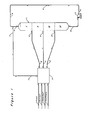
- zones I, II, III and IV are shown as well as manifold system 3, pump 2, which maintains the net positive fluid flow, and line 4 associated with pump 2. Also shown and identified are the inlet and outlet lines to the process which enter or leave via manifold system 3.
- zone I is defined as the molecular sieve located between the feed inlet stream 5 and the raffinate outlet stream 7.
- zone I is defined as the molecular sieve located between the feed inlet stream 5 and the raffinate outlet stream 7.
- the feedstock contacts the molecular sieve, an extract component is retained, and a raffinate stream is withdrawn. Since the general flow through zone I is from the feed stream which passes into the zone to the raffinate stream which passes out of the zone, the flow in this zone is considered to be downstream direction when proceeding from the feed inlet to the raffinate outlet streams.
- the liquid flush stream (diluent) may be introduced in Zone I at a point slightly downstream of the feed inlet stream.
- the diluent if used will be added at a rate sufficient to displace the displacement fluid associated with at least the non-selective void volume of the packed bed of molecular sieve in simulated movement in Zone I, thereby facilitating the retention of the fatty acid.
- zone II Immediately upstream with respect to fluid flow in zone I is the purification zone, zone II.
- the purification zone is defined as the molecular sieve between the extract outlet stream and the feed inlet stream 5.
- the basic operations taking place in zone II are the displacement from the non-selective void volume of the molecular sieve by a circulating stream of any raffinate material carried into zone II by the shifting of molecular sieve into this zone.
- Purification is achieved by passing a portion of extract stream material leaving zone III into zone 11 at zone II's upstream boundary, the extract outlet stream, to effect the displacement of raffinate material.
- the flow of material in zone II is in a downstream direction from the extract outlet stream to the feed inlet stream.
- zone III Immediately upstream of zone II with respect to the fluid flowing in zone II is the displacement zone or zone III.
- the displacement zone is defined as the molecular sieve between the displacement fluid inlet 13 and the extract outlet stream 11.
- the function of the displacement zone is to allow a displacement fluid which passes into this zone to displace the extract component which was retained in the molecular sieve during a previous contact with feed in zone I in a prior cycle of operation.
- the flow of fluid in zone III is essentially in the same direction as that of zones I and II.
- zone IV an optional buffer zone, zone IV, may be utilized.
- This zone defined as the molecular sieve between the raffinate outlet stream 7 and the displacement fluid inlet stream 13, if used, is located immediately upstream with respect to the fluid flow to zone III.
- Zone IV would be utilized to conserve the amount of displacement fluid utilized in the displacement step since a portion of the raffinate stream which is removed from zone I can be passed into zone IV to displace molecular sieve present in that zone out of that zone into the displacement zone.
- Zone IV will contain enough molecular sieve so that raffinate material present in the raffinate stream passing out of zone I and into zone IV can be prevented from passing into zone III, thereby contaminating extract stream removed from zone III.
- the raffinate stream which would have passed from zone I to zone IV must be carefully monitored in order that the flow directly from zone I to zone III can be stopped when there is an appreciable quantity of raffinate material present in the raffinate stream passing from zone I into zone III so that the extract outlet stream is not contaminated.
- zone IV will be employed and the liquid flush diluent stream, if used, may be introduced not into zone I but into zone IV at the upstream boundary of zone IV.
- the displacement fluid that would otherwise move into zone IV from zone III as part of the simulated moving bed will be kept in zone ll, assuming that the correct amount of liquid flush is used. This will also reduce the displacement fluid requirements.
- the molecular sieve enters zone I it will have the proper minimum displacement fluid environment.
- a cyclic advancement of the input and output streams through the fixed bed of molecular sieve can be accomplished by utilizing a manifold system in which the valves in the manifold are operated in a sequential manner to effect the shifting of the input and output streams, thereby allowing a flow of fluid with respect to solid molecular sieve in a countercurrent manner.
- Another mode of operation which can effect the countercurrent flow of solid molecular sieve with respect to fluid involves the use of a rotating disc valve in which the input and output streams are connected to the valve and the lines through which feed input, extract output, displacement fluid input and raffinate output streams pass are advanced in the same direction through the molecular sieve bed. Both the manifold arrangement and disc valve are known in the art.
- rotary disc valves which can be utilized in this operation can be found in U.S. Patent Nos. 3,040,777 and 3,422, 848. Both of the aforementioned patents disclose a rotary-type connection valve in which the suitable advancement of the various input and output streams from fixed sources can be achieved without difficulty.
- one operational zone will contain a much larger quantity of molecular sieve than some other operational zone.
- the buffer zone can contain a minor amount of molecular sieve as compared to the molecular sieve required for the retention and purification zones.
- displacement fluid which can easily displace extract material from the molecular sieve
- that a relatively small amount of molecular sieve will be needed in a displacement zone as compared to the molecular sieve needed in the buffer zone or retention zone or purification zone or all of them. Since it is not required that the molecular sieve be located in a single column, the use of multiple chambers or a series of columns is within the scope of the invention.
- the apparatus which can be utilized to effect the process of this invention can also contain a series of individual beds connected by connecting conduits upon which are placed input or output taps to which the various input or output streams can be attached and alternately and periodically shifted to effect continuous operation.
- the connecting conduits can be connected to transfer taps which during the normal operations do not function as a conduit through which material passes into or out of the process.
- At least a portion of the extract output stream will pass into a separation means wherein at least a portion of the displacement fluid can be separated to produce an extract product containing a reduced concentration of displacement fluid.
- at least a portion of the raffinate output stream will also be passed to a separation means wherein at least a portion of the displacement fluid can be separated to produce a displacement fluid stream which can be reused in the process and a raffinate product containing a reduced concentration of displacement fluid.
- the separation means will typically be a fractionation column, the design and operation of which is well known to the separation art.
- separation conditions although both liquid and vapor phase operations can be used in many adsorptive separation processes, liquid-phase operation is preferred for this process because of the lower temperature requirements and because of the higher yields of extract product that can be obtained with liquid-phase operation over those obtained with vapor-phase operation.
- the displacement fluid comprises an organic acid
- separation conditions will include a temperature range of from about 20°C to about 200°C with about 20°C to about 100°C being more preferred.
- the displacement fluid comprises a solution of light ketones and water
- separation conditions will include a temperature range of from about 90°C to about 140°C with 120°C being more preferred.
- separation conditions will include a pressure sufficient to maintain liquid phase.
- Displacement conditions will include the same range of temperatures and pressures as used for separation conditions.
- the size of the units which can utilize the process of this invention can vary anywhere from those of pilot-plant scale (see for example U.S. Patent No. 3,706,812) to those of commercial scale and can range in flow rates from as little as a few cc an hour up to many thousands of gallons per hour.
- a dynamic testing apparatus is employed to test various molecular sieves with a particular feed mixture and displacement fluid to measure the molecular sieve characterisitics of retention capacity and exchange rate.
- the apparatus consists of a helical molecular sieve chamber of approximately 70 cc volume having inlet and outlet portions at opposite ends of the chamber.
- the chamber is contained within a temperature control means and, in addition, pressure control equipment is used to operate the chamber at a constant predetermined pressure.
- Quantitative and qualitative analytical equipment such as refractometers, polarimeters and chromatographs can be attached to the outlet line of the chamber and used to detect quantitatively or determine qualitatively one or more components in the effluent stream leaving the molecular sieve chamber.
- a pulse test performed using this apparatus and the following general procedure, is used to determine data for various molecular sieve systems.
- the molecular sieve is filled to equilibrium with a particular displacement fluid material by passing the displacement fluid through the molecular sieve chamber.
- a pulse of feed containing known concentrations of a tracer and of a particular extract component or of a raffinate component or both, all diluted in displacement fluid is injected for a duration of several minutes.
- Displacement fluid flow is resumed, and the tracer and the extract component or the raffinate component (or both) are eluted as in a liquid-solid chromatographic operation.
- the effluent can be analyzed on- stream or alternatively, effluent samples can be collected periodically and later analyzed separately by analytical equipment and traces of the envelopes or corresponding component peaks developed.
- molecular sieve performance can be rated in terms of void volume, retention volume for an extract or a raffinate component, and the rate of displacement of an extract component from the molecular sieve.
- the retention volume of an extract or a raffinate component may be characterized by the distance between the center of the peak envelope of the tracer component or some other known reference point. It is expressed in terms of the volume in cubic centimeters of displacement fluid pumped during this time interval represented by the distance between the peak envelopes.
- the rate of exchange of an extract component with the displacement fluid can generally be characterized by the width of the peak envelopes at half intensity. The narrower the peak width, the faster the displacement rate.
- the displacement rate can also be characterized by the distance between the center of the tracer peak envelope and the disappearance of an extract component which has just been displaced. This distance is again the volume of displacement fluid pumped during this time interval.
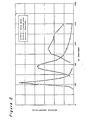
- the above described pulse test apparatus was used to obtain data for this example.
- the liquid temperature was 60°C and the flow was up the column at the rate of 1.2 ml/min.
- the feed stream comprised 20 wt.% distilled tall oil, and 80 wt.% displacement fluid.
- the column was packed with 23 wt.% Ludox bound silicalite (77 wt.% silicalite) which had been prepared as preferred in the practice of the present invention, including gelation by removal of water (drying) followed by treatment for removal of hydroxyl groups, which in this case was by heating in air at 1000°C for 48 hours.
- the resulting molecular sieve was then ground and screened to 20-50 mesh.
- the displacement fluid used was 89 LV% methylethylketone and 20 LV% acetic acid.
- the curves also illustrate that there is not a trace of the aforementioned reactivity between adsorbent and feed components previously observed to occur with the silicalite with an organic binder and silicalite with a silica binder not thermally treated in accordance with the present invention.
- Example I The pulse test of Example I was repeated except that the displacement fluid used was a solution of 90 LV% acetone and 10 LV% water and the column temperature was 120°C. The temperature was raised to preclude formation of two liquid phases in the column, but is not believed to otherwise have affected the quality of the separation one way or the other.
Landscapes
- Chemical & Material Sciences (AREA)
- Organic Chemistry (AREA)
- Life Sciences & Earth Sciences (AREA)
- Engineering & Computer Science (AREA)
- Oil, Petroleum & Natural Gas (AREA)
- General Chemical & Material Sciences (AREA)
- Microbiology (AREA)
- Chemical Kinetics & Catalysis (AREA)
- Wood Science & Technology (AREA)
- Organic Low-Molecular-Weight Compounds And Preparation Thereof (AREA)
- Fats And Perfumes (AREA)
- Solid-Sorbent Or Filter-Aiding Compositions (AREA)
- Treatment Of Liquids With Adsorbents In General (AREA)
Priority Applications (9)
| Application Number | Priority Date | Filing Date | Title |
|---|---|---|---|
| US06/408,100 US4495106A (en) | 1982-08-13 | 1982-08-13 | Adsorbent and process for separating fatty acids from rosin acids |
| AT83305207T ATE32708T1 (de) | 1982-08-13 | 1983-09-07 | Scheidungsmethode von fettsaeuren und kolophoniumsaeuren. |
| EP83305207A EP0134356B1 (en) | 1982-08-13 | 1983-09-07 | Process for separating fatty acids from rosin acids |
| DE8383305207T DE3375780D1 (en) | 1982-08-13 | 1983-09-07 | Process for separating fatty acids from rosin acids |
| AU18918/83A AU565422B2 (en) | 1982-08-13 | 1983-09-08 | Separating fatty acids from rosin acids |
| PT77328A PT77328B (en) | 1982-08-13 | 1983-09-12 | Process for separating fatty acids from resin acids |
| JP58168089A JPS6067598A (ja) | 1982-08-13 | 1983-09-12 | ロジン酸から脂肪酸を分離する方法 |
| CA000436558A CA1205066A (en) | 1982-08-13 | 1983-09-13 | Process for separating fatty acids from rosin acids |
| MYPI87000641A MY101217A (en) | 1983-09-07 | 1987-05-13 | Process for separating fatty acids from rosin acids. |
Applications Claiming Priority (2)
| Application Number | Priority Date | Filing Date | Title |
|---|---|---|---|
| US06/408,100 US4495106A (en) | 1982-08-13 | 1982-08-13 | Adsorbent and process for separating fatty acids from rosin acids |
| EP83305207A EP0134356B1 (en) | 1982-08-13 | 1983-09-07 | Process for separating fatty acids from rosin acids |
Publications (2)
| Publication Number | Publication Date |
|---|---|
| EP0134356A1 EP0134356A1 (en) | 1985-03-20 |
| EP0134356B1 true EP0134356B1 (en) | 1988-03-02 |
Family
ID=36783843
Family Applications (1)
| Application Number | Title | Priority Date | Filing Date |
|---|---|---|---|
| EP83305207A Expired EP0134356B1 (en) | 1982-08-13 | 1983-09-07 | Process for separating fatty acids from rosin acids |
Country Status (8)
| Country | Link |
|---|---|
| US (1) | US4495106A (ref) |
| EP (1) | EP0134356B1 (ref) |
| JP (1) | JPS6067598A (ref) |
| AT (1) | ATE32708T1 (ref) |
| AU (1) | AU565422B2 (ref) |
| CA (1) | CA1205066A (ref) |
| DE (1) | DE3375780D1 (ref) |
| PT (1) | PT77328B (ref) |
Families Citing this family (15)
| Publication number | Priority date | Publication date | Assignee | Title |
|---|---|---|---|---|
| IN158368B (ref) * | 1981-04-10 | 1986-11-01 | Uop Inc | |
| US4578223A (en) * | 1984-10-09 | 1986-03-25 | Uop Inc. | Process for separating saturated fatty acids from each other |
| US4902829A (en) * | 1988-11-16 | 1990-02-20 | Uop | Process for the adsorptive separation of hydroxy paraffinic dicarboxylic acids from olefinic dicarboxylic acids |
| CN102811781B (zh) | 2009-12-30 | 2015-06-24 | 巴斯夫制药(卡兰尼什)公司 | 用于纯化多不饱和脂肪酸的模拟移动床色谱分离方法 |
| GB201111601D0 (en) | 2011-07-06 | 2011-08-24 | Equateq Ltd | New process |
| GB201111594D0 (en) | 2011-07-06 | 2011-08-24 | Equateq Ltd | New improved process |
| GB201111591D0 (en) | 2011-07-06 | 2011-08-24 | Equateq Ltd | Further new process |
| GB201111589D0 (en) | 2011-07-06 | 2011-08-24 | Equateq Ltd | New modified process |
| GB201111595D0 (en) | 2011-07-06 | 2011-08-24 | Equateq Ltd | Improved process |
| GB201300354D0 (en) | 2013-01-09 | 2013-02-20 | Basf Pharma Callanish Ltd | Multi-step separation process |
| US8802880B1 (en) | 2013-05-07 | 2014-08-12 | Group Novasep | Chromatographic process for the production of highly purified polyunsaturated fatty acids |
| US9428711B2 (en) | 2013-05-07 | 2016-08-30 | Groupe Novasep | Chromatographic process for the production of highly purified polyunsaturated fatty acids |
| EP2883860B1 (fr) | 2013-12-11 | 2016-08-24 | Novasep Process | Procédé chromatographique de production d'acides gras polyinsaturés |
| BR112016015718B1 (pt) | 2014-01-07 | 2021-12-07 | Novasep Process Solutions | Processo de purificação de aminoácidos aromáticos |
| CN103937615B (zh) * | 2014-05-06 | 2015-09-02 | 江西西林科股份有限公司 | 一种从妥尔油脂肪酸中提取高纯不饱和脂肪酸的方法 |
Family Cites Families (21)
| Publication number | Priority date | Publication date | Assignee | Title |
|---|---|---|---|---|
| US2744125A (en) * | 1953-04-10 | 1956-05-01 | James W Meeks | Isolation of fatty acids from guayule resin |
| US2985589A (en) * | 1957-05-22 | 1961-05-23 | Universal Oil Prod Co | Continuous sorption process employing fixed bed of sorbent and moving inlets and outlets |
| US3114782A (en) * | 1958-03-31 | 1963-12-17 | Union Oil Co | Separation of tri-alkyl substituted aromatic hydrocarbon isomers |
| US3201491A (en) * | 1962-09-05 | 1965-08-17 | Universal Oil Prod Co | Continuous sorption process with emphasis on product purity |
| NL130968C (ref) * | 1964-03-31 | |||
| US3510423A (en) * | 1968-04-05 | 1970-05-05 | Universal Oil Prod Co | Olefin separation process |
| US3558730A (en) * | 1968-06-24 | 1971-01-26 | Universal Oil Prod Co | Aromatic hydrocarbon separation by adsorption |
| US3626020A (en) * | 1969-03-12 | 1971-12-07 | Universal Oil Prod Co | Separation of paraxylene from mixture of c aromatic utilizing crystalline aluminosilicate adsorbent |
| US3954819A (en) * | 1969-03-28 | 1976-05-04 | Interstate Foods Corporation | Method and composition for treating edible oils |
| US3558732A (en) * | 1969-05-12 | 1971-01-26 | Universal Oil Prod Co | Aromatic hydrocarbon separation by adsorption |
| US3668267A (en) * | 1970-01-30 | 1972-06-06 | Sun Oil Co | Separation of 2,7-dimethylnaphthalene from 2,6-dimethylnaphthalene with molecular sieves |
| US3976671A (en) * | 1970-05-27 | 1976-08-24 | Interstate Foods Corporation | Method and composition for treating edible oils and inedible tallows |
| US3663638A (en) * | 1970-08-31 | 1972-05-16 | Universal Oil Prod Co | Aromatic hydrocarbon separation by adsorption |
| US3734974A (en) * | 1971-07-26 | 1973-05-22 | Universal Oil Prod Co | Hydrocarbon separation process |
| DE2261067A1 (de) * | 1972-12-14 | 1974-06-27 | Henkel & Cie Gmbh | Verfahren zur reinigung von fettsaeureoder fettsaeureestergemischen |
| US3864416A (en) * | 1974-03-18 | 1975-02-04 | Universal Oil Prod Co | Separation of tetra-alkyl substituted aromatic hydrocarbon isomers |
| US4061724A (en) * | 1975-09-22 | 1977-12-06 | Union Carbide Corporation | Crystalline silica |
| US4048205A (en) * | 1976-08-02 | 1977-09-13 | Uop Inc. | Process for separating an ester of a monoethanoid fatty acid |
| US4104294A (en) * | 1977-11-10 | 1978-08-01 | Union Carbide Corporation | Crystalline silicates and method for preparing same |
| US4404145A (en) * | 1981-04-10 | 1983-09-13 | Uop Inc. | Process for separating fatty acids from rosin acids |
| US4329280A (en) * | 1981-04-10 | 1982-05-11 | Uop Inc. | Process for separating esters of fatty and rosin acids |
-
1982
- 1982-08-13 US US06/408,100 patent/US4495106A/en not_active Expired - Fee Related
-
1983
- 1983-09-07 AT AT83305207T patent/ATE32708T1/de not_active IP Right Cessation
- 1983-09-07 EP EP83305207A patent/EP0134356B1/en not_active Expired
- 1983-09-07 DE DE8383305207T patent/DE3375780D1/de not_active Expired
- 1983-09-08 AU AU18918/83A patent/AU565422B2/en not_active Ceased
- 1983-09-12 JP JP58168089A patent/JPS6067598A/ja active Granted
- 1983-09-12 PT PT77328A patent/PT77328B/pt not_active IP Right Cessation
- 1983-09-13 CA CA000436558A patent/CA1205066A/en not_active Expired
Also Published As
| Publication number | Publication date |
|---|---|
| EP0134356A1 (en) | 1985-03-20 |
| US4495106A (en) | 1985-01-22 |
| ATE32708T1 (de) | 1988-03-15 |
| JPS6067598A (ja) | 1985-04-17 |
| DE3375780D1 (en) | 1988-04-07 |
| PT77328A (en) | 1984-07-30 |
| AU1891883A (en) | 1985-03-14 |
| PT77328B (en) | 1986-02-06 |
| CA1205066A (en) | 1986-05-27 |
| JPH0157159B2 (ref) | 1989-12-04 |
| AU565422B2 (en) | 1987-09-17 |
Similar Documents
| Publication | Publication Date | Title |
|---|---|---|
| EP0134357B1 (en) | Process for separating fatty acids and molecular sieve therefor | |
| US4404145A (en) | Process for separating fatty acids from rosin acids | |
| US4519952A (en) | Process for separating fatty acids from unsaponifiables | |
| CA1165776A (en) | Process for separating esters of fatty and rosin acids | |
| EP0134356B1 (en) | Process for separating fatty acids from rosin acids | |
| US4048205A (en) | Process for separating an ester of a monoethanoid fatty acid | |
| US4049688A (en) | Process for separating esters of fatty acids by selective adsorption | |
| CA1156260A (en) | Two-stage process for separating mixed fatty-acid esters | |
| US4560675A (en) | Adsorbent for separating fatty acids from rosin acids | |
| US4511514A (en) | Process for separating oleic acid from linoleic acid | |
| US4524029A (en) | Process for separating fatty acids | |
| US4524030A (en) | Process for separating fatty acids | |
| US4353838A (en) | Process for separating a monoethanoid fatty acid | |
| US4522761A (en) | Process for separating fatty acids from rosin acids | |
| US4521343A (en) | Process for separating fatty acids from rosin acids with phosphorus modified alumina molecular sieve | |
| US4353839A (en) | Process for separating saturated fatty acids | |
| US4486618A (en) | Process for separating C6 olefin hydrocarbons | |
| US4650783A (en) | Phosphorus modified alumina molecular sieve and method of manufacture | |
| EP0178834B1 (en) | Process for separating saturated fatty acids | |
| NZ205542A (en) | Separating fatty acids from rosin acids using molecular sieves | |
| EP0105066B1 (en) | Process for the separation of fatty acids using a solid bed of adsorbent | |
| NZ213584A (en) | Selectively adsorbent molecular sieves for separation of fatty acids | |
| FI73460B (fi) | Foerfarande foer separering av fettsyror fraon hartssyror. | |
| EP0181978B1 (en) | Process for separating c6 olefin hydrocarbons | |
| FI74488C (fi) | Foerfarande och molekylsil foer separering av oleinsyra fraon linolsyra. |
Legal Events
| Date | Code | Title | Description |
|---|---|---|---|
| PUAI | Public reference made under article 153(3) epc to a published international application that has entered the european phase |
Free format text: ORIGINAL CODE: 0009012 |
|
| AK | Designated contracting states |
Designated state(s): AT BE CH DE FR GB IT LI NL SE |
|
| 17P | Request for examination filed |
Effective date: 19850731 |
|
| 17Q | First examination report despatched |
Effective date: 19860805 |
|
| GRAA | (expected) grant |
Free format text: ORIGINAL CODE: 0009210 |
|
| AK | Designated contracting states |
Kind code of ref document: B1 Designated state(s): AT BE CH DE FR GB IT LI NL SE |
|
| REF | Corresponds to: |
Ref document number: 32708 Country of ref document: AT Date of ref document: 19880315 Kind code of ref document: T |
|
| REF | Corresponds to: |
Ref document number: 3375780 Country of ref document: DE Date of ref document: 19880407 |
|
| ET | Fr: translation filed | ||
| ITF | It: translation for a ep patent filed | ||
| PLBE | No opposition filed within time limit |
Free format text: ORIGINAL CODE: 0009261 |
|
| STAA | Information on the status of an ep patent application or granted ep patent |
Free format text: STATUS: NO OPPOSITION FILED WITHIN TIME LIMIT |
|
| 26N | No opposition filed | ||
| PGFP | Annual fee paid to national office [announced via postgrant information from national office to epo] |
Ref country code: GB Payment date: 19900813 Year of fee payment: 8 |
|
| PGFP | Annual fee paid to national office [announced via postgrant information from national office to epo] |
Ref country code: AT Payment date: 19900913 Year of fee payment: 8 |
|
| PGFP | Annual fee paid to national office [announced via postgrant information from national office to epo] |
Ref country code: FR Payment date: 19900919 Year of fee payment: 8 |
|
| PGFP | Annual fee paid to national office [announced via postgrant information from national office to epo] |
Ref country code: SE Payment date: 19900921 Year of fee payment: 8 |
|
| PGFP | Annual fee paid to national office [announced via postgrant information from national office to epo] |
Ref country code: CH Payment date: 19900925 Year of fee payment: 8 |
|
| ITTA | It: last paid annual fee | ||
| PGFP | Annual fee paid to national office [announced via postgrant information from national office to epo] |
Ref country code: NL Payment date: 19900930 Year of fee payment: 8 |
|
| PGFP | Annual fee paid to national office [announced via postgrant information from national office to epo] |
Ref country code: BE Payment date: 19901005 Year of fee payment: 8 |
|
| PGFP | Annual fee paid to national office [announced via postgrant information from national office to epo] |
Ref country code: DE Payment date: 19901031 Year of fee payment: 8 |
|
| PG25 | Lapsed in a contracting state [announced via postgrant information from national office to epo] |
Ref country code: GB Effective date: 19910907 Ref country code: AT Effective date: 19910907 |
|
| PG25 | Lapsed in a contracting state [announced via postgrant information from national office to epo] |
Ref country code: SE Effective date: 19910908 |
|
| PG25 | Lapsed in a contracting state [announced via postgrant information from national office to epo] |
Ref country code: LI Effective date: 19910930 Ref country code: CH Effective date: 19910930 Ref country code: BE Effective date: 19910930 |
|
| BERE | Be: lapsed |
Owner name: UOP INC. Effective date: 19910930 |
|
| PG25 | Lapsed in a contracting state [announced via postgrant information from national office to epo] |
Ref country code: NL Effective date: 19920401 |
|
| GBPC | Gb: european patent ceased through non-payment of renewal fee | ||
| NLV4 | Nl: lapsed or anulled due to non-payment of the annual fee | ||
| PG25 | Lapsed in a contracting state [announced via postgrant information from national office to epo] |
Ref country code: FR Effective date: 19920529 |
|
| REG | Reference to a national code |
Ref country code: CH Ref legal event code: PL |
|
| PG25 | Lapsed in a contracting state [announced via postgrant information from national office to epo] |
Ref country code: DE Effective date: 19920602 |
|
| REG | Reference to a national code |
Ref country code: FR Ref legal event code: ST |
|
| EUG | Se: european patent has lapsed |
Ref document number: 83305207.9 Effective date: 19920408 |