EP0127301B1 - Positive Batterieplatte - Google Patents
Positive Batterieplatte Download PDFInfo
- Publication number
- EP0127301B1 EP0127301B1 EP84302574A EP84302574A EP0127301B1 EP 0127301 B1 EP0127301 B1 EP 0127301B1 EP 84302574 A EP84302574 A EP 84302574A EP 84302574 A EP84302574 A EP 84302574A EP 0127301 B1 EP0127301 B1 EP 0127301B1
- Authority
- EP
- European Patent Office
- Prior art keywords
- lead
- paste
- positive
- electrolyte
- tin oxide
- Prior art date
- Legal status (The legal status is an assumption and is not a legal conclusion. Google has not performed a legal analysis and makes no representation as to the accuracy of the status listed.)
- Expired
Links
Images

Classifications
-
- H—ELECTRICITY
- H01—ELECTRIC ELEMENTS
- H01M—PROCESSES OR MEANS, e.g. BATTERIES, FOR THE DIRECT CONVERSION OF CHEMICAL ENERGY INTO ELECTRICAL ENERGY
- H01M10/00—Secondary cells; Manufacture thereof
- H01M10/06—Lead-acid accumulators
-
- H—ELECTRICITY
- H01—ELECTRIC ELEMENTS
- H01M—PROCESSES OR MEANS, e.g. BATTERIES, FOR THE DIRECT CONVERSION OF CHEMICAL ENERGY INTO ELECTRICAL ENERGY
- H01M10/00—Secondary cells; Manufacture thereof
- H01M10/42—Methods or arrangements for servicing or maintenance of secondary cells or secondary half-cells
-
- H—ELECTRICITY
- H01—ELECTRIC ELEMENTS
- H01M—PROCESSES OR MEANS, e.g. BATTERIES, FOR THE DIRECT CONVERSION OF CHEMICAL ENERGY INTO ELECTRICAL ENERGY
- H01M4/00—Electrodes
- H01M4/02—Electrodes composed of, or comprising, active material
- H01M4/14—Electrodes for lead-acid accumulators
- H01M4/16—Processes of manufacture
- H01M4/20—Processes of manufacture of pasted electrodes
-
- H—ELECTRICITY
- H01—ELECTRIC ELEMENTS
- H01M—PROCESSES OR MEANS, e.g. BATTERIES, FOR THE DIRECT CONVERSION OF CHEMICAL ENERGY INTO ELECTRICAL ENERGY
- H01M4/00—Electrodes
- H01M4/02—Electrodes composed of, or comprising, active material
- H01M4/62—Selection of inactive substances as ingredients for active masses, e.g. binders, fillers
- H01M4/624—Electric conductive fillers
-
- H—ELECTRICITY
- H01—ELECTRIC ELEMENTS
- H01M—PROCESSES OR MEANS, e.g. BATTERIES, FOR THE DIRECT CONVERSION OF CHEMICAL ENERGY INTO ELECTRICAL ENERGY
- H01M10/00—Secondary cells; Manufacture thereof
- H01M10/42—Methods or arrangements for servicing or maintenance of secondary cells or secondary half-cells
- H01M10/4235—Safety or regulating additives or arrangements in electrodes, separators or electrolyte
-
- H—ELECTRICITY
- H01—ELECTRIC ELEMENTS
- H01M—PROCESSES OR MEANS, e.g. BATTERIES, FOR THE DIRECT CONVERSION OF CHEMICAL ENERGY INTO ELECTRICAL ENERGY
- H01M2200/00—Safety devices for primary or secondary batteries
- H01M2200/30—Preventing polarity reversal
-
- Y—GENERAL TAGGING OF NEW TECHNOLOGICAL DEVELOPMENTS; GENERAL TAGGING OF CROSS-SECTIONAL TECHNOLOGIES SPANNING OVER SEVERAL SECTIONS OF THE IPC; TECHNICAL SUBJECTS COVERED BY FORMER USPC CROSS-REFERENCE ART COLLECTIONS [XRACs] AND DIGESTS
- Y02—TECHNOLOGIES OR APPLICATIONS FOR MITIGATION OR ADAPTATION AGAINST CLIMATE CHANGE
- Y02E—REDUCTION OF GREENHOUSE GAS [GHG] EMISSIONS, RELATED TO ENERGY GENERATION, TRANSMISSION OR DISTRIBUTION
- Y02E60/00—Enabling technologies; Technologies with a potential or indirect contribution to GHG emissions mitigation
- Y02E60/10—Energy storage using batteries
Definitions
- the lead-acid battery is still the battery-of-choice for general purpose uses such as starting a vehicle, boat or airplane engine, emergency lighting, electric vehicle motive power, energy buffer storage for solar-electric energy, and field hardware whether industrial or military. These batteries may be periodically charged from a generator.
- the conventional lead-acid battery is a multi- cell structure.
- Each cell contains a plurality of vertical positive and negative plates formed of lead-based alloy grids containing layers of electrochemically active pastes.
- the paste on the positive plate when charged contains lead dioxide which is the positive active material and the negative plates contain a negative active material such as sponge lead.
- This battery has been widely used in the automotive industry for many years and there is substantial experience and tooling in place for manufacturing this battery and its components. and the battery is based on readily available materials, is inexpensive to manufacture and is widely accepted by consumers.
- the lead dioxide (a fairly good conductor) in the positive plate is converted to lead sulfate, an insulator.
- the lead sulfate can form an impervious layer encapsulating the lead dioxide particles which limits the utilization to less than 50% of capacity, typically around 30%.
- the power output is significantly influenced by the. state-of-discharge of the battery, since the lead sulfate provides a circuit resistance whenever the battery is under load.
- the lead sulfate can grow into large, hard, angular crystals, disrupting the layer of paste on the grid resulting in flaking and shedding of active material from the grid. Power consumption during charge is also increased due to the presence of the lead sulfate insulator.
- the lead sulfate crystals in the negative electrode can grow to a large, hard condition and, due to their insulating characteristics, are difficult to reduce to lead. Even when very thin pastes are utilized, the coating of insulating lead sulfate interferes with power output. Thus, power capability is greatly influenced by the state-of-charge of the battery.
- An improved lead-acid battery is provided in accordance with the invention in which the positive active material maintains conductivity during both charge and discharge cycles.
- the power output in the battery of the invention is more uniform since it is less dependent of the state-of-charge of the battery and more nearly approaches theoretical efficiency.
- the improved power characteristics are provided by incorporating a material into the paste that is insoluble in the electrolyte, has a conductivity similar to the active material and is thermodynamically stable with respect to oxidation and reduction when it is subjected to the usual charging and discharging potentials of a lead-acid battery.
- a positive paste for a lead-acid battery comprising a layer comprising a matrix of lead oxide containing a dispersion of solid tin oxide in an amount sufficient to provide conductivity to the layer when charged or discharged, characterised in that said tin oxide is coated onto a particulate substrate.
- a suitable tin oxide additive for the positive active paste in accordance with the present invention is tin dioxide (Sn0 2 ) which can be predispersed in the paste or added in precursor form.
- Sn0 2 can be present asa-powde.corcoated onto a particulate or fibrous substrate such as glass powder or glass wool.
- Stannic oxide has a conductivity several times that of graphite.
- Sn0 2 (doped) has a conductivity of 300 to 400 micro ohm cm vs. 1375 micro ohm cm for graphite.
- Stannic oxide is thermodynamically stable to the oxidation/reduction potential in the electrochemical environment of a lead-acid battery, has about the same resistivity as Pb0 2 when Sn0 2 is coated onto glass, and refractory or baked type of Sn0 2 is quite insoluble in sulfuric acid. Unlike Pb0 2 , the stannic acid conductivity additive will remain unchanged during the course of charge and discharge of the positive plate.
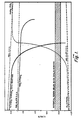
- the electrode potentials referred to the standard hydrogen electrode are shown for the open circuit voltages for the cell and of each plate. Also shown are the potentials of various reactions occurring in a lead-acid battery. The potential region below which Sn0 2 is reduced is shown in the cross-hatched region.
- a schematic cell is shown in Figure 2.
- the cell 10 is housed in an electrolyte-impervious container 12 forming a cell compartment 14 in which is received a positive plate 16, negative plate 18 and a body 20 of aqueous sulfuric acid electrolyte.
- the cell can be connected in parallel or series to other cells, not shown.
- the negative plate 18 and positive plate 16 are connected to terminals 22, 24.
- Positive plate reversal to less than about -0.5 V vs. SCE is to be avoided to prevent reduction of the Sn0 2 to tin. This can be accomplished by utilizing an over-sized positive plate and placing a 5 to 10% precharge in the positive plate so that even when discharged, there is no danger of falling into the reduction zone for stannic oxide.
- Another means of preventing cell reversal is to place a circuit breaker 26 in series with the plates 16, 18 that prevent passage of current between the plates when the positive electrode voltage is below about -0.5 V vs. SCE.
- the negative plate 18 is of standard construction and is formed of a high area conductive substrate such as a lead on antimony-lead alloy ladder grid on which is deposited a layer of negative active material such as sponge lead.
- the negative active material can be formed by reducing a paste of lead oxide or tetra-basic lead sulfate to sponge lead.
- the positive plate 16 can also be formed of a conductive ladder grid 30 containing a layer 32 of lead dioxide in which is dispersed 1 to 10% by weight of conductive tin oxide in particulate form such as random fibers 34.
- the fibers form a conduction path through the layer 32.
- the tin oxide is coated onto a substrate such as glass in powder or fiber form.
- Glass wool can be utilized to form the continuous phase for the layer of paste.
- the positive active layer 40 on grid 44 comprises glass wool 42 containing a conductive coating 46 of stannic oxide.
- the glass wool is impregnated with a paste 48 of lead dioxide and dried to form the layer 40 which contains a continuous conduction path through the filamentary glass wool from the outside surface 50 facing the electrolyte to the back surface 52 in contact with the grid 44.
- the stannic oxide coated glass wool can be chopped into roving or short lengths of glass fiber, or powder can be coated with conductive stannic oxide and dispersed in thewet paste before application to the grid.
- the coating of stannic oxide onto glass to form conductive coating was developed over 30 years ago and has been widely practiced to defrost windshields in aircraft and automobiles.
- the conductive coating is applied to heated glass fibers or powder or glass wool from a solution of stannic chloride in hydrochloric acid as disclosed in U.S. Patent No. 2,564,707, the disclosure of which is expressly incorporated herein by reference.
- the solution can be sprayed onto the heated fibers or the fibers can be pulled through a tank containing the solution and then heated in a furnace to a suitable high temperature such as about 700°C.
- the diameter of the glass fibers is preferably very small such as from 1 to 20 microns ( ⁇ lm). Very fine fibers are too hard to handle and large diameter fibers have too small a surface to provide adequate conductive surface.
- the fibers contain a conductive coating of stannic oxide from a monolayer in thickness to 10 microns (pm), usually from 0.01 micron (um) to 5 microns (jim).
Landscapes
- Chemical & Material Sciences (AREA)
- Chemical Kinetics & Catalysis (AREA)
- Electrochemistry (AREA)
- General Chemical & Material Sciences (AREA)
- Engineering & Computer Science (AREA)
- Manufacturing & Machinery (AREA)
- Battery Electrode And Active Subsutance (AREA)
Claims (9)
Applications Claiming Priority (2)
| Application Number | Priority Date | Filing Date | Title |
|---|---|---|---|
| US488199 | 1983-04-25 | ||
| US06/488,199 US4507372A (en) | 1983-04-25 | 1983-04-25 | Positive battery plate |
Publications (2)
| Publication Number | Publication Date |
|---|---|
| EP0127301A1 EP0127301A1 (de) | 1984-12-05 |
| EP0127301B1 true EP0127301B1 (de) | 1989-10-04 |
Family
ID=23938735
Family Applications (1)
| Application Number | Title | Priority Date | Filing Date |
|---|---|---|---|
| EP84302574A Expired EP0127301B1 (de) | 1983-04-25 | 1984-04-16 | Positive Batterieplatte |
Country Status (4)
| Country | Link |
|---|---|
| US (1) | US4507372A (de) |
| EP (1) | EP0127301B1 (de) |
| JP (1) | JPS601758A (de) |
| DE (1) | DE3480040D1 (de) |
Families Citing this family (27)
| Publication number | Priority date | Publication date | Assignee | Title |
|---|---|---|---|---|
| JPS6132365A (ja) * | 1984-07-23 | 1986-02-15 | Japan Storage Battery Co Ltd | リテ−ナ式鉛蓄電池 |
| US5126218A (en) * | 1985-04-23 | 1992-06-30 | Clarke Robert L | Conductive ceramic substrate for batteries |
| US5549990A (en) * | 1986-03-24 | 1996-08-27 | Ensci Inc | Battery element containing porous particles |
| US4873161A (en) * | 1988-08-19 | 1989-10-10 | Rippel Wally E | Positive paste with lead-coated glass fibers |
| US5643696A (en) * | 1991-07-22 | 1997-07-01 | Bipolar Power Corporation | Battery plates with lightweight cores |
| US5334464A (en) * | 1991-07-22 | 1994-08-02 | Bipolar Power Corporation | Lightweight battery plates |
| US5667917A (en) * | 1991-09-10 | 1997-09-16 | Idaho Research Foundation | Electrode with conductive fillers |
| US5645959A (en) * | 1992-08-20 | 1997-07-08 | Bipolar Power Corporation | Battery plates with self-passivating iron cores and mixed acid electrolyte |
| US5368960A (en) * | 1993-07-23 | 1994-11-29 | Rowlette; John J. | Utilization efficiencies by using high sulfate starting materials |
| US6531248B1 (en) * | 1999-10-06 | 2003-03-11 | Squannacook Technologies Llc | Battery paste |
| CA2386764A1 (en) * | 1999-10-06 | 2001-04-12 | Kvg Technologies, Inc. | Battery paste |
| US7159805B2 (en) * | 2002-03-25 | 2007-01-09 | Evanite Fiber Corporation | Methods of modifying fibers |
| US6929858B2 (en) * | 2002-03-25 | 2005-08-16 | Squannacook Technologies Llc | Glass fibers |
| ATE527709T1 (de) * | 2003-10-21 | 2011-10-15 | Johnson Controls Tech Co | Batteriepastenmaterial und verfahren |
| US7118830B1 (en) | 2004-03-23 | 2006-10-10 | Hammond Group, Inc. | Battery paste additive and method for producing battery plates |
| US8021784B2 (en) * | 2004-03-23 | 2011-09-20 | Hammond Group, Inc. | Cureless battery paste and method for producing battery plates |
| AR064292A1 (es) * | 2006-12-12 | 2009-03-25 | Commw Scient Ind Res Org | Dispositivo mejorado para almacenamiento de energia |
| AR067238A1 (es) * | 2007-03-20 | 2009-10-07 | Commw Scient Ind Res Org | Dispositivos optimizados para el almacenamiento de energia |
| US8404382B2 (en) | 2008-04-08 | 2013-03-26 | Trojan Battery Company | Flooded lead-acid battery and method of making the same |
| US9450232B2 (en) | 2009-04-23 | 2016-09-20 | Commonwealth Scientific And Industrial Research Organisation | Process for producing negative plate for lead storage battery, and lead storage battery |
| CN102725883B (zh) | 2009-08-27 | 2015-08-26 | 联邦科学和工业研究组织 | 电存储装置及其电极 |
| JP5711483B2 (ja) | 2009-08-27 | 2015-04-30 | 古河電池株式会社 | 鉛蓄電池用複合キャパシタ負極板の製造法及び鉛蓄電池 |
| JP5797384B2 (ja) | 2009-08-27 | 2015-10-21 | 古河電池株式会社 | 鉛蓄電池用複合キャパシタ負極板及び鉛蓄電池 |
| JP2012133959A (ja) | 2010-12-21 | 2012-07-12 | Furukawa Battery Co Ltd:The | 鉛蓄電池用複合キャパシタ負極板及び鉛蓄電池 |
| CN105406063A (zh) * | 2015-12-31 | 2016-03-16 | 天能集团江苏科技有限公司 | 一种添加导电玻璃纤维的铅炭电池正极铅膏 |
| US10319990B2 (en) | 2016-08-05 | 2019-06-11 | Trojan Battery Ireland Ltd. | Coated lead acid battery electrode plates; method for making coated electrode plates and lead acid batteries containing coated electrode plates |
| CN111509220B (zh) * | 2020-04-27 | 2021-11-09 | 天能电池集团股份有限公司 | 一种铅蓄电池正极板铅膏配方 |
Family Cites Families (14)
| Publication number | Priority date | Publication date | Assignee | Title |
|---|---|---|---|---|
| GB189322674A (en) * | 1893-11-25 | 1894-11-24 | Reginald Haddan | Improvements in or relating to Electric Regenerative Batteries or Accumulators, and in Porous Cells therefor. |
| US1788571A (en) * | 1927-02-02 | 1931-01-13 | Vulcanite Inc | Active material for storage batteries |
| US2107937A (en) * | 1935-05-29 | 1938-02-08 | Electric Storage Battery Co | Method of making storage battery plates |
| US2564707A (en) * | 1947-09-03 | 1951-08-21 | Corning Glass Works | Electrically conducting coatings on glass and other ceramic bodies |
| GB1207989A (en) * | 1967-07-19 | 1970-10-07 | Ici Ltd | Grids for the plates of secondary cells and batteries |
| DE2746652C3 (de) * | 1976-10-18 | 1982-05-13 | Tokyo Shibaura Electric Co., Ltd., Kawasaki, Kanagawa | Abgekapselte Akkumulatorzelle |
| DE2724839A1 (de) * | 1977-06-02 | 1978-12-14 | Varta Batterie | Elektrodenplatte fuer bleiakkumulatoren |
| JPS5450839A (en) * | 1977-09-28 | 1979-04-21 | Japan Storage Battery Co Ltd | Lead storage battery |
| JPS5450833A (en) * | 1977-09-29 | 1979-04-21 | Suwa Seikosha Kk | Button type battery |
| US4329408A (en) * | 1980-06-02 | 1982-05-11 | Gould Inc. | Lead oxide composition for use in lead-acid batteries |
| US4323470A (en) * | 1980-08-25 | 1982-04-06 | Globe-Union Inc. | Battery paste for lead-acid storage batteries |
| DE3038456A1 (de) * | 1980-10-11 | 1982-06-03 | Robert Bosch Gmbh, 7000 Stuttgart | Elektrode fuer bleiakkumulatoren |
| US4326017A (en) * | 1981-01-26 | 1982-04-20 | General Electric Company | Positive electrode for lead acid battery |
| JPS5835867A (ja) * | 1981-08-26 | 1983-03-02 | Yuasa Battery Co Ltd | ペ−スト式鉛蓄電池 |
-
1983
- 1983-04-25 US US06/488,199 patent/US4507372A/en not_active Expired - Lifetime
-
1984
- 1984-04-16 EP EP84302574A patent/EP0127301B1/de not_active Expired
- 1984-04-16 DE DE8484302574T patent/DE3480040D1/de not_active Expired
- 1984-04-25 JP JP59083603A patent/JPS601758A/ja active Pending
Also Published As
| Publication number | Publication date |
|---|---|
| EP0127301A1 (de) | 1984-12-05 |
| US4507372A (en) | 1985-03-26 |
| DE3480040D1 (en) | 1989-11-09 |
| JPS601758A (ja) | 1985-01-07 |
Similar Documents
| Publication | Publication Date | Title |
|---|---|---|
| EP0127301B1 (de) | Positive Batterieplatte | |
| US4510219A (en) | Battery plate containing filler with conductive coating | |
| US6117196A (en) | Method of manufacturing a lead acid cell paste and battery | |
| US9263745B2 (en) | Rechargeable electrochemical battery cell | |
| CA1235737A (en) | Unitary plate electrode | |
| US4735870A (en) | Lead-acid battery construction | |
| US4625395A (en) | Battery plate containing filler with conductive coating | |
| JP2003051306A (ja) | 鉛蓄電池用負極 | |
| US5667917A (en) | Electrode with conductive fillers | |
| EP1261049B1 (de) | Bleiakkumulatorenelektrodengitter beschichtet mit einer leitfähigen Polymermatrix und Herstellungsmethode | |
| US10381683B2 (en) | Metal plating-based electrical energy storage cell | |
| US4140589A (en) | Method for lead crystal storage cells and storage devices made therefrom | |
| US4873161A (en) | Positive paste with lead-coated glass fibers | |
| Rowlette | Lead-acid battery construction | |
| CA1323397C (en) | Lead accumulators | |
| JPH0837001A (ja) | 鉛蓄電池用正極板及びその製造方法 | |
| Rowlette | Positive battery plate | |
| WO2000046868A1 (en) | Lead-tin alloy current collectors, batteries made thereof and methods for manufacturing same | |
| JP3196556B2 (ja) | 鉛蓄電池 | |
| JP2808685B2 (ja) | 鉛蓄電池 | |
| Rippel et al. | Positive paste with lead-coated glass fibers | |
| De Marco | Influence of lead (II) carbonate films of non-antimonial grids on the deep discharge cycling behaviour of maintenance-free lead/acid batteries | |
| GB2238159A (en) | Lead accumulator | |
| JPH06267524A (ja) | 密閉型鉛蓄電池 | |
| JPH09147844A (ja) | 密閉形鉛蓄電池 |
Legal Events
| Date | Code | Title | Description |
|---|---|---|---|
| PUAI | Public reference made under article 153(3) epc to a published international application that has entered the european phase |
Free format text: ORIGINAL CODE: 0009012 |
|
| AK | Designated contracting states |
Designated state(s): BE DE FR GB IT |
|
| 17P | Request for examination filed |
Effective date: 19850528 |
|
| 17Q | First examination report despatched |
Effective date: 19860204 |
|
| D17Q | First examination report despatched (deleted) | ||
| ITF | It: translation for a ep patent filed | ||
| GRAA | (expected) grant |
Free format text: ORIGINAL CODE: 0009210 |
|
| AK | Designated contracting states |
Kind code of ref document: B1 Designated state(s): BE DE FR GB IT |
|
| ET | Fr: translation filed | ||
| REF | Corresponds to: |
Ref document number: 3480040 Country of ref document: DE Date of ref document: 19891109 |
|
| PG25 | Lapsed in a contracting state [announced via postgrant information from national office to epo] |
Ref country code: BE Effective date: 19900430 |
|
| PLBE | No opposition filed within time limit |
Free format text: ORIGINAL CODE: 0009261 |
|
| STAA | Information on the status of an ep patent application or granted ep patent |
Free format text: STATUS: NO OPPOSITION FILED WITHIN TIME LIMIT |
|
| 26N | No opposition filed | ||
| BERE | Be: lapsed |
Owner name: CALIFORNIA INSTITUTE OF TECHNOLOGY Effective date: 19900430 |
|
| ITTA | It: last paid annual fee | ||
| PGFP | Annual fee paid to national office [announced via postgrant information from national office to epo] |
Ref country code: GB Payment date: 19990317 Year of fee payment: 16 Ref country code: FR Payment date: 19990317 Year of fee payment: 16 |
|
| PGFP | Annual fee paid to national office [announced via postgrant information from national office to epo] |
Ref country code: DE Payment date: 19990429 Year of fee payment: 16 |
|
| PG25 | Lapsed in a contracting state [announced via postgrant information from national office to epo] |
Ref country code: GB Free format text: LAPSE BECAUSE OF NON-PAYMENT OF DUE FEES Effective date: 20000416 |
|
| GBPC | Gb: european patent ceased through non-payment of renewal fee |
Effective date: 20000416 |
|
| PG25 | Lapsed in a contracting state [announced via postgrant information from national office to epo] |
Ref country code: FR Free format text: LAPSE BECAUSE OF NON-PAYMENT OF DUE FEES Effective date: 20001229 |
|
| PG25 | Lapsed in a contracting state [announced via postgrant information from national office to epo] |
Ref country code: DE Free format text: LAPSE BECAUSE OF NON-PAYMENT OF DUE FEES Effective date: 20010201 |
|
| REG | Reference to a national code |
Ref country code: FR Ref legal event code: ST |