EP0114612B1 - Racemisches und optisch aktives 3-Hydroxy-alpha-cyclocitral, deren Acetale und optisch aktive 3-Oxo-alpha-cyclocitralacetale sowie Herstellung und Verwendung dieser Verbindungen - Google Patents
Racemisches und optisch aktives 3-Hydroxy-alpha-cyclocitral, deren Acetale und optisch aktive 3-Oxo-alpha-cyclocitralacetale sowie Herstellung und Verwendung dieser Verbindungen Download PDFInfo
- Publication number
- EP0114612B1 EP0114612B1 EP84100210A EP84100210A EP0114612B1 EP 0114612 B1 EP0114612 B1 EP 0114612B1 EP 84100210 A EP84100210 A EP 84100210A EP 84100210 A EP84100210 A EP 84100210A EP 0114612 B1 EP0114612 B1 EP 0114612B1
- Authority
- EP
- European Patent Office
- Prior art keywords
- cyclocitral
- hydroxy
- formula
- oxo
- acetal
- Prior art date
- Legal status (The legal status is an assumption and is not a legal conclusion. Google has not performed a legal analysis and makes no representation as to the accuracy of the status listed.)
- Expired
Links
- 0 CC(C1)C(C(O*)OF)C(C)(C)CC1=O Chemical compound CC(C1)C(C(O*)OF)C(C)(C)CC1=O 0.000 description 8
- RIAQBNSPOHNARJ-UHFFFAOYSA-N CC(C1)C(C)C(C)(C)CC1=O Chemical compound CC(C1)C(C)C(C)(C)CC1=O RIAQBNSPOHNARJ-UHFFFAOYSA-N 0.000 description 1
- SLEUXBXETDWGCU-UHFFFAOYSA-N CC1(C)C(CNOC)[I]=CC2(CCC2)C1 Chemical compound CC1(C)C(CNOC)[I]=CC2(CCC2)C1 SLEUXBXETDWGCU-UHFFFAOYSA-N 0.000 description 1
- NUJPAAKPPQHCKG-UHFFFAOYSA-N CCC1C(C)CC2C1C2 Chemical compound CCC1C(C)CC2C1C2 NUJPAAKPPQHCKG-UHFFFAOYSA-N 0.000 description 1
Classifications
-
- C—CHEMISTRY; METALLURGY
- C07—ORGANIC CHEMISTRY
- C07D—HETEROCYCLIC COMPOUNDS
- C07D317/00—Heterocyclic compounds containing five-membered rings having two oxygen atoms as the only ring hetero atoms
- C07D317/08—Heterocyclic compounds containing five-membered rings having two oxygen atoms as the only ring hetero atoms having the hetero atoms in positions 1 and 3
- C07D317/72—Heterocyclic compounds containing five-membered rings having two oxygen atoms as the only ring hetero atoms having the hetero atoms in positions 1 and 3 spiro-condensed with carbocyclic rings
-
- C—CHEMISTRY; METALLURGY
- C07—ORGANIC CHEMISTRY
- C07C—ACYCLIC OR CARBOCYCLIC COMPOUNDS
- C07C403/00—Derivatives of cyclohexane or of a cyclohexene or of cyclohexadiene, having a side-chain containing an acyclic unsaturated part of at least four carbon atoms, this part being directly attached to the cyclohexane or cyclohexene or cyclohexadiene rings, e.g. vitamin A, beta-carotene, beta-ionone
- C07C403/14—Derivatives of cyclohexane or of a cyclohexene or of cyclohexadiene, having a side-chain containing an acyclic unsaturated part of at least four carbon atoms, this part being directly attached to the cyclohexane or cyclohexene or cyclohexadiene rings, e.g. vitamin A, beta-carotene, beta-ionone having side-chains substituted by doubly-bound oxygen atoms
- C07C403/16—Derivatives of cyclohexane or of a cyclohexene or of cyclohexadiene, having a side-chain containing an acyclic unsaturated part of at least four carbon atoms, this part being directly attached to the cyclohexane or cyclohexene or cyclohexadiene rings, e.g. vitamin A, beta-carotene, beta-ionone having side-chains substituted by doubly-bound oxygen atoms not being part of —CHO groups
-
- C—CHEMISTRY; METALLURGY
- C07—ORGANIC CHEMISTRY
- C07C—ACYCLIC OR CARBOCYCLIC COMPOUNDS
- C07C43/00—Ethers; Compounds having groups, groups or groups
- C07C43/30—Compounds having groups
- C07C43/315—Compounds having groups containing oxygen atoms singly bound to carbon atoms not being acetal carbon atoms
-
- C—CHEMISTRY; METALLURGY
- C07—ORGANIC CHEMISTRY
- C07C—ACYCLIC OR CARBOCYCLIC COMPOUNDS
- C07C45/00—Preparation of compounds having >C = O groups bound only to carbon or hydrogen atoms; Preparation of chelates of such compounds
- C07C45/27—Preparation of compounds having >C = O groups bound only to carbon or hydrogen atoms; Preparation of chelates of such compounds by oxidation
- C07C45/28—Preparation of compounds having >C = O groups bound only to carbon or hydrogen atoms; Preparation of chelates of such compounds by oxidation of CHx-moieties
-
- C—CHEMISTRY; METALLURGY
- C07—ORGANIC CHEMISTRY
- C07C—ACYCLIC OR CARBOCYCLIC COMPOUNDS
- C07C45/00—Preparation of compounds having >C = O groups bound only to carbon or hydrogen atoms; Preparation of chelates of such compounds
- C07C45/27—Preparation of compounds having >C = O groups bound only to carbon or hydrogen atoms; Preparation of chelates of such compounds by oxidation
- C07C45/32—Preparation of compounds having >C = O groups bound only to carbon or hydrogen atoms; Preparation of chelates of such compounds by oxidation with molecular oxygen
- C07C45/33—Preparation of compounds having >C = O groups bound only to carbon or hydrogen atoms; Preparation of chelates of such compounds by oxidation with molecular oxygen of CHx-moieties
- C07C45/34—Preparation of compounds having >C = O groups bound only to carbon or hydrogen atoms; Preparation of chelates of such compounds by oxidation with molecular oxygen of CHx-moieties in unsaturated compounds
-
- C—CHEMISTRY; METALLURGY
- C07—ORGANIC CHEMISTRY
- C07C—ACYCLIC OR CARBOCYCLIC COMPOUNDS
- C07C45/00—Preparation of compounds having >C = O groups bound only to carbon or hydrogen atoms; Preparation of chelates of such compounds
- C07C45/51—Preparation of compounds having >C = O groups bound only to carbon or hydrogen atoms; Preparation of chelates of such compounds by pyrolysis, rearrangement or decomposition
- C07C45/511—Preparation of compounds having >C = O groups bound only to carbon or hydrogen atoms; Preparation of chelates of such compounds by pyrolysis, rearrangement or decomposition involving transformation of singly bound oxygen functional groups to >C = O groups
- C07C45/515—Preparation of compounds having >C = O groups bound only to carbon or hydrogen atoms; Preparation of chelates of such compounds by pyrolysis, rearrangement or decomposition involving transformation of singly bound oxygen functional groups to >C = O groups the singly bound functional group being an acetalised, ketalised hemi-acetalised, or hemi-ketalised hydroxyl group
-
- C—CHEMISTRY; METALLURGY
- C07—ORGANIC CHEMISTRY
- C07C—ACYCLIC OR CARBOCYCLIC COMPOUNDS
- C07C45/00—Preparation of compounds having >C = O groups bound only to carbon or hydrogen atoms; Preparation of chelates of such compounds
- C07C45/56—Preparation of compounds having >C = O groups bound only to carbon or hydrogen atoms; Preparation of chelates of such compounds from heterocyclic compounds
- C07C45/57—Preparation of compounds having >C = O groups bound only to carbon or hydrogen atoms; Preparation of chelates of such compounds from heterocyclic compounds with oxygen as the only heteroatom
- C07C45/59—Preparation of compounds having >C = O groups bound only to carbon or hydrogen atoms; Preparation of chelates of such compounds from heterocyclic compounds with oxygen as the only heteroatom in five-membered rings
-
- C—CHEMISTRY; METALLURGY
- C07—ORGANIC CHEMISTRY
- C07C—ACYCLIC OR CARBOCYCLIC COMPOUNDS
- C07C45/00—Preparation of compounds having >C = O groups bound only to carbon or hydrogen atoms; Preparation of chelates of such compounds
- C07C45/56—Preparation of compounds having >C = O groups bound only to carbon or hydrogen atoms; Preparation of chelates of such compounds from heterocyclic compounds
- C07C45/57—Preparation of compounds having >C = O groups bound only to carbon or hydrogen atoms; Preparation of chelates of such compounds from heterocyclic compounds with oxygen as the only heteroatom
- C07C45/60—Preparation of compounds having >C = O groups bound only to carbon or hydrogen atoms; Preparation of chelates of such compounds from heterocyclic compounds with oxygen as the only heteroatom in six-membered rings
-
- C—CHEMISTRY; METALLURGY
- C07—ORGANIC CHEMISTRY
- C07C—ACYCLIC OR CARBOCYCLIC COMPOUNDS
- C07C45/00—Preparation of compounds having >C = O groups bound only to carbon or hydrogen atoms; Preparation of chelates of such compounds
- C07C45/61—Preparation of compounds having >C = O groups bound only to carbon or hydrogen atoms; Preparation of chelates of such compounds by reactions not involving the formation of >C = O groups
- C07C45/67—Preparation of compounds having >C = O groups bound only to carbon or hydrogen atoms; Preparation of chelates of such compounds by reactions not involving the formation of >C = O groups by isomerisation; by change of size of the carbon skeleton
-
- C—CHEMISTRY; METALLURGY
- C07—ORGANIC CHEMISTRY
- C07C—ACYCLIC OR CARBOCYCLIC COMPOUNDS
- C07C47/00—Compounds having —CHO groups
- C07C47/38—Unsaturated compounds having —CHO groups bound to carbon atoms of rings other than six—membered aromatic rings
- C07C47/46—Unsaturated compounds having —CHO groups bound to carbon atoms of rings other than six—membered aromatic rings containing hydroxy groups
-
- C—CHEMISTRY; METALLURGY
- C07—ORGANIC CHEMISTRY
- C07C—ACYCLIC OR CARBOCYCLIC COMPOUNDS
- C07C49/00—Ketones; Ketenes; Dimeric ketenes; Ketonic chelates
- C07C49/587—Unsaturated compounds containing a keto groups being part of a ring
- C07C49/753—Unsaturated compounds containing a keto groups being part of a ring containing ether groups, groups, groups, or groups
-
- C—CHEMISTRY; METALLURGY
- C07—ORGANIC CHEMISTRY
- C07C—ACYCLIC OR CARBOCYCLIC COMPOUNDS
- C07C49/00—Ketones; Ketenes; Dimeric ketenes; Ketonic chelates
- C07C49/587—Unsaturated compounds containing a keto groups being part of a ring
- C07C49/757—Unsaturated compounds containing a keto groups being part of a ring containing —CHO groups
-
- C—CHEMISTRY; METALLURGY
- C07—ORGANIC CHEMISTRY
- C07C—ACYCLIC OR CARBOCYCLIC COMPOUNDS
- C07C51/00—Preparation of carboxylic acids or their salts, halides or anhydrides
- C07C51/16—Preparation of carboxylic acids or their salts, halides or anhydrides by oxidation
- C07C51/285—Preparation of carboxylic acids or their salts, halides or anhydrides by oxidation with peroxy-compounds
-
- C—CHEMISTRY; METALLURGY
- C07—ORGANIC CHEMISTRY
- C07D—HETEROCYCLIC COMPOUNDS
- C07D319/00—Heterocyclic compounds containing six-membered rings having two oxygen atoms as the only ring hetero atoms
- C07D319/04—1,3-Dioxanes; Hydrogenated 1,3-dioxanes
- C07D319/08—1,3-Dioxanes; Hydrogenated 1,3-dioxanes condensed with carbocyclic rings or ring systems
-
- C—CHEMISTRY; METALLURGY
- C07—ORGANIC CHEMISTRY
- C07F—ACYCLIC, CARBOCYCLIC OR HETEROCYCLIC COMPOUNDS CONTAINING ELEMENTS OTHER THAN CARBON, HYDROGEN, HALOGEN, OXYGEN, NITROGEN, SULFUR, SELENIUM OR TELLURIUM
- C07F11/00—Compounds containing elements of Groups 6 or 16 of the Periodic Table
- C07F11/005—Compounds containing elements of Groups 6 or 16 of the Periodic Table compounds without a metal-carbon linkage
Definitions
- the invention relates to 3-hydroxy-a-cyclocitral derivatives of the general formula I.
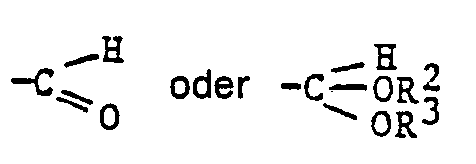
- R 1 for is when X is hydrogen and Y is an OH group, or R 1 is in which R 2 and R 3 have the meaning given above and X and Y together represent oxygen or X represents hydrogen if Y represents an OH group, and processes for their preparation and their use for the production of safranal and 3- Hydroxy-ß-cyclocitral or optically active 3-hydroxy-ß-cyciocitraiacetaien, the important intermediates for the production of wished, nature-identical optically active carotenoids such as. B. (3R, 3'R) zeaxanthin or (3R, 3'R, 6'R) lutein.
- the ketone 1 made from isophorone is converted with a Grignard reagent made from 3-butyn-2-ol to the diol 2, from which the dihydroxyketone 3 is formed by splitting off the ethylenedioxy protective group.
- the latter can be reduced to the triol 4 using lithium aluminum hydride, which can be reacted to the acetate 5 using acetic anhydride in pyridine.
- Dehydration of 5 with phosphoryl chloride in pyridine gives the enyne diacetate 7, which can be reduced to the enyne diol 6 using lithium aluminum hydride and to 3-hydroxy-ß-ionol when working under stricter conditions.
- Selective oxidation of 8 with manganese dioxide leads to the 3-hydroxy-ß-ionon 9.
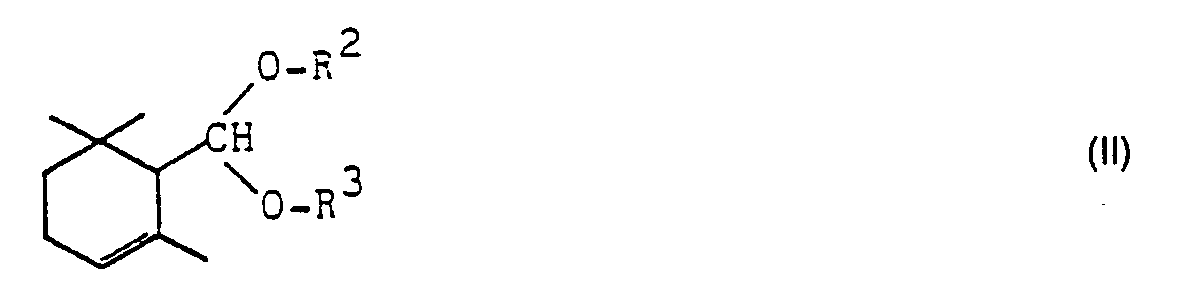
- the trimethylcyclohexenacetals II required as starting materials for the process according to the invention can be obtained by acetalization of a-cyclocitral under customary conditions, e.g. B. with trimethyl orthoformate according to Bull. Chem. Soc. Yep 50 (5), pp. 1161-1168 (1977) or with corresponding glycols, relatively easily accessible under the exclusion of water in the presence of p-toluenesulfonic acid with toluene as entrainer. This results in the following simple synthetic route to the desired 3-hydroxy-ß-ionone and thus to carotenoids such as B. Zeaxanthin:
- the oxidation of the a-cyclocitral acetals II to the 3-oxo-a-cyclocitral acetals II can be carried out using various oxidizing agents.
- II can be converted into III with tert-butyl hydroperoxide and oxygen or air in the presence of rhodiumtripriphenylphosphonium chloride as a catalyst.
- the tert-butyl hydroperoxide is generally used in such amounts that the volume ratio of hydroperoxide to II is 1: 5 to 1: 0.2, preferably about 1: 1.
- the reaction temperature can be between 40 and 110 ° C, temperatures between 60 and 90 ° C are preferred.
- the reaction can be carried out without solvent, but the reaction medium can also be diluted with a solvent which is inert under the reaction conditions, such as tert-butanol, chlorobenzene or xylene.
- a solvent which is inert under the reaction conditions such as tert-butanol, chlorobenzene or xylene.
- the reaction rate is increased when using pure oxygen compared to air, but the oxidizing gas can also be diluted with inert gas if this is desired for safety reasons.
- the amount of catalyst can also be varied within wide limits. Amounts of about 1 mol% are preferably used, but the desired product is still obtained in amounts of 0.1 mol%.
- a representative working procedure can be found in the work of Reuter et al (J. Org. Chem 43 (1978) pages 2438-42), in which the oxidation of various cycloalkenes is described.
- Another possibility for the oxidation of II to III is to use tert-butyl hydroperoxide as the oxidizing agent and Cu (II) acetylacetonate as the catalyst.
- tert-butyl hydroperoxide as the oxidizing agent
- Cu (II) acetylacetonate as the catalyst.
- air or oxygen can be dispensed with here; it is even advantageous to work under a protective gas atmosphere.
- the tert-butyl hydroperoxide is generally used in amounts of 2 to 30 mol, preferably about 10 mol per mol II, and the acetylacetonate in amounts of 1 to 100 mol%, preferably about 10 mol%, based on II Reaction temperatures can be between 40 and 120 ° C, the reaction times between 6 and 24 hours depending on the reaction temperature.
- This method is described in the work of Kimura and Muto (cf. Chem. Pharm. Bull. Japn. 29 (1981), pages 35 to 42) for the oxidation of cholesteryl acetate.
- the oxidation of II to III can also be carried out with di-tert-butyl chromate as the oxidizing agent.
- the di-tert-butyl chromate is generally used in amounts of 1 to 10, preferably about 2 to 4, moles per mole of II.
- the reaction is advantageously carried out by converting a solution of the chromate into a solution of II in acetic anhydride slowly add an inert solvent such as CCI 4 and the reaction mixture is heated for about 1 to 30, preferably about 20 to 24 hours at temperatures of 40 to 80 ° C., preferably about 60 to 65 ° C. with stirring. This process is described in the work of Koent and Apeldoorn (cf. Synth. Commn. 10, Issue 12 (1980), pages 899-904) for the oxidation of a-ions.
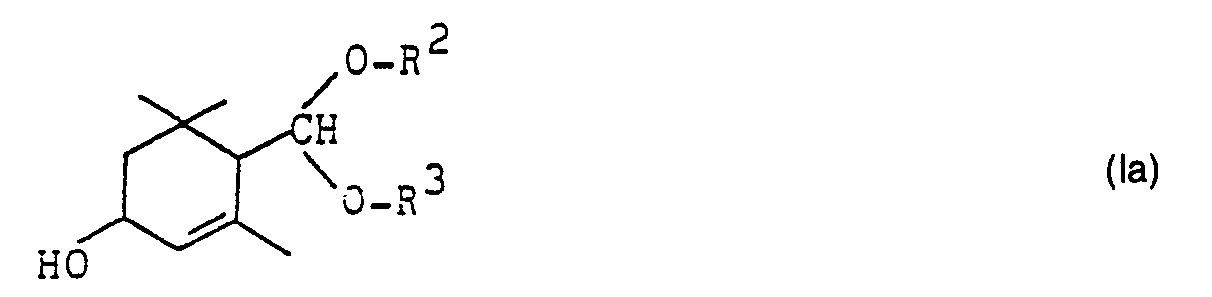
- the alcohols la can be formed as a cis or trans form or as a mixture.
- the isomer composition of la is of minor importance for further use.
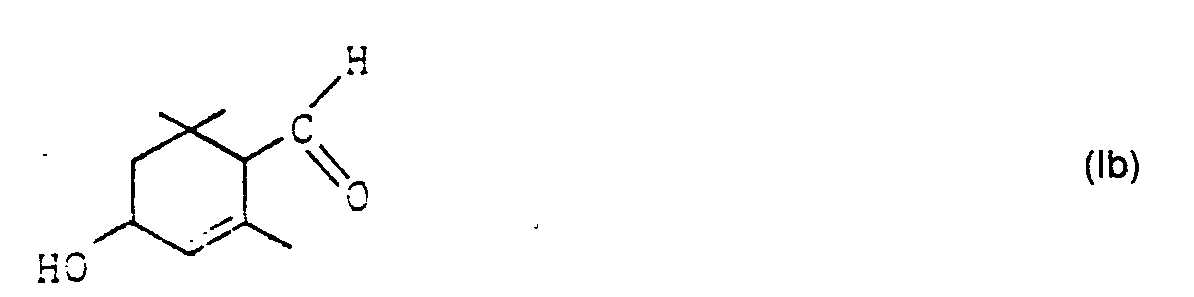
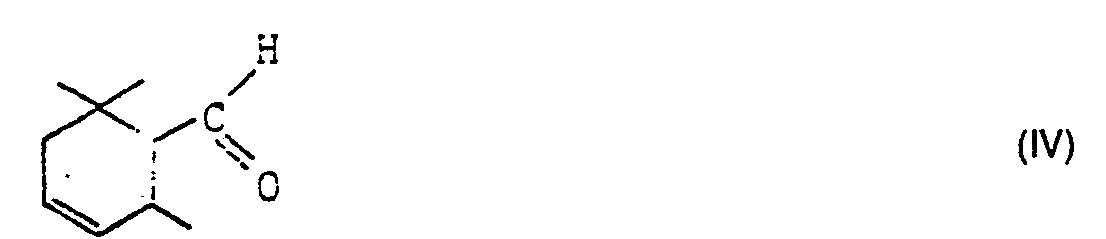
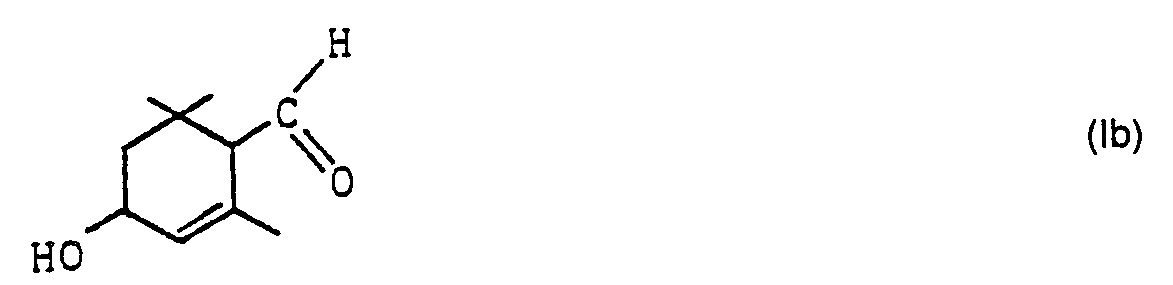
- the new 3-hydroxy- ⁇ -cyclocitralacetals la can easily be hydrolyzed to 3-hydroxy-a-cyclocitral of the formula Ib using dilute acids in water-miscible inert solvents such as methanol, acetone, tetrahydrofuran. If the acid-catalyzed hydrolysis is carried out in an anhydrous medium, 3-hydroxy-a-cyclocitral is not obtained, but its dehydration product safranal (IV). For this reason, in the hydrolysis of la to Ib, the solvent must contain 1 to 80% by weight, preferably 20 to 70% by weight, of water.
- Suitable acids for this purpose are all non-oxidizing medium-strong to strong inorganic or organic acids which are usually used for acid-catalyzed hydrolysis.
- examples include mineral acids such as sulfuric acid or phosphoric acid, organic acids such as p-toluenesulfonic acid or citric acid or acidic cation exchangers.
- the amount of acids is in the usual range, i.e. between about 0.1 and 10 mol%, preferably 0.5 to 1.5 mol%.
- the hydrolysis is preferably carried out at room temperature, but it also takes place at higher temperatures, such as about 50 ° C. or lower temperatures, such as about 0 ° C. It is particularly advantageous to work with p-toluenesulfonic acid in about 70 vol.% Aqueous acetone.
- Suitable organic solvents for this isomerization are expediently alkanols, such as methanol or ethanol or also acetone. With acetone as the solvent, the condensation product, the 3-hydroxy-ß-ionone, which is described in the method described by Loeber et al in loc. cit. described in the naturally occurring carotenoid zexanthin can be implemented.
- the alkali compounds are generally used in these isomerizations in amounts of 0.5 to 2 mol, based on the cyclocitral used.
- a synthetic route to nature-identical (3R, 3 ') - zeaxanthin describe z.
- Safranal (1) is reduced to safranol (2) with diisobutyl aluminum hydride and then protected with isopropenyl methyl ether as acetal (3).
- (-) - alph-pinene and borane-dimethyl sulfide complex prepared chiral Hydrating (+) - diisopinocampheylborane can upon oxidation using NaOH / H 2 0 2 followed by acidic hydrolysis in 30% yield the optically active (3R ) -3-Hydroxy-ß-cyclogeraniol (4) can be obtained.
- the (3S) -3-hydroxy-ß-cyclogeraniol is formed with (+) - alpha-pinene.
- optically active 3-oxo-a-cyciocitraiacetaie which can be obtained easily and in good yields, can occur in the form of two optically active isomers due to the asymmetrically substituted carbon atom (in position 6), optically active 3-oxo-a-cyclocitral acetals could in principle be used as starting compounds for the Desired optically active 3-hydroxy-ß-cyclocitral can be used.
- the compounds have no suitable functional groups which allow simple separation into the two optically active isomers via diastereomeric auxiliary compounds. For this reason, alternative ways of separating the optical isomers had to be sought.
- optically active adsorbents can consist of natural polymers, of derivatized natural polymers or of special synthetic polymers.
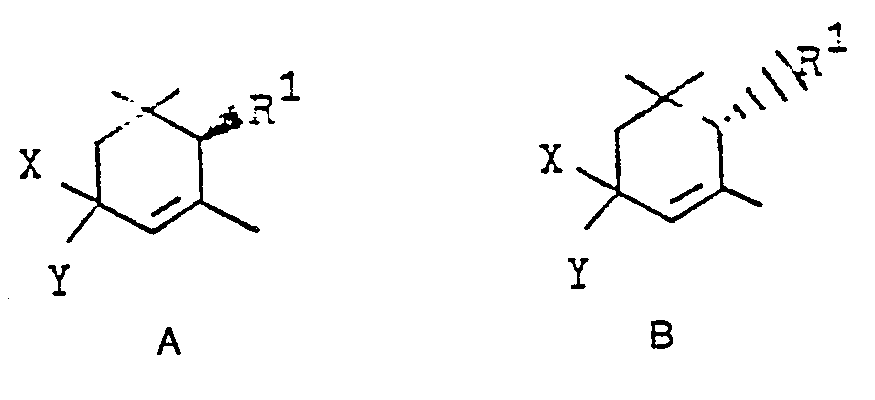
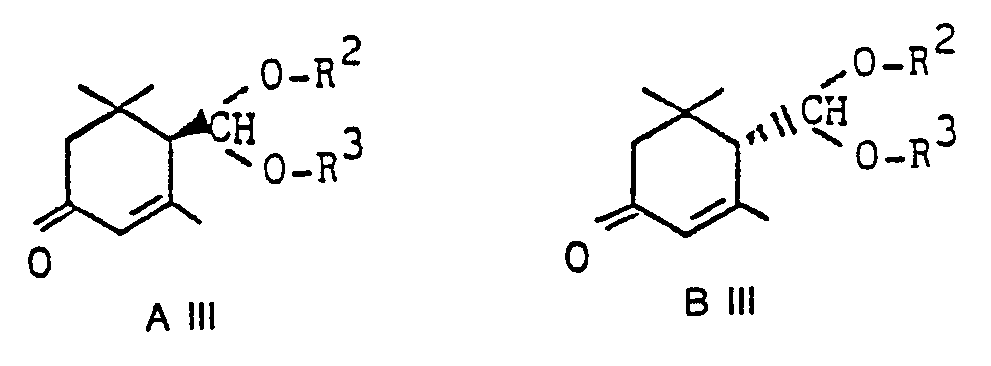
- the invention accordingly also relates to a process for the preparation of optically active 3-oxo- ⁇ -cyclocitral derivatives of the general formulas A III and B III, which is characterized in that mixtures of the corresponding racemic 3-oxo- ⁇ -cyclocitral acetals are prepared by chromatography suitable chiral adsorbents, preferably on derivatized cellulose, into the optically active acetals. It is particularly advantageous to separate the 3-oxo-a-cyclocitral acetals from triacetylated cellulose with lower alkanols as the eluent.
- both the right-handed and the left-handed form of the acetals can be obtained. If only one of the two forms is desired for reasons of further processing, the undesired form can easily be converted back into the racemate by isomerization with bases in alkanols as solvents.
- the recovered racemate can again be subjected to the chromatographic separation.
- By recycling the entire amount of racemic 3-oxo- ⁇ -cyclocitral acetal can finally be converted into either optically active la or Ib. This particular economic advantage is further enhanced by the fact that no expensive auxiliary reagents are used.
- Suitable reducing agents for reaction step b) are sodium borohydride in the presence of cerium (III) compounds and diisobutyl aluminum hydride and lithium tri-tert-butoxy aluminum hydride.
- the preferred reaction conditions for reaction steps b) and c) are the same as those described above for reaction steps b) and c) of the corresponding racemic compounds.
- the invention furthermore relates to the use of the optically active 3-hydroxy-a-cyclocitrals of the formulas A "I and B" I for the production of optically active 3-hydroxy- ⁇ -cyclocitral of the formulas Va and Vb by isomerization in the presence of alkali hydroxides or alkali alkoxides in suitable organic solvents.
- the reaction mixture was washed twice with 40 ml of water, the water phase extracted with methyl tert-butyl ether (MTB), the organic phases combined and dried (MgS0 4 ).
- the crude product was degassed at 0.6 mbar and freed from low-boiling fractions in a micro thin-film evaporator apparatus.
- aqueous phases were combined, extracted with 100 ml of hexane and the hexane phase was dried together with the organic phase (MgSO 4 ) and concentrated at 45 ° C. on a rotary evaporator. The residue was rapidly distilled over a short bridge (bp 0.05 : 90 ° C). The fine distillation delivers at a K p 0.01 mbar from 80 to 85 ° C 85.5 g of 3-oxo-a-cyclocitraldimethylacetal. This corresponds to a yield of 70.7% of theory.
- Example 1 B Analogously to Example 1 B, 33 g (0.168 mol) of a-cyclocitralethylene glycol acetal were oxidized with 125 ml of a 2.2 m tert-butyl chromate solution in the course of 30 h. The turnover was 47%. After distillation at 0.3 mbar and 95 to 100 ° C, 12.9 g of a yellow oil was obtained, which crystallized on cooling. The yield was 78% of 3-oxo-a-cyclocitralethylene glycol acetal, based on the converted a-cyclocitralethylene glycol acetal. After recrystallization from diisopropyl ester, the melting point was 71 to 71.5 ° C.
- Example 1 B b Analogously to Example 1 B b, 36 g (0.151 mol) of a-cyclocitralneopentyl glycol acetal were oxidized with 125 ml of a 2.2 molar tert-butyl chromate solution. After 30 h, 72% of the starting material had been converted. Distillation of the crude product obtained at 0.25 mbar and 115 ° C. gave 16.4 g of a highly viscous oil which contained 88% 3-oxo- ⁇ -cyclocitralneopentylglycol acetal.
- the oil obtained was dissolved in 140 ml of pyridine and treated with 28 ml of acetic anhydride. After the addition of 50 mg of 4-dimethylamino-pyridine, the mixture was left at room temperature for 16 hours. The mixture was then diluted with 500 ml of water and brought to pH 3 with dilute hydrochloric acid, extracted with 200 ml of CH 2 Cl 2 and twice with 50 ml of water, once with 50 ml of saturated NaHCO 3 solution and once with 50 ml Washed water. After drying over MgS0 4 and concentration on a rotary evaporator, 16.23 g of 3-acetoxy- ⁇ -ionone remained (content 89%). This corresponds to a yield of 94% of theory, based on the 3-hydroxy-a-cyclocitral used.
- the eluate was fractionated so that about 25% of the amount used formed a fraction with right-handed antipodes, about 50% a racemate middle fraction and about 25% a fraction with left-handed antipodes. After evaporating off the eluent on a rotary evaporator, they were obtained optically
- racemic 3-oxo- ⁇ -cyclocitralpropylene glycol acetal obtained can be used again according to Example 1a for the preparation of (+) - or (-) - 3-oxo- ⁇ -cyclocitralpropylene glycol acetals.
- Example 10a Analogously to Example 10a, the following optically active 3-hydroxy-a-cyclocitral acetals were also prepared.
Landscapes
- Chemical & Material Sciences (AREA)
- Organic Chemistry (AREA)
- Chemical Kinetics & Catalysis (AREA)
- Engineering & Computer Science (AREA)
- Oil, Petroleum & Natural Gas (AREA)
- Organic Low-Molecular-Weight Compounds And Preparation Thereof (AREA)
- Low-Molecular Organic Synthesis Reactions Using Catalysts (AREA)
Description
- Die Erfindung betrifft 3-Hydroxy-a-cyclocitralderivate der allgemeinen Formel I


- Die genannten Carotinoide sind wichtige natürliche Farbstoffe, die in Pflanzen und Algen vorkommen. Da die Isolierung dieser Farbstoffe aus den natürlichen Vorkommen aufwendig und teuer ist und den Bedarf bei weitem nicht decken kann, wurden zahlreiche Versuche unternommen, diese Verbindungen vollsynthetisch herzustellen. Die Herstellung der dazu benötigten Ausgangsverbindungen mit terpenoiden Strukturelementen, die durch Sauerstoff funktionalisiert sind, war bisher jedoch sehr aufwendig und gelang oft nur in unbefriedigenden Ausbeuten. So beschreiben Loeber et al. in J. Chem. Soc. (C) (1971), Seiten 404-408, einen Syntheseweg zum Zeaxanthin auf folgendem Weg :
- Das aus Isophoron hergestellte Keton 1 wird mit einem aus 3-Butin-2-ol hergestellten Grignard-Reagenz zu dem Diol 2 umgesetzt, aus dem durch Abspalten der Ethylendioxy-Schutzgruppe das Dihydroxyketon 3 gebildet wird. Letzteres läßt sich mit Lithiumaluminiumhydrid zu dem Triol 4 reduzieren, welches mit Acetanhydrid in Pyridin zu dem Acetat 5 umgesetzt werden kann. Dehydratisierung von 5 mit Phosphorylchlorid in Pyridin gibt das Enindiacetat 7, welches mittels Lithiumaluminiumhydrid zu dem Enindiol 6 und beim Arbeiten unter strengeren Bedingungen zu dem 3-Hydroxy-ß-ionol reduziert werden kann. Selektive Oxidation von 8 mit Mangandioxid führt zu dem 3-Hydroxy-ß-ionon 9. Letzteres ergibt beim Umsetzen mit Vinylmagnesiumbromid den Vinylalkohol 10, welcher bei Behandlung mit Triphenylphosphoniumbromid das Wittig-Reagenz 11 bildet, welches beim Erhitzen mit dem Dialdehyd 12 in 1,2-Epoxy-butan Zeaxanthin 14 in guten Ausbeuten ergibt. Kondensation des Wittigsalzes 11 mit (C25-)β-Apo-12'-carotenal 16 in 1,2-Epoxybutan liefert β-Cryptoxanthin 18 und mit racemischem (C25- )-a-Apo-12'-carotenal das Zeinoxanthin 17. Das folgende Formelschema 1 gibt den beschriebenen Syntheseweg wieder :
(Siehe Formelschema 1 Seite 4 f.) - Wie aus dem Dargelegten hervorgeht, ist die Herstellung der begehrten Carotinoide ausgehend vom 3-Hydroxy-ß-ionon 9 recht einfach und vorteilhaft, der Weg zum Hydroxy-ß-ionon 9 dagegen durch zahlreiche und aufwendige Reaktionsstufen, wie die mehrfache Umsetzung mit Lithiumaluminiumhydrid und die heterogene Oxidation von 8 mit Braunstein für eine technische Herstellung ungeeignet.
- Es war daher die Aufgabe der Erfindung einen neuen vorteilhafteren Weg zur Herstellung von 3-Hydroxy-ß-ionon zu finden.
- Mit den a-Cyclocitralderivaten der allgemeinen Formel I wurden nun Verbindungen gefunden, die auf relativ einfache Weise zugänglich sind und über die ein neuer technisch vorteilhafterer Zugang zu 3-Hydroxy-ß-ionon eröffnet wird. Die 3-Hydroxy-a-cyclocitralacetale der Formel la eröffnen außerdem einen neuen vorteilhaften Weg zu dem begehrten Aromastoff Safranal.
- Gegenstand der vorliegenden Erfindung sind demnach neben den oben definierten Verbindungen der Formel und deren Verwendung zur Herstellung von 3-Hydroxy-ß-ionon und Safranal auch ein Verfahren zur Herstellung von 3-Hydroxy-a-cyclocitralderivaten der allgemeinen Formel I

- a) das entsprechende Trimethylcyclohexenacetal der allgemeinen Formel II


- b) dieses mit einem geeigneten Reduktionsmittel, vorzugsweise mit Natriumborhydrid in Gegenwart von Cer-(II)-Verbindungen oder mit Di-isobutylaluminiumhydrid oder mit Lithium-tri-tert.-butoxyalumi- nium-hydrid als geeignetem Reduktionsmittel, zu dem 3-Hydroxy-a-cyclocitralacetal der allgemeinen Formel la reduziert


- c) in Gegenwart von organischen oder anorganischen Säuren in wäßrigen organischen Lösungsmitteln, vorzugsweise in Gegenwart von p-Toluolsulfonsäure in etwa 70 (Vol.)-%igem wäßrigem Aceton, hydrolysiert.
- Die als Ausgangsstoffe für das erfindungsgemäße Verfahren benötigten Trimethylcyclohexenacetale II sind durch Acetalisierung von a-Cyclocitral unter üblichen Bedingungen, z. B. mit Orthoameisensäuretrimethylester gemäß Bull. Chem. Soc. Jap. 50 (5), S. 1161-1168 (1977) oder mit entsprechenden Glykolen unter Wasserauskreisen in Gegenwart von p-Toluolsulfonsäure mit Toluol als Schleppmittel relativ einfach zugänglich. Somit ergibt sich folgender einfacher Syntheseweg zu dem gewünschten 3-Hydroxy-ß-ionon und damit zu Carotinoiden wie z. B. Zeaxanthin :

- Die als Zwischenprodukte bei dem erfindungsgemäßen Verfahren auftretenden 3-Oxo-α-cyclocitralacetale der allgemeinen Formel III wurden teilweise zwar kürzlich bereits beschrieben (vgl. Takazawa et al., Bull. Chem. Soc. Jap. 55 (1982) Seiten 1907-11), jedoch erscheint in der loc. cit. beschriebene Syntheseweg für diese Verbindungen ausgehend von Isophoron aus mehreren Gründen für ein Verfahren in technischem Maßstab wenig vorteilhaft.
- Im folgenden seien die einzelnen Stufen des erfindungsgemäßen Verfahrens näher erläutert.
- Die Oxidation der a-Cyclocitralacetale II zu den 3-Oxo-a-Cyclocitralacetalen II läßt sich mit verschiedenen Oxidationsmitteln durchführen. So kann man beispielsweise II mit tert.-Butylhydroperoxid und Sauerstoff oder Luft in Gegenwart von Rhodiumtristriphenylphosphoniumchlorid als Katalysator in III überführen. Das tert.-Butyl-hydroperoxid verwendet man hierbei im allgemeinen in solchen Mengen, daß das Volumenverhältnis von Hydroperoxid zu II 1 : 5 bis 1 : 0,2, vorzugsweise etwa 1 : 1 beträgt. Die Reaktionstemperatur kann zwischen 40 und 110 °C liegen, bevorzugt werden Temperaturen zwischen 60 und 90 °C. Die Umsetzung kann lösungsmittelfrei erfolgen, man kann aber auch das Reaktionsmedium mit einem unter den Reaktionsbedingungen inerten Lösungsmittel, wie tert.-Butanol, Chlorbenzol oder Xylol verdünnen. Die Reaktionsgeschwindigkeit ist bei Verwendung von reinem Sauerstoff gegenüber Luft erhöht, man kann aber das Oxidationsgas auch mit Inertgas verdünnen, falls dies aus Sicherheitsgründen erwünscht ist. Die Katalysatormenge kann ebenfalls in weiten Grenzen variiert werden. Bevorzugt verwendet man Mengen von etwa 1 Mol.%, jedoch auch mit Mengen von 0,1 Mol.% wird das gewünschte Produkt noch erhalten. Eine repräsentative Arbeitsvorschrift findet sich in der Arbeit von Reuter et al (J. Org. Chem 43 (1978) Seiten 2438-42), in welcher die Oxidation verschiedener Cycloalkene beschrieben wird. Darüber hinausgehend wurde überraschend gefunden, daß es bei der erfindungsgemäßen Umsetzung nicht erforderlich ist, den Triphenylphosphinkomplex des Rhodiums einzusetzen, sondern daß man statt dessen RhCl3 · 3 H2O verwenden kann. Unter sonst gleichen Bedingungen kann bei Verwendung von RhCl3 - 3 H20 die Katalysatormenge auf 0,2 bis 0,02 Mol.% gesenkt werden.
- Eine weitere Möglichkeit für die Oxidation von II zu III besteht in der Verwendung von tert.-Butylhydroperoxid als Oxidationsmittel und Cu(II)-Acetylacetonat als Katalysator. Auf die Mitverwendung von Luft oder Sauerstoff kann hierbei verzichtet werden, man arbeitet mit Vorteil sogar unter einer Schutzgasatmosphäre.
- Hierbei verwendet man das tert.-Butylhydroperoxid im allgemeinen in Mengen von 2 bis 30 Mol, vorzugsweise etwa 10 Mol pro Mol II und das Acetylacetonat in Mengen von 1 bis 100 Mol.%, vorzugsweise etwa 10 Mol.%, bezogen auf II. Die Reaktionstemperaturen können zwischen 40 und 120°C liegen, die Reaktionszeiten je nach Reaktionstemperatur zwischen 6 und 24 Stunden. Dieses Verfahren ist in der Arbeit von Kimura und Muto (vgl. Chem. Pharm. Bull. Japn. 29 (1981), Seiten 35 bis 42) für die Oxidation von Cholesterylacetat beschrieben.
- Die Oxidation von II zu III kann weiterhin mit Di-tert.-butylchromat als Oxidationsmittel durchgeführt werden. Hierbei verwendet man das Di-tert.-butylchromat im allgemeinen in Mengen von 1 bis 10, vorzugsweise etwa 2 bis 4 Mol pro Mol II. Die Umsetzung erfolgt mit Vorteil so, daß man zu einer Lösung von II in Essigsäureanhydrid eine Lösung des Chromats in einem inerten Lösungsmittel wie CCI4 langsam zufügt und das Reaktionsgemisch noch etwa 1 bis 30, vorzugsweise etwa 20 bis 24 Stunden bei Temperaturen von 40 bis 80 °C, vorzugsweise etwa 60 bis 65 °C unter Rühren erhitzt. Dieses Verfahren wird in der Arbeit von Könst und Apeldoorn (vgl. Synth. Commn. 10, Heft 12 (1980), Seiten 899-904) für die Oxidation von a-lonen beschrieben.
- Je nach den Reaktionsbedingungen werden die neuen Cyclohexenone III in Ausbeuten von 30 bis 70 % erhalten.
- Es war überraschend, daß unter den beschriebenen Bedingungen mit hoher Selektivität die Wasserstoffatome am Kohlenstoff 3 oxidativ angegriffen werden. Da in II drei verschiedene allylständige Wasserstoffgruppen vorliegen, hätte man die Bildung von komplizierten Produktgemischen erwarten können. Dies umso mehr als auch Reuter et al in loc. cit. unter den entsprechenden Reaktionsbedingungen Doppelbindungsverschiebungen beobachten konnten, die zur Bildung verschiedener Oxidationsprodukte Anlaß gaben. Außerdem konnte man erwarten, daß die Acetalgruppe unter den Reaktionsbedingungen zerstört werden würde. Die entsprechenden gesättigten Acetale zersetzen sich nämlich unter den angegebenen Reaktionsbedingungen in kurzer Zeit unter Bildung von 2,2,6-Trimethyl-cyclohexancarbonsäure (s. Vergleichsbeispiel).
- Die Umsetzung der erhaltenen 3-Oxo-α-cyclocitral-acetale 111 zu den 3-Hydroxy-a-cyclocitralacetalen la erfolgt in an sich bekannter Weise, weshalb sich detaillierte Ausführungen erübrigen. Sie kann beispielsweise mit Natriumborhydrid in Gegenwart von Cer(III)-salzen aber auch mit anderen milden Reduktionsmitteln wie Diisobutylaluminiumhydrid oder Lithium-tri-tert.-butoxyaluminiumhydrid in üblicher Weise durchgeführt werden.
- Die Alkohole la können je nach den Reaktionsbedingungen als cis- oder trans-Form oder auch als Gemisch gebildet werden. Für die weitere Verwendung ist die Isomerenzusammensetzung von la aber von untergeordneter Bedeutung.
- Die neuen 3-Hydroxy-α-cyclocitralacetale la lassen sich mit verdünnten Säuren in mit Wasser mischbaren inerten Lösungsmitteln wie Methanol, Aceton, Tetrahydrofuran leicht zu 3-Hydroxy-a-cyclocitral der Formel Ib hydrolysieren. Wenn man die säurekatalysierte Hydrolyse in wasserfreiem Medium ausführt, erhält man nicht 3-Hydroxy-a-cyclocitral, sondern dessen Dehydratisierungsprodukt Safranal (IV). Aus diesem Grunde muß bei der Hydrolyse von la zu Ib das Lösungsmittel 1 bis 80 Gew.%, vorzugsweise 20 bis 70 Gew.% Wasser enthalten. Als Säuren sind hierfür alle nichtoxidierenden mittelstarken bis starken anorganischen oder organischen Säuren geeignet, die üblicherweise für säurekatalysierte Hydrolysen zum Einsatz kommen. Genannt seien beispielsweise Mineralsäuren wie Schwefelsäure oder Phosphorsäure, organische Säuren, wie p-Toluolsulfonsäure oder Citronensäure oder aber saure Kationenaustauscher. Die Menge der Säuren liegt im üblichen Bereich, d.h. zwischen etwa 0,1 und 10 Mol.%, vorzugsweise 0,5 bis 1,5 Mol.%. Die Hydrolyse wird bevorzugt bei Raumtemperatur durchgeführt, sie läuft aber auch bei höheren Temperaturen, wie etwa 50 °C oder tieferen Temperaturen, wie etwa 0 °C ab. Mit besonderem Vorteil arbeitet man mit p-Toluolsulfonsäure in etwa 70 vol.%igem wäßrigem Aceton.
- Die Umsetzung von la zu Safranal (IV) erfolgt unter den unter c) für die Hydrolyse beschriebenen Bedingungen, jedoch in einem wasserfreien Lösungsmittel.
- Die Isomerisierung von 3-Hydroxy-a-cyclocitral (Ib) zu 3-Hydroxy-ß-cyclocitral (V) erfolgt in Gegenwart von Alkalihydroxiden, wie NaOH oder KOH oder aber in Gegenwart von Alkalialkoholaten, insbesondere Natriummethylat.
- Als geeignete organische Lösungsmittel kommen für diese Isomerisierung zweckmäßigerweise Alkanole, wie Methanol oder Ethanol oder auch Aceton in Betracht. Mit Aceton als Lösungsmittel kann man bei längeren Reaktionszeiten (z. B. 3 h) gleich das Kondensationsprodukt, das 3-Hydroxy-ß-ionon isolieren, welches in der von Loeber et al in loc. cit. beschriebenen Weise in das in der Natur vorkommende Carotinoid Zexanthin umgesetzt werden kann.
- Die Alkaliverbindungen verwendet man bei diesen Isomerisierungen im allgemeinen in Mengen von 0,5 bis 2 Mol, bezogen auf eingesetztes Cyclocitral. Einen Syntheseweg zum naturidentischen (3R, 3')-Zeaxanthin beschreiben z. B. A. Rüttimann und H. Mayer in Helv. Chim. Acta 63 (1980), Seiten 1456-62 auf folgendem Weg :
- Safranal (1) wird mit Diisobutylaluminiumhydrid zum Safranol (2) reduziert und anschließend mit Isopropenylmethylether als Acetal (3) geschützt. Mit dem in situ aus (-)-alph-Pinen und Boran-Dimethylsulfid-Komplex hergestellten chiralen Hydrierungsreagenz (+)-Diisopinocampheylboran kann nach Oxidation mit NaOH/H202 gefolgt von saurer Hydrolyse in 30 %iger Ausbeute das optisch aktive (3R)-3-Hydroxy-ß-cyclogeraniol (4) erhalten werden. Mit (+)-alpha-Pinen wird das enantiomere (3S)-3-Hydroxy-ß-cyclogeraniol gebildet. Selektive Oxidation von (4) liefert das gewünschte (3R)-3-Hydroxy-ß-cyclocitral (5). Umsetzung mit Aceton in Gegenwart von Natriummethylat führt zum (3R)-3-Hydroxy-ß-ionon (6), das mit zwei Äquivalenten Vinylmagnesiumbromid das Diol (7) ergibt. Mit methanolischer HCI wird hieraus das Phosphoniumsalz (8) erhalten. Die Wittig-Reaktion mit dem üblichen symmetrischen C1Q-Dialdehyd führt schließlich zum all-E-(3R, 3'R)-Zeaxanthin (9). Die optische Reinheit des Endproduktes wird entscheidend durch die Qualität des als Hilfsreagenz eingesetzten alpha-Pinens bestimmt.
- Das folgende Formelschema erläutert diesen Syntheseweg :

- Wie aus dem Dargelegten hervorgeht, ist die Herstellung des begehrten Carotinoids Zeaxanthin ausgehend von (3R)3-Hydroxy-ß-cyclocitral recht einfach und vorteilhaft. Der Weg zum (3R)3-Hydroxy-ß-cyclocitral ist jedoch auf dem dargelegten Weg wegen schlecht zugänglicher Ausgangsstoffe und aufwendiger Reaktionsstufen für eine technische Herstellung ungeeignet.
- Es war daher die Aufgabe der Erfindung, einen neuen vorteilhafteren Weg zur Herstellung von - optisch aktivem 3-Hydroxy-ß-cyclocitral zu finden.
- Eine Racematspaltung der relativ leicht zersetzlichen 3-Hydroxy-a-cyclocitralacetale oder der freien Aldehyde ließ sich technisch nicht vorteilhaft realisieren.
- Da die leicht und in guten Ausbeuten erhältlichen 3-Oxo-a-cyciocitraiacetaie aufgrund des asymmetrisch substituierten Kohlenstoffatoms (in Position 6) in Form von zwei optisch aktiven Isomeren vorkommen können, könnten optisch aktive 3-Oxo-a-cyclocitralacetale grundsätzlich als Ausgangsverbindungen für das gewünschte optisch aktive 3-Hydroxy-ß-cyclocitral eingesetzt werden.
- Die Verbindungen besitzen jedoch keine geeigneten funktionellen Gruppen, die eine einfache Trennung in die beiden optisch aktiven Isomeren über diastereomere Hilfsverbindungen zuließen. Aus diesem Grunde mußte nach alternativen Möglichkeiten zur Trennung der optischen Isomeren gesucht werden.
- Eine alternative Möglichkeit zur Trennung von optischen Isomeren besteht prinzipiell in der Chromatographie der racemischen Gemische an optisch aktiven Adsorbentien.
- Diese optisch aktiven Adsorbentien können aus natürlichen Polymeren, aus derivatisierten natürlichen Polymeren oder aus speziellen synthetischen Polymeren bestehen.
- Allerdings lehrt die Literatur, daß als Voraussetzung für eine solche chromatographische Trennung die Möglichkeit der Ausbildung von Wasserstoff-Brückenbindungen (s. G. Blaschke, Angew. Chemie 92 (1980), Seiten 14 bis 25), die Möglichkeit der Ausbildung von Donor-Aceptor-Wechselwirkungen (s. W. H. Pirkle et al., J. Org. Chem. 44 (1979), Seiten 1957 bis 1960) oder das Vorhandensein von möglichst unsubstituierten Phenyl-Resten in der Nähe des Chiralitätszentrums (s. G. Hesse und R. Hagel. Chromatographia 9 (1976), Seiten 62 bis 68) gegeben sein sollten, und deshalb entsprechend substituierte Verbindungen vorliegen müßten.
- Überraschenderweise wurde nun gefunden, daß 3-Oxo-cyclocitralacetale durch Chromatographie an solchen optisch aktiven Adsorbentien in ihre optischen Isomeren gespalten werden können.
- Es zeigte sich, daß die Trennung an derivatisierter Cellulose, insbesondere an triacetylierter nativer Cellulose, wie sie beispielsweise nach dem sogen. Schering-Verfahren durch Acetylierung von Cellulose in Benzol mit Perchlorsäure oder in Toluol mit Schwefelsäure als Katalysator (s. Houben-Weyl « Methoden der Organischen Chemie, 4. Aufl., XIV/2, Seite 875, Zeile 5f) erhalten wird, mit niederen Alkanolen als Elutionsmittel zu guten Erfolgen führt. Als Alkanole eignen sich hierfür Methanol, Ethanol, Propanol, iso-Propanol und n- und Isobutanol oder auch Mischungen dieser Alkanole.
- Gegenstand der Erfindung ist dementsprechend auch ein Verfahren zur Herstellung von optisch aktiven 3-Oxo-α-cyclocitralderivaten der allgemeinen Formeln A III und B III, das dadurch gekennzeichnet ist, daß man Gemische der entsprechenden racemischen 3-Oxo-α-cyclocitralacetale durch Chromatographie an geeigneten chiralen Adsorbentien, vorzugsweise an derivatisierter Cellulose, in die optisch aktiven Acetale trennt. Mit besonderem Vorteil trennt man die 3-Oxo-a-cyclocitralacetale an triacetylierter Cellulose mit niederen Alkanolen als Elutionsmittel.
- Mit Hilfe des oben beschriebenen Verfahrens kann sowohl die rechtsdrehende als auch die linksdrehende Form der Acetale erhalten werden. Wird aus Gründen der Weiterverarbeitung nur die eine der beiden Formen gewünscht, so kann man die unerwünschte Form auf einfache Weise durch Isomerisieren mit Basen in Alkanolen als Lösungsmittel wieder in das Racemat umsetzen.
- Das zurückgewonnene Racemat kann wieder der chromatographischen Trennung unterworfen werden. Durch die Rückführung läßt sich schließlich die gesamte Menge an racemischem 3-Oxo-α-cyclocitralacetal in entweder optisch aktives la oder Ib überführen. Dieser besondere wirtschaftliche Vorteil wird noch dadurch weiter verstärkt, daß keine teuren Hilfsreagenzien verbraucht werden.
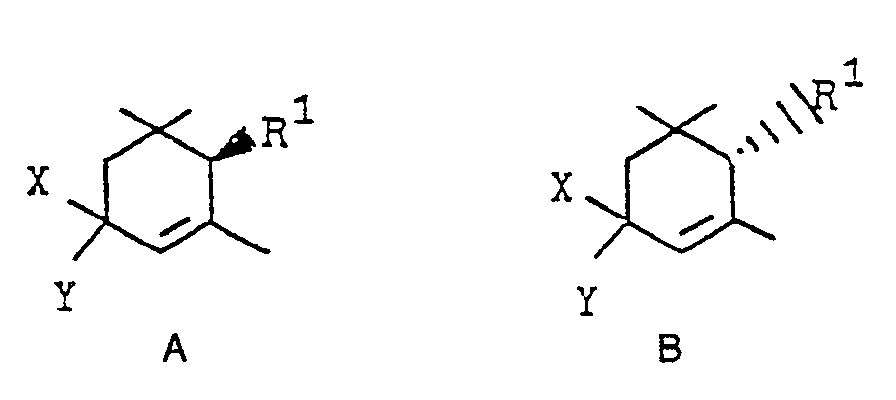
- Gegenstand der Erfindung ist weiterhin ein Verfahren zur Herstellung von optisch aktiven 3-Hydroxy-α-cyclocitralderivaten der allgemeinen Formeln A und B

- a) das entsprechende Trimethylcyclohexenacetal der allgemeinen Formel II


- aa) diese wie oben beschrieben in die optisch aktiven 3-Oxo-α-cyclocitralacetale der Formeln A III und B III

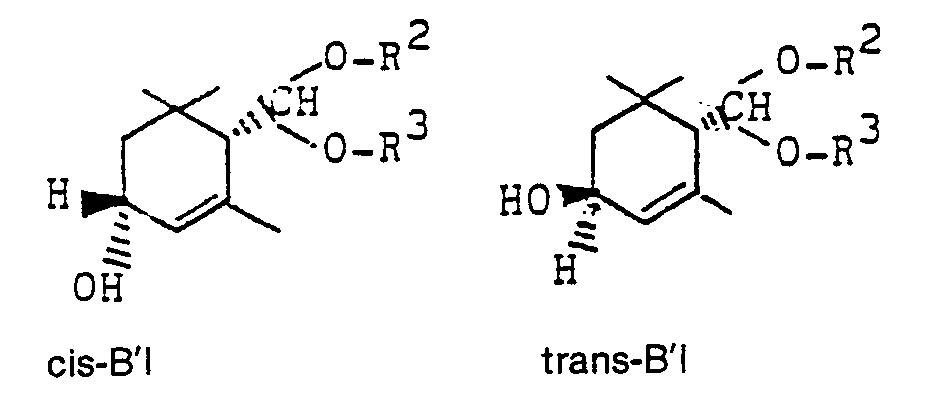
- b) diese gegebenenfalls mit einem geeigneten Reduktionsmittel stereoselektiv zu optisch aktiven trans- oder cis-3-Hydroxy-a-cyclocitralacetalen der allgemeinen Formeln A'I und B'I reduziert


- c) in Gegenwart von organischen oder anorganischen Säuren in wäßrigen organischen Lösungsmitteln zu optisch aktiven 3-Hydroxy-α-cyclocitrat der Formeln trans- und cis- A"I und B"I

- Als geeignete Reduktionsmittel für den Reaktionsschritt b) seien Natriumborhydrid in Gegenwart von Cer(III)-verbindungen sowie Diisobutylaluminiumhydrid und Lithium-tri-tert.-butoxyaluminiumhydrid genannt. Die bevorzugten Reaktionsbedingungen für die Reaktionsschritte b) und c) sind die gleichen wie sie oben für die Reaktionsschritte b) und c) der entsprechenden racemischen Verbindungen beschrieben wurden.
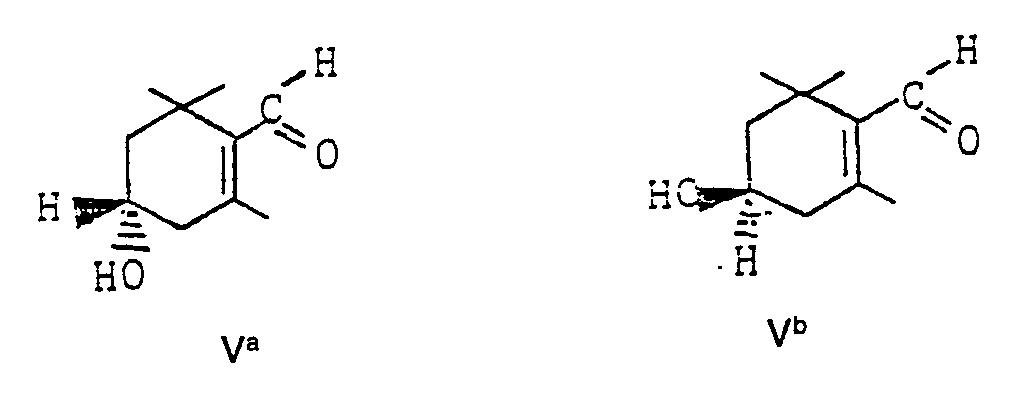
- Gegenstand der Erfindung ist weiterhin die Verwendung der optisch aktiven 3-Hydroxy-a-cyclocitralen der Formeln A"I bzw. B"I zur Herstellung von optisch aktivem 3-Hydroxy-ß-cyclocitral der Formeln Va und Vb
- Eine Mischung aus 50 ml (47,6 g ; 0,238 Mol) a-Cyclocitraldimethyl-acetal, 50 ml tert.-Butylhydroperoxid (80 %ig), 200 mg RhCl3·3H2O und 2 g NaHC03 wurde bei 60 °C 25 Stunden (h) mit Sauerstoff (5 I/h) begast. Das Reaktionsgemisch wurde zweimal mit je 40 ml Wasser gewaschen, die Wasserphase mit Methyl-tert.-butylether (MTB) extrahiert, die organischen Phasen vereinigt und getrocknet (MgS04). In einer Microdünnschichtverdampferapparatur wurde das Rohprodukt bei 0,6 mbar entgast und von leichtsiedenden Anteilen befreit. Der Rückstand (46 g) wurde in 60 g Erdnußöl aufgenommen und bei 0,01 mbar und 130 °C destilliert. Man erhält 36 g eines 71 %igen 3-Oxo-α-cyclocitraldimethylacetals. Das entspricht einer Ausbeute von 50,1 % der Theorie.
- Eine Lösung von 138 g (1,38 Mol) CrO3 in 230 ml Wasser wurde bei Raumtemperatur in 246 g tert.-Butanol getropft und das Reaktionsgemisch 1 h bei dieser Temperatur gerührt. Die erhaltene Lösung wurde zweimal mit 700 ml Tetrachlorkohlenstoff extrahiert, die organische Phase mit 250 ml H20 gewaschen und bei 20 bis 30 °C am Rotationsverdampfer auf ca. 900 ml eingeengt.
- Zu einer Lösung von 165 g (0,83 Mol) α-Cyclocitraldimethylacetal in 180 ml Essisäureanhydrid wurden innerhalb von 1 1/4 h bei 60 °C 700 ml der gemäß Ba) hergestellten Lösung zugetropft und das Reaktionsgemisch anschließend 22 h bei 60 bis 65 °C gerührt. Nach Abkühlen des Reaktionsgemisches wurde über Kieselgel abgesaugt, mit 11 CCl4 nachgewaschen und das Filtrat mit 300 ml gesättigter NaHCO3-Lösung neutralgewaschen. Nach dem Trocknen (MgSO4) und Einengen verblieben 169 g Rohprodukt.
- Destillation bei 63 bis 80 °C (0,01 mbar) lieferte 68 g eines 95 %igen 3-Oxo-α-cyclocitral-dimethylacetals. Das entspricht einer Ausbeute von 38,5 % der Theorie.
- 113,25 g (0,57 Mol) a-Cyclocitraldimethylacetal wurde in 230 ml Toluol gelöst und die Lösung mit 6,9 g Cu(II)-Acetylacetonat versetzt. Das erhaltene Gemisch wurde auf 70 °C erwärmt und mit 283,2 ml tert.-Butylhydroperoxid (80 %ig in Di-tert.-butylperoxid) versetzt. Nach 10 1/2 h wurde das Reaktionsgemisch auf Raumtemperatur (RT) abgekühlt und nach Zugabe von 250 ml Wasser 30 Min. gerührt. Die Phasen wurden getrennt und der organische Anteil mit 200 ml gesättigter Natriumsulfit-Lösung 1 h gerührt. Die wäßrigen Phasen wurden vereinigt, mit 100 ml Hexan extrahiert und die Hexanphase zusammen mit der organischen Phase getrocknet (MgSO4) und bei 45°C am Rotationsverdampfer eingeengt. Der Rückstand wurde über eine kurze Brücke rasch destilliert (Kp0,05 : 90 °C). Die Feindestillation liefert bei einem Kp0,01 mbar von 80 bis 85 °C 85,5 g 3-Oxo-a-cyclocitraldimethylacetal. Das entspricht einer ausbeute von 70,7 % der Theorie.
- Massenspektrum :
- m/e = 212 (M+ 0 %) ; 181 (M―OCH3; 3 %) 137 (M-CH(OCH3)2 ; 3 %) ; 75 (CH(OCH3)2 ; 100 %)
- 1H-NMR (CDCl3) δ = 1,046 (3H, S, C1-CH3) ; 1,12 (3 H, S, C1-CH3) ; 1,974 (1H, d, J = 16,5 Hz, CZ-Hax) ; 2,10 (3H, S, C5-CH3) ; 2,25 (1 H, S, br, C6-H) ; 2,61 (1 H, d, J = 16,5 Hz, C2-Heq) ; 3,42 (3H, S, OCH3) ; 3,45 (3H, S, OCH3) ; 4,52 (1 H, d, J = 2,1 Hz, C7-H) ; 5,98 (1 H, S, C4-H)
- 70 g (0,33 Mol) 3-Oxo-α-cyclocitral-dimethylacetal wurden in 600 ml Methanol gelöst und mit 104,5 g CeCl3·5H2O versetzt. Die Lösung wurde auf 5 °C gekühlt und innerhalb 1 h portionsweise 20 g Natriumborhydrid zugegeben. Anschließend wurde das Gemisch innerhalb von 30 Min. auf RT gebracht und bei dieser Temperatur noch 1 h gerührt. Dann wurde eine Lösung von 40 g Natriumacetat in 800 ml Wasser zugesetzt und das gesamte Reaktionsmedium 5 x mit 400 ml Methylenchlorid extrahiert. Die organische Phase wurde mit 200 ml Wasser gewaschen und mit MgS04 getrocknet. Nach Abziehen des Lösungsmittels verblieben 71 g eines farblosen Öls, das aus einem Gemisch der cis/trans-Isomeren 80 : 20) von 3 Hydroxy-α-cyclocitraldimethylacetal besteht. Die Ausbeute beträgt 100% der Theorie. 1H-NMR cis δ =
- 0,906 (3H, S. C1-CH3) : 1,01 (3H, S, C1-CH3) ; 1,62 (2H, d, J = 8,1 Hz, C2-H2) : 1,68 (1H. S, br, OH) ; 1,84 (1 H, S, br, C6-H) ; 1,86 (3H, S, br, C5-CH3) ; 3,40 (3H, S, OCH3) ; 3,44 (3H, S, OCH3) ; 4,13 (1 H, m, br, C3-H) ; 4,36 (1 H, d, J = 2,7 Hz, CrH) ; 5,61 (1 H, S, br, C4-H).
- trans δ =
- 0,936 (3H, S, C1-CH3) ; 1,08 (3H, S, C1-CH3) ; 1,34 (1H, dd, J = 6,48 Hz, J = 13,5 Hz, C2-H) ; 1,86 (3H, S, C5-CH3) : 1,90 (1H, dd, J = 6,48 Hz. J = 13,5 Hz, C2-H) ; 2,04 (1H, S, br, C6-H) ; 3.39 (3H, S. OCH3) ; 3.40 (3H, S, OCH3) ; 4,23 (1 H, m, br, C3-H) ; 4,28 (1 H, S, br, CrH) ; 5,59 (1 H, S, br, C4-H).
- 1,27 g (0,005 Mol) 3-Oxo-α-cyclocitraldimethylacetal wurden in 30 ml wasserfreiem n-Hexan gelöst und die Lösung auf 5 °C gekühlt. Bei dieser Temperatur wurden unter N2-atmosphäre innerhalb von 20 Min. 5 ml einer 1 m Lösung von Diisobtylaluminiumhydrid (DIBAH) in Toluol zugetropft und das Reaktionsgemisch noch 30 Min. unter Erwärmen auf RT nachgerührt. Anschließend wurden unter Eisbadkühlung 70 ml Eiswasser zugefügt, die Mischung mit Methyl-tert.-butylether extrahiert, die organische Phase mit Wasser gewaschen, mit MgS04 getrocknet und am Rotationsverdampfer vom Lösungsmittel befreit. Ausbeute : 0,75 g = 70 % der Theorie.
- 2,17 g (0,01 Mol) 3-Oxo-a-cyclictraldimethylacetal wurden in 30 ml wasserfreiem Tetrahydrofuran (THF) gelöst und die Lösung mit 5,08 g (0.02 Mol) Tri-tert.-butoxy-lithiumaluminiumhydrid versetzt. Nach 12 h Rühren bei Rückflußtemperaturen wurden 5 ml Methanol tropfenweise zugegeben, das Reaktionsgemisch dann mit 30 ml Wasser verdünnt und mit Methylenchlorid extrahiert. Die organische Phase wurde mit 10 %iger Ammoniumchloridlösung gewaschen, getrocknet und eingeengt. Ausbeute : 1,8 g = 85 % der Theorie.
- Eine Lösung von 15 g (0.07 Mol) 3-Hydroxy-a-cyclocitraldimethylacetal in 360 ml eines 65 %igen wäßrigen Acetons wurde mit 250 mg p-Toluolsulfonsäure versetzt. Nach 12 h Stehen bei Raumtemperatur wurde mit 800 ml Wasser verdünnt. Anschließend wurde 3 x mit 150 ml Diethylether extrahiert und die vereinigten Etherphasen mit 100 ml Wasser gewaschen, dann getrocknet (MgSO4) und am Rotationsverdampfer eingeengt.
- Ausbeute 10,30 g ; entsprechend einer Ausbeute von 87,5 % der Theorie.
- 1H-NMR cis :
- δ = 0,952 (3H. S, C1-CH3) ; 1,03 (3H, S. C1-CH3) ; 1,5-1,95 (2H, m, C2-H2) ; 1,64 (3H, S, C5-CH3) ; 2,42 (1 H, d, J = 5,4 Hz, C6-H) ; 3,08 (1 H, br, OH) ; 4,31 (1 H, t, br, J = 7,2 Hz, C3-H) ; 5,02 (1 H, S, br, C4-H) ; 9,54 (1 H, d, J = 5,4 Hz, Cz-H).
- trans :
- δ = 0,91 (3H, S, C1-CH3) ; 1,10 (3H, S, C1-CH3), 1,5-1,95 (2H, m, C2-H2), 1,64 (3H, S, C5-CH3) 2,60 (1 H, d, br, C6-H) ; 3,08 (1 H, br, OH) ; 4,44 (1 H, t, br, J = 5,4 Hz, C3-H) ; 5,02 (1 H, S, br, C4-H) ; 9,51 (1 H, d, J = 5,4 Hz, C7-H).
- Analog zu Beispiel 1 B wurden 33 g (0,168 Mol) a-Cyclocitralethylenglykolacetal mit 125 ml einer 2,2 m tert.-Butylchromatlösung im Verlauf von 30 h oxidiert. Der Umsatz betrug 47 %. Nach Destillation bei 0,3 mbar und 95 bis 100 °C erhielt man 12,9 g eines gelben Öls, das beim Abkühlen kristallisierte. Die Ausbeute betrug 78 % 3-Oxo-a-cyclocitralethylenglykolacetal, bezogen auf umgesetztes a-Cyclocitralethylenglykolacetal. Nach Umkristallisation aus Diisopropylester betrug der Schmelzpunkt 71 bis 71,5 °C.
- Massenspektrum :
- m/e : 224 (M+, 5 %), 87

- 1H-NMR
- δ = 1,05 (3H, S, C1-CH-3) , 1,18 (3H, S, C1-CH3) ; 1,99 (1H, d, J = 17,2 Hz. C2-Hax) : 2,09 (3H, S, C5-CH3) ; 2,36 (1 H, d, J = 2,7 Hz ; C6-H) ; 2,70 (1H, d. J = 17,2, C2-Nequ.) ; 3.76-3,94 (4H, m. C4' , C5'-H2) ; 5,23 (1 H, d, J = 27 ; C-H) ; 5,97 (1 H, Sbr ; H, C4-H).
- 3,5 g (0,016 Mol) 3-Oxo- -cyclocitralethylenglykolacetal wurden analog Beispiel 2 mit 1 g NaBH4 und 5.2 g CeCl3 · 7H2O reduziert. Nach der üblichen Aufarbeitung erhielt man 3.35 g (96 % der Theorie) eines farblosen, hochviskosen Öls, das 83 % trans und 17 % cis-3-Hydroxy-a-cyclocitralethylenglykolacetal enthält.
- 1H-NMR für den trans-Alkohol :
- δ = (CDCl3) = 0,92 (3H, S, C1-CH3) ; 1,04 (3H, S, C1-CH3) ; 1,646 (2H, d, J = 8 Hz, C2-H2) ; 1,834 (3H, S, C5-CH3) ; 1,92 (1H, brS, C6-H) : 1,96 (1H, S, br, OH) ; 3,74-4,04 (4H, m, CH2-CH2) ; 4,13 (1 H, br, t, J = 8 Hz, C3-H) ; 5,02 (1 H, d, J = 1,6 Hz, C4-H) ; 5,62 (1 H, S, br, C5-H).
- 1 g (0,0047 Mol) 3-Hydroxy-a-cyclocitralethylenglykol acetal wurde in einer Mischung aus 20 ml 65 vol.%igem wäßrigem Aceton und 10 mg p-Toluolsulfonsäure 12 h bei 45 °C gerührt. Anschließend wurde das Reaktionsgemisch mit 40 ml Wasser verdünnt, mit MTB extrahiert, die organische Phase mit Wasser gewaschen, getrocknet und unter vermindertem Druck eingeengt.
- Ausbeute : 0,65 g 3-Hydroxy-a-cyclocitral = 83 % der Theorie.
- 50 g (0,238 Mol) a-Cyclocitralpropylenglykolacetal wurde mit 50 ml tert.-Butylhydroperoxid und 125 mg RhCl3 · 3H2O gemischt und bei 95 °C innerhalb von 3 h mit 15 I Sauerstoff begast. Nach dem Abkühlen wurde das Reaktionsgemisch mit 250 ml Methylenchlorid verdünnt und 3 x mit je 25 ml Wasser gewaschen. Die organische Phase wurde mit Natriumsulfat getrocknet und am Rotationsverdampfer eingeengt. Der Rückstand wurde nach dem Entgasen bei 0,63 mbar und 90 °C an einer Molekulardestillationsapparatur destilliert. Man erhielt 21,3 g 3-Oxo-a-cyclocitral-1,3-propylenglykolacetal in Form eines viskosen Öls. das nach Reiniauna mit MTB kristallisierte. Fp. 63-65.5 °C : Ausbeute 38 % der Theorie.
- Massenspektrum
- m/e : 224 (M+, 5 %) ; 87

- H-NMR :
- 8 (CDCl3) 1,02 (3H, S, C1-CH3) ; 1,14 (3H, S, C1-CH3) ; 1,31 (1H, d, br, J = 13,5 Hz, Cs'-Hax); 1,95 (1H, d, J = 16,5 Hz, C2-Hax) ; 2,03 (1H, m, C5-Heq), 2,11 (3H, S, C5-CH3) ; 2,17 (1H, S, br, C6-H) ; 2,65 (1H, d, J = 16,5 Hz, Cs-Heq) ; 3,73 (2H, m, C6-H2ax) ; 4,11 (2H, m, C'4,6―Hz, eq) ; 4,88 (1H, d, J = 2,7 Hz, C'2-H) ; S, 97 (1 H, S, br, C4-H).
- Analog Beispiel 2 A wurden 7,1 g (0,032 Mol) 3-Oxo-a-cyclocitral-1,3-propylenglykolacetal mit 1,68 g NaBh4 in Gegenwart von 8,68 g CeCl3 · 7H2O umgesetzt.
- Ausbeute 7,1 g 3-Hydroxy-a-cyclocitral-1,3-propylenglykolacetal in Form eines cis/trans-Gemisches (~ 15 : 85). Das entspricht einer Ausbeute von 99 % der Theorie.
- Massenspektrum :
- m/e : 226 (M+, 4 %) ; 87

- H-NMR für die trans-Verbindung :
- δ(CDCl3) 0,896 (3H, S, C1-CH3) ; 1,03 (3H, S, C1-CH3) ; 1,31 (1H, d, br, J = 13,0 Hz, C'5-Hax) ; 1,594 (2H, d, J = 8 Hz ; C2-H2) ; 1,764 (1 H. S, br, C6-H) ; 1,880 (3H, S, C5-CH3) ; 1,94 (1 H, S, OH) ; 1,95-2,14 (1 H, m, C's-Heq) ; 3,60 (2H, dd, J = 13,0 Hz, J = 27 Hz, C'4.6-H2ax) ; 4,11 (2H, m, br, C4.8-H2eq) ; 4,15 (1H, m, br, C3-H) ; 4,75 (1 H, d, J = 1,6 Hz, C'1-H) ; S, 626 (1 H ; S, br, C4-H)
- Analog zu Beispiel 1 B b wurden 36 g (0,151 Mol) a-Cyclocitralneopentylglykolacetal mit 125 ml einer 2,2 molaren tert.-Butylchromatlösung oxidiert. Nach 30 h waren 72 % des Ausgangsmaterials umgesetzt. Durch Destillation des erhaltenen Rohproduktes bei 0,25 mbar und 115°C wurden 16,4 g eines hochviskosen Öls erhalten, das 88 % 3-Oxo-α-cyclocitralneopentylglykolacetal enthielt. Aus Diisopropylether kristallisierte das reine 3-Oxo-α-cyclocitralneopentylglykolacetal mit einem Schmelzpunkt von 79 bis 81 °C ; die Ausbeute betrug 60 %, bezogen auf umgesetztes Cyclocitralacetal.
- H-NMR δ (CDCl3) :
- 0,70 (3H, S, C'5-CHeq.) ; 1,028 (3H, S, C1-CH3) ; 1,096 (3H, S, C'5-CH3ax) ; 1,124 (3H, S, C1-CH3) ; 1,94 (1 H, d, J = 17,8 Hz ; C2-Hax) ; 2,136 (3H, S, C5-CH3) ; 2,67 (1 H, d, J = 17,8 Hz, C2-Heq) , 3,4 (1H, d, J = 10 Hz ; C'4.6-H) : 3,41 (1H, d, J = 10 Hz, C'4-6-H) ; 3,57 (1 H, d, J = 10 Hz, C'4,6-H) ; 3.62 (1H, d, J = 10 Hz, C'4,6-H) ; 4,79 (1 H, S, C'2-H) ; 5,99 (1 H, S, C4-H).
- 4,2 g (0,016 Mol 3-Oxo-α-cyclocitralneopentylglykolacetal wurden analog Beispiel 2 A mit 1 g NaBH4 und 5.2 g CeCl3 - 7H2O reduziert. Nach der üblichen Aufarbeitung wurden 4,0 g 3-Hydroxy-a-cyclocitralneopentylglykolacetal in Form eines farblosen hochviskosen Öls enthalten. Ausbeute : 95 % der Theorie.
- 1H-NMR δ (CDCl3) :
- 0,706 (3H, S, C'5-CH3eq) ; 0,90 (3H, S, C1-CH3) ; 1,026 (3H, S, C1-CH3) ; 1,16 (3H, S, C'5-CH3ax) ; 1,592 (2H, d, br, J = 8,6 Hz. C2-H2) ; 1,82 (1 H, S, C6-H) : 1,86 (1 H, S, br, OH) ; 1,90 (3H, S, CS-CH3) ; 3,40 (2H, d, br. J = 10,8 Hz, C'2,6-H2) ; 3,62 (2H, d, J = 10,8 Hz, C'4.6-H2) ; 4,11 (1 H, t, br, J = 8,6 Hz, C3-H) ; 4,62 (1 H, d, J = 1,5, C'2-H) ; 5,608 (1H, S, br, C4-H).
- Verwendung von 3-Hydroxy-α-cyclocitral zur Herstellung von 3-Acetoxy-ß-ionon

- 10,3 g (0.061 Mol) 3-Hydroxy-a-cyclocitral wurden mit 5 ml Aceton verdünnt und 8,5 g NaOH-Plätzchen zugegeben. Nach einminütigem Rühren wurden 250 ml Aceton zugegeben und das Reaktionsgemisch 3 Stunden bei Raumtemperatur gerührt. Anschließend wurde die rotbraune Reaktionsmischung mit 750 ml Wasser und mit 100 ml CH2Cl2 versetzt und die wäßrige Phase noch 3 mal mit je 100 ml CH2Cl2 extrahiert. Die vereinigten organischen Phasen wurden mit 100 ml 0,2 n HCI sowie 100 ml Wasser gewaschen und mit MgS04 getrocknet. Nach dem Einengen am Rotationsverdampfer bei 15 mbar und 40 °C verblieben 25,5 g eines honigfarbenen Öls, das 48,7 % an 3-Hydroxy-ß-ionon enthält, entsprechend einer Ausbeute von 97 % der Theorie.
- Das erhaltene Öl wurde in 140 ml Pyridin gelöst und mit 28 ml Acetanhydrid versetzt. Nach Zugabe von 50 mg 4-Dimethylamino-pyridin wurde 16 Stunden bei Raumtemperatur belassen. Dann wurde die Mischung mit 500 ml Wasser verdünnt und mit verdünnter Salzsäure auf pH 3 gebracht, mit 200 ml CH2Cl2 extrahiert und 2 x mit 50 ml Wasser, 1 x mit 50 ml gesättigter NaHCO3-Lösung und 1 x mit 50 ml Wasser gewaschen. Nach dem Trocknen über MgS04 und Einengen am Rotationsverdampfer verblieben 16,23 g 3-Acetoxy-ß-ionon (Gehalt 89 %). Das entspricht einer Ausbeute von 94 % der Theorie, bezogen auf eingesetztes 3-Hydroxy-a-cyclocitral.
- 11,9 g (0,06 Mol) 2,2,6-Trimethyl-cyclohexan-1-carbaldehyddimethylacetal wurden analog Beispiel 1A oxidiert. Nach 2 Stunden war gaschromatographisch kein Ausgangsmaterial mehr nachzuweisen. Das erhaltene Produkt wurde 2 x mit 30 ml Wasser gewaschen, die vereinigten Wasserphasen 3 x mit 30 ml MTB extrahiert, die organischen Phasen vereinigt, mit MgS04 getrocknet und am Rotationsverdampfer eingeengt.
- Aus Pentan erhält man farblose Kristalle vom Schmelzpunkt 87 bis 90 °C.
- NMR δ = 0,9 (3H, d, J = 5,4 Hz, C5-CH3) ; 1,00 (3H, S, C1-CH3) ; 1,05 (3H, S, C1-CH3) ; 1,08-1,27 (m) ; 1,36-1,59 (m) ; 1,68-1,9 (m) ; 11,0-11,3 (1H, S, br, CO2H).
- Massenspektrum :
- m/e : 170 (M+, 40 %) ; 152 (68 %), 110 (100%).
- Es handelte sich nicht um 3-Oxo-2,2.6-trimethyl-cyclohexan-1-carbaldehyddimethylacetal, sondern um 2,2,6-Trimethyl-cyclohexan-1-carbonsäure.
- a) Eine Lösung von 200 mg (0.89 mmol) (±)-3-Oxo-«-cyclocitralpropylenglykolacetal in 2 ml Ethanol wurde auf eine mit 220 g Cellulosetriacetat (hergestellt nach Houben-Weyl « Methoden der organischen Chemie », 4. Auflage, Band 14/2, Seite 875, Zeile 5 f.) gefüllte Glassäule (d = 25,4 mm ; 1 = 1090 mm) aufgetragen und mit 96 %igem Ethanol eluiert (Fließgeschwindigkeit 65 ml/h ; p = 3,5 bar). Das Eluat wurde so fraktioniert, daß etwa 25% der eingesetzten Menge eine Fraktion mit rechtsdrehenden Antipoden, etwa 50% eine Racemat-Mittelfraktion und etwa 25% eine Fraktion mit linksdrehenden Antipoden bildete. Nach Abdampfen des Elutionsmittels am Rotationsverdampfer erhielt man die optisch
- aktiven Ketone in einer optisch aktiven Reinheit von 98 bis 100 %
- (+)-(6S)-3-Oxo-a-cyclocitral propyleng lykolacetal
- [α]20 D = + 147,6° (c = 1 ; CHCI3)

- (―)-(6R)-3-Oxo-α-cyclocitra)propy)engtyko)acetat
- [α]D 20= ― 152,9° (C = 1 ; CHCI3)

- Analog zu dem in Beispiel 1a beschriebenen Verfahren wurden noch folgende optisch aktive Ketone der Formel 1 erhalten :
- b) (+)-(6S)-3-Oxo-a-cyclocitraldimethylacetal
- [α]D 20 = + 179,0° (C = 1 ; CHCl3) .
- (―)-(6R)-3-Oxo-α-cyctocitra)dimethytacetal
- [α]D 20= ― 177,2 (C = 1 ; CHCI3)
- c) (+)-(6S)-3-Oxo-α-cyclocitralethylenglykolacetal
- [α]D 20= + 141,4° (C = 0,4 ; CH30H)
- (-)-(6R)-3-Oxo-a-cyclocitralethylenglykolacetal
- [α]D 20 = - 139,7° (C = 0,4 ; CH3OH)
- d) (+)-(6S)-3-Oxo-a-cyclocitralneopentylglykolacetal
- [α]D 20 = + 49,2° (C = 1 ; CHCI3)
- (―)-(6R)-3-Oxo-a-cyctocitratneopenty)g)ykoiacetat
- [α]D 20 = ― 48.0° (C = 1 ; CHCI3)
- Eine Lösung von 300 mg (+)-3-oxo-a-cyclocitralpropylenglykolacetal in 5 ml Methanol wurde mit 50 mg Natriummethylat versetzt und danach 3 Stunden (h) auf 40 °C erhitzt. Anschließend wurde das Reaktionsgemisch mit 2 ml einer 10%igen wäßrigen NH4CI-Lösung versetzt und mit Methyl-tert.-butylether extrahiert. Nach dem Trocknen mit Na2S04 und Verdampfen des Lösungsmittels verblieb ein blaßgelbes Öl, dessen spektroskopische Daten mit denen der Ausgangsverbindung identisch waren. Die optische Drehung betrug noch [α]D 20 = + 7°.
- Das erhaltene racemische 3-Oxo-α-cyclocitralpropylenglykolacetal kann erneut gemäß Beispiel 1a zur Herstellung von (+)- bzw. (―)-3-Oxo-α-cyclocitralpropylengykolacetalen verwendet werden.
- Eine Lösung von 2.1 g (9 mmol) (+)-(6S)-3-Oxo-a-cyclocitralpropylenglykolacetal in 40 ml Methanol wurde mit 4 g CeCl3 · 7H20 versetzt, die Lösung auf -5 °C gekühlt und unter Rühren portionsweise 400 mg NaBH4 zugefügt. Anschließend wurde das Reaktionsgemisch noch 1 h bei - 5 °C gerührt, dann innerhalb von 0,5 h auf Raumtemperatur (RT) gebracht und noch 1 h bei RT gehalten. Nach dem Zersetzen mit einer Lösung von 1,2 Natriumacetat in 20 ml Wasser wurde 5 x mit je 15 ml Methylenchlorid extrahiert, die organische Phase mit 15 ml Wasser gewaschen und mit MgS04 getrocknet. Nach dem Abdampfen des Lösungsmittels verblieben 2,10 g eines farblosen Öls, das aus einem 15 : 85 Gemisch der cis/trans-Isomeren von 3-Hydroxy-a-cyclocitralpropylenglykolacetal bestand. Die Ausbeute betrug 100 % der Theorie. Die diastereomeren 3-Hydroxy-acetale wurden durch Säulenchromatographie an Kieselgel getrennt.
-
- (+)-cis-(3R,6S)-3-Hydroxy-α-cyclocitralpropylenglykolacetal
- [α]D 20 = + 115,8 (C = 0,3 ; CH3OH)

- (+)-trans-(3R,6S)-3-Hydroxy-a-cyclocitralpropylenglykolacetal
- [α]D 20 = + 100,8 (C = 1,0 ; CH30H)

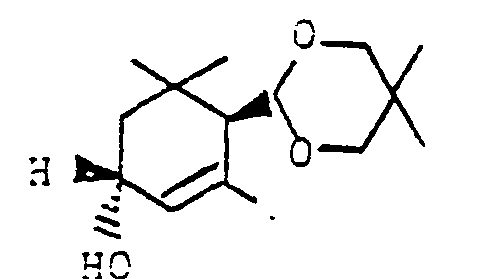
- Analog zu Beispiel 10a wurden noch folgende optisch aktiven 3-Hydroxy-a-cyclocitralacetale hergestellt.
-
- [α]D 20 = - 65,4° (C = 1 ; CH3OH)
-

- (+)-trans-(3R,6R)-3-Hydroxy-α-cyclocitralneopentylglykolacetal
- [α]D 20 = + 64,8° (C = 1 ; CH3OH)
-
- [α]D 20 = 131,5° (C = 1 ; CH3OH)

- (+)-trans-(3R,6R)-3-Hydroxy-α-cyclocitralethylenglykolacetal
- [α]D 20= + 131,2° (C = 1 ; CH3OH)

- Eine Lösung von 500 mg (2,2 mmol) (+)-trans-(3S,6S) 3-Hydroxy-a-cyclocitralpropylenglykolacetal in 10 ml65 %igem wäßrigem Aceton wurde mit 10 mg p-Toluolsulfonsäure versetzt und das Reaktionsgemisch 12 h bei RT stehengelassen. Anschließend wurde mit 25 ml Wasser verdünnt und 3 x mit je 5 ml Methyl-tert.-butylether extrahiert. Die vereinigten Etherphasen wurden mit 2 ml Wasser gewaschen, mit MgS04 getrocknet und am Rotationsverdampfer eingeengt. Die Ausbeute betrug 295 mg entsprechend 80 % der Theorie.

- Eine Lösung von 540 mg (3,2 mmol) (+)-trans-(3S,6S)-3-Hydroxy-a-cyclocitral in 1,5 ml Ethanol wurde bei RT mit 0,3 ml 2 %iger KOH versetzt. Nach einstündigem Rühren wurden 20 ml CH2Cl2 zugefügt, die organische Phase erst mit 2 ml gesättigter NH4CI-Lösung und dann mit H20 gewaschen. Nach Trocknen mit MgS04 und Einengen verblieben 450 mg eines blaßgelben Öls, das neben 90,7% des aewünschten Produktes 9.3 % des Ausaanasmaterials enthielt.

- Die entsprechenden optischen Antipoden der gemäß den Beispielen 3-5 hergestellten Verbindungen werden erhalten, wenn als Ausgangsmaterial das entsprechende (―)-3-Oxo-α-cyclocitralacetal für die weitere Umsetzung eingesetzt wird.
Claims (18)











Applications Claiming Priority (4)
| Application Number | Priority Date | Filing Date | Title |
|---|---|---|---|
| DE3301718 | 1983-01-20 | ||
| DE19833301718 DE3301718A1 (de) | 1983-01-20 | 1983-01-20 | 3-hydroxy-(alpha)-cyclocitral und seine acetale sowie herstellung und verwendung dieser verbindungen |
| DE3341463 | 1983-11-17 | ||
| DE19833341463 DE3341463A1 (de) | 1983-11-17 | 1983-11-17 | Optisch aktive 3-oxo- und 3-hydroxy-alpha-cyclocitralacetale sowie optisch aktives 3-hydroxy-alpha-cyclocitral, deren herstellung und verwendung als zwischenprodukte |
Publications (3)
| Publication Number | Publication Date |
|---|---|
| EP0114612A2 EP0114612A2 (de) | 1984-08-01 |
| EP0114612A3 EP0114612A3 (en) | 1986-02-19 |
| EP0114612B1 true EP0114612B1 (de) | 1988-03-23 |
Family
ID=25807647
Family Applications (1)
| Application Number | Title | Priority Date | Filing Date |
|---|---|---|---|
| EP84100210A Expired EP0114612B1 (de) | 1983-01-20 | 1984-01-11 | Racemisches und optisch aktives 3-Hydroxy-alpha-cyclocitral, deren Acetale und optisch aktive 3-Oxo-alpha-cyclocitralacetale sowie Herstellung und Verwendung dieser Verbindungen |
Country Status (3)
| Country | Link |
|---|---|
| US (1) | US4594456A (de) |
| EP (1) | EP0114612B1 (de) |
| DE (1) | DE3470032D1 (de) |
Families Citing this family (4)
| Publication number | Priority date | Publication date | Assignee | Title |
|---|---|---|---|---|
| DE3766910D1 (de) * | 1986-08-06 | 1991-02-07 | Firmenich & Cie | Verfahren zur herstellung von dihydrocyclocitral. |
| DE10145223A1 (de) * | 2001-09-13 | 2003-04-03 | Basf Ag | Verfahren zur Herstellung von meso-Zeaxanthin |
| ATE520638T1 (de) * | 2003-11-06 | 2011-09-15 | Firmenich & Cie | Aldehyde als parfüm- oder geschmackstoffbestandteile |
| JP5579255B2 (ja) * | 2009-04-21 | 2014-08-27 | フイルメニツヒ ソシエテ アノニム | 付香成分としてのアセタール |
Family Cites Families (9)
| Publication number | Priority date | Publication date | Assignee | Title |
|---|---|---|---|---|
| US3068292A (en) * | 1960-03-23 | 1962-12-11 | Eastman Kodak Co | Oxygenated polyene aldehydes |
| US3125571A (en) * | 1960-07-27 | 1964-03-17 | Hjc chs | |
| US3410908A (en) * | 1966-03-14 | 1968-11-12 | Reynolds Tobacco Co R | 4-(1-hydroxy-4-oxo-2, 6, 6-trimethyl-2-cyclohexene-1-yl)-3-butene-2-one |
| US3661997A (en) * | 1967-02-23 | 1972-05-09 | Hoffmann La Roche | Mono-oxo carotenes |
| US3514489A (en) * | 1967-09-05 | 1970-05-26 | Int Flavors & Fragrances Inc | Sec-butyl cyclohexane carboxaldenhydes |
| CH586551A5 (de) * | 1974-01-29 | 1977-04-15 | Firmenich & Cie | |
| US4152355A (en) * | 1976-02-04 | 1979-05-01 | Naarden International N.V. | Process for the preparation of boll weevil sex pheromone components |
| DE2717502A1 (de) * | 1977-04-20 | 1978-10-26 | Basf Ag | Cyclohexenderivate und verfahren zu deren herstellung |
| US4225501A (en) * | 1977-07-25 | 1980-09-30 | Givaudan Corporation | 1,4-Epoxy-1,3,3-trimethyl-2-(2-buten-1-ylidene)-cyclohexanes |
-
1984
- 1984-01-11 DE DE8484100210T patent/DE3470032D1/de not_active Expired
- 1984-01-11 EP EP84100210A patent/EP0114612B1/de not_active Expired
- 1984-01-20 US US06/572,239 patent/US4594456A/en not_active Expired - Fee Related
Also Published As
| Publication number | Publication date |
|---|---|
| DE3470032D1 (en) | 1988-04-28 |
| US4594456A (en) | 1986-06-10 |
| EP0114612A3 (en) | 1986-02-19 |
| EP0114612A2 (de) | 1984-08-01 |
Similar Documents
| Publication | Publication Date | Title |
|---|---|---|
| EP0633258B1 (de) | Verbessertes Verfahren zur Herstellung von Astaxanthin, neue Zwischenprodukte hierfür sowie ein Verfahren zu deren Herstellung | |
| EP0004621B1 (de) | Verfahren zur mehrstufigen Synthese von Zeaxanthin und Alloxanthin über Cyclohexanon- und Cyclohexanolderivate; Cyclohexanon- und Cyclohexanolderivate | |
| EP0005749B1 (de) | Cyclohexenderivate, Verfahren zu deren Herstellung, sowie deren Verwendung | |
| DE2801908A1 (de) | Cyclohexenderivate | |
| EP0114612B1 (de) | Racemisches und optisch aktives 3-Hydroxy-alpha-cyclocitral, deren Acetale und optisch aktive 3-Oxo-alpha-cyclocitralacetale sowie Herstellung und Verwendung dieser Verbindungen | |
| DE3918015A1 (de) | Verfahren zur herstellung von muscon, zwischenprodukte fuer dieses verfahren sowie deren herstellung | |
| EP0599148B1 (de) | Verfahren zur selektiven Herstellung von Hydroxybenzaldehyden | |
| DE2225612C2 (de) | Cyclische Methyl-fumardialdehyd-monoacetale und Verfahren zu ihrer Herstellung | |
| EP0038480B1 (de) | Verfahren zur Herstellung von 1-(4-Hydroxy-phenyl)-butan-3-on sowie neue Zwischenprodukte dieses Verfahrens | |
| EP0120341B1 (de) | Verfahren zur Herstellung von Pentadienol-Derivaten | |
| EP1979312A1 (de) | Verfahren zur herstellung von farnesol-freiem oder farnesol-armem bisabolol | |
| EP0882709B1 (de) | Verfahren zur Herstellung von Zeaxanthin, Zwischenprodukte für dieses Verfahren und Verfahren zu deren Herstellung | |
| EP0031875B1 (de) | Verfahren zur Herstellung von Cyclohexenderivaten | |
| EP0075237B1 (de) | Verfahren zur Herstellung von Derivaten des 1-Formyl-2,6,6-trimethyl-cyclohex-1-ens | |
| DE2357752A1 (de) | Verfahren zur herstellung von cyclischen trans-3-methyl-2-buten-1,4-dial-1- acetalen | |
| EP0131130B1 (de) | Verfahren zur Herstellung von Cycloalkenylalkinen | |
| DE2848095A1 (de) | Substituierte perhydro-naphtofurane | |
| EP0001553B1 (de) | Bicyclische Riechstoffe, Verfahren zu ihrer Herstellung und Vorprodukt | |
| DE3301718A1 (de) | 3-hydroxy-(alpha)-cyclocitral und seine acetale sowie herstellung und verwendung dieser verbindungen | |
| EP0102531B1 (de) | Verfahren zur Herstellung von Verbindungen der Megastigman-Reihe sowie neue Zwischenprodukte für diese Synthese | |
| EP0026344A1 (de) | 2,2,3-Trimethylcyclopent-3-en-ylmethyl-substituierte alicyclische Ketone und Alkohole, Herstellungsverfahren und deren Verwendung als Riechstoffe | |
| EP0671378B1 (de) | Verfahren zur Herstellung von (1R,4S)-4-Hydroxy-1,2,2-trimethylcyclopentyl-methylketon sowie Derivaten und Steroisomeren dieser Verbindung | |
| CH638780A5 (de) | Cyclohexenderivate, verfahren zu ihrer herstellung und ihre verwendung zur herstellung der entsprechenden aldehyde. | |
| EP0044440B1 (de) | Verfahren zur Herstellung von alpha- und beta-Cyclocitral sowie die N-Methylaldimine dieser Verbindungen | |
| DE2357810A1 (de) | Trans-3-methyl-2-buten-1,4-dial-1- acylale und verfahren zu deren herstellung |
Legal Events
| Date | Code | Title | Description |
|---|---|---|---|
| PUAI | Public reference made under article 153(3) epc to a published international application that has entered the european phase |
Free format text: ORIGINAL CODE: 0009012 |
|
| AK | Designated contracting states |
Designated state(s): CH DE FR GB LI NL |
|
| RIN1 | Information on inventor provided before grant (corrected) |
Inventor name: EGGERSDORFER, MANFRED, DR. Inventor name: PAUST, JOACHIM, DR. Inventor name: JAEDICKE, HAGEN, DR. Inventor name: SCHAEFER-LUEDERSSEN, ULRICH, DR. |
|
| PUAL | Search report despatched |
Free format text: ORIGINAL CODE: 0009013 |
|
| AK | Designated contracting states |
Designated state(s): CH DE FR GB LI NL |
|
| 17P | Request for examination filed |
Effective date: 19860724 |
|
| 17Q | First examination report despatched |
Effective date: 19870514 |
|
| GRAA | (expected) grant |
Free format text: ORIGINAL CODE: 0009210 |
|
| AK | Designated contracting states |
Kind code of ref document: B1 Designated state(s): CH DE FR GB LI NL |
|
| REF | Corresponds to: |
Ref document number: 3470032 Country of ref document: DE Date of ref document: 19880428 |
|
| GBT | Gb: translation of ep patent filed (gb section 77(6)(a)/1977) | ||
| ET | Fr: translation filed | ||
| PLBE | No opposition filed within time limit |
Free format text: ORIGINAL CODE: 0009261 |
|
| STAA | Information on the status of an ep patent application or granted ep patent |
Free format text: STATUS: NO OPPOSITION FILED WITHIN TIME LIMIT |
|
| PGFP | Annual fee paid to national office [announced via postgrant information from national office to epo] |
Ref country code: NL Payment date: 19890131 Year of fee payment: 9 |
|
| 26N | No opposition filed | ||
| PGFP | Annual fee paid to national office [announced via postgrant information from national office to epo] |
Ref country code: FR Payment date: 19911218 Year of fee payment: 9 |
|
| PGFP | Annual fee paid to national office [announced via postgrant information from national office to epo] |
Ref country code: CH Payment date: 19911219 Year of fee payment: 9 |
|
| PGFP | Annual fee paid to national office [announced via postgrant information from national office to epo] |
Ref country code: GB Payment date: 19920103 Year of fee payment: 9 |
|
| PGFP | Annual fee paid to national office [announced via postgrant information from national office to epo] |
Ref country code: DE Payment date: 19920116 Year of fee payment: 9 |
|
| PG25 | Lapsed in a contracting state [announced via postgrant information from national office to epo] |
Ref country code: GB Effective date: 19930111 |
|
| PG25 | Lapsed in a contracting state [announced via postgrant information from national office to epo] |
Ref country code: DE Effective date: 19930128 |
|
| PG25 | Lapsed in a contracting state [announced via postgrant information from national office to epo] |
Ref country code: LI Effective date: 19930131 Ref country code: CH Effective date: 19930131 |
|
| PG25 | Lapsed in a contracting state [announced via postgrant information from national office to epo] |
Ref country code: NL Effective date: 19930801 |
|
| GBPC | Gb: european patent ceased through non-payment of renewal fee |
Effective date: 19930111 |
|
| NLV4 | Nl: lapsed or anulled due to non-payment of the annual fee | ||
| PG25 | Lapsed in a contracting state [announced via postgrant information from national office to epo] |
Ref country code: FR Effective date: 19930930 |
|
| REG | Reference to a national code |
Ref country code: CH Ref legal event code: PL |
|
| REG | Reference to a national code |
Ref country code: FR Ref legal event code: ST |