EP0102293B1 - Procédé continu de préparation de silane - Google Patents
Procédé continu de préparation de silane Download PDFInfo
- Publication number
- EP0102293B1 EP0102293B1 EP83401662A EP83401662A EP0102293B1 EP 0102293 B1 EP0102293 B1 EP 0102293B1 EP 83401662 A EP83401662 A EP 83401662A EP 83401662 A EP83401662 A EP 83401662A EP 0102293 B1 EP0102293 B1 EP 0102293B1
- Authority
- EP
- European Patent Office
- Prior art keywords
- lithium
- reaction
- mixture
- chloride
- chlorosilanes
- Prior art date
- Legal status (The legal status is an assumption and is not a legal conclusion. Google has not performed a legal analysis and makes no representation as to the accuracy of the status listed.)
- Expired
Links
- BLRPTPMANUNPDV-UHFFFAOYSA-N Silane Chemical compound [SiH4] BLRPTPMANUNPDV-UHFFFAOYSA-N 0.000 title claims description 28
- 229910000077 silane Inorganic materials 0.000 title claims description 24
- 238000010924 continuous production Methods 0.000 title claims description 5
- 239000000203 mixture Substances 0.000 claims description 134
- WHXSMMKQMYFTQS-UHFFFAOYSA-N Lithium Chemical compound [Li] WHXSMMKQMYFTQS-UHFFFAOYSA-N 0.000 claims description 95
- KWGKDLIKAYFUFQ-UHFFFAOYSA-M lithium chloride Chemical compound [Li+].[Cl-] KWGKDLIKAYFUFQ-UHFFFAOYSA-M 0.000 claims description 79
- 238000006243 chemical reaction Methods 0.000 claims description 57
- 229910052744 lithium Inorganic materials 0.000 claims description 42
- 229910000103 lithium hydride Inorganic materials 0.000 claims description 41
- 239000005046 Chlorosilane Substances 0.000 claims description 30
- KOPOQZFJUQMUML-UHFFFAOYSA-N chlorosilane Chemical class Cl[SiH3] KOPOQZFJUQMUML-UHFFFAOYSA-N 0.000 claims description 29
- 238000005868 electrolysis reaction Methods 0.000 claims description 27
- 150000003839 salts Chemical class 0.000 claims description 24
- 238000005984 hydrogenation reaction Methods 0.000 claims description 23
- 238000000034 method Methods 0.000 claims description 21
- ZAMOUSCENKQFHK-UHFFFAOYSA-N Chlorine atom Chemical compound [Cl] ZAMOUSCENKQFHK-UHFFFAOYSA-N 0.000 claims description 20
- 230000008569 process Effects 0.000 claims description 19
- 239000000460 chlorine Substances 0.000 claims description 16
- 229910052801 chlorine Inorganic materials 0.000 claims description 15
- VEXZGXHMUGYJMC-UHFFFAOYSA-N Hydrochloric acid Chemical compound Cl VEXZGXHMUGYJMC-UHFFFAOYSA-N 0.000 claims description 11
- WCUXLLCKKVVCTQ-UHFFFAOYSA-M Potassium chloride Chemical compound [Cl-].[K+] WCUXLLCKKVVCTQ-UHFFFAOYSA-M 0.000 claims description 9
- XUIMIQQOPSSXEZ-UHFFFAOYSA-N Silicon Chemical compound [Si] XUIMIQQOPSSXEZ-UHFFFAOYSA-N 0.000 claims description 9
- 230000005496 eutectics Effects 0.000 claims description 9
- 239000001257 hydrogen Substances 0.000 claims description 9
- 229910052739 hydrogen Inorganic materials 0.000 claims description 9
- UFHFLCQGNIYNRP-UHFFFAOYSA-N Hydrogen Chemical compound [H][H] UFHFLCQGNIYNRP-UHFFFAOYSA-N 0.000 claims description 7
- IXCSERBJSXMMFS-UHFFFAOYSA-N hydrogen chloride Substances Cl.Cl IXCSERBJSXMMFS-UHFFFAOYSA-N 0.000 claims description 7
- 229910000041 hydrogen chloride Inorganic materials 0.000 claims description 7
- 239000010703 silicon Substances 0.000 claims description 7
- 229910052710 silicon Inorganic materials 0.000 claims description 7
- 238000001914 filtration Methods 0.000 claims description 6
- 239000012535 impurity Substances 0.000 claims description 4
- 239000001103 potassium chloride Substances 0.000 claims description 4
- 235000011164 potassium chloride Nutrition 0.000 claims description 4
- 238000002360 preparation method Methods 0.000 claims description 4
- 229910001514 alkali metal chloride Inorganic materials 0.000 claims description 3
- 239000007787 solid Substances 0.000 claims description 3
- 229910001617 alkaline earth metal chloride Inorganic materials 0.000 claims description 2
- 239000000376 reactant Substances 0.000 claims description 2
- 238000003756 stirring Methods 0.000 claims description 2
- 229910052784 alkaline earth metal Inorganic materials 0.000 claims 1
- 150000001342 alkaline earth metals Chemical class 0.000 claims 1
- 239000002585 base Substances 0.000 description 42
- 238000004519 manufacturing process Methods 0.000 description 15
- 239000003153 chemical reaction reagent Substances 0.000 description 5
- 230000009466 transformation Effects 0.000 description 5
- 230000004907 flux Effects 0.000 description 4
- 239000012429 reaction media Substances 0.000 description 4
- VEXZGXHMUGYJMC-UHFFFAOYSA-M Chloride anion Chemical compound [Cl-] VEXZGXHMUGYJMC-UHFFFAOYSA-M 0.000 description 3
- ZLMJMSJWJFRBEC-UHFFFAOYSA-N Potassium Chemical compound [K] ZLMJMSJWJFRBEC-UHFFFAOYSA-N 0.000 description 3
- 239000003513 alkali Substances 0.000 description 3
- 238000009434 installation Methods 0.000 description 3
- 239000002245 particle Substances 0.000 description 3
- 229910052700 potassium Inorganic materials 0.000 description 3
- 239000011591 potassium Substances 0.000 description 3
- 238000000926 separation method Methods 0.000 description 3
- 239000011856 silicon-based particle Substances 0.000 description 3
- ZDHXKXAHOVTTAH-UHFFFAOYSA-N trichlorosilane Chemical compound Cl[SiH](Cl)Cl ZDHXKXAHOVTTAH-UHFFFAOYSA-N 0.000 description 3
- 239000005052 trichlorosilane Substances 0.000 description 3
- 230000006978 adaptation Effects 0.000 description 2
- 230000015572 biosynthetic process Effects 0.000 description 2
- 150000001805 chlorine compounds Chemical class 0.000 description 2
- 230000007797 corrosion Effects 0.000 description 2
- 238000005260 corrosion Methods 0.000 description 2
- 238000005336 cracking Methods 0.000 description 2
- 238000010586 diagram Methods 0.000 description 2
- 239000012530 fluid Substances 0.000 description 2
- 238000010438 heat treatment Methods 0.000 description 2
- 150000002431 hydrogen Chemical class 0.000 description 2
- 239000000463 material Substances 0.000 description 2
- FDNAPBUWERUEDA-UHFFFAOYSA-N silicon tetrachloride Chemical compound Cl[Si](Cl)(Cl)Cl FDNAPBUWERUEDA-UHFFFAOYSA-N 0.000 description 2
- 101100274255 Arabidopsis thaliana CHER1 gene Proteins 0.000 description 1
- OYPRJOBELJOOCE-UHFFFAOYSA-N Calcium Chemical compound [Ca] OYPRJOBELJOOCE-UHFFFAOYSA-N 0.000 description 1
- 241001415961 Gaviidae Species 0.000 description 1
- DGAQECJNVWCQMB-PUAWFVPOSA-M Ilexoside XXIX Chemical compound C[C@@H]1CC[C@@]2(CC[C@@]3(C(=CC[C@H]4[C@]3(CC[C@@H]5[C@@]4(CC[C@@H](C5(C)C)OS(=O)(=O)[O-])C)C)[C@@H]2[C@]1(C)O)C)C(=O)O[C@H]6[C@@H]([C@H]([C@@H]([C@H](O6)CO)O)O)O.[Na+] DGAQECJNVWCQMB-PUAWFVPOSA-M 0.000 description 1
- FYYHWMGAXLPEAU-UHFFFAOYSA-N Magnesium Chemical compound [Mg] FYYHWMGAXLPEAU-UHFFFAOYSA-N 0.000 description 1
- 101100256906 Saccharomyces cerevisiae (strain ATCC 204508 / S288c) SIC1 gene Proteins 0.000 description 1
- 240000008042 Zea mays Species 0.000 description 1
- 230000009471 action Effects 0.000 description 1
- 238000013019 agitation Methods 0.000 description 1
- 125000004429 atom Chemical group 0.000 description 1
- WDIHJSXYQDMJHN-UHFFFAOYSA-L barium chloride Chemical class [Cl-].[Cl-].[Ba+2] WDIHJSXYQDMJHN-UHFFFAOYSA-L 0.000 description 1
- 229910052791 calcium Inorganic materials 0.000 description 1
- 239000011575 calcium Substances 0.000 description 1
- 238000002485 combustion reaction Methods 0.000 description 1
- 238000001816 cooling Methods 0.000 description 1
- 230000007547 defect Effects 0.000 description 1
- -1 des chlorosilanes Chemical class 0.000 description 1
- 230000000694 effects Effects 0.000 description 1
- 230000008030 elimination Effects 0.000 description 1
- 238000003379 elimination reaction Methods 0.000 description 1
- 239000000374 eutectic mixture Substances 0.000 description 1
- 230000002349 favourable effect Effects 0.000 description 1
- 239000011261 inert gas Substances 0.000 description 1
- 239000007788 liquid Substances 0.000 description 1
- 150000002641 lithium Chemical class 0.000 description 1
- HCQWRNRRURULEY-UHFFFAOYSA-L lithium;potassium;dichloride Chemical compound [Li+].[Cl-].[Cl-].[K+] HCQWRNRRURULEY-UHFFFAOYSA-L 0.000 description 1
- 229910052749 magnesium Inorganic materials 0.000 description 1
- 239000011777 magnesium Substances 0.000 description 1
- 239000000155 melt Substances 0.000 description 1
- 229910052751 metal Inorganic materials 0.000 description 1
- 239000002184 metal Substances 0.000 description 1
- 230000003071 parasitic effect Effects 0.000 description 1
- 238000001556 precipitation Methods 0.000 description 1
- 238000005215 recombination Methods 0.000 description 1
- 230000006798 recombination Effects 0.000 description 1
- 229910052701 rubidium Inorganic materials 0.000 description 1
- IGLNJRXAVVLDKE-UHFFFAOYSA-N rubidium atom Chemical compound [Rb] IGLNJRXAVVLDKE-UHFFFAOYSA-N 0.000 description 1
- 239000011833 salt mixture Substances 0.000 description 1
- 229910052708 sodium Inorganic materials 0.000 description 1
- 239000011734 sodium Substances 0.000 description 1
- 229910052712 strontium Inorganic materials 0.000 description 1
- CIOAGBVUUVVLOB-UHFFFAOYSA-N strontium atom Chemical compound [Sr] CIOAGBVUUVVLOB-UHFFFAOYSA-N 0.000 description 1
- 239000000126 substance Substances 0.000 description 1
- 230000001052 transient effect Effects 0.000 description 1
Images

Classifications
-
- C—CHEMISTRY; METALLURGY
- C01—INORGANIC CHEMISTRY
- C01B—NON-METALLIC ELEMENTS; COMPOUNDS THEREOF; METALLOIDS OR COMPOUNDS THEREOF NOT COVERED BY SUBCLASS C01C
- C01B33/00—Silicon; Compounds thereof
- C01B33/04—Hydrides of silicon
- C01B33/043—Monosilane
-
- C—CHEMISTRY; METALLURGY
- C01—INORGANIC CHEMISTRY
- C01B—NON-METALLIC ELEMENTS; COMPOUNDS THEREOF; METALLOIDS OR COMPOUNDS THEREOF NOT COVERED BY SUBCLASS C01C
- C01B6/00—Hydrides of metals including fully or partially hydrided metals, alloys or intermetallic compounds ; Compounds containing at least one metal-hydrogen bond, e.g. (GeH3)2S, SiH GeH; Monoborane or diborane; Addition complexes thereof
- C01B6/04—Hydrides of alkali metals, alkaline earth metals, beryllium or magnesium; Addition complexes thereof
-
- C—CHEMISTRY; METALLURGY
- C25—ELECTROLYTIC OR ELECTROPHORETIC PROCESSES; APPARATUS THEREFOR
- C25C—PROCESSES FOR THE ELECTROLYTIC PRODUCTION, RECOVERY OR REFINING OF METALS; APPARATUS THEREFOR
- C25C3/00—Electrolytic production, recovery or refining of metals by electrolysis of melts
- C25C3/02—Electrolytic production, recovery or refining of metals by electrolysis of melts of alkali or alkaline earth metals
-
- Y—GENERAL TAGGING OF NEW TECHNOLOGICAL DEVELOPMENTS; GENERAL TAGGING OF CROSS-SECTIONAL TECHNOLOGIES SPANNING OVER SEVERAL SECTIONS OF THE IPC; TECHNICAL SUBJECTS COVERED BY FORMER USPC CROSS-REFERENCE ART COLLECTIONS [XRACs] AND DIGESTS
- Y02—TECHNOLOGIES OR APPLICATIONS FOR MITIGATION OR ADAPTATION AGAINST CLIMATE CHANGE
- Y02P—CLIMATE CHANGE MITIGATION TECHNOLOGIES IN THE PRODUCTION OR PROCESSING OF GOODS
- Y02P20/00—Technologies relating to chemical industry
- Y02P20/10—Process efficiency
Definitions
- the present invention relates to a continuous process for preparing silane.
- the lithium hydride used comes from the reaction of lithium with hydrogen, said lithium coming from the electrolysis of lithium chloride. According to the process described in these patents, it is known to carry out each of the electrolysis, hydrogenation and silane production reactions in the same medium consisting of molten salts chosen from alkali and alkaline earth chlorides, one of which is chloride. lithium.
- the various reactions are carried out in a single high-capacity device in which the reaction medium plays a role of reagent supplier (lithium chloride) and a role of thermal flywheel for the evacuation of the calories generated in the various reactions. chemicals.
- the reaction medium which contains lithium chloride must be used in very large quantities compared to the quantities of lithium chloride (reactant) which are transformed in the various reactions.
- the implementation of a single device in which the reaction medium plays the role of thermal flywheel does not allow each of the reactions to be carried out under optimum conditions.
- the invention solves most of the problems posed by the manufacture of silane according to the methods described in the prior art. In addition, it allows an implementation on an industrial scale of an old process which despite numerous studies had never been able to reach this stage.
- the applicant has been led to define a basic mixture serving as a vehicle for the various reagents: LiCI, LiH, Li.
- the medium having to remain fluid and transportable from one reaction to another, the generation of the silane leading to the formation of LiCI , it is therefore necessary that the base mixture be depleted in LiCI so that the silane generation temperature is as low as possible in order to optimize the production of the silane.
- the composition of the base mixture is chosen to be depleted from 1 to 4 mol% of lithium chloride relative to the eutectic composition of the salts making up said base mixture.
- the alkali and / or alkaline-earth metal chlorides used according to the invention can in particular be chosen from sodium, rubidium, strontium, magnesium, calcium and barium chlorides.
- the base mixture enriched in lithium chloride from the reactor where the reaction takes place between the chlorosilanes and the lithium hydride to the electrolyzer, to remove any impurities which may be present.
- the main impurities being solid particles of silicon, said particles are advantageously removed by a simple filtration operation or by treatment with chlorine or hydrogen chloride.
- the reaction between the chlorosilanes and the lithium hydride preferably takes place at a temperature of 380 ° C plus or minus 30 ° C; if this temperature is too low, one can fear the precipitation of the components of the eutectic (that is to say for example that, if one uses components presenting a ternary eutectic, the minimum temperature usable could be of 350 ° C); if, on the contrary, this temperature is too high (greater than approximately 410 ° C.), a parasitic cracking reaction of the silane produced develops which results in losses of silicon and the obligation to purify the molten mixture leaving this reactor.
- the chlorosilanes used in the reaction with lithium hydride advantageously come from the reaction between powdered metallurgical silicon and hydrogen chloride or chlorine themselves coming indirectly or directly from electrolysis.
- the lithium hydride used in the reaction with the chlorosilanes is transported by the base mixture and comes from the lithium hydrogenation step.
- the proportion of lithium hydride conveyed by the base mixture is preferably at most equal to 18 moles per 100 moles of base mixture.
- the electrolysis reaction is carried out at a temperature of 450 ° C plus or minus 50 ° C; it will be noted that this electrolysis reaction normally releases a certain number of calories, usable for bring the molten mixture from 380 ° C ⁇ 30 ° C to 450 ° C ⁇ 50 ° C; a high temperature is favorable insofar as it is known that the conductivity of the mixture of molten salts increases with temperature; on the other hand, current technical conditions (in particular the corrosion resistance of the materials available) prevent this electrolysis from being carried out at a temperature above 500 ° C., moreover, despite the natural protection of the lithium produced against a reaction of this lithium with the chlorine produced, it is found that at temperatures above 500 ° C., the recombination reaction of lithium and chlorine becomes more important.
- the proportion of lithium chloride in the base mixture which results from the transformation of lithium hydride is preferably at most equal to 18 moles per 100 moles of base mixture.
- the chlorine produced during the electrolysis can after optionally combustion reaction with hydrogen provide hydrochloric acid which is advantageously used with metallurgical silicon to manufacture the chlorosilanes as described above.
- Chlorine or hydrogen chloride can also be used to remove, if necessary, impurities (solid silicon particles) and / or lithium hydride possibly present in the base mixture before electrolysis.
- the lithium hydrogenation reaction to give lithium hydride is carried out at 490 ° C plus or minus 20 ° C. Indeed, when the temperature is too low (less than about 470 ° C), the rate of the hydrogenation reaction is much too low; on the other hand, when it is desired to operate at temperatures above about 510 ° C., one quickly encounters (taking into account current technological possibilities) significant corrosion of the materials which constitute the hydrogenation reactor.
- reaction bath during this hydrogenation, must be stirred and the operation is preferably carried out at a pressure of less than approximately 5 bars.
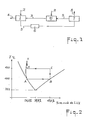
- the method according to the invention can be diagrammed in principle (circulation) and its best embodiment (operating conditions) in FIGS. 1 and 2.
- Figure 1 there is shown schematically the various operations performed and in Figure 2, there is shown, in a diagram, the operating conditions and concentrations of lithium chloride in the various operations, according to the invention.
- FIG. 2 shows the various operations carried out with reference on the one hand (ordered) to the temperatures used and on the other hand (abscissa) to the mole% of the lithium chloride contained in a mixture of lithium chloride, chloride potassium as a mixture of molten salts; it will be recalled that the eutectic lithium chloride-potassium chloride melts at 352 ° C. and comprises 58.8% by mole of lithium chloride.
- the basic mixture whose composition is represented by point A contains 56 mol% of LiCI, that is to say that this mixture contains, compared to the eutectic, a LiCI defect of about 3% by mole.
- E-A represents the cooling for return to the reactor (1) which does not modify the composition of the mixture in LiCI and KCI; the mixture obtained is then recycled to the reactor (1).
- the flow (4) leaving the reactor (1) is composed of 0.123 kmol / h of silane and 0.012 kmol / h of hydrogen;
- the reactor (14) is supplied with 0.200 kmol / h of chlorine coming from electrolysis (7) via the outlet (8) and 0.200 kmol / h of hydrogen (15), the outgoing flow (13) consists of 0.400 kmol / h of hydrogen chloride;
- the reactor (12) is supplied with (13) with 0.400 kmol / h of hydrogen chloride and with (16) with 0.130 k atom g / h of metallurgical silicon.
- the outgoing flows are composed in (2) of a mixture containing 0.116 kmol / h of trichlorosilane and 0.013 kmol / h of tetrachlorosilane and in (17) of 0.142 kmol / h of hydrogen.
Landscapes
- Chemical & Material Sciences (AREA)
- Organic Chemistry (AREA)
- Inorganic Chemistry (AREA)
- Engineering & Computer Science (AREA)
- General Life Sciences & Earth Sciences (AREA)
- Geology (AREA)
- Life Sciences & Earth Sciences (AREA)
- Chemical Kinetics & Catalysis (AREA)
- Electrochemistry (AREA)
- Materials Engineering (AREA)
- Metallurgy (AREA)
- Silicon Compounds (AREA)
- Electrolytic Production Of Non-Metals, Compounds, Apparatuses Therefor (AREA)
Applications Claiming Priority (2)
| Application Number | Priority Date | Filing Date | Title |
|---|---|---|---|
| FR8214863A FR2532293A1 (fr) | 1982-08-31 | 1982-08-31 | Procede continu de preparation de silane |
| FR8214863 | 1982-08-31 |
Publications (3)
| Publication Number | Publication Date |
|---|---|
| EP0102293A2 EP0102293A2 (fr) | 1984-03-07 |
| EP0102293A3 EP0102293A3 (en) | 1984-04-04 |
| EP0102293B1 true EP0102293B1 (fr) | 1986-03-05 |
Family
ID=9277143
Family Applications (1)
| Application Number | Title | Priority Date | Filing Date |
|---|---|---|---|
| EP83401662A Expired EP0102293B1 (fr) | 1982-08-31 | 1983-08-16 | Procédé continu de préparation de silane |
Country Status (6)
| Country | Link |
|---|---|
| US (1) | US4601798A (enExample) |
| EP (1) | EP0102293B1 (enExample) |
| JP (1) | JPS5988308A (enExample) |
| CA (1) | CA1204076A (enExample) |
| DE (1) | DE3362438D1 (enExample) |
| FR (1) | FR2532293A1 (enExample) |
Families Citing this family (18)
| Publication number | Priority date | Publication date | Assignee | Title |
|---|---|---|---|---|
| JPS63185807A (ja) * | 1987-01-27 | 1988-08-01 | Komatsu Denshi Kinzoku Kk | モノシラン連続発生方法における陽極の不動態化防止方法 |
| US5075092A (en) * | 1987-07-20 | 1991-12-24 | Ethyl Corporation | Process for preparation of silane |
| US4847061A (en) * | 1987-07-20 | 1989-07-11 | Ethyl Corporation | Process for preparation of silane |
| US5474920A (en) * | 1993-11-23 | 1995-12-12 | State Of Oregon, Acting By And Through The Oregon State Board Of Higher Education On Behalf Of The Oregon Health Sciences University | Modified thermo-resistant DNA polymerases |
| KR100813833B1 (ko) * | 2002-08-23 | 2008-03-17 | 삼성에스디아이 주식회사 | 전자 발광 소자와 그 제조방법 |
| ES2366597T3 (es) * | 2007-03-30 | 2011-10-21 | Spawnt Private S.À.R.L. | Hiudrogenación catalítica. |
| FR2927482B1 (fr) * | 2008-02-07 | 2010-03-05 | Renault Sas | Dispositif de generation de haute tension. |
| US8528026B2 (en) * | 2008-12-05 | 2013-09-03 | At&T Intellectual Property I, L.P. | System and method for processing audio signals received by a communication device |
| US8124039B2 (en) | 2009-01-26 | 2012-02-28 | Vithal Revankar | Process of silicon tetrafluoride gas synthesis |
| DE102009056731A1 (de) | 2009-12-04 | 2011-06-09 | Rev Renewable Energy Ventures, Inc. | Halogenierte Polysilane und Polygermane |
| KR101873923B1 (ko) | 2010-12-20 | 2018-08-02 | 썬에디슨, 인크. | 불균화 작업을 포함하는 실질적으로 폐쇄-루프형 방법에서의 다결정 실리콘의 제조 |
| BR112013015955A2 (pt) * | 2010-12-23 | 2018-11-21 | Memc Electronic Mat Inc | métodos e sistemas para produzir silano |
| US8821825B2 (en) | 2010-12-23 | 2014-09-02 | Sunedison, Inc. | Methods for producing silane |
| US8388914B2 (en) * | 2010-12-23 | 2013-03-05 | Memc Electronic Materials, Inc. | Systems for producing silane |
| DE102012224202A1 (de) | 2012-12-21 | 2014-07-10 | Evonik Industries Ag | Verfahren zum Hydrieren höherer Halogen-haltiger Silanverbindungen |
| CN103130225B (zh) * | 2013-03-20 | 2015-01-14 | 宁波大学 | 甲硅烷的制备方法 |
| US11002255B2 (en) | 2019-08-20 | 2021-05-11 | Lowry Inheritors Trust | Carbon negative clean fuel production system |
| DE102023108003A1 (de) * | 2023-03-29 | 2024-10-02 | Hochschule Merseburg | Verfahren und Anlage zur Herstellung von Alkali- und/oder Erdalkalicarbid |
Family Cites Families (6)
| Publication number | Priority date | Publication date | Assignee | Title |
|---|---|---|---|---|
| NL113017C (enExample) * | 1957-08-08 | 1900-01-01 | ||
| US3078218A (en) * | 1958-08-04 | 1963-02-19 | Union Carbide Corp | Hydrogenation of halogen compounds of elements of groups iii and iv of the periodic system |
| DE1092890B (de) * | 1959-07-07 | 1960-11-17 | Wacker Chemie Gmbh | Verfahren zur Herstellung von Hydriden und/oder halogenierten Hydriden der Elemente Silicium und Bor |
| FR1323193A (fr) * | 1961-04-27 | 1963-04-05 | Union Carbide Corp | Hydrogénation des éléments des groupes iii, iv et v |
| ES462575A1 (es) * | 1976-09-24 | 1978-07-16 | Union Carbide Corp | Un procedimiento para la obtencion de silano. |
| JPS5622808A (en) * | 1979-08-01 | 1981-03-04 | Ryoichi Nonaka | Floating board type wave dissipating jetty |
-
1982
- 1982-08-31 FR FR8214863A patent/FR2532293A1/fr active Granted
-
1983
- 1983-08-16 DE DE8383401662T patent/DE3362438D1/de not_active Expired
- 1983-08-16 EP EP83401662A patent/EP0102293B1/fr not_active Expired
- 1983-08-30 US US06/527,869 patent/US4601798A/en not_active Expired - Fee Related
- 1983-08-30 CA CA000435664A patent/CA1204076A/fr not_active Expired
- 1983-08-31 JP JP58158169A patent/JPS5988308A/ja active Granted
Non-Patent Citations (1)
| Title |
|---|
| Seto, Kenzo et al.Yo ynen 25(1982) & pages 63-73, Conference du 190282. * |
Also Published As
| Publication number | Publication date |
|---|---|
| US4601798A (en) | 1986-07-22 |
| CA1204076A (fr) | 1986-05-06 |
| FR2532293A1 (fr) | 1984-03-02 |
| EP0102293A3 (en) | 1984-04-04 |
| EP0102293A2 (fr) | 1984-03-07 |
| JPS5988308A (ja) | 1984-05-22 |
| FR2532293B1 (enExample) | 1985-02-08 |
| DE3362438D1 (en) | 1986-04-10 |
| JPS6241165B2 (enExample) | 1987-09-01 |
Similar Documents
| Publication | Publication Date | Title |
|---|---|---|
| EP0102293A2 (fr) | Procédé continu de préparation de silane | |
| EP0105778B1 (fr) | Procédé pour la préparation de silane pur par réaction de chlorosilanes avec l hydrure de lithium | |
| EP0146456B1 (fr) | Procédé de production d'hydrures de silicium, application et appareil de mise en oeuvre | |
| FR2582019A1 (fr) | Procede pour la production de metaux par reduction de sels metalliques, metaux ainsi obtenus et dispositif pour sa mise en oeuvre | |
| FR2596302A1 (fr) | Procede de traitement de chlorosilanes contamines | |
| BE897333A (fr) | Obtention d'une solution d'hypochlorite de sodium a haute concentration par un procede continu | |
| WO2013157456A1 (ja) | フルオロアルキルアイオダイドの利用方法 | |
| EP0832039B1 (fr) | Procede et dispositif de traitement d'un gaz contenant de l'hydrogene sulfure, comportant une etape d'elimination du soufre cristallise par refroidissement | |
| FR2563121A1 (fr) | Catalyseur de dismutation pour un compose silane et procede de production en continu d'un compose silane | |
| Pearson et al. | The behaviour of metals, particularly lead and bismuth, in atomic hydrogen, and attempts to prepare atomic hydrogen from hydrides | |
| FR2521154A1 (fr) | Procede de recuperation des hydrocarbures contenus dans les schistes bitumineux | |
| EP0102890B1 (fr) | Procédé et dispositif d'hydrogénation en continu du lithium dans un mélange de sels fondus | |
| EP0063987A1 (fr) | Procédé de préparation de silane en milieu sels fondus | |
| EP0247924B1 (fr) | Procédé de préparation de tétrafluorure de soufre par réduction d'un fluorure d'uranium | |
| US605378A (en) | Process of making aluminium sulfid | |
| FR2496633A1 (fr) | Procede pour la production de chlorure d'aluminium anhydre pur par carbochloration en bains de sels fondus | |
| FR2609707A1 (fr) | Procede de purification du chlorure d'aluminium | |
| FR2487218A1 (fr) | Procede pour reduire l'agglomeration d'une dispersion de sodium | |
| BE422997A (enExample) | ||
| BE705962A (enExample) | ||
| BE639491A (enExample) | ||
| FR2630426A1 (fr) | Procede continu de fabrication de chlorate de potassium par couplage sur une unite de fabrication de chlorate de sodium | |
| EP0055681A1 (fr) | Procédé amélioré de carbochloration de l'alumine en bain de sels fondus | |
| FR2545811A1 (fr) | Procede de preparation de quartz alpha finement cristallise et quartz alpha obtenu par ledit procede | |
| BE568117A (enExample) |
Legal Events
| Date | Code | Title | Description |
|---|---|---|---|
| PUAI | Public reference made under article 153(3) epc to a published international application that has entered the european phase |
Free format text: ORIGINAL CODE: 0009012 |
|
| PUAL | Search report despatched |
Free format text: ORIGINAL CODE: 0009013 |
|
| AK | Designated contracting states |
Designated state(s): BE DE FR GB IT NL |
|
| AK | Designated contracting states |
Designated state(s): BE DE FR GB IT NL |
|
| 17P | Request for examination filed |
Effective date: 19840216 |
|
| ITF | It: translation for a ep patent filed | ||
| GRAA | (expected) grant |
Free format text: ORIGINAL CODE: 0009210 |
|
| AK | Designated contracting states |
Kind code of ref document: B1 Designated state(s): BE DE FR GB IT NL |
|
| RIN1 | Information on inventor provided before grant (corrected) |
Inventor name: VERDIER, JEAN-MICHEL Inventor name: GROSBOIS, JEAN Inventor name: JACUBERT, SERGE |
|
| REF | Corresponds to: |
Ref document number: 3362438 Country of ref document: DE Date of ref document: 19860410 |
|
| PLBI | Opposition filed |
Free format text: ORIGINAL CODE: 0009260 |
|
| BECN | Be: change of holder's name |
Effective date: 19860305 |
|
| 26 | Opposition filed |
Opponent name: DEGUSSA AG, FRANKFURT - ZWEIGNIEDERLASSUNG WOLFGAN Effective date: 19861120 |
|
| NLR1 | Nl: opposition has been filed with the epo |
Opponent name: DEGUSSA AG |
|
| RAP2 | Party data changed (patent owner data changed or rights of a patent transferred) |
Owner name: RHONE-POULENC CHIMIE |
|
| NLT2 | Nl: modifications (of names), taken from the european patent patent bulletin |
Owner name: RHONE-POULENC CHIMIE TE COURBEVOIE, FRANKRIJK. |
|
| PGFP | Annual fee paid to national office [announced via postgrant information from national office to epo] |
Ref country code: FR Payment date: 19900730 Year of fee payment: 8 |
|
| PGFP | Annual fee paid to national office [announced via postgrant information from national office to epo] |
Ref country code: GB Payment date: 19900803 Year of fee payment: 8 |
|
| ITTA | It: last paid annual fee | ||
| PGFP | Annual fee paid to national office [announced via postgrant information from national office to epo] |
Ref country code: NL Payment date: 19900831 Year of fee payment: 8 |
|
| PGFP | Annual fee paid to national office [announced via postgrant information from national office to epo] |
Ref country code: DE Payment date: 19900927 Year of fee payment: 8 |
|
| PGFP | Annual fee paid to national office [announced via postgrant information from national office to epo] |
Ref country code: BE Payment date: 19901010 Year of fee payment: 8 |
|
| PG25 | Lapsed in a contracting state [announced via postgrant information from national office to epo] |
Ref country code: GB Effective date: 19910816 |
|
| PG25 | Lapsed in a contracting state [announced via postgrant information from national office to epo] |
Ref country code: BE Effective date: 19910831 |
|
| BERE | Be: lapsed |
Owner name: RHONE-POULENC CHIMIE Effective date: 19910831 |
|
| PG25 | Lapsed in a contracting state [announced via postgrant information from national office to epo] |
Ref country code: NL Effective date: 19920301 |
|
| GBPC | Gb: european patent ceased through non-payment of renewal fee | ||
| NLV4 | Nl: lapsed or anulled due to non-payment of the annual fee | ||
| PG25 | Lapsed in a contracting state [announced via postgrant information from national office to epo] |
Ref country code: FR Effective date: 19920430 |
|
| PG25 | Lapsed in a contracting state [announced via postgrant information from national office to epo] |
Ref country code: DE Effective date: 19920501 |
|
| REG | Reference to a national code |
Ref country code: FR Ref legal event code: ST |
|
| RDAG | Patent revoked |
Free format text: ORIGINAL CODE: 0009271 |
|
| STAA | Information on the status of an ep patent application or granted ep patent |
Free format text: STATUS: PATENT REVOKED |
|
| 27W | Patent revoked |
Effective date: 19930605 |
|
| APAC | Appeal dossier modified |
Free format text: ORIGINAL CODE: EPIDOS NOAPO |
|
| APAC | Appeal dossier modified |
Free format text: ORIGINAL CODE: EPIDOS NOAPO |
|
| APAH | Appeal reference modified |
Free format text: ORIGINAL CODE: EPIDOSCREFNO |