EP0092993B1 - Composition for investigating alimentary functions - Google Patents
Composition for investigating alimentary functions Download PDFInfo
- Publication number
- EP0092993B1 EP0092993B1 EP83302304A EP83302304A EP0092993B1 EP 0092993 B1 EP0092993 B1 EP 0092993B1 EP 83302304 A EP83302304 A EP 83302304A EP 83302304 A EP83302304 A EP 83302304A EP 0092993 B1 EP0092993 B1 EP 0092993B1
- Authority
- EP
- European Patent Office
- Prior art keywords
- tracer
- units
- binding agent
- composition according
- substance
- Prior art date
- Legal status (The legal status is an assumption and is not a legal conclusion. Google has not performed a legal analysis and makes no representation as to the accuracy of the status listed.)
- Expired
Links
- 239000000203 mixture Substances 0.000 title claims abstract description 123
- 239000000700 radioactive tracer Substances 0.000 claims abstract description 173
- 239000000126 substance Substances 0.000 claims abstract description 99
- 239000011230 binding agent Substances 0.000 claims abstract description 89
- 238000000576 coating method Methods 0.000 claims abstract description 55
- 239000011248 coating agent Substances 0.000 claims abstract description 54
- 239000000546 pharmaceutical excipient Substances 0.000 claims abstract description 25
- 230000002496 gastric effect Effects 0.000 claims abstract description 21
- 238000009792 diffusion process Methods 0.000 claims abstract description 12
- 239000012530 fluid Substances 0.000 claims description 28
- 238000000034 method Methods 0.000 claims description 28
- TZCXTZWJZNENPQ-UHFFFAOYSA-L barium sulfate Chemical compound [Ba+2].[O-]S([O-])(=O)=O TZCXTZWJZNENPQ-UHFFFAOYSA-L 0.000 claims description 24
- 239000000463 material Substances 0.000 claims description 12
- 239000012188 paraffin wax Substances 0.000 claims description 12
- 230000005855 radiation Effects 0.000 claims description 10
- 239000003456 ion exchange resin Substances 0.000 claims description 9
- 229920003303 ion-exchange polymer Polymers 0.000 claims description 9
- 229920000642 polymer Polymers 0.000 claims description 8
- 238000006862 quantum yield reaction Methods 0.000 claims description 8
- 229920005989 resin Polymers 0.000 claims description 8
- 239000011347 resin Substances 0.000 claims description 8
- 229920002678 cellulose Polymers 0.000 claims description 7
- 239000001913 cellulose Substances 0.000 claims description 7
- 235000010980 cellulose Nutrition 0.000 claims description 7
- 238000001514 detection method Methods 0.000 claims description 7
- DNIAPMSPPWPWGF-UHFFFAOYSA-N Propylene glycol Chemical compound CC(O)CO DNIAPMSPPWPWGF-UHFFFAOYSA-N 0.000 claims description 6
- 239000000084 colloidal system Substances 0.000 claims description 6
- 239000007787 solid Substances 0.000 claims description 6
- 229920002554 vinyl polymer Polymers 0.000 claims description 6
- NWUYHJFMYQTDRP-UHFFFAOYSA-N 1,2-bis(ethenyl)benzene;1-ethenyl-2-ethylbenzene;styrene Chemical compound C=CC1=CC=CC=C1.CCC1=CC=CC=C1C=C.C=CC1=CC=CC=C1C=C NWUYHJFMYQTDRP-UHFFFAOYSA-N 0.000 claims description 5
- 239000001856 Ethyl cellulose Substances 0.000 claims description 5
- ZZSNKZQZMQGXPY-UHFFFAOYSA-N Ethyl cellulose Chemical compound CCOCC1OC(OC)C(OCC)C(OCC)C1OC1C(O)C(O)C(OC)C(CO)O1 ZZSNKZQZMQGXPY-UHFFFAOYSA-N 0.000 claims description 5
- 229920000168 Microcrystalline cellulose Polymers 0.000 claims description 5
- 239000002202 Polyethylene glycol Substances 0.000 claims description 5
- 239000000853 adhesive Substances 0.000 claims description 5
- 230000001070 adhesive effect Effects 0.000 claims description 5
- 239000012876 carrier material Substances 0.000 claims description 5
- -1 diphosphonates Polymers 0.000 claims description 5
- 229920001249 ethyl cellulose Polymers 0.000 claims description 5
- 235000019325 ethyl cellulose Nutrition 0.000 claims description 5
- 238000007654 immersion Methods 0.000 claims description 5
- 150000002500 ions Chemical group 0.000 claims description 5
- 239000008108 microcrystalline cellulose Substances 0.000 claims description 5
- 235000019813 microcrystalline cellulose Nutrition 0.000 claims description 5
- 229940016286 microcrystalline cellulose Drugs 0.000 claims description 5
- 235000019426 modified starch Nutrition 0.000 claims description 5
- 239000004014 plasticizer Substances 0.000 claims description 5
- 229920001223 polyethylene glycol Polymers 0.000 claims description 5
- 239000004793 Polystyrene Substances 0.000 claims description 4
- 125000000524 functional group Chemical group 0.000 claims description 4
- 239000001866 hydroxypropyl methyl cellulose Substances 0.000 claims description 4
- 229920003088 hydroxypropyl methyl cellulose Polymers 0.000 claims description 4
- 235000010979 hydroxypropyl methyl cellulose Nutrition 0.000 claims description 4
- UFVKGYZPFZQRLF-UHFFFAOYSA-N hydroxypropyl methyl cellulose Chemical compound OC1C(O)C(OC)OC(CO)C1OC1C(O)C(O)C(OC2C(C(O)C(OC3C(C(O)C(O)C(CO)O3)O)C(CO)O2)O)C(CO)O1 UFVKGYZPFZQRLF-UHFFFAOYSA-N 0.000 claims description 4
- 229920002223 polystyrene Polymers 0.000 claims description 4
- 235000000346 sugar Nutrition 0.000 claims description 4
- URAYPUMNDPQOKB-UHFFFAOYSA-N triacetin Chemical compound CC(=O)OCC(OC(C)=O)COC(C)=O URAYPUMNDPQOKB-UHFFFAOYSA-N 0.000 claims description 4
- QZCLKYGREBVARF-UHFFFAOYSA-N Acetyl tributyl citrate Chemical compound CCCCOC(=O)CC(C(=O)OCCCC)(OC(C)=O)CC(=O)OCCCC QZCLKYGREBVARF-UHFFFAOYSA-N 0.000 claims description 3
- 229920001817 Agar Polymers 0.000 claims description 3
- 108010010803 Gelatin Proteins 0.000 claims description 3
- 229920000881 Modified starch Polymers 0.000 claims description 3
- 229920002472 Starch Polymers 0.000 claims description 3
- GWEVSGVZZGPLCZ-UHFFFAOYSA-N Titan oxide Chemical compound O=[Ti]=O GWEVSGVZZGPLCZ-UHFFFAOYSA-N 0.000 claims description 3
- 239000008272 agar Substances 0.000 claims description 3
- 235000010419 agar Nutrition 0.000 claims description 3
- 235000014633 carbohydrates Nutrition 0.000 claims description 3
- 150000001720 carbohydrates Chemical class 0.000 claims description 3
- 210000002249 digestive system Anatomy 0.000 claims description 3
- 239000000945 filler Substances 0.000 claims description 3
- 239000008273 gelatin Substances 0.000 claims description 3
- 229920000159 gelatin Polymers 0.000 claims description 3
- 235000019322 gelatine Nutrition 0.000 claims description 3
- 235000011852 gelatine desserts Nutrition 0.000 claims description 3
- 159000000014 iron salts Chemical class 0.000 claims description 3
- 239000000314 lubricant Substances 0.000 claims description 3
- 229920000609 methyl cellulose Polymers 0.000 claims description 3
- 239000001923 methylcellulose Substances 0.000 claims description 3
- 239000008107 starch Substances 0.000 claims description 3
- 235000019698 starch Nutrition 0.000 claims description 3
- OGIDPMRJRNCKJF-UHFFFAOYSA-N titanium oxide Inorganic materials [Ti]=O OGIDPMRJRNCKJF-UHFFFAOYSA-N 0.000 claims description 3
- 235000014692 zinc oxide Nutrition 0.000 claims description 3
- RNWHGQJWIACOKP-UHFFFAOYSA-N zinc;oxygen(2-) Chemical class [O-2].[Zn+2] RNWHGQJWIACOKP-UHFFFAOYSA-N 0.000 claims description 3
- KPAPHODVWOVUJL-UHFFFAOYSA-N 1-benzofuran;1h-indene Chemical compound C1=CC=C2CC=CC2=C1.C1=CC=C2OC=CC2=C1 KPAPHODVWOVUJL-UHFFFAOYSA-N 0.000 claims description 2
- VILCJCGEZXAXTO-UHFFFAOYSA-N 2,2,2-tetramine Chemical compound NCCNCCNCCN VILCJCGEZXAXTO-UHFFFAOYSA-N 0.000 claims description 2
- 102000009027 Albumins Human genes 0.000 claims description 2
- 108010088751 Albumins Proteins 0.000 claims description 2
- GUBGYTABKSRVRQ-XLOQQCSPSA-N Alpha-Lactose Chemical compound O[C@@H]1[C@@H](O)[C@@H](O)[C@@H](CO)O[C@H]1O[C@@H]1[C@@H](CO)O[C@H](O)[C@H](O)[C@H]1O GUBGYTABKSRVRQ-XLOQQCSPSA-N 0.000 claims description 2
- 229920008347 Cellulose acetate propionate Polymers 0.000 claims description 2
- DQEFEBPAPFSJLV-UHFFFAOYSA-N Cellulose propionate Chemical compound CCC(=O)OCC1OC(OC(=O)CC)C(OC(=O)CC)C(OC(=O)CC)C1OC1C(OC(=O)CC)C(OC(=O)CC)C(OC(=O)CC)C(COC(=O)CC)O1 DQEFEBPAPFSJLV-UHFFFAOYSA-N 0.000 claims description 2
- JIGUQPWFLRLWPJ-UHFFFAOYSA-N Ethyl acrylate Chemical compound CCOC(=O)C=C JIGUQPWFLRLWPJ-UHFFFAOYSA-N 0.000 claims description 2
- 241000557766 Guthriea Species 0.000 claims description 2
- GUBGYTABKSRVRQ-QKKXKWKRSA-N Lactose Natural products OC[C@H]1O[C@@H](O[C@H]2[C@H](O)[C@@H](O)C(O)O[C@@H]2CO)[C@H](O)[C@@H](O)[C@H]1O GUBGYTABKSRVRQ-QKKXKWKRSA-N 0.000 claims description 2
- VVQNEPGJFQJSBK-UHFFFAOYSA-N Methyl methacrylate Chemical compound COC(=O)C(C)=C VVQNEPGJFQJSBK-UHFFFAOYSA-N 0.000 claims description 2
- QPCDCPDFJACHGM-UHFFFAOYSA-N N,N-bis{2-[bis(carboxymethyl)amino]ethyl}glycine Chemical compound OC(=O)CN(CC(O)=O)CCN(CC(=O)O)CCN(CC(O)=O)CC(O)=O QPCDCPDFJACHGM-UHFFFAOYSA-N 0.000 claims description 2
- ABLZXFCXXLZCGV-UHFFFAOYSA-N Phosphorous acid Chemical class OP(O)=O ABLZXFCXXLZCGV-UHFFFAOYSA-N 0.000 claims description 2
- 239000005062 Polybutadiene Substances 0.000 claims description 2
- CZMRCDWAGMRECN-UGDNZRGBSA-N Sucrose Chemical compound O[C@H]1[C@H](O)[C@@H](CO)O[C@@]1(CO)O[C@@H]1[C@H](O)[C@@H](O)[C@H](O)[C@@H](CO)O1 CZMRCDWAGMRECN-UGDNZRGBSA-N 0.000 claims description 2
- 229930006000 Sucrose Natural products 0.000 claims description 2
- NINIDFKCEFEMDL-UHFFFAOYSA-N Sulfur Chemical compound [S] NINIDFKCEFEMDL-UHFFFAOYSA-N 0.000 claims description 2
- 239000005864 Sulphur Substances 0.000 claims description 2
- 229920002433 Vinyl chloride-vinyl acetate copolymer Polymers 0.000 claims description 2
- 229920006243 acrylic copolymer Polymers 0.000 claims description 2
- 125000000129 anionic group Chemical group 0.000 claims description 2
- 229920006320 anionic starch Polymers 0.000 claims description 2
- 230000000181 anti-adherent effect Effects 0.000 claims description 2
- CJZGTCYPCWQAJB-UHFFFAOYSA-L calcium stearate Chemical compound [Ca+2].CCCCCCCCCCCCCCCCCC([O-])=O.CCCCCCCCCCCCCCCCCC([O-])=O CJZGTCYPCWQAJB-UHFFFAOYSA-L 0.000 claims description 2
- 239000008116 calcium stearate Substances 0.000 claims description 2
- 235000013539 calcium stearate Nutrition 0.000 claims description 2
- 125000002843 carboxylic acid group Chemical group 0.000 claims description 2
- 239000004359 castor oil Substances 0.000 claims description 2
- 235000019438 castor oil Nutrition 0.000 claims description 2
- 239000003729 cation exchange resin Substances 0.000 claims description 2
- 229920002301 cellulose acetate Polymers 0.000 claims description 2
- 229920001727 cellulose butyrate Polymers 0.000 claims description 2
- 229920006218 cellulose propionate Polymers 0.000 claims description 2
- 229920001577 copolymer Polymers 0.000 claims description 2
- 235000011180 diphosphates Nutrition 0.000 claims description 2
- KPUWHANPEXNPJT-UHFFFAOYSA-N disiloxane Chemical class [SiH3]O[SiH3] KPUWHANPEXNPJT-UHFFFAOYSA-N 0.000 claims description 2
- 239000005038 ethylene vinyl acetate Substances 0.000 claims description 2
- ZEMPKEQAKRGZGQ-XOQCFJPHSA-N glycerol triricinoleate Natural products CCCCCC[C@@H](O)CC=CCCCCCCCC(=O)OC[C@@H](COC(=O)CCCCCCCC=CC[C@@H](O)CCCCCC)OC(=O)CCCCCCCC=CC[C@H](O)CCCCCC ZEMPKEQAKRGZGQ-XOQCFJPHSA-N 0.000 claims description 2
- 239000001087 glyceryl triacetate Substances 0.000 claims description 2
- 235000013773 glyceryl triacetate Nutrition 0.000 claims description 2
- 229910052588 hydroxylapatite Inorganic materials 0.000 claims description 2
- 239000008101 lactose Substances 0.000 claims description 2
- 229910000000 metal hydroxide Inorganic materials 0.000 claims description 2
- 150000004692 metal hydroxides Chemical class 0.000 claims description 2
- XYJRXVWERLGGKC-UHFFFAOYSA-D pentacalcium;hydroxide;triphosphate Chemical compound [OH-].[Ca+2].[Ca+2].[Ca+2].[Ca+2].[Ca+2].[O-]P([O-])([O-])=O.[O-]P([O-])([O-])=O.[O-]P([O-])([O-])=O XYJRXVWERLGGKC-UHFFFAOYSA-D 0.000 claims description 2
- 229960003330 pentetic acid Drugs 0.000 claims description 2
- 150000003904 phospholipids Chemical class 0.000 claims description 2
- 229920001200 poly(ethylene-vinyl acetate) Polymers 0.000 claims description 2
- 229920003229 poly(methyl methacrylate) Polymers 0.000 claims description 2
- 229920002037 poly(vinyl butyral) polymer Polymers 0.000 claims description 2
- 229920000058 polyacrylate Polymers 0.000 claims description 2
- 229920000768 polyamine Polymers 0.000 claims description 2
- 229920002857 polybutadiene Polymers 0.000 claims description 2
- 239000004417 polycarbonate Substances 0.000 claims description 2
- 229920000515 polycarbonate Polymers 0.000 claims description 2
- 229920000728 polyester Polymers 0.000 claims description 2
- 239000004926 polymethyl methacrylate Substances 0.000 claims description 2
- 229920002689 polyvinyl acetate Polymers 0.000 claims description 2
- 239000011118 polyvinyl acetate Substances 0.000 claims description 2
- 229920000036 polyvinylpyrrolidone Polymers 0.000 claims description 2
- 239000001267 polyvinylpyrrolidone Substances 0.000 claims description 2
- 235000013855 polyvinylpyrrolidone Nutrition 0.000 claims description 2
- 235000013772 propylene glycol Nutrition 0.000 claims description 2
- 235000008164 pyridoxal Nutrition 0.000 claims description 2
- 150000003223 pyridoxals Chemical class 0.000 claims description 2
- 125000001453 quaternary ammonium group Chemical group 0.000 claims description 2
- 229940081623 rose bengal Drugs 0.000 claims description 2
- 229930187593 rose bengal Natural products 0.000 claims description 2
- STRXNPAVPKGJQR-UHFFFAOYSA-N rose bengal A Natural products O1C(=O)C(C(=CC=C2Cl)Cl)=C2C21C1=CC(I)=C(O)C(I)=C1OC1=C(I)C(O)=C(I)C=C21 STRXNPAVPKGJQR-UHFFFAOYSA-N 0.000 claims description 2
- 150000005619 secondary aliphatic amines Chemical class 0.000 claims description 2
- 210000002966 serum Anatomy 0.000 claims description 2
- 150000004760 silicates Chemical class 0.000 claims description 2
- 239000005720 sucrose Substances 0.000 claims description 2
- 150000008163 sugars Chemical class 0.000 claims description 2
- BDHFUVZGWQCTTF-UHFFFAOYSA-N sulfonic acid Chemical compound OS(=O)=O BDHFUVZGWQCTTF-UHFFFAOYSA-N 0.000 claims description 2
- 239000000454 talc Substances 0.000 claims description 2
- 229910052623 talc Inorganic materials 0.000 claims description 2
- 150000003510 tertiary aliphatic amines Chemical class 0.000 claims description 2
- 229960002622 triacetin Drugs 0.000 claims description 2
- 229960001124 trientine Drugs 0.000 claims description 2
- WEAPVABOECTMGR-UHFFFAOYSA-N triethyl 2-acetyloxypropane-1,2,3-tricarboxylate Chemical compound CCOC(=O)CC(C(=O)OCC)(OC(C)=O)CC(=O)OCC WEAPVABOECTMGR-UHFFFAOYSA-N 0.000 claims description 2
- 229940070710 valerate Drugs 0.000 claims description 2
- NQPDZGIKBAWPEJ-UHFFFAOYSA-N valeric acid Chemical compound CCCCC(O)=O NQPDZGIKBAWPEJ-UHFFFAOYSA-N 0.000 claims description 2
- 125000000391 vinyl group Chemical group [H]C([*])=C([H])[H] 0.000 claims description 2
- 239000001993 wax Substances 0.000 claims description 2
- IICCLYANAQEHCI-UHFFFAOYSA-N 4,5,6,7-tetrachloro-3',6'-dihydroxy-2',4',5',7'-tetraiodospiro[2-benzofuran-3,9'-xanthene]-1-one Chemical compound O1C(=O)C(C(=C(Cl)C(Cl)=C2Cl)Cl)=C2C21C1=CC(I)=C(O)C(I)=C1OC1=C(I)C(O)=C(I)C=C21 IICCLYANAQEHCI-UHFFFAOYSA-N 0.000 claims 1
- IMQLKJBTEOYOSI-GPIVLXJGSA-N Inositol-hexakisphosphate Chemical compound OP(O)(=O)O[C@H]1[C@H](OP(O)(O)=O)[C@@H](OP(O)(O)=O)[C@H](OP(O)(O)=O)[C@H](OP(O)(O)=O)[C@@H]1OP(O)(O)=O IMQLKJBTEOYOSI-GPIVLXJGSA-N 0.000 claims 1
- 235000002949 phytic acid Nutrition 0.000 claims 1
- 238000002386 leaching Methods 0.000 abstract description 32
- 238000002372 labelling Methods 0.000 abstract description 20
- 230000030136 gastric emptying Effects 0.000 abstract description 16
- 210000001035 gastrointestinal tract Anatomy 0.000 abstract description 15
- 238000009472 formulation Methods 0.000 abstract description 11
- 210000004877 mucosa Anatomy 0.000 abstract description 6
- 235000013305 food Nutrition 0.000 abstract description 4
- 238000005342 ion exchange Methods 0.000 abstract description 3
- 210000005095 gastrointestinal system Anatomy 0.000 abstract description 2
- 239000011162 core material Substances 0.000 description 75
- 239000008188 pellet Substances 0.000 description 54
- 230000000694 effects Effects 0.000 description 26
- 230000008901 benefit Effects 0.000 description 18
- 210000002784 stomach Anatomy 0.000 description 18
- 238000011835 investigation Methods 0.000 description 17
- 239000002245 particle Substances 0.000 description 13
- 230000002285 radioactive effect Effects 0.000 description 11
- 238000012360 testing method Methods 0.000 description 11
- XLYOFNOQVPJJNP-UHFFFAOYSA-N water Substances O XLYOFNOQVPJJNP-UHFFFAOYSA-N 0.000 description 11
- 239000004615 ingredient Substances 0.000 description 10
- 238000000338 in vitro Methods 0.000 description 9
- 230000000968 intestinal effect Effects 0.000 description 9
- 238000002360 preparation method Methods 0.000 description 9
- 229920001429 chelating resin Polymers 0.000 description 8
- 230000006399 behavior Effects 0.000 description 7
- 239000003795 chemical substances by application Substances 0.000 description 6
- 239000000725 suspension Substances 0.000 description 6
- FAPWRFPIFSIZLT-UHFFFAOYSA-M Sodium chloride Chemical compound [Na+].[Cl-] FAPWRFPIFSIZLT-UHFFFAOYSA-M 0.000 description 5
- 238000003745 diagnosis Methods 0.000 description 5
- 238000002575 gastroscopy Methods 0.000 description 5
- 238000001727 in vivo Methods 0.000 description 5
- 238000004519 manufacturing process Methods 0.000 description 5
- 238000002156 mixing Methods 0.000 description 5
- 235000021055 solid food Nutrition 0.000 description 5
- 241000282414 Homo sapiens Species 0.000 description 4
- 238000009826 distribution Methods 0.000 description 4
- 210000000936 intestine Anatomy 0.000 description 4
- 239000007788 liquid Substances 0.000 description 4
- 238000002791 soaking Methods 0.000 description 4
- 208000007107 Stomach Ulcer Diseases 0.000 description 3
- 230000003872 anastomosis Effects 0.000 description 3
- 238000011260 co-administration Methods 0.000 description 3
- 230000000112 colonic effect Effects 0.000 description 3
- 150000001875 compounds Chemical class 0.000 description 3
- 239000002872 contrast media Substances 0.000 description 3
- 210000001198 duodenum Anatomy 0.000 description 3
- 238000001125 extrusion Methods 0.000 description 3
- 239000000941 radioactive substance Substances 0.000 description 3
- 210000001685 thyroid gland Anatomy 0.000 description 3
- 208000008279 Dumping Syndrome Diseases 0.000 description 2
- YLQBMQCUIZJEEH-UHFFFAOYSA-N Furan Chemical compound C=1C=COC=1 YLQBMQCUIZJEEH-UHFFFAOYSA-N 0.000 description 2
- KFZMGEQAYNKOFK-UHFFFAOYSA-N Isopropanol Chemical compound CC(C)O KFZMGEQAYNKOFK-UHFFFAOYSA-N 0.000 description 2
- 241001465754 Metazoa Species 0.000 description 2
- 208000032395 Post gastric surgery syndrome Diseases 0.000 description 2
- 208000019155 Radiation injury Diseases 0.000 description 2
- 230000005856 abnormality Effects 0.000 description 2
- 229940039231 contrast media Drugs 0.000 description 2
- 201000010099 disease Diseases 0.000 description 2
- 208000037265 diseases, disorders, signs and symptoms Diseases 0.000 description 2
- 201000005917 gastric ulcer Diseases 0.000 description 2
- 238000000227 grinding Methods 0.000 description 2
- 230000007794 irritation Effects 0.000 description 2
- 235000012054 meals Nutrition 0.000 description 2
- 238000005259 measurement Methods 0.000 description 2
- 231100000252 nontoxic Toxicity 0.000 description 2
- 230000003000 nontoxic effect Effects 0.000 description 2
- 230000002035 prolonged effect Effects 0.000 description 2
- 230000000717 retained effect Effects 0.000 description 2
- 210000000813 small intestine Anatomy 0.000 description 2
- 239000011780 sodium chloride Substances 0.000 description 2
- 230000009897 systematic effect Effects 0.000 description 2
- 238000012800 visualization Methods 0.000 description 2
- 208000004998 Abdominal Pain Diseases 0.000 description 1
- 238000012935 Averaging Methods 0.000 description 1
- 206010010774 Constipation Diseases 0.000 description 1
- 208000011231 Crohn disease Diseases 0.000 description 1
- 206010012735 Diarrhoea Diseases 0.000 description 1
- 208000015877 Duodenal disease Diseases 0.000 description 1
- 208000007217 Esophageal Stenosis Diseases 0.000 description 1
- 229920003134 Eudragit® polymer Polymers 0.000 description 1
- 208000027182 Ileal disease Diseases 0.000 description 1
- 208000004155 Malabsorption Syndromes Diseases 0.000 description 1
- 206010030194 Oesophageal stenosis Diseases 0.000 description 1
- 206010030201 Oesophageal ulcer Diseases 0.000 description 1
- 201000000660 Pyloric Stenosis Diseases 0.000 description 1
- VYPSYNLAJGMNEJ-UHFFFAOYSA-N Silicium dioxide Chemical compound O=[Si]=O VYPSYNLAJGMNEJ-UHFFFAOYSA-N 0.000 description 1
- 235000002595 Solanum tuberosum Nutrition 0.000 description 1
- 244000061456 Solanum tuberosum Species 0.000 description 1
- 206010041956 Stasis syndrome Diseases 0.000 description 1
- WGLPBDUCMAPZCE-UHFFFAOYSA-N Trioxochromium Chemical compound O=[Cr](=O)=O WGLPBDUCMAPZCE-UHFFFAOYSA-N 0.000 description 1
- 208000025865 Ulcer Diseases 0.000 description 1
- 206010047700 Vomiting Diseases 0.000 description 1
- 239000002253 acid Substances 0.000 description 1
- 230000002378 acidificating effect Effects 0.000 description 1
- 238000000540 analysis of variance Methods 0.000 description 1
- 210000003484 anatomy Anatomy 0.000 description 1
- 210000000436 anus Anatomy 0.000 description 1
- 210000001815 ascending colon Anatomy 0.000 description 1
- 230000001174 ascending effect Effects 0.000 description 1
- 235000015278 beef Nutrition 0.000 description 1
- 150000001555 benzenes Chemical class 0.000 description 1
- 208000005634 blind loop syndrome Diseases 0.000 description 1
- 235000014121 butter Nutrition 0.000 description 1
- 238000004364 calculation method Methods 0.000 description 1
- 239000006229 carbon black Substances 0.000 description 1
- 239000000969 carrier Substances 0.000 description 1
- 230000003197 catalytic effect Effects 0.000 description 1
- 125000002091 cationic group Chemical group 0.000 description 1
- 230000008859 change Effects 0.000 description 1
- 239000008199 coating composition Substances 0.000 description 1
- 238000010276 construction Methods 0.000 description 1
- 210000001731 descending colon Anatomy 0.000 description 1
- 238000012631 diagnostic technique Methods 0.000 description 1
- 238000003748 differential diagnosis Methods 0.000 description 1
- 230000004069 differentiation Effects 0.000 description 1
- 230000009977 dual effect Effects 0.000 description 1
- 208000000718 duodenal ulcer Diseases 0.000 description 1
- 230000008030 elimination Effects 0.000 description 1
- 238000003379 elimination reaction Methods 0.000 description 1
- 238000010828 elution Methods 0.000 description 1
- 230000002996 emotional effect Effects 0.000 description 1
- 208000028299 esophageal disease Diseases 0.000 description 1
- 208000019064 esophageal ulcer Diseases 0.000 description 1
- 238000002474 experimental method Methods 0.000 description 1
- 230000002349 favourable effect Effects 0.000 description 1
- 210000003608 fece Anatomy 0.000 description 1
- 208000021302 gastroesophageal reflux disease Diseases 0.000 description 1
- 210000003736 gastrointestinal content Anatomy 0.000 description 1
- 238000005469 granulation Methods 0.000 description 1
- 230000003179 granulation Effects 0.000 description 1
- 230000036541 health Effects 0.000 description 1
- 238000010438 heat treatment Methods 0.000 description 1
- 238000007455 ileostomy Methods 0.000 description 1
- 210000003405 ileum Anatomy 0.000 description 1
- 238000011065 in-situ storage Methods 0.000 description 1
- 208000003243 intestinal obstruction Diseases 0.000 description 1
- 150000002497 iodine compounds Chemical class 0.000 description 1
- 210000001630 jejunum Anatomy 0.000 description 1
- 210000002429 large intestine Anatomy 0.000 description 1
- 230000007774 longterm Effects 0.000 description 1
- 230000014759 maintenance of location Effects 0.000 description 1
- 239000003550 marker Substances 0.000 description 1
- 230000003340 mental effect Effects 0.000 description 1
- 239000011859 microparticle Substances 0.000 description 1
- 238000012544 monitoring process Methods 0.000 description 1
- 239000000178 monomer Substances 0.000 description 1
- 239000004570 mortar (masonry) Substances 0.000 description 1
- 210000004400 mucous membrane Anatomy 0.000 description 1
- 238000009206 nuclear medicine Methods 0.000 description 1
- 238000005457 optimization Methods 0.000 description 1
- 210000000056 organ Anatomy 0.000 description 1
- 210000001711 oxyntic cell Anatomy 0.000 description 1
- 239000008016 pharmaceutical coating Substances 0.000 description 1
- 239000008194 pharmaceutical composition Substances 0.000 description 1
- 229940124531 pharmaceutical excipient Drugs 0.000 description 1
- 239000000825 pharmaceutical preparation Substances 0.000 description 1
- 230000037081 physical activity Effects 0.000 description 1
- 229920006316 polyvinylpyrrolidine Polymers 0.000 description 1
- 235000012015 potatoes Nutrition 0.000 description 1
- 229960004063 propylene glycol Drugs 0.000 description 1
- 239000008213 purified water Substances 0.000 description 1
- 210000000664 rectum Anatomy 0.000 description 1
- 230000009467 reduction Effects 0.000 description 1
- 238000002271 resection Methods 0.000 description 1
- AZJPTIGZZTZIDR-UHFFFAOYSA-L rose bengal Chemical compound [K+].[K+].[O-]C(=O)C1=C(Cl)C(Cl)=C(Cl)C(Cl)=C1C1=C2C=C(I)C(=O)C(I)=C2OC2=C(I)C([O-])=C(I)C=C21 AZJPTIGZZTZIDR-UHFFFAOYSA-L 0.000 description 1
- 150000003839 salts Chemical class 0.000 description 1
- 238000005070 sampling Methods 0.000 description 1
- 238000000926 separation method Methods 0.000 description 1
- 230000000391 smoking effect Effects 0.000 description 1
- 229910001415 sodium ion Inorganic materials 0.000 description 1
- 239000007790 solid phase Substances 0.000 description 1
- 235000013599 spices Nutrition 0.000 description 1
- 238000003756 stirring Methods 0.000 description 1
- 208000018556 stomach disease Diseases 0.000 description 1
- 239000000758 substrate Substances 0.000 description 1
- 239000004094 surface-active agent Substances 0.000 description 1
- 229920001059 synthetic polymer Polymers 0.000 description 1
- 229920003002 synthetic resin Polymers 0.000 description 1
- 239000000057 synthetic resin Substances 0.000 description 1
- 231100000331 toxic Toxicity 0.000 description 1
- 230000002588 toxic effect Effects 0.000 description 1
- 239000003440 toxic substance Substances 0.000 description 1
- 230000007704 transition Effects 0.000 description 1
- 210000003384 transverse colon Anatomy 0.000 description 1
- 206010044697 tropical sprue Diseases 0.000 description 1
- 231100000397 ulcer Toxicity 0.000 description 1
- 239000007966 viscous suspension Substances 0.000 description 1
- 230000008673 vomiting Effects 0.000 description 1
Images
Classifications
-
- A—HUMAN NECESSITIES
- A61—MEDICAL OR VETERINARY SCIENCE; HYGIENE
- A61K—PREPARATIONS FOR MEDICAL, DENTAL OR TOILETRY PURPOSES
- A61K51/00—Preparations containing radioactive substances for use in therapy or testing in vivo
- A61K51/12—Preparations containing radioactive substances for use in therapy or testing in vivo characterised by a special physical form, e.g. emulsion, microcapsules, liposomes, characterized by a special physical form, e.g. emulsions, dispersions, microcapsules
- A61K51/1241—Preparations containing radioactive substances for use in therapy or testing in vivo characterised by a special physical form, e.g. emulsion, microcapsules, liposomes, characterized by a special physical form, e.g. emulsions, dispersions, microcapsules particles, powders, lyophilizates, adsorbates, e.g. polymers or resins for adsorption or ion-exchange resins
- A61K51/1255—Granulates, agglomerates, microspheres
-
- A—HUMAN NECESSITIES
- A61—MEDICAL OR VETERINARY SCIENCE; HYGIENE
- A61K—PREPARATIONS FOR MEDICAL, DENTAL OR TOILETRY PURPOSES
- A61K2123/00—Preparations for testing in vivo
Definitions
- the present invention relates to a composition for investigating alimentary functions and a method of producing the composition.
- the methods most widely used today for investigating alimentary functions and visualization of the alimentary canal comprise the use of radioopaque contrast media.
- radioopaque media with X-rays to determine gastric emptying time or intestinal transit time, or to monitor the passage of material through the alimentary canal will subject the patient to high energy radiation in amounts which are often undesirable and furthermore offer only limited information on the functioning of the alimentary canal.
- the radioopaque agent which is most often used for investigation of the gastrointestinal tract is barium sulphate, normally administered as a viscous suspension.
- Barium sulphate has several disadvantages for this purpose.
- barium sulphate is known to change the movement of materials through the various parts of the intestines, which means that the results obtained by using barium sulphate can hardly be taken as an indication of the functional state of the intestinal system, resulting in inadequate or even faulty diagnosis, which further results in inappropriate treatment.
- barium sulphate tends to coat or adhere to the mucous membranes throughout the alimentary canal, which further impairs detection.
- the transit time is determined by determining the interval between the time of an oral dose and the time of appearance of the compound in feces, and this means that no visualization of the alimentary canal and no differential diagnosis of the functional state of the various regions of the gastrointestinal tract are obtained.
- the present invention utilizes pharmaceutical formulation techniques to provide compositions for investigating alimentary functions, which compositions have several advantages over the prior art compositions.
- the invention relates to an enterally administrable diagnostic composition for investigating alimentary functions comprising multiple units of a size of at the most 5 mm, each unit comprising a core which comprises a diagnostically acceptable radioactive tracer substance with a half-life of at the most 5 days, which tracer substance is suitable for detection of the position of the unit in the alimentary system and a tracer-binding agent associated with the tracer substance.
- the core is coated with a pharmaceutically acceptable coating which is substantially insoluble in intestinal fluids, but which permits diffusion of the tracer substance for association with the tracer-binding agent.
- Other aspects of the invention relate to a method of making a labelled diagnostic composition and an unlabelled composition which is useful for preparing the diagnostic composition of the invention.
- composition of the invention is a multiple-units composition, i.e. a composition which is administered as a multiplicity of units, generally at least 50 units, whereby they will distribute in the gastrointestinal tract in a reproducible statistical manner, in contrast to the stochastic behaviour associated with single-unit compositions.
- the tracer substances of the labelled units of the present invention are tracer substances with a half-life of at the most 5 days. In contrast to tracer substances with a longer half-life used in some of the known compositions, the tracer substances of the present invention minimize the risk of long term radiation injury for both the patient and the staff involved in the investigations.
- Providing a pharmaceutically acceptable coating on the cores comprising the tracer-binding agent has a number of advantages. Firtly, such a coating minimizes any problems associated with the properties of a particular tracer-binding agent employed. Thus, for instance, tracer-binding agents which have not been proven to be non-toxic and therefore are not approved by the health authorities for direct exposure to the gastrointestinal mucosa may nevertheless be used in the composition of the invention. This is especially an advantage as most tracer-binding agents, as will appear from the list later on, are substantially insoluble compounds for which, generally speaking, only local toxic effects caused by tracer-binding agent contact with the mucosa will have to be considered. Due to the coating of the cores, such contact is substantially avoided. A further advantage of coating the cores comprising the tracer-binding agent is that this protects the gastrointestinal mucosa from local irritation by the tracer-binding substance.
- French Patent Application No. 2,358,880 discloses particles comprising a core of an ion exchanger to which radioactive ions, e.g. 141-Ce, 51-Cr, 85-Sr, 46-Sc and 57-Co, are bound, the cores being coated with a polymeric coating, e.g. a furan polymer.
- the coating is provided by contacting an acid or base catalyzed monomer with the ion exchange core which has catalytic sites.
- This way of coating limits the choice of core materials and necessitates labelling before coating which makes it necessary to use radioactive substances with a longer half-life, thereby subjecting patients and hospital or laboratory staff to undesirably large doses of radiation. Labelling before coating further presents the problem of having to handle and transport the radioactive composition from its place of manufacture.
- the composition of the invention has the advantage that, due to the special characteristics of the coating as described above, it permits labelling of the composition by combining the tracerbinding agent with a radioactive tracer substance in a simple manner, even by unskilled staff, at the site of use whereby handling and transport of the labelled and hence radioactive composition is avoided.
- One advantage associated with this is that the amount of radioactivity administered with the units can be varied at the hospital or the laboratory, thus permitting optimization of the radioactivity for the particular investigation in question.
- a still further important feature of the composition of the invention is that the formulation with the coating and optionally with one or several pharmaceutical excipients reduces radioactive leaching from the units which would otherwise impair the scintigraphical detection.
- a sufficiently low degree of leaching may be secured to significantly reduce or entirely obviate the systematic error which in the known art use of tracer-binding agent alone without any coating or excipients arises from leaching of free tracer subtance. Thereby, it becomes possible i.e. to determine a true solid phase gastric emptying and not a mixed gastric fluid/solid emptying.
- colonic functional diseases examples include colonic functional diseases, sigmoid diseses, constipation, Crohn's disease, diarrhea, duodenal diseases such as duodenal ulcer, ileal diseases, intestinal obstruction, malabsorption syndromes such as blind loop syndrome and tropical sprue, esophageal ulcer, esophageal functional diseases such as esophageal reflux and esophageal stenosis, dumping syndrome, "Giesskannen” phenomenon (an apparently harmless abnormality in the duodenum characterized by reduced mobility of the descending part of the duodenum), stomach diseases such as pyloric stenosis and gastric ulcers, and functional effects of gastrointestinal operations such as anastomosis, and various vagotomies, resections, ileostomies or colostomies.
- the present invention permits the monitoring of the passage of the food-simulating units through the alimentary canal and makes it possible not only to investigate the transit time through the entire alimentary canal, but also to investigate the transit time in segments of the alimentary canal individually.
- the following transit times can be investigated and diagnosed, either individually or in combination:
- Esophageal transit time gastric emptying time, small intestine transit time, including the individual transit times in duodenum, jejunum, and ileum, and colonic transit time, including the individual transit times in the ascending, transverse and descending colon as well as in the sigmoid flexure or the rectum.
- the present invention makes it possible to investigate the mixing of the contents in the various parts of the gastrointestinal tract.
- An example is that it is possible to investigate the movement of stomach contents from the fundus to the antrum or investigate the effectivity of the mixing in the various parts of the small intestines or in the various parts of the large intestines.
- a special advantage of the present invention is that it allows co-administration of at least two compositions differing in their physical aspects such as size, surface characteristics and/or density, the different formulations being labelled with different tracer substances.
- This co-administration of the different formulations enables one to investigate the behaviour of each formulation separately without having to take the intrasubject variation into account as this variation will normally be so pronounced that no conclusions concerning the differences in the behaviour of the two formulations can be drawn.
- the co-administration is especially advantageous in view of the fact that the day-to-day variation of the transit time throughout the various parts of the gastrointestinal tract is known to be considerable and varies with conditions normally difficult to control such as the food ingested during the days prior to the investigation, the physical and mental activity level of the subjects and the emotional state of the subjects.
- composition of the invention will normally be one which, when administered, has a known behaviour with respect to passage through the alimentary canal of a reference animal, in particular a human.
- behaviour of a particular composition with respect to passage through the alimentary canal of a reference animal, in particular a human may be determined by means of scintigraphy as described herein.
- the units employed in the diagnostic composition of the invention may be of various types.
- the cores consist essentially of the tracer-binding agent associated with the tracer substance.
- the units may comprise cores comprising a carrier material to the surface of which a tracer-binding agent and optionally an adhesive has been applied, the latter to ensure that the tracer-binding agent is retained on the cores.
- the cores may be cross-sectionally substantially homogeneous multi-component cores containing a tracer-binding agent granulated with one or more granulating excipients.
- Units comprising multi-component cores with incorporated tracer-binding agent may additionally comprise a tracer-binding agent applied to the surface thereof, optionally together with an adhesive.
- the multicomponent cores have the particular advantage that the amount of the tracer-binding agent in the composition may be varied and thus optimally adapted to the particular tracer substance.
- One of the most important features of the composition of the invention is that by means of the granulating excipient or excipients, a number of parameters which are decisive to the transition behaviour of the units in the gastrointestinal tract, i.e. size, size distribution, density, and surface properties, may be varied at will to provide compositions which are optimal for their particular diagnostic purposes, independent of the tracer-binding agent employed.
- any one of the different parameters involved such as the type and amount of tracer-binding agent, and the size, surface characteristics or density of the units, without concomitantly having to alter any other parameter.
- the units of the present invention have the advantage over the known radiodiagnostic compositions that they may comprise several tracer-binding agents in the same unit, each of which is adapted to associate with a different tracer substance.
- Such units may therefore be adapted to any desired diagnostic purpose requiring isotopes of varying half-lives, or different investigations which, with the known compositions, would have to be performed successively, thus requiring repeated dosages of radioactive substances, each dosage comprising a different isotope, as well as a prolonged investigation period, may be performed simultaneously by incorporating different isotopes in the same unit of the invention.
- This means that the production of the units may be standardized even though they may serve a variety of diagnostic purposes.
- the units will have a size between 0.3 and 5 mm, preferably a size between 0.3 and 2 mm, and a size range which will often be preferred is one in which the individual units are between 0.5 and 1.3 mm, in particular between 0.7 and 1.0 mm.
- the units will often be administered in two size ranges according to their purpose, the units of each size range being labelled with different isotopes.
- the density of the cores, and thus, the time of appearance of the cores in the predetermined segment of the intestine may be varied at will.
- the units of the composition can be varied with respect to their density by including various pharmaceutically acceptable excipients capable of giving the density in question.
- the units will have a density in the range of 0.5-2.5 g/ml, in particular 0.9-1.7 g/ml.
- excipients which may be used to increase the density of the cores are described in US Patent No. 4 193 985 and include heavy particulate substances such as barium sulphate, titanium oxide, zinc oxides, and iron salts.
- the multiplicity of the units of the composition of the invention behave distinctively differently in the gastrointestinal system.
- the units when the units have a density of approximately 1.0 g/ml, the units will float on top of the gastric fluids and thus be impeded from emptying for several hours, whereas units with a density of 1.6 g/ml will sink down into the antrum part of the stomach immediately upon administration, after which the units will empty very slowly.
- the two types of units will behave in a clearly different way as can be seen from the examples.
- a special advantage of the composition of the invention is that the surface characteristics of the units can be varied according to the pharmaceutical coating chosen. Further, the surface characteristics can be varied by inclusion of surfactants or by inclusion of specifically binding substrates in the coating composition.
- the association between the tracer-binding agent and the tracer substance be insoluble, as, even if the association dissolves within the unit, e.g. if the tracer-binding agent is an ion exchanger, the composition is formulated in such a way that the components will not be released to the surrounding gastrointestinal environment due to the other components contained in the unit, either in the form of the coating or in the form of granulating excipients substantially compacting the association within the units. In this way, the leaching of the radioactive tracer substance from the units is significantly reduced.
- the association of the tracer-binding agent and the tracer substance in the units is a solid substance which only diffuses slowly from the composition.
- the tracer-binding agent be proven to be a non-toxic substance as, through the formulation with the coating and optionally the excipients, it can be ensured that only a minor amount of tracer-binding agent, preferably none, comes into contact with the gastrointestinal mucosa.
- a wider range of tracer-binding agents may be employed.
- Tracer-binding agents which may be used for the purpose of the present invention are normally selected from ion exchangers, including ion exchange and synthetic resins, and hydroxyapatite, diphosphonates, anionic starch derivatives, sulphur colloids, phythate colloids, pyrophosphates, organic phosphonates, organotin complexes, macroaggregated serum albumins, metal hydroxide colloids, pyridoxals, phospholipids, diethylenetriaminepentaacetic acid, polyamine polymers formed from polystyrene and triethylene tetramine, and rose bengal.
- ion exchangers including ion exchange and synthetic resins, and hydroxyapatite, diphosphonates, anionic starch derivatives, sulphur colloids, phythate colloids, pyrophosphates, organic phosphonates, organotin complexes, macroaggregated serum albumins, metal hydroxide colloids, pyridoxals,
- the tracer-binding agent is preferably an anionic ion exchange resin, the functional groups of which are secondary or tertiary aliphatic amines or quaternary ammonium groups with a pK a value of the resin of more than 8, or a cationic ion exchange resin, the functional groups of which are sulphonic acid or carboxylic acid groups with a pK a value of the resin of less than 8. If the tracer-binding agent employed is a cationic exchange resin, it may be charged with, for instance, sodium ions or be in the acidic form.
- the tracer-binding agents may be present in the units of the composition of the invention in amounts ranging from as little as about 0.1 % to as much as about 95% by weight, calculated on the units, depending on the character of the tracer-binding agent, the construction of the units with respect to the position of the tracer-binding agent, etc. Normally, the tracer-binding agent will be present in amounts from about 2 to about 60% by weight, preferably 2-20% by weight, such as 2-10% by weight, in particular 5-10% by weight calculated on the units.
- the tracer substance is preferably a substance having a quantum yield of a relevant scintigraphically detectable radiation above 50%, more preferably a quantum yield of above 80% of the total radiation.
- the necessary dose to the patient in order to obtain a sufficient scintigraphical detection within a sufficiently short time would be so high that it will not be acceptable from a dosimetric point of view (which, for the sake of brevity, in the present specification and claims is included in the concept "diagnostically acceptable").
- the present invention provides compositions incorporating tracer substances specifically chosen for their relatively short half-lives which are still compatible with the diagnostic purposes in question.
- the dose (D) from an isotope depends in the following way on the total administered activity (A) and the effective half-life of the isotope in the body (T 1/2 eff. ) (Rocha AFG and Harbert JC (1978): "Text-book of Nuclear Medicine: Basic Science", Lea & Febiger, Philadelphia). D ⁇ T 1/2 eff .xA
- T 1/2 blo biological half-life of the isotope
- T i12 iso should be kept as low as possible at the same time.
- a certain amount of activity is necessary.
- composition of the invention is thus distinguished from some of the known radiodiagnostic compositions which use isotopes, the half-lives of which are not shorter than 27 days (vide US 4,107,283), as these known art compositions are made by methods where the tracer substance is included in the composition by the manufacturer whereas in the composition of the invention, the tracer substance is applied at the site of use substantially immediately prior to use.
- diagnostically acceptable tracer substances which fulfil the above criteria are well-known in clinical practice.
- Specific examples of diagnostically acceptable tracer substances are substances wherein the active principle of the tracer substance is selected from 99m Tc, 113m In, 111 In, and 129 Cs.
- An example of a tracer substance which, due to a too low quantum yield, is not diagnostically acceptable is 51 Cr, which has a quantum yield of about 8%.
- the units of the invention can be formulated so that they are capable of binding the tracer substance to such an extent that the radioactive leaching from units is below the values which would tend to impair the scintigraphic detection.
- the leaching is so low that it significantly reduces or completely obviates the systematic error which in the known art use of associated tracer alone arises from the leaching of free tracer substance.
- Gastric emptying half time is normally on the order of from minutes to some hours, depending upon whether the food is fluid or solid, and the leaching of radioactivity from the units during this time should be sufficiently low so that it does not significantly reduce the gastric emptying time measured.
- This aspect is especially critical with isotopes like 99mTc administered in the form of pertechnetate as the pertechnetate absorbed from the lumen of the gastrointestinal tract would be secreted into the lumen of the stomach or accumulated in the bladder or in the thyroid.
- composition of the invention may be formulated so that the leaching is sufficiently low even over prolonged periods to permit reliable investigations of the intestinal system where transit half times are on the order of several hours, and even reliable investigations of the colonic system where transit half times are on the order of more than 10 hours.
- low leaching ratios have been measured on compositions of the invention even after very prolonged immersion in artifical intestinal fluid.
- leaching from the composition of the invention was not even detectable in vivo.
- the compositions of the invention constitute a new and reliable tool for scintigraphic determination of the functions of the alimentary canal.
- a special advantage of the invention is that it permits a simple labelling procedure at the site of use such as the laboratory or hospital, which procedure normally merely comprises immersing the units in a solution containing an effective concentration of the tracer substance for a period of time sufficient to bind an effective amount of tracer substance to the tracer-binding agent, for example for a few hours or simply overnight, removing the solution from the labelled units, e.g. by means of a needle and syringe and simply rinsing excess tracer substance solution from the units with water or saline solution.
- the radioactive tracer-generating systems which are generally already available in hospitals or laboratories may be utilised for preparing the solution of tracer substance, thus avoiding transport and minimizing handling of the labelled and hence radioactive composition.
- the simple labelling procedure reduces the radioactive doses to which the staff performing the labelling is exposed, to an absolute minimum.
- the radioactivity of the labelled units will normally be in the range of 185-18500 kBq (5-500 uCi), in particular about 1850 kBq (50 pCi) per dosage of the units to be administered.
- each unit comprises a core of a carrier material with tracer-binding substance applied to its surface.
- the carrier material may be a pharmaceutically acceptable natural or synthetic wax, e.g. paraffin wax, or a sugar in which case the core is a so-called "non-pareil" core.
- the units are made from paraffin wax by breaking the paraffin wax into small particles, heating said particles to soften the surface and applying the tracer-binding substance by powdering.
- the most preferred embodiment is one in which a cross-sectionally substantially homogeneous multi-component core contains the tracer-binding agent granulated with one or more granulating excpients.
- a cross-sectionally substantially homogeneous multi-component core contains the tracer-binding agent granulated with one or more granulating excpients.
- microparticles of the tracer-binding agent are mixed with one or more excipients in such a way that, over a cross-section of the core body, the same type of composition is present.
- cross-sectionally substantially homogeneous cores offers several advantages.
- cross-sectionally substantially homogeneous cores are easy to produce on a large scale in reproducible manner in, e.g., automatic equipment because the components therefor are normally simply mixed in the prescribed proportions, which means that the inter-core variation in composition, e.g., concentration of tracer binding agent, can be kept within narrow limits.
- concentration of tracer binding agent in the core can be varied within very wide limits (preferably between 2 and 60% by weight) and thus variation in the amount of tracer substance may be obtained.
- the size and density of the cores may easily be adjusted as desired.
- the granulating excipients used to prepare the multi-component cores comprise one or more substances selected among carbohydrates and derivatives thereof such as sugars, e.g. lactose or sucrose, starch and starch derivatives, and microcrystalline cellulose, lubricants and fillers such as silicates, e.g. Bolus Alba or talc, or calcium stearate, binders such as cellulose derivatives including methylcellulose and hydroxypropylmethylcellulose, and polyethylene glycol, polyvinylpyrrolidine, agar or gelatin, and density-increasing substances such as barium sulphate, titanium oxide, zinc oxides and iron salts.
- carbohydrates and derivatives thereof such as sugars, e.g. lactose or sucrose, starch and starch derivatives, and microcrystalline cellulose
- lubricants and fillers such as silicates, e.g. Bolus Alba or talc, or calcium stearate
- binders such as cellulose derivatives including methyl
- the cores are typically made by granulating particles of the tracer-binding agent together with excipients, including bulk agents such as carbohydrates and derivatives thereof such as starch and starch derivatives, including microcrystalline cellulose, binders such as cellulose derivatives, including methylcellulose or hydroxypropylmethylcellulose, polyethylene glycol, polyvinylpyrrolidone, agar, or gelatin, such as by treatment in a high speed mixer (to directly obtain compact-shaped cores), or by treatment in a planet mixer with subsequent extrusion of the mixture into strings of predetermined diameter close to the desired final cross-sectional dimension of the cores and treatment of the strings in a marumerizer or similar equipment to obtain compact-shaped cores.
- excipients including bulk agents such as carbohydrates and derivatives thereof such as starch and starch derivatives, including microcrystalline cellulose, binders such as cellulose derivatives, including methylcellulose or hydroxypropylmethylcellulose, polyethylene glycol, polyvinylpyrrolidone, agar, or ge
- the tracer binding agent is normally incorporated in the cores during the manufacturing of the cores as described above.
- the tracer binding agent may be applied on the surface of the cores, optionally using an adhesive such as hydroxypropylmethylcellulose.
- the basic ingredient of the coating provided on the cores is a film-forming excipient which is normally selected from cellulose derivatives, acrylic polymers and copolymers, vinyl polymers, and other high molecular polymer derivatives or synthetic polymers such as ethylcellulose, cellulose acetate, cellulose propionate, cellulose butyrate, cellulose valerate, cellulose acetate propionate, polyvinyl acetate, polyvinyl formal, polyvinyl butyral, ladder polymer of sesquiphenyl siloxane, polymethyl methacrylate, polycarbonate, polystyrene, polyester, coumarone-indene polymer, polybutadiene, vinyl chloride-vinyl acetate copolymer, ethylene-vinyl acetate copolymer and vinyl chloride-propylene-vinyl acetate copolymer or a combination thereof.
- Preferred film-forming materials are ethyl cellulose or a polymerisate of acrylic acid eth
- the coatings may optionally comprise other pharmaceutically acceptable materials selected from plasticizers, anti-adhesives, diffusion-accelerating substances or diffusion-retarding substances.
- a plasticizer such as a plasticizer selected from e.g. glyceryl-triacetate, acetyltriethyl citrate, acetyl-tributyl citrate, propyleneglycol, polyethyleneglycol and castor oil.
- a coating which has been found to function well in practice is a coating comprising ethyl cellulose plasticized with acetyl-tributyl citrate.
- the amount of coating applied on the units is normally in the range between about 1 % and 50% by weight, calculated on the weight of the coated units, often preferably in the range from about 2% to about 20%, calculated on the same basis.
- the techniques used in these methods correspond to the techniques and excipients used in the normal pharmaceutical preparation of corresponding multiple units formulations.
- the present invention relates to a method of preparing a diagnostic composition as described above, in which multiple units of a size of at the most 5 mm, each unit comprising a core which comprises a tracer-binding agent, and which is coated with a pharmaceutically acceptable coating which is substantially insoluble in gastrointestinal fluids, but which permits diffusion of the tracer substance for binding with the tracer-binding agent, are immersed in a solution containing an efficient concentration of a radioactive tracer substance for a sufficient period of time to bind an effective amount of the tracer substance to the tracer-binding agent, the solution is removed from the labelled units, and excess tracer substance solution is rinsed from the surface of the units.
- the cores are preferably cross-sectionally substantially homogeneous multi-component cores containing the tracer-binding agent granulated with one or more excipients as described above.
- labelling of the composition may be performed in situ, that is in the laboratory or hospital where the investigation of the alimentary functions is to take place.
- the tracer substances incorporated in the composition are preferably tracer substances with a short half-life, it is preferred to perform the immersion of the units in the tracer substance solution substantially immediately prior to use.
- the labelled units should have a radioactivity between 185 and 18500 kBq (5 and 500 Ci), in particular 1850 kBq (50 ⁇ Ci), per dosage of the units to be administered. This may for instance be obtained by adjusting the time during which the units are immersed in the solution of the tracer substance and the concentration of tracer substance in the solution.
- the invention relates to an unlabelled multiple-units composition useful for preparing a diagnostic composition labelled with a radioactive tracer substance for investigating alimentary functions, comprising multiple units of a size of at the most 5 mm, each unit comprising a core which comprises a tracer-binding agent, and which is coated with a pharmaceutically acceptable coating which is substantially insoluble in gastrointestinal fluids, but which permits diffusion of the tracer substance for binding with the tracer-binding agent.
- each unit contains a tracer-binding agent which is capable of binding at least two different tracer substances in the composition of the invention or at least two tracer-binding agents, each of which is capable of binding a different tracer substance, or the composition comprises two different types of unit each of which contains a different tracer-binding agent capable of binding a different tracer substance.
- the units may have different physical characteristics with respect to density, surface and/or size.
- the composition according to the invention may comprise units capable of binding at least three tracer substances, either due to each unit containing a multiplicity of tracer-binding agents, or due to the composition being a mixture of units each of which is capable of binding one or several tracer substances, the units optionally having different physical characteristics with respect to density, surface and/or size.
- This aspect of the invention offers the same advantages as mentioned above, but in this case it will be possible to compare three different types of units, e.g. units with three different densities without having to take the intrasubject variation into account.
- the three tracer substances are selected from 99m Tc, 113m ln, 111 In and 129 C S .
- the distribution or position of the administered composition of the invention is determined at intervals by a determination method utilizing the radioactive emission from the units.
- the determination is usually performed by a scintigraphic method, such as by means of a y-camera or a scintillation counter.
- a scintigraphic method such as by means of a y-camera or a scintillation counter.
- Such investigations have hitherto been either extremely costly and time-consuming or simply impossible due to the intraperson variation. Through the elimination of intraperson variation obtained by this method, such investigations have been made possible as will appear from the following examples.
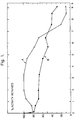
- Figure 1 illustrates the gastric emptying pattern of two formulations differing in density (open circles: density 1.0 g/ml, closed circles: density 1.6 g/ml), labelled with two different isotopes and co-administered to a volunteer
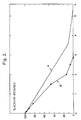
- Figure 2 illustrates the average gastric emptying pattern for 7 healthy volunteers (A) compared to the emptying from a person with the "Giesskannen” phenomenon (B).
- A healthy volunteers
- B the "Giesskannen” phenomenon
- a mixture of the above ingredients was moistened with isopropanol and purified water and mixed until the mixture was a little lumpy.
- the moist mixture was extruded through a 0.75 mm sieve.
- the resulting extrudate consisted of strings breaking off in lengths of a few cm.
- the extruded strings were broken into small particles and formed into compact-shaped cores in a marumerizer.
- a diffusion coating suspension was prepared from the following ingredients:
- the cores were coated with 5% of the coating material (calculated as w/w of dry ingredient in the coating suspension to dry ingredient in the cores).
- the coating procedure was performed in a fluidized bed.
- the pellets were sieved (sieve fraction 0.71-1.0 mm).
- 99m Tc pertechnetate solution was prepared by eluting a 99 Mo column (Tecegen @ ) with a 0.9 N sodium chloride solution.
- the radioactivity of the pellets, the soaking liquid, the rinsing liquid, and the artificial fluids was measured by counting in a gamma scintillation well counter after a period of time sufficient for the radioactivity to be within the measuring range of the counter. Based upon the measurements, the activity of each of the samples at the elution time was calculated.
- Paraffin was extruded through a 0.5 mm sieve.
- the resulting extrudate consisted of strings breaking off in lengths of about 10 cm.
- the extruded strings were mixed with 2.5% of Amberlite@ CG 400, calculated on the combined weight of the paraffin strings and the Amberlite@. Simultaneously with the mixing, the mixture was powdered with microcrystalline cellulose to avoid adhesion between the paraffin strings. The resulting mixture was extruded five times through a 0.5 mm sieve. Between the extrusions, the strings were powdered with microcrystalline cellulose.
- the strings were immersed in water and mechanically broken into small particles by means of a stirrer.
- the resulting cores were coated with a diffusion coating in the same manner as described in Example 1.
- the amount of coating applied was 5% of coating solids, calculated on the weight of the uncoated cores.
- the resulting pellets were labelled with 99m Tc and tested as described in Example 1.
- the activity of the fluids and the pellets was measured as described in Example 1.
- Paraffin strings were made by extruding paraffin through a 0.5 mm sieve. The resulting extrudate consists of strings breaking off at lengths of about 10 cm.
- the strings were immersed in water and mechanically broken into small particles by means of a stirrer.
- the water was removed, and the particles were heated to approximately 35°C.
- the surface of the particles softened, and 10% by weight of Amberlite@ CG 400 was added by powdering while stirring with a pestle.
- about half of the Amberlite® adhered to the surface of the particles.
- Example 3 The resulting pellets were labelled with 99m Tc and tested in the same manner as described in Example 1. The activity of the fluids and the pellets was measured as described in Example 1. The results appear from Table 3.
- the cores were prepared and coated with 2.5% coating suspension (per cent by weight calculated as dry matter on the weight of the cores) as described in Example 1 (except that only water was used as the moistening agent). Finally, the cores were sieved, and the 1.0-1.19 mm sieve fraction was selected.
- 99m Tc pertechnetate solution was prepared as described in Example 1. The eluate was diluted to give 25.9 kBq/mi (0.7 ⁇ Ci/ml). Four samples (each 0.60 g) were labelled with 1 ml of the 99m Tc pertechnetate solution for 3 hours. The liquid was removed and the labelled pellets were rinsed in 4 ml isotonic NaCI solution.
- this formulation with effective granulating excipients resulted in low leaching.
- the coating was not observed to contribute further to the reduction of the leaching. The reason for this is probably that, due to the granulation, the resin particles are not exposed to the artificial gastrointestinal fluid to any significant extent even when ground.
- a diffusion coating suspension was prepared from the following ingredients:
- Two samples of an ion exchange resin (Amberlite® CG 400) were coated with 24% and 50%, respectively, of coating material (calculated as w/w of dry ingredient in the coating suspension to ion exchange resin). The coating was performed in a fluidized bed.
- 99m Tc pertechnetate solution was prepared by eluting a 99 Mo column (Tecegen®) with a 0.9 N sodium chloride solution.
- the samples were tested for leaching of the radioactivity substance by immersion in 5 ml of artificial gastric fluid, pH 1.0, for 2 1/2 hours.
- the fluid was removed from the resins by means of a needle and syringe.
- the radioactivity of the resins and the fluid was measured in the dose calibrator.
- the effect of the coating is statistically significant on a 5% level as calculated by an analysis of variance.
- Example 2 Two batches of cores were prepared as described in Example 1 with 2.5% Amberlite° CG 120 and 2.5% Amberlite@ CG 400, respectively, thus containing two different tracer-binding agents capable of binding two different isotopes ( 111 In and 99m Tc).
- the cores were coated with the same coating solution as in Example 1, but using 20% by weight of coating solids, calculated on the weight of the uncoated cores.
- the two batches did not differ in their physical characteristics with respect to shape, size density and surface.
- the two samples were co-administered to a healthy volunteer (informed consent was obtained).
- Anterior and posterior pictures (sampling time: 1 min.) were recorded by means of y-camera I.
- the subject was placed in front of the camera in a standing position.
- the geometric mean (of the anterior and posterior pictures) of the countings for each isotope in the regions of interest was calculated and corrected for decay and background activity.
- a sample (0.29 g) of pellets (density 1.0 g/ml) prepared and labelled with 99m Tc as described in Example 3 and a sample (0.80 g) of pellets (density 1.6 g/ml) prepared and labelled with 111 In as described in Example 6 were tested in vivo.
- the two samples differed in their physical characteristics only with respect to the density as the same coating material and the same size of the individual pellets (the same sieve fraction) was used. Further, the compact shape of the individual pellets and the number of pellets in each sample were similar.
- the samples were co-administered to a healthy volunteer (informed consent was obtained), and the activity in the stomach was registered with a y-camera as described in Example 6.
- Curve A shows the activity of 99 Tc in the stomach region representing the low density pellets. No activity leaves the stomach for the first 3 hours because the low density pellets tend to float on top of the stomach fluid (which could easily be seen from the y-camera picture). But once the surface of the stomach fluid passes below the smaller stomach wall curvature, the emptying is quick.
- Curve B represents " 1 In corresponding to high density pellets. Some activity leaves the stomach relatively fast (this is not leaching as was proven in Example 6) whereas the rest of the pellets was stuck in the antrum for a long time (which could also easily be seen from the y-camera picture).
- the density has a significant effect upon the emptying pattern. Furthermore, the y-camera pictures distinctly show the difference and the separation between the two types of pellets.
- the cores where prepared and coated with 5% of coating suspension (per cent by weight calculated as dry matter on the weight of the cores) as described in Example 1.
- a sample (0.6 g) of the pellets was labelled and administered to a person (informed consent was obtained) as described in Example 5. After an overnight fast, the person was given an "Amdrup beef" (consisting of 150 g tenderloin, 150 g potatoes and 15 g butter without salt and spices) and 100 ml of Mixobai-0, which was ingested over 15 minutes. Then the pellets were administered on a spoon and the patient was further given a small amount of water. No smoking or eating was allowed during the study.
- the patient was asked to lie down and turn 360°. Then the patient was asked to stand in front of the y-camera. Anterior pictures were recorded every 15 minutes during the first 90 minutes and then every 30 minutes until no activity was left in the stomach.
- the y-camera pictures showed that only about 10% of the pellets were left in the stomach whereas the X-ray pictures postulated a full stomach.
- a gastroscopy was performed and two doctors independently estimated the volume of the remaining food bolus to be approximately 50 ml corresponding to approximately 10-15% of the administered volume.
- the gastroscopy revealed that the inside of the stomach was coated with BaS0 4 in spite of the fact that Mixobar O is acknowledged to be the least mucosa-coating BaS0 4 preparation available.
- a pellet-free sample of the bolus was aspirated through the gastroscope tube. The radioactivity of the aspirated sample was detected on the dose calibrator. No activity was detectable even though the lower detection limit of the dose calibrator is as low as 0.37 kBq (0.01 pCi), and the total dosis administered was 1850 kBq (50 pCi).
- the radioactive pellets of the invention appear to be a far better solid food marker than is BaS0 4 .
- the fact that no detectable leaching took placed in vivo from the pellets of the invention shows that these may be used as reliable markers of the gastric emptying of the last 20% of a solid food bolus.
- Example 8 Samples of the pellets prepared in Example 8 were labelled as described in Example 4 and administered to 8 fasted persons (informed consent was obtained) with 150 ml of water.
- the pellets of the invention are useful as a diagnostic tool to diagnose the "Giesskannen" phenomenon.
- Example 8 A sample (0.6 g) of the pellets prepared in Example 8 was labelled as described in Example 4. The pellets were administered (with 100 ml of water instead of the MixobarO), the pictures recorded and the data processed as described in detail in Example 8.
- a patient with a prepyloric ulcer was tested to see whether his gastric emptying was disturbed.
- Example 8 A sample (0.6 g) of the pellets prepared in Example 8 was labelled as described in Example 4. The pellets were administered with 150 ml of water. Pictures were recorded as described in detail in Example 9.
Landscapes
- Health & Medical Sciences (AREA)
- Chemical & Material Sciences (AREA)
- General Health & Medical Sciences (AREA)
- Physics & Mathematics (AREA)
- Medicinal Chemistry (AREA)
- Optics & Photonics (AREA)
- Pharmacology & Pharmacy (AREA)
- Epidemiology (AREA)
- Life Sciences & Earth Sciences (AREA)
- Animal Behavior & Ethology (AREA)
- Dispersion Chemistry (AREA)
- Public Health (AREA)
- Veterinary Medicine (AREA)
- Medicines Containing Antibodies Or Antigens For Use As Internal Diagnostic Agents (AREA)
- Farming Of Fish And Shellfish (AREA)
- Investigating Or Analysing Materials By The Use Of Chemical Reactions (AREA)
- Investigating Or Analysing Biological Materials (AREA)
- Curing Cements, Concrete, And Artificial Stone (AREA)
- Analysing Materials By The Use Of Radiation (AREA)
- Measuring Or Testing Involving Enzymes Or Micro-Organisms (AREA)
- Testing, Inspecting, Measuring Of Stereoscopic Televisions And Televisions (AREA)
- Heterocyclic Carbon Compounds Containing A Hetero Ring Having Oxygen Or Sulfur (AREA)
- Nitrogen And Oxygen Or Sulfur-Condensed Heterocyclic Ring Systems (AREA)
Priority Applications (1)
| Application Number | Priority Date | Filing Date | Title |
|---|---|---|---|
| AT83302304T ATE40949T1 (de) | 1982-04-23 | 1983-04-22 | Zusammensetzung zur untersuchung von alimentaerfunktionen. |
Applications Claiming Priority (2)
| Application Number | Priority Date | Filing Date | Title |
|---|---|---|---|
| DK1839/82 | 1982-04-23 | ||
| DK183982 | 1982-04-23 |
Publications (3)
| Publication Number | Publication Date |
|---|---|
| EP0092993A2 EP0092993A2 (en) | 1983-11-02 |
| EP0092993A3 EP0092993A3 (en) | 1984-07-18 |
| EP0092993B1 true EP0092993B1 (en) | 1989-03-01 |
Family
ID=8108447
Family Applications (1)
| Application Number | Title | Priority Date | Filing Date |
|---|---|---|---|
| EP83302304A Expired EP0092993B1 (en) | 1982-04-23 | 1983-04-22 | Composition for investigating alimentary functions |
Country Status (12)
| Country | Link |
|---|---|
| US (1) | US4657755A (da) |
| EP (1) | EP0092993B1 (da) |
| JP (1) | JPS59500614A (da) |
| AT (1) | ATE40949T1 (da) |
| CA (1) | CA1222947A (da) |
| DE (2) | DE3379256D1 (da) |
| DK (1) | DK157733C (da) |
| FI (1) | FI834776A0 (da) |
| NO (1) | NO834780L (da) |
| NZ (1) | NZ204009A (da) |
| WO (1) | WO1983003762A1 (da) |
| ZA (1) | ZA832904B (da) |
Families Citing this family (11)
| Publication number | Priority date | Publication date | Assignee | Title |
|---|---|---|---|---|
| US5165410A (en) * | 1987-05-15 | 1992-11-24 | Medical & Scientific Enterprises, Inc. | Position indicating system for a multidiagnostic scanner |
| US5261406A (en) * | 1991-01-15 | 1993-11-16 | Medasys Inc. | Whole body imaging system |
| US5344640A (en) * | 1991-10-22 | 1994-09-06 | Mallinckrodt Medical, Inc. | Preparation of apatite particles for medical diagnostic imaging |
| US5342609A (en) * | 1991-10-22 | 1994-08-30 | Mallinckrodt Medical, Inc. | Microfluidization of calcium/oxyanion-containing particles |
| US5407659A (en) * | 1991-10-22 | 1995-04-18 | Mallinckrodt Medical, Inc. | Treated calcium/oxyanion-containing particles for medical diagnostic imaging |
| US5350584A (en) * | 1992-06-26 | 1994-09-27 | Merck & Co., Inc. | Spheronization process using charged resins |
| US5520904A (en) * | 1995-01-27 | 1996-05-28 | Mallinckrodt Medical, Inc. | Calcium/oxyanion-containing particles with a polymerical alkoxy coating for use in medical diagnostic imaging |
| US5827497A (en) * | 1996-08-14 | 1998-10-27 | Mayo Foundation For Medical Education And Research | Charcoal-radionuclide agents for measurement of gastrointestinal transit |
| US20060073202A1 (en) * | 2004-10-05 | 2006-04-06 | Rocca Jose G | Dual component medicament delivery system |
| JP2009543886A (ja) * | 2006-07-19 | 2009-12-10 | スミスクライン・ビーチャム・コーポレイション | ガンマシンチグラフィー評価のために処方物を放射性標識する方法 |
| US10299745B2 (en) | 2014-12-29 | 2019-05-28 | Loyola University Of Chicago | Traceable devices for gastrointestinal use and methods of use and manufacturing the same |
Family Cites Families (8)
| Publication number | Priority date | Publication date | Assignee | Title |
|---|---|---|---|---|
| US2611730A (en) * | 1950-09-02 | 1952-09-23 | Simth Kline & French Lab | Medical preparation for reducing the body level of sodium |
| DK106457C (da) * | 1962-01-23 | 1967-02-06 | Ernst Helmer Hagstam | Røntgenkontrastmiddel med lille massefylde og fremgangsmåde til dets fremstilling. |
| NL7017227A (da) * | 1969-12-27 | 1971-06-29 | ||
| US4115540A (en) * | 1976-06-16 | 1978-09-19 | The University Of Kentucky Research Foundation | Radiodiagnostic agent |
| US4107283A (en) * | 1976-07-19 | 1978-08-15 | New England Nuclear Corporation | Tracer for circulation determinations |
| GB1576376A (en) * | 1977-03-30 | 1980-10-08 | Benzon As Alfred | Multiple-unit drug dose |
| US4243652A (en) * | 1978-07-14 | 1981-01-06 | The Procter & Gamble Company | Gastrointestinal scanning agent |
| GB2057420B (en) * | 1979-08-30 | 1984-05-10 | Standard Telephones Cables Ltd | Controlled release glass |
-
1983
- 1983-04-22 US US06/568,184 patent/US4657755A/en not_active Expired - Fee Related
- 1983-04-22 AT AT83302304T patent/ATE40949T1/de not_active IP Right Cessation
- 1983-04-22 EP EP83302304A patent/EP0092993B1/en not_active Expired
- 1983-04-22 DE DE8383302304T patent/DE3379256D1/de not_active Expired
- 1983-04-22 CA CA000426523A patent/CA1222947A/en not_active Expired
- 1983-04-22 JP JP58501422A patent/JPS59500614A/ja active Granted
- 1983-04-22 DE DE198383302304T patent/DE92993T1/de active Pending
- 1983-04-22 WO PCT/DK1983/000047 patent/WO1983003762A1/en not_active Ceased
- 1983-04-25 ZA ZA832904A patent/ZA832904B/xx unknown
- 1983-04-26 NZ NZ204009A patent/NZ204009A/en unknown
- 1983-12-22 NO NO834780A patent/NO834780L/no unknown
- 1983-12-22 DK DK593083A patent/DK157733C/da not_active IP Right Cessation
- 1983-12-23 FI FI834776A patent/FI834776A0/fi not_active Application Discontinuation
Also Published As
| Publication number | Publication date |
|---|---|
| FI834776A7 (fi) | 1983-12-23 |
| NO834780L (no) | 1983-12-22 |
| CA1222947A (en) | 1987-06-16 |
| DK157733B (da) | 1990-02-12 |
| EP0092993A3 (en) | 1984-07-18 |
| EP0092993A2 (en) | 1983-11-02 |
| ATE40949T1 (de) | 1989-03-15 |
| FI834776A0 (fi) | 1983-12-23 |
| JPS59500614A (ja) | 1984-04-12 |
| ZA832904B (en) | 1984-01-25 |
| DK157733C (da) | 1990-07-16 |
| DE3379256D1 (en) | 1989-04-06 |
| DK593083A (da) | 1983-12-22 |
| JPS6222971B2 (da) | 1987-05-20 |
| NZ204009A (en) | 1986-03-14 |
| DK593083D0 (da) | 1983-12-22 |
| US4657755A (en) | 1987-04-14 |
| WO1983003762A1 (en) | 1983-11-10 |
| DE92993T1 (de) | 1984-03-29 |
Similar Documents
| Publication | Publication Date | Title |
|---|---|---|
| Fisher et al. | Abnormal gallbladder emptying in patients with gallstones | |
| Arnold et al. | Comparison of 99mTc complexes for renal imaging | |
| Brunner et al. | Gastrointestinal transit and 5‐ASA release from a new mesalazine extended‐release formulation | |
| Follonier et al. | Biopharmaceutical comparison of oral multiple-unit and single-unit sustained-release dosage forms | |
| Enlander et al. | Renal cortical imaging in 35 patients: superior quality with 99mTc-DMSA | |
| US4243652A (en) | Gastrointestinal scanning agent | |
| Abrahamsson et al. | Absorption, gastrointestinal transit, and tablet erosion of felodipine extended-release (ER) tablets | |
| Burton et al. | Intragastric distribution of ion‐exchange resins: A drug delivery system for the topical treatment of the gastric mucosa | |
| Fell et al. | Imaging and behaviour of solid oral dosage forms in vivo | |
| EP0092993B1 (en) | Composition for investigating alimentary functions | |
| Hardy et al. | Localization of drug release sites from an oral sustained‐release formulation of 5‐ASA (Pentasa®) in the gastrointestinal tract using gamma scintigraphy | |
| Wilson et al. | Assessment of disintegration and dissolution of dosage forms in vivo using gamma scintigraphy | |
| Park et al. | Gastric emptying of enteric-coated tablets | |
| Porter et al. | Acid-citrate-dextrose compared with heparin in the preparation of in vivo/in vitro technetium-99m red blood cells | |
| Malagelada et al. | Radiolabeled fiber: a physiologic marker for gastric emptying and intestinal transit of solids | |
| Thairs et al. | Effect of dose size, food and surface coating on the gastric residence and distribution of an ion exchange resin | |
| Kamm | The small intestine and colon: scintigraphic quantitation of motility in health and disease | |
| Healey | Gastrointestinal transit and release of mesalazine tablets in patients with inflammatory bowel disease | |
| US4670245A (en) | Diagnostic procedures using radiolabeled colloidal bismuth subcitrate and related compounds | |
| Marvola et al. | Neutron activation-based gamma scintigraphy in pharmacoscintigraphic evaluation of an Egalet® constant-release drug delivery system | |
| Burke et al. | A novel method to radiolabel gastric retentive formulations for gamma scintigraphy assessment | |
| AU1513283A (en) | Composition and method for investigating alimentary functions | |
| Vaira et al. | Gastric retention of sucralfate gel and suspension in upper gastrointestinal diseases | |
| Blok et al. | Scintigraphic investigation of the gastric emptying of 3 mm pellets in human volunteers | |
| Cheng et al. | Gallium-67 activated charcoal: a new method for preparation of radioactive capsules for colonic transit study |
Legal Events
| Date | Code | Title | Description |
|---|---|---|---|
| PUAI | Public reference made under article 153(3) epc to a published international application that has entered the european phase |
Free format text: ORIGINAL CODE: 0009012 |
|
| AK | Designated contracting states |
Designated state(s): AT BE CH DE FR GB IT LI LU NL SE |
|
| ITCL | It: translation for ep claims filed |
Representative=s name: JACOBACCI CASETTA & PERANI S.P.A. |
|
| TCAT | At: translation of patent claims filed | ||
| EL | Fr: translation of claims filed | ||
| TCNL | Nl: translation of patent claims filed | ||
| DET | De: translation of patent claims | ||
| TCNL | Nl: translation of patent claims filed | ||
| PUAL | Search report despatched |
Free format text: ORIGINAL CODE: 0009013 |
|
| AK | Designated contracting states |
Designated state(s): AT BE CH DE FR GB IT LI LU NL SE |
|
| 17P | Request for examination filed |
Effective date: 19850115 |
|
| 17Q | First examination report despatched |
Effective date: 19860422 |
|
| R17C | First examination report despatched (corrected) |
Effective date: 19861009 |
|
| GRAA | (expected) grant |
Free format text: ORIGINAL CODE: 0009210 |
|
| AK | Designated contracting states |
Kind code of ref document: B1 Designated state(s): AT BE CH DE FR GB IT LI LU NL SE |
|
| PG25 | Lapsed in a contracting state [announced via postgrant information from national office to epo] |
Ref country code: SE Effective date: 19890301 Ref country code: IT Free format text: LAPSE BECAUSE OF FAILURE TO SUBMIT A TRANSLATION OF THE DESCRIPTION OR TO PAY THE FEE WITHIN THE PRESCRIBED TIME-LIMIT;WARNING: LAPSES OF ITALIAN PATENTS WITH EFFECTIVE DATE BEFORE 2007 MAY HAVE OCCURRED AT ANY TIME BEFORE 2007. THE CORRECT EFFECTIVE DATE MAY BE DIFFERENT FROM THE ONE RECORDED. Effective date: 19890301 Ref country code: BE Effective date: 19890301 Ref country code: AT Effective date: 19890301 |
|
| REF | Corresponds to: |
Ref document number: 40949 Country of ref document: AT Date of ref document: 19890315 Kind code of ref document: T |
|
| REF | Corresponds to: |
Ref document number: 3379256 Country of ref document: DE Date of ref document: 19890406 |
|
| PG25 | Lapsed in a contracting state [announced via postgrant information from national office to epo] |
Ref country code: LU Free format text: LAPSE BECAUSE OF NON-PAYMENT OF DUE FEES Effective date: 19890430 |
|
| ET | Fr: translation filed | ||
| PLBE | No opposition filed within time limit |
Free format text: ORIGINAL CODE: 0009261 |
|
| STAA | Information on the status of an ep patent application or granted ep patent |
Free format text: STATUS: NO OPPOSITION FILED WITHIN TIME LIMIT |
|
| 26N | No opposition filed | ||
| REG | Reference to a national code |
Ref country code: GB Ref legal event code: 732 |
|
| REG | Reference to a national code |
Ref country code: FR Ref legal event code: TP |
|
| NLS | Nl: assignments of ep-patents |
Owner name: BENZON PHARMA A/S TE HVIDOVRE, DENEMARKEN. |
|
| REG | Reference to a national code |
Ref country code: CH Ref legal event code: PUE Owner name: BENZON PHARMA A/S |
|
| PGFP | Annual fee paid to national office [announced via postgrant information from national office to epo] |
Ref country code: GB Payment date: 19920414 Year of fee payment: 10 |
|
| PGFP | Annual fee paid to national office [announced via postgrant information from national office to epo] |
Ref country code: CH Payment date: 19920427 Year of fee payment: 10 |
|
| PGFP | Annual fee paid to national office [announced via postgrant information from national office to epo] |
Ref country code: FR Payment date: 19920428 Year of fee payment: 10 |
|
| PGFP | Annual fee paid to national office [announced via postgrant information from national office to epo] |
Ref country code: NL Payment date: 19920430 Year of fee payment: 10 |
|
| PGFP | Annual fee paid to national office [announced via postgrant information from national office to epo] |
Ref country code: DE Payment date: 19920529 Year of fee payment: 10 |
|
| PG25 | Lapsed in a contracting state [announced via postgrant information from national office to epo] |
Ref country code: GB Effective date: 19930422 |
|
| PG25 | Lapsed in a contracting state [announced via postgrant information from national office to epo] |
Ref country code: LI Effective date: 19930430 Ref country code: CH Effective date: 19930430 |
|
| PG25 | Lapsed in a contracting state [announced via postgrant information from national office to epo] |
Ref country code: NL Effective date: 19931101 |
|
| NLV4 | Nl: lapsed or anulled due to non-payment of the annual fee | ||
| GBPC | Gb: european patent ceased through non-payment of renewal fee |
Effective date: 19930422 |
|
| PG25 | Lapsed in a contracting state [announced via postgrant information from national office to epo] |
Ref country code: FR Effective date: 19931229 |
|
| REG | Reference to a national code |
Ref country code: CH Ref legal event code: PL |
|
| PG25 | Lapsed in a contracting state [announced via postgrant information from national office to epo] |
Ref country code: DE Effective date: 19940101 |
|
| REG | Reference to a national code |
Ref country code: FR Ref legal event code: ST |