EP0065481B1 - Hüftgelenkprothese mit gelochtem Hohlschaft - Google Patents
Hüftgelenkprothese mit gelochtem Hohlschaft Download PDFInfo
- Publication number
- EP0065481B1 EP0065481B1 EP82730067A EP82730067A EP0065481B1 EP 0065481 B1 EP0065481 B1 EP 0065481B1 EP 82730067 A EP82730067 A EP 82730067A EP 82730067 A EP82730067 A EP 82730067A EP 0065481 B1 EP0065481 B1 EP 0065481B1
- Authority
- EP
- European Patent Office
- Prior art keywords
- joint
- artificial hip
- holes
- shank
- openings
- Prior art date
- Legal status (The legal status is an assumption and is not a legal conclusion. Google has not performed a legal analysis and makes no representation as to the accuracy of the status listed.)
- Expired
Links
- 210000004394 hip joint Anatomy 0.000 title claims abstract description 13
- 244000273618 Sphenoclea zeylanica Species 0.000 title 1
- 238000005452 bending Methods 0.000 claims abstract description 14
- 239000000463 material Substances 0.000 claims abstract description 12
- 210000000988 bone and bone Anatomy 0.000 claims abstract description 11
- 230000003313 weakening effect Effects 0.000 claims abstract description 4
- 239000000919 ceramic Substances 0.000 claims 1
- 210000000689 upper leg Anatomy 0.000 description 7
- 230000000694 effects Effects 0.000 description 4
- 230000001054 cortical effect Effects 0.000 description 3
- 239000004568 cement Substances 0.000 description 2
- 238000011161 development Methods 0.000 description 2
- 230000018109 developmental process Effects 0.000 description 2
- 238000009434 installation Methods 0.000 description 2
- 239000000126 substance Substances 0.000 description 2
- 241000309551 Arthraxon hispidus Species 0.000 description 1
- 208000006386 Bone Resorption Diseases 0.000 description 1
- 229920000049 Carbon (fiber) Polymers 0.000 description 1
- 229910001069 Ti alloy Inorganic materials 0.000 description 1
- RTAQQCXQSZGOHL-UHFFFAOYSA-N Titanium Chemical compound [Ti] RTAQQCXQSZGOHL-UHFFFAOYSA-N 0.000 description 1
- 230000006978 adaptation Effects 0.000 description 1
- 239000000853 adhesive Substances 0.000 description 1
- 230000001070 adhesive effect Effects 0.000 description 1
- 238000013459 approach Methods 0.000 description 1
- 239000002639 bone cement Substances 0.000 description 1
- 230000024279 bone resorption Effects 0.000 description 1
- 230000037118 bone strength Effects 0.000 description 1
- 239000004917 carbon fiber Substances 0.000 description 1
- 230000000295 complement effect Effects 0.000 description 1
- 239000002131 composite material Substances 0.000 description 1
- 238000010276 construction Methods 0.000 description 1
- 239000000835 fiber Substances 0.000 description 1
- 239000008187 granular material Substances 0.000 description 1
- 210000001624 hip Anatomy 0.000 description 1
- 210000002414 leg Anatomy 0.000 description 1
- 238000000034 method Methods 0.000 description 1
- 238000005728 strengthening Methods 0.000 description 1
- 229910052719 titanium Inorganic materials 0.000 description 1
- 239000010936 titanium Substances 0.000 description 1
- 238000011541 total hip replacement Methods 0.000 description 1
Images

Classifications
-
- A—HUMAN NECESSITIES
- A61—MEDICAL OR VETERINARY SCIENCE; HYGIENE
- A61F—FILTERS IMPLANTABLE INTO BLOOD VESSELS; PROSTHESES; DEVICES PROVIDING PATENCY TO, OR PREVENTING COLLAPSING OF, TUBULAR STRUCTURES OF THE BODY, e.g. STENTS; ORTHOPAEDIC, NURSING OR CONTRACEPTIVE DEVICES; FOMENTATION; TREATMENT OR PROTECTION OF EYES OR EARS; BANDAGES, DRESSINGS OR ABSORBENT PADS; FIRST-AID KITS
- A61F2/00—Filters implantable into blood vessels; Prostheses, i.e. artificial substitutes or replacements for parts of the body; Appliances for connecting them with the body; Devices providing patency to, or preventing collapsing of, tubular structures of the body, e.g. stents
- A61F2/02—Prostheses implantable into the body
- A61F2/30—Joints
- A61F2/32—Joints for the hip
- A61F2/36—Femoral heads ; Femoral endoprostheses
- A61F2/3662—Femoral shafts
-
- A—HUMAN NECESSITIES
- A61—MEDICAL OR VETERINARY SCIENCE; HYGIENE
- A61F—FILTERS IMPLANTABLE INTO BLOOD VESSELS; PROSTHESES; DEVICES PROVIDING PATENCY TO, OR PREVENTING COLLAPSING OF, TUBULAR STRUCTURES OF THE BODY, e.g. STENTS; ORTHOPAEDIC, NURSING OR CONTRACEPTIVE DEVICES; FOMENTATION; TREATMENT OR PROTECTION OF EYES OR EARS; BANDAGES, DRESSINGS OR ABSORBENT PADS; FIRST-AID KITS
- A61F2/00—Filters implantable into blood vessels; Prostheses, i.e. artificial substitutes or replacements for parts of the body; Appliances for connecting them with the body; Devices providing patency to, or preventing collapsing of, tubular structures of the body, e.g. stents
- A61F2/02—Prostheses implantable into the body
- A61F2/30—Joints
- A61F2/3094—Designing or manufacturing processes
- A61F2/30965—Reinforcing the prosthesis by embedding particles or fibres during moulding or dipping
-
- A—HUMAN NECESSITIES
- A61—MEDICAL OR VETERINARY SCIENCE; HYGIENE
- A61F—FILTERS IMPLANTABLE INTO BLOOD VESSELS; PROSTHESES; DEVICES PROVIDING PATENCY TO, OR PREVENTING COLLAPSING OF, TUBULAR STRUCTURES OF THE BODY, e.g. STENTS; ORTHOPAEDIC, NURSING OR CONTRACEPTIVE DEVICES; FOMENTATION; TREATMENT OR PROTECTION OF EYES OR EARS; BANDAGES, DRESSINGS OR ABSORBENT PADS; FIRST-AID KITS
- A61F2/00—Filters implantable into blood vessels; Prostheses, i.e. artificial substitutes or replacements for parts of the body; Appliances for connecting them with the body; Devices providing patency to, or preventing collapsing of, tubular structures of the body, e.g. stents
- A61F2/02—Prostheses implantable into the body
- A61F2/28—Bones
- A61F2002/2835—Bone graft implants for filling a bony defect or an endoprosthesis cavity, e.g. by synthetic material or biological material
-
- A—HUMAN NECESSITIES
- A61—MEDICAL OR VETERINARY SCIENCE; HYGIENE
- A61F—FILTERS IMPLANTABLE INTO BLOOD VESSELS; PROSTHESES; DEVICES PROVIDING PATENCY TO, OR PREVENTING COLLAPSING OF, TUBULAR STRUCTURES OF THE BODY, e.g. STENTS; ORTHOPAEDIC, NURSING OR CONTRACEPTIVE DEVICES; FOMENTATION; TREATMENT OR PROTECTION OF EYES OR EARS; BANDAGES, DRESSINGS OR ABSORBENT PADS; FIRST-AID KITS
- A61F2/00—Filters implantable into blood vessels; Prostheses, i.e. artificial substitutes or replacements for parts of the body; Appliances for connecting them with the body; Devices providing patency to, or preventing collapsing of, tubular structures of the body, e.g. stents
- A61F2/02—Prostheses implantable into the body
- A61F2/30—Joints
- A61F2002/30001—Additional features of subject-matter classified in A61F2/28, A61F2/30 and subgroups thereof
- A61F2002/30003—Material related properties of the prosthesis or of a coating on the prosthesis
- A61F2002/30004—Material related properties of the prosthesis or of a coating on the prosthesis the prosthesis being made from materials having different values of a given property at different locations within the same prosthesis
- A61F2002/30014—Material related properties of the prosthesis or of a coating on the prosthesis the prosthesis being made from materials having different values of a given property at different locations within the same prosthesis differing in elasticity, stiffness or compressibility
-
- A—HUMAN NECESSITIES
- A61—MEDICAL OR VETERINARY SCIENCE; HYGIENE
- A61F—FILTERS IMPLANTABLE INTO BLOOD VESSELS; PROSTHESES; DEVICES PROVIDING PATENCY TO, OR PREVENTING COLLAPSING OF, TUBULAR STRUCTURES OF THE BODY, e.g. STENTS; ORTHOPAEDIC, NURSING OR CONTRACEPTIVE DEVICES; FOMENTATION; TREATMENT OR PROTECTION OF EYES OR EARS; BANDAGES, DRESSINGS OR ABSORBENT PADS; FIRST-AID KITS
- A61F2/00—Filters implantable into blood vessels; Prostheses, i.e. artificial substitutes or replacements for parts of the body; Appliances for connecting them with the body; Devices providing patency to, or preventing collapsing of, tubular structures of the body, e.g. stents
- A61F2/02—Prostheses implantable into the body
- A61F2/30—Joints
- A61F2002/30001—Additional features of subject-matter classified in A61F2/28, A61F2/30 and subgroups thereof
- A61F2002/30316—The prosthesis having different structural features at different locations within the same prosthesis; Connections between prosthetic parts; Special structural features of bone or joint prostheses not otherwise provided for
- A61F2002/30317—The prosthesis having different structural features at different locations within the same prosthesis
- A61F2002/30327—The prosthesis having different structural features at different locations within the same prosthesis differing in diameter
-
- A—HUMAN NECESSITIES
- A61—MEDICAL OR VETERINARY SCIENCE; HYGIENE
- A61F—FILTERS IMPLANTABLE INTO BLOOD VESSELS; PROSTHESES; DEVICES PROVIDING PATENCY TO, OR PREVENTING COLLAPSING OF, TUBULAR STRUCTURES OF THE BODY, e.g. STENTS; ORTHOPAEDIC, NURSING OR CONTRACEPTIVE DEVICES; FOMENTATION; TREATMENT OR PROTECTION OF EYES OR EARS; BANDAGES, DRESSINGS OR ABSORBENT PADS; FIRST-AID KITS
- A61F2/00—Filters implantable into blood vessels; Prostheses, i.e. artificial substitutes or replacements for parts of the body; Appliances for connecting them with the body; Devices providing patency to, or preventing collapsing of, tubular structures of the body, e.g. stents
- A61F2/02—Prostheses implantable into the body
- A61F2/30—Joints
- A61F2002/30001—Additional features of subject-matter classified in A61F2/28, A61F2/30 and subgroups thereof
- A61F2002/30316—The prosthesis having different structural features at different locations within the same prosthesis; Connections between prosthetic parts; Special structural features of bone or joint prostheses not otherwise provided for
- A61F2002/30329—Connections or couplings between prosthetic parts, e.g. between modular parts; Connecting elements
- A61F2002/30451—Connections or couplings between prosthetic parts, e.g. between modular parts; Connecting elements soldered or brazed or welded
-
- A—HUMAN NECESSITIES
- A61—MEDICAL OR VETERINARY SCIENCE; HYGIENE
- A61F—FILTERS IMPLANTABLE INTO BLOOD VESSELS; PROSTHESES; DEVICES PROVIDING PATENCY TO, OR PREVENTING COLLAPSING OF, TUBULAR STRUCTURES OF THE BODY, e.g. STENTS; ORTHOPAEDIC, NURSING OR CONTRACEPTIVE DEVICES; FOMENTATION; TREATMENT OR PROTECTION OF EYES OR EARS; BANDAGES, DRESSINGS OR ABSORBENT PADS; FIRST-AID KITS
- A61F2/00—Filters implantable into blood vessels; Prostheses, i.e. artificial substitutes or replacements for parts of the body; Appliances for connecting them with the body; Devices providing patency to, or preventing collapsing of, tubular structures of the body, e.g. stents
- A61F2/02—Prostheses implantable into the body
- A61F2/30—Joints
- A61F2002/30001—Additional features of subject-matter classified in A61F2/28, A61F2/30 and subgroups thereof
- A61F2002/30316—The prosthesis having different structural features at different locations within the same prosthesis; Connections between prosthetic parts; Special structural features of bone or joint prostheses not otherwise provided for
- A61F2002/30329—Connections or couplings between prosthetic parts, e.g. between modular parts; Connecting elements
- A61F2002/30469—Connections or couplings between prosthetic parts, e.g. between modular parts; Connecting elements using band clamps
-
- A—HUMAN NECESSITIES
- A61—MEDICAL OR VETERINARY SCIENCE; HYGIENE
- A61F—FILTERS IMPLANTABLE INTO BLOOD VESSELS; PROSTHESES; DEVICES PROVIDING PATENCY TO, OR PREVENTING COLLAPSING OF, TUBULAR STRUCTURES OF THE BODY, e.g. STENTS; ORTHOPAEDIC, NURSING OR CONTRACEPTIVE DEVICES; FOMENTATION; TREATMENT OR PROTECTION OF EYES OR EARS; BANDAGES, DRESSINGS OR ABSORBENT PADS; FIRST-AID KITS
- A61F2/00—Filters implantable into blood vessels; Prostheses, i.e. artificial substitutes or replacements for parts of the body; Appliances for connecting them with the body; Devices providing patency to, or preventing collapsing of, tubular structures of the body, e.g. stents
- A61F2/02—Prostheses implantable into the body
- A61F2/30—Joints
- A61F2002/30001—Additional features of subject-matter classified in A61F2/28, A61F2/30 and subgroups thereof
- A61F2002/30316—The prosthesis having different structural features at different locations within the same prosthesis; Connections between prosthetic parts; Special structural features of bone or joint prostheses not otherwise provided for
- A61F2002/30535—Special structural features of bone or joint prostheses not otherwise provided for
- A61F2002/30593—Special structural features of bone or joint prostheses not otherwise provided for hollow
-
- A—HUMAN NECESSITIES
- A61—MEDICAL OR VETERINARY SCIENCE; HYGIENE
- A61F—FILTERS IMPLANTABLE INTO BLOOD VESSELS; PROSTHESES; DEVICES PROVIDING PATENCY TO, OR PREVENTING COLLAPSING OF, TUBULAR STRUCTURES OF THE BODY, e.g. STENTS; ORTHOPAEDIC, NURSING OR CONTRACEPTIVE DEVICES; FOMENTATION; TREATMENT OR PROTECTION OF EYES OR EARS; BANDAGES, DRESSINGS OR ABSORBENT PADS; FIRST-AID KITS
- A61F2/00—Filters implantable into blood vessels; Prostheses, i.e. artificial substitutes or replacements for parts of the body; Appliances for connecting them with the body; Devices providing patency to, or preventing collapsing of, tubular structures of the body, e.g. stents
- A61F2/02—Prostheses implantable into the body
- A61F2/30—Joints
- A61F2/30767—Special external or bone-contacting surface, e.g. coating for improving bone ingrowth
- A61F2/30771—Special external or bone-contacting surface, e.g. coating for improving bone ingrowth applied in original prostheses, e.g. holes or grooves
- A61F2002/30772—Apertures or holes, e.g. of circular cross section
- A61F2002/30784—Plurality of holes
- A61F2002/30785—Plurality of holes parallel
-
- A—HUMAN NECESSITIES
- A61—MEDICAL OR VETERINARY SCIENCE; HYGIENE
- A61F—FILTERS IMPLANTABLE INTO BLOOD VESSELS; PROSTHESES; DEVICES PROVIDING PATENCY TO, OR PREVENTING COLLAPSING OF, TUBULAR STRUCTURES OF THE BODY, e.g. STENTS; ORTHOPAEDIC, NURSING OR CONTRACEPTIVE DEVICES; FOMENTATION; TREATMENT OR PROTECTION OF EYES OR EARS; BANDAGES, DRESSINGS OR ABSORBENT PADS; FIRST-AID KITS
- A61F2/00—Filters implantable into blood vessels; Prostheses, i.e. artificial substitutes or replacements for parts of the body; Appliances for connecting them with the body; Devices providing patency to, or preventing collapsing of, tubular structures of the body, e.g. stents
- A61F2/02—Prostheses implantable into the body
- A61F2/30—Joints
- A61F2/30767—Special external or bone-contacting surface, e.g. coating for improving bone ingrowth
- A61F2/30771—Special external or bone-contacting surface, e.g. coating for improving bone ingrowth applied in original prostheses, e.g. holes or grooves
- A61F2002/30772—Apertures or holes, e.g. of circular cross section
- A61F2002/30784—Plurality of holes
- A61F2002/30787—Plurality of holes inclined obliquely with respect to each other
-
- A—HUMAN NECESSITIES
- A61—MEDICAL OR VETERINARY SCIENCE; HYGIENE
- A61F—FILTERS IMPLANTABLE INTO BLOOD VESSELS; PROSTHESES; DEVICES PROVIDING PATENCY TO, OR PREVENTING COLLAPSING OF, TUBULAR STRUCTURES OF THE BODY, e.g. STENTS; ORTHOPAEDIC, NURSING OR CONTRACEPTIVE DEVICES; FOMENTATION; TREATMENT OR PROTECTION OF EYES OR EARS; BANDAGES, DRESSINGS OR ABSORBENT PADS; FIRST-AID KITS
- A61F2/00—Filters implantable into blood vessels; Prostheses, i.e. artificial substitutes or replacements for parts of the body; Appliances for connecting them with the body; Devices providing patency to, or preventing collapsing of, tubular structures of the body, e.g. stents
- A61F2/02—Prostheses implantable into the body
- A61F2/30—Joints
- A61F2/32—Joints for the hip
- A61F2/36—Femoral heads ; Femoral endoprostheses
- A61F2/3609—Femoral heads or necks; Connections of endoprosthetic heads or necks to endoprosthetic femoral shafts
- A61F2002/3652—Connections of necks to shafts
-
- A—HUMAN NECESSITIES
- A61—MEDICAL OR VETERINARY SCIENCE; HYGIENE
- A61F—FILTERS IMPLANTABLE INTO BLOOD VESSELS; PROSTHESES; DEVICES PROVIDING PATENCY TO, OR PREVENTING COLLAPSING OF, TUBULAR STRUCTURES OF THE BODY, e.g. STENTS; ORTHOPAEDIC, NURSING OR CONTRACEPTIVE DEVICES; FOMENTATION; TREATMENT OR PROTECTION OF EYES OR EARS; BANDAGES, DRESSINGS OR ABSORBENT PADS; FIRST-AID KITS
- A61F2/00—Filters implantable into blood vessels; Prostheses, i.e. artificial substitutes or replacements for parts of the body; Appliances for connecting them with the body; Devices providing patency to, or preventing collapsing of, tubular structures of the body, e.g. stents
- A61F2/02—Prostheses implantable into the body
- A61F2/30—Joints
- A61F2/32—Joints for the hip
- A61F2/36—Femoral heads ; Femoral endoprostheses
- A61F2/3662—Femoral shafts
- A61F2002/3678—Geometrical features
- A61F2002/368—Geometrical features with lateral apertures, bores, holes or openings, e.g. for reducing the mass, for receiving fixation screws or for communicating with the inside of a hollow shaft
-
- A—HUMAN NECESSITIES
- A61—MEDICAL OR VETERINARY SCIENCE; HYGIENE
- A61F—FILTERS IMPLANTABLE INTO BLOOD VESSELS; PROSTHESES; DEVICES PROVIDING PATENCY TO, OR PREVENTING COLLAPSING OF, TUBULAR STRUCTURES OF THE BODY, e.g. STENTS; ORTHOPAEDIC, NURSING OR CONTRACEPTIVE DEVICES; FOMENTATION; TREATMENT OR PROTECTION OF EYES OR EARS; BANDAGES, DRESSINGS OR ABSORBENT PADS; FIRST-AID KITS
- A61F2/00—Filters implantable into blood vessels; Prostheses, i.e. artificial substitutes or replacements for parts of the body; Appliances for connecting them with the body; Devices providing patency to, or preventing collapsing of, tubular structures of the body, e.g. stents
- A61F2/02—Prostheses implantable into the body
- A61F2/30—Joints
- A61F2/32—Joints for the hip
- A61F2/36—Femoral heads ; Femoral endoprostheses
- A61F2/3662—Femoral shafts
- A61F2002/3678—Geometrical features
- A61F2002/3686—Geometrical features bent
-
- A—HUMAN NECESSITIES
- A61—MEDICAL OR VETERINARY SCIENCE; HYGIENE
- A61F—FILTERS IMPLANTABLE INTO BLOOD VESSELS; PROSTHESES; DEVICES PROVIDING PATENCY TO, OR PREVENTING COLLAPSING OF, TUBULAR STRUCTURES OF THE BODY, e.g. STENTS; ORTHOPAEDIC, NURSING OR CONTRACEPTIVE DEVICES; FOMENTATION; TREATMENT OR PROTECTION OF EYES OR EARS; BANDAGES, DRESSINGS OR ABSORBENT PADS; FIRST-AID KITS
- A61F2220/00—Fixations or connections for prostheses classified in groups A61F2/00 - A61F2/26 or A61F2/82 or A61F9/00 or A61F11/00 or subgroups thereof
- A61F2220/0025—Connections or couplings between prosthetic parts, e.g. between modular parts; Connecting elements
- A61F2220/0058—Connections or couplings between prosthetic parts, e.g. between modular parts; Connecting elements soldered or brazed or welded
-
- A—HUMAN NECESSITIES
- A61—MEDICAL OR VETERINARY SCIENCE; HYGIENE
- A61F—FILTERS IMPLANTABLE INTO BLOOD VESSELS; PROSTHESES; DEVICES PROVIDING PATENCY TO, OR PREVENTING COLLAPSING OF, TUBULAR STRUCTURES OF THE BODY, e.g. STENTS; ORTHOPAEDIC, NURSING OR CONTRACEPTIVE DEVICES; FOMENTATION; TREATMENT OR PROTECTION OF EYES OR EARS; BANDAGES, DRESSINGS OR ABSORBENT PADS; FIRST-AID KITS
- A61F2250/00—Special features of prostheses classified in groups A61F2/00 - A61F2/26 or A61F2/82 or A61F9/00 or A61F11/00 or subgroups thereof
- A61F2250/0014—Special features of prostheses classified in groups A61F2/00 - A61F2/26 or A61F2/82 or A61F9/00 or A61F11/00 or subgroups thereof having different values of a given property or geometrical feature, e.g. mechanical property or material property, at different locations within the same prosthesis
- A61F2250/0018—Special features of prostheses classified in groups A61F2/00 - A61F2/26 or A61F2/82 or A61F9/00 or A61F11/00 or subgroups thereof having different values of a given property or geometrical feature, e.g. mechanical property or material property, at different locations within the same prosthesis differing in elasticity, stiffness or compressibility
-
- A—HUMAN NECESSITIES
- A61—MEDICAL OR VETERINARY SCIENCE; HYGIENE
- A61F—FILTERS IMPLANTABLE INTO BLOOD VESSELS; PROSTHESES; DEVICES PROVIDING PATENCY TO, OR PREVENTING COLLAPSING OF, TUBULAR STRUCTURES OF THE BODY, e.g. STENTS; ORTHOPAEDIC, NURSING OR CONTRACEPTIVE DEVICES; FOMENTATION; TREATMENT OR PROTECTION OF EYES OR EARS; BANDAGES, DRESSINGS OR ABSORBENT PADS; FIRST-AID KITS
- A61F2250/00—Special features of prostheses classified in groups A61F2/00 - A61F2/26 or A61F2/82 or A61F9/00 or A61F11/00 or subgroups thereof
- A61F2250/0014—Special features of prostheses classified in groups A61F2/00 - A61F2/26 or A61F2/82 or A61F9/00 or A61F11/00 or subgroups thereof having different values of a given property or geometrical feature, e.g. mechanical property or material property, at different locations within the same prosthesis
- A61F2250/0029—Special features of prostheses classified in groups A61F2/00 - A61F2/26 or A61F2/82 or A61F9/00 or A61F11/00 or subgroups thereof having different values of a given property or geometrical feature, e.g. mechanical property or material property, at different locations within the same prosthesis differing in bending or flexure capacity
-
- A—HUMAN NECESSITIES
- A61—MEDICAL OR VETERINARY SCIENCE; HYGIENE
- A61F—FILTERS IMPLANTABLE INTO BLOOD VESSELS; PROSTHESES; DEVICES PROVIDING PATENCY TO, OR PREVENTING COLLAPSING OF, TUBULAR STRUCTURES OF THE BODY, e.g. STENTS; ORTHOPAEDIC, NURSING OR CONTRACEPTIVE DEVICES; FOMENTATION; TREATMENT OR PROTECTION OF EYES OR EARS; BANDAGES, DRESSINGS OR ABSORBENT PADS; FIRST-AID KITS
- A61F2250/00—Special features of prostheses classified in groups A61F2/00 - A61F2/26 or A61F2/82 or A61F9/00 or A61F11/00 or subgroups thereof
- A61F2250/0014—Special features of prostheses classified in groups A61F2/00 - A61F2/26 or A61F2/82 or A61F9/00 or A61F11/00 or subgroups thereof having different values of a given property or geometrical feature, e.g. mechanical property or material property, at different locations within the same prosthesis
- A61F2250/0039—Special features of prostheses classified in groups A61F2/00 - A61F2/26 or A61F2/82 or A61F9/00 or A61F11/00 or subgroups thereof having different values of a given property or geometrical feature, e.g. mechanical property or material property, at different locations within the same prosthesis differing in diameter
-
- A—HUMAN NECESSITIES
- A61—MEDICAL OR VETERINARY SCIENCE; HYGIENE
- A61F—FILTERS IMPLANTABLE INTO BLOOD VESSELS; PROSTHESES; DEVICES PROVIDING PATENCY TO, OR PREVENTING COLLAPSING OF, TUBULAR STRUCTURES OF THE BODY, e.g. STENTS; ORTHOPAEDIC, NURSING OR CONTRACEPTIVE DEVICES; FOMENTATION; TREATMENT OR PROTECTION OF EYES OR EARS; BANDAGES, DRESSINGS OR ABSORBENT PADS; FIRST-AID KITS
- A61F2310/00—Prostheses classified in A61F2/28 or A61F2/30 - A61F2/44 being constructed from or coated with a particular material
- A61F2310/00005—The prosthesis being constructed from a particular material
- A61F2310/00011—Metals or alloys
- A61F2310/00017—Iron- or Fe-based alloys, e.g. stainless steel
-
- A—HUMAN NECESSITIES
- A61—MEDICAL OR VETERINARY SCIENCE; HYGIENE
- A61F—FILTERS IMPLANTABLE INTO BLOOD VESSELS; PROSTHESES; DEVICES PROVIDING PATENCY TO, OR PREVENTING COLLAPSING OF, TUBULAR STRUCTURES OF THE BODY, e.g. STENTS; ORTHOPAEDIC, NURSING OR CONTRACEPTIVE DEVICES; FOMENTATION; TREATMENT OR PROTECTION OF EYES OR EARS; BANDAGES, DRESSINGS OR ABSORBENT PADS; FIRST-AID KITS
- A61F2310/00—Prostheses classified in A61F2/28 or A61F2/30 - A61F2/44 being constructed from or coated with a particular material
- A61F2310/00005—The prosthesis being constructed from a particular material
- A61F2310/00011—Metals or alloys
- A61F2310/00023—Titanium or titanium-based alloys, e.g. Ti-Ni alloys
-
- A—HUMAN NECESSITIES
- A61—MEDICAL OR VETERINARY SCIENCE; HYGIENE
- A61F—FILTERS IMPLANTABLE INTO BLOOD VESSELS; PROSTHESES; DEVICES PROVIDING PATENCY TO, OR PREVENTING COLLAPSING OF, TUBULAR STRUCTURES OF THE BODY, e.g. STENTS; ORTHOPAEDIC, NURSING OR CONTRACEPTIVE DEVICES; FOMENTATION; TREATMENT OR PROTECTION OF EYES OR EARS; BANDAGES, DRESSINGS OR ABSORBENT PADS; FIRST-AID KITS
- A61F2310/00—Prostheses classified in A61F2/28 or A61F2/30 - A61F2/44 being constructed from or coated with a particular material
- A61F2310/00005—The prosthesis being constructed from a particular material
- A61F2310/00011—Metals or alloys
- A61F2310/00029—Cobalt-based alloys, e.g. Co-Cr alloys or Vitallium
Definitions
- the invention relates to a hip joint prosthesis of the type specified in the preamble of claim 1.
- Such a prosthesis is known from DE-A-28 51 598.
- a disadvantage of the known prosthesis socket is that it has a high degree of strength with respect to the surrounding bone areas, so that the shaft forms a foreign body with respect to strength, which performs relative movements with respect to the bone which can lead to bone resorption.
- the good initial results after total hip replacement are currently partially affected by the unsolved loosening problem of the cemented endoprosthesis.
- the natural application of force from the femoral head via the calcar into the femoral shaft is considerably disturbed by the installation of an endoprosthesis.
- the installation of a prosthesis with a collar has the disadvantage that unphysiological pressure forces occur locally on the prosthesis seat.
- the prosthesis without a collar leads to unphysiological circumferential tensions in the calcar femoris and in the coxaleh femur area due to the wedge effect of the conical prosthesis socket. Both the locally high compressive forces and the circumferential tensions lead to resorption of the bone in the area of the calcar.
- the circumferential tension in the prosthesis with a collar is also high due to the lack of support from the calcar and after a certain time the cement breaks.
- the prosthesis that has become free in the upper area in this way moves with ever larger bending deformations in the cement holder and there is total loosening or breakage of the prosthesis.
- the invention characterized in claim 1 is based on the object of specifying a prosthesis in which the risk of loosening is reduced.
- a reduction in the bending stiffness due to the large area moment of inertia of the hollow shaft prosthesis according to the invention is achieved by suitably making weakenings in the form of hole-shaped recesses or, if appropriate, through bores, while at the same time taking the resulting longitudinal stiffness into account. It turns out that the cross-section on the inside as well as on the outside of the shaft can be weakened by large bores with a diameter of about 5 to 8 mm (to avoid notching effects) to such an extent that the resulting bending stiffness of those present in the corresponding vertical layers of the cortical tube Flexural rigidity corresponds.
- a further development of the invention is based on the finding that these additional measures are suitable for adapting the prosthesis according to the invention in particular separately with respect to the longitudinal and bending stiffness of that of the cortical tube of the bone and thus creating the prerequisites for a long wearing period without risk of loosening the prosthesis with cement-free fastening .
- the prosthesis according to the invention has greater flexibility than that with a full shaft, the flexibility being able to be adapted to the particular circumstances by choosing the thickness of the material (in the range up to 3 mm).
- the holes - in the form of recesses or (continuous) bores - hollow bodies of the prosthesis allow bone material to grow in, as a result of which the prosthesis socket according to the invention receives additional support. Filling the hollow body with bone granules accelerates the ingrowth of the prosthesis.
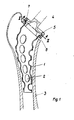
- FIG. 1 to 3 show a curved hollow shaft 1 of a hip joint prosthesis which is provided with through holes 2.
- a further, smaller curvature of the shaft is provided in a plane directed perpendicular to it, which serves to adapt to the left or right femur.
- the prosthesis is inserted into a femur 3 and has a neck 4 for fitting a joint ball (not shown).
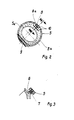
- a ring 5 consists of two halves 5a and 5b and encompasses an extension 6 arranged on the shaft 1 and a further extension 7 attached to the neck 4.
- a hook 8 is welded in a region 10. Its leg 8a sits loosely in a recess in the ring half 5a. After loosening a screw 9 attached to the side opposite the hook, half 5a can be folded away from half 5b, with the result that the neck 4 and thus the joint ball (not shown) is removed from the shaft 1 for the purpose of exchanging the Articulated ball can also be removed without a shaft.
- the hook 8 also forms a safeguard against rotation of the joint head relative to the shaft 1.
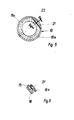
- FIGS. 4 to 6 also consists of a shaft 10, a joint ball (not shown) with a neck 14.
- an insert 15 is provided at the upper end of the shaft 10.
- the insert 15 and the shaft 10 are welded together at points 16.
- the insert 15 has a shoulder 17 which bears against a shoulder 18 of the neck 14.
- Both approaches are encompassed by a ring part 19 consisting of two parts 19a and 19b.
- Both halves of the ring part 19 are held together by a spiral ring 20.
- the anti-rotation device is formed in this case by a segment 21 which is welded to one ring part 19a at 22 and which bears against the corresponding flattened collar 17 and 18.
- the shaft consists of the sheet of a titanium alloy or a fiber composite material, such as a plastic reinforced with carbon fibers.
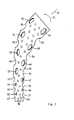
- FIG. 7 shows a prosthesis socket 30 which, according to the advantageous developments of the invention, can be optimally adapted to the local conditions of bone strength in the femur area.
- the bending load of the prosthesis when worn is mainly determined by (in the drawing) forces acting from above, which result in a bending moment (arrow 31) with the tendency to reinforce the original curvature shown.
- the longitudinal rigidity is to be determined with regard to compressive forces which act in the direction of the central axis of the prosthesis. This load also comes from above, but the forces are introduced perpendicular to the upper edge of the shaft area (arrow 32).
- the transfer of the forces occurring at the upper connection of the joint ball into the femur takes place continuously, with the tapering of the shaft (and possibly the material thickness of the shaft material) and the associated reduction in stability corresponding to the reduction in the total forces to be transmitted.
- the dimensioning of strength, i. H. the weakening by targeted hole-shaped recesses of larger diameter takes place in layers, the recesses preferably being arranged in the region of the inner or outer circumference of the main curvature, as it corresponds to the shape of known femoral prostheses.
- Holes of larger diameter 33 to 43 are arranged directly on the inner or outer line of the plane of maximum curvature, which run approximately parallel to the central axis of the prosthesis. These holes are reduced in cross-section analogous to the diameter of the associated shaft cross-section towards the end opposite the joint ball. Adjacent to the cutouts 33 to 43 are further hole-shaped cutouts 44 to 55, which are arranged next to the cutting lines of the prosthesis jacket with the plane of greatest curvature (drawing plane FIG. 7) and complement the function of the holes 33 to 43.
- the diameter is slightly smaller than that of the first holes.
- the hole-shaped recesses are preferably circular in order to avoid notching effects.
- the shape of the curvature shown in FIG. 7 corresponds to the course of the main lines of force in the prosthesis socket.
- an additional curvature is provided about an axis, which is horizontal below or above the drawing plane, i. H. the main plane of curvature.
- This curvature is significantly less than the main curvature shown in the drawing and preferably has an effect on the upper part of the shaft.
Landscapes
- Health & Medical Sciences (AREA)
- Orthopedic Medicine & Surgery (AREA)
- Cardiology (AREA)
- Oral & Maxillofacial Surgery (AREA)
- Transplantation (AREA)
- Engineering & Computer Science (AREA)
- Biomedical Technology (AREA)
- Heart & Thoracic Surgery (AREA)
- Vascular Medicine (AREA)
- Life Sciences & Earth Sciences (AREA)
- Animal Behavior & Ethology (AREA)
- General Health & Medical Sciences (AREA)
- Public Health (AREA)
- Veterinary Medicine (AREA)
- Prostheses (AREA)
Description
- Die Erfindung bezieht sich auf eine Hüftgelenk-Prothese der im Oberbegriff des Anspruchs 1 angegebenen Art.
- Eine derartige Prothese ist bekannt aus der DE-A-28 51 598. Nachteilig bei dem bekannten Prothesenschaft ist, daß dieser in Bezug auf die umgebenden Knochenbereiche eine hohe Festigkeit aufweist, so daß der Schaft festigkeitsmäßig einen Fremdkörper bildet, der gegenüber dem Knochen Relativbewegungen ausführt, welche zu Knochenresorption führen können.
- Es sind weiterhin gelochte Zusatzelemente für Schaftprothesen bekannt, weiche als zusätzliche Trägerelemente zur Fixierung von Schaftprothesen bei Verwendung von Klebstoff oder Knochenzement dienen (DE-A-26 17749). Bei dieser Prothese wird die Festigkeit der Gesamtanordnung aber im wesentlichen durch den Prothesenschaft und nicht durch das zusätzliche Trägerelement bestimmt. Im übrigen ist diese Konstruktion außerordentlich aufwendig.
- Grundsätzlich werden die guten Anfangsergebnisse nach totalem Hüftgelenkersatz derzeit teilweise noch beeinträchtigt durch das bisher ungelöste Lockerungsproblem der zementierten Endoprothese. Die natürliche Krafteinleitung aus dem Hüftkopf über den Calcar in den Femurschaft wird durch den Einbau einer Endoprothese erheblich gestört. Der Einbau einer Prothese mit Kragen hat den Nachteil, daß örtlich am Prothesenaufsitz unphysiologische Druckkräfte auftreten. Die Prothese ohne Kragen führt zu unphysiologischen Umfangsspannungen im Calcar femoris und im coxaleh Femurbereich aufgrund der Keilwirkung des konischen Prothesenschaftes. Beides, die örtlich hohen Druckkräfte wie auch die Umfangsspannungen, führen zu einer Resorption des Knochens im Bereich des Calcar. Infolge dieser Resorption kommt es auch bei der Prothese mit Kragen wegen der fehlenden Unterstützung durch den Calcar zu hohen Umfangsspannungen und nach einer gewissen Zeit zum Bruch im Zement. Die auf diese Art im oberen Bereich frei gewordene Prothese bewegt sich mit immer größeren Biegeverformungen im Zementköcher und es kommt zur totalen Auslockerung oder zum Bruch der Prothese.
- Demgegenüber liegt der im Anspruch 1 charakterisierten Erfindung die Aufgabe zugrunde, eine Prothese-anzugeben, bei der die Gefahr einer Lockerung verringert ist.
- Die ermittelten Steifigkeiten in Längs- wie auch in Hauptbiegerichtung für unterschiedliche Materialien bei herkömmlichen Prothesentypen sind in der folgenden Tabelle in Relation zur Kortikalisröhre des Femurs gezeigt :
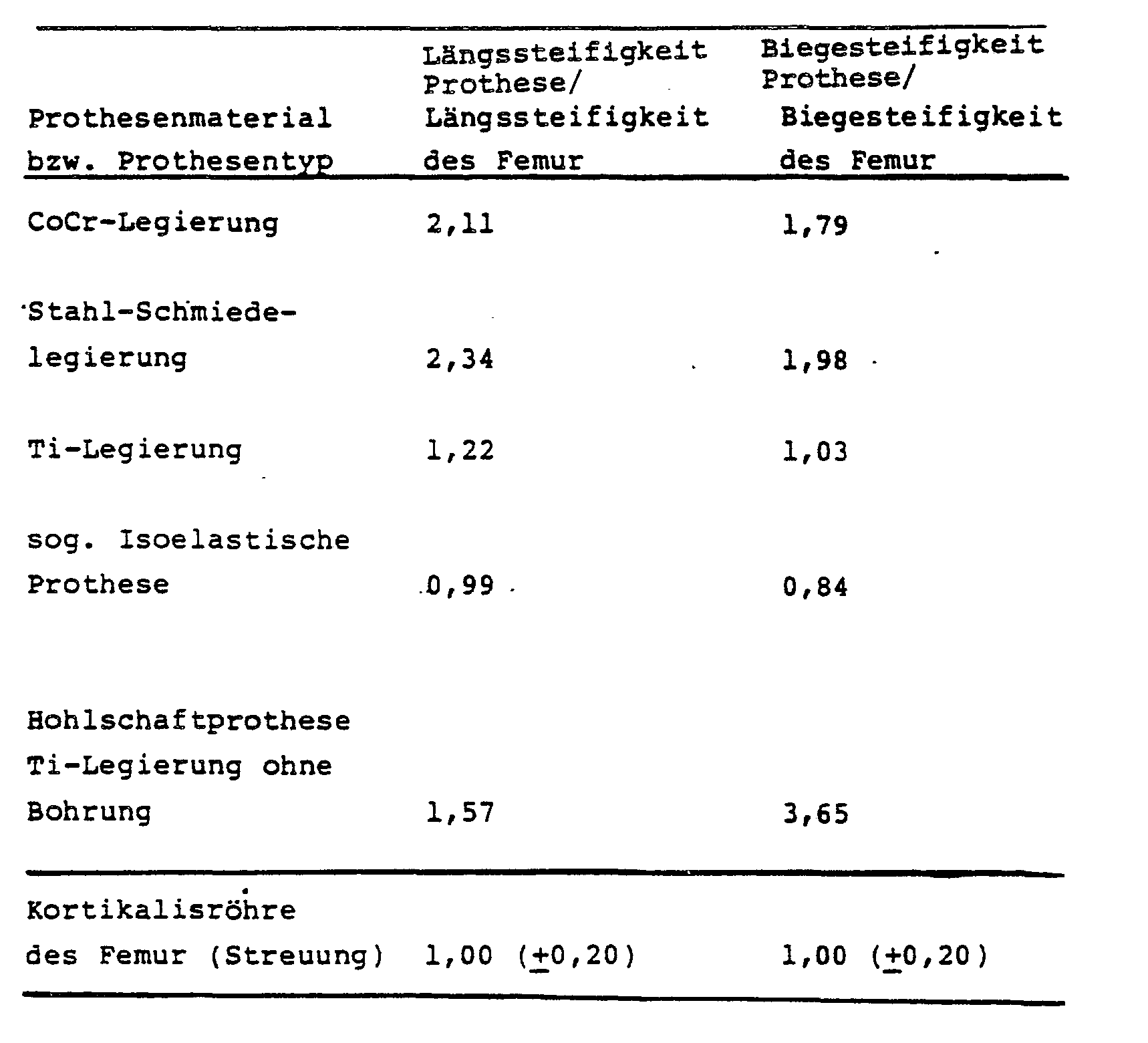

- Aus der Tabelle ist ersichtlich, daß allein die Methode der Auswahl eines geeigneten Werkstoffs, wie z. B. Titan oder einem entsprechenden Kunststoff, - auch beispielsweise bei der sogenannten « Isoeiastischen Prothese » (dargestellt bspw. in dem Aufsatz « Erste Erfahrungen mit einer zementlos isoelastischen Totalprothese der Hüfte von Morscher, E. und Mathys, R. im Zorthop, 113, (1975), Seiten 745 bis 749) nicht ausreichend ist, um sowohl die Biege- als auch die Längssteifigkeit der Prothese der Kortikalisröhre anzupassen.
- Eine Verringerung der Biegesteifigkeit durch das große Flächenträgheitsmoment der erfindungsgemäßen Hohlschaftprothese wird durch ein geeignetes Anbringen von Schwächungen in Form von lochförmigen Aussparungen bzw. gegebenenfalls durchgehenden Bohrungen unter gleichzeitiger Beachtung der resultierenden Längssteifigkeit erzielt. Es zeigt sich, daß der Querschnitt an der Innen- wie an der Außenseite des Schaftes durch große Bohrungen mit etwa 5 bis 8 mm Durchmesser (zur Vermeidung von Kerbwirkungen) so weit geschwächt werden kann, daß die resultierende Biegesteifigkeit der in entsprechenden Höhenschichten der Kortikalisröhre vorhandenen Biegesteifigkeit entspricht.
- Durch weitere Bohrungen kleineren Durchmessers, die im hinteren und/oder vorderen Bereich des Prothesenschafts vorgesehen sind, wird die Möglichkeit des Einwachsens von Knochensubstanz verbessert und die Biegesteifigkeit gegebenenfalls zusätzlich herabgesetzt, die Längssteifigkeit aber nur umwesentlich verringert.
- Einer Weiterbildung der Erfindung liegt die Erkenntnis zugrunde, daß diese zusätzlichen Maßnahmen geeignet sind, die erfindungsgemäße Prothese insbesondere getrennt bezuglich der Längs- und der Biegesteifigkeit derjenigen der Kortikalisröhre des Knochens anzupassen und damit bei zementfreier Befestigung die Voraussetzungen für eine lange Tragedauer ohne Gefahr einer Prothesenlockerung schaffen.
- Die erfindungsgemäße Prothese weist eine grössere Nachgiebigkeit auf als eine solche mit Vollschaft, wobei die Nachgiebigkeit durch Wahl der Dicke des Materials (im Bereich vor bis 3 mm) den jeweiligen Gegebenheiten angepaßt werden kann. Die Locher - in Form von Aussparungen oder (durchgehenden) Bohrungen - Hohlkörper der Prothese ermöglichen das Einwachsen von Knochenmaterial, wodurch der erfindungsgemäße Prothesenschaft zusätzlichen Halt bekommt. Das Auffüllen des Hohlkörpers mit Knochengranulat beschleunigt das Einwachsen der Prothese.
- Weitere Einzelheiten der Erfindung ergeben sich aus der Zeichnung. Darin zeigen :
- Figur 1 einen Längsschnitt durch eine erste Ausführungsform der Erfindung :
- Figur 2 einen Schnitt gemäß der Linie II-II der Figur 1 ;
- Figur 3 einen Schnitt nach der Linie III-III der Figur 2 ;
- Figur 4 einen Längschnitt durch eine zweite Ausführungsform der Erfindung ;
- Figur 5 einen Schnitt nach der Linie V-V der Figur 4 ;
- Figur 6 einen Schnitt nach der Linie VI-VI der Figuren 5 und
- Figur 7 eine weitere Ausführungsform eines Prothesenschafts gemäß der Erfindung.
- in den Figuren 1 bis 3 ist ein gekrümmter Hohlschaft 1 einer Hüftgelenk-Prothese dargestellt, der mit durchgehenden Löchern 2 versehen ist. Neben der in der Zeichenebene verlaufenden Krümmung ist eine weitere, geringere Krümmung des Schaftes in einer senkrecht dazu gerichteteten Ebene vorgesehen, welche zur Anpassung an den linken bzw. rechten Femur dient.
- Die Prothese ist in einen Oberschenkelknochen 3 eingesetzt und weist einen Hals 4 zum Aufsetzen einer - nicht dargestellten - Gelenkkugel auf. Ein Ring 5 besteht aus zwei Hälften 5a und 5b und umgreift einen an dem Schaft 1 angeordneten Ansatz 6 und einen am Hals 4 angebrachten, weiteren Ansatz 7. Ein Haken 8 ist in einem Bereich 10 angeschweißt. Sein Schenkel 8a sitzt locker in einer Ausnehmung der Ringhälfte 5a. Nach Lösen einer an der dem Haken gegenüberliegenden Seite angebrachten Schraube 9 kann die Hälfte 5a von der Hälfte 5b weggeklappt werden, was zur Folge hat, daß der Hals 4 und damit die nicht dargestellte Gelenkkugel vom Schaft 1 zwecks Austauschs der Gelenkkugel auch ohne Schaft entfernbar ist. Der Haken 8 bildet zugleich eine Sicherung gegen Verdrehung des Gelenkkopfes gegenüber dem Schaft 1.
- Die Ausführungsform der Figuren 4 bis 6 besteht ebenfalls aus einem Schaft 10, einer nicht dargestellten Gelenkkugel mit einem Hals 14. In diesem Falle ist ein Einsatz 15 am oberen Ende des Schaftes 10 vorgesehen. Der Einsatz 15 und der Schaft 10 sind in Punkten 16 miteinander verschweißt. Der Einsatz 15 besitzt einen Ansatz 17, der an einem Ansatz 18 des Halses 14 anliegt. Beide Ansätze werden von einem aus zwei Teilen 19a und 19b bestehenden Ringteil 19 umfaßt. Beide Hälften des Ringteils 19 werden von einem Spiralring 20 zusammengehalten. Die Verdrehungsicherung wird in diesem Falle von einem Segment 21 gebildet, das bei 22 an der einen Ringteil 19a festgeschweißt ist und den entsprechenden abgeflachten Kragen 17 und 18 anliegt. Der Schaft besteht aus dem Blech einer Titanlegierung oder einem Faser-Verbund-Werkstoff, wie beispielsweise einem mit Kohlenstoffasern verstärktem Kunststoff.
- In Figur 7 ist ein Prothesenschaft 30 dargestellt, wie er entsprechend den vorteilhaften Weiterbildungen der Erfindung optimal an die örtlichen Gegebenheiten der Knochenfestigkeit im Femurbereich anpaßbar ist. Während die Biegebelastung der Prothese beim Tragen vorwiegend durch (in der Zeichnung) von oben her wirkende Kräfte bestimmt wird, welche eine Biegemoment (Pfeil 31) mit der Tendenz zur Folge haben, die dargestellte ursprünglich vorhandene Krümmung zu verstärken. Die Längssteifigkeit ist im Hinblick auf Druckkräfte festzulegen, welche in Richtung der Mittelachse der Prothese wirken. Diese Belastung erfolgt ebenfalls von oben her, die Kräfte werden jedoch senkrecht zur Oberkante des Schaftbereichs eingeleitet (Pfeil 32).
- Die Überleitung der am oberen Anschluß der Gelenkkugel auftretenden Kräfte in den Femur erfolgt kontinuierlich, wobei die Verjüngung des Schaftes (sowie gegebenenfalls der Materialstärke des Schaftmaterials) und die damit verbundene Stabilitätsverminderung der Verringerung der insgesamt zu übertragenen Kräfte entspricht. Die Bemessung der Festigkeit, d. h. die Schwächung durch gezielt vorzusehende lochförmige Aussparungen größeren Durchmessers erfolgt dabei schichtweise, wobei die Aussparungen bevorzugt im Bereich des Innen- bzw. Außenumfangs der Hauptkrümmung angeordnet sind, wie sie der Form bekannter Femurprothesen entspricht.
- Dabei sind Löcher größeren Durchmessers 33 bis 43 direkt auf der inneren bzw. äußeren Linie der Ebene maximaler Krümmung, welche in etwa parallel zur Mittelachse der Prothese verlaufen, angeordnet. Diese Löcher sind im Querschnitt analog zum Durchmesser des zugehörigen Schaftquerschnitts zum der Gelenkkugel gegenüberliegenden Ende hin verkleinert. Den Aussparungen 33 bis 43 benachbart sind weitere lochförmige Aussparungen 44 bis 55, die neben den Schnittlinien des Prothesenmantels mit der Ebene größter Krümmung (Zeichenebene Figur 7) angeordnet sind und die Löcher 33 bis 43 in ihrer Funktion ergänzen. Der Durchmesser ist jeweils geringfügig geringer als derjenige der erstgenannten Löcher. Die lochförmigen Aussparungen sind bevorzugt kreisrund ausgebildet, um Kerbwirkungen zu vermeiden.
- Weitere in den übrigen Bereichen des Prothesenschaftes 30 verteilte und versetzt angeordnete Löcher 56 kleineren Durchmessers gehen nur geringfügig in die Festigkeitsberechnungen zur Ermittlung der Längssteifigkeit der Prothese ein und begünstigen das Einwachsen von Knochensubstanz zur Verfestigung des Prothesensitzes. Sie sind bei entsprechender Bemessung jedoch geeignet, die Biegesteifigkeit der Prothese soweit herabzusetzen, daß sie dem entsprechenden Femurbereich angepaßt ist, wenn die Längssteifigkeit bereits durch die Bemessung der größeren Aussparungen festgelegt ist. Auf diese Weise ist auch bei Wahl unterschiedlicher Materialien die Anwendung der erfindungsgemäßen Lehre möglich.
- Die in Figur 7 dargestellte Krümmung entspricht in ihrer Form dem Verlauf der Hauptkraftlinien im Prothesenschaft.
- Um eine noch verbesserte Anpassung an die unterschiedlichen Gegebenheiten im linken und rechten Femur zu erreichen, ist eine zusätzliche Krümmung um eine Achse vorgesehen, welche horizontal unter bzw. oberhalb der Zeichenebene, d. h. der Hauptkrümmungsebene, erfolgt. Diese Krümmung ist wesentlich geringer als die aus der Zeichnung ersichtliche Hauptkrümmung und wirkt sich bevorzugt auf den oberen Teil des Schaftes aus.
Claims (9)
Priority Applications (1)
| Application Number | Priority Date | Filing Date | Title |
|---|---|---|---|
| AT82730067T ATE28976T1 (de) | 1981-05-18 | 1982-05-18 | Hueftgelenkprothese mit gelochtem hohlschaft. |
Applications Claiming Priority (2)
| Application Number | Priority Date | Filing Date | Title |
|---|---|---|---|
| DE3120147 | 1981-05-18 | ||
| DE3120147A DE3120147A1 (de) | 1981-05-18 | 1981-05-18 | "hueftgelenk-prothese" |
Publications (3)
| Publication Number | Publication Date |
|---|---|
| EP0065481A2 EP0065481A2 (de) | 1982-11-24 |
| EP0065481A3 EP0065481A3 (en) | 1982-12-29 |
| EP0065481B1 true EP0065481B1 (de) | 1987-08-19 |
Family
ID=6132838
Family Applications (1)
| Application Number | Title | Priority Date | Filing Date |
|---|---|---|---|
| EP82730067A Expired EP0065481B1 (de) | 1981-05-18 | 1982-05-18 | Hüftgelenkprothese mit gelochtem Hohlschaft |
Country Status (3)
| Country | Link |
|---|---|
| EP (1) | EP0065481B1 (de) |
| AT (1) | ATE28976T1 (de) |
| DE (2) | DE3120147A1 (de) |
Cited By (1)
| Publication number | Priority date | Publication date | Assignee | Title |
|---|---|---|---|---|
| US7374576B1 (en) | 2004-01-22 | 2008-05-20 | Medicinelodge, Inc | Polyaxial orthopedic fastening apparatus with independent locking modes |
Families Citing this family (19)
| Publication number | Priority date | Publication date | Assignee | Title |
|---|---|---|---|---|
| DE3216538A1 (de) * | 1982-05-03 | 1983-11-03 | Waldemar Link (Gmbh & Co), 2000 Hamburg | Knochenimplantat, insbesondere femorale hueftgelenkprothese |
| CH665553A5 (de) * | 1985-02-07 | 1988-05-31 | Sulzer Ag | Metallenes knochenimplantat. |
| CH669902A5 (de) * | 1986-04-30 | 1989-04-28 | Kurt Karpf | |
| DE3627097A1 (de) * | 1986-08-09 | 1988-02-18 | S & G Implants Gmbh | Stiel fuer gelenk-endoprothesen |
| DE3715000A1 (de) * | 1987-05-06 | 1988-11-17 | Krupp Gmbh | Gelenkprothese und verfahren zu ihrer herstellung |
| DE3716026A1 (de) * | 1987-05-14 | 1988-12-01 | S & G Implants Gmbh | Verfahren zur herstellung einer gelenkendoprothese |
| US4978357A (en) * | 1987-06-12 | 1990-12-18 | Mecron Medizinische Produkte Gmbh | Endoprosthesis |
| US5330536A (en) * | 1987-09-18 | 1994-07-19 | Howmedica Gmbh | Femur portion of a hip |
| DE8712607U1 (de) * | 1987-09-18 | 1989-01-19 | Howmedica GmbH, 2314 Schönkirchen | Oberschenkelteil einer Hüftgelenkendoprothese |
| DE3743329C1 (en) * | 1987-12-21 | 1989-06-22 | Krupp Gmbh | Endoprosthesis hollow stem for cement-free implantation |
| ATE80027T1 (de) * | 1988-01-22 | 1992-09-15 | Goymann Volkmar | Endoprothese. |
| DE3804239A1 (de) | 1988-02-11 | 1989-08-24 | Karl Heinrich Prof Dr Taeger | Gelenkpfannenteil fuer eine gelenkprothese |
| FR2627380B1 (fr) * | 1988-02-24 | 1997-07-11 | Cuilleron J | Tige d'ancrage dans un canal medullaire notamment pour protheses diverses d'articulation |
| EP0390883B1 (de) * | 1988-09-09 | 1994-12-07 | DRAENERT, Klaus, Dr.med. | Hüftgelenksprothese und ihre verwendung |
| DE3902775A1 (de) * | 1989-01-31 | 1990-08-02 | Labitzke Reiner Prof Dr Med Ha | Oberschenkelgelenk-prothese |
| DE4143288A1 (de) * | 1991-12-30 | 1993-07-01 | Artos Med Produkte | Schaftprothese |
| DE4332230C2 (de) * | 1993-09-22 | 1995-11-30 | Alphanorm Medizintechnik Gmbh | Endoprothese, insbesondere Hüftendoprothese |
| US6093209A (en) * | 1998-08-20 | 2000-07-25 | Johnson & Johnson Professional, Inc. | Proximally holllow prosthesis |
| DE102007031663A1 (de) * | 2006-08-04 | 2008-02-21 | Ceramtec Ag Innovative Ceramic Engineering | Asymmetrische Gestaltung von Prothesenkomponenten zur Manipulation und Unterdrükung der Eigenfrequenzen |
Family Cites Families (5)
| Publication number | Priority date | Publication date | Assignee | Title |
|---|---|---|---|---|
| US3623164A (en) * | 1969-10-06 | 1971-11-30 | Gulf Oil Corp | Prosthetic device |
| SE403884B (sv) * | 1975-04-22 | 1978-09-11 | Branemark Per Ingvar | For feste vid benvevnad avsedd protes speciellt avsedd att inga i en artificiell led |
| FR2438469A1 (fr) * | 1978-10-11 | 1980-05-09 | Tornier Sa Ets | Prothese de la hanche a tige femorale elastique |
| DE2851598C2 (de) * | 1978-11-29 | 1982-03-11 | Sanitätshaus Schütt & Grundei, Werkstätten für Orthopädie-Technik, 2400 Lübeck | Femur-Hüftgelenkendoprothese |
| DE2933237A1 (de) * | 1979-08-16 | 1981-03-26 | M.A.N. Maschinenfabrik Augsburg-Nürnberg AG, 8000 München | Gelenkprothesenteil |
-
1981
- 1981-05-18 DE DE3120147A patent/DE3120147A1/de not_active Ceased
-
1982
- 1982-05-18 DE DE8282730067T patent/DE3276999D1/de not_active Expired
- 1982-05-18 AT AT82730067T patent/ATE28976T1/de not_active IP Right Cessation
- 1982-05-18 EP EP82730067A patent/EP0065481B1/de not_active Expired
Cited By (2)
| Publication number | Priority date | Publication date | Assignee | Title |
|---|---|---|---|---|
| US7374576B1 (en) | 2004-01-22 | 2008-05-20 | Medicinelodge, Inc | Polyaxial orthopedic fastening apparatus with independent locking modes |
| US7534271B2 (en) | 2004-01-22 | 2009-05-19 | Smith + Nephew | Femoral hip prosthesis and method of implantation |
Also Published As
| Publication number | Publication date |
|---|---|
| ATE28976T1 (de) | 1987-09-15 |
| EP0065481A2 (de) | 1982-11-24 |
| EP0065481A3 (en) | 1982-12-29 |
| DE3276999D1 (en) | 1987-09-24 |
| DE3120147A1 (de) | 1982-12-09 |
Similar Documents
| Publication | Publication Date | Title |
|---|---|---|
| EP0065481B1 (de) | Hüftgelenkprothese mit gelochtem Hohlschaft | |
| DE69633850T2 (de) | Verfahren zum Herstellen einer Hüftgelenkpfanne | |
| EP0144574B1 (de) | Hüftendoprothese in Verbundbauweise | |
| EP0583711B1 (de) | Kugelkopfendoprothese | |
| EP0190446B2 (de) | Metallenes Knochenimplantat | |
| DE69225472T2 (de) | Längliche hüftpfannenschale | |
| DE69728001T2 (de) | Prothese mit veränderbarer Passungs- und Spannungsverteilung | |
| EP0058745B1 (de) | Gerader, blattartiger Schaft für eine Gelenkendoprothese | |
| DE3710233C2 (de) | ||
| DE3689260T2 (de) | Femurkopf-prothese. | |
| DE68902318T2 (de) | Hueftprothese mit ausgekuppelter distaler spitze. | |
| DE69228190T2 (de) | Femorales hüftimplantat mit verringerter steifheit | |
| DE2247721A1 (de) | Gelenkprothese | |
| EP0447734B1 (de) | Knochenzementfreie Femurkopfprothese | |
| EP1152717A1 (de) | Klemmsitzverbindung zwischen prothesenkomponenten von gelenkprothesen | |
| DE3715000A1 (de) | Gelenkprothese und verfahren zu ihrer herstellung | |
| DE2138146B2 (de) | Knochen-ersatz-implantat | |
| DE2548077B2 (de) | Gelenkendoprothese | |
| DE2834298A1 (de) | Endoprothese fuer ein hueftgelenk, insbesondere das hueftgelenk eines menschen | |
| EP0237751B1 (de) | Endoprothese für eine Hüftgelenkspfanne | |
| DE3917285A1 (de) | Schulterprothese | |
| EP0119321B1 (de) | Hüftgelenkspfanne | |
| EP1168989B1 (de) | Gelenkkopfprothese und bausatz zur bildung einer solchen | |
| EP0211169B1 (de) | Randlose Hüftgelenkspfanne | |
| WO2000045749A1 (de) | Hüftgelenkpfanne mit kopplungselement zwischen pfannengehäuse und pfanneneinsatz |
Legal Events
| Date | Code | Title | Description |
|---|---|---|---|
| PUAI | Public reference made under article 153(3) epc to a published international application that has entered the european phase |
Free format text: ORIGINAL CODE: 0009012 |
|
| PUAL | Search report despatched |
Free format text: ORIGINAL CODE: 0009013 |
|
| AK | Designated contracting states |
Designated state(s): AT BE CH DE FR GB IT LI NL SE |
|
| AK | Designated contracting states |
Designated state(s): AT BE CH DE FR GB IT LI NL SE |
|
| 17P | Request for examination filed |
Effective date: 19830621 |
|
| ITF | It: translation for a ep patent filed | ||
| GRAA | (expected) grant |
Free format text: ORIGINAL CODE: 0009210 |
|
| AK | Designated contracting states |
Kind code of ref document: B1 Designated state(s): AT BE CH DE FR GB IT LI NL SE |
|
| PG25 | Lapsed in a contracting state [announced via postgrant information from national office to epo] |
Ref country code: NL Effective date: 19870819 Ref country code: BE Effective date: 19870819 |
|
| REF | Corresponds to: |
Ref document number: 28976 Country of ref document: AT Date of ref document: 19870915 Kind code of ref document: T |
|
| PG25 | Lapsed in a contracting state [announced via postgrant information from national office to epo] |
Ref country code: SE Effective date: 19870831 |
|
| ET | Fr: translation filed | ||
| REF | Corresponds to: |
Ref document number: 3276999 Country of ref document: DE Date of ref document: 19870924 |
|
| NLV1 | Nl: lapsed or annulled due to failure to fulfill the requirements of art. 29p and 29m of the patents act | ||
| PG25 | Lapsed in a contracting state [announced via postgrant information from national office to epo] |
Ref country code: AT Effective date: 19880518 |
|
| PLBE | No opposition filed within time limit |
Free format text: ORIGINAL CODE: 0009261 |
|
| STAA | Information on the status of an ep patent application or granted ep patent |
Free format text: STATUS: NO OPPOSITION FILED WITHIN TIME LIMIT |
|
| 26N | No opposition filed | ||
| ITTA | It: last paid annual fee | ||
| ITPR | It: changes in ownership of a european patent |
Owner name: CAMBIO SEDE;MECRON MEDIZINISCHE PRODUKTE GMBH |
|
| REG | Reference to a national code |
Ref country code: CH Ref legal event code: PFA Free format text: JOHNSON & JOHNSON PROFESSIONAL PRODUCTS GMBH |
|
| REG | Reference to a national code |
Ref country code: FR Ref legal event code: CD Ref country code: FR Ref legal event code: CA |
|
| REG | Reference to a national code |
Ref country code: CH Ref legal event code: PUE Owner name: JOHNSON & JOHNSON PROFESSIONAL PRODUCTS GMBH -DANN |
|
| REG | Reference to a national code |
Ref country code: GB Ref legal event code: 732E |
|
| PGFP | Annual fee paid to national office [announced via postgrant information from national office to epo] |
Ref country code: CH Payment date: 20010511 Year of fee payment: 20 |
|
| PGFP | Annual fee paid to national office [announced via postgrant information from national office to epo] |
Ref country code: DE Payment date: 20010514 Year of fee payment: 20 |
|
| PGFP | Annual fee paid to national office [announced via postgrant information from national office to epo] |
Ref country code: GB Payment date: 20010516 Year of fee payment: 20 |
|
| PGFP | Annual fee paid to national office [announced via postgrant information from national office to epo] |
Ref country code: FR Payment date: 20010518 Year of fee payment: 20 |
|
| REG | Reference to a national code |
Ref country code: GB Ref legal event code: IF02 |
|
| PG25 | Lapsed in a contracting state [announced via postgrant information from national office to epo] |
Ref country code: LI Free format text: LAPSE BECAUSE OF EXPIRATION OF PROTECTION Effective date: 20020517 Ref country code: GB Free format text: LAPSE BECAUSE OF EXPIRATION OF PROTECTION Effective date: 20020517 Ref country code: CH Free format text: LAPSE BECAUSE OF EXPIRATION OF PROTECTION Effective date: 20020517 |
|
| REG | Reference to a national code |
Ref country code: GB Ref legal event code: PE20 Effective date: 20020517 |
|
| REG | Reference to a national code |
Ref country code: CH Ref legal event code: PL |