EP0052916A2 - Erodierbares Polymer, das eine Verbindung enthält, die die Erosionsrate beeinflusst - Google Patents
Erodierbares Polymer, das eine Verbindung enthält, die die Erosionsrate beeinflusst Download PDFInfo
- Publication number
- EP0052916A2 EP0052916A2 EP81303310A EP81303310A EP0052916A2 EP 0052916 A2 EP0052916 A2 EP 0052916A2 EP 81303310 A EP81303310 A EP 81303310A EP 81303310 A EP81303310 A EP 81303310A EP 0052916 A2 EP0052916 A2 EP 0052916A2
- Authority
- EP
- European Patent Office
- Prior art keywords
- carbons
- poly
- alkenyl
- alkyl
- alkylene
- Prior art date
- Legal status (The legal status is an assumption and is not a legal conclusion. Google has not performed a legal analysis and makes no representation as to the accuracy of the status listed.)
- Granted
Links
Images



Classifications
-
- A—HUMAN NECESSITIES
- A61—MEDICAL OR VETERINARY SCIENCE; HYGIENE
- A61K—PREPARATIONS FOR MEDICAL, DENTAL OR TOILETRY PURPOSES
- A61K9/00—Medicinal preparations characterised by special physical form
- A61K9/0012—Galenical forms characterised by the site of application
- A61K9/0019—Injectable compositions; Intramuscular, intravenous, arterial, subcutaneous administration; Compositions to be administered through the skin in an invasive manner
- A61K9/0024—Solid, semi-solid or solidifying implants, which are implanted or injected in body tissue
-
- A—HUMAN NECESSITIES
- A61—MEDICAL OR VETERINARY SCIENCE; HYGIENE
- A61K—PREPARATIONS FOR MEDICAL, DENTAL OR TOILETRY PURPOSES
- A61K9/00—Medicinal preparations characterised by special physical form
- A61K9/0012—Galenical forms characterised by the site of application
- A61K9/0048—Eye, e.g. artificial tears
- A61K9/0051—Ocular inserts, ocular implants
-
- A—HUMAN NECESSITIES
- A61—MEDICAL OR VETERINARY SCIENCE; HYGIENE
- A61K—PREPARATIONS FOR MEDICAL, DENTAL OR TOILETRY PURPOSES
- A61K9/00—Medicinal preparations characterised by special physical form
- A61K9/20—Pills, tablets, discs, rods
- A61K9/2004—Excipients; Inactive ingredients
- A61K9/2022—Organic macromolecular compounds
- A61K9/2031—Organic macromolecular compounds obtained otherwise than by reactions only involving carbon-to-carbon unsaturated bonds, e.g. polyethylene glycol, polyethylene oxide, poloxamers
- A61K9/204—Polyesters, e.g. poly(lactide-co-glycolide)
-
- A—HUMAN NECESSITIES
- A61—MEDICAL OR VETERINARY SCIENCE; HYGIENE
- A61K—PREPARATIONS FOR MEDICAL, DENTAL OR TOILETRY PURPOSES
- A61K9/00—Medicinal preparations characterised by special physical form
- A61K9/70—Web, sheet or filament bases ; Films; Fibres of the matrix type containing drug
- A61K9/7023—Transdermal patches and similar drug-containing composite devices, e.g. cataplasms
- A61K9/703—Transdermal patches and similar drug-containing composite devices, e.g. cataplasms characterised by shape or structure; Details concerning release liner or backing; Refillable patches; User-activated patches
- A61K9/7084—Transdermal patches having a drug layer or reservoir, and one or more separate drug-free skin-adhesive layers, e.g. between drug reservoir and skin, or surrounding the drug reservoir; Liquid-filled reservoir patches
-
- C—CHEMISTRY; METALLURGY
- C08—ORGANIC MACROMOLECULAR COMPOUNDS; THEIR PREPARATION OR CHEMICAL WORKING-UP; COMPOSITIONS BASED THEREON
- C08K—Use of inorganic or non-macromolecular organic substances as compounding ingredients
- C08K5/00—Use of organic ingredients
- C08K5/04—Oxygen-containing compounds
- C08K5/09—Carboxylic acids; Metal salts thereof; Anhydrides thereof
- C08K5/098—Metal salts of carboxylic acids
Definitions
- the devices comprise an erodible polymer, a drug, and an erosion rate modifier.
- the patent discloses a unique class of polymers comprising a polymeric backbone having a repeating monomeric unit consisting of a hydrocarbon radical and a symmetrical dioxycarbon unit with a multiplicity of organic groups bonded thereto. These polymers reproducably erode in an aqueous or a biological fluid environment to innocuous products. The polymers are useful for delivering a beneficial agent at a controlled rate to the environment of use.
- Another object of the invention is to provide erosion rate modifiers for poly(orthoesters-orthocarbonates) that aid in regulating the rate of erosion of the polymers over time.
- Still another object of the invention is to provide a composition of matter comprising a poly(orthoester) or a poly(orthocarbonate) and an erosion rate modifier.
- the devices comprise a body formed of a polymeric backbone having a repeating monomeric unit of a hydrocarbon radical and a symmetrical dioxycarbon group with a multiplicity of organic groups bonded thereto.
- the polymers have a controlled degree of hydrophobicity which correspondingly controls the degree of erosion in aqueous and biological fluids.
- the devices additionally contain an erosion rate modifier that cooperates with the polymer for regulating the rate of erosion of the polymer.
- a drug in the device is released at a controlled rate and in a therapeutically effective amount as the polymer bioerodes over time.
- the invention also concerns compositions comprising the polymers and the erosion rate modifiers.
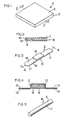
- device 10 comprises a matrix 12 made of a bioerodible poly(orthoester), or a bioerodible poly(orthocarbonate), which device 10 can be used for the administration of drug, not seen in Figure 1, to any drug receptor site.
- Device 10 delivers the drug by surface 11 bioeroding in a fluid environment at a controlled and continuous rate with the drug delivered at a corresponding controlled and continuous rate over a prolonged period of time.
- FIG 2 is a cross-section through 2-2 of Figure 1 for illustrating the internal structures of matrix 12 which defines device 10.
- Matrix 12 is formed of a release rate bioerodible poly(orthoester) or poly(orthocarbonate) 14, and it houses drug 15, represented by dots, and an erosion rate modifier 16, represented by wavy lines.
- Erosion rate modifier 16 is a biologically acceptable material that cooperates with bioerodible polymer 14, for increasing the rate of erosion, or decreasing the rate of erosion of the polymer over time. A discussion of erosion rate modifiers is presented later in the specification.
- FIG 3 illustrates another delivery device 10.
- Device 10 as seen in Figure 3, is manufactured in the form of a strip 17.
- Strip 17 can be applied to the animal body by adhesive or mechanical mean, and it comprises a main strip 18 formed of a flexible plastic such as polyurethane, polyvinyl chloride, natural rubber or aluminum foil having a central portion 19 with a pair of opposite side panels 20 and 21.
- the central portion has a raised section that forms a chamber 23 for housing a bioerodible polymer, which may include a fabric such as gauze or the like, or a thickening agent such as Cab-o-sil®, not shown in Figure 3.
- Side panels 20 and 21 serve as an attachment means for fixing strip 17 to a drug receptor surface, such as skin.
- FIG 4 illustrates the structure of strip 17 taken through 4-4 of Figure 3.
- Chamber 23 comprises bioerodible polymer 14, represented by sectional lines, which polymer houses drug 15 and erosion rate modifier 16.
- Polymer 14 with or without gauze or thickening agents may possess adhesive-like properties for holding chamber 23 in tight contact with the skin, or optionally panels 20 and 21 can carry a thin layer of adhesive 24, such as silicone medical adhesive, a skin adhesive prepared by emulsion polymerization of dimethylaminoethyl methacrylate with an alkyl acrylate, or the like for holding strip 17 on the skin.
- adhesive 24 such as silicone medical adhesive, a skin adhesive prepared by emulsion polymerization of dimethylaminoethyl methacrylate with an alkyl acrylate, or the like for holding strip 17 on the skin.
- Figure 5 depicts a side view of a rod-shaped delivery device 10 particularly adapted for use as an implant.
- Implant 10 is manufactured for administering a drug within an animal body at a controlled and continuous rate over a prolonged period of time.
- the depot implant is made from the bioerodible poly(orthoesters-orthocarbonates) discussed herein, and it houses drug and an erosion rate modifier, as previously described in Figure 4.
- the implant can be introduced into the animal by a surgical operation, or the implant can be made as an injectable implant for insertion by trochar injection and retention in a muscle.
- the implant is sized, shaped and structured for placement subcutaneously, intradermally, or in a muscle of an animal wherein it bioerodes and releases drug over a prolonged period of time. Because the implant is bioerodible it requires only introduction into the animal, and because it erodes into innocuous products that are eliminated by the animal, and it never needs to be retrieved when all the drug is depolyed.
- Figures 1 through 5 are illustrative of various delivery devices it is to be understood these devices can take a wide variety of shapes, sizes and forms that are structured and adapted for delivering drugs to the eye, vagina, uterus or anus, etc.
- the devices of the invention are made from release rate controlling bioerodible poly(orthoesters) and poly-(orthocarbonates), erosion rate modifiers and drugs, wherein the polymers are represented by the following formula: wherein (I) R 1 is a member selected from the group of divalent, trivalent and tetravalent radicals consisting of alkylene of 1 to 10 carbons; alkenylene of 2 to 10 carbons; alkyleneoxy of 2 to 6 carbons; cycloalkylene of 3 to 7 carbons; cycloalkylene of 3 to 7 carbons substituted with an alkyl of 1 to 7 carbons, alkoxy of 1 to 7 carbons, and alkenyl of 2 to 7 carbons, and an alkylene of 1 to 10 carbons; cycloalkenylene of 4 to 7 carbons; cycloalkenylene of 4 to 7 carbons substituted with an alkyl of 1 to 7 carbons, and alkoxy of 1 to 7 carbons, alkenyl of 2 to 7 carbons, and an
- alkylene denotes a straight or branched divalent, trivalent or tetravalent alkylene radical such as 1,2-ethylene; 1,3-propylene; 1,2-propylene; 1,4-butylene; 1,5-pentylene; 1,6-hexylene; 1,2,5-hexylene; 1,3,6-hexylene; 1,7-heptylene; 2-methyl-l,7-heptylene; 1,8-octylene;.1,10-decylene; and the like.
- alkenylene denotes an unsaturated, straight or branched chain such as 1,4-but-2-enylene; 1,6-hex-3-enylene; 1,7-hept-3-enylene; 1,8-oct-3-enylene; 1,9-non-3-enylene; 4-propyl-(1,6-hex-3-enylene); 5-methoxy-(1,6-hex-3-enylene); 2-propenyl-(1,6-hex-3-enylene); and the like.
- cycloalkylene includes monocyclic cycloalkylene radicals such as cyclopropylene; cyclobutylene; cyclopentylene; cyclophexylene; and cycloheptylene.
- cycloalkylene substituted with an alkyl, and alkyloxy, an alkenyl, or alkylene includes substituted cycloalkylenes such as 2-methyl-1,3-cyclopropylene; 2-methyl-1,4-cyclopentylene; 2-methyl-l,6-cyclohexylene; 1-methylene-cyclohexylene; 1,6-dimethylene-cyclohexylene; 2-ethoxy-2,3-cyclopropylene; 5-butoxy-1,4-cyclopentylene; 2-methoxy-l,4-cyclohexylene; 2-prapenyl-1,5-cyclopentylene; 2-isobutenyl-1,6-cyclohexylene; and the like.
- Exemplary cycloalkenylene and cycloalkenylene substituted with an alkyl, an alkoxy, an alkenyl, or an alkylene include monocyclic cycloalkenylenes such as 1,4-cyclopent-2-enylene; 1,5-cyclopent-3-enylene; 1,6-cyclohex-2-enylene; 1,6-dimethylene- cyclohex-2-enylene; 5-methyl-(1,4-cyclo-pent-2-enylene); 6-ethyl-(1,4-cyclohex-2-enylene); 6-ethoxy-(1,5-cyclohex-2-enylene); 2-propyl-(1,5-cyclohex-3-enylene); 2-methoxy-(1,4-cyclohex-2-enylene); 2-methoxy-(1,4-cyclohept-2-enylene); 1-methylene-(1,6-cyclohex-2-enylene); and the like.
- arylene and arylene substituted with an alkyl, an alkenyl, an alkoxy or an alkylene include the benzoid groups such as phenylene; phenylalkylene; phenylalkenyl- ene; 1,4-phenyl-dimethylene; 1,4-phenyldiethylene; 2-ethyl-1,4-phenyldimethylene; 2-methyl-l,4-phenyl-dimethylene; 2-methoxy-1,4-phenylene; 2-propyl-1,4-phenylene; 2-propenyl-1,,4-phenyldi- methylene; naphthalene; and the like.
- alkyl embraces straight and branched chain alkyl radicals such as methyl; ethyl; n-propyl; n-butyl; n-amyl; n-hexyl; n-heptyl; and the various positional isomers such as isopropyl; t-butyl; sec-butyl; isoamyl; isohexyl; t-heptyl; and the like.
- alkenyl embraces straight and branched chain lower alkenyl groups such as 1-propenyl; 2-propenyl or allyl; 1-butenyl; 2-butenyl; 1-pentenyl; 2-ethenyl; and the corresponding positional isomers such as 1-isobutenyl; 2-isobutenyl; 2-sec-butenyl; 2-methyl-l-butenyl; 2-methyl-2-pentenyl; 2,3-dimethyl-3-hexenyl; and the like.
- alkoxy or alkyloxy include the straight and branched chain lower groups, and the positional isomers thereof, such as methoxy; ethoxy; propoxy; butoxy; n-pentoxy; n-hexoxy; isopropoxy; 2-butoxy; isobutoxy; 3-pentoxy; and the like.
- alkenyloxy embraces straight and branched chain lower alkenyloxy groups and the positional isomers thereof, such as ethenoxy; propenoxy; butenoxy; pentenoxy; hexenoxy; isopropenoxy; isobutenoxy; sec-butenoxy; 2-methyl-l-butenoxy; 2-methyl-2-butenoxy; 2,3-dimethyl-3-butenoxy; and the like.
- alkyleneoxy comprehends straight and branched chain alkyleneoxy radicals such as 1,3-propyleneoxy; 1,4-butyleneoxy; 1,5-pentyleneoxy; 1,6-hexyleneoxy; 2,2-dimethyl-1,4-butyleneoxy; and the like.
- alkenyleneoxy comprehends radicals such as prop-1-enyleneoxy; 1,4-but-1-enyleneoxy; 1,4-but-2-enyleneoxy; 1,5-pent-l-enyleneoxy; 1,6-hex-1-enyleneoxy; and the like.
- alkylenedioxy and alkenylenedioxy include straight and branched chain radicals such as 1,3-propylenedioxy; 1,4-butylenedioxy; 1,5-pentylenedioxy; 1,6-hexylenedioxy; and 1,7-heptylenedioxy; 1,3-prop-l-enylenedioxy; 1,4-but-l-enylenedioxy; 1,4-but-2-enylenedioxy; 1,5-pent-l-enylenedioxy; 1,6-hex-1-enylenedioxy; and the like.
- aryloxy, aralkyleneoxy, aralkenyleneoxy; aralkylenedioxy, and aralkenylenedioxy indicate an aryl such as phenyl, aryloxy a phenyloxy, with the alkyleneoxy, alkenyleone- oxy, alkylenedixoy and alkenylenedioxy area as defined above.
- heterocyclic ring of 5 to 8 carbon and oxygen atoms formed when R 2 and R 3 are taken together are represented by heterocyclic rings such as dioxolanyl; dioxanyl; dioxepanyl; dioxocanyl; dioxonanyl; tetrahydrofuranyl; furyl; dihydrofuranyl; pyranyl; ocanyl; and oxepanyl.
- fused polycyclic ring with at least one or two ring forming oxygen atoms define a ring structure in which a heterocyclic and an aryl ring have two carbon atoms in common, are for example, a member selected from the group consisting of benzfuryl; benzpyranyl; 4,5-benz-1,3-dioxepanyl; 5,6-benz-1,3,-dioxepanyl; 4,5-benz-l,3-dioxolanyl; 4,5-benz-1, 3-dioxyolanyl; 4,5-benz-1,3-dioxocanyl; 5,6-benz-1,3-dioxocanyl; 6,7-benz-1,3-dioxocanyl; 6,7-benz-1,3-dioxocanyl; and benz-1, 3-dioxanyl.
- carbocyclic ring of 5 to 6 carbons formed when R 2 and R 3 are taken together are represented by rings such as cyclopentylene; cyclohexylene; cyclopentenylene; cyclopentadienylene; and phenylene.
- poly(orthoesters), and the poly(orthocarbonates) described herein are known to the prior art in United States Patent Nos. 4,093,709; 4,131,648; 4,138,344; and 4,180,646. These patents are issued to patentees Nam S. Choi and Jorge Heller, and they are assigned to the ALZA Corporation of Palo Alto, California.
- erosion rate modifier denotes a material that assists in controlling the rate of erosion of the erodible poly(orthoesters), or the rate of erosion of the poly(orthocarbonates).
- the modifiers can decrease the rate of erosion of the polymers and correspondingly increase the period of time the delivery device is in the environment of use releasing drug, or the modifier can increase the rate of erosion and correspondingly decrease the period of time the drug delivery device is in the environment of use releasing drug.
- the erosion rate modifiers that increase the life of devices made from the erodible polymers are materials that mix with the polymers and drugs, and when the device is in a fluid environment of use, the modifier aids in producing an environment exhibiting a pH of at least 7 or greater at the polymer-modifier-fluid-drug interface.
- the erosion rate modifiers that decrease or lessen the life of devices made from the erodible polymers are materials that mix with the polymers and drugs, and when the device is in a fluid environment of use, the modifier aids in producing an environment exhibiting a pH of 7 or less at the polymer-modifier-fluid-drug interface.
- Erosion rate modifiers that decrease the rate of erosion or prolong the life of the devices include a member selected from the group consisting of metal oxides such as binary compounds of oxygen; salts of electronegative nonmetal oxides such as mono, and dihydrogen phosphates, carbonates, sulfates, and the like; hydrides such as compounds of hydrogen with an electro-positive element such as lithium, sodium, potassium, magnesium, aluminum, alkali earths, and the like; metals, and hydroxides of alkali earth metals; and tertiary compounds of nitrogen such as amines, substituted amines and polyamines.
- metal oxides such as binary compounds of oxygen
- salts of electronegative nonmetal oxides such as mono, and dihydrogen phosphates, carbonates, sulfates, and the like
- hydrides such as compounds of hydrogen with an electro-positive element such as lithium, sodium, potassium, magnesium, aluminum, alkali earths, and the like
- metals, and hydroxides of alkali earth metals and
- Erosion rate modifiers that increase the rate of erosion or shorten the life of the devices include a member selected from the group consisting essentially of organic acids, inorganic acids, Lewis acids, monobasic acid salts, polybasic acid salts, and hydroxides of nonmetals.
- the erosion rate modifiers also include surfactants. Particularly anionic surfactants that have a rate accelerating effect on the rate of erosion, and cationic surfactants that retard the rate of erosion.
- the amount of modifier used for the present purpose generally is about 0.001% to 40% by weight based on 100% by weight of the device. Additionally, the device can contain a multiplicity of erosion rate modifiers as used for the intended purpose.
- Representative salts of electronegative nonmetal oxides include mono and dihydrogen phosphates, carbonates, sulfates and the like.
- Representative hydrides include compounds of hydrogen with electro-positive elements such as lithium, sodium, potassium, magnesium, aluminum, and alkali earth.
- Representative metal oxides include aluminum oxide, calcium oxide, lithium oxide, magnesium oxide, potassium oxide, and sodium oxide.
- Representative salts of nonmetal oxides include calcium carbonate, lithium carbonate, magnesium carbonate, sodium acid carbonate, potassium carbonate and sodium carbonate; calcium phosphate, lithium phosphate, disodihydrogen phosphate; magnesium phosphate, magnesium phosphate, manganese phosphate, potassium dihydrogen phosphate, potassium phosphate, sodium hydrogen phosphate, sodium phosphate; calcium sulfite, lithium sulfite, magnesium sulfite, potassium sulfite and sodium sulfite; and lithium sulfate, potassium sulfate, sodium sulfate, and the like.
- Representative metals include a member selected from the group consisting essentially of aluminum, calcium, lithium, sodium, magnesium, and potassium.
- Representative hydride include a member, selected from the group consisting of aluminum hydride, calcium hydride, lithium hydride, magnesium hydride, potassium hydride, and sodium hydride.
- hydroxides useful for the present purposes include compounds selected from the group consisting of aluminum hydroxide, barium hydroxide, calcium hydroxide, lithium hydroxide, magnesium hydroxide, potassium hydroxide, and sodium hydroxide.
- Representative amine compounds include trimethylamine, triethylamine, tridecylamine, hydroxylamine, polylysine, propylamine, polypropylamine, ethylenediamine, and 2-hydroxy-l-aminopropane.
- organic and inorganic acids include amino acids, amygladic, adipic, boric, citric, fumaric, itaconic, lactic, glycine, malic, maleic, mesaconic, oxalic, phthalic, phosphoric, succinic, sulfamic, and tartaric.
- Lewis acids include aluminum chloride, stannic chloride, and mixtures thereof.
- monobasic or polybasic acids, and acid salts include potassium tetraoxalate, potassium hydrogen tartrate,.potassium hydrogen phthalate, sodium tetraoxalate, sodium hydrogen tartrate, sodium hydrogen phthalate, a mixture of sodium tetraoxalate and sodium acid carbonate, potassium dihydrogen citrate, sodium dihydrogen citrate, citric acid and sodium acetate, glycine and citric acid, and sodium p-toluenesulfonate, and p-toluenesulfonic acid.
- Typical anionic surfactants generically include sulfated esters sulfated amides, sulfated alcohols, sulfated ethers, sulfated carboxylic acids, sulfonated aromatic hydrocarbons, sulfonated aliphatic hydrocarbons, sulfonated esters, sulfonated amids, sulfonated ethers, acylated amino acids, acylated polypeptides, and the like.
- surfactants include sodium oleate, sodium lauryl sulfate, sodium cetyl sulfate, sodium stearly sulfate, sodium alkylbenzene sulfonate, dialkyl sulfosuccinate; dioctylester of sodium sulphosuccunic acid; sodium salt of alkylated aryl polyether sulfate; and the like.
- Typical cationic surfactants generically include primary alkylammonium salts, secondary alkylammonium salts, tertiary alkylammonium salts, quarternary alkyammonium salts, acylated polyamides, salts of heterocylic amines, benzyl ammonium salts, and the like.
- Exapmles of specific cationic surfactants include lauryldimethyl benzylammonium chloride; diisobutlphenoxyethoxy- ethyldimethyl benzylammonium chloride; alkyldlimethylbenzy- lammonium chloride; laurylisoquinolinium bromide; cetylethyl- dimethylammonium chloride; stearyldimethyl benzylammonium chloride; ethanolated alkyl guanidine amine complex; and the like.
- the amount of surfactant used for the present purpose is generally about 0.001% to 5% by weight based in the total weight of the device.
- the surfactants are known in Surface Active Agents, by Schwartz and Perry, 1949, Interscience Publishers, New York; Harry's Cosmeticology edited by Wilkinson, 1973, Chemical Publishing Co., Inc. and, Systemic Analysis of Surface Active Agents, Rosen and Goldsmith, 1972, Wiley-Interscience, New York.
- the term drug as used herein denotes both locally and systemically acting drugs.
- the drugs include a member selected from the group consisting of analgesic, antiarthritic, antibiotic, antidepressant, antidiabetic, antihistaminic, antineoplastic, antipyretic, anticholinergic, anti-inflammatory, anesthetic, antiviral, antiulcer, bronchial dilator, cardiovascular, contraceptive, decongestants, hypoglycemics, hormone, hypnotic, hematinic, muscle relaxant, parasympatholytic, parasympathomimetic, ophthalmic, sedative, sympathomimetic, tranquilizer, uterine, vaginal, vasodilator, and the like.
- the drugs and their dosage unit amounts for humans are well know in Pharmacology in Medicine, by Drill and edited by DiPalma, 1965, published by McGraw-Hill, New York; in Phatmacological Basis of Therapeutics, by Goodman and Gilman, 4th Edition, 1970, published by MacMillian Co., and in United States Patent No. 3,977,404.
- the amount of drug present in a device provided by the invention will be about 0.5% to 50% by weight, with a more presently preferred amount of about 10% to 40% by weight.
- hormones selected from the group consisting of cortical, androgenic, estrogenic and progestational hormones.
- Representative hormones include aldosterone, cortisone, hydrocortisone, prednisone, prednisolone, triamcinolone, dexamethasone, prednisolone, and the like.
- estrogenic hormones include a member selected from the group consisting essentially of estradiol, a-estradiol, 17 ⁇ -estradiol-17(disodium phosphate), quinestrol, and the like.
- progestational hormones include natural progestins such as progesterone and preganediol, and synthetic progestins such as a member selected from the group consisting of chlormadinone acetate, hydroxyprogesterone, medrogestone, medroxy-progesterone, megestrol acetate, norethindrone (also known as norethisterone), norethindrone acetate, norethynodrel, norgesterone, norgestrel, and quingestanol acetate.
- natural progestins such as progesterone and preganediol
- synthetic progestins such as a member selected from the group consisting of chlormadinone acetate, hydroxyprogesterone, medrogestone, medroxy-progesterone, megestrol acetate, norethindrone (also known as norethisterone), norethindrone acetate, norethy
- Representative androgens include testosterone, testosterone propionate, and methyl testosterone.
- Representative drugs useful for the management of diabetes include insulin, neutral insulin, zinc insulin, dalanated insulin, zinc globin insulin, isophane insulin, protamine insulin, extended zinc insulin, sulfonylurea hypoglycemics, acetohexamide, glypinamide, chlorpropamide, tolazamide, tolbutamide, phenformin, and the like.
- Representative of other drug species that can be delivered include penicillin, cephalosporins, erythromycin, lincomycin, tetracycline, streptomycins. bethanidine, clonidine, debrisoquin, amyl nitrite, glyceryl trinitrate, octyl nitrate, isosorbide dinitrate, mannitol hexanitrate, pentaerythritol tetranitrate, theophylline, dopa, methyldopa, norepinephrine, naproxol, metoprolol, aspirin, acid, oxprenolol, and the like.
- the devices of the invention can be manufactured by standard techniques.
- the bioerodible polymers mixed with release rate modifiers and drugs can be extruded into filaments, spun into fibers, extruded, pressed into shaped articles, solvent film cast, doctor-bladed into thin films, coated by solvent evaporation, coated by using a fluidized bed, compression and transfer molded, and like methods of manufacture.
- the materials and ingredients used are predried, and the mixing and fabrication procedures are carried out in an inert, dry atmosphere.
- the devices made by these processes can be a single matrix, a container with a reservoir, or a number of layers.
- the devices can be manufactured into various shapes, for example, flat, square, round, tubular, disc, ring, and the like.
- a bioerodible drug delivery device was prepared as follows: to 90 grams of dry poly(2,2-dioxo-cis/trans-1,4-cyclohexane dimethylene tetrahydrofuran) was added 10 grams of hydrocortisone and the polymer and drug thoroughly blended to form a homogenous composition.
- the hydrocortisone was previously dried under vacuum at 60 degrees C for at least 8 hours.
- the hydrocortisone was thoroughly blended with the polymer to yield the composition by heating them to 130 degrees C and mixing them in a blender. The blending was done in a vacuum drybox., and the polymer and drug were blended on a Teflon® sheet heated on a hot plate.
- Example 2 The procedure described in Example 1 was repeated and a drug delivery device was prepared, comprising the polymer, poly(2,2-dioxo-1,6-hexamethylene tetrahydrofuran), 5% by weight hydrocortisone, 12.4% by weight of CaO.
- a control system wars prepared to demonstrate the release pattern of an identical device prepared without the rate controlling agent, CaO.
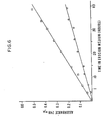
- the release of hydrocortisone into a 0.1 molar phosphate buffer having a pH of 7.4 maintained at 37°C is indicated in Figure 6.
- the line connecting the circular symbols show a relative release rate of hydrocortisone from the device containing 12.4% Ca0 which is approximately one-half of the release rate shown by the device made without any Ca0 (square symbols).
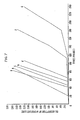
- Example 1 indicates the control of Example 1
- B indicates a device containing 0.1% CaO
- D indicates 1% CaO
- E indicates another device'containing 1% CaO
- F indicates a device containing 3% CaO
- G indicates a device containing 10% CaO.
- Example 1 The procedure of Example 1 was followed in this example, with the erodible device made of the same polymer, containing 10% hydrocortisone, and a 10% of an erosion rate modifiers.
- a series of erosion rate modifiers were used to demonstrate the increased life of the devices.
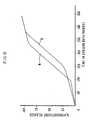
- the results obtained for the modifiers are set forth in Figure 8, wherein the modifiers are as follows: A indicates a control made without a modifier, H indicates a device containing the modifier calcium dibasic phosphate, I indicates a device containing calcium. phosphate, J indicates a device containing calcium oxide, K indicates a device containing magnesium carbonate, L indicates the erosion rate of another device containing 10% magnesium carbonate, and M indicates the erosion rate of a device containing 10% sodium carbonate.
- Example 1 The procedure of Example 1 was followed in this example.
- an erodible device was prepared comprising 5% hydrocortisone, 10% calcium oxide and 85% poly(2,2-dioxo- cis/trans-1,4-cyclohexane dimethylene tetrahydrofuran), which device exhibits a release. rate profile identified as N in Figure 9; and a device comprising 5% hydrocortisone, 5% sodium carbonate, 5% sodium bicarbonate, and 85% poly(2,2-dioxo-cis/ trans-1,4-cyclohexane dimethylene tetrahydrofuran), which device exhibits a release rate profile identified as in Figure 8.
- a bioerodible drug delivery device manufactured as an implant, for releasing a contraceptively effective amount of a steroid over a prolonged period of time was manufactured using the anhydrous drying and process techniques described in Examples 1 through 4.
- the device of this example was manufactured as follows: first, 70 grams of a bioerodible polymer of the following structure was heated in a commercial blender to 120 degrees C. The polymer had a molecular weight of about 35,000, and the blender had a dry nitrogen atmosphere. Next, 20 grams of dry sodium carbonate was added to the polymer, and the two ingredients blended for 5 minutes. The blender mixed the ingredients with an internal stirrer set at 200 revolutions per minute. Then, 10 grams of dry d-norethisterone was added to the blender and the three ingredients blended for 10 minutes to form a homogenous composition.
- the composition was transferred to a mold having a series of cavities shaped as implants.
- the mold was in a dry box, under a helium atmosphere.
- the composition was charged into the mold, and pressed into implants under a pressure of 20,000 psi, at 110 degrees C.
- the implants were shaped as rods 14 mm long by 3 mm in diameter with rounded ends, and they weighed about 125 mg.
- the implants when in operation in vivo, exhibit a rate of release of about 150 Vg per day of norethisterone over a prolonged period of about 4 months.
- Three implants, designed for subcutaneous or intramuscular implantation were prepared in a blender, under anhydrous conditions, by separately blending predried ingredients such as, (a) 70 grams of poly(2,2-dioxo-cis/trans-1,4-cyclohexane dimethylene-2-tetrahydrofuran), 10 grams of micronized calcium oxide, and 20 grams of micronized noreth.indrone; (b) 70 grams of poly(2,2-dioxo-cis/trans-1,4-cyclohexane dimethylene-2-tetrahydrofurna), 5 grams of micronized calcium oxide, and 25 grams of micronized norethindrone; and (c) 75 grams of poly(2,2-dixo-cis/trans-1,4-cyclohexane dimethylene-2-tetrahydrofuran), 5 grams of micronized calcium oxide, and 20 grams of micronized norethindrone.
- predried ingredients such as, (a) 70 grams of poly(2,2-di
- the time of blending was 20 minutes, at 110 degrees C, with a stirrer speed of 25 revolutions per minute, rpm.
- the three blends were injection molded into implants 14 mm x 3 mm, with each weighing about 120 mg.
- the systems contained 24 to 32 mg of norethindrone, and released about 200 ⁇ g/day of the steriod.
- the implant had a presently preferred composition of (a) 70% of poly(2,2-dioxo-cis/trans-1, 4-cyclohexane dimethylene-tetrahydrofuran), 10% of sodium carbonate and 20% of norethindrone; (b) 55% of poly(2,2-dioxo-cis/trans-1,4-cyclohexane dimethylene-tetrahydrofuran), 20% of sodium carbonate, and 25% of norethindrone; (c) 50% of poly(2,2-dioxo-cis/trans-1,4-cyclohexane dimethylene-tetrahydrofuran), 20% of sodium carbonate nad 30% of nor- ethindorne; (d) 90% of poly(2,2-dioxo-cls/trans-1,4-cyclohexane dimethylene-tetrahydrofuran), 5% sodium carbonate, and 5% norethindrone; (e) 50% of poly(2,2-dioxo
- An implant for providing the progestational agent d-norgestrel was prepared using the procedures of the above examples as follows: 20.64 grams of the following polymer: having a molecular weight of 42,473 was heated to 105°C + 2°C, on a stainless steel plate in a helium drybox, and then 0.96 grams of d-norgestrel were mixed into the polymer with a spatula. After the polymer and steroid were thoroughly mixed, 2.40 grams of dry sodium carbonate was mixed with the drug polymer mixture. Next, the three component homogenous composition was tranferred to a drybox that was previously purged for two hours with dry nitrogen.
- a mold having an implant forming cavity, in the drybox was preheated to about 130°C and charged with 8.2 grams of the composition.
- the mold was changed at 126°C to 130°C, and a pressure of 24,000 psi applied for 15 minutes to form the implant.
- the implants were removed and excess flash was trimmed from the implants.
- the implants weighed 0.118 grams and they comprised 86% of the polymer, 10% of the modifier, and 4% of the steroid. The implants are useful for maintaining an antifertility state when implanted in the tissue of animals.
- Example 8 The procedure of Example 8 was repeated here, with all conditions as set forth, except that implants were made from polymers having a molecular weight of 34,285 and a molecular weight of 33,873.
- Example 10 The procedure of Example 10 was repeated for making an implant comprising 75% of poly(2,2-dioxo-cis/trans-1,4-cyclohexane dimethylene tetrahydrofuran), 15% d-norgestrel, and 10% magnesium oxide.
- the implant had a rate of release of 40 ⁇ g/day of the d-norgestrel and over a 6 month period.
- Another implant was prepared comprising 75% of poly(2,2-dioxo-cis/trans-1,4-cyclohexane dimethylene tetrahydrofuran), 15% d-norgestrel, and 10% sodium carbonate.
- the implant released 40 pg/day of d-norgestrel over a 6 month period.
- Example 10 The procedure of Example 10 was followed for producing an implant comprising 80% poly(2,2-dioxo-cis/trans-1,4-cyclohexane dimethylene tetrahydrofuran), 10% insulin and 10% sodium carbonate.
- the polymer had a molecular weight of 36,400, the implant weighed 20 mg, and the implant released 3.2 units of insulin per day for 14 days.
- a series of implants were prepared by heating a poly (orthoester) to 90°C ⁇ 4°C on a Teflont platen in a nitrogen atmosphere.
- a modifier was physically mixed into the heated polymer using a stainless steel spatula for 10 minutes, and then, insulin was mixed therein for 10 to 15 minutes.
- the formulations were transferred to a dry box with a nitrogen atmosphere, and pressed into a 20 mil thick film with a Carvert press at 190° F/20,000 psi for 5 minutes, followed by 5 minutes of cooling. Then, elliptical implants, 5mm by 8mm were punched from each film at room temperature in a nitrogen atmosphere.
- the following implants were prepared: a) 80.2% poly(2,2-dioxo-cis-trans-1,4-cyclohexane dimethylene tetrahydrofuran), 10.2% sodium carbonate, and 9.7% insulin; b) 75.4% poly(2,2-dioxo-cis/trans-1,4-cyclohexane dimethylene tetrahydrofuran), 10.2% sodium acid carbonate, and 14.4% insulin; c) 70% poly(2,2-dioxo-cis/trans-1,4-cyclohexane dimethylene tetrahydrofuran), 10% sodium carbonate, and 20% insulin; and d) 60% poly(2,2-dioxo- cis/trans-1,4-cyclohexane dimethylene tetrahydrofuran), 10% magnesium oxide and 30% insulin.
- the polymer used for manufacturing the implant had a molecular weight of 41,000 to 43,000, the implants weighed 20 mg, and they released 8. to 20 units of insulin per day and it had a
- a number of antifertility implants were made comprising the following ingredients, a polymer of the following structure: with the implant comprising the following:
- Example 14 The procedure of Example 14 was repeated to provide the implants comprising the following ingredients, expressed as (ratio by weight):
- compositions comprising a bioerodible polymer, a modifier, and a drug were prepared under anhydrous conditions and procedures as described in earlier examples as follows: first, a weighed amount of poly(2,2-dioxo-1,6-hexamethylene tetrahydrofuran) was heated to 150°C in a glass beaker, and then a weighed amount of drug was mixed with the polymer. A glass rod was used to stir the polymer and the drug for producing a homogenous mixture. Next, a weighed amount of a polymer erosion rate modifier was added to the beaker, and the three ingredients stirred to produce a homogenous composition. The blending was carried out in a dry box under a nitrogen atmosphere.
- compositions were prepared by this procedure: a) a composition comprising 90% of poly(2,2-dioxo-1,6-hexamethylene tetrahydrofuran), 10% of riboflavin, 5% sodium carbonate and 5% magnesium oxide; b) 45% of poly(2,2-dioxo-1,6-hexamethylene tetrahydrofuran), 45% theophylline and 10% sodium carbonate; c) 87% of poly(2, 2-dioxo-1,6-hexamethylene tetrahydrofuran), 8% of hydroxyproline and 5% sodium carbonate d) 50% of poly(2,2-dioxo-1,6-hexa-methylene tetrahydrofuran), 40% of dexamethasone and 10% of sodium carbonate; f) 65% of poly(2,2-dioxo-1,6-hexamethylene tetrahydrofuran), 25% of fluocinolone and 10% of magnesium oxide; g) 70% poly
- a drug delivery device for administering a drug at a controlled rate topically to the skin of a human for systemic circulation was made under dry conditions by pressing a composition comprising 50 parts of poly(2,2-dioxo-1,6-hexamethylene tetrahydrofuran), 50 parts of 17 -estradiol and 5 parts of sodium bicarbonate was pressed between two aluminum foil sheets into a 20 mil thick film. Then, 2 cm 2 topical delivery devices were punched from the foil sheets, and one sheet was peeled from the device before use. The other sheet served as .a backing member for the polymer-estradiol-sodium bicarbonate composition.
- the composition is tacky, and when placed on the skin of a human, it sticks to the skin.
- a 2 cm 2 device in contact with the skin of a female produced about a 50 mg per hour increase in urinary excretion of estradiol-conjugates as determined by radio immuno assay after enzymatic hydrolysis, over a normal urinary level of about 50 ⁇ g per hour.
- An increase of from 2 cm 2 to 4 cm 2 increased the urine level an additional 25 to 30 ug per hour.
- 5 parts of sodium carbonate were used instead of 5 parts of sodium bicarbonate, the release of estradiol was then halved.
- a bandage 2 cm by 7 cm for the management of ovulation is prepared under dry and inert conditions by coating one surface of a backing member comprising a polyethylene aluminum foil laminate, which backing member defines the bandage, with a 6 mm thick composition comprising 60 parts of-.poly(2,2-dioxo-1, 6-hexamethylene tetrahydrofuran), 30 parts of norgestrel, 5 parts of Cab-o-sil, and 10 parts of sodium carbonate.
- the backing member is impermeable to the passage of steroid, and the composition is coated onto the polyethylene surface of the member.
- the bandage comprising the composition is sticky, and when applied to the skin releases a controlled and continuous amount of steroid over a prolonged period of time.
- the bandage of Example 18 is prepared with the steroid in the present example comprising a member selected from the group consisting of norethindrone; a mixture of ethinyl estradiol and norethindrone; a mixture of mestranol and norethynodrel; a mixture of ethinyl estradiol and norgestrel; a mixture of mestranol and norethindrone; and a mixture of ethinyl estradiol and dimethisterone.
- the bandage of 18 is prepared with the backing member additionally comprising a perimeter of a non-irritating pressure sensitive adhesive that surround the steroid, which adhesive is adapted for holding the steroid in intimate contact with the skin, and wherein the adhesive is selected from acrylic adhesives and urethane adhesives, and the steroid is selected from norethindrone; norgestrel; a mixture of ethinyl estradiol and norethindrone; and a mixture of ethinyl estradiol and norgestrel.
- a series of implants were prepared by heating a poly-(orthoester) to 110°C + 5°C in a stainless steel vessel, equipped with a stirrer, under a dry nitrogen atmosphere.
- a modifier and drug were blended into the molten polymer, a process which required less than two minutes.
- the blends were transferred to a small extruder, and they were transformed into an extrudate shaped as a long rod, 3 mm in diameter.
- a number of implants were prepared; all containing 20% progesterone in poly(2,2-dioxo-cis/ trans-1,4-cyclohexane dimethylene-tetrahydrofuran). The remaining 80% of the implant were as follows:
- the rods were cut into lengths between 1 cm and 2.5 cm and then placed in the subcutaneous tissue of rats. At the end of one month, at least part of all those implants which contained modifiers were found at the site of implantation. The implant which did not contain any erosion rate modifier was not visible on macroscopic examination at the site of implantation. The experiment indicates the amine modifiers retard the rate of erosion and drug delivery from the implants.
- Example 13 The procedure of Example 13 was followed for producing an implant comprising 80% poly(2,2-dioxo-cis/trans-1,4-cyclohexane dimethylene-tetrahydrofuran), 16% hydrocortisone, and 4% of a rate controlling modifier.
- the initial molecular weight of the polymer was 37,000.
- In vitro release studies were performed in 0.1 molar sodium phosphate buffers. The results for a series of modifiers and the approximate time at which greater than 90% of the drug was released are as follows:
- a drug delivery device for administering a drug at a controlled rate into the ano-rectal passageway was made by formulating 50 parts of theophylline, 10- parts of diethylamine and 40 parts of poly(2,2-dioxo-1,6-hexamethylene tetrahydrofuran) in a dry nitrogen atmosphere.
- a measured sample was placed in the passageway of dogs and plasma samples were taken at 4 hour intervals. The results indicated that 90% of the drug released from the device made with the modifier, was absorbed into the blood system during the first 18 hours after administration. When the rate accelerating modifier was omitted from the device, about 50% of the drug was absorbed during the same time period.
- Example 22 The procedure of Example 22 was followed for producing an ocular insert comprising 80% poly(2,2-dioxo-cis/trans-1,4 cyclohexane dimethylene titrahydrofuran), 16% prednisolone acetate and 4% sodium carbonate.
- the ocular implant was placed in one eye of a test host and it had a prolonged life of 17 days.
- An ocular implant made without the sodium carbonate 'modifier was placed in the other eye of the host, and it had a life of about two days duration.
- a drug delivery device for administering a drug at a controlled rate into a vagina is made by formulating 50 parts of progesterone, 10 parts of diethylamine and 40 parts of poly(2,2-dioxo-1,6-hexamethylene tetrahydrofuran) in a dry nitrogen atmosphere by following the fabrication procedures as discribed above.
- the device when inserted in the vagina, administers the steriod over a prolonged period of time.
- a drug delivery device for administering an anti-ulcer drug to the gastrointestional tract is made by formulating 50 parts of mepyramine, 10 parts of sodium carbonate and 40 parts of poly(2,2-dioxo-cis/trans-l,4-cyclohexane dimethylene tetrahydorfuran) in a dry inert atmosphere by following the above procedures.
- the device when administered orally released the drug over time.
- a series of drug delivery devices are prepared by following the above procedures and using the above erosion rate modifiers, with the polymer in the present example a member selected from the groups as follows: poly(1,1-dioxo- cis/trans-1,4-cyclohexane dimethylene cyclopentane; poly(1,1-dioxo-cis/ trans-l,4-cyclohexane dimethylene cyclohexane; poly(1,1-dioxo-1,6-hexametbylene cyclopentane); poly(1,1-dioxo-1,6-hexamethylene cyclopentane; and poly(1,1-diaxo-1, 10-decamethylene cyclopentane).
- a 20 mil, 3" x 3" film was pressed at 150° F at 1500 psi for 5 minutes, followed by a 5-minute cooling period. Then, ellipsoidal devices 5 x 8 mm were punched from the cool film. The devices are useful as ocular inserts.
- composition useful as a control for demonstrating the invention, was prepared by blending 20% tetracycline with the polymer illustrated in Example 2. Control inserts, 5x8 mm were prepared as described above.
- Ocular dispensing devices comprising a) 0.006% of benzalkonium chloride, 20% tetracycline, and 80% poly (2,2-dioxo-cis/trans-l,4-cyclohexane dimethylene tetrahydrofuran); b) 0.05% of benzalkonium chloride, 20% of tetracycline, and 80% of poly(2,2-dioxo-cis/trans-1,4-cyclohexane dimethylene tetrahydrofuran; c) 0.1% triethanolamine, 20% tetracycline and 80% poly(2,2-dioxo-cis/trans-1,4-cyclohexande dimethylene tetrahydrofuran; and d) 0.1% benzalkonium chloride, 20% tetracycline, and 20% poly(2,2-dioxo-cis/trans-1,4-cyclohexane dimethylene tetrahydrofuran, were manufactured according to the procedures described in
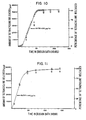
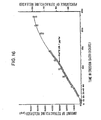
- the drug release rates were determined for the devices in pH, 0.1 M phosphate buffer, and the drug release profiles presented as weight and percentage of drug released per hour. The release of the drug was at 37°C. The drug release rates were determined by the plot of UV absorbance at 356 nm vs. time in phosphate buffer. The results of the measurements are presented in Table 1. In the table, anionic surfactant indicates dioctyl sodium sulfosuccinate; neutral indicates t-octylphenoxypolyethox-ethanol, BzAC indicates benzalkonium chloride; and TEA indicates triethanolamine.
- Figure 10 the device.comprised 20% tetracycline and 80% poly(2,2-dioxo-cis/trans-1,4-cyclohexane dimethylene tetrahydrofuran; in Figure 11 the device comprised 20% tetracycline, 0.1% dioctyl sodium sulfosuccinate and 80% poly(2,2-dioxo-cis/trans-1,4-cyclohexane dimethylene tetrahydrofuran); in Figure 12 the device comprised 20% tetracycline, 0.1% t - octylphenoxy-polyethoxyethanol, and 80% poly(2,2-dioxo- cis/trans-1,4-cyclohexane dimenthylene tetrahydrofuran); in Figure 13, the device comprised 20% tetracycline, 0.1% triethanolamine, and 80% poly(2,2-dioxo-cis/trans
Landscapes
- Health & Medical Sciences (AREA)
- Chemical & Material Sciences (AREA)
- Medicinal Chemistry (AREA)
- General Health & Medical Sciences (AREA)
- Veterinary Medicine (AREA)
- Public Health (AREA)
- Pharmacology & Pharmacy (AREA)
- Epidemiology (AREA)
- Life Sciences & Earth Sciences (AREA)
- Animal Behavior & Ethology (AREA)
- Engineering & Computer Science (AREA)
- Bioinformatics & Cheminformatics (AREA)
- Dermatology (AREA)
- Chemical Kinetics & Catalysis (AREA)
- Polymers & Plastics (AREA)
- Organic Chemistry (AREA)
- Biomedical Technology (AREA)
- Neurosurgery (AREA)
- Ophthalmology & Optometry (AREA)
- Pharmaceuticals Containing Other Organic And Inorganic Compounds (AREA)
- Medicinal Preparation (AREA)
Applications Claiming Priority (4)
| Application Number | Priority Date | Filing Date | Title |
|---|---|---|---|
| US06/205,636 US4346709A (en) | 1980-11-10 | 1980-11-10 | Drug delivery devices comprising erodible polymer and erosion rate modifier |
| US211510 | 1980-12-01 | ||
| US06/211,510 US4322323A (en) | 1980-12-01 | 1980-12-01 | Erodible device comprising surfactant for modifying the rate of erosion of the device |
| US205636 | 1988-06-13 |
Publications (3)
| Publication Number | Publication Date |
|---|---|
| EP0052916A2 true EP0052916A2 (de) | 1982-06-02 |
| EP0052916A3 EP0052916A3 (en) | 1982-11-10 |
| EP0052916B1 EP0052916B1 (de) | 1985-01-02 |
Family
ID=26900622
Family Applications (1)
| Application Number | Title | Priority Date | Filing Date |
|---|---|---|---|
| EP19810303310 Expired EP0052916B1 (de) | 1980-11-10 | 1981-07-20 | Erodierbares Polymer, das eine Verbindung enthält, die die Erosionsrate beeinflusst |
Country Status (2)
| Country | Link |
|---|---|
| EP (1) | EP0052916B1 (de) |
| DE (1) | DE3168032D1 (de) |
Cited By (12)
| Publication number | Priority date | Publication date | Assignee | Title |
|---|---|---|---|---|
| EP0100424A3 (en) * | 1982-06-30 | 1984-11-21 | Merck & Co. Inc. | Acid anhydrides as rate controlling agent for the erosion of polymers which latter polymers have beneficial substances dispersed throughout their matrix or where the polymer matrix surrounds the beneficial substance |
| EP0134318A3 (de) * | 1983-06-10 | 1986-08-20 | Connaught Laboratories Limited | Injizierbare und implantierbare Insulinmittel mit kontrollierter Wirkstoffabgabe |
| EP0208617A1 (de) * | 1985-07-08 | 1987-01-14 | Merck & Co. Inc. | Vorrichtung zur gesteuerten Wirkstoffreisetzung, sowie ein Verfahren zum Katalysieren der Erosion eines säurelabilen Polymers |
| WO1989009066A1 (en) * | 1988-03-24 | 1989-10-05 | Bukh Meditec A/S | Controlled release composition |
| WO1992011843A1 (en) * | 1991-01-09 | 1992-07-23 | Alza Corporation | Bioerodible devices and compositions for diffusional release of agents |
| WO1993020127A1 (en) * | 1992-03-30 | 1993-10-14 | Alza Corporation | Ortho polymers having improved stability and bioerosion behavior |
| WO1997032606A1 (en) * | 1996-03-05 | 1997-09-12 | Robert Gurny | Pharmaceutical compositions containing buffered ortho ester polymers |
| EP1243257A1 (de) * | 2001-03-22 | 2002-09-25 | Heraeus Kulzer GmbH & Co.KG | Antibiotikum-/Antibiotika-Zubereitung mit retardierender Wirkstofffreisetzung |
| US6503528B1 (en) | 1999-11-19 | 2003-01-07 | Abbott Laboratories | Polymeric compositions and a method of making the same |
| WO2004062649A3 (en) * | 2003-01-09 | 2004-11-04 | Allergan Inc | Biodegradable ocular implant |
| US8048445B2 (en) | 2003-01-09 | 2011-11-01 | Allergan, Inc. | Ocular implant made by a double extrusion process |
| US9775849B2 (en) | 2000-07-05 | 2017-10-03 | Allergan, Inc. | Implants and methods for treating inflammation-mediated conditions of the eye |
Families Citing this family (3)
| Publication number | Priority date | Publication date | Assignee | Title |
|---|---|---|---|---|
| DE60114229T2 (de) | 2000-11-29 | 2006-07-06 | Allergan, Inc., Irvine | Verhinderung von transplantatabstossung im auge |
| US20050244469A1 (en) | 2004-04-30 | 2005-11-03 | Allergan, Inc. | Extended therapeutic effect ocular implant treatments |
| US8802128B2 (en) | 2006-06-23 | 2014-08-12 | Allergan, Inc. | Steroid-containing sustained release intraocular implants and related methods |
Family Cites Families (4)
| Publication number | Priority date | Publication date | Assignee | Title |
|---|---|---|---|---|
| DE1694144A1 (de) * | 1967-04-08 | 1971-07-29 | Hoechst Ag | Verfahren zum Stabilisieren von Polyacetalen |
| US4180646A (en) * | 1975-01-28 | 1979-12-25 | Alza Corporation | Novel orthoester polymers and orthocarbonate polymers |
| US4131648A (en) * | 1975-01-28 | 1978-12-26 | Alza Corporation | Structured orthoester and orthocarbonate drug delivery devices |
| US4159322A (en) * | 1978-06-26 | 1979-06-26 | A. H. Robins Company, Inc. | Anticoccidium implants |
-
1981
- 1981-07-20 EP EP19810303310 patent/EP0052916B1/de not_active Expired
- 1981-07-20 DE DE8181303310T patent/DE3168032D1/de not_active Expired
Cited By (20)
| Publication number | Priority date | Publication date | Assignee | Title |
|---|---|---|---|---|
| EP0100424A3 (en) * | 1982-06-30 | 1984-11-21 | Merck & Co. Inc. | Acid anhydrides as rate controlling agent for the erosion of polymers which latter polymers have beneficial substances dispersed throughout their matrix or where the polymer matrix surrounds the beneficial substance |
| EP0134318A3 (de) * | 1983-06-10 | 1986-08-20 | Connaught Laboratories Limited | Injizierbare und implantierbare Insulinmittel mit kontrollierter Wirkstoffabgabe |
| EP0208617A1 (de) * | 1985-07-08 | 1987-01-14 | Merck & Co. Inc. | Vorrichtung zur gesteuerten Wirkstoffreisetzung, sowie ein Verfahren zum Katalysieren der Erosion eines säurelabilen Polymers |
| WO1989009066A1 (en) * | 1988-03-24 | 1989-10-05 | Bukh Meditec A/S | Controlled release composition |
| US5618560A (en) * | 1988-03-24 | 1997-04-08 | Bm Research A/S | Controlled release erodible composition |
| WO1992011843A1 (en) * | 1991-01-09 | 1992-07-23 | Alza Corporation | Bioerodible devices and compositions for diffusional release of agents |
| WO1993020127A1 (en) * | 1992-03-30 | 1993-10-14 | Alza Corporation | Ortho polymers having improved stability and bioerosion behavior |
| WO1997032606A1 (en) * | 1996-03-05 | 1997-09-12 | Robert Gurny | Pharmaceutical compositions containing buffered ortho ester polymers |
| WO2001036515A3 (en) * | 1999-11-19 | 2003-03-13 | Abbott Lab | Polymeric compositions and a method of making the same |
| US6503528B1 (en) | 1999-11-19 | 2003-01-07 | Abbott Laboratories | Polymeric compositions and a method of making the same |
| US9775849B2 (en) | 2000-07-05 | 2017-10-03 | Allergan, Inc. | Implants and methods for treating inflammation-mediated conditions of the eye |
| US10206934B2 (en) | 2000-07-05 | 2019-02-19 | Allergan, Inc. | Implants and methods for treating inflammation-mediated conditions of the eye |
| EP1243257A1 (de) * | 2001-03-22 | 2002-09-25 | Heraeus Kulzer GmbH & Co.KG | Antibiotikum-/Antibiotika-Zubereitung mit retardierender Wirkstofffreisetzung |
| AU768962B2 (en) * | 2001-03-22 | 2004-01-08 | Heraeus Kulzer Gmbh & Co. Kg | Antibiotic(s) preparation with retarding active ingredient release |
| US6913764B2 (en) | 2001-03-22 | 2005-07-05 | Heraeus Kulzer Gmbh & Co. Kg | Antibiotic(s) preparation with retarding active ingredient release |
| CZ302690B6 (cs) * | 2001-03-22 | 2011-09-07 | Heraeus Kulzer Gmbh & Co. Kg | Prípravek antibiotika/antibiotik s retardovaným uvolnováním úcinné látky |
| WO2004062649A3 (en) * | 2003-01-09 | 2004-11-04 | Allergan Inc | Biodegradable ocular implant |
| US8048445B2 (en) | 2003-01-09 | 2011-11-01 | Allergan, Inc. | Ocular implant made by a double extrusion process |
| US10076526B2 (en) | 2003-01-09 | 2018-09-18 | Allergan, Inc. | Ocular implant made by a double extrusion process |
| US10702539B2 (en) | 2003-01-09 | 2020-07-07 | Allergan, Inc. | Ocular implant made by a double extrusion process |
Also Published As
| Publication number | Publication date |
|---|---|
| DE3168032D1 (en) | 1985-02-14 |
| EP0052916A3 (en) | 1982-11-10 |
| EP0052916B1 (de) | 1985-01-02 |
Similar Documents
| Publication | Publication Date | Title |
|---|---|---|
| US4346709A (en) | Drug delivery devices comprising erodible polymer and erosion rate modifier | |
| US8865200B2 (en) | Sustained release compositions containing progesterone receptor modulators | |
| EP0052916B1 (de) | Erodierbares Polymer, das eine Verbindung enthält, die die Erosionsrate beeinflusst | |
| EP0232877B1 (de) | Arzneidosisform für die Mundhöhle | |
| US5461140A (en) | Bioerodible polymers for solid controlled release pharmaceutical compositions | |
| US6416780B1 (en) | Intravaginal drug delivery devices for the administration of testosterone and testosterone precursors | |
| US4016251A (en) | Vaginal drug dispensing device | |
| US3903880A (en) | Intrauterine device for managing the reproductive process | |
| AU692659B2 (en) | Intravaginal drug delivery devices for the administration of 17beta -oestradiol precursors | |
| US4069307A (en) | Drug-delivery device comprising certain polymeric materials for controlled release of drug | |
| US4144317A (en) | Device consisting of copolymer having acetoxy groups for delivering drugs | |
| US4052505A (en) | Ocular therapeutic system manufactured from copolymer | |
| US4093709A (en) | Drug delivery devices manufactured from poly(orthoesters) and poly(orthocarbonates) | |
| US4180646A (en) | Novel orthoester polymers and orthocarbonate polymers | |
| US5035891A (en) | Controlled release subcutaneous implant | |
| CN101977651A (zh) | 线性级释放聚合物 | |
| CH624580A5 (de) | ||
| BG62317B1 (bg) | Състави на базата на номогестролни производни, подкожниимпланти на базата на тези състави, методи за тяхното производствои използването им като контрацептив | |
| Heller et al. | Recent developments in the synthesis and utilization of poly (ortho esters) | |
| WO1992018101A1 (en) | Vaginal drug delivery device | |
| IES950959A2 (en) | Intravaginal drug delivery devices for the administration of 17ß-oestradiol precursors |
Legal Events
| Date | Code | Title | Description |
|---|---|---|---|
| PUAI | Public reference made under article 153(3) epc to a published international application that has entered the european phase |
Free format text: ORIGINAL CODE: 0009012 |
|
| AK | Designated contracting states |
Designated state(s): CH DE FR GB IT SE |
|
| PUAL | Search report despatched |
Free format text: ORIGINAL CODE: 0009013 |
|
| AK | Designated contracting states |
Designated state(s): CH DE FR GB IT SE |
|
| 17P | Request for examination filed |
Effective date: 19821229 |
|
| ITF | It: translation for a ep patent filed | ||
| GRAA | (expected) grant |
Free format text: ORIGINAL CODE: 0009210 |
|
| AK | Designated contracting states |
Designated state(s): CH DE FR GB IT LI SE |
|
| REF | Corresponds to: |
Ref document number: 3168032 Country of ref document: DE Date of ref document: 19850214 |
|
| ET | Fr: translation filed | ||
| PLBE | No opposition filed within time limit |
Free format text: ORIGINAL CODE: 0009261 |
|
| STAA | Information on the status of an ep patent application or granted ep patent |
Free format text: STATUS: NO OPPOSITION FILED WITHIN TIME LIMIT |
|
| 26N | No opposition filed | ||
| PGFP | Annual fee paid to national office [announced via postgrant information from national office to epo] |
Ref country code: GB Payment date: 19930611 Year of fee payment: 13 |
|
| PGFP | Annual fee paid to national office [announced via postgrant information from national office to epo] |
Ref country code: SE Payment date: 19930616 Year of fee payment: 13 |
|
| PGFP | Annual fee paid to national office [announced via postgrant information from national office to epo] |
Ref country code: FR Payment date: 19930706 Year of fee payment: 13 |
|
| PGFP | Annual fee paid to national office [announced via postgrant information from national office to epo] |
Ref country code: DE Payment date: 19930728 Year of fee payment: 13 |
|
| ITTA | It: last paid annual fee | ||
| PGFP | Annual fee paid to national office [announced via postgrant information from national office to epo] |
Ref country code: CH Payment date: 19930928 Year of fee payment: 13 |
|
| PG25 | Lapsed in a contracting state [announced via postgrant information from national office to epo] |
Ref country code: GB Effective date: 19940720 |
|
| PG25 | Lapsed in a contracting state [announced via postgrant information from national office to epo] |
Ref country code: SE Effective date: 19940721 |
|
| PG25 | Lapsed in a contracting state [announced via postgrant information from national office to epo] |
Ref country code: LI Effective date: 19940731 Ref country code: CH Effective date: 19940731 |
|
| EUG | Se: european patent has lapsed |
Ref document number: 81303310.7 Effective date: 19950210 |
|
| GBPC | Gb: european patent ceased through non-payment of renewal fee |
Effective date: 19940720 |
|
| PG25 | Lapsed in a contracting state [announced via postgrant information from national office to epo] |
Ref country code: FR Effective date: 19950331 |
|
| REG | Reference to a national code |
Ref country code: CH Ref legal event code: PL |
|
| PG25 | Lapsed in a contracting state [announced via postgrant information from national office to epo] |
Ref country code: DE Effective date: 19950401 |
|
| EUG | Se: european patent has lapsed |
Ref document number: 81303310.7 |
|
| REG | Reference to a national code |
Ref country code: FR Ref legal event code: ST |