EP0036331B1 - Synthese Morpholin und seiner Derivaten durch Reaktion von Dialkylenglycol und Ammonia - Google Patents
Synthese Morpholin und seiner Derivaten durch Reaktion von Dialkylenglycol und Ammonia Download PDFInfo
- Publication number
- EP0036331B1 EP0036331B1 EP81301126A EP81301126A EP0036331B1 EP 0036331 B1 EP0036331 B1 EP 0036331B1 EP 81301126 A EP81301126 A EP 81301126A EP 81301126 A EP81301126 A EP 81301126A EP 0036331 B1 EP0036331 B1 EP 0036331B1
- Authority
- EP
- European Patent Office
- Prior art keywords
- ammonia
- morpholine
- reactor
- reaction
- alcohol
- Prior art date
- Legal status (The legal status is an assumption and is not a legal conclusion. Google has not performed a legal analysis and makes no representation as to the accuracy of the status listed.)
- Expired
Links
- QGZKDVFQNNGYKY-UHFFFAOYSA-N Ammonia Chemical compound N QGZKDVFQNNGYKY-UHFFFAOYSA-N 0.000 title claims abstract description 133
- YNAVUWVOSKDBBP-UHFFFAOYSA-N Morpholine Chemical compound C1COCCN1 YNAVUWVOSKDBBP-UHFFFAOYSA-N 0.000 title claims abstract description 87
- LYCAIKOWRPUZTN-UHFFFAOYSA-N Ethylene glycol Chemical compound OCCO LYCAIKOWRPUZTN-UHFFFAOYSA-N 0.000 title claims abstract description 84
- 229910021529 ammonia Inorganic materials 0.000 title claims abstract description 62
- WGCNASOHLSPBMP-UHFFFAOYSA-N hydroxyacetaldehyde Natural products OCC=O WGCNASOHLSPBMP-UHFFFAOYSA-N 0.000 title claims abstract description 42
- 238000006243 chemical reaction Methods 0.000 title claims description 79
- 230000015572 biosynthetic process Effects 0.000 title description 9
- 238000003786 synthesis reaction Methods 0.000 title 1
- 238000000034 method Methods 0.000 claims abstract description 50
- 230000008569 process Effects 0.000 claims abstract description 47
- 239000007791 liquid phase Substances 0.000 claims abstract description 30
- 239000012808 vapor phase Substances 0.000 claims abstract description 12
- MTHSVFCYNBDYFN-UHFFFAOYSA-N diethylene glycol Chemical compound OCCOCCO MTHSVFCYNBDYFN-UHFFFAOYSA-N 0.000 claims description 118
- 239000003054 catalyst Substances 0.000 claims description 42
- 239000007788 liquid Substances 0.000 claims description 26
- -1 heterocyclic amine Chemical class 0.000 claims description 23
- 239000001257 hydrogen Substances 0.000 claims description 23
- 229910052739 hydrogen Inorganic materials 0.000 claims description 23
- UFHFLCQGNIYNRP-UHFFFAOYSA-N Hydrogen Chemical compound [H][H] UFHFLCQGNIYNRP-UHFFFAOYSA-N 0.000 claims description 17
- 238000006356 dehydrogenation reaction Methods 0.000 claims description 14
- LFQSCWFLJHTTHZ-UHFFFAOYSA-N Ethanol Chemical compound CCO LFQSCWFLJHTTHZ-UHFFFAOYSA-N 0.000 claims description 12
- PXHVJJICTQNCMI-UHFFFAOYSA-N Nickel Chemical compound [Ni] PXHVJJICTQNCMI-UHFFFAOYSA-N 0.000 claims description 11
- 125000000217 alkyl group Chemical group 0.000 claims description 9
- VYPSYNLAJGMNEJ-UHFFFAOYSA-N Silicium dioxide Chemical compound O=[Si]=O VYPSYNLAJGMNEJ-UHFFFAOYSA-N 0.000 claims description 8
- PNEYBMLMFCGWSK-UHFFFAOYSA-N aluminium oxide Inorganic materials [O-2].[O-2].[O-2].[Al+3].[Al+3] PNEYBMLMFCGWSK-UHFFFAOYSA-N 0.000 claims description 6
- GIAFURWZWWWBQT-UHFFFAOYSA-N 2-(2-aminoethoxy)ethanol Chemical compound NCCOCCO GIAFURWZWWWBQT-UHFFFAOYSA-N 0.000 claims description 5
- 229910017052 cobalt Inorganic materials 0.000 claims description 5
- 239000010941 cobalt Substances 0.000 claims description 5
- GUTLYIVDDKVIGB-UHFFFAOYSA-N cobalt atom Chemical compound [Co] GUTLYIVDDKVIGB-UHFFFAOYSA-N 0.000 claims description 5
- 238000004519 manufacturing process Methods 0.000 claims description 5
- 125000001997 phenyl group Chemical group [H]C1=C([H])C([H])=C(*)C([H])=C1[H] 0.000 claims description 5
- 229910052759 nickel Inorganic materials 0.000 claims description 4
- 125000004435 hydrogen atom Chemical group [H]* 0.000 claims description 3
- 239000000203 mixture Substances 0.000 claims description 3
- 239000000377 silicon dioxide Substances 0.000 claims description 3
- VYZAMTAEIAYCRO-UHFFFAOYSA-N Chromium Chemical compound [Cr] VYZAMTAEIAYCRO-UHFFFAOYSA-N 0.000 claims description 2
- 229910052804 chromium Inorganic materials 0.000 claims description 2
- 239000011651 chromium Substances 0.000 claims description 2
- 230000006872 improvement Effects 0.000 abstract description 3
- 239000000047 product Substances 0.000 description 26
- 230000000694 effects Effects 0.000 description 11
- 239000007789 gas Substances 0.000 description 10
- 238000005984 hydrogenation reaction Methods 0.000 description 9
- 229910000069 nitrogen hydride Inorganic materials 0.000 description 9
- 239000000376 reactant Substances 0.000 description 9
- 239000006227 byproduct Substances 0.000 description 7
- VNWKTOKETHGBQD-UHFFFAOYSA-N methane Chemical compound C VNWKTOKETHGBQD-UHFFFAOYSA-N 0.000 description 6
- 239000012071 phase Substances 0.000 description 6
- XLYOFNOQVPJJNP-UHFFFAOYSA-N water Substances O XLYOFNOQVPJJNP-UHFFFAOYSA-N 0.000 description 6
- 150000002431 hydrogen Chemical class 0.000 description 5
- 150000002780 morpholines Chemical class 0.000 description 5
- 229910052751 metal Inorganic materials 0.000 description 4
- 239000002184 metal Substances 0.000 description 4
- XEEYBQQBJWHFJM-UHFFFAOYSA-N Iron Chemical compound [Fe] XEEYBQQBJWHFJM-UHFFFAOYSA-N 0.000 description 3
- 229910000564 Raney nickel Inorganic materials 0.000 description 3
- 229910052782 aluminium Inorganic materials 0.000 description 3
- XAGFODPZIPBFFR-UHFFFAOYSA-N aluminium Chemical compound [Al] XAGFODPZIPBFFR-UHFFFAOYSA-N 0.000 description 3
- 238000009826 distribution Methods 0.000 description 3
- 150000002334 glycols Chemical class 0.000 description 3
- JPIGSMKDJQPHJC-UHFFFAOYSA-N 1-(2-aminoethoxy)ethanol Chemical compound CC(O)OCCN JPIGSMKDJQPHJC-UHFFFAOYSA-N 0.000 description 2
- MSKCZPNQMQPOLH-UHFFFAOYSA-N 2-(2-hydroxyethoxy)-1,1-dimorpholin-4-ylethanol Chemical compound C1COCCN1C(O)(COCCO)N1CCOCC1 MSKCZPNQMQPOLH-UHFFFAOYSA-N 0.000 description 2
- CDFFPIHYQLOEHR-UHFFFAOYSA-N 2-(2-hydroxyethoxy)-1-morpholin-4-ylethanol Chemical compound OCCOCC(O)N1CCOCC1 CDFFPIHYQLOEHR-UHFFFAOYSA-N 0.000 description 2
- IJGRMHOSHXDMSA-UHFFFAOYSA-N Atomic nitrogen Chemical compound N#N IJGRMHOSHXDMSA-UHFFFAOYSA-N 0.000 description 2
- OYPRJOBELJOOCE-UHFFFAOYSA-N Calcium Chemical compound [Ca] OYPRJOBELJOOCE-UHFFFAOYSA-N 0.000 description 2
- RYGMFSIKBFXOCR-UHFFFAOYSA-N Copper Chemical compound [Cu] RYGMFSIKBFXOCR-UHFFFAOYSA-N 0.000 description 2
- KDLHZDBZIXYQEI-UHFFFAOYSA-N Palladium Chemical compound [Pd] KDLHZDBZIXYQEI-UHFFFAOYSA-N 0.000 description 2
- 239000007868 Raney catalyst Substances 0.000 description 2
- KJTLSVCANCCWHF-UHFFFAOYSA-N Ruthenium Chemical compound [Ru] KJTLSVCANCCWHF-UHFFFAOYSA-N 0.000 description 2
- 239000004411 aluminium Substances 0.000 description 2
- 150000001412 amines Chemical class 0.000 description 2
- 229910002056 binary alloy Inorganic materials 0.000 description 2
- 229910052791 calcium Inorganic materials 0.000 description 2
- 239000011575 calcium Substances 0.000 description 2
- ZCCIPPOKBCJFDN-UHFFFAOYSA-N calcium nitrate Chemical compound [Ca+2].[O-][N+]([O-])=O.[O-][N+]([O-])=O ZCCIPPOKBCJFDN-UHFFFAOYSA-N 0.000 description 2
- 125000004432 carbon atom Chemical group C* 0.000 description 2
- 238000006555 catalytic reaction Methods 0.000 description 2
- 229910052802 copper Inorganic materials 0.000 description 2
- 239000010949 copper Substances 0.000 description 2
- 230000007423 decrease Effects 0.000 description 2
- 230000003247 decreasing effect Effects 0.000 description 2
- 230000001419 dependent effect Effects 0.000 description 2
- 125000002887 hydroxy group Chemical group [H]O* 0.000 description 2
- 150000002739 metals Chemical class 0.000 description 2
- 229910000480 nickel oxide Inorganic materials 0.000 description 2
- GNRSAWUEBMWBQH-UHFFFAOYSA-N oxonickel Chemical compound [Ni]=O GNRSAWUEBMWBQH-UHFFFAOYSA-N 0.000 description 2
- BASFCYQUMIYNBI-UHFFFAOYSA-N platinum Chemical compound [Pt] BASFCYQUMIYNBI-UHFFFAOYSA-N 0.000 description 2
- 229920000768 polyamine Polymers 0.000 description 2
- 238000011084 recovery Methods 0.000 description 2
- 229910052707 ruthenium Inorganic materials 0.000 description 2
- 239000000126 substance Substances 0.000 description 2
- RYHBNJHYFVUHQT-UHFFFAOYSA-N 1,4-Dioxane Chemical compound C1COCCO1 RYHBNJHYFVUHQT-UHFFFAOYSA-N 0.000 description 1
- 239000010963 304 stainless steel Substances 0.000 description 1
- ZOKXTWBITQBERF-UHFFFAOYSA-N Molybdenum Chemical compound [Mo] ZOKXTWBITQBERF-UHFFFAOYSA-N 0.000 description 1
- NPXOKRUENSOPAO-UHFFFAOYSA-N Raney nickel Chemical compound [Al].[Ni] NPXOKRUENSOPAO-UHFFFAOYSA-N 0.000 description 1
- 229910000589 SAE 304 stainless steel Inorganic materials 0.000 description 1
- SSGLDLVYNKBEPY-UHFFFAOYSA-N [Ni+2].[Cu+2].[O-][Cr]([O-])=O.[O-][Cr]([O-])=O Chemical compound [Ni+2].[Cu+2].[O-][Cr]([O-])=O.[O-][Cr]([O-])=O SSGLDLVYNKBEPY-UHFFFAOYSA-N 0.000 description 1
- 150000001298 alcohols Chemical class 0.000 description 1
- KYYVCSBGYNLUQH-UHFFFAOYSA-N azane;ethene Chemical group N.C=C.C=C KYYVCSBGYNLUQH-UHFFFAOYSA-N 0.000 description 1
- 239000011324 bead Substances 0.000 description 1
- 230000003197 catalytic effect Effects 0.000 description 1
- 230000008859 change Effects 0.000 description 1
- 238000004939 coking Methods 0.000 description 1
- 230000000052 comparative effect Effects 0.000 description 1
- JGDFBJMWFLXCLJ-UHFFFAOYSA-N copper chromite Chemical compound [Cu]=O.[Cu]=O.O=[Cr]O[Cr]=O JGDFBJMWFLXCLJ-UHFFFAOYSA-N 0.000 description 1
- 230000009849 deactivation Effects 0.000 description 1
- 230000001627 detrimental effect Effects 0.000 description 1
- SZXQTJUDPRGNJN-UHFFFAOYSA-N dipropylene glycol Chemical compound OCCCOCCCO SZXQTJUDPRGNJN-UHFFFAOYSA-N 0.000 description 1
- 238000001035 drying Methods 0.000 description 1
- 239000010408 film Substances 0.000 description 1
- 235000019256 formaldehyde Nutrition 0.000 description 1
- 125000000623 heterocyclic group Chemical group 0.000 description 1
- 239000011261 inert gas Substances 0.000 description 1
- 229910052742 iron Inorganic materials 0.000 description 1
- 239000012263 liquid product Substances 0.000 description 1
- 238000012423 maintenance Methods 0.000 description 1
- WPBNNNQJVZRUHP-UHFFFAOYSA-L manganese(2+);methyl n-[[2-(methoxycarbonylcarbamothioylamino)phenyl]carbamothioyl]carbamate;n-[2-(sulfidocarbothioylamino)ethyl]carbamodithioate Chemical compound [Mn+2].[S-]C(=S)NCCNC([S-])=S.COC(=O)NC(=S)NC1=CC=CC=C1NC(=S)NC(=O)OC WPBNNNQJVZRUHP-UHFFFAOYSA-L 0.000 description 1
- 239000000463 material Substances 0.000 description 1
- 229910052750 molybdenum Inorganic materials 0.000 description 1
- 239000011733 molybdenum Substances 0.000 description 1
- 229910052757 nitrogen Inorganic materials 0.000 description 1
- 229910052763 palladium Inorganic materials 0.000 description 1
- 229910052697 platinum Inorganic materials 0.000 description 1
- 238000002360 preparation method Methods 0.000 description 1
- 125000002924 primary amino group Chemical group [H]N([H])* 0.000 description 1
- 239000012429 reaction media Substances 0.000 description 1
- 229910052703 rhodium Inorganic materials 0.000 description 1
- 239000010948 rhodium Substances 0.000 description 1
- MHOVAHRLVXNVSD-UHFFFAOYSA-N rhodium atom Chemical compound [Rh] MHOVAHRLVXNVSD-UHFFFAOYSA-N 0.000 description 1
- 239000010409 thin film Substances 0.000 description 1
- 238000009834 vaporization Methods 0.000 description 1
- 230000008016 vaporization Effects 0.000 description 1
- 238000005406 washing Methods 0.000 description 1
- 238000009736 wetting Methods 0.000 description 1
Images
Classifications
-
- C—CHEMISTRY; METALLURGY
- C07—ORGANIC CHEMISTRY
- C07D—HETEROCYCLIC COMPOUNDS
- C07D295/00—Heterocyclic compounds containing polymethylene-imine rings with at least five ring members, 3-azabicyclo [3.2.2] nonane, piperazine, morpholine or thiomorpholine rings, having only hydrogen atoms directly attached to the ring carbon atoms
- C07D295/02—Heterocyclic compounds containing polymethylene-imine rings with at least five ring members, 3-azabicyclo [3.2.2] nonane, piperazine, morpholine or thiomorpholine rings, having only hydrogen atoms directly attached to the ring carbon atoms containing only hydrogen and carbon atoms in addition to the ring hetero elements
- C07D295/023—Preparation; Separation; Stabilisation; Use of additives
Definitions
- This invention relates to an improved process for forming morpholine and alkyl and/or phenyl .substituted derivatives thereof.
- U.S. Patent 2,412,209 discloses a process for producing aliphatic amines from alcohols and particularly morpholine by the reaction of diethylene glycol and ammonia. Temperatures from 160-400°C are used and the reaction is carried out in the presence of a hydrogenation catalyst. Examples of hydrogenation catalysts suited for the reaction include Raney nickel. copper chromite, copper-nickel-chromite, iron, cobalt, etc. Liquid or gas phase conditions are suggested.
- U.S. Patent 3,154,544 discloses the preparation of substituted morpholines by the vapor phase conversion of a dialkylene glycol having at least one secondary hydroxyl group with hydrogen, and ammonia, in the presence of a hydrogenation/dehydrogenation catalyst. It is noted in the reference that diethylene glycol could not be converted to morpholine by reaction with ammonia in substantial conversion or yield, particularly under conditions suggested in the prior art e.g. U.S. 2,412,209 or 2,529,923.
- U.S. Patent 3,155,657 discloses a process for producing polyglycolamines and morpholine by the reaction of diethylene glycol and ammonia. Temperatures of 150-350°C, pressures of 20 x 10 5- 51 x 10 6 Pa (20-500 atmospheres) and a contact time of from 5 minutes to 4 hours are suggested with pressures of 69 x 10 5- 23 x 10 6 Pa (1000-3000 psig) being used. The reaction was carried out preferably in the presence of a ruthenium catalyst. Yields of morpholine ranged from about 14-77% with glycol conversions of from about 48-96%.
- U.S. Patent 3,151,112 shows a process for producing morpholine and derivatives by the reaction of dialkylene glycols, e.g. diethylene glycol with ammonia at temperatures of 150-400°C, and pressures of 30 x 10 5- 41 x 10 6 Pa (30-400 atmospheres) while maintaining liquid phase conditions. Ammonia is added in large excess to that of stoichiometric requirements. Yields of up to about 50% morpholine at the high reaction pressures are shown.
- dialkylene glycols e.g. diethylene glycol
- ammonia is added in large excess to that of stoichiometric requirements.
- U.S. Patent 3,151,113 discloses a process of preparing N-alkyl morpholine products by the reaction of hydroxy or amino terminated diethylene ether feed-stocks with ammonia in the presence of a hydrogenation catalyst under liquid phase conditions. Pressures of 34 x 10 5- 34 x 10 6 Pa (500-5,000 psig) and temperatures of 150-300°C are employed. Conventional hydrogenation/dehydrogenation catalysts are used and these may be supported on alumina, kieselguhr, and other various supports or unsupported.
- Japanese Patent Publication No. 46-32188 discloses a process for producing morpholine by the reaction of diethylene glycol and ammonia. In carrying out the process the reactants are charged to an autoclave and reacted at 240°C and 25 x 10 5 Pa (25 atmospheres) in the presence of hydrogen.
- the improved process relates to the use of a Raney-nickel catalyst having sufficient aluminium therein to consume by-product water as it is produced. The effect of water removal is to extend the catalyst life of the Raney-nickel.
- U.S. Patent 4,091,218 discloses a process for recovering ammonia from a gas stream resulting from the catalytic reaction of ammonia and a dialkylene glycol as described in U.S. 3,151,112.
- the recovery of the product is effected by contacting the reaction effluent gas stream containing unreacted hydrogen, ammonia, and methane with a dialkylene glycol feed stock under conditions for adsorbing ammonia and leaving anhydrous hydrogen and methane.
- British Patent 1,530,570 discloses a process for producing (2-aminoalkoxy)-alkanol (AEE) and morpholine derivatives from ammonia and oxydialkanol under pressures sufficient to maintain liquid conditions. Temperature and pressure are controlled in order to vary the quantity of the aminoethoxyethanol and morpholine derivative produced. Temperatures generally are 200-220°C while gauge pressures of at least 48 x 10 5 Pa (700 psig) are used. Ammonia to alkanol ratios of 6:1 are used, with the ammonia being in the anhydrous form. Hydrogen is added to maintain catalyst activity.
- AEE (2-aminoalkoxy)-alkanol
- morpholine derivatives from ammonia and oxydialkanol under pressures sufficient to maintain liquid conditions. Temperature and pressure are controlled in order to vary the quantity of the aminoethoxyethanol and morpholine derivative produced. Temperatures generally are 200-220°C while gauge pressures of at least 48 x 10 5 Pa (700
- This invention relates to an improved process for forming heterocyclic amines selected from morpholine and its alkyl and/or phenyl substituted derivatives.
- the basic process comprises reacting a dialkylene glycol and ammonia in the presence of hydrogen and a hydrogenation/dehydrogenation catalyst at conventional temperatures.
- the improvement constituting the basis of the invention resides in continuously charging the reactants to a trickle-bed catalytic reactor, operating the reactor so that the reaction conditions do not exceed by more than 10°C the dew point of the feed and at least 1% of the dialkylene glycol is maintained as discontinuous liquid phase (i.e. a liquid phase which is not continuous but consists of discrete quantities, usually drops, of liquid) and continuously removing product.
- the conditions are maintained such that the heterocyclic amine is predominantly in the gas phase.
- a process for producing morpholine or an alkyl or phenyl substituted derivative thereof by contacting an alcohol of the formula where R, R', and R" may be identical or different, each representing a hydrogen atom, alkyl or phenyl radicals, with ammonia in a reactor said reaction being carried out in the presence of hydrogen and a hydrogenation-dehydrogenation catalyst, characterised in that:
- a process for preparing morpholine by contacting an alcohol which is diethylene glycol and/or 2-(2-amino-ethoxy) ethanol with ammonia in a reactor in the presence of hydrogen and a hydrogenation-dehydrogenation catalyst characterised in that:
- the feed component suited for practicing the process is a dialkylene glycol of the formula where R, R', and R" may be identical or different, each representing a hydrogen atom, alkyl or phenyl radicals.
- R, R', and R" contain typically from 1 to 6 carbon atoms, if alkyl, and preferably not more than 2 carbon atoms.
- the dialkylene glycol is diethylene glycol (DEG).
- DEG diethylene glycol
- Others result in the production of alkyl and phenyl substituted morpholine derivatives.
- Specific examples of preferred dialkylene glycols include diethylene glycol, dipropylene glycol and dibutylene glycol.
- the reaction of dialkylene glycol to form heterocyclic amines is carried out in the presence of ammonia.
- Ammonia to dialkylene glycol ratios are at least 1:1 and up to 100:1, but preferably 4 to 16:1. While the process requires at least equal molar amounts of ammonia to glycol to permit reaction on a stoichiometric basis, molar ratios higher than 16 to 20:1 do not result in significant advantages. Bacause of the unique nature of the reaction conditions for carrying out the process, higher ratios of ammonia to glycol can have a detrimental effect in commercial units in that such higher ratios require increased pressures.
- the presence of hydrogen is necessary for the proper and efficient conduct of the process. It is used in combination with ammonia and it is believed its function is to maintain catalyst activity.
- Molar ratios of ammonia to hydrogen generally are from 4 to 60:1 and preferably 6 to 32:1. Low ratios of ammonia to hydrogen, e.g. 2:1 to 4:1 generally result in increased heavies formation. It is believed lower ammonia to hydrogen ratios reduce the ammonia content in the liquid phase thereby permitting any residual liquid phase morpholine to react and form heavies. Such is also true with the introduction of other inert gases such as nitrogen or methane. They, like hydrogen, reduce the ammonia content in the liquid phase.
- the catalysts suited for practicing the invention include those commonly used in prior art processes provided that they are wettable with the dialkylene glycol under the reaction conditions. By wettable, it is meant the catalyst will permit the formation of a very thin, liquid film about the surface of the catalyst as required in a trickle bed.
- the hydrogenation/dehydrogenation catalysts suited for practicing the process generally includes one or more metals from copper, nickel, cobalt, chromium, molybdenum, manganese, platinum, palladium, ruthenium, and rhodium.
- the preferred catalysts i.e. those which are most effective for the reactant are nickel, cobalt, and copper or contain such components.
- the support for the hydrogenation-dehydrogenation catalyst then is (a) one which is inert to the extent that it is not soluble or reactable with the reaction medium and (b) one which is wettable by the dialkylene glycol.
- Supports suited include silica, alumina, kieselguhr, and others conventionally used in the art. Alumina and silica are preferred.
- the proportion of hydrogenation/dehydrogenation metal by weight of the catalyst, including support is from 0.01 % to 70% and typically between 20 to 40%. This level may vary to the extent the catalyst loses its wettability.
- the temperature and pressure are maintained in the catalytic reaction zone such that some, at least 1 % preferably at least 5%, of the reactant dialkylene glycol is in the liquid phase, while the heterocyclic product is predominantly in the vapor phase, e.g. greater than 80 mole % and preferably 90% assuming 90% conversion of the dialkylene glycol and 75% of the intermediate if one is formed.
- the temperatue and pressure are selected so the reaction conditions do not substantially exceed (greater than about 10°C) the dew point temperature of the feed.
- the reactants are fed downflow through a tricklel-bed reactor such that the dialkylene glycol is present as a discontinuous liquid phase. This inhibits flooding of the bed and hold up of gaseous product.
- a tricklel-bed reactor such that the dialkylene glycol is present as a discontinuous liquid phase.
- the heterocyclic amine concentration in the liquid phase is relatively low vis-a-vis the dialkylene glycol, and the residence time of the heterocyclic amine in the liquid phase is short, the amine is effectively precluded from reacting with the glycol to form heavies.
- the reaction rate is enhanced because the reaction conditions also provide for expulsion of water in addition to the morpholine via the gas phase thus shifting the equilibrium to product.
- the optimum liquid-vapor phase properties of the product are to be calculated assuming 90% dialkylene glycol conversion and 71% intermediate conversion for the major components present in the process (e.g. present as a feed or product mixture). These values were selected since these are representative of the actual process conditions. However, as the feed conditions approach the dew point, the 90% conversion assumption tends to detract from the importance of the liquid/vapor equilibrium data. To gain a better idea of the actual conditions, it may be necessary to select a lower value, e.g. 50%.
- these major components are diethylene glycol, ammonia, hydrogen, 2-(2-aminoethoxy) ethanol (AEE intermediate) and by-products, e.g. morpholino diethylene glycol (MDEG) and bis-morpholino diethylene glycol (BMDEG).
- AEE intermediate 2-(2-aminoethoxy) ethanol
- by-products e.g. morpholino diethylene glycol (MDEG) and bis-morpholino diethylene glycol (BMDEG).
- MDEG morpholino diethylene glycol
- BMDEG bis-morpholino diethylene glycol
- the standard state liquid fugacity is defined in the following equation: wherein 0 1 is the pure component vapor phase fugacity coefficient, Ps is the pure component vapor pressure, e is natural base. This expression can be used where actual vapor pressure data are known. Otherwise a generalized correlation of the form below is used. The Generalized Correlation and its use is discussed in the Zellner et al article.
- the UNIQUAC Model equation is used to calculate the activity coefficient.
- the equation model for a binary system is:
- Activity coefficients for a multicomponent mixture can be determined from an extension of the equation model for a binary system using only binary adjustable parameters. No ternary (or higher) constants are required with this model. When vapor-liquid equilibrium data for individual binaries are not available, the adjustable binary parameters T 'J 's are set equal to unity.
- selectivity to the heterocyclic amine is largely dependent upon the concentration of ammonia in the liquid phase and in contact with the dialkylene glycol at the catalyst site or absence of heterocyclic amine.
- the increased concentration of ammonia shifts the reaction equilibrium to 2(2-aminoethoxy) ethanol (intermediate) which then converts to morpholine.
- the removal of the heterocyclic amine from the liquid phase also enhances selectivity because the heterocyclic amine is not available for reaction with the dialkylene glycol or possibly aminoethoxyethanol or MDEG.
- the process conditions facilitate a shift in reaction equilibrium toward the product in view of the fact that the heterocyclic amine, as well as the water, is removed via vaporization from the liquid reaction zone. Water inherently is vaporized under the specified conditions and it too is removed from the liquid reaction zone. In the past, this shift in reaction equilibrium was achieved by incorporating aluminum or other dehydrating component in the catalyst system. (NOTE: Japanese Patent Publication 46-32188.) The removal of the product heterocyclic amine from the reaction zone also contributes to this increase in conversion to the product side.
- the reaction is generally carried out at a liquid hourly space velocity of from 0.05 to 2.5 hr.-'.
- Liquid hourly space velocity is defined as the ratio of the volume of liquid dialkylene glycol per volume of catalyst per hour.
- the liquid hourly space velocity is not as critical as some other parameters in the process in that it is largely dependent upon the activity of the catalyst. In those instances where the catalyst is highly reactive, a higher liquid hourly space velocity can be utilized to achieve greater throughput. Alternatively, where a catalyst having lower activity is used, lower space velocities are employed.
- liquid hourly space velocity is adjusted to permit the greatest conversion based on desired throughput.
- a preferred LHSV range for cobalt or nickel containing catalysts is from 0.2 to 1.0 hr.-'.
- the pressure used for the reaction is adjusted to meet desired vapor-liquid criteria for the reactants and products. In addition, the pressure must be adjusted to provide for a desired rate of reaction. Pressures generally suited for commercial operation are from 86 x 10 4- 34 x 10 5 Pa (125 to 500 psig). However, pressures generally higher than 21 x 10 5 Pa (300 psig) are not used as they show no significant improvement in the tricke bed reactor. Pressures above 34 x 10 5 Pa (500 psig) can result in increased heavies formation. Preferred pressures are 14 x 10 5- 21 x 10 5 Pa (200-300 psig).
- the temperature used for carrying out the reaction generally is from 140 to 280°C at the pressure specified. Of course as the pressure is increased, temperatures can be increased to the extent the vapor-liquid equilibrium criteria is met. Typically the temperature used is from 200 to 250°C. Higher temperatures often cause coking of the catalyst or deactivation.
- Runs of different feedstocks and under different conditions were made in a process design unit reactor which consisted of 1.04 cm (0.41 inch) (I.D.) 304 stainless steel tubing encased in aluminium block.
- the reactor was Model R-100 designed by the Ace Catalyst Company.
- the reactor utilized electrical heat for temperature control.
- the reactor was operated at a variable LHSV based on diethylene glycol as well as variable hydrogen to diethylene glycol to ammonia molar feed ratios. Hydrogen feed rates were measured in ml/min. at STP whereas ammonia and DEG were measured in ml/hr. Product distribution is given in gas chromatograph area percent.
- the feed DEG including' NH 3 and H 2 was passed downflow through the reactor at various temperatures ranging from 190-260°C.
- the liquid DEG remained in the discontinuous phase except in Run 23 which is a comparative run at 10°C above the dew point.
- Conversion results are shown in Table I and the vapour-liquid data for some of the runs are shown in Table 2.
- DEG represents diethylene glycol
- MOR represents morpholine
- AEE represents 2(2-aminoethoxy) ethanol.
- the liquid-vapor equilibrium values were calculated assuming 90% diethylene glycol conversion and 71% AEE conversion.
- K represents the value for a component as previously described in the formula.
- the values for DEG and NH 3 are the moles liquid for these components at the reaction conditions.
- L/F refers to the total moles liquid at feed conditions divided by total moles feed and is expressed in percent;
- NH 3/ F refers to the ratio of ammonia in the liquid phase divided by the total moles feed.
- the values MOR and AEE vapors are the moles of each component in the vapor phase.
- Total moles product refers to the moles of DEG, MOR, AEE, water and ammonia that would be present assuming 90% conversion of DEG and 71 % conversion of AEE.
- the value % MOR refers to the percent of morpholine in the vapor phase.
- NH 3 /MOR refers to the ratio of the moles ammonia in the liquid product to the moles liquid morpholine in the Product.
- MOR refers to moles morpholine product in the liquid phase.
- Runs 1, 3, 12, 15-17 and particularly Runs 11-16 show the importance of keeping the ratio of ammonia to DEG high. All of these runs can be combined to show that as the molar ratio of ammonia to DEG is reduced below 4:1, the proportion of heavies increases with the highest proportion being noted in Run 15. From the data ammonia to DEG molar ratios of 4-16:1 provide reasonably good results.
- Runs 25, 26 and 27 as a group show the importance of keeping the pressure low to avoid the formation of heavy by-products. Yield loss to MDEG nearly doubles when pressures are increased from 19 x 10 5- 59 x 10 5 Pa (270-850 psig). Runs 8, 9 and 10 show the same trend but the effect is much less at the lower 97 x 10 5- 24 x 10 5 Pa (140-350 psig) level. This point is also confirmed from Runs 29, 30 and 31 taken from Example 1 of British Patent 1,530,570. (The results reported were recalculated making some assumptions to place them on the same basis reported in Table 1).
- Example 1 The procedure of Example 1 was repeated except that a calcium promoted HSC 102B catalyst was used, the calcium being added by washing the HSC 102B catalyst with aqueous calcium nitrate and then drying the catalyst.
- the conditions utilized in the reactions were: temperature 210°C, pressure 20 ⁇ 10 5 Pa (295 psig), and an LHSV based on the diethylene glycol of 0.25 hour -1 .
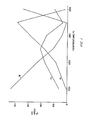
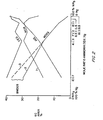
- Figure 2 is a plot of some of the results in gas chromatograph area percent for selected components vs the mole ratio of ammonia to hydrogen as mole percent. Also provided are feed molar ratios of ammonia, diethylene glycol and hydrogen.
- Figure 2 shows, as did Example 1, that at low ammonia to feed diethylene glycol mole ratios, conversion to morpholine is relatively low.
- Morpholine conversion (line 1) begins to increase when the molar ratio of ammonia increases to a value of from about 6 to 9 moles per mole diethylene glycol.
- MDEG and BMDEG by-product is represented by line 2, and if one were to extrapolate line 2 to include all heavies, essentially a straight line relationship would be noted as shown in line 3. This data also shows that heavies concentration can be reduced for a given reaction condition by increasing the ammonia concentration.
- Example 1 The procedure of Example 1 was repeated except that a temperature of 220°C, a pressure of about 18 x 10 5 Pa (250 psia), and a feed ratio of 8:1:0.5 of ammonia:DEG:H z was utilized.
- the variable was residence time and that was varied from an LHSV of 1 to a low of 0.25 hours
Landscapes
- Chemical & Material Sciences (AREA)
- Organic Chemistry (AREA)
- Organic Low-Molecular-Weight Compounds And Preparation Thereof (AREA)
- Low-Molecular Organic Synthesis Reactions Using Catalysts (AREA)
- Catalysts (AREA)
- Heterocyclic Carbon Compounds Containing A Hetero Ring Having Nitrogen And Oxygen As The Only Ring Hetero Atoms (AREA)
- Nitrogen And Oxygen Or Sulfur-Condensed Heterocyclic Ring Systems (AREA)
Claims (15)

Priority Applications (1)
| Application Number | Priority Date | Filing Date | Title |
|---|---|---|---|
| AT81301126T ATE8780T1 (de) | 1980-03-17 | 1981-03-17 | Synthese morpholin und seiner derivaten durch reaktion von dialkylenglycol und ammonia. |
Applications Claiming Priority (2)
| Application Number | Priority Date | Filing Date | Title |
|---|---|---|---|
| US13078280A | 1980-03-17 | 1980-03-17 | |
| US130782 | 1980-03-17 |
Publications (4)
| Publication Number | Publication Date |
|---|---|
| EP0036331A2 EP0036331A2 (de) | 1981-09-23 |
| EP0036331A3 EP0036331A3 (en) | 1981-12-30 |
| EP0036331B1 true EP0036331B1 (de) | 1984-08-01 |
| EP0036331B2 EP0036331B2 (de) | 1989-10-18 |
Family
ID=22446295
Family Applications (1)
| Application Number | Title | Priority Date | Filing Date |
|---|---|---|---|
| EP81301126A Expired EP0036331B2 (de) | 1980-03-17 | 1981-03-17 | Synthese Morpholin und seiner Derivaten durch Reaktion von Dialkylenglycol und Ammonia |
Country Status (8)
| Country | Link |
|---|---|
| EP (1) | EP0036331B2 (de) |
| JP (1) | JPS56161379A (de) |
| AT (1) | ATE8780T1 (de) |
| BR (1) | BR8101541A (de) |
| CA (1) | CA1151646A (de) |
| DE (1) | DE3165165D1 (de) |
| MX (1) | MX153750A (de) |
| ZA (1) | ZA811611B (de) |
Families Citing this family (9)
| Publication number | Priority date | Publication date | Assignee | Title |
|---|---|---|---|---|
| DE3125662A1 (de) * | 1981-06-30 | 1983-01-13 | Basf Ag, 6700 Ludwigshafen | Verfahren und katalysator zur herstellung von cyclischen iminen |
| US4709028A (en) * | 1987-02-03 | 1987-11-24 | Air Products And Chemicals, Inc. | Synthesis of heterocyclic amines via the reaction of dialkylene glycol and ammonia |
| DE4113161A1 (de) * | 1991-04-23 | 1992-10-29 | Basf Ag | Verfahren zur herstellung von (alpha), (omega) -aminoalkoholen |
| DE19901198A1 (de) * | 1999-01-14 | 2000-07-20 | Basf Ag | Verfahren zur Herstellung von 2,2'-Dimorpholinodiethylether |
| DE502006005368D1 (de) | 2005-09-30 | 2009-12-24 | Basf Se | Verfahren zur herstellung von ethylenaminen |
| CN101277922B (zh) | 2005-09-30 | 2011-08-17 | 巴斯夫欧洲公司 | 生产亚乙基胺的方法 |
| WO2007093514A1 (de) | 2006-02-14 | 2007-08-23 | Basf Se | Verfahren zur herstellung von ethylenaminen und ethanolaminen aus monoethylenglykol (meg) |
| US7635790B2 (en) | 2006-02-14 | 2009-12-22 | Basf Se | Method for producing ethylene amines and ethanol amines by the hydrogenating amination of monoethylene glycol and ammonia in the presence of a catalyst |
| KR102622834B1 (ko) * | 2020-11-30 | 2024-01-09 | 롯데케미칼 주식회사 | 모르폴린의 제조 방법 |
Family Cites Families (3)
| Publication number | Priority date | Publication date | Assignee | Title |
|---|---|---|---|---|
| SU175512A (de) * | ||||
| US3154544A (en) * | 1956-05-02 | 1964-10-27 | Wyandotte Chemicals Corp | Substituted morpholines |
| DE2758769C2 (de) * | 1977-12-29 | 1983-12-22 | Serafim Vasil'evič Dobrovol'skij | Verfahren zur Herstellung von Morpholin |
-
1981
- 1981-03-09 CA CA000372539A patent/CA1151646A/en not_active Expired
- 1981-03-11 ZA ZA00811611A patent/ZA811611B/xx unknown
- 1981-03-16 BR BR8101541A patent/BR8101541A/pt unknown
- 1981-03-17 JP JP3856981A patent/JPS56161379A/ja active Granted
- 1981-03-17 MX MX186418A patent/MX153750A/es unknown
- 1981-03-17 DE DE8181301126T patent/DE3165165D1/de not_active Expired
- 1981-03-17 AT AT81301126T patent/ATE8780T1/de active
- 1981-03-17 EP EP81301126A patent/EP0036331B2/de not_active Expired
Also Published As
| Publication number | Publication date |
|---|---|
| JPS6351149B2 (de) | 1988-10-13 |
| DE3165165D1 (en) | 1984-09-06 |
| ATE8780T1 (de) | 1984-08-15 |
| CA1151646A (en) | 1983-08-09 |
| EP0036331A3 (en) | 1981-12-30 |
| EP0036331B2 (de) | 1989-10-18 |
| BR8101541A (pt) | 1981-09-22 |
| ZA811611B (en) | 1982-05-26 |
| MX153750A (es) | 1986-12-31 |
| JPS56161379A (en) | 1981-12-11 |
| EP0036331A2 (de) | 1981-09-23 |
Similar Documents
| Publication | Publication Date | Title |
|---|---|---|
| US4739051A (en) | Preparation of morpholine | |
| US2928877A (en) | Process for preparing oxyalkyleneamines | |
| US4103087A (en) | Production of di-(N,N-disubstituted amino) alkanes | |
| EP0036331B2 (de) | Synthese Morpholin und seiner Derivaten durch Reaktion von Dialkylenglycol und Ammonia | |
| US4647663A (en) | Synthesis of morpholine | |
| US3154544A (en) | Substituted morpholines | |
| US5495055A (en) | Acetone hydrogenation using a supported ruthenium catalyst | |
| US4647701A (en) | Processes for producing diethylenetriamine from monoethanolamine | |
| US4645834A (en) | Synthesis of heterocyclic amines via the reaction of dialkylene glycol and ammonia | |
| US4255357A (en) | Catalytic process for preparing ethyl amines | |
| US4757143A (en) | Catalytic method for the manufacture of triethylenediamine | |
| JPH025738B2 (de) | ||
| US3151113A (en) | Nu-alkyl morpholine production | |
| US4709028A (en) | Synthesis of heterocyclic amines via the reaction of dialkylene glycol and ammonia | |
| EP0716084A1 (de) | Herstellung von 4,4'-(Oxydi-2,1-ethandiyl)bis-morpholin und Hydroxyethoxyethyl-morpholin | |
| US4508896A (en) | Process for the simultaneous production of 2-(2-aminoalkoxy)alkanol and morpholine | |
| US4130711A (en) | Process for production of piperazinediones | |
| EP0013176B1 (de) | Synthese niedriger Alkylamine | |
| JP3080695B2 (ja) | モルホリン及び2−(2−アミノアルコキシ)アルカノールを同時に製造する方法 | |
| EP0082289B1 (de) | Herstellung von Dialkylsulfiden aus Alkenen und Schwefelwasserstoff | |
| US4661643A (en) | Hydrogenolysis process for the production of monoethylene glycol monomethyl ether, monoethylene glycol and ethanol | |
| US4251460A (en) | Process for production of dimethylformamide | |
| US4299957A (en) | Method of making N-(2-methoxyethyl)morpholine | |
| US4649225A (en) | Hydrogenolysis of polyalkylene glycols to produce monoethylene glycol monoalkyl ethers, monoethylene glycol and ethanol | |
| US4289908A (en) | Production of higher amines by the gas phase hydrogenation of nitriles |
Legal Events
| Date | Code | Title | Description |
|---|---|---|---|
| PUAI | Public reference made under article 153(3) epc to a published international application that has entered the european phase |
Free format text: ORIGINAL CODE: 0009012 |
|
| AK | Designated contracting states |
Designated state(s): AT BE CH DE FR GB IT LI LU NL SE |
|
| PUAL | Search report despatched |
Free format text: ORIGINAL CODE: 0009013 |
|
| AK | Designated contracting states |
Designated state(s): AT BE CH DE FR GB IT LI LU NL SE |
|
| 17P | Request for examination filed |
Effective date: 19820310 |
|
| ITF | It: translation for a ep patent filed | ||
| GRAA | (expected) grant |
Free format text: ORIGINAL CODE: 0009210 |
|
| AK | Designated contracting states |
Designated state(s): AT BE CH DE FR GB IT LI LU NL SE |
|
| REF | Corresponds to: |
Ref document number: 8780 Country of ref document: AT Date of ref document: 19840815 Kind code of ref document: T |
|
| REF | Corresponds to: |
Ref document number: 3165165 Country of ref document: DE Date of ref document: 19840906 |
|
| ET | Fr: translation filed | ||
| PG25 | Lapsed in a contracting state [announced via postgrant information from national office to epo] |
Ref country code: LU Free format text: LAPSE BECAUSE OF NON-PAYMENT OF DUE FEES Effective date: 19850331 |
|
| PLBI | Opposition filed |
Free format text: ORIGINAL CODE: 0009260 |
|
| 26 | Opposition filed |
Opponent name: BASF AKTIENGESELLSCHAFT Effective date: 19850427 |
|
| NLR1 | Nl: opposition has been filed with the epo |
Opponent name: BASF AKTIENGESELLSCHAFT |
|
| PGFP | Annual fee paid to national office [announced via postgrant information from national office to epo] |
Ref country code: AT Payment date: 19860213 Year of fee payment: 6 |
|
| PGFP | Annual fee paid to national office [announced via postgrant information from national office to epo] |
Ref country code: NL Payment date: 19860331 Year of fee payment: 6 |
|
| PGFP | Annual fee paid to national office [announced via postgrant information from national office to epo] |
Ref country code: LU Payment date: 19860411 Year of fee payment: 6 |
|
| PG25 | Lapsed in a contracting state [announced via postgrant information from national office to epo] |
Ref country code: AT Effective date: 19870317 |
|
| PG25 | Lapsed in a contracting state [announced via postgrant information from national office to epo] |
Ref country code: NL Effective date: 19871001 |
|
| NLV4 | Nl: lapsed or anulled due to non-payment of the annual fee | ||
| ITF | It: translation for a ep patent filed | ||
| PUAH | Patent maintained in amended form |
Free format text: ORIGINAL CODE: 0009272 |
|
| STAA | Information on the status of an ep patent application or granted ep patent |
Free format text: STATUS: PATENT MAINTAINED AS AMENDED |
|
| 27A | Patent maintained in amended form |
Effective date: 19891018 |
|
| AK | Designated contracting states |
Kind code of ref document: B2 Designated state(s): AT BE CH DE FR GB IT LI LU NL SE |
|
| ET3 | Fr: translation filed ** decision concerning opposition | ||
| PGFP | Annual fee paid to national office [announced via postgrant information from national office to epo] |
Ref country code: SE Payment date: 19910304 Year of fee payment: 11 |
|
| ITTA | It: last paid annual fee | ||
| PGFP | Annual fee paid to national office [announced via postgrant information from national office to epo] |
Ref country code: CH Payment date: 19910408 Year of fee payment: 11 |
|
| PGFP | Annual fee paid to national office [announced via postgrant information from national office to epo] |
Ref country code: BE Payment date: 19910626 Year of fee payment: 11 |
|
| PG25 | Lapsed in a contracting state [announced via postgrant information from national office to epo] |
Ref country code: SE Effective date: 19920318 |
|
| PG25 | Lapsed in a contracting state [announced via postgrant information from national office to epo] |
Ref country code: LI Effective date: 19920331 Ref country code: CH Effective date: 19920331 Ref country code: BE Effective date: 19920331 |
|
| BERE | Be: lapsed |
Owner name: AIR PRODUCTS AND CHEMICALS INC. Effective date: 19920331 |
|
| REG | Reference to a national code |
Ref country code: CH Ref legal event code: PL |
|
| PGFP | Annual fee paid to national office [announced via postgrant information from national office to epo] |
Ref country code: FR Payment date: 19921216 Year of fee payment: 13 |
|
| PGFP | Annual fee paid to national office [announced via postgrant information from national office to epo] |
Ref country code: GB Payment date: 19930208 Year of fee payment: 13 |
|
| PGFP | Annual fee paid to national office [announced via postgrant information from national office to epo] |
Ref country code: DE Payment date: 19930329 Year of fee payment: 13 |
|
| PG25 | Lapsed in a contracting state [announced via postgrant information from national office to epo] |
Ref country code: GB Effective date: 19940317 |
|
| GBPC | Gb: european patent ceased through non-payment of renewal fee |
Effective date: 19940317 |
|
| PG25 | Lapsed in a contracting state [announced via postgrant information from national office to epo] |
Ref country code: FR Effective date: 19941130 |
|
| PG25 | Lapsed in a contracting state [announced via postgrant information from national office to epo] |
Ref country code: DE Effective date: 19941201 |
|
| REG | Reference to a national code |
Ref country code: FR Ref legal event code: ST |
|
| EUG | Se: european patent has lapsed |
Ref document number: 81301126.9 Effective date: 19921005 |